
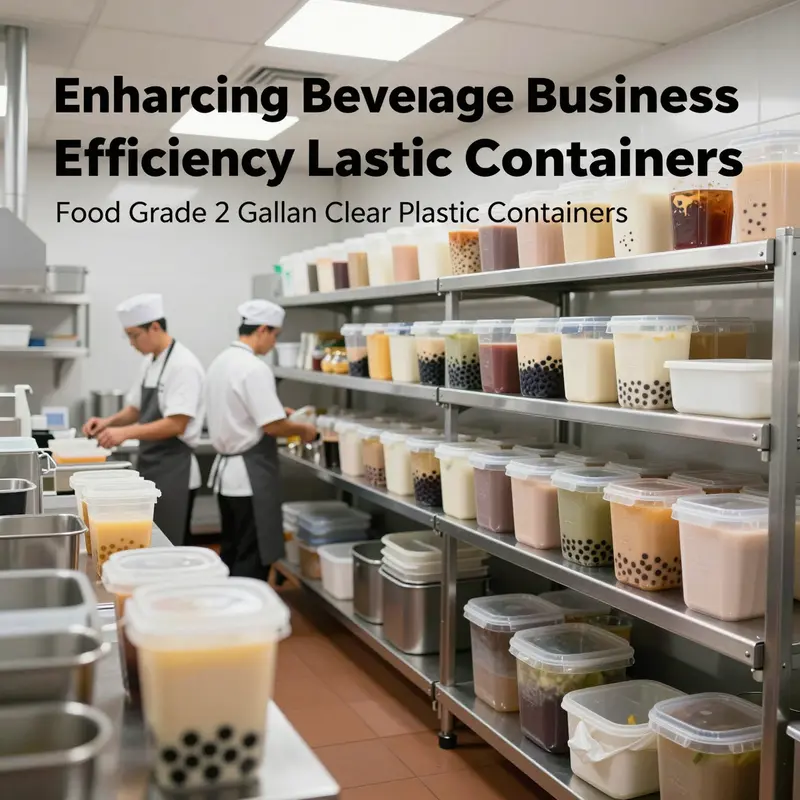
Food grade 2 gallon clear plastic containers are essential assets for food-related businesses such as bubble tea shops, restaurants, food trucks, and catering services. These containers ensure optimal storage and handling of various food items while complying with health and safety regulations. This article explores three crucial aspects of these containers: the benefits of food grade materials, their diverse applications across different industries, and the health and safety standards governing their use. Each chapter underlines how these features support operational excellence and food safety in the modern food service landscape.
Crystal Clear Safety: The Materials Behind 2-Gallon Food-Grade Clear Plastic Containers
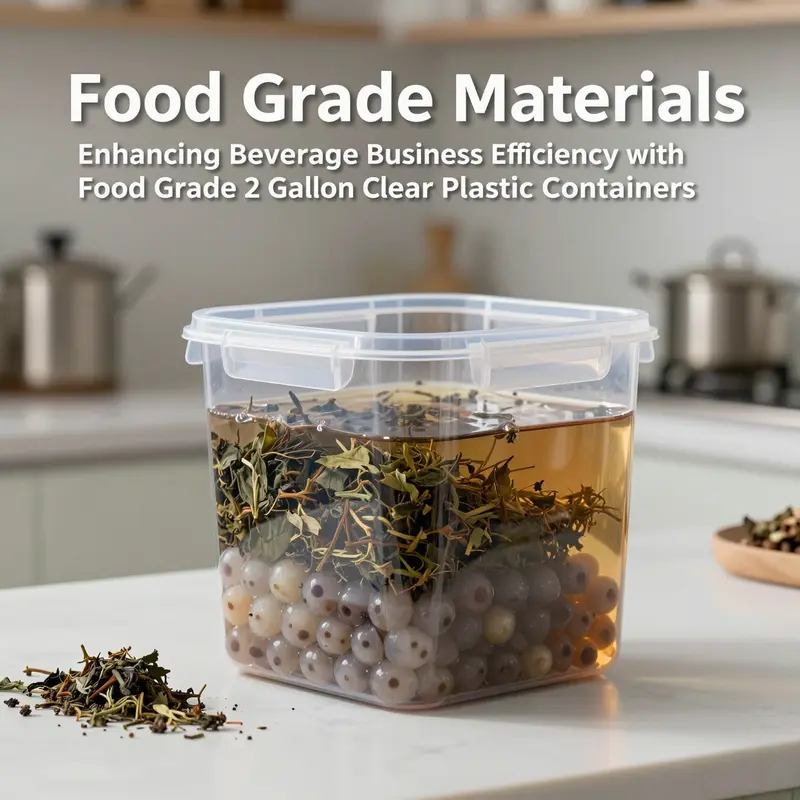
Clarity in a storage container is not merely an aesthetic; it is a practical assurance that what you store remains safe, fresh, and easy to manage. When you pick a 2-gallon clear plastic container designed for food, you are selecting a tool that blends material science with user-friendly design. The transparency is more than cosmetic; it is a daily inventory check that helps reduce waste and optimize operations in kitchens, garages, small food businesses, and even outdoor settings. Yet the heart of this reliability lies in the materials and the way those materials interact with food, liquids, and dry goods over time. A closer look at the two most common food-grade candidates—high-density polyethylene (HDPE) and polypropylene (PP)—reveals a nuanced balance of safety, durability, and performance that makes a 2-gallon container a practical companion for both home and professional use.
To begin, HDPE stands as a workhorse in the world of food-grade plastics. It is the recycling code #2, a marker that carries with it a history of reliability in both consumer and industrial applications. HDPE’s strength-to-density ratio translates into a sturdy shell that can resist impact and maintain shape under various handling conditions. When a 2-gallon container is made from HDPE, it typically presents a naturally opaque appearance, though clear variants are produced to fulfill the need for visibility. This visibility is essential, especially in scenarios where quick assessment of contents matters—think of flour stored in a pantry, rice bags on a warehouse shelf, or homemade syrups chilling in a cold storage room. The non-porous nature of HDPE is another critical attribute. It resists odor and flavor transfer, meaning your stored goods won’t pick up or lose scents from other items in adjacent containers. This property is particularly valuable in busy kitchens or food-processing facilities where multiple dry goods share space. Importantly, HDPE is BPA-free and FDA-compliant, aligning with health and safety standards that underscore consumer trust. The material remains resilient across temperature fluctuations, which means hot-fill opportunities, efficient cooling, and sturdy performance during transport are all within reach without compromising container integrity.
PP, or polypropylene, provides a complementary set of attributes that broadens the role of a 2-gallon clear container in more demanding environments. With recycling code #5, PP is renowned for clarity and heat resistance, along with formidable rigidity that supports repeated use. In practice, PP-based 2-gallon containers tend to excel in applications that require more frequent handling or exposure to warmer contents. They are commonly chosen for hot liquids and semi-solid foods, where maintaining a secure, leak-resistant seal is paramount. Like HDPE, PP is BPA-free and approved for direct food contact, a non-negotiable standard in a market that increasingly scrutinizes packaging safety. The clarity of PP, combined with its moisture resistance, makes PP-based containers a reliable option for liquids such as syrups or thin oils, where users need to confirm fill levels without opening lids. Yet even with its excellent clarity, PP’s real strength emerges in its toughness. Repeated use, stacking, and transport demand a material that can resist abrasion and maintain lid performance over time. The result is a container that can survive a busy kitchen or a bustling distribution workflow, while preserving the content’s integrity.
The choice between HDPE and PP is rarely about a single virtue but about a practical calculus that factors in the intended use. If the goal is maximizing impact resistance and minimizing the risk of container deformation when dropped or bumped during transit, HDPE often takes precedence. If, on the other hand, the requirement emphasizes clearer visibility, stronger heat resistance for hot-fill scenarios, and long-term sturdiness under repeated use, PP makes a compelling case. In many products, designers layer a combination of materials or select blends that optimize outcomes for both performance and safety. The common thread across both materials is a shared commitment to food-grade safety: both HDPE and PP can be manufactured BPA-free and are FDA-compliant for direct contact with food. This alignment with safety standards is not a mere checkbox but a foundational assurance that users can rely on when storing staples, dry goods, or liquids for extended periods.
Beyond the material itself, the design language of a 2-gallon clear plastic container reinforces its protective role. The emphasis on a secure lid with an airtight seal is not incidental. Air exposure accelerates oxidation, moisture movement, and contamination risks. An airtight, well-fitted lid acts as a barrier against environmental factors and pests, helping preserve flavor, texture, and nutritional quality, while also reducing spill risk during transport. The seal’s integrity becomes particularly vital when containers are stacked or tilted in transit—whether in a vehicle, a pantry, or a warehouse. The lid design, complemented by a stable body geometry, minimizes gaps through which odors or volatile compounds could escape or contaminants could enter. In practice, a robust lid mechanism translates into longer shelf life for dry goods like rice or flour and enhanced confidence when storing liquids that could otherwise seep or volatilize.
The transparency of the container serves a dual purpose. On one side, it provides immediate visual confirmation of content levels, allowing for quick inventory checks and minimizing the guesswork that leads to unnecessary purchases or spoilage. On the other, it invites users to monitor for signs of contamination or quality changes—color shifts, sediment formation, or unusual cloudiness. This visibility is particularly valuable in food service and manufacturing environments, where consistent quality and rapid decision-making drive efficiency. Clear walls also support more precise handling in bulk storage, enabling operators to track lot integrity, allocation, and rotation without the need to open containers and potentially compromise safety.
In terms of practical design, many 2-gallon containers incorporate ergonomic features that improve user experience. Handles or built-in grips aid in safe lifting when the container is full, reducing the risk of accidents and spills. The tapered shape can facilitate nesting when containers are empty, a small but meaningful space-saving benefit in any setting, from compact kitchens to crowded storage rooms. A combination of rigid walls and a stable base helps prevent tipping, a frequent concern when containers are moved across uneven surfaces or during quick transfers from storage to processing lines. Together, these design elements transform a straightforward storage vessel into a reliable partner in routine workflows, enabling smooth, predictable handling even when time is of the essence.
Sourcing considerations for 2-gallon food-grade containers bring additional depth to the discussion. Reputable suppliers emphasize safety and compliance, with labeling that highlights BPA-free status and FDA compliance. The market also reflects a spectrum of applications—from kitchen storage to food service and industrial usage—each with distinct requirements for temperature tolerance, seal strength, and chemical resistance. It is not unusual to encounter HDPE and PP variants that are specifically tailored for different use cases, such as hot-fill applications, oxidative protection, or chemical resistance when used for household cleaners or non-food liquids. When evaluating potential purchases, buyers often weigh factors such as the container’s intended contents, expected storage duration, and how the container will be moved, stacked, or transported. The best choices are those that harmonize material performance with practical features—clear visibility, durable lids, comfortable handling, and predictable durability under realistic conditions.
Compliance and manufacturing realities further shape what ends up on the shelf. Numerous models bear marks of manufacture that reflect a commitment to safety and quality, including statements like “BPA-free” and “Made in USA” on the product or packaging. These indications are not mere marketing; they signal adherence to stringent safety standards and a readiness to pass independent certifications or audits. For buyers responsible for food storage in commercial environments, such signals can inform supplier selection and help establish confidence in long-term procurement plans. The broader ecosystem—comprising manufacturers, distributors, and certifications—creates a landscape where consistent performance is achievable across batches, provided that buyers verify material specifications and confirm that the product has undergone appropriate safety testing.
A practical way to frame the conversation is to imagine the container’s journey from raw resin to the final household or industrial product. In the resin stage, HDPE and PP are chosen for their resilience and safety, then molded into thick-walled, impact-resistant bodies that resist cracking under stress. During molding, the data about clarity, opacity, and surface finish is aligned with the intended use, ensuring that the wall is non-porous and that the interior surface can be cleaned efficiently, reducing the likelihood of residue buildup. When assembled with an airtight lid and a sealing gasket, the container achieves a performance profile well-suited to storing diverse substances—from dry staples to liquids with varying viscosities. The final product then moves through quality checks that verify dimensional accuracy, seal performance, and cleanliness. In short, the journey of a 2-gallon container from resin to pantry is a sequence designed to deliver predictability, safety, and ease of use, all while maintaining the clarity that makes the contents instantly legible.
The implications for consumers and professionals extend beyond the kitchen. For households seeking long-term storage solutions, the capacity of 2 gallons strikes a balance between manageability and storage efficiency. It is large enough to hold substantial quantities of dry goods without becoming unwieldy, yet compact enough to fit on standard shelving or under counters. For small businesses, such containers can support bulk storage of staples, color-coded inventory, or even staging for product testing and recipe development. For outdoor enthusiasts, the same vessel can hold potable water or bulk dry goods during camping trips, where durability and reliability are paramount. Across these contexts, the same core principles—safe materials, airtight protection, and clear visibility—continue to drive value and trust.
The market’s emphasis on safety is also reflected in how information is communicated to buyers. Clear labeling of material type, recycling codes, and compliance statements helps users make informed choices, especially when considering replacements or upgrades. As new formulations and certification schemes emerge, the dialogue around food packaging grows more exacting. The interplay between regulatory expectations and consumer demand yields products that not only perform well but also align with evolving standards for health and environmental responsibility. In this sense, the material science behind HDPE and PP becomes a practical language through which users understand why a container behaves the way it does under various conditions. The same materials that keep contents safe and flavors unaltered also determine how the container responds to heat, light, and repeated handling, creating a predictable and trustworthy storage solution that can be counted on day in and day out.
In terms of practical design, many 2-gallon containers incorporate ergonomic features that improve user experience. Handles or built-in grips aid in safe lifting when the container is full, reducing the risk of accidents and spills. The tapered shape can facilitate nesting when containers are empty, a small but meaningful space-saving benefit in any setting, from compact kitchens to crowded storage rooms. A combination of rigid walls and a stable base helps prevent tipping, a frequent concern when containers are moved across uneven surfaces or during quick transfers from storage to processing lines. Together, these design elements transform a straightforward storage vessel into a reliable partner in routine workflows, enabling smooth, predictable handling even when time is of the essence.
Sourcing considerations for 2-gallon food-grade containers bring additional depth to the discussion. Reputable suppliers emphasize safety and compliance, with labeling that highlights BPA-free status and FDA compliance. The market also reflects a spectrum of applications—from kitchen storage to food service and industrial usage—each with distinct requirements for temperature tolerance, seal strength, and chemical resistance. It is not unusual to encounter HDPE and PP variants that are specifically tailored for different use cases, such as hot-fill applications, oxidative protection, or chemical resistance when used for household cleaners or non-food liquids. When evaluating potential purchases, buyers often weigh factors such as the container’s intended contents, expected storage duration, and how the container will be moved, stacked, or transported. The best choices are those that harmonize material performance with practical features—clear visibility, durable lids, comfortable handling, and predictable durability under realistic conditions.
Compliance and manufacturing realities further shape what ends up on the shelf. Numerous models bear marks of manufacture that reflect a commitment to safety and quality, including statements like “BPA-free” and “Made in USA” on the product or packaging. These indications are not mere marketing; they signal adherence to stringent safety standards and a readiness to pass independent certifications or audits. For buyers responsible for food storage in commercial environments, such signals can inform supplier selection and help establish confidence in long-term procurement plans. The broader ecosystem—comprising manufacturers, distributors, and certifications—creates a landscape where consistent performance is achievable across batches, provided that buyers verify material specifications and confirm that the product has undergone appropriate safety testing.
A practical way to frame the conversation is to imagine the container’s journey from raw resin to the final household or industrial product. In the resin stage, HDPE and PP are chosen for their resilience and safety, then molded into thick-walled, impact-resistant bodies that resist cracking under stress. During molding, the data about clarity, opacity, and surface finish is aligned with the intended use, ensuring that the wall is non-porous and that the interior surface can be cleaned efficiently, reducing the likelihood of residue buildup. When assembled with an airtight lid and a sealing gasket, the container achieves a performance profile well-suited to storing diverse substances—from dry staples to liquids with varying viscosities. The final product then moves through quality checks that verify dimensional accuracy, seal performance, and cleanliness. In short, the journey of a 2-gallon container from resin to pantry is a sequence designed to deliver predictability, safety, and ease of use, all while maintaining the clarity that makes the contents instantly legible.
The implications for consumers and professionals extend beyond the kitchen. For households seeking long-term storage solutions, the capacity of 2 gallons strikes a balance between manageability and storage efficiency. It is large enough to hold substantial quantities of dry goods without becoming unwieldy, yet compact enough to fit on standard shelving or under counters. For small businesses, such containers can support bulk storage of staples, color-coded inventory, or even staging for product testing and recipe development. For outdoor enthusiasts, the same vessel can hold potable water or bulk dry goods during camping trips, where durability and reliability are paramount. Across these contexts, the same core principles—safe materials, airtight protection, and clear visibility—continue to drive value and trust.
The market’s emphasis on safety is also reflected in how information is communicated to buyers. Clear labeling of material type, recycling codes, and compliance statements helps users make informed choices, especially when considering replacements or upgrades. As new formulations and certification schemes emerge, the dialogue around food packaging grows more exacting. The interplay between regulatory expectations and consumer demand yields products that not only perform well but also align with evolving standards for health and environmental responsibility. In this sense, the material science behind HDPE and PP becomes a practical language through which users understand why a container behaves the way it does under various conditions. The same materials that keep contents safe and flavors unaltered also determine how the container responds to heat, light, and repeated handling, creating a predictable and trustworthy storage solution that can be counted on day in and day out.
In terms of practical design, many 2-gallon containers incorporate ergonomic features that improve user experience. Handles or built-in grips aid in safe lifting when the container is full, reducing the risk of accidents and spills. The tapered shape can facilitate nesting when containers are empty, a small but meaningful space-saving benefit in any setting, from compact kitchens to crowded storage rooms. A combination of rigid walls and a stable base helps prevent tipping, a frequent concern when containers are moved across uneven surfaces or during quick transfers from storage to processing lines. Together, these design elements transform a straightforward storage vessel into a reliable partner in routine workflows, enabling smooth, predictable handling even when time is of the essence.
Sourcing considerations for 2-gallon food-grade containers bring additional depth to the discussion. Reputable suppliers emphasize safety and compliance, with labeling that highlights BPA-free status and FDA compliance. The market also reflects a spectrum of applications—from kitchen storage to food service and industrial usage—each with distinct requirements for temperature tolerance, seal strength, and chemical resistance. It is not unusual to encounter HDPE and PP variants that are specifically tailored for different use cases, such as hot-fill applications, oxidative protection, or chemical resistance when used for household cleaners or non-food liquids. When evaluating potential purchases, buyers often weigh factors such as the container’s intended contents, expected storage duration, and how the container will be moved, stacked, or transported. The best choices are those that harmonize material performance with practical features—clear visibility, durable lids, comfortable handling, and predictable durability under realistic conditions.
Compliance and manufacturing realities further shape what ends up on the shelf. Numerous models bear marks of manufacture that reflect a commitment to safety and quality, including statements like “BPA-free” and “Made in USA” on the product or packaging. These indications are not mere marketing; they signal adherence to stringent safety standards and a readiness to pass independent certifications or audits. For buyers responsible for food storage in commercial environments, such signals can inform supplier selection and help establish confidence in long-term procurement plans. The broader ecosystem—comprising manufacturers, distributors, and certifications—creates a landscape where consistent performance is achievable across batches, provided that buyers verify material specifications and confirm that the product has undergone appropriate safety testing.
A practical way to frame the conversation is to imagine the container’s journey from raw resin to the final household or industrial product. In the resin stage, HDPE and PP are chosen for their resilience and safety, then molded into thick-walled, impact-resistant bodies that resist cracking under stress. During molding, the data about clarity, opacity, and surface finish is aligned with the intended use, ensuring that the wall is non-porous and that the interior surface can be cleaned efficiently, reducing the likelihood of residue buildup. When assembled with an airtight lid and a sealing gasket, the container achieves a performance profile well-suited to storing diverse substances—from dry staples to liquids with varying viscosities. The final product then moves through quality checks that verify dimensional accuracy, seal performance, and cleanliness. In short, the journey of a 2-gallon container from resin to pantry is a sequence designed to deliver predictability, safety, and ease of use, all while maintaining the clarity that makes the contents instantly legible.
The implications for consumers and professionals extend beyond the kitchen. For households seeking long-term storage solutions, the capacity of 2 gallons strikes a balance between manageability and storage efficiency. It is large enough to hold substantial quantities of dry goods without becoming unwieldy, yet compact enough to fit on standard shelving or under counters. For small businesses, such containers can support bulk storage of staples, color-coded inventory, or even staging for product testing and recipe development. For outdoor enthusiasts, the same vessel can hold potable water or bulk dry goods during camping trips, where durability and reliability are paramount. Across these contexts, the same core principles—safe materials, airtight protection, and clear visibility—continue to drive value and trust.
The market’s emphasis on safety is also reflected in how information is communicated to buyers. Clear labeling of material type, recycling codes, and compliance statements helps users make informed choices, especially when considering replacements or upgrades. As new formulations and certification schemes emerge, the dialogue around food packaging grows more exacting. The interplay between regulatory expectations and consumer demand yields products that not only perform well but also align with evolving standards for health and environmental responsibility. In this sense, the material science behind HDPE and PP becomes a practical language through which users understand why a container behaves the way it does under various conditions. The same materials that keep contents safe and flavors unaltered also determine how the container responds to heat, light, and repeated handling, creating a predictable and trustworthy storage solution that can be counted on day in and day out.
In terms of practical design, many 2-gallon containers incorporate ergonomic features that improve user experience. Handles or built-in grips aid in safe lifting when the container is full, reducing the risk of accidents and spills. The tapered shape can facilitate nesting when containers are empty, a small but meaningful space-saving benefit in any setting, from compact kitchens to crowded storage rooms. A combination of rigid walls and a stable base helps prevent tipping, a frequent concern when containers are moved across uneven surfaces or during quick transfers from storage to processing lines. Together, these design elements transform a straightforward storage vessel into a reliable partner in routine workflows, enabling smooth, predictable handling even when time is of the essence.
Sourcing considerations for 2-gallon food-grade containers bring additional depth to the discussion. Reputable suppliers emphasize safety and compliance, with labeling that highlights BPA-free status and FDA compliance. The market also reflects a spectrum of applications—from kitchen storage to food service and industrial usage—each with distinct requirements for temperature tolerance, seal strength, and chemical resistance. It is not unusual to encounter HDPE and PP variants that are specifically tailored for different use cases, such as hot-fill applications, oxidative protection, or chemical resistance when used for household cleaners or non-food liquids. When evaluating potential purchases, buyers often weigh factors such as the container’s intended contents, expected storage duration, and how the container will be moved, stacked, or transported. The best choices are those that harmonize material performance with practical features—clear visibility, durable lids, comfortable handling, and predictable durability under realistic conditions.
Compliance and manufacturing realities further shape what ends up on the shelf. Numerous models bear marks of manufacture that reflect a commitment to safety and quality, including statements like “BPA-free” and “Made in USA” on the product or packaging. These indications are not mere marketing; they signal adherence to stringent safety standards and a readiness to pass independent certifications or audits. For buyers responsible for food storage in commercial environments, such signals can inform supplier selection and help establish confidence in long-term procurement plans. The broader ecosystem—comprising manufacturers, distributors, and certifications—creates a landscape where consistent performance is achievable across batches, provided that buyers verify material specifications and confirm that the product has undergone appropriate safety testing.
A practical way to frame the conversation is to imagine the container’s journey from raw resin to the final household or industrial product. In the resin stage, HDPE and PP are chosen for their resilience and safety, then molded into thick-walled, impact-resistant bodies that resist cracking under stress. During molding, the data about clarity, opacity, and surface finish is aligned with the intended use, ensuring that the wall is non-porous and that the interior surface can be cleaned efficiently, reducing the likelihood of residue buildup. When assembled with an airtight lid and a sealing gasket, the container achieves a performance profile well-suited to storing diverse substances—from dry staples to liquids with varying viscosities. The final product then moves through quality checks that verify dimensional accuracy, seal performance, and cleanliness. In short, the journey of a 2-gallon container from resin to pantry is a sequence designed to deliver predictability, safety, and ease of use, all while maintaining the clarity that makes the contents instantly legible.
The implications for consumers and professionals extend beyond the kitchen. For households seeking long-term storage solutions, the capacity of 2 gallons strikes a balance between manageability and storage efficiency. It is large enough to hold substantial quantities of dry goods without becoming unwieldy, yet compact enough to fit on standard shelving or under counters. For small businesses, such containers can support bulk storage of staples, color-coded inventory, or even staging for product testing and recipe development. For outdoor enthusiasts, the same vessel can hold potable water or bulk dry goods during camping trips, where durability and reliability are paramount. Across these contexts, the same core principles—Safe materials, airtight protection, and clear visibility—continue to drive value and trust.
The market’s emphasis on safety is also reflected in how information is communicated to buyers. Clear labeling of material type, recycling codes, and compliance statements helps users make informed choices, especially when considering replacements or upgrades. As new formulations and certification schemes emerge, the dialogue around food packaging grows more exacting. The interplay between regulatory expectations and consumer demand yields products that not only perform well but also align with evolving standards for health and environmental responsibility. In this sense, the material science behind HDPE and PP becomes a practical language through which users understand why a container behaves the way it does under various conditions. The same materials that keep contents safe and flavors unaltered also determine how the container responds to heat, light, and repeated handling, creating a predictable and trustworthy storage solution that can be counted on day in and day out.
In terms of practical design, many 2-gallon containers incorporate ergonomic features that improve user experience. Handles or built-in grips aid in safe lifting when the container is full, reducing the risk of accidents and spills. The tapered shape can facilitate nesting when containers are empty, a small but meaningful space-saving benefit in any setting, from compact kitchens to crowded storage rooms. A combination of rigid walls and a stable base helps prevent tipping, a frequent concern when containers are moved across uneven surfaces or during quick transfers from storage to processing lines. Together, these design elements transform a straightforward storage vessel into a reliable partner in routine workflows, enabling smooth, predictable handling even when time is of the essence.
Sourcing considerations for 2-gallon food-grade containers bring additional depth to the discussion. Reputable suppliers emphasize safety and compliance, with labeling that highlights BPA-free status and FDA compliance. The market also reflects a spectrum of applications—from kitchen storage to food service and industrial usage—each with distinct requirements for temperature tolerance, seal strength, and chemical resistance. It is not unusual to encounter HDPE and PP variants that are specifically tailored for different use cases, such as hot-fill applications, oxidative protection, or chemical resistance when used for household cleaners or non-food liquids. When evaluating potential purchases, buyers often weigh factors such as the container’s intended contents, expected storage duration, and how the container will be moved, stacked, or transported. The best choices are those that harmonize material performance with practical features—clear visibility, durable lids, comfortable handling, and predictable durability under realistic conditions.
Compliance and manufacturing realities further shape what ends up on the shelf. Numerous models bear marks of manufacture that reflect a commitment to safety and quality, including statements like “BPA-free” and “Made in USA” on the product or packaging. These indications are not mere marketing; they signal adherence to stringent safety standards and a readiness to pass independent certifications or audits. For buyers responsible for food storage in commercial environments, such signals can inform supplier selection and help establish confidence in long-term procurement plans. The broader ecosystem—comprising manufacturers, distributors, and certifications—creates a landscape where consistent performance is achievable across batches, provided that buyers verify material specifications and confirm that the product has undergone appropriate safety testing.
A practical way to frame the conversation is to imagine the container’s journey from raw resin to the final household or industrial product. In the resin stage, HDPE and PP are chosen for their resilience and safety, then molded into thick-walled, impact-resistant bodies that resist cracking under stress. During molding, the data about clarity, opacity, and surface finish is aligned with the intended use, ensuring that the wall is non-porous and that the interior surface can be cleaned efficiently, reducing the likelihood of residue buildup. When assembled with an airtight lid and a sealing gasket, the container achieves a performance profile well-suited to storing diverse substances—from dry staples to liquids with varying viscosities. The final product then moves through quality checks that verify dimensional accuracy, seal performance, and cleanliness. In short, the journey of a 2-gallon container from resin to pantry is a sequence designed to deliver predictability, safety, and ease of use, all while maintaining the clarity that makes the contents instantly legible.
The implications for consumers and professionals extend beyond the kitchen. For households seeking long-term storage solutions, the capacity of 2 gallons strikes a balance between manageability and storage efficiency. It is large enough to hold substantial quantities of dry goods without becoming unwieldy, yet compact enough to fit on standard shelving or under counters. For small businesses, such containers can support bulk storage of staples, color-coded inventory, or even staging for product testing and recipe development. For outdoor enthusiasts, the same vessel can hold potable water or bulk dry goods during camping trips, where durability and reliability are paramount. Across these contexts, the same core principles—Safe materials, airtight protection, and clear visibility—continue to drive value and trust.
The market’s emphasis on safety is also reflected in how information is communicated to buyers. Clear labeling of material type, recycling codes, and compliance statements helps users make informed choices, especially when considering replacements or upgrades. As new formulations and certification schemes emerge, the dialogue around food packaging grows more exacting. The interplay between regulatory expectations and consumer demand yields products that not only perform well but also align with evolving standards for health and environmental responsibility. In this sense, the material science behind HDPE and PP becomes a practical language through which users understand why a container behaves the way it does under various conditions. The same materials that keep contents safe and flavors unaltered also determine how the container responds to heat, light, and repeated handling, creating a predictable and trustworthy storage solution that can be counted on day in and day out.
In terms of practical design, many 2-gallon containers incorporate ergonomic features that improve user experience. Handles or built-in grips aid in safe lifting when the container is full, reducing the risk of accidents and spills. The tapered shape can facilitate nesting when containers are empty, a small but meaningful space-saving benefit in any setting, from compact kitchens to crowded storage rooms. A combination of rigid walls and a stable base helps prevent tipping, a frequent concern when containers are moved across uneven surfaces or during quick transfers from storage to processing lines. Together, these design elements transform a straightforward storage vessel into a reliable partner in routine workflows, enabling smooth, predictable handling even when time is of the essence.
Sourcing considerations for 2-gallon food-grade containers bring additional depth to the discussion. Reputable suppliers emphasize safety and compliance, with labeling that highlights BPA-free status and FDA compliance. The market also reflects a spectrum of applications—from kitchen storage to food service and industrial usage—each with distinct requirements for temperature tolerance, seal strength, and chemical resistance. It is not unusual to encounter HDPE and PP variants that are specifically tailored for different use cases, such as hot-fill applications, oxidative protection, or chemical resistance when used for household cleaners or non-food liquids. When evaluating potential purchases, buyers often weigh factors such as the container’s intended contents, expected storage duration, and how the container will be moved, stacked, or transported. The best choices are those that harmonize material performance with practical features—clear visibility, durable lids, comfortable handling, and predictable durability under realistic conditions.
Compliance and manufacturing realities further shape what ends up on the shelf. Numerous models bear marks of manufacture that reflect a commitment to safety and quality, including statements like “BPA-free” and “Made in USA” on the product or packaging. These indications are not mere marketing; they signal adherence to stringent safety standards and a readiness to pass independent certifications or audits. For buyers responsible for food storage in commercial environments, such signals can inform supplier selection and help establish confidence in long-term procurement plans. The broader ecosystem—comprising manufacturers, distributors, and certifications—creates a landscape where consistent performance is achievable across batches, provided that buyers verify material specifications and confirm that the product has undergone appropriate safety testing.
A practical way to frame the conversation is to imagine the container’s journey from raw resin to the final household or industrial product. In the resin stage, HDPE and PP are chosen for their resilience and safety, then molded into thick-walled, impact-resistant bodies that resist cracking under stress. During molding, the data about clarity, opacity, and surface finish is aligned with the intended use, ensuring that the wall is non-porous and that the interior surface can be cleaned efficiently, reducing the likelihood of residue buildup. When assembled with an airtight lid and a sealing gasket, the container achieves a performance profile well-suited to storing diverse substances—from dry staples to liquids with varying viscosities. The final product then moves through quality checks that verify dimensional accuracy, seal performance, and cleanliness. In short, the journey of a 2-gallon container from resin to pantry is a sequence designed to deliver predictability, safety, and ease of use, all while maintaining the clarity that makes the contents instantly legible.
The implications for consumers and professionals extend beyond the kitchen. For households seeking long-term storage solutions, the capacity of 2 gallons strikes a balance between manageability and storage efficiency. It is large enough to hold substantial quantities of dry goods without becoming unwieldy, yet compact enough to fit on standard shelving or under counters. For small businesses, such containers can support bulk storage of staples, color-coded inventory, or even staging for product testing and recipe development. For outdoor enthusiasts, the same vessel can hold potable water or bulk dry goods during camping trips, where durability and reliability are paramount. Across these contexts, the same core principles—Safe materials, airtight protection, and clear visibility—continue to drive value and trust.
The market’s emphasis on safety is also reflected in how information is communicated to buyers. Clear labeling of material type, recycling codes, and compliance statements helps users make informed choices, especially when considering replacements or upgrades. As new formulations and certification schemes emerge, the dialogue around food packaging grows more exacting. The interplay between regulatory expectations and consumer demand yields products that not only perform well but also align with evolving standards for health and environmental responsibility. In this sense, the material science behind HDPE and PP becomes a practical language through which users understand why a container behaves the way it does under various conditions. The same materials that keep contents safe and flavors unaltered also determine how the container responds to heat, light, and repeated handling, creating a predictable and trustworthy storage solution that can be counted on day in and day out.
In terms of practical design, many 2-gallon containers incorporate ergonomic features that improve user experience. Handles or built-in grips aid in safe lifting when the container is full, reducing the risk of accidents and spills. The tapered shape can facilitate nesting when containers are empty, a small but meaningful space-saving benefit in any setting, from compact kitchens to crowded storage rooms. A combination of rigid walls and a stable base helps prevent tipping, a frequent concern when containers are moved across uneven surfaces or during quick transfers from storage to processing lines. Together, these design elements transform a straightforward storage vessel into a reliable partner in routine workflows, enabling smooth, predictable handling even when time is of the essence.
Sourcing considerations for 2-gallon food-grade containers bring additional depth to the discussion. Reputable suppliers emphasize safety and compliance, with labeling that highlights BPA-free status and FDA compliance. The market also reflects a spectrum of applications—from kitchen storage to food service and industrial usage—each with distinct requirements for temperature tolerance, seal strength, and chemical resistance. It is not unusual to encounter HDPE and PP variants that are specifically tailored for different use cases, such as hot-fill applications, oxidative protection, or chemical resistance when used for household cleaners or non-food liquids. When evaluating potential purchases, buyers often weigh factors such as the container’s intended contents, expected storage duration, and how the container will be moved, stacked, or transported. The best choices are those that harmonize material performance with practical features—clear visibility, durable lids, comfortable handling, and predictable durability under realistic conditions.
Compliance and manufacturing realities further shape what ends up on the shelf. Numerous models bear marks of manufacture that reflect a commitment to safety and quality, including statements like “BPA-free” and “Made in USA” on the product or packaging. These indications are not mere marketing; they signal adherence to stringent safety standards and a readiness to pass independent certifications or audits. For buyers responsible for food storage in commercial environments, such signals can inform supplier selection and help establish confidence in long-term procurement plans. The broader ecosystem—comprising manufacturers, distributors, and certifications—creates a landscape where consistent performance is achievable across batches, provided that buyers verify material specifications and confirm that the product has undergone appropriate safety testing.
A practical way to frame the conversation is to imagine the container’s journey from raw resin to the final household or industrial product. In the resin stage, HDPE and PP are chosen for their resilience and safety, then molded into thick-walled, impact-resistant bodies that resist cracking under stress. During molding, the data about clarity, opacity, and surface finish is aligned with the intended use, ensuring that the wall is non-porous and that the interior surface can be cleaned efficiently, reducing the likelihood of residue buildup. When assembled with an airtight lid and a sealing gasket, the container achieves a performance profile well-suited to storing diverse substances—from dry staples to liquids with varying viscosities. The final product then moves through quality checks that verify dimensional accuracy, seal performance, and cleanliness. In short, the journey of a 2-gallon container from resin to pantry is a sequence designed to deliver predictability, safety, and ease of use, all while maintaining the clarity that makes the contents instantly legible.
The implications for consumers and professionals extend beyond the kitchen. For households seeking long-term storage solutions, the capacity of 2 gallons strikes a balance between manageability and storage efficiency. It is large enough to hold substantial quantities of dry goods without becoming unwieldy, yet compact enough to fit on standard shelving or under counters. For small businesses, such containers can support bulk storage of staples, color-coded inventory, or even staging for product testing and recipe development. For outdoor enthusiasts, the same vessel can hold potable water or bulk dry goods during camping trips, where durability and reliability are paramount. Across these contexts, the same core principles—Safe materials, airtight protection, and clear visibility—continue to drive value and trust.
The market’s emphasis on safety is also reflected in how information is communicated to buyers. Clear labeling of material type, recycling codes, and compliance statements helps users make informed choices, especially when considering replacements or upgrades. As new formulations and certification schemes emerge, the dialogue around food packaging grows more exacting. The interplay between regulatory expectations and consumer demand yields products that not only perform well but also align with evolving standards for health and environmental responsibility. In this sense, the material science behind HDPE and PP becomes a practical language through which users understand why a container behaves the way it does under various conditions. The same materials that keep contents safe and flavors unaltered also determine how the container responds to heat, light, and repeated handling, creating a predictable and trustworthy storage solution that can be counted on day in and day out.
In terms of practical design, many 2-gallon containers incorporate ergonomic features that improve user experience. Handles or built-in grips aid in safe lifting when the container is full, reducing the risk of accidents and spills. The tapered shape can facilitate nesting when containers are empty, a small but meaningful space-saving benefit in any setting, from compact kitchens to crowded storage rooms. A combination of rigid walls and a stable base helps prevent tipping, a frequent concern when containers are moved across uneven surfaces or during quick transfers from storage to processing lines. Together, these design elements transform a straightforward storage vessel into a reliable partner in routine workflows, enabling smooth, predictable handling even when time is of the essence.
Sourcing considerations for 2-gallon food-grade containers bring additional depth to the discussion. Reputable suppliers emphasize safety and compliance, with labeling that highlights BPA-free status and FDA compliance. The market also reflects a spectrum of applications—from kitchen storage to food service and industrial usage—each with distinct requirements for temperature tolerance, seal strength, and chemical resistance. It is not unusual to encounter HDPE and PP variants that are specifically tailored for different use cases, such as hot-fill applications, oxidative protection, or chemical resistance when used for household cleaners or non-food liquids. When evaluating potential purchases, buyers often weigh factors such as the container’s intended contents, expected storage duration, and how the container will be moved, stacked, or transported. The best choices are those that harmonize material performance with practical features—clear visibility, durable lids, comfortable handling, and predictable durability under realistic conditions.
Compliance and manufacturing realities further shape what ends up on the shelf. Numerous models bear marks of manufacture that reflect a commitment to safety and quality, including statements like “BPA-free” and “Made in USA” on the product or packaging. These indications are not mere marketing; they signal adherence to stringent safety standards and a readiness to pass independent certifications or audits. For buyers responsible for food storage in commercial environments, such signals can inform supplier selection and help establish confidence in long-term procurement plans. The broader ecosystem—comprising manufacturers, distributors, and certifications—creates a landscape where consistent performance is achievable across batches, provided that buyers verify material specifications and confirm that the product has undergone appropriate safety testing.
A practical way to frame the conversation is to imagine the container’s journey from raw resin to the final household or industrial product. In the resin stage, HDPE and PP are chosen for their resilience and safety, then molded into thick-walled, impact-resistant bodies that resist cracking under stress. During molding, the data about clarity, opacity, and surface finish is aligned with the intended use, ensuring that the wall is non-porous and that the interior surface can be cleaned efficiently, reducing the likelihood of residue buildup. When assembled with an airtight lid and a sealing gasket, the container achieves a performance profile well-suited to storing diverse substances—from dry staples to liquids with varying viscosities. The final product then moves through quality checks that verify dimensional accuracy, seal performance, and cleanliness. In short, the journey of a 2-gallon container from resin to pantry is a sequence designed to deliver predictability, safety, and ease of use, all while maintaining the clarity that makes the contents instantly legible.
The implications for consumers and professionals extend beyond the kitchen. For households seeking long-term storage solutions, the capacity of 2 gallons strikes a balance between manageability and storage efficiency. It is large enough to hold substantial quantities of dry goods without becoming unwieldy, yet compact enough to fit on standard shelving or under counters. For small businesses, such containers can support bulk storage of staples, color-coded inventory, or even staging for product testing and recipe development. For outdoor enthusiasts, the same vessel can hold potable water or bulk dry goods during camping trips, where durability and reliability are paramount. Across these contexts, the same core principles—Safe materials, airtight protection, and clear visibility—continue to drive value and trust.
The market’s emphasis on safety is also reflected in how information is communicated to buyers. Clear labeling of material type, recycling codes, and compliance statements helps users make informed choices, especially when considering replacements or upgrades. As new formulations and certification schemes emerge, the dialogue around food packaging grows more exacting. The interplay between regulatory expectations and consumer demand yields products that not only perform well but also align with evolving standards for health and environmental responsibility. In this sense, the material science behind HDPE and PP becomes a practical language through which users understand why a container behaves the way it does under various conditions. The same materials that keep contents safe and flavors unaltered also determine how the container responds to heat, light, and repeated handling, creating a predictable and trustworthy storage solution that can be counted on day in and day out.
In terms of practical design, many 2-gallon containers incorporate ergonomic features that improve user experience. Handles or built-in grips aid in safe lifting when the container is full, reducing the risk of accidents and spills. The tapered shape can facilitate nesting when containers are empty, a small but meaningful space-saving benefit in any setting, from compact kitchens to crowded storage rooms. A combination of rigid walls and a stable base helps prevent tipping, a frequent concern when containers are moved across uneven surfaces or during quick transfers from storage to processing lines. Together, these design elements transform a straightforward storage vessel into a reliable partner in routine workflows, enabling smooth, predictable handling even when time is of the essence.
Sourcing considerations for 2-gallon food-grade containers bring additional depth to the discussion. Reputable suppliers emphasize safety and compliance, with labeling that highlights BPA-free status and FDA compliance. The market also reflects a spectrum of applications—from kitchen storage to food service and industrial usage—each with distinct requirements for temperature tolerance, seal strength, and chemical resistance. It is not unusual to encounter HDPE and PP variants that are specifically tailored for different use cases, such as hot-fill applications, oxidative protection, or chemical resistance when used for household cleaners or non-food liquids. When evaluating potential purchases, buyers often weigh factors such as the container’s intended contents, expected storage duration, and how the container will be moved, stacked, or transported. The best choices are those that harmonize material performance with practical features—clear visibility, durable lids, comfortable handling, and predictable durability under realistic conditions.
Compliance and manufacturing realities further shape what ends up on the shelf. Numerous models bear marks of manufacture that reflect a commitment to safety and quality, including statements like “BPA-free” and “Made in USA” on the product or packaging. These indications are not mere marketing; they signal adherence to stringent safety standards and a readiness to pass independent certifications or audits. For buyers responsible for food storage in commercial environments, such signals can inform supplier selection and help establish confidence in long-term procurement plans. The broader ecosystem—comprising manufacturers, distributors, and certifications—creates a landscape where consistent performance is achievable across batches, provided that buyers verify material specifications and confirm that the product has undergone appropriate safety testing.
A practical way to frame the conversation is to imagine the container’s journey from raw resin to the final household or industrial product. In the resin stage, HDPE and PP are chosen for their resilience and safety, then molded into thick-walled, impact-resistant bodies that resist cracking under stress. During molding, the data about clarity, opacity, and surface finish is aligned with the intended use, ensuring that the wall is non-porous and that the interior surface can be cleaned efficiently, reducing the likelihood of residue buildup. When assembled with an airtight lid and a sealing gasket, the container achieves a performance profile well-suited to storing diverse substances—from dry staples to liquids with varying viscosities. The final product then moves through quality checks that verify dimensional accuracy, seal performance, and cleanliness. In short, the journey of a 2-gallon container from resin to pantry is a sequence designed to deliver predictability, safety, and ease of use, all while maintaining the clarity that makes the contents instantly legible.
The implications for consumers and professionals extend beyond the kitchen. For households seeking long-term storage solutions, the capacity of 2 gallons strikes a balance between manageability and storage efficiency. It is large enough to hold substantial quantities of dry goods without becoming unwieldy, yet compact enough to fit on standard shelving or under counters. For small businesses, such containers can support bulk storage of staples, color-coded inventory, or even staging for product testing and recipe development. For outdoor enthusiasts, the same vessel can hold potable water or bulk dry goods during camping trips, where durability and reliability are paramount. Across these contexts, the same core principles—Safe materials, airtight protection, and clear visibility—continue to drive value and trust.
The market’s emphasis on safety is also reflected in how information is communicated to buyers. Clear labeling of material type, recycling codes, and compliance statements helps users make informed choices, especially when considering replacements or upgrades. As new formulations and certification schemes emerge, the dialogue around food packaging grows more exacting. The interplay between regulatory expectations and consumer demand yields products that not only perform well but also align with evolving standards for health and environmental responsibility. In this sense, the material science behind HDPE and PP becomes a practical language through which users understand why a container behaves the way it does under various conditions. The same materials that keep contents safe and flavors unaltered also determine how the container responds to heat, light, and repeated handling, creating a predictable and trustworthy storage solution that can be counted on day in and day out.
In terms of practical design, many 2-gallon containers incorporate ergonomic features that improve user experience. Handles or built-in grips aid in safe lifting when the container is full, reducing the risk of accidents and spills. The tapered shape can facilitate nesting when containers are empty, a small but meaningful space-saving benefit in any setting, from compact kitchens to crowded storage rooms. A combination of rigid walls and a stable base helps prevent tipping, a frequent concern when containers are moved across uneven surfaces or during quick transfers from storage to processing lines. Together, these design elements transform a straightforward storage vessel into a reliable partner in routine workflows, enabling smooth, predictable handling even when time is of the essence.
Sourcing considerations for 2-gallon food-grade containers bring additional depth to the discussion. Reputable suppliers emphasize safety and compliance, with labeling that highlights BPA-free status and FDA compliance. The market also reflects a spectrum of applications—from kitchen storage to food service and industrial usage—each with distinct requirements for temperature tolerance, seal strength, and chemical resistance. It is not unusual to encounter HDPE and PP variants that are specifically tailored for different use cases, such as hot-fill applications, oxidative protection, or chemical resistance when used for household cleaners or non-food liquids. When evaluating potential purchases, buyers often weigh factors such as the container’s intended contents, expected storage duration, and how the container will be moved, stacked, or transported. The best choices are those that harmonize material performance with practical features—clear visibility, durable lids, comfortable handling, and predictable durability under realistic conditions.
Compliance and manufacturing realities further shape what ends up on the shelf. Numerous models bear marks of manufacture that reflect a commitment to safety and quality, including statements like “BPA-free” and “Made in USA” on the product or packaging. These indications are not mere marketing; they signal adherence to stringent safety standards and a readiness to pass independent certifications or audits. For buyers responsible for food storage in commercial environments, such signals can inform supplier selection and help establish confidence in long-term procurement plans. The broader ecosystem—comprising manufacturers, distributors, and certifications—creates a landscape where consistent performance is achievable across batches, provided that buyers verify material specifications and confirm that the product has undergone appropriate safety testing.
A practical way to frame the conversation is to imagine the container’s journey from raw resin to the final household or industrial product. In the resin stage, HDPE and PP are chosen for their resilience and safety, then molded into thick-walled, impact-resistant bodies that resist cracking under stress. During molding, the data about clarity, opacity, and surface finish is aligned with the intended use, ensuring that the wall is non-porous and that the interior surface can be cleaned efficiently, reducing the likelihood of residue buildup. When assembled with an airtight lid and a sealing gasket, the container achieves a performance profile well-suited to storing diverse substances—from dry staples to liquids with varying viscosities. The final product then moves through quality checks that verify dimensional accuracy, seal performance, and cleanliness. In short, the journey of a 2-gallon container from resin to pantry is a sequence designed to deliver predictability, safety, and ease of use, all while maintaining the clarity that makes the contents instantly legible.
The implications for consumers and professionals extend beyond the kitchen. For households seeking long-term storage solutions, the capacity of 2 gallons strikes a balance between manageability and storage efficiency. It is large enough to hold substantial quantities of dry goods without becoming unwieldy, yet compact enough to fit on standard shelving or under counters. For small businesses, such containers can support bulk storage of staples, color-coded inventory, or even staging for product testing and recipe development. For outdoor enthusiasts, the same vessel can hold potable water or bulk dry goods during camping trips, where durability and reliability are paramount. Across these contexts, the same core principles—Safe materials, airtight protection, and clear visibility—continue to drive value and trust.
The market’s emphasis on safety is also reflected in how information is communicated to buyers. Clear labeling of material type, recycling codes, and compliance statements helps users make informed choices, especially when considering replacements or upgrades. As new formulations and certification schemes emerge, the dialogue around food packaging grows more exacting. The interplay between regulatory expectations and consumer demand yields products that not only perform well but also align with evolving standards for health and environmental responsibility. In this sense, the material science behind HDPE and PP becomes a practical language through which users understand why a container behaves the way it does under various conditions. The same materials that keep contents safe and flavors unaltered also determine how the container responds to heat, light, and repeated handling, creating a predictable and trustworthy storage solution that can be counted on day in and day out.
In terms of practical design, many 2-gallon containers incorporate ergonomic features that improve user experience. Handles or built-in grips aid in safe lifting when the container is full, reducing the risk of accidents and spills. The tapered shape can facilitate nesting when containers are empty, a small but meaningful space-saving benefit in any setting, from compact kitchens to crowded storage rooms. A combination of rigid walls and a stable base helps prevent tipping, a frequent concern when containers are moved across uneven surfaces or during quick transfers from storage to processing lines. Together, these design elements transform a straightforward storage vessel into a reliable partner in routine workflows, enabling smooth, predictable handling even when time is of the essence.
Sourcing considerations for 2-gallon food-grade containers bring additional depth to the discussion. Reputable suppliers emphasize safety and compliance, with labeling that highlights BPA-free status and FDA compliance. The market also reflects a spectrum of applications—from kitchen storage to food service and industrial usage—each with distinct requirements for temperature tolerance, seal strength, and chemical resistance. It is not unusual to encounter HDPE and PP variants that are specifically tailored for different use cases, such as hot-fill applications, oxidative protection, or chemical resistance when used for household cleaners or non-food liquids. When evaluating potential purchases, buyers often weigh factors such as the container’s intended contents, expected storage duration, and how the container will be moved, stacked, or transported. The best choices are those that harmonize material performance with practical features—clear visibility, durable lids, comfortable handling, and predictable durability under realistic conditions.
Compliance and manufacturing realities further shape what ends up on the shelf. Numerous models bear marks of manufacture that reflect a commitment to safety and quality, including statements like “BPA-free” and “Made in USA” on the product or packaging. These indications are not mere marketing; they signal adherence to stringent safety standards and a readiness to pass independent certifications or audits. For buyers responsible for food storage in commercial environments, such signals can inform supplier selection and help establish confidence in long-term procurement plans. The broader ecosystem—comprising manufacturers, distributors, and certifications—creates a landscape where consistent performance is achievable across batches, provided that buyers verify material specifications and confirm that the product has undergone appropriate safety testing.
A practical way to frame the conversation is to imagine the container’s journey from raw resin to the final household or industrial product. In the resin stage, HDPE and PP are chosen for their resilience and safety, then molded into thick-walled, impact-resistant bodies that resist cracking under stress. During molding, the data about clarity, opacity, and surface finish is aligned with the intended use, ensuring that the wall is non-porous and that the interior surface can be cleaned efficiently, reducing the likelihood of residue buildup. When assembled with an airtight lid and a sealing gasket, the container achieves a performance profile well-suited to storing diverse substances—from dry staples to liquids with varying viscosities. The final product then moves through quality checks that verify dimensional accuracy, seal performance, and cleanliness. In short, the journey of a 2-gallon container from resin to pantry is a sequence designed to deliver predictability, safety, and ease of use, all while maintaining the clarity that makes the contents instantly legible.
The implications for consumers and professionals extend beyond the kitchen. For households seeking long-term storage solutions, the capacity of 2 gallons strikes a balance between manageability and storage efficiency. It is large enough to hold substantial quantities of dry goods without becoming unwieldy, yet compact enough to fit on standard shelving or under counters. For small businesses, such containers can support bulk storage of staples, color-coded inventory, or even staging for product testing and recipe development. For outdoor enthusiasts, the same vessel can hold potable water or bulk dry goods during camping trips, where durability and reliability are paramount. Across these contexts, the same core principles—Safe materials, airtight protection, and clear visibility—continue to drive value and trust.
The market’s emphasis on safety is also reflected in how information is communicated to buyers. Clear labeling of material type, recycling codes, and compliance statements helps users make informed choices, especially when considering replacements or upgrades. As new formulations and certification schemes emerge, the dialogue around food packaging grows more exacting. The interplay between regulatory expectations and consumer demand yields products that not only perform well but also align with evolving standards for health and environmental responsibility. In this sense, the material science behind HDPE and PP becomes a practical language through which users understand why a container behaves the way it does under various conditions. The same materials that keep contents safe and flavors unaltered also determine how the container responds to heat, light, and repeated handling, creating a predictable and trustworthy storage solution that can be counted on day in and day out.
In terms of practical design, many 2-gallon containers incorporate ergonomic features that improve user experience. Handles or built-in grips aid in safe lifting when the container is full, reducing the risk of accidents and spills. The tapered shape can facilitate nesting when containers are empty, a small but meaningful space-saving benefit in any setting, from compact kitchens to crowded storage rooms. A combination of rigid walls and a stable base helps prevent tipping, a frequent concern when containers are moved across uneven surfaces or during quick transfers from storage to processing lines. Together, these design elements transform a straightforward storage vessel into a reliable partner in routine workflows, enabling smooth, predictable handling even when time is of the essence.
Sourcing considerations for 2-gallon food-grade containers bring additional depth to the discussion. Reputable suppliers emphasize safety and compliance, with labeling that highlights BPA-free status and FDA compliance. The market also reflects a spectrum of applications—from kitchen storage to food service and industrial usage—each with distinct requirements for temperature tolerance, seal strength, and chemical resistance. It is not unusual to encounter HDPE and PP variants that are specifically tailored for different use cases, such as hot-fill applications, oxidative protection, or chemical resistance when used for household cleaners or non-food liquids. When evaluating potential purchases, buyers often weigh factors such as the container’s intended contents, expected storage duration, and how the container will be moved, stacked, or transported. The best choices are those that harmonize material performance with practical features—clear visibility, durable lids, comfortable handling, and predictable durability under realistic conditions.
Compliance and manufacturing realities further shape what ends up on the shelf. Numerous models bear marks of manufacture that reflect a commitment to safety and quality, including statements like “BPA-free” and “Made in USA” on the product or packaging. These indications are not mere marketing; they signal adherence to stringent safety standards and a readiness to pass independent certifications or audits. For buyers responsible for food storage in commercial environments, such signals can inform supplier selection and help establish confidence in long-term procurement plans. The broader ecosystem—comprising manufacturers, distributors, and certifications—creates a landscape where consistent performance is achievable across batches, provided that buyers verify material specifications and confirm that the product has undergone appropriate safety testing.
A practical way to frame the conversation is to imagine the container’s journey from raw resin to the final household or industrial product. In the resin stage, HDPE and PP are chosen for their resilience and safety, then molded into thick-walled, impact-resistant bodies that resist cracking under stress. During molding, the data about clarity, opacity, and surface finish is aligned with the intended use, ensuring that the wall is non-porous and that the interior surface can be cleaned efficiently, reducing the likelihood of residue buildup. When assembled with an airtight lid and a sealing gasket, the container achieves a performance profile well-suited to storing diverse substances—from dry staples to liquids with varying viscosities. The final product then moves through quality checks that verify dimensional accuracy, seal performance, and cleanliness. In short, the journey of a 2-gallon container from resin to pantry is a sequence designed to deliver predictability, safety, and ease of use, all while maintaining the clarity that makes the contents instantly legible.
The implications for consumers and professionals extend beyond the kitchen. For households seeking long-term storage solutions, the capacity of 2 gallons strikes a balance between manageability and storage efficiency. It is large enough to hold substantial quantities of dry goods without becoming unwieldy, yet compact enough to fit on standard shelving or under counters. For small businesses, such containers can support bulk storage of staples, color-coded inventory, or even staging for product testing and recipe development. For outdoor enthusiasts, the same vessel can hold potable water or bulk dry goods during camping trips, where durability and reliability are paramount. Across these contexts, the same core principles—Safe materials, airtight protection, and clear visibility—continue to drive value and trust.
The market’s emphasis on safety is also reflected in how information is communicated to buyers. Clear labeling of material type, recycling codes, and compliance statements helps users make informed choices, especially when considering replacements or upgrades. As new formulations and certification schemes emerge, the dialogue around food packaging grows more exacting. The interplay between regulatory expectations and consumer demand yields products that not only perform well but also align with evolving standards for health and environmental responsibility. In this sense, the material science behind HDPE and PP becomes a practical language through which users understand why a container behaves the way it does under various conditions. The same materials that keep contents safe and flavors unaltered also determine how the container responds to heat, light, and repeated handling, creating a predictable and trustworthy storage solution that can be counted on day in and day out.
In terms of practical design, many 2-gallon containers incorporate ergonomic features that improve user experience. Handles or built-in grips aid in safe lifting when the container is full, reducing the risk of accidents and spills. The tapered shape can facilitate nesting when containers are empty, a small but meaningful space-saving benefit in any setting, from compact kitchens to crowded storage rooms. A combination of rigid walls and a stable base helps prevent tipping, a frequent concern when containers are moved across uneven surfaces or during quick transfers from storage to processing lines. Together, these design elements transform a straightforward storage vessel into a reliable partner in routine workflows, enabling smooth, predictable handling even when time is of the essence.
Sourcing considerations for 2-gallon food-grade containers bring additional depth to the discussion. Reputable suppliers emphasize safety and compliance, with labeling that highlights BPA-free status and FDA compliance. The market also reflects a spectrum of applications—from kitchen storage to food service and industrial usage—each with distinct requirements for temperature tolerance, seal strength, and chemical resistance. It is not unusual to encounter HDPE and PP variants that are specifically tailored for different use cases, such as hot-fill applications, oxidative protection, or chemical resistance when used for household cleaners or non-food liquids. When evaluating potential purchases, buyers often weigh factors such as the container’s intended contents, expected storage duration, and how the container will be moved, stacked, or transported. The best choices are those that harmonize material performance with practical features—clear visibility, durable lids, comfortable handling, and predictable durability under realistic conditions.
Compliance and manufacturing realities further shape what ends up on the shelf. Numerous models bear marks of manufacture that reflect a commitment to safety and quality, including statements like “BPA-free” and “Made in USA” on the product or packaging. These indications are not mere marketing; they signal adherence to stringent safety standards and a readiness to pass independent certifications or audits. For buyers responsible for food storage in commercial environments, such signals can inform supplier selection and help establish confidence in long-term procurement plans. The broader ecosystem—comprising manufacturers, distributors, and certifications—creates a landscape where consistent performance is achievable across batches, provided that buyers verify material specifications and confirm that the product has undergone appropriate safety testing.
A practical way to frame the conversation is to imagine the container’s journey from raw resin to the final household or industrial product. In the resin stage, HDPE and PP are chosen for their resilience and safety, then molded into thick-walled, impact-resistant bodies that resist cracking under stress. During molding, the data about clarity, opacity, and surface finish is aligned with the intended use, ensuring that the wall is non-porous and that the interior surface can be cleaned efficiently, reducing the likelihood of residue buildup. When assembled with an airtight lid and a sealing gasket, the container achieves a performance profile well-suited to storing diverse substances—from dry staples to liquids with varying viscosities. The final product then moves through quality checks that verify dimensional accuracy, seal performance, and cleanliness. In short, the journey of a 2-gallon container from resin to pantry is a sequence designed to deliver predictability, safety, and ease of use, all while maintaining the clarity that makes the contents instantly legible.
The implications for consumers and professionals extend beyond the kitchen. For households seeking long-term storage solutions, the capacity of 2 gallons strikes a balance between manageability and storage efficiency. It is large enough to hold substantial quantities of dry goods without becoming unwieldy, yet compact enough to fit on standard shelving or under counters. For small businesses, such containers can support bulk storage of staples, color-coded inventory, or even staging for product testing and recipe development. For outdoor enthusiasts, the same vessel can hold potable water or bulk dry goods during camping trips, where durability and reliability are paramount. Across these contexts, the same core principles—Safe materials, airtight protection, and clear visibility—continue to drive value and trust.
The market’s emphasis on safety is also reflected in how information is communicated to buyers. Clear labeling of material type, recycling codes, and compliance statements helps users make informed choices, especially when considering replacements or upgrades. As new formulations and certification schemes emerge, the dialogue around food packaging grows more exacting. The interplay between regulatory expectations and consumer demand yields products that not only perform well but also align with evolving standards for health and environmental responsibility. In this sense, the material science behind HDPE and PP becomes a practical language through which users understand why a container behaves the way it does under various conditions. The same materials that keep contents safe and flavors unaltered also determine how the container responds to heat, light, and repeated handling, creating a predictable and trustworthy storage solution that can be counted on day in and day out.
In terms of practical design, many 2-gallon containers incorporate ergonomic features that improve user experience. Handles or built-in grips aid in safe lifting when the container is full, reducing the risk of accidents and spills. The tapered shape can facilitate nesting when containers are empty, a small but meaningful space-saving benefit in any setting, from compact kitchens to crowded storage rooms. A combination of rigid walls and a stable base helps prevent tipping, a frequent concern when containers are moved across uneven surfaces or during quick transfers from storage to processing lines. Together, these design elements transform a straightforward storage vessel into a reliable partner in routine workflows, enabling smooth, predictable handling even when time is of the essence.
Sourcing considerations for 2-gallon food-grade containers bring additional depth to the discussion. Reputable suppliers emphasize safety and compliance, with labeling that highlights BPA-free status and FDA compliance. The market also reflects a spectrum of applications—from kitchen storage to food service and industrial usage—each with distinct requirements for temperature tolerance, seal strength, and chemical resistance. It is not unusual to encounter HDPE and PP variants that are specifically tailored for different use cases, such as hot-fill applications, oxidative protection, or chemical resistance when used for household cleaners or non-food liquids. When evaluating potential purchases, buyers often weigh factors such as the container’s intended contents, expected storage duration, and how the container will be moved, stacked, or transported. The best choices are those that harmonize material performance with practical features—clear visibility, durable lids, comfortable handling, and predictable durability under realistic conditions.
Compliance and manufacturing realities further shape what ends up on the shelf. Numerous models bear marks of manufacture that reflect a commitment to safety and quality, including statements like “BPA-free” and “Made in USA” on the product or packaging. These indications are not mere marketing; they signal adherence to stringent safety standards and a readiness to pass independent certifications or audits. For buyers responsible for food storage in commercial environments, such signals can inform supplier selection and help establish confidence in long-term procurement plans. The broader ecosystem—comprising manufacturers, distributors, and certifications—creates a landscape where consistent performance is achievable across batches, provided that buyers verify material specifications and confirm that the product has undergone appropriate safety testing.
A practical way to frame the conversation is to imagine the container’s journey from raw resin to the final household or industrial product. In the resin stage, HDPE and PP are chosen for their resilience and safety, then molded into thick-walled, impact-resistant bodies that resist cracking under stress. During molding, the data about clarity, opacity, and surface finish is aligned with the intended use, ensuring that the wall is non-porous and that the interior surface can be cleaned efficiently, reducing the likelihood of residue buildup. When assembled with an airtight lid and a sealing gasket, the container achieves a performance profile well-suited to storing diverse substances—from dry staples to liquids with varying viscosities. The final product then moves through quality checks that verify dimensional accuracy, seal performance, and cleanliness. In short, the journey of a 2-gallon container from resin to pantry is a sequence designed to deliver predictability, safety, and ease of use, all while maintaining the clarity that makes the contents instantly legible.
The implications for consumers and professionals extend beyond the kitchen. For households seeking long-term storage solutions, the capacity of 2 gallons strikes a balance between manageability and storage efficiency. It is large enough to hold substantial quantities of dry goods without becoming unwieldy, yet compact enough to fit on standard shelving or under counters. For small businesses, such containers can support bulk storage of staples, color-coded inventory, or even staging for product testing and recipe development. For outdoor enthusiasts, the same vessel can hold potable water or bulk dry goods during camping trips, where durability and reliability are paramount. Across these contexts, the same core principles—Safe materials, airtight protection, and clear visibility—continue to drive value and trust.
The market’s emphasis on safety is also reflected in how information is communicated to buyers. Clear labeling of material type, recycling codes, and compliance statements helps users make informed choices, especially when considering replacements or upgrades. As new formulations and certification schemes emerge, the dialogue around food packaging grows more exacting. The interplay between regulatory expectations and consumer demand yields products that not only perform well but also align with evolving standards for health and environmental responsibility. In this sense, the material science behind HDPE and PP becomes a practical language through which users understand why a container behaves the way it does under various conditions. The same materials that keep contents safe and flavors unaltered also determine how the container responds to heat, light, and repeated handling, creating a predictable and trustworthy storage solution that can be counted on day in and day out.
In terms of practical design, many 2-gallon containers incorporate ergonomic features that improve user experience. Handles or built-in grips aid in safe lifting when the container is full, reducing the risk of accidents and spills. The tapered shape can facilitate nesting when containers are empty, a small but meaningful space-saving benefit in any setting, from compact kitchens to crowded storage rooms. A combination of rigid walls and a stable base helps prevent tipping, a frequent concern when containers are moved across uneven surfaces or during quick transfers from storage to processing lines. Together, these design elements transform a straightforward storage vessel into a reliable partner in routine workflows, enabling smooth, predictable handling even when time is of the essence.
Sourcing considerations for 2-gallon food-grade containers bring additional depth to the discussion. Reputable suppliers emphasize safety and compliance, with labeling that highlights BPA-free status and FDA compliance. The market also reflects a spectrum of applications—from kitchen storage to food service and industrial usage—each with distinct requirements for temperature tolerance, seal strength, and chemical resistance. It is not unusual to encounter HDPE and PP variants that are specifically tailored for different use cases, such as hot-fill applications, oxidative protection, or chemical resistance when used for household cleaners or non-food liquids. When evaluating potential purchases, buyers often weigh factors such as the container’s intended contents, expected storage duration, and how the container will be moved, stacked, or transported. The best choices are those that harmonize material performance with practical features—clear visibility, durable lids, comfortable handling, and predictable durability under realistic conditions.
Compliance and manufacturing realities further shape what ends up on the shelf. Numerous models bear marks of manufacture that reflect a commitment to safety and quality, including statements like “BPA-free” and “Made in USA” on the product or packaging. These indications are not mere marketing; they signal adherence to stringent safety standards and a readiness to pass independent certifications or audits. For buyers responsible for food storage in commercial environments, such signals can inform supplier selection and help establish confidence in long-term procurement plans. The broader ecosystem—comprising manufacturers, distributors, and certifications—creates a landscape where consistent performance is achievable across batches, provided that buyers verify material specifications and confirm that the product has undergone appropriate safety testing.
A practical way to frame the conversation is to imagine the container’s journey from raw resin to the final household or industrial product. In the resin stage, HDPE and PP are chosen for their resilience and safety, then molded into thick-walled, impact-resistant bodies that resist cracking under stress. During molding, the data about clarity, opacity, and surface finish is aligned with the intended use, ensuring that the wall is non-porous and that the interior surface can be cleaned efficiently, reducing the likelihood of residue buildup. When assembled with an airtight lid and a sealing gasket, the container achieves a performance profile well-suited to storing diverse substances—from dry staples to liquids with varying viscosities. The final product then moves through quality checks that verify dimensional accuracy, seal performance, and cleanliness. In short, the journey of a 2-gallon container from resin to pantry is a sequence designed to deliver predictability, safety, and ease of use, all while maintaining the clarity that makes the contents instantly legible.
The implications for consumers and professionals extend beyond the kitchen. For households seeking long-term storage solutions, the capacity of 2 gallons strikes a balance between manageability and storage efficiency. It is large enough to hold substantial quantities of dry goods without becoming unwieldy, yet compact enough to fit on standard shelving or under counters. For small businesses, such containers can support bulk storage of staples, color-coded inventory, or even staging for product testing and recipe development. For outdoor enthusiasts, the same vessel can hold potable water or bulk dry goods during camping trips, where durability and reliability are paramount. Across these contexts, the same core principles—Safe materials, airtight protection, and clear visibility—continue to drive value and trust.
The market’s emphasis on safety is also reflected in how information is communicated to buyers. Clear labeling of material type, recycling codes, and compliance statements helps users make informed choices, especially when considering replacements or upgrades. As new formulations and certification schemes emerge, the dialogue around food packaging grows more exacting. The interplay between regulatory expectations and consumer demand yields products that not only perform well but also align with evolving standards for health and environmental responsibility. In this sense, the material science behind HDPE and PP becomes a practical language through which users understand why a container behaves the way it does under various conditions. The same materials that keep contents safe and flavors unaltered also determine how the container responds to heat, light, and repeated handling, creating a predictable and trustworthy storage solution that can be counted on day in and day out.
In terms of practical design, many 2-gallon containers incorporate ergonomic features that improve user experience. Handles or built-in grips aid in safe lifting when the container is full, reducing the risk of accidents and spills. The tapered shape can facilitate nesting when containers are empty, a small but meaningful space-saving benefit in any setting, from compact kitchens to crowded storage rooms. A combination of rigid walls and a stable base helps prevent tipping, a frequent concern when containers are moved across uneven surfaces or during quick transfers from storage to processing lines. Together, these design elements transform a straightforward storage vessel into a reliable partner in routine workflows, enabling smooth, predictable handling even when time is of the essence.
Sourcing considerations for 2-gallon food-grade containers bring additional depth to the discussion. Reputable suppliers emphasize safety and compliance, with labeling that highlights BPA-free status and FDA compliance. The market also reflects a spectrum of applications—from kitchen storage to food service and industrial usage—each with distinct requirements for temperature tolerance, seal strength, and chemical resistance. It is not unusual to encounter HDPE and PP variants that are specifically tailored for different use cases, such as hot-fill applications, oxidative protection, or chemical resistance when used for household cleaners or non-food liquids. When evaluating potential purchases, buyers often weigh factors such as the container’s intended contents, expected storage duration, and how the container will be moved, stacked, or transported. The best choices are those that harmonize material performance with practical features—clear visibility, durable lids, comfortable handling, and predictable durability under realistic conditions.
Compliance and manufacturing realities further shape what ends up on the shelf. Numerous models bear marks of manufacture that reflect a commitment to safety and quality, including statements like “BPA-free” and “Made in USA” on the product or packaging. These indications are not mere marketing; they signal adherence to stringent safety standards and a readiness to pass independent certifications or audits. For buyers responsible for food storage in commercial environments, such signals can inform supplier selection and help establish confidence in long-term procurement plans. The broader ecosystem—comprising manufacturers, distributors, and certifications—creates a landscape where consistent performance is achievable across batches, provided that buyers verify material specifications and confirm that the product has undergone appropriate safety testing.
A practical way to frame the conversation is to imagine the container’s journey from raw resin to the final household or industrial product. In the resin stage, HDPE and PP are chosen for their resilience and safety, then molded into thick-walled, impact-resistant bodies that resist cracking under stress. During molding, the data about clarity, opacity, and surface finish is aligned with the intended use, ensuring that the wall is non-porous and that the interior surface can be cleaned efficiently, reducing the likelihood of residue buildup. When assembled with an airtight lid and a sealing gasket, the container achieves a performance profile well-suited to storing diverse substances—from dry staples to liquids with varying viscosities. The final product then moves through quality checks that verify dimensional accuracy, seal performance, and cleanliness. In short, the journey of a 2-gallon container from resin to pantry is a sequence designed to deliver predictability, safety, and ease of use, all while maintaining the clarity that makes the contents instantly legible.
The implications for consumers and professionals extend beyond the kitchen. For households seeking long-term storage solutions, the capacity of 2 gallons strikes a balance between manageability and storage efficiency. It is large enough to hold substantial quantities of dry goods without becoming unwieldy, yet compact enough to fit on standard shelving or under counters. For small businesses, such containers can support bulk storage of staples, color-coded inventory, or even staging for product testing and recipe development. For outdoor enthusiasts, the same vessel can hold potable water or bulk dry goods during camping trips, where durability and reliability are paramount. Across these contexts, the same core principles—Safe materials, airtight protection, and clear visibility—continue to drive value and trust.
The market’s emphasis on safety is also reflected in how information is communicated to buyers. Clear labeling of material type, recycling codes, and compliance statements helps users make informed choices, especially when considering replacements or upgrades. As new formulations and certification schemes emerge, the dialogue around food packaging grows more exacting. The interplay between regulatory expectations and consumer demand yields products that not only perform well but also align with evolving standards for health and environmental responsibility. In this sense, the material science behind HDPE and PP becomes a practical language through which users understand why a container behaves the way it does under various conditions. The same materials that keep contents safe and flavors unaltered also determine how the container responds to heat, light, and repeated handling, creating a predictable and trustworthy storage solution that can be counted on day in and day out.
In terms of practical design, many 2-gallon containers incorporate ergonomic features that improve user experience. Handles or built-in grips aid in safe lifting when the container is full, reducing the risk of accidents and spills. The tapered shape can facilitate nesting when containers are empty, a small but meaningful space-saving benefit in any setting, from compact kitchens to crowded storage rooms. A combination of rigid walls and a stable base helps prevent tipping, a frequent concern when containers are moved across uneven surfaces or during quick transfers from storage to processing lines. Together, these design elements transform a straightforward storage vessel into a reliable partner in routine workflows, enabling smooth, predictable handling even when time is of the essence.
Sourcing considerations for 2-gallon food-grade containers bring additional depth to the discussion. Reputable suppliers emphasize safety and compliance, with labeling that highlights BPA-free status and FDA compliance. The market also reflects a spectrum of applications—from kitchen storage to food service and industrial usage—each with distinct requirements for temperature tolerance, seal strength, and chemical resistance. It is not unusual to encounter HDPE and PP variants that are specifically tailored for different use cases, such as hot-fill applications, oxidative protection, or chemical resistance when used for household cleaners or non-food liquids. When evaluating potential purchases, buyers often weigh factors such as the container’s intended contents, expected storage duration, and how the container will be moved, stacked, or transported. The best choices are those that harmonize material performance with practical features—clear visibility, durable lids, comfortable handling, and predictable durability under realistic conditions.
Compliance and manufacturing realities further shape what ends up on the shelf. Numerous models bear marks of manufacture that reflect a commitment to safety and quality, including statements like “BPA-free” and “Made in USA” on the product or packaging. These indications are not mere marketing; they signal adherence to stringent safety standards and a readiness to pass independent certifications or audits. For buyers responsible for food storage in commercial environments, such signals can inform supplier selection and help establish confidence in long-term procurement plans. The broader ecosystem—comprising manufacturers, distributors, and certifications—creates a landscape where consistent performance is achievable across batches, provided that buyers verify material specifications and confirm that the product has undergone appropriate safety testing.
A practical way to frame the conversation is to imagine the container’s journey from raw resin to the final household or industrial product. In the resin stage, HDPE and PP are chosen for their resilience and safety, then molded into thick-walled, impact-resistant bodies that resist cracking under stress. During molding, the data about clarity, opacity, and surface finish is aligned with the intended use, ensuring that the wall is non-porous and that the interior surface can be cleaned efficiently, reducing the likelihood of residue buildup. When assembled with an airtight lid and a sealing gasket, the container achieves a performance profile well-suited to storing diverse substances—from dry staples to liquids with varying viscosities. The final product then moves through quality checks that verify dimensional accuracy, seal performance, and cleanliness. In short, the journey of a 2-gallon container from resin to pantry is a sequence designed to deliver predictability, safety, and ease of use, all while maintaining the clarity that makes the contents instantly legible.
The implications for consumers and professionals extend beyond the kitchen. For households seeking long-term storage solutions, the capacity of 2 gallons strikes a balance between manageability and storage efficiency. It is large enough to hold substantial quantities of dry goods without becoming unwieldy, yet compact enough to fit on standard shelving or under counters. For small businesses, such containers can support bulk storage of staples, color-coded inventory, or even staging for product testing and recipe development. For outdoor enthusiasts, the same vessel can hold potable water or bulk dry goods during camping trips, where durability and reliability are paramount. Across these contexts, the same core principles—Safe materials, airtight protection, and clear visibility—continue to drive value and trust.
The market’s emphasis on safety is also reflected in how information is communicated to buyers. Clear labeling of material type, recycling codes, and compliance statements helps users make informed choices, especially when considering replacements or upgrades. As new formulations and certification schemes emerge, the dialogue around food packaging grows more exacting. The interplay between regulatory expectations and consumer demand yields products that not only perform well but also align with evolving standards for health and environmental responsibility. In this sense, the material science behind HDPE and PP becomes a practical language through which users understand why a container behaves the way it does under various conditions. The same materials that keep contents safe and flavors unaltered also determine how the container responds to heat, light, and repeated handling, creating a predictable and trustworthy storage solution that can be counted on day in and day out.
In terms of practical design, many 2-gallon containers incorporate ergonomic features that improve user experience. Handles or built-in grips aid in safe lifting when the container is full, reducing the risk of accidents and spills. The tapered shape can facilitate nesting when containers are empty, a small but meaningful space-saving benefit in any setting, from compact kitchens to crowded storage rooms. A combination of rigid walls and a stable base helps prevent tipping, a frequent concern when containers are moved across uneven surfaces or during quick transfers from storage to processing lines. Together, these design elements transform a straightforward storage vessel into a reliable partner in routine workflows, enabling smooth, predictable handling even when time is of the essence.
Sourcing considerations for 2-gallon food-grade containers bring additional depth to the discussion. Reputable suppliers emphasize safety and compliance, with labeling that highlights BPA-free status and FDA compliance. The market also reflects a spectrum of applications—from kitchen storage to food service and industrial usage—each with distinct requirements for temperature tolerance, seal strength, and chemical resistance. It is not unusual to encounter HDPE and PP variants that are specifically tailored for different use cases, such as hot-fill applications, oxidative protection, or chemical resistance when used for household cleaners or non-food liquids. When evaluating potential purchases, buyers often weigh factors such as the container’s intended contents, expected storage duration, and how the container will be moved, stacked, or transported. The best choices are those that harmonize material performance with practical features—clear visibility, durable lids, comfortable handling, and predictable durability under realistic conditions.
Compliance and manufacturing realities further shape what ends up on the shelf. Numerous models bear marks of manufacture that reflect a commitment to safety and quality, including statements like “BPA-free” and “Made in USA” on the product or packaging. These indications are not mere marketing; they signal adherence to stringent safety standards and a readiness to pass independent certifications or audits. For buyers responsible for food storage in commercial environments, such signals can inform supplier selection and help establish confidence in long-term procurement plans. The broader ecosystem—comprising manufacturers, distributors, and certifications—creates a landscape where consistent performance is achievable across batches, provided that buyers verify material specifications and confirm that the product has undergone appropriate safety testing.
A practical way to frame the conversation is to imagine the container’s journey from raw resin to the final household or industrial product. In the resin stage, HDPE and PP are chosen for their resilience and safety, then molded into thick-walled, impact-resistant bodies that resist cracking under stress. During molding, the data about clarity, opacity, and surface finish is aligned with the intended use, ensuring that the wall is non-porous and that the interior surface can be cleaned efficiently, reducing the likelihood of residue buildup. When assembled with an airtight lid and a sealing gasket, the container achieves a performance profile well-suited to storing diverse substances—from dry staples to liquids with varying viscosities. The final product then moves through quality checks that verify dimensional accuracy, seal performance, and cleanliness. In short, the journey of a 2-gallon container from resin to pantry is a sequence designed to deliver predictability, safety, and ease of use, all while maintaining the clarity that makes the contents instantly legible.
The implications for consumers and professionals extend beyond the kitchen. For households seeking long-term storage solutions, the capacity of 2 gallons strikes a balance between manageability and storage efficiency. It is large enough to hold substantial quantities of dry goods without becoming unwieldy, yet compact enough to fit on standard shelving or under counters. For small businesses, such containers can support bulk storage of staples, color-coded inventory, or even staging for product testing and recipe development. For outdoor enthusiasts, the same vessel can hold potable water or bulk dry goods during camping trips, where durability and reliability are paramount. Across these contexts, the same core principles—Safe materials, airtight protection, and clear visibility—continue to drive value and trust.
The market’s emphasis on safety is also reflected in how information is communicated to buyers. Clear labeling of material type, recycling codes, and compliance statements helps users make informed choices, especially when considering replacements or upgrades. As new formulations and certification schemes emerge, the dialogue around food packaging grows more exacting. The interplay between regulatory expectations and consumer demand yields products that not only perform well but also align with evolving standards for health and environmental responsibility. In this sense, the material science behind HDPE and PP becomes a practical language through which users understand why a container behaves the way it does under various conditions. The same materials that keep contents safe and flavors unaltered also determine how the container responds to heat, light, and repeated handling, creating a predictable and trustworthy storage solution that can be counted on day in and day out.
In terms of practical design, many 2-gallon containers incorporate ergonomic features that improve user experience. Handles or built-in grips aid in safe lifting when the container is full, reducing the risk of accidents and spills. The tapered shape can facilitate nesting when containers are empty, a small but meaningful space-saving benefit in any setting, from compact kitchens to crowded storage rooms. A combination of rigid walls and a stable base helps prevent tipping, a frequent concern when containers are moved across uneven surfaces or during quick transfers from storage to processing lines. Together, these design elements transform a straightforward storage vessel into a reliable partner in routine workflows, enabling smooth, predictable handling even when time is of the essence.
Sourcing considerations for 2-gallon food-grade containers bring additional depth to the discussion. Reputable suppliers emphasize safety and compliance, with labeling that highlights BPA-free status and FDA compliance. The market also reflects a spectrum of applications—from kitchen storage to food service and industrial usage—each with distinct requirements for temperature tolerance, seal strength, and chemical resistance. It is not unusual to encounter HDPE and PP variants that are specifically tailored for different use cases, such as hot-fill applications, oxidative protection, or chemical resistance when used for household cleaners or non-food liquids. When evaluating potential purchases, buyers often weigh factors such as the container’s intended contents, expected storage duration, and how the container will be moved, stacked, or transported. The best choices are those that harmonize material performance with practical features—clear visibility, durable lids, comfortable handling, and predictable durability under realistic conditions.
Compliance and manufacturing realities further shape what ends up on the shelf. Numerous models bear marks of manufacture that reflect a commitment to safety and quality, including statements like “BPA-free” and “Made in USA” on the product or packaging. These indications are not mere marketing; they signal adherence to stringent safety standards and a readiness to pass independent certifications or audits. For buyers responsible for food storage in commercial environments, such signals can inform supplier selection and help establish confidence in long-term procurement plans. The broader ecosystem—comprising manufacturers, distributors, and certifications—creates a landscape where consistent performance is achievable across batches, provided that buyers verify material specifications and confirm that the product has undergone appropriate safety testing.
A practical way to frame the conversation is to imagine the container’s journey from raw resin to the final household or industrial product. In the resin stage, HDPE and PP are chosen for their resilience and safety, then molded into thick-walled, impact-resistant bodies that resist cracking under stress. During molding, the data about clarity, opacity, and surface finish is aligned with the intended use, ensuring that the wall is non-porous and that the interior surface can be cleaned efficiently, reducing the likelihood of residue buildup. When assembled with an airtight lid and a sealing gasket, the container achieves a performance profile well-suited to storing diverse substances—from dry staples to liquids with varying viscosities. The final product then moves through quality checks that verify dimensional accuracy, seal performance, and cleanliness. In short, the journey of a 2-gallon container from resin to pantry is a sequence designed to deliver predictability, safety, and ease of use, all while maintaining the clarity that makes the contents instantly legible.
The implications for consumers and professionals extend beyond the kitchen. For households seeking long-term storage solutions, the capacity of 2 gallons strikes a balance between manageability and storage efficiency. It is large enough to hold substantial quantities of dry goods without becoming unwieldy, yet compact enough to fit on standard shelving or under counters. For small businesses, such containers can support bulk storage of staples, color-coded inventory, or even staging for product testing and recipe development. For outdoor enthusiasts, the same vessel can hold potable water or bulk dry goods during camping trips, where durability and reliability are paramount. Across these contexts, the same core principles—Safe materials, airtight protection, and clear visibility—continue to drive value and trust.
The market’s emphasis on safety is also reflected in how information is communicated to buyers. Clear labeling of material type, recycling codes, and compliance statements helps users make informed choices, especially when considering replacements or upgrades. As new formulations and certification schemes emerge, the dialogue around food packaging grows more exacting. The interplay between regulatory expectations and consumer demand yields products that not only perform well but also align with evolving standards for health and environmental responsibility. In this sense, the material science behind HDPE and PP becomes a practical language through which users understand why a container behaves the way it does under various conditions. The same materials that keep contents safe and flavors unaltered also determine how the container responds to heat, light, and repeated handling, creating a predictable and trustworthy storage solution that can be counted on day in and day out.
In terms of practical design, many 2-gallon containers incorporate ergonomic features that improve user experience. Handles or built-in grips aid in safe lifting when the container is full, reducing the risk of accidents and spills. The tapered shape can facilitate nesting when containers are empty, a small but meaningful space-saving benefit in any setting, from compact kitchens to crowded storage rooms. A combination of rigid walls and a stable base helps prevent tipping, a frequent concern when containers are moved across uneven surfaces or during quick transfers from storage to processing lines. Together, these design elements transform a straightforward storage vessel into a reliable partner in routine workflows, enabling smooth, predictable handling even when time is of the essence.
Sourcing considerations for 2-gallon food-grade containers bring additional depth to the discussion. Reputable suppliers emphasize safety and compliance, with labeling that highlights BPA-free status and FDA compliance. The market also reflects a spectrum of applications—from kitchen storage to food service and industrial usage—each with distinct requirements for temperature tolerance, seal strength, and chemical resistance. It is not unusual to encounter HDPE and PP variants that are specifically tailored for different use cases, such as hot-fill applications, oxidative protection, or chemical resistance when used for household cleaners or non-food liquids. When evaluating potential purchases, buyers often weigh factors such as the container’s intended contents, expected storage duration, and how the container will be moved, stacked, or transported. The best choices are those that harmonize material performance with practical features—clear visibility, durable lids, comfortable handling, and predictable durability under realistic conditions.
Compliance and manufacturing realities further shape what ends up on the shelf. Numerous models bear marks of manufacture that reflect a commitment to safety and quality, including statements like “BPA-free” and “Made in USA” on the product or packaging. These indications are not mere marketing; they signal adherence to stringent safety standards and a readiness to pass independent certifications or audits. For buyers responsible for food storage in commercial environments, such signals can inform supplier selection and help establish confidence in long-term procurement plans. The broader ecosystem—comprising manufacturers, distributors, and certifications—creates a landscape where consistent performance is achievable across batches, provided that buyers verify material specifications and confirm that the product has undergone appropriate safety testing.
A practical way to frame the conversation is to imagine the container’s journey from raw resin to the final household or industrial product. In the resin stage, HDPE and PP are chosen for their resilience and safety, then molded into thick-walled, impact-resistant bodies that resist cracking under stress. During molding, the data about clarity, opacity, and surface finish is aligned with the intended use, ensuring that the wall is non-porous and that the interior surface can be cleaned efficiently, reducing the likelihood of residue buildup. When assembled with an airtight lid and a sealing gasket, the container achieves a performance profile well-suited to storing diverse substances—from dry staples to liquids with varying viscosities. The final product then moves through quality checks that verify dimensional accuracy, seal performance, and cleanliness. In short, the journey of a 2-gallon container from resin to pantry is a sequence designed to deliver predictability, safety, and ease of use, all while maintaining the clarity that makes the contents instantly legible.
The implications for consumers and professionals extend beyond the kitchen. For households seeking long-term storage solutions, the capacity of 2 gallons strikes a balance between manageability and storage efficiency. It is large enough to hold substantial quantities of dry goods without becoming unwieldy, yet compact enough to fit on standard shelving or under counters. For small businesses, such containers can support bulk storage of staples, color-coded inventory, or even staging for product testing and recipe development. For outdoor enthusiasts, the same vessel can hold potable water or bulk dry goods during camping trips, where durability and reliability are paramount. Across these contexts, the same core principles—Safe materials, airtight protection, and clear visibility—continue to drive value and trust.
The market’s emphasis on safety is also reflected in how information is communicated to buyers. Clear labeling of material type, recycling codes, and compliance statements helps users make informed choices, especially when considering replacements or upgrades. As new formulations and certification schemes emerge, the dialogue around food packaging grows more exacting. The interplay between regulatory expectations and consumer demand yields products that not only perform well but also align with evolving standards for health and environmental responsibility. In this sense, the material science behind HDPE and PP becomes a practical language through which users understand why a container behaves the way it does under various conditions. The same materials that keep contents safe and flavors unaltered also determine how the container responds to heat, light, and repeated handling, creating a predictable and trustworthy storage solution that can be counted on day in and day out.
In terms of practical design, many 2-gallon containers incorporate ergonomic features that improve user experience. Handles or built-in grips aid in safe lifting when the container is full, reducing the risk of accidents and spills. The tapered shape can facilitate nesting when containers are empty, a small but meaningful space-saving benefit in any setting, from compact kitchens to crowded storage rooms. A combination of rigid walls and a stable base helps prevent tipping, a frequent concern when containers are moved across uneven surfaces or during quick transfers from storage to processing lines. Together, these design elements transform a straightforward storage vessel into a reliable partner in routine workflows, enabling smooth, predictable handling even when time is of the essence.
Sourcing considerations for 2-gallon food-grade containers bring additional depth to the discussion. Reputable suppliers emphasize safety and compliance, with labeling that highlights BPA-free status and FDA compliance. The market also reflects a spectrum of applications—from kitchen storage to food service and industrial usage—each with distinct requirements for temperature tolerance, seal strength, and chemical resistance. It is not unusual to encounter HDPE and PP variants that are specifically tailored for different use cases, such as hot-fill applications, oxidative protection, or chemical resistance when used for household cleaners or non-food liquids. When evaluating potential purchases, buyers often weigh factors such as the container’s intended contents, expected storage duration, and how the container will be moved, stacked, or transported. The best choices are those that harmonize material performance with practical features—clear visibility, durable lids, comfortable handling, and predictable durability under realistic conditions.
Compliance and manufacturing realities further shape what ends up on the shelf. Numerous models bear marks of manufacture that reflect a commitment to safety and quality, including statements like “BPA-free” and “Made in USA” on the product or packaging. These indications are not mere marketing; they signal adherence to stringent safety standards and a readiness to pass independent certifications or audits. For buyers responsible for food storage in commercial environments, such signals can inform supplier selection and help establish confidence in long-term procurement plans. The broader ecosystem—comprising manufacturers, distributors, and certifications—creates a landscape where consistent performance is achievable across batches, provided that buyers verify material specifications and confirm that the product has undergone appropriate safety testing.
A practical way to frame the conversation is to imagine the container’s journey from raw resin to the final household or industrial product. In the resin stage, HDPE and PP are chosen for their resilience and safety, then molded into thick-walled, impact-resistant bodies that resist cracking under stress. During molding, the data about clarity, opacity, and surface finish is aligned with the intended use, ensuring that the wall is non-porous and that the interior surface can be cleaned efficiently, reducing the likelihood of residue buildup. When assembled with an airtight lid and a sealing gasket, the container achieves a performance profile well-suited to storing diverse substances—from dry staples to liquids with varying viscosities. The final product then moves through quality checks that verify dimensional accuracy, seal performance, and cleanliness. In short, the journey of a 2-gallon container from resin to pantry is a sequence designed to deliver predictability, safety, and ease of use, all while maintaining the clarity that makes the contents instantly legible.
The implications for consumers and professionals extend beyond the kitchen. For households seeking long-term storage solutions, the capacity of 2 gallons strikes a balance between manageability and storage efficiency. It is large enough to hold substantial quantities of dry goods without becoming unwieldy, yet compact enough to fit on standard shelving or under counters. For small businesses, such containers can support bulk storage of staples, color-coded inventory, or even staging for product testing and recipe development. For outdoor enthusiasts, the same vessel can hold potable water or bulk dry goods during camping trips, where durability and reliability are paramount. Across these contexts, the same core principles—Safe materials, airtight protection, and clear visibility—continue to drive value and trust.
The market’s emphasis on safety is also reflected in how information is communicated to buyers. Clear labeling of material type, recycling codes, and compliance statements helps users make informed choices, especially when considering replacements or upgrades. As new formulations and certification schemes emerge, the dialogue around food packaging grows more exacting. The interplay between regulatory expectations and consumer demand yields products that not only perform well but also align with evolving standards for health and environmental responsibility. In this sense, the material science behind HDPE and PP becomes a practical language through which users understand why a container behaves the way it does under various conditions. The same materials that keep contents safe and flavors unaltered also determine how the container responds to heat, light, and repeated handling, creating a predictable and trustworthy storage solution that can be counted on day in and day out.
In terms of practical design, many 2-gallon containers incorporate ergonomic features that improve user experience. Handles or built-in grips aid in safe lifting when the container is full, reducing the risk of accidents and spills. The tapered shape can facilitate nesting when containers are empty, a small but meaningful space-saving benefit in any setting, from compact kitchens to crowded storage rooms. A combination of rigid walls and a stable base helps prevent tipping, a frequent concern when containers are moved across uneven surfaces or during quick transfers from storage to processing lines. Together, these design elements transform a straightforward storage vessel into a reliable partner in routine workflows, enabling smooth, predictable handling even when time is of the essence.
Sourcing considerations for 2-gallon food-grade containers bring additional depth to the discussion. Reputable suppliers emphasize safety and compliance, with labeling that highlights BPA-free status and FDA compliance. The market also reflects a spectrum of applications—from kitchen storage to food service and industrial usage—each with distinct requirements for temperature tolerance, seal strength, and chemical resistance. It is not unusual to encounter HDPE and PP variants that are specifically tailored for different use cases, such as hot-fill applications, oxidative protection, or chemical resistance when used for household cleaners or non-food liquids. When evaluating potential purchases, buyers often weigh factors such as the container’s intended contents, expected storage duration, and how the container will be moved, stacked, or transported. The best choices are those that harmonize material performance with practical features—clear visibility, durable lids, comfortable handling, and predictable durability under realistic conditions.
Compliance and manufacturing realities further shape what ends up on the shelf. Numerous models bear marks of manufacture that reflect a commitment to safety and quality, including statements like “BPA-free” and “Made in USA” on the product or packaging. These indications are not mere marketing; they signal adherence to stringent safety standards and a readiness to pass independent certifications or audits. For buyers responsible for food storage in commercial environments, such signals can inform supplier selection and help establish confidence in long-term procurement plans. The broader ecosystem—comprising manufacturers, distributors, and certifications—creates a landscape where consistent performance is achievable across batches, provided that buyers verify material specifications and confirm that the product has undergone appropriate safety testing.
A practical way to frame the conversation is to imagine the container’s journey from raw resin to the final household or industrial product. In the resin stage, HDPE and PP are chosen for their resilience and safety, then molded into thick-walled, impact-resistant bodies that resist cracking under stress. During molding, the data about clarity, opacity, and surface finish is aligned with the intended use, ensuring that the wall is non-porous and that the interior surface can be cleaned efficiently, reducing the likelihood of residue buildup. When assembled with an airtight lid and a sealing gasket, the container achieves a performance profile well-suited to storing diverse substances—from dry staples to liquids with varying viscosities. The final product then moves through quality checks that verify dimensional accuracy, seal performance, and cleanliness. In short, the journey of a 2-gallon container from resin to pantry is a sequence designed to deliver predictability, safety, and ease of use, all while maintaining the clarity that makes the contents instantly legible.
The implications for consumers and professionals extend beyond the kitchen. For households seeking long-term storage solutions, the capacity of 2 gallons strikes a balance between manageability and storage efficiency. It is large enough to hold substantial quantities of dry goods without becoming unwieldy, yet compact enough to fit on standard shelving or under counters. For small businesses, such containers can support bulk storage of staples, color-coded inventory, or even staging for product testing and recipe development. For outdoor enthusiasts, the same vessel can hold potable water or bulk dry goods during camping trips, where durability and reliability are paramount. Across these contexts, the same core principles—Safe materials, airtight protection, and clear visibility—continue to drive value and trust.
The market’s emphasis on safety is also reflected in how information is communicated to buyers. Clear labeling of material type, recycling codes, and compliance statements helps users make informed choices, especially when considering replacements or upgrades. As new formulations and certification schemes emerge, the dialogue around food packaging grows more exacting. The interplay between regulatory expectations and consumer demand yields products that not only perform well but also align with evolving standards for health and environmental responsibility. In this sense, the material science behind HDPE and PP becomes a practical language through which users understand why a container behaves the way it does under various conditions. The same materials that keep contents safe and flavors unaltered also determine how the container responds to heat, light, and repeated handling, creating a predictable and trustworthy storage solution that can be counted on day in and day out.
In terms of practical design, many 2-gallon containers incorporate ergonomic features that improve user experience. Handles or built-in grips aid in safe lifting when the container is full, reducing the risk of accidents and spills. The tapered shape can facilitate nesting when containers are empty, a small but meaningful space-saving benefit in any setting, from compact kitchens to crowded storage rooms. A combination of rigid walls and a stable base helps prevent tipping, a frequent concern when containers are moved across uneven surfaces or during quick transfers from storage to processing lines. Together, these design elements transform a straightforward storage vessel into a reliable partner in routine workflows, enabling smooth, predictable handling even when time is of the essence.
Sourcing considerations for 2-gallon food-grade containers bring additional depth to the discussion. Reputable suppliers emphasize safety and compliance, with labeling that highlights BPA-free status and FDA compliance. The market also reflects a spectrum of applications—from kitchen storage to food service and industrial usage—each with distinct requirements for temperature tolerance, seal strength, and chemical resistance. It is not unusual to encounter HDPE and PP variants that are specifically tailored for different use cases, such as hot-fill applications, oxidative protection, or chemical resistance when used for household cleaners or non-food liquids. When evaluating potential purchases, buyers often weigh factors such as the container’s intended contents, expected storage duration, and how the container will be moved, stacked, or transported. The best choices are those that harmonize material performance with practical features—clear visibility, durable lids, comfortable handling, and predictable durability under realistic conditions.
Compliance and manufacturing realities further shape what ends up on the shelf. Numerous models bear marks of manufacture that reflect a commitment to safety and quality, including statements like “BPA-free” and “Made in USA” on the product or packaging. These indications are not mere marketing; they signal adherence to stringent safety standards and a readiness to pass independent certifications or audits. For buyers responsible for food storage in commercial environments, such signals can inform supplier selection and help establish confidence in long-term procurement plans. The broader ecosystem—comprising manufacturers, distributors, and certifications—creates a landscape where consistent performance is achievable across batches, provided that buyers verify material specifications and confirm that the product has undergone appropriate safety testing.
A practical way to frame the conversation is to imagine the container’s journey from raw resin to the final household or industrial product. In the resin stage, HDPE and PP are chosen for their resilience and safety, then molded into thick-walled, impact-resistant bodies that resist cracking under stress. During molding, the data about clarity, opacity, and surface finish is aligned with the intended use, ensuring that the wall is non-porous and that the interior surface can be cleaned efficiently, reducing the likelihood of residue buildup. When assembled with an airtight lid and a sealing gasket, the container achieves a performance profile well-suited to storing diverse substances—from dry staples to liquids with varying viscosities. The final product then moves through quality checks that verify dimensional accuracy, seal performance, and cleanliness. In short, the journey of a 2-gallon container from resin to pantry is a sequence designed to deliver predictability, safety, and ease of use, all while maintaining the clarity that makes the contents instantly legible.
The implications for consumers and professionals extend beyond the kitchen. For households seeking long-term storage solutions, the capacity of 2 gallons strikes a balance between manageability and storage efficiency. It is large enough to hold substantial quantities of dry goods without becoming unwieldy, yet compact enough to fit on standard shelving or under counters. For small businesses, such containers can support bulk storage of staples, color-coded inventory, or even staging for product testing and recipe development. For outdoor enthusiasts, the same vessel can hold potable water or bulk dry goods during camping trips, where durability and reliability are paramount. Across these contexts, the same core principles—Safe materials, airtight protection, and clear visibility—continue to drive value and trust.
The market’s emphasis on safety is also reflected in how information is communicated to buyers. Clear labeling of material type, recycling codes, and compliance statements helps users make informed choices, especially when considering replacements or upgrades. As new formulations and certification schemes emerge, the dialogue around food packaging grows more exacting. The interplay between regulatory expectations and consumer demand yields products that not only perform well but also align with evolving standards for health and environmental responsibility. In this sense, the material science behind HDPE and PP becomes a practical language through which users understand why a container behaves the way it does under various conditions. The same materials that keep contents safe and flavors unaltered also determine how the container responds to heat, light, and repeated handling, creating a predictable and trustworthy storage solution that can be counted on day in and day out.
In terms of practical design, many 2-gallon containers incorporate ergonomic features that improve user experience. Handles or built-in grips aid in safe lifting when the container is full, reducing the risk of accidents and spills. The tapered shape can facilitate nesting when containers are empty, a small but meaningful space-saving benefit in any setting, from compact kitchens to crowded storage rooms. A combination of rigid walls and a stable base helps prevent tipping, a frequent concern when containers are moved across uneven surfaces or during quick transfers from storage to processing lines. Together, these design elements transform a straightforward storage vessel into a reliable partner in routine workflows, enabling smooth, predictable handling even when time is of the essence.
Sourcing considerations for 2-gallon food-grade containers bring additional depth to the discussion. Reputable suppliers emphasize safety and compliance, with labeling that highlights BPA-free status and FDA compliance. The market also reflects a spectrum of applications—from kitchen storage to food service and industrial usage—each with distinct requirements for temperature tolerance, seal strength, and chemical resistance. It is not unusual to encounter HDPE and PP variants that are specifically tailored for different use cases, such as hot-fill applications, oxidative protection, or chemical resistance when used for household cleaners or non-food liquids. When evaluating potential purchases, buyers often weigh factors such as the container’s intended contents, expected storage duration, and how the container will be moved, stacked, or transported. The best choices are those that harmonize material performance with practical features—clear visibility, durable lids, comfortable handling, and predictable durability under realistic conditions.
Compliance and manufacturing realities further shape what ends up on the shelf. Numerous models bear marks of manufacture that reflect a commitment to safety and quality, including statements like “BPA-free” and “Made in USA” on the product or packaging. These indications are not mere marketing; they signal adherence to stringent safety standards and a readiness to pass independent certifications or audits. For buyers responsible for food storage in commercial environments, such signals can inform supplier selection and help establish confidence in long-term procurement plans. The broader ecosystem—comprising manufacturers, distributors, and certifications—creates a landscape where consistent performance is achievable across batches, provided that buyers verify material specifications and confirm that the product has undergone appropriate safety testing.
A practical way to frame the conversation is to imagine the container’s journey from raw resin to the final household or industrial product. In the resin stage, HDPE and PP are chosen for their resilience and safety, then molded into thick-walled, impact-resistant bodies that resist cracking under stress. During molding, the data about clarity, opacity, and surface finish is aligned with the intended use, ensuring that the wall is non-porous and that the interior surface can be cleaned efficiently, reducing the likelihood of residue buildup. When assembled with an airtight lid and a sealing gasket, the container achieves a performance profile well-suited to storing diverse substances—from dry staples to liquids with varying viscosities. The final product then moves through quality checks that verify dimensional accuracy, seal performance, and cleanliness. In short, the journey of a 2-gallon container from resin to pantry is a sequence designed to deliver predictability, safety, and ease of use, all while maintaining the clarity that makes the contents instantly legible.
The implications for consumers and professionals extend beyond the kitchen. For households seeking long-term storage solutions, the capacity of 2 gallons strikes a balance between manageability and storage efficiency. It is large enough to hold substantial quantities of dry goods without becoming unwieldy, yet compact enough to fit on standard shelving or under counters. For small businesses, such containers can support bulk storage of staples, color-coded inventory, or even staging for product testing and recipe development. For outdoor enthusiasts, the same vessel can hold potable water or bulk dry goods during camping trips, where durability and reliability are paramount. Across these contexts, the same core principles—Safe materials, airtight protection, and clear visibility—continue to drive value and trust.
The market’s emphasis on safety is also reflected in how information is communicated to buyers. Clear labeling of material type, recycling codes, and compliance statements helps users make informed choices, especially when considering replacements or upgrades. As new formulations and certification schemes emerge, the dialogue around food packaging grows more exacting. The interplay between regulatory expectations and consumer demand yields products that not only perform well but also align with evolving standards for health and environmental responsibility. In this sense, the material science behind HDPE and PP becomes a practical language through which users understand why a container behaves the way it does under various conditions. The same materials that keep contents safe and flavors unaltered also determine how the container responds to heat, light, and repeated handling, creating a predictable and trustworthy storage solution that can be counted on day in and day out.
In terms of practical design, many 2-gallon containers incorporate ergonomic features that improve user experience. Handles or built-in grips aid in safe lifting when the container is full, reducing the risk of accidents and spills. The tapered shape can facilitate nesting when containers are empty, a small but meaningful space-saving benefit in any setting, from compact kitchens to crowded storage rooms. A combination of rigid walls and a stable base helps prevent tipping, a frequent concern when containers are moved across uneven surfaces or during quick transfers from storage to processing lines. Together, these design elements transform a straightforward storage vessel into a reliable partner in routine workflows, enabling smooth, predictable handling even when time is of the essence.
Sourcing considerations for 2-gallon food-grade containers bring additional depth to the discussion. Reputable suppliers emphasize safety and compliance, with labeling that highlights BPA-free status and FDA compliance. The market also reflects a spectrum of applications—from kitchen storage to food service and industrial usage—each with distinct requirements for temperature tolerance, seal strength, and chemical resistance. It is not unusual to encounter HDPE and PP variants that are specifically tailored for different use cases, such as hot-fill applications, oxidative protection, or chemical resistance when used for household cleaners or non-food liquids. When evaluating potential purchases, buyers often weigh factors such as the container’s intended contents, expected storage duration, and how the container will be moved, stacked, or transported. The best choices are those that harmonize material performance with practical features—clear visibility, durable lids, comfortable handling, and predictable durability under realistic conditions.
Compliance and manufacturing realities further shape what ends up on the shelf. Numerous models bear marks of manufacture that reflect a commitment to safety and quality, including statements like “BPA-free” and “Made in USA” on the product or packaging. These indications are not mere marketing; they signal adherence to stringent safety standards and a readiness to pass independent certifications or audits. For buyers responsible for food storage in commercial environments, such signals can inform supplier selection and help establish confidence in long-term procurement plans. The broader ecosystem—comprising manufacturers, distributors, and certifications—creates a landscape where consistent performance is achievable across batches, provided that buyers verify material specifications and confirm that the product has undergone appropriate safety testing.
A practical way to frame the conversation is to imagine the container’s journey from raw resin to the final household or industrial product. In the resin stage, HDPE and PP are chosen for their resilience and safety, then molded into thick-walled, impact-resistant bodies that resist cracking under stress. During molding, the data about clarity, opacity, and surface finish is aligned with the intended use, ensuring that the wall is non-porous and that the interior surface can be cleaned efficiently, reducing the likelihood of residue buildup. When assembled with an airtight lid and a sealing gasket, the container achieves a performance profile well-suited to storing diverse substances—from dry staples to liquids with varying viscosities. The final product then moves through quality checks that verify dimensional accuracy, seal performance, and cleanliness. In short, the journey of a 2-gallon container from resin to pantry is a sequence designed to deliver predictability, safety, and ease of use, all while maintaining the clarity that makes the contents instantly legible.
The implications for consumers and professionals extend beyond the kitchen. For households seeking long-term storage solutions, the capacity of 2 gallons strikes a balance between manageability and storage efficiency. It is large enough to hold substantial quantities of dry goods without becoming unwieldy, yet compact enough to fit on standard shelving or under counters. For small businesses, such containers can support bulk storage of staples, color-coded inventory, or even staging for product testing and recipe development. For outdoor enthusiasts, the same vessel can hold potable water or bulk dry goods during camping trips, where durability and reliability are paramount. Across these contexts, the same core principles—Safe materials, airtight protection, and clear visibility—continue to drive value and trust.
The market’s emphasis on safety is also reflected in how information is communicated to buyers. Clear labeling of material type, recycling codes, and compliance statements helps users make informed choices, especially when considering replacements or upgrades. As new formulations and certification schemes emerge, the dialogue around food packaging grows more exacting. The interplay between regulatory expectations and consumer demand yields products that not only perform well but also align with evolving standards for health and environmental responsibility. In this sense, the material science behind HDPE and PP becomes a practical language through which users understand why a container behaves the way it does under various conditions. The same materials that keep contents safe and flavors unaltered also determine how the container responds to heat, light, and repeated handling, creating a predictable and trustworthy storage solution that can be counted on day in and day out.
In terms of practical design, many 2-gallon containers incorporate ergonomic features that improve user experience. Handles or built-in grips aid in safe lifting when the container is full, reducing the risk of accidents and spills. The tapered shape can facilitate nesting when containers are empty, a small but meaningful space-saving benefit in any setting, from compact kitchens to crowded storage rooms. A combination of rigid walls and a stable base helps prevent tipping, a frequent concern when containers are moved across uneven surfaces or during quick transfers from storage to processing lines. Together, these design elements transform a straightforward storage vessel into a reliable partner in routine workflows, enabling smooth, predictable handling even when time is of the essence.
Sourcing considerations for 2-gallon food-grade containers bring additional depth to the discussion. Reputable suppliers emphasize safety and compliance, with labeling that highlights BPA-free status and FDA compliance. The market also reflects a spectrum of applications—from kitchen storage to food service and industrial usage—each with distinct requirements for temperature tolerance, seal strength, and chemical resistance. It is not unusual to encounter HDPE and PP variants that are specifically tailored for different use cases, such as hot-fill applications, oxidative protection, or chemical resistance when used for household cleaners or non-food liquids. When evaluating potential purchases, buyers often weigh factors such as the container’s intended contents, expected storage duration, and how the container will be moved, stacked, or transported. The best choices are those that harmonize material performance with practical features—clear visibility, durable lids, comfortable handling, and predictable durability under realistic conditions.
Compliance and manufacturing realities further shape what ends up on the shelf. Numerous models bear marks of manufacture that reflect a commitment to safety and quality, including statements like “BPA-free” and “Made in USA” on the product or packaging. These indications are not mere marketing; they signal adherence to stringent safety standards and a readiness to pass independent certifications or audits. For buyers responsible for food storage in commercial environments, such signals can inform supplier selection and help establish confidence in long-term procurement plans. The broader ecosystem—comprising manufacturers, distributors, and certifications—creates a landscape where consistent performance is achievable across batches, provided that buyers verify material specifications and confirm that the product has undergone appropriate safety testing.
A practical way to frame the conversation is to imagine the container’s journey from raw resin to the final household or industrial product. In the resin stage, HDPE and PP are chosen for their resilience and safety, then molded into thick-walled, impact-resistant bodies that resist cracking under stress. During molding, the data about clarity, opacity, and surface finish is aligned with the intended use, ensuring that the wall is non-porous and that the interior surface can be cleaned efficiently, reducing the likelihood of residue buildup. When assembled with an airtight lid and a sealing gasket, the container achieves a performance profile well-suited to storing diverse substances—from dry staples to liquids with varying viscosities. The final product then moves through quality checks that verify dimensional accuracy, seal performance, and cleanliness. In short, the journey of a 2-gallon container from resin to pantry is a sequence designed to deliver predictability, safety, and ease of use, all while maintaining the clarity that makes the contents instantly legible.
The implications for consumers and professionals extend beyond the kitchen. For households seeking long-term storage solutions, the capacity of 2 gallons strikes a balance between manageability and storage efficiency. It is large enough to hold substantial quantities of dry goods without becoming unwieldy, yet compact enough to fit on standard shelving or under counters. For small businesses, such containers can support bulk storage of staples, color-coded inventory, or even staging for product testing and recipe development. For outdoor enthusiasts, the same vessel can hold potable water or bulk dry goods during camping trips, where durability and reliability are paramount. Across these contexts, the same core principles—Safe materials, airtight protection, and clear visibility—continue to drive value and trust.
The market’s emphasis on safety is also reflected in how information is communicated to buyers. Clear labeling of material type, recycling codes, and compliance statements helps users make informed choices, especially when considering replacements or upgrades. As new formulations and certification schemes emerge, the dialogue around food packaging grows more exacting. The interplay between regulatory expectations and consumer demand yields products that not only perform well but also align with evolving standards for health and environmental responsibility. In this sense, the material science behind HDPE and PP becomes a practical language through which users understand why a container behaves the way it does under various conditions. The same materials that keep contents safe and flavors unaltered also determine how the container responds to heat, light, and repeated handling, creating a predictable and trustworthy storage solution that can be counted on day in and day out.
In terms of practical design, many 2-gallon containers incorporate ergonomic features that improve user experience. Handles or built-in grips aid in safe lifting when the container is full, reducing the risk of accidents and spills. The tapered shape can facilitate nesting when containers are empty, a small but meaningful space-saving benefit in any setting, from compact kitchens to crowded storage rooms. A combination of rigid walls and a stable base helps prevent tipping, a frequent concern when containers are moved across uneven surfaces or during quick transfers from storage to processing lines. Together, these design elements transform a straightforward storage vessel into a reliable partner in routine workflows, enabling smooth, predictable handling even when time is of the essence.
Sourcing considerations for 2-gallon food-grade containers bring additional depth to the discussion. Reputable suppliers emphasize safety and compliance, with labeling that highlights BPA-free status and FDA compliance. The market also reflects a spectrum of applications—from kitchen storage to food service and industrial usage—each with distinct requirements for temperature tolerance, seal strength, and chemical resistance. It is not unusual to encounter HDPE and PP variants that are specifically tailored for different use cases, such as hot-fill applications, oxidative protection, or chemical resistance when used for household cleaners or non-food liquids. When evaluating potential purchases, buyers often weigh factors such as the container’s intended contents, expected storage duration, and how the container will be moved, stacked, or transported. The best choices are those that harmonize material performance with practical features—clear visibility, durable lids, comfortable handling, and predictable durability under realistic conditions.
Compliance and manufacturing realities further shape what ends up on the shelf. Numerous models bear marks of manufacture that reflect a commitment to safety and quality, including statements like “BPA-free” and “Made in USA” on the product or packaging. These indications are not mere marketing; they signal adherence to stringent safety standards and a readiness to pass independent certifications or audits. For buyers responsible for food storage in commercial environments, such signals can inform supplier selection and help establish confidence in long-term procurement plans. The broader ecosystem—comprising manufacturers, distributors, and certifications—creates a landscape where consistent performance is achievable across batches, provided that buyers verify material specifications and confirm that the product has undergone appropriate safety testing.
A practical way to frame the conversation is to imagine the container’s journey from raw resin to the final household or industrial product. In the resin stage, HDPE and PP are chosen for their resilience and safety, then molded into thick-walled, impact-resistant bodies that resist cracking under stress. During molding, the data about clarity, opacity, and surface finish is aligned with the intended use, ensuring that the wall is non-porous and that the interior surface can be cleaned efficiently, reducing the likelihood of residue buildup. When assembled with an airtight lid and a sealing gasket, the container achieves a performance profile well-suited to storing diverse substances—from dry staples to liquids with varying viscosities. The final product then moves through quality checks that verify dimensional accuracy, seal performance, and cleanliness. In short, the journey of a 2-gallon container from resin to pantry is a sequence designed to deliver predictability, safety, and ease of use, all while maintaining the clarity that makes the contents instantly legible.
The implications for consumers and professionals extend beyond the kitchen. For households seeking long-term storage solutions, the capacity of 2 gallons strikes a balance between manageability and storage efficiency. It is large enough to hold substantial quantities of dry goods without becoming unwieldy, yet compact enough to fit on standard shelving or under counters. For small businesses, such containers can support bulk storage of staples, color-coded inventory, or even staging for product testing and recipe development. For outdoor enthusiasts, the same vessel can hold potable water or bulk dry goods during camping trips, where durability and reliability are paramount. Across these contexts, the same core principles—Safe materials, airtight protection, and clear visibility—continue to drive value and trust.
The market’s emphasis on safety is also reflected in how information is communicated to buyers. Clear labeling of material type, recycling codes, and compliance statements helps users make informed choices, especially when considering replacements or upgrades. As new formulations and certification schemes emerge, the dialogue around food packaging grows more exacting. The interplay between regulatory expectations and consumer demand yields products that not only perform well but also align with evolving standards for health and environmental responsibility. In this sense, the material science behind HDPE and PP becomes a practical language through which users understand why a container behaves the way it does under various conditions. The same materials that keep contents safe and flavors unaltered also determine how the container responds to heat, light, and repeated handling, creating a predictable and trustworthy storage solution that can be counted on day in and day out.
In terms of practical design, many 2-gallon containers incorporate ergonomic features that improve user experience. Handles or built-in grips aid in safe lifting when the container is full, reducing the risk of accidents and spills. The tapered shape can facilitate nesting when containers are empty, a small but meaningful space-saving benefit in any setting, from compact kitchens to crowded storage rooms. A combination of rigid walls and a stable base helps prevent tipping, a frequent concern when containers are moved across uneven surfaces or during quick transfers from storage to processing lines. Together, these design elements transform a straightforward storage vessel into a reliable partner in routine workflows, enabling smooth, predictable handling even when time is of the essence.
Sourcing considerations for 2-gallon food-grade containers bring additional depth to the discussion. Reputable suppliers emphasize safety and compliance, with labeling that highlights BPA-free status and FDA compliance. The market also reflects a spectrum of applications—from kitchen storage to food service and industrial usage—each with distinct requirements for temperature tolerance, seal strength, and chemical resistance. It is not unusual to encounter HDPE and PP variants that are specifically tailored for different use cases, such as hot-fill applications, oxidative protection, or chemical resistance when used for household cleaners or non-food liquids. When evaluating potential purchases, buyers often weigh factors such as the container’s intended contents, expected storage duration, and how the container will be moved, stacked, or transported. The best choices are those that harmonize material performance with practical features—clear visibility, durable lids, comfortable handling, and predictable durability under realistic conditions.
Compliance and manufacturing realities further shape what ends up on the shelf. Numerous models bear marks of manufacture that reflect a commitment to safety and quality, including statements like “BPA-free” and “Made in USA” on the product or packaging. These indications are not mere marketing; they signal adherence to stringent safety standards and a readiness to pass independent certifications or audits. For buyers responsible for food storage in commercial environments, such signals can inform supplier selection and help establish confidence in long-term procurement plans. The broader ecosystem—comprising manufacturers, distributors, and certifications—creates a landscape where consistent performance is achievable across batches, provided that buyers verify material specifications and confirm that the product has undergone appropriate safety testing.
A practical way to frame the conversation is to imagine the container’s journey from raw resin to the final household or industrial product. In the resin stage, HDPE and PP are chosen for their resilience and safety, then molded into thick-walled, impact-resistant bodies that resist cracking under stress. During molding, the data about clarity, opacity, and surface finish is aligned with the intended use, ensuring that the wall is non-porous and that the interior surface can be cleaned efficiently, reducing the likelihood of residue buildup. When assembled with an airtight lid and a sealing gasket, the container achieves a performance profile well-suited to storing diverse substances—from dry staples to liquids with varying viscosities. The final product then moves through quality checks that verify dimensional accuracy, seal performance, and cleanliness. In short, the journey of a 2-gallon container from resin to pantry is a sequence designed to deliver predictability, safety, and ease of use, all while maintaining the clarity that makes the contents instantly legible.
The implications for consumers and professionals extend beyond the kitchen. For households seeking long-term storage solutions, the capacity of 2 gallons strikes a balance between manageability and storage efficiency. It is large enough to hold substantial quantities of dry goods without becoming unwieldy, yet compact enough to fit on standard shelving or under counters. For small businesses, such containers can support bulk storage of staples, color-coded inventory, or even staging for product testing and recipe development. For outdoor enthusiasts, the same vessel can hold potable water or bulk dry goods during camping trips, where durability and reliability are paramount. Across these contexts, the same core principles—Safe materials, airtight protection, and clear visibility—continue to drive value and trust.
The market’s emphasis on safety is also reflected in how information is communicated to buyers. Clear labeling of material type, recycling codes, and compliance statements helps users make informed choices, especially when considering replacements or upgrades. As new formulations and certification schemes emerge, the dialogue around food packaging grows more exacting. The interplay between regulatory expectations and consumer demand yields products that not only perform well but also align with evolving standards for health and environmental responsibility. In this sense, the material science behind HDPE and PP becomes a practical language through which users understand why a container behaves the way it does under various conditions. The same materials that keep contents safe and flavors unaltered also determine how the container responds to heat, light, and repeated handling, creating a predictable and trustworthy storage solution that can be counted on day in and day out.
In terms of practical design, many 2-gallon containers incorporate ergonomic features that improve user experience. Handles or built-in grips aid in safe lifting when the container is full, reducing the risk of accidents and spills. The tapered shape can facilitate nesting when containers are empty, a small but meaningful space-saving benefit in any setting, from compact kitchens to crowded storage rooms. A combination of rigid walls and a stable base helps prevent tipping, a frequent concern when containers are moved across uneven surfaces or during quick transfers from storage to processing lines. Together, these design elements transform a straightforward storage vessel into a reliable partner in routine workflows, enabling smooth, predictable handling even when time is of the essence.
Sourcing considerations for 2-gallon food-grade containers bring additional depth to the discussion. Reputable suppliers emphasize safety and compliance, with labeling that highlights BPA-free status and FDA compliance. The market also reflects a spectrum of applications—from kitchen storage to food service and industrial usage—each with distinct requirements for temperature tolerance, seal strength, and chemical resistance. It is not unusual to encounter HDPE and PP variants that are specifically tailored for different use cases, such as hot-fill applications, oxidative protection, or chemical resistance when used for household cleaners or non-food liquids. When evaluating potential purchases, buyers often weigh factors such as the container’s intended contents, expected storage duration, and how the container will be moved, stacked, or transported. The best choices are those that harmonize material performance with practical features—clear visibility, durable lids, comfortable handling, and predictable durability under realistic conditions.
Compliance and manufacturing realities further shape what ends up on the shelf. Numerous models bear marks of manufacture that reflect a commitment to safety and quality, including statements like “BPA-free” and “Made in USA” on the product or packaging. These indications are not mere marketing; they signal adherence to stringent safety standards and a readiness to pass independent certifications or audits. For buyers responsible for food storage in commercial environments, such signals can inform supplier selection and help establish confidence in long-term procurement plans. The broader ecosystem—comprising manufacturers, distributors, and certifications—creates a landscape where consistent performance is achievable across batches, provided that buyers verify material specifications and confirm that the product has undergone appropriate safety testing.
A practical way to frame the conversation is to imagine the container’s journey from raw resin to the final household or industrial product. In the resin stage, HDPE and PP are chosen for their resilience and safety, then molded into thick-walled, impact-resistant bodies that resist cracking under stress. During molding, the data about clarity, opacity, and surface finish is aligned with the intended use, ensuring that the wall is non-porous and that the interior surface can be cleaned efficiently, reducing the likelihood of residue buildup. When assembled with an airtight lid and a sealing gasket, the container achieves a performance profile well-suited to storing diverse substances—from dry staples to liquids with varying viscosities. The final product then moves through quality checks that verify dimensional accuracy, seal performance, and cleanliness. In short, the journey of a 2-gallon container from resin to pantry is a sequence designed to deliver predictability, safety, and ease of use, all while maintaining the clarity that makes the contents instantly legible.
The implications for consumers and professionals extend beyond the kitchen. For households seeking long-term storage solutions, the capacity of 2 gallons strikes a balance between manageability and storage efficiency. It is large enough to hold substantial quantities of dry goods without becoming unwieldy, yet compact enough to fit on standard shelving or under counters. For small businesses, such containers can support bulk storage of staples, color-coded inventory, or even staging for product testing and recipe development. For outdoor enthusiasts, the same vessel can hold potable water or bulk dry goods during camping trips, where durability and reliability are paramount. Across these contexts, the same core principles—Safe materials, airtight protection, and clear visibility—continue to drive value and trust.
The market’s emphasis on safety is also reflected in how information is communicated to buyers. Clear labeling of material type, recycling codes, and compliance statements helps users make informed choices, especially when considering replacements or upgrades. As new formulations and certification schemes emerge, the dialogue around food packaging grows more exacting. The interplay between regulatory expectations and consumer demand yields products that not only perform well but also align with evolving standards for health and environmental responsibility. In this sense, the material science behind HDPE and PP becomes a practical language through which users understand why a container behaves the way it does under various conditions. The same materials that keep contents safe and flavors unaltered also determine how the container responds to heat, light, and repeated handling, creating a predictable and trustworthy storage solution that can be counted on day in and day out.
In terms of practical design, many 2-gallon containers incorporate ergonomic features that improve user experience. Handles or built-in grips aid in safe lifting when the container is full, reducing the risk of accidents and spills. The tapered shape can facilitate nesting when containers are empty, a small but meaningful space-saving benefit in any setting, from compact kitchens to crowded storage rooms. A combination of rigid walls and a stable base helps prevent tipping, a frequent concern when containers are moved across uneven surfaces or during quick transfers from storage to processing lines. Together, these design elements transform a straightforward storage vessel into a reliable partner in routine workflows, enabling smooth, predictable handling even when time is of the essence.
Sourcing considerations for 2-gallon food-grade containers bring additional depth to the discussion. Reputable suppliers emphasize safety and compliance, with labeling that highlights BPA-free status and FDA compliance. The market also reflects a spectrum of applications—from kitchen storage to food service and industrial usage—each with distinct requirements for temperature tolerance, seal strength, and chemical resistance. It is not unusual to encounter HDPE and PP variants that are specifically tailored for different use cases, such as hot-fill applications, oxidative protection, or chemical resistance when used for household cleaners or non-food liquids. When evaluating potential purchases, buyers often weigh factors such as the container’s intended contents, expected storage duration, and how the container will be moved, stacked, or transported. The best choices are those that harmonize material performance with practical features—clear visibility, durable lids, comfortable handling, and predictable durability under realistic conditions.
Compliance and manufacturing realities further shape what ends up on the shelf. Numerous models bear marks of manufacture that reflect a commitment to safety and quality, including statements like “BPA-free” and “Made in USA” on the product or packaging. These indications are not mere marketing; they signal adherence to stringent safety standards and a readiness to pass independent certifications or audits. For buyers responsible for food storage in commercial environments, such signals can inform supplier selection and help establish confidence in long-term procurement plans. The broader ecosystem—comprising manufacturers, distributors, and certifications—creates a landscape where consistent performance is achievable across batches, provided that buyers verify material specifications and confirm that the product has undergone appropriate safety testing.
A practical way to frame the conversation is to imagine the container’s journey from raw resin to the final household or industrial product. In the resin stage, HDPE and PP are chosen for their resilience and safety, then molded into thick-walled, impact-resistant bodies that resist cracking under stress. During molding, the data about clarity, opacity, and surface finish is aligned with the intended use, ensuring that the wall is non-porous and that the interior surface can be cleaned efficiently, reducing the likelihood of residue buildup. When assembled with an airtight lid and a sealing gasket, the container achieves a performance profile well-suited to storing diverse substances—from dry staples to liquids with varying viscosities. The final product then moves through quality checks that verify dimensional accuracy, seal performance, and cleanliness. In short, the journey of a 2-gallon container from resin to pantry is a sequence designed to deliver predictability, safety, and ease of use, all while maintaining the clarity that makes the contents instantly legible.
The implications for consumers and professionals extend beyond the kitchen. For households seeking long-term storage solutions, the capacity of 2 gallons strikes a balance between manageability and storage efficiency. It is large enough to hold substantial quantities of dry goods without becoming unwieldy, yet compact enough to fit on standard shelving or under counters. For small businesses, such containers can support bulk storage of staples, color-coded inventory, or even staging for product testing and recipe development. For outdoor enthusiasts, the same vessel can hold potable water or bulk dry goods during camping trips, where durability and reliability are paramount. Across these contexts, the same core principles—Safe materials, airtight protection, and clear visibility—continue to drive value and trust.
The market’s emphasis on safety is also reflected in how information is communicated to buyers. Clear labeling of material type, recycling codes, and compliance statements helps users make informed choices, especially when considering replacements or upgrades. As new formulations and certification schemes emerge, the dialogue around food packaging grows more exacting. The interplay between regulatory expectations and consumer demand yields products that not only perform well but also align with evolving standards for health and environmental responsibility. In this sense, the material science behind HDPE and PP becomes a practical language through which users understand why a container behaves the way it does under various conditions. The same materials that keep contents safe and flavors unaltered also determine how the container responds to heat, light, and repeated handling, creating a predictable and trustworthy storage solution that can be counted on day in and day out.
From Pantry to Production Floor: The Utility of 2-Gallon Clear, Food-Grade Containers
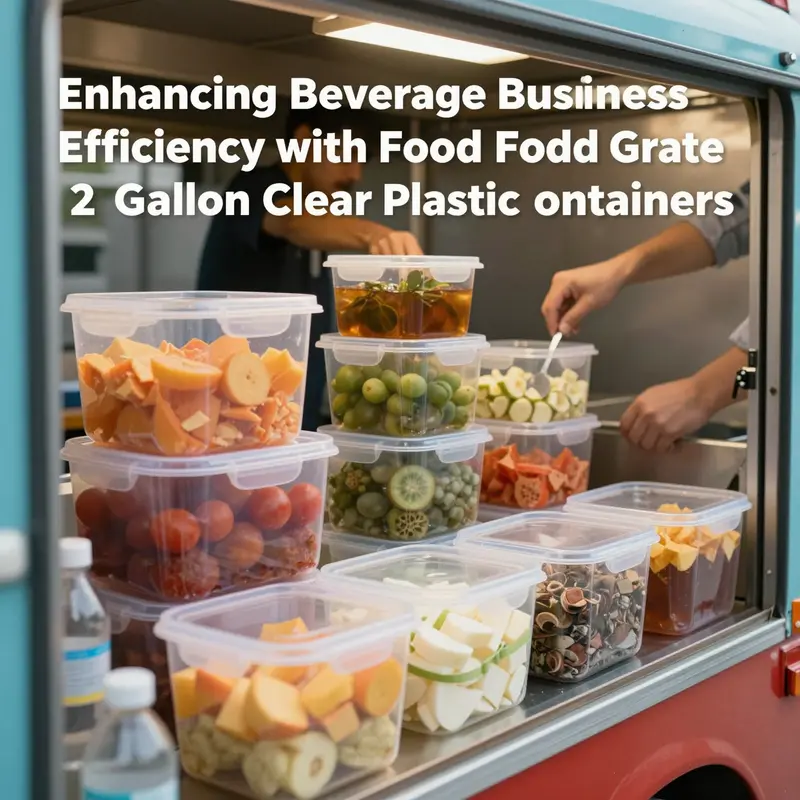
A single, transparent container can anchor a broad spectrum of operations, from a home pantry to demanding production environments. The 2-gallon clear plastic container is designed to bridge everyday utility and industrial reliability. Made from high-density polyethylene and formulated to be BPA-free, it pairs safety with durability and adaptability. The clear walls allow instant visibility of contents, enabling quick checks of fill levels, color, and aroma—factors that matter in kitchens, labs, gardens, and workshops. This chapter explores how such containers influence sanitation, inventory control, and workflow across settings.
In household kitchens, dry goods like rice, flour, sugar, beans, and grains benefit from a dependable seal that protects against moisture and pests while remaining easy to open and pour. The lid’s leak-proof seal and ergonomic grip support single-handed operation, and the transparent wall helps households maintain visibility into stock levels, reducing waste and simplifying meal planning. Liquids such as oils or syrups can also be stored safely, with care taken to preserve flavor and hygiene through repeated use.
Across food service, retail, and production, the same design principles yield greater benefits. Visual inspection at a glance supports faster restocking and minimizes mislabeling. The container’s robustness reduces the risk of leaks during transport between stations, while its reusable nature helps lower waste compared to single-use packaging. In facilities where samples are measured or dosed, the smooth interior and consistent geometry help maintain hygiene and simplify cleaning routines.
In agricultural or outdoor contexts, these containers stand up to varying weather and handling conditions. They can store seeds, grains, or gardening supplies, and the clear walls help monitor moisture and sediment accumulation without opening the container. Ergonomic handles and space-efficient shapes support transport and stacking, even in compact spaces. The BPA-free construction adds a safety margin when handling organic materials or nutrient solutions.
From a procurement perspective, standardization matters. A common 2-gallon size with clear walls and reliable seals can streamline purchasing, labeling, and cross-department use. Compatibility with lids, gaskets, and optional accessories—such as measuring marks or spouts—further enhances versatility. When used in concert with clean-in-place or hand-cleaning protocols, these containers become part of a sustainable storage strategy across the organization.
Guardians of Freshness: Health and Safety Standards for Food-Grade 2-Gallon Clear Plastic Containers
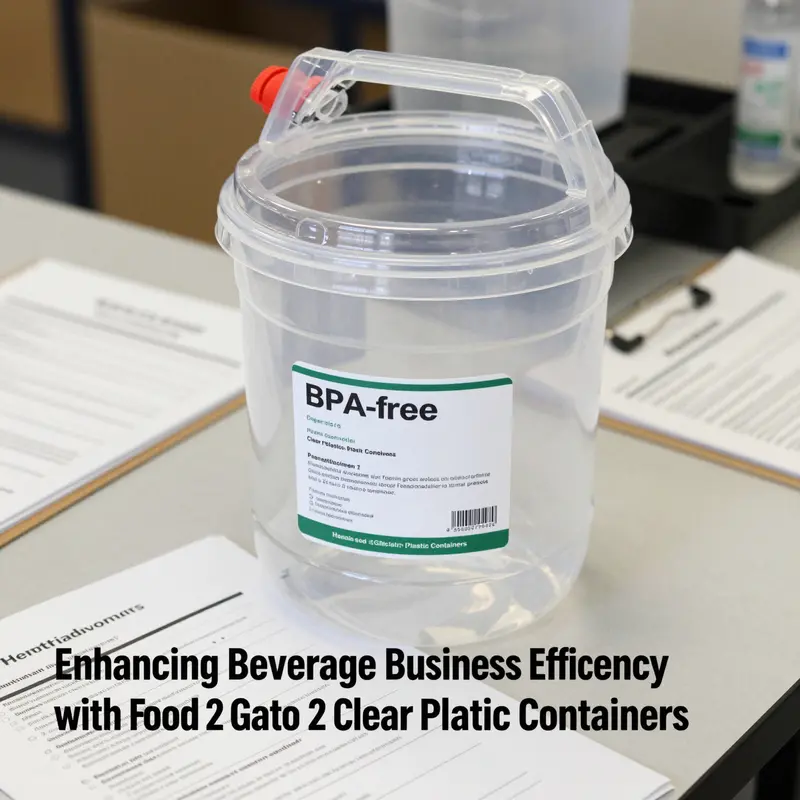
The moment a consumer chooses a food-grade 2-gallon clear plastic container for storage, the decision carries more weight than the simple convenience of a large-capacity bucket. It touches on trust, science, and the quiet work of compliance that keeps every bite safe. In a landscape where containers must hold everything from dried grains to freshly poured liquids, the standards that govern their safety are not an afterthought but a core design parameter. They shape the way these containers are manufactured, tested, labeled, and used, and they define the boundaries between everyday practicality and the obligations of protecting public health. The path from raw resin to a store-ready, reusable storage vessel begins with a clear-eyed respect for the rules that keep food from becoming a vehicle for contaminants, and it ends in a product that performs reliably under the varied conditions of kitchen, warehouse, campsite, and food service line.
At the heart of health and safety is the U.S. Food and Drug Administration, which governs materials that come into contact with food. The FDA does not pretend that contact with food is harmless by default; rather, it asserts that the substances in contact with food must not transfer harmful substances to the food under normal use. This is not simply a matter of risk assessment in the abstract. It translates into concrete expectations: the resins and additives used to make a 2-gallon clear plastic container must be chosen so that, under typical temperatures, pressures, or exposure to light, any migrants into food remain below levels of concern. In practical terms, manufacturers design these containers with polymer types known for their stability and low leachability, such as high-density polyethylene (HDPE) or polypropylene (PP). These materials are favored precisely because they resist chemical leaching, oxidation, and microbial compromise while maintaining clarity and impact resistance—traits essential for a container meant to reveal its contents at a glance and endure repeated use.
Beyond the FDA, European markets follow Regulation (EC) No 1935/2004, which sets a broad framework for materials and articles intended to contact food. This regulation underscores a harmonized safety standard across a wide geographic area, emphasizing the traceability of materials, the predictability of their performance, and the obligation to avoid substances that could migrate into food in concentrations that might cause harm or alter taste, odor, or appearance. When a manufacturer designs a 2-gallon clear container with a tight-sealing lid and a transparent body, they are balancing these regulatory expectations with real-world concerns: optimizing for leak resistance while ensuring the container remains visually inspectable, which is critical for monitoring the freshness and condition of stored goods. Such a balance is not accidental. It is the result of a deliberate choice to align product design with both the letter and the spirit of food-contact regulations, enabling safety to scale from a single household kitchen to a food processing facility.
A robust certification program underpins consumer confidence. Third-party testing organizations, including NSF International and SGS, provide independent validation that a container meets recognized food-contact safety benchmarks. These certifications go beyond mere material selection; they assess the entire lifecycle of the product—from resin procurement to the finished item’s performance under typical handling, washing, and repeated opening and closing. The certification process examines whether the container’s infrastructure—its seams, lid, and gasket—remains intact after repeated use, whether the material withstands typical cleaning regimens, and whether it maintains its structural integrity when subjected to heat, UV exposure, or chemical sanitizers commonly used in commercial kitchens or outdoor environments. This layer of verification matters because it adds a credible, external assurance that the container’s performance is not merely theoretical but demonstrable under independent scrutiny.
Material choice is a practical axis of safety. HDPE and PP are staples in food-contact applications because they offer a combination of chemical resistance, mechanical durability, and clarity that supports both safety and utility. HDPE’s toughness and low moisture permeability reduce the risk of external contaminants penetrating the container, while its resistance to many solvents and oils helps prevent interactions with stored liquids or powders. PP brings additional stiffness and temperature tolerance, enabling hot-fill applications or the safe storage of slightly warmer contents without warping or deforming. The clear design serves a dual purpose: it lets users visually assess content quality without removing lids, and it imposes a discipline of inventory discipline. Seeing at a glance whether lentils have absorbed moisture, or whether a liquid has separated or spoiled, supports timely decision-making about usage, rotation, or disposal—actions that are central to safety as much as to efficiency.
Yet material safety is not a one-time checkbox. It is reinforced by a suite of testing that simulates real-world scenarios. Migration testing, for instance, uses food simulants—mimicking contact with aqueous, acidic, alcoholic, or oily foods—to estimate how much of any substance might migrate from plastic into the food under defined conditions. Results guide whether a given resin and its additives are permissible for contact with food and for which use cases. Unified standards also address ultraviolet exposure, a frequent concern for containers stored in sunlit kitchens, garages, or vehicles. UV resistance helps maintain the container’s physical and surface integrity, reducing the risk of microcracking or embrittlement that could harbor crevices for microbial growth or create irregular contact surfaces that complicate cleaning.
Particularly important is the lid–body interface. A leak-proof and airtight seal is not a mere convenience; it is a critical barrier against contamination, odor migration, and accidental spills that could ruin foods or compromise other stored materials. The gasket materials must also be evaluated for safety, ensuring they do not shed particulates or toxins into food or water under normal handling. In industrial settings, where large-volume containers may be moved through loading docks or refrigerated spaces, the seal’s performance in temperature fluctuations—not just in ordinary room temperature—becomes a crucial determinant of safety and storage fidelity.
The design language of these containers—clear, easily stackable bodies, ergonomic handles, and a tapered shape that allows nesting when empty—also plays a role in safety. Ergonomics reduces the chance of accidental drops or improper handling that might compromise the seal or cause physical injury. Clear bodies, while aesthetically simple, are a safety feature in disguise: they enable ongoing monitoring for contamination, moisture, or pest intrusion, supporting a proactive hygiene approach rather than a reactive one. Cleanability is another safety criterion woven into the design. Large openings, smooth interior surfaces, and robust finishes help ensure that residual food matter does not accumulate in hard-to-clean corners. This reduces microbial risk and supports the container’s reusability, a factor that aligns with broader health and environmental goals around food storage.
For professional settings, the chain of custody and traceability become particularly important. Manufacturers and facility operators often require batch codes, lot numbers, and clear labeling to map each container to its test results and certification status. When audits occur—whether for a restaurant health inspection or a retail distribution center—the ability to reference a container’s certification and migration data can support compliance and facilitate corrective action if concerns arise. Even in households, such traceability supports responsible use: a family can confirm that a container has seen no repeated exposure to heat beyond its design limits, or that it is being rotated according to a labeled shelf life or recommended storage guidelines. In all these contexts, safety is a living practice rather than a snapshot of compliance.
The question of compatibility with various storage regimes is also a matter of safety, particularly when liquids are involved. The capacity to store oils, syrups, or cleaning solutions alongside dry goods raises concerns about potential cross-contamination. A well-engineered 2-gallon container manages these risks through a combination of chemical resistance and effective sealing. The container’s materials must resist absorption and staining that could conceal odors or residues, while the lid’s seal should prevent leakage that might migrate into neighboring foods or surfaces. In a busy kitchen or a processing facility, the ability to swap contents confidently from one application to another—say, from rice to a liquid concentrate—requires that the container remains inert enough to avoid altering the stored product’s flavor, appearance, or safety profile.
With safety and testing in mind, it is essential to acknowledge that not all 2-gallon clear plastic containers are created equal, even if their external appearance looks similar. Certification marks and documentation provide a roadmap through the safety landscape. When a container carries credible certifications, it signals that its manufacturers have completed the due diligence needed to prove compliance with food-contact safety norms. This is not a luxury but a practical tool for decision-makers who must weigh safety against cost, durability, and reuse cycles. For consumers and professionals alike, the presence of a verifiable certification—be it NSF, SGS, or another recognized body—bolsters confidence that the container can be trusted to perform its function without introducing risk to the foods it touches.
The design and safety narrative also intersect with environmental stewardship. Reusable storage solutions, when properly maintained, reduce the volume of single-use packaging that would otherwise accumulate in landfills. This environmental benefit does not excuse lapses in safety; rather, it highlights a balanced approach: using durable, safe containers repeatedly and retiring them only when they fail to meet established safety or performance criteria. The lifecycle perspective encourages careful handling—cleaning steps that preserve the integrity of the material, storage conditions that minimize UV exposure and extreme temperatures, and documentation that supports replacement decisions when a container shows signs of wear.
In practice, this ecosystem of standards translates into a simple but powerful expectation for users: treat the container as a safety-critical tool. Do not use it for items outside its intended scope, avoid exposing it to temperatures beyond its tested range, and maintain the seal and surfaces through regular cleaning with approved detergents. The policy framework allows room for everyday variability—household kitchens, outdoor events, or small-scale food service—yet it imposes a discipline that keeps safety front and center. When these expectations are met, the container becomes more than a vessel for storage; it becomes a reliable partner in preserving taste, nutrition, and safety across a broad spectrum of applications. This is the steady, almost invisible work of standards: it quietly informs design choices, guides testing protocols, and ultimately protects health while enabling the practical routines that depend on dependable storage.
To connect theory with practice, consider how one might choose such a container in a way that respects these standards without sacrificing usability. A thoughtful buyer looks for clear indicators of compliance: materials known for safety and stability, documented certifications from respected third-party bodies, and information about the container’s resistance to leaching, UV exposure, and chemical interaction with common storage substances. The presence of an airtight, leak-proof lid with a durable gasket is not merely a convenience; it is a concrete feature that supports hygiene and content integrity during transport or long-term storage. A well-designed container also communicates its limits clearly—through labeling that notes the storage temperature range, the types of contents recommended, and the recommended cleaning and reuse guidelines. All of these cues together form a practical map from policy to pantry, shaping how households and facilities approach food safety in daily life.
As a final note on the regulatory tapestry, readers should consider consulting official resources to verify the most current requirements for materials used in food contact. The FDA maintains a Food Contact Substances Database that provides up-to-date information on approved resins and additives used in food packaging and storage. This resource supports informed decisions and helps ensure that the containers chosen for large-volume storage meet current safety expectations rather than relying solely on retrospective claims or marketing language. For those seeking an authoritative gateway to safety data, this database is an essential reference as standards evolve and new materials enter the market. You can explore the database at the following resource: https://www.accessdata.fda.gov/scripts/fdcc/. This external reference anchors the chapter’s emphasis on evidence-based safety and regulatory alignment, reinforcing the bridge between practical storage needs and the rigorous oversight that protects consumers.
In the broader arc of this article, the chapter on health and safety standards for food-grade 2-gallon clear plastic containers serves as a throughline that blends science, regulation, and everyday practicality. It explains why certain materials are favored, how testing and certification function in real-world settings, and how thoughtful design supports safe handling across kitchens, laboratories, and service environments. It also signals the responsibilities of manufacturers to provide credible documentation and of users to interpret and apply that information in routine storage decisions. The resulting practice—store with clarity, seal with confidence, and reuse with responsibility—reflects a mature approach to food safety that respects both the science behind the materials and the lived realities of those who rely on these containers every day. When safety and usability converge in a single product, the 2-gallon clear plastic container does more than hold contents; it protects the people who handle them and the foods that pass through them, fostering trust from the first glance of transparency to the last drop after storage and use.
For readers seeking practical pathways into this world of standards, a single, ready reference is often enough to anchor daily decisions. Consider the internal resource that discusses eco-conscious takeout packaging and its role in safe food handling, which provides context for how responsible design translates into everyday practice: eco-friendly takeout boxes for food packaging. By tying the theory of safety standards to the tangible realities of packaging choices, the article helps readers move from abstract compliance to concrete, confident use. When combined with robust external resources like the FDA database, this integrated approach equips professionals and consumers alike to navigate the complex landscape of food-contact safety with clarity and trust.
Final thoughts
Food grade 2 gallon clear plastic containers provide businesses in the food and beverage industry with the ideal solution for safe and efficient storage. Their durable, BPA-free design ensures compliance with health and safety regulations while catering to versatile storage needs. By incorporating these containers, establishments like bubble tea shops, restaurants, and food trucks can streamline operations and enhance service quality. Investing in the right storage solutions not only benefits food safety but also improves inventory management, making these containers a must-have for any food service operation.