
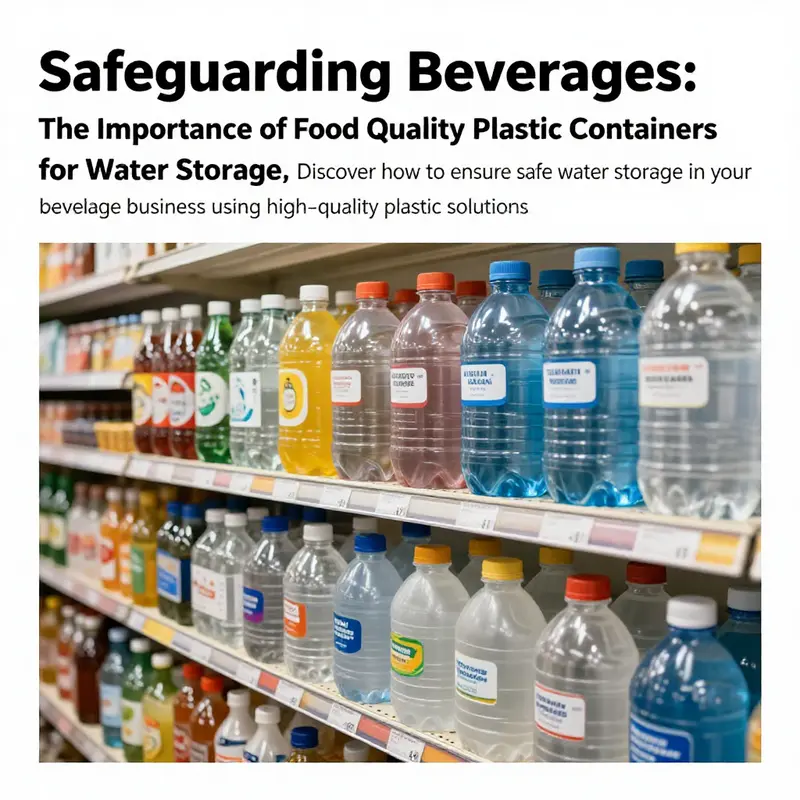
In the bustling world of beverage service, whether you’re a bubble tea shop, restaurant, food truck, or caterer, the quality of water storage is often overlooked but crucial for food safety. Utilizing food quality plastic containers for water storage can significantly impact your beverage’s taste and safety. This article explores best practices, risks associated with non-food quality containers, effective cleaning methods, and emergency applications of these containers. Each chapter will guide you through the essential aspects of maintaining high standards for water storage, ensuring the integrity of your offerings in every sip.
Safeguarding Potable Water: Why Food-Grade Plastic Containers Matter for Water Storage
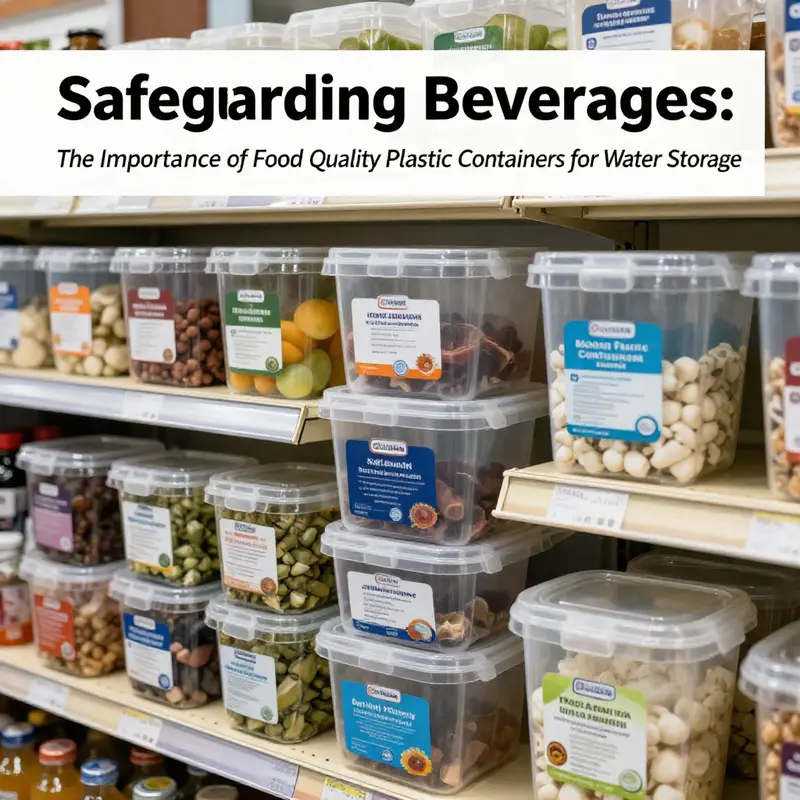
Storing water in plastic containers is a practice familiar to households around the world, especially in contexts of irregular supply, emergencies, or outdoor living. The decision to use plastic is often driven by practicality—lightweight, affordable, and relatively durable. Yet the safety and quality of stored drinking water hinge on more than the container’s appearance or capacity. It rests on nuanced choices about materials, labeling, and the conditions under which storage occurs. In this chapter, we explore how food-grade plastic containers contribute to water safety, why not all plastic receptacles are equal for potable storage, and what users can do to preserve water quality over time. The focus remains pragmatic and precise: choose containers designed for food contact, follow proper cleaning and storage practices, and remain mindful of how light, heat, and aging affect a container’s performance. This approach aligns with a broader aim of the article, which is to illuminate the practical dimensions of using food-grade plastics for water storage without veering into the realm of marketing or unsupported claims.
First, it helps to clarify what “food-grade” means in the context of plastics. At its core, a food-grade container is manufactured from materials and through processes that adhere to standards designed to minimize the migration of harmful substances into food or beverages. When such a label is present, it signals that the plastic type—commonly high-density polyethylene (HDPE) or polypropylene (PP), and sometimes newer alternatives like Tritan™ in certain applications—has been selected and tested for contact with ingestible products. HDPE and PP are among the most widely used food-contact plastics because of their chemical stability, relatively low permeability to water, and historical track records in safety assessments. The notion of “food-grade” thus functions as a practical assurance: the base materials are chosen to reduce leaching potential, and the manufacturing chain is expected to maintain consistent quality.
However, the reality is more layered. Water storage introduces specific considerations that differ from short-term food packaging or consumer storage of ready-to-eat goods. Water itself is, in effect, a solvent for certain additives and residual compounds. Plastic components can interact with water under particular conditions, potentially releasing trace substances or enabling the migration of micro-particles if the container is worn or damaged. This is not a claim about an inevitable failure, but a reminder that the long-term safety of stored water depends on choosing a container intended for potable water use, maintaining it well, and storing it under conditions that minimize risk. In practice, this means looking beyond a single label and toward a combination of material choice, design considerations, and responsible usage. The discipline of potable water storage emphasizes a conservative, preventive approach: start with materials that have a history of safe use, protect those materials from physical and environmental stress, and monitor for signs of aging or contamination.
A central distinction worth reiterating is that while containers designed for food storage can sometimes be suitable for water, the application matters. Water storage requires ensuring that the container’s surface is smooth and free from scratches, its seams are sound, and the material has not aged to a point where micro-fractures could harbor bacteria or shed microplastics. Reuse compounds this risk. A container that has endured repeated cycles of filling, draining, and cleaning may accumulate micro-scratches or become more permeable to external substances. Over time, aging plastics may also release additives that had been locked in during initial manufacture. These dynamics underscore why regular inspection and a replacement mindset are prudent parts of any water storage plan. It is not merely about choosing a labeled container once but about committing to ongoing care and responsible stewardship of the storage system.
The labeling and the materials deserve closer attention. Among commonly used food-contact plastics, HDPE (often represented by the safer end of the spectrum for water) and PP are prized for their chemical stability and resistance to moisture. Tritan™, while marketed for durability and clarity in some consumer products, is another material that has drawn attention for its claimed BPA-free properties and resilience. The practical takeaway is to prioritize containers that clearly specify food-grade status and to verify that the polymer type is appropriate for long-term contact with potable water. It is equally important to seek out containers that are free from previous chemical contamination. A container previously used to store solvents, pesticides, or strong cleaning agents—even if it looks clean—should not be repurposed for drinking water. The risk is not only chemical migration but the potential formation of biofilms inside the container that can be difficult to eradicate with routine cleaning. A simple rule-of-thumb is to maintain a clean separation between uses that involve food substances and those that involve chemical storage, and to rely on containers designed for water or food contact when planning long-term water storage.
Cleaning and preparation before first use or after each use form a practical routine that has a disproportionate impact on water safety. Even the most reputable food-grade container benefits from thorough cleaning. Use mild, non-abrasive cleansers and warm water to remove production residues, dust, and any packaging residues that might accompany the container. A thorough rinse is essential to remove any residual soap or cleaning agents, which themselves can affect taste or safety. The drying phase matters too; air-drying in a clean environment prevents moisture buildup that could encourage microbial growth. When disinfection is warranted, it should be done cautiously and in accordance with general guidelines for plastics. If a sanitizer is used, it must be compatible with the container material and thoroughly rinsed afterwards. The goal is to avoid leaving residues that could alter taste or composition of the stored water while ensuring any potential microbiological threats are addressed without compromising the plastic.
Storage conditions play a pivotal role in maintaining water quality over time. The preferred environment is cool, dry, and out of direct sunlight. Heat accelerates the rate at which substances can migrate from plastic into water, and sunlight can promote the growth of algae or other bioorganisms in exposed containers, especially when the cap is not tightly sealed. For many home settings, this translates into keeping containers away from heat sources such as stoves or heaters and away from window sills where sunlight can directly strike. The storage space should also be free from frequent temperature fluctuations, which can stress the plastic and foster micro-cracking. A stable, shaded pantry, garage shelf, or closet corner often meets these criteria. In addition to environmental control, practical handling matters—keep containers closed when not in use, avoid dragging sharp objects across surfaces, and store them in a way that minimizes contact with other items that could damage the container’s exterior or lid integrity.
The practice of replacing aged or damaged containers is not merely pedantic. Scratches, cracks, and general wear can become reservoirs for bacteria and sites for microplastic shedding. Micro-scratches create microenvironments where organisms can cling, and deeper fractures can harbor residues that are difficult to remove with routine cleaning. As the container ages and is subjected to more cycles of filling and draining, its barrier properties may degrade. This is a reminder that longevity has its limits; even containers that started as ideal for water storage will eventually require retirement. The point is not to fear plastic but to treat it as a finite resource with a defined lifespan. Implementing a straightforward inspection routine—checking for any visible signs of wear, clouding, or odor after cleaning, and replacing any compromised container—helps maintain water quality without over-reliance on a single vessel for years on end.
Beyond these practicalities lies an important, nuanced context. The available research emphasizes that while food-storage plastics have well-documented safety profiles in general use, the specific niche of long-term potable water storage has nuances that are not fully captured in some existing datasets. This gap does not mean risk is inevitable; it signals the need for informed decision-making grounded in reputable standards and thoughtful everyday practices. In other words, choosing a container labeled for food contact should be the baseline, but it should be coupled with an awareness of the container’s history, its material composition, and the conditions under which it will operate. For people who assemble emergency water reserves or who rely on large-scale home storage, the extra steps described above—careful cleaning, prudent storage, and timely replacement—serve as essential safeguards.
To connect these ideas to real-world behavior, consider how households might balance convenience with safety. A familiar scenario involves storing water in a large-capacity container intended for food contact in a cool, dark space, with a clear, corrosion-free cap that seals tightly. Before filling, the container should be washed and rinsed with clean water, not just water drawn from a tap that might already contain impurities. After filling, the water’s taste and odor can be a practical, low-cost indicator of container integrity; a plastic container that imparts any off-flavor or unusual odor may be signaling aging or contamination pathways. In such cases, replacing the container is prudent. When the container is used in a setting with high humidity or in a garage or outdoor shed, additional protective measures—such as lifting the container off the floor, using shelves, and ensuring the storage area has good air circulation—help further safeguard against microbial growth and degradation from damp environments.
This chapter also engages with a broader recognition in the literature: the need to align consumer practice with established public-health guidance about potable water storage. While the body of evidence on water-contact plastics emphasizes material safety and design features, it also points to international standards and guidelines from authoritative bodies such as environmental and health agencies and international standardization organizations. The safer path is to rely on containers whose labels explicitly declare food-grade materials, avoid containers that have previously held chemicals, and adhere to careful cleaning and storage routines. The practical upshot is clear: water stored in food-grade plastic containers, used correctly and replaced when necessary, can be a safe and reliable option for household water resilience. The approach is not a one-off decision but a disciplined practice that integrates material science with everyday stewardship.
For readers seeking additional practical anchors in this space, one accessible pathway is to explore packaging resources that discuss materials and design in relation to safety and reuse. For example, consider a resource that highlights eco-friendly packaging options and the design considerations that keep food-grade containers suitable for multiple uses. This example helps bridge the gap between material choice and everyday usage by offering a tangible view of what constitutes safe, reusable storage from a packaging perspective. eco-friendly disposable 3-compartment food-grade packaging box for fast food takeout packaging.
In sum, the path to safe water storage in plastic containers rests on disciplined choices and prudent practices. Begin with containers clearly labeled for food contact, prioritize materials known for stability and low leaching potential, and maintain a regimen of thorough cleaning, careful storage, and periodic replacement. Recognize that water storage amplifies certain risks compared to short-term food storage, and treat aging containers as a natural risk factor to be monitored. By combining material awareness with practical care, households can achieve water storage that is not only convenient but genuinely protective of health. This integrated approach will also support coherence across the broader article, ensuring readers understand how container choice, use, and maintenance converge to sustain quality from container to cup.
External resource: For international guidance on potable water contact materials and contamination prevention, see the World Health Organization’s guidance on water quality and health: https://www.who.int/watersanitationhealth/publications/ .
null
null
Guarding the Wellspring: Integrated Care for Food-Grade Plastic Containers in Water Storage
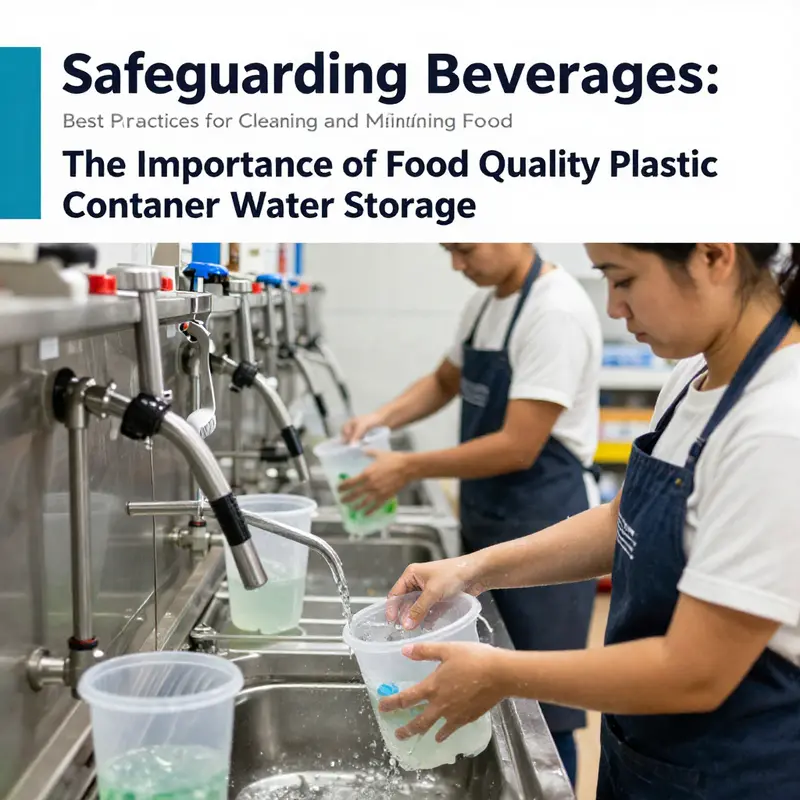
Water storage relies on more than just filling a container. It hinges on choosing the right vessel and treating it with care so that every drop remains clean, safe, and palatable over time. When containers are labeled as food grade, they embody a design philosophy intended to minimize the transfer of unwanted substances into the water. This is not an abstract claim: the materials, the manufacturing processes, and the intended contact with consumables are all defined to meet specific standards. In practice, this means high density polyethylene or similar food-grade plastics are used for their moisture resistance and stability, and the packaging has often undergone scrutiny by regulatory authorities to permit direct contact with food and water. The journey from label to liquid is a sequence of decisions and actions that begin with material choice and end with disciplined use, cleaning, and storage. Understanding this sequence helps anyone relying on plastic containers for water storage to balance convenience with safety and to extend the life of the container while reducing the risk of contamination. The core idea is simple in principle: use containers that are explicitly designed for food contact, keep them clean, store them away from harm, and replace them when signs of wear appear. Yet the details matter a great deal, because the water that sustains a household in emergencies or daily life travels through a porous boundary of plastic. The materials chosen, the way the container is sealed, and the environments in which it is kept all contribute to a gradual, sometimes invisible, exchange between plastic and water. This is why the guidelines emphasize not only the label food grade but also the conditions of use, the maintenance routine, and the recognition that even durable plastics have a lifespan that can influence water quality if neglected. When we talk about maintenance, the goal is to preserve the container’s integrity and to minimize any opportunity for chemical migration, microbial growth, or physical degradation that could compromise health. A central point is that food-grade does not guarantee perpetual perfection. It signals a standard, a baseline expectation that the plastic is suited for contact with consumables under ordinary conditions. The practical path forward blends a few simple practices into a comprehensive habit: select the right container, clean it thoroughly before first use and after each refill, store it in a cool, dark place, avoid exposing it to heat and direct light for extended periods, and monitor for signs of aging or damage. Each of these steps has a physiological and microbial logic behind it. Proper cleaning removes residues that could harbor bacteria or impart odors. Even if a container looks pristine, tiny manufacturing residues or dust from transit can be carried into the water if not washed away. For cleaning, the recommendation is mild soap and warm water, followed by thorough rinsing. Abrasive scrubbers should be avoided because scratches on the surface can create micro-niches where bacteria thrive and where microplastics might begin to release under stress. The clean container is then dried completely before refilling, because moisture trapped inside can foster microbial growth over time. The goal is not sparkle for its own sake, but a dry, clean surface that resists the establishment of a biofilm, which can be a stealthy threat in long-term storage. Storage conditions are equally critical. The ideal environment is cool, dry, and shielded from light. Ultraviolet exposure can degrade the plastic over time, reducing its physical strength and potentially accelerating the release of trace substances. Heat is another enemy; high temperatures can accelerate chemical migration and alter the water’s taste, while sunlight can encourage algae or biofilm formation if there is any exposure during opening and closing. In the real world, many households depend on large food-grade containers, sometimes as part of an emergency kit or a daily-use reservoir. The habit of using secondary containers for daily portions can minimize repeated openings of the primary vessel, reducing airborne contamination and the chance of accidental spills. But even with a robust primary container, care must be taken to maintain a controlled environment and a consistent routine. The containers’ lids deserve particular attention. A secure seal protects against odors and contaminants while preserving water quality. A loose or ill-fitting lid can introduce micro-organisms, dust, or pests, especially when containers are stored in shared spaces like garages, pantries, or laundry rooms. Stacking considerations also influence safety and practicality. If multiple containers are stored together, ensure stability and proper alignment to avoid tipping and cracking, which can create micro-cracks that trap dirt or harbor microbial growth. The physical integrity of the container matters; scratches, cracks, or warping are not merely cosmetic concerns but potential soft spots where contaminants can accumulate and microplastics can shed. That is why long-term durability is paired with a clear policy for replacement. A damaged container should be retired rather than repaired, because the risk of contamination may outweigh the cost savings of continued use. A seamless narrative emerges when we appreciate the continuum from material choice to everyday practice. Food-grade plastics like HDPE are chosen in part for their moisture resistance, their ability to help maintain product freshness, and their broad acceptance for contact with consumables. This is not an invitation to complacency but a reminder that safety is an ongoing discipline. The label is a baseline, and the rest depends on how the container is cared for. The practical navigation through daily life involves several disciplined choices. The first is to acquire containers that clearly display the food-grade designation, preferably through reputable channels that guarantee the material’s compatibility with drinking water. In addition to the label, one should verify that the container’s design supports complete cleaning and thorough drying, with smooth surfaces and seals that can be rinsed and sanitized without leaving corners where residue could hide. The cleaning process should be gentle to avoid creating micro-scratches yet thorough enough to remove any residual dust, manufacturing oils, or earlier contents. Mild soap, warm water, and a soft cloth or non-abrasive sponge are usually sufficient. After washing, the container should be rinsed cleanly and dried in a manner that prevents any residual moisture from becoming a source of microbial growth. If a container has been exposed to heat or sunlight for a prolonged period, or if there are signs of color change, warping, or unusual odors, a cautious approach is warranted. In such cases, replacement is prudent, because the potential for micro-cracking and leaching increases with aging. The cycle of use should also be considered. Although these containers are durable and designed for repeated use, a note of caution remains: indefinite reuse is not guaranteed. Over time, repeated handling, stacking, and cleaning can produce microscopic changes that accumulate and increase the risk of contamination. The simplest safeguard is to adopt a time-based replacement policy, especially for containers that have seen several seasons of service or have been subjected to repeated openings and refills. To strengthen the maintenance routine, it helps to document the storage conditions and the last cleaning date, offering a straightforward audit trail that can guide future decisions about replacement and re-stocking. In rare cases, sensitivity to taste or odor may reveal contamination that is not yet apparent to the eye. If water stored in a plastic container ever develops an off-taste or unusual odor, it is reasonable to stop using that container and start fresh with a new one. The human palate is not a perfect detector of all contaminants, but it serves as a practical early warning in daily life. When discussing the wider landscape of food-grade containers for water storage, it is also worth acknowledging the broader standards and guidance offered by regulatory bodies. For readers who want to explore standards beyond the practical tips and blend them with formal guidelines, there is value in reviewing authoritative resources on plastic food contact materials. For context on food-grade packaging standards, see this example of packaging standards food-grade packaging standards. This internal reference helps situate daily care within a larger ecosystem of safety expectations and material science. The overarching message remains clear: treat food-grade containers as reliable vessels when used correctly, and respect their limits by maintaining cleanliness, minimizing exposure to adverse conditions, and acting decisively when signs of wear appear. As a practical habit, consider the workflow of storage and use as a cycle rather than a one-off task. Fill, rinse, dry, seal, and store in a cool, dark place with stable temperatures. When opening for a daily portion, do so in a way that minimizes air exposure and contamination, and re-seal promptly. If the water is intended for emergency use, ensure that you rotate stock so that older water is consumed before newer water, maintaining a fresh supply without the risk of stagnation. Finally, while the labels and practices described here line up with widely accepted notions of food-grade containers, a broader reading of guidance on plastic food contact materials remains advisable. The external body of knowledge emphasizes that ongoing evaluation of material safety, proper cleaning, and responsible use are essential for safeguarding water quality over time. For those seeking a formal reference, consult the official FDA guidance on plastic food contact materials to align household practices with regulatory recommendations and evolving scientific understanding. External resource: https://www.fda.gov/food/food-contact-materials
Steady Hydration in Crisis: The Quiet Reliability of Food-Grade Plastic Water Storage
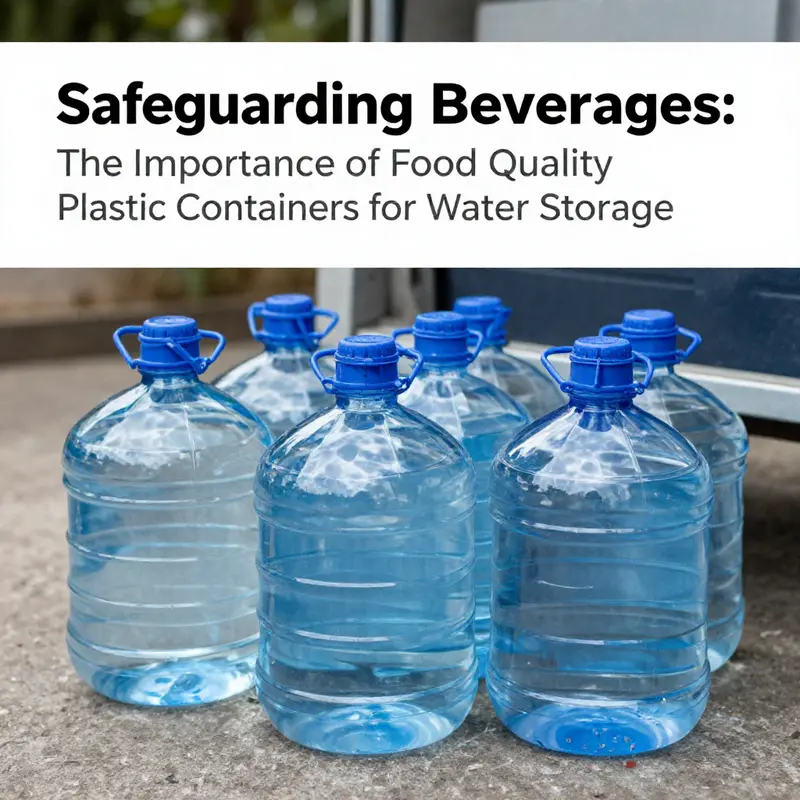
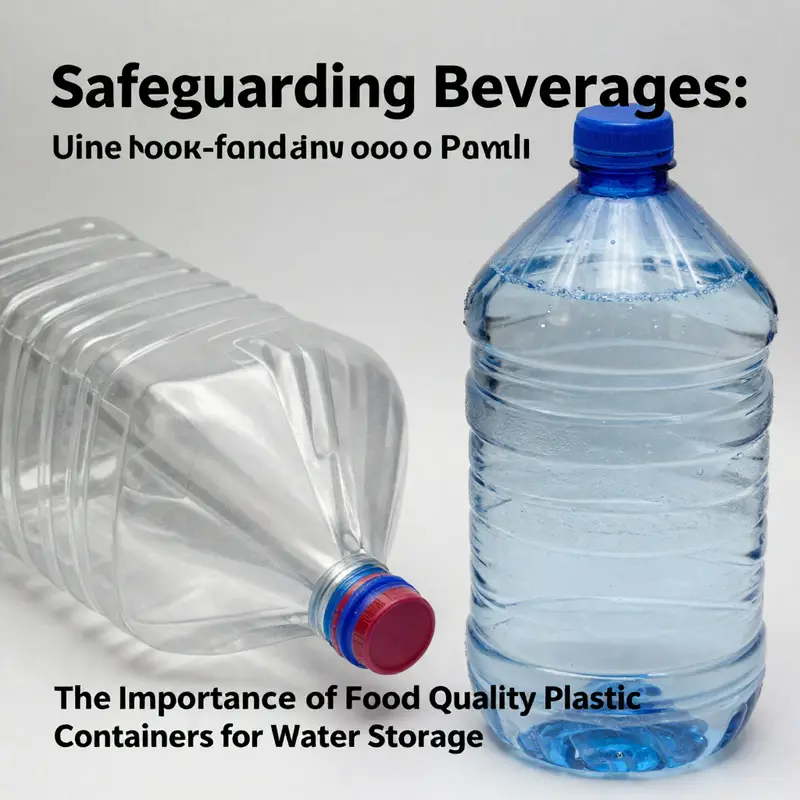
During emergencies, having safe drinking water stored in food-grade plastic containers offers a dependable, scalable option. Containers labeled for food contact are designed to minimize leaching and preserve taste and safety. These containers, typically made from HDPE or PP, should be dedicated to potable water and never repurposed from non-food uses. Cleanliness is essential: rinse with soap and water, air-dry completely, and store sealed in a cool, dark place. A routine such as wash, rinse, air-dry, and seal helps maintain a sanitary barrier against microbial growth. When long-term storage is anticipated, consider a small, appropriate amount of unscented household bleach, such as 1/8 teaspoon per gallon, added to the water and kept in sealed containers. Rotate supplies every six months to refresh the reserve and check for signs of wear like cracks or cloudiness. Avoid containers that previously held solvents, paint, or chemicals, as residues can linger and compromise water quality. In an emergency, the goal is immediate, safe access to hydration, but the quality of the storage system matters as much as the water itself. The layout should support hygiene during use: pour spouts, tight-fitting caps, and the ability to clean the interior with minimal effort. Community-level storage can further improve resilience by pooling resources and standardizing containers to simplify maintenance. The emphasis across guidance is clear: use containers designed for food safety, maintain them properly, and rotate stock to ensure readiness when taps go dry.\n\nIn practical planning, it is helpful to designate a storage area, label containers with fill dates, and schedule a rotation every six months to replenish the supply. Regular inspection for cracks, cloudiness, or unusual odors will help catch problems before they affect drinking water. Use only clean, dedicated water containers and avoid reusing vessels that held chemicals or solvents. Keep containers in a cool, dark place away from direct heat and sunlight to slow the breakdown of plastics. Finally, align storage practices with local guidance from public health authorities to ensure that your approach remains consistent with current safety recommendations.
Final thoughts
Ensuring the safety and quality of the beverages you serve begins with how you store your water. By utilizing food quality plastic containers, adhering to cleaning protocols, and being aware of the risks of using non-food quality options, beverage businesses can significantly enhance their service quality. Understanding the importance of these practices not only protects your clientele but also bolsters your brand reputation. Make informed decisions for your water storage solutions and elevate the standards of your beverage service.