
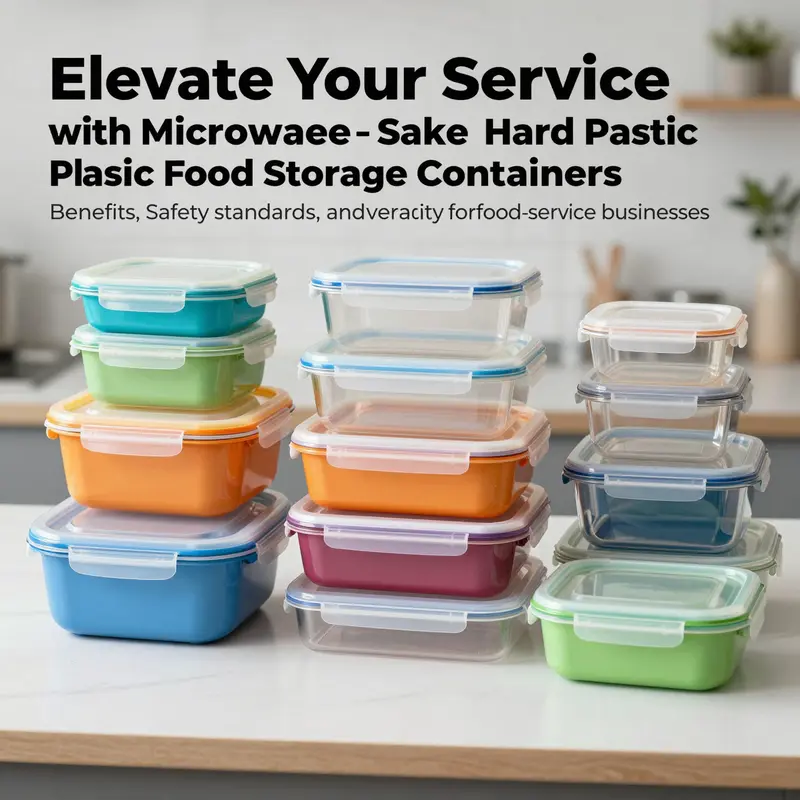
In the food service industry, efficient storage, reheating, and service are essential. Microwave-safe hard plastic food storage containers help maintain food quality while streamlining operations for cafes, restaurants, food trucks, and caterers. This article explores the benefits, safety standards, commercial versatility, and guidance for selecting the best options for your business.
Resilient Reheating: The Practical Power of Microwavable Hard Plastic Food Storage Containers
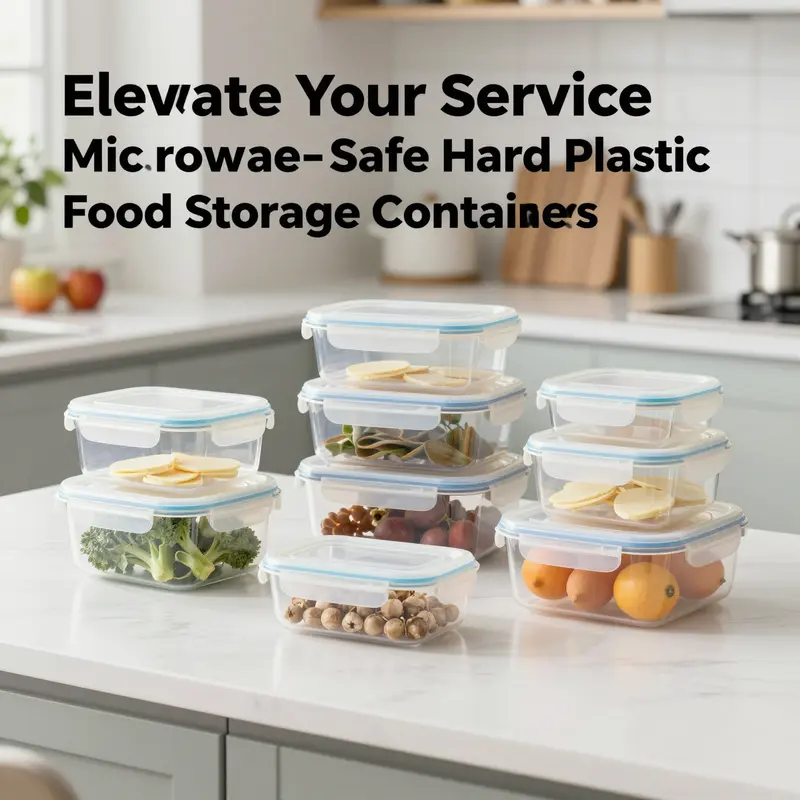
Microwavable hard plastic food storage containers have quietly become the workhorses of modern kitchens. They are not flashy, but they are dependable, and their value shows up in the everyday moments when a cold fridge finds a hot plate, or a busy schedule needs a ready-made, neatly packaged meal. At the core of these containers is a material story, most often polypropylene, sometimes alongside other durable plastics like high-density polyethylene. The resin choice matters because it defines how the container behaves under heat, how it holds its shape, and how it interacts with the food that it holds. When a container is described as microwave-safe, it is signaling more than a quick reheating option. It is a promise that a dish can move from freezer to microwave without softening, warping, or releasing substances that would surprise a curious diner late at night. In many markets this promise is backed by third‑party testing and formal standards from recognized bodies such as the FDA in the United States or EU guidelines elsewhere. The end result is a practical system: a rigid, clear choice that supports convenience, safety, and routine meal planning without the need for fragile silicone or bulky metal options.
One of the clearest advantages of these containers is heat resistance. The ability to withstand microwave temperatures without collapsing or deforming means leftovers can be reheated directly in the container. That single feature reduces the number of steps a cook has to take, trimming cleanup time and preserving the integrity of the meal. The container remains sturdy enough to be handled with a hot mitt, and its lid, designed to seal, helps maintain moisture and flavor. It is not just about surviving heat, but about doing so consistently across a cycle of reheating, cooling, and even brief freezing. This reliability makes these containers particularly appealing for meal prep, where a batch can be portioned out, frozen, and then reheated with minimal fuss. The mental model here is simple: a box that travels well through the temperature ladder, from freezer to microwave to table, without compromising the food or the container itself.
Health safety is another cornerstone. A large share of microwavable hard plastic containers are labeled BPA-free, a concern that has shaped consumer expectations for decades. BPA, or bisphenol A, has been scrutinized for potential hormonal activity, so manufacturers and safety regulators have steered away from it in products intended for direct contact with hot or fatty foods. Yet even with BPA-free labeling, the conversation is nuanced. Microwave safety does not always guarantee that every molecule within a container will stay perfectly still. Heat can influence how some compounds migrate, especially with fatty or acidic foods over time. The practical implication is that while BPA-free and microwave-safe labeling provide a solid baseline for safety, mindful use remains prudent: avoid scratching the surface, avoid overheating fatty foods in plastic containers, and replace containers that show signs of wear, warping, or cracking. The guidance feels like a balanced triangle: choose materials that meet safety standards, adhere to manufacturer directions, and discard containers that lose their integrity.
Convenience stands as the most visible benefit. These containers are purpose-built for everyday use, balancing rigidity with a compact footprint. They are ideal for meal prep and on-the-go meals, whether a midday office lunch or a family dinner that travels well in a car trunk or a backpack. Their rigid structure supports stable transport, reducing the risk of leaks and spills compared with collapsible silicone options. For busy households, that stability translates into fewer mid-meal wardrobe changes and a cleaner fridge. When time is tight, the ability to reheat in the same vessel reduces dishwashing burdens and simplifies the post-meal routine. The built-in practicality is further enhanced by features like leak-proof lids, stackable designs, and occasionally integrated cutlery or compartmentalized sections. These features are not just conveniences; they are thoughtful design choices that extend the container’s usefulness beyond reheating to everyday packing, storage, and even light travel.
Space efficiency is another consequence of a well‑designed microwavable hard plastic container. Most versions are stackable, a detail that matters in small kitchens and crowded refrigerators. By nesting neatly, they reclaim cabinet real estate and make it easier to align meal portions in the fridge. The reality, however, is that any stacking system requires careful handling; misalignment can lead to tipping or instability, especially when containers are full. While the rigid form contributes to stability, it does not erase the need for mindful organization. The ability to minimize clutter has a tangible impact on kitchen routines; it frees up shelf space for other essentials and slows the creeping chaos that can accompany a week of meal preparation.
Cleaning and maintenance round out the practical benefits. Many microwavable hard plastic containers are dishwasher safe, a feature that aligns with modern expectations of hygiene and convenience. The ease of cleanup is not just about speed; it also reduces the likelihood of lingering residues that can affect flavor or safety. Durable plastics hold up to repeated cycles of heat and dishwashing, preserving clarity and strength over time. Yet a careful user will still monitor for scratches and warping. Micro-scratches can hide bacteria and odors, and deeper gouges can become weak points where cracks first appear. The simple rule holds true here: treat the container well, replace it when signs of fatigue appear, and you’ll extend its life while preserving safe food contact.
The broader framework that supports these advantages is not merely material choice but the system of standards and labeling that surrounds microwave use. Containers marketed as microwave-safe should carry credible labeling indicating compliance with safety guidelines. In many regions this labeling is backed by standards or certifications from recognized agencies, which means third-party testing confirms that the container can tolerate normal household microwave use without releasing harmful substances or degrading rapidly. It is a practical reassurance for households and foodservice operations alike, providing a consistent baseline for safety when preparing meals in bulk, reheating portions, or packing lunch the night before. In a world of evolving plastics science and shifting regulatory expectations, those standards serve as a valuable compass for consumers who want reliable performance without sacrificing health considerations.
With these benefits in mind, it is easy to understand why many people choose microwavable hard plastic containers as a core element of their food storage and reheating strategy. They offer a reliable combination of heat resistance, safety, convenience, and space efficiency that supports both home cooking and professional settings. They are not the only option, of course, and every choice comes with trade-offs. The primary tension lies in balancing heat stability with long-term durability and ensuring that use remains aligned with safety guidance. The conversation about safety is not about a single feature but about how a container performs across its life cycle, from initial purchase through multiple reheating cycles, through washing, drying, and eventual disposal. The best practices converge on selecting containers that are clearly labeled as microwave-safe and BPA-free, avoiding containers with scratches or signs of warping, and following lid venting instructions when necessary to manage pressure during reheating. In that sense, the practical value of microwavable hard plastic containers rests on a straightforward equation: safety plus reliability plus ease of use equals a more predictable, efficient kitchen workflow.
For readers who are curious about how these packaging choices fit into a larger packaging ecosystem, there is a broader conversation to be had about how different materials perform under microwave conditions, how they interact with various foods, and how consumer expectations shape product design. Some packaging solutions emphasize sustainability in ways that still respect microwave functionality, while others focus on ultra-durability for commercial use. The spectrum is wide, but the core benefits described here—heat resistance, safety, convenience, space-saving design, and easy cleanup—appear consistently across the range of contemporary microwavable hard plastic containers. They are not a universal remedy for every storage challenge, but they do offer a robust, practical path for everyday cooking and eating. When paired with mindful use and attention to aging signs, these containers provide a dependable backbone for a kitchen that values simplicity without compromising safety.
As you ponder your own kitchen setup, consider how these containers fit into your routines: the way a batch of leftovers can be reheated in the same vessel, the ease of stacking them in a tight refrigerator, the reassurance of BPA-free labeling, and the comfort of knowing the lids are designed to seal without leaking. This is not merely about a container; it is about the rhythm of meals, the logistics of weeknight dinners, and the quiet efficiency that comes from having a trusted tool ready at hand. If you are exploring packaging options beyond plastic, or if you want to understand how different materials compare under heat and transport, you can explore related packaging solutions that also prioritize microwave compatibility and safe materials. For a look at eco-friendly takeout packaging that also respects microwave safety, see this resource:
eco-friendly takeout boxes for food packaging.
The dialogue about safety and performance extends to external guidance as well. The U.S. Food and Drug Administration provides a foundational overview of food contact materials and questions about what makes a material microwave safe. While the specifics can vary by formulation and use case, the overarching message is clear: choose containers that are clearly labeled as microwave-safe and follow heat guidelines to preserve both the food quality and the container’s integrity. This chapter has sketched a practical picture of why microwavable hard plastic containers are a staple for many households. They balance cost, function, and safety in ways that support a smoother, more efficient approach to daily life, while inviting ongoing attention to wear, aging, and appropriate use. The journey from storage to reheating is simple when the container is designed with the right priorities in mind, and when the user remains attentive to the signs that a container has served its time and should be retired. The chapter closes not with a conclusion about a single product, but with a reinforced understanding of how material choice, safety labeling, and thoughtful use come together to make microwavable hard plastic containers a dependable ally in the kitchen. In the chapters that follow, we will consider how these containers interact with meal-prep strategies, how they compare to other materials in terms of energy use and waste, and how consumers can assess total cost of ownership in a world where convenience, safety, and sustainability all matter.
External resource for further reading: FDA safety guidance on microwave-safe plastics can be explored at https://www.fda.gov/food/food-contact-materials/food-contact-materials-questions-and-answers
Microwave-Ready Safety: Navigating Standards for Hard Plastic Food Storage Containers
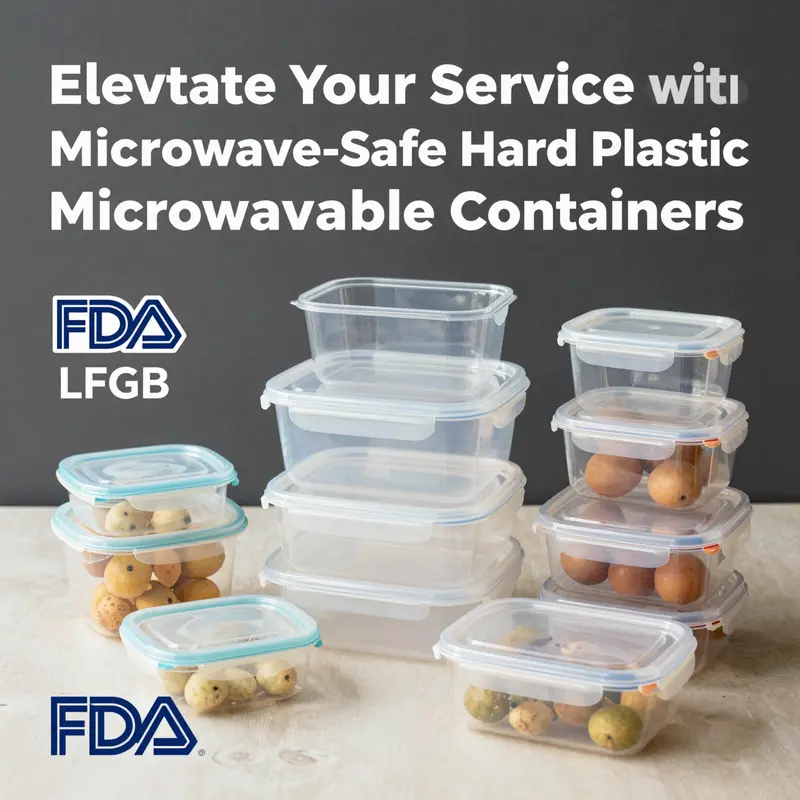
The kitchen is a place where convenience meets safety, especially when reheating foods in hard plastic containers. Containers labeled microwave safe are designed for use in typical home microwaves, but safety depends on material identity, testing, and user practices. Polypropylene, the resin code #5 plastic, is the most common hard plastic chosen for microwave heating because of its higher heat resistance and relatively low migration risk under normal use. When a container truly meets microwave standards, the base will show PP or the number 5, signaling alignment with tested thermal and chemical criteria.
Other plastics such as polystyrene (PS), polyethylene terephthalate (PET), polyvinyl chloride (PVC), and polycarbonate (PC) can behave poorly when heated in microwaves. They may warp, crack, or release substances that are undesirable in food. Labels matter: explicit statements like microwave safe and symbols such as a microwave icon or a fork-and-glass motif indicate testing for heat resistance and food-contact safety. Third-party certifications can strengthen consumer confidence, but they are most reliable when paired with clear resin identity and visible safety marks.
Practical use tips help keep microwave reheating safe. Always remove or vent lids before heating, as lids may be made from materials not rated for high heat. Avoid heating very fatty or sugary foods for extended periods, and monitor containers for signs of wear such as cracks, warping, or discoloration. If a container shows wear or a strange odor after heating, retire it rather than attempting to reuse it.
While PP containers are common and convenient, many households benefit from occasional use of glass or ceramic for long term storage and reheating, especially for repeat cycles or high temperature scenarios. If plastic remains your primary option, seek products with robust testing, clear labeling, and minimal signs of wear, and follow manufacturer guidance for maximum heating times and power settings. The standard framework that governs food contact materials and migration limits provides the scientific basis for these recommendations, translating lab results into practical kitchen practices.
From Prep to Plate: The Commercial Versatility of Microwavable Hard Plastic Food Storage Containers
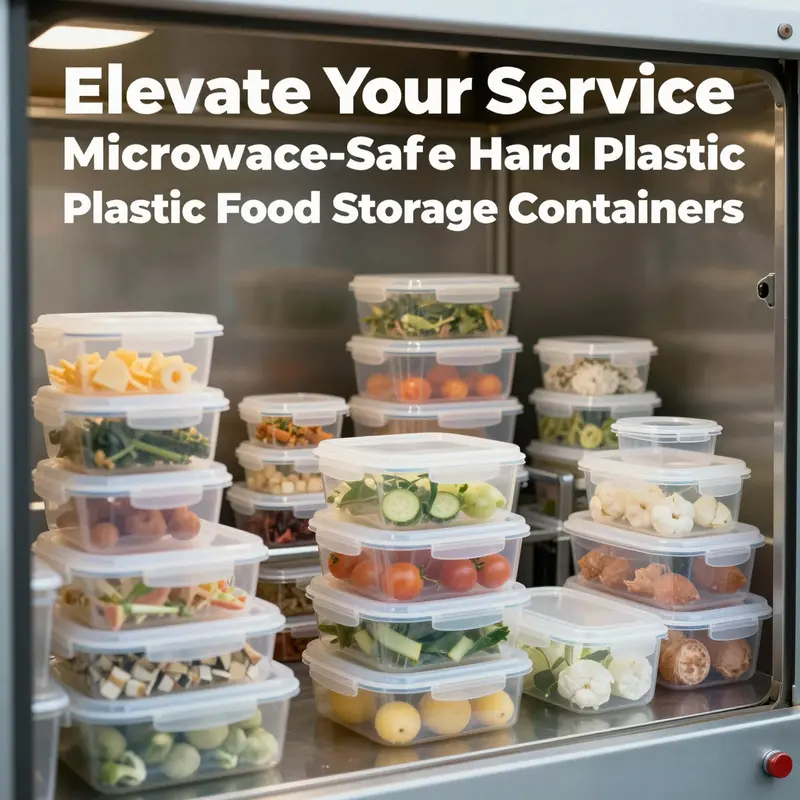
Microwavable hard plastic food storage containers are more than simple vessels for meals; in commercial kitchens they act as enabling tools that shape how quickly, safely, and efficiently a operation runs from the moment ingredients are weighed in to the moment plates leave the building. Made primarily from polypropylene, these containers are chosen for heat resistance, resilience, and the practical balance they strike between durability and cost. Their resin code, commonly identified as #5, signals a chemistry designed to withstand repeated reheating and washing, a feature that matters in high-volume environments like cafeterias, hotel buffets, catering operations, and hospital kitchens. When containers are clearly labeled as microwave safe and carry recognized safety certifications, they become trusted workhorses in settings where consistency and compliance matter just as much as speed and organization. In practice, this translates into fewer transfers between vessels, reduced risk of cross-contamination, and a workflow that keeps staff focused on core tasks rather than on- the-fly container management.
Beyond the material science, the commercial value of these microwavable hard plastic options extends into the daily rhythms of a busy kitchen. Reheating leftovers or prepped meals directly in their serving containers minimizes handling and accelerates service during peak hours. This capacity to go from cold storage to hot service without a transfer to another dishware item reduces the likelihood of spills, heat exposure, and potential contamination. It also supports a more predictable service cadence; a line cook can pull a batch from the fridge, reheat it in the same unit, and plate quickly. The ability to reheat safely in the container is especially practical for batch prep and for takeout operations where food safety and speed converge. The practical design features—tight-fitting snap lids, leak-resistant seals, and vented options when needed—work in concert with heat resilience to keep sauces emulsified, maintain texture in proteins, and prevent soggy or dried-out edges that can undermine quality.
The versatility of these containers does not stop at reheating. They are typically engineered to be dishwasher-safe, freezer-safe, and stackable, creating a continuum of usability from storage to service. In bulk prep scenarios, teams can portion proteins, grains, and vegetables into standard sizes, seal them, and store them flat in a freezer, maximizing space efficiency and enabling precise portion control. When a menu rotates, the same set of containers can accommodate multiple recipes by swap of lids or inserts, reducing the number of different vessels a kitchen must manage. The ability to withstand cold storage and reheating without losing integrity is not merely about convenience; it helps maintain food safety standards by providing stable environments for storage while limiting the need for transferring contents to alternative packaging that might introduce cross-contact risks.
In this ecosystem, brands increasingly emphasize features that support daily operations. Some containers come with built-in cutlery compartments or lids designed to be both airtight and easy to open, a combination that appeals to busy service operations and to on-the-go consumers who rely on reliable packaging for takeout and delivery. For staff, such design elements translate into faster access, less fumbling during busy service, and fewer accidental spills. For customers, they contribute to a perception of reliability and quality, reinforcing the idea that the product inside was prepared with care and attention to hygiene. The broad range of sizes—from compact single-portion boxes to larger multi-meal sets—echoes the diversity of needs across service formats. A chef exploring a menu’s flexibility can select containers in a spectrum of capacities, matching portions to dietary guidelines or customer preferences while maintaining a consistent visual language across all meals.
From a branding and operational perspective, the capacity to customize is a particularly valuable advantage in professional contexts. Many suppliers offer original equipment manufacturer (OEM) and original design manufacturer (ODM) options that enable branding through color-coding, logos, or indexable labels. Color codes on lids can quickly signal meal type or dietary category, assisting staff with portion control and reducing the risk of mix-ups in fast-paced lines. Logos or color-accented lids can also foster a professional, cohesive appearance for in-house meal programs or branded takeout services. In practice, this level of customization supports a broader strategic aim: creating a reliable packaging system that aligns with a business’s identity and quality standards while supporting efficient operations.
Sustainability concerns, now a central consideration for many commercial operators, are also reshaping the use of microwavable hard plastic containers. While traditional hard plastics are valued for their durability, the industry increasingly embraces recyclable formats and, where possible, recycled-content materials that do not compromise performance. Across commercial kitchens, sustainability translates into practical decisions about procurement: choosing PP-based containers that are sturdy enough for repeated reuse, selecting lids designed for long life cycles, and seeking products that can be responsibly recycled at the end of their service life. The goal is to extend the life of each container, use fewer resources over time, and reduce waste without sacrificing safety standards. In this context, even the choice of lid design, venting options, and seal integrity becomes a factor in minimizing waste and avoiding premature disposal due to leaks or damage. For teams pursuing greener operations, the market now offers more options that balance microwave safety with recyclability, maintaining performance while shrinking environmental footprints.
The procurement and supply chain dimensions of microwavable hard plastic containers are also worth noting. In large-scale operations, consistency of supply, batch quality, and standardization across facilities are essential. Many buyers rely on bulk orders from reputable manufacturers who can provide uniform codes, stable sizing, and predictable lead times. The ability to source a common container family across multiple sites simplifies training, inventory management, and maintenance cycles. It also underpins cost efficiency, as bulk purchases reduce per-unit cost and help standardize packaging across menus. In addition to traditional distributors, digital marketplaces provide access to a wider network of verified manufacturers, enabling buyers to compare specifications, certifications, and price points at scale. Such platforms often offer customization options, including printing logos or color codes and selecting lid configurations that suit specific service models, whether it’s in-house dining, catering, or delivery-driven operations.
One practical consideration is the ongoing requirement to maintain safety and compliance. Containers used in food service must meet regulatory standards for food contact materials. In many markets, polypropylene-based containers with FDA and LFGB certification provide a clear demonstration that they have been tested for food contact safety and are appropriate for reuse under typical kitchen conditions. The durability of PP means that repeated cycles of washing and reheating do not rapidly degrade the container, though care should be taken to avoid sharp impacts, deep scratches, or warping that could harbor bacteria or compromise the container’s seal. Regular inspection for signs of wear—cracks, discoloration, or lid failure—helps maintain safety and quality. In addition, operators should follow manufacturer guidelines regarding maximum reheating times and temperatures to prevent warping or chemical exposure that could occur with degraded plastics.
Operationally, the rise of branded, multi-size packaging systems supports control and organization. When teams adopt sets of containers that cover common serving sizes, it becomes feasible to implement standardized portioning and labeling across departments. This standardization simplifies inventory management and reduces the risk of mispacked meals or confused deliveries. A side benefit is improved customer experience: consistent packaging contributes to predictable heating times and portion sizes, which in turn yields more uniform taste and texture across meals. In service lines that push throughput, the relationship between container design and workflow becomes more than cosmetic. It affects how quickly staff can move from prep to service, how reliably meals arrive at the table or at the customer’s door, and how easily a kitchen can scale during peak periods.
Looking ahead, the market is gradually expanding the palette of options that preserve microwave safety while offering additional environmental and functional benefits. Some models incorporate recyclable materials with improved barrier properties, helping to maintain food quality while supporting recycling streams. Others experiment with more compact, nestable shapes and lighter wall-thicknesses that reduce material use without compromising heat resistance. For operators, these developments translate into greater versatility: the ability to tailor packaging to specific menus, to optimize storage footprints, and to meet evolving sustainability targets without retooling entire service models. The practical upshot is clear: microwavable hard plastic containers are not just convenient for reheating; they are a core component of modern food service infrastructure that underpins efficiency, safety, branding, and sustainability.
For teams evaluating options, it is wise to consider the full lifecycle of packaging—from procurement and storage to reheating and disposal. Ask suppliers about heat resistance, dishwasher compatibility, lid integrity, leak resistance, and recycling pathways. Assess whether sizes align with your standard portion guidelines and whether lids are compatible with stacking and nesting. Look for packaging that can be used across multiple applications—meal prep, dine-in service, takeout, and catering—without sacrificing performance. And as you explore suppliers, consider incorporating value-added features such as branding capabilities or color-coding that can improve speed and accuracy in busy kitchens while enhancing the customer experience.
To illustrate how sustainability and practicality intersect in real-world applications, brands increasingly seek packaging that pairs microwave safety with responsible end-of-life options. For organizations prioritizing eco-conscious practices, there is growing demand for containers made from recyclable PP and for designs that minimize waste through reuse or efficient recycling. This trend aligns with broader initiatives to reduce single-use plastics and to implement packaging that supports takeout and delivery without compromising safety or quality. The interplay between durability, safety, and environmental responsibility continues to shape the development of microwavable hard plastic containers, guiding decisions from the initial design phase through to procurement, daily use, and disposal. As the industry evolves, kitchens that embrace these containers in a holistic way—balancing performance, cost, safety, and sustainability—are likely to achieve greater consistency, improved operational flow, and stronger customer satisfaction across service formats.
In sum, microwavable hard plastic food storage containers occupy a pivotal role in commercial kitchens. They are engineered to withstand heat, washing, and the stresses of high-volume use, while offering a level of versatility that supports prep, storage, transport, and service. Their standardized sizes, durable construction, and potential for customization make them suitable for a broad spectrum of applications, from single-portion meals to large family-style distributions. The ongoing attention to safety certifications, correct use, and care ensures these containers remain dependable tools for busy operations. Coupled with thoughtful sustainability practices and strategic supplier relationships, they form a practical backbone for modern food service, enabling kitchens to deliver quality meals quickly and consistently, every day.
For readers who want to explore practical options with sustainability in mind, there are resourceful choices available online. One can find eco-conscious packaging designed for microwave use that also supports branding and efficient storage. To learn more about such options and how they can integrate into a restaurant, catering, or institutional program, this internal reference offers a relevant starting point: eco-friendly takeout boxes for food packaging. This kind of packaging reflects a broader industry shift toward combining performance with responsible practices while maintaining the flexibility required by busy operations.
Externally, the market for bulk microwavable containers is broad and accessible through major supplier platforms that connect buyers with manufacturers capable of meeting strict safety standards and large-volume needs. These resources provide a framework for evaluating options, comparing specifications, and identifying containers that align with your menu, service model, and sustainability goals. While individual product names and brands should be approached with care in line with sourcing policies, the underlying principle remains clear: choose containers that consistently perform under heat, wash cycles, and transport demands, while supporting efficient workflows and responsible packaging practices. A widely used supplier marketplace offers extensive listings and documentation that can help operations reason through the trade-offs between durability, cost, and recyclability. External references and catalogued options can be explored to broaden the selection and to identify the most appropriate match for a given operation: https://www.alibaba.com/product-detail/Fuling-G-ZSDBT-microwavable-clear-plastic-food-deli-containers_1600798544527.html?spm=a2700.100176.0.0.6c4f6e6dZKqHtO
Right-Sized, Safe, and Microwave-Ready: Navigating Hard Plastic Storage That Keeps Your Food Fresh
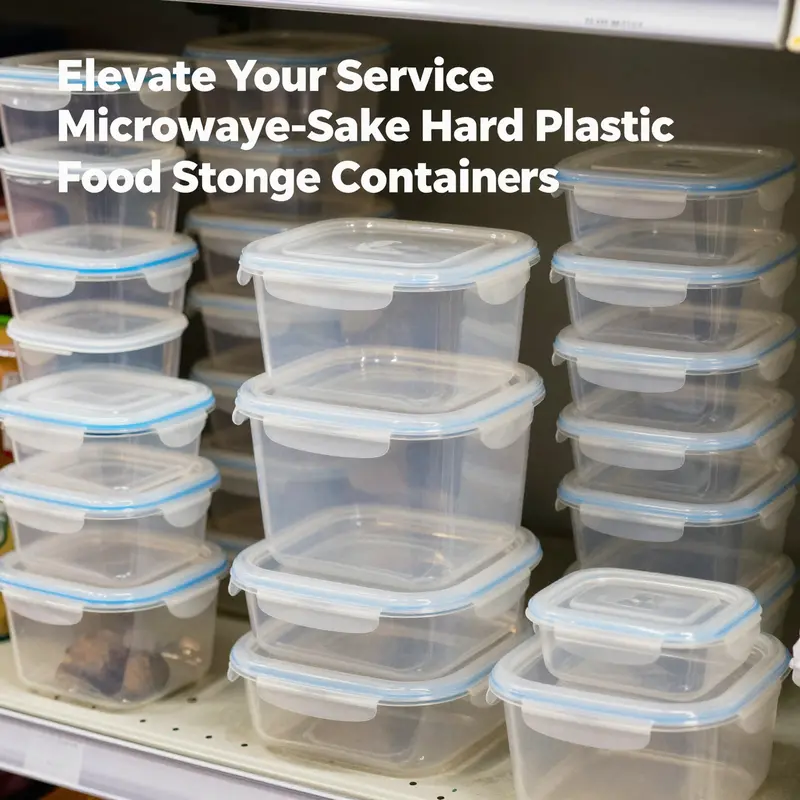
A modern kitchen often looks like a small laboratory of cooling, reheating, and reorganizing meals. In this space, microwavable hard plastic containers are a frequent calling card of smart meal planning: they are durable, stackable, and designed to go from fridge to microwave with a minimum of fuss. The appeal of polypropylene-based containers, resin code #5, rests in heat resistance and resilience. They are typically light, inexpensive, and available in an array of configurations that fit a single portion, a family-sized portion, or a set that covers a week of lunches. Yet as practical as they are, the choice to use microwavable hard plastic for food storage should arise from a careful balance of convenience and safety. The narrative around these containers is not simply about plug-and-play use; it is about reading labels, understanding what sits inside the plastic, and assessing how everyday habits might influence the safety of reheating and reusing meals day after day.
The starting point for any thoughtful decision is the labeling that accompanies today’s microwavable hard plastics. Containers that are truly safe for microwave use usually carry explicit markings that they are microwave safe. This certification is not a casual promise; it is usually backed by third-party testing and adherence to established safety standards. In many markets, this means compliance with organizations that set formal guidelines for food-contact materials. The presence of a credible mark suggests the container has been evaluated for heat resistance, chemical stability, and the avoidance of excessive leaching under typical reheating conditions. The reality, however, is nuanced. A “microwave safe” label helps, but it does not grant a free pass for unlimited heating, repeated cycles, or careless handling. The best practice is to pair the label with manufacturer directions about microwave wattage, heating duration, and whether the lid or vent must be removed or opened during reheating. These details are not mere bureaucracy; they reflect how a particular design handles moisture, pressure, and temperature changes.
A pragmatic glance at material content helps illuminate why polypropylene often earns the safe-use reputation it enjoys. PP (#5) is recognized for its resistance to high temperatures relative to many other plastics and for keeping its shape and clarity after repeated cycles. This makes it a natural choice for containers intended to withstand the routine stresses of refrigeration, freezing, and reheating. Nevertheless, the science around plastics and heat is a landscape of nuance. While PP is considered safer for reuse than many other plastics, there are realities to keep in mind. The mere presence of a microwave-safe label does not guarantee lifelong inertness. Scratches, warps, and micro-abrasions can compromise the container’s structure, creating pathways for microscopic particles to interact with foods. Over time, wear can amplify the risk of chemical migration, especially when containers are used for longer periods or subjected to more aggressive heating cycles. The practical implication is simple: treat these containers as durable tools, not permanent implants for daily chemical exposure. If a container shows visible scratches, clouding, or warped lids, it is wise to retire it from hot applications.
The safety conversation does not rest solely on the plastic’s inherent properties. It extends to concerns about additives and contaminants that have hovered around consumer plastics for years. In expert discussions about everyday kitchen safety, some toxins associated with conventional plastics have raised concerns about heating. Bisphenol A, once common in a range of consumer products, has led many manufacturers to pivot toward BPA-free formulations. This shift, while reassuring, does not guarantee risk-free use. The broader lesson is that even BPA-free labels are not a carte blanche for reckless reheating. There are other substances—some linked to endocrine disruption or environmental persistence—that can migrate under certain conditions. The topic broadens when one also considers per- and polyfluoroalkyl substances, PFAS, a family of compounds associated with heat stability but, for some formulations, potential health concerns. While many modern microwavable containers avoid BPA and embrace safer alternatives, the cautionary tone remains: heat and food are powerful, and compatibility between a container’s chemistry and your food matters.
In practice, this means weighing the temptation of convenience against the importance of ongoing safety. For those who value an extra margin of safety, the safest choices step away from plastic in favor of non-plastic options with proven performance in both microwaves and freezers. Glass, particularly borosilicate formulations, excels here because it is non-porous, non-reactive, and easy to clean. When paired with lids that are BPA-free, glass storage offers robust performance for leftovers, sauces, soups, and meals prepped for the week. Glass does not absorb or transfer flavors and tends to resist staining. It also remains resilient after many cycles of freezing and reheating, though it is not entirely indestructible. The trade-off is weight and fragility in the hands of a busy household. Still, for many households, glass delivers a favorable safety profile that aligns with a long-term plan for reducing chemical exposure.
Silicone presents another compelling alternative. Reusable silicone bags and flexible sleeves offer a different balance of safety and convenience. Silicone is generally resistant to high temperatures and is less likely to shed micro-particles into food than some older plastics. It also has the virtue of being highly adaptable for storing irregular leftovers, ingredients, or even sous-vide-style preparations that later need reheating. While silicone is not a perfect panacea, it offers a non-plastic path that many households find compelling. In some kitchens, silicone containers and pouches function as a bridge between the convenience of hard plastics and the safety profiles of glass, with the added advantage of flexibility and space efficiency.
That said, many households still opt for plastic when space, cost, and convenience are the major drivers. If you choose plastic, the emphasis should be on thoughtful selection and disciplined use. The literature on safe kitchen practices emphasizes several practical guidelines that can help reduce risk. First, look for containers that are explicitly designed for microwave use and labeled as “microwave safe” in addition to being BPA-free. These two labels together provide a baseline that is stronger than either alone. Second, learn the constraints of your container. Many polypropylene containers tolerate reheating up to moderate temperatures but are not intended for high-temperature cooking, such as boiling or long, intense heat cycles. This distinction is crucial because the most common misuse is to treat a plastic container as a substitute for cookware when cooking or reheating at high power for extended periods.
Even when using BPA-free and appropriately labeled containers, it remains prudent to follow a few daily habits that preserve safety. Remove lids or vent them before microwaving to manage moisture and pressure. If a lid is not vented, pressure can build up and potentially distort the container or trap hot steam against the lid—creating a risk of burns when opened. Use shorter heating intervals, especially when experimenting with a new container. Let the container stand for a minute after microwaving to allow residual heat to distribute more evenly. Avoid overheating, which can cause warping, discoloration, or softening that may lead to a higher chance of leakage or chemical migration. Additionally, inspect containers for scratches, cloudiness, or cracking. These signs often indicate a breakdown in the barrier between the food and the plastic, which could alter texture, flavor, and safety over time.
For many people, the decision also involves how the container integrates into daily routines. Containers that are easy to wash, dishwasher-safe (when appropriate), and resistant to staining and odors tend to be used more consistently. When containers are dishwasher safe, there is an additional layer of safety to consider: high heat and detergents used in dishwashing can sometimes contribute to wear if the plastic was not designed for repeated dishwasher cycles. If there is any doubt about whether a container is dishwasher safe, hand washing with mild detergents can extend its life and reduce risk. The design of the lid often matters as much as the body. Lids with tight seals and venting options help minimize leaks and keep odors contained, which can be a practical benefit when storing and reheating leftovers for the next day’s meal.
Even as the conversation around safety evolves, practical use often shapes behavior. For those who still lean toward plastic for reasons of cost, availability, and space efficiency, a thoughtful plan can still reduce risk. Storage habits—how long leftovers are kept, how they are reheated, and the way food is prepared before being placed in a container—play a foundational role. For example, letting hot foods cool briefly at room temperature before sealing them in a container minimizes the thermal shock to the plastic, which in turn helps preserve the container’s integrity. Similarly, dividing larger meals into smaller portions can help ensure more even reheating while reducing the need for excessively long heat cycles that can degrade the container and increase the chance of uneven heating. Such practices are modest steps with a meaningful cumulative effect over months and years of daily use.
Ultimately, the choice of container hinges on a balance between the convenience of plastic and the ongoing commitment to safe heating and storage. For many households, a hybrid approach works best: use glass or silicone for hot meals and long-term storage, reserve polypropylene containers for routine, moderate reheating tasks, and retire any container that shows signs of wear. In all cases, follow the manufacturer’s directions for microwave use and care. The practical takeaway is simple: treat microwavable hard plastic as a tool that has limits and capabilities, not as an all-purpose substitute for proper cookware or durable non-plastic alternatives. Adopting this mindset supports both food safety and long-term kitchen resilience, letting micro-choices accumulate into safer, more reliable meal routines.
To connect these ideas to broader choices beyond plastic, consider how alternative packaging and storage solutions can complement your goals without sacrificing convenience. For instance, a well-sealed, vented, microwave-safe glass container can handle a wide range of reheating tasks without the concerns associated with repeated plastic exposure. Similarly, silicone options offer flexible storage and heat tolerance that can simplify portioning and transport for those who need fridge-to-desk options that travel well. The takeaway is not a denunciation of plastic but a calibrated approach to safety and practicality: know what your container is designed to do, use it within those bounds, and replace it when its integrity wanes. This approach aligns with a growing, safety-conscious kitchen philosophy that prioritizes both health and efficiency, especially for busy households that rely on quick reheating and consistent food quality.
For readers seeking a broader sense of how these choices fit into overall kitchen practice, a practical guide to food storage containers emphasizes that even BPA-free systems require mindful usage. The safest path remains a preference for non-plastic materials when feasible, paired with careful attention to heat exposure, cleanliness, and wear. If you do opt for plastic, resist the impulse to treat it as cookware and respect its role as a trusted container for stored food. With thoughtful selection and disciplined care, microwavable hard plastic storage can still play a reliable part in a well-organized, safety-conscious kitchen routine.
If you’d like to explore a packaging option aligned with broader eco-conscious and microwave-safe practices, you can consult resources that discuss the performance of various materials in real-world settings. A useful overview explores how durable, reusable options fare in everyday kitchens, including guidance on safe reheating practices and the trade-offs between materials. For more detail on safe kitchen practices and product considerations, you can refer to this expert-reviewed guide: Healthline on Food Storage Containers. Additionally, to see a related option that blends practical design with safety-minded use in the context of takeout and home storage, consider this internal resource that discusses eco-friendly, microwave-ready craft-paper containers and related packaging solutions: eco-friendly takeout boxes for food packaging.
External resource:
https://www.healthline.com/health/food-storage-containers#plastic
Final thoughts
Investing in high-quality, microwave-safe hard plastic food storage containers is an essential step for food-service businesses seeking efficiency and safety in their operations. These containers meet safety standards and offer versatility for various needs, from small shops to large catering services. By understanding benefits, certifications, and selecting the right options, you can enhance service offerings and ensure customer satisfaction.