
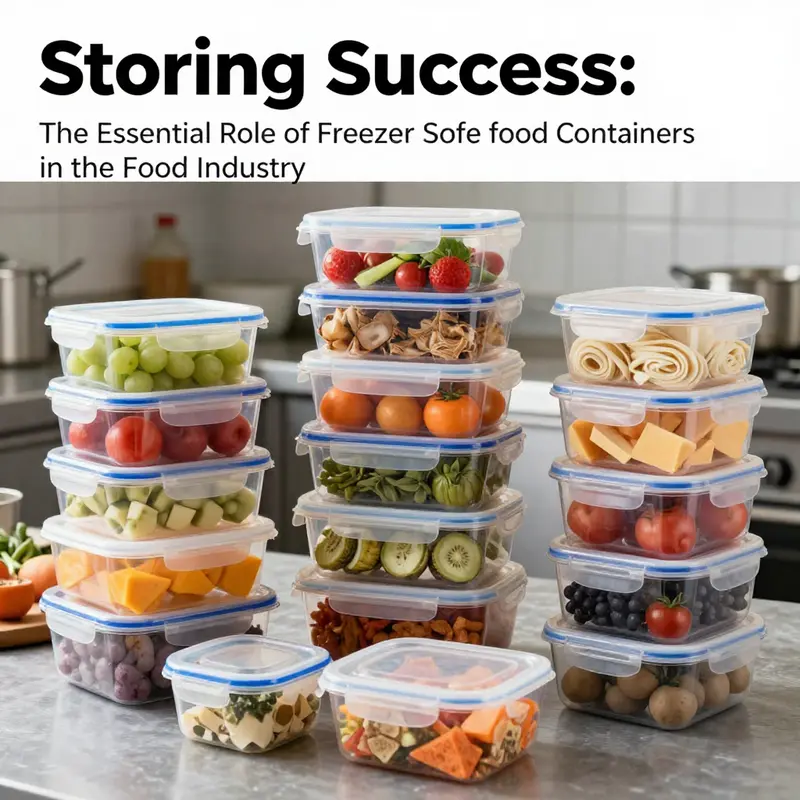
In the competitive food industry, efficient food storage solutions are a necessity. Freezer-safe plastic food containers have emerged as a trusted ally for bubble tea shops, restaurants, food trucks, catering services, and event planners alike. Their combination of durability, versatility, and compliant safety standards allows businesses to manage their inventory more effectively while minimizing waste. From keeping ingredients fresh for your latest bubble tea mix to neatly storing large batches of prepared meals for catering, freezer-safe plastic food containers provide practical solutions tailored to the fast-paced needs of food professionals. Each chapter delves deeper into their materials and construction, versatility in usage, crucial safety considerations, and the latest market trends to ensure you have the information needed to enhance efficiency in your operations.
Locking in Freshness: How Materials and Construction Shape Freezer-Safe Plastic Food Containers
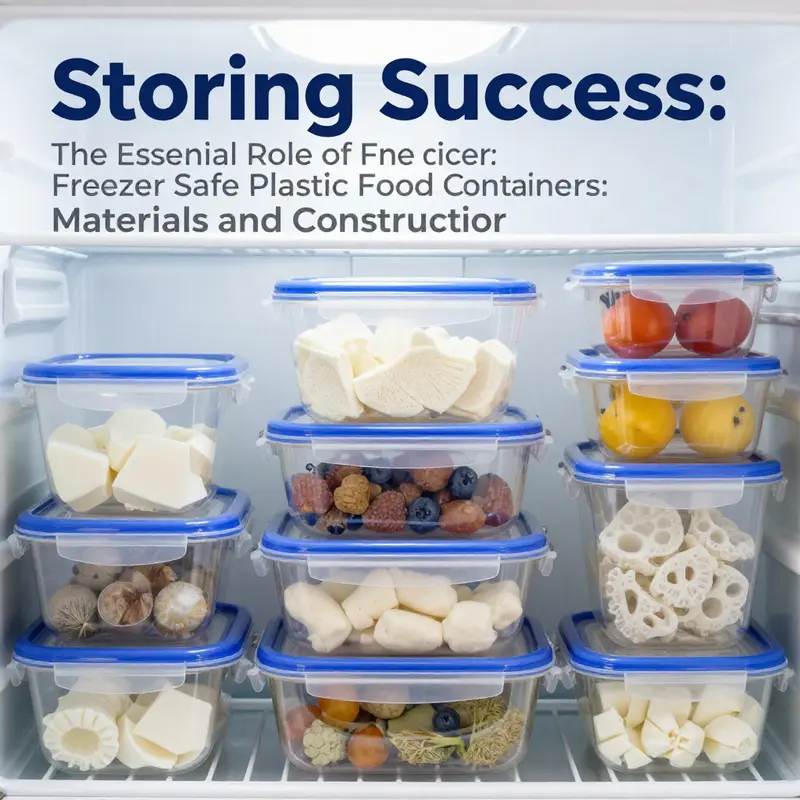
Freezer-safe plastic food containers are engineered to endure the cold without surrendering their shape, integrity, or safety. They are not just boxes for leftovers; they are carefully crafted tools that preserve texture, flavor, and nutrition while simplifying daily routines. At the heart of their performance lies material science paired with thoughtful construction. The most common workhorses are high-density polyethylene (HDPE) and polypropylene (PP), with polyethylene terephthalate (PET) appearing in select applications. Each material brings a distinct set of properties that determine how the container behaves from the moment something is poured inside to the moment the lid is snapped closed for storage, then later reheated or cleaned. A basic grasp of these materials helps explain why some containers weather repeated freezing and thawing while others exhibit cloudiness, odor retention, or even cracking after a few cycles. In practice, the best freezer-safe plastics are those clearly labeled for cold performance, food-grade safety, and, ideally, free from certain additives that worry consumers and researchers alike.
PP stands out as a preferred choice for freezer-safe designs. It has excellent resistance to cracking when subjected to low temperatures and can withstand repeated freezing and thawing cycles without material fatigue that would compromise the container’s structure. This resilience matters, because households often move between fridge, freezer, and microwave—in a sequence that expects a single container to perform across several modes. HDPE, by contrast, is celebrated for its durability and its capacity to resist cracking under cold conditions. It’s a sturdy option for storing liquids like stock, fruit purées, and even ice cream bases, where a high degree of impact resistance and a less brittle profile at low temperatures are valuable. PET may appear in some lids or insert components due to its clarity, but it’s less commonly relied upon for long-term freezer storage because its performance at ultra-low temperatures is not as robust as PP or HDPE. In practice, the freezer’s demands and the user’s expectations converge most often on PP and HDPE as the durable, reliable core materials.
An important caveat accompanies these material advantages. Not all plastics are suitable for freezing or for long-term exposure to low temperatures. Containers must be explicitly labeled by the manufacturer as freezer-safe. If a plastic lacks that designation, it may become brittle and fail upon impact in the freezer, or it might not seal effectively, inviting freezer burn or moisture loss. Beyond the freezer, many families rely on these containers for reheating in the microwave or for dishwasher cleaning. A growing suite of designs integrates microwave-safe and dishwasher-safe certifications, adding convenience but also another layer of certification that must align with the material and lid construction. All of this underscores why the labeling you look for matters: a container should be identified as freezer-safe, food-grade, and, ideally, BPA-free. The absence of these assurances raises questions about how the container behaves under thermal stress and whether chemical migration could occur.
From a materials-perception standpoint, safety standards play a central role. Some containers are manufactured to comply with food-safety regulations such as U.S. FDA 21 CFR 177.1520, which governs plastics intended for contact with food. In a global marketplace, other regions and suppliers describe compliance in parallel terms, but the core idea remains the same: ensure that the resin and additives are appropriate for contact with foods and that the final product remains stable under expected uses. In the real world, this translates into a steady assurance: you can store cooked meals or fresh ingredients in containers labeled freezer-safe and food-grade, and you can reheat certain contents without fear of introducing unwanted substances into your food. Yet the scientific and regulatory landscape does not erase caution. The presence of additives—so-called plasticizers and stabilizers—can influence safety perceptions, even if a product is marketed as BPA-free or free of certain other controversial chemicals. The broader message is practical: when you pick a freezer-safe container, you’re choosing a package designed to handle the cold, the heat of reheating, and the thoroughness of routine cleaning, while minimizing the risk of unwanted interactions with your food.
The practical benefits extend beyond raw material choices. Many freezersafe containers are designed with features that address real kitchen challenges. A leak-proof lid, snap-and-lock mechanisms, and stackable, transparent bodies help prevent frost damage and keep contents discernible. The lid design matters as much as the material itself because frost and moisture can undermine a seal or cause condensation to form on the inside. In addition, the ability to go from freezer to microwave or from freezer to dishwasher reduces kitchen friction, encouraging families to lean into batch cooking, meal prep, or simply the routine of portioning leftovers for future meals. In the broader conversation about food safety and convenience, the combined effect of a robust polymer, a reliable lid, and a design that minimizes thermal stress is what makes freezer-safe plastic containers a staple in many households.
Despite the advantages, there are legitimate concerns surrounding the long-term use of plastics in freezing applications. Repeated thermal cycling—freezing, thawing, and reheating—can influence the container in ways that are less likely with glass or metal. The risk of chemical migration from plastic into food has been a point of discussion in environmental health research. As Dr. Sarah Evans notes, “Repeated freezing and reheating in plastic increases the likelihood of chemical migration. Glass or stainless steel eliminates that risk entirely.” While this is a cautionary statement about certain exposure pathways, it does not condemn all plastic containers. It does, however, emphasize the importance of using plastics designed for repeated cycles, selecting containers labeled as food-safe and freezer-safe, and understanding that higher-heat scenarios or acidic foods can intensify migration risk if the product is not specifically certified for such use. Against this backdrop, many modern freezer-safe plastics are indeed formulated and certified to minimize such migration under the conditions they are designed to endure. The takeaway is straightforward: choose containers from reputable manufacturers, confirm they meet recognized safety standards, and follow usage guidelines that align with the material’s capabilities.
For consumers who want to see the material story in a broader context, the landscape also includes alternatives to plastic. Glass containers made from tempered borosilicate or soda-lime glass offer excellent chemical inertness and non-porosity, with the added advantage of maximal safety when heated or reheated. Glass can be an appealing option for those prioritizing minimal chemical exposure, and it’s widely accepted as safe for freezer, microwave, oven, and dishwasher use. The trade-off, however, is weight and a higher risk of breakage, particularly in hectic kitchen environments or when stacked high in crowded freezers. The choice between plastic and glass thus weighs the convenience and resilience of plastic against the perceived purity and durability of glass. In that sense, the decision is not simply about a material’s properties but about how a household uses storage, reheating practices, and the level of risk customers are willing to manage.
Choosing the right freezer-safe plastic container starts with a few guiding principles. First, the preferred materials are PP and HDPE, selected for their demonstrated resistance to cold-induced cracking and their ability to withstand repeated freezing and thawing. Second, the labeling should clearly state that the container is freezer-safe and BPA-free, paired with the assurance that the product is food-grade. Third, it helps to follow the manufacturer’s guidelines for temperature limits and usage, recognizing that some designs are optimized for low-temperature storage while others are built to handle occasional reheating. A fourth consideration is the lid and sealing mechanism, which must protect against frost formation, spills, and accidental opening during storage. Each element—material, certification, lid design—contributes to a cohesive system that supports safer and more convenient freezing, reheating, and cleaning.
It’s also worth acknowledging how packaging choices intersect with daily habits. For families who meal prep, the ability to portion out meals into freezer-safe containers means less waste and more consistent portion control. For those who stock up on fresh produce or bulk ingredients, sturdy HDPE or PP containers reduce the likelihood of breakage or leakage during long storage. The ease of transition from freezer to microwave—when the container is explicitly labeled as microwave-safe—adds another practical layer, enabling quick, reheated meals without the need to transfer contents to another dish. Yet the same practical environment that motivates plastic use also invites careful management: avoid overfilling, leave space for expansion when liquids or viscous foods are involved, and let hot foods cool before sealing and freezing to minimize condensation within the container. In sum, the best practice integrates material choice with thoughtful handling to maximize safety, preserve quality, and simplify cleanup.
In the spirit of practical decision-making, you can think about selection as a short checklist that remains anchored in the core idea of freezer-safe design. Start with the material—PP or HDPE—because their low-temperature performance is well established. Then verify the labeling—freezer-safe, food-grade, and BPA-free—to confirm that the product aligns with both safety expectations and consumer concerns about chemical exposure. Next, take note of the lid and seal—the reliability of closure can mean the difference between dry, frost-free storage and a seal compromised by frost buildup. Finally, consider the intended use: will you store soups and sauces, or is your focus on prepped meals that you will reheat in the same container? Each scenario supports a slightly different emphasis on transparency, rigidity, and heat tolerance. All told, the design philosophy behind freezer-safe plastics is about balancing resilience with safety, and about enabling real-world convenience without compromising the food in your care.
For readers who want to explore related packaging options beyond plastics, this internal resource offers a broader sense of container design and materials, including lids and take-away formats: disposable kraft paper bowls food containers with lids bulk 500ml to 1000ml rectangular bowls for takeaway. While paper-based options differ in their chemical profiles and freeze–thaw behavior, they illustrate how manufacturers approach containment, sealing, and transportability across different materials. This broader view helps place plastic’s strengths and tradeoffs in perspective, especially for households weighing the practicalities of freezing, reheating, and cleaning in a busy kitchen.
Ultimately, the chapter on materials and construction frames freezer-safe plastic containers as a carefully engineered balance of chemistry, design, and usage context. The right container can keep foods safer longer, preserve textures that might otherwise suffer from ice crystal formation, and offer a convenient transition from freezer to plate to dishwasher. It is a reminder that the science of plastics—the interplay of resin type, additives, and processing—translates into everyday reliability when the product is designed with proper certification, honest labeling, and a design that matches the user’s needs. The conversation about safety, convenience, and sustainability continues, and it remains anchored in the simple choice to store food with confidence in a container that is built to perform across the coldest months and the busiest weeks.
External resource for further context: For a concrete example of an HDPE freezer container with BPA-free and food-grade assurances, see the following external reference: https://www.amazon.com/dp/B0CZ7XJYQ9
Preserving Flavor and Form: Freezer-Safe Plastic Containers as a Bridge Between Convenience, Safety, and Longevity
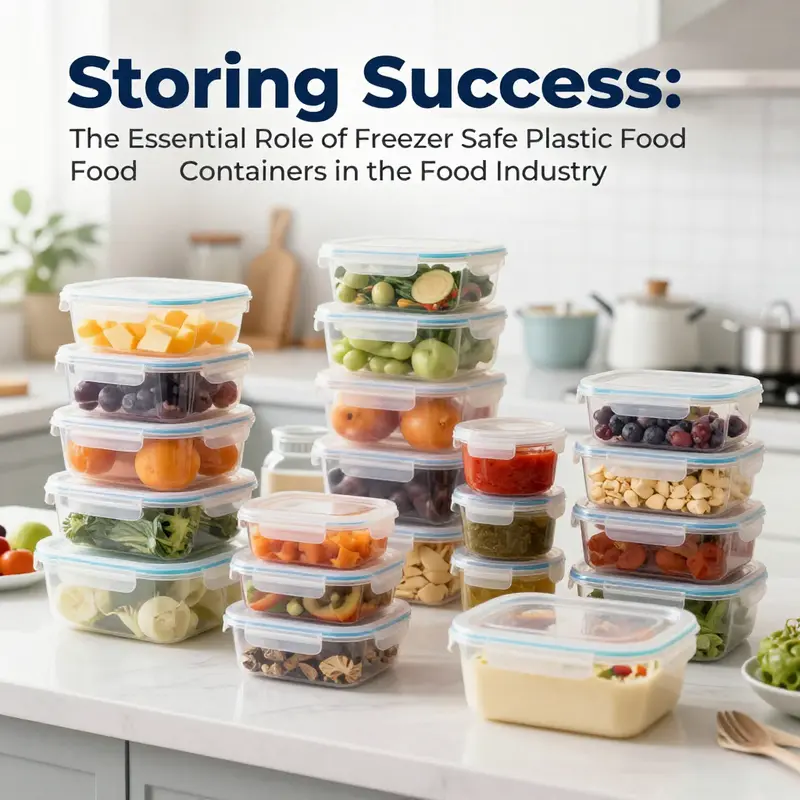
In kitchens that juggle batch cooking and weekly meal prep, freezer-safe plastic containers play a practical role. They offer light weight, affordability, and durability in the chill of the freezer, while staying ready for reheating or organization. Manufactured from plastics like polypropylene and high-density polyethylene, these containers resist brittleness at low temperatures and help preserve texture and moisture.
Design matters: transparency, airtight lids, and stackable shapes help you see contents, prevent leaks, and maximize freezer real estate. The ability to go from freezer to microwave or oven to table with minimal fuss adds convenience and consistency to weekly routines.
From a science perspective, PP and HDPE balance rigidity and resilience. Rounded bases accommodate liquid expansion; this reduces lid distortion and spillage and helps maintain seals over many cycles. Yet weathering from repeated freezing and thawing can cloud the plastic or wear the gasket; such signs suggest it is time to retire the container.
Safety considerations emphasize choosing BPA-free, food-contact-approved plastics designed for freezer storage and reheating when needed. For some, glass or stainless steel may be preferred for long-term storage or high-acid foods. A mixed approach plastic for short-term uses and glass or metal for longer-term storage often offers the best balance of safety, cost, and practicality.
Practical tips to maximize value: label contents and dates; avoid heating in containers not rated for it; ensure proper sealing; choose appropriate shapes and sizes; and maintain clean, dry storage between cycles. When a container becomes cloudy, warped, or the seal fails, replace it to keep food safety intact.
Beyond plastic, consumers can consider non-plastic options for certain tasks. Glass or stainless steel storage provides long-term durability and can reduce chemical exposure concerns, though they may weigh more and cost more. The right mix depends on kitchen needs, frequency of reheating, and personal risk tolerance.
Ultimately, freezer-safe plastic containers offer a practical blend of convenience, economy, and reliability for many households, aligning with a modern pace of cooking and meal planning.
Freezer-Safe Plastic Food Containers: Balancing Convenience, Durability, and Safety in Everyday Freezing
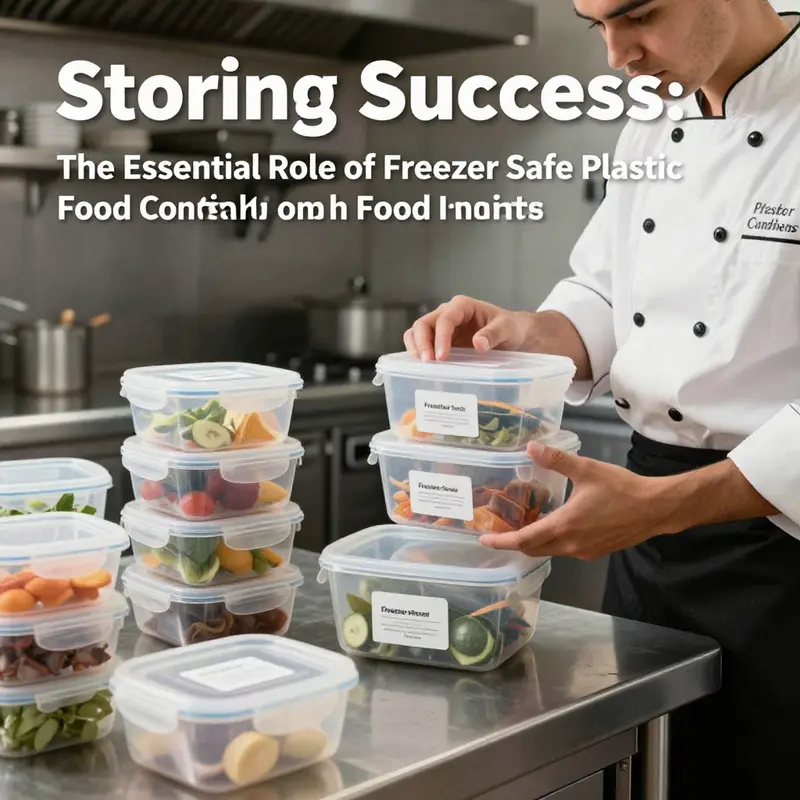
Freezer-safe plastic containers offer practical benefits for everyday storage, meal planning, and reducing waste. They are commonly made from polypropylene (PP) or high-density polyethylene (HDPE) because these materials maintain their shape and resist cracking at low temperatures. Yet the freezer-safe label is not a guarantee of indefinite performance. Repeated cycles of freezing and thawing can gradually wear the sealing lip, loosen a lid, or cause subtle warping that creates tiny gaps for air and moisture to enter. Over time, this can increase the risk of freezer burn and may influence texture and flavor in stored foods. The takeaway is not to abandon plastic storage, but to use it with awareness of its limits and with habits that help maintain integrity over time.
The science behind these plastics is reassuring but nuanced. PP and HDPE generally offer good chemical stability and low-temperature toughness, which is why they are favored for food contact in freezing. They are less prone to becoming brittle than some other polymers when chilled, and their surfaces can help limit ice crystal formation. However, micro-damage can accumulate after dozens of freeze-thaw cycles, particularly at seams, around the gasket, or in areas where repeated heating or aggressive cleaning occurs. This can compromise the seal, allowing air and moisture to migrate and potentially increase the risk of contamination if residues persist in crevices after washing. While many products are marketed as BPA-free, that label does not erase all risks. Some replacement additives or degradation products may migrate under thermal stress, especially with acidic or fatty foods or when containers are reused many times. Endocrine-disrupting compounds can be present in some substitutes, and their migration may become more noticeable with repeated reheating and freezing. The bottom line is to view the freezer-safe designation as a guideline about cold behavior, not a promise about long-term inertness.
Practical guidance follows from this understanding. Choose containers with robust locking lids, clear seals, and stable shapes that stack well in freezers. Inspect containers regularly for clouding, cracks, warping, or lingering odors, and retire any piece that shows persistent wear. For foods with high fat or acidity, consider limiting their time in plastic when long-term storage is anticipated, or use glass or stainless steel for longer-term storage. If you do reuse plastic, follow manufacturer guidance on microwave use, and avoid heating in a container that is damaged or that has an uncertain seal. Gentle washing and avoiding abrasive scrubbing help preserve the sealing surfaces and prevent micro-scratches that harbor residues.
In the big picture, the safety conversation around plastic storage is part of a broader sustainability and health dialogue. Some households find value in combining plastic for short-term, everyday use with glass or stainless steel for longer-term storage or for higher-risk foods. It is reasonable to seek certifications for food-contact safety and to favor products designed for repeated use and easy cleaning. The goal is to preserve convenience without compromising safety, health, or taste. With mindful selection, careful handling, and timely replacement, freezer-safe plastics can be a practical component of a balanced storage strategy.
From Freezer to Everyday Kitchen: Navigating Market Trends and Shifts in Consumer Preferences for Freezer-Safe Plastic Containers
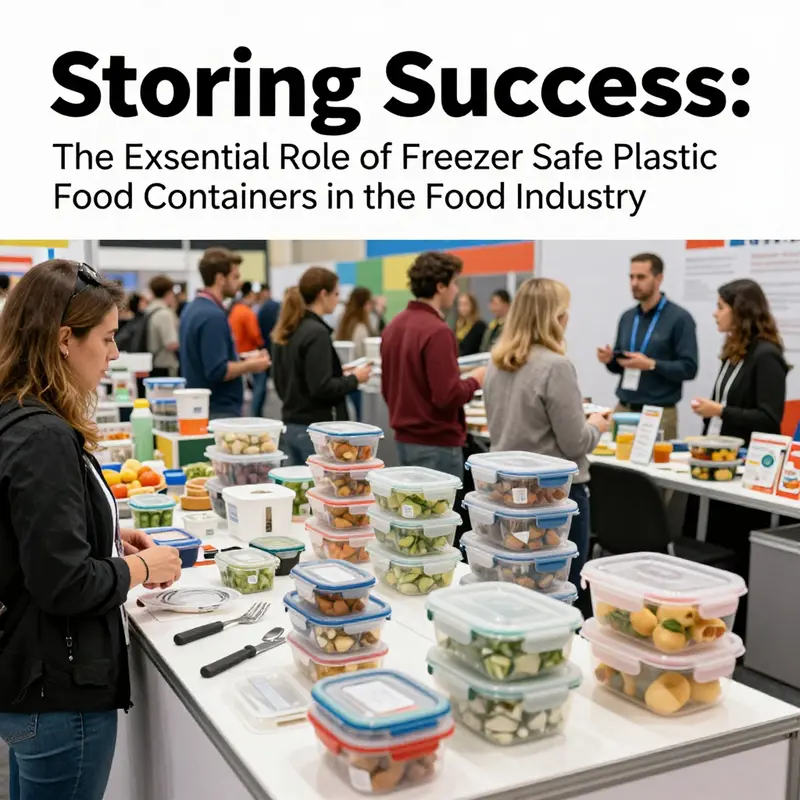
Freezer-safe plastic food containers have established themselves as a practical mainstay in both household routines and commercial back-of-house operations. Their enduring appeal rests on a blend of affordability, light weight, and broad availability, which makes them a reliable choice for storing leftovers, portioning meals for busy weeks, and organizing ingredients in an orderly freezer. When we step back to look at the market as a whole, it becomes clear that the category’s momentum is not just about personal convenience. It reflects a broader pattern in consumer behavior: a preference for formats that combine ease of use with a predictable performance over multiple freezing and thawing cycles. If you map consumer demand against the trajectory of the global plastic food container market, the numbers align with a steady hunger for practical storage solutions. Market estimates place plastic containers at a sizable share of the overall category, and projections point toward continued growth, underscoring the continuing role these products play in daily life and professional kitchens alike. The market is predicted to grow to well over a hundred billion dollars in the next decade, driven by everyday needs as well as the rising popularity of meal-prep and take-home dining, where reliable freezing and reheating performance matter most. This growth is not a triumph of novelty but of incremental improvements that respond to real-user feedback about durability, safety, and convenience. As a result, the conversation surrounding freezer-safe plastics increasingly centers on how well these containers stand up to repeated cycles, how safely they interact with food, and how efficiently they fit into busy routines without sacrificing quality or ease of use. The consumer mindset around these containers blends three practical drivers: durability, convenience, and value, each evolving as new materials and stricter standards shape what “safe and reliable” looks like in everyday practice. Beyond these core considerations, environmental awareness has quietly become a fourth driver that colors consumer expectations and brand strategies alike. Even as the market remains anchored in the advantages of plastic—clear visibility of contents, standardized sizing for easy stacking, and often microwave-safe labeling—more households are weighing the trade-offs between cost savings today and longer-term sustainability goals. In this context, the conversation moves from simple “can it hold food” tests to a more nuanced interrogation of life-cycle performance: how well a container resists clouding, odor retention, or warping after many freeze-thaw cycles; how easily it can be cleaned without harboring residual smells or stains; and whether it carries certifications that reassure users about food safety and chemical migration. It is here that regulatory standards and labeling earn their keep, translating consumer trust into tangible decision criteria at the point of purchase. What emerges is a market landscape in which consumer confidence is built not merely on a container’s immediate functionality but on a chain of assurances—materials that are food-grade and BPA-free, clear labeling about safe temperature ranges, and dependable seals that keep air and moisture out. Across regions, buyers increasingly seek products that harmonize with modern kitchens’ multitasking demands: containers that can withstand hot-filled foods, that seal tightly to prevent freezer burn, and that are compatible with common appliances such as microwaves and dishwashers. This combination of features enhances the container’s versatility, allowing households to streamline routine tasks, such as batch-cooking on Sundays and portioning meals for the week ahead, without juggling multiple different storage solutions. In many households, the freezer becomes a repository for everything from soups and sauces to raw ingredients prepped for future meals. The value proposition of freezer-safe plastics, then, centers on enabling this variety of uses while preserving taste, texture, and nutritional quality. In the broader market context, consumer preferences tilt toward formats that combine transparent, easily identifiable contents with secure, leak-resistant lids and stackable forms that save space. The appeal of transparency—letting people see what’s inside without opening containers—cannot be understated, given how much decision-making in kitchens hinges on quick visual checks. This preference often aligns with designs that are simple to store in both the freezer and the fridge, enabling a seamless flow from cold storage to cooking or reheating. Yet durability remains a critical variable. Repeated freezing and thawing can accumulate stress in plastic materials, sometimes leading to cloudiness or slight changes in texture and, in some cases, odor retention. The literature and professional experience flag these as practical reminders: even well-made containers may begin to show signs of wear after extensive use, especially if subjected to frequent dishwasher cycles or exposure to high heat. These realities temper consumer optimism with pragmatic expectations. They push manufacturers to innovate with tougher formulations and better seal designs, while also prompting clear messaging about performance limits. In parallel, safety considerations carry as much weight as ever. While modern freezer-safe plastics are designed to resist cold-induced brittleness and to retain structural integrity in freezing temperatures, some researchers caution about the potential for chemical migration with repeated thermal cycling, particularly if the product lacks proper certification for food contact. This does not erase the value of plastic in the storage ecosystem, but it does sharpen the emphasis on choosing products that carry recognized safety certifications and on handling practices that minimize risk, such as avoiding overheating containers or using them in ways beyond their intended temperature ranges. The industry posture reflects this caution with explicit labeling and testing data that reassure users about the food-contact compliance of materials. Certification programs and standards provide a crucial assurance layer in a market where consumers increasingly demand quantifiable guarantees about what touches their food. In practice, this translates to a preference for containers that are designed to be durable, easy to clean, and free from construction elements that could degrade or contaminate food over time. It also translates to a growing openness to alternatives when risk-perception shifts, with many households exploring glass or stainless steel for long-term storage while still appreciating the conveniences provided by plastic for everyday use. The consumer preference narrative thus becomes a balance between convenience, durability, safety, and sustainability. Convenience remains central: containers that endure a freezer’s harsh environment without cracking, that can go straight from freezer to microwave with minimal sensory or nutritional impact, and that stack neatly to support organized freezers and efficient meal prep. Durability is evaluated in terms of how well lids seal and how resistant the plastic is to warping, cracking, or clouding after many cycles. Safety considerations are increasingly tied to clear labeling about materials, the presence or absence of potentially unwanted additives, and third-party certifications that verify compliance with food-contact regulations. Sustainability, once a secondary concern for many users, has moved closer to the core. While the price advantage of plastic cannot be dismissed, more consumers weigh the trade-offs against reusable alternatives and the environmental footprint of single-use packaging. This shift does not signal an imminent replacement of freezer-safe plastics; rather, it signals a diversification of choices. Some households may resist compromise by selecting premium designs with robust locking mechanisms, while others explore reusable silicone bags or glass options for specific storage needs. In response, manufacturers respond with hybrids and innovations: more durable, dishwasher- and microwave-safe plastics; easier-to-clean interiors; and more precise temperature-resistant formulations that minimize the risk of moisture migration and odor retention. Importantly, the consumer conversation now includes practical tips and best practices for extending the life of containers. For example, avoiding exposure to high heat, especially in appliances not designed for extreme temperature swings, helps preserve seal integrity and material clarity. Gentle handling in dishwashers, avoiding overcrowded cycles, and choosing the right lid design for a given storage scenario are practical steps that multiply the value of a single container over time. Consumers also show an increasing preference for containers that are clearly labeled as BPA-free or certified for food contact, with some seeking reassurance about 21 CFR compliance and related standards. The market’s trajectory suggests that these expectations will persist and sharpen as more data about material migration and long-term safety becomes available through independent testing and transparent reporting. The overall effect is a market that thrives on predictability and trust. Consumers want to know not only that a container keeps food safe in the freezer but that it will perform reliably through years of use across multiple households or foodservice settings. This is reflected in the growing emphasis on standardization of sizes and shapes, which makes stacking and inventory management easier for families and for businesses alike. It also supports the development of complementary accessories, such as leak-proof lids and color-coded lids or markers, which help prevent cross-contamination and simplify meal-planning workflows. In this evolving landscape, a single sentence often captures the essence of consumer expectations: a freezer-safe plastic container should offer a dependable barrier against the cold, behave predictably across cycles, and fit smoothly into the day-to-day rhythms of cooking, freezing, reheating, and cleaning. The market’s resilience comes from meeting that expectation with a combination of robust materials, thoughtful design, and honest communication about limitations and best practices. For readers seeking a broader view of how these dynamics intersect with industry standards and operational best practices, a comprehensive external resource offers additional context on safety standards and container performance in delivery and other use cases: https://www.foodserviceindustry.org/plastic-food-containers-delivery-best-practices/ Deepening this understanding helps explain why some designs emphasize wide mouths for easy filling and easy cleaning, while others optimize space efficiency and seal reliability for bulk storage. It also clarifies why so many buyers, particularly those who prepare meals in advance, look for containers that can confidently withstand repeated freezer-thaw cycles without deteriorating. The consumer is not chasing a single feature but a robust package: safety, durability, simplicity, and sustainability all bundled into a familiar shape and size. Finally, the integration of consumer values with product performance will likely steer packaging decisions in both retail and foodservice toward more standardized, more transparent, and more durable solutions. The market’s growth path indicates indelible demand for practical storage that respects time, budget, and environmental concerns. In sum, freezer-safe plastic containers remain a cornerstone of modern food storage not because they are perfect in every respect, but because they reliably meet essential needs while continually evolving in response to user feedback, safety developments, and shifting attitudes toward waste and reuse. The narrative of this category is thus less about overnight disruption and more about steady improvement, informed choice, and a pragmatic approach to balancing cost, convenience, and safety for households and professionals alike.
External resource: https://www.foodserviceindustry.org/plastic-food-containers-delivery-best-practices/
For readers who want a tangible example of the broader packaging ecosystem that accompanies these storage solutions, the following internal link leads to a relevant entry that highlights how design and packaging decisions intersect with everyday use: custom-takeaway-packaging-supplies-disposable-tableware-for-theme-party.
Final thoughts
Investing in high-quality freezer-safe plastic food containers can greatly enhance food storage practices across various sectors of the food service industry. From the materials used in their construction to their versatility in daily operations, these containers not only provide practical benefits but also adhere to safety regulations essential for health compliance. Embracing these innovative storage solutions ensures that food remains fresh and safe, while businesses can focus on delivering excellent service. By staying informed about market trends and consumer preferences, your establishment can continue to thrive and meet the evolving needs of your clientele.