
As beverage industry professionals, ensuring the health and safety of your customers is paramount. While disposable plastic cups serve as convenient options for quick service, many may not realize the potential risks involved in reusing them. This article explores four critical aspects of reusing disposable cups—chemical leaching, microbial concerns, physical degradation, and the lack of safety certifications. By understanding these issues, businesses can make informed choices that prioritize both customer safety and brand integrity.
Hidden Hazards in Reusing Disposable Plastic Cups: Chemical Risks and Health Implications
Every time a plastic cup is washed and reused, a question arises that most users do not pause to answer: is this safe? The instinct to reuse may stem from cost-saving habits, convenience, or a desire to cut waste. But single-use cups are designed for a single journey—from the factory to the consumer, not for a second or third passage through a dishwasher, a hot beverage, or a scratch-filled life cycle. The overarching concern is not simply whether a cup can be cleaned well enough to look usable. It is whether the cup’s materials can endure repeated exposure to heat, detergents, sunlight, and mechanical wear without releasing substances into the very drinks these cups are meant to protect. In this chapter, the interaction between material science and consumer behavior is explored, focusing on chemical migrations, microbial risks that can accompany imperfect cleaning, and the broader environmental footprint that comes from promoting a practice not aligned with the cups’ intended design. The story is not an outright condemnation of reuse in every context. It is a measured examination of when reuse becomes risky and why, even for cups that might appear sturdy at first glance, the safety calculus changes as use accumulates.
On a material level, most disposable cups—whether made from polyethylene terephthalate (PET) or polystyrene (PS)—are engineered for one purpose: to hold a beverage for a limited moment and then be discarded. When heat, oil, or acids come into contact with these materials, their stability can degrade. Heat acts as a catalyst for migration, nudging small molecules out of the plastic matrix and into the liquid, a process that may be slow in a cool drink but accelerates under hot conditions. Even cups labeled as BPA-free do not automatically become risk-free when reused. BPA is just one family member in a broader set of additives and monomers that can migrate when the polymer is stressed. In many formulations, additives such as polycyclic aromatic compounds or auxiliary substances help plastics achieve desired properties—rigidity, clarity, or barrier performance. Under stress conditions like repeated heating, friction from scrubbing, or prolonged contact with a fatty beverage, these additives can detach and leach. The potential health implications are not abstract: certain migrating compounds have been linked to endocrine disruption and other physiological effects in toxicology research conducted by credible environmental health institutions. While modern cups might mitigate some of these risks with BPA-free labels, migration is not eliminated. Additives that accompany alternative monomers may still migrate, especially if the cup has been scratched, cracked, or degraded after multiple uses.
This chemical story is not limited to the kitchen table. It extends to the shop, lab, or service setting where cups may encounter exposure to heat from hot drinks or direct sunlight during transport and storage. A common route for chemical migration is the exposure to heat. A hot beverage placed in a cup can raise the cup’s internal temperature long enough to increase molecular motion, encouraging leaching of residual monomers or additives into the liquid. In the same moment, acidic or oily beverages can alter the interaction between polymer surfaces and migrating compounds, potentially increasing transfer rates. The chemistry is nuanced: a cup that performs well under cold or room-temperature conditions may reveal different behavior under high-temperature use. Even if a cup is structurally intact, surface microcracks and microscopic scratches can create microenvironments where substances accumulate and, with repeated use, release gradually into drinks. The microbiological risk that accompanies this physical reality compounds the concern. Scratches and microcracks, while visually subtle, provide niches that shield bacteria and molds from cleaning agents. No matter how thorough the washing routine, the combination of microenvironments and the repeated introduction of liquids creates a risk that is not fully captured by standard dishwashing guidance. The result is not merely a question of surface cleanliness but a potential for low-level, persistent exposure to substances that may have physiological relevance over time.
Another piece of the puzzle is certification and testing. Most disposable cups sold for single-use are not tested or certified for multiple uses. The absence of reuse-specific certification means that a user cannot assume safety guarantees beyond the initial installation. Manufacturer guidelines, which are often explicit about single-use intent, are not always aligned with real-world reuse patterns in cafes, offices, or events. When cups are repurposed beyond their designed function, they are effectively stepping outside the safety envelope that those products were built to establish. This is not a matter of personal taste or minor inconvenience; it is a fundamental shift in the risk landscape. In the absence of robust certification data for repeated-use scenarios, the precautionary principle rightly argues against routine reuse of standard disposable cups.
For contexts where reuse is common in practice—such as in certain laboratories, kitchens, or instructional settings—there are cups made from more durable polymers like polypropylene (PP) or high-density polyethylene (HDPE). These materials can tolerate limited reuse better than standard PS or PET cups. Yet even these are not universal panaceas. Reuse in such cases should be guided by explicit manufacturer instructions and not simply by consumer habits. The limits of durability, the impact of repeated cleaning, and the long-term strength of seals and rims all come into play. In most consumer environments, especially where beverages warm or hot, the general recommendation remains clear: limit reuse and avoid relying on disposable cups as if they were designed for endless service life.
The environmental argument often accompanies the health-focused concerns. When cups are reused, the wear and tear on plastics accelerates fragmentation. Microplastic pollution arises not only from discarded items but also from degraded alternatives that have entered into daily cycles of use and wash. The life cycle of a disposable cup becomes longer in calendar terms but shorter in functional terms when the cup’s materials break down or release substances into the environment or into consumables. The net effect is a larger environmental burden than the initial, single-use approach might suggest if care is taken to manage end-of-life waste. The push toward reuse without proper design for durability undermines broader goals of waste reduction and public health protection. As a society, we must weigh the shallow comfort of “one less cup” against the deeper costs that accrue when a material designed for one-use seizes a longer, less predictable life in daily practice.
What, then, are practical paths forward for households and institutions that want to reduce risk while also minimizing waste? First, it is important to avoid reusing standard disposable cups for drinks. If reuse is unavoidable due to supply constraints or an emergency, it should be limited to non-food applications. Simple repurposing, such as organizing small items, storing craft supplies, or use as planters, avoids the dangerous intersection of leaching and contamination that accompanies repeated beverage use. Second, where possible, choose containers specifically designed for repeated use. Stainless steel and glass are robust, non-reactive materials with well-established safety profiles when used as intended. If a plastic container is chosen for its lightness or cost, select options explicitly labeled as BPA-free and designed for multiple uses, and follow the manufacturer’s instructions for reuse and cleaning. Third, invest in packaging options that are engineered for sustainability without compromising safety. A growing ecosystem of suppliers offers takeout and packaging solutions that combine durability, recyclability, and food-safety certifications. When considering such options, look for items that emphasize reuse-friendly design, strict testing for repeated use, and clear guidance about cleaning and longevity. A shift from single-use cups toward durable, purpose-built alternatives is more than a personal preference; it is a public health choice with tangible implications for chemical exposure and microbial safety.
Within this broader conversation, it is useful to acknowledge the realities of office kitchens and social settings where quick, inexpensive cups might seem attractive precisely because of their convenience. The temptation to reuse can be strong when supply lines are tight, when waste disposal is inconvenient, or when a quick caffeine fix seems to demand speed over caution. Yet the work of toxicology, materials science, and environmental health repeatedly shows that convenience does not always align with safety. The core message is not to stigmatize reuse outright but to frame it within the context of product design, material stability, and appropriate use scenarios. Cups designed and labeled for single-use should be treated as such, while other containers produced and marketed for repeated use can be evaluated on their own merits and tested capabilities.
For readers who want to explore this topic beyond the practical, there is value in examining packaging choices that reduce risk while supporting sustainable practices. Operators and households can consider alternatives that maintain convenience without compromising safety. For example, durable, reusable containers made from safer materials can be paired with careful cleaning protocols that preserve integrity over time. In addition, emphasizing packaging solutions that minimize microplastic release and encourage responsible end-of-life handling contributes to broader environmental health goals. There is a growing body of guidance that helps consumers and professionals align their practices with evidence-based risk assessments, rather than relying on habit or brand familiarity alone. In this context, it is worth noting a resource that delves into chemical migration from plastics and situates the discussion within current environmental health research. This work helps illuminate why certain reuse practices may carry unforeseen risks and why policy and guidance often advocate caution when reusing single-use plastics for food and drink.
For readers seeking a practical pointer on safer packaging options, many kitchens and event organizers now reference durable, purpose-built alternatives that can be easier to clean, safer to reuse, and more respectful of the environment. As a concrete example of this trend, consider packaging options that offer both practicality and safety in one package. eco-friendly takeout boxes provide a compelling case study in design intent: materials chosen for repeated use, compatibility with microwaves, leak resistance, and robust handling under variable conditions. This approach underlines a broader principle: when safety and sustainability converge, the choice to reuse must be grounded in products explicitly built for it, with clear instructions, tested performance, and thoughtful end-of-life planning.
The balance between health protection and environmental responsibility is not solved by intuition alone. It requires a careful synthesis of material science, exposure science, and practical ethics. The chapter’s core takeaway is straightforward: reuse of standard disposable cups is not a risk-free practice. The migration of chemicals under stress, the potential for microbial growth in micro-environments, and the physical degradation that accompanies repeated cleaning create a risk profile that most single-use cups are not designed to withstand. The best path forward is to avoid routine reuse of disposable cups for beverages and to pivot toward containers that are explicitly designed for repeated use, paired with reputable cleaning methods and responsible waste management practices. In settings where reuse is considered for non-food purposes, it remains essential to maintain vigilance about integrity, cleanliness, and safety, recognizing that the same cup may behave differently as a non-consumable item than as a drink container.
For a deeper scientific dive into chemical migration from plastics and how it informs these practical recommendations, researchers and policymakers point to a robust analysis in Environmental Health Perspectives. The article, which examines the nuances of chemical migration from common plastic materials, provides a broader context for why certain reuse practices warrant caution and why regulatory and consumer guidance emphasize material- and use-specific safety considerations. External link: https://ehp.niehs.nih.gov/doi/10.1289/EHP12345
Microbial Realities and Reuse: The Hidden Health Risks of Reusing Disposable Plastic Cups
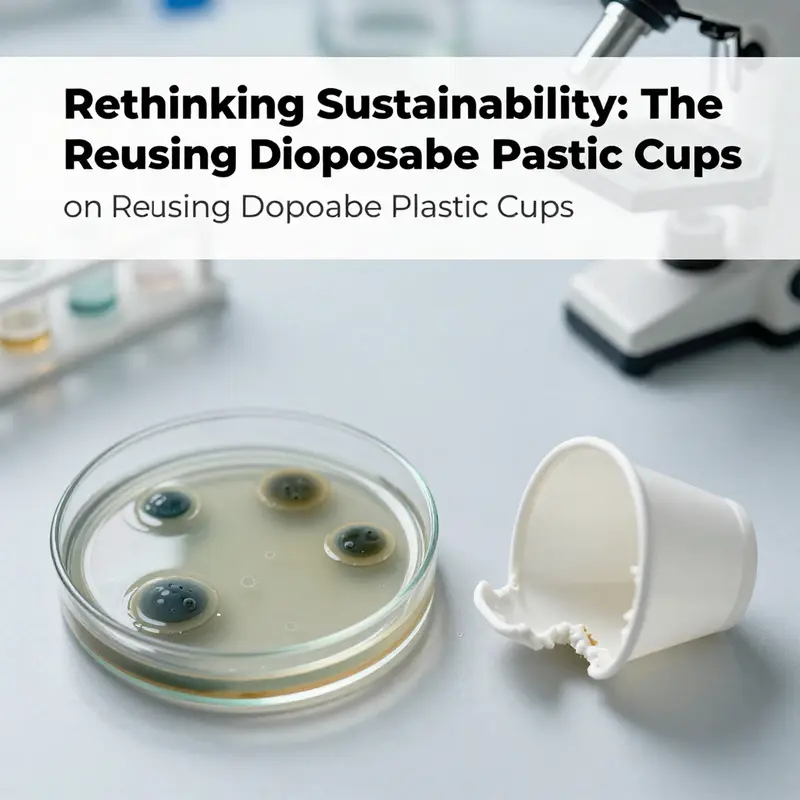
Beneath the gleam of a simple drinking vessel lies a far more complex reality. Disposable plastic cups are engineered for a single encounter with liquids, designed to be handed from one person to another and then discarded. When their life extends beyond a single use, several unseen forces come into play. The most immediate concern is microbial: bacteria and fungi, always ready to exploit even small crevices and minute amounts of residue. Plastic cups, especially those made from common food-service plastics like PET or polystyrene, often bear seams, rims, and interior textures that are not perfectly smooth. Those tiny irregularities trap moisture, oils, and microscopic particles of food or drink. Over time, these residues become a nourishing matrix for microbes. Biofilms can form on such surfaces, and once established they resist routine cleaning and disinfection. In environments where cups are reused repeatedly—whether in kitchens, workplaces, schools, or informal gatherings—the risk compounds. Biofilms are not static; they adapt and thicken, creating microhabitats where bacteria such as those that cause gastrointestinal illness can thrive. The simple act of washing cannot always reach every nook. Scratches and microabrasions in the plastic provide additional hiding places for microbes, sheltering them from sanitizers and mechanical scrubbing. The result is not merely a cleaner cup that has been used multiple times; it is a surface that can harbor a changing, potentially pathogenic community between uses.
This microbial dimension sits alongside material degradation in a kind of feedback loop. Heat, which often accompanies hot beverages or near-warm environments, can degrade plastic—softening the walls or creating micro-cracks. When the polymer structure begins to break down, tiny particles and byproducts can be released into liquids. A recent thread in public discourse highlighted a linked concern: while most discussions about microplastics focus on long-term environmental exposure, the same principles apply to items used repeatedly in the short term. A 2026 report from Liaoning Daily cited researchers observing that plastic drinking straws, when subjected to prolonged use and exposure to heat or acidity, shed substantial quantities of microplastics—over 200 particles per milliliter in some conditions. The logic extends to disposable cups as well. Repeated exposure to hot liquids, especially acidic beverages, can increase the likelihood that microplastics shed from the cup’s interior find their way into the drink. The scale of this shedding depends on the cup’s age, its exposure history, and the level of physical wear. While the precise figures for cups are not identical to those reported for straws, the underlying mechanism is clear: degradation yields both physical fragments and chemical byproducts that can interact with the contents and with the consumer.
If microbes and microplastics were the only concerns, the message might be simpler. Yet the design of many disposable cups amplifies risk. The walls of single-use cups are thin, optimized for short-term contact with liquids rather than repeated handling and washing. When cups are cleaned imperfectly, moisture and organic matter linger. That lingering becomes a stage for microbial growth, especially in warm, dimly lit spaces such as cupboards, storage rooms, or bathrooms where humidity lingers. Biofilms can persist even after several cleaning cycles, and some organisms exhibit remarkable resistance to standard sanitizers. The risk is not only about acute illness from a single exposure; it is about cumulative risk. Repeated use creates multiple opportunities for exposure to potentially harmful organisms and to degraded plastics that could interact with the drink or with the mucosal surfaces of the consumer.
There is also the risk of cross-contamination. In high-traffic settings, cups pass from one user to another with limited time for thorough cleaning between uses. Even when washing is attempted, the sheer volume of cups and the speed of turnover can outpace sanitizing efficacy. The recommended public-health stance is cautious: if a cup is intended for one use, it should remain that way. The lack of certification for multi-use in the majority of disposable cup products reinforces this stance. Manufacturers rarely design single-use cups to withstand the rigors of repeated washing, high-heat exposure, or prolonged contact with liquids. The absence of rigorous reuse testing means there is no robust guarantee that a reused cup will maintain its integrity or hygiene profile after multiple cycles.
For those who still consider reusing cups under constrained circumstances, the realities become even more challenging. Improper storage can accelerate microbial growth. Leaving cups in warm, humid spaces—bathrooms, poorly ventilated kitchens, or near heat sources—provides a climate conducive to mold and bacterial proliferation. Moisture trapped inside or around the seams creates an ideal environment for organisms to colonize. Even if a surface looks clean, residual moisture can be a vibrant medium for microbial communities to establish themselves. Vulnerable populations—young children, the elderly, pregnant individuals, and people with weakened immune systems—bear a disproportionate burden of these risks. In such groups, even low-level exposure to opportunistic pathogens can lead to more severe illness. The lived reality behind these risk factors is not hypothetical; it translates into real-world concerns for schools, workplaces, and households where cups are reused casually or out of a sense of thrift or convenience.
The chapter’s core takeaway is not a call for alarm without context, but a call for clarity about what reuse means in practice. Reuse is a deviation from the intended use of most disposable cups. When taken beyond their design specifications, cups become a convergence point for chemical leaching, microplastic release, and microbial colonization. The leaching dimension, while not purely microbial, intersects with hygiene because degraded plastics may alter the drink’s chemical milieu, potentially affecting taste, odor, and safety. While some readers might assume that thorough washing neutralizes such risks, the evidence for universal chemical safety in reused disposables remains uncertain. The risk profile shifts with each reuse: a cup that has held a hot beverage, then a cool one, then something acidic, may have altered its structural and chemical properties in ways that influence both safety and consumer experience.
Where does this leave practical decision-making? The safest posture is to treat disposable cups as one-use items. If reuse is unavoidable due to constraints, the guidelines point toward narrow, non-food applications. Using cups to organize small parts, store craft materials, or plant seedlings is more aligned with their intended durability profile. In every case, label and separate items to avoid accidental cross-contact with foods or drinks. When considering any element of reuse, weigh the trade-offs between convenience, cost, and health risk. A more reliable path is to invest in alternatives designed for repeated use—stainless steel, glass, or BPA-free reusable plastics that are explicitly built for multiple cycles and have clear guidance for cleaning and sanitization. Such options reduce both the microbial and chemical risks associated with reuse and provide a more predictable, controllable hygiene profile for households and institutions alike.
To anchor these considerations in everyday practices, it helps to recognize what a practical memory of best practices looks like in action. If a cup has been used for any liquid other than water, especially a hot or acidic beverage, its reuse is especially ill-advised. If a cup shows scratches, cracks, or warping, discard it. If a cup has been left in a warm, damp place for an extended period, treat it as compromised and replace it. And if there is any doubt about cleanliness after washing, err on the side of caution and replace rather than reuse. These rules are not about luxury or excess; they are about reducing the pathways through which microbes and microplastics can contaminate the very liquids people rely on for nourishment and hydration.
For readers seeking a tangible reminder of how disposable items are marketed and perceived—as one might encounter in product pages that showcase the intended single-use nature of such items—consider the disposable clear plastic cup product page as a reference point. It serves as a reminder that many of these items are designed for a single encounter and are not built to withstand repeated cycles of washing and exposure to beverages. disposable clear plastic cup product page. While product pages offer insights into use cases and consumer expectations, they also underscore the gap between design intent and everyday handling in real-world settings. The gap becomes a risk when reuse is attempted outside the manufacturer’s guidance and outside established hygiene standards.
In the end, the microbial reality of reusing disposable cups is a reminder that safety standards exist for a reason. They reflect cumulative knowledge about how microscopic life interacts with everyday materials and how that interaction can change the safety profile of something as ordinary as a cup. The precautionary principle is particularly relevant here: when the risk—the potential for biofilm formation, microplastic shedding, and microbial contamination—cannot be confidently managed through cleaning alone, it is prudent to default to single-use practices or to choose containers designed and certified for repeated use. Public health guidance supports this stance, emphasizing hygiene and safe food handling in settings where cups are used for drinking and meals. For further evidence and practical guidelines, consult authoritative public health resources, such as the Centers for Disease Control and Prevention, which provide comprehensive food safety and hygiene recommendations for schools and other institutions.
External resource: For public health guidance on food safety and hygiene in schools and related settings, see https://www.cdc.gov/healthyschools/foodandnutrition/food-safety-and-hygiene-in-schools.htm.
Cracks in the Cup: The Hidden Physical Degradation Behind Reusing Disposable Plastic Cups
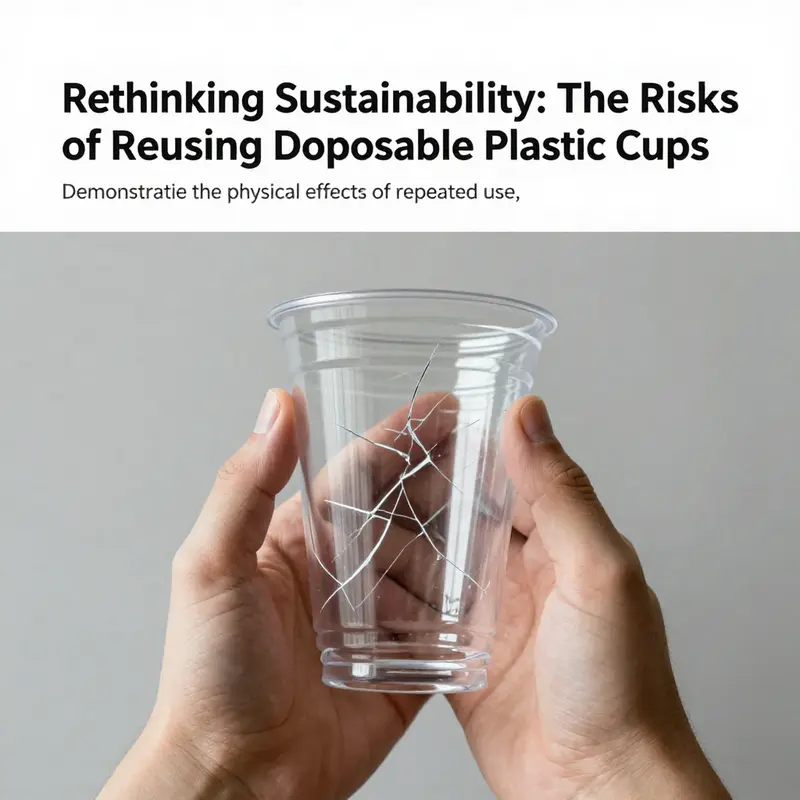
When a disposable plastic cup is taken from a stack and handed to a drinker, its outward appearance often betrays how little most of us expect from it. Brightly colored rims, glossy walls, and a familiar snap when the lid is pressed shut—all signs of a familiar, inexpensive, one-time-use form. Yet beneath that clean exterior lies a threefold problem that grows with every reuse attempt: physical degradation of the plastic, the resulting micro-scale damage that invites microbial life, and the ease with which contaminants can migrate into liquids when the cup is stressed by heat, washing, or bending. This chapter follows the logic that physical degradation is not merely cosmetic; it reshapes the cup’s surface, its structural integrity, and, ultimately, the safety profile of any beverage it is asked to hold again and again. The discussion centers on common disposable cup materials, with attention to how their chemistry responds to repeated exposure to heat, cleaning agents, and mechanical stress, and why these responses matter for hygiene and health even when the cups are used only modestly beyond their intended single-use purpose.
First, consider the materials at the heart of most disposable cups. Polyethylene (PE) and polystyrene (PS) are primary players here, each bringing different weaknesses into the reuse equation. PE cups are often chosen for their light weight, clarity in some grades, and relative chemical inertness in the short term. PS cups, while rigid and inexpensive, are more prone to shattering under impact and can become brittle with age. Neither material is designed for repeated use in a setting where a cup might encounter heat, oily residues, or acidic beverages for extended periods. As reuse is attempted, physical fatigue accumulates. The polymer chains—already strained by the initial molding and cooling process—begin to accumulate micro-stresses that are invisible to the casual observer but build over time. The surface of the plastic becomes rougher. Tiny fissures, invisible to the naked eye, creep into the walls. It is this microscopic fissuring that propels many downstream hazards, because roughened surfaces trap minute residues and create niches where microbes can cling rather than be washed away by routine cleaning.
Temperature is a core accelerant of this degradation. The science is clear on this point: elevated temperatures accelerate surface wear and molecular breakdown in polymer materials like PE. When a cup that has shed its original design limitations is used for hot drinks or exposed to hot water during cleaning, the heat acts like a stress test for the plastic. In pure PE, surface degradation accelerates, creating micro-channels and roughened textures that simply did not exist when the cup was new. The implication is not only that the cup looks worn, but that the surface becomes more porous to liquids and residues. As the plastic ages under heat, the likelihood increases that substances from the cup itself—subtle additives, processing aids, or trace impurities embedded in the polymer matrix—could migrate into the beverage. While the amount might be small in the early stages, the repeated cycles of heating, cooling, and washing compound the exposure, producing a cumulative effect that cannot be dismissed as a one-off risk.
This is not limited to chemical leaching in the sense of a dramatic, immediate spill of toxins. It is more nuanced: the combination of micro-abrasions and longer contact times can raise the propensity for certain substances to migrate, even at room temperature, if residuals from the cup or the environment are present. The problem is compounded when cleaning agents—whether standard dish soap or more aggressive detergents used in dishwashers—are introduced. Detergents often contain surfactants and high-alkaline components that interact with polymer surfaces. Repeated exposure to these cleaners can further erode the smoothness of the interior. The net effect is a cup whose interior is no longer a clean, closed system but a textured landscape that supports micro-niches for stubborn residues and microbial life. The interaction between heat, cleaning agents, and the polymer itself is not simply additive; it is synergistic in the way that changes in surface chemistry can alter wettability, residue adhesion, and microbial adherence.
In a related vein, microbial growth is not simply a matter of dirty hands or poor washing. While diligent cleaning reduces the overall microbial load, the micro-cracks and micro-scratches from repeated use become sanctuaries for bacteria and fungi. The interior of a reused disposable cup, with its fine crevices, presents a challenging environment for complete sanitization. Standard washing cycles, even those using hot water, can leave behind microscopic pockets where bacteria such as E. coli, coliforms, and other microorganisms can establish a foothold. These organisms are well adapted to exploit irregular surfaces, which cease to be part of a smooth, hostile environment once the cup begins to degrade. The concern is not only one of contamination in the moment; it is about the persistent risk that a cup, through its altered topology, continually harbors microbial life that could contaminate beverages on subsequent uses. In this sense, the degradation is not merely physical but ecological, reshaping the cup into a micro-ecosystem that is resilient to routine cleaning.
The lack of formal certification for reuse compounds the risk. Disposable cups are engineered and tested for single-use performance. This means there is no guarantee that a cup, when reused, will behave predictably under various real-world conditions. The absence of protective certifications—such as guidelines for repeated contact with foods or tolerance to repeated dishwasher cycles—means that consumer expectations about safety do not align with the manufacturing realities. Even if a cup survives several cycles without an obvious break, the hidden wear might have already altered its safety profile in ways that are not captured by standard single-use testing. This misalignment between use and certification is a critical gap: it invites people to reassess the assumption that “one-time-use” also equates to “once-safe.”
The degradation process itself—microstructural changes on the interior surfaces, the emergence of fissures and roughness, and the subtle shifts in surface chemistry—has practical consequences. For beverages, these changes can alter how liquids interface with the cup. A smoother surface tends to shed residues more readily, while a roughened surface can accumulate trace amounts of oils or sugars from drinks. These residues can become feeding grounds for microbes or may interact with repeated contact times to alter flavor, odor, or clarity of the beverage. The structural weakening that accompanies repeated use also increases the risk of cracking or sudden failure, especially if a cup is handled carelessly or subjected to sudden impacts. A split cup is more than a nuisance; it could lead to spills and a messy, potentially unsafe situation where a consumer might be exposed to irregular contact with the contents or with the damaged edges themselves.
An important point to keep in view is what happens when a cup designed for one use is pressed into a longer life by a household or event setting. In many cases, the cups used for beverages are not the robust, reusable-grade plastics that would withstand repeated mechanical stress. The inherent design is not insulated for long life; the walls are thin, the rims are flexible, and the overall form is optimized for low cost and ease of disposal rather than for durability. When forcing a longer life onto such a form, one invites not only mechanical failure but a cascade of chemical and microbial hazards that emerge from the same cracks the eye cannot see. The consequences of this cascade are subtle but meaningful: the risk of contamination for someone who expects a clean cup for their next drink increases with each reuse cycle. The home consumer may not immediately connect a marginal taste or a fleeting odor to micro-crack damage, but the connection is real and scientifically grounded. The cup is not just a container; it becomes a dynamic interface between material science, hygiene, and consumer health.
There is a natural tension here between the convenience of reuse and the science of safety. On the one hand, reuse sounds economical and environmentally friendly, and in some contexts, it might be acceptable for non-food uses or for limited, highly controlled environments. On the other hand, the repeated use of cups not engineered for it under conditions that include heat, cleaners, and mechanical stress creates a convergence of risks that most users are ill-equipped to monitor. The lack of robust, universal standards for multi-use performance in these products makes the risk unique to each usage scenario, and that uncertainty is itself a risk. By acknowledging this, the conversation about single-use plastics expands beyond the obvious waste concerns to include health and safety implications that arise from physical degradation and microbe-friendly landscapes forming on the walls of reused cups.
In practice, the safest default remains avoiding reuse of disposable plastic cups for drinks. If reuse is unavoidable, the guidelines are narrow and deliberately conservative. Cups should be reserved for non-food purposes when possible, or repurposed in ways that do not involve food contact, such as organizers for small items, craft supplies, or seed starting. When individuals must repurpose containers for liquids, it is essential to recognize that the risk profile has shifted. The social norm of reuse should not override the fundamental principle of food safety: materials designed for one-off use are not reliably safe for repeated contact with consumables.
Within this context, some readers may wonder whether there are any exceptions. The literature does acknowledge that heavier-duty plastic cups made from polypropylene (PP) or high-density polyethylene (HDPE) can tolerate limited reuse in certain settings like laboratories or kitchens. These materials generally have greater resistance to heat, improved mechanical durability, and less susceptibility to surface crazing compared with standard PE or PS cups. Yet even in these contexts, reuse is constrained by explicit guidelines about cleaning methods, exposure limits, and lifecycle expectations. It is essential to resist normalizing reuse as a generic practice for all disposable cups. The safety calculus varies with material, design, and application, and the default position—avoid reuse unless the product is explicitly rated for multiple uses—remains the prudent route for most everyday settings.
From a public health and consumer safety standpoint, the takeaway is clear: the physical degradation that accompanies reuse is not a minor inconvenience. It reconfigures the cup’s interior into a terrain where microbes can persist and where chemical leaching, though gradual, becomes more plausible with each cycle. The combination of heat exposure, mechanical stress, and harsh cleaning environments accelerates this degradation, creating a risk landscape that cannot be reliably managed by washing alone. The absence of comprehensive reuse certifications for most disposable cups means that the warranty against failure is not guaranteed when the product is pressed into a second life. This is not a dramatic condemnation of all plastic cups but a call for a more nuanced understanding of how material properties interact with real-world usage. In many cases, safer, more sustainable alternatives—such as reusable glass, stainless steel, or BPA-free reusable plastics—offer clearer safety profiles and longer life cycles, eliminating the episodic micro-hazards introduced by repeated use of standard disposable cups.
For readers seeking practical guidance embedded in the broader logic of sustainability and health, this discussion anchors a more cautious stance toward reuse. The safest path is to treat disposable cups as single-use items, dispose of them after a drink, and invest in purpose-built reusable containers if repeated use is a frequent expectation. If repurposing is necessary, non-food applications are preferable. When the goal is to reduce environmental impact while maintaining safety, the alternative is not to collapse the lifecycle of a single-use product by forcing it into multiple uses, but to adopt high-quality reusable options designed with durability, food safety, and proper cleaning in mind. In sum, the physical degradation that accompanies reuse is a consistent, scientifically grounded phenomenon that links material science to everyday health considerations. The cup, once thought of as an inert vessel, becomes a site where heat, wear, and microbial life intersect—a reminder that the safety of our drinks depends on the integrity of the container that holds them.
To learn more about the scientific basis of polymer degradation under heat and its relevance to disposable cups, a comprehensive external resource provides deeper technical detail. See the study here: https://www.sciencedirect.com/science/article/pii/S030438942501789X. For readers interested in practical product options and safe disposal ideas, you can explore related internal resources that discuss appropriate forms of disposable and reusable tableware. For example, the disposable clear plastic cup product page offers a useful reference point for understanding what a single-use design entails and why its reuse may fall outside safety expectations. Disposable clear plastic cup product page.
Beyond the Seal: Certification, Safety Regulation Gaps, and the Real Risks of Reusing Disposable Plastic Cups
Certifications and safety labels can give a veneer of assurance, but they reflect only a moment in a product’s life, not the long path of use that follows once it leaves the factory floor. Disposable plastic cups are fabricated to be reliable for a single serving or event. The moment they are emptied, washed, and squeezed into a new setting, many of the assumptions that guided their manufacture and initial testing no longer apply. The chapter that follows looks past the surface of compliance to examine what happens when we push a single-use design into repeated service, and why the gaps between certification and real-world reuse matter for public health.
At the heart of the system are quality control frameworks that manufacturers typically adopt to ensure the product is safe at the moment of production and for its intended single-use purpose. Good Manufacturing Practices (GMP), Hazard Analysis and Critical Control Points (HACCP), and ISO 9001 establish a disciplined approach to materials, process controls, and traceability. They help prevent contamination during production, ensure consistent dimensions, and document the checkpoints that support a clean, uniform product for a crowd. Yet those standards were not designed to certify the durability or safety of a cup once it has been used, washed, and reintroduced into a drinking environment. Reuse introduces stressors—heat, detergents, abrasion, and repeated contact with foods and beverages—that production-focused certifications simply do not quantify. In practice, this means a cup can pass muster when fresh, but degrade under conditions that are routine in kitchens, catering setups, or home reuse scenarios.
Consider the material science behind common disposable cups. Many are made from polymers such as PET or polystyrene, designed to be rigid, transparent, and inexpensive for one-time use. When these materials experience heat or are exposed to acidic or oily liquids, their long-emptied performance can shift. The chemistry that governs a cup’s initial safety profile often changes with time and exposure. Antimony, a trace element sometimes associated with PET as a residual catalyst, is one such concern; other potential leachates include various additives used to improve flexibility or durability. The literature on reuse consistently shows that the risk profile is not linear. Small changes in temperature, contact with flavors, or the presence of certain cleaning agents can alter how much, if any, of these substances migrate into the liquid. In short, a cup that seems safe at first use can progressively become a risk with each subsequent cycle, particularly if it was never labeled or certified for reuse.
The microbial dimension of reuse is equally sobering. Discolorations and micro-scratches that are invisible to the naked eye can shelter bacteria and molds in the nooks of a cup’s interior. Cleaning can mitigate but not always eliminate this risk, especially when scrubbing does not remove microscopic fissures that accumulate biofilms over time. Research summarized in expert circles notes that repeated contact with liquids and detergents can carve micro-defects into the plastic’s surface. These imperfections become reservoirs for microbial life, sometimes stubbornly resistant to routine washing, and can seed contamination with each subsequent use. While a kitchen might manage this risk in a few cups, the scale of many institutions makes consistent resanitization extremely challenging. The consequence is a distribution of health risks that is not fully captured by initial GMP and HACCP assessments.
The microbiological concern is reinforced by broader observations about microplastics and endocrine disruptors in reused plastics. A striking line of inquiry from environmental health researchers highlights that what is inside the container—its chemistry and how it interacts with heat and acidity—can influence exposure. Dr. Linda Chen, an environmental health researcher at a major university, pointed out that “Repeated use of disposable plastic bottles increases exposure to microplastics and potential endocrine disruptors, even if the bottle appears intact.” This warning, pertinent to bottles, translates directly to cups made from similar polymers, because the design constraints, material selections, and manufacturing pathways overlap. The implication for reuse is not simply a matter of washing away residue; it is a question of whether the underlying material continues to meet safety expectations after repeated stress. The absence of reuse-specific certification for disposable cups means that such questions fall into a gray area where precaution, rather than proof, governs decision-making.
Evidence from microbiology research adds further weight to the caution. A study highlighted in the Journal of Applied Microbiology demonstrated that reused disposable plastic containers can harbor alarmingly high levels of microbial contamination, with colony-forming units (CFU) reaching magnitudes comparable to other high-contact surfaces in some settings. Although the exact numbers vary by material, shape, and cleaning protocol, the core message is consistent: reuse elevates microbial load and risks that are not fully mitigated by typical household washing or commercial dishwashing cycles. If a single-use cup is repurposed across meals or beverages, the probability of residual microbes surviving becomes a function of the cup’s geometry, the detergents employed, and the kind of beverage that is held within. These factors interact in ways that the original safety certification did not anticipate, making strict adherence to reuse guidelines not just prudent but essential for public health.
Against this backdrop, the lack of formal, widespread certification for reuse is not merely an inconvenience; it is a fundamental gap in consumer protection. Current regulations and certification regimes tend to address the safety of new goods rather than the safety of goods under extended use. There is no consistent requirement that a disposable cup be tested for multiple cycles, nor any universal standard dictating the maximum number of reuse cycles or the kinds of cleaning methods that preserve safety. This regulatory silence is not a minor technicality; it reshapes risk from a problem that is manageable under controlled production lines into a practical dilemma for daily life and event management. Where stewardship over food contact materials is strongest, the emphasis is on preventing harm by design and by production. Where reuse enters the picture, the design philosophy shifts toward harm mitigation, which is not the same as safety assurance.
This is why the practical guidance that public health authorities have offered is conservative: avoid reusing disposable cups when possible, and if reuse is unavoidable, limit it to contexts where the cups are explicitly labeled for reuse, or better still, shift to materials designed for repeated use. In many situations, institutions and households may be tempted to repurpose cups for non-drinking tasks—organizing tiny supplies, arts and crafts, or seedling pots—rather than returning them to a beverage service. The safer handling of cups that are not certified for repeated use is part of a broader strategy that includes better labeling, clearer disposal guidelines, and more robust access to reusable alternatives. For anyone tempted to stretch the reuse concept, the advice remains consistent: the least risky path is to keep disposable cups out of the reuse cycle altogether.
A straightforward way to ground these considerations in practical choices is to weigh the availability and reliability of alternatives. Reusable containers—stainless steel, glass, or certified food-grade silicone—offer durable performance that aligns better with the expectations of repeated use. They are designed to withstand heat, repeated washing, and long service life, and they typically come with explicit guidance on safe use and care. The trade-off is the upfront cost and the responsibility of ongoing cleaning, but these costs and responsibilities are offset by a consistent safety profile across many cycles. When institutions or event organizers compare options, the calculus often turns on total cost of ownership, environmental impact, and the certainty that comes with reuse-designed products rather than one-off items that may void safety assurances after a few uses.
To connect these broader considerations with concrete choices, it helps to reflect on the ecosystem of packaging and tableware that surrounds events and daily life. A commonly overlooked but meaningful aspect is the availability of one-off items that approximate the convenience of disposable cups while offering safer reuse potential. For some scenarios, the use of paper-based or compostable tableware for single-event servings can reduce plastic exposure, minimize the risk of long-term chemical migration, and still deliver practicality. If reuse is a non-starter, shifting to alternatives that emphasize single-use design with clearer disposal pathways can be a rational compromise—provided that such items are genuinely appropriate for their intended use and disposed of responsibly after a single encounter. For those who wish to explore the broader landscape of safer disposables, one practical path is to consider non-plastic, recyclable, or compostable tableware and containers that align more closely with a reuse-oriented mindset, while still avoiding the pitfalls of attempting to reuse items not designed for that purpose. A useful reference point for such considerations can be found in the broader product landscape that emphasizes safe, recyclable, or compostable tableware rather than single-use plastic cups that are not certified for reuse.
For readers seeking a tangible pointer to safer, reusable alternatives, consider exploring items such as the disposable paper plate tableware set, which represents a shift away from a plastic dependency to paper-based solutions that may be part of a broader strategy to reduce single-use plastic exposure in events and everyday settings. This example demonstrates how designers and suppliers can reimagine consumer choices without compromising on hygiene or convenience. See the discussion and product context at this link: https://ecocupbowl.com/product/disposable-paper-plate-tableware-set-wooden-knife-fork-and-spoon-set-paper-plate-paper-bowl-zebra-pattern-tableware/. The aim is not to normalize any particular product, but to illustrate how safer reuse and safer single-use options can be framed within a broader, more health-focused approach to food-contact materials.
When researchers and policymakers assemble the pieces—certification, reuse, and consumer protection—the overarching message is clear. There is a tension between the assurances provided by certification that speaks to production quality and the realities of longevity and repeated use that those assurances do not cover. Reusing disposable cups pushes the boundary of what current standards are equipped to govern. This mismatch is not a mere technicality; it is a call to reexamine the life cycle of everyday items we often take for granted. The safest path for most people remains simple and explicit: avoid reusing disposable cups, or reuse only those that are explicitly designed and certified for multiple uses. In all cases, prioritize products with clear guidance about heat resistance, chemical migration, cleaning methods, and the potential health implications of prolonged use.
As the chain of evidence from chemistry, microbiology, and public health grows more coherent, action steps for institutions become more concrete. Public health agencies can strengthen guidance by articulating explicit reuse thresholds, providing standardized test protocols for repeated-use scenarios, and encouraging the development of certification schemes that address lifecycle safety beyond the initial production. Manufacturers can respond by investing in materials and designs that tolerate repeated use without compromising health, or by clearly labeling products that are not suitable for reuse and providing robust disposal pathways. Consumers, finally, can cultivate habits that minimize risk: choose reusable options designed for longevity when reuse is anticipated, wash according to care instructions, and avoid exposing cups to high heat or harsh cleaning agents that could accelerate degradation. Even in households that must rely on disposable options for budget or convenience reasons, an informed, cautious approach can reduce exposure to the hazards associated with reuse and keep health risks at bay.
For authoritative guidance on the health risks linked to plastic usage and reuse, refer to the CDC’s Plastic and Human Health resource for a broader context about microplastics, chemical leaching, and microbial contamination: https://www.cdc.gov/environmentalhealth/plastic/.
Final thoughts
In summary, while disposable plastic cups offer convenience, their reuse poses significant health and safety risks that beverage businesses should not overlook. From chemical leaching and microbial growth to physical degradation and the lack of safety certifications, the implications extend beyond individual practices and impact customer trust. By opting for safer alternatives and adhering to best practices, companies can protect their customers and uphold their reputations in a competitive market.