
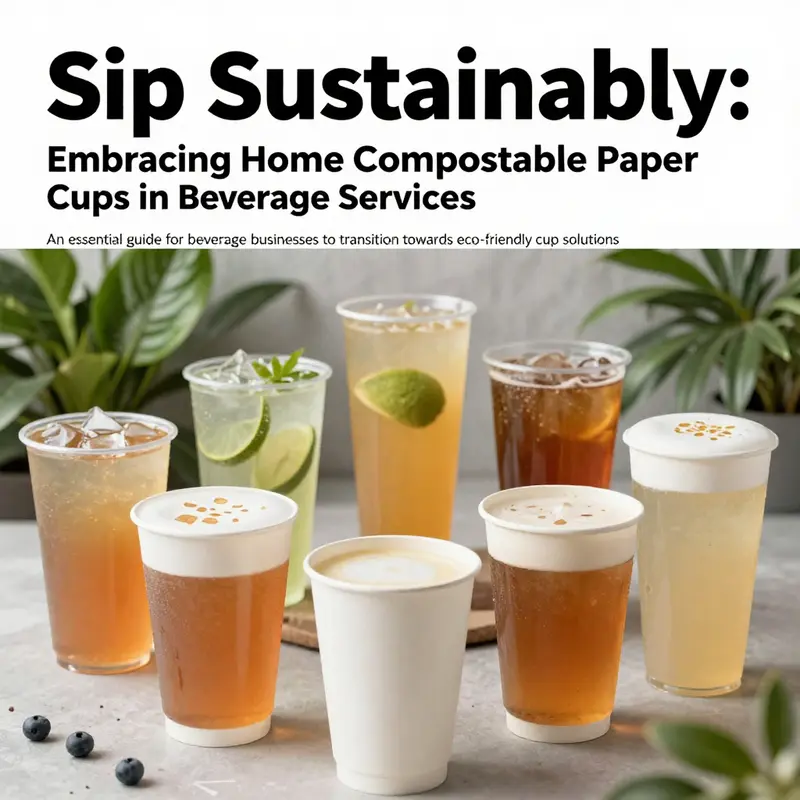
The increasing need for sustainable practices in the food and beverage industry has brought attention to alternatives like home compostable paper cups. Designed to meet the needs of coffee shops, restaurants, food trucks, and event planners, these cups can effectively replace traditional plastic and foam options, helping businesses contribute to a cleaner environment. In the following chapters, we’ll explore what home compostable paper cups are, their benefits over traditional materials, the differences between industrial and home composting certifications, how to choose the right cups for your needs, and the broader environmental impact of selecting compostable options. Understanding these elements will empower businesses to make informed, eco-friendly decisions that resonate with today’s environmentally aware consumers.
Redefining Everyday Waste: The Definition and Composition of Home Compostable Paper Cups
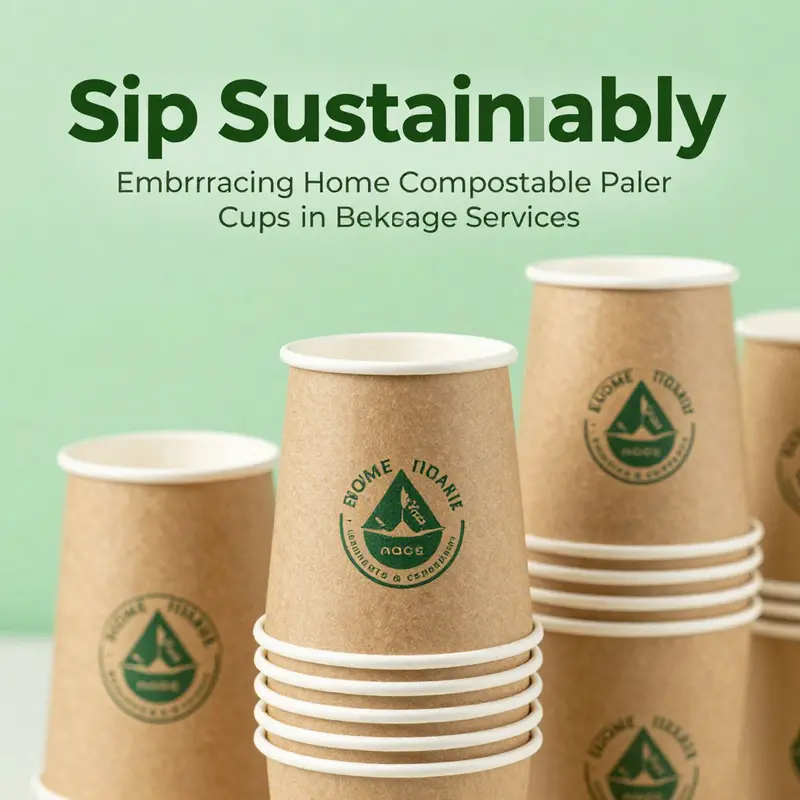
When we think about the simple act of pouring a drink, the cup in our hand often feels like a disposable afterthought. Yet the choices we make about that cup ripple outward, shaping a wider system of waste, resources, and recovery. Home compostable paper cups sit at a crucial intersection: they offer the ease and familiarity of a beverage vessel, while promising a cleaner fate for the leftovers of daily life. They are not magic solutions, but they are thoughtfully engineered to align with a smaller, more hands-on form of waste management—home composting. To grasp why these cups exist and how they work, it helps to unpack what they are, what they are not, and how certification and disposal practices matter in real homes and real businesses.
At their most fundamental level, home compostable paper cups are designed to break down in backyard or domestic composting environment. They are not meant to endure indefinitely in a landfill or require top-tier industrial conditions to decompose. In the context of typical backyard composting—and under conditions that most home piles can supply, with adequate moisture, aeration, and a steady rhythm of turning—these cups can transition from an in-use item to organic matter within a matter of months. The practical takeaway is that they help close the loop on a common waste stream: a used cup that once served a hot coffee or a cold juice, and that could otherwise add to household waste rather than soil.
Composition is where the story of home compostable cups becomes technically meaningful. They start with recycled paper, which reduces the demand for virgin fiber and steers material streams toward reuse. The key difference from traditional disposable cups lies in the coating that lines the interior. Instead of a polyethylene or other conventional plastic lining, home compostable cups use a plant-based biopolymer—most commonly polylactic acid, or PLA. PLA is derived from renewable resources such as cornstarch or sugarcane, and it provides the necessary moisture resistance to hold hot or cold beverages without leaking. Importantly, PLA is designed to be biodegradable under the right conditions, a feature that enables the cup to participate in organic waste streams rather than simply accumulating as a non-degradable layer of waste.
The frontier of this material science is not only about making the cup hold liquids; it is about making sure the entire cup—paper, coating, and any additives—can return to soil in a responsible way. The attention to safety is notable: these cups are typically formulated to be free from PFAS and BPA, chemicals that have raised concerns about persistence and leaching. When a cup is labeled as home compostable, it signals that providers are aiming to minimize harmful residues and align with the goals of organic waste streams. This is more than a cleanliness standard; it is a commitment to a circular approach where the materials can re-enter the biosphere rather than linger in landfills.
A crucial distinction, however, is the environment in which the decomposition is expected to occur. PLA, while capable of breaking down, requires specific temperature ranges and microbial activity to do so efficiently. Industrial facilities have been optimized to deliver those conditions consistently. For a cup to truly qualify as home compostable, it must meet certification standards designed for domestic composting. Certification bodies—such as OK Compost HOME—impose criteria that ensure the product will break down in home compost piles without leaving harmful residues. This distinction matters because not all cups labeled as compostable will perform equivalently in a home setting. A product might decompose in an industrial kiln, but not at the slower, more variable conditions found in many homes. Consumers and operators who want to enable true home composting should look for explicit home-compost certifications rather than generic “compostable” claims.
From an environmental perspective, the appeal of these cups lies in more than their coatings. They are part of a broader movement toward reduced reliance on fossil-based materials and toward products that can rejoin natural cycles with minimal ecological footprint. In practice, this means choosing cups that avoid persistent additives and keep polymers from complicating the composting process. The emphasis on safe formulations supports organic waste streams, where compost produced from home piles can eventually nourish soil rather than contaminate it. Yet the practical reality remains nuanced: the very compostability that makes these cups attractive also places a responsibility on users to dispose of them properly. The certification mark is not a magical seal; it is a guide that helps households and businesses steer waste toward appropriate channels.
In daily use, these cups prove suitable for a wide range of beverages—from coffee to tea, and from smoothies to juices. They deliver the moisture resistance necessary for hot and cold drinks while keeping the experience of drinking familiar and straightforward. For the consumer, this translates into a purchase that supports a circular approach to waste without demanding dramatic changes in routine. For the business, the cups offer a responsible option that fits standard service models, from a neighborhood café to a community event. The key is to align the product choice with proper disposal practices, materials labeling, and a realistic assessment of what home composting can handle. A critical step is to verify that the product carries a certification explicitly indicating suitability for home composting. In the absence of such certification, the cup may still be technically biodegradable, but the pace and completeness of breakdown in a home pile could fall short of expectations.
Disposal practice matters as much as material choice. After use, the cup should be placed in a compost bin that includes food scraps and adheres to a temperature and moisture profile that supports microbial activity. Keeping the pile moist and well aerated helps maintain steady decomposition. It is also important to avoid mixing non-compostable materials with the cup, since contamination can hinder the entire batch of compost. This is a practical reminder that sustainable materials are most effective when accompanied by mindful consumption and responsible waste habits. For households or venues seeking to model best practices, maintaining a regular composting routine, labeling waste streams clearly, and educating others about what is and isn’t compostable can amplify the positive impact of choosing home-compostable cups.
In terms of consumer guidance, a careful watch for labeling is essential. Certification marks that indicate home compostability, such as those associated with recognized standards, provide a reliable signal that the cup has been tested and deemed suitable for backyard composting. The presence of a PLA lining, combined with a paper substrate and absence of traditional plastics, is a meaningful indicator but not the sole determinant. The certification label offers validation that the product has been evaluated under domestic conditions that reflect real household composting scenarios. When in doubt, seeking products that explicitly advertise home-compost certification can reduce confusion and promote higher standards across suppliers and retailers.
For readers seeking a concrete example of home-compostable cups in action, this chapter points toward a category of disposable paper cups that emphasize compatibility with home composting, moisture resistance, and safe formulation. When shopping, it helps to examine the product’s labeling as well as the certification status. Look for explicit language that signals home compostability, and confirm that the certification comes from a recognized body. This due diligence protects the integrity of the compost stream and helps ensure that consumer waste becomes soil-forming material rather than residue that persists in the environment. In parallel, businesses that serve beverages should integrate clear disposal guidance into their operations. Well-marked bins, staff education, and customer-facing signs can reinforce correct behavior, bridging the gap between product design and actual end-of-life outcomes.
An internal reference point can illuminate how a practical supplier frames these cups for everyday use: disposable paper cups designed for hot beverages with a PLA interior. For readers curious about real-world product catalog options, a representative example from a major supplier demonstrates how a home-compostable cup can be positioned alongside traditional offerings while maintaining performance expectations. The URL below connects to a page that features such cups in a context where customers expect both convenience and compostable credentials. Internal links like this can help readers explore practical purchasing choices without leaving the broader narrative of responsible material design and end-of-life stewardship. disposable paper cups kraft paper cups coffee milk cup for hot drinking party supplies
Beyond the product specifics, the overarching message is simple: home compostable paper cups embody a design philosophy that respects local waste systems, supports circularity, and invites households to participate directly in the deconstruction and recovery process. They are not a universal solution to all waste challenges, but they offer a practical and meaningful path for reducing plastic waste in everyday beverage service. The move toward home compostability reflects a broader trend in materials science and waste management, one that values transparency, certification, and user-friendly disposal. As more households adopt backyard composting or neighborhood composting programs, the availability and reliability of certified home-compostable cups will shape the pace and success of that transition.
For readers who want to explore authoritative standards and certification schemes further, authoritative information on home-compostable products and their certifications can be found through industry bodies that oversee such programs. These resources provide criteria, testing, and verification processes that help ensure products meet real-world home-composting expectations. Embracing these standards supports a healthier, more resilient waste system and keeps our everyday choices aligned with a hopeful, regenerative future for the planet. External resources can offer further clarity on the requirements for home compostability, helping shoppers and service providers navigate certifications and disposal guidelines with confidence.
External reference for certification information: https://www.tuv.com/en/ok-compost-home
From Cup to Compost: How Home-Ready Paper Cups are Rewriting Our Daily Beverage Footprint
A cup seems a simple thing, yet the way we choose to design, dispose of, and return its materials to the soil says a great deal about the direction of our everyday habits. Home compostable paper cups sit at a compelling intersection of convenience and responsibility. They promise a familiar, familiar-feeling experience—holding a coffee, tea, smoothie, or juice—while also offering a pathway for the container itself to re-enter the natural cycle. This is not merely about eliminating waste; it is about reimagining a tiny, ordinary act as a contribution to soil health and ecosystem balance. When you zoom in on how these cups are made and certified, you begin to see a delicate balance between performance and compostability. They are typically crafted from renewable paper stock and lined not with traditional plastics, but with a biodegradable coating such as polylactic acid, or PLA, which originates from plant sources like cornstarch. The PLA lining is the key to moisture resistance; it keeps beverages from leaking and protects the cup’s integrity under heat or cold, while still allowing the finished product to be compostable under appropriate conditions. It is this combination—renewable fiber plus a compostable barrier—that positions home compostable cups as a credible alternative to conventional plastics and foams that persist in landfills for centuries. The practical implication is clear: a home-drewn, backyard compost system, given the right conditions, can transform used cups into soil amendments rather than waste. This is the essence of the circular economy in a domestic setting, the kind of system that citizens can actively participate in without waiting for a municipal program or an industrial facility to handle the end-of-life process.
Yet the topic warrants nuance. Not every cup labeled as compostable is suitable for home composting. Some products are designed with industrial composting in mind, requiring the higher temperatures and controlled conditions of specialized facilities. That is why certification becomes more than a marketing flourish; it is the user’s compass. For home compostability, look for certifications explicitly stating compatibility with home composting, such as OK Compost HOME or TÜV OK Compost. These stamps signal that the product has been tested under conditions that most households can replicate—reasonable temperatures, adequate moisture, and sufficient time for decomposition. In practice, these cues translate into predictable outcomes: a cup that remains intact during a hot café pour but breaks down into organic matter once it spends time in a backyard pile or worm bin.
The benefits follow a straightforward logic. First, there is rapid decomposition when cups are placed in the right composting environment. While “rapid” is relative to conditions, the aim is clear: reduce the lag between waste and nutrient return. In some cases, certified home-compostable cups have demonstrated the ability to break down more quickly than their conventional counterparts, especially when the composting process is managed with consistent moisture, suitable aeration, and a steady feedstock of organic material. The second benefit is the direct reduction in single-use plastics. Traditional cups often rely on polyethylene linings or plastic coatings to deter moisture and heat. Those plastics complicate end-of-life sorting and can contribute to microplastic pollution if mismanaged. A compostable cup, by design, minimizes that plastic leakage into the environment. Its plastic-like performance is achieved through a different chemistry—one that keeps your drink contained without sacrificing the final fate of the cup itself.
Market dynamics are another piece of the story. As consumer awareness of waste and pollution grows, so does demand for materials that can align convenience with environmental responsibility. The global compostable packaging sector has been identified in market analyses as a growth frontier, propelled by consumer preference for sustainable products and by increasingly stringent regulatory regimes that favor circular solutions. In practice, this means more cafés, restaurants, events, and households are choosing cups that can be disposed of where organic waste goes, rather than added to the stream of residual plastic waste. The trajectory suggests not only a larger market share for compostable cups but a broader shift in how businesses and individuals plan their takeout and daily beverage rituals.
A crucial part of this shift concerns consumer education. The best, most well-meaning products can falter if users assume they can toss them into any compost bin or municipal green-waste program. In some tests, supposedly “biodegradable” or “compostable” cups contained additives that complicated composting, or failed to break down in home piles. The result can be contamination or incomplete decomposition, undermining the goal of closing the loop. The takeaway is practical and precise: always verify the product’s certification and disposal guidance. When a cup is clearly labeled for home compostability and accompanied by a reputable certification mark, it becomes a straightforward choice for households that want to keep culinary convenience aligned with environmental stewardship.
For households and venues aiming to translate this philosophy into daily practice, the path is not to abandon cups altogether but to choose ones that honor the entire lifecycle. These cups should perform reliably in normal temperatures and with normal beverages—avoiding, for instance, extremely high-fat or oily liquids that can compromise the barrier properties and the overall integrity of the compostable lining. Storage matters, too. A cool, dry place away from moisture and direct sun helps preserve the cup’s structural and compostability properties prior to use. Once used, the cups should enter a home compost stream or industrial facility that accepts certified materials. When communities and households align their disposal habits with the product’s certification, the benefits of home compostable cups begin to compound, reducing landfill pressure and encouraging a more resilient, soil-building waste system.
Community and business adoption has a social dimension as well. In spaces such as coffeehouses, festivals, and office environments, these cups facilitate a visible commitment to sustainability without requiring a radical overhaul of existing service models. They enable a familiar service flow—hot drinks in sturdy, well-fitting cups—while elevating the conversation about end-of-life outcomes. The more consumers and operators understand certification, the more they recognize the value of choosing products that can truly decompose in a backyard pile or compost bin. This is not about a single purchase; it is about a continuity of decision-making that honors resource cycles. And it is about trust—trust that a product advertised as compostable will, within a reasonable timespan and in appropriate conditions, return to the soil instead of lingering in a landfill or fragmenting into microplastics.
As a practical touchstone for those curious about real-world options, consider the bulk paper cup category, which makes it easier to integrate compostable solutions into everyday routines. The choice to buy cups in bulk is not just about cost or convenience; it reflects a commitment to supply chain transparency and user-friendly disposal practices. It also offers an easy pathway to educate customers, guests, and family members about what compostable really means and how to dispose of these cups properly. If you are evaluating options for a café or an event, you can explore these bulk offerings, which are designed to pair with common lids, sleeves, and companion compostables while preserving the composting narrative you want to communicate. For readers seeking a practical example of this, consider the following bulk option: 20-50-200pcs disposable paper cups. The link provides a concise entry point into how these products are positioned in the market and how they can fit into a household or business waste plan.
The broader implication is not merely about reducing waste at the end of life. It is about embedding sustainability into the daily rhythms of consumption. When someone chooses a home-compostable cup, they are signaling a preference for materials that are designed to return nutrients to soil rather than persist as litter or microplastics. This aligns with the circular economy ethos, which treats resources as assets to be recirculated rather than as disposable inputs destined for landfills. It also invites a more nuanced view of what “eco-friendly” means in practice. Certification matters because it is the reliable map that guides choices through a landscape where terms like biodegradable, compostable, and degradable can mean different things in different contexts. A cup labeled with credible home-compost certifications provides a clear, auditable standard. It tells a consumer, in effect, that their beverage container can responsibly join the soil life after its single-use moment has passed.
In sum, home compostable paper cups offer a practical, planet-friendly path for everyday beverage service. They support individual action and institutional responsibility alike, reducing plastic waste, enabling soil nourishment, and supporting a culture of care about where material goods end their lives. The impact is incremental, but it is cumulative. Each hot coffee, each cold smoothie, each party cup can contribute to a cleaner, more resilient waste system when disposed of correctly and certified for home composting. The shift is not a distant aspiration; it is a tangible option that teams, households, and communities can begin implementing today. By choosing cups that are clearly home-compostable, by reading the labels, and by following disposal guidelines, people turn a small daily habit into a meaningful environmental contribution.
External reference: https://www.amazon.com/dp/B0BZKJQX8D
From Backyard to City Facility: Unpacking Certifications for Industrial and Home Compostable Paper Cups
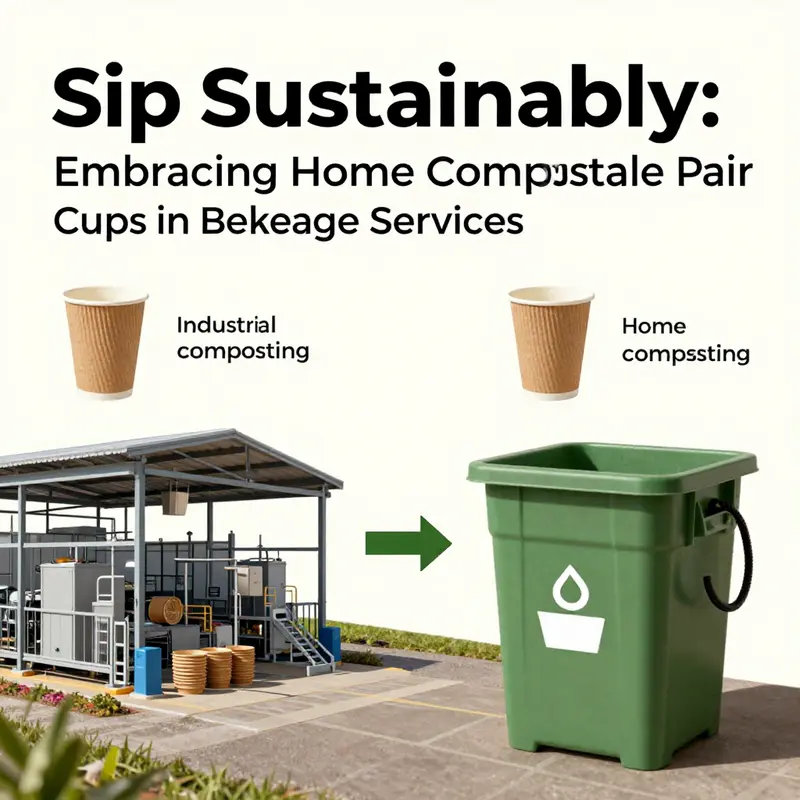
The shift toward compostable paper cups reflects a broader rethinking of how our everyday choices affect waste streams and soil health. Yet the promise of compostability hinges as much on certification as on material science. In the world of cups, two pathways exist: industrial composting and home composting. Each pathway operates under different temperature regimes, timeframes, and infrastructure realities. Understanding these differences is essential for anyone stewarding a cafe, a community event, or a household who wants to keep a beverage from becoming a stray piece of litter rather than a nutrient for soil. The idea of compostable cups is straightforward in theory: a plant-based or recycled fiber cup that breaks down into harmless components when placed in the right composting environment. The reality, however, is more nuanced. Not all cups labeled as compostable meet the same end, and some require facilities or conditions far beyond what a typical kitchen or backyard can provide. Certifications help sort the claims from the real outcomes. They act as trusted signposts in a landscape where materials science, waste management, and consumer behavior intersect. Industrial composting facilities are engineered for fast, controlled decomposition. Their chambers reach elevated temperatures and maintain precise humidity and aeration. Under these conditions, a broad range of plant-based plastics and paper-based products can break down within a defined window—often around 90 to 180 days. The path to certification in this space is well worn. Independent bodies test products to ensure they will fully decompose and leave no toxic residues. In North America, bodies such as the Biodegradable Products Institute set benchmarks that align with practical facility operations. The certification process scrutinizes not just the main material but the entire cup system: the paper substrate, the lining, the adhesives, the inks, and even the lid and sleeve if they are part of the same product family. For businesses, achieving certification is as much about regulatory confidence as it is about environmental credibility. It signals to customers and partners that the supplier has committed to a transparent, verifiable end-of-life story. The certification typically comes with performance guarantees—the cup should degrade in a reasonable timeframe and should not interfere with the composting process or contaminate the resulting compost. The standard also makes clear that compostability is not a universal property. It depends on the presence of the right facility, the right temperatures, and the right residence time. In practice, many so-called compostable cups will do their job in a modern industrial facility, but may fail in a backyard pile or a municipal compost program that operates at cooler temperatures or with different aeration dynamics. This distinction matters for those running businesses that depend on quick, predictable waste streams. It also matters for households that want to participate in composting without access to industrial infrastructure. Home compostable cups attempt to close that gap. They are designed to break down at the temperatures and conditions found in backyard compost piles or small municipal compost setups. But here the road is more challenging. There is no single, universally adopted certification for home compostability. The landscape is evolving. Some manufacturers are pursuing standards such as TÜV Austria’s OK Home Compost, which subjects materials to tests that mimic domestic compost environments. The aim is to provide a credible signal that a cup will break down outside a factory while avoiding contamination of household composts with non-compostable residues. The absence of a globally accepted standard makes certification decisions more complex for consumers and for waste handlers. It also places a premium on clear labeling and on verifying the specific claim on a product’s packaging. Certification is more than a badge; it is a map to understand where and how a cup will—ideally—disappear into soil rather than linger in landfills. The responsibility for disposal remains a shared one. Even certified cups should not be tossed into regular recycling streams. Compostables are not plastics that can re-enter the recycling system. They require dedicated composting processes to achieve their environmental promise. Moreover, consumer education is essential. People need to know that compostability is conditional and that a cup labeled as home compostable is only as effective as the composting habits at the domestic level allow. A backyard pile that gets too hot, too cold, or too dry may slow decomposition or leave residues. Conversely, a well-managed home composting site can turn cups into part of a nutrient-rich soil amendment, provided the cups carry credible home-compost labels and are accepted by the local composting program. For those who run food-service operations, the choice between industrial and home compostable cups is not simply a matter of personal preference. It is a decision shaped by the available composting infrastructure in the community, the scale of operations, and the willingness to invest in verification and labeling systems that can withstand scrutiny from customers and regulators alike. Effective management of waste streams requires more than good intentions. It requires a coherent plan that aligns purchasing with disposal pathways. For example, selecting cups that carry explicit home-compost or industrial-compost certifications—and communicating those distinctions to staff and patrons—helps prevent cross-contamination and ensures that compostable products perform as advertised in the right setting. In practical terms, the decision-making process begins with reading the label. Look for explicit certifications that match your disposal context. If the goal is backyard composting, seek products bearing recognized home-compost labels, and verify that your local program accepts such items. If industrial composting is the only viable option in the community, prioritize cups certified for industrial composting, while maintaining an eye on the product’s performance in facilities that process similar materials. The conversation about certifications must also extend to the broader supply chain. Materials scientists work to ensure that the paper used for cups and the inner lining—often a biodegradable substance like PLA derived from renewable feedstocks—work together without compromising compostability. The adhesives used to bind multiple layers must also be compatible with composting environments. These factors influence the ease with which a cup can break down and the quality of the compost that remains. In the absence of uniform standards for home compostability, buyers and waste managers rely on the best available signals: credible third-party certifications, transparent labeling, and a chain of custody that traces a product from production to disposal. Consumers can support this ecosystem by seeking out suppliers who publish their test results and who clearly distinguish between home and industrial compostability. For readers who want a tangible sense of what is at stake when choosing cups, consider how these choices ripple through a community’s waste system. The presence or absence of proper compostable packaging affects the local compost facility’s efficiency, the rate at which compostable material blends into soil amendments, and ultimately the health of the soil where gardens, parks, and farms draw nutrients. The goal is not merely to replace one form of waste with another but to integrate servingware into a circular loop that returns nutrients to the earth rather than lingering as litter. When evaluating options, it helps to imagine the full lifecycle: from raw material sourcing, through manufacturing and transportation, to its end-of-life journey in compost, and finally to the soil that can benefit from the resulting product. This lifecycle thinking reinforces the importance of credible certification and honest labeling. It also underscores the need to align product choices with local composting capabilities. For those seeking practical examples of readily available options, explore disposable paper cups for hot drinks. This internal reference point can illuminate the spectrum of products that claim compostability and the certification stories behind them. While no single cup will suit every context, a thoughtful approach to certification helps ensure that a beverage’s footprint remains as small as possible from cup to compost. Ultimately, returning nutrients to the soil should be the shared objective of manufacturers, retailers, waste managers, and households alike. The certification landscape is imperfect and still maturing, but its progress offers a clearer path toward meaningful environmental gains. As communities invest in local compost programs and as standards evolve, the alignment between what we purchase, how we dispose of it, and the reality of composting conditions becomes more coherent. This coherence rests on transparent labeling, credible third-party verification, and a collective commitment to keeping compostable materials out of the recycling stream where they do not belong. Only then can the dream of home and industrial compostability translate into cleaner landscapes, richer soils, and a more resilient circular economy. External resource: Biodegradable Products Institute (BPI) certifications provide guidance on certified products and their end-of-life expectations, reinforcing the importance of verified compostability in both home and industrial contexts. https://www.bpiworld.org/certified-products/.
Consumer Insights: Selecting Truly Home-Compostable Cups for Everyday Beverages
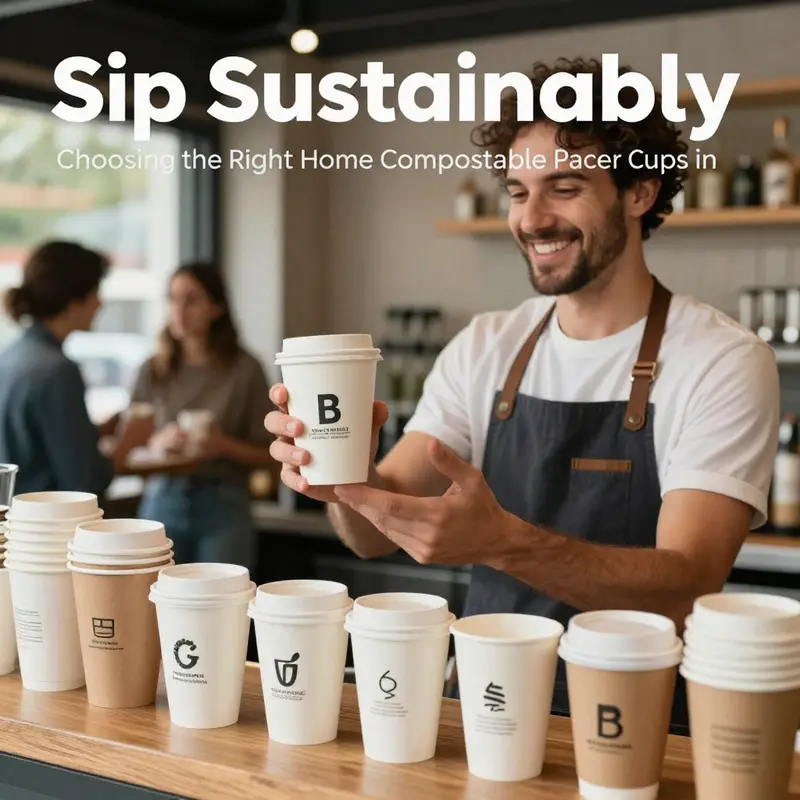
As more people seek to close the loop on waste, the humble paper cup is taking on new meaning. The shift from single-use plastics to compostable options is not simply about choosing a greener product; it is about aligning everyday choices with a practical, visible pathway to a circular economy. For consumers, the question is no longer only whether a cup can decompose, but whether it will decompose where they actually live and care for their waste. The most persuasive insight comes from certification and transparency. When a cup carries a trusted home-compostable label, backed by respected testing bodies, it signals that the product has been evaluated against real backyard conditions. Certifications from organizations like the Biodegradable Products Institute (BPI) or the Compost Manufacturing Alliance (CMA) help buyers distinguish products that truly fit home composting systems from those that require industrial facilities. In the end, it is a question of where disposal happens and what the compost looks like at the end of the cycle.
What that means in practice is a careful reading of labels and a preference for cups that explicitly state home compostability. Labels such as “home compostable” are not just marketing; they are a promise that the entire item—cup and lining included—has been tested to break down under common backyard conditions. This matters for households that compost in a backyard heap or a small municipal-style bin. It matters for families who want to avoid sending residual plastics to landfills while still trusting that the end product is safe for soil and plants. The consumer insight here is straightforward: certification matters, but only when it is specific. A label that touts compostability in general terms may rely on industrial heat and controlled facilities; a label that specifies home compostability is the signal to actually place the cup in the home compost pile.
Another practical insight centers on materials. Home compostable cups are typically crafted from renewable paper fibers, often sourced from recycled content, and lined with a biodegradable barrier such as polylactic acid (PLA). The PLA layer provides the moisture resistance needed to hold hot coffee and cold beverages without leaking. Yet the presence of a PLA lining also introduces a nuance: while PLA is plant-based and compostable, its performance is closely tied to the environment in which it is disposed. In many cases, the wrapper’s liability to degrade in a backyard pile depends on certified home-compost conditions. The takeaway for consumers is not to assume that all PLA-lined cups will behave the same in every home compost setup. To be confident, seek out cups that carry explicit home-compostable certification and check the disposal guidance that accompanies the product. The goal is a cup that remains sturdy during use and then disappears cleanly when composted, leaving no harmful residues behind.
For diners who plan events, the decision about cup choice also maps onto a broader budgeting and logistics calculation. Coffee shops, offices, and community gatherings are increasingly rotating toward compostable options to demonstrate environmental stewardship to guests. Yet the economics of certification can be nuanced. Certified home-compostable cups may carry a premium, but their value isn’t only in price. They reduce the risk of mislabeled waste streams and improve recovery rates in home composting systems. When a cup is clearly labeled as home compostable, and when the lining and body have been tested together, customers can dispose of the cup with confidence in their backyard composting setup. This confidence reduces contamination in compost piles and supports a more predictable degradation process that yields a usable, nutrient-rich product for soil.
A central component of consumer insight is the practical guidance that helps households make reliable choices. First, verify the certification. Look for labels tied to recognized standards, and confirm that the product is specifically certified for home composting rather than just industrial composting. The distinction is crucial. Second, consider the full lifecycle of the cup, including the liner. A cup that feels sturdy in the hand and demonstrates leak resistance is a positive sign, but its true test comes after it is discarded. If the cup is not certified for home composting, even with a PLA lining, it may not break down in a backyard compost system. Third, assess the disposal instructions. Some cups are designed to break down in home compost but require certain conditions, such as moisture balance or aeration. Understanding these conditions helps ensure the cup will perform as advertised in real home environments.
To bridge consumer behavior with product design, many buyers also look for clear disposal guidance directly on the packaging or product page. This guidance should outline how to prepare the cup for composting, what kinds of waste should be avoided (for example, high-fat or oily liquids that can affect compost stability), and how long the composting process is expected to take under home conditions. It is also important to store these cups in a cool, dry place away from moisture and sunlight, so they remain in optimal condition until their use is complete. The emphasis here is on behavior as a driver of environmental outcomes. Even the best home-compostable cup can fail to perform if it is mishandled before disposal.
Beyond labeling and material choices, consumer insight also points to the broader cultural shift toward responsible consumption. Choosing truly home-compostable cups contributes to a circular economy by keeping resources within the household waste stream and turning organic matter into usable compost rather than sending it to landfills. When a community consistently opts for cups that are certified for home composting, it creates demand signals for suppliers and reinforces better waste management practices. This ripple effect extends to event organizers, small cafés, and households that host gatherings. The more people demand reliable home-compostable options, the more market players will invest in transparent labeling, robust certifications, and research into materials that perform reliably in real home environments.
For readers who want to dive deeper into the distinctions between home and industrial compostability and to survey a broader set of guidance, a comprehensive resource presents a thorough overview. It explains the certification landscape, the testing standards, and the practical steps for identifying genuinely compostable products. This resource complements the consumer instincts described above and helps translate policy and certification into everyday shopping choices. As you explore, keep in mind that a single product’s label is only as trustworthy as the certification behind it. When in doubt, favor products with explicit home-compostable certification and well-documented disposal guidance, and lean on reputable sources for verification.
If you are curious about a specific cup design or want an example of a market format that many households encounter, you can explore a representative product page that highlights a common cup type used for a range of beverages. This example serves as a reference point for understanding how features like thickness, heat tolerance, and lining interact with home-compostable certification. See how the page communicates its home-compostable status, what tests are cited, and how disposal instructions are framed for the consumer. Double Layer Paper Cups provide a clear case study in balancing durability with compostability, while illustrating how internal and external labeling can work in concert to guide shopper decisions.
Ultimately, the consumer insight that matters most is trust built through certification and clarity. When a cup carries a credible home-compostable certification and a straightforward disposal path, households can integrate sustainable habits into daily life with confidence. This trust transforms an ordinary coffee run or afternoon tea into a meaningful act of waste reduction. It turns a disposable item into a step toward soil health and a cleaner environment, provided the disposal practices align with local composting capabilities. The conversation between consumer behavior and product design thus becomes a shared responsibility: brands invest in transparent testing and clear labeling; households commit to composting where feasible and to choosing products that make that practice easier and more reliable. In that synergy, home compostable cups move from niche alternatives to practical, daily choices that support a resilient, circular economy.
External resource: for a broader overview of what makes cups truly compostable and how to navigate the differences between home and industrial composting, see The Ultimate Guide To Compostable Paper Cups.
Closing the Loop: The Real Environmental Impact and Sustainability of Home Compostable Paper Cups
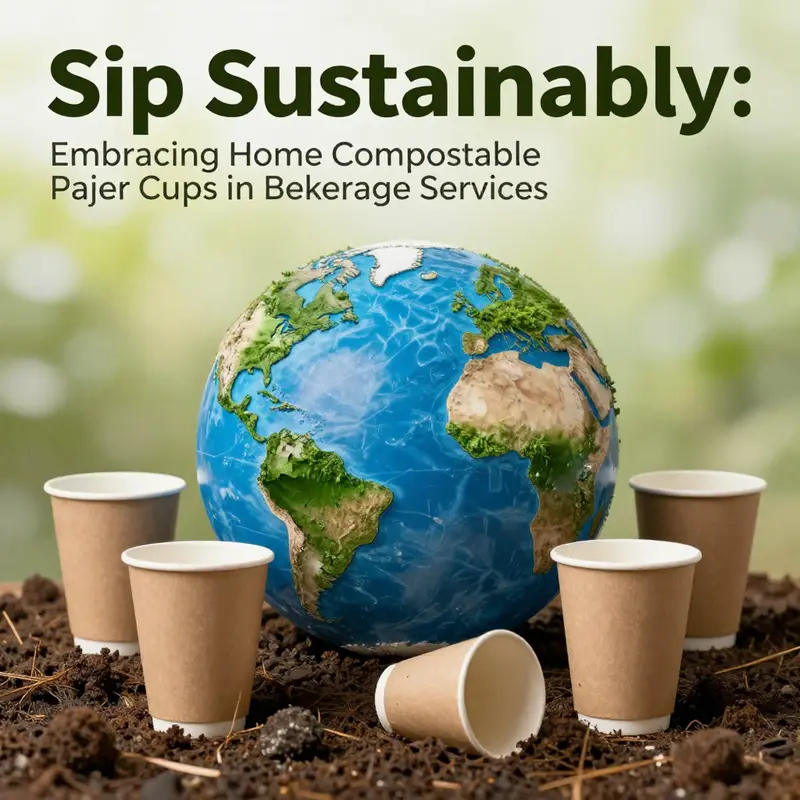
Choosing a compostable cup invites us to trace its journey from forest and field to the curbside or backyard pile. These cups are typically built from renewable pulp—bamboo, sugarcane bagasse, or responsibly managed wood fibers—and they are lined not with traditional plastics but with plant-based materials like polylactic acid (PLA). This PLA lining provides moisture resistance so hot coffee or cold beverages can be held without leaking. Yet the presence of a compostable label does not automatically guarantee a perfectly circular lifecycle. The true test lies in what happens after the cup leaves the cup holder and enters the waste system, and how the local infrastructure handles it. The advantage of reduced fossil fuel use during production is real, but it hinges on how the cup is disposed of and how far the waste stream can carry it toward soil instead of a landfill.
In broad terms, the environmental upsides begin with material choice. Replacing a petroleum-based coating with PLA and steering away from virgin plastic linings lowers both fossil energy demand and greenhouse gas emissions during manufacturing. The shift to renewable feedstocks is part of a larger move toward a circular economy, where the cup’s ingredients can re-enter the market or the soil rather than linger as part of a plastic waste problem. Still, the actual impact depends heavily on end-of-life pathways. If home composting is your goal, you must confirm that the cup is explicitly certified for home use. Some products labeled as compostable are designed only for industrial facilities, which operate at higher temperatures and with controlled conditions that many backyard bins cannot replicate. The mismatch between certification and disposal reality is a central hurdle in communicating true sustainability to consumers.
Certification labels, therefore, carry significant weight. Look for credible marks such as home-composting certifications that specify conditions achievable in a typical backyard or community garden. Without this clarity, a so-called compostable cup can end up in a regular landfill, where it may decompose far more slowly than intended. In such an environment, the PLA layer can persist longer and, under anaerobic conditions, methane—a potent greenhouse gas—can be produced during decomposition. The outcome is a complex mix: the cup’s renewable content reduces some emissions from production, but its post-consumption fate can erode those gains if disposal pathways are not aligned with its technical design.
A robust environmental analysis from government and research bodies highlights the nuance. When certified products are properly composted, landfill waste can be reduced, and lifecycle carbon emissions can be meaningfully lowered compared with single-use plastics. In practical terms, real-world data suggest that in regions with strong composting programs, certified home-compostable cups can return to the soil as nutrient-rich material, contributing to healthier soils and reduced waste streams. Conversely, in places without adequate composting infrastructure, the same products may not reach their intended end point. This is more than a matter of individual choice; it is a public system question that requires community education and municipal support to realize true environmental benefits.
The takeaway is not to abandon compostable cups in favor of nonrecyclables. It is to align product design with local waste management realities. For households, this means knowing whether the local program accepts home-compostable items and whether the materials meet the stated certifications. For small businesses, it means choosing cups that fit the local composting or recycling framework and communicating clear disposal guidance to customers. Education matters because the label alone cannot guarantee outcomes. In practice, a well-informed consumer will avoid disposing of these cups with oily or fatty liquids in quantities that can compromise composting conditions. High-fat foods, for instance, can interfere with composting microbes and may require more careful processing in a facility rather than at home. Handling guidance—such as draining liquids, avoiding prolonged moisture exposure, and storing cups away from humidity and direct sunlight—helps preserve the material’s integrity until it reaches the right end point.
As the lifecycle moves from product to waste, the broader environmental calculus must also account for the energy and emissions involved in transport and processing. Paper-based cups, especially those that originate from certified sustainable pulp, reduce dependence on fossil fuels during production. Yet transport emissions depend on distance traveled and the efficiency of the supply chain. A cup produced locally and composted locally can offer a favorable profile, whereas a long, multi-stop supply chain may erode some of the benefits. This intertwining of sourcing, processing, and disposal underscores the importance of a regional approach to sustainability. Communities that build robust composting networks and encourage responsible consumer behavior can realize tangible improvements in waste reduction and soil health.
For those weighing the choice between different disposable options, the larger system matters as much as the cup itself. A cup that is technically compostable but sold in a market with weak composting capabilities may end up in a landfill, where the environmental gains of renewable sourcing are partially offset by methane formation and slower degradation. In that sense, home compostability is not a universal fix; it is a signal that a product is designed to work best when disposal infrastructure is aligned with its chemistry. The sustainability story, then, becomes a dialogue among designers, manufacturers, waste managers, and consumers about how best to close the loop in a given region. The more these groups communicate and coordinate, the more reliably a seemingly simple cup can contribute to a cleaner, healthier environment.
In practice, the best way to approach these products is to treat the label as a guide rather than a guarantee. Certifications that explicitly state home-compostability offer a clearer path for backyard composting, but they should be supported by consumer education about local facilities and waste streams. Businesses can lead this education by sharing disposal instructions and by partnering with local composting programs or community gardens. Consumers benefit when they see clear guidance: where to compost, what temperatures are needed, and how long it typically takes for material to break down. This knowledge helps transform a cup into a meaningful component of a circular system rather than a disposable item that simply vanishes after use.
To illustrate how this knowledge can translate into everyday decisions, consider the practical example of selecting cups for a community event. A host might choose a product that is explicitly labeled for home composting and verify that the local program can process PLA-lined cups. They would pair this choice with clear signage directing guests to the proper compost stream and with a reminder to avoid pouring greasy liquids into the cup before disposal. The combination of careful product selection and informed disposal practices can significantly improve outcomes. For readers seeking a tangible reference point, this internal link points to a representative example of a home-friendly option that matches the criteria discussed: double-layer paper cups for home office.
The environmental story does not end with certification and disposal. It also includes the social aspect of what’s possible when communities adopt more sustainable habits. A shift toward compostable cups can influence the way businesses view waste streams, encouraging them to rethink packaging, reduce waste, and adopt more sustainable food-service practices. The ripple effects extend to farmers and soil health in regions where compost end-products are returned to the land. When the composting cycle is robust, it can help restore soil organic matter, improve water retention, and provide nutrients that reduce the need for chemical amendments. This is the essence of a circular economy where one product’s end of life becomes the starting point for new growth.
For those wanting to explore the broader policy and infrastructure dimensions, official guidance from national agencies can illuminate how to identify truly compostable products and assess regional capabilities. Public programs that publish clear disposal guidelines empower consumers to make choices that align with their waste-management realities. In the meantime, the practical guidance remains straightforward: verify home-compostability certifications, understand local facilities, drain liquids when possible, and communicate disposal expectations to customers or household guests. In doing so, people can enjoy the convenience of a product designed to reduce environmental impact while avoiding the pitfall of greenwashing.
External reference: For more information on how to identify truly compostable products and understand regional composting capabilities, consult the EPA’s Composting Guide: https://www.epa.gov/recycle/composting-home-and-yard-waste
Final thoughts
The momentum towards using home compostable paper cups is not just a trend; it represents a fundamental shift towards more responsible practices in the beverage industry. By understanding their composition, benefits, and the importance of certifications, businesses can align themselves with the changing consumer preferences for eco-friendly options. As we’ve seen through the consumer insights and environmental impacts discussed, opting for compostable solutions signals a strong commitment to sustainability. This is not just about minimizing plastic waste; it’s about fostering a sense of community and responsibility that can resonate with consumers and enhance brand loyalty. Transitioning to home compostable paper cups is a meaningful step that every beverage business can take toward creating a greener planet.