
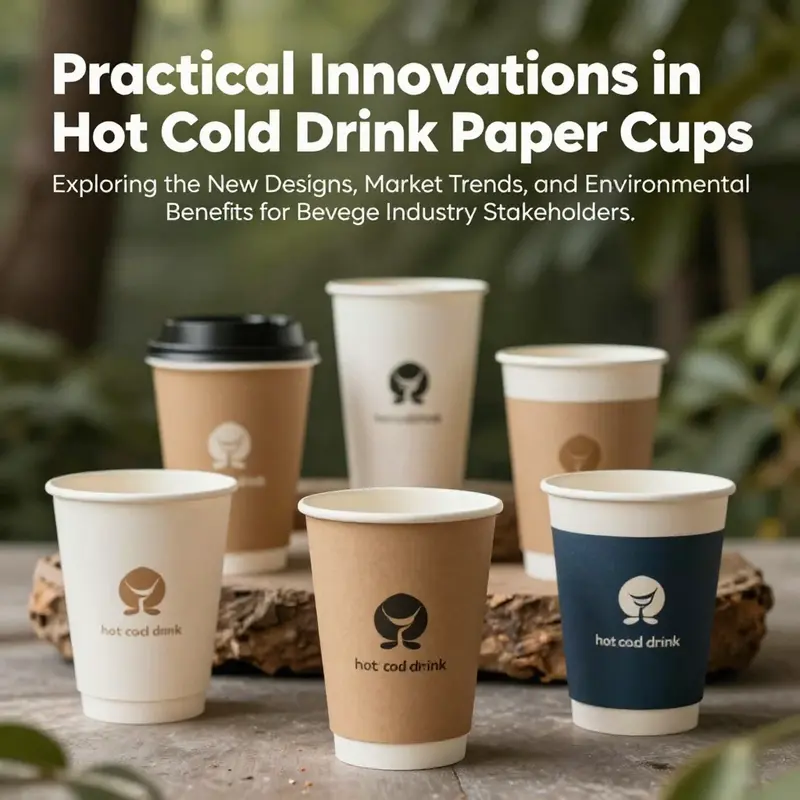
The beverage industry continually seeks versatile and reliable solutions to meet consumer needs. Hot cold drink paper cups have emerged as essential disposable containers, merging functionality with sustainability. This article delves into innovations in design, current market trends, the environmental impact of these cups, and their practical applications across various sectors, including bubble tea shops, beverage chains, restaurants, food trucks, catering services, event planning, and corporate procurement teams. By understanding these aspects, stakeholders can make informed decisions about their beverage packaging.
Heat, Chill, and the Craft of the Cup: Innovations in Thermal, Sustainable Design for Hot and Cold Paper Cups
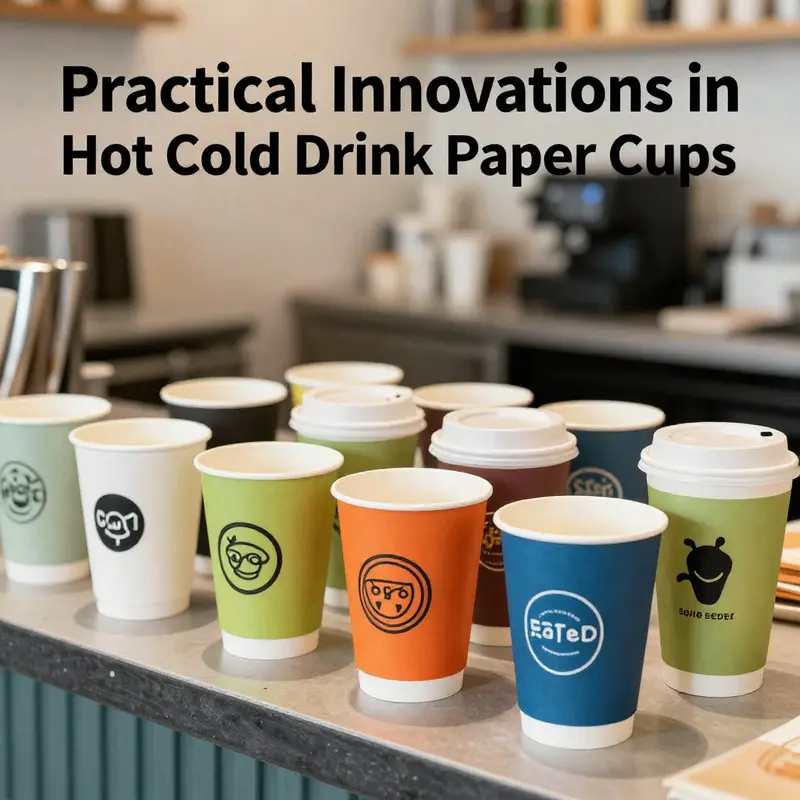
The modern hot and cold drink paper cup exists at a quiet crossroads of practicality, sustainability, and display. It is not merely a vessel; it is a carefully engineered interface between beverage and body, between momentary ritual and lasting brand impression. As chains of cafes, quick-service restaurants, and beverage shops push for faster service, consistent quality, and a lower environmental footprint, designers and manufacturers pursue a continuous loop of improvement. The innovations are not isolated experiments but a coherent evolution that reframes what a paper cup can do from first grip to final sip. At the core of this evolution are two questions that guide almost every design decision: how long can a drink stay at the intended temperature without creating an unwelcome heat on the outside of the cup, and how can the cup be made more sustainable without sacrificing strength, usability, or cost-efficiency? Answering these questions requires looking closely at the layers, coatings, and geometries that make up the cup, as well as the broader systems that govern disposal, recycling, and end-of-life management. In this narrative, the focus remains on the seamless integration of thermal performance, user experience, and environmental responsibility, with an eye toward the practical realities of mass manufacturing and consumer expectations. The resulting design language is not purely about insulation or barrier protection; it is also about the tactile and visual cues that signal quality, safety, and care for the planet.
A defining stride in thermal performance is the embrace of double-wall configurations. Two layers of paperboard with an air gap between them create a buffer that slows the rate at which heat travels from the hot liquid to the outer surface. This gap acts much like a miniature insulated wall, reducing heat flux and preventing the exterior from warming to uncomfortable temperatures during a typical beverage pull. The benefit is twofold: it protects the consumer from scalding fingers and it preserves the drink’s sensory profile longer, allowing flavors to ride the heat without rapid loss or change. In practice, these cups feel sturdier and more confident in grip, with fewer slips and a greater sense of substance during rapid service periods. Some high-performance variants even employ foiled linings or specialized thermal barriers that further minimize temperature loss, a feature particularly valued in premium tea services, long-duration events, or outdoor service where conditions can amplify heat transfer.
For cold drinks, the oppositional challenge of condensation and leakage is addressed through a different set of innovations. The outer surface of a cup can become slick with sweat as the beverage remains cold while ambient temperatures rise. To counter this, modern cold-drink cups employ leak-proof coatings that maintain structural integrity when filled with liquid and subjected to handling. Wax or plastic linings have historically served this function, but the industry is increasingly experimenting with plant-based, biodegradable coatings that align with sustainability goals. These eco-friendly barriers aim to balance barrier properties with end-of-life considerations, offering improved compostability or recyclability without compromising the integrity of the cup under load or during transit. The shift toward biodegradable or compostable coatings speaks to a broader movement in packaging, one that seeks to reconcile performance with planetary stewardship rather than trade one for the other.
Beyond insulation and barrier performance, the user experience has become a focal point of cup design. Customizable exterior graphics and ergonomic enhancements are no longer merely decorative; they are strategic tools for branding and repeat purchase. The rise of customizable designs enables brands to tell stories with color, texture, and messaging that travel with the cup from counter to street. Ergonomic handles and improved cup sleeves are more than comfort features; they contribute to a consistent and confident user experience, especially for customers who must carry beverages for a distance or hold a hot cup during a long walk. The design language extends to the structural form itself. Corrugated or reinforced single-wall cups are increasingly common, offering better insulation and strength while using less raw material overall when carefully engineered. This evolution reflects a broader push to optimize material efficiency without sacrificing performance, a challenge that sits at the intersection of product design, manufacturing cost, and environmental accountability.
The material science underpinning these cups also reveals a quiet but important trend: the shift toward recyclable and biodegradable materials that do not degrade under the demands of a busy service environment. In the quest for improved recyclability, suppliers and producers explore the compatibility of cup cores, liners, and coatings with existing recycling streams. Industrial composting becomes an attractive option for certain materials, especially those designed with bio-based coatings in mind. The practical implication is that brands can pursue aggressive sustainability targets without forcing consumers into complicated disposal choices or introducing new, unfamiliar end-of-life options. The result is a packaging ecosystem where an ordinary cup can be part of a circular system rather than a linear path from production to landfill.
In the speed of retail and foodservice, design choices often reflect a balancing act between the ideal and the practical. The trend toward customizable, ergonomic designs must be weighed against manufacturing realities: tooling costs, supply chain reliability, and the capacity of converting plants to handle new materials or coatings. This is where innovations in material efficiency become as critical as the innovations in insulation. When a cup is designed to use less paper while maintaining or enhancing strength, it reduces energy consumption in production, shipping weight, and waste in the end-of-life phase. Some manufacturers pursue corrugated or reinforced structures that provide greater insulation for hot beverages than traditional single-wall designs, enabling a more comfortable consumer experience while simultaneously using thinner or lighter stock elsewhere in the package. The net effect is a design ideal that integrates with throughput goals—faster fill, quicker wrap, fewer rejects—while maintaining the quality cues that consumers expect during a premium or everyday experience.
A nuanced facet of this evolution is the branding opportunity embedded in the cup itself. The surface becomes a canvas for storytelling—colors, patterns, and textures that convey brand values and create a memorable unboxing-like moment for customers. The idea of customization extends beyond aesthetics; it can include tactile finishes or micro-structural features that improve grip even when hands are wet with steam or condensation. In this sense, the cup becomes a small but potent ambassador for the brand, capable of delivering a sensory cue that complements the beverage and strengthens a customer’s emotional connection to the experience. This dimension of design—where function, form, and brand semantics converge—helps explain why manufacturers keep investing in smarter, more adaptable tooling and in coatings and layers that can be tweaked to fit specific beverage profiles, service contexts, and consumer expectations.
The innovations described thus far are not merely theoretical gains. They align with practical market dynamics that shape the supply chain and the consumer journey. The capacity to tailor cup designs for hot and cold applications, while maintaining a consistent cost structure, is central to sustaining fast-service models. Vendors typically categorize cups by capacity, insulation level, and coating type, but the real differentiator lies in how those attributes translate into real-world performance: a cup that keeps coffee at optimal temperature for a longer window without becoming uncomfortably hot to touch, or a cold drink that remains leak-free and easy to handle from the moment it leaves the preparation station to the moment it is consumed. It is in the choreography of these moments that the advantages become tangible for operators who balance customer satisfaction with budgetary constraints.
Another dimension worth noting is the ongoing research into recycling and end-of-life options. Material efficiency, recyclability, and compostability are not standalone goals; they affect the entire lifecycle of the cup. The move toward biodegradable coatings is coupled with investigations into how cups can be sorted and recovered in municipal streams, whether through traditional recycling or industrial composting infrastructure. This systems thinking is essential for brands that want to project a responsible image while continuing to serve customers with speed and reliability. The conversation thus shifts from “how can we make a better cup?” to “how can we design a cup that performs brilliantly and exits the market in a way that minimizes environmental impact, even in cities with varying waste management capabilities?” The answer requires not only clever materials and clever geometries but also thoughtful collaboration with waste-management partners, regulators, and consumer education campaigns. In practice, this translates to selecting coatings and liners that survive the rigors of transport and handling, yet remain compatible with the disposal ecosystem that exists in a given market.
In considering the economics, the price spectrum for hot and cold paper cups remains a function of material choice, process complexity, order volume, and the degree of customization. While mass-market cups favor the efficiency of simpler structures, premium applications—such as long-duration service or high-demand tea experiences—benefit from double-wall configurations, foil or barrier linings, and branding-appropriate finishes. As with any packaging technology, the key is to ensure that additional performance does not disproportionately raise cost or complicate supply chains. The most successful innovations tend to be those that integrate with existing production lines, reduce waste, and offer clear value to operators in terms of customer perception and service speed. The interplay of performance, sustainability, and cost creates a dynamic landscape where incremental improvements compound to sizable benefits across many venues and times of day.
From a consumer behavior perspective, these innovations alter the rituals surrounding hot and cold drinks. A cup that feels sturdier and more capable of maintaining temperature encourages customers to linger a moment longer, savor their beverage, and perhaps order with a sense of premium experience. Conversely, a cup that excels in sustainability signals a brand’s commitment to planetary stewardship, shaping consumer preferences and willingness to repurchase. The sensory experience—the warmth of the cup, the ease of grip, the absence of leaks, and the clarity of branding—becomes part of the overall perception of beverage quality. In a world where packaging often becomes a peripheral concern, these thoughtful, integrated design choices remind us that the cup is an instrument of hospitality as well as an economic tool for the operator.
In tuning the design, the industry benefits from a growing body of practical case studies that highlight what works in real settings. Operators report fewer complaints about heat burn or leaks, faster line throughput thanks to more stable loading and wrapping processes, and improved customer satisfaction due to the perceptible quality of the cup. For designers and researchers alike, the challenge remains to extend these gains to even broader contexts, such as regional waste-management variances, seasonal demand spikes, or the evolving landscape of regulatory requirements around compostability and recyclability. The path forward is one of continued iteration, collaboration, and a willingness to rethink the cup as a dynamic part of the beverage experience rather than a passive packaging item. The narrative of hot and cold drink cups, then, becomes a story about responsible innovation—how small but meaningful improvements in material science, geometry, and surface finish can propagate through service operations, consumer perceptions, and environmental outcomes.
The practical takeaway is clear. A well-designed cup harmonizes thermal protection, structural integrity, and environmental responsibility without imposing unnecessary burdens on manufacturers or consumers. The future will likely see more adaptive cup architectures that can be tuned to the specific needs of hot versus cold beverages, and to the particular waste-management realities of different markets. The consumer—the final link in the chain—benefits when these innovations translate into a more comfortable, more convenient, and more sustainable drinking moment. In the ongoing dialogue between form and function, the cup is not merely a container but an interface that mediates taste, touch, and trust. As the industry continues to refine the interplay of double-wall insulation, barrier coatings, recyclable materials, and ergonomic design, the daily ritual of coffee and cold drinks becomes a touchpoint for broader cultural commitments—to efficiency, to quality, and to stewardship of the world we share.
For readers seeking a concrete sense of the market ecosystem and product variety that accompanies these innovations, industry catalogs and supplier listings offer a glimpse into the current capabilities and the breadth of customization that businesses can leverage. A representative point of reference illustrates the scale of options available and underscores how adaptable these cups can be across diverse service models and beverage formats. External reference: https://www.alibaba.com/product-detail/Hot-Disposable-Cold-Drink-Paper-Cup_1600492387458.html. In the meantime, brands can explore the practical opportunities within their own ecosystems by engaging with established suppliers that offer a range of double-layer and eco-friendly designs, while also considering internal resources that showcase the value of material efficiency and ergonomic enhancements. More specifically, the following internal resource offers insight into the practicalities and potential of advanced cup designs: Double-layer disposable thickened paper cups, which can serve as a tangible example of how structure, surface, and branding converge in a single packaging solution. This internal reference, while not exhaustive, provides a gateway to understanding how a well-considered design translates into performance, usability, and appearance in real-world settings. The chapter thus closes with a recognition that innovation in hot and cold drink paper cups is not a single upgrade but an ongoing conversation about how to deliver comfort, consistency, and care—through materials, geometry, coatings, and partnerships that honor both consumer experience and environmental responsibility.
Brewing Change: Market Trends Shaping the Global Hot and Cold Drink Paper Cup Ecosystem
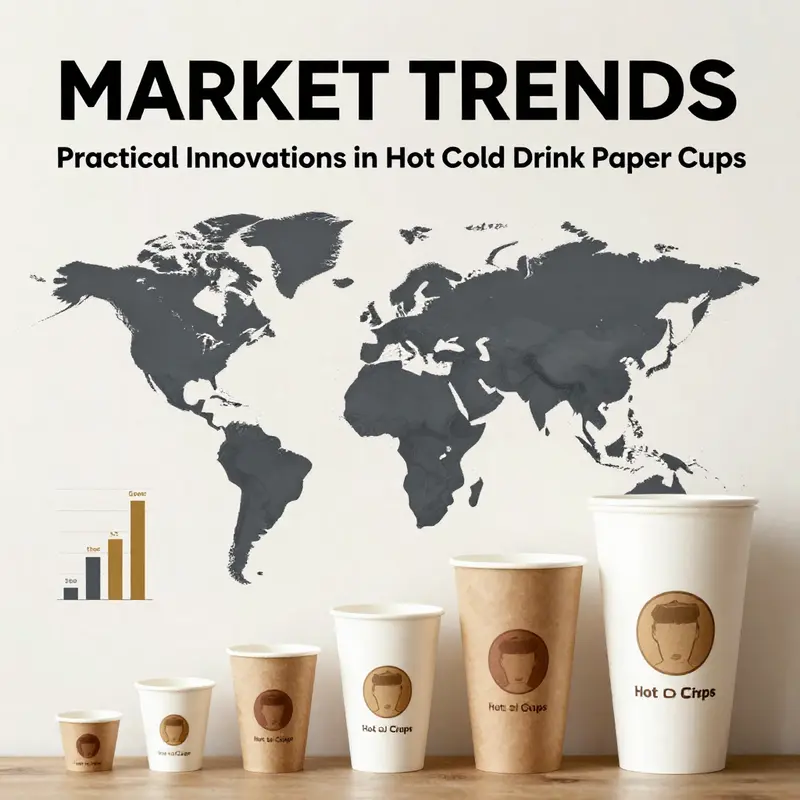
Across the globe, the market for paper cups designed to hold hot coffees and teas as well as cold drinks is undergoing a transformation that mirrors shifts in consumer values, manufacturing capabilities, and regulatory landscapes. What began as a simple packaging choice has become a bellwether for sustainability, branding, and supply chain strategy. As brands race to deliver warmth and refreshment in a responsible way, the economics of cups—once a quiet backroom consideration—now influence menu design, store layouts, and even store-within-store concepts. The trajectory of this market is defined less by a single technology than by a constellation of advances that touch materials, manufacturing, and the experiential expectations of today’s customers.
Sustainability sits at the center of the narrative. The most prominent trend is a decisive move away from traditional plastic-laminated paper cups toward alternatives that can meet stricter waste and emissions policies while still performing under heat and moisture. In recent market analyses, the industry has been described as in a state of rapid transition. Biobased, compostable films and coatings—most notably polylactic acid (PLA) and other bio-based layers—are moving from niche applications into mainstream production lines. This shift isn’t only about reducing plastic waste; it is about delivering safe, reliable performance in hot beverages and viscous cold drinks alike. PLA coatings, for example, can withstand exposure to heat during service while allowing the cup to be processed in industrial composting streams. The environmental promise resonates with consumers who increasingly equate a cup’s end-of-life story with a brand’s overall ethos. Policy drivers also play a critical role. Government programs that impose restrictions on single-use plastics or encourage local composting facilities create a regulatory envelope that pushes manufacturers to invest in capable equipment and sanction new materials. A January 2026 report underscored that the transition to compostable and bio-based materials is a core growth driver for the sector, not a marginal trend. In practice, this means that brands seeking to align with circular economy goals are choosing cups whose design integrates recyclable or compostable layers with robust barrier performance. The end goal is to avoid leakage and hand-warming while enabling a practical disposal path, something that has historically been a challenge for certain coated papers.
At the same time, the market is recognizing the value of premium, high-quality cup experiences as a differentiator in a crowded landscape. The rise of specialty beverage concepts—new tea, artisan coffee, and premium juice bars—has created demand for cups that do more than hold liquid. Aesthetics matter. Brands are exploring embossed or pressed textures, subtle relief patterns, and refined color schemes that reinforce a sense of quality from the moment a customer sees the cup on the counter. These premium elements extend beyond looks; they translate into perceived value and loyalty. For operators, the premium cup becomes a quiet, scalable channel for branding that complements the drink itself. It is not a luxury add-on but a strategic tool for storytelling, especially in spaces where the beverage is a ritual, not just a refreshment. The market for these specialized cups is expanding quickly, supported by production lines that can deliver customization at reasonable volumes. In practice, this premiumization does not only capture a higher-margin niche; it also expands the footprint of the category by enabling higher price points and broader consumer acceptance.
The manufacturing side of the sector is evolving in tandem with material choices and design ambitions. Automation and smart manufacturing are reconfiguring how cups are made, tested, and packaged. A January 2026 assessment highlighted that automation equipment penetration among large-scale cup producers in China has reached about 45 percent, a threshold that enables higher throughput, lower defect rates, and more flexible scheduling. The regional concentration of this technological upgrade—particularly in the Yangtze River Delta and the Pearl River Delta—reflects a broader pattern: manufacturing hubs are deploying digital controls, automated stacking, and inline quality checks to meet the demands of modern supply chains. These efficiency gains matter not only for cost control but for the ability to offer shorter lead times and more reliable deliveries to coffee shops, boba spots, and fast-casual outlets that must synchronize product flows with high-velocity consumer demand. The trend also supports complex, multi-SKU portfolios where a single plant can switch among different cup sizes, coatings, or embossing patterns with minimal downtime. In this sense, automation is not just about speed; it is about the precision required to maintain barrier integrity, color consistency, and the embossed textures that premium cups showcase.
Yet the market is also maturing, with consolidation shaping an otherwise fragmented landscape. The global sector remains populated by many small players, each serving regional pockets. However, the pressures of scale, capital intensity, and the complexity of producing advanced materials—especially heat resistant, biodegradable films—are nudging the market toward fewer, more capable manufacturers. Data from industry trackers illustrate that only roughly one-fifth of companies currently sustain mass-production capabilities for these advanced coatings, which translates into a natural advantage for larger entities that can invest in R&D and long-run testing. This consolidation trend has multiple implications. It can raise barriers to entry for smaller suppliers but also accelerates standardization around performance benchmarks. For brands, it means a more predictable supply chain with fewer disruptions and greater consistency in barrier properties, which in turn supports more ambitious beverage programs that demand uniform packaging across stores. For the packaging ecosystem, the shift reinforces the importance of partnerships, co-development, and shared investment in new materials that meet both environmental and functional criteria.
The market’s growth outlook remains robust, underscoring the enduring demand for both hot and cold beverage experiences. Global projections place the compound annual growth rate at around 9.8 percent between 2023 and 2026, with the total market size expected to reach about $245 billion by 2026. In the Asia-Pacific region, growth outpaces the global average, driven by rising consumer incomes, the density of coffee and tea cultures, and the expansion of quick-service networks that favor standardized, efficient packaging. The region’s role as both a center of production and a large consumer market helps explain why many technology and material breakthroughs in this space originate there. The intense pace of urbanization in major Chinese metropolitan areas, alongside similar dynamics in Southeast Asia, creates a feedback loop: more outlets require more cups, which in turn fuels more investment in efficiency and material science. For buyers and designers, this means that the next wave of cup development will likely hinge on two parallel streams: sustainable materials that meet public policy goals and premium design language that deepens brand equity in a crowded, visually rich beverage world.
The practical implications for foodservice operators and packaging teams are notable. Sustainability does not merely satisfy regulatory scrutiny; it also aligns with consumer expectations that brands should take responsibility for the end-of-life phase of their packaging. In practice, this means choosing cups that integrate well with existing waste streams, whether through industrial composting networks or robust recycling processes. It also means recognizing that not all compostable or bio-based coatings behave identically under heat or during the disposal process. A cup that performs flawlessly during a cold beverage service but complicates composting at scale offers little real advantage to a system that aims to minimize environmental impact. Operators are increasingly balancing performance with cost, and that balance often depends on order size, supplier capability, and the ability to offer consistent, branded experiences. Premium cups, while potentially more expensive per unit, can deliver a stronger brand impression and longer customer dwell times, a factor that translates into higher perceived value and repeat visits. The best implementations treat the cup as part of the overall guest journey, from the moment the drink is ordered to the moment the cup is disposed of or composted, and in this arc, the packaging becomes as important as the beverage it carries.
To illustrate one facet of this evolving landscape, consider the demand for improved warmth retention without compromising recyclability. Brands seeking to elevate the perception of warmth in a cold drink or to preserve aroma in a hot brew are turning to solutions like insulated double-layer cups. These products fuse a second wall with a controlled gap to reduce heat transfer, delivering a more comfortable grip and an improved drinking experience. The balance between performance and end-of-life responsibility is central here, and many producers are balancing barrier properties with surface finishes that can be easily handled by waste streams. For operators, the message is clear: choose a packaging strategy that fits the beverage program, the outlet’s environmental commitments, and the local waste infrastructure. A cautious approach that tests material performance under realistic service conditions—heat retention, leakage resistance, and fiber integrity—will pay dividends in both reliability and customer satisfaction. The supplier ecosystem has begun to respond with adaptable options that can be scaled from a single-store pilot to a multi-site rollout, reinforcing the idea that packaging should be a strategic lever, not a compliance afterthought.
The broader narrative of the market is not merely about new materials or fancier cups. It is about how packaging supports a holistic customer experience. Consumers today are sensitive to the lifecycle of what they purchase, and they respond to brands that communicate a credible plan for reducing waste and enhancing recyclability. This sensitivity translates into real demand signals for cups that can survive high-temperature service while offering the potential for responsible disposal. It also pushes designers to think about branding opportunities embedded in the cup—whether through embossing, color, or texture—without compromising barrier integrity or print durability. In an environment where beverage concepts evolve rapidly, cups must accommodate a range of experiences from premium latte art to fruit-forward cold drinks that require strong moisture barriers and leak-proof performance. The technology behind these cups, from fiber blends to coating technologies, thus becomes a quiet enabler of menu innovation. Without reliable packaging hardware, trends in beverages cannot reach their full potential in terms of speed of service, consistency, and consumer confidence.
In closing, the market for hot and cold drink paper cups is poised at an intersection of sustainability, branding, and production engineering. Growth will continue as more brands adopt compostable or recyclable materials, as premium cup designs help differentiate offerings, and as manufacturing ecosystems invest in automation and mass customization. The coming years will likely see a convergence of these threads: a shift to bio-based, heat-resistant films that do not complicate disposal; the emergence of high-value cups that amplify brand stories; and production networks capable of delivering these products quickly and reliably. For those mapping strategic priorities, the signal is clear. Invest in materials that meet environmental goals, pair them with design elements that elevate the guest experience, and align production with the automation and digital quality controls that modern markets demand. In doing so, businesses will not only satisfy appetite for hot and cold beverages but also demonstrate a credible commitment to responsible packaging and resilient operations.
External resource: https://www.statista.com/statistics/1422931/global-paper-cup-market-size/
The Hidden Footprint: Reconsidering the Environmental Balance of Hot and Cold Drink Paper Cups
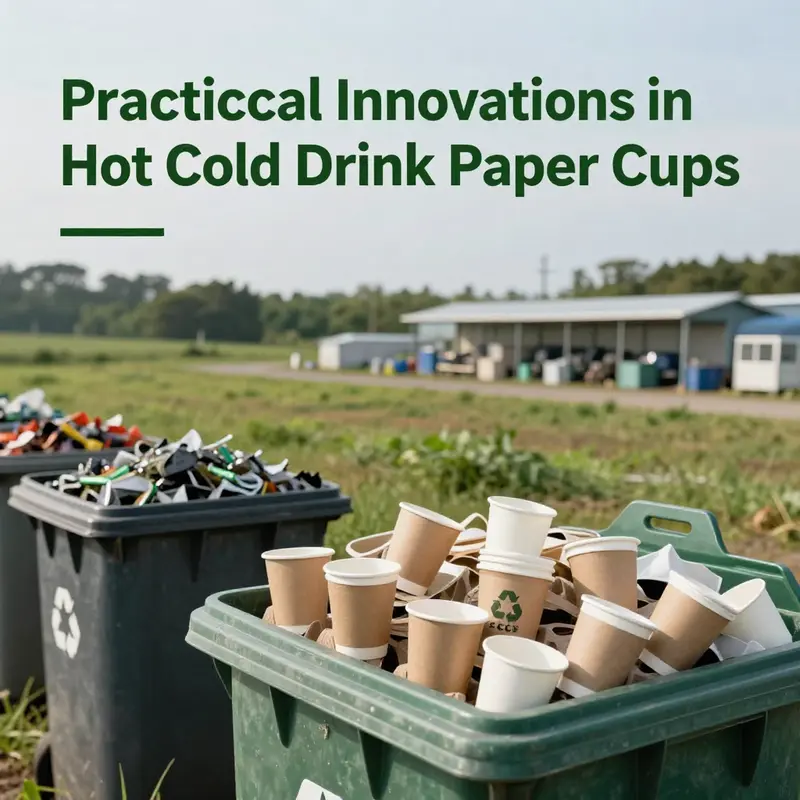
The apparent simplicity of a disposable cup—its familiar silhouette cradling hot coffee or a chilled beverage—belies a far more complex environmental story. In markets around the world, hot and cold drink paper cups are sold as a convenient, supposedly eco-friendlier alternative to plastic, but their lifecycle reveals a chain of impacts that stretches from forest management to waste streams and beyond. To understand their true footprint, we must trace not just the material that forms the cup, but the coatings that shield it, the processes that bring it to market, and the fate of what remains after its brief encounter with a consumer’s hand. In doing so, we come to see how a simple act of drinking is entangled with broader questions of sustainability, infrastructure, and the design choices that steer a product toward or away from a circular economy.
Most disposable cups for hot and cold drinks rely on a structure intended to balance barrier performance with user safety. Wood pulp forms the core material, prized for renewability and a familiar tactile feel. To keep liquids from seeping through and to withstand the heat of a freshly brewed beverage, manufacturers commonly apply a thin lining of polyethylene (PE) or, more recently, bioplastics such as polylactic acid (PLA). The goal is clear: create a cup that is leakproof, heat-resistant, and easy to handle. Yet this coating complicates the recycling equation. Standard paper recycling processes are not designed to separate a plastic layer from the fiber, which means many cups do not rejoin the circular loop at end of life. The result is a paradox: a material drawn from a renewable resource, but one that often becomes waste rather than a recycled feedstock. The scale of this paradox is vast. Across the globe, the usage of disposable drink cups runs into tens of billions annually, a volume that translates into a formidable waste challenge even before regional differences in waste management are taken into account.
In the United Kingdom and other parts of the world, the recycling rate for coffee cups highlights the scale of the difficulty. Estimates have long pointed to single-digit recovery, with figures suggesting less than 4% of coffee cups were recycled in the UK, and some studies placing the figure as low as 0.25% in certain years. Such low recovery rates are not incidental; they reflect the realities of current recycling systems, where the separation of paper from plastic coating, the energy and cost of processing, and the need for specialized facilities all converge to limit what can be recovered. When cups end up in landfills or as litter, they persist far longer than their brief moment of use would imply, and the energy and resources embedded in their production are not recuperated. This is not purely a tale of recycling numbers, either. The manufacturing stage itself draws from forest resources, consumes energy, and introduces chemical additives intended to improve performance, such as heat stabilizers and processing aids. The lifecycle, then, involves a series of trade-offs: renewability on one side, but potential ecological and resource costs on the other.
The environmental narrative intensifies once we consider the coatings that make the cups heat-tolerant. PE, a fossil-based polymer, is not easily integrated back into a recycling stream. PLA, though biobased and often touted as a greener alternative, behaves differently in practice. While PLA can in theory be composted under industrial facilities, these facilities are not universally available, and home composting generally does not reach the conditions required for effective PLA degradation. The limited infrastructure means that even “biodegradable” or “compostable” cups may end up in landfills or incineration if they cannot reach the appropriate processing stream. The promise of compostability, then, rests on a supporting system that does not yet exist at scale in many regions. The reality is a mismatch between product design and waste-management capabilities, a mismatch that undermines the environmental benefits claimed for these cups.
From a broader vantage, the production chain for hot and cold drink cups carries pressures beyond the cup alone. Raw materials require forest coverage and pulp supply, with associated energy use and emissions. The cultivation and processing of fiber can contribute to habitat disruption, while the creation of coatings adds chemical inputs that may find their way into ecosystems if cups are not properly disposed of. A body of research points to harm to aquatic life when these materials or their breakdown products find their way into waterways. Even if the cup is marketed as a green option, the downstream effects can be substantial, especially when upstream and downstream assume different levels of responsibility or success. In a study cited in Environmental Pollution, both plastic-coated paper cups and conventional plastic cups exhibited harmful effects on aquatic organisms, underscoring that even seemingly benign packaging can become a vector for pollutants if managed poorly at end of life.
The scale of consumption compounds these concerns. A global consumer environment is characterized by a staggering volume of single-use cups—over 50 billion used annually in many markets. The numbers illustrate a systems problem more than a consumer behavior one. In a country like Australia, for example, more than a billion cups circulate each year, illustrating how a small daily habit compounds into a national or global waste stream. The sheer volume magnifies the environmental costs of production, transportation, and disposal, and it presses policymakers and industry to consider whether substitutions alone—replacing one plastic barrier with another bioplastic, for instance—suffice to reduce harm.
The environmental case against relying solely on substitution is reinforced by the practicalities of end-of-life management. Even when cups carry labels such as “compostable” or “biodegradable,” the environmental benefit hinges on access to industrial composting facilities and suitable waste streams. In many places, such facilities are not widely available or are inconsistent in their operation. Without the appropriate infrastructure, compostable cups may not decompose as intended, continuing to occupy space in landfills and contributing to the same waste burdens that traditional cups do. This reality has spurred a growing conversation about reusables as a more durable solution. Stainless steel, ceramic, or glass cups offer the potential to eliminate single-use waste entirely, provided that systems encourage reuse, clean collection, and responsible behavior by users. Yet even reusable systems face challenges, including user convenience, cleaning energy, and the need for reliable deposit-return schemes or other incentives to close the loop.
Beyond individual products, there is a structural opportunity to move toward a circular economy in packaging. The idea is not to demonize a single material but to reimagine how packaging is designed, used, collected, and recycled. In practice, this means elevating design for recyclability, ensuring that coatings and fibers can be separated with minimal energy or cost, and aligning incentives across producers, waste managers, and consumers. A key part of this alignment is infrastructure: more widespread access to high-efficiency recycling facilities and industrial composting networks, along with improved collection and sorting. When this alignment exists, reducing the environmental burden of cups becomes a collective project rather than a set of isolated product choices.
The consumer dimension is not merely about disposal but about behavior and mindset. A cup’s environmental impact is amplified if people toss it into litter bins or if collection systems fail to recover and sort cups efficiently. Conversely, when consumers choose reusable options and when cities invest in robust recycling and return systems, the cascade of environmental benefits can be tangible. The tension in policy and practice lies in making sustainable choices practical in everyday life—without imposing prohibitive costs on businesses or complicating the consumer experience. The evolving discourse around hot and cold drink cups reflects a broader shift in how society weighs convenience, cost, and responsibility. It also highlights the need for a more nuanced narrative about what counts as sustainable packaging. The substitution narrative—replacing one material with another—has value, but it does not automatically translate into a net environmental gain without parallel investments in processing, behavior, and systems thinking.
In this light, the chapter’s questions extend beyond the cup’s coating or fiber alone. They invite us to consider how packaging design can support or hinder sustainable outcomes, how infrastructure can be scaled to close the loop, and how consumer choices can be guided toward reuse without sacrificing convenience. The discussion does not end with a neat yes or no. It ends with a set of design and policy considerations that, if pursued, could transform a ubiquitous but problematic element of daily life into a component of a more regenerative system. For example, packaging that prioritizes recyclability over barrier performance, or that uses a true bio-based content without sacrificing separability in recycling streams, could alter the lifecycle equation. Similarly, advances in waste-management policies—such as deposit-return schemes, improved sorting technologies, and standardized labeling—could shift the balance in favor of higher recovery and lower environmental impact. The path forward is not a single silver bullet but a constellation of improvements across materials, processes, and practices, designed to align the cup’s life with a more sustainable trajectory.
Within this broader frame, there is room for practical, incremental gains that do not demand a wholesale replacement of the current system overnight. For instance, firms can pilot designs that are easier to separate or that embrace clearer labeling for recyclability. Operators can adopt take-back or refill strategies for venues with high volume, supported by logistics that minimize energy use and maximize recovery. Communities can invest in infrastructure that bridges the gap between industry innovation and consumer behavior. And consumers can be nudged toward reuse through incentives, convenient access to durable cups, and education about the life cycle consequences of their choices. Each of these steps, pursued in concert, has the potential to reduce the environmental footprint of hot and cold drink cups while preserving the utility that many people value in their daily beverages.
To connect these threads back to practical possibilities, it is worth considering how packaging choices intersect with broader sustainability goals. The pursuit of a circular economy, in particular, invites brands and communities to rethink not just what a cup is made from, but how it is collected, how it is recycled or remanufactured, and how the waste system can be organized to minimize energy use and maximize material recovery. In this sense, the cup becomes a microcosm of a larger endeavor: aligning product design with systemic capability. The emphasis shifts from a purely product-centric view to a systems view, one that recognizes that the burden and the benefit of disposable packaging are shared across producers, waste handlers, policymakers, and everyday consumers.
For readers curious to explore related developments in packaging design and waste management, one practical avenue is to look at packaging systems that are explicitly designed for easier separation and recycling. A representative example among industry offerings emphasizes packaging that is both functional and accessible within existing waste streams. Such approaches illustrate how design can contribute to a more efficient circular economy without compromising usability. See this example for a sense of how packaging design is evolving toward greater environmental compatibility: eco-friendly takeout packaging boxes.
In sum, the environmental footprint of hot and cold drink paper cups cannot be understood in isolation. It requires attention to the raw materials that supply the fiber, the coatings that enable performance, the manufacturing footprint, the end-of-life options available to communities, and the behavioral and policy contexts that govern how waste is treated. The literature and ongoing debates point to a nuanced conclusion: while paper cups bring renewability to the table, their environmental benefits hinge on supporting systems that are capable of turning that renewability into responsible practice. Until those systems are robust and widely accessible, reliance on single-use cups will continue to entangle daily convenience with broader ecological costs. The challenge, then, is to pursue a balanced approach that prioritizes true recyclability and reuse, expands the availability of infrastructure, and fosters consumer habits that close the loop rather than simply shifting the burden from one form of waste to another.
External resource: https://www.wired.com/story/your-paper-coffee-cup-is-a-toxic-nightmare/
From Heat to Chill: Applications and Practical Use of Hot–Cold Paper Cups in Modern Beverage Service
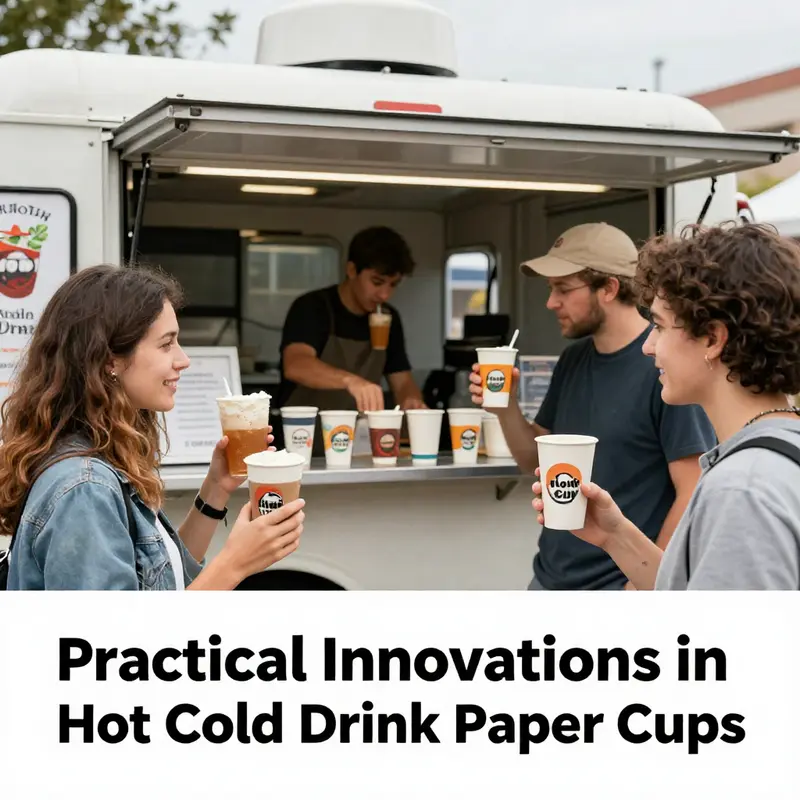
The hot and cold drink paper cup is more than a disposable vessel; it is a pivotal interface between a beverage, a business, and a consumer who moves through space with a cupped hold on a moment of refreshment. The appeal of these cups lies not only in their convenience but in their ability to perform against temperature, moisture, and the telltale signals of brand identity. In many ways, the cup becomes a silent salesperson, delivering heat insulation for a piping-hot latte or a crisp, condensation-free experience for a chilled fruit drink. Its design—whether a single-wall shell, a double-wall shield, or a corrugated, air-blanketed structure—must align with how and where the beverage will travel, who will carry it, and what the operator hopes to communicate about safety, quality, and care for the environment. The breadth of use is surprising, ranging from quick-service counters in busy urban centers to outdoor festival grounds where weather and crowd dynamics test every container’s resilience. In this sense, the cup is not a mere container; it is a carefully engineered micro-environment that preserves the beverage’s character while supporting swift service, clear branding, and responsible waste practices.
Hot beverages demand a different set of performance criteria than cold beverages, yet both share a common core: the need to protect hands, preserve flavor, and minimize waste from leakage or soggy wrappers. For hot drinks such as coffee and tea, the core problem is heat transfer. The inner lining—often a PE or wax-based coating—acts as a barrier to heat, reducing the likelihood of a burned fingertip and helping to control the temperature that reaches the consumer’s mouth. Many hot-beverage cups employ a double-wall construction or an inner corrugation that traps air between layers. That air gap becomes a thermal barrier, not merely a cushion. It permits a comfortable grip even when the drink is near steaming, and it helps sustain the beverage’s temperature for a longer period, whether the customer is sipping slowly at a cinema queue or balancing a cup during a short walk through a busy street. In some designs, a triple-layer structure further enhances insulation, offering durability for mildly heated beverages like hot chocolate or specialty teas. The result is a more satisfying user experience that reduces the temptation to overfill or spill during transit, a common risk in fast-paced service environments.
Cold beverages, by contrast, rely primarily on moisture resistance and structural integrity. When condensation forms on the outside of a cup, a weak shell can become warped, slippery, or prone to leakage when carried in a sleeve or a bag. Coatings such as PE are standard for moisture barriers, ensuring the cup remains rigid and resistive to sogginess even when filled with ice, juice, or smoothies. The stability of cold drinks is crucial in theaters, stadiums, and outdoor events where guests move quickly through crowds and hold cups overhead or at chest height while navigating steps and gates. In such contexts, the cup must resist bending, cracking, and leakage, while maintaining a clean exterior for comfortable grip and a visually appealing presentation for branding and signage.
Beyond the core functional requirements, customization and branding extend the life of the cup as a marketing surface. A cup can carry a bold color story, a logo, a seasonal motif, or a simple message about sustainability. The packaging ecosystem surrounding the cup—lids, sleeves, and sleeves’ prints—creates a cohesive brand moment that customers encounter at the point of purchase and during drinking. Modern operations increasingly coordinate cup design with lid style and sleeve texture to optimize grip, heat retention, and spill resistance. A common operational pattern is to pair a printed cup with a compatible lid that provides a secure seal and minimizes condensation or leakage. Such combinations become a point of consumer recognition that travels from the counter to the table and into social media posts, enlarging the footprint of a brand without additional materials or steps.
The flexibility of these cups also enables a broader story about sustainability. Many manufacturers now offer options that move beyond traditional plastic- or wax-coated single-use solutions. PLA-coated or biodegradable coatings are used in cups designed to decompose under industrial composting conditions, aligning with a growing array of environmental goals. Some cups are crafted from recycled paper or sheet stock designed to minimize environmental impact without sacrificing performance at high or low temperatures. The opportunity to balance durability, heat protection, moisture resistance, and end-of-life outcomes gives operators a menu of choices to align with corporate responsibility targets and consumer expectations for responsible packaging.
In practical terms, common capacities such as 500 milliliters (roughly 16 ounces) and 12 ounces (about 355 milliliters) frame how these cups perform in specific settings. A larger capacity is often favored for a high-volume coffee bar or a densely trafficked event kiosk where patrons value longer sipping intervals and less frequent refills. Smaller sizes are preferred for quick-service settings and for beverages that are meant to be consumed on the go. The choice of wall thickness, insulation level, and coating is dictated by the anticipated path of the beverage—from the moment it leaves the barista’s hands to the moment it reaches the guest, possibly via a crowded line, a ride-share pickup, or a casual stroll. Industry players acknowledge that price sensitivity exists, with the per-cup cost varying by material, print, and order quantity, but the value lies in the cumulative effect of temperature control, leak prevention, and brand perception across a service day.
Operationally, the cup supports a seamless service flow. At a practical level, the design must accommodate a reliable lid fit, which itself is an important element of spill resistance in busy lines. Some lids are engineered to reduce splashes during transport, while others emphasize a snug seal that minimizes heat loss for hot drinks and condensation for cold drinks. The need for a stable, shipping-friendly cup extends into the supply chain: a durable cup reduces returns and complaints, lowers waste from leakage, and improves customer satisfaction scores. For venues that emphasize speed and accuracy, the cup’s compatibility with operating equipment—dispensers, sleeves, and thermal carriers—becomes an integral part of the daily workflow. A well-chosen cup integrates with warehousing and logistics in a way that supports uniform stock levels, predictable refill cycles, and consistent customer experiences.
Customization can also intersect with intelligence about the consumer. Seasonal prints, event-themed graphics, and limited-edition colorways can entice first-time visitors to try a beverage and can convert casual customers into repeat guests. Yet the design must respect readability and legibility of information. Clear labeling for hot versus cold beverages, simple safety cues, and easy-to-read branding help reduce errors in fast-service contexts where every touchpoint matters. Even the choice of sleeve material and thickness plays a role in tactile feedback; a sleeve can provide additional grip while also signaling a premium feel, reinforcing perceptions of quality. The synergy between cup, lid, and sleeve is where branding translates into a tangible, multi-sensory experience.
In terms of sustainability, the industry’s trajectory is toward more responsible materials and end-of-life pathways. Biodegradable options that leverage plant-based coatings or compostable materials have gained traction in markets that emphasize environmental stewardship. However, the suitability of these options for certain temperatures and for particular waste streams varies, requiring operators to balance performance with the realities of local waste infrastructure. Some designs emphasize recyclable content and reduced virgin fiber, while others spotlight compostability as a measurable, certified outcome. This spectrum allows businesses to tailor their packaging to regional regulations, consumer expectations, and partner capabilities for waste management.
From a usage perspective, the cups find workplaces and venues across sectors where beverage service is a central function. In cafes and quick-service restaurants, these cups support fast throughput while maintaining an approachable, friendly user experience. In cinemas and theatres, the cup becomes part of the overall ambiance, aligning with the comfort and convenience that accompanies entertainment experiences. At sports venues and large outdoor events, the cups must survive corralling crowds, prolonged exposure to sun and rain, and the occasional drop or bump during transport. In all these contexts, the objective remains consistent: to deliver stable temperature, reliable leakage protection, comfortable handling, and an opportunity to communicate a brand’s values—whether that means a bold color, a quiet minimalist logo, or a subtle emphasis on sustainability.
For readers who want to explore a concrete product option that embodies these principles, consider the category of double-layer insulated cups, which offer enhanced grip and heat retention without sacrificing portability. These vessels exemplify the balance of performance and practicality that modern beverage service seeks. The design philosophy behind such cups highlights the integration of insulation, moisture control, and user comfort, illustrating how material choices translate into real-world benefits on the counter and in the customer’s hand. By examining these details, operators can better assess how a cup can fit into their service model without compromising on speed or sustainability. As with any packaging decision, the aim is to harmonize function with form, cost with value, and tempo with care for the environment.
The chapter’s emphasis on applications and use cases reinforces a central truth: hot and cold drink cups are not passive wrappers but active components of the customer journey. They shape how beverages are perceived, how easily they travel through a busy consumption landscape, and how a brand can stand out in a crowded market. In choosing between single-wall and multi-layer constructions, operators weigh the expected volume, the length of time a drink will be held, and the particular weather or handling conditions at their venues. In doing so, they craft a packaging strategy that aligns with service goals and sustainability commitments, turning a simple cup into a thoughtful extension of the beverage experience. For shops exploring ways to elevate heat retention, readability, and durability, the internal ecosystem around cups—lids, sleeves, and compatible accessories—offers a tested, scalable path toward consistent performance and a stronger brand narrative. As consumer expectations evolve, so too will the cup’s role in delivering dependability, delight, and responsibility with every drink.
Internal link note: For venues seeking a reliable, insulation-focused option that balances grip and temperature control, consider the double-layer insulated coffee paper cups. This category demonstrates how design details translate into everyday performance across hot and cold beverages.
External resource for further technical context: a detailed overview of cup types, features, and performance characteristics can be found at this industry reference. https://www.donghongpapercup.com/
Final thoughts
Hot cold drink paper cups represent a dynamic element of the beverage industry, merging innovative design with sustainability. As industry players, from bubble tea shops to large beverage chains, continue to adapt to consumer preferences and environmental concerns, understanding the advancements and trends in cup design and usage will be crucial. The perfect cup not only preserves the quality of beverages but also enhances brand identity and supports eco-friendly initiatives. A thoughtful choice in paper cups can significantly contribute to a company’s reputation and operational efficiency.