
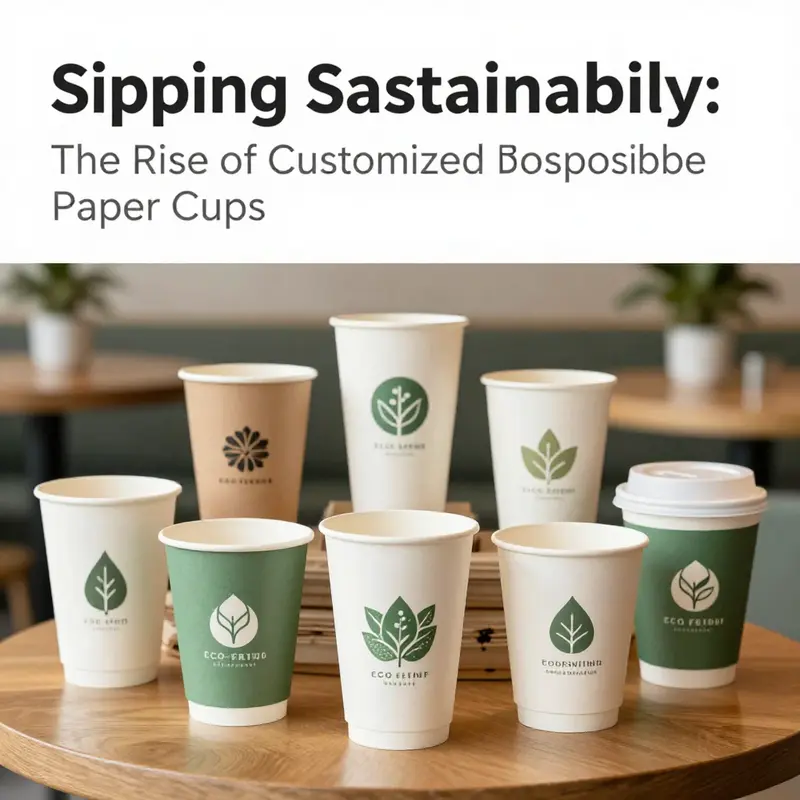
In today’s vibrant beverage landscape, customized disposable beverage paper cups have become an essential tool for businesses ranging from lively bubble tea shops to bustling event planners. The demand for sustainable, brandable, and convenient packaging is witnessing a surge, driven by consumers’ increasing preference for eco-friendly options. These cups not only serve a functional purpose but also act as ambassadors for brands, enhancing customer experience with personalized designs. This article dives into the eco-friendly materials and sustainability efforts surrounding these innovative cups, highlights the powerful customization opportunities that boost branding, and examines significant market trends that have economic implications. Each chapter will provide a comprehensive understanding of how these factors contribute to the ongoing popularity of customized disposable beverage paper cups.
Green by Design: Sustainable Materials and the Rise of Custom Hot-Print Paper Cups
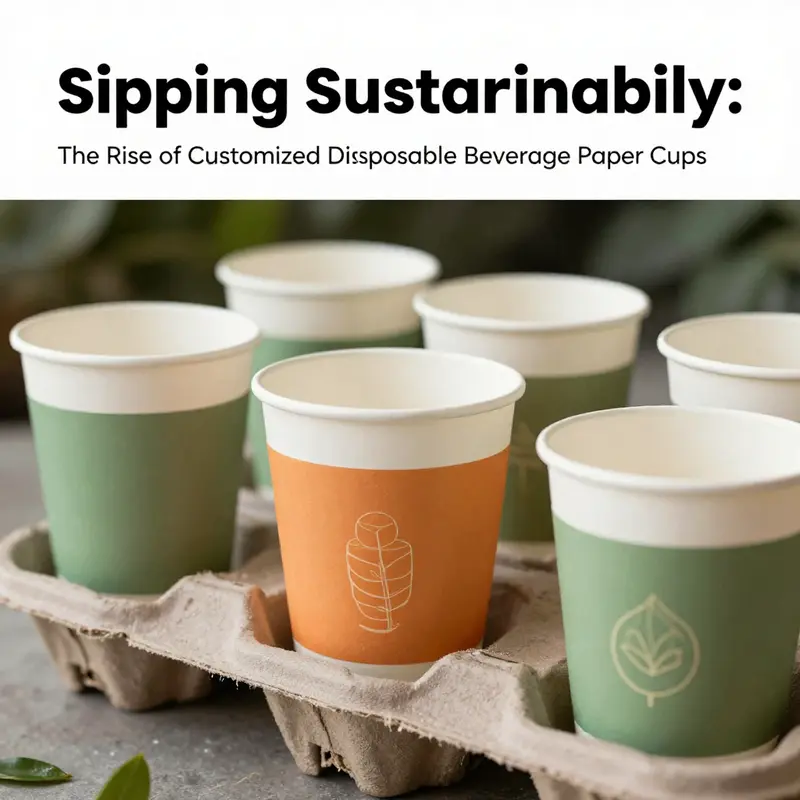
The demand for hot sale customized disposable beverage paper cups is not simply about a convenient vessel for drinks. It is a reflection of a broader shift toward packaging that can perform and persuade at the same time. The chapter you are reading follows that shift from a materials-first perspective, asking what makes a cup not just functional, but deliberately aligned with environmental responsibility, brand storytelling, and scalable business needs. At the heart of this shift are eco-friendly materials that redefine what is possible in a category once dominated by plastics and single-use inefficiencies. Sustainable paper begins with the obvious fact that the cups are made from renewable resources, but the deeper story lies in how those resources are sourced, processed, and transformed into a finished product that performs in hot conditions, travels long distances, and communicates a brand’s environmental commitments to a growing cohort of eco-aware consumers. In many offerings, the base is kraft paper or other compostable substrates, chosen not only for their natural look and feel but for their willingness to be integrated into circular economy concepts. The coatings used—PLA, a bioplastic derived from fermented plant starches, or PE, a more traditional barrier—shape both the cup’s liquid resistance and its end-of-life options. Each choice carries a balance of trade-offs: PLA offers a path toward compostability under certain conditions, while PE can deliver stronger moisture barriers and a familiar shopping experience but complicates recyclability in mixed-material streams. The practical implications of these choices ripple through procurement, operations, and customer perception. When a cafe orders a fleet of cups, the supplier’s ability to deliver consistent quality at scale becomes as important as the environmental claim on the cup’s surface. In this space, robust supply chains—from raw material sourcing to printing capabilities—enable brands to maintain uniform coloration, legibility of logos, and durability in the heat of a hot beverage. The ability to print directly on the cup is not mere aesthetics; it is a strategic asset that allows a business to tie every cup to its identity, mission, and sustainability commitments without adding additional waste through secondary packaging or inserts. This is particularly relevant as brands shift more of their marketing weight onto the vessel itself, turning each cup into a portable brand ambassador that travels beyond the counter into offices, events, and homes. Eco-friendly materials thus become a kind of storytelling fabric, providing a tangible link between what a company claims and what a customer experiences with every sip. The strengths of renewable substrates are now augmented by a growing portfolio of design and manufacturing options that make customization both feasible and meaningful at scale. Bamboo fiber, for instance, has been highlighted for its 20 percent lighter weight compared to comparable plastic alternatives, a practical advantage in logistics and handling. The lighter weight translates into fewer emissions in transport, which is an often-overlooked dimension of sustainability that matters for multi-store chains and event organizers who move large quantities of cups across regions. Bamboo and other plant-based fibers can be blended with paper pulp to achieve the structural integrity needed for hot drinks, while maintaining consumer-facing benefits such as a natural aesthetic and a feel that differentiates the product from plastic or wax-coated alternatives. In addition to bamboo-based options, PLA-based cups—whether formed into classic single-wall designs or into double-wall structures for improved heat retention—offer a compostable pathway that aligns with industrial composting infrastructures. The key insight here is not simply that these cups break down more readily than their purely plastic counterparts, but that their end-of-life outcomes depend on the presence of appropriate facilities and the material’s compatibility with local waste streams. The interplay between material choice and disposal infrastructure underlines a broader regulatory and consumer education narrative. As governments and cities tighten rules around packaging waste and as consumers increasingly seek products with clear environmental credentials, brands are compelled to seek certifications and verifications that confirm claims about compostability, recyclability, or reduced carbon footprints. In practice, many hot sale customized cups reference recognized eco-friendly certifications or industry standards, even when the precise status of a given claim may require confirmation from the supplier. These certifications help ensure compliance with environmental regulations and elevate consumer trust. They also serve as a kind of cross-check against greenwashing, signaling that a product has been evaluated against defined criteria for sustainability. Beyond material composition, design features contribute to sustainability by reducing waste and energy usage across the cup’s lifecycle. Double-wall constructions can deliver superior thermal insulation, enabling the cup to keep beverages hot for longer while reducing the need for sleeves or additional packaging during transport. The insulation improves user experience by limiting heat transfer, which, in turn, translates into fewer accidents and spills that waste product and require cleaning resources. A surprising but meaningful efficiency gain arises from reduced sleeve usage and a more comfortable grip, especially in crowded environments like coffee shops or event venues. These performance features, when paired with branding opportunities such as flexo printing and surface finishes that accept durable inks, help ensure that a cup can do multiple jobs at once: provide temperature control, offer a tactile and visual brand experience, and contribute to a larger sustainability narrative that resonates with customers who want to feel good about their purchases. Even as these advantages accumulate, the choice of coating remains a practical concern. PLA coatings are often selected to support compostability claims, but they can require industrial composting facilities to achieve full degradation. In places where home composting is not common or where facilities are scarce, the environmental benefits depend on local waste infrastructure. Conversely, traditional PE coatings provide superior moisture resistance but complicate end-of-life processing in mixed-stream recycling. This is not merely a technical consideration; it is a strategic one that shapes how suppliers market their products, how brands communicate their environmental stance, and how buyers balance price, performance, and sustainability. The economics of sustainable cups are favorable in the long run for bulk buyers. When ordering large quantities—often tens or hundreds of thousands of units—pricing can drop dramatically, and MOQs can be flexible enough to accommodate seasonal peaks. In some cases, bulk pricing starts at very low per-unit costs, making green alternatives financially viable alongside more conventional options. The capacity to scale is crucial for cafes, event organizers, and catering services that demand consistent supply over time. Global production networks—especially in manufacturing hubs—offer reliable capacity and shipping options, with sea freight enabling cost-effective movement of large orders. This global dimension, however, also implicates sustainability considerations in transportation. Efficient logistics, consolidated shipments, and optimized packaging contribute to lower emissions per unit, offsets that become part of the supplier’s sustainability story. For many buyers, however, the end-of-life narrative remains central to the cup’s sustainability profile. Compostable and biodegradable cups are pitched as solutions to post-consumer waste, yet the actual environmental benefit depends on proper disposal streams. The differentiation between industrial compostability and home compostability is critical; not all facilities can process PLA-coated cups, and some plastics can persist longer than anticipated if mismanaged. Consequently, consumer education and clear labeling become essential components of a credible sustainability strategy. The research landscape illustrates a trend toward certifications and standardized performance claims that reassure buyers about these issues. While a specific product listing may indicate pending verification for certain eco-friendly claims, the overall momentum is toward more transparent disclosure and independent testing that validates compostability, biodegradation rates, and material safety. Design and branding, too, play a role in sustainability beyond the material itself. By enabling direct printing on the cup’s surface, suppliers reduce the need for secondary marketing collateral and packaging. This minimalist approach aligns with green messaging while preserving brand impact. The printed cup, bearing a logo or message, travels from the shop to a consumer’s hand, to an office break room, to an event, and finally to the waste stream—carrying with it the brand’s narrative and, ideally, a demonstrated commitment to responsible resource use. The pursuit of sustainability in hot sale customized disposable cups is not a binary choice between “green” and “not green.” It is a continuum in which materials, manufacturing processes, coatings, and end-of-life options are coordinated to deliver the best possible outcome for the environment and for business performance. This coordination is facilitated by supplier capabilities, including the ability to offer a wide range of sizes from 2-ounce up to as much as 20-ounce variants, and by the willingness to accommodate flexible packaging formats and leak-proof lid options that enhance user experience without introducing unnecessary waste. The supplier ecosystem has learned that when cups are designed with reusability in mind—for instance, through double-wall construction or through coatings that minimize leakage and reduce the need for spill-control accessories—the overall footprint of a hot beverage service is reduced. The emphasis on sustainability also invites us to consider life-cycle thinking in everyday operations. For example, choosing a cup with a lighter weight or a more efficient barrier can lower the material use per beverage while maintaining performance. When scaled across hundreds of outlets and thousands of events, these marginal gains accumulate into meaningful reductions in raw material demand and energy consumption. It is in this context that the chapter’s central tension emerges: sustainable cups must deliver the expected performance—hot beverage containment, taste, and safety—while aligning with the growing expectations for responsible sourcing, waste reduction, and transparent labeling. Brands that can articulate these connections clearly—linking material choices to cradle-to-grave outcomes—build stronger relationships with customers who care about environmental impact as part of their everyday purchasing decisions. To illustrate how these principles translate into real-world options, consider the marketplace’s current offerings and the signals they send. The presence of PLA-based compostable options suggests a market openness to bio-based polymers, while the continued availability of more traditional, coated paper cups signals that operability and reliability continue to command attention in busy hospitality environments. The balancing act is delicate: a cup must keep a hot drink hot for customers, survive a busy service, and still leave space for a sustainability claim that is credible and verifiable. The result is a layered product story—one that interweaves material science, manufacturing efficiency, regulatory alignment, design finesse, and customer education. In practice, this means that buyers will increasingly seek partners who can offer not only a range of sustainable materials and coatings but also robust documentation, third-party certifications, and clear guidance on end-of-life pathways. The trend toward eco-friendly materials in hot sale customized disposable cups aligns with broader shifts in consumer behavior and regulatory focus. It is not merely about substituting one polymer for another; it is about building a coherent packaging system whose parts—materials, coatings, printing methods, and waste management options—work together to reduce environmental impact while supporting brand growth. As brands navigate this landscape, they often turn to suppliers who can deliver the necessary scale without compromising sustainability goals. This includes the ability to provide large MOQs with flexible pricing, a reliable global supply chain, and a range of cup designs—from classic single-wall to insulated double-wall variants—that meet both functional and environmental expectations. The market’s evolution around eco-friendly materials for hot beverages thus reflects a larger trend: the packaging industry acknowledging that sustainability and customization are not mutually exclusive but complementary forces that drive both environmental stewardship and competitive differentiation. For readers seeking tangible examples of how these principles play out in practice, there are listings and case studies that illustrate how a supplier communicates sustainability through product choice, labeling, and packaging design. These materials demonstrate that ecological consideration can be integrated into every stage of a cup’s life, from raw material sourcing to manufacturing, distribution, use, and eventual disposal. Moreover, the discussion extends beyond the product itself to the systems that support it. The packaging ecosystem increasingly values innovations in coatings, printing technologies, and production processes that support consistent quality at scale while reducing waste and energy use. In this sense, the cup becomes a node in a broader network of sustainable packaging solutions that connect product performance with environmental stewardship and with the marketing imperative to tell a responsible, compelling brand story. When a business chooses a cup with sustainability built in, that choice travels with the product and reinforces the buyer’s own commitments to responsible consumption. It is not merely a matter of meeting a regulatory requirement or satisfying a customer preference; it is about contributing to a market trajectory that places environmental considerations at the center of product development, supplier selection, and consumer engagement. In closing, the eco-friendly materials and sustainability narrative surrounding hot sale customized disposable beverage paper cups is a story of possibility realized through thoughtful material selection, rigorous performance standards, and strategic branding. The industry’s trajectory suggests continued growth, driven by innovations in renewable substrates, improvements in barrier properties, and deeper integration of end-of-life infrastructure into product design. The cups of today are not only vessels for beverages; they are instruments of communication, responsibility, and efficiency. They speak to a future in which packaging is not disposable in the old sense of waste, but part of a dynamic system that values recyclability, compostability, and a transparent supply chain as much as it values taste, convenience, and affordability. For practitioners seeking inspiration and practical guidance, a focal point remains the alignment of material choice with certification, and the thoughtful pairing of design with logistics. The result is a hot beverage experience that satisfies the palate while supporting a sustainable economy, turning every sip into a step toward a cleaner planet and a stronger brand story. For readers who want to explore concrete examples of eco-friendly takeout packaging options aligned with these trends, see this resource page dedicated to sustainable packaging designs. eco-friendly takeout boxes for food packaging. External readers can also consult global marketplaces to understand current certifications and material choices, such as the information available on Alibaba.com. Alibaba.com.
Branding on the Cup: Harnessing Customized Disposable Beverage Cups for Visual Impact and Market Reach
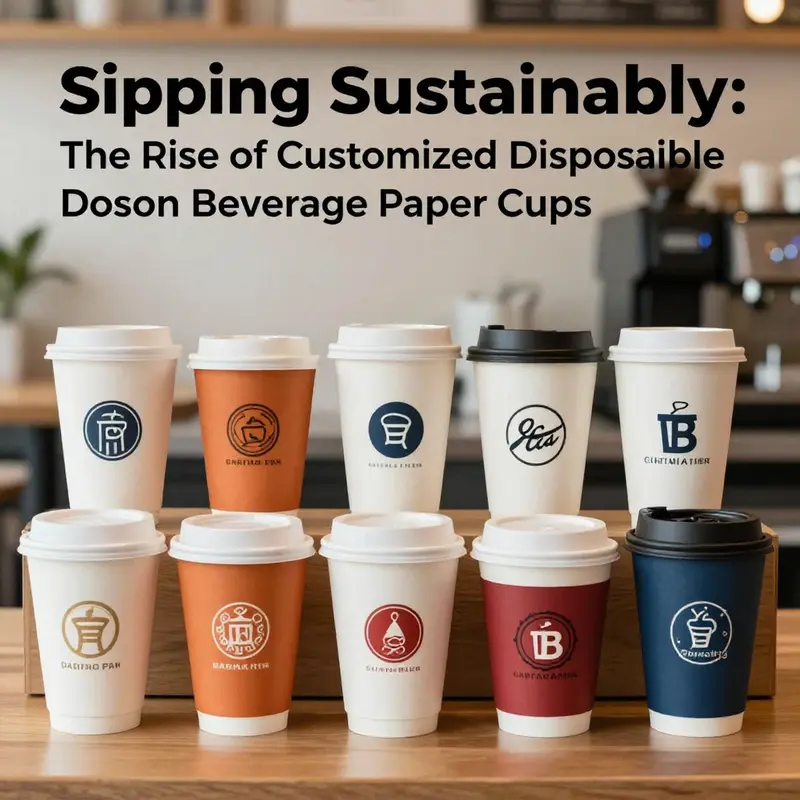
A cup that holds a drink can become a moving billboard, a portable brand ambassador, and a compact stage for storytelling that travels from the counter to the street. In the realm of hot-sale customized disposable beverage cups, the opportunity to fuse function with brand identity is both immediate and strategic. Each cup carries typography, color, and texture that reflect a company’s voice, and every sip becomes a small interaction with the brand. The cup is not merely packaging; it is a touchpoint that communicates values, tone, and promise. When a business chooses a cup printable in vivid color, designed for comfortable hand-use, and produced with materials aligned to sustainability goals, it signals attentiveness, care, and an ability to deliver a complete experience. In this sense, the cup becomes a portable space where branding and user experience converge, a small but potent stage for visual storytelling that travels with the consumer long after the drink is finished.
The power of customization starts with printing capability. Flexo printing, capable of handling up to six colors, makes it possible to reproduce logos with precision, render complex patterns, and carry full-color artwork that catches the eye while preserving legibility. This is crucial when the design must wrap around a curved surface, where misalignment or color bleed can undermine the intended impact. Brands can craft a consistent visual identity on each cup, ensuring typography remains readable, color stays true, and the overall composition communicates a clear message at a glance. The best designs learn from the geometry of a cup, using bold outlines, high-contrast elements, and ample negative space to keep branding legible from a distance. This design discipline translates into tangible results: stronger brand recall, a more professional presentation, and a quick, intuitive recognition that helps a beverage stand out in a crowded lineup. When a cup communicates clearly, it elevates the entire drinking moment, inviting a customer to slow down, notice the brand, and feel connected to its values.
Beyond color and print quality, the scope of customization extends to the very structure of the cup. Manufacturers offer a broad size range from compact 8 oz options up to larger 24 oz vessels, ensuring different beverage formats and service styles can be matched with a single cohesive branding system. The materials used are equally consequential. Food-grade paperboard with a double coating ensures durability and resistance to liquids while contributing to the structural integrity of a print-ready surface. The choice between single-wall and double-wall constructions impacts user comfort and perceived quality, with double-wall options providing better insulation for hot beverages and a more premium hand-feel for customers. The design philosophy here is both pragmatic and aesthetic: a cup must perform reliably under heat, maintain print integrity, and feel special enough to reinforce the brand promise. When brands pair the right structure with strong visuals, they transform a disposable item into a memorable touchpoint that reinforces loyalty and encourages repeat visits.
A comprehensive customization program often includes more than just artwork. ODM and OEM services cover everything from structural design and mold making to final packaging, offering a one-stop pathway that minimizes friction for busy operators. This end-to-end approach is particularly valuable for businesses seeking to create a coherent brand ecosystem across multiple touchpoints. When a brand can align cup design with lid style, sleeve options, and even related packaging elements like takeout boxes or napkins, the overall meal or beverage experience becomes a unified visual language. The ability to control the entire aesthetic—from the lid silhouette to the way it closes—reduces the risk of mismatches and ensures a polished, deliberate presentation. For events, promotions, or seasonal campaigns, this level of control allows brands to schedule creative bursts with confidence, knowing that every piece of packaging will reinforce the same narrative arc across all consumer interactions.
The finishes available for premium presentation extend branding possibilities beyond flat ink. Hot stamping adds a tactile, metallic accent that catches light and draws the eye, elevating the perceived value of the cup. UV coating contributes a glossy or satin sheen that protects the artwork while giving colors extra pop. These finishes are not mere embellishments; they shape how customers experience the brand in the moment. The sensation of a carefully finished cup—its smooth surface, the subtle warmth in the hand, the gleam of a hot stamp against the paper—conveys deliberate attention to detail. In a sector where price competition can be intense, premium touches create a discriminator that resonates with a target demographic seeking quality and consistency in their brand experience. They also support higher perceived value, which can translate into customer willingness to pay for a beverage that carries a trusted, well-executed brand narrative.
Logo and brand integration lies at the heart of the branding proposition. The ability to print logos, slogans, or messages directly onto the cup means every sip becomes a micro-interaction with the brand. A well-executed cup design can carry a micro-story during a coffee break, a quick lunch, or a post-work meetup, turning routine consumption into a moment of brand engagement. This portable advertising effect is amplified when the cup is used in high-traffic venues or at events where the audience flows through a defined space. The cup, in this sense, is not just packaging but a stride of branding in motion. The visual language a company uses—its color palette, typography, and iconography—travels with the cup, creating a recognizable beacon amid the daily flow. Direct print capability ensures fidelity of identity, allowing even smaller brands to project a professional image that sustains credibility in the eyes of customers who are increasingly discerning about the brands they support.
Marketing strategy can be woven into the cup’s design through targeted campaigns and promotions. Customized cups are especially effective for seasonal launches, limited-time offers, or event-specific branding. A coffee shop might deploy a distinct color story for autumn narratives or a playful motif for a summer festival. In a corporate setting, branded cups can reinforce a company’s identity during internal conferences or client-facing events, producing consistent visuals across venues and audiences. For retailers, a well-branded cup supports loyalty programs by acting as a constant reminder of the brand as customers refill, re-order, and re-engage. The cups become not only vessels for caffeine or beverages but a stage for experiential marketing, inviting customers to participate in a broader brand narrative. This alignment of product packaging with promotional objectives often yields measurable benefits in brand recognition, engagement rates, and the overall effectiveness of marketing spend.
The economics of customization deserve careful consideration, especially for operators aiming to scale. Bulk prices often begin at highly competitive levels, with potential savings as volumes rise. MOQs vary, but suppliers commonly set thresholds that reflect the realities of manufacturing at scale. For a growing café chain or a mobile beverage business, this means planning around production runs that align with demand cycles and promotional calendars. While unit costs in the low single digits may seem modest, the cumulative impact on a marketing budget can be substantial when cups are used as a vehicle for brand immersion. Suppliers emphasize the balance between cost efficiency and quality; the most successful branding initiatives optimize both, choosing materials that perform reliably in daily use while supporting a vivid, durable print. The interplay of cost, quality, and speed shapes how aggressively a brand can test new designs, experiment with seasonal campaigns, or roll out a coordinated packaging program across multiple outlets or markets.
The supply chain dimension is equally critical. Global manufacturers with established production capacity and sea-freight logistics provide the scalability required for high-volume programs. The typical path includes a minimum order quantity, transition through color-matched printing workflows, and a phased rollout that limits risk while validating demand. For brands operating across multiple channels or geographies, the ability to standardize packaging while accommodating regional variations is a powerful capability. Sustainability considerations also come into play. Eco-friendly materials, compostable coatings, and regulatory pressures shape supplier choices and design decisions. The market has responded by expanding options such as recyclable coatings and biodegradable alternatives, enabling brands to preserve aesthetic appeal while reducing environmental impact. In practice, this means a brand can maintain consistent visuals and performance across markets while aligning with evolving consumer expectations around waste and stewardship. The combination of print precision, structural versatility, premium finishes, and scalable supply chains creates a compelling value proposition for any business seeking to elevate its packaging strategy without sacrificing efficiency or cost control.
To maximize impact, design and branding teams should embrace a few practical guidelines that keep cup design legible, distinctive, and aligned with brand strategy. First, prioritize a clean, legible typographic hierarchy. On a curved surface, bold sans serif or strong display type often outperforms intricate scripts, especially at small sizes. Second, leverage color with intention. Use brand colors in ways that contrast with the cup background to optimize visibility in coffee shop lighting and on social feeds. Third, consider the context in which the cup will be seen. In busy environments, customers glance quickly; designs that read in a single pass tend to perform better, as do layouts that avoid overly dense textures or fine line work that can blur when printed on paperboard. Fourth, integrate the brand world with the drink experience. A playful cue that echoes the beverage flavor, origin, or seasonal theme can deepen engagement. Fifth, exploit premium finishes with restraint. A single hot-stamped emblem or selective UV highlight can create a focal point that elevates the entire cup, but overuse can dilute impact. Finally, maintain a mindful approach to sustainability. The packaging must feel responsible as well as beautiful, signaling that the brand takes its environmental commitments seriously. When these design considerations are harmonized with robust print capabilities and reliable materials, the cup becomes a platform for consistent, high-value branding that travels with the consumer and travels far beyond the moment of purchase.
Real-world storytelling around customized cups often centers on the café as a hub of identity. A café can deploy branded cups to reinforce its ethos, turning each customer interaction into a small, repeatable ritual. In event settings, the same cups carry the program forward, with limited-edition designs that commemorate a festival or sponsor. For a corporate environment, cups imprinted with a company slogan or mission statement become subtle ambassadors in daily routines, visible in meetings, break rooms, and client interactions. The mobile nature of these cups means that a brand message is captured not just by the text and colors but by the context in which the cup is used: a morning commute, a quick lunch, a weekend flight, or a post-work gathering. The cumulative effect is a distributed advertising system that weds design excellence with practical utility, building recognition through repetition and consistent presentation. It is this combination of utility and artistry that makes hot-sale customized disposable beverage cups a compelling channel for brands seeking to scale their presence without incurring the costs and friction of more traditional forms of packaging and advertising.
To facilitate the journey from concept to cup, teams should know where to look for options and how to engage with suppliers. A direct alignment with design and production partners reduces cycles and ensures visuals translate accurately from screen to sleeve and into the hand. For those exploring examples and possibilities, a curated selection of product listings can highlight customizable options and ODM/OEM capabilities, including different coatings and lid configurations, as well as consultative services that cover the entire lifecycle of a packaging project. The right partner will offer not only printing and molding capabilities but also strategic guidance on how to align cup aesthetics with broader branding campaigns, seasonal promotions, and long-term brand architecture. In the end, the promise of hot-sale customized disposable beverage cups rests on a simple insight: brands do not need to choose between practicality and personality. With the right combination of print capability, structural customization, premium finishing, and supply-chain reliability, a disposable cup becomes a controlled, repeatable experience that reinforces values, signals quality, and travels with the consumer through daily routines and special moments alike.
Branding in a Cup: Market Trends, Costs, and Economic Implications of Hot-Sale Customized Disposable Beverage Paper Cups
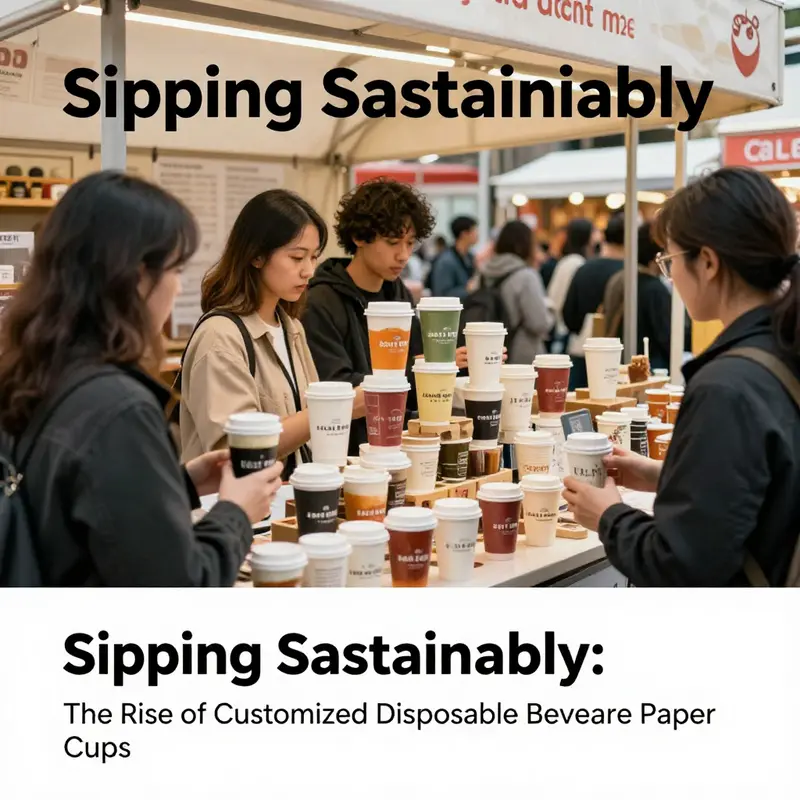
The market for hot-sale customized disposable beverage paper cups stands at a crossroads of sustainability, branding, and operational efficiency. It is a space where small independent shops share shelf space with large event organizers, all seeking a reliable, scalable, and visually impactful way to serve hot drinks while reinforcing their identities. The driving forces behind this momentum are clear and convergent: consumers want convenience without compromising environmental values, brands want live, mobile advertising, and operators crave cost-efficient packaging that can be tailored to a crowd as diverse as the drinks they pour. In this landscape, a cup is no longer a simple vessel; it is a moving billboard, a mini storefront, and a touchpoint that can influence customer recall long after the beverage has been consumed. The result is a market that rewards both sustainable design and strategic pricing, where the margins on bulk runs can pave the way for experiential marketing, seasonal campaigns, and loyalty programs that hinge on memorable branding wrapped around a familiar, everyday product.
Sustainability is the backbone of current consumer expectations and regulatory trajectories. The shift from conventional polyethylene linings to plant-based bioplastics, notably polylactic acid (PLA), reflects a broader push toward recyclable and compostable packaging. This transition is not merely a technocratic improvement; it is a response to growing regulatory pressure and corporate sustainability commitments that increasingly favor materials with a clearer end-of-life path. Regions such as the UAE exemplify a broader move, where a projected 3.6% CAGR through 2030 signals that sustainability is becoming a differentiator in a crowded market. The economic implications of this shift are nuanced. PLA coatings, while sometimes more costly upfront than traditional PE, offer longer-term value through consumer alignment with green practices and potential regulatory advantages that can reduce risk in procurement and product turnover. In practical terms, brands are learning to weigh the total cost of ownership: the price of the cup itself versus the anticipated drivers of sales, retention, and environmental stewardship that modern customers reward with their patronage.
But sustainability does not stand alone. The cups under discussion are designed for versatility, durability, and brand flexibility. They accommodate a spectrum of uses—from bustling coffee bars to trend-forward pop-up standees and high-volume catering setups. The ability to print high-resolution, full-wrap designs directly onto the cup makes branding both immediate and tactile. Seasonal promotions, corporate partnerships, and limited-edition collaborations can ride on the cup’s surface, ensuring that each sip reinforces a narrative rather than merely quenching a need. This is where customization moves beyond aesthetic value to become a core marketing channel. The capacity to tailor sizes, shapes, and coatings—including ripple walls or double-wall insulation—means operators can optimize heat retention, grip ergonomics, and the consumer experience without sacrificing efficiency at scale. In a sector where a single promotional wave can drive foot traffic for weeks, the strategic application of personalized cup design translates into measurable gains in brand visibility and customer engagement.
From an economic standpoint, the production ecosystem behind these cups benefits from inherent economies of scale. Large orders enable unit-cost reductions that make even the most ambitious branding efforts financially viable. Typical price margins for bulk runs can span from roughly US$0.01 to US$0.045 per unit, depending on volume, materials, and coating choices. Minimum order quantities often range from 5,000 to 50,000 units, with the more standard thresholds landing toward the higher end. For operators planning for weekend peaks or seasonal surges, this scalability is a decisive factor. It is not simply about acquiring more cups; it is about stabilizing supply for demand spikes and securing predictable costs that enable long-range budgeting. In many cases, the most attractive value proposition combines a favorable unit price with customization options that do not trigger prohibitive design fees or lengthy lead times. The ability to accelerate product launches and refresh campaigns with minimal risk further reinforces the appeal of these offerings.
The design dimension adds another layer of strategic value. OEM and ODM customization options permit brands to tailor not only graphics but also materials and structural forms. Food-grade paperboard with PE or PLA coatings can be selected to optimize barrier properties and consumer safety while aligning with environmental goals. Double-wall constructions address a dual need: improved heat retention and a more comfortable user experience, negating the need for sleeves and streamlining service in busy venues. Insulation, grip, and lid compatibility become part of a cohesive packaging solution rather than ancillary add-ons. This synthesis of form and function enables operators to deliver a more polished product at a lower overall cost, which is a meaningful competitive advantage in markets where speed, consistency, and brand memory are currency.
The supply chain dimension deserves careful attention. A substantial share of manufacturing capacity for these cups is located in major industrial hubs in China, with regional clusters in provinces like Anhui and Guangdong contributing to a robust global supply network. Sea freight remains the preferred mode for bulk shipments, balancing cost with transit time and inventory considerations. The minimums and production lead times require careful planning, especially for organizations that rely on just-in-time or event-driven procurement. MOQs in the thousands to tens of thousands accommodate high-volume buyers but can be a hurdle for smaller operators seeking a personalized touch. Forward-looking buyers often negotiate multi-year supply arrangements to lock in price stability, secure capacity, and avoid sudden disruptions that could derail marketing calendars or event schedules. In this context, risk management becomes a core competence: diversification of suppliers, contingencies for peak periods, and transparent communication across the supply chain are essential for preserving brand integrity when demand brews up unexpectedly.
The market’s breadth across sectors helps explain why these cups have become central to branding and customer experience strategies. In coffee environments, a cup is a brand ambassador, delivering not just flavor but a narrative that stays with the customer as they move through the day. In restaurants and fast food concepts, the cup can reflect seasonal themes, regional identities, or corporate partnerships with minimal overhead. In catering and events, the ability to scale branding while maintaining consistent quality helps organizers deliver a professional, immersive experience. The print capabilities enable brands to reach customers during key moments—opening promotions, loyalty drives, or seasonal launches—where the cup’s surface becomes a canvas that travels with the consumer, extending engagement beyond the counter and into social sharing. This extended lifetime value of the cup reinforces why businesses invest in high-quality, fully customizable options rather than off-the-shelf, generic alternatives.
Pricing dynamics also influence strategic decisions across the buyer spectrum. For large orders with significant volume, unit costs can become highly favorable, enabling the procurement of premium materials or elaborate branding without eroding margins. The economics, however, must balance design ambitions with production realities. A complex full-wrap print, multiple color layers, or specialty coatings can raise unit costs, but this is often offset by the incremental revenue generated through enhanced brand recall and higher customer satisfaction. Importantly, the pricing landscape is not static. Material costs, currency fluctuations, and regulatory shifts can impact the bottom line, reinforcing the need for flexible procurement strategies and ongoing supplier collaboration. In practice, savvy buyers pursue a tiered approach: core cup varieties with reliable performance and pricing for daily operations, plus limited-edition or themed options for promotions or events that justify a higher price point because they create a distinctive consumer moment.
The broader economic implications of this product category extend to manufacturers, retailers, and the packaging ecosystem at large. Manufacturers benefit from the predictable demand cycles that come with chain-wide adoption of branded disposables. Investments in newer equipment, faster printing technologies, and environmentally friendly materials can yield not only improved product quality but also better throughput and waste reduction. For retailers and food-service operators, the decision matrix includes not only price per cup but the total cost of branding campaigns, inventory management, and customer experience improvements. A well-executed customization strategy can elevate a brand’s perceived value, encouraging higher check averages and greater repeat visitation. The ability to pilot campaigns with limited batches and then scale up as demand proves out is particularly valuable in fast-moving consumer environments where trial-and-learn dynamics determine long-term viability.
At the same time, the market faces considerations that require prudent planning. Regulatory developments around disposable packaging, waste management, and compostability can alter material choices and end-of-life pathways. Economic resilience will depend on the agility of suppliers to adapt to these changes without compromising on performance. Brands that integrate sustainability metrics into their procurement criteria—life-cycle assessments, compostability certifications, and responsible sourcing—are more likely to sustain consumer trust and regulatory compliance over time. From a risk management perspective, supplier diversification, transparent cost-tracking, and clear communication with customers about environmental commitments are essential practices that help safeguard brand reputation during transitions.
A crucial element in the strategic calculation is the long-term growth trajectory of the category. Market analysts project continued expansion as consumer demand for convenience, branding, and eco-conscious packaging remains elevated. The long-run implications for manufacturers include opportunities to diversify product lines, such as integrating compostable bamboo fiber cups or PLA-coated options, to appeal to evolving preferences without sacrificing performance. For retailers, the cups offer a reliable platform for cross-promotions, loyalty programs, and experiential marketing that can be scaled with business growth. The confluence of cost efficiency, customization, and sustainability is not only a competitive advantage; it is a structural shift in how beverage packaging supports brand storytelling and customer engagement across touchpoints.
To illustrate the breadth of practical considerations, consider the interplay between design and logistics. A brand might plan a year of campaigns with seasonal themes that require distinct graphic treatments and varying cup sizes. The ability to sequence production—from standard core offerings to limited-edition runs—depends on production readiness and supplier capacity. This sequencing allows campaigns to remain fresh while protecting inventory turnover. Insourcing versus outsourcing printing capabilities also factors into the equation. Companies that have in-house printing can respond more rapidly to design changes and promotions, while others rely on supplier networks to deliver consistent quality at scale. In either case, the aim is to ensure that branding remains sharp, colors stay true, and coatings perform under heat and humidity without compromising safety or flavor preservation. The tactile experience—the weight, the grip, and the warmth of the cup through a customer’s fingertips—becomes part of the brand’s sensory identity, reinforcing memory as much as the printed imagery.
The future outlook for the market is characterized by continued expansion and a gradual maturation of consumer expectations. As more businesses recognize that packaging can shape the entire customer journey, investments in customization and sustainability will persist. The market’s trajectory will likely favor suppliers who can offer a coherent value proposition: reliable supply, flexible customization, competitive bulk pricing, and materials that align with environmental commitments. For operators, the lesson is to view cups not as a passive packaging component but as an active instrument of brand strategy, operational efficiency, and environmental accountability. The most successful players will integrate these dimensions into a cohesive procurement and marketing plan, ensuring that every cup serves as an effective storytelling device while delivering predictable cost control and dependable performance.
In conclusion, the hot-sale customized disposable beverage paper cup category embodies a modern fusion of form, function, and branding. It leverages sustainable materials and advanced printing to create a practical yet powerful marketing channel. It offers scalable economics that make branding on a cup affordable at the volumes required by coffee shops, restaurants, and large events alike. And it presents operators with a flexible toolkit to design experiences that resonate with evolving consumer values. As brands continue to experiment with color, texture, and shape—while aligning with environmental considerations and regulatory expectations—the cup becomes more than a container. It becomes a strategically valuable asset that travels from the counter to the customer’s day, carrying a message, a memory, and a promise of quality that distinguishes one cup from another.
For brands exploring this space, a concrete starting point is to consider how materials, printing capabilities, and cup design choices intersect with their marketing calendar and sustainability commitments. The combination of low unit costs at scale, broad customization options, and a global supply network creates a compelling business case for integrating these cups into a broader packaging and branding strategy. The result is not merely cost savings or a sharper image; it is the realization of a cohesive customer experience that travels with every drink and leaves a lasting impression on the consumer’s mind. This is the enduring value proposition of hot-sale customized disposable beverage paper cups: a simple vessel that, when designed with purpose, amplifies a brand’s story with every sip.
Internal link for further exploration: Custom Takeaway Packaging and Disposable Tableware for Theme Parties.
External reference: For pricing and specifications observed in market listings, see the Alibaba page detailing custom disposable paper cups for hot beverages. https://www.alibaba.com/product-detail/Custom-Disposable-Paper-Cups-for-Hot-Beverages_1600879928243.html?spm=a2700.15936965.0.0.3f2b4e3dZKcGnU
Final thoughts
The customization of disposable beverage paper cups is not just a trend but a movement towards sustainable and brand-oriented solutions in the beverage industry. As eco-friendly materials gain prominence and the potential for branding becomes more evident, businesses can harness these cups to enhance their customer experiences while fulfilling environmental responsibilities. The insights shared in this article reinforce the idea that customized disposable beverage cups are crucial for beverage establishments aiming to thrive in an increasingly competitive market. Embracing these options can effectively elevate brand presence and customer loyalty.