
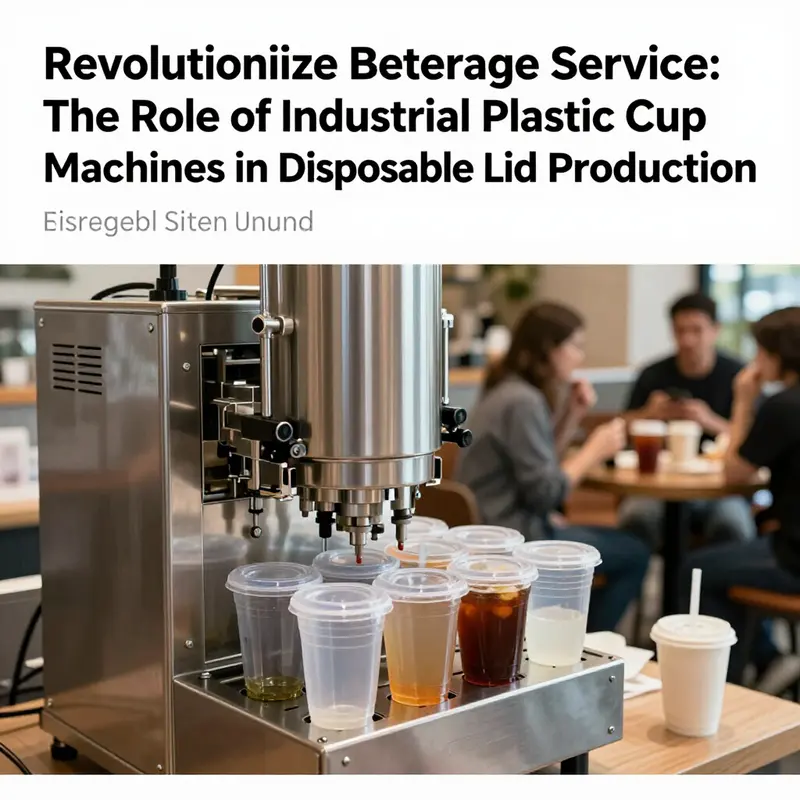
The manufacturing of disposable lids for cups is a pivotal aspect of ensuring convenience and safety in the food and beverage sector. As the demand for quick-service options continues to rise, efficient lid production becomes increasingly significant. This article delves into the technology powering industrial plastic cup machines, explores critical material choices, analyzes market dynamics, and addresses the sustainability challenges faced by businesses in this rapidly evolving industry. Each chapter provides insights tailored for bubble tea shops, restaurants, catering services, and procurement teams, creating a comprehensive portrait of the industrial plastic lid landscape.
Precision in Motion: Technology and Efficiency Driving Industrial Plastic Cup Machines for Disposable Lids
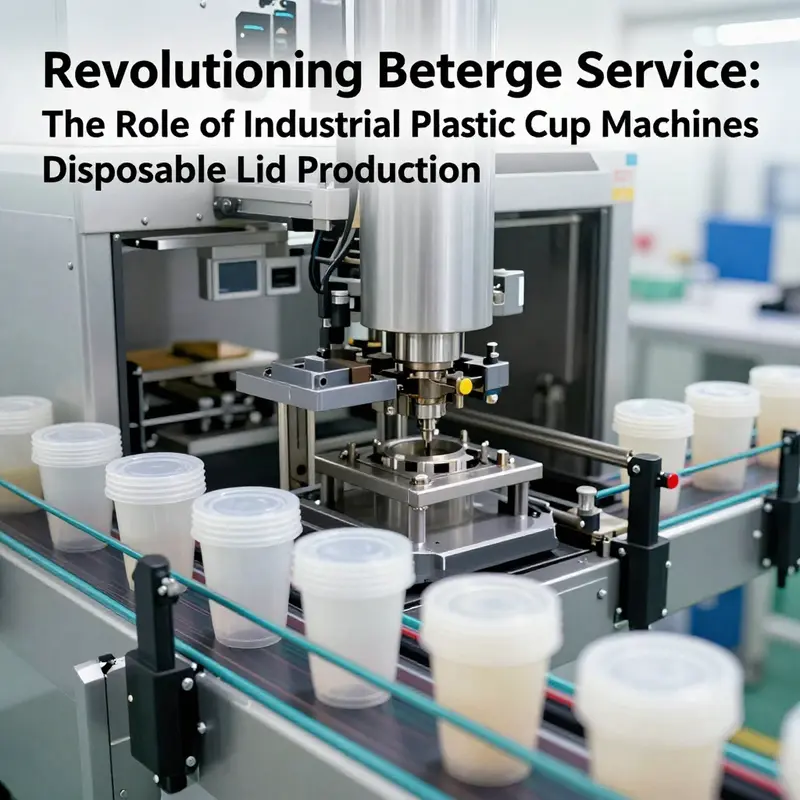
A single extrusion of capability begins before the first lid forms. In modern packaging lines, the industrial plastic cup machine designed for disposable lids operates as a finely tuned ecosystem where heat, pressure, and precision converge to produce consistent, safe, and scalable products. It is not merely the sum of its individual parts but an orchestration of materials science, mechanical engineering, and control theory that enables takeout, beverage service, and on-the-go consumption to hinge on reliable, high-speed production. The journey from a flat sheet to a formed, trimmed, and ready-to-use lid unfolds through a series of tightly coupled stages, each optimized for speed and uniformity, while remaining adaptable to evolving materials and shapes. This adaptability is essential as the global market for disposable cup lids continues to grow, driven by demand in food service, catering, and the broader FMCG landscape. Market analysis indicates a steady expansion in this sector, underscoring the critical role of automation and precision in sustaining margins and meeting 24/7 uptime requirements.
The first stage, material feeding, sets the pace for the entire cycle. Sheets or rolls of thermoplastic polymer are fed into a staging area with controlled tension. The consistency of this feed determines downstream accuracy; too much tension can introduce flutter in the sheet, while too little can cause misalignment on the forming station. In practice, operators rely on servo-driven feed systems that synchronize with the forming cycle, ensuring that each sheet arrives with exact timing relative to the heated zone. The materials themselves span a broad spectrum. Polypropylene, polystyrene, and PET remain staples for rigid, heat-stable lids. Polystyrene, including its high-impact variant, adds toughness and a crisp edge definition that enhances sealing performance. Polylactic acid, a biodegradable option, is increasingly integrated where sustainability goals require it, though it demands particular attention to process windows and end-of-life considerations. Even with biodegradable options, the industry emphasizes traceability and certification to avoid misrepresentation, given ongoing debates about compostability claims and real-world performance in industrial composting environments.
The heating stage is where the sheet becomes pliable enough to take shape without compromising dimensional stability. Modern thermoforming systems employ carefully controlled heating profiles that heat the sheet uniformly along its plane. Digital temperature controllers, often based on PID logic, monitor dozens of heating zones and adjust inputs in real time. The goal is a uniform material consistency that yields identical lid walls and consistent thickness across the surface. Uneven heating creates wall-thickness variations that can undermine sealing and lead to waste during trimming. By contrast, a well-managed heating regime reduces scrap, shortens cycle times, and improves overall yield. The advanced control geometry integrates with motion systems so that heating aligns with the forming sequence, ensuring that the material reaches the precise state required for forming at the exact moment the mold opens.
Forming itself occurs through vacuum or positive-pressure regimes, sometimes in a sequence that blends both approaches. In a typical cycle, the heated sheet is drawn into a mold cavity by vacuum, which deforms the sheet into the negative shape of the lid cavity. Positive pressure can assist in achieving sharper radii and more defined edges when the geometry demands it. The molds are engineered with precision to reproduce small details—bevels, rims, and interception features—that ensure a snug fit with corresponding cup mouths. The mold set can be swapped to accommodate different lid sizes and shapes, a capability that is central to a modern plant’s flexibility. It is this flexibility that keeps production aligned with seasonal promotions or regional variations in packaging requirements, without a wholesale line retool.
Trimming and ejection follow form fidelity. After the lid is formed, trimming removes excess flash to produce a clean, uniform edge. Precision trimming is essential to ensure consistent lid diameter and edge geometry, which directly affects sealing performance and consumer experience. Ejection must be gentle enough to preserve delicate edges while maintaining high throughput. Modern lines utilize robotic or servo-controlled pick-and-place mechanisms that synchronize with the cycle, reducing mechanical wear and reinforcing repeatability. The ejection phase also serves as a last quality checkpoint; any drag marks, irregular rims, or raised flash can signal process drift that warrants mold inspection or feed adjustments.
At the heart of the whole sequence lies the programmable logic and human-machine interface that govern every parameter. A robust PLC control system coordinates material feeding, heating, forming, trimming, and ejection with millisecond accuracy. The operator’s interface provides clear visibility into temperature maps, cycle time, mold alignment, and the status of downstream stations such as sealing. The control architecture supports rapid mold changes, enabling a line to shift from one lid format to another with minimal downtime. In practice, this capability translates into tangible gains: faster response to demand fluctuations, reduced changeover costs, and lower risk of human error when adjusting critical dimensions. Rather than reconstructing a line for each new product, the system maintains a library of mold profiles, each with predefined temperature curves, forming pressures, and trimming coordinates.
Advances in motion control and temperature management further elevate efficiency. Servo-driven systems provide synchronized, smooth motion that minimizes mechanical stress and fatigue on the machine, the molds, and the tooling. Digital PID controllers maintain tightly regulated heating zones, delivering repeatable wall thickness and consistent surface finish. This combination of precise actuation and precise heating directly reduces material waste and improves cycle stability, especially when producing lids with tight tolerances. The result is fewer off-spec outputs and a more predictable yield, which matters when scale is measured in thousands of lids per hour.
Many facilities pursue even tighter integration by pairing cup-making units with automatic sealing machines. The seal module adds another layer of efficiency, creating a closed-loop production line that eliminates unnecessary handling between forming and capping. Sealing units can contribute substantial throughput, often in the range of several hundred lids per hour, depending on geometry and material behavior. The ability to maintain continuous operation around the clock is a defining strength of these integrated systems. In such environments, uptime becomes a critical metric, and equipment reliability translates directly into cost-of-goods savings, fewer line stoppages, and more predictable production calendars for large catering operations and beverage distributors.
Sustainability considerations increasingly shape machine configuration and material selection. The capacity to process biodegradable materials like PLA is part of the design brief for modern lines. However, the industry remains vigilant about the actual performance and end-of-life behavior of bioplastics. Claims about compostability or biodegradability require rigorous traceability and certification, such as recognized standards and verification processes. A well-designed line accommodates a range of materials, but it also imposes discipline in inventory control, supplier qualification, and process validation. The modular architecture of today’s machines—where molds, heaters, and sealing stations can be swapped with minimal downtime—makes it feasible to respond to regulatory shifts or brand-driven sustainability goals without sacrificing throughput. This flexibility is one of the strongest alignments between operational efficiency and environmental responsibility.
Reconfiguration is part of the business logic that keeps these machines relevant as product portfolios evolve. A plant might introduce several lid formats in quick succession, each with a distinct diameter, wall thickness, and edge profile. The ability to change molds swiftly reduces downtime and keeps production aligned with customer demand. This adaptability supports a broader strategy of customization at scale, where brands seek unique lid cues to distinguish their packaging while preserving the efficiency benefits of automated production. Even as the process evolves, the fundamental principle remains the same: disciplined process control, stable thermal management, and precise mechanical action yield dependable lids. The result is a reliable supply of lids that pair with cups, enabling consistent performance at the point of service.
From a performance perspective, the numbers are compelling. In well-tuned lines, output rates can climb toward the upper hundreds per hour for formed lid sets, while sealing modules push overall throughput higher still. These are not just theoretical figures; they reflect real-world capabilities that support large-scale operators—catering services, fast-casual networks, and bulk beverage producers—who value consistent quality, low downtime, and the ability to respond to surges in demand. The market context reinforces the technical narrative: a growing disposable cup lid market, driven by rising takeaway and on-the-go consumption, rewards lines that deliver both speed and precision. The combination of advanced thermoforming, flexible tooling, and integrated sealing creates a compelling value proposition: higher productivity, better material utilization, and a pathway to more sustainable packaging options when compatible materials are chosen with care.
For readers seeking concrete pointers on practical implementation, the literature emphasizes the end-to-end nature of the system. Start with material compatibility and sheet quality, ensure feed, heat, and forming are harmonized, and then validate trimming and ejection against a stable set of dimensional tolerances. Build a control environment that supports rapid mold changes without compromising safety, and couple the line with a robust sealing station to close the loop on throughput. Finally, align the process with sustainability goals through responsible material choices and strict traceability regimes, acknowledging that some eco-friendly claims require verification and certification.
If you want a tangible example of related consumer packaging resources that align with the capabilities described, you can explore a dedicated page on disposable clear plastic cups, which illustrates how product design and process control converge in everyday use. This internal reference helps connect the machinery narrative to the broader ecosystem of cup-and-lid packaging that surrounds fast-service contexts.
External reference and further reading can be found in practitioner-focused supplier resources that document technical specifications and process parameters for thermoforming lines. For more technical specifications, see the external resource: https://www.alibaba.com/product-detail/BOPS-Technology-Plastic-Cup-Forming-Machine_1600387957517.html?spm=a2700.
In sum, the modern industrial plastic cup machine for disposable lids embodies a disciplined blend of material science, precise thermal management, and automated mechanical action. Its strength lies not only in speed but in adaptability—the ability to switch molds, accommodate new materials, and integrate sealing in a single, continuous workflow. This synthesis of automation, control, and modular design is what enables manufacturers to meet the rising demand for disposable lids while controlling waste, maintaining quality, and supporting evolving sustainability narratives. As the market grows and consumer expectations rise, the technology behind these machines will continue to push the boundaries of efficiency, reliability, and responsible packaging.
Material Selection as the Hidden Backbone of Disposable Lid Manufacturing
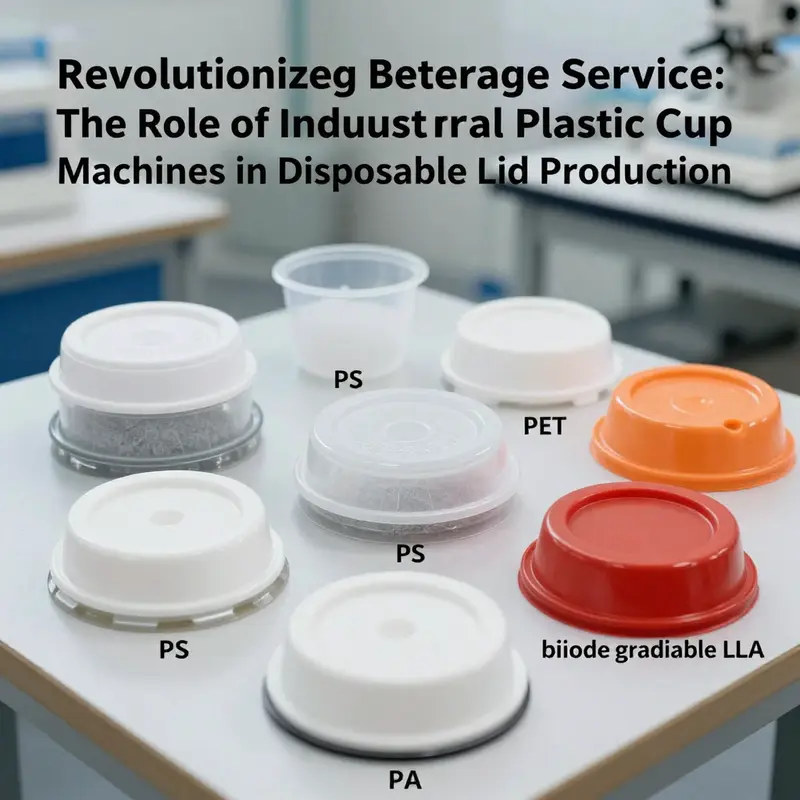
The material selection that underpins disposable lid manufacture is more than choosing a cheap sheet or a familiar resin. It is a careful alignment of end-use expectations with processing realities, regulatory guardrails, and the push toward sustainability. In a system where a lid must seal reliably, resist the thermal and mechanical demands of hot beverages or cold drinks, and travel through a high-speed thermoforming line with minimal scrap, every material choice reverberates through the production chain. The lid’s journey begins with chemistry, but its fate is decided at the interface where resin, forming equipment, and control systems converge. To understand this, one must look beyond the finished lid and into the interplay of material properties, process compatibility, and compliance that define modern lid manufacture.\n\nAt the heart of material selection are a few enduring properties: food safety, thermal stability, mechanical strength, and process formability. Food safety guides the base criteria. Materials chosen for beverage lids must meet fundamental food-contact expectations, ensuring they do not leach harmful substances during typical use. This regulatory frame includes food-contact regulations in major markets and GMP-like guidelines that govern how materials are handled, stored, and tested prior to use in any high-speed line. The choice is not purely about the resin’s performance in isolation; it is about how that resin behaves in a forming environment, how it interacts with sealing features, and how traceability can be maintained through every batch. In practice, this means that a lid material must be vetted for clean melt behavior, stable physical dimensions, and predictable performance across varying loads placed by high-speed forming cycles and downstream sealing processes.\n\nThermal stability and formability are the twin pillars of process compatibility. Thermoforming, a dominant technology in lid production, requires materials that flow into molds under controlled heat while preserving dimensional stability as pressure is applied. Amorphous polymers tend to form sharp, clear lids with excellent surface quality, but they can demand tighter control of heat and vacuum. Semi-crystalline polymers, by contrast, can offer superior heat resistance, but their crystallization behavior may introduce dimensions that wander if cycle times are not optimized. The machine’s cycle time, heating profile, and mold geometry all depend on these material characteristics. Consequently, choosing a resin is as much about how the material behaves in the oven and on the press as it is about the lid’s final appearance. The result is a production recipe that must balance melt strength, flow, and cooling rates with the mold’s geometry, the desired thickness, and the need to avoid defects such as thinning, warping, or bubbling.\n\nFrom a cost and performance perspective, polystyrene (PS) has long been favored for its low cost, clarity, and ease of processing. It forms readily into lids for single-use beverage applications where heat tolerance is moderate and the end-user experience centers on ease of use and visual appeal. However, this class of material is limited by heat resistance, which constrains its suitability for hot beverages. For cold and moderately warm drinks, PET offers better rigidity and thermal stability, with a track record of recyclability that resonates with sustainability objectives. PET-derived lids can meet demanding cycles and permit clear or translucent finishes that support branding or product visibility while maintaining structural integrity under vacuum and pressure forming. The environmental profile of PET is increasingly favorable in markets that emphasize recyclability and downstream recovery, even as producers navigate the logistics of collection and sorting.\n\nPVC presents a different set of trade-offs. It offers excellent flexibility and sealing properties, which can translate into strong barrier performance in certain lid designs. Yet environmental and health concerns surrounding phthalates or other additives have prompted many manufacturers to seek alternatives. In a regulated landscape, where traceability and certification are essential, reliance on PVC is often tempered by policy shifts and evolving consumer expectations. The decision to move away from PVC, or to use it only with rigorous controls and high-quality stabilizers, reflects a broader industry willingness to prioritize safety and environmental responsibility over purely technical convenience. In the same context, polylactic acid (PLA), a biodegradable option derived from renewable resources, is gaining traction in eco-conscious segments. PLA lids can meet specific compostability or end-of-life objectives, but they typically endure higher costs and demonstrate reduced heat tolerance compared with conventional plastics. This makes PLA a compelling choice for certain product lines—especially where certifications and consumer messaging around compostability are central—but not a universal remedy for all beverage-lid needs.\n\nThe regulatory framework surrounding material selection cannot be overstated. International markets require compliance with food-contact standards that often coexist with broader GMP and quality management expectations. In practice, manufacturers must verify conformity to relevant regulations such as the core standards for food contact, while also maintaining internal quality systems to document resin provenance, additive lists, and testing results. Certification schemes associated with compostability or recyclability add layers of complexity to the supplier selection process. For instance, end-products marketed as compostable must carry appropriate certification and labeling that reflect compliance with recognized standards. This is not merely a marketing concern; it is a legal and operational requirement that informs the choice of resin and the downstream manufacturing plan. The need for robust traceability is clear. When a lid’s material claims are questioned, manufacturers must be able to trace back to the resin lot, confirm additive compatibility, and demonstrate that processing conditions have not altered the material’s safety or performance profile.\n\nBeyond the resin’s intrinsic properties, the machine itself imposes constraints and opportunities that shape material selection. The forming system’s heating elements, vacuum or pressure profiles, and mechanical tolerances are tuned to a given resin’s melt behavior and formability. The integration of process controls with material science means that operators can adjust mold changes, cycle times, and thickness distribution by selecting molds that suit the resin’s flow and cooling characteristics. This separation of duties—material science guiding process design, and process design enabling material performance—helps explain why product engineers and process engineers must work in concert. A change in resin may necessitate re-optimizing heating zones, adjusting venting strategies, or revising cooling schedules to preserve lid flatness, rim integrity, and sealing performance. In short, material selection is not a one-time decision but a dynamic axis that interacts with the forming line’s geometry, energy input, and quality controls.\n\nThe end-use environment also shapes the material dialogue. Beverage lids must seal securely against a range of cup rims and beverage temperatures, resist leakage, and maintain user-friendly removal without excessive crack propagation. Sealing interfaces drive material selection toward resins with reliable heat-seal properties and consistent surface energy. When a lid needs to form a reliable seal with a rigid cup edge and a pliant gasket area, the resin’s surface characteristics become critical. Surface smoothness, gloss, and surface energy influence how well the lid seats and seals, how a heat-seal or adhesive seam behaves, and how easily the lid can be opened without leaving fragments on the cup. In high-throughput lines, even small deviations in surface energy can compound into frequent rework or scrap, underscoring why material choice reverberates through yield and efficiency.\n\nThe sustainability dimension—the growing emphasis on recyclability, reduced carbon footprint, and responsible end-of-life management—adds another layer of decision criteria. Markets increasingly demand transparency around material origin, recyclability, and end-of-life pathways. As consumer awareness grows, brands seek assurances that the lids can be recycled in existing streams or that compostable variants can meet credible certifications. This push has, in some cases, shifted the preference away from materials that complicate post-consumer sorting or contaminate recycling streams. In response, researchers and manufacturers explore alliances with suppliers who can provide ingredients and additives that preserve performance while improving recyclability or enabling certified compostability. The trade-off between performance, cost, and end-of-life considerations remains at the core of material selection. Ultimately, the material chosen must not only satisfy form and function on the line but also align with regulatory, environmental, and economic objectives that define a modern packaging program.\n\nFor practitioners seeking practical anchors in this landscape, consider how material selection influences both the throughput and the safety of the production process. A resin with excellent melt flow and stable crystallinity can support tight dimensional tolerances and consistent wall thickness, reducing scrap and stabilizing cycle times. Conversely, a resin with poor heat resistance may require slower cycles or thicker walls to avoid deformations, which can drive up material costs and reduce overall line efficiency. The most resilient approach couples a thorough materials appraisal with a robust supplier qualification program, ensuring that each resin’s supply chain can meet the facility’s quality standards, traceability requirements, and regulatory expectations. This is especially important when bioplastics or certified compostable materials are involved, given the potential variability in melt behavior and performance across lots. In such cases, pilot trials and process validation become essential steps to verify that the chosen material will perform reliably at production scale while meeting end-user expectations for safety, performance, and environmental responsibility.\n\nIn the end, material selection for industrial plastic cup machines and disposable lids is a synthesis. It blends chemistry with engineering, compliance with economics, and product dreams with practical production discipline. The result is a lid that not only protects a beverage but also demonstrates that a thoughtful material choice can harmonize safety, performance, and sustainability without sacrificing the efficiency of a highly automated line. For readers who want a concrete touchpoint into the practical side of material compatibility, a reference page on disposable clear plastic cups highlights how a straightforward product family intersects with lid design, materials, and processing choices. disposable clear plastic cup product page.\n\nThe broader narrative remains clear: as markets evolve toward more sophisticated packaging goals, material selection will continue to be a decisive lever. It determines not just what a lid can do, but how reliably it can be produced, how safely it will perform in real-world use, and how transparently a company can communicate its environmental commitments. The interplay of resin properties, processing capabilities, and regulatory guardrails is not merely a technical concern; it is a strategic axis that shapes product portfolios, manufacturing footprints, and the future resilience of the disposable lid segment. External references and industry insights reinforce the notion that automation, when paired with disciplined material choices, yields lids that meet the demanding needs of food service, beverage, and consumer goods applications without compromising safety, quality, or sustainability.\n\nExternal resource: Automation and safety considerations in lid formation are explored through industry references that discuss how forming machines manage material variability, control heat, and ensure consistent sealing across high-speed lines. See for example: https://www.goldsupplier.com/product/110f-automatic-blow-molding-and-plastic-sucking-lids-forming-machine.html
Demand, Automation, and Profit: The Market Dynamics and Economic Imperatives Behind Industrial Plastic Cup Machines for Disposable Lids
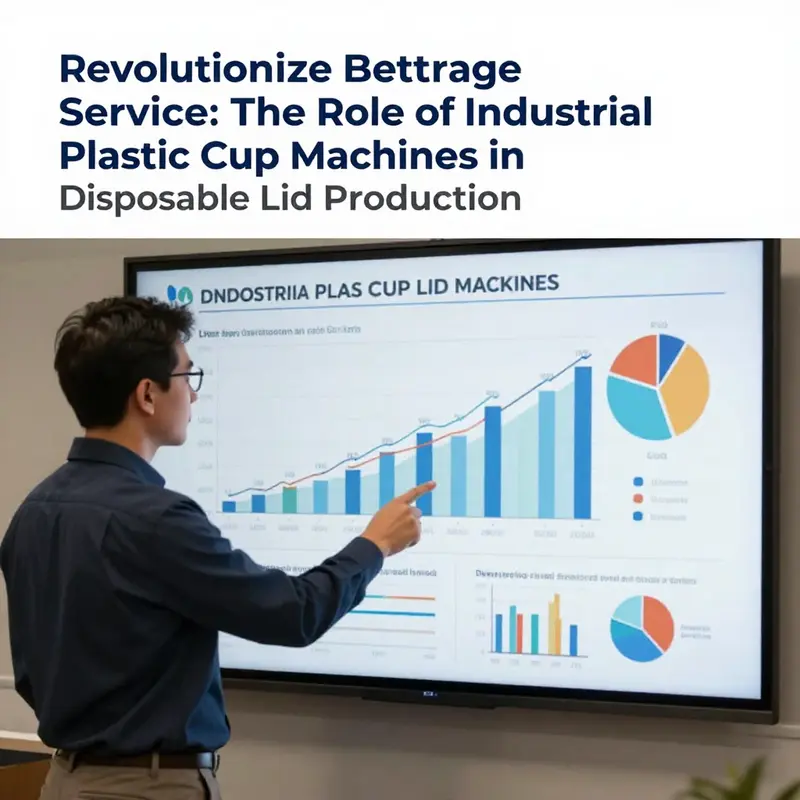
The market dynamics surrounding industrial plastic cup machines for disposable lids sit at the intersection of rising on‑the‑go consumption, evolving material science, and the relentless push for efficiency. These machines form the backbone of a supply chain that must deliver lids at scale with consistent quality for food service, beverage, and consumer goods outlets. The disposable cups and lids market has grown from a niche activity to a high‑volume industrial sector, driven by takeout culture and rapid service. Over the last decade, automated lid production has shifted from basic replication to precision manufacturing, enabling tighter tolerances, lower defect rates, and the flexibility to handle multiple sizes and materials with minimal downtime. The economic appeal of these systems rests on high throughput, modularity, and the ability to adjust quickly to regulatory trends without sacrificing quality.
null
null
Final thoughts
Industrial plastic cup machines for disposable lids play a crucial role in catering to the ever-evolving demands of the food and beverage industry. By harnessing advanced technology, selecting diverse materials, understanding market dynamics, and confronting sustainability challenges, businesses can effectively navigate the complexities of this sector. As consumer preferences shift towards convenience and environmental responsibility, manufacturers are positioned to innovate continuously, ensuring they meet the needs of bubble tea shops, restaurants, food trucks, and more. The future hinges on efficiency and sustainability, guiding production practices toward a greener and more economically viable horizon.