
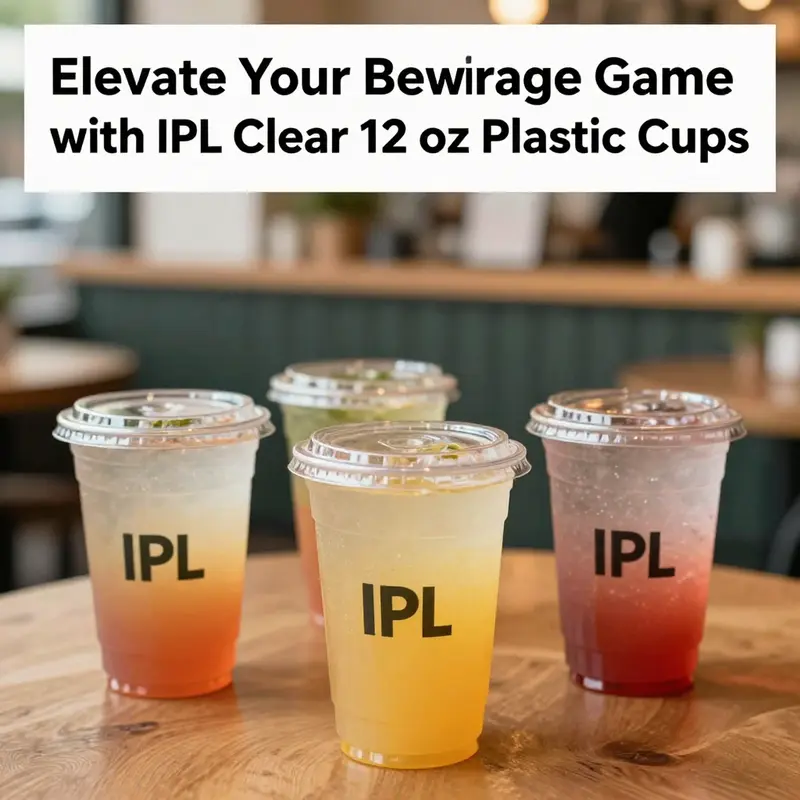
The IPL Clear 12 oz Plastic Cups are redefining packaging solutions for beverage shops, restaurants, food trucks, and catering services. Adeptly designed and engineered, these cups encapsulate quality and functionality, perfect for both hot and cold beverages. The subsequent chapters will delve deeper into the specifications of these cups, explore their versatile applications, assess their economic benefits in food packaging, and discuss their environmental implications, providing a comprehensive understanding of why these cups are an essential choice for modern businesses.
null
null
Clear, Convenient, and Brand-Ready: The 12 oz Transparent Cup in Modern Beverage Service
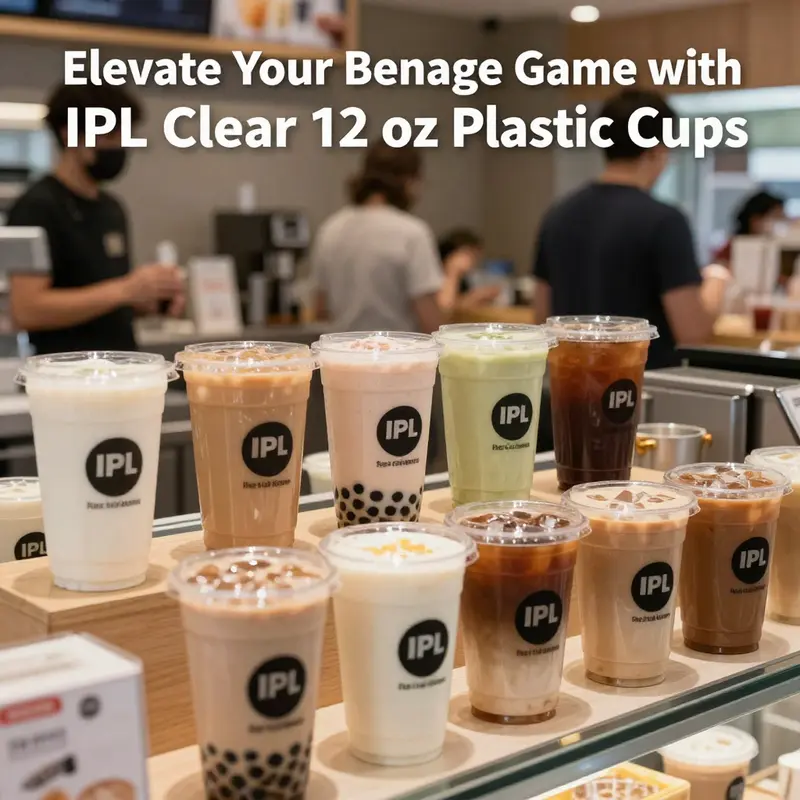
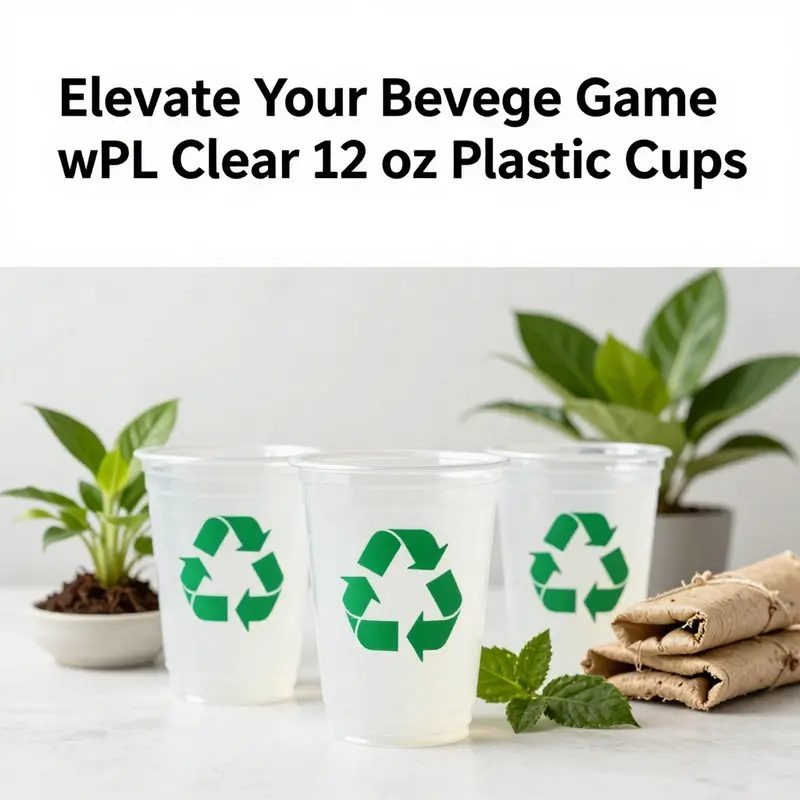
The 12 oz clear plastic cup is more than a vessel; in hospitality and event logistics it serves as a canvas for presentation, practicality, and moments of connection between a brand and its audience. The material, typically PET or an equivalent food-grade polymer, offers a visual clarity that highlights color, texture, and the dance of ice and toppings. It is this clarity that supports not just aesthetics but also the hygiene story customers increasingly expect: you can see through the cup, confirm contents, and trust the absence of foreign substances more readily than with an opaque alternative. Its lightness and resilience also make it a pragmatic choice for fast-paced takeout and mobile service where glass is impractical and more fragile in sun or wind.
What happens next in the narrative of these cups is less about what they hold and more about where they travel: from a cafe counter to a sidewalk stand, from a conference hall buffet to a family picnic. They ride in coolers and on hand carts, stacked in space-saving piles that minimize breakage and inventory stress. In these settings, the 12 oz size balances portion control with guest experience. It is large enough for generous cold drinks, yet compact enough to support healthy margins for operators who must manage throughput and timing. The cups are known for leak-resistant performance when used with appropriate lids and seals, resisting drips in outdoor environments where wind or busy hands can otherwise create a mess. The combination of a dependable seal with a clear vessel reinforces trust with customers who want to see what they are purchasing and how much they are receiving. It is a quiet but meaningful signal that a brand has considered user experience at every touchpoint.
The materials story behind these cups deserves attention: PET, widely used for cold beverages, is light and clear, with rigidity that helps resist deformation when filled with liquids and ice. That rigidity supports security in handling, stacking in back of house, and compatibility with standard cup dispensers. The cup’s structural integrity helps maintain beverage quality from the moment ice meets liquid to the moment a customer lifts and sips. While PET cups excel with cold drinks, they are not designed for microwave heating; this reality operators should communicate at the point of sale to avoid unsafe use.
A key facet of the cup’s appeal is versatility across environments: in cafe or fast casual settings the cup supports a takeout model that emphasizes speed, cleanliness, and predictability. The clear surface invites branding that is subtle and effective; logos or seasonal graphics can be applied to the exterior surface through a variety of customization options, turning an ordinary cup into a portable marketing channel. The simple geometry of a cylindrical transparent cup creates a forgiving surface for printing or wrapping, and because the cup is clear any art stands out with high legibility as the beverage remains the star of the visual story. In many cases, the branding strategy uses the cup’s visibility to reinforce a brand identity during takeaway moments and social sharing.
Beyond the cafe, the cup’s role expands to events that require practicality and a touch of sophistication. For catered receptions or weddings, a disposable transparent cup offers a modern aesthetic that can be harmonized with decor and lighting. The ease of disposal supports logistics and faster turnover, and the clean canvas allows for promotional graphics or sponsor logos integrated into the event design. The cup becomes part of the guest experience, enabling a smooth flow from reception to mingling to tasting stations.
In branding and promotions, the transparency of the cup becomes a tool for narrative consistency: a beverage’s color and texture become the focal point, while the cup acts as a stage for brand promises such as quality ingredients and precise preparation. Customization ranges from simple single-color logos to more elaborate color-depth effects that complement the drink’s color profile. The result is a promotional item that travels reliably through busy service lines, is presentable for gifting at events, and can adapt to different beverages and marketing messages over time. This makes the cup a strong option for cafes with seasonal menus, hospitality brands launching promotions, or event organizers seeking consistent branding across touchpoints.
The practicality and aesthetics of the 12 oz clear cup intersect with sustainability and responsible consumption. While disposable by design, these cups are recyclable depending on local programs and infrastructure. Operators should stay informed about regional recycling guidelines and ensure lids and beverage remnants are removed prior to disposal to maximize recyclability. Many buyers also weigh environmental impact in procurement, balancing cost per unit with lifecycle considerations such as recycle rates, supplier stewardship, and waste management practices. Choosing cups that separate easily from lids or selecting suppliers who provide guidance on end-of-life handling helps reduce impact and strengthens a brand’s narrative around responsibility.
For vendors, caterers, and facilities managers, the operational realities of stocking and using 12 oz clear cups emphasize efficiency as much as experience. The cups’ light weight and universal compatibility with standard lids and straws help streamline inventory and service protocols. For large events or seasonal peaks, operators rely on predictable unit counts, consistent quality, and straightforward replenishment, reducing spillage and enabling a smoother service flow in crowded or outdoor environments.
To illustrate a typical workflow, a guest orders a cold beverage and chooses a standard lid and straw. The cup’s transparency shows the drink’s color and texture, reinforcing care and quality. The lid seals to prevent leaks during transit, and the straw offers convenient sipping on the go. If a promotion is running, branding on the cup can be updated to reflect a season or partner collaboration, turning every beverage into a subtle brand moment.
In sourcing terms, the 12 oz clear cup standardizes across locations, enabling consistent packaging and easier training. The ability to customize with logos or graphics adds value without complicating logistics. When evaluating suppliers, operators consider cost per unit, lid compatibility, environmental profile, and the potential branding return on investment. The result is a practical, scalable vessel suitable for a small neighborhood café or a large event program.
For readers curating content or planning brand-led promotions, this chapter shows how a simple cup can shape consumer perception and operational efficiency. The visual simplicity invites drinks to be the focal point, not the container, and signals that the product is clean, transparent, and aligned with stated standards. In moments as brief as a few seconds, the 12 oz clear cup proves itself as a foundational element in a modern beverage program, supporting good design, efficient service, and responsible consumption without adding complexity for operators or guests.
Internal link: For a practical example of how a disposable clear plastic cup can support event-based needs and branding opportunities, see a supplier-focused resource detailing customization options and usage scenarios in party and catering contexts.
External resource: For a broader understanding of product customization and packaging solutions from international suppliers, this reference on logo-ready clear beverage cups can be explored: https://www.alibaba.com/product-detail/95mm-Custom-Logo-Clear-12-14-Oz-Desert_1600387711437.html?spm=a2700.1.wishlist.1
Clear 12-Ounce Cups in the Food Packaging Landscape: Economics, Compliance, and Competitive Advantage
The humble clear cup, holding everything from ice-cold beverages to ready-to-consume desserts, sits at the crossroads of cost, risk, and customer experience. Its economic footprint extends beyond a sticker price on a case of cups. In modern food packaging, the choice of a 12-ounce clear cup is a decision that echoes through procurement strategy, operations planning, and brand perception. The chapter that follows treats this cup not as a disposable commodity but as a strategic asset whose economics ripple across supply chains, regulatory frameworks, and market competition. To understand its impact, it helps to look at three intersecting dimensions: how cost structures and logistics shape day-to-day efficiency, how sustainability and compliance redefine risk and opportunity, and how manufacturing scale and branding dynamics convert material choices into long-term value. The story is less about a single product and more about the ecosystem in which a clear 12-ounce cup operates, an ecosystem that increasingly rewards consistency, traceability, and responsible sourcing as much as it rewards price per unit.
A first look at cost structures reveals a simple truth: volume matters. When buyers purchase in bulk—such as cartons containing thousands of cups—the per-unit cost falls, and the economy of scale lands squarely in favor of large-volume users. For operations that serve catering, large-scale events, coffee chains, or beverage service, bulk formats reduce the frequency of reordering and shrink the total overhead tied to inventory management. In practical terms, a carton that contains a thousand cups translates into a familiar arithmetic: more cups per shipment, fewer shipments needed, and a lower chance of stockouts that disrupt service during peak hours. This arrangement also supports streamlined warehousing and faster replenishment cycles, which in turn smooth out cash flow and reduce the carrying costs of finished goods, especially for businesses that run tight margins on high-volume beverage programs.
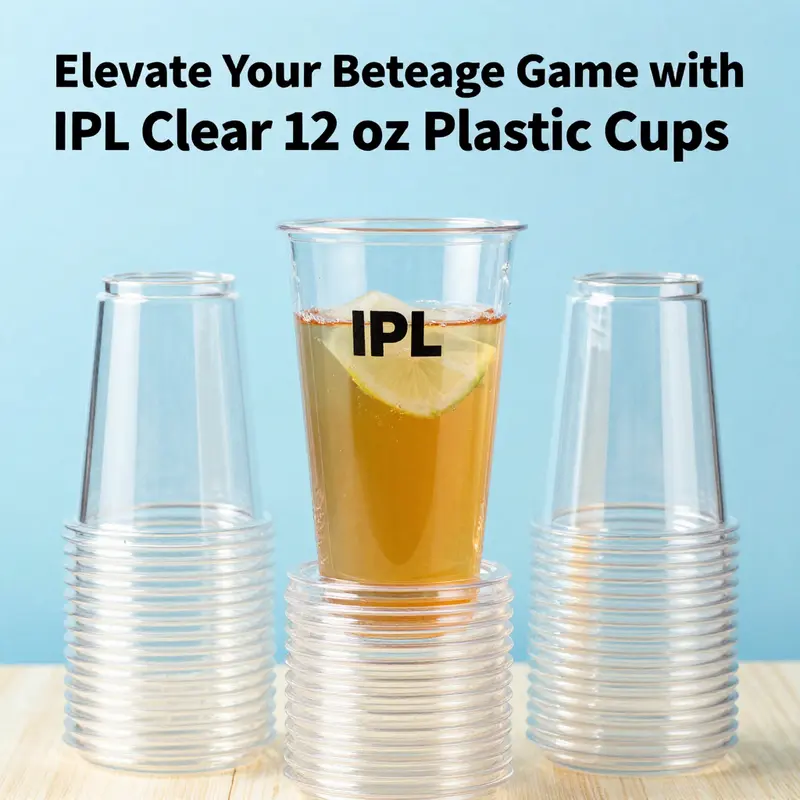
The logistics side of the equation often gets overlooked in a discussion about price per cup, yet it can be the decisive factor in overall profitability. When packaging is designed for efficient handling—stackable, light, and uniformly shaped—it yields easier palletization, better utilization of freight space, and lower risk of breakage during transit. A standardized 12-ounce cup that stacks predictably and ships with minimal packaging waste aligns well with modern warehousing practices. In many markets, distributors can consolidate orders more effectively when they stock units in uniform configurations, reducing the number of line items they manage per shipment. Those efficiencies accumulate across the supply chain, from the supplier’s manufacturing floor to the end-user’s loading dock, and they show up as reductions in logistics spend, inventory carrying costs, and even carbon emissions per unit delivered. The net effect is a leaner supply chain that supports faster response times, more reliable service, and better control over procurement budgets.
Beyond the arithmetic of cost and logistics lies the question of sustainability and regulatory compliance, which has become a core driver of the economic calculus around clear cups. In many jurisdictions, buyers increasingly favor materials that meet documented standards for recyclability, compostability, or reduced environmental impact. Certifications that attest to compostability, recyclability, or safe contact with food provide a form of risk management that can translate into long-term financial benefits. Brands leveraging certified materials often access green procurement programs, which can include preferential terms, tax incentives, or eligibility for public procurement that rewards sustainable packaging. More practically, the presence of a food-safety framework—such as adherence to FDA standards for materials intended for contact with food—helps minimize the risk of recalls and the associated costs of product withdrawal, brand damage, and operational downtime. A well-scoped compliance profile also strengthens a business’s ability to negotiate with suppliers who emphasize ethical and sustainable sourcing, creating a virtuous cycle: better suppliers contribute to more consistent product performance, and that reliability reinforces customer trust and repeat business.
In this sustainability framing, certification becomes a market differentiator. When a cup is produced from materials that carry credible third-party validation, buyers perceive lower risk in introducing that cup into a menu, a café’s daily service, or a large-scale event lineup. The economic advantage is not just avoidance of penalties; it is the ability to command a premium at the margin where customers are willing to pay a little more for assurance of safety and environmental responsibility. Moreover, regulatory dynamics are not static. As governments tighten standards, those who have invested in compliant, verifiable packaging systems may realize lower incremental costs than competitors who must retrofit processes later. In effect, early alignment with recognized standards reduces future compliance friction and the potential for costly retrofit projects, which can be especially valuable for businesses that expect to scale their packaging operations over time.
All these considerations hinge on the manufacturing backbone that makes mass production feasible. Modern injection-molding lines, automation, and in-house tooling enable suppliers to produce millions of cups each month with uniform dimensions, thickness, and finishes. The ability to scale production quickly translates into more stable pricing and shorter lead times for customers who require rapid ramp-ups around holidays, festivals, or promotional campaigns. When suppliers operate with tight quality-control regimes, waste decreases and yields improve. Fewer rejects mean lower material waste and less downtime spent reworking or replacing defective units—benefits that accumulate as lower overall production costs. In addition, in-house tooling supports faster turnaround on design changes, enabling brands to respond to evolving consumer preferences without destabilizing their supply chain. This capacity to iterate designs—whether it’s adjusting wall thickness, improving heat resistance, or refining transparency—can be a meaningful driver of long-term value because it reduces the cost of future product upgrades and keeps packaging aligned with brand standards.
The lifecycle costs tied to clear cups also hinge on performance characteristics that influence on-premises operations. Heat resistance, durability, and stackability are not merely technical specs; they shape how efficiently a business runs every day. A cup that maintains structure under heat and pressure reduces the likelihood of leaks and spills, which in turn lowers the costs associated with cleanup, customer complaints, and product loss. Stackable cups save space in storage, transport, and display, enabling more efficient use of limited counter space or back-of-house shelving. In environments where space is at a premium, even small gains in storage efficiency compound into meaningful savings across broad product categories. Additionally, the design aesthetics of a cup—clear visibility, smooth rims, and consistent transparency—play into consumer perception. In a marketplace where taste and presentation influence purchase decisions, the visual appeal of the cup reinforces a perception of quality and cleanliness, contributing to higher customer satisfaction and potential increases in average order value. While this is a qualitative benefit, it intersects with the hard economics of repeat business and brand loyalty, and it is frequently cited by operators as part of the justification for investing in higher-performing packaging materials.
A crucial element in the economic narrative is how cups fit within a broader packaging ecosystem. Takeout and food-service operations rely on a network of containers—boxes, lids, sleeves, and related disposables—that must work together smoothly. The compatibility of a clear 12-ounce cup with compatible lids and secondary packaging affects not only the cost of the ensemble but also the efficiency of service. When designers and buyers consider the full packaging ensemble, they benefit from fewer adjustments at the point of use, faster assembly times, and reduced risk of misfits that can cause delays or waste. This is where the value of a well-coordinated packaging strategy becomes tangible. The ecosystem approach supports uniform specifications across product lines, which helps operators forecast costs with greater confidence and reduces the likelihood of mismatches that disrupt operations during busy periods.
The narrative above is not complete without acknowledging that the economics of clear cups extend into branding and market signaling. The choice of cup material and its finish can convey a brand’s stance on cleanliness, sustainability, and innovation. For some operators, the opportunity to customize cups with logos or color accents is more than cosmetic; it’s a channel to reinforce brand identity during every drink experience. Customization options, by extending the lifespan of the packaging as a marketing asset, may command a modest premium but can also yield incremental revenue through increased brand recall and customer loyalty. In practice, the most successful packaging programs balance cost discipline with a deliberate branding strategy. By aligning the economic incentives of bulk purchasing, reliable supply, and scalable manufacturing with the strategic value of brand differentiation, businesses can pursue a packaging approach that strengthens competitive positioning without sacrificing profitability.
As the packaging landscape continues to evolve toward sustainability, efficiency, and consumer-centric design, the practical implications for cost and risk management become clearer. For operators, the key is not to optimize a single metric but to optimize the entire system: materials, manufacturing, logistics, compliance, and customer experience. The alignment of these elements reduces the total cost of ownership for packaging over its lifecycle and improves the predictability of performance in fast-paced service settings. It also positions businesses to respond to regulatory shifts and evolving consumer expectations with agility, rather than reacting piecemeal to isolated pressures. In this broader sense, the economic impact of clear 12-ounce cups extends beyond the price per unit. It shapes the speed, resilience, and market appeal of the entire operation.
For practitioners seeking practical anchors in this landscape, consider resources that translate packaging choices into actionable strategies. A recent example of how packaging ecosystems can be aligned with sustainability and operational efficiency is a resource that discusses eco-friendly, multi-compartment packaging options as part of a broader fast-food packaging strategy. This reference highlights the value of integrating cups with compliant, environmentally responsible packaging solutions to support brand integrity and regulatory compliance while maintaining cost discipline. You can explore such resources here: eco-friendly-disposable-3-compartment-food-grade-packaging-box-for-fast-food-high-quality-takeout-boxes-for-fried-chicken-french-fries-packaging.
In the broader market, suppliers who can demonstrate scalable production, credible sustainability claims, and transparent quality assurance tend to outperform peers who cannot. The combination of large-format carton packaging, robust manufacturing capabilities, and a credible sustainability profile reduces total cost of ownership while enhancing confidence among buyers and operators. This confidence translates into more stable demand, more predictable pricing, and the ability to plan capacity with reduced risk. It is this synthesis of efficiency, risk management, and branding potential that explains why the economics of a clear 12-ounce cup matter so much in the competitive arena of food packaging. The cup functions as a microcosm of the packaging system: a small, ordinary component with outsized influence on cost, reliability, and perception. As operators continue to optimize across the value chain, they increasingly see this cup not as mere disposables but as strategic levers that can unlock higher performance in service delivery, customer experience, and financial resilience.
External resource: https://www.alibaba.com/product-detail/FULING-1000pcs-ctn-12-oz-PET-plastic1601374956614.html?spm=a2700.galleryofferlist.pproductDetail.1.1a8c3d36RjvJUk
null
null
Final thoughts
Choosing IPL Clear 12 oz Plastic Cups not only embodies a commitment to quality and safety but also reflects a business’s dedication to meeting modern consumer demands. From their robust design to their versatile applications in various settings, these cups serve as a valuable asset in enhancing customer experience. As sustainability becomes increasingly vital, these cups also represent responsible choices in packaging, ensuring that businesses can thrive while caring for the planet. Elevate your beverage service today and reap the myriad benefits these cups offer.