
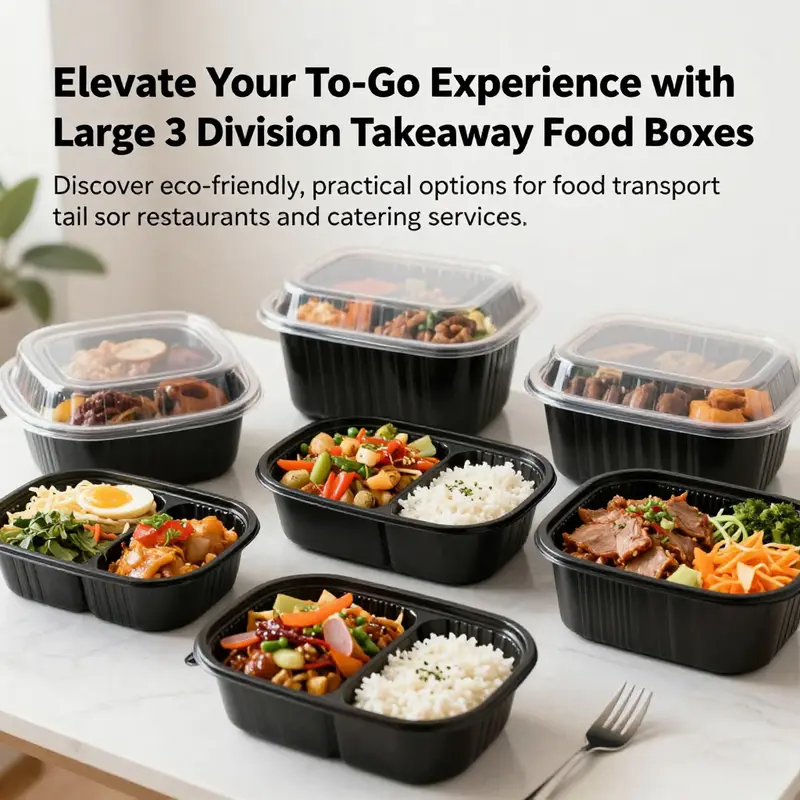
The demand for efficient and sustainable takeaway solutions has surged, especially among bubble tea shops, restaurants, and catering services. The Large 3 Division Takeaway Food Box emerges as a phenomenal choice, designed to meet the diverse needs of food delivery while promoting an eco-conscious approach. Each chapter of this article delves into different aspects of these containers, from specifications and user features to supplier insights and pricing strategies, all while underscoring their relevance to your business operations and sustainability goals.
How to Specify and Buy Large 3-Compartment Takeaway Boxes: Practical Requirements, Materials, and Sourcing Tips
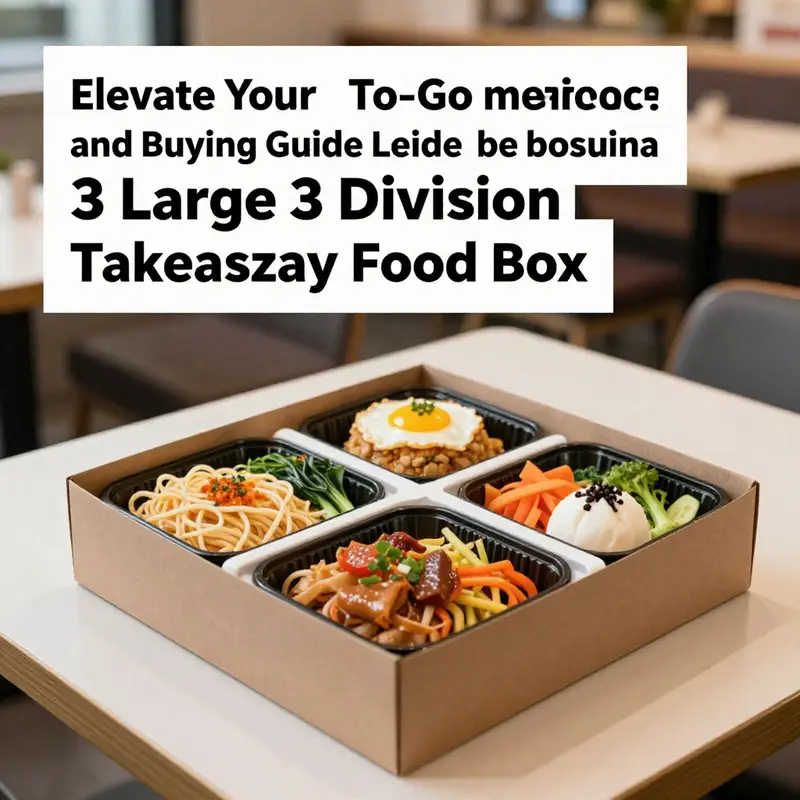
Core specifications and a practical buying guide
Selecting large, three-compartment takeaway boxes requires balancing capacity, material performance, sustainability goals, and supply-chain realities. Start with the plate-level requirements. A typical large three-compartment box is meant to hold a full meal—main, protein, and side—without mixing. That means each compartment typically ranges from 400–700 ml, and total capacity sits between 1,200–2,100 ml. These volumes suit lunch and dinner services, catering trays, and portion-controlled nutrition deliveries. Dimensionally, most designs fall near 25–35 cm long, 18–25 cm wide, and 6–8 cm high. Choose exact dimensions based on the most common menu items and stacking needs.
Material selection drives performance. There are three practical classes to consider: food-grade polypropylene (PP), plant-fiber alternatives like bagasse or cornstarch blends, and durable reusable metals such as #304 stainless steel. Each has trade-offs. Food-grade PP is widely used because it tolerates heat, survives microwave reheating, and resists oil and moisture. It suits frequent-use foodservice models where microwave convenience matters. Bagasse and cornstarch bring strong sustainability credentials: they are biodegradable and attractive to eco-conscious consumers. Note, however, not all plant-fiber boxes tolerate extended microwaving or very oily sauces; verify the supplier’s microwave-safety claims and temperature limits. Stainless steel offers longevity and a closed-loop reuse model, but requires different logistics for collection and sterilization.
Design details make the three-compartment concept viable in real operations. Look for fully independent pockets to prevent flavor transfer. High-performance options incorporate raised partition walls and slightly sloped corners for easy filling and cleaning. Leak resistance is crucial for saucy dishes; consider lids with silicone gaskets or sealed flange designs for long runs and delivery. Shape matters too: rectangular shells stack more efficiently, while rounded-division styles can elevate presentation for premium offers. Surface finishes—matte, gloss, or printed patterns—support brand positioning. Ask whether the supplier offers food-safe printing for logos and whether surface treatments are oil- and water-resistant.
Compliance and verification are non-negotiable. Request documentation for food-contact safety standards relevant to your destination markets. Common certifications include ISO 22000, HACCP, and third-party lab testing from agencies such as SGS or Intertek. For exports to the EU and China, ask about local food-contact standards and, if relevant, EU migration tests. When a supplier claims microwave compatibility, insist on laboratory validation and details of the maximum safe temperature and time.
Sample testing is essential before scaling. Always order prototypes in the exact material and with any custom print or coating. Run a field test that mimics the full journey: fill, close, stack, transport, and reheat under the conditions your customers will use. Evaluate leak integrity after simulated transit, reheat behavior in microwave slots, and the box’s dimensional stability under load. If you intend branded packaging, test printed samples for abrasion resistance and food-scent transfer.
Sourcing location changes the calculus. Manufacturing hubs in certain regions provide advantages. Southern manufacturing centers tend to offer higher volume capacity, lower base costs, and fast access to container ports. Other regions may be stronger on small-batch customization and premium eco-material expertise. Consider lead times: typical production windows for large orders range from 15–25 days in established facilities, while sea freight to Europe commonly adds 35–45 days. Plan orders at least three months ahead for seasonal peaks and new product launches.
MOQ and pricing structure affect feasibility for trials and rollouts. Minimum order quantities commonly sit between 5,000–10,000 units for standard lines, though some factories accommodate pilot runs at 1,000 units. Unit prices depend on capacity, material, and customization. Biodegradable plant-fiber boxes cost more than standard PP at small volumes, but scale brings reductions. When negotiating, factor manufacturing cost, printing setup fees, and shipping into the landed cost per unit. Long-term agreements unlock better pricing and faster response times. Ask suppliers whether they can amortize tooling or printing plates over multiple production runs to reduce per-unit cost.
Logistics and customs are frequently overlooked. Packaging must be declared with correct HS codes, and material composition affects tariff treatment. For compostable boxes, confirm whether compostability claims align with importing jurisdictions’ definitions. Also assess packaging density and palletization schemes. A supplier who optimizes carton size reduces wasted container space, lowering freight cost.
Quality-control measures protect your brand. Require a pre-shipment inspection and vendor-supplied photos of batch production. If possible, arrange third-party inspection for initial orders. Tests to include: dimensional checks, partition integrity, lid fit, stack weight capacity, and simulated transit leakage. For branded runs, proof and approval of print colors and placement should be in writing. Establish simple rejection criteria for visible defects and sealing failures.
Beyond the product itself, think holistically about application. Three-compartment boxes excel for Asian and Southeast Asian dishes, balanced meal plans, and multi-component fast-food combos. They help operators control portions and reduce on-site assembly. For sustainable brands, pairing compostable boxes with compostable cutlery and sauce cups builds a coherent customer message. A recommended addition is a lined sauce cup compatible with your box dimensions to prevent lateral leaks.
When selecting a supplier, favor direct manufacturers with scale and food-safety systems. Verify factory footprint and staffing to confirm they can handle repeat orders. Evaluate a supplier’s ability to customize color, print, internal ribs, and gasket systems. For design complexity or rapid iteration, seek factories experienced in automated forming machines and quick mold changes.
Finally, practical negotiation tips: secure sample approval in writing, negotiate price breaks by quantity bands, and lock lead times for seasonal runs. Ask for a small buffer stock option to avoid stockouts. Build a relationship that ties quality metrics to price incentives. Over time, joint product development can yield boxes that cut filling time, reduce waste, and increase average order value.
For a direct example of an eco-friendly option and to compare designs, review this supplier listing for an eco-friendly 3-compartment food-grade packaging box: eco-friendly 3-compartment food-grade packaging box.
For a concise guide to sourcing manufacturing partners and validating factories, see this external sourcing resource: https://www.supplychaininsider.com/articles/sourcing-china-food-box-manufacturers/
Beyond Convenience: How Large 3-Division Takeaway Boxes Shape a Greener Future for Food Service
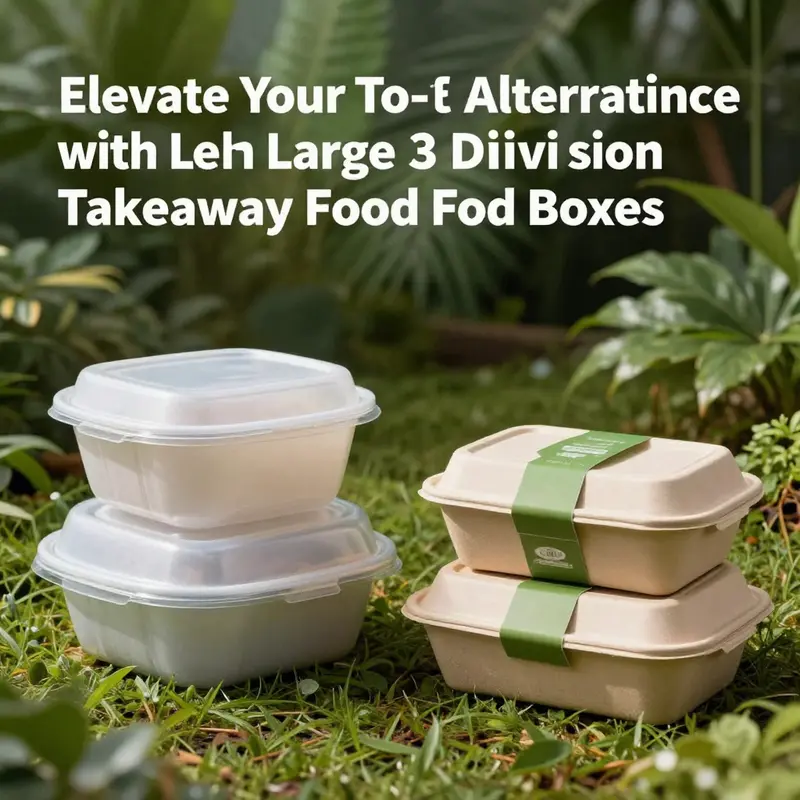
The rise of online ordering has reshaped how meals move from kitchen to curb, and with it the tools that carry those meals. The large three-division takeaway box sits at the crossroads of practicality and responsibility. Its design—dividing rice, protein, and vegetables in a single, pre-portioned vessel—addresses presentation and portion control while inviting restaurants and caterers to rethink waste, lifecycle, and customer expectations. The guiding question is not only how these boxes perform in transit, but what their material and manufacturing choices signal about sustainability, efficiency, and a future where packaging is treated as a strategic asset rather than a disposable afterthought. Buyers weigh more than price and capacity; they weigh the long arc of environmental impact, regulatory compliance, and reliability across countless hands, kitchens, and delivery routes.
Material choice is the most visible frontier. In practical terms, large 3-division boxes have evolved from simple single-use plastics to a spectrum of materials that balance functionality with ecological considerations. Reusable plastics such as polypropylene reveal a pathway that emphasizes lifecycle value: the ability to clean, reuse, and thus reduce cumulative waste. Yet for most high-volume takeout operations, single-use decisions still dominate daily procurement. That reality has accelerated interest in eco-friendly options derived from renewable feedstocks or biodegradable processes. Materials like bagasse, a fiber from sugarcane processing, or plant-based alternatives made from bamboo or wheat straw offer compelling advantages. They derive from rapidly renewable resources and can be engineered to mimic stiffness and heat resistance customers expect while minimizing a lasting footprint. The narrative of these choices is not simply about compostability; it is about how production, transport, and end-of-life handling align with broader sustainability targets, from reducing greenhouse gas emissions to closing the loop in regional supply chains.
Bagasse, in particular, has emerged as a standout through its practical balance of performance and cost. It originates as a byproduct of sugarcane processing, turning waste into value and reducing agricultural residue that might otherwise be burned or discarded. For operators, this translates into a packaging option that can handle hot foods without warping, while offering a composting pathway in facilities equipped to process it. The material’s behavior in real-world use—resistance to grease, stability in heat, and a clean, presentable surface—contributes to a positive dining experience. It’s not just about keeping meals contained; it’s about preserving the integrity of flavors and textures, which in turn reinforces a brand’s reputation for care and attention to detail. The environmental story deepens when suppliers of these boxes locate operations in regions with advanced manufacturing ecosystems, such as Zhejiang Province and its adjacent hubs, where precision molding, quality control, and scalable production converge. In these centers, manufacturers can deliver reliably consistent products at volumes that support fast-moving takeout channels, while maintaining compliance with international environmental and quality standards.
Sourcing considerations amplify the complexity of the decision. For buyers who operate on tight margins yet seek responsible packaging, the choice often hinges on a mix of cost-per-unit, lead times, and the transparency of the supply chain. Regions with integrated manufacturing networks offer advantages in both pricing and accountability. Domestic and near-shore production reduces freight-related emissions and helps ensure that standards are met with fewer linguistic or regulatory barriers. The chain from factory floor to customer doorstep becomes a line of sight where quality assurance, material composition, and post-consumer handling can be tracked and verified. In this landscape, the three-compartment design supports a streamlined logistics flow: a single box to carry multiple components, fewer separate containers, and reduced risk of leaks or mix-ups that can occur when foods travel in multiple packages. Real-world efficiency thus translates into fewer returns, less waste, and a smoother customer experience—an ecological and economic alignment that is increasingly valued by diners and operators alike.
From a business perspective, the economics of scale play a decisive role. The transition to sustainable options often intersects with pricing strategies and supplier relationships. For instance, bulk purchasing can bring unit costs down while enabling procurement teams to meet sustainability targets without compromising margins. The ability to secure a favorable price per unit at high volumes can accelerate the adoption of eco-friendly materials, particularly when those materials deliver performance parity with conventional plastics. This is not merely a cost-saving calculation; it is a strategic investment in brand differentiation. In a market where consumers are increasingly scrutinizing packaging choices, offering packaging that is perceived as environmentally responsible can become a differentiator that sustains customer loyalty, supports premium pricing where applicable, and aligns with corporate social responsibility goals. The economic narrative grows more compelling when manufacturers invest in vertically integrated operations that provide consistent quality, shorter lead times, and clearer certifications. In such ecosystems, buyers are not merely purchasing a box; they are securing a reliable partner that can scale with menus, promotions, and seasonal demand while maintaining a smaller environmental footprint.
Yet the path to sustainability is not a straight line. It requires careful evaluation of the end-of-life options for each material. Biodegradability and compostability hinge on local waste infrastructure, which varies across regions. In places where industrial composting is readily available, bagasse and similar materials can be diverted from landfills and reintroduced into nutrient cycles. In areas where such facilities are scarce, the advantage of compostable options may be tempered by practical realities. This is where the broader packaging strategy comes into play, combining packaging choices with a support system that educates customers on disposal and, where feasible, implementing return or recycling programs. In this sense the large three-division box becomes a touchpoint for a sustainability program, not merely a product. Its life cycle—manufacture, use, disposal, and potential reuse—mirrors the evolving expectations of a more responsible consumer base that sees every meal as part of a larger environmental conversation.
The supplier landscape, including manufacturers located in high-activity regions, plays a crucial role in shaping both quality and transparency. A reliable supplier can provide certifications, batch traceability, and documentation needed for audits and compliance with environmental standards. Buyers benefit from a transparent bill of materials and clear guidance on acceptable waste streams, which in turn informs restaurant partners about how to integrate packaging into their sustainability reporting. Platforms that connect buyers with vetted manufacturers increasingly emphasize environmental stewardship, offering filters for material type, compostability status, and regulatory compliance. The result is a more confident procurement process, where decisions about large three-division boxes are informed by robust data, practical performance, and a measurable environmental impact.
The interplay of design, material science, and logistical pragmatics converges in the real-world decision to choose a sustainable large three-division box. The functional advantages remain clear: the box preserves presentation, enables portion control, and reduces leakage risks during transport. The sustainability advantages hinge on material choices that can lower the overall ecological footprint, provided the supply chain is well understood and waste streams are managed effectively. For operators the takeaway is twofold: first, select packaging that matches the operational realities of your business—from kitchen prep to last-mile delivery—without compromising safety or experience; second, adopt an ecosystem approach that communicates values to customers, aligns with regulatory expectations, and factors in end-of-life management. When these elements align, the three-division design becomes more than a packaging option; it becomes a tangible expression of a brand’s commitment to sustainable practice, operational efficiency, and customer satisfaction.
For readers seeking a concrete reference on current eco-friendly options, a representative eco-friendly disposable 3-compartment packaging solutions that emphasize safety, microwave compatibility, and renewable-material foundations. This emphasis on practical performance alongside environmental stewardship helps businesses see how packaging decisions can reinforce menu quality and brand trust. To explore a related example, see the internal resource linked here: eco-friendly disposable 3-compartment food-grade packaging box. This anchor provides a jumping-off point for evaluating comparable designs and material families, while preserving the broader narrative that a box is not merely a container but a component of a holistic sustainability strategy. As the chapter closes, the focus shifts to how this philosophy translates into supplier selection, cost structures, and the everyday choices that determine whether takeout packaging becomes a modest expense or a strategic investment in a more responsible future. The next steps for operators involve mapping their packaging goals to supplier capabilities, validating material claims, and aligning with customer expectations that increasingly favor packaging choices that honor both taste and the planet. External resource: https://www.alibaba.com/product-detail/Eco-Friendly-3-Section-Bamboo-Bagasse-Recycled_1601247859565.html
Three-Compartment Confidence: How Large Takeaway Boxes Redefine Service, Sustainability, and Speed
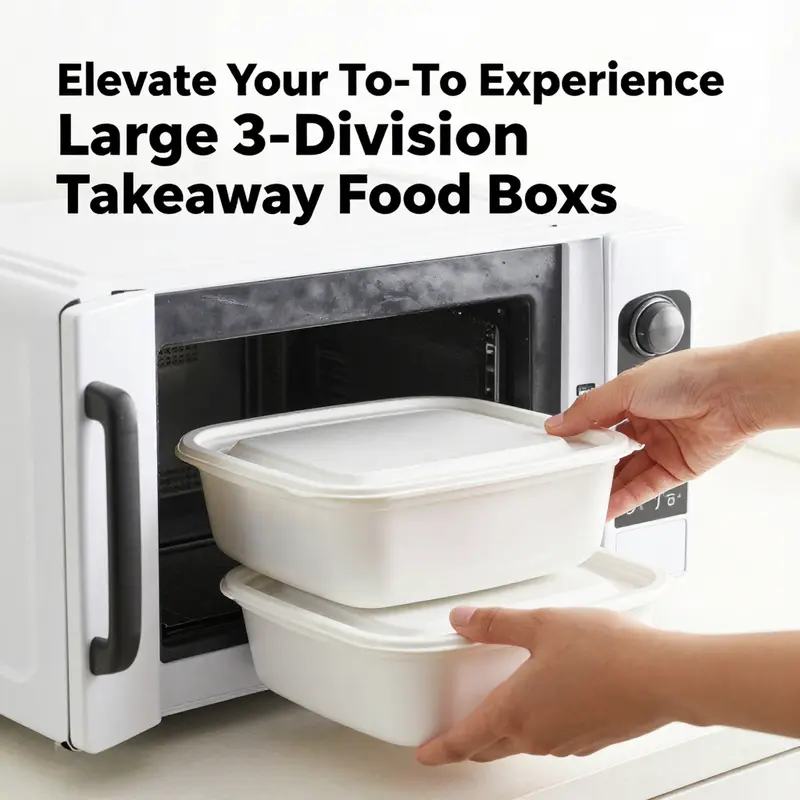
In the evolving world of food service, the tools a business chooses to transport meals can shape customer perception as much as the flavors on the plate. Large takeaway boxes with three distinct compartments have emerged as a practical and strategic response to the growing demand for efficiency, hygiene, and environmental responsibility. They are not merely containers; they are design systems that influence how a kitchen stacks its offerings, how a courier handles a delivery, and how a diner experiences a to-go meal long after it leaves the restaurant door. When a box provides generous space for a main course, a side, and a sauce or dip, it does more than keep items from mingling. It preserves the integrity of the entire dining experience, from presentation to aroma, from temperature to texture, and from portion balance to ease of disposal. This holistic value becomes especially evident in high-volume settings such as midscale and fast-casual chains, where speed and consistency must be reconciled with care for the guest’s taste and preferences. The three compartments are not merely partitions; they are deliberate design choices that prevent cross-contact of flavors, minimize moisture migration, and maintain the visual appeal of a meal. A thoughtfully scaled interior supports a range of cuisines—from richly sauced entrees to crisp, delicate sides—without crowding or squeezing portions into awkward spaces. The result is a more reliable to-go experience. The same logic applies to family-style orders and meal-prep services, where portions may be generous and customization is common. A well-conceived large, tri-compartment box accommodates varied plates in one package, reducing the need for multiple containers, which in turn simplifies inventory, storage, and distribution for operators. This streamlined approach translates into real-world benefits: fewer spillages during transit, less time spent re-packaging at pickup, and improved accuracy in order fulfillment. It adds up to measurable improvements in customer satisfaction and operational efficiency, two pillars of a resilient takeout strategy. The user experience is central to these gains. The container must feel sturdy in hand yet lightweight enough to be manageable for staff and drivers. A leak-proof lid is non-negotiable; it guards against oil, sauces, or soups escaping and staining bags, a frequent source of negative reviews. The compartments themselves should be proportioned to accommodate a broad spectrum of items. An overly cramped division can make utensils an afterthought or force chefs to juggle portions between compartments, eroding the intended separation of flavors. Conversely, excessive space can encourage wasted air, leading to heat loss and a less satisfying reheating outcome. Alongside size and seal integrity, the box’s material composition matters as much as its geometry. Materials that are biodegradable or compostable appeal to a growing cohort of operators and customers who want responsible packaging without compromising performance. Some models harness plant-based fibers, such as sugarcane bagasse, to deliver strength and heat resistance while remaining compatible with composting streams. Others lean on bio-based polymers derived from corn starch or similar feedstocks to offer a balance of rigidity and flexibility. In practice, this translates into a packaging option that can withstand microwaving, a common expectation in modern lifestyles. The capacity for reheating within the same container is a practical convenience. It eliminates the need to transfer food into a separate dish, reducing the risk of spills and scalds during transit. For households that reheat leftovers, a microwave-safe, three-compartment box becomes a reliable, reusable-like experience—one that respects both the culinary integrity of the meal and the consumer’s time. Design aesthetics, too, play a quiet but meaningful role. Clean, minimalist lines project a sense of modern efficiency that resonates with contemporary branding. Some providers offer customization options that allow operators to print logos or branding elements on the box, turning the container into a mobile signboard for the restaurant’s identity. In a market where first impressions matter, a box that looks cohesive with a brand’s visual language reinforces trust and quality. Yet the story of these containers stretches beyond aesthetics and usability. They are rooted in supply chains that connect kitchens to customers across global markets. In many regions, large-scale manufacturing centers in coastal provinces support the scale these boxes demand. High automation, rigorous quality control, and adherence to international food-safety standards help ensure that each box performs consistently—from the warehouse floor to the back of a delivery vehicle. Operators considering these boxes must weigh logistics as carefully as material choice. The production lead times, shipping routes, and import regulations can shape not only price but also availability, especially for restaurants that operate across borders or rely on tight restocking schedules. The economics of scale reinforce the case for larger purchases. While unit prices may appear modest on smaller orders, bulk procurement unlocks meaningful savings that can tilt a purchasing decision in favor of such a system. The principle is straightforward: larger volumes reduce the per-unit cost and improve predictability in budgeting. For operators, this translates into the opportunity to reallocate resources toward other facets of the dining experience, such as menu design, packaging aesthetics, or service speed, without sacrificing margins. In practice, the choice of a three-compartment box is also a gateway to broader sustainability goals. By consolidating multiple portions into a single, well-structured container, businesses can reduce the number of separate packages required for a given order. Fewer items in transit translates to less packaging waste, lower shipping weight, and reduced environmental impact—an alignment with consumer expectations that increasingly favors responsible practices. The environmental narrative is further reinforced when the materials themselves are selected with end-of-life in mind. Biodegradable and compostable options offer pathways for responsible disposal in markets with established composting infrastructure. Even in regions where composting remains a developing sector, the recognition that a packaging choice can minimize landfill burden resonates with customers who are mindful of their environmental footprint. While the tri-compartment design answers practical concerns, it also invites culinary creativity. Chefs can curate menus that celebrate distinct components within a single package, elevating the perception of value. For example, a lean protein, a hearty grain or starchy side, and a crisp salad or sauce can each occupy its own space, ensuring that textures stay intact from kitchen to consumer. The result is a more predictable flavor experience for the diner and a more controllable food presentation for the operator. As with any packaging decision, one must balance performance, sustainability, and cost. The optimal choice will vary with cuisine type, service model, and operational capacity. For some businesses, a rapid-heat, three-compartment solution that emphasizes durability and simple branding may be the best fit. For others, a higher-end box that prioritizes material science and extended shelf-stability could align with a premium dining strategy. In every case, the emphasis rests on how well the container integrates into the broader service workflow. It must be compatible with the kitchen’s prep cadence, the delivery’s routing, and the consumer’s post-purchase routine. The design should invite a seamless handoff—from the pass window to the courier, from the doorstep to the table. For readers seeking a concrete example of current offerings in this space, a representative category page highlights the range and features discussed here. This accessible entry point demonstrates how the three-compartment concept translates into real-world packaging choices, including ergonomic handles, secure latch systems, and the ability to withstand everyday handling without compromising integrity. While no single option fits every operation, the overarching pattern remains clear: three-compartment, large-capacity takeaway boxes provide a versatile, efficient, and increasingly sustainable solution for modern foodservice. They support differentiation through presentation, reliability through construction, and responsibility through material selection and end-of-life considerations. For businesses ready to explore this avenue, the path forward involves aligning material preferences with regulatory expectations, evaluating supplier capabilities, and testing prototypes within the actual service environment. In doing so, operators can move from theoretical benefits to tangible outcomes—better meal presentation, fewer spillages, more consistent reheating, and a packaging footprint that resonates with today’s values. As restaurants and caterers continue to evolve their to-go offerings, the three-compartment box stands as a quiet but enduring enabler of better service, cleaner operations, and a gentler environmental trace. By choosing a design that seats main dishes, sides, and sauces in distinct but harmonious spaces, foodservice providers can deliver an experience that feels both practical and premium, no matter the setting or the scale of operations. For readers exploring further context on current packaging options and practical procurement considerations, an industry listing provides a relevant reference point for the three-compartment format and its place in the market. eco-friendly takeout boxes for food packaging. External resource for reference: https://www.alibaba.com/product-detail/3-Division-Food-Box-999-1000-Pieces1601284587569.html?spm=a2700.galleryofferlist.normaloffer_list.1.6d4c3a7b8c7e2f&urlShowRelated=false
Finding Trusted Manufacturers for Large 3-Compartment Takeaway Boxes: A Practical Sourcing Playbook
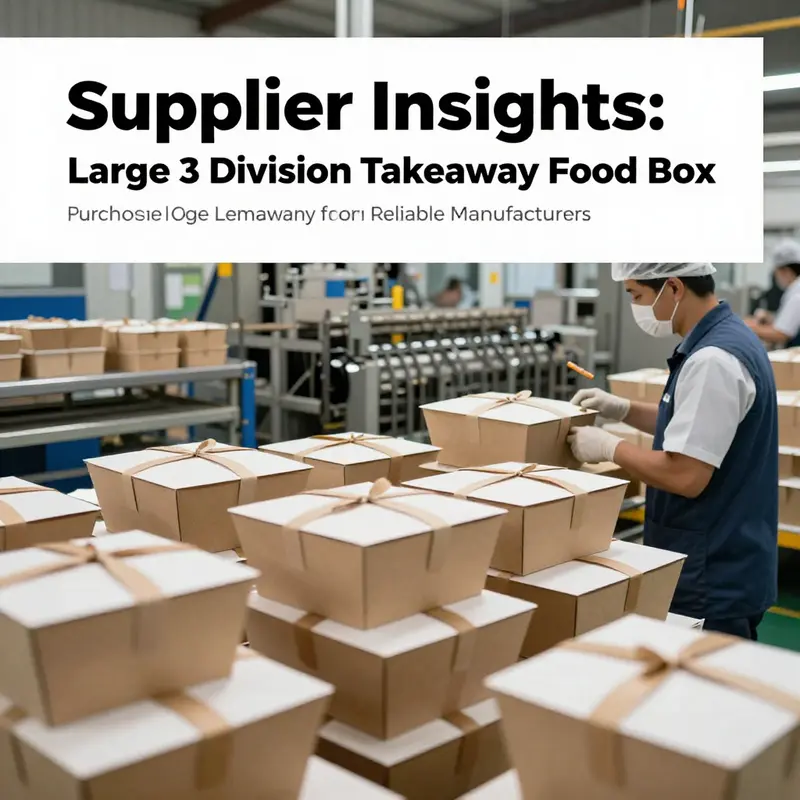
Sourcing strategy and manufacturer checklist
Sourcing large, three-division takeaway food boxes requires a focused strategy. Buyers must balance product quality, sustainability, cost, and reliable delivery. The right manufacturer will consistently produce 1200–1400 ml three-compartment containers that separate food neatly. These sizes support varied menus and improve presentation. They also let restaurants and caterers serve mixed meals without cross-contamination.
Start by prioritizing manufacturers with proven experience in biodegradable materials. Cornstarch-based options are now common. They biodegrade faster than many plastics and meet increasing consumer demand for greener packaging. Confirm microwave safety for the specific formulation. Microwave-safe cornstarch blends reduce the need for reheating transfers. This convenience cuts waste and lowers spill risks during transport.
Region matters. Guangdong’s manufacturing clusters are ideal for brands that need speed and customization. Facilities there often run advanced thermoforming lines and support complex molding and printing. They sit close to major ports, shortening export lead times. Zhejiang, particularly in market hubs, offers cost efficiency. It pairs competitive pricing with strong capabilities in biodegradable materials. Emerging provinces provide scalable capacity for startups testing new SKUs.
When vetting suppliers, look for direct manufacturers rather than intermediaries. Trading companies sometimes increase cost and reduce transparency. A mature factory footprint greater than 10,000 m² and more than 100 employees signals capacity for consistent orders. Request copies of certifications such as ISO, FDA, and relevant compostability or biodegradability accreditations. Certificates demonstrate adherence to standardized processes and legal compliance for food contact.
Samples and testing are non-negotiable. Ask for production samples of the exact three-compartment sizes you intend to sell. Test for structural integrity with hot and greasy foods. Verify microwavability through repeated heat cycles. Perform drop and stack tests to simulate transport. Also request migration and food-safety test reports from accredited third-party labs if possible.
Customization options influence supplier choice. Most buyers use three divisions to offer combo meals. Confirm a supplier’s ability to emboss logos, print menu details, or apply custom coatings that resist grease. Inquire about minimum order quantities for different customization levels. Tooling and mold costs should be transparent. Ask whether they provide free design support and proofing before mass production.
Quality control practices tell you how issues are prevented. Look for documented inspection plans. These should include incoming material checks, in-line visual inspections, and final random sampling. Request a supplier’s rejection and rework policies. Ask how they handle defective lots. A reliable manufacturer will accept responsibility for substandard batches and offer corrective actions.
Shipping logistics determine landed cost and delivery reliability. China-based factories near major ports reduce transit times. Still, calculate real-world lead times, not theoretical ones. Include production time, quality inspections, and booking delays when planning. Understand available shipping methods and costs for your geography. Air freight works for urgent, high-value shipments. Ocean freight remains cost-effective for bulk orders but adds sea transit time and port handling variables.
Pricing structure must be transparent. Expect higher per-unit costs for low volumes. Per-unit prices typically decline sharply with volume and can vary depending on material composition and finishes. For example, biodegradable cornstarch variants will often cost more than generic paperboard. Ask vendors for tiered pricing aligned to clear quantity breaks. Build a cost model that includes unit price, custom tooling, packaging, testing, and freight.
Payment terms and risk management should protect both parties. Negotiate payment schedules tied to milestones. Typical structures include deposits, production-based partial payments, and balance against inspection or shipping documents. Use secure payment channels. Consider third-party inspection or escrow arrangements for first-time suppliers. These reduce risk and increase accountability.
Regulatory compliance is crucial for international buyers. Confirm the boxes meet food-contact standards in your destination market. This includes migration limits and acceptable material lists. If compostability claims are made, request certifications from recognized bodies. Keep documentation for customs and for marketing claims. False environmental claims can cause fines and damage reputation.
Supply continuity and scale planning ensure you never run out of stock. Discuss lead time buffers and safety stock recommendations with your manufacturer. Plan for seasonal demand spikes and promotional runs. Ask about the supplier’s capacity expansion plans and alternative production lines. A robust throughput and contingency strategies minimize disruption.
Communication and cultural clarity reduce misunderstandings. Use clear specifications, technical drawings, and reference photos. State expectations for tolerances, thickness, and wall strength. Confirm language and response time standards before ordering. A supplier’s responsiveness often predicts their operational reliability.
Sustainability verification matters beyond buzzwords. Request lifecycle information, such as material sourcing and end-of-life disposal instructions. If a supplier uses cornstarch blends, check for verified industrial compostability or home-composting claims. Ask how the supplier minimizes production waste and whether they use renewable energy in facilities. These details influence both cost and brand integrity.
Finally, consider long-term partnership value. The best suppliers deliver consistent quality and scale with your brand. They offer proactive suggestions on material innovations and cost reductions. They also provide transparent documentation and reliable logistics. Start with a test order, validate through stringent checks, and scale orders in line with demonstrated performance.
For a product example that aligns with these specifications, review the eco-friendly disposable three-compartment food-grade packaging box product page to compare design and material approaches. For more detailed regional sourcing information and supplier comparisons, consult this industry sourcing guide: https://www.alibaba.com/suppliers/258746914.html
Balancing Price and Purpose: Cost Strategies When Purchasing Large 3‑Division Takeaway Boxes
Cost Drivers and Strategic Pricing Considerations
When planning a purchase of large three‑division takeaway boxes, price is only the most visible part of a broader cost picture. Materials, manufacturing scale, geographic sourcing, regulatory compliance, and logistics all push and pull unit cost. Smart buyers treat price as an outcome to manage, not a single metric to chase. This chapter explains the levers that shape final spend and shows how to weigh them to get consistent value while preserving quality and sustainability.
Material selection is the clearest place to start. Conventional polymers like polypropylene deliver heat resistance and microwave safety for hot meals. Those properties reduce customer complaints and returns, which lowers indirect costs. Biodegradable alternatives such as polylactic acid offer distinct sustainability benefits. Expect these to carry a material premium of roughly 15–25 percent, due to feedstock and processing differences. Paperboard and compostable paper options are gaining traction, but they often need moisture‑resistant coatings. Those coatings add cost and complexity, and can alter recycling or compostability claims. Choosing a material should follow a simple rule: match the packaging to the menu and the end‑of‑life goal. When reheating is common, prioritize microwave‑safe materials. When branding and sustainability matter most, accept a modest price premium and document your claims.
Scale matters more than most buyers realize. High‑volume manufacturers in major production regions can amortize fixed costs across hundreds of thousands of units. That lowers the per‑unit cost and shortens lead times. Production hubs that are vertically integrated and close to export ports tend to offer the best price stability. When a supplier can produce at high throughput, buyers gain leverage during negotiation. Minimum order quantities will be higher, but the unit cost drops significantly. For small operators, the decision is a tradeoff between cash outlay and unit economics. Low MOQs reduce upfront risk but often come with a noticeably higher per‑unit price. Larger orders unlock discounts and lower shipping cost per unit. A phased purchasing plan can help bridge this gap: place an initial medium‑sized order, confirm product quality, then scale to larger volumes to capture economy of scale.
Customization and finishing choices deserve close attention. Full‑color branding, bespoke compartment molds, or specialized lids increase the manufacturing complexity. Custom tooling and printing add one‑time setup fees and slower ramp times. For many buyers, selective customization is the optimal strategy. Reserve printing for hero SKUs or seasonal promotions. Standardize the base container across menus and vary only the inserts or labels. This balances brand impact against the recurring cost burden.
Regulatory compliance and certification are cost elements that pay long‑term dividends. Food‑grade certifications and compostability verification offer legal protection and build customer trust. Suppliers that provide documented compliance may command slightly higher prices. That premium should be evaluated against the cost of non‑compliance: rejected shipments, recalls, or fines. When serving regulated markets, insist on verifiable documentation for material safety and compostability. It reduces downstream risk and shields your brand.
Logistics and total cost of ownership (TCO) are often underestimated. Freight mode, storage, and handling add meaningful amounts to the landed cost. Ocean freight, customs duties, and inland transport must be included in budget calculations. Shipping lead times from major production centers can be reduced by choosing suppliers near key ports. That lowers expensive airfreight reliance during peak seasons. Plan for warehousing and the inventory buffer required to smooth production cycles. Inventory carrying costs, shrinkage, and damage all eat into margin. A detailed TCO model compares supplier quotes not only on FOB price, but on landed costs and the cost of capital for inventory.
Supplier selection and contractual strategy influence price stability. Long‑term agreements often secure better rates. Volume commitments give suppliers forecasting certainty, and buyers can use that certainty to negotiate price floors or caps tied to raw material indices. However, avoid locking into rigid contracts that hinder flexibility. Include clauses that address quality thresholds, lead time performance, and certificate renewal. Require periodic audits or sample runs to ensure ongoing compliance. Transparency about production capacity and contingency plans reduces surprise costs when demand spikes or supply chain disruptions occur.
Sustainability commitments require economic framing. Replacing conventional plastics with biodegradable options reduces environmental impact and supports marketing claims. But it can raise unit costs. Evaluate sustainability investments against tangible returns: higher price tolerance from customers, reduced waste fees, or eligibility for green procurement programs. Consider hybrid approaches: use compostable inserts with lower‑impact lids, or adopt reusable containers for delivery channels that support return logistics. The aim is to align packaging decisions with overall business strategy and to measure impact with useful KPIs, like cost per meal delivered or net promoter score improvements tied to sustainable packaging.
Negotiation tactics that work in this sector are practical and relationship focused. Request itemized quotes to see raw material, tooling, printing, and packaging breakdowns. Ask suppliers for sample batches to validate production claims and to benchmark rejection rates. Negotiate payment terms that offset cash burdens while keeping suppliers incentivized. For buyers ready to scale, explore co‑investment options in tooling to lower unit costs over time. Always include provisions for price renegotiation if raw material markets shift dramatically.
Risk management is an inseparable part of pricing strategy. Geographic concentration of suppliers creates exposure to regulatory changes and transport disruptions. Diversify sources across regions and maintain a secondary supplier for critical SKUs. Hold certified documentation from all suppliers and track certificate expiry dates. Finally, build realistic lead times into production plans. Faster replenishment may cost more, but it prevents emergency purchases at steep premiums.
A practical shopping approach is simple. Define the core functional requirements first: capacity, microwave safety, leak resistance, and desired end‑of‑life outcome. Evaluate materials against those requirements, and then compare suppliers by TCO rather than just unit price. Include hidden costs like certification, freight variability, and inventory carrying costs. Negotiate long enough to get volume discounts, but remain flexible to pivot between materials as market conditions change. Document everything so future procurement cycles are faster and more predictable.
Choosing the right large three‑division takeaway box is a strategic decision, not a one‑line cost item. When cost analysis includes materials, compliance, logistics, and long‑term supplier reliability, buyers find better value and reduce unexpected expenses. For an example of an eco‑focused three‑compartment option that balances functionality and sustainability, see the eco‑friendly disposable 3‑compartment food‑grade packaging box.
Further supplier listings and real‑time pricing data can be found here: https://www.alibaba.com/showroom/large-3-compartment-takeaway-food-box.html
Final thoughts
In conclusion, opting for large 3 division takeaway food boxes provides significant advantages, from enhancing food presentation and safety to addressing environmental concerns. These containers serve as versatile solutions that streamline food services, maximize convenience for customers, and align with sustainable practices. By considering the insights and guidelines outlined in this article, businesses can confidently adopt these innovative food boxes into their operations, ultimately leading to better customer satisfaction and environmental impact.