

Understanding whether you can microwave disposable plastic bowls is crucial for professionals in food service, catering, and event planning. With the rise in demand for convenient disposable packaging, knowing which materials are safe for heating can greatly affect food quality and customer satisfaction. This guide will explore the various types of disposable plastic bowls, focusing on health and safety concerns while also providing best practices for safely microwaving them. Each chapter will equip you with the knowledge necessary to make informed choices, ensuring a better experience for your customers and a safer environment for your team.
Microwave Myths and Safe Reheats: Decoding Which Disposable Plastic Bowls Are Actually Microwave Safe
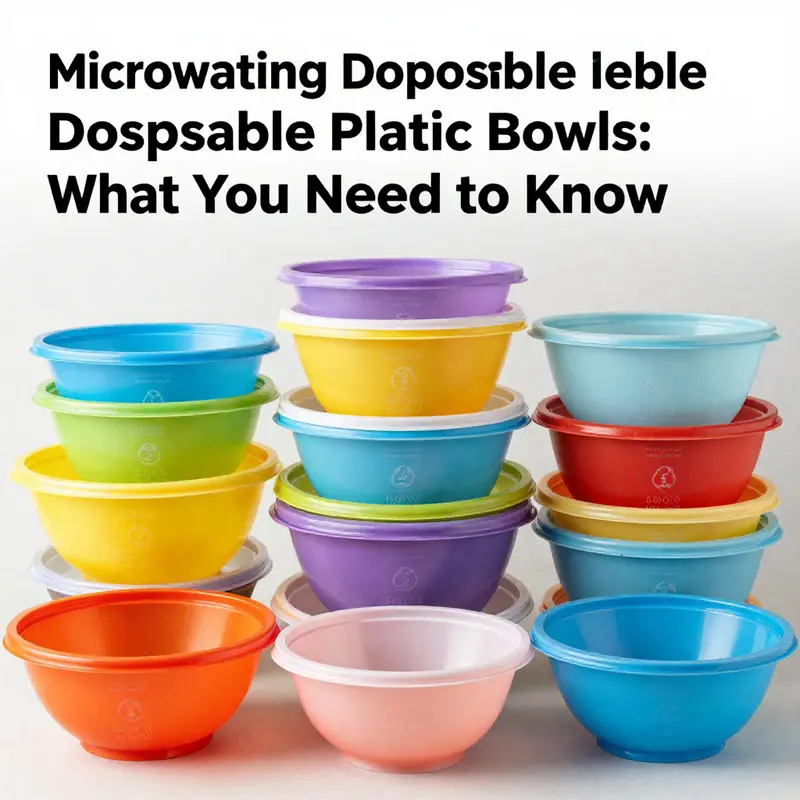
When the microwave hums to life and a familiar disposable plastic bowl sits on the turntable, a common question rises with the steam: can this bowl handle the heat? The short answer is nuanced and hinges on the type of plastic, not on the bowl’s ability to warm food in general. The science behind microwave safety rests on resin identification codes and testing that labels some plastics as suitable for heating, while warning against others that may warp, melt, or release chemicals at elevated temperatures. For most households, the practical takeaways start with one simple rule of thumb: only certain plastics, most notably polypropylene, should ever be considered for microwaving, and even then with careful handling. The rest should be parted with, transferred to safer vessels, or avoided altogether when reheating food. Understanding why comes down to the materials and the heating environment, but it also involves a careful reading of the labels and an awareness of the foods being reheated. In this way, a seemingly ordinary disposable bowl reveals a quiet square of kitchen chemistry, a microcosm of consumer safety where everyday visibility—labels, symbols, and the jump from cold to hot—guides prudent choices rather than blind trust in convenience alone.
The central determinant in whether a disposable plastic bowl can be microwaved is the resin identification code imprinted on the bottom. This system, which identifies the plastic’s chemistry, has practical consequences in a device that uses electromagnetic energy to heat contents from the inside out. Of the codes commonly encountered on disposable bowls, only one is widely considered safe for microwave heating: #5, polypropylene (PP). This material has a reputation for resilience under heat, tolerating temperatures up to about 120°C (248°F). That threshold is well above the point of boiling water and thus suitable for reheating many soups, sauces, and soft foods, provided the bowl remains in good condition and the heating is controlled. When you inspect a disposable bowl, the telltale sign you want is the number 5 inside the recycling triangle, or a label that explicitly states “Microwave Safe.” Either cue signals that the manufacturer tested the container for microwave use, at least within a safe margin. The emphasis is on testing and labeling that conveys a clear message to consumers, rather than assumptions based on the bowl’s appearance or the sense that all plastics can simply “go in the microwave.”
But even with #5 PP bowls, safety is not automatic or universal. There are important guidelines that govern the day-to-day practice of reheating, and following them can significantly reduce the chance of warping, melting, or chemical migration. First and foremost, always remove the lid before microwaving. Lids are often manufactured from different plastics—sometimes a less heat-resistant variant such as PS or PET. The lid’s heat resilience does not always match the bowl’s, and heating with the lid on can trap heat, cause pressure buildup, or melt the lid material and contaminate the food. This simple step prevents one common hazard: the lid itself becoming a source of melted fragments or degraded plastic that could leach into the meal.
Second, avoid high heat and long heating times. Even a robust #5 PP bowl has limits, and repeated exposure to intense heat can cause the container to warp or degrade over time. The goal is to reheat evenly and efficiently, not to push the material beyond its comfort zone. Medium or low power settings are often more forgiving, and shorter intervals allow you to pause and stir or turn the contents, ensuring that the heat is distributed without concentrating it at any single point in the bowl. The practical implication is straightforward: treat reheating as a controlled, iterative process rather than a single long burst of power. This approach also helps preserve the texture and flavor of foods that can become tough or split when heated too aggressively.
Third, be mindful of the food’s composition. High-fat or high-sugar items tend to heat more intensely and unevenly, which can cause localized hotspots inside the bowl. Oils and sugars can reach higher temperatures than the surrounding plastic might be comfortable with, leading to accelerated softening, deformation, or even degradation of the container’s surface. It’s safer to reheat soups, stews, or sauces that concern the boundaries of the material’s tolerance rather than greasy fried foods or highly sugary desserts that can escalate temperatures quickly. The objective is not to punish the user for choosing a disposable option, but to align reheating practices with the material’s safe operating range.
In addition to these precautions, always inspect the bowl for any sign of damage before microwaving. Cracks, warping, discoloration, or scratches are not merely cosmetic concerns; they can accelerate chemical leaching or alter the way heat is conducted through the plastic. A compromised bowl may fail at a moment when it is most needed, releasing unwanted residues or deforming in a way that makes handling hazardous or awkward. When in doubt, it is wiser to transfer the food to a safer vessel than to push a damaged container toward a risky outcome.
Beyond the narrow corridor of #5 PP, several other materials are explicitly discouraged for microwave use. PET, or #1, is common in beverage bottles and some takeout packaging but can deform and, more worryingly, release potentially harmful compounds when heated. The temperature threshold for PET is not compatible with safe microwaving in typical household settings. Polystyrene, labeled #6, is widely used in foam takeout containers and some rigid trays. When heated, it can break down and potentially release styrene, a chemical of concern. PVC, or #3, is not intended for food contact and can release toxic phthalates when exposed to heat. The category of #7, “Other Plastics,” includes a broad range of materials, some of which may contain bisphenol A (BPA) in older formulations. While newer variants exist that claim safety features, the precaution remains: avoid microwaving most “Other” plastics unless there is an explicit, tested clearance from the manufacturer that the entire product is microwave-safe.
The safer alternative to microwaving disposable plastics is often straightforward: glass or ceramic containers. These materials offer superior stability under heat, do not degrade in a way that would introduce microplastics or leach hazardous substances, and are generally reusable. The peace of mind that comes from using glass or ceramic is not merely about convenience; it is about minimizing repeated exposure to any potential contaminants that could migrate during heating. The difference is not only about safety labels but about the durability and long-term health considerations of everyday kitchen practices. Reheating in a glass or ceramic dish, even if it is a disposable-looking takeout-style container made of paper or fiber, reduces the risk that something undesirable might mingle with food as temperatures rise.
The label, then, becomes the most trusted ally in this decision-making process. A clear “Microwave Safe” emblem or a recognizable microwave icon on the packaging serves as a tangible commitment from the manufacturer that the container has undergone testing for the intended use. This is a reminder that not all symbols are equally informative, and that a careful consumer reads the entire packaging and, when in doubt, errs on the side of caution. The bottom line is practical: if a disposable bowl shows the #5 PP symbol and a microwave-safe label, it can be used for reheating with care. If either precaution is missing, the path forward is to choose a safer vessel. And if the food you plan to reheat is likely to demand intense heat or long exposure, even a PP bowl may not be ideal—consider refilling into a stable glass or ceramic dish before proceeding.
In the swirl of everyday kitchen decisions, it’s easy to underestimate how much the micro-scale of material science shapes a simple meal’s safety profile. The questions you ask before microwaving—What is the plastic? Is there a microwave-safe label? How much heat will this food require? Is there a lid involved? Is the container cracked?—collect into a practical framework that guides choices without turning the process into a ritual of anxiety. For the curious reader who wants to explore more about safe microwave containers in general, this resource offers a helpful look at a broader range of takeout and packaging options that claim microwave safety, including those made from alternative materials: microwave-safe takeout boxes.
Even with the most careful consideration of resin codes and safety labels, there remains an overarching message about consumer choice: prioritize the least hazardous option that still meets your needs. If you are reheating a small portion of soup or sauce, a PP bowl can be a practical choice when used correctly and within the recommended parameters. The decision gets more conservative as the complexity and quantity of the food increase or as the container shows signs of wear. When you move toward higher-risk categories or unfamiliar plastics, the safer route is clear—move away from potential leaching and toward materials with stable performance under heat. The ongoing conversation around disposable plastics and microwaving often cycles back to the same core advice: choose the right plastic, read the label, and respect the limits of heat. This approach doesn’t just reduce risk; it preserves the flavor and texture of reheated meals while protecting your health over time.
To bridge the practical with the perceptive, consider a habit of keeping a small checklist near the microwave: confirm PP or microwave-safe labeling, remove lids, avoid high-fat and high-sugar foods, inspect for damage, and if anything seems off, switch to a safer container. It is these small, consistent checks that transform a potentially risky action into a routine practice rooted in informed choice. The broader implication extends beyond one disposable bowl. It signals a culture of mindful heating, where the materials we choose—and the labels we trust—play a decisive role in the safety of everyday meals. As you move through future chapters, you will see how this same awareness translates to other common kitchen materials and how it can inform choices about reusability, recyclability, and the environmental footprint of reheating foods in our modern kitchens.
External resource: For additional official guidance on food safety and microwave use, see the U.S. Food and Drug Administration’s resources on microwave safety and safe food-contact materials. https://www.fda.gov/food-safety
From Labels to Leaching: Navigating Health and Safety When Microwaving Disposable Plastic Bowls
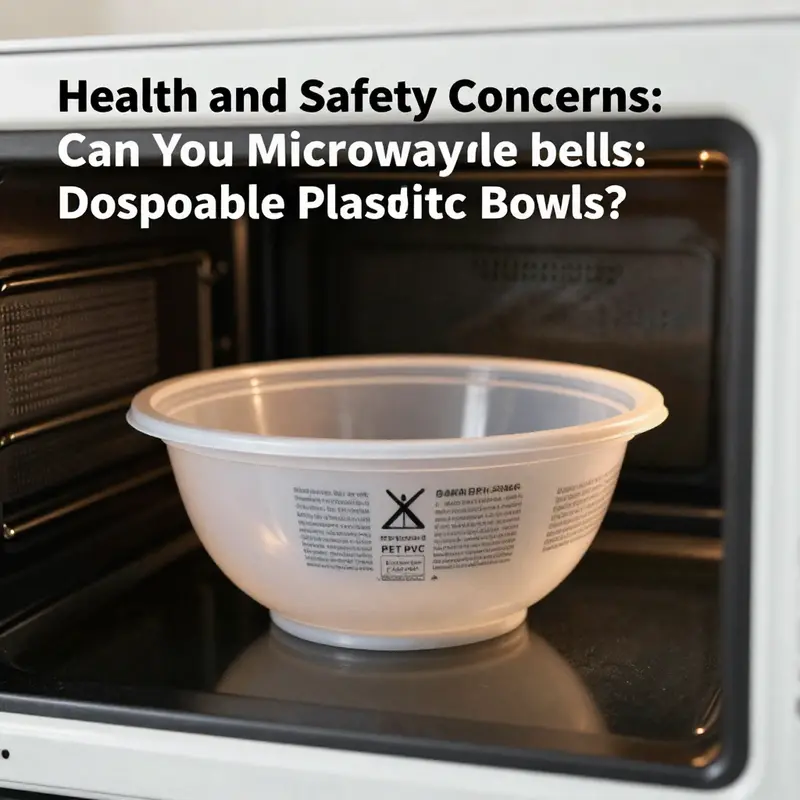
In kitchens around the world, the humble disposable bowl is a convenient ally for quick meals, leftovers, and easy cleanup. Yet when the microwave hums to life, the question shifts from convenience to caution: can these single-use containers withstand the heat without compromising safety? The short answer is nuanced, and it hinges on the material the bowl is made from, the presence of a credible microwave-safe label, and how the heating process is actually carried out. The science behind microwave safety in disposable plastics is not a single headline rule but a layered set of considerations that combine material chemistry, labeling practices, and real-world usage. When a bowl is explicitly marketed as microwave-safe, it has passed a test regime designed to assess both performance and potential migration of substances into food under typical reheating conditions. But that clarity can blur in the marketplace, where many containers are only loosely described, or where the label is absent altogether. In those moments, safety depends on a careful reading of resin type, labeling, and a prudent approach to heating practices that prioritize food safety and container integrity over speed alone. This is not merely a cautionary tale about plastics; it is a guide to understanding why a label matters, what it promises, and how to apply that knowledge in everyday reheating tasks.
The core of the question lies in polymer chemistry. Polypropylene, denoted by the resin code 5 (PP, sometimes seen with the number 5 inside a recycling triangle), is the plastic most commonly associated with microwave-safe performance in disposable bowls. Polypropylene is favored for its chemical stability and heat tolerance, which allows it to withstand temperatures well above the boiling point of water. In practical terms, this means a PP-based disposable bowl can handle the heat of a typical reheating cycle without visibly warping or transferring excessive heat to the food in a problematic way. Your confidence in microwave safety, however, should still rest on a clear label that confirms the material as PP and a certification that the product has undergone appropriate testing for food contact and microwave exposure. When such a label is present—often accompanied by a microwave-safe symbol—it signals that the container has been evaluated for its intended use and has met established safety standards. The presence of a number 5 symbol in the recycling code further aligns with this expectation, signaling PP as the resin in question and reinforcing the idea that this material is among the safer choices for quick reheating in a disposable format.
Colloquially, that is the line between permissive use and risk: the material and the certification. Other plastics commonly used in disposable bowls, such as PET (1), polystyrene (PS, 6, including foam PS), and PVC (3), carry different risk profiles when heated. PET is not typically chosen for heat exposure because while it can be stable under some circumstances, it has a greater tendency to deform or leach under higher temperatures, particularly when the food contains fats or oils. PS, especially foam variants used for cold foods, can soften and even release styrene-related compounds when exposed to heat, making it less suitable for hot meals or any reheating. PVC can release phthalates and other additives when heated, raising concerns about chemical migration into food. These constraints are not mere theoretical concerns; they translate into practical guidance for anyone hoping to reheat food in disposable containers. If a bowl is made from one of these plastics and lacks a microwave-safe certification, the conservative choice is to transfer the food to a different vessel before heating. The goal is to avoid warping, melting, or chemical transfer that could compromise flavor, texture, and safety.
The labeling landscape adds another layer of complexity. For most consumers, the reliable signal is a clear “Microwave Safe” designation or the presence of a recognized microwave symbol. A bottom-of-container label that explicitly states this status is a proxy for the tests the container has undergone. Those tests typically assess how the container behaves under heat, whether it warps or melts, and whether there is any measurable migration of substances into the food at standard reheating temperatures. It is not a guarantee that every food scenario will be perfectly benign, but it does provide a reasonable boundary within which reheating can occur without undue risk. And even with microwave-safe labeling, there are caveats. For instance, using a lid that isn’t microwave-safe or fails to vent properly can create pressure and steam buildup, which increases the risk of spills or deformation of the container. In practice, this means that while the bowl itself may be safe, the accessory components—lids, seals, or vents—require separate verification of compatibility with microwaving. These nuances illustrate why a blanket rule—“you can microwave any disposable plastic bowl”—is not accurate. The real rule is more precise: microwave safety applies to containers labeled as microwave-safe, made predominantly from PP, and used in accordance with the manufacturer’s guidelines.
A further layer of nuance concerns what happens during microwaving beyond safety labeling. Even a microwave-safe PP container is not a license to heat indefinitely or at maximum power. Short bursts of heating with moderate power help keep temperatures within a range where the plastic remains stable and the food heats evenly. Prolonged exposure, especially at high power, can gradually increase the risk of deformation or the migration of migrants, even from PP, though at a significantly lower rate than with less stable polymers. This is particularly relevant when heating fatty or sugar-rich foods, which can influence the migration dynamics of additives and residual processing agents. It also matters when containers are reused or subjected to repeated heating cycles over time; disposable bowls are designed for single-use or minimal-use scenarios, and their performance can degrade with repeated exposure to heat, washing, or abrasion. In everyday practice, treating disposable microwave-safe bowls as single-use conveniences rather than long-term cookware is a practical approach that aligns with the engineering and safety assumptions behind their design.
The ethical and practical implications of these choices extend beyond personal convenience. Consumers deserve clarity about what they are using to reheat meals, especially given that some products emphasize performance with marketing language that may obscure the limitations of the container. Transparent labeling and third-party testing provide a more reliable signal than marketing claims alone. That transparency is increasingly tied to supply chain practices that reassure buyers about food-grade quality and the integrity of the materials from which containers are manufactured. The source of the polypropylene and the presence of strict testing conform to these expectations. In some instances, manufacturers highlight food-grade testing and microwave-safe certification as part of a broader commitment to safety and performance. When this is done with care, it helps bridge the gap between consumer intuition and technical reality—between the desire to reheat quickly and the necessity of maintaining food safety and container integrity.
To help consumers translate labels into safe practice, practical steps become essential. First, always check the label before placing any disposable bowl in the microwave. The safest path is to select a container that clearly bears a microwave-safe symbol or a statement of microwave suitability, ideally accompanied by a resin code that identifies PP (#5). If the resin code is 5 and the labeling confirms microwave safety, the risk calculus tilts toward caution being managed by design: the material has been chosen for stability under heating and tested for contact with food. Second, be mindful of lids and venting. Lids may not share the same safety profile as the bowl itself, and even when they are labeled microwave-safe, the heat and pressure inside can cause warping if the vent is blocked or if the lid materials are not intended for microwave use. If a lid is involved, ensure it is designed for microwave heating and that any venting mechanism is unobstructed. Third, consider the context of heating. Reheating times should be short, and the power setting should be moderated to prevent overheating. A few seconds at a time, with short intervals, can reduce the chance of localized hotspots and reduce the likelihood of warping or chemical migration. Fourth, inspect the container before use. Old, cracked, or discolored containers should be avoided because structural compromise can accelerate heat-related failures or create micro-channels that worsen leaching. And fifth, when in doubt, transfer to glass or ceramic. This is not a condemnation of plastics but a reminder that glass and ceramic are time-tested choices for high-temperature reheating and may offer a peace of mind that is sometimes worth the extra step.
In practice, the landscape of disposable microwave safety is not about absolutes but about informed choices. A container labeled as microwave-safe and made from polypropylene presents the most straightforward path to safe reheating among disposable options. It is not a universal pass for every scenario, but it is the best-supported pathway when you need a quick, single-use solution. This is where consumer trust intersects with material science: the label is a promise, and the material is the guarantee behind that promise. When manufacturers provide clear documentation of the material, its food-grade status, and its testing against microwave exposure, consumers gain a reliable frame of reference for their decision-making. Conversely, ambiguity in labeling or the absence of a credible certification should prompt a conservative approach—transferring the food to a recognized microwave-safe vessel rather than risking heat-induced deformation or chemical exposure.
The broader context of safety and labeling also points to a larger marketplace shift: the value of transparency in material sourcing and testing. Brands that publish their material lists, confirm the use of food-grade polypropylene, and reference third-party certifications tend to offer a more trustworthy reheating experience. They also often engage with suppliers known for their compliance with stringent manufacturing standards. In this sense, the conversation about microwaving disposable bowls becomes a conversation about trust—trust in the science of plastics, trust in the labeling, and trust in the testing that proves what heat will and will not do to a given container. Although the science can feel abstract, the practical implications are direct: a properly labeled PP microwave-safe bowl offers a predictable reheating experience, while unlabeled or misrepresented containers invite unpredictable outcomes, from warped shapes and leaks to the potential migration of additives into food.
For readers seeking concrete examples of how brands communicate safety and for insights into market practices, consider a recent industry overview that emphasizes new polypropylene-based disposable food containers with formal microwave-safe certification. While the specifics of individual brands are not the focus here, the underlying message is clear: when a company commits to food-grade testing and explicit microwave-safe certification, it signals a design intent that aligns with consumer safety expectations. In such cases, you can approach reheating with greater confidence, confident that the container’s performance has been evaluated under conditions that resemble real-world use. Still, even with such assurances, the general precaution remains valid: never heat non-microwave-safe bowls, never assume safety for all foods, and never rely on a single label alone to guide every heating scenario. The dynamic between material science, labeling accuracy, and user behavior is what ultimately shapes a safe and practical approach to microwaving disposable plastic bowls.
As a practical takeaway for households, a simple mindset can help. When you plan to use a disposable bowl in the microwave, confirm three things before you press start: (1) the bowl is made of polypropylene (PP) with a clear microwave-safe label, (2) the labeling is credible and supported by third-party testing, and (3) you are heating for a short time on a moderate power setting with the lid (if any) vented or removed according to the manufacturer’s instructions. If any of these conditions fail, shift to a glass or ceramic container. This approach not only protects against warping and chemical migration but also aligns with a broader precautionary ethic that values safe handling of hot foods and the integrity of the containers that hold them. With these guardrails in place, the act of reheating in a disposable bowl becomes less of a gamble and more of a measured, informed choice.
For readers who want to explore concrete product examples that align with these safety principles, one can look to manufacturers that emphasize new polypropylene material, food-grade testing, and microwave-safe certification as part of their product descriptions. The presence of a robust safety label, paired with a resin code of PP and a documented testing history, provides a clear signal that the container is suitable for microwaving under typical conditions. In the broader industry discourse, such transparency is increasingly seen as essential to helping consumers make safer, smarter choices in the kitchen. While the specifics of every product will vary, the overarching standard remains consistent: microwave-safe labels, PP-based materials, and verifiable testing are the best indicators that a disposable bowl will perform safely when heated.
In sum, you can microwave a disposable plastic bowl only if it is specifically labeled as “microwave safe” and is made from polypropylene (PP), ideally with a clear resin code of #5 and credible food-grade certification. If the container lacks this labeling, or if it belongs to other resin families such as PET, PS, or PVC, the prudent course is to transfer the food to a glass or ceramic dish before heating. Even with the right label, mindful use matters: avoid overshort heating cycles, skip non-microwave-safe lids, and replace any cracked or degraded containers. By holding fast to these principles, you preserve both the safety and the taste of reheated dishes, turning a mundane kitchen task into a reliable, science-informed action rather than a guessing game. With manufacturers increasingly signaling their commitment to transparency and safety through third-party testing and clear labeling, shoppers have more reliable signals than ever before. And for those who want to delve deeper into real-world product practices, consumer resources, and certification benchmarks, credible sources and industry references offer a clear view of how microwave safety is validated and communicated in the marketplace today.
For further exploration of a manufacturer’s approach to microwave safety in disposable bowls, you can check a related product page that highlights eco-friendly takeout packaging and microwave-safe performance. eco-friendly-takeout-boxes-for-food-packaging-stylish-food-containers-safe-microwave-craft-paper-lunch-boxes-leak-grease-resistant. This example illustrates how some suppliers communicate the combination of material choice, food safety, and practical usability in a single, consumer-facing package. It is not a universal guideline, but it demonstrates how the industry is moving toward clearer, more accountable messaging that helps shoppers make safer choices in the heat of daily life. The broader takeaway remains consistent: rely on credible labeling, prioritize PP with documented testing, and use glass or ceramic when you need to reheat or cook with greater certainty. Only in this way can the reheating ritual—often a small moment of convenience—be aligned with solid safety practices.
External reference: https://www.yangruiplastic.com/microwave-safe-disposable-plastic-bowls/
Heat, Labels, and Leaks: A Practical Guide to Microwaving Disposable Plastic Bowls

When you stand in front of the microwave with a disposable plastic bowl in hand, the question isn’t just about convenience. It’s about safety, chemistry, and whether the container will hold up under heat without altering the food you’re about to eat. The answer isn’t a simple yes or no, but a nuanced evaluation of the bowl’s material, its labeling, and the way you plan to heat the food. In this chapter, we move through that landscape—not with fear, but with clarity—so you can make an informed choice in the moment and preserve the integrity of your meal. The core issue is material compatibility. Plastic is a family of polymers, each with its own temperature tolerance and interaction with food. The most reassuring member of that family for microwave use is polypropylene, known in recycling codes as #5. Polypropylene, or PP, has a heat tolerance that exceeds the boiling point of water, reaching up to about 200°C (392°F). This means that, under the right conditions, PP-based bowls can withstand the heat of reheating without deforming or releasing a significant amount of chemicals. When a disposable bowl bears the recycling symbol with a number 5 inside it, the general guidance is that it is suitable for microwave use—provided the labeling and the condition of the bowl are sound. Yet even within the PP world, not all bowls are created equal, and the presence of a #5 recycling symbol is not an automatic license to abandon caution. The safety equation also hinges on the rest of the container’s design and the context of use. It is entirely possible to encounter a polypropylene bowl that is designed for cold foods but not intended for extended heating, or one that has a thin wall that softens more quickly in the oven-like environment of a microwave. The simpler way to think about it is that material chemistry and manufacturing practices matter as much as the symbol on the bottom. This is why the label a manufacturer places on the bowl—specifically, a clear “microwave-safe” designation—becomes a critical piece of information. Labels are not decorative; they are a decision built on testing that simulates the serving, heating, and handling conditions a user will encounter. When a bowl is labeled as microwave-safe, it has been tested for warping, melting, and the potential migration of chemicals into food under typical microwave temperatures and times. The label is a green light, not a guarantee against all risk, but a signal that the container has passed a defined threshold of safety for a given use. That said, the science of plastics reminds us that not all materials in the microwave are interchangeable with each other. High-density polyethylene (HDPE) is another plastic sometimes deemed microwave-safe in certain products, especially for containers designed to withstand repeated heating. HDPE has commendable heat resistance, but it is less common in disposable bowls designed for single-use demand than PP. The practical upshot is that if you see a disposable bowl made of PP or HDPE and it bears a genuine microwave-safe label, you have a reasonable expectation that it will perform as intended under standard reheating conditions. The flip side is a reminder of the risks associated with other plastics that people sometimes mistake for safe options. PET, which is coded as #1, is commonly used in beverage bottles and some food packaging. While PET can be stable in many situations, it is not ideal for high-temperature exposure in microwaves. When subjected to heat, PET can deform and, in some cases, may release substances that are best described as undesirable rather than overtly dangerous. The risk hierarchy rises with polystyrene, or PS, labeled as #6. PS containers and their variants can soften or melt when heated, and some studies point to the potential release of substances that you wouldn’t want to ingest. PVC, coded as #3, carries its own concerns, including the possibility of phthalates migrating into food when heated. This group of plastics illustrates a broader truth: the labeling you rely on is only as good as the conditions under which it was tested and the integrity of the container. For this reason, one of the simplest and most reliable steps you can take is to look for a clear “Microwave Safe” label, or an image depicting a microwave oven on the bottom of the bowl. If you cannot find such a label, the safest course is to avoid microwaving that particular bowl, regardless of its appearance. An additional cue to look for is the packaging language beyond the symbol itself. Manufacturers often accompany the symbol with guidance about time limits, power levels, and whether vented lids are required for safe use. The lid is a player in this story, too. A bowl that comes with a lid can trap steam and pressure if it is not vented, which can lead to undesirable outcomes, including spills or, in a worst case, a dangerous build-up inside the bowl. The best practice is to choose bowls that include a vented lid, so steam can escape gradually as the food heats. If venting is not built in, it is prudent to remove the lid or prop it open slightly to allow steam to vent. In many cases, bowls designed for microwaving come with lids that have built-in vents precisely for this reason. Another practical rule is to examine the physical condition of the bowl. A cracked, discolored, or scratched container can behave unpredictably when heated. Scratches can harbor microscopic pathways that accelerate chemical leaching, and discoloration can be a symptom of internal degradation that has already begun. Even if the bowl carries a microwave-safe label, if you notice cracks, warping, or a greasy or melted appearance, it is safer to stop and transfer the food to a more inert vessel. The context of what you plan to heat also matters. Oily or fatty foods, sauces rich in fats, and ingredients with high oil content can heat more aggressively in plastic containers. Fat and oil behave as heat conductors and can cause the plastic to soften or degrade more quickly than it would with non-fat foods. For this reason, when reheating fatty dishes, a glass or ceramic vessel is often the wiser choice. The same logic applies when reheating beyond the printed time or at higher power settings. Even a microwave-safe container is designed for a certain range of times and temperatures. If you extend heating well beyond what the label suggests, you enter a realm where the container’s structural integrity, color, and potential chemical migration become less predictable. This is not a single risk but a constellation of concerns that invites a cautious approach. If you’re unsure about a bowl’s suitability, the safest option is to transfer the food to a glass or ceramic dish for reheating. These materials tend to be more inert under microwave conditions and are less likely to participate in chemical leaching, particularly when you heat foods that are not water-based. The habit of always transferring food to a safer vessel when there is any doubt is reinforced by a broader principle: risk reduction in food safety. It is not just about what you heat, but how you heat it and how you handle the container before, during, and after heating. The manufacturer’s guidelines deserve explicit attention. They are not ornamental; they are typically tailored to the exact composition and design of the bowl. The time and power level recommendations, the suggested maximum heating duration, and even the recommended cooking methods for specific foods, are all crafted to preserve the container’s integrity while maintaining food safety. Following those guidelines minimizes the chance that a microwave-safe claim becomes a false sense of security. It is also wise to situate the bowl within the regulatory framework that governs food-contact materials. In the United States, regulatory bodies emphasize that only materials approved for contact with food should be used for heating. The explicit endorsement of a material for microwave use is a reflection of testing that supports safety under common conditions. The FDA provides guidelines that emphasize using only materials approved for microwaving and the importance of understanding the limits of those materials. For those who want to dig deeper into how these standards are shaped, the FDA’s guidance on microwaving food in plastic containers offers a public-facing overview of the testing and safety principles behind these recommendations. In practice, this means that the journey from a plain disposable bowl to a microwave-ready choice is not simply a matter of a familiar symbol, but a chain of checks: confirm the microwave-safe label, ensure the container is intact, consider the food’s fat content, verify the presence of a vented lid, and be prepared to switch to a glass or ceramic alternative if doubt arises. The interplay between label and material is not a theoretical debate; it translates to everyday decisions in kitchens, cafeterias, and event settings where convenience meets safety. To broaden the practical horizon beyond your own pantry, consider the packaging ecosystem that supports microwave cooking. Packaging that is explicitly designed for microwave use often combines materials with robust heat resistance and thoughtful designs, including vented lids and easy-to-clean surfaces. If you’re looking to explore safer packaging alternatives that still align with convenience, you can reference resources that discuss eco-friendly takeout boxes with microwave compatibility and other microwave-ready solutions. For instance, there are packaging designs described under the slug eco-friendly-takeout-boxes-for-food-packaging-stylish-food-containers-safe-microwave-craft-paper-lunch-boxes-leak-grease-resistant, which illustrate how modern containers balance safety with function and sustainability. This kind of packaging insight underscores a larger point: the world of disposable tableware is not a single stream of products but a spectrum that ranges from basic safety assurances to advanced designs that minimize heat transfer and chemical interaction. The key takeaway remains simple yet powerful: never assume safety from a label alone. Use a holistic approach that includes label verification, condition checks, and an awareness of the food being heated. If a label is ambiguous or missing, or if the bowl shows signs of wear, transition to a safer vessel. By embracing this mindset, you protect yourself and others from avoidable risks while still enjoying the convenience that disposable bowls offer. In sum, you can microwave a disposable plastic bowl primarily when it is made of polypropylene or another proven microwave-safe material and carries a clear, tested microwave-safe label. If the label is absent or the bowl is damaged, or if the food’s fat content is high, don’t test the limits with that container. Move the content to glass or ceramic, where heat transfer is predictable and the risk of chemical migration is minimized. The chain of caution is simple, but its payoff is meaningful: you keep meals safe, you protect the container’s integrity, and you preserve the flavor and quality of what’s inside. If you want to explore related packaging options while keeping safety front and center, you can refer to the broader packaging resources mentioned earlier, including the related article on eco-friendly, microwave-compatible takeout solutions. For formal safety references, the FDA guidance remains a useful anchor, guiding expectations about material testing, labeling, and best practices for microwaving plastic containers. You can review their updated recommendations at the following external resource: https://www.fda.gov/food/food-contact-materials-chemicals/food-packaging-and-microwaving-plastic-containers. This external reference anchors the practical advice in a recognized regulatory framework, ensuring that readers who need deeper assurance can verify the claims and guidelines behind microwave use of plastic containers. In cooking and reheating, knowledge of the material is your most reliable safety tool. The instinct to reach for a convenient disposable bowl is amplified when you couple that instinct with the careful checks described here, plus a readiness to switch to safer alternatives when doubt arises. With these practices, the everyday act of reheating becomes not a hazard to avoid, but a routine you can perform with confidence, clarity, and care.
Final thoughts
To ensure the safety and quality of your food service operations, always check that your disposable plastic bowls are made from permissible materials, especially polypropylene (PP, #5), and feature a microwave-safe label. This not only protects your customers’ health but also enhances their dining experience. When in doubt, transferring food to glass or ceramic containers before microwaving is a prudent choice. By following these guidelines, you can confidently serve your customers while maintaining safety and compliance.