
Navigating the world of promotions can be complex, especially for businesses in the food and beverage sector. Mr. Takeout Bags offers valuable promo codes that can help you save significantly while maintaining quality packaging solutions for your customers. This article will delve into the potential these promo codes hold, how to effectively use them, and the real savings they represent for businesses like bubble tea shops, restaurants, food trucks, and more. By the end, you’ll have a better understanding of how Mr. Takeout Bags promo codes can benefit your operations and customer experience.
Unlocking Savings on Takeout Bags: Navigating Promo Codes Without Losing Sight of Quality and Choice
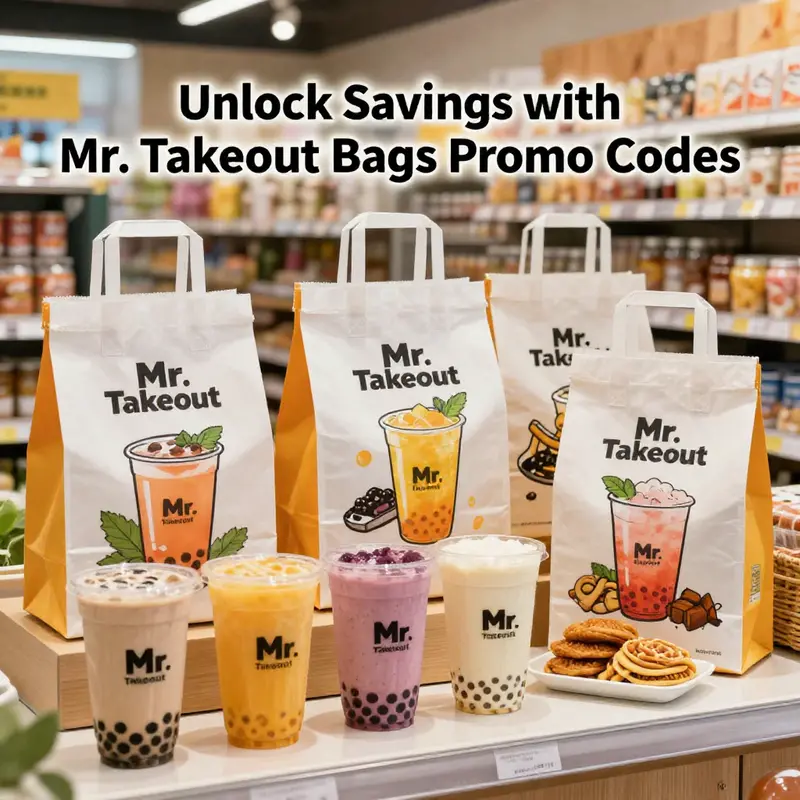
Promotional codes animate online shopping, yet in the niche world of takeout packaging, finding reliable, public discounts can feel like chasing shadows. The matter is not merely about knocking a percent off a total; it is about preserving the integrity of the product while seeking value. In this chapter, we explore how promo code options for takeout bag offerings tend to appear or disappear, what kinds of promotions to expect, and how to assess the real worth of a discount when the supplier emphasizes materials, customization, and reliability. Because the landscape is often shaped by seasonality, order size, and channel strategy, the path to a good deal is less about a single magic code and more about understanding how promotions are structured and where to look for them without compromising on quality or service. While public promo codes may be sparse for some brands, there are still meaningful routes to savings that align with the practical realities of running a takeout operation, a catering service, or a small-scale packaging initiative.
The core reality emerging from the current information pool is straightforward: there is little to no publicly available, brand-specific promo code information for takeout bag products. This is not unusual. Packaging suppliers often reserve promotional activity for certain channels or events, and they may prefer to keep discount details close to official channels—signups, newsletters, or directly negotiated bulk arrangements—where terms can be clearly communicated and applied to large or customized orders. For a buyer who needs to plan budgets or time promotions around a menu or event calendar, that reality can feel constraining. Yet it also frames a practical approach: instead of waiting for a one-off code, anticipate the kinds of value that promotions typically deliver and the moments when those promotions are most likely to appear.
To begin with, the most common promotional structures around takeout packaging tend to fall into a few broad categories. Seasonal promotions often align with holidays or year-end inventory cycles. A business planning for back-to-school or summer catering might see a promotional push tied to bulk purchase incentives or limited-time bundles that combine takeaway boxes, windows, and lids with compatible accessories like ribbons or drawstrings. Bulk order discounts are another frequent archetype. These are not always publicly advertised; instead, they emerge from a negotiated quote process or a dedicated sales channel for larger customers. First-time buyer offers also appear, particularly on brands that want to convert trial buyers into repeat customers by waiving a minimum order or offering a small percentage off the initial shipment. In practice, a buyer who is evaluating packaging—say, a bakery looking to transition to a standardized takeout system—will often discover that the most straightforward path to savings is not a single code but a combination of timing, volume, and a turnkey approach to the customization workflow.
With this framework in mind, it helps to understand what the takeout packaging itself brings to the table beyond the discount. The value proposition typically centers on durability, food-safe materials, and presentation. For example, takeout boxes can be made from corrugated cardboard, with options for windowed designs, plastic handles, and drawstring closures. The choice of materials matters not just for cost but for performance—grease resistance, moisture management, and the ability to withstand the rigors of transport. Customization features, such as ribbons or labeled windows, add branding opportunities, which means the perceived value of a discount may depend on whether it enables an enhanced, consistent customer experience. A promo code that reduces price but undermines a unit’s reliability or aesthetic is not a win. Hence, buyers are right to weigh discount opportunities against the potential impact on the end-user experience.
The absence of publicly listed promo codes does not imply that savings are out of reach. In fact, the most practical savings often arise from a thoughtful, business-to-business approach rather than a consumer-facing coupon hunt. In a world where packaging decisions drive not only cost but also brand perception and operational efficiency, it is worth pursuing a strategy that looks beyond the price tag. For instance, many suppliers offer tiered pricing that is activated when a client reaches a certain quantity. This can produce meaningful unit-price reductions while also enabling the client to standardize packaging across menus or locations. For a kitchen that ships a variety of products—from small desserts to medium entrées—the ability to source a uniform line of boxes, windows, and accessories can deliver administrative savings that compound over time. In the same breath, it is reasonable to expect negotiated terms that include favorable lead times, more favorable return policies on unused stock, or contained shipping costs for large orders. All of these elements contribute to total value in ways that a single promo code cannot capture.
Where does that leave the consumer who wants to stay informed and still avoid missing out on opportunities? The practical answer is to align the search with official channels. If a brand offers promotions, those details are typically published through official websites, newsletters, or social media announcements. Subscribing to a mailing list can be a productive way to stay ahead of seasonal deals, early-bird offers, or exclusive access to bulk-order programs. Following the brand on social platforms may also reveal flash promotions tied to events or limited-time bundles. The underlying idea is straightforward: cultivate a direct line of communication with the supplier so that promotions arrive where they can be acted on effectively, not scattered across third-party coupon aggregators that may not reflect current stock or terms.
The broader takeaway for readers of a chapter focused on promo code options is to temper expectations with a disciplined approach to value. A discount on a takeout-bag order should be weighed against the practicality of the packaging solution. If a promotion reduces the price but reduces the robustness of the packaging, or limits customization options, the net effect could be negative for the brand experience. Conversely, a well-timed bulk-discount that preserves or enhances customization can deliver a true positive return on investment. This is especially true for operators who rely on packaging as a visible extension of their brand. In such cases, the ability to apply a promo to a series of orders that involve the same design language—the same window style, the same ribbon color, and the same closure method—can streamline operations and reduce decision fatigue when every month brings a new menu or promotion.
In practice, buyers should adopt a two-pronged approach. First, establish a clear understanding of your baseline needs: the required sizes (Small, Medium, Large), the essential customization features (such as ribbons, drawstrings, PVC windows, and plastic handles), and the material constraints (including corrugated cardboard or other sustainable options). This baseline serves as a touchstone when evaluating any promotional offer. Second, engage with the supplier through a formal inquiry process that invites a pricing quote for a defined set of items and configurations. A well-structured inquiry can surface not only a price reduction but also value-added terms such as improved lead times, free samples for proof of concept, or a pilot run that validates packaging performance before committing to a large roll-out. In an industry where procurement cycles often converge with production schedules, having a clearly scoped quote can convert a potential discount into a reliable logistical advantage.
The absence of a public promo code should not be mistaken for a lack of promotional activity. Instead, it can indicate a preference for relationship-driven sales practices that reward sustained partnerships rather than episodic consumer discounts. Below the surface, promotional activity can still align with quality and consistency—two attributes that matter deeply to anyone responsible for a brand’s takeout experience. For example, the ability to customize packaging with specific window sizes, brand colors, or logo placements might be a non-price factor that a supplier highlights during negotiations because these options have long-term value for customer retention and repeat orders. When the focus shifts toward quality and consistency, a well-negotiated contract with favorable terms can be more meaningful than a temporary price cut. This is not a denial of promotions; it is a reframing of how value is created and realized over time.
As readers consider the practicalities of securing a discount or favorable terms, it is worth acknowledging the broader ecosystem of takeout packaging suppliers beyond the immediate brand landscape. The world of disposable and reusable takeout packaging has grown into a network of manufacturers and distributors that offer a spectrum of solutions. Some players emphasize eco-friendly materials, others foreground customization speed, and still others balance both with the promise of reliable performance in transit. In this ecosystem, a buyer can often find complementary options or alternative channels that align with their budget and timeline. Even if a specific brand publishes no public promo codes, a broader search can reveal opportunities to align a discount with the procurement cycle, the packaging design, and the operational realities of a takeout or catering business.
To illustrate how a broader perspective can translate into tangible savings, consider the following practical path. Start with a clear, itemized list of needs: sizes, window options, closure types, and any branding elements that must appear on the packaging. Next, request a formal quote for a defined quantity and configuration, inviting the supplier to propose bulk discounts or bundled pricing for a complete packaging solution rather than for individual components. If a seasonal promotion exists, it will likely be embedded in this quote as a specific term, such as “bulk discount applied to orders over X units,” or “free-shipping threshold for orders of Y dollars.” Finally, compare the total cost of ownership across suppliers, taking into account not just the unit price but also shipping, handling, potential discounts for set-up or customization, and after-sales service such as damaged-package replacement or early-reorder convenience. When evaluated comprehensively, the value proposition of a packaging solution emerges with greater clarity.
In the spirit of supporting an integrated procurement approach, this chapter also invites readers to explore related resources that expand the palette of packaging possibilities. For instance, a nearby reference on custom takeaway packaging supplies highlights how manufacturers can tailor products for themed events while maintaining efficiency in production and distribution. This perspective resonates with buyers who are exploring a mix of standard boxes and customized options to create a consistent, on-brand customer experience across channels. By examining such resources, buyers gain a more nuanced understanding of how packaging design, material choice, and beyond-price considerations intersect to shape overall value. The practical upshot is simple: promotions are meaningful when they align with the right combination of product quality, customization flexibility, and operational efficiency.
As you close one scroll through the search results and prepare to open another, consider this pragmatic takeaway. The quest for promo codes in the takeout-bags space is less about chasing a lone digital coupon and more about cultivating a direct, value-driven dialogue with suppliers. It is about recognizing when a bulk-price arrangement, a customization package, or a seasonal incentive fits your business needs. It is about balancing cost savings with the quality and reliability that your customers expect when their meals are transported, presented, and enjoyed. In that balance, promotions can still play a constructive role—provided they support a coherent packaging strategy that reinforces brand integrity rather than undermines it.
To connect these reflections to practical pathways, one can also explore a specific facet of the packaging ecosystem that aligns with the chapter’s focus on customization and takeaway use. Packaging suppliers often showcase a range of options for theme-oriented events or party packaging, illustrating how a single product category can morph to fit different occasions. For example, a bundle that combines takeout boxes with window options and matching accessories demonstrates how a vendor can support a themed presentation while conserving time and resources. If you are evaluating such options, you might explore a resource that highlights how selection, design, and logistics come together to deliver a complete packaging solution. This kind of exploration helps you evaluate not just price, but the broader value proposition of a packaging partner who can scale with your business needs.
In the end, the question of promo codes for takeout bags is best answered not by a single discount but by a strategic approach that considers timing, volume, and the integral role of packaging in brand experience. While public, brand-specific promo codes may be scarce in certain market segments, there remain robust avenues to secure value through formal quotes, bulk pricing, and direct engagement with the supplier’s sales channel. For readers who want to look beyond the code hunt, the invitation is to engage in a dialogue that centers on total value: the right materials, the right customization, the right lead times, and the right terms that align with your business rhythms. When you do this, the discount becomes not a fleeting chance but a reliable component of a sustainable packaging strategy. In short, the path to savings in takeout packaging lies in aligning discounts with a thoughtful, design-conscious, and operationally coherent procurement process.
For those who want to explore related packaging options and possibilities in a broader context, consider the resource linked here. It illustrates how a broader take on takeaway packaging can unfold, offering practical ideas that complement a discount-driven approach without compromising quality. See: https://ecocupbowl.com/product/custom-takeaway-packaging-supplies-disposable-tableware-for-theme-party/ for a concrete example of how suppliers present customization-friendly options that can be paired with promotions in a way that preserves brand consistency. This kind of resource helps situate promo code discussions within the wider ecosystem of packaging decisions, where aesthetics, functionality, and procurement practicality converge to support successful foodservice operations.
External resource: For a broader look at how promo codes function in e-commerce and how buyers can evaluate their value beyond the headline discount, this guide offers useful context and strategies. https://www.shopify.com/blog/promo-codes
null
null
Discounts in Transit: How Takeout-Bag Promo Codes Reshape Customer Savings and Brand Strategy
When customers reach for the checkout button on a takeout-bag order, they bring with them a quiet expectation: savings. Promo codes are not just numbers on a screen; they are pathways to a more affordable choice in a moment when price sensitivity and convenience collide. This chapter treats promo codes for takeout bags as more than mere discounts. They are signals that influence how customers evaluate value, how they perceive risk, and how they decide what to buy, when to buy, and how often to return. In a marketplace crowded with packaging options, codes become a tuning fork for the price perception of a product category that often sits at the intersection of utility and design. They can compress the gap between intention and purchase, especially in a world where fast-moving consumer goods meet the slow burn of brand loyalty. For the business that issues these codes, the effect is twofold: immediate top-line impact through higher conversion rates and longer-term gains through richer behavioral data that can be translated into smarter marketing, product development, and pricing decisions. In this sense, promo codes are not a one-click gimmick; they are a strategic instrument that can shape outcomes across the entire customer lifecycle, from awareness to post-purchase engagement, and they do so with a clarity that other marketing levers often struggle to deliver.
The mechanics of how promo codes work in this context are both simple and layered. On the surface, a code reduces the amount a customer pays at checkout. It can be a percentage off, a fixed dollar amount, free shipping, or a bundled discount that stamps a perceived value on multiple items in a single order. But beneath that surface lies a framework of terms, exclusions, and timing that determines the real-world effect of the discount. For customers, the savings are immediate and tangible, which makes the act of applying a code feel like a reward rather than a sacrifice. The perception of value can be amplified when the terms align with a moment of need—say, a consumer planning a catering small-portion order for a weekend event, or a small business owner restocking disposable packaging ahead of a busy week. For the business, the code becomes a data point tied to a wider story: which segments respond most to certain offers, which times of year drive more incremental purchases, and which combinations of product and price yield the highest return on marketing investment.
One of the enduring truths about promo codes is their ability to convert baskets that would otherwise be abandoned. In e-commerce ecosystems, a code can be the nudge that tips a hesitant shopper toward the final click. The psychology at work is straightforward: a discount lowers the risk of trying a new product or brand and reduces the perceived loss of spending. When a shopper adds multiple items—perhaps a set of eco-friendly takeout boxes, a stack of kraft-paper containers, or a decorative sleeve for a party order—the prospect of a discount on the total creates an anchor that makes the value of an entire cart seem more compelling. Retail behavior studies show that when discounts are framed as time-limited or quantity-bound, urgency increases, and the likelihood of completing a purchase grows. The codes themselves become short-term catalysts, but their impact can extend far beyond the moment of checkout when properly integrated into a broader lifecycle strategy.
From the business perspective, promo codes offer a direct line to measurement and optimization. Each unique code functions as a tagged experiment, revealing how different customer cohorts respond to various incentives. A code targeted at first-time buyers can help a brand translate interest into trial, while a loyalty-oriented code can reward repeat behavior and deepen long-term relationships. The data generated by code usage—when it was redeemed, which products were included, the customer’s overall order value, and whether the customer subsequently returned—creates a lens on consumer preferences that pure sales data cannot easily reveal. This is where the true value of promo codes lies: not only in the discount they provide, but in the intelligence they harvest. Brands can then refine their campaigns in real time, test new offers, and iterate on the timing and targeting of promotions to maximize impact without eroding price integrity over the long term.
An essential element in thinking about promo codes for takeout bags is the recognition that the category blends practicality with design. Packaging choices carry both functional benefits—protecting contents, ensuring cleanliness, enabling easy transport—and aesthetic signals that influence a buyer’s perception of quality and value. Codes must be crafted with an understanding of how these two dimensions interact. A discount offered on an eco-friendly line of takeout packaging may resonate particularly well with environmentally conscious buyers, especially when paired with messaging that underscores durability and reuse. Conversely, a weaker framing, such as a generic percentage off without clear relevance to the product’s benefits, might deliver a numerical saving but fail to translate into a lasting impression. The best campaigns, therefore, do not rely on price alone. They weave value propositions—sturdiness, sustainability, convenience—into the promotion itself, creating a narrative where the code serves as a bridge between price and product story.
Seasonality and events introduce another layer of complexity that savvy marketers leverage. Codes timed around holidays, local events, or industry rhythms can amplify the sense of relevance and urgency. A seasonal promotion that aligns with peak event planning periods—or with back-to-school or summer gatherings—can prompt customers to stock up on packaging in advance, turning a potential lull into a surge of orders. The effect is not merely economic; it is experiential. The customer who feels that a promotion speaks directly to their immediate needs will associate the brand with practical problem-solving and reliability, rather than with abstract price cutting. In practice, these promotions require careful calibration: a balance between generosity and sustainability, between short-term revenue boosts and longer-term margin protection. The art lies in setting clear terms that avoid eroding perceived value or teaching customers to always expect a discount before they buy.
The tiered nature of promo codes also matters. A spectrum of offers—from modest percentage savings for standard orders to more generous terms for large or multi-item carts—enables a brand to guide customer behavior. A small discount can entice a shopper to start the journey, while a larger, time-bound offer can close the sale when the basket is near completion. For frequent buyers, loyalty-based codes can bestow incremental advantages that compound over time, reinforcing habitual purchasing patterns without constantly resorting to broad, general discounts. This tiered approach helps preserve baseline margins while still delivering meaningful savings to customers, a balance that is especially important in the packaging space where raw materials costs and manufacturing cycles can influence profitability.
Tracking and attribution are the backbone of any disciplined promo-code strategy. Assigning unique codes to different campaigns, channels, or customer segments makes it possible to attribute revenue uplifts to specific promotions. The data reveal not only which codes perform best, but which messaging, product configurations, or bundle structures drive the most incremental value. This clarity enables rapid experimentation and iterative refinement. The business can test, for example, a code tied to first-time buyers with a modest discount and no shipping fee, versus a more aggressive offer aimed at returning customers that pairs a larger discount with a bundle on takeaway packaging essentials. The outcomes inform future creative, pricing, and product packaging decisions, creating a feedback loop that strengthens both the customer experience and the bottom line. In this sense, promo codes function as both a sales tool and a market research instrument, translating consumer willingness to pay into actionable intelligence.
Yet there are limits and trade-offs to consider. Repeated exposure to discounts can train customers to expect lower prices at every touchpoint, gradually eroding perceived value. The challenge for any brand in the takeout-bag space is to preserve the integrity of the price a product commands when purchased at full price, while still offering meaningful incentives to accelerate conversion and reward loyalty. Careful planning around the cadence of codes—how often they appear, how long they last, and which segments are eligible—helps prevent discount fatigue. It also supports more strategic inventory and production planning, since promotional periods can be aligned with capacity cycles and raw-material availability. The best campaigns are those that feel earned rather than given; customers perceive the savings as a calculated benefit tied to a well-considered shopping moment, not as a perpetual subsidy that undermines pricing discipline.
From a customer experience standpoint, the ease of using a promo code matters as much as the magnitude of the discount. Friction at checkout—unreadable terms, complicated minimums, or caps on the discount—can disrupt the flow of a purchase and dampen the value the code promises. Clear terms, intuitive application, and transparent limitations help ensure that savings are realized smoothly. When customers can see the discount reflected in real time and understand precisely what they are getting, trust builds. In the context of takeout packaging, where orders are often driven by time constraints and bulk quantities, the ability to apply a code quickly can eliminate a barrier to purchase and reduce cart abandonment. The customer’s journey becomes less about deciphering terms and more about confirming a straightforward, valuable decision: this is the right packaging solution at the right price for this moment.
A well-executed promo-code program also supports broader marketing objectives beyond immediate sales. It provides a mechanism to test new packaging configurations, materials, or sustainability features. If a new line of compostable or recyclable bags is introduced, a targeted promo code can help gauge demand, gather early feedback, and drive uptake in a controlled way. The data captured through code usage can illuminate customer preferences—whether they lean toward eco-friendly options, custom branding, or certain sizes and shapes. This kind of insight is invaluable for product development teams as they iterate on what to offer next, how to price it, and how to communicate its benefits. In short, promo codes are not only discount vehicles; they are learning tools that reveal market receptivity and guide strategic priorities.
To illustrate how this all comes together in practice, consider a hypothetical but plausible scenario in which a takeout-bag brand deploys a set of codes aimed at different audiences and moments. A first-time-buyer code might be anchored to a modest percentage off on a single-item order and a limited bundle that showcases a variety of packaging options. A returning-customer code could reward repeat behavior with a larger discount tier, perhaps applied to orders that include multiple packaging products or that reach a certain order value. A seasonal code might pair a temporary price cut with a bundled offer that highlights new or best-selling items, timed to coincide with peak planning seasons for events and gatherings. Each code is unique in its audience, its terms, and its duration, yet they all work within a cohesive narrative that positions the brand as a practical partner in efficient event preparation and daily operations alike. When combined with a thoughtful communication strategy—email reminders, on-site banners, social prompts, and product-education content—the codes create an ecosystem where savings are easy to claim, meaningful in impact, and aligned with the buyer’s broader goals.
There is also a broader strategic layer to promotions that cannot be ignored: visibility and accessibility. For customers, a promotions page or a dedicated section on the official site can function as a compass that guides discovery. It helps shoppers understand what is on offer, how to apply it, and what constitutes real value in the context of their needs. For brands, an accessible promotions hub signals generosity and efficiency, reinforcing the perception that the brand is organized, customer-centric, and worth returning to. The exact location and presentation of promotional information matter; a well-structured promotions page reduces friction, improves the probability of conversion, and avoids the dissonance that can arise when a discount is promised but not delivered due to obscure terms or misapplied codes.
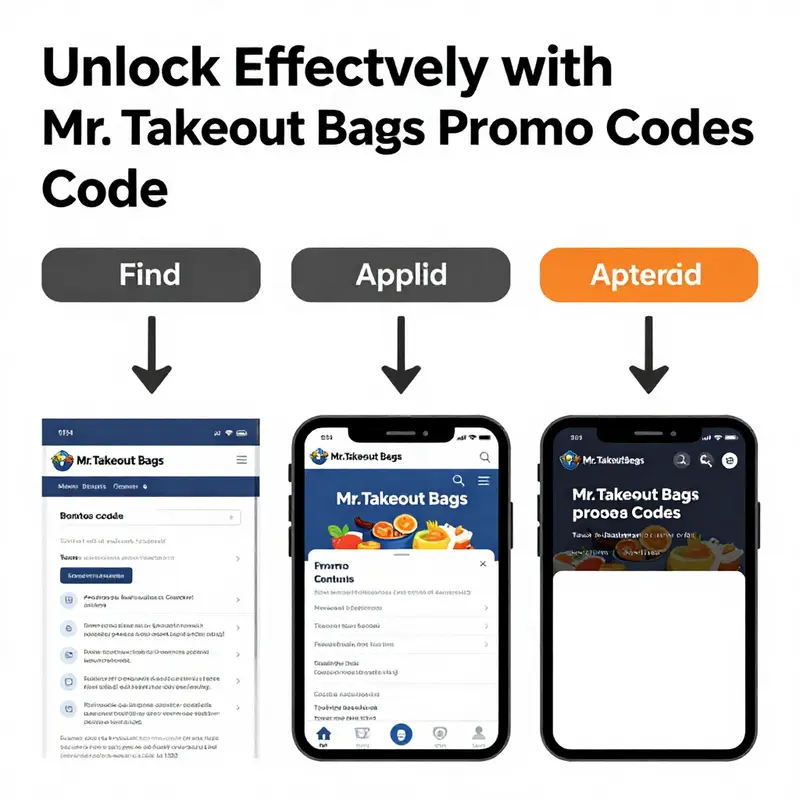
For readers seeking concrete current examples of savings tied to programs like these, the official promotions page offers a direct window into what is available at any given time. Visitors can explore unique codes, understand the scope of discounts, and see how terms apply to different packaging configurations. While the precise discounts and terms will vary, the underlying logic remains consistent across campaigns: targeted, timely, and user-friendly promotions that deliver measurable value for customers while enabling brands to capture actionable insights and sustain profitability. To explore how such promo codes work in practice and see current examples of savings, you can visit the official promotions page: Mr Takeout Bags Promo Codes.
In connecting these ideas to the broader article, it is important to acknowledge how the practice of offering promo codes on takeout bags sits at the intersection of consumer finance, operational excellence, and environmental stewardship. Consumers increasingly value not just the price they pay but the transparency of the process, the clarity of the savings, and the alignment of promotions with responsible practices. A brand that couples discounts with clear messaging about durability, recyclability, and safe handling reinforces trust and fosters a sense of shared values. In a world where packaging decisions reverberate through supply chains and environmental outcomes, the promotion becomes part of a larger narrative about efficiency, responsibility, and customer partnership. The dance between discount and value is not a simple choreography; it is a careful composition that seeks to preserve margins while enhancing customer satisfaction, guiding repeat business, and informing product evolution.
Ultimately, the impact of promo codes on customer savings—and on the strategic trajectory of a packaging brand—depends on purposeful design, disciplined measurement, and responsive iteration. When codes are crafted with attention to timing, audience, and terms; when they are integrated into a coherent lifecycle strategy; and when they are understood as data-rich signals rather than mere price cuts, they can deliver meaningful value for customers and sustainable growth for the business. The promise of savings is most powerful when it arrives in a context that makes sense to the shopper: a context where the code reduces friction at the moment of decision, reinforces the practicality and quality of the packaging solution, and invites ongoing engagement beyond a single transaction. In this sense, promo codes for takeout bags are more than a tactic; they are a mechanism for shaping behavior, guiding preferences, and enabling a more efficient, responsive, and customer-focused market ecosystem.
For practitioners and researchers alike, the key takeaway is straightforward: value delivery through promotions is most effective when it is specific, timely, and transparent. The real measure of success is not just the percentage off or the size of the discount, but the way savings influence the customer’s sense of value, the likelihood of future purchases, and the willingness to advocate for a brand that makes shopping easier and more predictable. When this alignment occurs, promo codes become a quiet but powerful engine of customer savings, brand loyalty, and market insight—one that carefully balances generosity with discipline and leverages data to inform every next step in the product and marketing roadmap. The outcome is a marketplace where customers feel seen, where choices feel sensible, and where the act of choosing a takeout bag is linked to a series of positive experiences that extend well beyond a single checkout moment.
Internal link reference: For a practical sense of how packaging options can be presented and promoted in tandem with promotional messaging, explore this example of eco-friendly takeout boxes designed for efficient, attractive takeaway experiences: eco-friendly takeout boxes for food packaging.
External resource: To further understand the landscape of promotion strategies in this space and see current, real-world applications, consult the official promotions page cited earlier: https://www.mrtakeoutbags.com/promo-codes
Final thoughts
In summary, the integration of Mr. Takeout Bags promo codes into your business strategy can yield substantial savings and enhance customer satisfaction. By exploring the various options available, effectively utilizing these promotional tools, and understanding their impact on your bottom line, you can improve operational efficiencies while offering great value to your customers. Start seizing the benefits today, and watch your profits grow while delighting your patrons with quality service.