
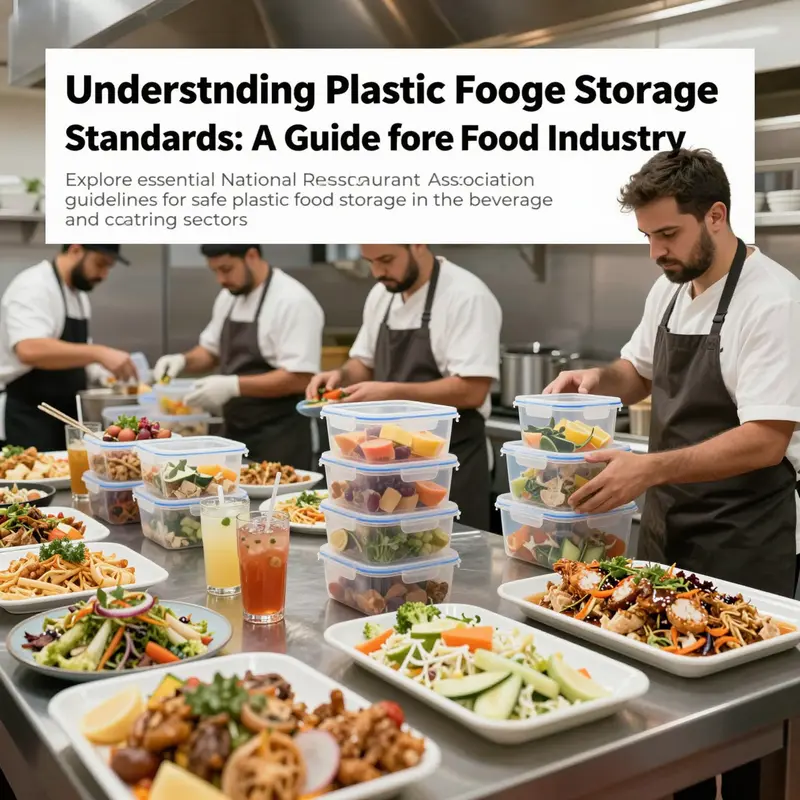
Navigating the standards for plastic food storage containers can be paramount for businesses in the food industry, especially for bubble tea shops, beverage chains, restaurants, food trucks, catering services, and event planners. The National Restaurant Association (NRA) emphasizes the importance of safety and compliance in the use of plastic containers, stressing adherence to FDA guidelines. This article explores critical standards and best practices that not only meet regulatory requirements but also ensure food safety and operational excellence. Each chapter delves into specific aspects of food storage, from material safety to handling recommendations, to help your operations stay compliant and efficient.
From FDA Rules to Real-World Practice: Navigating Plastic Food Storage Standards Under NRA Guidance
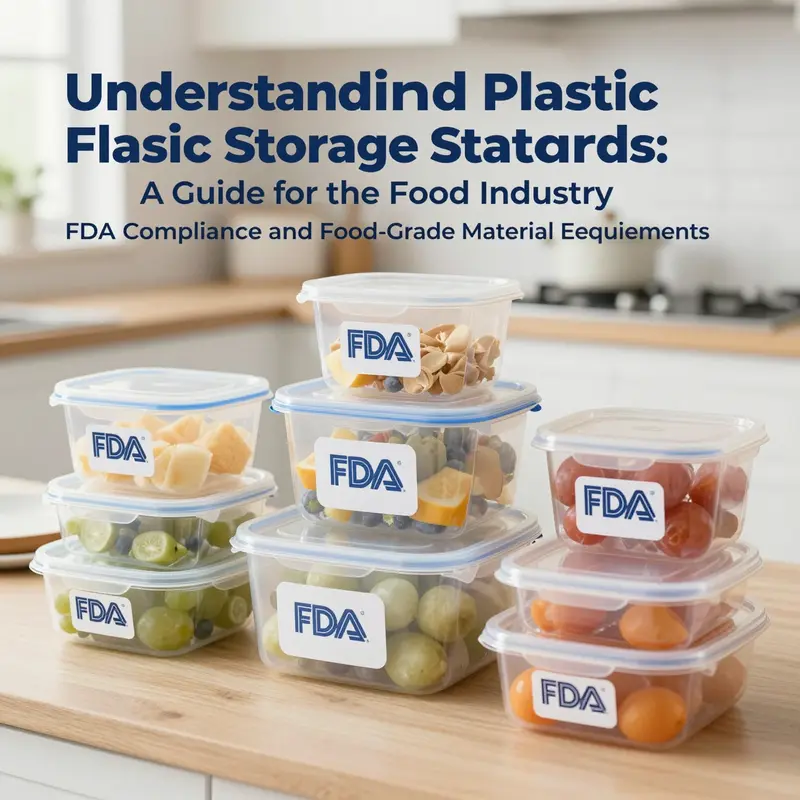
Restaurants operate in a landscape where safety and efficiency must cohabit with demand for speed, cost control, and sustainability. In this space, the National Restaurant Association (NRA) serves as a compass for best practices, yet it does not issue a single, universal specification for every plastic food storage container. The NRA’s most practical influence emerges through ServSafe, its widely adopted food safety certification, which codifies how teams should handle, sanitize, and store items to prevent cross-contamination and keep kitchens moving. But the critical regulatory backbone for plastic containers—those items that come into contact with food or sit in environments where food will be stored—rests with the U.S. Food and Drug Administration (FDA). The FDA sets the guardrails that determine which plastics are permitted for food contact, how those plastics must perform under typical and extreme kitchen conditions, and what documentation a manufacturer or supplier should maintain to prove compliance. In other words, NRA guidance and FDA regulation operate in a complementary cadence: the first shapes day-to-day practice, while the second defines the safety and material standards that underwrite those practices.
At the heart of FDA oversight for plastic food storage containers is the category of food contact materials. The FDA treats any material that will come into direct or indirect contact with food as a potential source of risk. Plastics, metals, glass, ceramics, and even coatings must be evaluated for their propensity to migrate unwanted substances into food. This migration risk is not abstract: it translates into concrete tests and assessments designed to ensure that, under the expected conditions of use, a consumer would not be exposed to harmful chemicals. The regulatory logic is simple in intent yet rigorous in execution. Before a new plastic resin or a molded container can reach the U.S. market, it must undergo initial safety evaluations and testing that demonstrate it will not release unsafe substances in quantities that could pose a risk to health. The framework also anticipates how containers are used in the real world—whether they are refrigerated, frozen, microwaved, or subjected to hot holding—so that migration and other risks are assessed across the full spectrum of operating environments. This is the FDA’s domain, and it is the baseline against which all other standards—whether from ASTM, ISO, or industry groups—are measured.
When restaurants think about plastic storage, the emphasis often shifts to material safety and suitability for food contact. For plastic containers, the FDA’s standard reference points to the compliance with food-grade plastics, and to the broader regulatory scheme that governs food contact materials under 21 CFR Parts 174–177. These parts outline what types of plastic resins, additives, and finishes may be used in containers intended to touch food and under what conditions those materials may migrate into food. The practical upshot is that manufacturers must select resins known to be food-safe and must validate that their products perform within safe limits not only in ordinary use but also during adverse scenarios such as exposure to cold, heat, or moisture over the lifecycle of the container. While many kitchen containers are designed for versatility, the FDA requires that those that will touch food meet stringent safety criteria and that manufacturers retain documentation to prove compliance. It is this documentation that regulatory bodies may request during inspections or audits and that importers must be prepared to present in a timely fashion when seeking market access.
In the kitchen, this regulatory framework translates into concrete expectations about what makes a plastic container acceptable for use in a restaurant. The FDA emphasizes that containers must be manufactured using food-grade plastics that are appropriate for the intended uses. For an ordinary example—such as a small plastic storage box used to hold prepped ingredients or a takeout container intended for direct food contact—the material selection matters as much as the design. The rules do not necessarily imply that a product must bear a mythic label of “FDA Approved.” In fact, labeling myths persist: the FDA has clarified that products do not need to carry such a label to be compliant, provided the manufacturer can substantiate its regulatory compliance through records and testing results. This distinction is important for operators who must balance trusting supplier assurances with the assurance that comes from verifiable documentation. The reality is that the chain from resin to finished container is a chain of custody, and it is the continuity and accessibility of that documentation that ultimately determine whether a product can be placed on a shelf in a restaurant or loaded into a cold storage room without raising red flags during regulatory checks.
A parallel stream of standards quietly guides how containers should be used and validated in a restaurant setting. The NRA not only anchors practical hygiene practices in ServSafe but also nudges managers toward alignment with additional technical guidelines. Among these are ASTM International standards that address performance and safety characteristics of food service containers, as well as ISO 22000, which frames food safety management systems across an organization. For instance, ASTM F2564 provides guidance for certain types of food service containers, offering specifications that help ensure consistent performance in food-service contexts. ISO 22000, meanwhile, broadens the lens to emphasize an integrated approach to food safety management, weaving together supplier control, process hygiene, and internal communications so that the entire operation maintains the integrity of food safety—from receiving to storage to service. Taken together, these standards do not replace FDA requirements; rather, they complement them, creating a cohesive ecosystem in which operators can design handling practices that are safe, auditable, and scalable across multiple sites.
A critical operational implication of this regulatory tapestry is the need for visible, verifiable food contact approvals on the containers themselves or in associated supplier documentation. Symbols that indicate food contact approval, often including a simple utensil icon or other regulatory marks, serve as quick visual cues for kitchen staff. When a container bears the appropriate symbols, it signals alignment with the intended use and reduces the risk that a non-food-grade material slips into a storage or service workflow. Yet even with the right symbols, responsible operators train their teams to inspect containers for warning signs. Cracks, warping, or persistent staining are not merely cosmetic concerns; they can create hiding places for bacteria and contribute to the migration risk if damaged materials are subjected to temperature fluctuations or repeated cycles of use and wash. In practice, this means a disciplined regime of visual checks, routine sanitation, and a clearly defined protocol for discarding or returning to service any container that shows degradation.
Temperature is a dimension that intensifies these considerations. The FDA and related safety standards account for the fact that containers will experience a range of conditions, from freezing to hot holding. In many kitchen workflows, containers encounter cold storage at -20°F or even lower, and some may face reheating or hot holding up to 180°F or more. These extremes test the physical integrity of plastics, particularly around thermal expansion and contraction, the reliability of seals or lids, and the potential for additives to migrate under stress. The practical takeaway for operators is not to treat containers as interchangeable beyond their stated design parameters. Instead, kitchens should match containers to specific temperature profiles and ensure that the containers are not used beyond their rated limits. A container approved for direct contact with hot foods should not be repurposed indiscriminately for cold storage if it has not been evaluated for those conditions. Likewise, containers intended for cold storage should be vetted for repeated thaw cycles without becoming brittle or losing their sealing capability. This alignment—between design intent, regulatory clearance, and on-the-ground usage—protects both customers and staff and reinforces the credibility of operational controls.
To translate these regulatory realities into everyday practice, many operators center their approach on three pillars: material integrity, control of usage, and traceable documentation. Material integrity means selecting plastics that are explicitly approved for food contact and that have demonstrated inert behavior under the expected temperature ranges and wash conditions. Control of usage encompasses the operational routines that prevent cross-contamination and ensure that containers are used only for their intended purposes, with lids correctly sealed, and with appropriate labeling for contents and expiration. Traceable documentation rounds out the approach by compiling supplier certifications, batch numbers, and testing results that substantiate compliance. In practice, this documentation supports quality assurance reviews, supplier audits, and regulatory readiness. It also enables faster onboarding of new equipment in multi-site operations, where consistency across locations is a prerequisite for safe, scalable service.
As kitchens become increasingly attuned to sustainability and lifecycle considerations, the NRA’s guidance intersects with a growing emphasis on environmentally responsible packaging. The move toward recycled content, compostable options, and recyclable packaging has profound implications for the selection of plastic containers. Yet even as many operators pursue greener alternatives, the core safety requirements must remain uncompromised. The choice of a particular container—whether it emphasizes reuse, disposable convenience, or recyclable materials—must still be evaluated through the FDA’s lens on food contact safety and migration, as well as the applicable ASTM or ISO guidance that supports consistent, auditable operations. In this context, operators can explore options such as sturdy, food-grade plastics designed for repeated use in controlled settings, as well as responsibly sourced, compliant single-use options. And in considering the broader packaging ecosystem, it is worth noting that some operators and suppliers are turning to innovations in design, such as containers that balance durability with ease of cleaning and reduced environmental footprint, while still adhering to all food safety standards. For readers who want to glimpse a practical example of this balance in action, a relevant pathway is to consider containers that combine food-grade materials with sustainable design features; these options can be a sensible complement to the NRA’s safety ethos, provided they carry robust documentation and meet FDA requirements, ASTM specifications, and ISO 22000 principles. For further exploration, see the linked example of eco-friendly takeout boxes for food packaging, which illustrates how sustainability imperatives can align with safety mandates when properly vetted and documented: eco-friendly takeout boxes for food packaging.
All of this ultimately feeds back into the everyday life of a restaurant: the responsible practice of selecting and using plastic containers that support safety, food quality, and efficient operations. It requires a clear policy that containers in direct contact with food come from suppliers who can demonstrate FDA compliance and who provide documentation that aligns with 21 CFR Parts 174–177. It means training crews to recognize legitimate food contact symbols, to avoid using damaged containers, and to store containers in clean, dry environments away from heat sources and direct sunlight, so the materials retain their integrity over time. It also means building an internal culture of accountability where the provenance of each container is traceable, and where audits and inspections—whether internal or regulatory—rely on the same solid foundation of documentation that the FDA requires. In a world where safety standards continually evolve and new materials enter the market, a restaurant’s ability to harmonize ServSafe practices with FDA compliance, ASTM guidance, and ISO 22000 principles becomes a strategic capability. It is this capability that protects customers, supports consistent quality, and ensures that the business can adapt to new packaging innovations without compromising safety.
For readers seeking a concrete regulator’s resource to deepen their understanding of food contact materials, the FDA maintains a comprehensive repository that outlines the regulatory framework, testing expectations, and procedural guidance. This external reference provides the technical detail behind the standards mentioned in this chapter and explains how manufacturers and distributors should demonstrate compliance through proper testing, documentation, and traceability. Access to the FDA’s official guidance on food contact materials can be found here: https://www.fda.gov/food/food-contact-materials
Safe Keeping: How NRA-ServSafe Guidance and FDA Standards Shape Plastic Food Storage in Restaurants
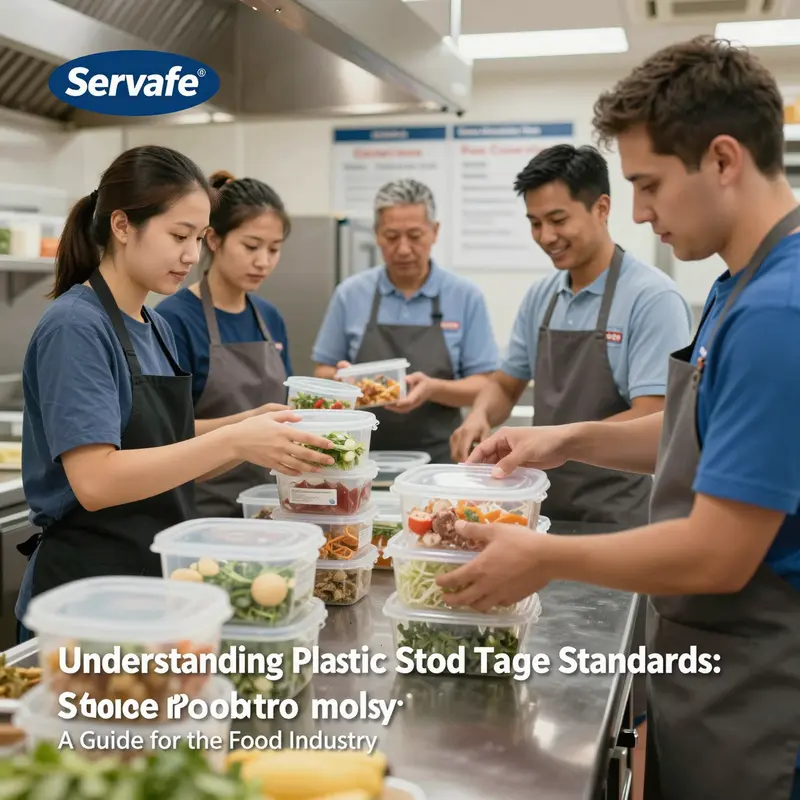
The NRA’s ServSafe program provides practical safety guidance rather than a single technical standard. It translates regulatory expectations into kitchen routines and storeroom practices, highlighting how a restaurant translates national safety goals into the way containers touch food. The core regulatory backbone for plastic containers in food service comes from the FDA, which requires that materials in direct contact with food be food-grade and approved for safety. Those approvals reflect testing designed to prevent chemical migration under realistic operating conditions. When a container can withstand freezing to -20°C and reheating in microwaves up to about 180°F, operators gain confidence from health inspectors and guests.
Operationally, ServSafe emphasizes cleanliness, integrity, and proper labeling as essential as coatings and polymers. The NRA points to food-contact approval symbols to remind staff that material safety is not optional. Containers that are cracked, warped, or stained can harbor pathogens or shed chemicals when reused. The practice is a culture of care—a routine that treats every storage vessel as part of the food safety system, not a disposable afterthought. In practice, this means selecting containers made from materials with proven heat resistance and chemical stability, storing them in clean, dry environments, and avoiding heat sources or direct sunlight that can degrade plastic. The FDA’s fingerprints appear not only in the product but in the supply chain: packaging, labeling, and the flow from supplier to kitchen shelf.
To translate these expectations into daily work, frame plastic containers within a broader food safety management context. The NRA does not prescribe minutiae for every plastic piece; instead, it directs operators to established standards and testing regimes that ensure safety across markets. For example, ASTM International guidelines related to food service containers provide consensus specifications for performance criteria such as dimensional stability, impact resistance, and chemical resistance. ISO 22000 principles offer a framework for managing food safety across the organization, ensuring that processes—from procurement to service—contribute to a safe product. The result is an integrated system in which the container program is part of prerequisites, hazard analysis, and ongoing verification that ServSafe training seeks to operationalize on every shift. Within this ecosystem, the container’s role is to preserve safety, quality, and integrity as food moves from storage to service, while aligning with broader sanitation and allergen control plans.
Handling, labeling, and sanitation form the three pillars. ServSafe guidance echoes the FDA: all plastic containers used for storage must be clean, undamaged, and suitable for the task. Operators favor materials with heat resistance, such as polypropylene (recycling code 5), which offers durability and chemical stability for washed, reheated, and reused containers. Even with robust materials, ongoing care matters: inspect before each use, retire damaged items, rotate containers so oldest are used first, and document clear labeling. Containers should not sit in hot, humid, or chemically laden storage, and lids and bases should align for a proper seal. Labeling is essential for safety and quality control: list the food name, date of preparation, and, where applicable, expiration date. In fast service environments, a clear labeling system supports inventory management, aids shelf-life tracking, and reduces the risk of misused items. Sanitation is indispensable: use warm water and neutral detergents, rinse thoroughly, and dry containers completely before reassembly or storage. Avoid aggressive cleaners that could degrade surfaces or leave residues. Sanitation must respect manufacturer instructions and FDA expectations for contact materials and be integrated with storage practices to form a durable reuse cycle.
This integrated approach also has a manufacturing and export dimension. In markets with strict oversight, the production of food storage containers is a chain of custody that must demonstrate conformity to FDA standards for materials contacting food. Standards influence design choices—from polymers to surface finishes that minimize residue buildup—and produce a durable, traceable product through factory floor to kitchen shelf to consumer plate. The NRA emphasis on FDA, ASTM, and ISO frameworks is a practical stance that recognizes the global supply chain of the modern restaurant. A restaurant that speaks this language can source containers that endure heat, survive repeated cycles of washing, and preserve safety even in busy service windows.
Across this landscape, ServSafe serves as a bridge between official standards and everyday practice. It translates regulatory expectations into training modules, checklists, and verification practices that reinforce a culture of safety without slowing service. The interplay between FDA requirements, ASTM specifications, and ISO 22000 principles creates a shared language for operators, suppliers, and regulators. In practical terms, this means restaurants can standardize their container programs across locations, implement consistent handling and labeling procedures, and run auditable sanitation routines that verify safe operation. The journey from procurement to storage to service is what makes a container more than a vessel: it becomes a deliberate component of the restaurant’s safety system.
Takeaways for everyday action include five core points: first, insist on food-grade containers with clear, durable approvals that align with FDA expectations and withstand typical temperature ranges. Second, implement a labeling policy for foods stored outside original packaging, with visible product name, date of preparation, and expiration where applicable. Third, maintain a disciplined sanitation routine that respects material properties and avoids solvents that degrade surfaces or leave residues. Fourth, train staff through ServSafe-based workflows that emphasize the rationale behind washing and labeling—protecting health and preserving quality. Fifth, treat the container program as an ISO 22000–based food safety management element—an ongoing, verifiable commitment that links supplier choices, kitchen practices, and regulatory expectations into a coherent, auditable system.
All of these threads converge on the simple aim of safe, reliable plastic storage. The NRA’s ServSafe framework translates guidelines into reliable habits, while FDA, ASTM, and ISO standards provide the technical backbone that ensures those habits are grounded in material science and international best practice. The result is a kitchen where plastic containers are a safe, dependable part of the system, protecting public health while supporting consistency in operations and guest confidence. In subsequent chapters, the discussion moves from the general architecture of safety programs to concrete tools and checks that kitchens deploy daily, always with the understanding that the right container is a critical element of responsible restaurant operation.
Safe Storage in Motion: Navigating Durability, Temperature Resilience, and Food-Grade Assurance in Restaurant Plastic Containers
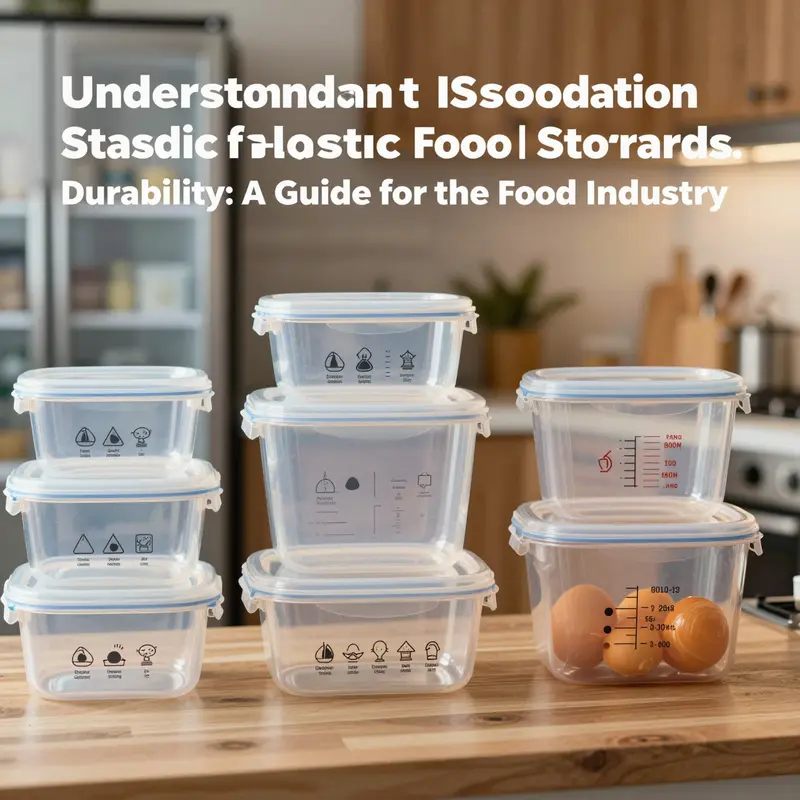
The National Restaurant Association (NRA) operates not as a regulator of specific material specifications for plastic storage containers, but as a practical translator of broader safety and performance standards into kitchen workflows. Its guidance rests on aligning everyday container use with the regulatory framework established by the U.S. Food and Drug Administration (FDA), and with the testing and performance benchmarks advanced by standards organizations such as ASTM International and NSF International. The FDA governs food-contact materials with a focus on safety, ensuring that plastics used in direct contact with food are manufactured from food-grade resins and additives that are approved for safety. This means that the containers that pass from sauce station to cold storage to the pass-through window must be built from materials that have undergone appropriate evaluation for their potential to migrate substances into food. The NRA’s role, then, is to interpret this regulatory foundation into actionable practices that fit the pace and complexity of a bustling restaurant. It also embraces ISO 22000 principles, which frame food safety management systems as living processes, integrating hazard analysis, critical control points, and continuous improvement. In short, the NRA anchors kitchen practice in a safety culture that is both auditable and adaptable, recognizing that material safety is inseparable from operational performance. The result is a cohesive threefold emphasis: durability under daily duress, robust temperature tolerance, and safety that remains apparent to staff through clear labeling and reliable container design.
Durability stands as the first pillar because the real world of a kitchen is a laboratory of wear and tear. Plastic containers in a commercial setting must endure frequent handling, stacking, and cleaning cycles without succumbing to cracking, warping, or breakage. The NRA emphasizes that containers should be made from high-quality, food-grade plastics chosen for resilience as well as safety. This is a practical insistence: a brittle container increases the risk of leaks, cross-contamination, and inconsistent portion control. To translate that into procurement and daily operation, kitchens routinely favor containers whose geometry supports secure lids, easy gripping, and compatibility with standard racking and dishwashing equipment. The container must survive not just one cycle but countless washings, where high heat, caustic detergents, and mechanical action test the integrity of seams, corners, and seals. Durability, in this sense, is about predictable performance—nobody should face a pile of damaged, warped, or discolored containers at the start of a line shift. The NRA’s philosophy about durability thus dovetails with broader standards that quantify physical properties, including impact resistance, rigidity, and material fatigue, ensuring containers maintain their shape and function throughout their lifecycle.
Temperature resilience forms the second axis of the NRA’s framework for practical safety and efficiency. Modern restaurants move fluidly between refrigerated storage and hot service, sometimes in a single service window. The NRA stresses that plastic containers used for food storage should safely tolerate the full spectrum of temperatures encountered in typical operations. This means indicating readiness for freezing, thawing, cooling, and reheating, and, where applicable, microwaving or oven use, all within the limits specified by the manufacturer. The key caveat is that a container’s heat tolerance must be aligned with its intended use and with the foods it carries. For instance, acidic or fatty items can influence migration dynamics, so the container’s compatibility with such foods is a practical concern. The FDA’s regulatory stance provides baseline assurances about safety under contact conditions, while ASTM testing protocols translate these assurances into performance benchmarks: how a container behaves when assaulted by heat, light, moisture, and repeated cleaning cycles. The NRA’s guidance encourages managers to verify explicit temperature ranges and to follow manufacturer instructions for heating, ensuring that the container remains stable and safe rather than becoming a source of leaching or deformation. This is particularly critical when containers are repurposed across cold and hot workflows, a common pattern in meal prep, holding, and reheating sequences.
Safety under operational conditions is the third pillar and arguably the most visible in day-to-day kitchen life. The NRA places strong emphasis on explicit labeling and on using containers that are clearly identified as food-grade and BPA-free. In practice, these labels act as a quick, staff-friendly signal that the container is appropriate for contact with food and safe for use with hot or acidic foods. BPA-free labeling reinforces consumer and regulatory expectations, signaling that the materials used do not include substances historically associated with potential health risks. Yet the safety conversation expands beyond BPA. The NRA advocates for full disclosures about materials and compatibility, especially when alternatives are used to meet heat tolerance or chemical resistance requirements. Staff training becomes crucial here: workers must understand which foods are best stored in which containers, why some containers are not suitable for certain reheating methods, and how to identify signs of degradation—cracking, clouding, staining, or warping—that warrant replacement rather than continued use. In this sense, safety is not a static label but an ongoing practice that supports hygiene, prevents cross-contamination, and sustains guest trust.
Several practical considerations flow from these pillars and shape how a modern restaurant approaches plastic storage containers. First is the need for proper symbol literacy. Containers should carry recognized food-contact approval marks and icons that staff can read at a glance. These marks are not mere decorations; they guide decisions about what foods can safely be placed in the container, how long it can be stored, and whether heating is permissible. The second is the importance of design. Stackability and nestability are not just space-saving features; they reduce the chance of contamination during handling and improve the efficiency of pre-service organization. A tidy, well-organized storage area lowers the risk that damaged containers slip into service or that lids are misplaced, which in turn reduces the likelihood of spills and cross-contact with raw ingredients. The third is the integration of safety into workflow. The NRA’s approach links safety with operational efficiency: when containers perform predictably across cold and hot workflows, when they are easy to sanitize, and when they resist color or odor retention, kitchens operate more smoothly and consistently. In the context of a fluctuating menu and seasonal ingredients, these container attributes become strategic assets rather than afterthoughts, enabling a restaurant to scale its storage practices without sacrificing safety.
To align these practical considerations with formal standards, the NRA points to the regulatory scaffolding that supports a safe, efficient kitchen. The FDA’s food-contact materials guidance describes which plastics are permissible and under what conditions migration must be controlled. ASTM International provides more granular testing parameters that simulate real-world exposures—like repeated dishwashing, freeze-thaw cycles, and rapid temperature changes—that reveal how containers behave over time. NSF International offers certification programs that help operators verify that containers meet recognized safety and performance criteria. The NRA’s guidance, therefore, acts as a bridge: it translates regulatory language into concrete purchasing criteria, operational practices, and staff training goals. It also underscores the importance of aligning container choices with a broader food safety management system, whether that system is built around ISO 22000, ServSafe practices, or facility-specific HACCP plans. In practice, this alignment yields containers that are safe by design, perform under operational stress, and are easy to manage within a kitchen’s hygiene program. It also supports a restaurant’s ability to communicate clearly with guests who may inquire about packaging safety and sustainability, since the labeling and performance stories told by the containers reflect a disciplined safety culture.
As a practical example of translating standards into everyday choice, consider the notion of an evidence-based lifecycle for containers. Start with approval: select containers that clearly indicate food-grade status and BPA-free design, and verify that certifications align with the foods and temperatures most common in the operation. Then move to use: choose shapes and materials that optimize storage, portion control, and compatibility with the kitchen’s equipment. Next comes maintenance: implement routine inspections and a robust washing and drying protocol to prevent mold, residue buildup, and fatigue at hinge points or seams. Finally, retirement: establish a process to retire degraded containers and replace them with resilient options that meet current safety and performance expectations. This lifecycle mirrors the lifecycle management models embedded in ISO 22000 and is compatible with the ServSafe framework’s emphasis on continuous improvement and safe operation. The NRA’s emphasis on three interlocking pillars—durability, temperature resistance, and safety under operational conditions—thus supports a kitchen that is not just compliant, but confident in its ability to deliver safe meals with speed and reliability.
For readers seeking a tangible reference point that anchors these practices in formal standards, regulatory guidance, and certification programs, the NRA’s approach points toward authoritative sources that provide the technical scaffolding for material safety and performance. A deeper dive into the official standards behind these practices can be found through external resources that detail key properties and compliance criteria for plastic food containers. In addition, an online resource on the practical realities of packaging design and safety illustrates how manufacturers and operators translate standards into usable products for the kitchen. For a more comprehensive, standards-based overview of plastic food containers, you can consult the NSF International resource linked below.
External resources show the broader verification layer that supports the NRA’s approach. NSF International – Plastic Food Containers: Key Standards, Physical Properties.
Aligned for Safety: How NRA Guidance Multiplies Impact by Integrating ASTM and ISO Standards in Plastic Food Storage for Restaurants
When a customer bites into a prepared dish and reaches for the sauce from a plastic container, they seldom think about the standards that secured that moment of service. Yet behind every successful plate is a latticework of guidance, certification, and rigorous testing that makes plastic food storage containers safe for use in high-volume kitchens. The National Restaurant Association (NRA) does not pretend to replace the technical specifications that govern material science. Instead, it positions itself as a conductor that harmonizes practical, on-the-ground needs with well-established third-party standards. In this sense, NRA guidance translates the broader language of safety into actionable choices for operators, while simultaneously driving suppliers and manufacturers toward consistent, verifiable demonstrations of compliance with FDA rules, ASTM International specifications, and ISO frameworks. The result is a resilient, safety-forward approach to plastic storage in the fast-paced world of foodservice, where margins of safety must be built into every bin, tub, and lid, not added on as an afterthought.
From the earliest days of modern foodservice, plastic containers have offered advantages in hygiene, portability, and price. But the same properties that make plastics appealing—lightweight, durable, moldable—also demand strict oversight to prevent unwanted migration of substances into food and to ensure containers perform under the varied conditions of a restaurant environment. The NRA’s stance is clear: there are no shortcuts when it comes to food safety. The organization underscores the importance of selecting containers that carry food contact approval symbols, maintaining containers in clean, dry storage away from heat and direct sunlight, and avoiding obvious indicators of wear such as cracks, warping, or staining. These practical reminders align with the broader regulatory framework that actually governs what can come into contact with food. At the core of this framework is the U.S. Food and Drug Administration (FDA), which requires that all materials in direct contact with food be manufactured from food-grade plastics approved for safety. The goal is to minimize chemical migration, secure performance across a range of temperatures, and preserve the container’s integrity during repeated cycles of washing, stacking, and use in hot-holding environments.
The temperature realities alone are instructive. In a typical restaurant setting, containers may face freezing temperatures during storage or thawing processes, and they may encounter high temperatures during hot holding or service, with limits commonly cited around -20 to 180 degrees Fahrenheit. Under such extremes, the potential for materials to migrate or for containers to degrade increases if the wrong plastic is used. This is precisely where NRA’s guidance converges with the testing and certification frameworks developed by ASTM and ISO. ASTM International has built a family of standards that address both the design and the performance characteristics of plastic food service ware and the critical testing methods used to assess safety under real-world conditions. For instance, ASTM F2147 provides guidelines related to the design and performance of plastic food service ware, including containers. This standard helps ensure that containers can withstand routine kitchen handling, stacking, and transport without compromising structural integrity or contaminant migration. Complementing that is ASTM F2158, which outlines testing methods for evaluating chemical migration from plastics into food simulants. By adopting such standards, the industry creates a shared language for safety that is not dependent on a single manufacturer’s claims but on independent, repeatable measurements that can be verified across suppliers and facilities.
ISO standards contribute an equally critical dimension to this safety architecture. ISO 11352 focuses on evaluating plastic materials intended for food contact, with an emphasis on migration potential and the overall safety profile. This standard complements the FDA’s regulatory framework by providing a globally recognized method to assess risk in materials prior to entering the market. ISO 22000, on the other hand, offers a more holistic approach by detailing a framework for food safety management systems. It is not a materials specification per se, but it sets out the requirements for a factory or facility to implement hazard analysis and critical control points, traceability, and corrective actions throughout the supply chain. In practice, ISO 22000 helps manufacturers align their internal processes with risk-based thinking, while ASTM and ISO migration tests supply objective data about the safety of specific plastic formulations and their behavior during storage and use.
The NRA’s role, then, is not to issue new technical specifications but to promote a pathway that ensures consistency and compliance. By urging members—restaurants, operators, and suppliers—to select containers that meet these third-party standards, the NRA creates a contractual expectation of safety and reliability across the industry. This alignment helps ensure that a container chosen for a busy line is not merely inexpensive or attractive in appearance but is demonstrably safe under FDA rules and capable of passing standardized physical and chemical tests. In this way, NRA guidance acts as a bridge between the practical realities of restaurant operations and the rigorous demands of regulatory compliance. The result is a chain of accountability that extends from material selection to finished product, through manufacturing, distribution, and daily use in kitchens.
An operator who studies this bridge quickly understands that compliance is not a single decision but a continuous discipline. First, it involves selecting containers that bear credible food contact symbols—often represented by icons indicating food safety approval—and that have withstood the scrutiny of migration testing under conditions analogous to actual kitchen use. It also involves ongoing inspections that detect cracks, clouding, or residual staining, all of which can indicate fatigue, chemical degradation, or potential harboring of microbes. Such visual checks are not cosmetic; they are practical indicators of whether a container remains fit for purpose. Equally important is the storage environment: containers should be kept in clean, dry spaces away from sources of heat and direct sunlight. Heat and UV exposure can alter the polymer matrix, potentially increasing migration or weakening mechanical properties over time. The NRA emphasizes these practices to preserve container integrity and minimize any unintended interactions with food.
The integration of NRA guidance with ASTM and ISO standards yields a coherent, defensible approach to purchasing, storing, and using plastic containers in the restaurant setting. It means operators can rely on a clear set of expectations when evaluating suppliers and products. It also means that audits, recalls, and safety programs become more straightforward. When a facility adopts ISO 22000, for example, it signals that its management systems include robust supplier controls, documented hazard analyses, and traceability measures. This is not merely bureaucratic ritual; it translates into better decision-making on the line. If a batch of containers were to fail a migration test, the ISO-based system would help identify the root cause, isolate the affected materials, and prevent recurrence. The FDA’s role remains the anchor point—the authority that requires food-contact materials to meet safety criteria before they can be marketed in the United States. But the NRA, ASTM, and ISO form the ecosystem that helps restaurants meet and exceed those requirements in practice.
In this ecosystem, the practical act of choosing a container becomes a risk-management decision. Restaurants are urged to work with suppliers who can demonstrate compliance through third-party certification and documentation. That documentation typically includes material specifications, test reports, and certifications showing conformance with ASTM F2147 and F2158, and ISO 11352. These documents give operators confidence that migration levels are within safe limits and that the containers can survive the rigors of daily use, including repeated washing, stacking, and exposure to different temperatures. The emphasis on documentation is not pedantic; it is essential for traceability and accountability. In the event of a hygiene or safety inquiry, a facility with well-organized records can quickly show regulators, auditors, or health inspectors that its plastic storage solutions meet or exceed the expected standards.
A practical implication of this standards-driven approach is the alignment of design and production practices with the operational realities of a kitchen. Containers must not only resist leakage of oils and dyes but also maintain their shape and lid-fit under heavy use. The design expectations embedded in ASTM F2147, for example, extend beyond aesthetics to performance under impact, heat, and abrasion. This translates into containers that stack securely, resist warping after hot-wash cycles, and retain their lid-seal properties across a lifecycle that may include dozens of uses per day. When a supplier can attest to these properties with measurable data, a restaurant can confidently deploy containers across multiple stations without frequent replacements—an important factor in both safety and cost control.
From a food-safety training perspective, the NRA’s guidance dovetails with ServSafe principles by reinforcing how container choice intersects with sanitation and handling. ServSafe education emphasizes the basics of clean storage, correct labeling, and preventing cross-contamination. Containers that meet FDA, ASTM, and ISO standards provide a physical complement to those practices. They reduce the burden on staff by offering predictable performance: reliable sealing, resistance to staining and odors, and a material composition that is compatible with sanitizers used in the kitchen. In this way, the standards-oriented approach helps translate knowledge into practice, empowering frontline staff to make safer choices during preparation, storage, and service.
For restaurants aiming to blend sustainability with safety, the standards framework provides a language for evaluating eco-friendly and reusable options while preserving safety margins. The same migration-focused testing that guards against chemical transfer in traditional plastic ware can be extended to advanced formulations that aim to reduce environmental impact. In practice, operators might seek containers that balance durability with recyclability, while still meeting FDA and ISO migration thresholds. The NRA’s emphasis on safety can be harmonized with sustainability goals by prioritizing containers that demonstrate long-term performance under typical restaurant cycles and by maintaining rigorous inspection routines that catch wear before it compromises safety. The internal discipline of maintenance—regular checks, record-keeping, and supplier audits—becomes the backbone of a safe, sustainable operation.
To bring this discussion back to concrete choice, consider the path a restaurateur takes when evaluating a new line of plastic storage containers. The first step is to verify that the product is designed for food contact and bears appropriate approvals. The second is to obtain and review third-party test reports that document migration performance under representative simulants and temperatures. The third is to confirm that the supplier can support ISO 22000-compliant traceability and a robust supplier control program. The NRA’s guidance not only helps in these steps but also provides a unifying narrative that connects daily practice to global standards. It makes safety an operational given rather than an afterthought. In addition, the NRA encourages operators to translate these standards into everyday routines, such as routine visual inspections, proper stacking and storage, and adherence to labeled use and cleaning guidelines. The effect is a kitchen environment where safety, efficiency, and reliability reinforce one another rather than compete for attention.
For readers seeking a tangible touchpoint in the broader conversation, consider the role of container selection in a modern takeout workflow. Containers designed for takeout must withstand transport conditions while maintaining food integrity and preventing leaks. They should also demonstrate compatibility with common sanitizers and dishwasher temperatures common in commercial kitchens. In this sense, the guidance distilled from NRA, FDA, ASTM, and ISO becomes a practical checklist for operators who are balancing speed, safety, and customer satisfaction. The idea is not to chase every new material trend but to anchor decisions in proven safety frameworks and in the real-world needs of a busy service line. By internalizing this approach, restaurants can reduce risk, improve consistency, and foster trust with customers who expect that every container they encounter on a plate or a takeout bag has been vetted for safety and performance.
Within this framework, one practical step toward bridging theory and practice is the mindful selection of suppliers who can provide clear, accessible documentation of compliance. When a supplier offers data that aligns with ASTM F2147 and F2158, and when a manufacturer can demonstrate ISO 11352 compatibility and ISO 22000-linked quality systems, operators gain an objective basis for decision-making. The NRA’s guidance supports this approach by privileging containers that can be traced through a documented supply chain, reducing the ambiguity that often accompanies rapid menu changes or high-volume campaigns. In addition, operators should maintain a culture of ongoing verification—periodic revalidation of supplier certifications, spot checks of containers in service, and a feedback loop from front-line staff about any signs of degradation or performance issues. When safety is treated as an enduring operational principle rather than a one-time compliance task, restaurants emerge with a more robust, more trustworthy service model.
For readers who want a practical touchstone beyond this general framework, consider how an internal link to a broader discussion of eco-conscious takeout packaging can amplify understanding of these standards in action. A contemporary option is to explore container solutions that emphasize sustainability while still meeting safety requirements. Such products are typically positioned to demonstrate compliance with migration standards and to offer clear usage guidelines. This kind of alignment reflects the NRA’s emphasis on integrating safety with responsible operations across the supply chain. It also helps kitchens articulate a coherent story to customers about how safety and sustainability can coexist in the everyday tools of service.
In closing, the NRA’s stance on plastic food storage containers operates not as a stand-alone decree but as a practical continuation of FDA safety criteria, augmented by the robust testing frameworks of ASTM and ISO. The chapter on integration with these standards reveals a well-structured safety architecture: FDA provides the regulatory baseline; ASTM establishes design, testing, and migration assessment; ISO extends health-safety management and global compatibility. The NRA translates that architecture into actionable guidance that kitchens can apply daily—from symbol checks and storage conditions to supplier selection and documentation practices. The cumulative effect is a restaurant environment where plastic containers are not simply convenient containers but reliable agents of safety, cleanliness, and operational excellence. For operators, the message is clear: safety is built into the choice, tested through credible standards, and realized through disciplined practice on the front lines of service.
External resources: For regulatory depth and official guidance, consult the FDA’s resources on food contact materials: https://www.fda.gov/food-contact-materials
Internal resource for further reading on compliant packaging: eco-friendly takeout boxes for food packaging.
Final thoughts
In conclusion, understanding and adhering to the National Restaurant Association standards for plastic food storage containers is crucial for ensuring compliance and safety in the food service industry. By integrating FDA requirements, ServSafe guidelines, and ASTM/ISO standards, businesses can effectively manage food storage, maintain high sanitary conditions, and protect customer health. Empower your team with the knowledge to choose the right containers and instill best practices in handling, labeling, and storage. By following these guidelines, you not only elevate your service but also foster trust among your customers.