
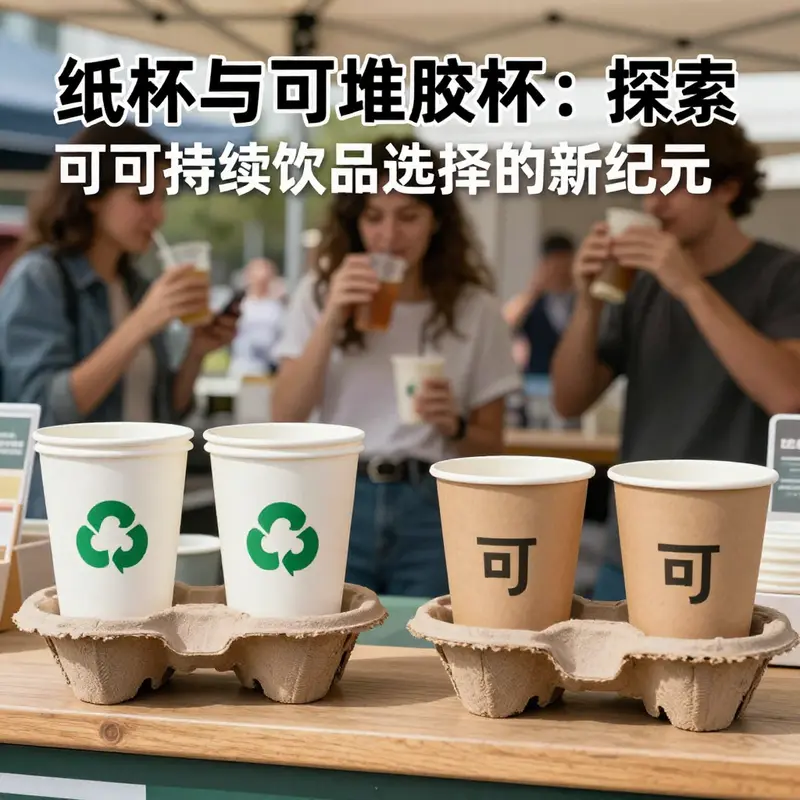
纸杯和可堆肥杯在现代饮品行业中日益互动,尤其在环保意识日增的今天。两者虽然表面上似乎相似,实则在材料、回收方式、经济成本、社会接受度及政策背景等方面存在显著差异。本文将详细探讨这两种杯子的优缺点,帮助泡泡茶店、饮品连锁店、餐馆、食品卡车和活动策划者等行业做出更有利于环境的选择,为未来的可持续发展铺平道路。
从纤维到堆肥:纸杯与可堆肥杯的材料与环境代价
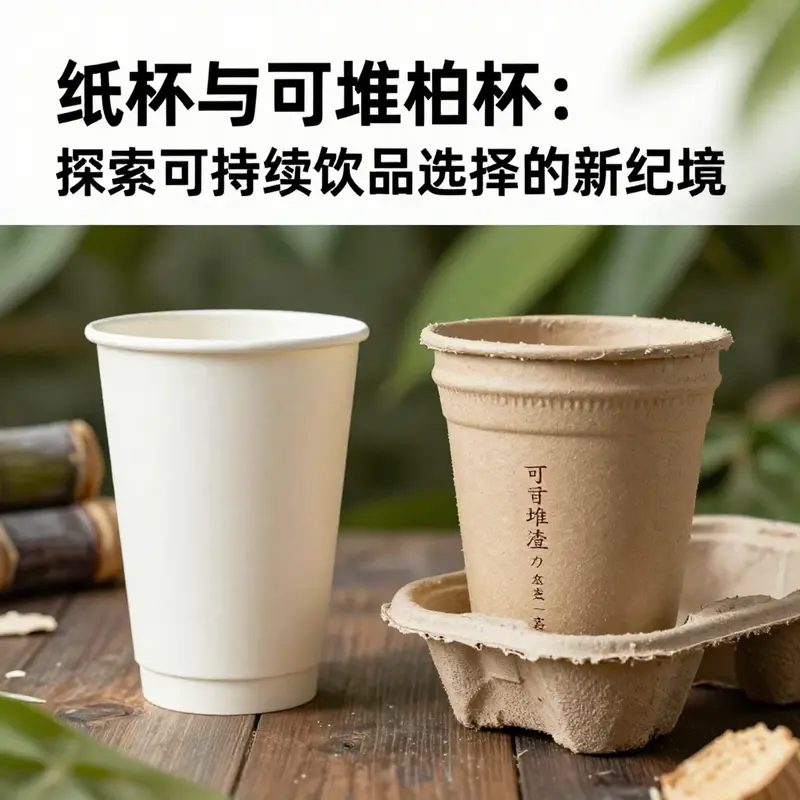
材料与环境影响深度对比
纸杯与可堆肥杯看似相近,但在材料构成和最终命运上存在本质差别。理解这些差别,有助于在日常选择和政策制定中做出更明智的判断。以下以材料来源、制程影响、使用安全与终端处理为线索,连贯地解析两者为何在可持续性上表现迥异。
传统一次性纸杯的主体通常由原生木浆制成。木浆来源于森林资源,可再生且容易加工成纸板。问题出在防水层:为了承载热饮或冷饮,内壁常被涂上一层聚乙烯(PE)或蜡。这层薄薄的涂层决定了纸杯能否盛放液体,但也将回收和降解变成难题。PE是典型的石油基塑料,既不可生物降解,也难以在废纸回收中分离。许多回收厂因无法高效剥离涂层,选择将这类纸杯归为不可回收废弃物,直接进入填埋或焚烧链条。
为降低成本或宣称“可降解”,部分纸杯使用了聚乳酸(PLA)涂层或混入再生塑料。这带来两种后果。其一,含PLA的纸杯只有在工业堆肥条件下才会有效分解,家庭堆肥或自然环境中几乎不降解。其二,若生产中混入不明来源的再生塑料或聚丙烯(PP),可能引入有害杂质。低成本产品在高温条件下还会释放出挥发性有机化合物或其他污染物,存在潜在健康风险。
与之形成鲜明对照的是经生物聚合物制成的可堆肥杯。以聚羟基烷酸酯(PHA)为代表的材料,通过微生物发酵由植物性碳源转化而成。PHA的关键优势在于其广谱的可降解性:在家庭堆肥、土壤、淡水,甚至海洋环境中,都能被微生物分解成水、二氧化碳与生物质,不留微塑料残留。相比需要高温高湿的工业堆肥的PLA,PHA在自然条件下表现更为可靠。因此,从设计源头到终端分解,PHA更接近闭环的有机循环理念。
材料差异直接导致回收与处理路径的不同。传统纸杯因为“纸+塑”复合结构,回收效率低,通常无法进入常规废纸回收流;即便进入焚烧或填埋,也会带来碳排放与填埋占用。相反,可堆肥杯不适合传统回收,但如果进入有机废弃物处理系统,则可转化为堆肥,回归土壤并固定碳。这种“从植物到土壤”的循环,显著降低了对化石碳的依赖,并减少长期环境负担。
在碳足迹层面,评估并非只看生产那一刻。纸杯的木材来源可被视为可再生碳源,但如果涂层依赖石油基塑料,整个生命周期的碳排放仍偏高。涂层的生产、运输与废弃处理都会增加温室气体排放。可堆肥杯的原料若来自覆盖面积大的农作物或工业副产物,其生产过程的碳排放可以较低,甚至在某些情景下实现负碳(通过在生长阶段吸收大气二氧化碳并将有机碳最终回归土壤)。不过,必须注意,任何生物基材料的低碳优势,依赖于原料来源的土地利用和供应链的能源结构。
健康风险是另一个不可忽视的维度。低质量纸杯在生产或加热时可能释放出不良物质。某些再加工塑料中的裂解产物,在高温下会向饮品迁移,带来异味或潜在毒性。相比之下,真正以PHA等经过食品接触安全认证的生物材料制成的杯具,其材料本身在标准条件下不会向食品迁移有害物质。但两者的安全表现也取决于生产质量控制与认证是否严格——优良的供应链是前提。
环境行为并非单靠材料本身决定,还取决于人类如何处理废弃物。可堆肥杯的优势在人工回收和处理体系完善时才能显现。若这类杯子被随意丢弃进一般垃圾,终端进入缺乏氧气与微生物活性的填埋环境,其分解速度会大幅减慢,效果可能不如预期。换言之,材料创新必须与基础设施建设同步:分类回收、社区或工业堆肥设施、清晰的标识与公众教育,缺一不可。
在实践层面,企业和机构在选择杯具时应把生命周期视为决策核心。若所在地区具备工业堆肥系统,使用PLA涂层的纸杯或PLA制品可行;但若目标是最大限度减少长期微塑料风险,选用能够在自然环境中分解的材料更理想。对于希望兼顾成本与环保的场景,可以采用双层纸杯或纸套设计,但同时需要明确回收路径,以免增加处理复杂度。
消费者层面,正确的选择应基于本地区的废弃物管理状况。若社区有有机废物处理通道,支持将可堆肥杯投入该通道。若没有,选择可回收纸杯并确保进入可回收系统,或携带可重复使用杯更为稳妥。无论何种选择,透明的标签和教育能大幅提升最终环境效益。
最后,需要强调一点:物料本身并非单一的“解决方案”。真正的可持续转型要求材料创新与回收、堆肥基础设施、政策激励与公众参与共同发力。在这种复合策略下,基于PHA等先进生物材料的可堆肥杯可以发挥最大价值,减少塑料污染并降低健康风险。而在设施不足的地区,短期内仍需通过改进纸杯设计和提高回收效率来降低环境代价。
若想了解传统纸杯市场的实际产品示例,可参考一次性纸杯目录,以便比较设计与材料标识。一次性纸杯产品页。
更多关于PHA材料在家庭与自然环境中分解能力的权威说明,请参阅提供的外部资料链接。
https://www.amazon.com/dp/B0C7QXZK5F
从涂膜到堆肥:纸杯与可堆肥杯在回收与降解道路上的真实差异
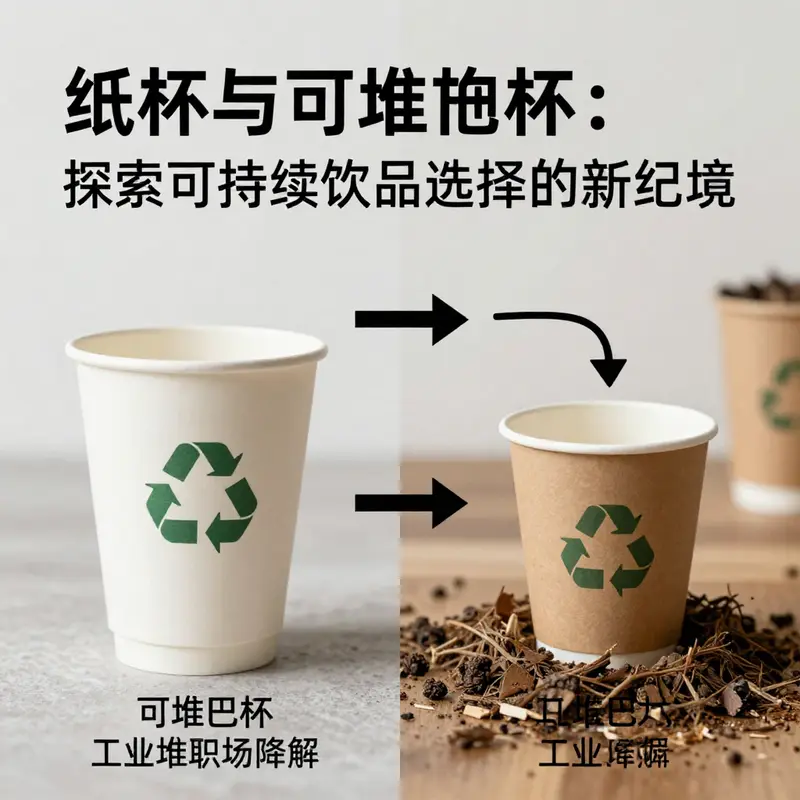
纸杯与可堆肥杯在回收与降解过程中的差异,既关乎原材料,也关乎我们选择处理方式的能力与社会基础设施的完善。 纸杯长期以来靠纸浆加薄膜的复合结构解决防漏问题,但也由此陷入回收困局。可堆肥杯从设计开始就考虑生命周期末端,采用PLA、PHA等生物基薄膜或完全由植物纤维构成,理论上能在工业堆肥中彻底回归自然。理解两者的差别,需从材料构成、处理路径与现实限制三个维度来观察。
纸杯的主体是约95%的纸浆,加上约5%的聚乙烯(PE)涂层。这个涂层确保杯子可以装热饮而不渗漏,但正是它,使得纸杯无法进入常规废纸回收系统。造纸回收工艺依赖于将纤维与杂质分离,然而热压复合的塑料膜很难在脱墨和漂白过程中被去除。残留塑料会导致再生纸出现黑斑,降低纸浆强度,甚至堵塞生产设备。于是,许多城市把涂膜纸杯列为“受限回收物”,多数情况下进入焚烧或填埋处理。少数具备先进工艺的企业,采用湿法碎解、浮选分离等工序拆解复合材料,回收纤维和塑料,但这种工业化分离需要设备与成本,难以普及到所有地区。
相比之下,可堆肥杯通常使用生物降解薄膜或完全由植物纤维制成,材料可源于甘蔗渣、竹纤维或玉米淀粉。关键是这些材料能在特定条件下被微生物分解,生成二氧化碳、水和有机质,且不留下持久性微塑料。将这类杯子视为“生物回收”而非传统意义上的物理循环,是理解其处理方式的核心。它们的理想归宿是工业堆肥设施,在超过58℃的高温、充足氧气和适宜湿度条件下,杯体能在数十到一百八十天内完全分解,并为土壤补充有机质。
然而,事实并非理想化设想。可堆肥杯对回收链条和处理设施的依赖,比纸杯更强。只有被正确分类并送入工业堆肥系统时,它们才能实现环境价值。在普通填埋场或自然环境中,温度与微生物活性不足,生物基材料的降解速度会大打折扣。结果是,许多可堆肥制品在现实中并未被堆肥,反而与传统塑料制品一样滞留在垃圾中多年。我国当前可堆肥垃圾的收运体系尚未覆盖全国,仅在若干试点城市部分运行,这直接限制了可堆肥杯的实际效果。
从环境风险角度看,传统涂膜纸杯的长期隐忧在于微塑料和有害物质的释放。尽管纸基可以在多年内部分降解,但内层PE薄膜分解需几十年,过程中会释放出微小塑料颗粒,对土壤与水体造成长期影响。已有研究显示,某些纸杯涂层在进入自然环境后会释放对生态系统不利的化合物,影响水生生物和昆虫的生长。可堆肥杯在被正确处理时不会产生持久微塑料,但一旦被错误处置,同样会变成长期污染源。两者的共同结论是:处理方式决定最终环境结果。
经济与普及性也在塑造现实选择。涂膜纸杯因成本低廉、生产与供应链成熟,仍是市场主流。很多商家选择标准涂膜纸杯以降低成本和确保操作便利。为批量采购常见的一类产品,可参见一次性纸杯批量页面以了解市场常态与规格。然而,当政策与消费者偏好推动可堆肥替代时,短期成本与配套设施的缺失成为推广障碍。可堆肥材料价格在下降,但大规模替代仍需时间和规模化生产支持。
社会基础设施的建设,决定了“绿色承诺”是否能变为现实。要发挥可堆肥杯的环境优势,必须实现几个环节协同:一是完善垃圾分类体系,使可堆肥器具被准确投放;二是建设和扩展工业堆肥设施,覆盖城市和乡村的处理需求;三是建立收运与监测标准,防止可堆肥物与普通垃圾混装;四是对企业与消费者进行持续教育,明确可堆肥产品的正确处置方法。缺一不可。仅靠生产端的改变,而缺少末端处理能力,无法实现闭环。
此外,技术演进提供了解决路径。对纸杯而言,改良型水性涂层或易分离复合结构,能降低回收难度。某些企业探索在设计上便于机械分离的层压结构,或使用可回收的涂膜类型。对可堆肥杯,研究在提升高温堆肥下的降解速率与机械强度之间寻找平衡,例如改性PLA配方、共混PHA以增加韧性等。长期看来,材料科学与回收技术并进,才是两种杯具共同的出路。
最重要的一点,是行为层面的改变。无论是纸杯还是可堆肥杯,减少一次性使用才是最高效的策略。推广自带杯、提供可重复使用的租赁与清洗体系,能直接减少资源消耗与垃圾产生。在无法避免一次性杯具的场景里,选择并正确处置可堆肥杯,结合地方堆肥基础设施,则能把一次性消费的环境代价降到最低。
总之,纸杯与可堆肥杯的回收与降解路径,反映了材料设计与社会体系之间的相互依赖。纸杯在现有回收体系下面临技术瓶颈,而可堆肥杯则受制于堆肥基础设施的覆盖。两者的差别,不仅在化学成分,更在于我们是否为它们提供了合适的终点。要实现真正的可持续,既要在产品端改进材料技术,也要在政策端与公共服务上补齐处理能力。更多关于一次性纸杯的市场规格与常见型号,可参考一次性纸杯批量页面。
更多关于工业堆肥标准和运行条件的权威说明,可参见美国环境保护署关于堆肥处理的介绍:https://www.epa.gov/recycle/composting-home
成本与价值:纸杯与可堆肥杯的经济权衡与基础设施依赖

在比较纸杯与可堆肥杯的经济性时,必须把视角从单杯成本扩展到供应链与处理体系的全生命周期成本。单纯比价会掩盖关键变量:原材料来源、生产工艺、设备能耗、合规与认证成本,以及最终的回收或堆肥处理能力。只有把这些要素连成一条链,企业与公共决策才能获得真实的经济图景。
成本结构一旦被拆解,就能看清为何普通纸杯在短期内占据优势。以一只标准12盎司纸杯为例,原材料占比极高,约为总成本的60%至70%。食品级原纸通常在0.12至0.15元每只,内层的聚乙烯(PE)淋膜再增加约0.03至0.05元。如果改用可降解聚乳酸(PLA)涂层,材料成本会额外上浮20%至30%,相当于每只增加0.03至0.05元。设备折旧、能耗与人工合计占到总成本的25%至35%,因此常规纸杯的综合生产成本通常落在0.18至0.25元区间。对于追求短期成本可控的餐饮连锁与批量采购方,这样的价格具有显著吸引力。
与此同时,行业技术进步也在不断拉低纸杯成本并提高市场接受度。最近技术突破允许部分纸杯在不牺牲防漏性能的前提下,采用更高效的生产工艺与材料配比,从而推动“以纸代塑”向更广领域扩展。这类变化短期内更利于纸基解决方案成为多数商家的经济选择。作为对比,市场上被标注为“可堆肥”的杯型,其经济模型则更复杂也更脆弱。
可堆肥杯的原料多为可再生生物基资源,如玉米淀粉、甘蔗渣或竹纤维。这些材料表面看似符合长期可持续目标,但制造工艺往往更复杂,需额外加工、改性与成型技术,从而推高生产成本。行业观察显示,可堆肥材料的单位成本普遍高于传统纸基与塑料材料。更重要的是,部分厂商为降低成本,会在生物基材料中掺入不可降解的聚丙烯(PP)或其他合成聚合物。这种“伪可堆肥”现象不仅侵蚀市场信任,还带来监管与法律风险。媒体披露的个案指出,掺杂不当可能导致安全隐患与有害残留,从而为成本之外增加巨额的召回与合规负担。
对可堆肥杯的经济价值评估,不能忽视回收与处理端的投入。可堆肥设计的效益几乎完全依赖工业堆肥设施。只有在高温、高湿、特定微生物活性条件下,这类杯子才能在规定时间内完全分解为二氧化碳、水与稳定的有机质。缺乏统一的分类体系与广泛分布的工业堆肥场时,绝大多数可堆肥杯最终仍被送进填埋或焚烧体系。这种处理路径会剥夺其环境价值,也使得原本计划中的正外部性无法转化为企业或社会的实际收益,进而影响成本合理性。
从企业决策角度看,纸杯的短期经济优势显著,但必须计入长期环境成本可能带来的外部负担。例如,当监管趋严、环保税费或处置费用上升时,纸杯的隐性成本会显著上升。此外,若纸杯所用的内层涂膜在自然环境中释放对生态有害的化学物质,其社会成本与形象风险无法用单次采购价衡量。相对地,可堆肥杯若得到有效的堆肥系统支持,则在长期内可能实现低碳与资源闭环带来的价值回收,但这需要配套政策、认证体系与处理网络的同步完善。
因此,评估谁更“划算”不能仅看生产每只的出厂价。更准确的做法是进行场景化成本-效益分析:考虑产品使用场景、地域内的分类与处理基础设施、供应链透明度与认证成本,以及因合规或负面事件引发的长期品牌损失。对多数城市与商家而言,如果堆肥设施尚未覆盖或分类体系不成熟,采用常规纸杯并结合更严格的材料选择(例如避免有害涂层)可能是现实选择。与此同时,有条件的企业可通过采购确认证书齐全的可堆肥杯,配合内部回收与委托堆肥服务,来承担起更高的前期成本以换取长期的环境溢价与品牌价值。
政策与基础设施将决定市场走向。若政府推动堆肥设施布局、补贴可堆肥材料研发并建立严格的检测认证体系,可堆肥杯的单位经济性将随规模化和技术进步而改善。相反,若监管松散,伪可堆肥产品泛滥,市场信任受损,真实可堆肥解决方案的普及将被拖延。换言之,产业链上每一环的效率都直接影响单杯的“真实成本”。
为实践层面的参考,可结合现成的产品与供应链选项制定分阶段策略:在设施不足地区,优先使用成本可控且材料透明的纸基杯,并致力于材料升级与可回收设计;在具备工业堆肥能力的地区,则逐步引入经认证的可堆肥杯,形成“试点-规模-闭环”的转型路径。企业可以通过采购策略、客户教育与合作伙伴关系,降低转换过程中的摩擦成本。
在这场从一次性使用走向闭环循环的转变中,经济性并非静态的数字。它是一组随技术、政策和基础设施变化而不断重算的变量。理解这些变量间的相互作用,能帮助企业与政策制定者做出既现实又前瞻的选择。
更多关于纸制替代技术如何影响成本的行业分析,可参考下面的深度报道:
外部参考: https://www.jingbao.com.cn/article/20251210/123456.html
内部资源示例:一次性牛皮纸杯(disposable-paper-cups-kraft-paper-cups)详细产品页:https://ecocupbowl.com/product/20-50-200pcs-disposable-paper-cups-kraft-paper-cups-coffee-milk-cup-paper-cup-for-hot-drinking-party-supplies-8-10-12-16oz-cups/
Seeing Through the Lid: Social Perception, Hygiene Myths, and the Rise of Compostable Cups in a Paper-Cup World

Perception often travels ahead of policy, technology, and even science when the simple act of choosing a cup is involved. In public discourse about disposable cups, many people treat the paper cup as the default, familiar, and hygienically superior option. Yet behind the visible convenience lies a more complex narrative about end-of-life disposal, material composition, and the social meaning of sustainability. The social cognition surrounding cups rests on two intertwined impulses: a reverence for cleanliness and a trust in familiar packaging, and a growing skepticism about waste when it is not handled properly. The paper cup, with its interior coating and waxed barrier, appears to offer a sanitary and reliable vessel for hot beverages. In practice, however, that appearance can obscure the real environmental tradeoffs. The very feature that makes a paper cup leak-proof—the coating—also complicates its recycling. In many waste streams, coatings and contaminants render cups non-recyclable, or at best only partially recyclable, leaving a paradox: a hygienic seal that thwarts a circular path back to a new cup. The social question then becomes not merely about how clean a cup feels, but how responsibly it ends its life after use.\n\nPublic understanding of compostable cups compounds this complexity. Compostable options, often made from biobased materials such as bagasse, bamboo fiber, or plant-derived polymers, promise a different end state—a return to soil through industrial composting. This potential is powerful in a world increasingly wary of fossil-fuel dependence and plastic pollution. Yet the social narrative around compostables tends to hover between two extremes. On one side lies the compelling image of a product designed to disappear safely, leaving behind no toxic residues. On the other, a set of misconceptions that “compostable” means universally and automatically harmless, or that it requires no specialized infrastructure. Both extremes miss crucial realities: compostable cups depend on industrial composting conditions that replicate high heat, moisture, and microbial activity. If misdisposed—thrown into a regular landfill or left in nature—the material may degrade far more slowly, or behave no differently from conventional plastics in terms of environmental impact. This gap between expectation and end-of-life reality has become a focal point for consumer education and policy design alike.\n\nThe shift in consumer sentiment is not purely about end-of-life mechanics; it is also about everyday values and lifestyle signals. A growing segment of consumers connects small daily choices to a larger narrative of planetary stewardship. They are not simply buying a cup; they are signaling priorities—reducetheir plastic footprint, support renewable materials, and advocate for packaging systems that align with local waste management capabilities. This psychosocial shift is most evident among younger consumers and urban professionals who frequently encounter packaging choices across a dense ecosystem of coffee shops, universities, and social venues. The same demographic is often more receptive to standardized labeling, transparent life-cycle information, and visible corporate commitments to sustainability. Yet this openness to sustainability does not automatically translate into behavior that truly reduces environmental impact. A cup might be labeled as compostable, but if the consumer lacks access to industrial composting facilities or inadvertently contaminates the compost stream, the intended end-of-life benefits may evaporate. In other words, consumer intent interacts with municipal reality, and the result depends on the robustness of local waste infrastructure as much as on product design.\n\nFrom a branding standpoint, the consumer-facing conversation around cups now often navigates a delicate balance. Hygiene remains a persuasive selling point for some shoppers who equate paper cups with cleanliness due to the high-temperature processing involved in manufacturing and the perceived sterility of the final product. That belief, while rooted in comfort, can interact unpredictably with environmental concerns. Many readers assume that any paper-based solution is inherently more recyclable than its biobased counterparts, ignoring the practical barriers that coatings or adhesives introduce to the recycling stream. Conversely, compostable cups are increasingly seen as modern, responsible choices—especially in settings that tout zero-waste ambitions or that actively promote sustainability storytelling. But the narrative must go beyond the glossy headline of “compostable equals better.” The social mechanics of disposal matter deeply: who collects, who sorts, and what facilities exist to process the material? A cup can be celebrated as green in a storefront, yet if the local composting network is underdeveloped or if consumers are unclear about where to dispose of it, the benefit becomes diluted, and the policy promises risk becoming mere rhetoric.\n\nPolicy and market signals increasingly reinforce this evolving perception. In many regions, disposable cup markets continue to grow in volume, reflecting demand, urban density, and the ubiquity of on-the-go consumption. At the same time, stricter packaging guidelines and the rising visibility of carbon footprint disclosures are nudging consumers toward products that demonstrate end-of-life responsibility. The social equation thus becomes a negotiation: can institutions, retailers, and manufacturers craft packaging systems that resonate with the everyday shopper while ensuring that the end-of-life pathway is practical, reliable, and verifiable? The answer hinges on compatible infrastructure, reliable labeling, and consistent consumer education. When a retailer clearly communicates that a cup is compatible with an industrial composting stream and supports the necessary sorting processes, it reduces the cognitive dissonance many shoppers feel between their values and their actions. In more formal terms, the social value created by compostables depends as much on systemic coherence as on material innovation.\n\nInfrastructure plays a decisive, often underappreciated, role in shaping both perception and behavior. Compostable cups designed for industrial composting assume a world in which municipal and private facilities exist to reach temperatures and microbial conditions that enable complete breakdown within defined time frames. Absent that environment, the environmental edge of compostables can be blunted or reversed. The public’s willingness to embrace compostables is thus tethered to the reality of waste management networks. This is why some cities have pursued robust zero-waste programs, integrated with educational campaigns and standardized labeling, to guide consumers toward the correct disposal practices. When these programs work, the public begins to favor systems that show tangible, measurable environmental benefits—systems that can demonstrate that compostable cups do, under the right conditions, close the loop. The challenge remains considerable: aligning product design with waste infrastructure and ensuring institutions bear the cost and responsibility of operating those facilities at scale. Without harmonization across producers, retailers, and waste managers, perceptions can swing between optimistic expectations and practical disappointment.\n\nEconomics and functionality intertwine with perception in subtle, persistent ways. The cost differential between traditional paper cups and compostable alternatives is often cited in conversations about adoption. Yet the narrow price comparison misses broader economic and environmental costs, including the externalities of disposal, energy use in washing and sorting, and the opportunity costs of an underdeveloped composting sector. In a circular economy framework, the value of a cup must be considered within a system that captures post-use outcomes, not merely the price tag on the shelf. This reframing helps align consumer expectations with real-world performance. It also clarifies the role of materials engineering, where the goal is to create cups that deliver the same functional performance as conventional options while reducing the burden on waste systems. If compostable cups can achieve parity in leakage protection, heat resistance, and user experience at a lower lifetime environmental cost, social perception will steadily tilt toward them as the default choice in many contexts. Until that alignment becomes universal, perception will continue to be mediated by local realities—the availability of compost facilities, the clarity of disposal instructions, and the visible signals that brands project about their sustainability commitments.\n\nTurning to the practice of consumption, everyday choices at the point of sale reveal evolving attitudes toward packaging responsibility. In environments that emphasize transparency and consumer education, staff and signage increasingly explain not only how to use a cup, but how to dispose of it properly. The dialogue shifts from a sole focus on hygiene or convenience to a conversation about environmental stewardship, municipal capabilities, and personal responsibility. For many customers, this broader frame makes the act of choosing a cup feel meaningful—part of a larger, shared effort to redesign consumption patterns. At the same time, consumers often rely on trusted cues: the presence of clearly marked compostable streams, the availability of collection points, and the reputational signals of cafes or vendors that publicly commit to responsible packaging practices. In the end, the social momentum for compostable cups grows where there is alignment among product design, consumer education, and waste management infrastructure, creating a predictable and scalable end-of-life path.\n\nAs this alignment thickens, a practical lever for accelerating change emerges: partnerships between packaging innovators and waste managers that demonstrate clear, measurable outcomes. A credible, transparent narrative about end-of-life performance can move public perception from cautious curiosity to confident adoption. In this sense, the social shift is less about a sudden revolution and more about the steady building of trust: trust in the capacity of compostable materials to deliver function, in the honesty of labeling about end-of-life requirements, and in the reliability of community waste systems to process what households and businesses contribute. The momentum is strongest where stakeholders speak in a common language—one that combines material science with waste-management logistics and consumer education. When this language translates into concrete experiences—cups that perform as well as traditional options and a disposal process that actually works—the social perception catches up with the environmental potential, and the consumer market follows.\n\nFor those seeking a tangible example of how packaging choices are increasingly framed around end-of-life practicality, consider the broader ecosystem of eco-friendly packaging options that accompany food and beverage service. This serves as a reminder that a cup, unlike a simple utensil, sits at the center of a complex chain of design, use, and disposal. The discussion matters because it translates into everyday decisions that add up to significant environmental footprints. To explore a concrete instance of how packaging can be organized to support a closed-loop approach, see eco-friendly-disposable-3-compartment-food-grade-packaging-box-for-fast-food-high-quality-takeout-boxes. The reference underscores that the packaging system, not just the cup itself, can embody sustainability through thoughtful design, compatibility with waste streams, and consumer clarity about disposal. Such examples help bridge the gap between abstract environmental ideals and everyday use, reinforcing the social momentum behind compostable cups where infrastructure and education converge with practical product performance.\n\nUltimately, the social cognition guiding cup choice will continue to evolve as cities invest in better waste management, as regulators refine labeling standards, and as manufacturers demonstrate that compostable materials can deliver on both function and end-of-life expectations. The future lies in a composed blend of clear communication, accessible composting, and resilient design. When consumers understand not only how a cup works but how it ends its life, they are more likely to opt for systems that align with their values and the realities of their communities. The paper cup remains a powerful symbol of convenience and sanitary assurance, yet it is increasingly perceived as a transitional technology—one whose environmental benefits are contingent on the infrastructure that supports its disposal. Compostable cups, by contrast, carry an aspirational promise: a material that, under the right conditions, can return to the earth without toxic residues. The path forward is not simply to replace one form with another, but to knit together product design, consumer education, and waste-management capability into a coherent, scalable system. When that happens, the lid becomes a window into a more sustainable everyday practice rather than a barrier to it.\n\nExternal reference: Statista – Global Disposable Cup Market Size by Material (2026 update) https://www.statista.com/statistics/1478986/global-disposable-cup-market-size-by-material/
Policy Currents and the Push Toward Closed-Loop Cups: Reimagining Paper and Compostable Cups in a Waste-Constrained World
Policy has moved from a cautious nudge to a structured mandate, shaping the market for disposable cups in ways that align with broader climate and circular economy goals. When regulators frame packaging as a device to manage material flow from cradle to cradle, the table changes for both paper cups and compostable cups. The shift is not merely about banning a few plastics; it is about engineering a system in which the end of a cup’s life feeds back into production. This system-level thinking sits at the intersection of consumer behavior, manufacturing economics, and municipal waste management. It asks us to imagine a future in which a cup’s afterlife is more than a liability; it becomes a resource that strengthens local economies and reduces environmental harm. In this sense, policy acts as both a catalyst and a compass, guiding product design, supply chains, and consumer expectations toward outcomes that were difficult to achieve with traditional, linear packaging.
Across the globe, the momentum is strongest where governments explicitly link policy to measurable environmental outcomes. In two of the world’s largest markets for cups—one domestic and one regional—the trajectory is increasingly clear: policies that previously limited certain plastics are now actively encouraging or mandating alternatives that can realistically meet end-of-life criteria. The Chinese policy landscape, for instance, has evolved from broad directives to targeted actions that seek to align food-contact safety, material science, and waste management infrastructure. The core instruments include tightening standards for recyclable and compostable products, along with incentives or requirements that favor materials designed for industrial composting or other forms of sustainable degradation. This alignment is essential because the mere presence of a biodegradable molecule in a cup does not guarantee a favorable environmental outcome if the waste stream cannot separate and treat it appropriately. The result is a policy environment that pushes brands and manufacturers to innovate not just the product, but the end-to-end system around it.
Internationally, the European Union’s regulatory posture has amplified these dynamics. With the 2021 and subsequent implementations, a broad class of single-use plastics faced bans or stringent restrictions. The practical implication is clear: plastic cups without a viable end-of-life option lose market access or face escalating regulatory costs. For global operators, this creates a dual pressure—to reduce reliance on fossil-based feedstocks and to ensure that replacement cups can be collected, sorted, and processed in compatible facilities. In this context, compostable cups, when paired with robust industrial composting infrastructure, emerge not simply as a substitute but as part of a legally enforceable framework that rewards lifecycle-conscious design. The policy signal, therefore, is less about choosing between paper and compostable cups and more about building the scaffolding that makes the preferred option viable and scalable.
The practical execution of these policies hinges on a few non-negotiable realities. First, the end-of-life pathway must be predictable and verifiable. This is where certification schemes and standardized labeling matter. The market needs independent validation that a cup marketed as compostable truly behaves as a compostable product in a facility designed for that purpose. Certifications such as OK Compost and BPI provide frameworks for testing, performance, and environmental claims. Without such assurances, a policy-driven shift risks becoming greenwashing, a risk regulators and stakeholders are keen to avoid. Second, the infrastructure gap cannot be ignored. Industrial composting facilities, autoclave systems, or dedicated anaerobic digestion plants are not universally available, and the absence of appropriate treatment capacity can stall even the most well-conceived policy. Consequently, the policy narrative must pair mandates with investments in municipal collection, separation, and processing networks, alongside incentives for private sector collaboration to expand capable networks. And finally, consumer participation remains essential. Clear labeling, simple sorting rules, and consistent public messaging reduce the chances of contamination or misplacement of compostable cups, which can undermine both environmental outcomes and public trust.
This triad—standards, infrastructure, and consumer clarity—frames the policy-driven route for paper cups versus compostable cups. It illuminates why paper cups, particularly those with barrier coatings that hinder recycling, face increasing scrutiny under modern waste-management regimes. A paper cup with a polyethylene or paraffin interior remains functional for liquids, but the built-in barrier complicates conventional recycling streams. Even when such cups end up in appropriate facilities, the separation of the liner from the pulp is technically challenging and costly. In contrast, compostable cups designed with bio-based polymers or plant-fiber matrices aim to fit a different end-of-life scenario. When industrial composting is available and properly managed, these cups can break down into harmless constituents within a predictable time frame. Yet the real-world performance of compostable cups depends on the maturity of the composting network. If containers are composted alongside food scraps in a well-functioning facility, the process can yield a valuable organic byproduct. If not, the cups may degrade slowly or accumulate as litter, undermining both policy aims and consumer confidence. This reality reinforces the policy imperative: the transition to compostable cups must be embedded in a broader system that makes the end life feasible, reliable, and traceable.
To connect policy with practice, consider the lifecycle and the cost calculus that policy-makers and businesses must navigate. On one hand, the policy push to reduce plastic waste elevates the value proposition of compostable cups, particularly in segments with heightened consumer expectations for sustainability, such as premium beverages and themed hospitality experiences. On the other hand, the higher upfront material costs, any potential need for specialized processing, and the scale of required infrastructure can temper near-term market acceleration. The challenge then becomes one of policy design that rewards long-term benefits—reduced waste management burdens, lower risk of persistent litter, and clearer consumer information—while supporting pilots and scale-up programs that demonstrate real-world viability. This is where collaboration among municipalities, waste-management operators, material scientists, and brand owners becomes essential. The goal is not merely to phase out one material in favor of another but to align policy levers with the operational realities of end-of-life processing, the economic signals that drive investment, and the consumer behaviors that determine what ends up in the correct stream.
Within this broader policy and systems lens, the example of a widely available, adaptable cup variant helps illustrate the transition. Consider the range of paper cup designs that can be oriented toward compatible end-of-life pathways without sacrificing performance. In practical terms, a cup that uses a double-layer structure or a carefully chosen barrier system can improve insulation and strength while remaining compatible with more advanced recycling streams or composting processes. The conversation around such designs is no longer about a single material choice; it is about a portfolio of options that fit distinct waste-management realities and regulatory environments. For readers seeking a concrete example of a product category evolving under policy pressures, one can explore a representative option that embodies this shift: Double-layer disposable paper cup. This reference is illustrative of how design variations can strike a balance between functionality and end-of-life flexibility, serving as a bridge between traditional needs and future expectations.
From a policy perspective, the chapter’s thread leads to a clear implication: in the race to a sustainable cup, the winner will be the approach that most effectively integrates design choices with reliable processing and consumer participation. Chips in this system—whether subtle, like a more transparent labeling scheme, or structural, like a mandate for standardized compostability testing—can cascade into meaningful environmental improvements. The policy framework that succeeds will not celebrate a single technology in isolation but will recognize the value of a mature, diversified market in which both paper cups and compostable cups offer viable paths. It will encourage investment in local processing capacity, support robust life-cycle assessments, and foster continuous learning as technology and infrastructure evolve. In that sense, the future of disposable cups is not a binary choice between a familiar, cheaper option and a newer, greener alternative; it is a coordinated evolution where policy, technology, and public participation converge to enable genuine circularity.
For readers who want to trace the continuum of policy-driven change in the packaging sector, it is worth acknowledging how the market responds to this policy architecture. The paper cup remains deeply entrenched in many supply chains because of its established manufacturing base and perceived low upfront cost. Yet the long-term value proposition of compostable cups—when matched with scalable, well-organized end-of-life systems—offers a pathway to reducing environmental burdens that have persisted for decades. The real test lies in the alignment of incentives: regulators must reward the development of tested, certifiable compostable options, cities must invest in the necessary waste-handling infrastructure, and businesses must demonstrate that the full lifecycle benefits justify any premium costs to consumers. When these conditions coalesce, policy does not merely dictate a substitution; it enables a genuine shift toward a circular economy that treats cups as resources rather than waste.
In sum, policy and future development directions for paper cups and compostable cups are inseparable. The trajectory hinges on three interlocking elements: credible standards and labeling that establish trust; scalable infrastructure that makes end-of-life processing practical; and business models that recognize the long-term financial and environmental value of closed-loop systems. The outcome is not predetermined, but the pathway is clearer than ever. A future in which compostable cups play a central role is plausible, but only if policy, industry, and consumers work in concert to close the loop. This integrated approach reduces the likelihood of misaligned incentives and paves a more robust route to sustainable on-the-go drinking. As the sector continues to evolve, the chapter’s core message remains intact: policy is not an external constraint but a mechanism that catalyzes technological innovation, circulates value back into communities, and clarifies the shared responsibility for the planet we leave behind. The dialog between regulation, market readiness, and consumer behavior will shape which cup ultimately becomes the standard—and how quickly the industry can move toward a truly circular, low-impact model.
External resource: https://www.chinabgao.com/report/2025/07/20250707111229.html
Final thoughts
综上所述,选择纸杯或可堆肥杯不仅涉及到美观和成本,更关乎企业的环境责任。通过深入了解材料成分、回收与降解过程、经济成本、社会认知及政策发展,饮品商可以更智慧地做出选择,为可持续发展贡献一份力量。可堆肥杯虽然面临挑战,但凭借其在环保上的巨大潜力,正在逐渐成为市场的新趋势。