

Understanding the nuances of coffee preparation is essential for beverage vendors aiming to serve quality brews. One crucial element often overlooked is the type of coffee filtration used. Perfect POD EZ-Cup Disposable Paper Filters provide a dedicated solution that meets the needs of various beverage-focused businesses, from bubble tea shops to catering services. Designed specifically for the EZ-Cup brewing system, these filters ensure that every cup brewed is rich in flavor and free from unwanted bitterness. This article delves into the design and functional features of these filters, their packaging options, and the profound impact they have on coffee quality, ultimately supporting businesses in delivering noteworthy beverages with ease.
From Filtration to Flavor: The Engineering Behind Disposable Paper Filters for Single-Cup Brewers
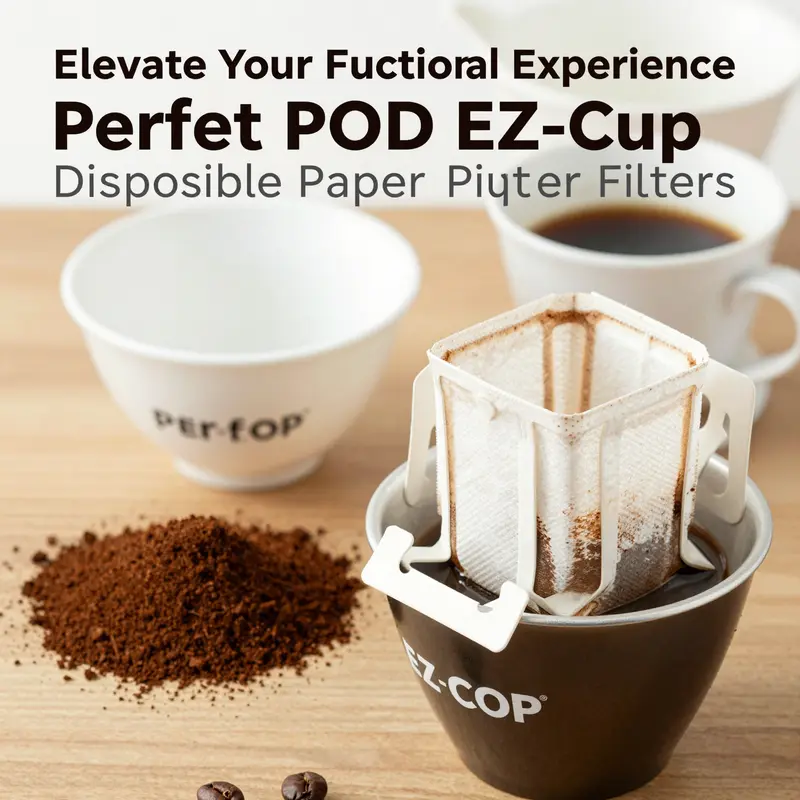
Filtration is often the quiet hinge on which a cup of coffee swings from ordinary to memorable. In the world of single-cup brewing, where convenience travels hand in hand with expectation, the filter becomes more than a mere barrier. It is a design partner that influences extraction, clarity, and the aroma that lifts the cup from routine to ritual. The chapter that follows examines the design and functional features of disposable paper filters built for single-serve brewers. It traces how a carefully engineered combination of materials, geometry, and disposal considerations translates into tangible experiences—less bitterness, more balance, and a cleaner post-brew routine. This is not a tale about a single gadget but a study in how small, purposeful choices can shape a whole coffee moment. When you pour hot water over ground coffee, you are timing a delicate interplay of diffusion, solubility, and surface chemistry. A good filter helps modulate that interplay. It catches the heavier oils and the fine sediment that can dull the cup, yet it should not strip away aromatics or over-suppress the very flavors that make a roast distinctive. The aim is a smooth, balanced cup that preserves subtleties while offering a clean, bright finish that invites the next sip rather than begging for a chaser of sweetness or cream. In this sense, a well-designed disposable paper filter functions as a tiny, disposable barrier with a big impact on flavor and cleanup.
Design and function come together most forcefully in two linked realms: the physical architecture of the filter and the chemistry of what it filters. On the architectural side, the filter must withstand the heat and pressure of brewing without collapsing or tearing. A notable feature in this class of products is a patented lid incorporated into the filter unit. This lid is not just a cap for convenience; it acts as a structural spine. It provides burst resistance, resisting the sudden surge of water that can momentarily stress the filter. That resilience matters because a filter that fails under pressure can release microparticles or oils into the cup, undermining the very goal of cleaner extraction. The lid’s presence also simplifies post-brew cleanup. When it is time to remove the spent filter, the lid gives you a reliable handle. You can lift the entire unit out of the brewing chamber with minimal contact with grounds and oils, which means less mess on your hands and less residue left clinging to the cup or the machine itself. In practical terms, this means a smoother transition from brew to cleanup and a fewer moments lost to scrubbing or rinsing.
Complementing the lid is the specialized paper itself. The paper used in these filters is chosen for its balance of porosity and strength. It acts like a fine sieve that traps sediment and captures a significant portion of the coffee’s natural oils. Oils contribute to body and mouthfeel, but they can also amplify bitterness if they accumulate and are not properly managed in filtration. By removing a portion of these oils, the filter can moderate body in a way that keeps the cup from tasting heavy or slick. At the same time, the paper is engineered to allow the desirable compounds—acids, sugars, and aromatic oils that define a coffee’s profile—to pass through with integrity. The result is a smoother cup with a more balanced acidity, where the difference between a bright, lively coffee and a flat, dull one becomes discernible yet not jarring. The goal is optimal extraction, where the water evenly interacts with the coffee bed, but with a controlled retention of unwanted compounds that would otherwise cloud the final aroma or finish.
From a material science perspective, the balance between filtration and extraction is a dance of pore size, surface energy, and wettability. The paper’s microstructure determines how quickly water penetrates the bed and how effectively fines—tiny coffee particles—are trapped. If the pores are too large, sediments slip through, producing a muddy cup and a gritty mouthfeel. If they are too small or if the paper binds oils too aggressively, the brew can taste lean, under-extracted, or flat. The designers of these filters have calibrated this balance to align with the behavior of common single-serve brewers. The compatibility with a specific family of brewers—while maintaining broad usability—depends on the filter’s height, cup-fit, and how the filter seals within the brewing chamber. In effect, the paper is not just a disposable medium; it is a carefully tuned interface between coffee and machine that shapes the release and capture of flavor compounds.
Beyond the architectural and material considerations lies the practical dimension of environmental responsibility. The filters in question are marketed as environmentally friendly, with claims of being 100% biodegradable and compostable. For many consumers, that combination of performance and end-of-life convenience becomes a deciding factor at the point of purchase. The ecological logic is straightforward: if a filter can break down in a home or municipal compost system, it reduces the long-term burden of single-use waste. Yet biodegradability and compostability are not automatic guarantees of environmental virtue. They depend on the conditions of disposal, including moisture, temperature, and the presence of microorganisms that accelerate decomposition. When these filters are discarded in a standard landfill, the rate of decomposition slows dramatically. In contrast, if they are composted in appropriate facilities or in well-managed home composts, the materials can re-enter organic cycles with less ecological friction. This nuance matters because it places the environmental narrative of disposable filters within everyday consumer practices. It invites readers to consider not only how a filter performs in the cup but how it participates in the lifecycle of waste and resources. In other words, the value proposition extends from the cup to the compost bin, and ultimately to a more mindful approach to single-serve coffee rituals.
One of the most compelling practical features is compatibility and the way it supports a consistent brewing experience. The filters are designed to fit a popular line of single-serve brewers, holding up to a defined amount of coffee grounds. The 11-gram capacity is not arbitrary; it mirrors the typical weight that many coffees reach when measured for a single cup using these brewers. This weight range aligns with standard grind sizes and brew ratios that many roasters and baristas promote for balanced flavor. When a filter is filled to this capacity, it provides enough bed depth to yield a robust extraction while still allowing for the rapid flow of water that single-serve systems demand. The relationship between the coffee charge and the filter’s porosity helps maintain a consistent flow rate. A steady flow prevents channeling—a phenomenon where water finds easier paths through the coffee bed, resulting in uneven extraction. Channeling often shows up as a cup that is uneven in sweetness and acidity, where some sips taste starker and others flatter. A properly designed disposable filter helps mitigate this risk by its very geometry and filtration properties, supporting a more uniform interaction between water and grounds, sip after sip.
Packaging decisions reinforce the habit of consistent use. These filters are frequently sold in practical pack sizes that suit daily routines and supply budgets. The availability of mid-sized bundles, which balance cost and ambiental practicality, makes it easier for regular users to maintain a steady rotation of clean filters without the mental or physical clutter of constant replacement. The packaging is designed to minimize mess and streamline handling. A compact, user-friendly package reduces waste and supports a smoother restock process, which in turn reinforces regular use and consistent coffee results. The combination of design efficiency and packaging simplicity is not merely about convenience; it underpins the reliability that many home brewers seek when they commit to a system. Reliability matters because a consistent filtration outcome is part of a broader promise: a cup that tastes the same week after week, a baseline that allows personal preferences to modulate the final flavor rather than being swayed by inconsistent filtration quality.
To illustrate how these threads come together in everyday practice, imagine the moment of setup. You open a fresh pack, select a filter, and place it into the brewing chamber. The lid, now an integral part of the system’s architecture, locks into place, giving you a tactile cue of readiness. You scoop in 11 grams of ground coffee, level it, and slide the unit into the brewer. The water begins its journey, percolating through the coffee bed and the paper’s microstructure. In a well-calibrated system, the initial surge carries bright aromatics into the cup, while the latter stage delivers a smooth, balanced finish as fines are throttled by the paper’s porosity. When the draw completes, you remove the filter with a single, clean motion—the lid acting as a handle that reduces contact with grounds. The result is a cup with a clear aroma, a body that feels present but not heavy, and an aftertaste that stays fresh rather than leaving an oily lingering bite. These experiential notes matter because they show how design decisions translate into perceptible differences in taste and ease of use.
From a consumer’s perspective, the value proposition hinges not only on taste but on a predictable, low-friction experience. The disposable paper filter delivers that predictability in several ways. First, the paper’s pore structure reduces the risk of sediment slipping into the cup, which translates into a cleaner, more drinkable texture. Second, the oils are moderated to produce a smoother mouthfeel rather than a heavy, oil-laden finish. Third, the assembled unit—the filter with its lid—offers a clean, easy disposal path that helps keep devices clean and minimizes post-brew cleaning time. These everyday advantages matter because they shape how eagerly a person returns to a single-serve brewing routine. If a filter consistently delivers a balanced cup with a crisp finish and an uncomplicated cleanup, it becomes a quiet ally in the daily coffee ritual rather than a source of frictions.
An important subtlety in this ecosystem is the tension between standardization and personalization. The standardization—an 11-gram capacity and a fixed filter geometry—helps manufacturers deliver uniform extraction profiles across millions of brews. Personalization comes through roast levels, grind sizes, and water quality, all of which interact with the filter’s filtration characteristics. A lighter roast with a brighter acidity may benefit from a slightly more aggressive oil reduction, while a darker roast could require a gentler touch to preserve inherent sweetness and avoid over-extraction. The filter’s design, therefore, acts as a malleable platform that supports different flavor trajectories, provided the user adjusts grind, dose, and water temperature with awareness. This fluidity is precisely what makes the disposable filter matter beyond its immediate role in the cup. It demonstrates how an ostensibly simple technology—paper plus a lid—can be a strategic enabler of flavor variety, consistency, and convenience within the constraints and expectations of modern single-serve brewing.
To further connect practice with the broader design logic, consider the pathway from raw materials to final use. The paper begins as a high-grade base that is then processed to achieve a tight, uniform feel without becoming brittle under heat. The lid, engineered as part of a composite that pairs strength with a lightweight profile, completes the system. The end-of-life story is equally intentional. The claim of biodegradability and compostability invites a serviced approach to disposal that aligns with sustainable attitudes among coffee drinkers. The lifecycle perspective—starting with the choice of materials, passing through specialized paper properties, proceeding to a precision fold and seal, and concluding with responsible disposal—frames the filter as a technical artifact designed to harmonize flavor, convenience, and environmental accountability. It is this harmony that the modern consumer increasingly seeks when choosing a tool for daily ritual, whether at home, in the office, or on the go.
For readers who want to dive deeper into how a disposable paper filter can influence clarity and cleanup, a practical resource is available here: disposable paper filter. This reference offers a closer look at how pore structure and materials choice align with ease of disposal and a cleaner brew. While the specific design language may vary across brands, the underlying principle remains: a well-crafted filter is a small, critical actor in the larger drama of taste, aroma, and the sensory memory that follows the first sip.
The chapter’s final reflection invites a broader mindfulness about single-serve filtration. The design decisions discussed here—burst-resistant structural elements, specialized filtration paper, and lifecycle-friendly packaging—are not cosmetic choices. They are commitments to flavor, user experience, and environmental responsibility that shape how coffee is consumed in contemporary life. In a world where a cup can be brewed in moments and consumed in minutes, the filter quietly mediates the entire experience. It is the difference between a cup that feels heavy and a cup that feels precise. It is the difference between complexity that remains hidden and a flavor profile that remains lucid. It is the difference between a routine that tolerates mess and a ritual that respects time, taste, and the planet. The study of these filters thus illuminates a broader lesson: that even the smallest components can carry the weight of an entire coffee moment, when engineered with intention and used with awareness. The next chapter will explore how grind size, water temperature, and roast level interact with filtration dynamics to produce a spectrum of flavor outcomes, offering readers a practical framework for tailoring single-serve brews to personal taste while staying aligned with sustainable and convenient design.
External resource: https://www.perfectpod.com/products/ez-cup-2-0-filters-50ct
Filtration Precision and Packaging Simplicity: A Cohesive Look at Pod-Style Disposable Paper Filters for Consistent Single-Serve Brews

Filtration is not just a step in the process; it is the quiet architect of the cup. In a world where a single-serve brewer promises speed and convenience, the filter that accompanies it often goes unnoticed. Yet what sits at the heart of every smooth, balanced cup is a deliberate choice about filtration. Pod-style disposable paper filters are engineered to be more than a simple barrier; they are a precision tool that shapes aroma, body, and aftertaste by controlling the oils and fine solids that would otherwise ride through into the final cup. The design choice behind these filters is straightforward in one sense and nuanced in another: they must capture the emulsified oils and microscopic particles without stealing essential flavor compounds or leaving a dry, hollow finish. When a filter achieves this balance, the result is a cup that remains true to the coffee’s origin while presenting a more approachable, less astringent profile. The practical benefits extend beyond flavor. A well-crafted disposable paper filter minimizes mess, streamlines cleanup, and provides a consistent baseline for every brew. For frequent users, consistency is not a luxury; it is a reliable anchor in the ritual of daily coffee.\n\nThe primary design goal is to trap oils and sediment that would otherwise contribute to bitterness and a hefty mouthfeel if allowed to accumulate in the brew chamber. These filters are tailored to fit a pod-based single-serve brewing platform, where size, shape, and porosity must harmonize with the machine’s extraction dynamics. The result is a smoother, more balanced cup, one that preserves subtle tasting notes rather than masking them behind harsh aftertastes. The paper used in these filters is chosen for its balance of strength and permeability. It holds up to the workload of a full 11-gram load, distributing the grounds evenly and preventing overflow while allowing a steady extraction flow. This capacity is not a random number; it is the product of testing to capture the typical dose a single-serving system can deliver, ensuring that the filter neither underperforms by becoming a choke point nor overcorrects by letting too much sediment pass through. In practice, that means a reliable, repeatable extraction from the first brew to the last in a box, provided the brew parameters remain consistent. The material choice also matters for cleanup. A high-quality paper that resists tearing and remains relatively flat during loading reduces the chance of loose fragments entering the cup, which in turn means less post-brew fuss for the user.\n\nWhen the filter enters use, its job is to create a predictable pathway for water to traverse the coffee bed. The interplay between filtration and immersion is subtle but crucial. Too much filtration can blunt flavor and body, leaving a fragile cup that lacks presence. Too little filtration risks a cup with a heavier mouthfeel and more oils on the surface, which can lean toward bitterness, especially if the brew’s extraction is slightly overextended. The filters designed for pod-style systems aim for that Goldilocks zone: an extraction that captures aromatics and texture without crossing into a heavy, oily finish. The 11-gram capacity per filter is not incidental. It aligns with common single-serve workloads, supports consistent coffee bed depth, and helps ensure that the grounds are adequately restrained so that the water can pass through with minimal channeling. The outcome is a smoother cup where the natural sweetness and floral or fruity notes can emerge without being overwhelmed by bitter notes from over-extraction or excessive fines.\n\nThe packaging narrative around these filters is a practical extension of their functional design. A widely available configuration is a 200-pack, which speaks to regular home users and small offices that want to stock up without constantly reordering. The sheer number is not only about cost per cup; it also reflects the intention to keep a fresh, ready-to-use supply within arm’s reach. A pack of this size reduces the friction of daily brewing: fewer trips to the store, less frequent packaging disposal, and a stable reservoir of filters that stay pristine longer when stored properly. Hygiene features are a notable component of the packaging story. Some variants incorporate a patented lid that protects the filter from moisture and dust until the moment it is needed. This lid is a simple yet meaningful addition; it helps keep each filter dry and clean during storage and handling, which translates into a more predictable brew experience from the moment the filter is opened. The lid design also minimizes the risk of dampness that can begin to affect the performance of a paper filter, particularly in humid climates or warm storage environments. In essence, the lid is more than a convenience accessory; it is a safeguard against subtle changes in the filter’s integrity that could alter flow dynamics and sediment capture.\n\nStorage considerations follow naturally from the packaging approach. The 200-pack is designed to protect its contents while remaining compact enough to fit into typical pantry shelves or break-room cabinets. The outer packaging provides a barrier against humidity and incidental contact, helping maintain the filter’s flat profile and preventing creases that could affect fit within the brewing chamber. For users who prepare a week’s worth of coffee ahead of time, these packaging features reduce the risk that a few damp or crumpled filters will compromise a full brew cycle. In terms of shelf life, the goal is to preserve the paper’s physical properties—its porosity, strength, and resistance to tearing—so that the first cup tastes the same as the last. While disposal is an inevitable step after use, the care taken in storage and packaging helps ensure that the moment of insertion into the machine remains a straightforward, mess-free action.\n\nBeyond the mechanical fit and hygiene considerations, the disposable nature of these filters carries important experiential benefits. For the user, there is comfort in starting with a clean, unused filter each time. The knowledge that each brew begins with a fresh barrier reduces concerns about cross-use, contamination, or flavor carryover from prior uses. This is especially valuable for households that brew for multiple drinkers or for those who switch between different coffee origins and roast profiles. The uniform filtration quality that each disposable unit brings also helps stabilize the extraction profile. Whether the coffee is bright and citrusy or deeper and chocolatey, the filter’s performance provides a consistent canvas on which the coffee’s intrinsic flavors express themselves.\n\nThe practical implications of these specifications extend to the broader routine of coffee preparation. Users know that the process benefits from predictability: a stable dose, a predictable filtration outcome, and a clean transition from packaging to brewing. The 11-gram capacity, in particular, acts as a dependable anchor. It informs not only the intended dose but also the expected flow rate through the coffee bed, which in turn affects contact time with the water and the eventual extraction balance. When this balance is achieved, the taste profile emerges with clarity rather than ambiguity, allowing the coffee’s origin notes to present themselves with minimal interference from the filtration stage. In this sense, the filter becomes a co-conspirator in the tasting experience, enabling the brewer to focus on grind size, water temperature, and brew time; parameters that, when kept steady, reveal consistent outcomes across multiple cups.\n\nFrom a usability perspective, the design also emphasizes straightforward handling. The filters are sized and shaped to fit the brew chamber without requiring manual shaping or fiddling around with uneven edges. For newcomers, this reduces the intimidation factor that sometimes accompanies single-serve coffee systems. For seasoned users, it offers time savings and a more predictable workflow. The combination of a reliable dose capacity, oil and sediment capture, and a clean, dry presentation prior to use all contribute to a brewing experience that feels effortless while still delivering quality. In sum, the chapter on usage specifications and packaging options can be read as a compact guide to understanding how a simple paper filter can influence the entire brewing equation. The 11-gram capacity underpins a core expectation: a cup that is smoother, more balanced, and less prone to bitterness. The 200-pack packaging underscores practicality and readiness. The optional lid reflects a thoughtful approach to hygiene, and the storage design ensures readiness without compromising quality. Together, these elements illuminate why a disposable filter, though small in scale, plays a disproportionately large role in shaping everyday coffee culture.\n\nFor readers exploring related filtration approaches without becoming overwhelmed by choices, a nearby resource delves into disposable coffee filter paper bags and their material and design considerations. A nearby resource: https://ecocupbowl.com/product/disposable-coffee-filter-paper-bag-environmental-friendly-v-shaped-paper-coffee-filter-coffee-brewing-filter-hourglass-bag/\n\nIn closing, the specifications and packaging story of pod-style disposable paper filters align with the broader objective of delivering a dependable, enjoyable, and low-effort coffee experience. The design choices; capacity, filtration performance, hygiene-enhancing features, and protective packaging; are not merely about engineering accuracy. They are about enabling a user to enjoy a well-balanced cup with minimal fuss, every time. The end result is a brewing routine that stays faithful to the coffee’s character while offering a clean, consistent, and convenient path from bean to cup. For those who prize reliability and simplicity in equal measure, these filters offer a quiet but meaningful enhancement to the single-serve coffee ritual. External reference for further context: https://www.walmart.com/ip/Perfect-POD-EZ-Cup-Disposable-Paper-Filters-200-Pack/1459368278
Gatekeepers of Flavor: How Disposable Paper Filters Shape Consistency and Clarity in Pod-Style Brews
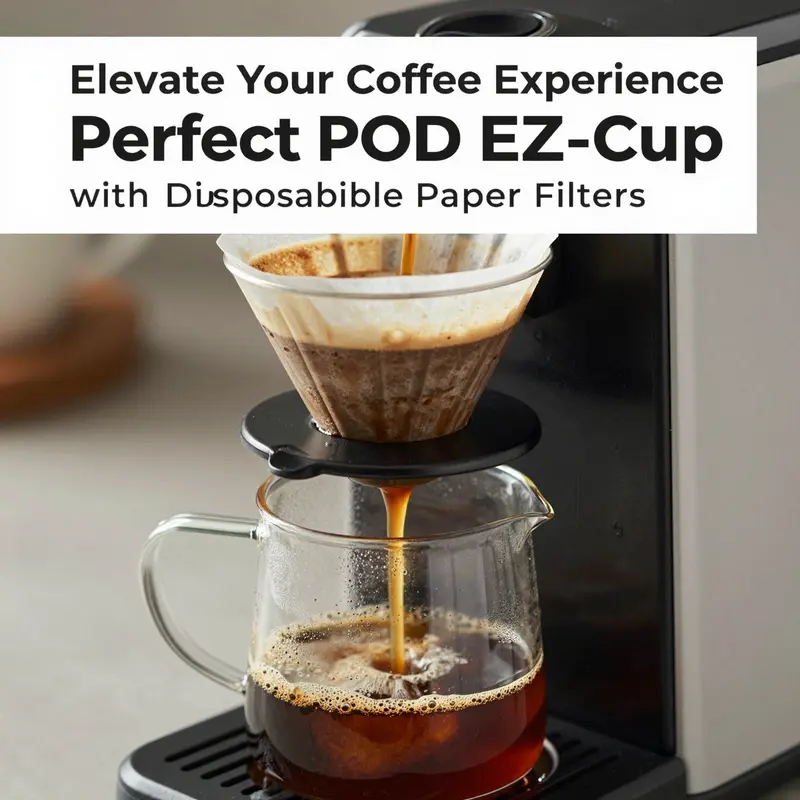
Filtration is rarely the star of a tasting note, yet it stands as the quiet gatekeeper between bean and cup. In pod-based brews, where convenience meets precision, the disposable paper filter plays a central role in shaping aroma, body, and aftertaste. It is not just about catching the sediment; it is about moderating what travels from grounds to mug. A well-designed filter does more than keep grounds out of the cup. It manages water flow, preserves delicate flavor compounds, and minimizes harsh compounds that can tilt the balance toward bitterness or metallic notes. When the filter system also incorporates a lid that helps keep the filter in place and intact through the brew, the result is not merely a cleaner cup but a more dependable one. This chapter explores how those design choices translate into measurable improvements in coffee quality and brewing consistency, especially for single-serve routines that value repeatable results as much as they value speed and convenience.
At the core of high-quality pod-filter performance is a careful balance between retention and flow. The filter media is engineered to slow water just enough to encourage a fuller extraction without overemphasizing any single characteristic. In practical terms, this means the filter captures a meaningful portion of the coffee oils while still allowing the water to extract the soluble compounds that carry sweetness, acidity, and aroma. The interaction between pore size, paper density, and the brewing parameters defines the cup’s profile. When the pores are tuned to permit a steady, predictable flow, the brewer consistently reaches an extraction that highlights the bean’s intrinsic character rather than the filter’s influence. This is especially important for light and medium roasts, where acidity and aromatic complexity are more fragile and more likely to be altered by over- or under-extraction. The result is a cup that reveals nuanced flavors—citrus brightness, floral notes, or delicate fruit tones—without the heaviness sometimes introduced by oils that pass through coarser or less selective filtration.
One of the most noticeable quality enhancements comes from filtration’s impact on sediment and oils. A high-quality paper can trap microscopic grounds while also reducing a substantial portion of coffee oils that some metal or cloth filters let through. In the context of single-serve systems, where a single filtration event must carry the weight of a complete cup, this reduction translates into a smoother mouthfeel and a more defined clearness of aroma. The oils, when present in excess, can contribute a heavy or oily texture and, in some cases, a perceived bitterness that lingers after swallowing. By limiting those oils, the filter helps the cup maintain a cleaner, crisper finish that lets the bean’s inherent acidity and aroma take center stage. This is particularly valuable when pairing lighter roasts with bright, aromatic profiles, where the clarity provided by filtration allows jasmine-like or tea-like notes to shine rather than being masked by undefined oiliness.
From a health-conscious perspective, filtration that reduces diterpenes—fatty coffee oils associated with certain cholesterol-raising effects—offers an additional point of interest for consumers and café operators alike. Paper filters can significantly lower diterpene transfer into the cup compared with metal or cloth filtration. While the overall health impact of coffee is determined by many factors, the relative reduction of these compounds in filtered cups aligns with a growing consumer preference for beverages that emphasize balance and predictability without sacrificing flavor nuance. The oils that contribute to body and aroma are not entirely removed; rather, they are moderated so that the cup remains approachable and clean on the palate. In practice, this balance supports a broader range of roast levels and grind sizes, because the filtration system helps keep the body from tipping into heaviness while preserving aromatic volatility. On a sensory level, that translates into a cup whose brightness and complexity are not smothered by excessive heaviness, and whose balance remains faithful to the origin as roasting and grind adapt to the brewer’s intent.
The integration of a patented lid into the filter system adds another layer of consistency that is easy to underappreciate until it is absent. In many filter designs, misalignment, collapse, or premature degradation of the filter during brewing can disturb flow or cause uneven extraction. A lid that provides structural integrity helps keep the filter properly seated as hot water enters and circulates. It also prevents the filter from shifting or folding under the dynamic pressure of the brew, which can otherwise lead to channeling or uneven sediment capture. The practical upshot is reproducibility. Home brewers venture into coffee shops with their own rituals, and a cup that tastes the same from Tuesday to Friday, or from one machine to the next, strengthens confidence in the process. In a commercial setting, where throughput and uniformity must be maintained across dozens or hundreds of cups, a lid that maintains alignment and durability becomes a critical reliability feature. It reduces variability that might otherwise arise from imperfect setup or wear and tear, ensuring that each brew begins with the same filtration conditions and ends with a similar flavor trajectory.
Expert voices in the field reinforce this perspective. Dr. Lena Torres, a food scientist and coffee extraction specialist, emphasizes the role of the filter as more than a passive barrier. She describes it as a gatekeeper for flavor compounds, noting that the pore size and material determine what migrates into the mug and what remains behind. In her view, the filtration system’s architecture—how the media resists clogging, how evenly the water disperses through the bed, and how the filter settles within the pod—shapes the uniformity of extraction. The single-serve format, with its fixed parameters, makes this gatekeeping even more crucial. When the pore structure is stable and the lid design robust, the variability from one brew to the next drops, and the extraction begins to track more closely with the bean’s intrinsic profile rather than the quirks of a particular batch of grounds or a particular machine. This principle—stability through precise filtration—emerges as a guiding thread through the chapter and into practical brewing practice.
The relationship between filtration and flavor extends beyond taste to the overall drinking experience. The consistency of flow and the predictable barrier to sediment help preserve the cup’s aromatic envelope. Aromas in coffee travel with volatile compounds that are susceptible to dilution or distortion when filtration is inconsistent. A uniform filtration network ensures these volatiles are released in a controlled fashion, so the aroma you detect in the aroma cup aligns with the flavor that arrives on the palate. In this sense, the filter functions as a translator, smoothing the path for aroma and taste to travel from coffee to cup without the noise of variable filtration. The result is a more faithful expression of the origin, roast, and grind with fewer deviations introduced by the filtration stage itself.
For users who prize convenience alongside quality, the disposable single-use filter format offers tangible advantages. Hygiene and uniformity are easier to maintain when each cup is brewed with a fresh, consistent filter. Reusable filters can accumulate oils, fine particles, and micro-impurities that alter taste over time. With disposable filters, the risk of cross-brewing contamination diminishes, and the user can rely on each filter to perform with the same pore structure and filtration efficiency. In commercial environments—cafés, offices, or hospitality settings—this consistency translates into reliable throughput and predictable beverage quality across the day. A café environment, in particular, benefits from the elimination of variables that could otherwise creep into the workflow: the residue left by yesterday’s grind, subtle changes in filter tension, or minor shifts in alignment. A sealed, single-use filter system minimizes these factors, making it easier to train staff and standardize recipes.
The material science behind these filters also deserves attention. The dense paper used in high-quality disposable filters is chosen to encourage a delicate balance: it should resist tearing under the heat of extraction, maintain structural integrity as it sits within the pod, and present a uniform pore network that yields repeatable results. The filter’s density and uniformity matter because they influence both the extraction rate and the cup’s mouthfeel. A well-calibrated density prevents slow, under-extracted cups that taste flat or sour and avoids the slick, over-extracted profile that overwhelms the palate with resinous heaviness. When waters of varying mineral content pass through, a consistent filter helps ensure that the effect of those minerals on taste is predictable rather than capricious. This predictability is especially valuable for venues with high turnover and diverse customer tastes, where a standard profile can be a baseline for customization without sacrificing quality.
In practical terms, the effect of filtration on the sensory profile can be described as a shift toward clarity without sacrificing body. The more oil and sediment are filtered out, the less the cup carries a muddy impression; yet, the right level of oil remains to contribute a pleasing mouthfeel and a sense of fullness. The filtration system, with its carefully tuned pore structure, keeps the cup from becoming thin or washed out while still preserving the crisp acidity that makes high-quality coffees memorable. For many drinkers, this balance is what separates a satisfying coffee from a good coffee. The filter’s role becomes clear when you consider how a cup changes as you adjust roast level or grind fineness. With a filter designed for consistency, a light roast retains its vibrancy, a medium roast maintains comforting depth, and a darker roast preserves a robust presence without tipping into a burnt or ashy finish. In other words, the filter serves as a stabilizing agent that respects the bean’s native properties rather than overpowering them.
To illustrate how this translates into daily practice, consider the lifecycle of a cup brewed in a pod-based system. A typical session involves loading grounds, aligning the pod with the brewer, and letting hot water do the rest. If the filter misaligns or degrades prematurely, the extraction pathway can become uneven, producing a cup with inconsistent strength from one sip to the next. A robust lid that helps secure the filter during the brewing cycle minimizes such drift. The result is a familiar ritual: the same grind, the same water temperature range, and a cup that consistently tastes like the last one you brewed. For baristas and home enthusiasts alike, this repeatability is not a luxury but a baseline expectation when a single-serve system is deployed in earnest.
From a broader perspective, the case for high-quality disposable filters in pod-based brewing rests on more than taste alone. The combination of smoother difficulty in cleanup, predictable filtration performance, and a hygienic single-use format aligns with modern preferences for convenient yet high-fidelity beverage experiences. The ease of disposal after each use, combined with the guarantee of uniform filtration quality, helps ensure that the brewing process remains approachable for newcomers while preserving the nuanced flavors that experienced drinkers chase. In this sense, the filtration system becomes part of a larger craftsmanship ethos—one that values precision, simplicity, and consistency as the foundation for a high-quality cup.
For readers who want to explore a concrete parallel in filtration media, a related form—disposable coffee filter paper bags with distinctive shapes used in portable brewing—offers a useful reference point for understanding the design logic at play. These media share the guiding principle that pore size, density, and seating stability determine how much flavor and aroma pass through, and how cleanly the cup presents itself. While the specifics of each format differ, the underlying science remains the same: a well-constructed disposable filter can deliver a repeatable, nuanced, and enjoyable cup by managing the journey from ground to mug with care. This cross-media perspective helps ground the discussion in practical terms and highlights how the core ideas translate across brewing contexts.
As you navigate different roasts, grind settings, and water profiles, the takeaway is not that one filter is universally perfect in every scenario. Rather, it is that a well-designed, consistently manufactured disposable filter provides a dependable platform for the bean’s character to emerge. It reduces the noise that can creep into a cup when equipment or consumables vary between sessions. It supports a clean sensory canvas that lets acidity, sweetness, and aroma come forward in a balanced way. And it does so with a level of convenience and hygiene that is highly valued in both home and commercial environments. This combination—quality filtration, steady extraction, and practical usability—constitutes a compelling case for prioritizing filtration design in the pursuit of beverage excellence.
For those curious about the broader landscape of filtration science as it relates to coffee, external research and product documentation offer deeper dives into the mechanics of pore structure, flow dynamics, and oil retention. A practical takeaway from these resources is that the excellence of a single-serve cup often hinges on how well the filter media reconciles two opposing needs: allowing sufficient contact time for flavor compounds to dissolve and preventing an overload of oils and fines that can muddle the cup. In a sentence, the success of a pod-based system’s filter is measured by repeatability and by the degree to which the cup’s sensory profile mirrors the coffee’s origin, roast, and grind settings rather than the incidental effects of the filtration stage.
For readers who want to explore an additional point of reference in the filtering domain, an external resource on filtration in pod-based brewing provides a broader framework for understanding how design choices influence flavor outcomes and brew consistency. External reference: https://www.perfectpod.com/products/ez-cup-disposable-paper-filters
Within the chapter’s scope, one practical implication stands out for practitioners and enthusiasts alike: in systems where each cup is produced quickly and efficiently, filtration quality becomes a key variable that can be controlled with predictable results. The interplay between the filter’s material properties, the flow rate it enforces, and the unique characteristics of each coffee origin can be managed to achieve a consistent baseline. From that baseline, skilled baristas and curious home brewers can fine-tune roast levels, grind sizes, and water chemistry to dial in preferred flavor expressions without wrestling with unpredictable cup quality. The larger narrative here is simple: a well-executed disposable filter is not a compromise; it is an enabler of consistency, clarity, and café-level reliability in the realm of pod-based brewing. A clean, balanced cup becomes less of a guess and more of a reproducible outcome, one that supports both the artistry of coffee and the practicality of daily life.
External reference for further reading and context: https://www.perfectpod.com/products/ez-cup-disposable-paper-filters
Final thoughts
Perfect POD EZ-Cup Disposable Paper Filters showcase their essential role in the evolving landscape of coffee and beverage preparation. Their thoughtful design and consistent performance underline the importance of quality filtration in maintaining rich coffee flavors while enhancing convenience during the brewing process. For businesses operating in the beverage sector, investing in these filters not only aligns with a commitment to quality but also caters to the expectations of discerning customers. By integrating Perfect POD EZ-Cup Disposable Paper Filters into your offerings, you can ensure that each cup served is a standout experience.