
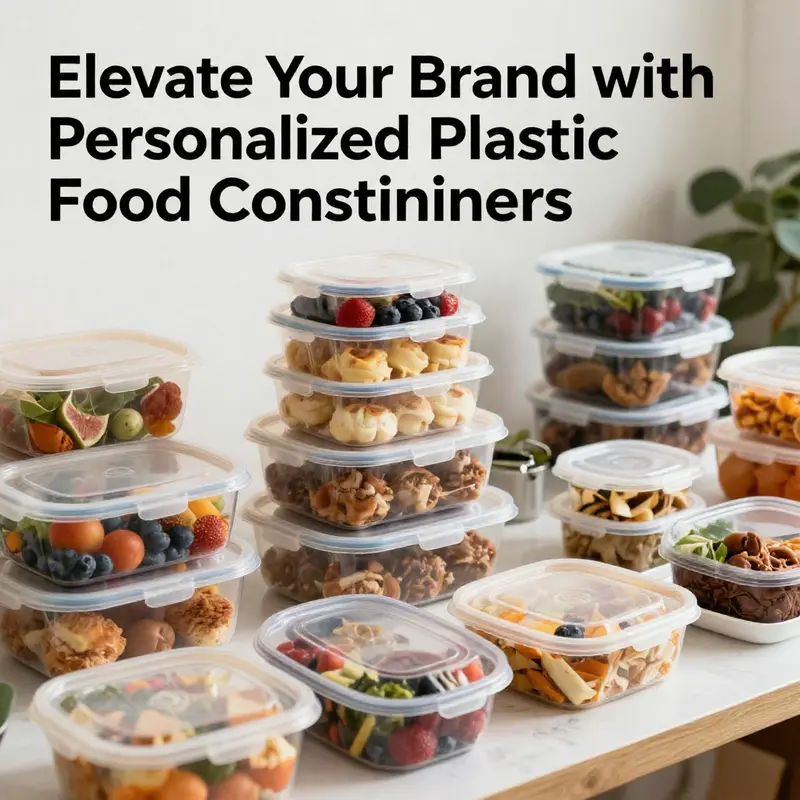
Personalized plastic food containers have become essential for businesses in the food industry, from bubble tea shops to restaurants and catering services. They provide versatility, functionality, and branding opportunities that meet the unique needs of various sectors. This article explores the myriad applications, innovative designs, and potential for branding these containers, illustrating how they can elevate your culinary service and enhance consumer engagement. Understanding the significance of these custom solutions enables food businesses to better meet customer expectations while championing sustainability and operational efficiency.
Personalized Plastic Food Containers: Bridging Brand Identity and Everyday Functionality
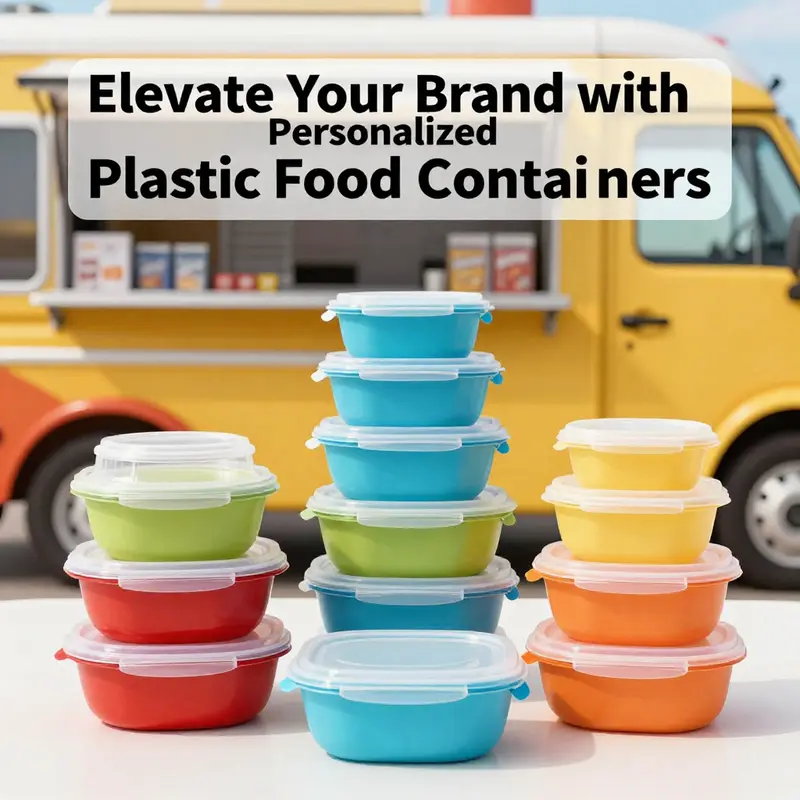
Personalized plastic food containers are more than a branding canvas; they are functional tools that shape the consumer experience from production to consumption. By combining clear, recyclable plastics with tailored shapes, sizes, and lid features, manufacturers create containers that protect freshness, enable easy portioning, and convey brand cues through color, logo placement, and tactile details. Clear containers showcase contents, building trust, while modular designs—such as compartmentalized trays or collapsible units—optimize storage and transport efficiency. Custom lids can be leak‑proof, tamper‑evident, or microwave‑safe, matching specific use cases in fast‑food, meal‑kit, or retail environments. This alignment of aesthetics and performance supports sustainability goals, as recyclable materials and reusable designs reduce waste while reinforcing brand loyalty. In e‑commerce, the unboxing moment becomes an extension of brand storytelling, turning the container into a mobile advertisement that also safeguards the product. Across food, personal care, and household categories, the same principles apply: barrier properties protect the contents, while personalized graphics create a consistent, recognizable experience. The result is a versatile packaging ecosystem that delivers practical benefits, enhances brand perception, and advances circular‑economy objectives.
Shaping Everyday Meals: How Innovative, Personalized Plastic Food Containers Weave Function, Brand, and Sustainability
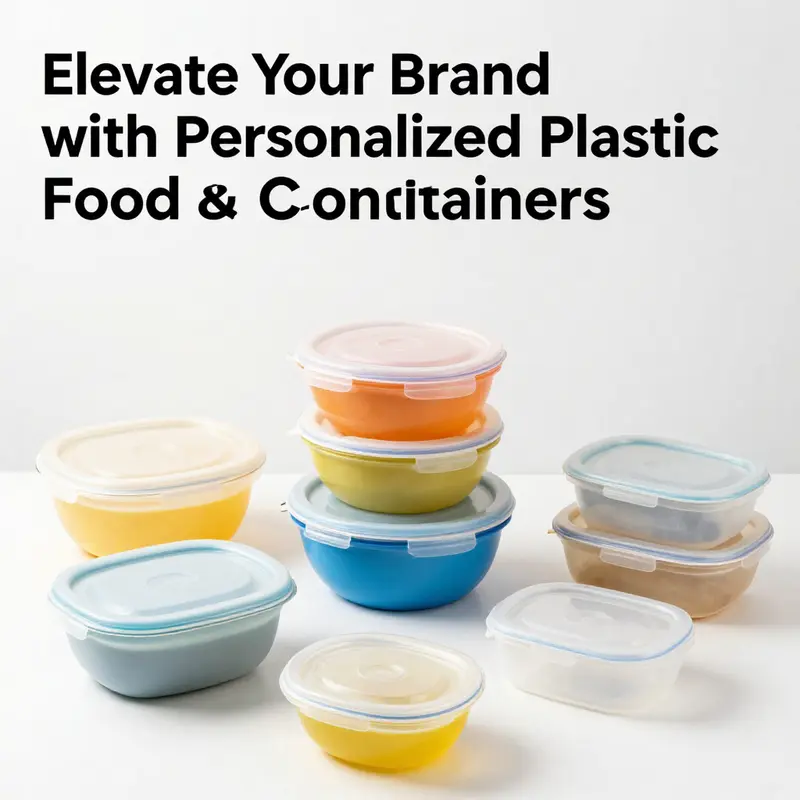
Containers that cradle our meals have become more than mere receptacles. They are design gestures that influence how we portion, preserve, and perceive food, and they carry messages about brands, values, and daily routines. In the realm of personalized plastic food containers, innovation travels beyond colorways and logos. It moves through the physics of storage, the chemistry of materials, and the social logic of waste. The result is a landscape where a 200ml PET container can act as both a trusted storage solution and a canvas for brand storytelling, while a foldable, space-saving model can redefine how households and food businesses approach meal planning, transport, and reuse. The chapter that follows threads these strands into a cohesive narrative about how design, material science, and consumer needs converge in objects that are both practical and meaningful. It is a story of containers that learn from how people eat, work, and live, and in doing so, shape those very habits.
At the core of contemporary designs is a balancing act between clarity, protection, and practicality. PET, with its renowned clarity and moisture barrier properties, remains a staple for cold foods that demand visibility as well as freshness. The round geometry of many PET cups and bowls is not arbitrary; it is chosen for even heat distribution during any gentle warming process and for efficient stackability. While PET is recyclable, the broader conversation is not simply about recycling alone. It is about designing for recyclability from the outset, selecting materials that minimize resource intensity, and ensuring that every consumer encounter with the container is a step toward a more sustainable cycle rather than a moment of hesitation about disposal. In practice, this means selecting materials with well-understood recycling streams and aligning lid designs, seals, and tamper-evident features with those streams so that the container can circulate back into production with minimal friction.
Yet the market demands more than recyclability. It seeks modularity and personalization that resonate with individual lifestyles and business models. Square and rectangular shapes, for example, offer structured storage that maximizes fridge and cabinet space. They support a logic of organization that is particularly valuable for meal preppers and office workers who want to keep proteins separate from grains or vegetables, yet still fit neatly on a shelf. Compartmentalized designs deliver another layer of value. Internal dividers create separate chambers within a single unit, a feature that enhances portion control and guides balanced meals. The practical benefits are clear: less sogginess when sauces are kept apart, minimized flavor transfer, and a physical reminder to consumers to consider a complete plate rather than a single protein or carb. This level of segmentation speaks to a broader trend toward mindful eating, where convenience does not erase the goal of nutritional balance.
There is a subtle but powerful environmental argument embedded in these designs. When a single container can replace multiple single-use items, the environmental footprint shifts in meaningful ways. The internal divider or the compartmentalized tray reduces the need for extra bags, wraps, and multiple containers, thereby decreasing waste generation. This aligns with a broader consumer desire for packaging that doubles as a practical meal-solution tool rather than a disposable afterthought. The challenge, of course, is to ensure that the environmental promise does not compromise performance. Each divider, lid, and seal must perform under real-world conditions—keeps foods fresh, prevents leaks, endures the stresses of transport, and remains compatible with cleaning methods, including potential microwave use when appropriate. This is where material science and thoughtful design intersect.
A notable trend in innovative designs is the emergence of folding or collapsible containers. Models that can collapse by as much as half their stored height after use address one of the stubborn pain points of modern eating: space. In households with limited storage, as well as in catering and takeout operations that must optimize back-of-house space, collapsible designs bring a new level of practicality. The success of these designs rests on precise dimensional tolerances and robust, food-grade materials. Polypropylene, especially in BPA-free iterations, is a common choice for collapsibles because it combines chemical resistance with heat tolerance and strong resilience to repeated folding and unfolding. The safety and performance of such designs also hinge on meticulous testing for microwave suitability, leak resistance, and ease of cleaning. When these factors align, collapsible containers become a genuine space saver without sacrificing reliability.
The discussion of material selection inevitably circles back to branding and customization. The opportunity to print logos, colors, and even instructional graphics on the container surface is not merely cosmetic. It is a direct extension of a business’s identity into the consumer’s daily life. Branded takeout packaging, meal kits, and school lunch solutions benefit from this extended branding because the container becomes a portable, reusable advertisement for a brand’s values and policy promises. An enterprise can leverage a diverse range of shapes and sizes to create a cohesive family of packaging that communicates consistency and quality at every touchpoint. In this context the container transforms from a single-use vessel into a miniature marketing medium that travels from kitchen to office desk to home fridge.
Branding opportunities are complemented by the logistics of scale and supply. Suppliers able to offer bulk orders with logo printing enable startups to create a professional impression without sacrificing efficiency. The practical implication is that personalization ceases to be the exclusive preserve of premium lines and becomes accessible to a broader audience. Whether it is a sleek oval container meant for premium salads or a compact herb storage jar with an airtight seal, the fusion of function and aesthetic is now a baseline expectation in many segments of the market. Timely production, consistent color fidelity, and durable print methods are as essential as the container’s barrier properties. In this sense, personalization is a systems problem—design decisions ripple through manufacturing routes, quality control steps, and downstream recycling.
The interplay between design and environment is not a rhetorical stance but a measurable factor in consumer choice. Sustainability is no longer an optional narrative; it is a performance metric that customers actively weigh when selecting containers. PET’s recyclability is central here, but so too is the lifecycle of the entire package. Recyclability is enhanced when the materials used for seals and lids are compatible with reciclado streams. The choice of adhesives, prints, and coatings matters because these elements can complicate recycling or, conversely, simplify it. The total environmental impact emerges from a chain of decisions: the energy consumed during production, the ability to reuse a container across multiple meals, the container’s durability in the dishwasher or microwave, and the ease with which it can be recovered and reintroduced into the materials loop.
The audience for these innovations is diverse and evolving. Parents seek kid-friendly lunch boxes that survive daily jostling, sauce spills, and the occasional dishwasher cycle. Professionals demand containers that go from home to train to office without leaking or losing their crisp appearance. Catering operations require containers that withstand busy service periods, maintain portion integrity, and project a professional brand image. Grocery stores and meal kit providers look for space-efficient designs that maximize shelf and cooler real estate while ensuring consumer confidence in food safety and freshness. Across these demographics, a single design language emerges: functionality under real-world stress, clarity of purpose, and a degree of customization that elevates everyday meals into a brand-supported experience.
From a design perspective, the geometry and the mating of lids and bases are not cosmetic decisions. They are critical to performance—how well a container keeps liquids contained during transit, how it tolerates stacking in crowded fridges, and how it performs after repeated cycles of washing and drying. The tolerances in a folding model, for instance, determine how snugly it stacks when collapsed and how easily users can re-expand it for use. The interplay between a base and its lid also affects heat transfer behavior. A well-sealed container minimizes thermal exchange with the surrounding air, which helps maintain food temperature for longer. It also reduces the likelihood of leaks, a feature that influences consumer trust and repeat purchase decisions.
The chapter would be incomplete without acknowledging the role of sourcing platforms that connect innovators with manufacturers and distributors. On one hand, platforms that offer verified suppliers and scalable production runs make customization practical for both startups and seasoned distributors. On the other hand, the path from concept to consumer requires careful attention to safety standards, certifications, and compatibility with industrial cleaning and packaging lines. The design journey often begins with a problem—how to keep a meal balanced in a compact container, how to prevent sogginess, how to make branding durable on a curved surface—and ends with a tested prototype that passes quality control checks and fits into the consumer’s daily routine. In this journey, the container becomes a narrative device, one that communicates not only what the product is but how it aligns with a user’s lifestyle, whether it is lunch on a campus, a courier-delivery lunch, or a weekly meal-prep ritual in a home kitchen.
The social significance of these innovations is also worth noting. A growing subset of designs targets family life, especially parents who juggle school lunches and after-school snacks. Compartments help separate proteins from starches, sauces from vegetables, and snack items from main courses. They facilitate a kid-friendly routine that emphasizes portion control and variety in a way that can be easily supervised and reinforced at home and in school settings. For professionals, tiered or modular designs can support meal-prep routines that sustain energy and focus through busy workdays. The social practice of eating becomes more intentional when packaging is designed to facilitate mindful choices rather than promote impulse purchases. This is not merely a matter of aesthetics; it is about reshaping daily routines to align with healthier, more organized habits.
Of course, all these design aspirations sit within a broader ecosystem of consumption, recovery, and reuse. The rise of multi-use solutions challenges the historic dichotomy between single-use convenience and durable goods. It invites manufacturers to consider how a container can survive multiple cycles of use and how its materials can be recovered and redistributed into new products with minimal downgrading. This is a nuanced objective: it requires robust materials that withstand repeated washing, heating, and cold storage, while also enabling straightforward separation at end of life. The choice of materials like PET and PP is guided by these considerations, but the final design must also anticipate emerging recycling technologies and evolving municipal guidelines. The future of personalized plastic food containers, then, rests on a convergence of design resilience, user-centered functionality, and an adaptable materials strategy that can respond to regulatory and cultural shifts without sacrificing performance or aesthetics.
In closing this exploration, it is useful to reflect on how these designs perform in real-world usage. The best containers do not simply hold food; they organize meals, reinforce healthy habits, enable efficient logistics, and amplify a brand’s identity in the most everyday moments. They are the tools that help people turn planned meals into actual practice, whether that means a kid opening a lunchbox before class, a professional preparing a week of lunches, or a caterer presenting a polished, branded experience to guests. The most successful innovations are those that disappear into daily life—softly supporting routine while delivering tangible benefits: reliable seals, sturdy construction, thoughtful compartment layouts, and surfaces that invite interaction rather than complicate it. In that sense, personalized plastic food containers are not just packaging; they are quietly influential components of modern eating, capable of shaping how we pack, transport, and consume nourishment in a world that moves quickly and cares deeply about how things are made, used, and returned to the cycle.
For those seeking a practical example of how customization can manifest in this space, brands can partner with suppliers offering customization options for takeaway packaging and disposable tableware. A representative approach is to consider a branded takeaway kit that uses a single, cohesive design language across containers, lids, and accessories. This approach resonates with both professional kitchens and home users who value consistency and ease of recognition. To explore a concrete pathway for such customization, consider a supplier that provides themed packaging solutions and disposable tableware designed for school, corporate, or event settings. This option enables a brand to deliver a complete, branded meal experience—from the container to the tableware—while preserving the integrity of the food and the clarity of the packaging design. Implementing such a strategy can also align with sustainability goals if the chosen line emphasizes recyclable materials, reusable features, or compostable alternatives where appropriate, thereby extending the container’s value beyond a single meal.
As a closing thought, the trajectory of innovative designs in personalized plastic food containers points to a future where form and function are inseparable from identity and responsibility. The best designs anticipate how people eat, how they move through their days, and how they want to be perceived by others when they share a meal. They respond to practical needs like compact storage, portion control, and leak resistance, while supporting brands that communicate care for the user and the environment. In this sense, the container is more than a vessel; it is a medium through which people organize life’s everyday rituals with a touch of imagination and a commitment to better packaging design.
External resource: https://www.alibaba.com/product-detail/Innovative-Plastic-Food-Containers-and-Plastic_1600748359237.html
To further explore practical exemplars of this design ethos within the industry, see a related internal resource that discusses customizable takeaway packaging and themed party tableware, which illustrates how flexible manufacturing and branding can come together in a single packaging solution. You can find it here: custom-takeaway-packaging-supplies-disposable-tableware-for-theme-party.
null
null
Final thoughts
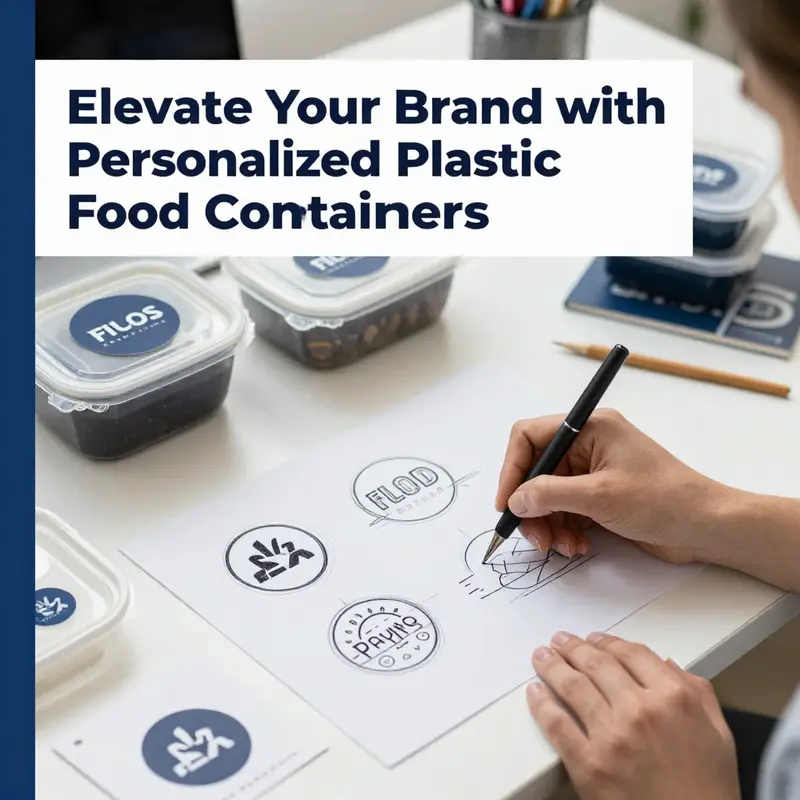
Personalized plastic food containers represent a significant opportunity for food businesses to enhance both operational efficiency and brand identity. As the demand for customized solutions continues to rise, understanding their versatile applications and innovative designs is crucial for staying competitive. The impact of strong branding through these containers cannot be overstated, as they not only serve functional purposes but also engage customers on a visual level. By integrating personalized plastic food containers into their business models, food service professionals can elevate their offerings, foster loyalty, and reflect their commitment to quality and sustainability.