
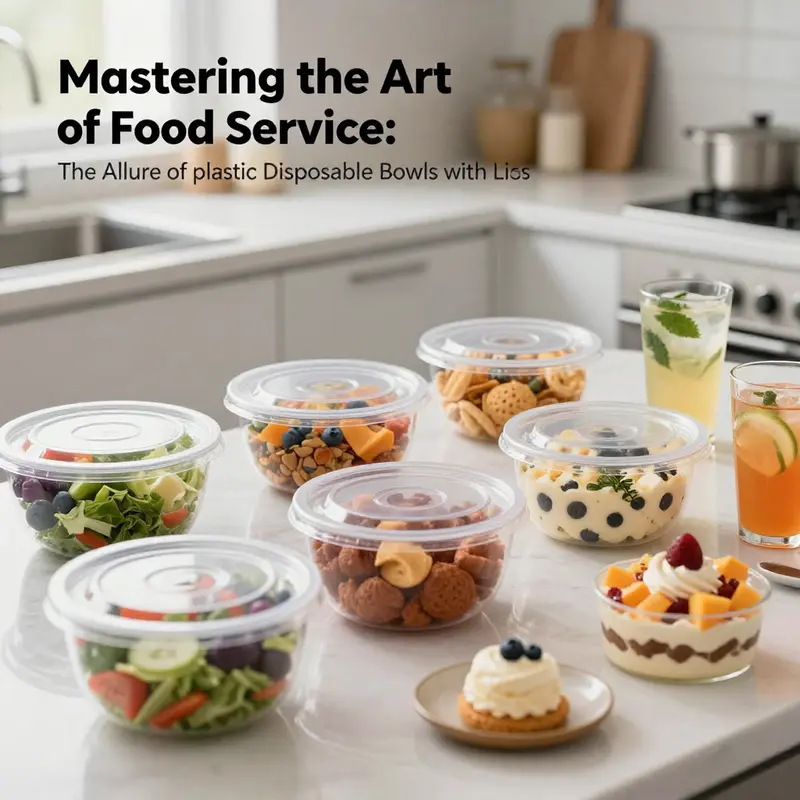
Plastic disposable bowls with lids are revolutionizing food service by combining convenience, hygiene, and versatile usage across industries from bubble tea shops to catering services. These bowls not only maintain food freshness but also ensure safe transportation, making them essential for meal prep, takeout, and large events. In the following chapters, we will explore different types of these bowls, delve into the materials and manufacturing processes, discuss the sustainability initiatives, and analyze current market trends and consumer preferences—all of which enhance the appeal and functionality of plastic disposable bowls with lids in the modern culinary landscape.
Carriers of Convenience: The Varieties and Roles of Plastic Disposable Bowls with Lids
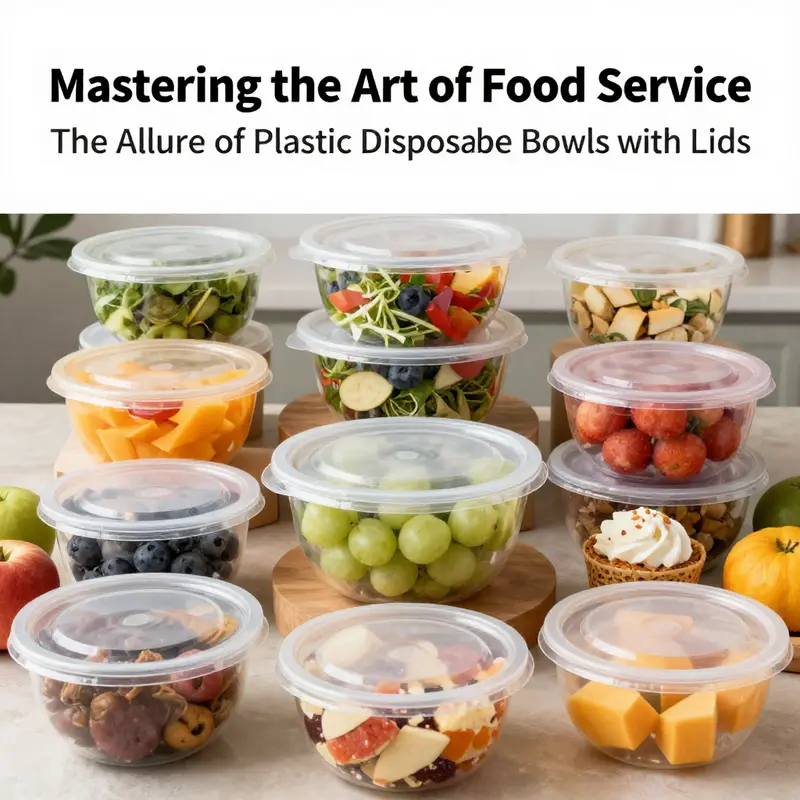
Plastic disposable bowls with lids sit at the intersection of practicality and hygiene, quietly shaping how we plan, serve, and transport food in a world that prizes speed without sacrificing safety. They are not flashy; they are functional, and their value emerges when you consider the contexts in which they operate. From home meal prep to the bustle of a buffet line or a casual catering event, these bowls with secure lids keep food fresh, contained, and ready for the moment you or your guests need it. The design choices—appropriate sizing, dependable materials, and lids that seal with confidence—create a coherent spectrum of form and function that accommodates a wide range of culinary needs.
In size, bowls cover a deliberate range: small for appetizers or desserts, medium for salads and bowls, and large for sharing platters. This tiered approach mirrors real-world workflows: portions for meal-prep clients in medium bowls, appetizers in small bowls, and party trays in large bowls. The result is a toolkit that scales with the occasion, allowing operators to align serving styles with guest expectations while maintaining hygiene and convenience.
The thickness and rigidity of the plastic matter as well. Materials like polypropylene (PP) or PET provide heat resistance and structural stability, handling soups, stews, hot grains, and salads without warping. Lids are typically clear, enabling visibility of contents for efficiency. Some models add coatings to resist oils and leaks, valuable for soups or oily dishes. The seal quality matters; airtight or leak-resistant lids reduce mess and help with hygiene.
Lids can be snap-on, twist-on, or threaded, each delivering a different user experience. Snap-on lids are quick; twist-on or threaded designs offer extra security for beverages or runny contents. A good lid seals well and signals quality, translating to less waste and smoother handoffs between kitchen and service areas.
Beyond tangible features, eco-conscious packaging shapes choices. While traditional plastic bowls are not biodegradable, many manufacturers offer recyclable or compostable options that still meet practical needs. Recyclable materials and reduced material use are becoming standard considerations for operations balancing practicality with responsibility.
The contexts of use are varied: home meal prep, buffet stations, takeout lines, and catering events. Small bowls support appetizer service; medium bowls are versatile; large bowls enable shared portions, reducing the number of containers in circulation. The transparency of lids helps identification at a glance, minimizing handling and heat loss.
null
null
Greener Trays, Clearer Commitments: Designing Sustainable Paths for Plastic Disposable Bowls with Lids
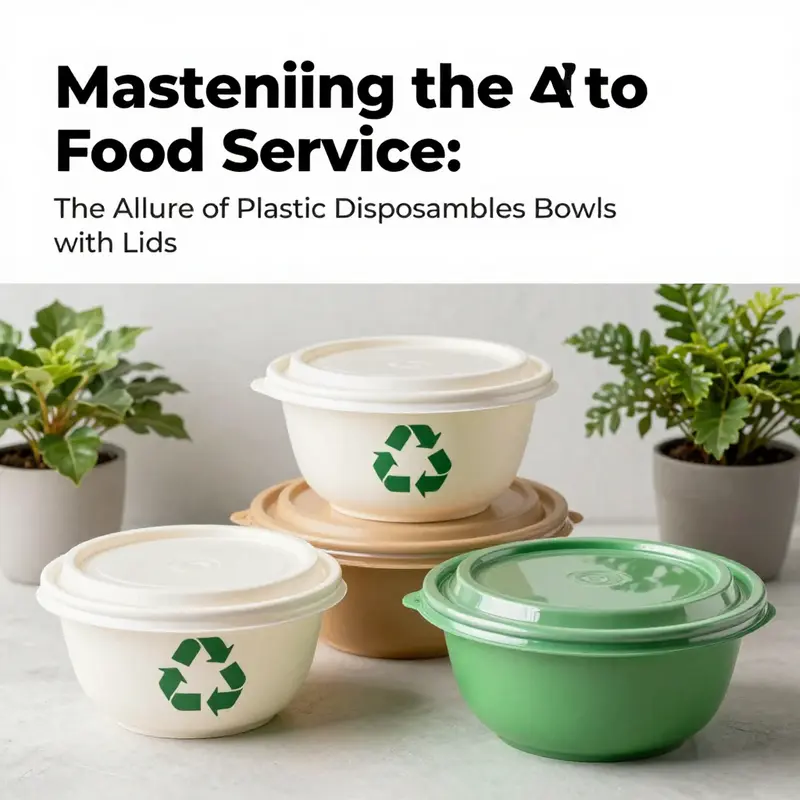
Sustainability is no longer a nice-to-have footnote in the story of plastic disposable bowls with lids. It has become a defining lens through which manufacturers, operators, and households evaluate every choice from material composition to end-of-life options. These bowls, valued for their convenience and hygiene, sit at a crossroads where function, safety, and environmental impact must align. A durable seal, a predictable performance under heat or cold, and a predictable path for disposal are no longer separate concerns but intertwined factors that determine whether a product truly supports a greener food system. In this context, the chapter on sustainability cannot stand apart from the broader story of design, supply chains, and consumer behavior. It must be a continuous thread that weaves together what happens at the factory, what happens on the table, and what happens after the meal is over.
The conventional materials that have long dominated the category—namely polystyrene and its foam variant—offer low cost and light weight. Yet they occupy a problematic place in the environmental narrative. Polystyrene and expanded polystyrene are not easily biodegradable and challenge recycling streams. When littered or discarded improperly, they can persist in ecosystems for decades, breaking into small fragments and contributing to the microplastic burden that concerns scientists, policymakers, and citizens alike. Fragility compounds the problem: foam bowls can dent, crack, or break in transit, increasing the likelihood of leakage and waste. These realities push buyers to weigh the true cost of convenience against the long-tail effects of disposal, waste management, and environmental stewardship. The result is a growing demand for transparency about life cycles and a willingness to consider alternatives that trade a portion of convenience for meaningful gains in sustainability.
Among the alternative materials under consideration, high-density polyethylene (HDPE) stands out for its durability and recyclability. HDPE bowls are known for their resistance to impacts and their ability to maintain cold temperatures, which makes them a reliable option for salads, grains, and chilled desserts. While HDPE can be less transparent than some other plastics, its strength and the maturity of recycling streams make it an attractive compromise for operators who prioritize containment and reuse in a circular economy framework. Recyclability matters not only in theory but in practice: HDPE can be processed multiple times, enabling a more closed loop than many conventional foams. Yet even with HDPE, end-of-life outcomes depend heavily on local waste infrastructure, consumer participation in recycling programs, and the clarity of labeling that helps households sort materials correctly.
Biodegradable and compostable options, led by materials such as polylactic acid (PLA), present another dimension of sustainability. PLA is sourced from renewable feedstocks like corn or sugarcane, and it can break down under industrial composting conditions, reducing long-term environmental impact when properly managed. The promise is compelling: a compostable bowl that leaves no persistent residue in a landfill and that can be diverted to appropriate composting streams. However, PLA is not a universal substitute. Its heat resistance and mechanical durability can lag behind traditional plastics, especially under hot food or long-duration use. In many real-world scenarios, PLA may perform well for cold or room-temperature servings but struggle with high-heat applications or extended shelf life. The takeaway is not a blanket replacement but a careful, context-driven choice: match material properties to the intended use and ensure there is a robust, accessible end-of-life route.
Beyond the material itself, the design of the lid plays a crucial, sometimes overlooked, role in sustainability. An airtight, secure lid reduces leakage during transport, minimizes food waste, and preserves freshness, all of which contribute to a lower environmental footprint by reducing spoilage. The lid also affects consumer behavior. When a lid reliably seals and resists leaks, a meal can travel farther with less risk of damage to the contents or the packaging itself. The performance of the lid is not merely a convenience feature; it is a component of waste reduction. Secure lids can help extend product life in transit and storage, which in turn lowers the probability that food is discarded due to spoilage.
In weighing options, operators face a constellation of trade-offs. A glossy, highly transparent bowl might showcase a colorful salad or fruit platter, but if the chosen material cannot be recycled in the local system or requires specialized streams, the environmental benefit may be diminished. Conversely, a more robust, opaque material with a straightforward recycling path or industrial compostability can offer clearer end-of-life advantages, even if it is less crystal-clear to the eye. The best approach often involves a portfolio strategy: using a mix of materials that suits different meals, settings, and waste-management realities. In practice, this means choosing HDPE or PP for durability and reliable cold storage while reserving compostable or recycled-content options for specific applications where end-of-life infrastructure exists or where consumer preference strongly favors compostability. Such a strategy aligns with a broader shift toward product stewardship, in which manufacturers design for recyclability or compostability and proactively communicate end-of-life pathways to customers.
This stewardship mindset also invites a more nuanced conversation about industrial versus home composting. PLA’s industrial composting requirement is a critical distinction. In many communities, the facilities to process PLA are not universally available, meaning a PLA bowl could end up in the general waste stream rather than an appropriate composting facility. The consequence is a paradox: a material intended to reduce environmental impact is only effective if the waste system can handle it. The same logic applies to glass transition temperatures, melting points, and the thermal limits of different plastics. A bowl that performs superbly in a cold-chain display may still be a poor environmental choice if it cannot be efficiently recycled or composted in the local context. These realities push designers and buyers to consider not just the raw material, but the entire ecosystem surrounding disposal and recovery.
To advance sustainable outcomes, it helps to think in terms of cradle-to-cradle and circular economy principles. The cradle-to-cradle approach envisions materials flowing through closed loops: one material’s waste becomes another’s feedstock, rather than a burdensome end-of-life. In practice, this could mean sourcing recycled-content resins or designing bowls that are easy to disassemble and separate in municipal recycling streams. It also implies clear labeling that communicates material composition, compatible recycling streams, and potential compatibility with heat. The aim is to minimize contamination in recycling streams, reduce energy use, and lower the overall carbon footprint associated with production, transport, and end-of-life handling.
Industry guidance and consumer education play pivotal roles in achieving these goals. A robust materials guide can help buyers understand the trade-offs between PS, EPS, HDPE, PP, and PLA in terms of heat resistance, leak resistance, and recyclability. Knowledge of end-of-life options—whether municipal recycling, home composting, or industrial composting—is essential for making informed choices that align with local infrastructure. Transparent labeling, clear waste-sorting instructions, and a commitment to using recycled-content or biodegradable materials where feasible can shift the environmental calculus in meaningful ways. In turn, this clarity benefits the entire supply chain: it reduces uncertainties for distributors and retailers and helps households see the direct link between the packaging they choose and the outcomes in their waste streams.
As the conversation around sustainability evolves, one practical path forward is to expand the availability of more sustainable options without compromising performance. The market increasingly recognizes the value of packaging that can shield food effectively while also fitting into responsible disposal systems. This reality encourages innovation in multi-material designs that balance barrier properties, temperature tolerance, and end-of-life compatibility. It also invites a broader willingness among buyers to experiment with alternatives that may require adjustments in handling or storage practices. For example, certain combinations of liners, coatings, or surface treatments can improve barrier performance without reducing recyclability or compostability. While these technical refinements require careful testing, they illustrate how small design choices can yield meaningful environmental benefits over the lifecycle of a product.
From a practical standpoint, sustainability must be accessible to a wide range of users. Home cooks, corporate cafeterias, catering services, and event planners all seek packaging that is predictable, safe, and easy to manage. The push toward eco-friendly options should not demand expensive swaps that prevent uptake. Instead, it should offer scalable solutions, from bulk purchases of recyclable or compostable bowls to education campaigns that explain sorting rules and best practices for disposal. The most successful products in this space are those that align readily with existing waste-management systems and that come with clear, credible claims about recyclability, compostability, or recycled content. When that alignment occurs, the environmental benefits multiply across households, workplaces, and communities.
Consideration of alternate materials naturally leads to the practical step of supplier choice. Some suppliers are expanding their catalogs to include disposable kraft paper bowls with lids in bulk. These products present a compelling option for settings where the local waste system favors paper-based packaging or where composting streams are accessible. The shift toward paper-based or other renewable-content options does not mean abandoning the importance of reliable lids and leak resistance; rather, it reorients the sustainability equation toward a broader set of end-of-life possibilities. For readers exploring this path, a useful option to explore is disposable kraft paper bowls with lids bulk (500ml to 1000ml), which offers a different environmental profile while preserving the functional benefits of a sealed serving container. disposable kraft paper bowls with lids bulk 500ml to 1000ml. This link points toward a segment of the market where paper-based solutions meet practical demands for takeout and buffet-style service, showcasing how a seemingly small shift in material choice can influence the overall sustainability narrative.
The ultimate test of any material choice is not the lab-level performance alone but the alignment with real-world use, waste streams, and social expectations. Consumers are increasingly attuned to packaging choices and may actively seek out options that reflect environmental values. Restaurants and caterers, meanwhile, weigh not only the ecological impact but also the economics of waste disposal, the reliability of sealing, and the practicality of storage. In many cases, the most sustainable choice emerges from a hybrid strategy: use durable plastics like HDPE or PP where performance matters, and incorporate compostable or recycled-content options where waste streams support them. The math is not about a single solution but about tailoring choices to context—the type of food, anticipated transit distance, storage conditions, and the local capacity to process end-of-life packaging.
In closing, the sustainability and eco-friendly options in plastic disposable bowls with lids do not present a simple dichotomy of good versus bad. They present a spectrum of material choices, design strategies, and waste-management realities. The future belongs to packaging ecosystems that emphasize transparency, end-of-life clarity, and performance that meets the needs of users without leaving a heavy footprint in the environment. As manufacturers continue to innovate and as waste systems evolve, consumers and businesses alike can make informed decisions that balance safety, convenience, and stewardship. The chapter you just read is not a final verdict but a map for navigating a more sustainable landscape where the humble bowl and its lid contribute to a healthier planet while still delivering the reliability required by home cooks, cafeterias, and caterers alike. For those who wish to dive deeper into material grades and how to optimize performance in industry, a comprehensive guide on clear plastic bowls with lids provides further context and practical guidance.
To broaden the view on material choices and performance, external resources also offer valuable benchmarks. For a detailed overview of how different plastics perform under varied conditions and how end-of-life pathways affect overall sustainability, see the Clear Plastic Bowls With Lids Guide. External resource: Clear Plastic Bowls With Lids Guide.
Sealed Freshness and Growing Demand: Market Trends Shaping Plastic Disposable Bowls with Lids
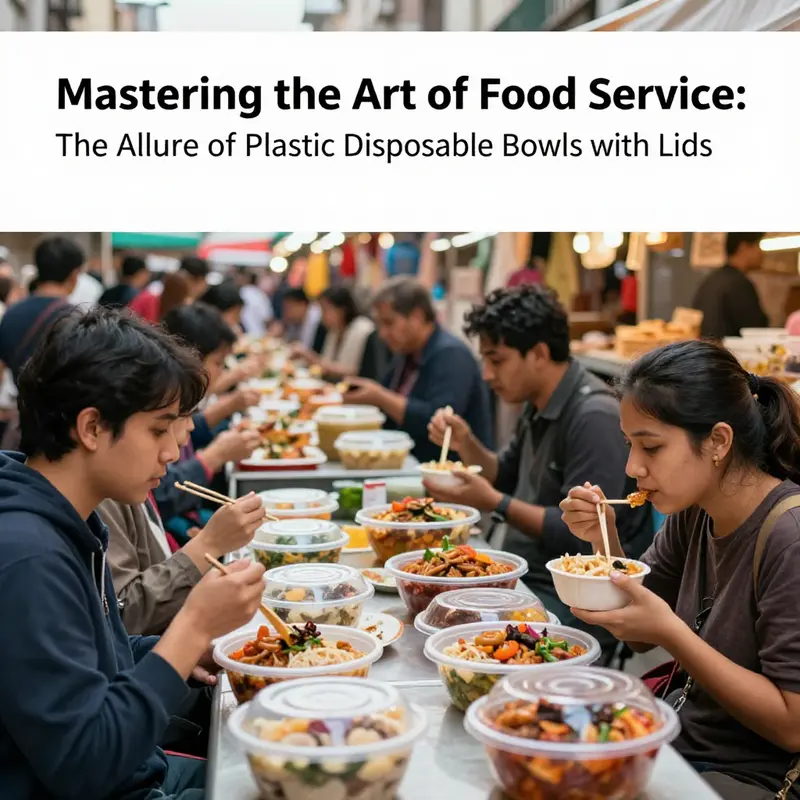
Plastic disposable bowls with lids have evolved from simple disposable containers to essential components of modern food service and daily meal routines. An airtight lid protects freshness and a sturdy bowl resists leaks during transport, storage, and handling. In catering events, office meal programs, and busy family kitchens, the ability to seal a portion and transport it without spills is not just a convenience—it is a prerequisite for smooth operations. The seal is more than a barrier; it is a promise to customers that sauces, dressings, and delicate components will arrive as intended. The most dependable lids combine a robust closure with a design that resists accidental opening during transit, a small but crucial improvement that reduces waste and raises satisfaction for hosts and guests alike. This combination of security and simplicity keeps sealed bowls at the center of routine meal preparation and special occasions alike.
Consumer behavior has evolved with lid technology. Today’s eaters—whether planning weeklong meals at home, feeding a crowd at a catered event, or providing takeout for busy families—rely on containers that simplify life without sacrificing quality. Meal-prep cycles benefit from predictable portioning and the reassurance that a sealed container maintains moisture and flavor. For mobile eating, a leak-proof container minimizes the risk of stained clothing or car interiors, translating into fewer complaints and higher repeat purchases. In catering and event contexts, the ability to pre-create attractive platters and keep them pristine during transport is inseparable from the perceived value of the service. A sealed container becomes part of the experience: it signals care for the guest, discipline in preparation, and respect for the moment when the lid is finally removed and the contents are revealed.
The market’s growth is anchored in practical variety—different sizes and materials for different uses. Small bowls suit appetizers or tasting portions; medium bowls for personal meals like salads or grain bowls; large bowls for family-style servings and buffet setups. Materials such as polypropylene and polystyrene balance rigidity, heat resistance, and cost. Some lines use wax coatings or polyethylene layers to resist oils and leaks, expanding the range of dishes that can be served without compromising integrity. The interplay between lid design and bowl material matters too: threaded lids provide a tight seal, while snap-on closures offer quick, repeatable access. These choices affect not only leak resistance but also stackability, cooling behavior, and shelf life in storage before use.
Sustainability is increasingly central to this category. Manufacturers are expanding recyclable, recyclable-coated, and compostable options while maintaining barrier performance. The contemporary buyer weighs environmental impact alongside price and performance. Compostable bowls perform best with industrial facilities but require appropriate waste streams to avoid contamination. Recyclable variants rely on clear labeling and efficient recovery streams. The lid and any coatings or liners also factor into end-of-life considerations, so a holistic packaging system—from bowl to lid to inserts—can unlock eco-friendly pathways without sacrificing convenience. Some lines emphasize recyclability, while others prioritize high-oil or high-heat performance, with recyclability as a secondary objective.
Innovation in design and sourcing supports scalability and customization. Wholesale sets now offer multiple sizes and shapes in a single order, reducing waste and enabling caterers to tailor experiences to diverse menus. Lids are engineered for precision fits with tolerances that prevent flexing or popping during stacking and transport. Color-coded or branded lid options help organizers coordinate with branding while preserving core seal and barrier functions. For themed events, customizable options align containers with the event’s visual identity, enabling a cohesive look from first glance to final bite. The broader ecosystem also includes suppliers offering customizable takeaway packaging suites designed for theme parties, providing a unified presentation and function.
From a logistics perspective, channel strategy and supplier partnerships matter as much as material. Buyers value manufacturing reliability, safety documentation, and consistent test results that support audits and regulatory requirements. The lids must resist leaks and mechanical stress from stacking and transit, which requires careful molding tolerances, consistent thickness, and a precise fit. The result is a category that has matured from a disposable convenience into a reliable component of the food service toolkit, driving automation, process control, and agile production planning to meet promotional calendars and seasonal demand.
As consumers continue to value convenience, the packaging ecosystem is responding with smarter, more integrated options. There is growing interest in packaging solutions that minimize waste while preserving disposables’ benefits, including barrier-efficient materials and coatings that reduce oil migration without hindering recyclability. The trend toward smarter packaging—where containers can indicate freshness or temperature history via embedded sensors or indicators—begins to shape expectations for premium events and critical service settings. Such features could elevate the container from a passive vessel to an active participant in quality control and inventory management for caterers and care facilities alike.
The narrative around plastic disposable bowls with lids remains closely tied to everyday use: quick breakfasts on busy mornings, reliable school lunches, hospital meals designed for safety and nutrition, and well-curated party platters that travel without mishap. Each use-case reinforces the enduring value proposition: a sealed, portable, hygienic, and affordable solution. The lid is a linchpin in this value, transforming potential mess into a reliable service element, and market momentum continues to be shaped by the systems that support these products—from bulk suppliers to distributors who ensure restocking happens smoothly across institutions and events.
For readers seeking a broader view, industry analyses point to a long arc of growth across commercial and domestic settings. As the sector matures, emphasis on environmental responsibility is likely to intensify, guiding material choices, end-of-life disposal, and alignment with waste-management infrastructure. Some observers anticipate new waves of packaging innovation to integrate data-driven features that protect freshness and enable more precise inventory control. Monitoring these signals helps stakeholders understand today’s needs and tomorrow’s opportunities.
Final thoughts
Plastic disposable bowls with lids have become indispensable in modern food service, addressing the demands for convenience, hygiene, and sustainability. From their diverse types that cater to various portions and meal types to the ongoing push towards eco-friendly options, these bowls are a perfect fit for any establishment looking to enhance food presentation and customer satisfaction. As market trends lean towards innovative solutions, embracing these versatile products can significantly impact your business operations. The journey towards a successful food service continues with smart choices and reliable suppliers.