
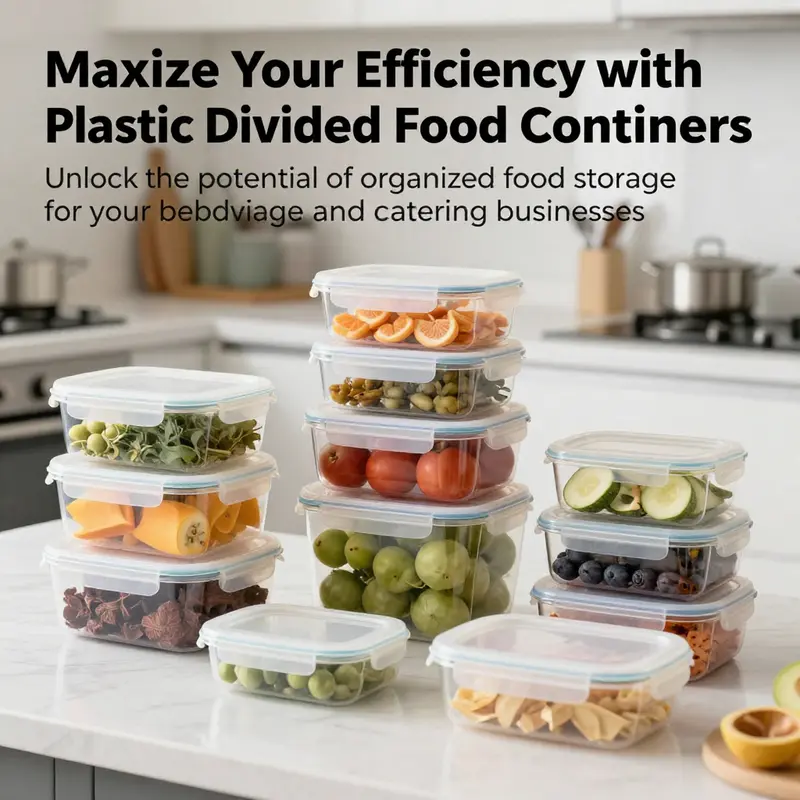
In the realm of food and beverage preparation, organization and safety are paramount. Plastic divided food containers with lids offer an innovative solution tailored for diverse applications, from bubble tea shops to catering services. Their design allows for efficient meal prep, portion control, and secure storage, contributing significantly to operational efficiency. This article delves into the unique features, market trends, safety standards, and sustainability impacts of these essential containers to provide a comprehensive understanding of their value in today’s culinary landscape.
Beyond Compartments: How Innovative Lids, Materials, and Designs Are Reshaping Plastic Divided Food Containers
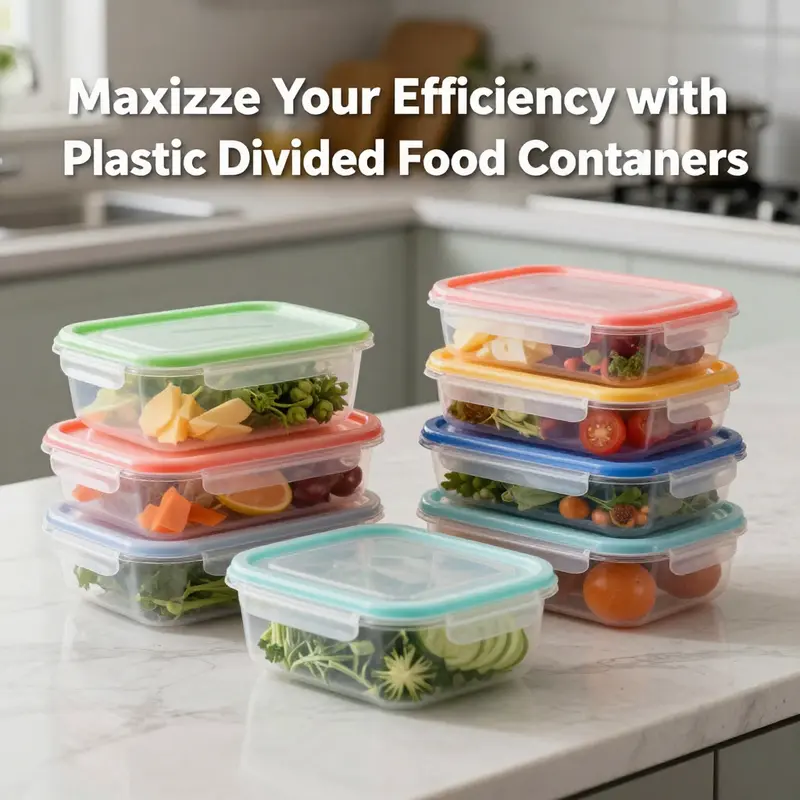
Plastic divided food containers with lids have evolved from simple, multi-pocket boxes into sophisticated systems that balance safety, convenience, and sustainability. The modern approach treats compartments as part of an integrated storage ecosystem rather than as an afterthought. The result is a family of containers that can accommodate different foods in a single unit, while maintaining distinct flavors, textures, and temperatures. In everyday life, this translates to more predictable portioning, less waste, and easier transport for meals, snacks, and leftovers. The innovation is not merely about more lockers inside a box but about smarter interactions between the lid, the seal, and the material itself. As these containers become part of meal prep routines, catering operations, and home organization, their design is increasingly driven by how well they perform under real-world conditions rather than by isolated features alone. The story of these containers is a story of systems thinking—where sealing, materials, geometry, and user behavior converge to deliver reliability and ease of use at scale.
A central pillar of this evolution is how sealing technologies are implemented. Built-in venting systems represent a practical response to the dual demands of reheating convenience and freshness preservation. When a user microwaves a divided container, steam must escape without unleashing chaos in the fridge or the microwave cavity. Venting channels designed into the lid allow controlled steam release, while the container remains sealed enough to prevent leaks during transport. This nuanced balance matters, because it reduces pressure buildup that can deform edges or cause spillage, especially in transit or when stacking multiple containers in a crowded bag. The result is a more forgiving user experience, where reheating is faster and more even, and the chances of soggy edges or split seals are diminished. In this sense, the lid becomes a functional partner in the heating process rather than a simple cover.
The choice of food-grade materials also anchors the perceived and actual safety of these containers. Polypropylene emerges as the most widely adopted baseline due to its heat resistance, chemical stability, and compatibility with both microwave and freezer conditions. This material tolerance—spanning roughly minus twenty degrees Celsius to around one hundred twenty degrees Celsius—gives designers room to create containers that serve a broad range of foods and storage scenarios. The capability to shuttle between cold storage and hot meals without material degradation is a core selling point. It means batch-prepared meals can be portioned, stored, and later heated without requiring separate vessels for different temperatures. The material choice also feeds into the overall durability story. A container that resists cracking under cold shocks and remains pliable enough to survive repeated bending in a weekly meal-prep cycle speaks to a long lifecycle, which in turn supports sustainability narratives and cost efficiency for households and businesses alike.
Lids today are no longer mere closures. They often function as multi-purpose components that add stability to the overall system. A contemporary lid may double as a non-slip mat on a countertop, a portable plate during a car ride, or a sealing surface that participates in a clean, clutter-free stack. This duality enhances usability and reduces the clutter associated with carrying and presenting meals. The lid’s geometry matters as well, with reinforced rims and tight seals designed to resist deformation during transport. An integrated gasket system can improve leak resistance while keeping the lid straightforward to open and close. When the lid performs multiple roles, it also reduces the total number of separate accessories a user must manage, which resonates with the growing consumer emphasis on simplicity and efficiency in everyday life.
Beyond the lid and the walls, the container’s overall architecture contributes significantly to user confidence. Modular, stackable designs allow consumers to optimize storage space without sacrificing accessibility. When containers nest securely, they minimize the mess that can occur in refrigerators, lunch boxes, or shipping crates. A well-thought-out modular approach also supports customization; families can mix and match sizes to fit specific meals, from a small portion of a snack to a full entrée with sides. The stacking behavior must remain robust under pressure, so reinforced edges and a precise fit between lid and base prevent misalignment during movement. Anti-slip bases further reduce the risk of sliding on vehicle floors or kitchen countertops, a practical feature that speaks directly to real-world use while preserving container integrity and contents.
The innovations extend into the engineering of the containers, where small design choices ripple into large outcomes. Reinforced edges counteract the fatigue that comes with repeated use and transport—critical for meal prep routines and catering operations that rely on many cycles of washing and reusing. The anti-slip bases, meanwhile, mitigate accidental spills when a container is placed in transit or in a busy kitchen. These features work in concert with the vented lids to ensure that even a half-full, multi-compartment dish can be carried with a reasonable expectation of stasis. The result is a system that does not only separate foods but also protects them from cross-contamination, leakage, and temperature swings that would otherwise undermine quality.
Sustainability has moved from a fringe concern to a primary design criterion in many manufacturers’ roadmaps. Innovations in thin-wall technology and single-material construction demonstrate how efficiency and recyclability can align with performance. Thin-wall designs cut the amount of plastic required per container, which lowers material costs and reduces the environmental footprint without compromising strength or integrity. Single-material construction further simplifies recycling, because the entire unit can be sorted and processed as a single stream rather than disassembled into multiple polymers. This approach supports broader environmental goals while also offering end-users peace of mind about end-of-life disposal. In practice, the shift toward lighter, more recyclable containers translates into tangible benefits for large-scale kitchens, meal-prep enthusiasts, and sustainable catering operations alike. It also raises questions about waste streams and the need for accessible recycling infrastructure so that the gains in recyclability actually translate into lower landfill rates.
In real-world settings, these features translate into tangible benefits. For meal-prep enthusiasts, a divided container with reliable seals and venting can streamline daily routines, letting people prepare portions for several days and reheat them with confidence. For family meals, the ability to keep flavors distinct within a single vessel reduces the number of containers that must be washed at the end of the day. For food-service operators, modular designs and robust seals support efficient throughput; staff can move multiple containers from prep to service without juggling fragile lids or worrying about cross-contamination. For travelers and students, the anti-slip bases and stackable configurations make the containers easy to pack, navigate, and reuse, which reduces waste and supports cost savings over time. The common thread across these scenarios is that containers have become part of a coherent workflow rather than a standalone product. They are designed to slot into habits, storage spaces, and transportation routines with minimal friction.
To illustrate the practical breadth of these innovations, consider the growing demand for three-compartment, food-grade packaging that can withstand frequent use while keeping foods distinctly separated. In the market, options that emphasize environmental responsibility and safe heating capabilities are particularly appealing to households seeking convenience without compromising health. The trend toward multi-compartment systems with intelligent lid design shows how manufacturers aim to reduce clutter and simplify meal routines. In this context, it makes sense to highlight a representative option that embodies the principles discussed here: a three-compartment, eco-friendly takeout packaging solution. This option demonstrates how a single container can offer versatility for a variety of meals, from grains and vegetables to proteins and sauces, while maintaining a compact footprint. The functionality is not about novelty alone; it is about reliability during daily use and over repeated cycles of heating, cooling, washing, and storing. Such design thinking aligns with broader shifts in consumer expectations toward products that are not just effective but also responsible and easy to integrate into busy lives. For readers exploring ready-made choices online, a practical reference point can be found in the eco-friendly disposable three-compartment packaging box described in some widely available product lines, which serves as a concrete example of how the principles discussed here translate into real-world options. eco-friendly disposable 3-compartment packaging box.
Looking ahead, the trajectory of plastic divided containers will continue to hinge on balancing performance with sustainability. Innovations will likely extend into smarter lid mechanisms that adapt to various contents and user needs, more refined materials that resist wear while enabling easier recycling, and geometries that maximize space efficiency in both home kitchens and professional kitchens. The idea of a container as an integrated system rather than a standalone unit will persist, guiding both product development and consumer choices. As designers learn to anticipate how people interact with containers—from the moment of purchase to the last bite and beyond—they will tune venting, sealing, and structural features to support a seamless lifecycle. The ongoing dialogue between durability, safety, and environmental responsibility will shape how these containers are used, reused, and ultimately disposed of. In this evolving landscape, the promise remains clear: a divided container can do more than separate foods; it can orchestrate an entire meal experience with simplicity, reliability, and a lighter environmental footprint. For those seeking deeper context on sustainable packaging innovations that inform these developments, a detailed 2025 innovation report from a leading producer offers further insights into thin-wall construction and single-material strategies. https://www.newtianli.com/innovation-report-2025
Rising Currents in Plastic Divided Food Containers: Market Trends, Materials, and the Path Toward Safe, Sustainable Lidded Storage
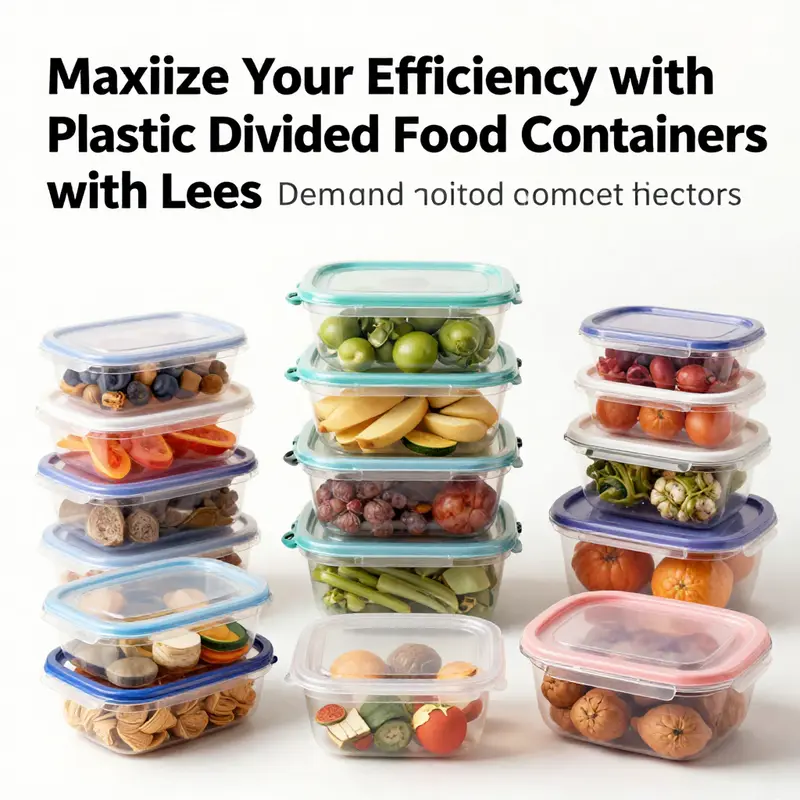
The market for plastic divided food containers with lids is moving in a direction that blends everyday practicality with the ambitions of sustainability and safety. Across homes, offices, and commercial kitchens, these containers have become more than mere vessels; they are the backbone of portion control, meal-prep efficiency, and hygienic storage. Market signals, including a forecast that places plastic food storage containers as occupying a dominant share of the segment—approximately 48.9% in 2026—underscore a trajectory that is less about a single moment of convenience and more about a durable change in how people organize, transport, and reheat meals. The appeal is simple on the surface: multiple compartments in one compact unit, durable lids that seal, and a design that supports reheating, freezing, and daily reuse. Yet beneath this simplicity lies a complex web of choices about materials, safety, circularity, and operational efficiency that shape both consumer behavior and procurement decisions in a business-to-business landscape.
At the heart of these trends is a clear material preference that aligns performance with health considerations. Polypropylene (PP) stands out as the most popular backbone material for divided containers, thanks to its heat resistance, strength, and compatibility with microwave use. PP’s reputation for being BPA-free has become more than a claim; it is a procurement criterion and a consumer expectation. In practice, this translates into containers that can move from freezer to microwave to table without degradation of form or safety. The result is a product that supports meal-prep routines—where individuals portion out ingredients for the week, freeze them, and then reheat portions at lunch or dinner—without the fear of material leaching or warping. While PP is the star, other polymers such as HDPE and PS still hold value in cost-sensitive segments or in configurations where rigid, clear walls help with quick content identification. HDPE, for its part, adds durability and chemical resistance, sharing shelf space with PP in many multi-compartment designs that aim for longevity in busy kitchens and in consumer households.
The continued emphasis on safety and recyclability reinforces a broader industry shift toward sustainable packaging. Recyclable PP and HDPE offer a pathway to circularity that resonates with both consumers and corporate sustainability goals. The push toward recyclability does not negate the functional requirements of these containers; rather, it nudifies innovation toward lighter weights, more efficient molding processes, and designs that minimize waste in production and end-use. As a result, producers are not simply selling a container; they are offering a system—one that includes durable lids, secure seals, and molded-in dividers that maintain separation of ingredients while withstanding the rigors of transport and repeated use. The result is a practical solution for meal-prep enthusiasts and catering operations alike, where the ability to segment meals, sauces, or snacks within one unit reduces the need for multiple secondary containers and lowers the risk of cross-contamination.
In commercial settings, the advantages expand beyond convenience. Divided containers with secure lids play a pivotal role in preserving freshness, enabling precise portion control, and streamlining workflow in kitchens, catering services, buffets, and bento box operations. The design emphasis on leakproof performance, together with ergonomic lids that are easy to grip and open, translates into tangible operational benefits. For staff, the confidence that a lid will seal properly during transport and that dividers will maintain their position during stacking means fewer product losses and less time spent in repackaging or cleaning. For customers, the assurance that meals will remain segregated and intact from kitchen to table is a key value proposition, especially in on-the-go contexts where meals travel through varying temperatures and handling conditions.
From a product design perspective, there is a quiet but important evolution toward improving user experience through ergonomics and form factor. Lower-profile lids, reliable snap or slide closures, and textured edges for grip all contribute to a container that is easier to handle during busy service periods or in portable meal-prep routines. Stackability remains a critical feature as well; containers that nest securely but also separate when needed help maximize storage space in refrigerators, freezers, and cupboards. This is not merely convenience; it translates into more efficient use of real estate in kitchens and catering facilities, which in turn supports inventory management, reducing waste and optimizing labor.
The market realities extend into procurement strategies, where buyers increasingly weigh material compliance, environmental impact, and long-term efficiency alongside price and MOQs. A growing emphasis on certified, lightweight, and recyclable containers with durable lids signals a shift from price-led purchasing to value-driven sourcing. In this context, the supplier ecosystem is adapting by offering a broader spectrum of sizes and configurations. For example, 3-compartment designs with capacities around 32 ounces or 500 milliliters address both personal meal-prep needs and small-bulk catering requirements. The modularity of dividers allows buyers to tailor the partitioning to specific meals—carbs in one section, proteins in another, vegetables in a third—without sacrificing sealing performance or structural integrity. The result is a set of offerings that can be harmonized with existing kitchens’ workflows, enabling more consistent portion control, reduces cross-contamination risk, and supports faster service in catering environments.
Consumer behavior continues to echo these professional trends. As more people adopt structured meal-prep routines and seek healthier eating habits, the demand for reliable, reusable containers rises. A durable PP-based container can withstand repeated cycles of washing and reheating, a feature increasingly valued by households that treat containers as long-term investments rather than disposable items. The growing awareness of health and safety underscores the shift toward BPA-free certification and food-grade performance. In this light, the market’s emphasis on quality and safety is not a marginal concern but a central criterion for choosing among competing designs and materials. In parallel, there is a steady demand for designs that accommodate diverse foods and sauces without compromising lid integrity or leak resistance. The art of engineering therefore lies in balancing lid geometry, seam resilience, and divider placement to ensure that contents remain separated yet easy to access during meals.
Sustainability narratives also shape marketing and education around these products. Consumers are increasingly curious about end-of-life options for the containers they buy. Even as PP and HDPE are favored for their performance, the conversation about recyclability, refurbishing, and lifespan becomes part of the product story. Brands and suppliers are responding with clearer labeling, easier-to-remove lids, and standardized dimensions that support compatibility across a range of storage and heating appliances. This alignment between product design and consumer values helps sustain demand by removing ambiguity about how a container fits into a reusable, eco-conscious lifestyle. It also broadens the potential for partnerships with waste-management programs and retailers who promote circular economy initiatives, reinforcing the idea that a well-made divided container can be part of a longer, more responsible lifecycle.
Within this evolving landscape, it is useful to consider how different channels influence adoption. E-commerce platforms and wholesale marketplaces make it easier for institutions and individuals to access a wide array of configurations, from compact two-compartment boxes to more expansive three- and four-compartment designs. This accessibility is particularly important for food-service operators who must balance rapid, reliable procurement with consistent quality. In practice, buyers often evaluate not only the raw material and construction but also ancillary factors such as labeling, certifications, and compatibility with existing storage systems. Suppliers who offer clear documentation on food-grade safety, heat resistance, and recyclability tend to secure long-term contracts by helping customers meet regulatory and sustainability targets while maintaining efficient operations and predictable costs. The market response to these expectations is evident in the growing sophistication of container designs and the breadth of options that can be tailored to specific cuisines, dining formats, or service models.
For practitioners seeking concrete illustrations of how these trends translate into real-world packaging choices, there is value in examining examples of multi-compartment packaging that merges form, function, and safety. Such designs demonstrate how the integration of sturdy dividers with secure, easy-to-use lids can support not only convenience but also hygiene and portion control across different service contexts. Moreover, these examples reveal how innovations in lid sealing, venting, and edge geometry contribute to a more predictable performance during transport and handling, a critical consideration for caterers and food-service operations that depend on reliable containment during busy hours.
The convergence of performance, safety, and sustainability also raises questions about the broader industry trajectory. If demand continues to grow at a steady pace, producers must navigate a landscape of evolving regulatory expectations and consumer preferences. The emphasis on food-grade, recyclable materials, and leakproof designs suggests a future where containers are lighter, more modular, and more capable of withstanding diverse usage cycles. In this future, the value of a well-engineered, three-compartment container lies not only in its immediate utility but also in its compatibility with a range of reheating methods, storage conditions, and recycling streams. For procurement professionals, this means prioritizing suppliers who can demonstrate material compliance, lifecycle assessments, and transparent environmental impact reporting, alongside traditional criteria such as price and MOQs. The most successful offerings will likely be those that harmonize performance with sustainability, while also delivering ergonomic, user-friendly features that support both staff and end users.
Industry observers point to a practical horizon where design innovations further reduce waste and improve experience. For instance, more precise divider configurations that resist shifting during agitation or transport can help maintain separation of sauces and solid foods, while lid mechanisms that combine reliability with ease of use can speed service in catering and reduce fatigue among workers during busy shifts. In addition, the push toward recyclability invites periodic reevaluation of the entire packaging system—from resin sourcing and molding efficiency to the ease of recycling and the rate at which end-users actually recycle containers. This holistic approach to packaging design reinforces the idea that market leadership will come to those who can deliver durable performance, safety assurances, and a credible pathway to a circular economy.
For readers who want to explore practical ways to align with these trends, consider the broader ecosystem of packaging options that demonstrates how multi-compartment designs can be implemented across different use cases. This family of solutions shows that it is possible to combine accessibility, hygiene, and portability with responsible material choices. It is through this alignment of design, material science, and consumer expectations that the market for plastic divided food containers with lids will continue to expand, while also evolving to meet the demands of a world increasingly oriented toward health, convenience, and sustainability. For those in procurement or product development, the key takeaway is clear: pursue certified, lightweight, recyclable options that do not compromise on performance, and look for partners who can support efficiency across the supply chain—from manufacturing through end-use recycling. The path toward enduring market leadership lies in balancing the daily needs of users with a commitment to safer materials and responsible stewardship of resources, all within the practical frame of divided containment and secure lid technology.
As a closing reflection, the discourse surrounding plastic divided food containers with lids is not merely about a product category. It is about an ecosystem that connects materials science, consumer choice, and operational efficiency in kitchens and eateries around the world. It is about how design decisions—norms around heat resistance, lid security, and divider durability—translate into tangible benefits: fewer spills, cleaner storage, and more precise portioning. It is about how sustainable choices at the material level can cohere with recycled-content mandates and waste reduction goals without sacrificing performance. And it is about how buyers, whether they are individual consumers or large-scale food-service operators, can navigate a marketplace that rewards transparency, adaptability, and continuous improvement. In that sense, the market trends discussed here do not exist in a vacuum; they are part of a broader movement toward smarter, safer, and more sustainable food packaging that supports people in every setting—from home kitchens to bustling catering operations. For readers who want to see concrete, market-facing examples of this evolution in action, a representative reference point is provided through industry-forward packaging collections that illustrate how multi-compartment, lidded designs can operate efficiently while aligning with modern environmental and health standards. For more detail on macro-market forecasts and regulatory considerations, see the external resource linked below.
External resource: https://www.marketresearchfuture.com/reports/plastic-food-storage-container-market-1759
Internal reference for practical alignment: eco-friendly takeout boxes for food packaging.
Guardrails for Meal-Prep Safety: Navigating Standards, Materials, and Compliance in Plastic Divided Food Containers
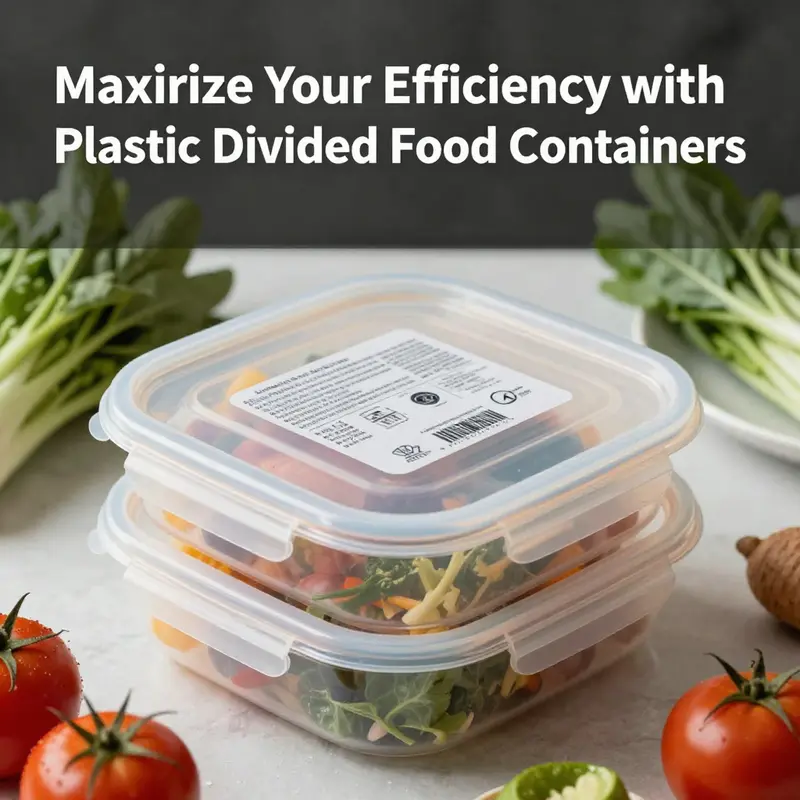
Plastic divided food containers with lids sit at the intersection of everyday practicality and public health safeguards. This chapter outlines the regulatory landscape that governs food-contact materials, the role of the U.S. FDA and the European Union’s migration-focused framework, and how these rules translate into real-world product design and testing. It covers permitted resins, migration testing, labeling requirements, and the importance of audits and certifications. In the United States, the FDA provides guidance on resin types, additives, and testing expectations that help ensure safety across microwave, freezer, and cold-storage applications. In the EU, Regulation (EC) No 1935/2004 emphasizes migration limits under realistic use conditions, which shapes data requirements for manufacturers seeking entry into European markets. The common materials – PP, HDPE, and PS – offer different safety profiles, with migration and heat-uptake being central considerations. BPA-free labeling and explicit microwave-use guidance help consumers make safe choices. For manufacturers, a systems view – material integrity under heat, compatibility of dividers, and resistance to leakage – drives design decisions and testing programs, including ISO 22000 and HACCP concepts. Beyond compliance, the chapter notes the practical aspects for households and food-service operations: how to read labels, how to verify third-party certifications, and how packaging choices impact recyclability and lifecycle sustainability. Finally, it highlights the ongoing nature of safety standards as science advances, and the shared responsibility of designers, manufacturers, retailers, and consumers to uphold safe, trustworthy containers.
Shaping a Greener Plate: Reconsidering Sustainability in Plastic Divided Food Containers with Lids
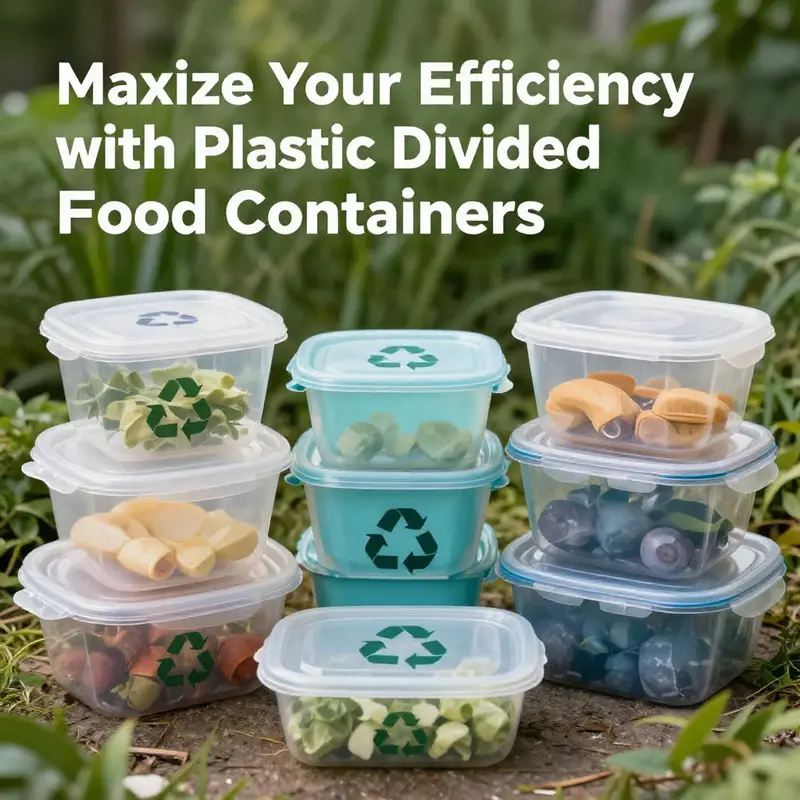
The everyday ease of plastic divided food containers with lids has made them a staple of meal prep, portion control, and on-the-go dining. They promise organization, convenience, and efficiency, letting a single unit carry several foods without mixing flavors or splashing sauces. Yet beneath that promise lies a tension that weighs heavily on modern sustainability debates: the very materials and lifecycles that enable ease can also magnify environmental impact when reuse, recycling, and end-of-life handling are not fully integrated into consumer habits and supply chains. The tension is not simply about tossing a container after use; it begins at the point of manufacture, with how and from what materials the containers are made, and extends to their ultimate fate in the environment or in recycling streams. In this chapter, the discussion returns to the core question: how can a product designed for everyday practicality align with a planetary boundary-conscious approach without sacrificing safety, usability, or affordability? The answer lies in a nuanced appreciation of material choices, production footprints, design for longevity, and the social contracts that govern purchase, reuse, and disposal.
The most common workhorses in this category are containers forged from polypropylene and polystyrene, materials chosen for heat resistance, stiffness, and a balance of cost and performance. Polypropylene, in particular, has become the default due to its ability to withstand microwave and freezer use while maintaining structural integrity through multiple cycles. But neither PP nor PS is intrinsically biodegradable, and both can persist in the environment for hundreds of years if discarded improperly. When such plastics fragment, they contribute microplastics to soils and waterways, entering food chains in ways that are difficult to reverse. The persistence of these materials is not just a theoretical concern; it translates into tangible risks for wildlife and potentially for human health through environmental exposure routes. The environmental footprint of the packaging, from raw fossil fuel extraction to resin formation, polymerization, and eventual disposal, compounds this concern by adding greenhouse gas emissions and energy use to the conversation about sustainability. In other words, the convenience of a multi-compartment container can come with consequences that ripple far beyond a single meal.
Even as these containers fulfill a utilitarian role, the production chain matters. The extraction and processing of petrochemical feedstocks require energy and emit greenhouse gases that contribute to climate change. Manufacturing facilities often rely on finite resources and generate emissions, waste, and effluents that must be treated and managed. It is not merely a question of recyclability or end-of-life pathways; it is also about how much energy is invested up front and how long a product is intended to stay in use. When containers are designed to be reused many times, the overall environmental impact per meal can drop significantly, but only if the product is durable, washable, and capable of resisting staining, odors, and leakage. If a container fails prematurely or becomes a single-use substitute for another single-use option, the environmental gains can diminish quickly. In this light, sustainability is not a single material choice but a lifecycle mindset that blends material science, product design, and consumer behavior.
Recognizing these dynamics has spurred a broader exploration of sustainable alternatives. On the demand side, brands and retailers increasingly highlight BPA-free plastics and safer chemical profiles to address health concerns while remaining mindful of environmental trade-offs. BPA-free does not automatically equal eco-friendly, but it responds to legitimate consumer demands for safer materials in contact with food. Beyond conventional plastics, glass emerges as a compelling option for those seeking recyclability and chemical inertness. Glass can be fully recycled and does not leach chemicals, offering durability and a longer lifecycle when handled with care. However, glass is heavier and more prone to breakage, which affects transport efficiencies and user experience in certain contexts. For some applications, compostable materials such as plant-based PLA offer a lower carbon footprint in certain production pathways, though compostability at home is not universal and industrial composting infrastructure is not always available. Each alternative presents a different balance of safety, usability, environmental impact, and practical feasibility, underscoring that sustainability is a spectrum rather than a single solution.
Design, too, plays a critical role in extending the life of divided containers and reducing waste. Reusable and stackable configurations are recurring themes in contemporary product design, encouraging longer lifespans and easier storage. A key feature is leakproof sealing, which reduces the likelihood of spills and odors that necessitate premature replacement. Yet durability must be matched by responsible end-of-life pathways: a sturdy container is only truly sustainable if it is accepted by local recycling programs or is widely reusable in practice. This is where consumer responsibility intersects with policy frameworks and recycling infrastructure. Not all plastics are treated equally by municipal streams, and even BPA-free or previously recycled resins require clear labeling and standardization to enable efficient sorting and processing. For consumers who want to align daily use with environmental goals, the choice is not only about the material but also about how the product is designed, marketed, and supported by a transparent supply chain.
In this context, a practical approach to sustainability for plastic divided containers involves several complementary strategies. First, there is a push toward clearly labeled, recyclable resins and standardized recycling codes that help municipal programs recognize and process the material. Second, there is a growing interest in truly reusable designs that resist cracking, warping, and staining over years of use. Third, the market is increasingly offering alternatives that reduce reliance on fossil-based feedstocks, whether through recycled content, bio-based blends, or non-plastic materials in compatible formats. It is essential to evaluate the life-cycle performance of any given option, which means looking at energy use, emissions, water consumption, and waste generation from cradle to grave. Fourth, consumer education matters. People need practical guidance on how to clean and repurpose containers, how to verify recyclability in their locale, and how to dispose of products at the end of their useful life without contaminating streams. A responsible consumer can contribute meaningfully by rinsing containers, avoiding contamination with food waste, and returning items to programs that support recycling or composting where available.
For organizations seeking to communicate credible sustainability claims, transparency is a cornerstone. Companies that provide clear information about material sourcing, recyclability, and the lifecycle expectations of their products help consumers make informed decisions. In this regard, partnerships with third-party certifications and adherence to safety standards are meaningful signals of commitment to responsible practice. The shift toward sustainable design is not simply about replacing one material with another; it is about rethinking the entire lifecycle trajectory of the container. That means considering how many times a container will be used, how easily it can be cleaned and stored, and whether its components can be separated for recycling at end of life without contamination or downcycling that undermines resource efficiency.
From the consumer’s perspective, the choice often hinges on the practicality of reuse balanced against access to recycling or composting streams. In many urban and suburban settings, recycling programs accept certain plastics but not others, and home composting remains rare for most conventional plastics. This reality makes it essential to align packaging choices with local infrastructure. Buyers who want to minimize waste might favor containers designed for extended reuse in family meal planning, school meals, or workplace cafeterias, while also seeking products that are compatible with existing recycling streams. The social dimension—trust in product claims, confidence in safe reuse, and willingness to invest in higher-quality items that endure—creates a feedback loop that can persuade manufacturers to invest in more durable materials and better end-of-life solutions.
Sustainability, then, is best advanced through integrated thinking: a product that serves immediate needs while lining up with broader environmental goals. A practical example is a 3-compartment design that supports portion control and reduces food waste, paired with a lifecycle approach that values durability and recyclability. The design can incorporate features that encourage reuse, such as reinforced lids, smooth interiors for easy cleaning, and recycled-content plastics that help close the loop in manufacturing. When such products are paired with transparent material disclosures and clear disposal guidance, they empower consumers to participate actively in a circular economy rather than treating packaging as disposable after a single use. The potential environmental dividends extend beyond preventing litter; they include lower emissions through reduced production of new materials and less energy spent in managing waste streams.
The online marketplace reflects these shifts, enabling access to alternatives and enabling more efficient procurement by foodservices, schools, and households alike. Platforms that curate environmentally responsible options, paired with clear labeling of recyclability, safety, and reuse potential, can guide purchasing toward products that align with both safety and sustainability goals. Yet even the most virtuous packaging choice remains a piece of a larger system. It is only through consistent consumer behavior, robust recycling infrastructure, and accountable manufacturing practices that sustainability in plastic divided containers with lids can become a durable, scalable standard. In this sense, the pathway to greener plates is as much about human choices and systemic support as it is about material science.
To illustrate how products are positioned within this evolving landscape, consider the broader catalog that frames the range of sustainable packaging options: eco-friendly-disposable-3-compartment-food-grade-packaging-box-for-fast-food-high-quality-takeout-boxes-for-fried-chicken-french-fries-packaging. This example embodies the tension and opportunity of contemporary design: it signals a move toward packaging configured for reusable habits, while still navigating the realities of disposal and recyclability in diverse markets. The section of the market that emphasizes safety and eco-conscious materials can drive improvements across the board, encouraging suppliers to publish clearer material disclosures, pursue higher recycling compatibility, and pursue production methods with lower energy intensity. As with any material choice in packaging, there is no panacea. The path forward requires a careful balance of performance, safety, and environmental stewardship, guided by data, transparent practices, and a commitment to continuous improvement across the supply chain.
External resources deepen this perspective by offering concrete data on material performance, recycling compatibility, and end-of-life pathways. For readers seeking broader context and empirical detail, see the industry and research discussions available through established sources that summarize production footprints and recycling realities for plastic packaging. (External resource provided for further reading: https://www.alibaba.com/product-detail/Inside-Divided-Plastic-Food-Containers-With-Lids_1600574835592.html?src=12345&spm=a2700.12345678.0.0 )
Final thoughts
Plastic divided food containers with lids stand out as an indispensable asset for businesses in the food and beverage sector. Their innovative features, growing market trends, adherence to safety standards, and opportunities for sustainability make them a wise investment. By choosing the right containers, you not only streamline your operations but also promote a commitment to quality and environmental responsibility. Embrace the convenience and efficiency they offer, ensuring that your service meets the expectations of today’s discerning consumers.