
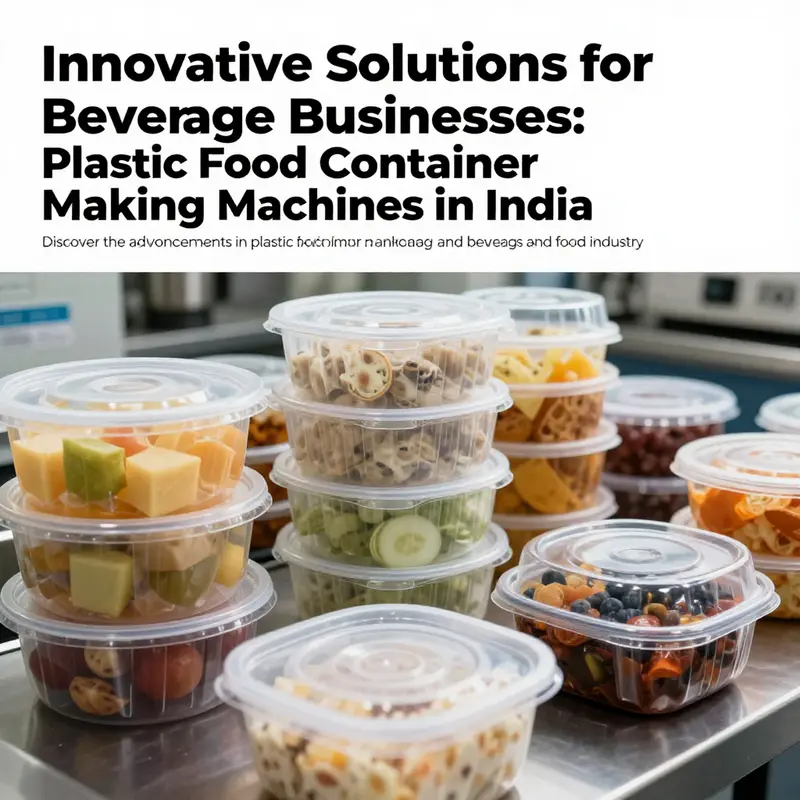
The demand for efficient and high-quality food packaging is soaring, particularly in regions like India where vibrant food service industries thrive. As bubble tea shops, restaurants, food trucks, catering services, and event planners increasingly rely on durable and attractive container solutions, understanding the mechanics of plastic food container manufacturing becomes paramount. This article delves into the key technologies shaping the landscape, the current market trends, effective sourcing strategies, and the broader economic impacts of this burgeoning industry.
How Key Technologies Drive Plastic Food Container Production in India
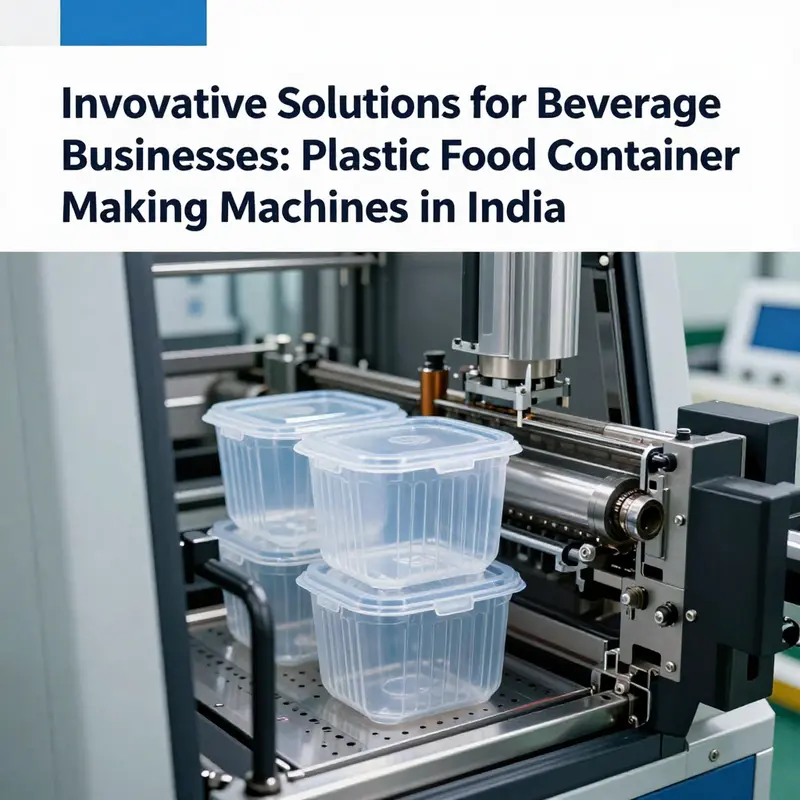
Core technologies shaping production and their practical impact
Production of plastic food containers in India is driven by a compact set of technologies that determine quality, cost, and throughput. Injection molding remains the backbone for durable, reusable, and precision containers. Thermoforming and vacuum forming serve demand for lightweight or single-use items. Layered on top of these are automation, advanced controls, and material science choices that directly shape product performance and regulatory compliance.
Injection molding stands out for its dimensional control and repeatability. The process injects molten polymer into a closed mold under high pressure. This yields parts with uniform wall thickness and consistent sealing surfaces. For food containers with lids, multi-cavity molds and precision tooling ensure that each lid mates perfectly every run. Machines now integrate servo-driven injection units and fast-clamping systems. That reduces cycle time while maintaining part consistency. Manufacturers choose injection systems for partitioned lunch boxes, reusable tiffin-style containers, and high-clarity bowls used in food retail.
Thermoforming takes a different approach. A sheet of plastic is softened and draped over a mold. Vacuum or pressure then forms the sheet to shape. Thermoforming suits shallow trays, clamshells, and certain disposable food bowls. It reduces tooling costs compared to injection molding. The trade-off lies in part rigidity and detail. Thin areas and tight tolerances are harder to achieve. Yet for large-format trays and economical single-use containers, thermoforming remains cost-effective.
Vacuum forming overlaps with thermoforming and often refers more specifically to vacuum-assisted shaping of foam and thin-sheet products. In India, vacuum forming is frequently used to produce foam dinner plates, disposable bowls, and protective trays. Equipment costs can be lower, and material wastage may be acceptable for low-margin disposables. However, finished part strength and heat resistance often lag behind injection-molded equivalents.
Beyond core forming technologies, robotics and line automation transform economics. Modern production lines combine forming, trimming, stacking, and packing into compact cells. Pick-and-place robots remove fragile lids and stack containers. Sensors and vision systems inspect parts for flash, sink marks, and short shots. Integrated PLCs and HMIs let operators change recipes quickly. For a manufacturer scaling to supply restaurant chains or cloud kitchens, automation reduces labor dependency and improves hygiene by limiting human contact.
Material choice is a technical and regulatory decision. Polypropylene (PP) is widely used for hot-hold containers. It offers heat resistance and fatigue strength. Polystyrene (PS), including foam grades, remains common for single-use clamshells due to low cost and easy forming. PET provides excellent clarity for display-ready salad bowls. Each polymer behaves differently under heat, pressure, and cooling. Molding parameters must be tuned to match shrinkage, crystallinity, and warpage characteristics.
Food-grade compliance is non-negotiable. Machines and molds must support smooth surface finishes, uniform cooling, and controlled processing to avoid contamination. Production floors must allow for easy cleaning and segregation of pre- and post-processing areas. Traceability systems that log batch, material lot, and machine cycle data are becoming standard. This supports both quality assurance and regulatory audits for materials in contact with food.
Mold design and maintenance underpin repeatability. High-quality steel molds with conformal cooling reduce cycle times and thermal stress. For multi-cavity molds, uniform flow distribution and balanced cooling are crucial to avoid part variation. In India, many new lines import such molds or obtain them from specialized suppliers capable of fast turnarounds. Regular preventive maintenance schedules for mold polishing, venting checks, and heater inspections extend tool life and preserve product finish.
Control systems are another decisive factor. Modern machines employ closed-loop control for temperature, injection speed, and clamp pressure. Servo motors improve energy efficiency and accuracy. User interfaces in local languages simplify operation and reduce human error. Many imported systems are now supplied with voltage compatibility for Indian industrial grids and language localization, easing integration into existing factories.
Quality inspection has shifted from random sampling to in-line, real-time control. Vision systems detect surface defects and dimensional deviations. Weight monitoring catches short shots early. Leak testing rigs verify seal integrity for food containers intended to carry liquids or sauces. These systems feed back into process control, allowing automatic adjustments to guard bands for temperature or pressure, cutting scrap and improving yield.
Sustainability and material alternatives are increasingly part of the technology conversation. While traditional polymers dominate, manufacturers are exploring recycling streams and biopolymer blends. Machines capable of handling recycled content pose challenges. Regrind may alter melt flow and viscosity, requiring different screw profiles and barrel heating zones. Equipment that supports quick changeover and controlled drying can accommodate a variety of resins while keeping waste and off-spec parts low.
Line integration emphasizes throughput and hygiene together. Automated stackers, conveyors, and packaging modules minimize handling and exposure. Positive-pressure enclosures and HEPA filtration are options in high-hygiene applications. For manufacturers serving food delivery platforms, a tightly integrated line reduces contamination risk and ensures consistent packaging that fits delivery workflows.
Supply chain realities influence technology choices. Indian manufacturers often weigh the advantages of local machine builders against imported lines. Domestic suppliers offer proximity for service and spare parts. Imported equipment can deliver advanced automation and cost benefits per cycle. Logistics, import duties, and lead times play into decisions. In many cases, manufacturers opt for hybrid strategies: buy core molding machines from overseas, source ancillary equipment locally, and use local tooling expertise for mold maintenance.
Energy efficiency matters in long production runs. Servo-driven hydraulics and advanced motor controls reduce energy consumption. Process optimization—shorter cycle times, efficient cooling, and reduced scrap—lowers per-unit energy use. For plants in regions with variable power quality, robust UPS and voltage stabilization equipment protect sensitive control electronics and prevent costly downtime.
Operator training and after-sales support are practical technologies in their own right. Machines with intuitive interfaces reduce training time. Remote diagnostics and telematics enable vendors to troubleshoot performance issues off-site. For Indian plants that may operate multiple shifts, straightforward maintenance procedures and clear spare-parts lists are essential to keep lines running.
Choosing a technology mix requires matching product type to process capability. If a business focuses on reusable lunch boxes and sealed microwave-safe containers, injection molding will be the core investment. If the business aims to supply low-cost disposable trays and clamshells for mass catering, thermoforming or vacuum forming lines may make better economic sense. Many operations deploy both approaches to diversify product portfolios and respond to market shifts.
Adopting new technologies also requires attention to regulatory and market signals. Food safety standards, labeling rules, and packaging waste regulations affect material selection and design. Machines that facilitate on-demand printing, embossing, or labeling provide flexibility. Similarly, modular lines let manufacturers introduce new SKUs without lengthy retooling.
One practical resource for manufacturers exploring product options is to review commercial packaging offerings that mirror the containers produced on these machines. For example, suppliers listing eco-friendly disposable 3-compartment food-grade packaging box designs illustrate the market expectations for compartments, seals, and material performance. Reviewing such examples helps align technical choices with actual customer requirements: portion control, grease resistance, and stackability are features buyers prioritize.
The convergence of robust forming technologies, automation, and materials engineering creates a clear pathway for Indian producers. By selecting the right combination of injection molding, thermoforming, or vacuum forming, and by investing in control systems, inspection tools, and training, manufacturers can deliver consistent, food-safe containers at scale. That alignment of technology and market need is the key to competitive, compliant, and profitable production.
From Molds to Market: Navigating India’s Growing Frontier of Plastic Food Container Machinery
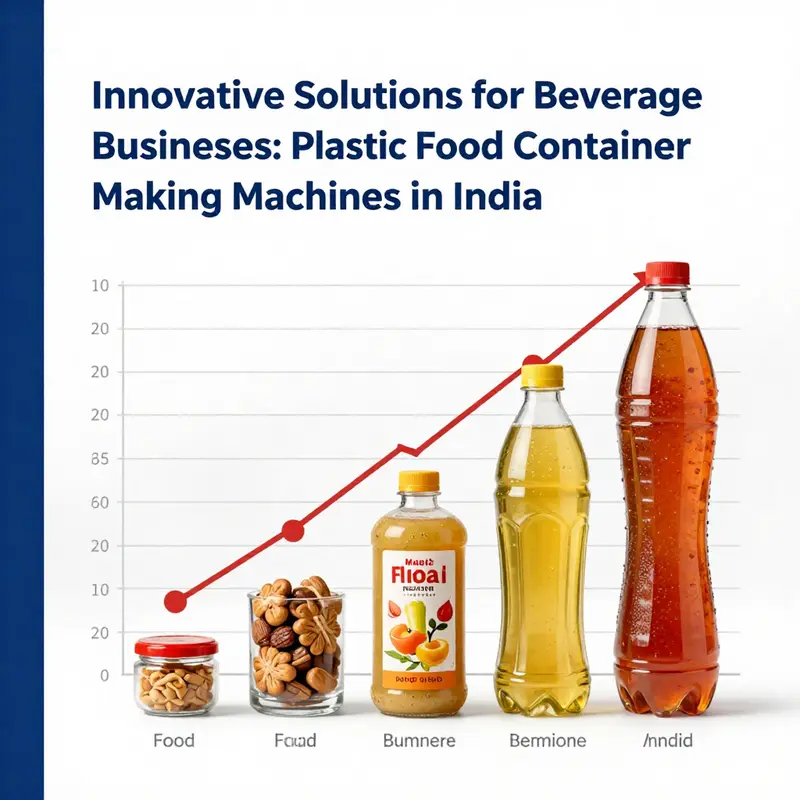
The Indian market for plastic food container making machines is moving beyond a phase of incremental improvements toward a more ambitious, design-driven trajectory. As the country’s food and beverage ecosystem expands—driven by the expansion of quick-service restaurants, the growth of delivery platforms, and the rise of cloud kitchens—the demand for packaging that is hygienic, durable, and economically scalable has intensified. Manufacturers pursuing this shift are faced with a set of intertwined realities: the need for high-precision production, the push toward lightweight and visually appealing containers, and the imperative to align with evolving sustainability and regulatory expectations. In this environment, the choice of machinery becomes not merely a question of capital expenditure but a strategic decision about production capability, quality consistency, and long-term competitiveness. At the heart of this evolution lies a transformation in how containers are conceived, produced, and positioned within the supply chain that serves millions of meals daily across urban neighborhoods and peri-urban corridors alike.
The core technological backbone of this transformation remains injection molding, supported by vacuum forming in segments where cost considerations and faster setup times hold sway. Injection molding machines have emerged as the workhorses for producing high-precision, durable, and complex food-grade containers. They enable the fabrication of multi-compartment lunch boxes, sealed lids, and other specialized designs that demand tight dimensional tolerances and repeated performance. The resulting products exhibit uniform wall thickness, smooth surface finishes, and consistent mechanical properties—traits critical for food safety, ease of washing, stacking efficiency, and transport durability. In parallel, vacuum forming machines still play a vital role for certain product families, especially single-use or foam-based trays, bowls, and compartments. These lines tend to offer lower initial investment and shorter cycle times, making them attractive for facilities seeking rapid entry or experimentation with new packaging concepts. Yet, industry watchers emphasize that as scale and quality expectations rise, the long-term economics often favor integrated, automated, multi-process lines that couple forming, trimming, inspection, and packaging into a continuous flow.
A defining trend in India’s packaging machinery landscape is the increasing emphasis on automation and end-to-end line integration. Modern production lines now frequently feature automated material handling, in-line cutting and stamping, stack counting, and robotic pick-and-place systems. The aspiration is not only to maximize throughput but also to minimize human intervention in the production environment, thereby reducing contamination risks and improving repeatability. This is especially important in a market where food safety is non-negotiable and consumer brands increasingly compete on the reliability and uniformity of packaging that preserves product quality from shelf to table. In practice, plants are aiming to operate with minimal downtime, using intelligent control systems, predictive maintenance, and modular equipment that can be reconfigured to accommodate product family changes without a full retrofit.
The market dynamics are further shaped by material trends and environmental considerations. A notable shift toward PET containers for beverages and ready-to-ship foods reflects a broader consumer and logistics preference for clarity, lightweight performance, and recyclability. PET’s optical quality helps preserve premium visuals on shelf and in delivery, while its relative toughness under stack-reinforcement scenarios ensures integrity during transit. This material trajectory dovetails with a growing emphasis on circular economy principles. In parallel, machine builders and packaging end-users are exploring lines capable of processing recycled plastics or incorporating bio-based or compostable materials where feasible. The ongoing dialogue between material science and equipment design is fostering innovations in screw design, temperature control, mold gate configurations, and feedstock handling that collectively support recycled-content behemoths without sacrificing performance. For Indian manufacturers, this intersection of material capability and machine sophistication holds the key to sustainable growth that aligns with both domestic policy goals and evolving global sustainability expectations.
Quantitatively, the broader India Plastic Packaging Market is projected to gain momentum, with a compound annual growth rate in the low single digits, estimated to be around 3.06 percent, and a long-run vision pointing toward a multi-billion-dollar ecosystem by the early 2030s. In this context, the demand for advanced plastic container making machinery naturally rises as manufacturers seek to scale, diversify product offerings, and compete on both price and performance. The strategic implications are clear: buyers must weigh not only the upfront cost of a high-precision, automated line but also the hidden costs of maintenance, energy consumption, spare parts availability, and the vendor’s service network. In India’s current manufacturing milieu, where domestic suppliers deliver convenient service access in major metros but where total-cost-of-ownership becomes a decisive factor for many plants, the choice often extends beyond one-off purchase value. It evolves into a choice about how a factory can stay in step with evolving packaging formats—multi-compartment boxes, vented lids, microwavable heat-resistant liners, and grease-resistant coatings—without sacrificing throughput or quality.
In addressing these demands, many Indian buyers increasingly look outward for higher-end solutions, particularly from producers who can offer fully automated, integrated lines with sophisticated control architectures. The appeal of such systems lies in the deterministic production capability they provide: consistent cycle times, reproducible wall thickness, uniform finish, and traceable production data. These capabilities are especially valuable for facilities serving large-scale catering, hospitality, and e-commerce fulfillment centers where even small variances in container geometry can translate into significant downstream issues, from sealing failures to stacking damage in cold-chain transport. The shift toward automation does not erase the importance of local service and parts availability. Rather, it amplifies it, as plants require rapid, reliable support to minimize unplanned downtime and to ensure that the lines can run across multiple shifts with predictable performance. In regions where logistics and supply chains can be inconsistent, having a vendor who can deliver not only a machine but a credible service partnership becomes a critical differentiator.
A practical implication of these market forces is that many Indian manufacturers are balancing the lure of cost advantages with the necessity of compatibility and resilience. Domestic players located in technology hubs such as Gurgaon, Delhi, and Tamil Nadu have established track records in basic and mid-range machinery, but the most transformative upgrades frequently involve importing fully automated lines that integrate extrusion or preform handling, blow-molding or injection modules, and downstream trimming and packaging. This global sourcing trend is driven by the global supply chain’s current configuration, where manufacturers in China and other parts of Asia offer well-developed value chains, standardized control interfaces, and scale economics that translate into cost-effective, feature-rich lines. The value proposition is compelling: a complete, automated production line that can be configured for different container formats with minimal downtime between changeovers, backed by a mature remote monitoring and after-sales ecosystem. In practice, the decision to source from international manufacturers is often grounded in expected improvements in unit cost over time, as well as the capacity to leverage more advanced process controls to meet stringent food-contact regulatory requirements and brand safety standards.
From an industry perspective, the choice of machinery is inextricably linked to product strategy. A growth-oriented plant may prioritize lines capable of high-speed molding with tight tolerances and robust mold-part tooling to support a range of product geometries, including multi-compartment containers and sealed-palette designs for portion-controlled meals. In contrast, a facility focusing on niche premium packaging might invest in lines that can handle specialty materials or produce ultra-clear surfaces that enhance visual appeal. Either path requires a clear assessment of feedstock profiles, mold availability, and process thresholds for material viscosity, melt temperature, and cycle duration. Operators must also consider the evolving regulatory ecosystem around food-contact plastics, which may require more stringent traceability, batch-recording, and sanitization protocols. Machinery that enables cleanroom-like operation, with minimized human touchpoints and optimized exhaust and filtration systems, aligns with these expectations and helps protect brand integrity in a crowded market.
This landscape also carries significant implications for the broader supply chain. As more plants invest in automated, high-precision lines, the flow of containers from production to distribution becomes more efficient, enabling faster turnover, more accurate inventory planning, and tighter quality control. For end users—restaurants, cloud kitchens, and delivery services—the quality and consistency of containers translate into tangible benefits: fewer defects, lower spoilage risk, improved thermal performance, and more reliable branding through consistent appearance. For material suppliers and downstream converters, the demand for compatible resins, masterbatches, and coatings remains strong, even as sustainability criteria push for recycled content and reduced carbon footprints. In this environment, partnerships that integrate material science with machine engineering—providing not just equipment but a holistic packaging solution—will dominate the conversation about next-generation manufacturing capability in India.
Within this evolving ecosystem, one practical tactic for manufacturers is to maintain agility through modular line designs. A modular approach enables a plant to scale output and to switch between container formats with limited downtime. Molds and tooling can be upgraded or swapped with minimal disruption to the main production line. Control systems, too, are increasingly designed with scalability in mind, allowing plant managers to add sensors, automation modules, or data analytics capabilities as needs evolve. The overarching aim is to reduce total cycle time while preserving the mechanical integrity of the final product. Importantly, the transition to higher automation does not eliminate the need for skilled operators; instead, it shifts the skill demand toward process optimization, preventive maintenance planning, and data-driven decision-making. India’s manufacturing workforce will need continued upskilling to maximize the value of automated lines, with training that emphasizes quality assurance, process validation, and safe handling of high-precision tooling.
Finally, the market’s trajectory toward sustainable packaging is unlikely to slow down. The push toward transparent, recyclable, and reusable packaging is reshaping both product design and production philosophy. For instance, as brands experiment with compostable or recycled-content materials, machine builders are called upon to deliver temperature-controlled processing, minimal material waste, and tools that support efficient cleaning cycles. In India, where waste management infrastructure and consumer recycling behavior vary across regions, manufacturers must balance local practicality with global best practices. The result is a dynamic where technology, policy, and consumer preference converge to drive a more eco-conscious, efficiency-focused manufacturing paradigm that can still deliver the speed and scale required by a thriving F&B segment.
As readers explore the evolving market, a practical takeaway emerges: success in India’s plastic food container machinery space now hinges on a nuanced blend of technology, supplier partnerships, and a disciplined view of total cost of ownership. Buyers should prioritize lines that deliver consistent part quality, rapid changeovers, and robust after-sales support, while also keeping a close eye on material compatibility, regulatory compliance, and energy efficiency. The goal is to secure a production footprint that not only meets today’s demand but also remains adaptable to tomorrow’s packaging innovations—whether that means multi-compartment meals, microwave-safe designs, grease-resistant coatings, or lighter, clearer containers that enhance the consumer experience on every delivery.
Internal link: For a glimpse into how packaging design translates into real-world takeout solutions, see eco-friendly takeout boxes for food packaging, a category that highlights materials and forms produced by modern container lines. eco-friendly takeout boxes for food packaging.
External resource: For a deeper dive into market sizing and trajectory, see the official market-size report by a leading analytics provider: https://www.lucintel.com/india-plastic-food-container-making-machine-market-size.aspx
How to Source and Select Plastic Food Container Production Machinery for India: Practical Supplier Strategies
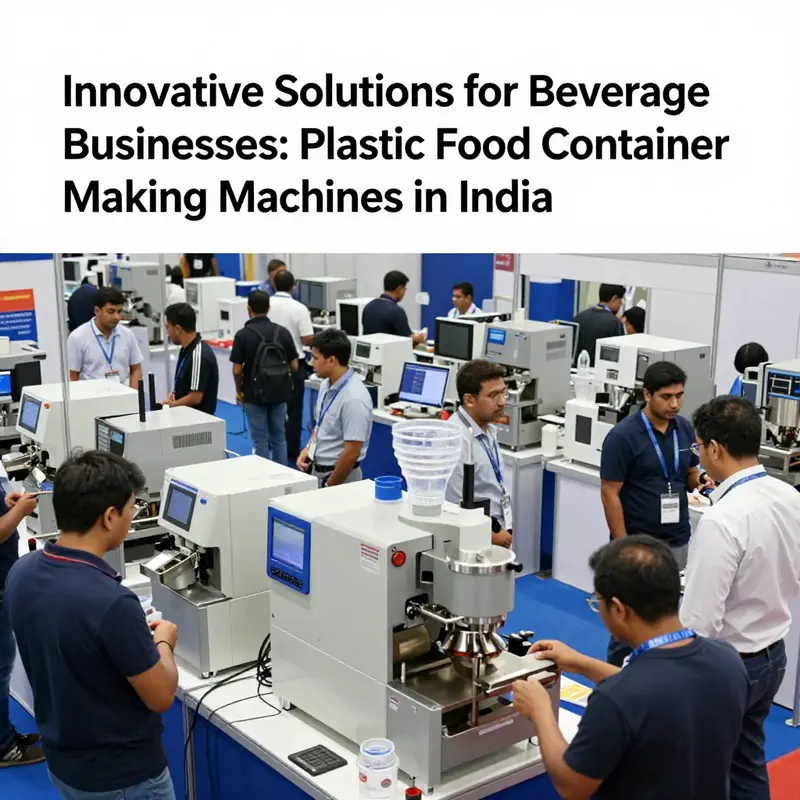
Sourcing the right machinery for manufacturing plastic food containers in India is both a strategic decision and an operational challenge. The choice of supplier shapes product quality, production costs, throughput, and long-term competitiveness. Buyers must reconcile technical requirements with budget realities, regulatory demands, and post-sale support. This chapter weaves together the practical considerations that matter when evaluating domestic makers, international vendors, and hybrid sourcing approaches.
Start by clarifying the production profile. Decide the container types, materials, and volumes you will produce. Will you focus on reusable, high-durability containers made by injection molding? Or on single-use thermoformed trays and foam boxes? Each choice maps to different machine classes, spare parts needs, and vendor expertise. For injection molding, prioritize suppliers with experience in multi-cavity molds and food-grade material handling. For vacuum forming, ensure the vendor understands sheet heating uniformity and trimming accuracy. Where biodegradables such as PLA are involved, verify the manufacturer’s process controls and drying systems.
With requirements defined, weigh local manufacturers against overseas suppliers. Domestic suppliers offer faster service response, easier site visits, and no customs delays. Local shops are often best for smaller capacities, basic automation, and rapid spare parts exchange. Conversely, international manufacturers—especially those from major production provinces in China—frequently offer higher automation levels and more competitive pricing for large-scale lines. These suppliers also provide integrated solutions: automatic feeding, robot stacking, and online quality checks. Balancing speed of support and technology level is the heart of the local-versus-import decision.
When evaluating overseas options, focus on technical capability rather than price alone. A lower upfront cost can hide higher lifetime expenses if maintenance is difficult or spare parts are scarce. Confirm the supplier’s track record in producing machines for food-contact applications. Ask for case studies, floor references, and video evidence of similar lines running. Review equipment specifications closely: cycle times, clamp force, shot size, servo vs. hydraulic drives, energy consumption, and mold temperature control. These metrics determine throughput and part consistency.
Certifications and compliance must be non-negotiable. Verify that the supplier holds standard quality management certifications. Inspect material and component certificates for critical parts that contact food. Confirm compliance with Indian regulatory expectations for food-contact plastics. If you plan to export finished containers, consider the certification requirements of target markets. Documentation for traceability helps during audits and reassures institutional buyers.
A pragmatic sourcing strategy includes validation steps before committing to full production. Request sample parts made on the proposed machine using your material. If samples are not feasible, demand detailed molding simulations and process capability data. Arrange factory acceptance testing, either in person or via live video. Factory acceptance reduces the risk of surprises at installation.
Service and after-sales support determine the long-run success of any line. Clarify repair response times, remote diagnostic capabilities, and the availability of local technicians. Ask whether the supplier can provide training programs and operator manuals in English or a preferred local language. Make sure spare parts lists are comprehensive and that lead times are acceptable. For imported lines, confirm whether a local service partner exists. A reliable local partner can handle routine maintenance and emergency repairs, saving days of downtime.
Customization capability is often a decisive factor. Indian food container makers frequently need machines adapted for local electricity specifications, operator panels in regional languages, and safety guards compliant with local factories. Strong suppliers will offer voltage and control-system customization, basic PLC programming updates, and mold adaptation support. Discuss whether the vendor can preconfigure robotics, stackers, or vision systems to meet your layout. Suppliers that are flexible with small software changes reduce integration time and lower commissioning costs.
Logistics and total landed cost deserve careful attention. Price quotes should list ex-works, FOB, CIF, and duty-inclusive prices. Factor in inland transport, customs clearance, handling, and inland insurance. For sea shipments, plan for possible delays at port during peak seasons. Ask the supplier to provide average transit times from their factory to your plant. Where feasible, negotiate consolidated shipments of spares and tooling to cut per-shipment overheads.
Payment terms and risk mitigation go hand-in-hand. Typical arrangements include a deposit, progress payments, and a balance due after successful commissioning. Use documentary instruments when possible. Include clear acceptance criteria tied to performance metrics in the contract. Insist on warranty clauses that specify coverage for mechanical, electrical, and control-system failures. Clarify responsibilities for installation, calibration, and pilot runs. A well-structured contract protects both parties and creates accountability.
Quality control during procurement must be systematic. Use checklists during pre-shipment inspections that cover mechanical tolerances, electrical schematics, safety interlocks, and software versions. Where you cannot inspect in person, hire third-party inspection agents to do factory audits and run-off tests. Obtain spare parts kits with the initial shipment. Small consumables and wear items should be stocked locally to avoid production interruptions.
Negotiation should focus on value rather than price slashes. Seek bundled proposals that include training, tooling support, and a reasonable spare parts package. Request performance guarantees tied to cycle time and reject rates. If the supplier offers production training, make it part of the payment milestones. These items reduce hidden costs and accelerate useful uptime.
Integration into your factory matters. Plan the shop layout before machines arrive. Consider utilities such as compressed air, chiller capacity, and electrical distribution. Ensure the factory floor has load-bearing capacity for heavy presses. Decide on an assembly and commissioning window that minimizes production disruption. Include a plan for operator training and first-run quality control checks so the line begins producing acceptable parts quickly.
Environmental and regulatory considerations are increasingly central. Indian buyers should evaluate machine energy efficiency, waste management features, and compatibility with recyclable or compostable resins. If you produce containers aimed at premium or institutional markets, proper documentation of food-safety material handling will be an advantage. Discuss filtration systems, dust extraction, and melt filtration with the supplier when processing recycled inputs.
Scaling and future-proofing the purchase require foresight. Look for modular designs that allow additional stations, higher automation, or faster cycle times later. Decide if you prefer a fully automated line now or a capable semi-automated line that can be upgraded. Future demand growth can make a slightly higher initial investment payoff quickly. Conversely, over-investing too early ties up capital and can hurt cash flow.
Finally, practical tactics that reduce procurement risk include visiting supplier hubs when possible, engaging a local technical advisor, and building a shortlist of three suppliers for competitive evaluation. When considering overseas vendors, focus on those located in major manufacturing provinces with dense supply chains. Check reviews from other buyers, and ask for references that closely match your planned product and volume. Small pilot orders, followed by staged expansion, often yield the best balance of speed and risk control.
For buyers aiming to produce environmentally sensitive designs, integrating machinery decisions with product choices is important. For example, if you plan to offer eco-conscious takeaway options, coordinate machine selection with material strategy and end-user requirements. To see examples of finished eco-friendly takeaway packaging that reflect such product decisions, review eco-friendly takeout boxes for food packaging as an example of market-ready solutions.
When sourcing machinery, remember that the cheapest quote rarely yields the best outcome. Prioritize suppliers that demonstrate technical competence, transparent logistics, robust service networks, and a willingness to align with your production roadmap. A carefully chosen machine partner is an investment in consistent product quality and reliable supply. For sourcing from overseas platforms, the global trading platform is often used to find vetted vendors and compare technical offerings. https://www.alibaba.com
From Molds to Markets: The Economic Footprint of India’s Plastic Food Container Manufacturing
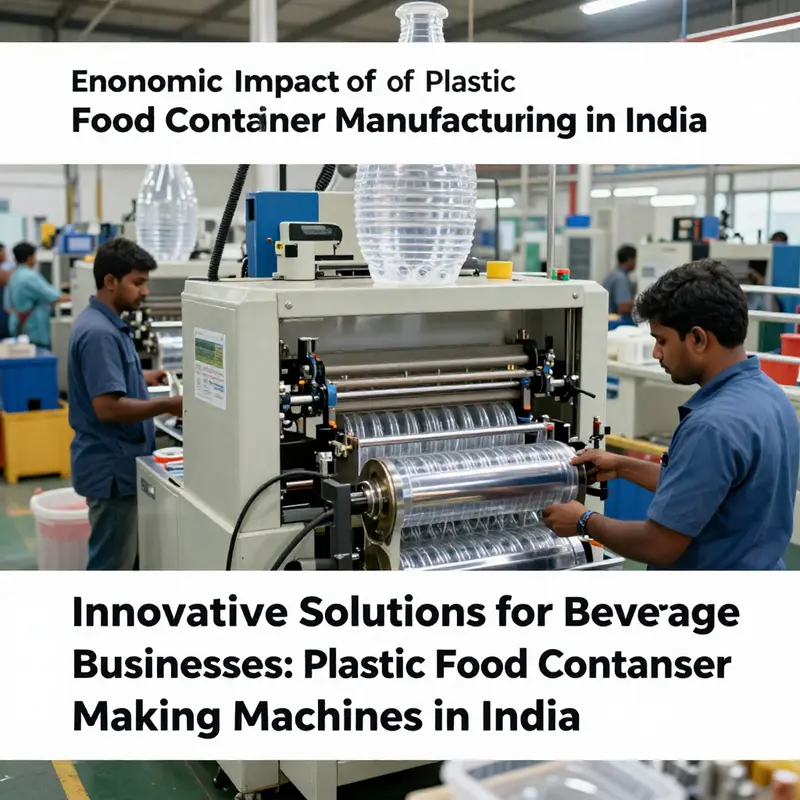
The plastic food container manufacturing sector in India operates at a crucial crossroads where industry scale, logistics efficiency, and consumer demand intersect with policy watches that could reshape the entire value chain. The market’s backbone rests on materials with robustness and chemical resistance, notably high-density polyethylene, which underpins items as varied as milk jugs, oil bottles, and a growing array of food containers designed to survive transportation, stacking, and the rigors of daily use. The economic footprint of this sector extends far beyond the factory floor. It touches millions of linked jobs, channels billions of rupees through downstream FMCG networks, and underpins a nationwide system that makes ready-to-eat meals, beverages, and household staples affordable, durable, and accessible. When the industry speaks of impact, it speaks in a language of throughput, scale, and the ability to keep the supply chain moving without compromising safety or quality.
In practice, the sector’s production architecture leans heavily on two core technologies. Injection molding dominates where containers require structural complexity, precise tolerances, and durable, reusable designs. This machinery enables the mass production of multi-compartment lunch boxes and sealed containers that meet strict food-grade standards. It is paired with automated lines that integrate forming, trimming, and high-speed handling, all aimed at achieving consistent product quality at large volumes. Complementing this are vacuum forming machines, which excel in lighter, single-use packaging segments and trays. These lines typically incur lower upfront costs, but demand careful material selection and mold design to ensure sufficient strength for practical use. In modern factories, you rarely see one technology operating in isolation; instead, a seamless, automated sequence drives the entire process from raw material to finished product, reducing human touchpoints, controlling contamination risk, and driving a predictable level of yield.
The economic ripple effect begins with investment and employment, but it grows as packaging becomes a strategic lever in the FMCG supply chain. A modern plant—often located in industrial belts around major urban centers—requires skilled technicians for machine maintenance, process engineers to optimize cycle times, and quality specialists to ensure food safety standards are met at scale. These roles multiply across ancillary activities: upstream supply of resin and colorants, downstream packaging design, logistics for warehousing and distribution, and the service ecosystem of spare parts, calibration, and performance tuning. The result is a certain elegance in scale. A few hundred high-precision machines can support tens of thousands of packaging lines across multiple cities, feeding a logistics web that carries water, beverages, edible oils, ready-to-eat meals, and everyday household products.
Yet industrial vigor encounters a global sourcing landscape that is increasingly asserting itself into Indian manufacturing decisions. While domestic players provide proximity, reliability, and local service networks, many manufacturers seeking cutting-edge automation, advanced control systems, and the most cost-efficient production lines turn to international suppliers. In practice, Chinese equipment often represents a compelling mix of cost efficiency, automation, and modularity. The ability to customize control panels for local voltage and language, plus integrated solutions that can be scaled, reduces the time to value for new plants. The trade-off frequently centers on total landed cost and delivery timelines: a fully automated line may carry an initial premium but can yield substantial long-term savings through higher uptime and lower labor costs. Roughly speaking, for Indian manufacturers evaluating capital expenditure, the comparison is not merely a price tag but a calculus that weighs installation, commissioning, maintenance, and ongoing energy efficiency against anticipated output and waste reduction. In many cases, the choice reflects a broader strategic orientation—whether to prioritize domestic service convenience or global throughput and sophistication.
This strategic calculus occurs within a broader market ecosystem that remains deeply linked to the country’s fast-moving consumer goods sector. The packaging produced here is designed to keep products safe through distribution channels that span urban supermarkets, informal markets, and rapid-delivery ecosystems that include cloud kitchens and takeaway services. Containers must endure cold chains for dairy and beverages, grease resistance for fried foods, and moisture barriers for ready-to-eat meals. The ability to deliver cost-effective, durable, and hygienic packaging is not merely an industrial aim; it translates directly into the affordability and reliability of essential consumer goods. In this way, the sector’s health is tethered to the resilience of India’s FMCG network, where small shifts in packaging cost or availability can cascade into product pricing, shelf life, and consumer satisfaction.
Regulatory currents complicate this straightforward story with policy instruments aimed at reducing environmental impact. On July 1, 2022, India moved decisively to curb single-use plastics, an initiative that targeted cutlery, straws, and a range of packaging types deemed disposable and polluting. The policy’s architecture was designed to push the economy toward reuse and recycling, yet in the short term it created a degree of uncertainty for manufacturers who must navigate licensing, material substitutions, and evolving standards for what constitutes acceptable packaging. The sudden policy shift unsettled thousands of small and medium enterprises and, according to industry observers, potentially affected more than 80,000 businesses in the broader packaging space. The economic consequence at that moment was not just lost sales or delayed investment; it was a recalibration of risk for plants planning capacity, a reorientation of supplier ecosystems, and a rethink of product design toward more reusable forms.
The impact extended into the financials of corporate peers and regional players alike, revealing the friction between environmental goals and industrial capacity. Major beverage and consumer brands lobbied against certain components of the ban, highlighting the tension between reducing waste and maintaining the reliability of supply chains at scale. While the ban preserves some exemptions—such as for thicker bags and certain drinking water containers—it nonetheless introduced complexity into the decision matrix for packaging lines. For many manufacturers, this translated into a need to upgrade lines for enhanced recyclability, diversify resin inputs, and incorporate post-consumer recycled materials where feasible. The upshot is a sector learning to balance short-term cost pressures with longer-term commitments to circular economy principles.
Against this regulatory backdrop, the industry is pushing forward with strategic adaptations that shape its long-run profitability. There is accelerating investment in recycling infrastructure, material recovery, and the development of alternatives that align with circular economy targets. Initiatives that promote the reuse of containers, the capture of post-consumer plastics, and the exploration of biodegradable or compostable substitutes are gaining traction. The long-term viability of the plastic packaging sector in India will likely hinge on its ability to demonstrate material circularity, reduce lifecycle emissions, and align with consumer expectations for sustainability. Such a trajectory does not negate the need for robust, cost-effective packaging; rather, it reframes profitability around the ability to secure feedstock, manage end-of-life scenarios, and maintain product performance while minimizing environmental footprint.
For manufacturers, the regulatory environment underscores a fundamental truth: capital discipline and process optimization are critical to enduring success. The most resilient players are those who invest in high-precision equipment, maintain rigorous quality control, and pursue energy efficiency and waste minimization as core operating principles. They view automation not only as a means to cut labor costs but as a way to stabilize production schedules, improve repeatability, and reduce the variability that can erode margins in a competitive market. In this sense, the current moment is less a simple demand boom and more a catalytic phase—one that tests the sector’s capacity to innovate, to adapt to shifting policy signals, and to contribute to a sustainable industrial framework that can support India’s dynamic FMCG supply chain.
Within this evolving landscape, one practical observation stands out. The packaging ecosystem increasingly values versatile, cost-conscious, and sustainability-aligned solutions that can be deployed at scale. A representative example of this trend is the growing interest in compact, multi-compartment packaging options that improve portion control and shelf management while reducing overall material usage. As a tangible reference—rather than naming specific products—producers and designers are gravitating toward configurations that optimize stacking efficiency, enhance barrier properties, and support reusability where feasible. Such design choices are not purely cosmetic; they directly influence line speeds, defect rates, and the downstream recycling stream. In this sense, the economic impact of manufacturing extends beyond immediate production metrics to the broader network effects that determine how packaging performs across the commodity chain and how confidently retailers can forecast costs and margins.
The narrative would be incomplete without acknowledging the visual and practical bridge between material science, design innovation, and market dynamics. A well-conceived packaging solution that balances strength, heat resistance, and seal integrity can reduce losses during distribution and extend product shelf life. It can also open new avenues for reuse and recovery, which is increasingly important as the industry seeks to satisfy both policy guidelines and consumer preferences for responsible packaging. In this sense, the sector’s economic footprint resembles a finely tuned engine: each component—the resin supply, the machinery, the finished containers, the recycling streams, and the regulatory framework—must operate in harmony to drive growth, competitiveness, and sustainability across India’s diverse markets. When viewed through this lens, the value of investment in modern molding and forming technologies becomes clear: it is not merely about meeting current demand; it is about enabling a resilient, adaptable packaging system that can weather policy shifts, supply disruptions, and evolving consumer expectations.
One practical pathway for integrating advanced packaging at scale involves practical supplier choices that balance cost with capability. For instance, mills and manufacturers now expect equipment to deliver consistent tolerances, reliability, and long-term service support. In this context, the adoption of integrated lines that combine forming, trimming, and automated handling becomes less a luxury and more a baseline requirement for achieving cost efficiency and quality assurance across high-volume runs. The ability to customize line configurations, control systems, and safety features to local conditions—electrical supply, climate, and maintenance infrastructure—further underlines how deeply the economics of manufacturing are entwined with the design of the production ecosystem. The outcome is a more resilient domestic capacity that can compete with imported solutions while preserving critical service networks and minimizing downtime.
As the sector navigates these currents, a few guiding principles emerge. First, capital efficiency matters: plants that optimize energy use, minimize waste, and maximize uptime tend to deliver the strongest returns in an uncertain regulatory climate. Second, adaptability is essential: lines that can pivot between product formats and materials without protracted downtime will be better positioned to capture shifting demand and policy requirements. Third, sustainability cannot be treated as an afterthought; it must be embedded in product design, material sourcing, and end-of-life management to align with circular economy goals and consumer expectations. The confluence of these factors suggests a long horizon of opportunity for the Indian plastics packaging sector, provided firms manage risk through prudent investment, robust maintenance, and a strategic approach to supplier networks and logistics.
To further explore the practical implications and provide broader context, readers can explore a related range of packaging solutions that illustrate the direction industry leaders are taking toward sustainable performance while maintaining affordability. For example, a representative range of eco-friendly options highlights how designers are balancing durability, safety, and reuse potential across multiple food-service applications. This broader ecosystem—where form meets function in the pursuit of responsible packaging—serves as a reminder that the sector’s economic health depends on both manufacturing prowess and thoughtful product development. For deeper regulatory and policy context that frames these market dynamics, see the external resource listed at the end of this chapter.
In sum, the economic footprint of India’s plastic food container manufacturing is shaped by a delicate balance of high-capacity automation, strategic material choices, and an evolving regulatory and consumer landscape. The sector’s ability to sustain growth hinges on prudent capital deployment, continuous improvement in manufacturing efficiency, and a clear commitment to circular economy practices. As the market matures, those companies that align technical excellence with environmental stewardship will be well positioned to support India’s expanding FMCG networks, while contributing to a packaging ecosystem that is both economically resilient and socially responsible. The journey from mold to market is thus less a single leap and more a sustained, coordinated effort to optimize value across every link in the chain, from resin to return and reuse.
External context for broader understanding of regulatory and economic implications can be found here: https://www.careerslaw.in/sustainable-future-circular-economy-indias-fmcg-sector/
Internal reference to a packaging solution example for illustrative context: eco-friendly 3-compartment packaging box for fast food.
Final thoughts
As the demand for quality food packaging continues to rise across India, the advancements in plastic food container making machinery are crucial for businesses aiming to stay competitive. Each chapter shed light on the technology, trends, sourcing, and economic ramifications, weaving a comprehensive narrative that underscores the importance of selecting the right production solutions for food and beverage ventures. By investing in efficient manufacturing technologies, businesses can meet customer needs more effectively while also contributing to the evolving landscape of food service in India.