
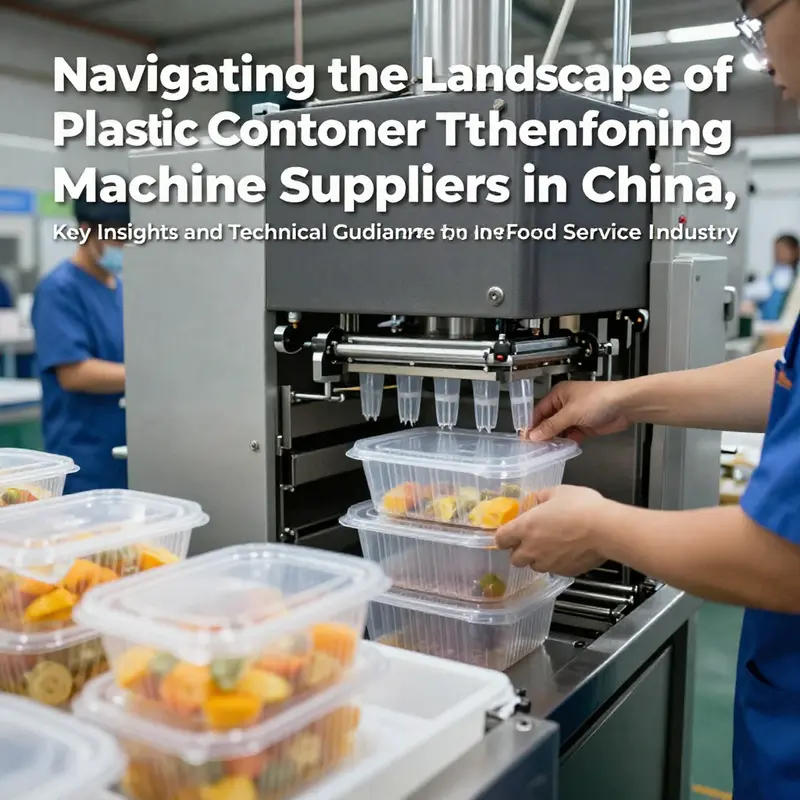
The demand for plastic food containers is on the rise, especially in sectors like bubble tea shops, restaurants, and catering services that require reliable and efficient packaging solutions. Understanding the landscape of thermoforming machine suppliers in China is essential for these businesses to make informed decisions. This article examines prominent suppliers, the specifications of their equipment, and the broader market dynamics that could influence procurement strategies. Each chapter offers a different angle on how to choose the right machine, with insights tailored specifically for food service professionals.
Shaping Global Packaging: The Dynamics of China’s Plastic Food Container Thermoforming Machine Suppliers
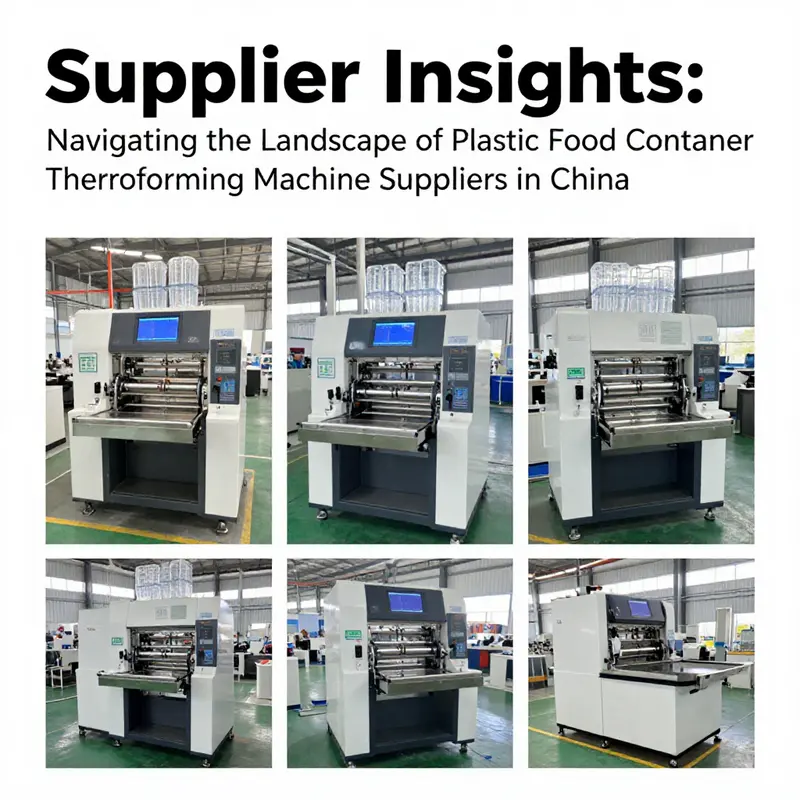
China stands at the crossroads of scale, technology, and global appetite for disposable plastic packaging, and nowhere is this more evident than in the market for thermoforming machines that produce plastic food containers. The landscape here is both broad and nuanced. It is broad because the country houses a dense network of manufacturing clusters that knit together the raw material supply, the toolmaking, the machine building, and the final assembly necessary to turnkey a thermoforming line. It is nuanced because these clusters differ in their strengths and specializations, and buyers must navigate regional advantages to match their operational goals with supplier capabilities. The Guangdong corridor, anchored by cities such as Dongguan, Huizhou, and Guangzhou, is frequently cited as the heartbeat of high-volume packaging production. These hubs are not just about machinery; they are about an integrated ecosystem where multiple factories share the same supplier base, feedstock streams, and logistics channels, enabling rapid scale and tightly coordinated supply lines. The region’s logistics efficiency, access to a broad supplier base, and a mature export-oriented culture translate into shorter lead times and predictable scheduling, which are critical for contract manufacturing, co-packing, and large-scale takeaway packaging networks. Across the Zhejiang belt, especially in places like Ruian, a different yet equally important strength emerges: a deep well of precision engineering and automation integration. Zhejiang suppliers often bring advanced automation capabilities to thermoforming systems, with a focus on precision, repeatability, and the sophisticated control of ancillary subsystems. This contrast is not a rigid dichotomy but a reflection of how regional specialization informs decisions about capacity, technology stacks, and after-sales support. For buyers who are sourcing plastic food container thermoforming machines in China, the overarching imperative is to identify partners that fuse cost efficiency with proven quality and operational reliability. The market rewards such balance because food-contact packaging carries stringent expectations for hygiene, material compatibility, and consistent performance across thousands or even millions of cycles. The supplier evaluation process, therefore, becomes a blend of technical due diligence and logistical judgment. In practice, this means evaluating the machine’s ability to form a range of container geometries from PP, PET, and PS sheets, while maintaining tight tolerances and clear separation between cycle phases so as not to compromise product quality or production speed. It also means assessing the equipment’s flexibility to handle various tool sizes and automation configurations that suit different line layouts and end-of-line packaging requirements. The typical thermoforming line for disposable food containers is built around a few core capabilities: sheet feeding, forming, trimming, and sometimes top finishing or hot-plate sealing. The modern Chinese manufacturers that dominate export markets emphasize automation-ready architectures. They offer automatic feeding solutions, integrated servo-driven trimming, and robust control systems that are compatible with widely used industrial networks. They also frequently provide modular configurations so that buyers can start with a more compact line and scale up as demand grows, or conversely retrofit existing lines with new forming stations or upgraded control electronics to boost speed and precision. As buyers map supplier capabilities against their production needs, certain specifications tend to emerge as guiding benchmarks. A commonly cited maximum tool size for many thermoforming units is around 750 by 560 millimeters, a dimension that covers a broad swath of bowl and container geometries used in beverages, ready meals, and snack packaging. Speed is another critical parameter; leading machines are engineered to operate at up to around fifty cycles per minute, depending on material, thickness, and the complexity of the container geometry. These specifications, while not universal, provide a practical frame of reference for comparing offerings in the current market. Material compatibility is equally central. The flexibility to process polypropylene, polyethylene terephthalate, and polystyrene sheets allows buyers to diversify their packaging portfolios and respond to shifting consumer preferences and regulatory environments. It also means that suppliers must maintain a supply chain for these resins that is stable and traceable, given the stringent hygiene and safety standards that govern food contact packaging in export markets. Against this backdrop, the procurement journey frequently begins with a structured search through established B2B platforms that host a wide range of manufacturers and distributors. Buyers look for a combination of credible track records, transparent pricing, and verifiable post-sales support. A supplier with a several-year track record, a recognizable profile on platforms that offer Trade Assurance or equivalent protections, and a demonstrated ability to deliver turnkey thermoforming solutions often stands out as a reliable partner. The conversation then shifts to more granular due diligence: the pace of automation, the quality of components, and the breadth of after-sales services. A reputable supplier will typically offer a structured warranty that aligns with the criticality of the machine’s moving parts and electrical systems. For mechanical components, a warranty of around a year is common, while electrical components may carry a shorter warranty, perhaps six months, reflecting the different risk profiles of these subsystems. Buyers also consider what installation and commissioning support the supplier can provide, including on-site setup, operator training, and the availability of spare parts and service networks within the buyer’s region. These service dimensions are essential for reducing downtime and ensuring a stable ramp-up to full production. The market’s price spectrum for a complete thermoforming setup in China reflects both the diversity of configurations and the value placed on automation and control sophistication. It is typical to see price bands that begin in the mid-twenties of thousands of U.S. dollars and extend toward the low to mid forties thousand-dollar range per set, depending on the degree of automation, the size of the tool, and the scope of the ancillary systems included with the line. It is not unusual to encounter entries in the higher range when a supplier bundles additional functionalities such as integrated trimming, sealing modules, or in-line printing capabilities. Within this spectrum, regional dynamics shape cost efficiency. Guangdong’s scale and logistics capabilities often translate into favorable total cost of ownership for buyers who place large orders or who must align multiple lines with shared spare parts and service resources. Zhejiang suppliers, with their emphasis on precision and automation integration, may price higher for the same nominal cycle rate if the buyer requires tighter tolerances or more advanced control strategies, such as networked line supervision, predictive maintenance, and data-driven quality tracing. The strategic value for buyers, however, goes beyond the sticker price. A well-chosen thermoforming partner in China can unlock long-term cost savings through higher uptime, lower scrap rates, and faster changeovers between container geometries. This advantage grows when a supplier offers robust on-site support during early production runs, helps develop optimized tooling sets, and collaborates on process windows that minimize material waste. Beyond the technical and economic calculus, regulatory compliance forms a cornerstone of supplier credibility. Food contact regulators in major markets insist on materials that comply with approved safety standards and certify traceability across the supply chain. A responsible supplier will align with FDA or EU food contact regulations as applicable, maintain documentation for material compliance, and provide clear data on resin provenance and packaging integrity. For buyers, that translates into a preference for partners who can present appropriate certifications and who can support documentation requests during audits or customer inspections. The procurement decision is thus a synthesis of technical capability, reliable service, regulatory alignment, and total value over time. In practice, prospective buyers often build a decision framework that includes a short list of candidate manufacturers, a structured evaluation of their automation stacks, and an assessment of after-sales ecosystems. A credible supplier will demonstrate not only a machine’s technical prowess but also its ability to integrate with downstream processes—such as downstream trimming, sealing, printing, and even automated packaging lines. They will offer clear terms for lead times, payment milestones, and factory testing that validates performance before shipment. They will also be transparent about the scope of after-sales support, including remote diagnostics, spares availability, and on-site service options for key markets, which can make a decisive difference in ensuring uninterrupted production after the line goes live. In a market where many buyers seek to diversify suppliers to reduce risk, several Chinese manufacturers have cultivated profiles that balance regional strengths with global reach. A supplier anchored in a Zhejiang facility may leverage deep automation expertise and a mature component supply chain, ensuring a high level of precision and repeatability for complex geometries. A Guangdong-based partner, by contrast, can offer a combination of scale, logistics efficiency, and an expansive network of regional distributors for rapid spare parts and hands-on maintenance support. For importers and distributors looking to validate a supplier’s credibility, platforms such as Made-in-China.com and Alibaba provide profiles that can be cross-verified through customer reviews, factory inspection reports, and the ability to connect directly with factory representatives. While these platforms are valuable, the most credible advantage comes from direct engagement with a supplier who can demonstrate a track record of successful installations, provide on-site commissioning, and offer a clear pathway for ongoing training and technical upgrades. The case for a careful, well-documented vendor selection process becomes even more compelling when buyers consider the total cost of ownership over the machine’s lifecycle. A durable thermoforming line that can operate at high speeds, maintain strict tolerances, and achieve consistent material utilization is worth more than a low upfront price if the buyer must incur frequent downtime, quality misses, or repeated retuning during production ramps. Therefore, buyers increasingly favor suppliers who pair mechanical robustness with software-driven optimization. Such combinations enable rapid changeovers, real-time monitoring of cycle quality, and modular expansions that scale with demand. This is the kind of capability that translates into reliable supply for a global customer base that relies on Chinese thermoforming lines to produce a wide spectrum of disposable plastic food containers—from breakfast trays to soup bowls and multi-compartment meal boxes. The breadth of potential outputs is, in part, a function of how the toolsets are managed and how easily they can be swapped or reconfigured for new geometries. For example, a line configured for standard bowl shapes may be adapted to yield lid-less or lid-retaining containers, depending on the toolset and the process window. This adaptability is particularly valuable as consumer preferences shift toward portion-controlled packaging or meal kits that demand more complex shapes. The ease with which a machine can accommodate different materials—PP, PS, PET, and beyond—also matters. Material properties influence forming temperatures, draft angles, and trimming strategies, and suppliers who provide clear guidelines and process data for different resins help buyers minimize trial-and-error cycles. Such transparency shortens time-to-market and reduces the risk of material waste during the initial production runs. In this context, it can be instructive to consider the broader ecosystem surrounding a thermoforming machine in China. The suppliers do not exist in isolation; they are part of an integrated supply network that includes resin suppliers, toolmakers, automation integrators, and logistics providers. The result is a holistic capability to deliver turnkey packaging lines that can print, cut, form, trim, and seal with minimal manual intervention. For buyers seeking a practical path forward, a balanced approach is to identify a supplier who demonstrates not only technical competence but also a willingness to collaborate on process development, tooling optimization, and post-sales support. A credible partner will provide a transparent pricing framework, including an initial deposit structure and a staged payment plan tied to factory testing and acceptance of performance criteria. The typical terms often include a deposit around 30 percent with the balance due before shipment after factory testing, but this can vary by region and by the scale of the project. A reputable vendor will also have a defined warranty and service package that covers critical components for a defined period, along with a clear plan for spare parts provisioning, remote diagnostics, and on-site service in key markets. The buyer’s due diligence should also include a review of the supplier’s capacity to deliver on a multi-location or multi-line scale project, since the ability to coordinate logistics across lines is a powerful signal of resilience. In parallel, buyers should be mindful of the post-purchase experience. The most cost-effective choices over the long term are those that minimize downtime, sustain product quality, and enable ongoing improvements through data-driven insights. The machine’s control system and software should offer accessible interfaces for operators and maintenance staff, ideally with straightforward remote troubleshooting capabilities and a feedback loop that informs process optimization. When these criteria come together, Chinese thermoforming suppliers can deliver dependable performance that aligns with the expectations of global customers who require robust, hygienic, and scalable packaging solutions. The market’s evolution continues to be shaped by the interplay between price discipline, supply chain discipline, and the imperative to meet escalating regulatory standards for food contact packaging. Buyers who approach supplier selection with a clear view of their operational goals, their preferred automation level, and their regulatory commitments stand to gain the most from China’s extensive thermoforming machine ecosystem. In support of this exploration, one can observe how the packaging sector’s needs are reflected in practical product configurations offered by suppliers who emphasize automation, reliability, and process control. The capacity to auto-feed, auto-trim, and auto-seal is often bundled with modular tooling that accommodates different dish geometries, ensuring that a single line can respond to a portfolio of containers as demand shifts. This flexibility reduces the total cost of ownership by lowering changeover times and enabling rapid adaptation to product line changes. The resulting efficiency is closely tied to the supplier’s ability to deliver precise tool alignment, stable clamping, and control software that coordinates the shaping, trimming, and finishing stages into a smooth, repeatable sequence. For readers who want a tangible example of how these dynamics play out in the field, consider the broader packaging ecosystem’s influence on the end-user experience. A well-integrated thermoforming line can supply a diverse range of container formats—from basic take-away bowls to more premium, windowed cake boxes that cater to bakery displays and ready-to-serve meals. In this context, the way a supplier communicates capability, shares process data, and collaborates on tool development becomes part of the value proposition that buyers weigh against price alone. This is where the potential for a listing like the one found on Made-in-China.com—an established platform that aggregates supplier profiles, product ranges, and test reports—becomes particularly relevant. It offers a window into the credibility and breadth of a supplier’s export readiness, which is a non-trivial factor when buyers must align with international standards, shipping requirements, and after-sales service networks. As buyers synthesize these considerations, a practical takeaway emerges: to maximize the return on investment when sourcing plastic food container thermoforming machinery in China, proceed with a due-diligence framework that foregrounds regional strengths, automation maturity, regulatory alignment, and a robust after-sales ecosystem. The kind of partner you select should not only deliver a machine that can form PP, PET, and PS containers at competitive cycle speeds but also provide the installation support, operator training, and spare parts access that ensure the line remains productive for years. In the end, the value proposition of China’s thermoforming suppliers rests on a combination of scale, technical sophistication, and a service orientation that acknowledges the realities of global production networks. It is this combination that continues to attract food packaging brands, contract manufacturers, and distributors around the world who need reliable, cost-effective, and compliant equipment to meet consumer demand. For readers seeking to explore a concrete example of the packaging ecosystem in action, a representative reference point for further study is the platform listing that profiles a wide range of thermoforming options and supplier credentials. For additional context on how different packaging formats evolve and how lines adapt to shifting product portfolios, consider visiting the broader packaging industry resources and the specific supplier pages that illuminate the pathway from resin to finished container. For more technical specifics about the landscape of Chinese thermoforming machinery suppliers and their capabilities, you can refer to the external source: https://www.made-in-china.com/products/186931188273/Plastic-Container-Thermoforming-Machine.html. To connect with related packaging examples in the ecosystem, you may also explore relevant product pages such as the one describing foldable cake boxes with windows that exemplify how container design and display considerations influence machine configuration and process flow. In this vein, a representative internal reference is the article on foldable cake boxes with windows, which can be accessed via a linked product page: pure color foldable cake boxes with window bakery boxes. This connection underscores how the demand for visually appealing, display-ready packaging drives the evolution of thermoforming lines and the sophistication of the equipment that underpins them, linking the technical, commercial, and design dimensions of modern plastic packaging in a seamless narrative. The result is a market that continues to advance through collaborative development, data-driven process improvements, and a clear focus on delivering reliable performance at scale, all anchored by the deep manufacturing foundations found in China.
Heat, Vacuum, and Velocity: The Technical Blueprint of China’s Plastic Food Container Thermoforming Machines
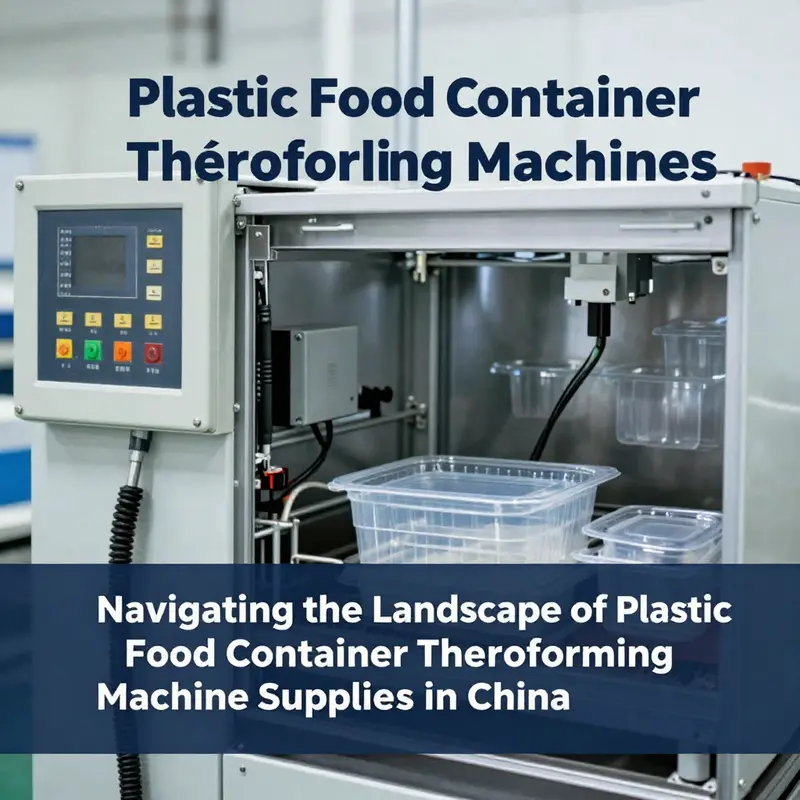
Material compatibility stands at the core of any thermoforming decision. Chinese machines in this sector are designed to work with a variety of thermoplastics, including polypropylene, polystyrene, polyethylene terephthalate, polyvinyl chloride, and increasingly certain bio-based or compostable alternatives. This material diversity is not merely a catalog of possibilities; it shapes every other spec, from sheet width to forming depth. A sheet’s mechanical properties—stiffness, yield strength, and temperature sensitivity—dictate the power, control strategy, and mold geometry required to produce reliable parts. For polypropylene and polystyrene, for instance, the balance between forming temperature and mold pressure determines the presence of carefully controlled denting, thinning, or warpage. PET, favored for its clarity and barrier performance, presses the need for precise cooling and sometimes different vacuum profiles to preserve optical quality. The occasional demand for PVC or even PLA underscores a key design philosophy in these machines: flexibility without sacrificing repeatability. In practice, this means heating zones that can be tuned across a broad temperature range, mold tooling that tolerates a spectrum of sheet gauges, and servo-driven axes that provide stable dwell times and repeatable cycle counts even as material properties vary batch to batch. It also means control software that can switch from one material family to another with minimal setup, while pre-drying or drying steps, when required, remain compatible with the overall process sequence. The result is an apparatus that can be re-tasked across product families without a complete hardware swap, a feature that matters in a market where customers demand both customization and efficiency.
Sheet material dimensions, another core design parameter, reveal the practical limits and opportunities facing manufacturers. In typical configurations, the machines accommodate sheet widths from roughly 450 millimeters up to about 750 millimeters. This spread enables a wide array of tray sizes and lid formats, from narrow, single-layer endeavors to more elaborate multi-part assemblies. The allowable sheet thickness generally ranges from around 0.15 millimeters to 2.2 millimeters, a band that covers thin-walled, cost-effective packaging as well as stiffer containers that require more form stability. The width-thickness pairing has a direct correlation with cycle time, energy consumption, and mold life. Wider sheets can yield larger forming areas but may demand more robust heating zones and greater clamping force. Thicker sheets, while offering superior stiffness, often necessitate longer dwell times or more aggressive preheating to avoid insufficient mold filling or surface defects. This interplay is not a mere technical footnote; it is a guiding constraint that suppliers negotiate in their machine architectures. Sheet handling is also a practical consideration. Narrower widths might simplify loading and indexing systems, but broader sheets enable higher-volume output per cycle if the forming area and tooling align. Consequently, buyers benefit from machines that provide a flexible sheet range with modular heating elements and adjustable clamping frames, allowing seamless adaptation to evolving product lines without a complete line rebuild. Beyond sheet width and thickness, the forming area itself is a critical metric. Machines commonly offer forming areas that span from compact footprints—around 420 by 300 millimeters—to larger reaches near 710 by 520 millimeters in some models. This spectrum supports everything from compact dessert cups and snack containers to mid-size lunch boxes and multi-compartment trays. A larger forming area expands the repertoire of potential products, yet it demands more substantial mold support, more robust vacuum or pressure distribution, and careful consideration of downstream trimming and stacking operations. In practice, form-area selection must be aligned with target product families, anticipated production volumes, and the automation chain’s end-of-line capabilities. Some models also present alternative configurations, such as secondary forming stages or auxiliary stations, to address specialized designs. Ultimately, the form area becomes a design anchor that informs tooling cost, cycle stability, and the dimensional precision of every finished container.
Forming depth, while sometimes overlooked in cursory comparisons, plays a decisive role in the final container geometry and its functional performance. Depths reaching up to approximately 150 millimeters enable deep, bowl-like shapes that are common for ready-to-eat meals or multi-compartment systems. Deeper forming depths can challenge mold design and air-flow management, requiring more precise control of vacuum and, in some cases, positive pressure steps to fill mold cavities completely without leaving voids or warping the part. The depth target interacts with material choice and wall thickness: thicker sheets in deeper cavities demand careful energy input to prevent overheating at the surface or insufficient mold fill at the base. In well-designed machines, depth control is achieved through a combination of platen movement precision, controlled sheet draw force, and a responsive vacuum profile that adapts as the sheet deforms. The goal is to achieve uniform wall thickness and dimensional accuracy across the entire forming area, a requirement that becomes especially critical when multiple cavities are pressed from the same sheet in rapid succession. When combined with accurate trimming, this depth control helps ensure that stacking routines produce consistent, defect-free outputs, reducing downstream waste and rework. The depth specification also influences mold design strategies, since deeper cavities generally require more sophisticated cooling channels and more carefully balanced venting to avoid trapped air and surface gloss issues on the finished part.
Production rate is where engineering meets demand. In semi-automatic configurations, outputs typically range from roughly 15 to 30 dies per minute, depending on the product geometry, sheet material, and the sophistication of the transfer and trimming stages. Fully automatic configurations push higher throughputs, with speeds commonly reported in the 10 to 35 molds-per-minute range when considering multi-cavity tooling and integrated trimming, punching, and stacking. The distinction between semi-automatic and fully automatic lines is more nuanced than a simple label. It reflects how much of the process is integrated into a single, continuous cycle. Semi-automatic lines may require manual feeding or monitoring at pivotal junctures, while fully automatic lines integrate auto-feeding, heating, forming, trimming, and stacking, leveraging robotics to improve consistency and reduce labor costs. In practice, manufacturers tailor the speed targets to meet product specifications, tool life, energy consumption constraints, and the desired lot size. The variability in cycle time is also influenced by cavity count, tool design, and the stiffness of the incoming sheet material. When selecting a machine, buyers balance the desired number of cycles per minute with the total installed power, the efficiency of the heating system, and the reliability of the automation components. The integration of servo-driven axes, precise servo motors for trimming and unloading, and advanced control software enables consistent cycle timing and improved repeatability across shifts, a critical factor for factories seeking stable production schedules and predictable maintenance plans.
The cutting method employed by these thermoformers is frequently laser-based, a choice driven by precision, material conservation, and the ability to produce intricate edge profiles with minimal tooling costs. Laser trimming reduces the need for expensive mechanical dies and allows rapid reconfiguration when product designs shift. This flexibility is particularly valuable in a market characterized by frequent adaptation to new packaging formats or regulatory requirements. Laser trimming also minimizes mold-contact wear, extending tool life and reducing downtime due to die maintenance. At the same time, laser systems introduce their own considerations, such as power density management and edge quality for certain sheet materials. Operators must consider kerf loss, scorch risk near heated zones, and the need for proper exhaust to maintain a clean environment around the trimming area. The technology choice aligns with the broader automation strategy: laser cutting complements robotic stacking and inline inspection, enabling a leaner overall line with fewer manual interventions. The net effect is a capability to produce a wide variety of shapes from standardized sheet stock, enabling rapid transition from one product family to another without significant capital expenditure.
Heating power and total installed power are central to the machine’s ability to form a stable sheet into the desired geometry. In many Chinese thermoformers, heating zones can deliver up to 80 kilowatts of thermal input, while the entire electrical installation of the line may reach as high as 120 kilowatts. This energy budget supports rapid and uniform heating across the sheet, reducing the risk of cold spots that could compromise mold fill or surface finish. The power distribution must be carefully managed to avoid thermal gradients that could warp the sheet or alter its viscosity before forming. Efficient energy use is not merely a cost concern; it directly impacts cycle consistency and product quality. Modern machines often implement zoned heating with dynamic control, allowing operators to tailor energy input in response to real-time feedback from temperature sensors distributed across the sheet. Such control enables fine-tuning of the temperature profile for different materials, thicknesses, or mold geometries. The combined effect is a system that can maintain stable process windows across shifts, with predictable energy consumption that supports a reliable production plan. The heating strategy also interacts with the mold design and cooling system, as materials with higher heat absorption may require enhanced cooling to preserve part integrity post-forming. In sum, the heating and installed power specs are not abstract figures; they dictate the machine’s ability to handle a diverse material set while maintaining consistent cycle times and part quality.
Molding methods aboard these machines typically rely on vacuum or pressure-based forming. Vacuum forming is the traditional backbone for many disposable container families, offering reliable surface finish and relatively simple tooling. Positive or negative pressure steps can be incorporated to assist in forming deeper cavities or complex geometries, expanding the range of possible product designs. The choice between vacuum and pressure strategies is driven by part geometry, material behavior, and the required dimensional tolerances. For example, deeper or more intricate shapes may benefit from a combination of vacuum and pressure to ensure complete sheet conformity without thinning at the corners. The molding method also interacts with mold design, including the number of cavities, the layout of gas channels or vacuum holes, and the placement of cooling lines. A well-conceived mold strategy reduces cycle time while preserving part accuracy and surface quality. It also influences maintenance regimes, since more complex mold assemblies demand careful cleaning and inspection to prevent defects that could propagate across thousands of parts in a single shift. Automation level follows the same logic. Semi-automatic lines may rely on a human operator to load sheet stock and initiate cycles, while fully automatic lines integrate automated sheet feeding, indexing, and ejector systems, with robot-assisted stacking that feeds downstream packaging or trimming lines. The result is a cohesive production system where form, fill, and finish operate synchronously, with minimal bottlenecks and a high degree of repeatability across product families.
Additional features found on many modern machines enhance productivity and operator ergonomics. Servo motor control is common, providing precise motion profiles for core operations such as clamping, forming, trimming, and stacking. Touch-screen interfaces offer intuitive control and recipe management, enabling quick switching between material types, product sizes, and line speeds. Some configurations include robotic stacking systems, which can substantially reduce labor requirements and improve consistency in downstream handling. Real-time monitoring and data logging are increasingly standard, allowing operators to track cycle times, temperature histories, and maintenance events, supporting predictive maintenance and improved uptime. The convergence of these features reflects a broader industry trend toward intelligent manufacturing, even in capital equipment traditionally valued for rugged simplicity. In practice, buyers gain not only a machine capable of turning sheets into finished products but also a platform that provides visibility into process health, energy consumption, and production optimization. The result is a line that can adapt to shifting packaging trends, regulatory requirements, and customer demands while preserving the reliability expected in high-volume food packaging.
Beyond the core mechanics, several practical considerations influence the selection of a thermoforming line in this market. Material profitability, mold life, and maintenance costs intersect with the purchase price to shape total cost of ownership. A line optimized for low energy consumption or with efficient cooling channels may offer lower operating costs over time, even if its upfront price is comparable to alternatives. Tooling considerations, including laser-cut inserts and modular punch sets, affect both the speed of changeovers and the lifetime of molds. Operators value lines that minimize downtime with straightforward maintenance procedures, easily accessible spares, and clear diagnostic indicators. In this context, the design philosophy common to many Chinese manufacturers emphasizes a balance between flexibility and reliability. The machines are intended to handle a range of sizes and materials, yet the control architecture is kept modular so that new product formats can be introduced without an overhaul of the entire line. This balance supports packaging producers who must innovate quickly while maintaining steady output and a predictable cost structure. The market reality is that suppliers accommodate a spectrum of customer needs—from small, flexible plants exploring new formats to large, dedicated lines serving established product families. The challenge for buyers is to assess a machine’s overall compatibility with their current operations and its potential to scale as demand grows or shifts toward new packaging concepts.
From a supplier perspective, the market in China is characterized by a robust ecosystem that includes manufacturers who specialize in thermoforming machinery as well as broader packaging equipment providers that offer compatible components and integration services. The typical procurement path involves evaluating a range of configurations, weighing sheet width and thickness capabilities against forming area, then verifying the line’s automation capabilities and energy footprint. Buyers also consider the ease of integration with downstream processes such as trimming, inspection, and secondary packaging. In many cases, suppliers offer modular options that let customers start with a semi-automatic setup and later transition to full automation as volumes and product complexity grow. This staged approach reduces capital risk while preserving the option to expand capabilities without disrupting output. It also aligns with the realities of global supply chains and the cyclical nature of demand for disposable food containers, where capacity planning must accommodate seasonal spikes and occasional shifts in consumer preferences.
The end-use considerations for this equipment are equally important. Packaging formats must address practical concerns such as stackability, leak resistance, and heat tolerance, particularly for hot or microwave-ready meals. The containers must also satisfy regulatory and environmental expectations that influence material choices and recycling compatibility. In this context, the end-to-end value chain—from sheet extrusion or supply to the thermoforming line, through trimming and stacking, to the eventual consumer experience—depends on consistent process control and predictable part quality. The equipment’s ability to reproduce design specifications with minimal tolerances directly affects brand integrity and customer satisfaction. When buyers evaluate suppliers, they frequently weigh not only the technical specifications but also the after-sales support, spare parts availability, and the potential for local service presence. Given the scale of production and the duration of typical operating contracts, durable service agreements and readily available maintenance capabilities contribute to lower lifecycle risk and better long-term value.
In discussing the broader market dynamics, it is essential to acknowledge the evolving landscape of material science and sustainability. While traditional plastics remain dominant in this segment, alternatives and blends are increasingly explored to meet environmental goals without compromising performance. Thermoforming machines that can handle a broader palette of materials, including certain bio-based options, gain strategic importance as manufacturers seek to balance cost, performance, and environmental impact. This trend reinforces the value of machines that can adapt to material changes with minimal tooling updates. It also underscores the importance of supplier partnerships that extend beyond the sale of a machine to include training, process optimization, and collaborative development of material-compatible tooling. Buyers benefit from working with equipment providers who maintain a current understanding of material properties, regulatory developments, and the latest automation technologies, ensuring that the line can evolve in step with changing packaging expectations.
To illustrate how the described specifications translate into real-world outcomes, consider the interplay of the material, sheet dimension, and forming approach. Take a typical deep-drawn tray design intended for ready-to-eat meals. The material choice might be a robust polystyrene or a clear PET variant. The sheet width is chosen to maximize yield, with a thickness that supports a stable, leak-resistant wall. The forming depth is calibrated to create a sturdy cavity with even wall thickness, aided by an optimized vacuum profile that prevents thinning at the base. The edge trimming is performed with a laser that preserves surface quality while enabling rapid changes to accommodate new shapes. The line’s servo-driven axes ensure consistent clamp pressure and precise transfer of the formed sheet to the trimming stage, while the robotic stacker places finished parts into a downstream carrier system. The result is a predictable, repeatable cycle that yields consistent part quality across shifts, with adequate throughput to meet customer demand and with the flexibility to expand product offerings as the market evolves. This kind of integrated performance is the hallmark of modern thermoforming lines designed for disposable food packaging and is precisely what buyers should expect when assessing the technical capabilities of suppliers operating in China.
For readers who want to explore end-use packaging examples to illustrate how these machines translate into market-ready products, a range of packaging concepts exemplify the demand placed on thermoforming lines. One notable category includes eco-friendly takeout boxes and other packaging solutions designed for microwave use, leak resistance, and stylish presentation. These products demonstrate how a machine’s technical features—material compatibility, sheet handling, forming accuracy, trimming precision, and automation—must align with consumer expectations and regulatory requirements. The connection between machinery and market-ready goods becomes clear when considering how a single design can lead to variants across different markets, each with its own size, weight, and usability constraints. Such versatility underscores why many packaging producers favor lines that can be reconfigured quickly and with minimal downtime, preserving capital while enabling rapid response to demand fluctuations. In this sense, the Chinese thermoforming machine sector reflects broader manufacturing trends: a push toward modular, scalable, and data-driven lines that deliver consistent quality at competitive prices. This orientation also helps explain why buyers place emphasis on after-sales support, local service networks, and access to a broad ecosystem of suppliers offering complementary components—from feed systems and pre-drying equipment to inspection and automated packaging solutions.
As a practical takeaway, readers should consider three core questions when evaluating thermoforming lines: Can the machine handle the full range of target materials with consistent quality? Does the line accommodate the expected product variations in sheet width and thickness without expensive retooling? And can the automation suite deliver the necessary throughput while supporting reliable maintenance and traceability? Answering these questions requires looking beyond nominal specifications to assess the line’s control architecture, the ease of integration with downstream operations, and the supplier’s capacity to provide ongoing support. The best equipment investments in this space deliver not only technical capability but also a robust partnership model—one that includes training, spare parts availability, and technical updates aligned with evolving packaging needs. In a market where packaging design cycles are rapid and consumer expectations continue to evolve, the value of a thermoforming line lies as much in its adaptability as in its raw processing power. The efficient alignment of heating, forming, trimming, and stacking with precise control systems, reliable tooling, and responsive service is what ultimately translates machine specs into measurable business outcomes.
For readers seeking a tangible reference point that connects machinery specifications to real-world packaging products, consider the ongoing development of end-use packaging lines that transform sheet stock into consumer-ready containers with consistent dimensions, reliable sealing surfaces, and clean trimming edges. The relevance of the technical specifications discussed here broadens when one considers how these lines feed into broader supply chains, supporting manufacturers who must respond quickly to changing formats while keeping costs predictable. The capacity to switch between products with minimal downtime, to manage a broader range of sheet materials, and to maintain tight tolerances in forming and trimming is what enables packaging producers to deliver on time and on budget. As markets continue to demand greater efficiency and more versatile packaging solutions, the role of thermoforming machines—particularly those designed with flexibility and automation in mind—will only grow more central to the global packaging landscape. In this context, the technical blueprint described here is not a static checklist but a living framework that informs investment decisions, operational planning, and long-term strategy for any manufacturer aiming to compete in the plastics-to-packaging value chain.
For readers who want a deeper dive into specific machine configurations and official specifications, a broader catalog of machine pages and technical papers from leading equipment providers offers a practical resource. In the spirit of continuous improvement, many buyers also engage in pilot runs and trials with local suppliers to validate process windows for their chosen materials and product geometries before committing to a full-scale purchase. This approach helps ensure that the selected line delivers the promised throughput, maintains part quality across batches, and remains adaptable as product designs evolve. The combination of material versatility, adaptable sheet handling, precise forming, and intelligent automation constitutes the technical backbone of modern Chinese thermoforming lines. It is this blend of capabilities that empowers packaging manufacturers to meet the world’s demand for safe, efficient, well-designed, and cost-effective disposable containers.
For further context on machine options and detailed product pages, readers can consult specialized technical resources that discuss thermoforming in greater depth. Additionally, the broader packaging industry continues to explore sustainable materials and process innovations, which will shape future iterations of forming machinery and tooling. External resources provide comparative perspectives on machine configurations, while supplier-focused materials highlight the practical steps buyers take—from RFPs and site visits to pilot manufacturing and scale-up planning. All of these elements reinforce the central insight of this chapter: in a market as dynamic as plastic food container thermoforming in China, success hinges on machines that couple flexible material handling, precise forming capabilities, efficient trimming, and sophisticated, reliable automation with a service ecosystem that keeps operations running smoothly over the long term.
External resource for further reading: https://www.mingdumachinery.com/plastic-pet-thermoforming-machine.html
Internal reference: For industry-relevant packaging examples that illustrate end-use applications of thermoformed products, see eco-friendly takeout boxes for food packaging.
Industrial Momentum and Shielded Growth: Economic Forces and Geopolitical Dynamics in China’s Plastic Food Container Thermoforming Machinery Market
The plastic food container thermoforming machinery market in China sits at a crossroads where rapid economic expansion, evolving consumer habits, and a shifting geopolitical landscape converge. To understand its trajectory, one must trace how demand patterns in packaging, the rhythm of manufacturing investment, and the complexities of global policy interact with each other. What emerges is a narrative of resilience and transformation: a sector driven by high-volume production needs, sharpened by automation, and tempered by the realities of policy and trade that shape both supply and competition. The narrative here is not about any single equipment line or a single supplier; it is about the ecosystem that creates the conditions under which Chinese thermoforming manufacturers operate, innovate, and compete on a global stage. It is a story written in the language of scale, efficiency, and adaptability, and it is deeply rooted in the domestic demand for packaged foods as well as the continent-spanning logistics networks that knit manufacturers to markets far beyond their shores.
At the core of this market’s vitality is China’s robust manufacturing infrastructure, an asset that translates consumer demand into sustained investment in automation and process optimization. The drive toward convenience in food consumption—especially in a society where the pace of life and the volume of on-the-go meals keep rising—has amplified the need for reliable, high-speed thermoforming lines capable of turning raw materials like PP, PET, and PS into a spectrum of disposable containers. This demand is not merely a factor of taste or preference; it is a structural aspect of modern food logistics. When e-commerce and grocery delivery become everyday realities, suppliers need equipment that can produce standardized shapes and weights at consistent quality and with tight tolerances across large runs. The result is a market where capital expenditure on thermoforming machines is viewed not as a cost center but as a strategic enabler of scale, quality, and responsiveness.
Economically, the sector operates within a broader plastic packaging market that demonstrates clear growth momentum. The market’s size—valued in the tens of millions of tons in recent years—reflects both the sheer scale of domestic consumption and the export-oriented demand that many manufacturers support. The packaging industry, including the plastic thermoforming segment, is closely tied to consumer trends in convenience and sustainability. While the external conversation about recycling and circular economy shapes the long-run outlook, the near- to mid-term drivers are more pragmatic: faster cycle times, lower energy consumption per unit, higher automation levels, and the ability to produce a wide range of container geometries with minimal downtime. The sector is thus characterized by a careful balance of efficiency, flexibility, and reliability, traits that buyers increasingly demand when selecting partners for ongoing production need.
A concrete lens on demand comes from the broader plastic packaging market figures. The domestic market has demonstrated steady expansion, with projections indicating a continued CAGR that supports long-range planning for capital investments. A key implication of this trajectory is the sustained willingness of manufacturers to upgrade or expand thermoforming lines to meet rising output requirements and to achieve cost advantages through scale. In practice, this translates into longer production runs, more automated material handling, faster tool-change capabilities, and smarter process control systems. In turn, these capabilities drive a virtuous cycle: better equipment enables higher throughput and improved yield, which lowers unit costs, improving competitiveness both domestically and abroad. In a market where price sensitivity is common and delivery timelines are critical, the ability to deliver consistent performance over many years becomes a decisive factor in supplier selection.
On the supply side, the market is supported by a dense network of regional manufacturers that offer a range of thermoforming solutions, from entry-level units suitable for small-batch production to multi-cavity lines designed for high-volume output. In this ecosystem, regional strengths matter. Producers in coastal regions often emphasize speed to market and service coverage, while inland manufacturers may differentiate themselves through customization capabilities or particular process expertise. The result is a competitive landscape defined less by singular dominance and more by a balance of specialization, after-sales support, and total cost of ownership. The economics of this landscape are nuanced. While initial machine price remains a major consideration for buyers, the long-run calculus weighs energy efficiency, reliability, ease of maintenance, spare-part availability, and the vendor’s ability to support upgrades or add-ons that extend the equipment’s useful life.
Geopolitically, the China-based thermoforming machinery sector benefits from the country’s stable manufacturing infrastructure and its overarching role as a global hub for plastic packaging production. The ability to coordinate complex supply chains, integrate equipment with downstream tooling, prints, and sealing technologies, and source raw materials with predictable lead times has historically underpinned Chinese suppliers’ competitiveness. However, this stability is not without risk. The policy environment, both domestic and international, can exert influence on demand and on supply chain strategies. Shifts in trade policies, environmental regulations, and the broader push toward supply chain diversification can alter the calculus for both Chinese manufacturers and their overseas customers. Buyers increasingly weigh resilience against cost when choosing partnerships, and suppliers must demonstrate robust risk management, from diversified sourcing to localized service networks that can respond quickly in the event of disruption.
One dynamic that has become particularly salient is the alignment of manufacturing capacity with the demand cadence driven by the food sector’s packaging needs. The need for rapid, scalable lines has grown alongside the push for customization in container design, whether for consumer convenience or brand differentiation. In response, many Chinese manufacturers have deepened their engineering capabilities to deliver lines with higher speeds, improved cycle accuracy, and greater flexibility in tool dimensions. Multi-tool configurations, modular upgrades, and advanced automation components are increasingly common, enabling factories to reconfigure lines with minimal downtime to produce different container formats as market requirements shift. This modular approach also supports the trend toward lean manufacturing and just-in-time production for food service chains, grocery retailers, and takeout brands that demand per-branch customization while preserving a centralized procurement strategy.
The market’s current growth narrative is also shaped by the expanding global vacuum thermoforming market, whose momentum echoes across regional supplier ecosystems. Even as the global market scales up, the Chinese supply chain remains central to many regional players seeking cost‑effective, high-volume production capacity. The link between global demand for vacuum-formed packaging and Chinese machine suppliers is not merely transactional; it is formative. It influences the evolution of equipment standards, the pace of technology transfer, and the rate at which local manufacturers can offer turnkey solutions that integrate forming, trimming, and finishing into a seamless production line. This integration is increasingly important as brands seek to reduce handling and conversion steps, speeding time-to-market while preserving product integrity and visual appeal in a crowded shelf or online catalog.
In this environment, consumer expectations for quality, safety, and hygiene add another layer of pressure. The disposable containers produced on thermoforming lines must meet stringent standards, not only in form and function but also in material compatibility, seal integrity, and barrier properties. The demand for consistent performance across diverse product categories—deli foods, ready meals, snacks, and beverages—drives a premium on process stability. The equipment itself must support tight tolerances, repeatable tool mappings, and dependable sealing quality, all while sustaining high output. As manufacturers push toward more sophisticated line control, sensors, closed-loop feedback systems, and predictive maintenance strategies become standard rather than exceptional. These capabilities lower the risk of downtime, a critical consideration for high-volume food packaging operations that must meet strict production calendars and distribution schedules.
Supply chains and geopolitical considerations illuminate the risk management strategies that buyers and suppliers increasingly adopt. A diversified supplier base, not just in China but across Asia and beyond, is now a baseline expectation for manufacturers who must guard against geopolitically driven disruptions. At the same time, the domestic market’s sheer size and resilience provide a buffer that supports continued investment in domestic manufacturing capacity. The combination of a large, sophisticated consumer market and the ability to mobilize rapid, scalable production capacity makes the Chinese thermoforming machinery sector particularly attractive to buyers seeking long-term reliability and stable total cost of ownership. In the near term, the market is likely to experience a steady acceleration in automation adoption and in technical collaboration between Chinese manufacturers and international packaging brands that require consistent, high-quality output in a cost-competitive framework. The trend toward smarter factories—where data, analytics, and machine-to-machine communication optimize throughput—will sharpen this momentum further, reinforcing China’s position as a pivotal center for thermoforming technology development and deployment.
An important facet of this evolution is the ecosystem’s focus on material compatibility and processing flexibility. Producers seek lines that can handle a spectrum of common packaging polymers, from PP to PET and PS, with the ability to adjust forming parameters to optimize flash, thickness distribution, and material usage. This flexibility has direct implications for raw material procurement, tool wear, and energy consumption. The most forward-looking manufacturers are integrating process modeling and simulation tools into the design and commissioning phase, enabling faster ramp-up and more reliable start-ups for new product runs. The result is not merely a machine that can form a container; it is a system that can adapt to shifting formulations, evolving consumer preferences, and a dynamic regulatory environment related to packaging materials and waste management.
To buyers and investors, the implications are clear. The market rewards suppliers who can offer not only robust equipment and reliable service but also a cohesive value proposition that reduces total cost of ownership and lengthens equipment lifespan. This translates into longer-term service contracts, easily sourced spare parts, and a track record of uptime and performance improvements. It also means that buyers look for partners who can provide support beyond the machine—such as turnkey line integration, digital monitoring, remote diagnostics, and a clear roadmap for upgrades as new packaging standards emerge. In many cases, the choice rests on the supplier’s ability to contribute to a broader packaging strategy that encompasses design for manufacturability, supply chain resilience, and end-of-life considerations. While price remains a factor, it is the combination of reliability, flexibility, and long-term support that calibrates the buyer’s decision in this arena.
The market also benefits from a culture of continuous improvement within the Chinese manufacturing base. The sector has long emphasized technical skill development, process optimization, and the practical application of automation to reduce labor intensity and improve consistency. This cultural emphasis aligns well with the broader industry push toward lean manufacturing and digitalization, both of which promise to deliver measurable gains in throughput, waste reduction, and energy efficiency. The practical effect is a supply ecosystem that can respond to both the micro-pressures of single-plant operations and the macro forces of global demand. It encourages suppliers to design lines that are modular enough to accommodate new product variants while maintaining the high speeds essential for competitive packaging production.
Within this context, buyers increasingly complement equipment choices with strategic sourcing decisions aimed at risk mitigation and value creation. Partnerships that emphasize joint development, co-engineering, and knowledge transfer can shorten development cycles for new container formats and reduce the time needed to achieve stable production. The geographic distribution of suppliers further influences these decisions. Coastal manufacturers may benefit from shorter lead times and easier service access, while inland operations might prioritize customization capabilities, local support networks, and the potential for lower installed costs. Regardless of location, the emphasis is on a supplier ecosystem that can deliver consistent performance, rapid response, and a robust after-sales footprint that ensures minimal disruption to production lines.
As a result, the market dynamics are not solely about price or capacity. They are about symbiotic relationships—between advanced machinery, process intelligence, and the packaging brands that demand reliable, scalable output. The most effective suppliers in China are those who can translate technical capability into business value: faster time-to-market for new containers, lower energy and material waste per unit, higher overall equipment effectiveness, and a predictable lifecycle cost. In turn, buyers gain access to equipment that can support not just one production line but a network of lines across multiple plants, with standardized performance metrics and interoperable control systems that reduce complexity and maintenance headaches. This is the essence of a robust thermoforming machinery market in a modern economy: a blend of scale and sophistication, anchored by a manufacturing base that remains deeply integrated with the global packaging industry.
For readers seeking a macro-level framing of where this market is headed, several indicators point to continued expansion in the next five to ten years. The overall packaging machinery market, influenced by the growth of the plastic thermoforming segment, suggests sustained momentum as automation penetrates more facilities and brands demand greater efficiency in their packaging supply chains. The trajectory aligns with broader market research that highlights steady growth, supported by a resilient global economy and evolving consumer preferences that favor convenient, safe, and visually appealing packaging. While external factors—such as shifts in environmental policy, consumer sentiment toward sustainability, and fluctuations in global trade—will undoubtedly shape the pace and pattern of investment, the core drivers remain intact. A mature ecosystem that can deliver high-volume output with reliability and cost discipline will continue to attract customers who seek both short-term gains and long-term strategic advantage from their equipment investments.
In closing, the Chinese thermoforming machinery market for plastic food containers is defined not by a single narrative but by a confluence of factors that together create a durable, adaptable growth story. Economic vigor, domestic demand for packaged foods, and a sophisticated supplier network converge with a global market that rewards efficiency and reliability. Geopolitical considerations inject a layer of risk and contingency planning, yet China’s capacity to coordinate large-scale manufacturing, innovate in automation, and offer integrated production solutions remains a compelling proposition for buyers around the world. The chapter ahead will continue to unpack how technology trends, competitive dynamics, and policy environments interact with these market forces to shape the present and future of thermoforming equipment suppliers in China. For readers who want to explore related packaging options and supplier ecosystems discussed in this chapter, a useful reference on the custom takeaway packaging supplies platform offers a window into the broader packaging ecosystem and design considerations that influence equipment requirements and line configurations: custom takeaway packaging supplies.
External resource for further context on market trends and technology trends in this sector can be found at the following external reference: https://www.grandviewresearch.com/industry-analysis/plastic-thermoforming-machine-market.
Final thoughts
In conclusion, the rapid growth of the food service industry is generating significant demand for efficient and reliable plastic food container thermoforming machines. By understanding the key suppliers, their technical specifications, and market dynamics, businesses like bubble tea shops, restaurants, and catering services can strategically position themselves for success. Engaging with reputable manufacturers from China offers a pathway to enhance operational efficiency and meet evolving consumer needs. As you consider investing in these machines, remember that informed choices stem from a comprehensive understanding of both supplier capabilities and market conditions.