
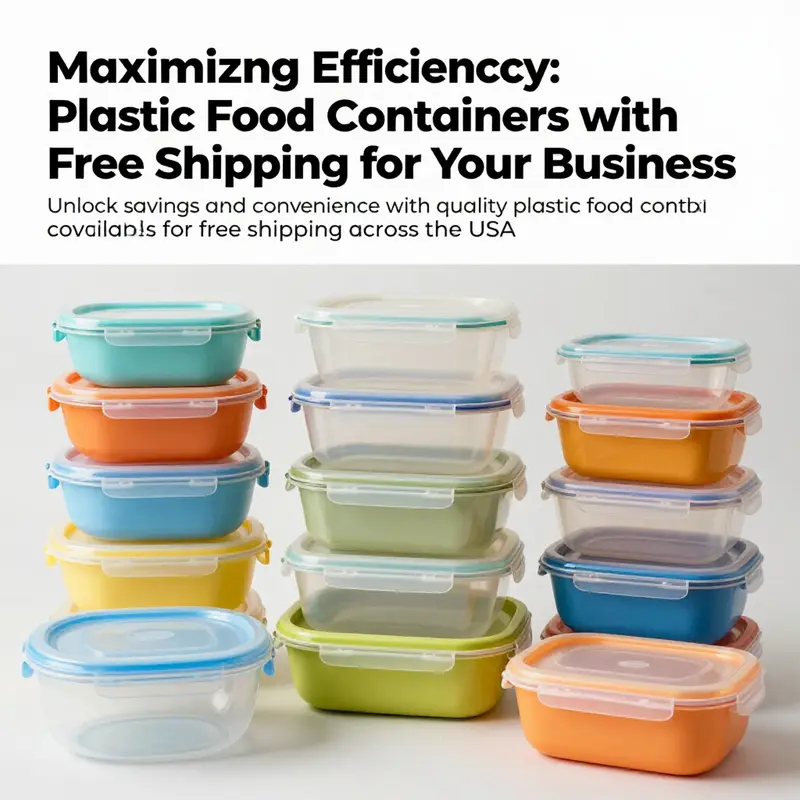
In today’s competitive food service landscape, savvy businesses are constantly seeking ways to minimize costs and enhance operational efficiency. One way to achieve both is through the strategic purchase of plastic food containers, particularly those that offer free shipping. This article explores the market landscape, benefits, key suppliers, and emerging trends related to plastic food containers with free shipping in the USA. From bubble tea shops and beverage chains to food trucks and catering services, understanding these aspects can significantly influence purchasing decisions. By the end of this exploration, readers will be equipped with insights that can help in making cost-effective and quality choices.
null
null
Free Shipping as a Strategic Edge: How Plastic Food Containers Reshape Efficiency for US Kitchens and Celebrations
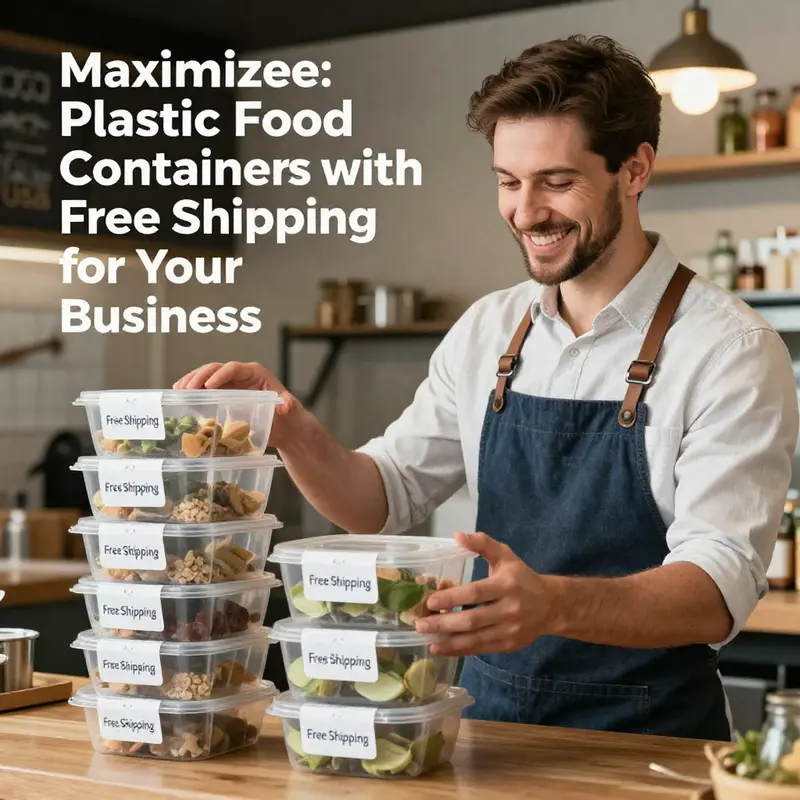
Choosing plastic food containers with free shipping in the USA is more than a price advantage; it is a structural lever for any kitchen, caterer, or event organizer operating in a market where timing and reliability define customer satisfaction. When the delivery barrier drops, the act of ordering becomes less about logistics and more about planning the workflow that keeps meals, events, and daily routines seamless. The practical reality is simple: for households that rely on regular meal prep, small businesses that depend on predictable stock, and large operations that must sustain service during seasonal spikes, free shipping transforms replenishment from a headache into a dependable habit. The typical free-shipping model, often tied to a minimum order—frequently around three hundred dollars—aligns with bulk purchasing behavior. It nudges buyers toward ordering in larger quantities at less per-unit risk, smoothing the path from planning to project execution. In an ecosystem where time is money, this cost discipline matters as much as the containers themselves. The containers are not merely vessels; they are the scaffolding of a service economy built around convenience, safety, and performance.
From a cost perspective, the most immediate and intuitive benefit is the elimination of a recurring line item. Shipping charges accumulate quickly when orders are tied to fragile weights or irregular shapes. Free shipping neutralizes that dynamic, particularly for bulk orders that must be delivered to multiple locations, be it a central commissary, a mobile food truck hub, or a catering service that services a string of events in a week. For operators who manage direct-to-consumer meals or frequent pop-up markets, the price sensitivity attached to packaging is acute. The removed shipping cost effectively lowers per-unit cost, allowing tighter margins on complex menus or more competitive pricing for clients with high expectations. It is a practical edge that can influence decisions about menu density, portion control, and even the number of SKUs carried in a seasonal lineup. The math behind this is straightforward: when freight is bundled into the purchase term, bulk buying becomes a strategic risk reducer rather than a seasonal burden.
Yet cost savings are only the beginning. The convenience of free shipping dovetails with a broader supply-chain advantage that is especially valuable in fast-moving food environments. A significant portion of plastic containers used in both households and businesses is designed for everyday durability: food-grade materials such as polypropylene (PP) and high-density polyethylene (HDPE) that stand up to routine use, including refrigeration, reheating, and washing. These materials are chosen not merely for their light weight, but for their endurance in microwave-safe, dishwasher-safe, and BPA-free contexts. When customers know a product can endure the cycle of daily usage without degradation, the likelihood of stockouts drops and the reliability of service rises. In industries like meal-prep services or caterers who must pivot quickly between menus and event sizes, this reliability translates into fewer emergency orders and less stress around replenishment windows. The capacity to order in larger quantities without incurring prohibitive delivery costs empowers operators to lock in consistent service levels, avoid last-minute substitutions, and safeguard the integrity of their schedules.
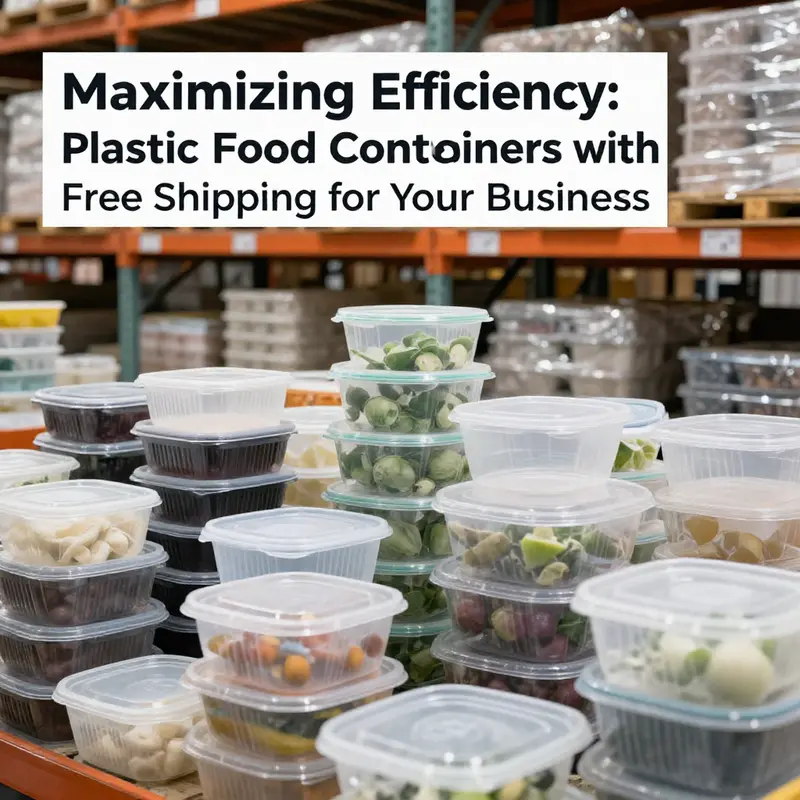
Beyond cost and reliability, the functional versatility of these containers reinforces their appeal. The modern plastic container is rarely a single-purpose tool. Many designs offer a trifecta of storage, reheating, and serving capabilities. A well-conceived stackable configuration saves valuable kitchen real estate in a busy prep area or a warehouse, while leakproof seals prevent the compromises that can spoil a day’s service, whether it’s carryout meals, buffet stations, or prep-forward catering. The lightweight, shatterproof nature of these materials matters too when shipments must be transported across town or loaded onto a truck in tight spaces. In a landscape where space and safety co-exist as non-negotiables, the practicality of stackability and durability becomes a crucial factor in choosing a supplier and a packaging strategy. This is not simply about buying containers; it is about selecting tools that support a more predictable workflow, reducing the cognitive load associated with inventorying, restocking, and reconfiguring packaging for each new event.
Another strand of the value proposition lies in the aesthetic and safety assurances that modern plastic packaging can offer. Food-grade plastics provide clear standards for consumer safety, with emphasis on inert materials that do not interact with foods, resist leaching under typical use, and withstand short cycles of microwaving or dishwashing. The absence of BPA, for many buyers, is a basic expectation; the promise extends to general safety certifications and adherence to food-contact material guidelines. When a business commits to BPA-free options and durable, recyclable plastics, it signals a responsible posture to customers who are increasingly attentive to health, safety, and environmental impact. The practice of choosing such containers becomes part of a broader narrative about the kitchen’s commitment to quality and accountability, reinforcing trust with clients, guests, and end-users.
From an environmental and sustainability lens, the story of containers shaped by free shipping also intersects with the realities of waste streams and recycling infrastructure. PP and HDPE are among the widely recycled plastics in the consumer packaging ecosystem. While no packaging choice is entirely without environmental footprint, the ability to select materials that align with local recycling programs helps businesses integrate packaging decisions with broader waste-management strategies. That alignment is especially meaningful for food-service operations that strive to project an eco-conscious image to their customers. It is not merely a matter of recycling; it is about choosing forms that can be recycled responsibly, that minimize incidental waste, and that encourage a circular approach where feasible. In practice, this means evaluating container designs for durability, reusability, and end-of-life options within the specific regional recycling framework and the business’s own waste-reduction goals.
The experiential dimension of free shipping also influences how kitchens and event teams plan for demand. Seasonal spikes—holiday meals, wedding season, or summer festivals—place a premium on having a reliable supply chain with predictable lead times. Free shipping lowers the barrier to ordering in advance during quieter periods, enabling more proactive inventory management and less reactive scrambling when demand surges. A credible replenishment rhythm emerges: tiered ordering, staggered deliveries, and a procurement cadence that aligns with the kitchen’s production calendar. When the logistical friction of shipping is minimized, teams can focus their attention on menu engineering, portion control, and the customer experience. The net effect is a smoother operational tempo, with fewer bottlenecks, less dependence on last-minute express orders, and more consistent service quality across the board.
Integrating the human element into this narrative matters too. The decision to source plastic containers with free shipping resonates with frontline staff who manage prep lines, serve customers, and handle post-event cleanup. The right containers reduce the risk of spills, mislabeling, or misplacement during transfers between storage, prep, and service areas. The ergonomics of container design—handles, lids that snap shut securely, and clearly readable portioning marks—contribute to everyday ease and job satisfaction. In this sense, the choice is not solely a financial calculation; it touches on workforce efficiency, food safety, and customer satisfaction. When teams experience fewer disruptions around packaging, they also gain confidence in how they allocate time and resources, which in turn supports better forecasting, budgeting, and strategic planning for both routine operations and special occasions.
To connect these threads to the broader market context, it helps to consider how free-shipping programs shape purchasing behavior at scale. For buyers who routinely place larger orders, the advantage compounds with the supplier’s ability to maintain inventory levels, offer consistent quality, and provide a consistent delivery schedule. The result is a more predictable financial trajectory and a more resilient supply chain—qualities highly valued in the current retail and food-service climate. The practical takeaway is clear: when free shipping is part of a well-communicated policy, it becomes an anchor for strategic procurement, enabling businesses to commit to longer-term packaging commitments, optimize packaging choices for variety and volume, and stabilize operating costs in ways that are often difficult to realize with standard, per-item shipping models.
For readers seeking a broader perspective on material standards and safety certifications, authoritative guidance from health authorities remains essential. The U.S. Food and Drug Administration provides comprehensive guidelines on food-contact materials, including the safe use of plastics in storage, reheating, and serving contexts. This resource helps ensure that the choice of containers aligns with safety expectations and regulatory compliance, reinforcing the idea that affordability and convenience should never come at the expense of consumer protection. FDA guidelines on food-contact materials
In practice, a well-considered packaging strategy that leverages free shipping can also accommodate a few practical, everyday considerations. For example, choosing containers with secure lids and leak-resistant seals reduces the risk of weather-related damage or spillovers during transport. Selecting a spectrum of sizes—from compact, single-serving units for grab-and-go meals to larger, family-sized options for bulk catering—helps match the menu design to packaging needs. The ability to select different shapes and configurations—rectangular, square, round—ensures a good fit for shelving, display, and storage constraints. Suppliers that offer a diverse range of designs, while maintaining a coherent safety and quality standard, empower buyers to tailor their packaging to the specifics of the operation, from a home kitchen to a high-volume catering arm.
When a chapter on the benefits of plastic food containers with free shipping in the USA is read in sequence with other sections of the article, the throughline becomes evident: packaging is not a peripheral detail but a core component of operational strategy. Free shipping is the accelerant that makes robust planning possible, turning what could be a lag in procurement into a steady rhythm of replenishment. It supports budgetary discipline, facilitates inventory control, and enables a service model that is reliable, scalable, and adaptable to changing demand. The containers, in turn, provide the practical infrastructure for safe storage, efficient reheating, and presentable serving—qualities that customers notice and remember. In this way, the decision to prioritize plastic containers with a favorable shipping policy becomes a strategic choice about how a business or a home kitchen organizes itself to deliver consistently high-quality food experiences, day after day, week after week, across seasons and special events.
Free Shipping as a Catalyst: Navigating the U.S. Market for Plastic Food Containers
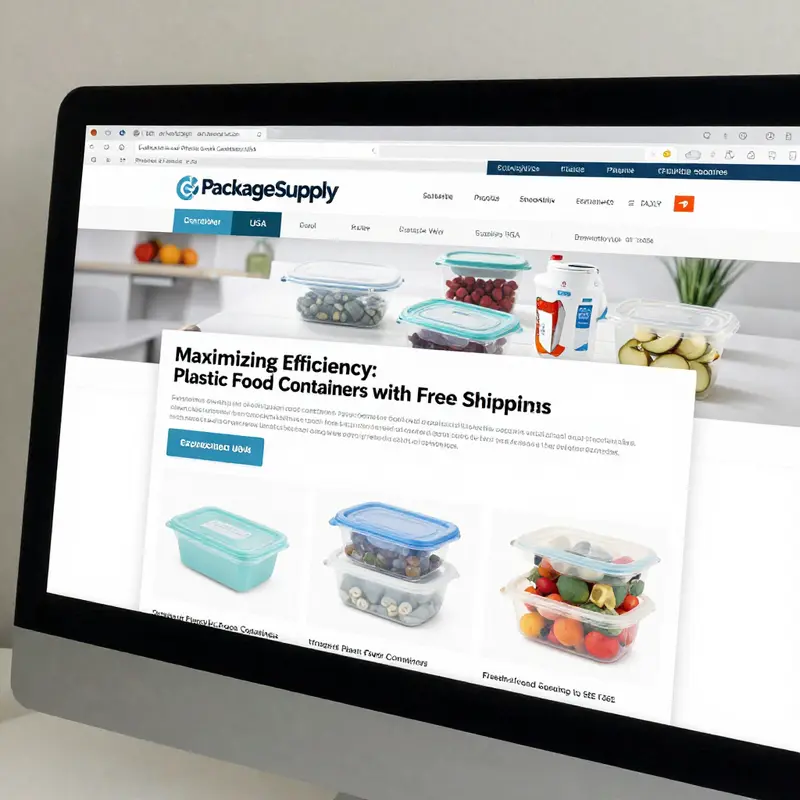
Free shipping in the U.S. packaging market often acts as a strategic lever for buyers who balance unit price with total cost of ownership. For plastic food containers, a clear free-shipping threshold reduces budget surprises, streamlines procurement, and supports scale for kitchens, caterers, and retailers. The economics hinge on bulk orders, reliable delivery, and a broad catalog that minimizes stockouts across a wide geographic footprint. When shipping is predictable, operators can forecast costs, consolidate orders, and experiment with a wider range of container sizes without paying a premium per unit. Suppliers benefit from larger, more predictable orders and optimized logistics. The result is a marketplace where convenient, cost-efficient delivery accelerates menu planning, inventory management, and customer satisfaction.
Shipping, Scale, and Clarity: Trends Redefining the US Plastic Food Container Market
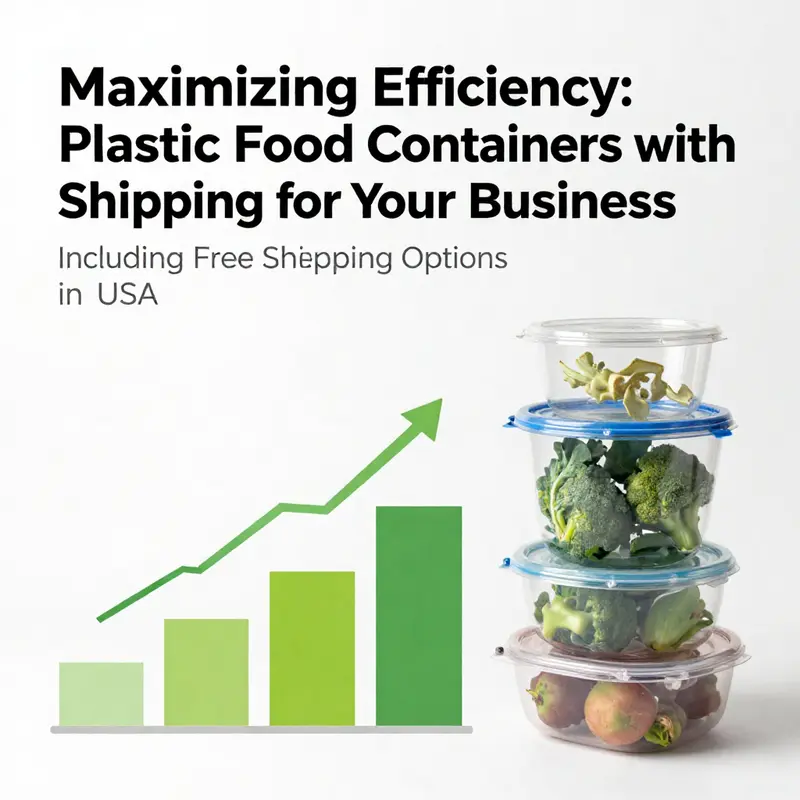
The chapter unfolds like a careful survey of a marketplace in motion, where convenience, durability, and value converge in a landscape shaped by e commerce expectations and sustainability considerations. In the United States, the plastic food container sector has grown beyond a simple warehousing of empty boxes, reflecting a more sophisticated choreography of demand from food service operations, meal prep routines, and household storage needs. These dynamics are guided by shifting consumer behaviors and supplier strategies that emphasize reliability, speed, and cost transparency. The narrative highlights how market players compete on durability, stackability, and visibility, with the strongest entrants offering modular, leak resistant designs that fit busy kitchen workflows. Free shipping thresholds emerge as a core economic lever, driving bulk purchases, subscription programs, and fast restocks across a broad buyer base. Industry outlooks suggest steady growth, fueled by innovations in vented lids, microwavable materials, and clearer packaging that supports accurate portioning and inventory control. Across regions, visible see through packaging remains popular for its practical appeal, while sustainability considerations push toward recyclable materials and reusable formats. For buyers at scale, supplier breadth, predictable terms, and reliable fulfillment are as important as price per unit, because the cost of stockouts can exceed the savings from a cheaper container. The practical takeaway is a sourcing playbook built on product design that favors leak resistance and stackability, combined with clear shipping terms and measurable landed costs. As the market evolves, readers are urged to model breakpoints for free shipping thresholds and to align packaging choices with operational realities, whether in meal-kit programs, catering, or restaurant back-of-house operations. The broader implication is a packaging ecosystem that supports efficiency, visibility, and responsible material use, reinforcing the link between packaging quality and customer satisfaction.
Final thoughts
In conclusion, the availability of plastic food containers with free shipping is not just a convenience; it is a strategic advantage for businesses in the food service industry. From enhancing cost management to fostering efficiency in operations, these containers provide solutions that meet diverse needs. With key suppliers like ePackageSupply leading the charge with extensive offerings, professionals in sectors such as beverage chains, restaurants, food trucks, and catering services can benefit significantly. By staying informed about market trends and supplier options, businesses can make empowered purchasing decisions that enhance their operational capabilities while keeping budgets in check.