
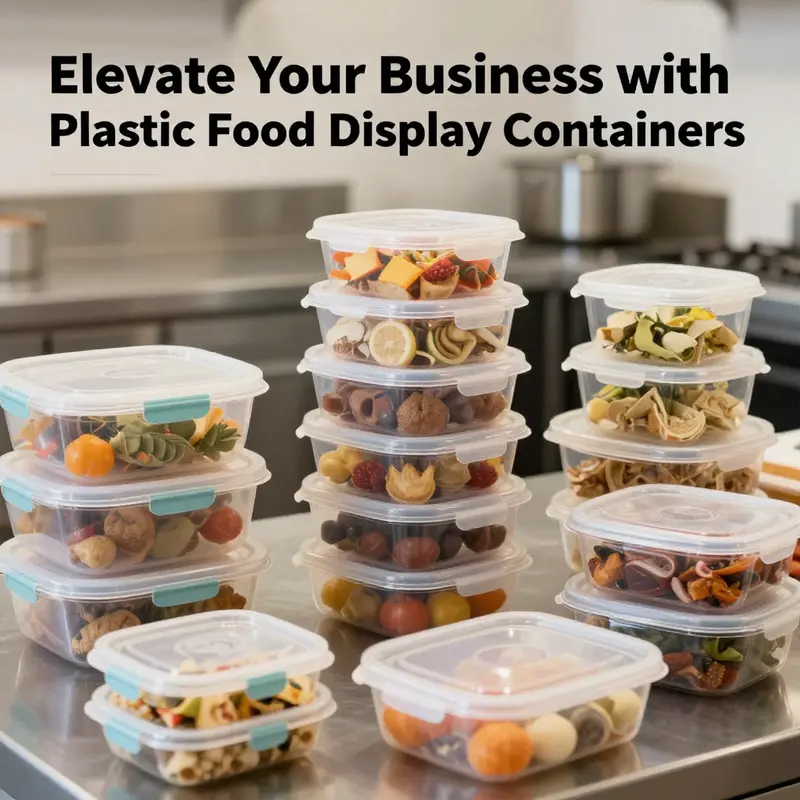
In today’s competitive food service landscape, the right packaging is vital for success. Plastic food display containers offer a versatile solution, combining durability, visual appeal, and practicality. Whether you operate a bubble tea shop, a bustling restaurant, a mobile food truck, or you’re an event planner looking to impress clients, understanding the composition, benefits, and latest trends in these containers can significantly enhance your offerings. This article explores essential insights about plastic food display containers, focusing on how their innovative designs and sustainability features can cater to a range of business needs, while providing opportunities for branding and customer engagement.
Clarity, Durability, and Compliance: The Materials Matrix Behind Plastic Food Display Containers

Plastic food display containers sit at the intersection of function, aesthetics, and safety. Their primary job is to protect and present food, but in modern settings they also shape how customers perceive freshness, quality, and care. The choice of material is not a single decision; it is a balancing act among clarity, rigidity, heat tolerance, chemical resistance, and regulatory compliance. When a shopper glances at the case or shelf, the container that catches the eye is almost always transparent, engineered, and reliable enough to hold up under the pace of service while keeping contents pristine. Behind that simple glance lies a careful calibration of polymer properties, processing methods, and design features that together determine how well a container performs in both display and storage roles.
At the heart of most display containers is a family of polymers chosen for specific strengths. Polypropylene, or PP, remains a workhorse for containers that must endure heat. Its excellent heat resistance allows it to withstand microwave reheating and hot-fill processes without losing structural integrity. In reusable or semi-disposable formats, PP provides a durable, chemical-resistant barrier that reduces the risk of deformation or leaching when faced with hot foods, oils, or sauces. This makes PP a natural fit for display solutions that move quickly from cold cases to warmed trays, as well as for containers intended for consumer reuse in some markets.
Polystyrene, or PS, often finds its place in single-use or cost-sensitive applications. PS is rigid, crisp, and relatively inexpensive, which makes it a favored material for takeout boxes, display trays, and dessert cups. Yet PS has limited heat resistance; its performance can deteriorate as temperatures approach its upper limits, and it can deform or release unwanted compounds when exposed to high heat or acidic foods. For retailers prioritizing strong visual appeal at a lower unit cost, PS remains appealing, provided that the temperature range and food type align with its material limits.
Polyethylene terephthalate, or PET, is celebrated for high clarity and strength. This combination makes PET a frequent choice for transparent display containers used with fresh produce, baked goods, and ready-to-eat meals where visual appeal is a critical purchase driver. PET’s light weight and recyclability support efficient in-store handling and consumer acceptance in many regions. However, even PET has boundaries—its stiffness and barrier properties must be matched with food types and storage conditions to prevent moisture loss or condensation that could affect both appearance and texture.
Polyethylene, in both high-density (HDPE) and low-density (LDPE) forms, offers robust chemical resistance and flexibility. HDPE is commonly used for rigid containers that need a resistant backbone, while LDPE lends itself to flexible lids or wrappings that accompany display cases. Polyethylene provides resilience against oils and sauces and can tolerate a wide range of temperatures, though it may trade some clarity for durability when compared with PET or advanced co-polymers.
Polycarbonate, once common in some food-contact applications for its toughness, has faced tightening restrictions due to concerns about bisphenol A (BPA) migration, especially in products intended for infants and young children. This has led many regions to phase it out or regulate its use in food-contact contexts. The shift away from PC highlights how evolving health concerns and regulatory landscapes continually reshape the materials portfolio available to display-container designers.
These materials must comply with food-contact regulations that differ by region but share a core objective: they must be chemically inert enough not to leach harmful substances into food and must resist typical storage and handling challenges. In the United States, regulatory guidance from agencies like the FDA governs many aspects of material safety, including permissible substances and migration limits. In Europe, EFSA plays a parallel role, with emphasis on rigorous testing and clear labeling to ensure consumer protection. Beyond national authorities, third-party testing and certification bodies—such as TÜV SÜD—offer validation services that scrutinize compliance, import/export readiness, and performance under real-world conditions. This layered regulatory framework helps retailers and manufacturers navigate complex supply chains while protecting public health.
In practice, this means display containers are engineered not only for display clarity but also for shelf life, ease of cleaning, and compatibility with common foodstuffs. For example, heat-resistant PP can be designed with tight lid seals to minimize air ingress and moisture loss, preserving texture and freshness during display and transport. PET’s optical clarity supports vivid merchandising of cakes, salads, and ready-to-eat meals, while its lightweight profile reduces handling weight for staff and customers alike. HDPE’s rigidity and chemical resistance come into play for sauces, gravies, or dressings where leakage would otherwise ruin a display case. Each material’s behavior under temperature fluctuations, exposure to spices, oils, dressings, and cleaning agents informs choices about wall thickness, sealing mechanisms, and lid geometry. The result is a display solution that not only looks the part but also behaves reliably through the entire product lifecycle.
Design features such as tamper-evident seals, leak-proof lids, and stackable geometry are harmonized with material properties to deliver a cohesive user experience. A crystal-clear PET container can showcase a layered dessert with minimal visual distortion, while a PP base can tolerate the heat of a quick microwave pass for consumer convenience. The lids, often designed with gaskets or snug-fit rims, rely on the material’s elasticity and fatigue resistance to maintain a secure seal over multiple opening cycles. This is especially important in delis, supermarkets, and catering environments where products travel, are displayed for extended periods, and then reheated or refreshed for serving. The balance between visibility, seal integrity, and ease of handling becomes a practical test of material choice, manufacturing tolerances, and long-term cost considerations.
From a sustainability standpoint, the industry has increasingly moved toward BPA-free formulations and recyclable variants. The push for recyclability does not end with a single material choice; it extends to design for disassembly, the use of recycled-content content, and the compatibility of containers with existing recycling streams. In some cases, manufacturers offer bio-based or compostable alternatives that align with broader sustainability goals, though these options often come with trade-offs in strength, heat resistance, or cost. The evolving landscape invites retailers to weigh not just the initial price but the total cost of ownership, including end-of-life processing, consumer acceptance, and regulatory alignment. Transparency about material makeup and clear labelling on handling and recycling streams helps shoppers make informed choices and reinforces trust in the brand’s commitment to safety and stewardship.
In practice, the choice of material also intersects with manufacturing capabilities and supply-chain considerations. Polypropylene and PET benefit from mature, scalable molding and forming processes that support high-volume production with tight tolerances. PS, while economical, may necessitate more precise temperature controls during forming to prevent warping and ensure consistent stiffness. The ability to form complex shapes, integrate lids and sealing rims, and achieve uniform transparency or opacity becomes a function of both material properties and processing parameters. This is where collaboration among material scientists, process engineers, and designers proves essential. Together, they map out how a container will behave in real-world use—how it will look under bright store lighting, how easy it will be for staff to stock and clean, and how reliably it will protect contents from contamination and spoilage.
For retailers seeking to align packaging with sustainability goals, there is also value in exploring reusable options and take-back programs that encourage a circular lifecycle. The conversation extends beyond the container itself to the packaging ecosystem, including how containers are returned, cleaned, and reprocessed. In this context, the material choice must support durable reuse where appropriate, or efficient recycling where disposal is the preferred route. The new generation of display containers often aims to balance the pull of aesthetics with a pragmatic vision of environmental responsibility, offering clear advantages such as reduced material thickness without compromising barrier properties, or the incorporation of recycled content that preserves performance while lowering the overall ecological footprint. In short, material selection is a strategic lever for performance, cost, and sustainability, rather than a purely technical detail.
As designers and buyers navigate this terrain, it is useful to consider practical implications along the product’s journey. The warehouse, the display case, and the consumer’s kitchen all present different challenges: temperature shifts, exposure to oils or acids, repeated opening and closing, and the need for straightforward stacking and storage. Each scenario tests the material’s resilience and the container’s ergonomics. A well-chosen material supports easy cleaning and sanitization, resists scuffing and fogging, and maintains its appearance under the bright, high-visibility lighting typical of modern retail displays. It also underpins consumer confidence in the safety and reliability of the food presented. The result is not a single best material but a matrix of options that, when matched to product type, display duration, and environmental goals, yields a packaging solution that performs exceptionally well within the constraints of real-world operations.
To illustrate how this matrix comes together in practice, retailers often draw on a blend of established standards and emerging innovations. For instance, rigorous testing for chemical resistance and migration, combined with third-party certifications, helps ensure that containers meet stringent safety expectations across markets. The inclusion of tamper-evident features and microwave-safe properties further demonstrates a holistic approach to design—one that respects both consumer convenience and regulatory requirements. In this light, the materials story becomes a narrative about reliability, trust, and the careful choreography between product protection and visual merchandising. It is a story that reminds us that even the simplest plastic container is the product of decades of material science, manufacturing discipline, and thoughtful consideration of how people shop for and enjoy food.
For readers seeking concrete examples of how sustainability and design intersect in contemporary packaging, one avenue worth exploring is the broader ecosystem of eco-friendly packaging options that balance functionality with environmental performance. eco-friendly takeout boxes for food packaging illustrates how manufacturers translate the material-physics of plastics into formats that still honor recyclability, microwave compatibility, and user convenience. This linkage between material science and practical application underscores the ongoing evolution of display containers as more than just vessels, but as responsible packaging choices that can enhance brand value while supporting safe, enjoyable dining experiences. As regulations tighten and consumer expectations shift toward transparency, the materials matrix described here will continue to evolve, demanding ongoing collaboration among suppliers, retailers, and standards bodies.
External reference: https://www.tuvsud.com/en/industries/food-and-beverage/food-contact-materials
Seeing Clearly, Holding Strong: The Benefits and Features That Make Plastic Food Display Containers Essential

Plastic food display containers are not merely boxes; they are the interface between product and customer, the visible promise of safety, freshness, and convenience. In most food-service and retail environments, the decision to buy hinges as much on visual appeal as on price, and the transparent walls of these containers play a pivotal role. Their clarity lets customers see color, texture, and portion size at a glance, while staff can verify freshness without opening lids. This combination of visibility and restraint protects the integrity of the product and speeds service, supporting a streamlined workflow from display to plate.
Durability sits at the core of their appeal. Made from food-grade polymers such as polypropylene, polystyrene, or polyethylene terephthalate, these containers are designed to tolerate frequent handling, frequent washing, and occasional drops without cracking or warping. The lightweight yet sturdy construction helps staff move trays and shelves with confidence, reducing the risk of spills that could compromise hygiene or vendor reputation. The choice of material also shapes how well a container holds up in the heat of busy service lines or in the cool grip of refrigerated displays, ensuring the product remains protected during transport and storage.
Alongside resilience, ventilation features have become a decisive factor in preserving freshness. Many modern containers incorporate micro-perforated vents that regulate airflow and humidity. This nuanced approach to venting helps prevent condensation from forming on the lid or inside the walls, which can otherwise accelerate spoilage or encourage mold on produce. Some designs go further with pressure-equalizing vents that mitigate the stress of freezing or rapid temperature shifts, reducing the risk of cracks and maintaining structural integrity when frozen or reheated. In practice, this means better shelf life for prepared salads, cut fruit, and other perishables while preserving texture and aroma.
The benefit of display design extends to space efficiency as well. The modular and stackable nature of these containers makes them easy to arrange on shelves, in grab-and-go displays, and in back-of-house storage. Uniform dimensions enable neat rows that maximize visibility of the contents and support efficient inventory control. Stacking reduces footprint on crowded prep counters and coolers, allowing more product to be displayed or stored in the same area. This fusion of form and function translates into faster service, fewer misplacements, and cleaner, more organized displays.
Hygiene is another cornerstone of the appeal. Plastic containers are generally straightforward to clean and sanitize, with many models dishwasher-safe and resistant to staining from acidic ingredients when appropriate plastics are chosen. Yet, care is still required. Odor absorption can occur with certain materials if strong-smelling ingredients are stored for extended periods, so it is prudent to run a regular sanitation routine and to rotate contents to minimize lingering flavors. The ease of cleaning—paired with secure, leak-proof lids—helps ensure that food safety standards are upheld without slowing down service.
Sustainability considerations are increasingly shaping purchasing choices. Industry options now include recyclable and, in some cases, biodegradable or BPA-free variants that align with consumer expectations for safer, greener handling of food. Suppliers continually refine resin blends to balance clarity, toughness, and environmental impact, offering a spectrum of products that fit different price points and regulatory requirements. For buyers, the trade-off between durability, clarity, and end-of-life options means evaluating the full lifecycle of a container, from manufacturing to disposal, and choosing solutions that minimize waste while preserving performance.
Beyond the core attributes of durability, visibility, venting, and hygiene, practical features such as secure lids and tamper-evident seals reinforce trust with customers. A leak-proof lid preserves moisture and aroma, reduces the chance of spills during transit, and maintains a crisp presentation from case to counter. Tamper-evident features add a layer of assurance for ready-to-eat items, a crucial consideration in self-serve environments and during deliveries. Some containers also offer microwave-safe properties, enabling retailers or caterers to transition from display to reheating without transferring contents to another vessel. This capability support on-demand service and aligns with consumer preferences for convenient, heat-and-serve options.
The market also reflects a growing emphasis on customization. Vendors increasingly offer a range of sizes, shapes, and closure styles to fit a broad spectrum of products—from compact dessert cups to larger salads, side dishes, or multi-item displays. Color accents and branding opportunities can help a display stand out while maintaining a cohesive aesthetic across a venue or brand line. When choosing containers, operators weigh the balance between uniformity for storage efficiency and flexibility to accommodate diverse menus and seasonal offerings. The result is a display system that is not only practical but also visually compelling, encouraging customers to explore the full range of options on offer.
Operational considerations keep these advantages in perspective. The most effective plastic display containers are compatible with the food-service workflow: they fit standard shelving, stack neatly for FIFO rotation, seal tightly to preserve freshness, and tolerate typical refrigeration or warming temperatures. They should not crack under cold stress or warp under heat, and they should resist staining from common condiments while preserving aroma and color. In many kitchens, a single container type can handle multiple tasks—from cold salads and fruit cups to prepared sandwiches—reducing procurement complexity and simplifying maintenance. When combined with a well-designed lid and appropriate ventilation, these containers support a hygienic, efficient display that travels smoothly from prep to service to consumer.
Internal linking to related packaging solutions can enrich the reader’s understanding of how storage and presentation choices interact across formats. For instance, a recent trend emphasizes eco-friendly takeout boxes for food packaging that extend the conversation beyond plastic while maintaining performance standards. This cross-pormat perspective invites readers to consider how design constraints shape throughput, customer perception, and waste management across the spectrum of packaging options. For more context, explore the concept at this resource: eco-friendly takeout boxes for food packaging.
In another sense, these containers are not just containers; they are a system of practice. They enable deli counters to present a salad bar with confidence, cafes to offer ready-to-eat meals with consistent portioning, and catering operations to assemble multi-item platters that stay neatly separated yet easy to transport. The ability to see through the container, coupled with a secure lid and controlled venting, helps staff ensure that products look inviting, smell fresh, and are handled with care from display case to customer hand-off. They also support accurate inventory and waste management, as staff can monitor color and texture at a glance without opening the seal. The cumulative effect is a reliable, scalable approach to food presentation that reduces spoilage, enhances customer satisfaction, and optimizes labor and space.
As the industry evolves, so does the vocabulary around plastic display containers: emphasis on recyclability, on micro-vented designs that slow spoilage, and on safety certifications that reassure both operators and patrons. The combination of materials, geometry, and lid technology continues to improve, allowing improved heat resistance, clearer clarity, and more durable seals. In practice, this means products that maintain visual appeal longer, travel more safely through busy service lanes, and support sustainable operations by enabling precise portioning and reduced waste. The result is a cohesive system in which the container itself contributes to product integrity, brand perception, and efficiency in equal measure.
Finally, the utility of these containers extends to a range of applications, from hot-to-go meals to cold displays of salads, desserts, and snack assortments. Their versatility makes them a staple across supermarkets, deli counters, restaurant showcases, and catering fleets. They are engineered to withstand the temperature variations typical of display cases and takeout delivery, to resist chemical interactions with foods, and to offer practical features that align with modern consumer expectations for safety, convenience, and sustainability. In short, the durable, transparent, ventilated, and easy-to-clean plastic display container remains an indispensable instrument for presenting food with confidence, preserving quality, and enabling efficient, high-volume operations.
External reference: https://www.foodserviceequipment.com/plastic-food-display-containers-features-and-benefits/
How Sustainability, Tech and Shopper Habits Are Rewriting the Plastic Food Display Container Market
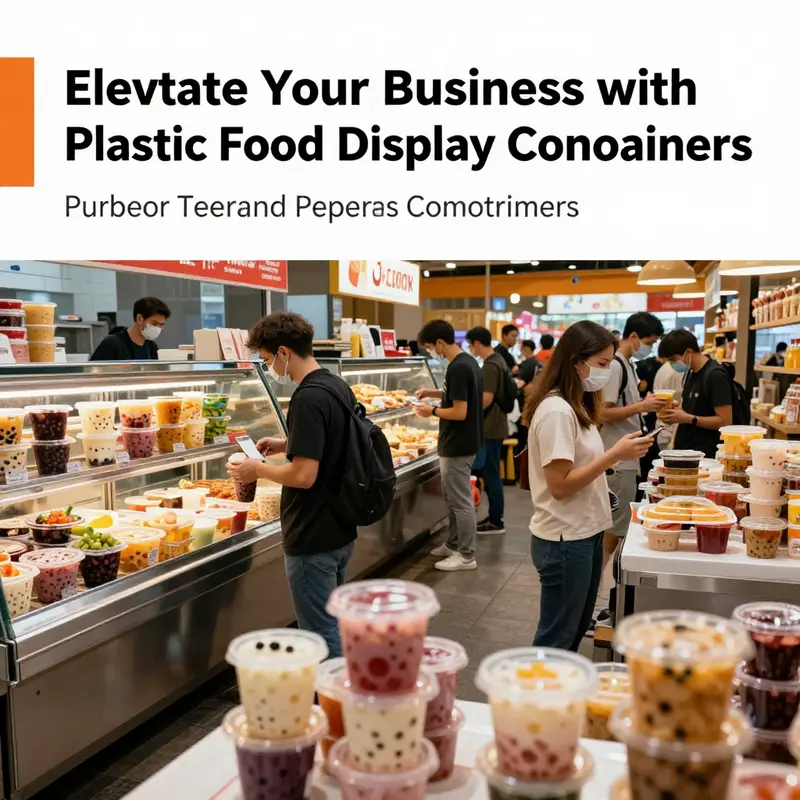
The plastic food display container market is no longer defined by clarity and cost alone. A dynamic set of forces is reshaping product requirements, manufacturing priorities, and commercial strategies. Sustainability expectations, manufacturing breakthroughs, and evolving shopper habits now guide development. Producers, retailers, and foodservice operators must balance durability, hygiene, visual appeal, and environmental credentials. This chapter examines those forces and the practical responses that are setting the market’s direction.
Demand patterns are shifting toward materials and designs that signal responsibility. Buyers expect containers to protect freshness and show the product. They also want visible steps toward lower environmental impact. That shift has prompted manufacturers to expand offerings with BPA-free resins, recycled-content plastics, and bio-based polymers. These alternatives do not simply replace conventional polymers. They require rethinking wall thickness, seal designs, and molding parameters to maintain leak resistance and stackability. The result is a new engineering phase where material science meets user expectations.
Regulation and regional policy are accelerating change. Stricter waste management rules in major markets push producers to increase recyclable content and to supply clear recycling instructions. In some regions, environmental targets are prompting manufacturers to aim for higher percentages of eco-friendly production. The pressure is both regulatory and commercial: consumers reward visible proof of sustainability with purchase decisions. Retailers that adopt greener packaging often secure better shelf placement. For small brands, the right container can convey premium positioning while reducing lifecycle impact.
Manufacturing technologies are responding. Precision molding and automation lower unit costs while improving tolerances for tight-fitting lids. These improvements reduce product waste during production and enhance leak-proof performance for end users. Machinery investments also enable thinner, yet stronger, geometries that preserve clarity. At the same time, digital tools allow faster design iterations. Brands can test different viewing windows, rib patterns for strength, and tamper-evident features without long tooling lead times. That speed matters when seasonal assortments and limited-edition items need attractive, reliable display solutions on short notice.
Technology is not only about production. Smart packaging features are gaining traction. QR codes provide traceability and explain storage or reheating instructions. Freshness indicators and micro-sensors, while still emerging, are being piloted for high-value perishable goods. These features help retail staff manage shelf life and give shoppers confidence. For e-commerce, containers must survive transit and convey product quality on camera. Clear panels remain essential, but additional tamper-evident closures and secure-fitting lids are becoming standard for online-ready packs.
Consumer behavior is redefining form and function simultaneously. Ready-to-eat meals and single-serve options have expanded the need for multi-compartment designs and microwave-safe materials. Visual appeal remains a priority; shoppers select items they can inspect. Transparent windows and entire clear shells increase impulse purchases. Yet, aesthetics now compete with eco-credentials. Hybrid solutions that combine a clear plastic lid with a recyclable paper tray are gaining traction. For bakery and dessert displays, clear individual cups and slice containers deliver visibility while minimizing handling. Retailers who highlight responsible disposal instructions see higher recycling rates among customers.
Design innovation is playing a central role. Stackability and space-efficient profiles reduce retail clutter. Ergonomic features like easy-lift tabs and integrated handles improve user convenience. Tamper-evident seals reassure buyers about hygiene. Customization services let brands imprint logos and color bands, reinforcing identity at the shelf. These options used to be reserved for large orders. Now, modular tooling and digital printing mean smaller brands can access customized runs. This democratization of branding supports local producers and specialty food makers who compete on quality and story, not just price.
The competitive landscape is evolving through concentration and specialization. Established manufacturers are investing a significant portion of revenue into research and development. They pursue patents and build technology centers to defend innovation. At the same time, regional clusters support supply chain efficiencies. Proximity to raw material suppliers, converters, and fast tooling shops enables rapid response to market changes. New entrants, including companies focused on compostable or bio-based resins, add pressure. This competitive mix expands choice for buyers but makes differentiation by service and sustainability claims essential.
Price pressure remains a reality. Even as materials shift, buyers expect affordability. To reconcile this, many suppliers optimize design for material efficiency. They reduce weight without compromising strength. They also redesign closures for simple, reliable performance. Bulk purchasing agreements and closed-loop recycling programs help larger chains reduce effective costs. Smaller operators benefit from flexible minimums and catalogized designs that avoid custom tooling expenses. For all players, controlling total cost of ownership — including returns, breakage, and disposal — is more important than unit cost alone.
Logistics and circularity are increasingly linked. Recycling streams are inconsistent across regions, and many containers are technically recyclable but not collected. Companies that build closed-loop programs find tangible benefits. Takeback schemes, partnerships with recyclers, and clear labeling improve material recovery. Investment in post-consumer recycled (PCR) content also cushions supply-chain volatility. Using PCR content can reduce dependence on virgin resins and respond to buyer expectations. However, achieving consistent appearance and performance with PCR requires careful quality control.
For retailers and foodservice operators, choosing the right container is now strategic. The choice affects shelf presentation, product protection, and brand reputation. It also influences waste management costs and regulatory compliance. Successful selectors evaluate containers on multiple fronts: material credentials, seal reliability, clarity, stackability, and afterlife. Pilots help measure breakage and customer response. Selecting a supplier who can scale production and offer sustainable options reduces risk.
Smaller food brands and local producers have new opportunities. Accessible customization and eco-focused materials let them align with conscious consumers. Retailers can support local sourcing by offering flexible packaging programs. These collaborations increase shelf variety and meet demand for authentic, traceable products.
The market’s outlook blends steady growth with selective disruption. Forecasts predict continued expansion as convenience eating and e-commerce grow. Yet the nature of that growth will favor companies that integrate sustainability and technology into their offerings. Packaging that balances visibility, performance, and lower environmental impact will win shelf space. Suppliers that invest in R&D, circular programs, and agile manufacturing will gain long-term advantage.
As the market matures, incremental gains in material science and manufacturing yield outsized returns. Clarity and leak protection remain essential. But they are now baseline expectations rather than differentiators. Real disadvantage accrues to those who ignore recyclability, label transparency, or digital traceability. For businesses operating in this space, the imperative is clear: adapt packaging choices to capture consumer trust and meet regulatory demands.
For practical inspiration, manufacturers and retailers experimenting with transparent dessert and single-serve containers can study retail-ready clear-cup solutions like clear cake cups for bakery displays to see how visibility and portion control combine. For broader market statistics and forecasts, consult recent analyses that project market expansion and detail regional dynamics: https://www.grandviewresearch.com/industry-analysis/plastic-food-storage-container-market
Clear Vision, Clean Footprint: Reimagining Plastic Food Display Containers for a Sustainable Future

Plastic food display containers are the quiet workhorses of modern food service and retail. They enable a clear view of salads, desserts, and ready to eat meals while delivering durability, light weight, and stackable convenience. Their transparency invites appetite and trust, their secure lids preserve freshness, and their ability to withstand varying temperatures makes them versatile across front of house display cases, grab and go counters, and self serve stations. Yet beneath these advantages lies a set of sustainability questions that shape procurement, branding, and long term business strategy. The current discourse around plastic display containers is not a simple tale of harm or heroism; it is a nuanced balance between operational efficiency and environmental stewardship. As manufacturers optimize for clarity, leak resistance, and microwave compatibility, they also face expectations to address end of life outcomes, reduce microplastic release, and align with circular economy principles. In this context, sustainability becomes a dialogue about design choices, material science, policy signals, and consumer education, all of which influence the life cycle of every container that leaves a food establishment.
Form Meets Function: How Modern Plastic Display Containers Redefine Food Presentation

Plastic food display containers have matured into sophisticated tools for presentation, preservation, and logistics. They no longer serve solely as vessels. Instead, contemporary designs integrate airflow, geometry, thermal control, and intelligence. Each innovation responds to a clear need: keep food appealing, safe, and easy to handle from production to purchase. This chapter follows those design currents, showing how subtle engineering choices shape freshness, reduce waste, and improve retail performance.
Transparency remains the fundamental design advantage. Clear plastics let customers inspect product quality without opening packaging. That visual access shortens purchase decisions and reduces handling. But clarity alone cannot preserve texture or flavor. Designers layer functional features onto transparent shells to balance show-and-sell with preservation. Venting strategies, molded shapes that cradle delicate items, insulated walls for warmth retention, and embedded indicators for condition monitoring now coexist in single units.
Vented containers represent one of the clearest examples of function-driven design. For highly perishable items—leafy greens, soft fruits, fresh herbs—controlled airflow limits condensation. Too little ventilation traps moisture, accelerating mold. Too much airflow dries produce and shrivels leaves. Modern vent designs use patterned holes, ramped channels, and micro-grilles to guide air evenly across product surfaces. The openings are engineered to allow ambient exchange while preventing direct exposure to contaminants. Some lids include adjustable vents that operators can open for peak respiration periods or close for transport. The result is a longer shelf life with no visual compromise; products remain clearly visible, crisp, and appetizing.
Shape-specific molds take preservation a step further by matching form to content. Protecting a banana or a string of grapes requires different geometry than protecting a cube of cake. Ergonomic molds cradle items, minimizing movement and impact during handling. When a container follows the natural curvature of a fruit or the layered profile of a dessert, pressure points vanish. Bruising and collapse become rare. This attention to form is not just protective. It also optimizes shelf space. Curved or tapered designs nest or stack efficiently, enabling denser displays without crushing the contents. Food-safe plastics such as polypropylene and polyethylene terephthalate enable these precise molds through thermoforming and injection processes, producing thin, lightweight walls that still resist puncture.
Thermal performance has moved into mainstream display design. Hot and cold displays demand distinct strategies. For hot items, double-wall constructions and reflective inner coatings preserve temperature while keeping exteriors cool to the touch. Insulated lids trap steam, reducing surface drying in soups and hearty stews. For chilled goods, barrier materials slow heat ingress and maintain a stable microclimate around the food. Designers balance thermal mass with weight and cost. Adding insulation often increases material use and expense, so modern approaches favor geometries that improve performance without heavy layering. Small air gaps, ribbed frameworks, and selective use of foam inserts achieve thermal gains with minimal material. These solutions extend not only safe holding times but also consumer satisfaction; food reaches the plate at intended texture and temperature.
Smart features are now emerging across the market, starting with simple indicators and moving toward sensor integration. Color-change strips can show if a package has exceeded a safe temperature range. Time-temperature indicators provide a visual record of abuse during transport. While full digital sensors remain rare at scale, low-cost, single-use electronics and printed thermochromic elements are becoming viable. Such features reduce food waste by clarifying safety margins and enabling better inventory rotation. From an operational perspective, smart indicators can reduce sampling and testing frequency, saving labor while improving traceability.
Safety and tamper evidence are integral to trust. Tamper-evident seals and tear-away lids communicate integrity without obscuring visibility. These features combine mechanical design with material science. A brittle perforation line that separates cleanly under stress, or a peel strip with adhesive tuned to food-safe standards, can provide clear evidence of prior opening. Importantly, these measures must not compromise recyclability or microwave safety. Designers reconcile those demands by using mono-material solutions where possible. Containers made from a single resin are easier to recycle than multi-layer assemblies. When layers are required, they are selected for compatibility with current recycling streams.
Sustainability drives material choices and design trade-offs. BPA-free formulations and recycled-content resins address health and environmental concerns. Recyclability shapes wall thickness, color, and adhesive selection. Designers avoid dark pigments that interfere with sorting machines and reduce multi-material bonding that complicates processing. Lightweighting is another tactic. By optimizing geometry—adding ribs for strength or altering lip designs for stiffness—manufacturers reduce polymer use without compromising durability. These efficiencies lower cost, material footprint, and shipping weight, supporting both environmental goals and business margins.
Customization and branding remain powerful tools for retail differentiation. Clear lids with integrated windows, colored bases, and printed tamper labels help products stand out. Custom inserts and dividers keep multi-component meals organized while enabling attractive presentation. Manufacturers often offer bespoke sizes, making the container part of the marketing strategy. While customization adds cost, it also increases perceived value and can reduce secondary packaging needs, offsetting expenses.
Manufacturing processes influence which innovations are practical. Injection molding excels for complex, repeatable geometries with tight tolerances. Thermoforming is cost-effective for larger trays and thin-walled cups. Both methods benefit from design for manufacturability (DFM) practices. Draft angles, radiused corners, and consistent wall thickness reduce warping and cycle times. Tooling design is critical; high-precision molds produce clearer parts with better stacking and sealing characteristics. Supply chain considerations—resin availability, regulatory testing, and lead times—also shape product choices for foodservice operators.
Operational ease underpins many successful designs. Containers that stack securely, open cleanly, and reseal reliably reduce handling time and spoilage. Lids that click into place with audible feedback reduce missealing. Bases designed to accept retort or microwave heat expand use cases. Those practical features may seem minor, yet they compound across thousands of transactions to deliver significant value.
Clear display items for bakery or confectionery build on these principles. For delicate pastries and single-serve desserts, transparent cups preserve visual appeal while offering secure transport and simple reheating options. For an example of clear packaging applied to desserts and pastries, consider this product line of clear cake cups for pastries. Such solutions illustrate how presentation and protection blend in retail contexts.
Regulatory compliance guides the entire development chain. Materials must meet food-contact safety standards and be tested for chemical migration. Performance testing validates sealing, stacking, thermal retention, and venting efficacy. Those results inform shelf-life claims and handling instructions.
Taken together, these innovations show how plastic food display containers have become strategic assets. They protect quality, enable efficient logistics, and present products attractively. Design choices around vents, form, insulation, smart indicators, and materials determine whether a container simply contains food or actively preserves it and sells it. For practitioners, the challenge is selecting the right combination of features for the product, retail channel, and sustainability goals. For designers, the task is to deliver clarity, protection, and practicality while minimizing environmental impact.
For technical guidance on safe designs and compliance, consult the FDA’s official guide on plastic food containers with vent holes: https://www.foodsafety.gov/food-safety-modernization-act/fsma-requirements/plastic-food-containers
Final thoughts
As your business adapts to the evolving demands of consumers, investing in plastic food display containers can provide a competitive edge. These versatile containers not only enhance the presentation of your offerings but also ensure safety, durability, and sustainability. Adopting the latest trends and innovations in this arena will help you connect better with your clientele, streamline operations, and promote your brand effectively. By prioritizing quality and design, your food items can attract more customers and ultimately lead to a successful business.