
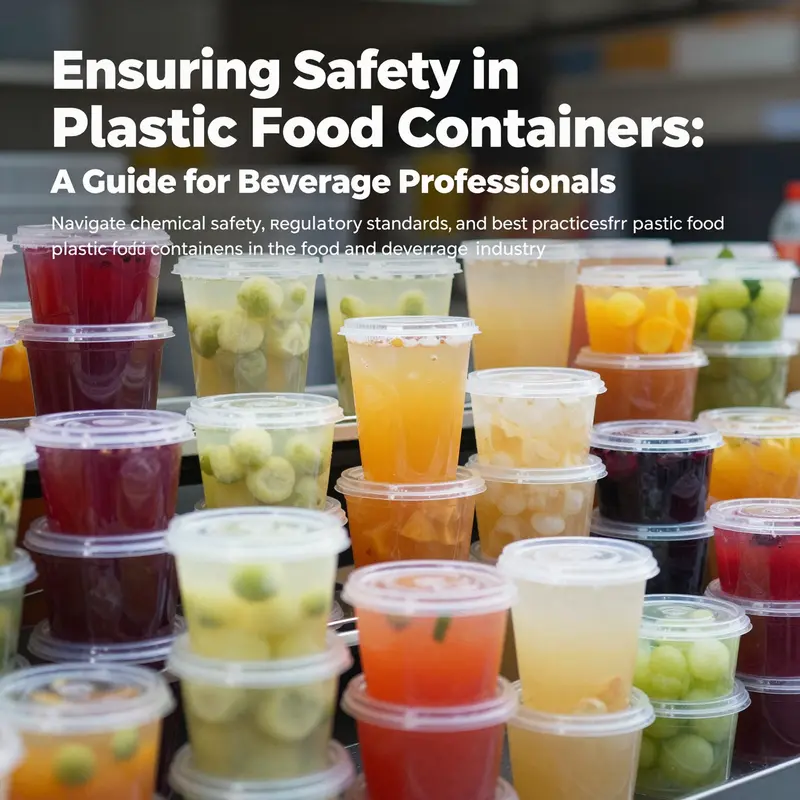
In an industry where food safety is paramount, understanding the nuances of plastic food safe containers is essential for beverage professionals, including bubble tea shops, restaurants, and catering services. This guide delves into the chemical safety of plastics used, the regulatory standards that govern them, and best practices for their use. As the concerns surrounding chemical leaching and safety continue to evolve, it’s crucial to stay informed about what to look for in plastic food containers. Each chapter provides insights that will not only ensure compliance but also enhance customer trust and safety in your food service operations.
Beyond BPA: Understanding the Chemical Safety Landscape in Plastic Food Containers
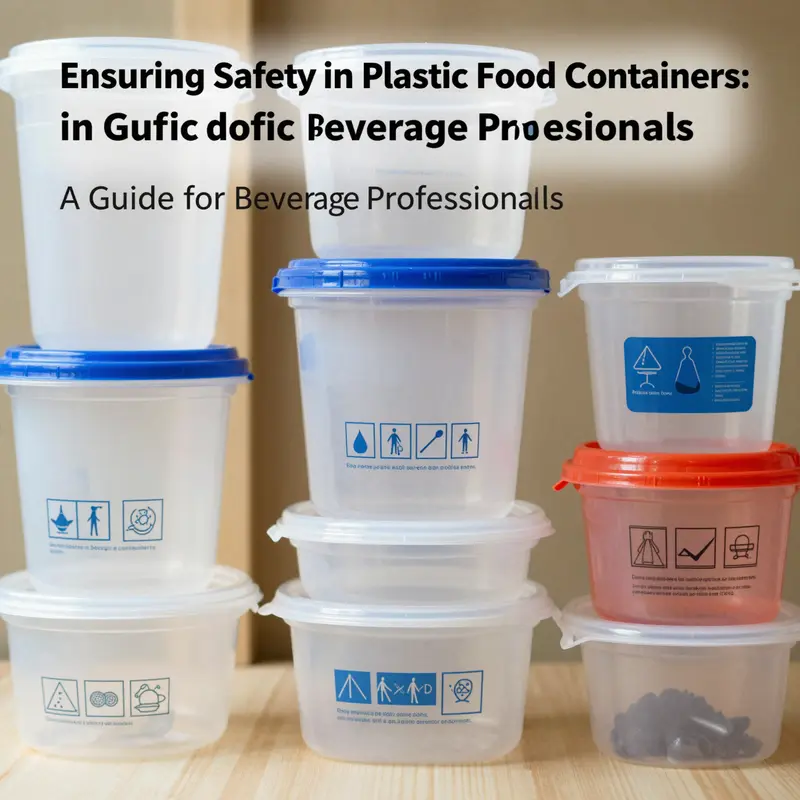
The safety of plastic food containers sits at the intersection of everyday practicality and scientific scrutiny. For many households, these containers are a routine part of meal prep, storage, and transport, yet the safety file is not as simple as a single label or a consumer myth. Regulators have established that plastics used in contact with food are subject to testing and labeling that should, in principle, reassure users that the material behaves within predefined limits under typical conditions. But safety does not end at compliance with a label. Chemical migration can occur when plastics interact with heat, acidity, or fats, and the substances that migrate may reflect the very additives that give plastics their versatility. In this context, understanding what is in a plastic container and how it behaves under real world use becomes a form of practical literacy that protects health without abandoning convenience. The core tension for consumers then is not only about whether a plastic container is labeled as safe, but about whether its safe use is compatible with everyday habits that include reheating leftovers, refrigerating sauces, and storing citrus dressings or fatty foods for extended periods. The science behind this tension is nuanced, and it requires looking beyond simple marketing terms toward a more complete picture of what makes a container safe, how that safety might change with time and use, and what alternatives exist when safety and practicality seem to pull in opposite directions.
A first and essential point concerns additives. Early generations of plastics relied on a family of compounds such as bisphenol A, commonly abbreviated BPA, and a spectrum of plasticizers known as phthalates. These substances exist to influence the physical properties of plastic—rigidity, flexibility, and durability. When used in food contact materials, the risk is not that the plastic suddenly becomes toxic in a dramatic way, but that small amounts can migrate into food, particularly under certain conditions. The landscape of risk has shifted as manufacturers moved away from BPA in many products, but the replacement chemistry has not eliminated concern. Replacement chemicals like BPS and BPF have filled in for BPA in some lines, yet growing evidence suggests that these substitutes can behave similarly in the body, potentially mimicking estrogenic activity and contributing to hormonal disruption. The cautionary takeaway is not a single chemical vilified in every instance, but a reminder that replacement does not automatically equal safety. In the words of researchers who study environmental health, substitutions may reduce one type of exposure while preserving another risk profile, so looking only at the absence of one compound can obscure the broader picture of endocrine disruption risk.
A second fundamental layer concerns other classes of additives and components that shape the risk profile of plastics used for food. Phthalates, a broad group of plasticizers, have long been associated with reproductive and metabolic concerns in epidemiological studies, particularly when exposure occurs during sensitive developmental windows. Polyvinyl chloride, or PVC, sometimes appears in film wraps and rigid containers, raising concerns about the potential release of toxic byproducts when the material degrades or is heated. The migration story is not limited to intentional additives; it extends to the polymer matrix itself and to the solvents present in a given food matrix. What makes these issues challenging is that the observed migration can vary with the type of food—acidic substances create higher solvent-like effects, and high-fat items can draw certain compounds from the plastic more readily—complicating broad generalizations. A notable point from recent research is that the very act of heating can accelerate migration by weakening the structural integrity of the polymer and increasing diffusion of chemicals into food. Even containers marketed as microwave safe may not be migration proof, a distinction that highlights the difference between a material that resists melting and a material that remains chemically inert under the conditions of normal use.
Temperature and storage conditions play a decisive role in chemical migration. When plastic containers are heated in a microwave or dishwasher, the combination of time, temperature, and the presence of solvents can alter leaching dynamics. Heating fatty or acidic foods amplifies the solvent-like properties of culinary substrates, which in turn facilitates the migration of additives from the plastic into the food. The same dynamics can be observed in long-term storage: repeated exposure to cycles of chilling and warming, or to fluctuations in temperature during transport, can cause micro-stresses in the polymer that promote micro-leaching. These patterns underscore a simple, practical guideline: heating plastic should be avoided where possible, especially when fatty or acidic foods are involved, and hot foods should be stored in containers designed for high-temperature tolerance only when necessary. The active lesson here is clear—labels matter, but so do the conditions behind the label. A container that is labeled microwave safe is not a guarantee of chemical invisibility; the label is a cue about structural performance, not a universal promise about chemical migration.
To navigate this landscape, consumers rely on resin identification codes as a shorthand for comparing materials. Codes such as #1 PET, #2 HDPE, #4 LDPE, and #5 PP provide a general map of the plastics used in consumer containers. In broad terms, HDPE and PP are often considered more resilient to repeated washing, showing relatively good resistance to cracking and mild heating, with a lower tendency to leach under normal use. PET and PS, on the other hand, have more limited durability in the face of repeated washing and temperature fluctuations, and their use is more common in single-use contexts. This does not automatically render them dangerous in every circumstance, but it does suggest that reuse expectations and dietary safety considerations may differ. The resin code is a guide to potential risk during repeated use, to how a material responds to heating and mechanical stress, and to the likely response of the container under routine dishwasher cycles. The practical implication for shoppers is to consider how they intend to use the container: if it will be opened and washed frequently, materials in the HDPE or PP family may be preferable; if it is intended for a single meal or for dry, cool storage, other materials may suffice, provided that the food is not heated in the container.
Against this backdrop, glass emerges as the most inert and stable option for long-term storage and reheating, particularly when hot foods or prolonged storage are involved. Glass is chemically inert with respect to food, meaning it does not interact with the meal it contains. The borosilicate or tempered soda-lime varieties can manage extreme temperatures, so they are well suited to freezer storage and microwave reheating without the risk of chemical contamination from the container itself. In practical terms, choosing glass for hot foods or for storage of highly acidic foods can reduce the complexity of the risk equation and provide a straightforward performance baseline. The caveat is that glass is heavier, more fragile, and less convenient for every everyday scenario. Still, for households that prioritize minimizing chemical exposure and maximizing a stable storage environment, glass remains the gold standard against which plastic options are measured. In a world where convenience often competes with safety, glass offers a predictable, inert alternative, even as plastic continues to serve crucial roles for portability and lightness. This dynamic invites a pragmatic approach: use glass when feasible for hot, long-term, or highly reactive foods, and reserve plastic for situations where its performance is adequate and the risk is understood and managed.
From a consumer behavior perspective, the challenge is to align everyday practices with informed choices. When plastic is used, it helps to seek containers that explicitly state their suitability for microwave, dishwasher, and freezer use, and to avoid heating in the plastic whenever possible. It also helps to minimize the food types stored in plastic, avoiding high-fat or highly acidic items for extended periods. The length of time a container is used, the number of wash cycles it endures, and the presence of scratches or cracks all influence safety; micro-abrasions can harbor stains, odors, and possibly micro-leaching pathways that complicate the assessment of risk. Health-focused practice, therefore, emphasizes inspecting containers for wear and tear, replacing worn items, and recognizing that the marketplace offers varying levels of quality and testing standards. In this light, the consumer becomes an ally in safety by maintaining a schedule of container replacement and prioritizing materials with transparent safety documentation and quality controls.
When plastic is unavoidable, the search for safer storage hinges on several practical realities. First, check that the container carries clear statements about its material composition, temperature tolerance, and any relevant certifications or third-party testing claims. Second, favor materials that have demonstrated resilience under typical use—HDPE or PP—while recognizing that no plastic is inherently risk-free under all circumstances. Third, consider non-plastic alternatives whenever hot foods are involved or when long-term storage is planned. A fourth principle focuses on handling and storage history: avoid reusing single-use packaging beyond its intended purpose, and opt for containers designed to withstand the washing regimes you employ. Finally, while online marketplaces and bulk suppliers can offer convenience, they also introduce variability in quality and safety verification. Consumers should look for sources that provide robust documentation, a clear material traceability record, and verifiable testing results that echo what the science suggests about migration behavior under heat and within different food matrices.
For those who still want plastic storage for certain needs without sacrificing a strong safety posture, a practical step is to select containers built for repeated use and to pair them with sound handling practices. In this approach, the container becomes a tool for disciplined storage rather than a disposable solution. If the purpose is to transport or portion out meals, choose a container that promises durable construction, with double-lid seals and thick walls designed to resist cracking and warping. When shopping for such options, remember that the container’s safety extends beyond its own materials to the way it is manufactured and tested. Reputable suppliers may offer products that go through multiple quality checks, including material selection and pre-production testing, to ensure safety and durability under real-world conditions. While this description avoids naming particular brands, it highlights the criteria that should guide responsible purchasing decisions: clear material identification, stated temperature limits, evidence of third-party testing or certifications, and a documented track record for consistent performance across many wash cycles and temperature ranges.
A concise, actionable takeaway emerges from these considerations: reduce reliance on plastic where possible, and when necessary, make informed, meticulous choices that reflect how you actually use the container. The culture of use matters as much as the chemistry of the plastic. Store soups and citrus dressings in containers with verified safety credentials, and avoid heating in the container where the label is ambiguous about chemical migration under heat. Embrace glass for hot foods and long-term storage whenever feasible, and use high quality HDPE or PP containers when plastic use is essential. In the absence of definitive guarantees of chemical invisibility, choosing the right material, practicing careful handling, and prioritizing transparency in safety documentation allows individuals to navigate the nuanced landscape without compromising daily convenience.
To connect this science with the everyday shopping and storage decisions, consider a design approach that respects both utility and safety. If you ever need to visually package treats for a gift or a special occasion, you might explore container designs that balance visibility, protection, and safety. For instance, packaging concepts such as foldable cake boxes with window can be part of a broader strategy that keeps food safe while presenting an appealing image for gifting or events. These designs are not a substitute for safe material choices, but they illustrate how the storage ecosystem can harmonize with safety considerations. When selecting such packaging options, look for materials that align with the same safety principles described above: inertness with respect to food, resistance to common storage conditions, and a transparent chain of custody that provides clarity about production and testing. In this spirit, the following example demonstrates how design, material science, and consumer awareness come together in practice: foldable cake boxes with window bakery packaging can serve as a visually attractive way to present homemade treats while minimizing long-term exposure risks, provided that the packaging itself is made from materials appropriate for food contact and tested for safe use under the intended conditions. For an example of this packaging family, see the foldable cake boxes with window bakery packaging article available at this link: foldable cake boxes with window bakery packaging.
The overarching message is not one of alarm but one of practical discernment. Public health insight tells us that the risk from plastic containers is not a single threshold to cross but a spectrum influenced by material, design, use pattern, and the food itself. The FDA and other regulators provide a framework for safety, but in real life, safety is a function of how a consumer uses the product day to day. This is why ongoing vigilance, continued education, and a willingness to substitute safer options when possible are essential habits. The goal is a storage system that remains reliable across the meals, the seasons, and the needs of a busy kitchen, while preserving the integrity of the food and protecting health over the long run. The science is complex, yes, but the practical path forward remains accessible: favor inert materials for high risk uses, minimize heat exposure to plastics, inspect containers regularly, and demand transparency from the supply chain about testing, certifications, and material choices. In the broader arc of the article, this understanding forms a bridge between regulatory caution, consumer responsibility, and the evolving landscape of design and manufacturing that seeks to align safety with everyday life.
For readers who want to explore the scientific background in more depth, a comprehensive external resource outlines the migration dynamics and the limits of microwave safe labeling in plastic food containers. It presents the nuanced view that microwave safe does not guarantee migration free and highlights the importance of considering food type, contact time, and the specific plastic formulation when assessing risk. External resource: https://www.bloomberg.jhu.edu/research/food-safety/plastic-container-leaching/
Guardrails of Safety: Navigating Global Regulatory Standards for Plastic Food Contact Containers
Regulatory standards for plastic food contact containers function as the guardrails that keep a complex supply chain honest about safety. They do not eliminate risk by themselves, but they establish the expectations, testing regimes, and transparency that help manufacturers, retailers, and consumers make informed choices. In this chapter, the regulatory landscape is explored as a continuous negotiation between scientific evidence, public health priorities, and the practical realities of making, selling, and using containers that hold food. The result is a framework that guides material selection, product design, labeling, and post-market oversight, all aimed at minimizing the migration of substances from plastic into food under the conditions in which containers are typically used. The conversation begins with national agencies that police food-contact materials, then moves to the broader, harmonized expectations that influence manufacturers across borders, and finally circles back to the everyday decisions consumers can make in light of these standards. The throughline is clarity: safety is not a single ingredient or a single test, but an evolving system of rules, risk assessments, and best practices that communities translate into everyday use.
In the United States, the U.S. Food and Drug Administration (FDA) shoulders the principal responsibility for regulating plastics used in food packaging and storage. The agency codifies a cautious and evidence-based approach. It defines which chemicals may be used in food contact applications, sets migration limits that cap how much of those chemicals can migrate into food, and requires manufacturers to demonstrate safety under the intended conditions of use. The regulatory framework encompasses the entire lifecycle from raw materials to finished products, with the relevant rules embedded in Title 21 of the Code of Federal Regulations (CFR). This pathway is not a single stamp of approval but a continuous compliance conversation. It includes migration testing under simulated food conditions, demonstrations of safety at expected temperatures, and ongoing quality management that supports consistent performance across production lots. The effect is not merely to prevent a dangerous ad hoc exposure but to ensure that, even as materials are stressed by heat, acidity, or fatty content, the chemical profile stays within bounds set by precedent, testing, and risk assessment.
Across the Atlantic, the European Union adheres to a similarly rigorous but distinct regulatory philosophy. The European Food Safety Authority (EFSA) conducts comprehensive scientific assessments that inform regulatory decisions and enforcement practices. Core EU regulations, such as Regulation (EC) No 1935/2004, establish general safety requirements for all materials and articles intended to come into contact with food. Regulation (EU) No 10/2011 complements this by listing authorized substances and their usage conditions, including specific migration limits and restrictions tailored to different classes of plastics. The EU framework emphasizes that materials must be evaluated not only for their immediate safety but for potential long-term effects, including endocrine-disrupting properties of certain substances and their substitutes. In practice, EFSA’s assessments frequently revisit older assumptions as new data emerge, prompting updates to guidance and, when necessary, to permissible substance lists. This adaptive process reflects a precautionary approach that many travelers in global markets must respect when sourcing, manufacturing, or distributing plastic containers for food.
The regulatory spectrum is not limited to government agencies. Industry standards bodies, such as ASTM International, supply test methods and performance criteria that help align product quality with regulatory expectations. These standards address a range of physical and chemical properties—from heat resistance and impact strength to chemical exposure and overall durability under real-world use. While compliance with ASTM standards is not a substitute for regulatory approval, it creates a common language for evaluating safety and reliability. Manufacturers can rely on standardized testing to demonstrate that a container will perform as claimed during everyday tasks, such as microwaving a meal in a single-use container or storing leftovers in the refrigerator. Together with government regulations, these standards create a coherent ecosystem in which material choice, design, and process controls intersect with safety outcomes.
From the consumer perspective, the practical implication of this regulatory mosaic is that labeling and traceability matter. When a product clearly indicates compliance with FDA or EU regulations, or demonstrates conformance to recognized industry standards, it offers a signal that safety has been considered through established processes. Conversely, a lack of transparent information about material composition, intended use, and testing can raise questions about long-term risk. The regulatory environment thus places a premium on documentation—material disclosures, migration data, and compliance certificates—that empower buyers to choose products that align with safety values and risk tolerance.
One strand that frequently informs both policy and practice is the evolving discourse around chemical additives. Traditional plastics commonly included substances such as bisphenol A (BPA) and various phthalates, which have raised concerns about migration into food and potential health effects. Even as many products advertise BPA-free status, ongoing research has highlighted the possibility that BPA substitutes—such as bisphenol S (BPS) and bisphenol F (BPF)—may exhibit similar endocrine-disrupting behaviors in biological systems. This realization has not only driven regulatory scrutiny but also spurred industry to pursue safer, more inert alternatives. It has also underscored the importance of evaluating replacement chemicals with the same rigor that was applied to BPA itself. As Dr. Sarah Thompson of the Johns Hopkins Bloomberg School of Public Health cautions, even BPA-free does not guarantee safety because replacement chemicals can interact with the body in similar ways. This insight continues to shape regulatory agendas and informs consumer guidance that urges caution with long-term exposure, especially in vulnerable populations.
Temperature and storage conditions further complicate the safety calculus. Regulations acknowledge that a container’s performance is not static; it shifts with heat, acid, and fat content in foods. Heating plastic in microwaves or dishwashers can alter the polymer matrix, slightly increasing the likelihood of migration. Acidity, or fatty content, can act as solvents and facilitate the transfer of additives into food. Global standards thus require not only baseline safety data but also use-condition-specific assessments. For regulators, the critical question is whether the product remains within safe limits when used as intended, rather than merely under laboratory circumstances. This perspective helps ensure that consumer experiences—such as reheating a sauce in a plastic container or storing citrus dressings in a plastic tub—do not become unintended exposure incidents.
For those who must use plastic, regulatory frameworks do not prohibit risk; they guide risk management. A common practical recommendation is to prioritize containers labeled as microwave-safe, dishwasher-safe, and freezer-safe, and to avoid heating plastic containers when possible, especially with fatty or acidic foods. The guidance aligns with the constraints and expectations set by both FDA and EU authorities, and it is reinforced by industry testing. Materials commonly favored in this risk-managed space tend to be those classified as #1 (PET), #2 (HDPE), #4 (LDPE), or #5 (PP). These plastics are generally associated with lower risk profiles in typical food-contact contexts, although none are without caveats. The caution is that no material can be assumed entirely risk-free; safe use depends on adhering to labeled conditions and understanding when a container is better replaced by glass or stainless steel, especially for long-term storage or reheating.
A further layer of complexity in regulatory thinking concerns the global nature of supply chains. Containers and components are produced in multiple countries, and substances may be sourced from around the world. Harmonization efforts seek to align testing methodologies and interpretation of results, but disparities persist. Regulatory agencies recognize that a product meeting the standards of one jurisdiction might require additional validation in another, particularly when a product moves across borders or into markets with distinct safety expectations. For manufacturers, this means building robust documentation, performing comprehensive migration testing under realistic use scenarios, and maintaining traceable records that can be reviewed by multiple authorities. For retailers and food-service operators, it means choosing suppliers with transparent quality systems and clear material declarations, so the risk of noncompliance or unanticipated regulatory action is reduced.
From a consumer-centric vantage, regulatory standards also illuminate the trade-offs between convenience and safety. A modern pantry might feature a mix of plastic containers for daily use, glass for storage, and metal for heat-exposure tasks. The rules support this mix by offering clear signals about what is appropriate for each use scenario. The safer default is to treat plastic as a convenient, flexible option for short-term storage and non-reheating uses. When heat, acidity, or fatty foods come into play, or when long-term storage or reheating is contemplated, the guidance increasingly favors alternatives such as glass or stainless steel. Yet this does not render plastic obsolete. Properly tested and labeled plastic containers remain a practical option when used within their stated conditions. In this sense, regulation does not ban practice; it channels it toward safer practice.
A practical takeaway for practitioners dealing with regulation and product development is to invest in rigorous premarket testing and to maintain ongoing compliance documentation. Migration studies under various food simulants, including acidic, fatty, and aqueous media, help quantify the worst-case exposure scenarios. Safety demonstrations should reflect the full spectrum of everyday use, from heat exposure in microwaves to dishwashing stress and freezer storage. This approach helps ensure that products entering the market carry credible safety assurances. When consumers encounter products with clear, accessible information about materials, intended use, and regulatory adherence, confidence in the packaging ecosystem grows. Confidence translates into responsible buying, which in turn supports a market that prioritizes safe handling and informed consumption.
An example of how this regulatory ethos translates into practical choices is the emphasis on material transparency. Manufacturers increasingly provide detailed disclosures about the polymers used and the additives present, along with migration test results and certification statements. Such transparency is not merely a regulatory nicety; it is a working requirement that helps differentiate products in a crowded marketplace. It also creates a lever for consumers who want to minimize potential exposure by selecting items with robust safety data. In this light, the regulatory framework intersects with consumer education, encouraging readers to look for explicit statements about material composition, use limitations, and tested performance. It is this combination of official standard-setting, independent testing, and transparent communication that builds a more trustworthy container landscape.
For readers seeking deeper regulatory context, official resources from the U.S. FDA and the European authorities provide foundational guidance and current requirements. The FDA’s materials on Food Contact Materials outline how manufacturers establish safety under labeled conditions and what kinds of demonstrations are expected. EFSA’s ongoing scientific assessments illuminate how regulators interpret evolving evidence, particularly with respect to endocrine-disrupting substances and their substitutes. These sources underscore that safety is not a static designation but a continuously updated standard of practice grounded in science. They also remind us that every container, even when it bears a safety label, exists within the broader ecosystem of compliance, testing, and post-market scrutiny.
In this ecosystem, the everyday consumer can act with greater assurance by prioritizing containers that carry clear regulatory alignment and robust testing data. The decision to favor certain materials—PET, HDPE, LDPE, PP—should be viewed as a precautionary choice rather than a guarantee of risk-free use. Being mindful of heating, acidity, and fat content, and choosing glass or stainless steel for reheating or long-term storage, are concrete steps that align practice with the spirit of regulatory safety. The dialogue among regulators, researchers, manufacturers, and consumers is ongoing, and it is precisely this ongoing dialogue that sustains a food container landscape that is safer, more transparent, and more adaptable to new scientific insights.
For further context on how these standards translate into real-world packaging options, consider exploring examples of safe and compliant packaging platforms that emphasize safety-first design and testing. eco-friendly disposable 3-compartment packaging box for fast food offers a case in point for how packaging developers integrate material science, regulatory expectations, and user needs into practical, everyday products. This kind of resource illustrates the bridge between high-level standards and the tangible containers that populate kitchens, offices, and takeout counters. You can also consult external regulatory resources to deepen your understanding of the framework that shapes these products. External resource: https://www.fda.gov/food/food-contact-materials
Guardians of Freshness: A Practical, Science‑Driven Guide to Using Plastic Food Safe Containers
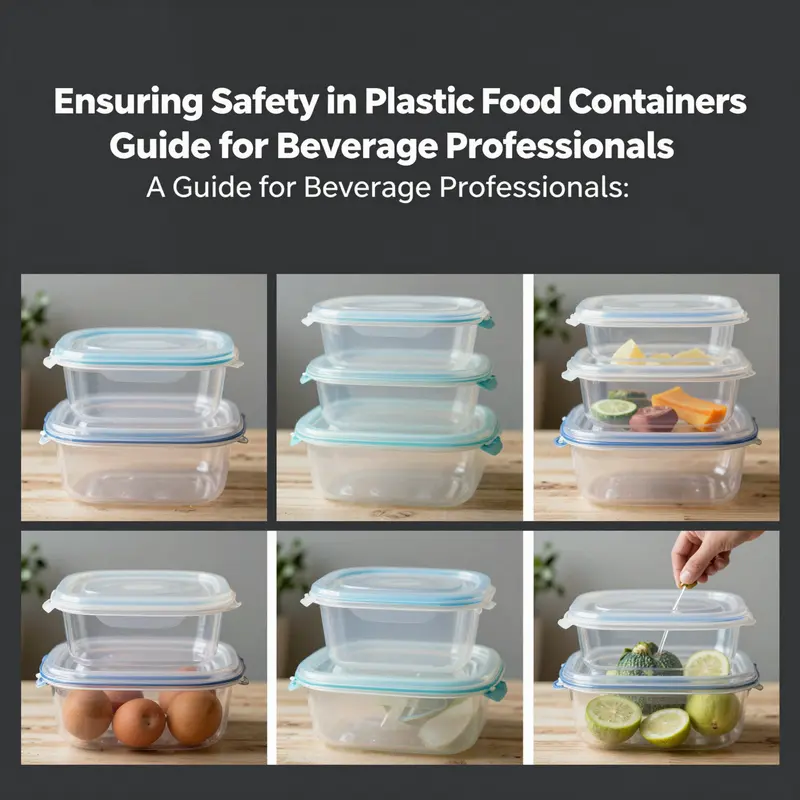
Every day, millions of meals and snacks ride in plastic containers from the fridge to the table, then into the recycling stream or the landfill. The choices we make about those containers shape not only the sensory quality of our meals but also potential long‑term health risks. The conversation around plastic food safety isn’t only about a label that says “safe.” It’s about how chemistry, heat, and daily habits intersect to determine what actually ends up in our food and, eventually, in our bodies. When you weigh the options, safety becomes a practiced discipline, a series of small, consistent decisions rather than a single big purchase. The science behind plastic in contact with food is nuanced. Regulators like the FDA have established that approved plastics are safe under labeled conditions, yet that safety is conditional and contextual. The very materials that help us store, transport, and portion meals can, under certain circumstances, release chemicals into food. The core tension is simple to state and harder to manage in daily life: plastic can be convenient and affordable, but not all plastics behave the same way, especially when heated, or when they hold acidic or fatty foods for extended periods. Those truths are at the heart of practical best practices that keep everyday use both convenient and mindful. As you read, consider how a few guarded choices—about plastic type, conditioning, storage, heating, and maintenance—accumulate into a safer everyday routine. The landscape of plastic types is not uniform. Some polymers prove more chemically stable under a wider range of foods and temperatures, while others carry higher leakage risks, particularly when exposed to heat or certain solventlike foods. The distinction isn’t merely academic. It translates into daily decisions: which containers you grab, how you wash them, and how you reheat leftovers. In this context, the conversation about safety is never separate from the realities of kitchen life. You might think that a label such as “microwave‑safe” guarantees harmless reheating. In practice, that guarantee is meaningful but limited. Heat increases molecular mobility in plastics, and what is labeled as safe may still release trace amounts of additives if the container is damaged, reused over many cycles, or exposed to aggressive foods. Additives used to manufacture plastics, such as BPA or phthalates, have background attention because they can migrate into food and potentially disrupt hormonal balance. Even substitutions marketed as BPA‑free have been shown to behave similarly in the body. Dr. Sarah Thompson from the Johns Hopkins Bloomberg School of Public Health underscores a cautious note: even “BPA‑free” does not automatically equate to safety, because some replacement chemicals like BPS and BPF share similar endocrine‑disrupting properties. The practical takeaway is not to ban plastics outright but to understand the material science behind them. The choice of plastic type matters. The detailed guidance built into best practices emphasizes a few resilient truths: select containers made from HDPE or PP, avoid those made from PVC, PS, or the “other” category that includes polycarbonate. HDPE (plastic #2) and PP (plastic #5) tend to hold up better when repeatedly used and exposed to various foods, including those that are oily or acidic. This stability matters not only for immediate safety but for long‑term durability—the point at which micro‑damages can accumulate and potentially harbor bacteria or create micro‑crevices that are hard to clean. When you inspect a container, you are not just checking for cosmetic wear; you are assessing the integrity of the polymer network. Cloudiness, discoloration, warping, scratches, or deep grooves signal that the polymer structure has degraded. A compromised container can trap bacteria, fail to seal properly, and, in some cases, increase the likelihood of microplastics leaching into food. The simplest form of risk management is a daily routine of inspection. The next layer of safety comes from how you clean and maintain containers. The recommended approach begins with hand washing in warm soapy water after every use. Dishwashers, even for containers labeled as dishwasher‑safe, expose plastics to high heat and harsh detergents that can accelerate wear and tear. Thorough cleaning is essential; any residue can become a reservoir for bacteria and odors that are difficult to remove. Food residue is not merely a matter of cleanliness but a vector for microbial growth and, potentially, chemical interactions that alter the container’s surface. Proper cleaning sets up the environment for safe reuse. Equally important is how you handle heating. Heating plastics is a major factor in chemical migration. The chemistry of plastics changes under heat, altering the diffusion dynamics of any additives. The precaution is explicit and practical: never microwave food in plastic containers, even if the label claims “microwave‑safe.” Instead, when reheating, transfer the food to a glass or ceramic dish. The difference between a quick reheat and a potential chemical exposure is not dramatic in a single instance, but it compounds with repeated use. If you routinely heat in the wrong vessel, you may inadvertently elevate exposure over time. In addition to heat, the type of food you store matters. Storing acidic foods, like tomato sauce or citrus dressings, or high‑fat items, such as oily meats or cheeses, can accelerate leaching because these substances act as solvents that facilitate chemical migration from the container into the food. This solvent‑like behavior is a feature of chemical interactions that modern food science is still working to map completely, but the general pattern is well established: acidity and fat content can increase the rate at which substances migrate from plastic into food. With this understanding, storage practices become part of risk management. For long‑term storage, consider glass when feasible, especially for acidic or oily foods. Glass offers an inert barrier and does not carry the same concerns about additive migration. This is not a universal rule for every household. It is a practical preference that recognizes the realities of daily life, including cost, convenience, and space. But for long‑term storage, or for reheating, glass remains a robust option to minimize risk. When it comes to choosing containers, the again‑reliable trio of guidance is explicit and actionable: select plastics that are known to be chemically stable, keep an eye on physical integrity, and avoid heating in plastic. These guidelines are reinforced by a broader emphasis on lifecycle and reuse. Reusing containers is common in homes around the world. The best practice is to replace a container when it develops a scent that cannot be removed by cleaning, or when it shows signs of damage that could harbor bacteria or create a pathway for off‑gassing. An odor that persists after cleaning is a strong indicator that either bacteria are trapped within micro‑textures or that chemical off‑gassing from the plastic is continuing. In such cases, discarding and replacing the container is a prudent choice. The logic extends to the storage and handling of various foods. Acidic and fatty foods, frequent reheating in improper vessels, and the everyday wear that comes with busy schedules all contribute to a cumulative risk. The practical recipe then becomes one of balance and habit: use durable plastics that are less prone to leaching for regular storage; reserve glass for reheating or long‑term storage of sensitive items; wash by hand with care; avoid heating in plastic; inspect regularly; and replace when odors or visible wear signs appear. The nuanced reality is that plastic has a legitimate place in the kitchen. It is light, versatile, and affordable. It excels in portion control, leak resistance, and portability, especially for families, schools, workplaces, and travel. In a modern kitchen there is room for a spectrum of solutions. The most important regional and household choice is to align the container type with the task at hand. For everyday cold storage of non‑acidic foods, sturdy HDPE or PP containers can be a practical solution. For meals that must be stored for longer periods, for hot foods, or for high‑risk items like acidic sauces, consider glass or sushi‑grade stainless steel when feasible. The practical message to readers is not to surrender plastic altogether but to adopt a pragmatic, evidence‑guided approach. Your daily routine should reflect that approach: pick the right plastic, keep it in good repair, clean it properly, avoid heating in plastic, and substitute glass when there is a greater risk of chemical migration. The decision to use a particular container also reflects values, including environmental considerations. Plastic packaging has a well‑deserved critique tied to waste and microplastics in the environment. Yet for many households, plastic remains an essential product line for food safety in transit, portioning, and short‑term storage. The best compromise is to use plastic where it makes sense and to shift to glass or steel when the risk profile increases, or when long‑term storage and reheating are frequent. If you want to explore related packaging options that meet safety criteria while fulfilling practical needs, you can examine a range of ready‑to‑use packaging solutions designed for safe food contact and user convenience. For instance, foldable packaging options with window views in a deli or bakery setting illustrate how design can align with safety and hygiene requirements while preserving the sensory appeal of the contents. See foldable options like the one described in this resource: foldable cake boxes with window. These containers highlight how thoughtful design can support safe handling, easy cleaning, and reliable sealing, reducing the likelihood of leaks and contamination as foods move through daily routines. They also remind us that packaging decisions are not isolated to the kitchen; they echo in transport, service, and consumer experience. The overarching story is clear: safe use of plastic containers is not a static checklist but an ongoing practice that integrates science, everyday life, and informed choices. The guidance above, drawn from current safety guidelines and expert recommendations, provides a durable framework for reducing exposure risks while maintaining convenience. As you adopt these habits, you contribute to a broader culture of mindful consumption—one that recognizes plastic’s role in modern life while respecting the constraints of chemistry and health. In the end, the goal is not perfection but practical safety achieved through knowledge, vigilance, and steady adaptation to evolving scientific understanding. External resource: https://www.fda.gov/food/packaging-labeling-food-contact-materials
Final thoughts
In conclusion, the safety and efficacy of plastic food safe containers cannot be overstated in the beverage industry. By understanding the chemical safety of these materials, adhering to regulatory standards, and implementing best practices, businesses can ensure they meet health guidelines while maintaining customer trust. As demands for convenience and safety continue to grow, staying informed will place your business at the forefront of food safety compliance. Remember, choosing high-quality, safe containers is not just a regulatory necessity—it’s a commitment to excellence in service.