
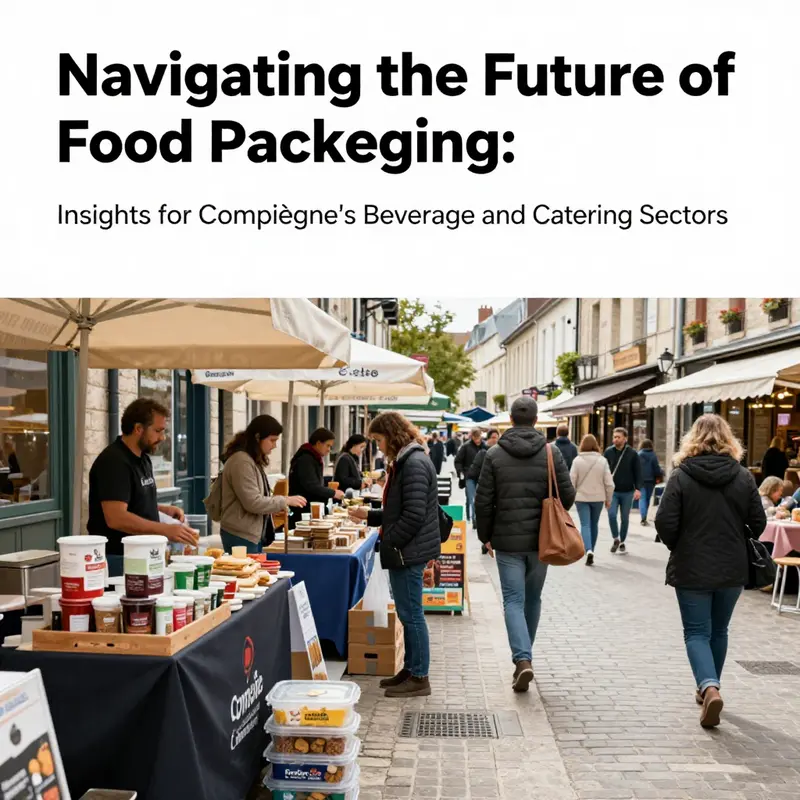
As Compiègne, a hub of culinary innovation, faces new plastic packaging regulations, it’s essential for businesses like bubble tea shops, restaurants, and catering services to adapt to these changes. The overarching shift towards sustainability not only seeks to minimize environmental impact but also requires compliance with European Union policies regarding single-use plastics. In the following chapters, we will delve into the regulatory landscape, the materials and standards governing food packaging, emerging sustainable alternatives, and specific strategies that food and beverage businesses should consider as they navigate these changes.
EU Mandates, French Resolve, and the Hidden Logistics of Compiègne: Rethinking Plastic Food Containers
Regulators across Europe have set a destination, not merely a rulebook. The Packaging and Packaging Waste Regulation (PPWR) now guides how products are housed, moved, and disposed of across the Union. For a city like Compiègne in northern France, this is not only a matter of compliance; it is a reconfiguration of everyday operations, from the way producers assemble meals to how retailers present them to customers. The EU’s policy architecture tightens the screws on single-use plastics, pushing toward materials that are easier to recycle, reuse, or dispose of in a way that reduces overall environmental impact. The consequence for Compiègne’s food sector is less about a distant directive and more about urgent decisions made at factories, at wholesale hubs, and in the kitchens of local eateries that serve residents and travelers alike. The region’s strength as an industrial and logistics node makes it a poignant test case for how France translates broad EU ambitions into concrete local practice, especially when there is no city-specific law in place to override EU or national rules. In other words, Compiègne’s path depends on alignment between what Europe requires, what France implements nationwide, and how local businesses adapt their packaging choices to stay compliant while maintaining efficiency and cost effectiveness.
The core of the policy shift rests on the aim to reduce the presence of disposable plastics in the consumer environment. Since the PPWR’s framework began to take effect, the European Union has signaled that by a defined date, single-use plastic packaging intended for on-site consumption in restaurants, fast-food outlets, and hotels will be phased out. In practical terms, this means a dramatic turn away from conventional plastic trays, clamshells, and condiment sachets that customers often encounter when dining out or picking up meals. The ambition is not to abandon packaging altogether, but to redesign it so that materials can be more readily separated for recycling, reused in a closed loop, or replaced by alternatives with lower life-cycle impacts. The regulatory emphasis also centers on the design of packaging itself: it should be recyclable, contain as little hazardous additive content as possible, and be compatible with the sorting and recycling infrastructure that France is expanding through its own waste-management programs.
France has moved ahead with a trajectory that already situates it at the front of Europe’s plastic-elimination agenda. Long before the 2026 PPWR milestones crystallized, France had begun to restrict single-use packaging through its Circular Economy Law and related measures. In the French context, this meant that many of the most common disposables—such as standard plastic bags and certain coatings on food containers—were phased out, and the emphasis shifted toward reusable or recyclable alternatives. The French approach often reflects a balance between environmental objectives and the country’s cultural and culinary heritage. In fact, the policy landscape in France has occasionally drawn attention to packaging that carries cultural significance and long-standing tradition. There have been considerations, when appropriate, to grant exemptions that acknowledge the heritage value of certain packaging formats used for iconic foods. While the precise exemptions depend on evolving regulations and case-by-case assessments, the example underscores a broader principle: policy can accommodate cultural continuity while still pursuing environmental goals.
For the Compiègne region, the practical implication is that local producers and packers must anticipate not only a ban on certain disposables but also a shift in how packages are designed and used. Materials that stay highly functional in cold-chain conditions, that resist moisture and contamination, and that can be sorted and recycled with existing or expanding French recycling streams are now prime considerations. The technical basis for this shift rests on a family of polymers that have long dominated food-contact packaging—polypropylene (PP), polyethylene terephthalate (PET), and high-density polyethylene (HDPE). These materials offer clarity, strength, barriers to moisture, and heat resistance that suit takeout and retail-prepared foods. Yet they also confront regulatory scrutiny regarding food-safety and chemical migration, as mandated by the EU’s Food Contact Materials regulation framework (EC No 1935/2004) and related amendments. In practice, compliance means careful selection of materials that do not transfer toxins or hazardous substances to food, maintaining rigorous supply-chain documentation, and ensuring that products can be recycled or reused within the national and regional waste-management ecosystem.
Within this framework, the conceptual shift extends beyond material choice to packaging design itself. The European Union has signaled a broader commitment to a circular economy, which implies reducing dependence on multi-layered, hard-to-separate packaging and favoring mono-material configurations where possible. In a region like Compiègne, this has implications for how packaging suppliers prototype and produce containers for ready meals, deli counters, and grocery-store pre-packaged goods. The goal is to enable high recycling yields at municipal facilities, minimize the risk of contamination in sorting streams, and support a transition toward a deposit-return system that incentivizes consumers to return packaging for reuse or recycling. Indeed, by 2029 and beyond, Deposit Return Systems are being rolled out in many jurisdictions as part of the wider strategy to ensure that plastic packaging does not end up as litter or as unrecyclable waste. The design implications are clear: package designs should strive for simplicity, single-material composition where feasible, and coating-free or easily separable multi-material structures that can be disassembled at end-of-life.
One must also acknowledge the practical realities of a city like Compiègne, where the food-processing industry and the retail ecosystem rely on a dense network of suppliers, distributors, and service providers. In such a landscape, the migration away from conventional single-use packaging requires coordinated action across multiple layers of the value chain. Factories producing ready-to-eat meals, supermarkets preparing pre-packed sections, and independent retailers who cater to local neighborhoods must converge around common standards for recyclability, labeling, and end-of-life handling. The shift is not merely a compliance exercise; it is a reengineering of logistics, where the choice of packaging can influence the speed and efficiency with which products move from producer to consumer. The presence of a robust industrial base in northern France offers both a challenge and an opportunity: the region can pilot standardized packaging formats, shared reverse-collection streams, and common demonstration projects that illustrate the benefits of reusable and recyclable packaging to business models that must remain resilient in the face of regulatory change.
Amid this transition, the role of consumer behavior and local culture cannot be underestimated. French consumers, equally attuned to environmental concerns and culinary traditions, may respond to the new packaging regime with a mix of expectations: some will welcome reusable options and the convenience of well-designed recyclable packaging; others may resist increased waste-management requirements or perceive higher costs. Restaurants and retailers, in turn, face the challenge of maintaining service quality while adopting materials that meet regulatory criteria and consumer expectations. The balance between convenience, cost, and sustainability is delicate. It requires transparent communication about why packaging changes are necessary, what happens to the packaging after use, and how customers can participate in the circular economy. In Compiègne, where local communities are engaged with both production and consumption cycles, such communication can foster trust and create a sense of shared responsibility for the city’s environmental footprint.
The practical pathway for local packaging and food-service businesses in Compiègne involves several strategic threads. First, compliance is non-negotiable: every packaging choice must align with the Food Contact Materials regulations and the broader EU guidelines on recyclability and safe migration. This means rigorous supplier due diligence, documentation that demonstrates material safety, and a commitment to selecting packaging that is either recyclable in local streams or reusable within a city-level or regional return system. Second, there is an emphasis on exploring substitution toward materials that are more readily recovered in France’s waste-management infrastructure. Paper-based composites, biobased polymers that are approved for food contact, and mono-material plastics designed for easy sorting are among the pathways discussed in industry circles. Third, the concept of reuse is becoming visible in urban settings. The EU target for reuse in beverages, and the broader push to incorporate reusable packaging where feasible, implies that businesses in Compiègne may experiment with on-site return schemes, shareable containers for multiple customers, and loyalty incentives to encourage customers to bring their own containers or reuse provided ones. In practice, these strategies require investment in logistics, staff training, and customer engagement programs that clearly articulate the value proposition of sustainable packaging to both brand and city image.
From the supply-side perspective, the move toward sustainable packaging in Compiègne is also a question of design and economics. While the initial impulse can be to replace plastics with alternative materials, the reality is more nuanced. Some traditional plastics remain highly functional for certain applications, particularly where barrier properties, heat resilience, and cost are of concern. Yet the long-term economics favors packaging that can be recycled in the local streams or used in closed-loop systems. This creates a tension between short-term cost savings and long-term regulatory compliance and sustainability. Packaging manufacturers in the region—many of whom operate at scales that serve both regional markets and broader national networks—are increasingly evaluating their product portfolios through a lifecycle lens. They assess not just the upfront cost of a given packaging solution but its compatibility with sorting facilities, its potential to be reused, and the ease with which it can be recovered and reprocessed. The outcome is a gradually evolving ecosystem in which packaging materials are chosen for a broader set of criteria than merely their performance in preserving food in the short term.
For local businesses, the information environment around these changes matters as well. Clear guidance from national authorities, plus practical case studies and pilot projects conducted in nearby regions, helps to reduce uncertainty. Companies that prepare early—by mapping supply chains, assessing end-of-life options, and reconfiguring product packaging to emphasize recyclability—stand to gain a competitive edge as regulatory timelines advance. In this sense, Compiègne’s economic landscape, with its mix of manufacturing, logistics, and service-oriented food businesses, is well-placed to adopt standardized packaging formats and shared infrastructure that support both compliance and operational efficiency. The city can serve as a testbed for packaging design that prioritizes ease of recycling, minimal multi-material complexity, and the feasibility of deposit-return mechanisms that encourage consumer participation in the circular economy.
Amid these shifts, it is helpful to anchor the discussion in concrete policy anchors without becoming overwhelmed by every regulatory nuance. The European Commission’s directive portal and the French national framework together provide the authoritative frame within which local decisions are made. The EU’s emphasis on design for recyclability, material safety, and waste reduction aligns with France’s prior and ongoing reforms, ensuring that the rules in Compiègne are not accidental but deliberately calibrated to push the entire chain—from farm to fork—to reimagine packaging as a resource rather than a disposable artifact. For readers seeking a practical entry point into the topic, the internal resources available through industry-focused packaging suppliers can illuminate how concepts like mono-material packaging and recyclability criteria translate into real-world products and processes. A representative example of the kind of packaging solutions under consideration can be seen in the broader category of eco-friendly alternatives that emphasize recyclability and reuse, which are becoming more common in the takeout and prepared-food segment. eco-friendly disposable packaging boxes for fast food.
The road ahead for Compiègne and surrounding communities is not a straight line. It involves negotiating the balance between consumer expectations, business realities, and environmental imperatives. In practice, this means that local decision-makers and business leaders will need to monitor evolving guidance from the European Commission and national authorities, ready to adjust packaging strategies as new exemptions, timelines, and technical standards emerge. It also means investing in capacity-building—training staff to handle new materials, educating customers about why packaging is changing, and partnering with waste-management providers to ensure that the recycling streams are efficient and accessible. Taken together, these elements create a framework in which the city’s packaging ecosystem can become more resilient, more transparent, and more aligned with a cleaner future for France and Europe at large.
The broader context remains critical. The PPWR is part of a wider European push to reimagine how products are packaged, consumed, and disposed of. It intersects with national initiatives and regional realities, including those of Compiègne, to shape a packaging landscape that favors reuse, recyclability, and responsible sourcing. The guiding principle is straightforward: design packaging so that it remains a value-creating asset rather than a wasteful byproduct of consumption. In the long run, this philosophy benefits producers through streamlined compliance and more predictable end-of-life handling, benefits retailers through clearer product stewardship, and benefits consumers through accessible recycling options and a sense of participating in a circular economy. The challenge lies in translating high-level ideals into everyday choices—choices about what to buy, how to pack, and how to manage waste at the point of sale and after. For Compiègne, the coming years will reveal how quickly and effectively this translation can occur, and how the city can model a practical, scalable approach to packaging that supports both local commerce and global environmental objectives.
External resource: For the official policy framework and ongoing updates on EU plastics and packaging regulations, see the European Commission’s Packaging and Plastics page. https://ec.europa.eu/environment/waste/plastics/index_en.htm
Bridging Policy, Materials, and Place: The Evolution of Plastic Food Containers in Compiègne, France
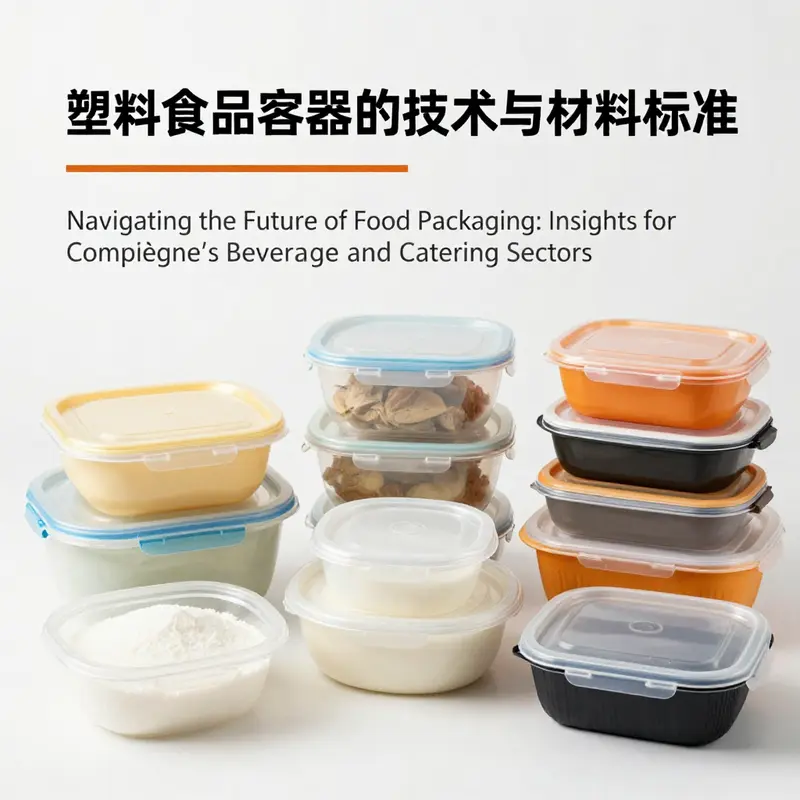
Compiègne sits at a logistical and cultural crossroads where packaging choices reflect the combined pressures of European policy, national standards, regional supply chains, and local consumer expectations. Although there is no city-specific law that names plastic food containers in Compiègne, the town operates inside a regulatory and market environment that is steadily shifting away from single-use plastics toward materials and systems that are easier to reuse, recycle, or compost. This transition shapes procurement, manufacturing decisions, and retail offerings across the local economy.
At the European level, directives that restrict single-use plastics set a long-range expectation for reduction, substitution, and improved end-of-life outcomes. France balances these requirements with cultural and practical considerations; some traditional forms of packaging receive special treatment when they carry heritage value. Locally, that balance translates into careful material selection and process adjustments by converters and retailers serving Compiègne and its surrounding region.
Safety is the firm foundation beneath any material choice. Food-contact rules require manufacturers to demonstrate that containers do not release harmful substances under foreseeable conditions of use. Migration testing and documented compliance are essential tools: they allow suppliers, brand owners, and regulators to compare formulations, evaluate heat and storage scenarios, and ensure that consumer safety is non-negotiable as packaging evolves.
Material selection and design decisions influence both performance and circularity. Common polymers such as polypropylene, PET, and HDPE are favored for clarity, toughness, and thermal properties, but their value depends on additive choice, layer structure, and ease of recycling. Where possible, single-polymer solutions simplify sorting and reprocessing; where multilayer laminates are needed for barrier performance, designers must balance functionality with downstream dismantling and material recovery.
European and French policy pushes toward a circular economy that foregrounds safety, recyclability, and consumer behavior. In practice, this has encouraged pilots of deposit-return schemes and collaborations among retailers, waste handlers, and packaging suppliers. Such pilots test not only technical solutions but also user acceptance and collection logistics, which are especially important in mid-sized towns like Compiègne where local routes and facilities determine recovery rates.
A practical consequence is a growing interest in reusable models and containers engineered for multiple uses and easy cleaning, as well as simpler single-material designs that fit existing recycling streams. As deposit-return systems are scaled, container geometry, closures, and robustness will be evaluated alongside recyclability to ensure the net environmental benefit of reuse programs.
Looking ahead, manufacturers and retailers around Compiègne will likely favor designs that demonstrate clear advantages in reuse and recovery. Biobased and compostable materials may play a role if they meet safety and infrastructure requirements; paper-plastic composites and innovative laminates will require clear end-of-life labeling and system support. Because Compiègne is linked to wider distribution corridors, packaging strategies that prioritize recyclability can also deliver logistical and marketing advantages.
Ultimately, the shift in plastic food containers is collaborative and iterative. Policymakers, researchers, converters, retailers, and waste managers must align on testing protocols, material transparency, and recovery systems so that packaging is both safe and circular. The European Single-Use Plastics Directive provides a policy anchor as regions and businesses adapt; for further detail, see the European Commission overview at https://ec.europa.eu/environment/waste/plastics/index_en.htm.
Compiègne的包装未来:可持续替代如何重塑食品塑料容器的供给与需求
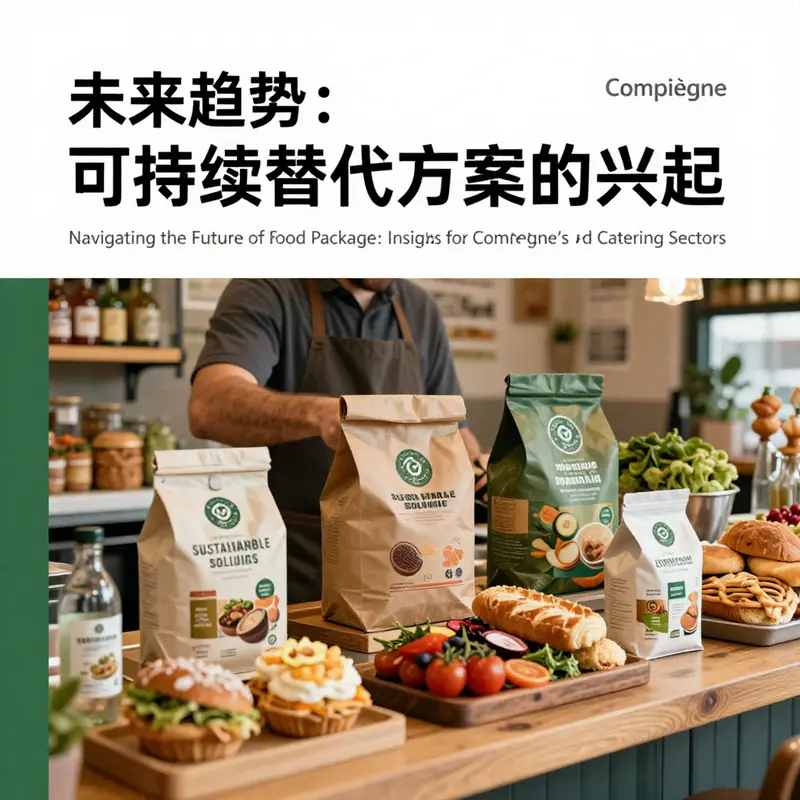
本章聚焦欧盟范围内关于一次性食品包装转型在Compiègne的具体实施。禁令推动供应商、设计师和零售商重新思考安全、可回收性与可重复使用性之间的取舍。
从技术角度,替代材料大致可分为三类:可回收的单材料塑料、生物基或可堆肥材料,以及耐用的可重复使用系统。每一类都伴随成本、性能与回收端处理的权衡。可回收塑料(如单一材料托盘)有利于保持生产线的稳定性并提升循环率,但需要简化材料结构并提供清晰的废弃物分类标识。生物基材料如PLA等在降低碳强度方面具有潜力,但对工业堆肥体系的依赖较大。可重复使用系统在理论上对减废最有效,但需要建立高效的收集、清洗与再分配物流。
设计与合规是不可忽视的核心。Compiègne的包装必须符合EU食品接触材料法规,以及国家与地方的额外要求。供应商需要提供合规证明与测试数据,包装设计还要兼顾热性能、耐油性和阻隔需求。对于区域性烘焙店、快餐点等场景,耐热和潮湿环境下的表现尤为关键。
回收基础设施是另一道关键约束。尽管区域在大图景上受益于Hauts-de-France的网络,但工业堆肥和封闭循环回收的容量与收集制度差异明显。对饮料容器而言,EU的Deposit Return System在扩大循环选项方面有作用,但并非所有食品包装都适用。企业需清晰绘制包装使用后的去向,若堆肥材料无法到达工业堆肥厂,则可能成为传统回收流中的污染物。
现实的路径通常是以就地可回收升级为主轴,同时在小范围内试点重复使用与可堆肥方案。将混合材料的层压改为单一材料将更易回收,而咖啡馆、餐饮公司可以在特定区域试点可重复使用杯与盒的押金/退还制度。成功的关键在于Simplify物流、明确标签、设立与现有零售或市政服务相连的投放点。
供应链创新也至关重要。Compiègne作为物流枢纽的地位为本地制造商与分销商选择承诺循环设计的供应商提供了机会。以单一材料结构、回收再利用含量以及清晰的端到端回收路径的采购策略可以快速改变需求格局。
消费者行为对材料成效的影响往往超过单纯的技术参数。消费者期待卫生、便利与美观,包装设计需要易用、易理解并具备可回收或可返回的通路信息。
在成本方面,初始阶段可持续材料价格较高,但通过区域性采购联盟可以降低单位成本。公共采购也能提供推动力——学校与政府机构设定最低recycled content/重用目标将促使本地供应商调整产品组合。
治理与政策需要协同推进。EU层面设定基础线,国家与地方层面设定上限与激励。地方企业应跟踪禁令时间表、例外情形及EPR(延伸生产者责任)制度。
品牌与沟通也是现实成功的关键。透明声明、第三方认证和本地回收/回用循环的证据能够增强消费者信任。
操作性行动建议:1)建立本地包装论坛,聚集食品服务、废物管理与采购机构;2)在高校食堂、周末集市等区域开展小规模的重复使用试点;3)将政府合同的采购标准对可回收设计与重复使用系统作出要求。
总体而言,这一转型需要跨设计、收集、技术与行为的协调行动。通过对接本地废物基础设施、推动回用试点并利用采购能力,Compiègne的食品行业既能保障食品安全与便利性,又能减少对一次性塑料的依赖,构建更具韧性的本地系统。
Rewriting the Pack: EU Rules, Local Practice, and the Future of Plastic Food Containers in Compiègne and France
The thread that connects policy, industry, and daily life in France runs through the quiet corridors of logistics hubs and the bright glare of Carrefour shelves alike. In Compiègne, a city long associated with manufacturing and distribution in northern France, the future of plastic food containers is less a single reform and more a cascade of shifts that begin with a European directive and end with the plate in a consumer’s hand. The European Union’s plan to ban most single-use plastic packaging for fruits, vegetables, and fast-food condiments from 2030 marks a watershed moment for all member states. It is not a blunt prohibition so much as a framework that compels a rethink of design, materials, and end-of-life flows. France, while bound by the EU-wide regime, has space to tailor its implementation to its own culinary and cultural landscape. In particular, the notion that packaging carries cultural value is not dismissed; it is acknowledged in the way exemptions can be granted for forms already ingrained in national tradition. The idea is not to erase heritage but to reshape it for the circular economy era. A case in point is the special exemption historically connected to certain iconic French foods whose packaging is part of their identity. The principle, when translated to Compiègne’s manufacturing sector, is that compliance must coexist with continuity—continuity of product safety, supply chain reliability, and brand storytelling about sustainability. The practical implication for local producers is clear: if a bakery or a prepared-meal plant in Compiègne relies on plastic trays, clamshells, or bags, those packaging choices must be compatible with the new rules and, ideally, with the broader goal of material single-sourcing and recyclability. The EU framework, while comprehensive, is not monolithic in every operational detail. Member states can pursue exemptions where their specific industries and ecosystems warrant it. In France, this flexibility enables a transition that respects regional specialties and the logistics realities of cities like Compiègne, which sits at a crossroads of rail and road networks and hosts a dense web of small and medium-sized enterprises that move food through the supply chain every day. Even so, the direction is clear. The move away from conventional disposable plastics toward recyclable, reusable, or compostable alternatives will not be optional for most businesses. It will be a matter of strategic risk management and competitive positioning. For a region with a robust industrial base, the challenge is not merely to switch materials but to redesign processes so that waste minimization, pallet-level packaging decisions, and consumer-facing messaging align in a coherent value proposition. The 2030 deadline has the virtue of urgency, but the adoption curve depends on several interconnected factors: the availability of suitable materials, the performance guarantees of alternative packaging, and the investment climate that makes it economically viable to replace or redesign existing lines. In Compiègne, where the pace of change is slightly tempered by the realities of mid-sized manufacturers and regional distributors, the transition appears as a combination of compliance-driven upgrades and opportunity-driven innovation. The same factories that once optimized for cost now face the imperative to optimize for life-cycle performance. This is not a one-off modernization; it signals a broader shift toward design-for-recycling, modular systems, and a more deliberate alignment of product packaging with the supply chain’s constraints and the consumer’s expectations. A critical element in this shift is the regulatory anchor—the European Union’s overarching statute on food contact materials (EC No 1935/2004) and related directives that govern how substances migrate into foods and how packaging communicates safety and recyclability. In practice, this means that even if a packaging solution in Compiègne uses a plastic resin, it must meet strict migration limits and be compatible with France’s existing national standards. The consequence is a market that rewards clarity, traceability, and the elimination of multi-material laminates that complicate recycling. The Deposit Return System (DRS), set to roll out across multiple jurisdictions starting in 2029, intensifies this pressure further. With DRS, the container becomes a resource that must be collected, cleaned, and reintroduced into the loop with as little loss as possible. For a city like Compiègne, whose logistics networks link producers to supermarkets across Hauts-de-France and beyond, this creates a powerful incentive to design for disassembly, standardization, and high-quality sorting. It also nudges local players toward single-material or easily separable composites, reducing the energy and complexity of downstream recycling. The design challenge is formidable yet tractable: strip away the structural complexity that makes recycling expensive or uncertain, and pair it with a suite of materials that can be recovered with high yield and low contamination. In the same breath, the question of safety remains non-negotiable. Modern packaging relies on safe plastics such as polypropylene (PP), polyethylene terephthalate (PET), and high-density polyethylene (HDPE), chosen for their barrier properties, heat resistance, and optical clarity. The choice is never purely technical; it is a balance between protecting the product, ensuring consumer safety, and delivering on the sustainability message that French brands increasingly emphasize. The EU framework reinforces this balance by focusing on the life cycle: from raw material extraction and resin production to manufacturing, transport, use, and end-of-life recovery. For packaging manufacturers in Compiègne, this translates into a discipline of life-cycle thinking that permeates product development. The materials science debate, already lively across Europe, narrows toward practical, policy-aligned options. It is no longer enough to claim a packaging solution is recyclable in theory. It must be designed so that, in the real world of municipal sorting facilities and consumer behavior, the packaging actually re-enters the cycle. That is where the concept of “green design” becomes indispensable. Designers and engineers must evaluate not only how a container performs in a hot food scenario or a chilled grocery line, but also how it will be separated at the end of its life, what fraction of its mass will be recycled into PCR (post-consumer recycled) material, and how a brand’s sustainability story can be backed by verifiable data. The push toward recyclability is increasingly paired with an appetite for alternatives that extend beyond single-use plastics. Biobased and biodegradable materials, where appropriate, are advancing, but they come with caveats about composting, supply chains, and carbon footprints. In the French context, and particularly in a region like Compiègne, the adoption of bio-based substitutes will be most persuasive when it complements a broader circular strategy rather than acting as a stand-alone gimmick. The market will favor solutions that are simple to manufacture, easy to sort, and transparent to consumers about end-of-life options. In remarks aligned with broader EU ambitions, France is also incentivizing the shift toward reusable packaging where feasible. The idea of a packaging-as-a-service (PaaS) model has begun to surface in discussions about urban sustainability, with retailers and manufacturers exploring how shared, washable containers could reduce waste and extend product life. For a city such as Compiègne, with a dense network of small and medium-sized food businesses, a PaaS approach could leverage existing logistics strengths while transforming waste streams into revenue opportunities through return logistics and reconditioning. Yet this vision requires robust infrastructure, clear regulatory guidance, and a collaborative ecosystem that spans local authorities, waste management operators, packaging suppliers, and hospitality and retail partners. The deposit-return dynamic complements this by providing a highly visible incentive for consumers to participate in recycling while ensuring that containers stay within the loop rather than being diverted to landfill. The consumer dimension, often the wild card in such transitions, is gradually tilting toward more responsible behavior in France. Across urban centers and provincial towns, customers increasingly expect clarity about packaging. They value materials that are both safe for foods and easier to recycle, and they respond to brands that demonstrate a genuine commitment to reducing plastic waste rather than simply marketing a green halo. In Compiègne, retailers and restaurateurs who lead by example—sharing data about recyclability, using predominantly single-material packaging, and offering incentives for consumers who bring their own containers—will likely set the standard for the region. The synergy between policy and practice is not a theoretical exercise. It is a practical corridor that connects the design room to the loading dock, the backroom of a bakery to the sorting facility, and the shopping cart to the curbside recycling bin. In this sense, the local story in Compiègne becomes part of a broader national and European narrative about how modern packaging can protect food, minimize waste, and maintain cultural identity without sacrificing performance. For practitioners in the field, there is a clear path forward. First, prioritize compliance that does not compromise product safety or supplier reliability. This means rigorous testing of packaging materials under real-use conditions and alignment with EC No 1935/2004 and its successors. Second, reframe packaging design around recyclability, starting with simpler materials and packaging systems that minimize laminates and multi-material constructs. Third, explore alternative materials and composite designs that maintain barrier and heat-sealing capabilities while enabling easier disassembly and recycling. Fourth, invest in data and traceability to demonstrate, with credible metrics, the environmental benefits of packaging choices. Fifth, engage with the consumer base through transparency and education, helping shoppers understand why certain packaging changes are necessary and how they contribute to a healthier environment. The conversation is not only about compliance but about building a resilient, innovative local economy. Compiègne’s manufacturers can become exemplars of how a medium-sized regional hub negotiates tight policy timelines while preserving the characteristics that make French food culture distinctive. The potential is not a loss of packaging heritage but a reimagining of it in a way that keeps products safe, supports local jobs, and reduces waste. To illustrate a practical route without drifting into product-specific endorsements, imagine a family of packaging options anchored in single-material paper or paper-based composites that can replace traditional plastic trays in many contexts. A linked example that points toward this family is a single-source, recyclable takeout packaging option that keeps grease resistance and structural integrity while remaining straightforward for municipal sorting. For those curious about concrete material choices in this space, a representative option in the packaging landscape could be explored under Kraft paper fry box packaging, which demonstrates how a simple, familiar form can deliver on performance and recyclability. See: Kraft paper fry box packaging. This kind of option, while not a universal solution, embodies the kind of design that policy, industry, and consumers can rally around in the near term while more ambitious systems develop in parallel. The balance between heritage and modern waste management is the essential tension in the Compiègne scenario. It requires patience and precision: patient because the transition unfolds over years, precise because each decision affects the efficiency of recycling streams, product safety, and the consumer experience. In practice, the most effective strategies will be those that align incentives across actors—regulators signaling clear expectations, manufacturers investing in adaptable lines, retailers calibrating prices and promotions to reflect true packaging costs, and consumers embracing reduced plastic usage and more responsible disposal. The structural shifts demanded by the EU’s 2030 horizon are ambitious but feasible when viewed through the lens of regional ecosystems like Compiègne. The city’s logistical networks, industrial heritage, and proximity to a wide consumer base create a fertile ground for piloting circular packaging models. The alignment of policy with local practice is not a distant ideal; it is daily work: auditing packaging flows, simplifying structures to ease sorting, and communicating the rationale of these changes to customers who care about what ends up in the waste stream. As this chapter closes the door on a rigid single-use paradigm, it opens several windows onto the practical future of packaging in Compiègne and, by extension, in France. The EU framework provides the mandate; French industry provides the discipline and the creativity; local communities and consumers provide the demand signal. In this integrated vision, plastic packaging remains a tool—not a problem—and it becomes a tool that serves safety, convenience, culture, and sustainability in a balanced, transparent way. The path forward is not a single leap but a sequence of deliberate steps: smarter material selection, smarter packaging design, stronger end-of-life infrastructure, and stronger alliances across the supply chain. For practitioners in Compiègne and beyond, the task is to translate policy into practice without erasing the character of local foods and the channels through which they reach people’s tables. In the end, this is less about resisting change and more about choreographing it—so that the city, the region, and the nation can move forward together with packaging that protects, preserves, and performs, while respecting the land, the people, and the future. For further reading on the policy foundation that underpins these shifts, see the European Commission’s single-use plastics directive. Kraft paper fry box packaging. And for a broader policy reference that anchors this discussion, consult the EU plastics information hub at the end of this chain of thought. External policy context can be explored here: https://ec.europa.eu/environment/waste/plastics/index_en.htm
Final thoughts
Adapting to the new landscape of plastic packaging regulations is not just a compliance issue but a potential strategic advantage for businesses in Compiègne. By focusing on sustainable practices and exploring innovative materials, bubble tea shops, restaurants, and catering services can not only meet regulatory requirements but also align with the growing consumer demand for eco-friendly options. Addressing these changes proactively will enhance brand reputation and drive customer loyalty, securing a rewarding position in the evolving marketplace.