
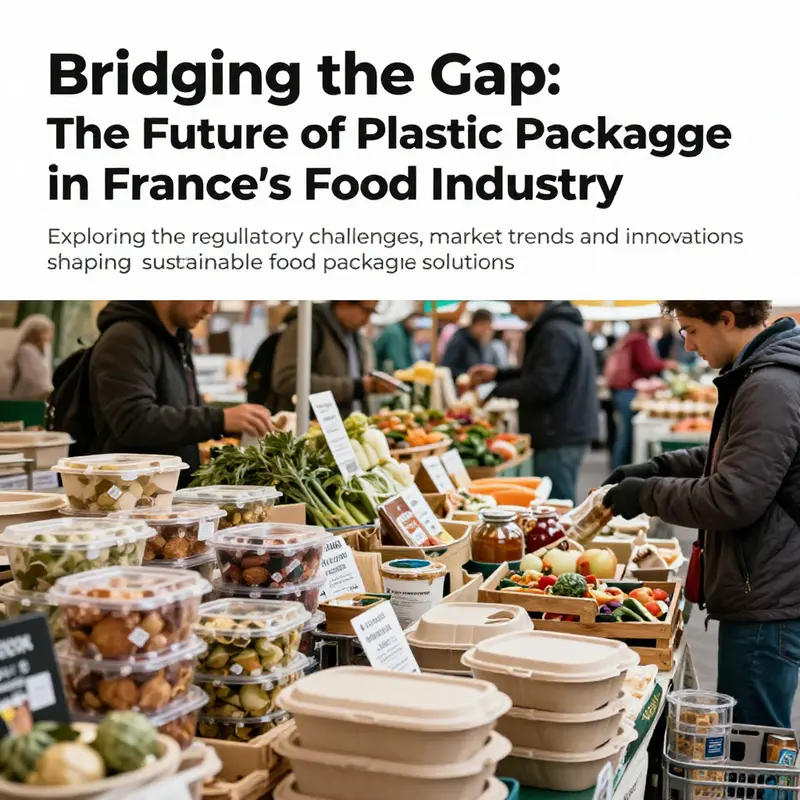
As France pushes towards a more sustainable future, the food packaging sector faces significant challenges, particularly regarding single-use plastic containers. With the planned ban on plastic cups now extended to 2030, businesses in the food industry are under pressure to adapt to evolving regulations while meeting customer expectations for sustainability. This article will delve into the regulatory landscape shaping the industry, highlight emerging market trends favored by consumers, and spotlight technological advancements that are paving the way for more sustainable packaging solutions. Each chapter will provide valuable insights tailored to bubble tea shops, beverage chains, restaurants, food trucks, catering services, event planners, and corporate procurement teams, helping them navigate this critical transition.
Between Frameworks and Footfall: Navigating France’s Regulatory Landscape for Plastic Food-Container Packaging and the Gaps That Shape Change
France sits at a critical intersection in the global shift away from disposable plastic food packaging. It mirrors the European Union’s broad aims to curb plastic waste while facing the practical complexities of modern supply chains, consumer expectations, and the fragile mathematics of safety testing. The regulatory architecture that governs plastic packaging intended to contact food in France rests on well-established EU directives and regulations. At its core, Regulation (EC) No 1935/2004 sets the general safety requirements for materials and articles that are meant to come into contact with food. It establishes a framework that ensures any material marketed for contact must not release substances that could endanger human health or give food an unacceptable taste or odor. Building on that framework, Regulation (EU) 2023/983 narrows the field to the plastics that actually touch food, detailing restrictions on certain substances and mandating traceability. Taken together, these instruments create a rule set that aspires to protect public health while enabling an otherwise highly diverse packaging sector to function across borders. Yet the promise of a harmonized, risk-based system collides with a stubborn reality: the journey from rule to reliable, scalable practice is not linear, and it is here that France’s packaging landscape reveals a significant, demonstrable gap. The gap, importantly, is less about the existence of rules than about the practical ability to verify, at scale, that recycled plastics entering food-contact streams meet the stringent safety criteria required for such use. This distinction matters because it shapes every decision—from material selection to supplier audits, from traceability investments to labeling strategies, and from R&D direction to the cadence of regulatory compliance reporting. The EU’s safety posture for recycled plastics hinges on the premise that the plastics’ prior history should predominantly involve contact with food. In practice, much of the post-consumer stream has a history that is irregular or opaque, with materials moving through non-food applications, multiple geographies, and varied cleaning or decontamination regimes before reuse. NIAS, or Non-Intentionally Added Substances, occupy a central place in this debate. They are the chemical traces that can ride along with recycled resin and migrate into food if the material re-enters the packaging stream. The European framework offers clarity on NIAS from a policy perspective, but the actual verification of NIAS profiles, migration potential, and cumulative exposure in complex composites remains a technically demanding endeavor. The practical challenge is underscored by the fact that the provenance of collected plastics can be uncertain. If a given batch of recycled resin entered the market after a chain of custody that is incomplete or poorly documented, the risk assessment becomes a moving target rather than a fixed compliance equation. In regulatory terms, France recognizes the ambitions of a circular economy and the imperative to reduce single-use plastics. It also recognizes the administrative and operational burden that comes with rigorous safety testing for post-consumer recyclates designed for direct food contact. The delay in progressing toward stricter or broader acceptance of recycled materials in food-contact packaging—illustrated by policy timelines that recalibrate to 2030 for certain single-use plastics—reflects a calculated balance. Regulators weigh the environmental benefits of higher recycled content against potential safety uncertainties, the costs of monitoring and testing, and the capacity of the inspection regime to keep pace with rapid market innovation. The extended horizon for policy milestones provides a breathing space for manufacturers to align technical capabilities with compliance realities. Yet breathing room does not equate to exemption. France, like other EU member states, relies on a governance ecosystem that includes national authorities, standardization bodies, and the market’s own risk-management practices to interpret and implement the EU framework. The French consumer and competition agencies, along with the national health and food-safety authorities, operate within a multi-layered oversight system where DGCCRF and related bodies assess compliance, conduct market surveillance, and drive corrective actions when flagged materials or processes fail to meet expectations. In this environment, the enforcement signal is often as instructive as the legal text: a manufacturer may have to adapt its supply chain, adjust its testing schedule, or change its sourcing strategy to maintain access to food-contact markets. The regulatory narrative in France is therefore not a static manuscript but a dynamic conversation among policymakers, industry players, researchers, and the public. The conversation has grown louder as the country contends with a policy trajectory that includes a shift away from single-use cups, a push toward reusable or compostable alternatives, and a growing appetite for packaging solutions that are compatible with circular economy models. The policy tension is most visible in the pragmatic decision to push back the effective date for the ban on certain single-use plastics from 2026 to 2030, a delay driven by industry feedback and infrastructure needs. The rationale is straightforward: a rapid replacement of disposable cups and containers would require not just new materials but the entire support system—collection, sorting, decontamination, testing, and end-of-life infrastructure— to be ready at scale. Without that readiness, the risk of unintended consequences—leaked contaminants, failed material performance in real-world conditions, or inconsistent supply—could offset the environmental benefits sought by the policy. Against this backdrop, the regulatory landscape underscores several core truths. First, the EU framework exists to standardize safety expectations and facilitate cross-border trade in food-contact plastics. Second, France’s national implementation translates those rules into enforcement priorities, inspection regimes, and guidance that reflect country-level risk tolerance and market maturity. Third, and perhaps most consequential, is the gap in applying the rules to post-consumer recycled plastics. This is not simply about a technical hurdle; it is about building reliable, auditable provenance for plastics that have traveled through multiple users, applications, and cleaning cycles before returning to the food-contact stream. The practical consequence for manufacturers and retailers is a chilling caution: recycled content in food-contact packaging cannot be assumed safe by default. It must be demonstrated through robust data packages, traceable supply chains, validated decontamination processes, and rigorous testing regimes. France’s current path, then, is not a retreat but a careful, evidence-driven program that seeks to expand the role of recycled plastics in food packaging without compromising safety. The governance challenge is to translate high-level safety objectives into scalable, repeatable workflows that can be audited with confidence. In this sense, the regulatory landscape functions as a living scaffold rather than a completed edifice. It requires ongoing investment in testing capacity, in data sharing among stakeholders, and in harmonization of national guidance with EU-level standards. The EU has offered clear directions through guidelines and framework documents, yet the practical deployment of those guidelines—especially for recycled plastics—depends on the evolution of national capabilities and market readiness. France’s approach has been to couple its legislative posture with a clear appetite for circularity: to promote materials that can be repeatedly repurposed, to incentivize the development of sorting and cleaning infrastructure, and to encourage the industry to design packaging with end-of-life pathways that align with a low-waste future. This alignment, however, is predicated on resolving the verification puzzle that NIAS and unknown histories present. A robust verification regime would ideally combine standardized testing protocols, validated risk assessment methodologies, and a transparent, traceable chain-of-custody for recycled streams. The European Commission’s emphasis on food-safety-first principles cautions against assuming safety merely because a material is recycled. Instead, it urges a disciplined approach to evaluating how much of the material’s prior exposure was to food, what cleaning or decontamination steps occurred, and how migration potential has been quantified. France’s national policy environment must therefore juggle three interlocking concerns. One is environmental: to reduce dependency on virgin plastics while expanding the use of recyclable, compostable, or reusable packaging formats. A second is economic: to maintain a competitive packaging sector that can meet demand from food providers while staying within the cost contours of a sustainable supply chain. A third is public health: to ensure consumer trust by keeping migration and exposure within proven safety thresholds. The current regulatory gap—the challenge of proving the safety and provenance of post-consumer recycled plastics—stands at the heart of these concerns. It shapes the timing of policy milestones, the appetite for recycled-content products, and the confidence of retailers and manufacturers to adopt innovative materials in food-contact applications. Yet this gap is not an indictment of the regulatory framework; it is a call to strengthen the operational plumbing that makes the rules real. It invites a more explicit articulation of expectations around traceability, more standardized NIAS assessment regimes, and a shared commitment to invest in the testing and data infrastructure that can support scalable use of recycled plastics in food packaging. The path forward, therefore, lies in a capacitated system where regulators, industry, and researchers co-create practical, auditable solutions that reduce risk without stifling innovation. In this sense, France’s evolving regulatory landscape can be seen as a laboratory for the broader European project: how to reconcile ambitious environmental goals with the practicalities of manufacture, distribution, and consumer safety. The shift toward circular economy models—where materials flow through a loop rather than a one-way path—depends on the ability to confirm, with high confidence, that recycled plastics used in contact with food are as safe as their virgin counterparts. The delay in banning single-use cups, as reported in early 2026, reflects a recognition that such a transition requires more than a policy directive; it demands an ecosystem of reliable data, credible testing, and resilient supply chains. For stakeholders, this means rethinking packaging design, supplier qualification, and quality assurance practices to embed traceability and safety into every link of the chain. It also means engaging with the public narrative about recycled content in food packaging, acknowledging concerns about NIAS, and communicating how risk is managed through rigorous science and standards. The French narrative thus unfolds as a careful, incremental consolidation of capabilities that can support a future where recycled materials find a secure and scalable home in food-contact packaging. In this sense, the regulatory landscape acts as both a map and a mandate: it shows where the gaps exist and it compels all players to participate in closing them. And as markets evolve—driven by consumer demand for sustainable packaging and by the emerging economics of circularity—the regulatory framework must remain adaptable, able to reflect new evidence about safety, and capable of supporting innovations that can deliver both environmental benefits and consumer confidence. A notable trend within this broader context is the rising interest in pocket containers and other compact, high-use formats that appear in diverse applications, including pre-packaged meals and snacks. Their proliferation is a microcosm of the tension between convenience and safety: they offer practicality and waste reductions when designed for reuse or efficient recycling, yet they also intensify the scrutiny of what materials can safely contact food at scale. In France, as in other EU markets, the push toward such formats magnifies the need for reliable traceability and standardized testing regimes because a larger number of SKUs, suppliers, and manufacturing locales converge on the same regulatory stage. The practical implication is that manufacturers must integrate compliance checks into rapid product development cycles, rather than treating safety validation as a late-stage hurdle. The regulatory gap thus translates into everyday business decisions: the choice of resins, the design of packaging to minimize contamination risk, and the planning of post-consumer collection streams with adequate cleaning and decontamination steps. As policy bodies continue to refine and harmonize guidelines, industry players are compelled to invest in data-rich documentation that can withstand regulatory scrutiny and market expectations. This dynamic is not just about risk management; it is also about accelerating a broader shift toward sustainable packaging that aligns with France’s stated aims for reduced plastic waste and a more circular economy. In this light, the French regulatory landscape serves as a living example of how policy intent must pair with technical capability. The interplay between law, science, and market practice will determine whether recycled content becomes a practical, safe, and scalable component of food-contact packaging in the coming years. It is a story of gradually aligning three engines: environmental ambition, consumer safety, and industrial capability. When viewed through this lens, the gap is not a barrier to progress but a clarion call to strengthen the pathways that translate policy into products that are both safer for consumers and gentler on the planet. For readers seeking to connect policy with practice, consider the broader EU framework on plastic recycling and food safety as a foundational reference, and note how France’s national actions reflect both the confidence in shared standards and the humility required to build robust verification systems that can sustain a circular economy into the next decade. External resource: https://ec.europa.eu/growth/industry/chemicals/plastic-recycling-food-safety_en
Closing the Gap: France’s Transition toward Sustainable Plastic Food Containers Amid a Delayed Ban
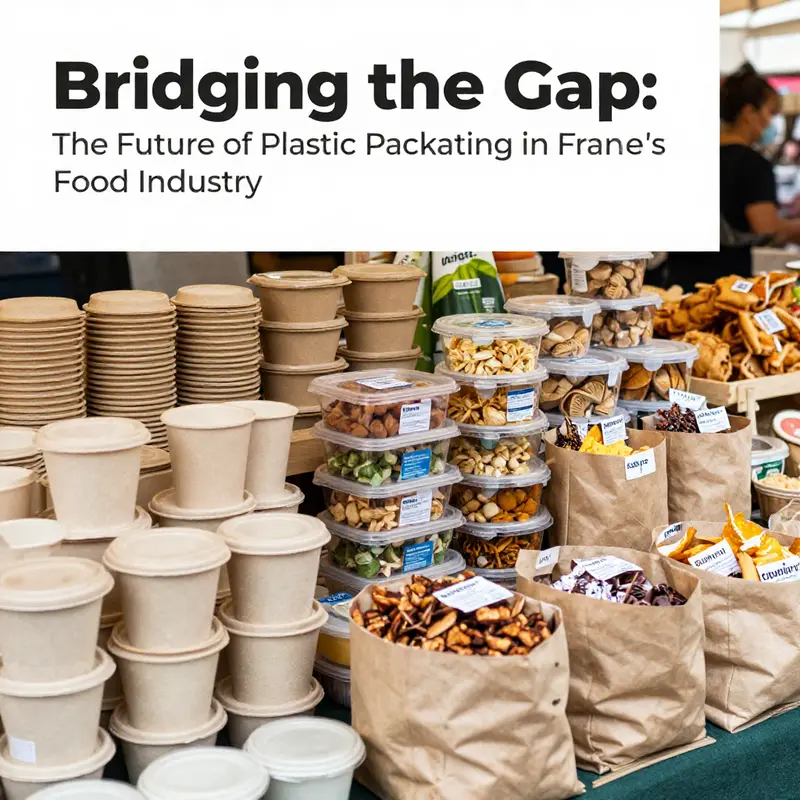
France has long framed its packaging policy as a test case in balancing environmental ambition with practical logistics. When the government announced a planned ban on single use plastic cups, the enforcement date became both a political signal and a market signal. The initial target of 1 January 2026 was adjusted to 1 January 2030 after industry input highlighted gaps in recycling and composting infrastructure, the availability of affordable alternatives, and the capacity of producers to reformulate at scale. The delay is not a retreat; it is a careful recalibration aimed at reducing disruption for consumers and businesses while preserving the core objective of cutting plastic waste and pushing the food packaging ecosystem toward a circular model. In this evolving landscape, the French market of sustainable plastic packaging and food containers has grown from a modest base to become a meaningful force in continental supply chains. Across retailers, manufacturers, and public policy, the tension between aspiration and execution has become a driver of change rather than a barrier to innovation. The practical consequence is a market that expands more slowly than some forecasts might have imagined, yet expands with intent, delivering not only new materials and forms but also new ways of thinking about how containers can be reused, rebuilt, or returned to cycles of use and recovery.
The numbers speak to a wider shift. Market sizing for sustainable packaging and food containers rose from around 2.5 billion euros in 2018 to about 3.2 billion euros in 2023. That growth, while modest in percentage terms, signals a durable transition rather than a temporary spike. A CAGR of roughly 4.8 percent over that period reflects both rising consumer awareness and a policy environment that increasingly favors materials designed for recycling or composting. This trajectory sits atop a base that is already shaped by a highly evolved retail sector in France, where large chains and food brands have embedded sustainability commitments into the way they source, store, and present products. The shift is visible in several layers of the packaging stack, from the outer protective films and trays to the inner barriers and portioning systems used to store ready to eat products. It is also visible in how supply chains reorganize around new material technologies and new design approaches that aim to minimize waste while preserving performance.
Key drivers of this transition emerge clearly when we examine the policy and market context in parallel. Legislation stands as a central engine. France has pursued ambitious environmental regulation as part of the anti waste law for a circular economy, commonly referred to in policy circles as the AGEC framework. This law bites at the core of disposable plastics by banning single use items and by mandating higher recycled content in packaging. The legal environment creates a pull effect that pushes manufacturers away from limited life cycles toward more durable, recyclable, and reusable solutions. But it also introduces a layer of complexity for compliance. Companies must navigate a shifting target, ensuring that new packaging formats not only meet performance standards but also align with evolving definitions of recyclability and the realities of local recycling streams across French municipalities. The AGEC law thus functions as both a policy premium and a design constraint, encouraging innovations such as bio based plastics and other recyclable polymers, while also demanding transparent labeling and robust end of life management. In this sense the policy landscape acts as a catalyst for material science and system level thinking rather than merely a coercive force on product design.
Innovation responds to these regulatory calls in multiple directions. First comes the expansion of material options. Bio based plastics and other renewable content solutions offer alternatives to conventional petrochemical polymers, helping to reduce life cycle impacts when paired with appropriate end of life outcomes. Second is the push toward truly recyclable polymers that can be recovered in existing sorting and processing streams with high yield. The third major thread is the move toward reusable systems, which re imagine the container as a product that can be returned, sanitized, and reused across multiple cycles. This approach, while requiring new logistics and return flows, aligns strongly with circular economy principles and promises lower long term material footprints when executed efficiently. Each of these pathways carries its own technical and economic tradeoffs, from barrier properties to process compatibility and the costs of cleaning and reconditioning. Yet together they map a future where plastic packaging for food is not simply disposed of after a single use but enters into a durable loop of use and recovery.
Retailer initiatives amplify the policy and innovation story. Major retailers and private label brands are investing in sustainable packaging alternatives to satisfy regulatory demands and to respond to consumer preference for eco friendly options. These moves often manifest as a combination of redesigned packaging formats, higher recycled content, and the adoption of reusable or returnable packaging models for select product categories. In practice, retailers partner with packaging converters and material suppliers to pilot solutions in limited channels before scaling them more broadly. The practical upshot is a supply chain that becomes more adaptable to changes in the regulatory timetable and more resilient to price and supply shocks that can accompany rapid material shifts. In some cases this means the adoption of lighter weight yet highly functional packaging, where the overall system weight is reduced and the efficiency of transit and handling is improved. In other instances, it means integrating compostable materials into segments where aerobic composting infrastructure is reliably available, thereby closing the loop in a way that avoids long term landfilling or down cycling.
Amid this broad transformation, a notable trend is the acceleration of pocket style containers. These compact, often single serve formats are increasingly favored for pre packaged meals and snacks, especially in contexts where space efficiency and portion control are valued. The pocket container family is expanding beyond traditional ready meals to new applications, including sustainable food packaging options and even applications that touch on pharmaceutical packaging and other sectors seeking sustainability upgrades. This evolution signals a broader transition toward products designed for quick end of life or for direct return if a take back system exists. The momentum behind pocket containers reflects not only consumer demand for convenience but also a strategic move by brands to standardize packaging components that can be recycled or reused across multiple product lines. In effect, pocket containers become a microcosm of the larger shift toward circular packaging, where design for disassembly and for compatibility with existing reclamation streams reduces waste and improves resource efficiency.
A central question in the French context is how quickly this market can scale given infrastructure constraints. Recycling plants and composting facilities must be able to absorb higher volumes of packaging material while maintaining quality of recovered streams. Sorting technology and contamination control are critical; even the most advanced material formulations can underperform if collected streams are muddy with non recyclable elements. Public procurement and municipal commitments further influence the pace of change by creating demand signals for packaging that meets recycled content thresholds and performance standards in terms of barrier properties, heat resistance, and shelf stability. In this sense, policy and infrastructure are not mere backdrops but active shapers of what is feasible in the market. The delay to 2030 reflects the recognition that achieving substantial reductions in single use plastic through a regulated transition requires end to end readiness in the system, from consumer behavior to the reliability of post use processing.
Against this policy and infrastructure backdrop, the market adapts in ways that are both incremental and transformative. Incremental progress includes improvements in the efficiency of older packaging formats through higher recycled content and better barrier technologies that extend shelf life while reducing environmental burden. Transformative progress involves rethinking packaging architecture at a system level, exploring reusable or returnable modules that can be integrated into store operations and logistics networks. It also includes the diversification of materials used for food contact applications, driven by research into bio based polymers and other renewable content options that can meet the rigorous safety requirements of food packaging. The dual focus on material science and system design is essential. On the one hand, new materials must be processable at scale in existing facilities or in facilities that can be brought online quickly. On the other hand, the packaging system must be compatible with the way consumers and retailers handle items in everyday life, including transfer, storage, consumption, and disposal.
As this chapter moves from policy toward practice, it becomes clear that the gap France seeks to close is not simply a matter of swapping one material for another. It is about unlocking a more circular economy for food containers, where design for recyclability is paired with reliable collection, sorting, and handling. It is about creating markets for recyclable and reusable packaging by ensuring they meet both consumer expectations and regulatory requirements. It is about building confidence among manufacturers that the cost of transitioning to sustainable packaging is manageable and that the long term benefits will accrue through improved resource efficiency, reduced waste disposal costs, and stronger brand reputation in a climate where environmental commitments increasingly translate into consumer choice.
One practical lens on this transition is the evolving composition of the packaging mix used in food and beverage outlets across the country. In many cases, the market is moving away from simple disposable cups and containers toward combinations of materials and formats designed for higher recyclability, higher recycled content, and in some instances, reuse. This shift is not uniform; it plays out differently in urban centers versus rural communities, where local waste management capabilities and consumer behavior patterns differ. Yet the overarching trend points toward a packaging ecosystem where single use disposable items are increasingly balanced by options that can be collected efficiently, processed to recover energy and materials, or returned for cleaning and redeployment. The result is a packaging landscape that is more resilient in the face of demand volatility and more aligned with the broader European push toward sustainability and circularity.
From a consumer behavior standpoint, awareness and demand for eco friendly packaging have risen in parallel with policy developments. Consumers increasingly associate sustainable packaging with product integrity, brand ethos, and responsible business practices. This alignment between consumer expectations and regulatory signals strengthens the business case for sustainable packaging by reducing the perception of cost as a barrier and highlighting long term savings from waste reduction and improved supply chain efficiency. Companies are responding with transparent communication about recycled content, end of life options, and the environmental benefits of their packaging choices. In some cases this translates into small but meaningful changes in labeling, such as clear indicators for recycling compatibility and for whether a container is suitable for home composting. While these communications do not replace the physical performance of the packaging, they play a crucial role in guiding consumer disposal decisions, which in turn feed back into the overall effectiveness of the recycling system.
The chapter cannot ignore the practical realities of implementation. The path to scalable sustainable packaging involves balancing performance requirements with cost considerations. Food contact materials must safeguard safety and shelf life while performing under real world conditions such as varying temperatures, humidity, and mechanical handling. In some cases this means accepting slightly higher cost for materials with superior end of life outcomes, or investing in reusable packaging configurations that require investment in take back logistics and sanitation. The economics can be nuanced: higher initial investments may be offset by longer product life cycles, lower disposal costs, and the potential for brand premium that appeals to sustainability minded shoppers. Policymakers and industry players are increasingly aware of these tradeoffs, and the dialogue between them continues to shape the pace and direction of change. The upshot is a market that can grow responsibly, delivering better environmental results without compromising food safety or consumer convenience.
An illustrative note on the evolving supplier landscape can be seen in how suppliers are positioning around eco friendly packaging options. For a concrete example of how the sector is responding to demand for sustainable formats that fit within new waste management realities, the market shows a growing interest in eco friendly takeout boxes for food packaging. These options illustrate how a single packaging module can be adapted for use across multiple product categories while delivering improved recyclability or reuse potential. They also demonstrate how design choices can influence the end of life outcomes, encouraging consumers and retailers to view packaging as a resource rather than waste. The broader lesson is that material choice is not the sole lever of impact; packaging architecture and service models matter just as much in shaping how effectively a system can recover and reuse materials over time. In practice, advancing such packaging requires close collaboration among brand owners, packaging manufacturers, waste managers, and policymakers to align incentives, standards, and processes that support a circular flow of materials.
In the end, the story of France and its gap between environmental ambition and practical execution in the domain of plastic packaging food containers is one of thoughtful pacing and steady progress. It is a narrative guided by law, propelled by material and process innovation, and reinforced by retailer leadership. It is a story of how a country can push for a future where single use items are gradually phased out without abrupt disruption to everyday life. It is also a story about markets that adapt, not merely markets that adopt. The growth from 2.5 to 3.2 billion euros over five years, the shift toward recyclable and reusable systems, and the increasing prominence of pocket style containers all point to an industry reshaped by both policy and practice. This reshaping is not a finish line but a continuing journey toward sustainable packaging that serves people, retailers, and the planet with equal seriousness.
For readers seeking deeper context on current developments in the French sustainable packaging landscape, a detailed external analysis provides additional depth on how market innovations cohere with regulatory expectations and consumer demand. See the external resource at the end of this discussion for a broader market perspective that complements the France specific insights presented here. And for a practical glimpse into how packaging designers are translating these trends into real world formats, consider the example of eco friendly takeout boxes for food packaging, which illustrates how design, material choice, and end of life planning come together in a single packaging solution. This kind of integration is at the heart of the shift toward a more circular economy for food containers in France and beyond.
As the French system progresses toward its 2030 target, the convergence of policy, innovation, and market adaptation will likely continue to accelerate. The push to increase recycled content, the development of robust reusable models, and the expansion of infrastructure capable of handling higher volumes of post use packaging all point to a future in which sustainable plastic packaging for food containers becomes the norm rather than the exception. The balance between environmental goals and practical implementation will remain a dynamic tension, guiding decisions across sectors and shaping the competitive landscape for years to come. In this context, France demonstrates how a thoughtful delay can become a strategic pause that strengthens capacity, aligns stakeholder incentives, and ultimately yields packaging solutions capable of delivering real, measurable environmental benefits.
External reference for further reading on market dynamics and innovation in France and beyond: https://www.researchandmarkets.com/reports/6234579/france-plastic-bottles-and-plastic-containers-market-innovation-2026
Closing the Gap: France’s Technological Leap to Redefine Plastic Food-Container Packaging
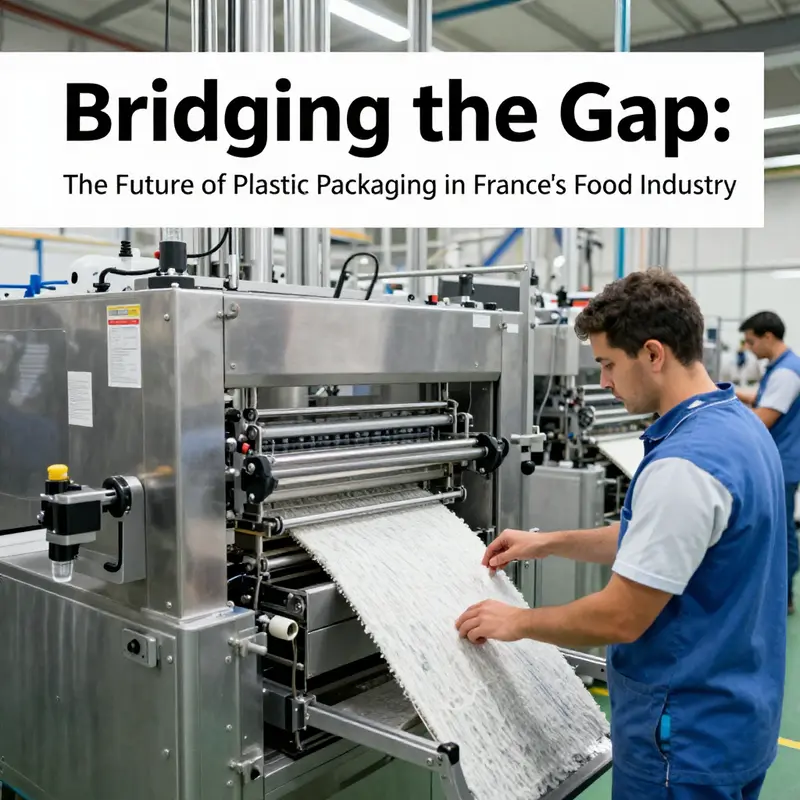
France is navigating a deliberate path between environmental ambition and practical implementation in the realm of food packaging. The decision to push back the deadline for phasing out single-use plastic cups–initially slated for January 2026 to January 2030–signals more than a stall in policy. It marks a recognition that a robust transition requires not only regulatory intent but also the right infrastructure, supply chains, and market readiness. In this light, the current momentum in France’s packaging landscape is less about an abrupt abandonment of plastics and more about a calibrated acceleration of innovation that aligns material science with consumer habits, industry capabilities, and circular economy principles. The result is a narrative where technology, policy, and business strategy fuse to bridge a gap that was long perceived as insurmountable: replacing or reimagining plastic food containers without sacrificing safety, convenience, or affordability.
Biodegradable and compostable materials have emerged as a central axis of this bridge. In France, researchers and manufacturers are scaling up the use of biodegradable polymers derived from renewable resources, notably polylactic acid (PLA), to offer viable substitutes for conventional petroleum-based plastics. The appeal of these materials lies not merely in their renewable origins but in their potential to reduce long-term environmental footprint by diminishing reliance on fossil carbon and easing end-of-life management. Yet the shift is not a simple replacement. Compostability and the eventual fate of packaging depend on the presence of appropriate waste-management infrastructure, including industrial composting facilities and transparent consumer disposal pathways. Without robust collection and processing, even well-intentioned materials can fail to realize their environmental promise. This is a crucial reminder that technology cannot operate in isolation from systems—the mature performance of biodegradable and compostable packaging hinges on synchronized municipal and regional composting capabilities, clear labeling, and consumer confidence in sorted streams.
Alongside these materials, smart packaging technologies are quietly reconfiguring how we measure, manage, and communicate the lifecycle of a packaged product. Time-temperature indicators, which reveal whether a product has maintained its quality during storage and transit, address a practical gap in food safety that becomes especially acute for ready-to-eat and meal-kit formats. These indicators can be embedded into packaging or integrated as flexible labels, providing real-time or near-real-time data that retailers can act upon and that consumers can interpret with confidence. When combined with digital labeling such as QR codes, these systems transform packaging into a portal of information rather than a passive barrier. Scannable codes can direct shoppers to consumer-facing materials about disposal methods, recycling tips, and the environmental footprint of the packaging. In an era when transparency is increasingly valued, such features help align consumer behavior with the objectives of a circular economy, encouraging correct separation and higher-quality recyclates. The effect is a gradual shift from a disposable mentality toward an informed, stewardship-based approach to packaging.
All of this is framed by a determined regulatory scaffold designed to push the packaging ecosystem toward recyclability and reuse. The Anti-Waste and Circular Economy Law has become a central driver of French industry realignment, codifying a clear vision that all single-use packaging should be recyclable or reusable by 2025. The policy act accelerates research and investment into novel formats and processing methods while also pressing for standardization in disposal labeling and end-of-life pathways. In practice, this means startups and established players alike are incentivized to test new materials and formats that can meet strict recyclability criteria or be designed for reuse in a system-wide loop. The ambition is not only to reduce waste but to redesign the business model around packaging as a service—where containers are designed for repeated use or for safe and straightforward recycling, rather than as one-off disposables. In this sense, the policy does not merely penalize certain materials; it rewards ingenuity that harmonizes packaging performance with environmental accountability.
The material science response to this regulatory push is diverse and pragmatic. Biodegradable and plant-based films are expanding the palette of options for barrier properties, heat resistance, and mechanical performance. Plant-based films, for instance, can replace conventional barrier layers in some applications while offering improved compostability profiles. Edible packaging, though still emerging in mainstream food service, represents a bold direction in which packaging itself can be consumed with the product in specific contexts, reducing waste streams when aligned with consumer acceptance and food-safety standards. Such concepts push the boundary between packaging and product in novel ways, inviting a reimagining of what constitutes packaging in the first place. Importantly, these innovations do not simply offer a one-to-one substitute for existing plastics. They require careful design consideration to maintain product protection, consumer convenience, and regulatory compliance, all within an economically viable framework.
From a market perspective, there is growing demand for sustainable packaging solutions that cater to an increasingly eco-conscious consumer base. The rise of pocket containers—compact, semi-rigid vessels intended for pre-packaged meals and snacks—illustrates how packaging formats are evolving to meet new usage patterns. These containers must balance the portability and shelf stability demanded by modern lifestyles with the responsibility of waste management. The expansion of pocket containers is also notable in related applications, such as pharmaceutical packaging and other sustainable food container formats, where the emphasis is on reliability, traceability, and safety as much as on end-of-life outcomes. In these contexts, the technology stack around packaging is expanding to include not just new materials but also sensors, data interfaces, and standardized recycling pathways that support a circular economy model. The intertwining of form, function, and fate is becoming more evident in every stage of the supply chain—from material selection and manufacturing to consumer use and post-consumer processing.
The practical realities of implementing these innovations are multifaceted. For manufacturers, shifting to renewable-based or compostable materials requires retooling production lines, validating compatibility with existing filling, sealing, and labeling processes, and ensuring that the performance envelope—such as heat resistance for hot-fill products or microwave safety for consumer convenience—meets stringent standards. For retailers and food-service operators, the challenge lies in sourcing materials that deliver a predictable cost profile, maintain product integrity, and align with customer expectations for disposal. The cost dynamics are complicated by the fact that sustainable materials may carry higher raw-material costs or require new processing conditions and certifications. Yet the regulatory impetus and growing demand are curbing the risk of stranded investment by creating a longer horizon over which returns can be realized as economies of scale improve and supply chains mature.
Incentives from policy are complemented by a broader push toward standardization and interoperability in the packaging ecosystem. Clear labeling about recyclability and disposal methods reduces guesswork for consumers and helps ensure that packaging ends up in the correct stream. This is essential because the environmental benefit of new materials and formats can be compromised if mis-sorted waste undermines recycling quality. The interplay between design, labeling, and consumer behavior is a subtle but critical component of the transition. When packaging communicates its end-of-life pathway in a straightforward way, it reduces confusion and increases the likelihood that materials are recycled into high-quality feedstocks. In this respect, technological innovation operates not only at the material and device level but also within the social and regulatory fabric that governs waste management.
The broader implications for France’s packaging sector extend beyond environmental metrics. The shift toward recyclable and reusable packaging invites a reconfiguration of business models, including take-back programs, standardized deposit schemes, and service-oriented packaging solutions. It also encourages designers to consider circularity as a core attribute of product development rather than an afterthought. In practice, this means packaging that is easier to disassemble, that uses fewer mixed materials, and that can be reprocessed with minimal energy input. It means suppliers offering interchangeable components across product families to simplify repair, refurbishment, or end-of-life processing. It means retailers collaborating with packaging providers to align on packaging formats, labeling, and collection infrastructure so that the system works as a coherent whole rather than as a collection of isolated decisions.
The social dimension of this transition is equally important. Consumer education around disposal methods, composting infrastructure, and the environmental rationale for materials selection helps to anchor the technology-driven changes in everyday practice. The aim is not merely to satisfy regulatory requirements but to foster a culture where packaging decisions are recognized as a tangible lever for environmental improvement. When shoppers understand the link between a container’s material choice and its ultimate fate, they are more likely to participate in recycling or composting programs and to embrace reusable solutions in settings such as meal-prep services and takeout, where convenience often competes with sustainability. This cultural shift, in turn, reinforces the market signals that drive continued investment in innovative packaging formats and materials.
To illustrate how these threads converge in the French context, consider the way the adoption of pocket containers and related sustainable formats is evolving alongside infrastructure upgrades. The rise of compostable options is closely tied to the expansion of industrial composting capacity, which in turn depends on municipal planning, energy use considerations, and the performance of composting facilities at scale. In parallel, the design and testing of packaging that can withstand typical handling and transport conditions without compromising safety or quality are expanding the envelope of what is feasible in a cost-effective manner. This is not merely a materials science problem; it is a systems problem that requires coordination across research centers, manufacturers, waste-management operators, policymakers, and the retail sector. When these actors align their incentives, France can translate regulatory milestones into tangible improvements in packaging performance, waste reduction, and resource efficiency.
A final dimension concerns the way digital and material innovations influence measurement and accountability. Life-cycle assessment methodologies are increasingly used to compare candidates for new packaging formats, balancing indicators such as greenhouse gas emissions, energy use, water, and land impacts with performance metrics like barrier properties and mechanical resilience. This rigorous approach helps ensure that substitutions yield real, not perceived, gains in sustainability. It also creates a framework for ongoing improvement as new materials and processing methods emerge. The net effect is a packaging ecosystem that continually learns and adapts, reducing risk for investors and providing the public with measurable evidence of progress toward France’s broader environmental goals.
In sum, the gap in plastic packaging for food containers in France is not a chasm to be bridged by a single technology or policy. It is a dynamic frontier where materials science, packaging design, digital traceability, and regulatory ambition converge. The current environment—characterized by a deliberate policy delay to 2030, a renewed emphasis on recyclable or reusable packaging by 2025, and vibrant innovation across biodegradable materials, smart packaging, and new formats—offers a fertile ground for meaningful progress. The outcome will depend on how effectively the ecosystem coordinates investment, infrastructure, and consumer engagement. The more that manufacturers, retailers, and municipalities collaborate to align material choices with end-of-life pathways and consumer expectations, the more quickly France can translate its environmental commitments into real-world reductions in plastic waste without sacrificing the convenience that modern food packaging affords. As the sector continues to evolve, the narrative remains one of bridging a complex gap through intelligent design, systemic thinking, and a shared commitment to a circular economy.
For readers seeking a concrete starting point in the evolving landscape of sustainable packaging formats, a practical reference point is the broad range of eco-friendly takeout boxes now entering the market. These designs emphasize grease resistance, microwave compatibility, and simplified disposal, while remaining visually appealing for consumer use. eco-friendly takeout boxes for food packaging. The link points to a family of products that illustrates how packaging can be both functional and responsible, a balance that is central to the French approach during this transitional period. While the regulatory horizon remains forward-looking, the market is already testing the boundaries of what is possible, from recyclable and reusable designs to compostable films and beyond. These experiments, scaled across manufacturers and retailers, will determine how quickly and how effectively the country can achieve its long-term goals.
From a policy and industry perspective, the path ahead is as much about building capability as it is about selecting materials. The regulatory framework provides the destination; technology and process innovation chart the route. France’s experience suggests that meaningful progress requires both a rigorous supply chain transformation and a cultural shift among consumers toward thoughtful disposal and reuse. The integration of time-temperature indicators, QR code-enabled labeling, and advanced biodegradable materials into everyday packaging exemplifies how the two can reinforce one another. As infrastructure catches up with ambition, and as manufacturers redesign products to fit circular pathways, the gap between current practice and desired outcomes narrows. This is how a country can translate a policy timetable into real, measurable improvements in the sustainability of food packaging—without interrupting the flow of food, the safety of products, or the convenience that consumers expect.
External reference for broader context on regulatory frameworks and national sustainability strategies can be found at the official ministry site. For further reading on developments in France’s environmental policy and its impact on packaging, see https://www.ecologie.gouv.fr/
Final thoughts
Navigating the gap in plastic packaging for food containers in France is a complex yet crucial endeavor. As the nation extends its timeline on plastic bans, stakeholders in the food services industry have a unique opportunity to innovate and embrace sustainable packaging solutions. Understanding regulatory shifts, aligning with market trends, and leveraging technological advancements are vital for making informed decisions. By adapting to these developments, businesses can not only meet regulatory compliance but also appeal to a growing base of environmentally conscious consumers, ensuring a sustainable future for the industry. Embracing change is not just a necessity; it is an opportunity for growth and resilience in a rapidly evolving market.