
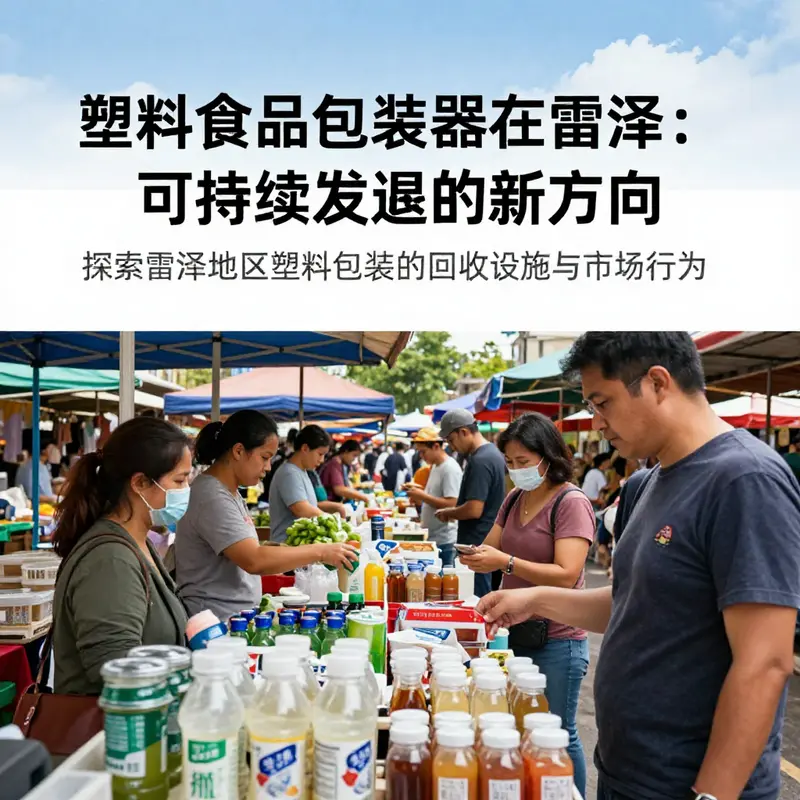
塑料食品包装在现代餐饮行业中的应用越来越普遍,特别是在快速发展的食品和饮料链条中。雷泽(Rézé)作为一个生态环保日益受到重视的地区,通过建立有效的回收设施,更好地管理塑料包装浪费,促进可持续发展。本文将深入探讨雷泽地区与塑料食品包装容器相关的回收设施、法规责任,以及市场生态效益,帮助泡茶店、餐饮服务及活动策划团队了解如何积极参与环境保护。
From Waste Streams to Kitchen Tables: How Recycling Facilities Shape Plastic Food Packaging in Rézé, France
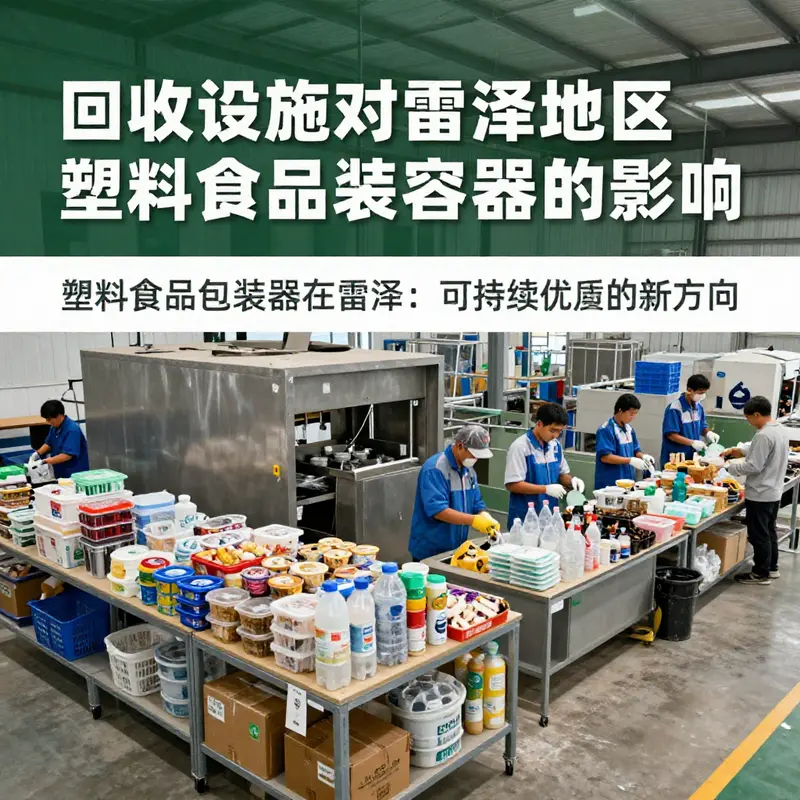
In Rézé, a quiet town on France’s western fringe near Nantes, the everyday act of opening a tray or unwrapping a takeout container is shadowed by a much larger, largely invisible chain. The chain begins with consumer choices and product design, travels through supply networks, and ends in a landscape of recovery and treatment facilities registered in the EU waste facility registry. This registry is more than a database; it is a map of responsibility. It marks where plastic packaging, including containers that carry food through supermarkets and street stalls, can be collected, processed, and returned to use. The knowledge that such facilities exist is essential for understanding how Rézé participates in the European project of reducing waste, keeping materials in circulation, and protecting food safety. Yet while the registry confirms capacity, it does not automatically reveal exactly how facilities interact with a specific municipality like Rézé. The absence of granular, place-based data is not a flaw of the registry; it is a reminder that recycling and food packaging systems operate across scales. What can be traced, however, are the forces that shape the efficiency and safety of recycling plastic food packaging containers, and how those forces reverberate through a local setting such as Rézé.
To begin with, the promise of recycling facilities lies in their ability to lift material from the far end of a consumer lifecycle and reintroduce it into production streams. A cornerstone of this promise is the push, at the EU level, to elevate plastic circularity through pilot programs that standardize what it means for a plastic waste stream to be considered a viable feedstock for food-contact applications. The core of this effort is not simply to recycle more, but to recycle smarter. The European Commission has pursued a blueprint that includes a unified set of criteria—what is described, in policy shorthand, as a “waste end-of-life standard”—and, critically, a quality balance framework that permits recycled plastics to circulate freely within the internal market while still meeting safety and performance thresholds. In practical terms, this means that plastics recovered from food packaging in one country can be reused in packaging for foods elsewhere in the EU, provided the recycled material satisfies stringent controls on contaminants, impurities, and migration. It is this design for circularity that gradually lowers the barrier between waste and resource, turning a discarded container into a material input for a new food container, rather than into a pile of refuse.
In Rézé, the local relevance of such reforms unfolds most clearly when we consider three intertwined dimensions: resource efficiency, safety governance, and industrial competitiveness. First, resource efficiency benefits when recycling facilities implement standardized end-of-life criteria and embrace technologies that strip away contaminants while preserving polymer integrity. The EU initiative seeks to harmonize how plastics are cleaned, separated, and tested so that a bottle resin or a tray polymer that has touched food can be reintroduced into a production line with predictable performance. This is not a cosmetic alignment; it affects the very feasibility of using recycled content in food packaging. If the recycled stream is consistently reliable, local manufacturers in and around Rézé can design products with a meaningful proportion of recycled content, reducing the demand for virgin resin and lowering the environmental footprint of packaging. For residents, this may translate into packaging that, even after multiple life cycles, remains in circulation without compromising safety.
Second, safety governance binds tightly to how facilities handle materials destined for contact with food. Food-contact regulations are meticulous about what materials can be reintroduced into the kitchen and dining experience. The EU’s approach includes potential revisions to the governing framework for recycled food-contact plastics and the establishment of specific customs classifications that tighten control over imported recycled plastics. In practice, this means that while a facility near Rézé may be capable of processing plastics from a broad geographic area, the materials that ultimately land in consumer packaging must pass through rigorous checks for chemical migration, residual contaminants, and compliance with food safety standards. The consequence is a more predictable supply chain for Rézé’s local packaging ecosystem: safer inputs, traceable provenance, and clearer accountability across producers, recyclers, and regulators.
Third, industrial competitiveness is shaped by the cost dynamics and market access enabled by harmonized standards. Recycling facilities are energy-intensive and capital-intensive ventures. They require skilled labor, sophisticated equipment, and robust energy supplies to separate, dry, and treat plastics while ensuring that emissions and effluents meet environmental benchmarks. When EU-level policies create a credible guarantee that recycled plastics can be used in food-contact applications across borders, facilities in Rézé and its surroundings gain access to a larger market for recycled content. This expanded market reduces localized risk for plant operators and supports a more diversified supplier base for packaging manufacturers who serve restaurants, groceries, and households. Yet this opportunity is tempered by persistent challenges: energy costs, the price volatility of virgin resins, and the global competition that can influence the economics of recycling. In the European context, those challenges are not isolated to one town. They ripple through municipal budgets, plant optimization decisions, and incentives for circular product design.
The literature surrounding the EU’s plastic recycling initiative emphasizes not only what is recycled, but how it is tracked, validated, and integrated into compliant production streams. A central element is the notion of a “quality balance,” a method by which recycled materials can be shown to meet traceable performance thresholds when used in food packaging. In effect, the quality balance approach offers a mechanism to quantify and demonstrate that recycled plastics meet the safety expectations of food-contact regulations, even after complex processing steps such as cleaning, fractionation, and, in some cases, advanced refineries that remove impurities through chemical or mechanical means. For Rézé, this translates into a more transparent dialogue among local authorities, waste operators, packaging manufacturers, and consumers about what can be recycled, how, and with what confidence. It also underscores the importance of data sharing and governance mechanisms that connect regional collection schemes to national reporting requirements and EU-wide benchmarks.
As this tapestry unfolds, it becomes clear that the impact of recycling facilities on plastic food packaging containers in a place like Rézé is not a simple binary: recycle or do not recycle. It is a continuous, multi-layered interaction among design choices, processing technologies, regulatory guardrails, market signals, and public expectations. The EU’s pilot programs and regulatory updates are not distant abstractions; they determine the practical feasibility of embedding recycled content in packaging used for the everyday food experience. They influence decisions at every link in the chain—from how a packaging designer selects polymer types to how a municipal facility schedules its drying trains and air emissions control systems. They shape the energy mix that powers a plastic sorting line and the labor standards that protect workers in processing plants. And they define the price pressures faced by local manufacturers who might otherwise substitute recycled resin with virgin resin or, conversely, who might embrace higher recycled-content packaging as a competitive differentiator in a market increasingly oriented toward sustainability.
To illustrate, consider the cycle from consumer purchase to packaging reuse: a container used once for a ready-to-eat meal, collected through municipal or private take-back schemes, and then transported to a nearby sorting and reprocessing facility. There, advanced technologies separate plastics by polymer type, color, and contaminants. The goal is not merely to reduce waste; it is to guarantee that, after cleaning and processing, the recycled material can be fed back into the production of food-grade packaging. The presence of standardized end-of-life criteria reduces uncertainty for manufacturers in Rézé, because it clarifies which streams are acceptable for new food packaging and under what conditions. It also encourages investments in plant upgrades and collection infrastructure that improve separation efficiency, reduce cross-contamination, and minimize energy use per kilogram of plastic processed. In turn, residents of Rézé benefit from improved recycling rates, cleaner local environments, and a packaging ecosystem that increasingly prioritizes recycled content without compromising safety.
But the path is not without friction. The energy intensity of modern recycling facilities remains a central concern. The high energy costs associated with sorting, drying, and refining plastics can erode the financial viability of recycling operations, especially when the price of virgin resin is comparatively low. In regions like the Pays de la Loire, where Rézé is situated, policymakers and industry stakeholders must balance the imperative to decarbonize with the realities of energy markets and industrial competition. The EU framework acknowledges this balance by promoting efficiency standards, technological upgrades, and cross-border cooperation that can help spread fixed costs across larger volumes. It also recognizes the need to shield recycling activities from unfair competition, including non-EU imports that may not adhere to the same environmental or safety standards. The result is a cautious but purposeful effort to create stable, long-term demand for recycled plastics in food packaging, anchored by credible data, robust governance, and continuous improvement in processing technologies.
From a local perspective, Rézé embodies both promise and challenge. On the one hand, the town stands to gain from a more integrated, data-driven recycling system. When facilities demonstrate that recycled plastics used in food packaging meet all safety benchmarks, local packaging producers can plan for incremental increases in recycled content, reducing dependence on volatile resin markets and enhancing resilience in the food supply chain. On the other hand, the proximity of processing plants can raise concerns about emissions, odors, and truck traffic. The EU’s emphasis on environmental controls—such as closed-loop air handling to prevent emissions from drying processes and static grounding in high-voltage zones to mitigate industrial hazards—addresses these concerns by prioritizing worker safety and community health. In practice, this means that a well-regulated facility near Rézé operates with a clean technology toolkit: energy-efficient dryers, recycled gas capture and treatment, and continuous monitoring of air and effluent quality. The upshot is a packaging ecosystem that is not merely cleaner but more robust against shocks in supply and demand.
A related dynamic concerns consumer perception and behavioral change. The more visible and understandable the recycling pathway becomes, the greater the public willingness to participate in separate collection schemes and to choose products bearing recycled-content packaging. Yet this requires transparent communication from local authorities and industry players, and consistent demonstrations that recycled plastics used in food packaging do not compromise safety or quality. In turn, Rézé residents can demand higher standards for the materials that reach their tables and participate in a cycle that is more circular, traceable, and accountable. The EU’s approach to harmonizing standards, while technically complex, offers a shared language for describing expectations, testing methods, and performance outcomes. When communicated effectively, these standards empower communities to see themselves as active agents in the circular economy rather than passive observers of policy.
The broader lesson for Rézé—and for many towns of similar size and industrial composition—is that the impact of recycling facilities on plastic food packaging containers is cumulative and systemic. It is not only about how many containers are recovered, but about how those containers are cleaned, reintroduced into the market, and monitored for safety and performance. It is about the partnerships that form between local authorities, waste operators, and packaging manufacturers to ensure that the recycled feedstock is not only available but also reliable and traceable. It is about the ability of a community to translate EU-level pilots and standards into practical improvements in local collection regimes, plant operations, and consumer confidence. And it is about recognizing that the ultimate value of recycling facilities lies not in a single event but in a persistent, iterative loop that continuously closes the material cycle while safeguarding the foods that people eat.
In this sense, the Rézé case study becomes a testament to the way modern waste infrastructure can align with public health, environmental ambition, and local economic vitality. The EU’s plastic recycling initiative provides a scaffolding for this alignment, a framework that translates policy into practice through the daily realities of collection routes, sorting lines, and packaging design decisions. It offers not a guarantee of instant transformation, but a structured path toward more circular, safer, and more resilient packaging systems. For researchers, policymakers, and stakeholders following the continuum from kitchen counter to waste facility, Rézé illustrates how scale, governance, and technology converge to shape a future in which plastic food packaging containers can be kept in productive use longer, while meeting the highest standards of food safety and environmental stewardship.
External resource: https://ec.europa.eu/environment/circular-economy/plastic-recycling-initiative_en
Regulatory Currents in Rezé: Navigating Plastic Food Packaging Rules, Responsibilities, and the Path to Safer Food
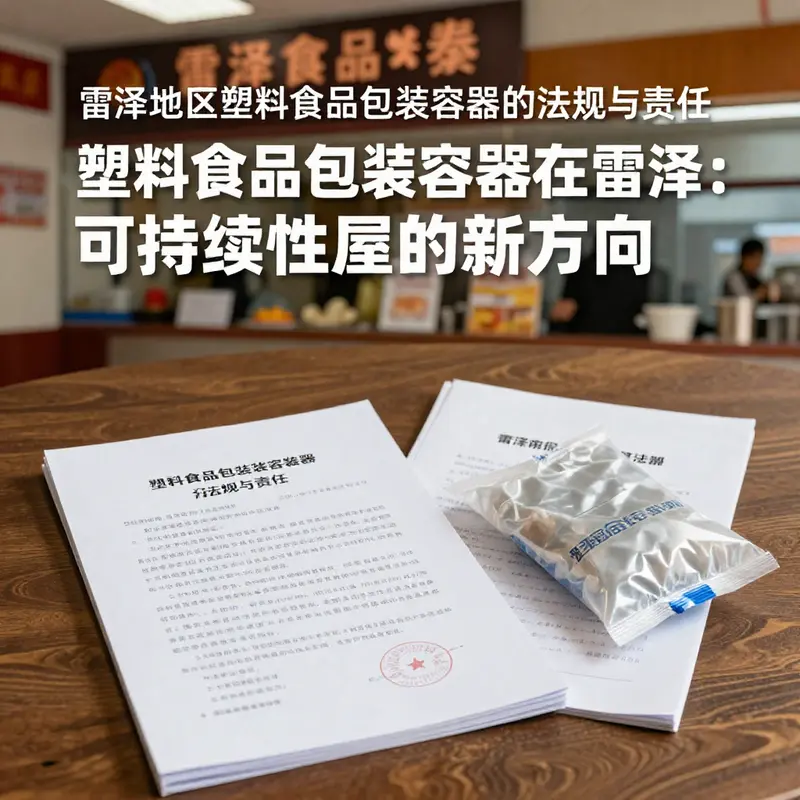
Rezé sits just beyond the Loire River’s bend from Nantes, a place where daily life moves between local markets, school cafeterias, and small-scale manufacturing that feeds larger supply chains across France and the European Union. In such a setting, plastic food packaging is not merely a consumer convenience; it is a tightly regulated interface between materials science, public health, and environmental stewardship. The regulation of plastic packaging for food use in Rezé unfolds within a broader European framework, one that seeks to prevent any health risk from contact with food while also guiding producers toward responsible resource use and clear, verifiable traceability. Although the initial materials you encountered foreground a regional registry of recycling facilities, the practical heartbeat of Rezé’s packaging economy rests on how producers design, manufacture, test, label, and monitor their products in compliance with EU-wide and French national rules. The result is a layered system in which responsibility runs from resin suppliers and converters through brand owners to distributors, retailers, and, ultimately, consumers who expect safety, reliability, and clarity about what they are bringing into their kitchens. In such a system, the origin of a container’s safety goes back to the moment a resin supplier determines that its polymer, additive package, and processing aids meet formal safety criteria, and the chain of custody continues through every stage of production and use.
At the core of this architecture is the obligation to ensure that any material or article intended to come into contact with food remains safe under the conditions of its intended use. The European Regulation (EC) No 1935/2004 sets the general principle that materials and articles should not transfer substances to food in quantities that could endanger human health, cause an unacceptable change in food, or mislead the consumer. This overarching requirement is supplemented by specific rules for the plastics sector, notably Regulation (EU) No 10/2011 on plastic materials and articles intended to come into contact with food. That regulation delineates what kinds of substances may be used in plastic packaging and establishes testing regimes to quantify migration—the migration of substances from packaging into food under defined conditions. The migration framework is not a single number but a system of limits: total migration limits and specific migration limits for particular substances. In practice, this means every packaging project in Rezé must begin with a clear risk assessment and finish with a robust dossier that demonstrates compliance under realistic use scenarios. The language of this framework is precise and measured, designed to prevent any chemical from crossing thresholds that could compromise safety or alter the organoleptic properties of food.
For the local economy in Rezé, these EU and French rules translate into concrete responsibilities across several actors. Producers who manufacture food-contact plastic containers must not only ensure that the chosen resins—whether standard polymers or regulated blends—are compliant, but also that processing aids, colorants, and any post-treatment finishes conform to safety standards. This extends to the supply chain’s upstream segments: raw material suppliers should provide declarations of conformity and appropriate documentation to support the material’s intended use in contact with food. Downstream, manufacturers must maintain rigorous process controls, validated cleaning and decontamination procedures where recycled content is used, and tight batch-level documentation to support traceability. In France, several authorities are entrusted with oversight. The Direction générale de la concurrence, de la consommation et de la répression des fraudes (DGCCRF) and the local prefecture through its departments, including DDPP and DREAL in various configurations, enforce compliance through inspections and market surveillance. They assess not only product safety but also labeling accuracy, conformity documentation, and the integrity of the manufacturing environment. The aim is not punishment in isolation but a disciplined system that rewards consistent safety performance and rapid corrective action when deviations occur.
In Rezé’s real-world operations, this regulatory logic intersects with the practicalities of production management. A typical plastics manufacturer or converter must maintain an up-to-date Declaration of Compliance (DoC) that documents the regulatory status of every material used in a given product family. The DoC is the anchor for audits and for customer assurance; it accompanies the product through distribution and, when needed, through recall or incident investigations. The migration testing that supports those DoCs is performed under standardized conditions that simulate real-life use: temperatures the packaging might encounter during storage, transit, processing, and consumer use. Testing not only captures migration values but also monitors potential leaching of metals, additives, and residual monomers. In addition, batch-level testing is often employed to account for variability in raw materials, processing conditions, and assembly lines. This means that even a single plant in Rezé, when supplying a multinational retailer or a local market, must demonstrate consistency across production lots, with records that can be traced backward to resin lots and forward to finished goods in the hands of consumers.
The regulatory narrative, however, extends beyond the factory floor. Once a product enters the market, compliance is reinforced through surveillance and market checks. French and European authorities routinely conduct sampling and testing of products in commerce to verify that migration limits, heavy metals thresholds, and microbial criteria meet the stated standards. In practice, this means that a manufacturer cannot rely on a single compliance certificate at the point of exit from the factory. Ongoing vigilance—through periodic re-testing, supplier audits, and internal quality reviews—becomes a standard part of corporate governance in Rezé’s packaging sector. This is essential in a world where consumer expectations are high for safe, inert packaging that preserves the integrity of food while also supporting a sustainable waste management system. The regulatory pressure is coupled with expectations from buyers that packaging vendors can demonstrate responsible stewardship, from material choice to end-of-life planning.
One of the practical dimensions of this governance lies in the growing emphasis on sustainable materials and the use of recycled content in food-contact plastics. The European system currently allows recycled plastics for food use, but only when the recycled material has undergone controlled, validated decontamination processes and when the resulting material meets the same migration and purity criteria as virgin resin. The challenge is not simply to insert recycled content but to prove that each batch of recycled material has been processed in a way that eliminates or minimizes contaminants. Rezé’s packaging ecosystem reflects this challenge: processors and brand owners alike seek to balance the environmental benefits of recycled content with the safety requirements that protect public health. The regulatory framework responds to this demand by demanding traceability, validated processes, and verifiable documentation that can be audited at any time. In other words, the push toward circularity is not a loophole but a rigorous, design-driven discipline that shapes material selection, product architecture, and end-of-life strategies.
The concept of facility registries, such as those used by the EU to track recycling installations, also centers the Rezé conversation on transparency and accountability. The official resource that lists facilities with the capability to process plastic packaging aligns with the broader objective of ensuring that recycled inputs comply with safety standards before they re-enter contact with food. In Rezé, as in many French municipalities, this registry serves as a reference for manufacturers seeking to formulate compliant recycled-content packaging and for municipal bodies tasked with overseeing waste management and circular economy initiatives. The registry is not merely a bureaucratic touchstone; it is a practical tool for risk management: it helps ensure that the circularity promises made by packaging suppliers are grounded in demonstrable processing capabilities and verified outcomes. The result is a more resilient supply chain that can advertise its safety credentials while advancing the environmental goals that France and the European Union have embraced.
Against this regulatory backdrop, the Rezé narrative also reveals the ongoing need for careful communication among stakeholders. Brand owners must translate the legal language of migration limits and DoCs into consumer-facing messages that are honest and clear about safety and sustainability. Retailers, too, bear a role in ensuring that the packaging they stock aligns with regulatory expectations and with the values of their customers who demand responsible packaging choices. For policymakers and regulators, Rezé offers a microcosm of how modern packaging governance functions: it demonstrates the balancing act between enabling innovation, maintaining public health protections, and guiding the industry toward better environmental outcomes. In this sense, the chapter is not just about compliance documents and testing protocols but about building a shared confidence that the packaging products that reach kitchen tables are safe, predictable, and aligned with the broader aims of a circular economy.
From a practical standpoint, Rezé’s packaging actors often look to adjacent markets and regulatory models for inspiration and lessons learned. While the specific administrative geography may differ—France operates within the EU framework with national and regional bodies—the core challenge remains universal: how to ensure that every packaging element placed in the market, every container, lid, or label that touches food, does not introduce risk. This means a robust internal culture of compliance, an ongoing partnership with competent authorities, and a willingness to invest in capabilities such as validated testing, supplier qualification, and digital traceability systems. It also means acknowledging the limits of current technologies and remaining adaptable as scientific understanding evolves. In short, Rezé’s path toward safe, compliant, and sustainable plastic food packaging is a continuous journey, powered by a lattice of standards, inspections, and a shared commitment to protecting health while enabling innovation and responsible consumption.
To connect this discussion to a practical, industry-facing nuance, consider how local procurement decisions in Rezé can reflect regulatory realities. When a city or school district in the area contracts for packaged foods, the expectation is that the packaging complies with EU and French rules and that the supplier can document this compliance across the product’s life cycle. The governance is not only about avoiding penalties; it is about building trust with consumers who may be concerned about what their packaging contributes to waste streams and how effectively it protects safety and quality. This is where the regulatory framework intersects with daily operations: product design choices that favor safer migration profiles, packaging configurations that minimize material weight while preserving barrier properties, and supply chains that can demonstrate end-to-end responsibility—from resin to consumer shelf. In Rezé, as in many communities, this alignment between policy and practice is what ultimately legitimizes the packaging industry and sustains its ability to serve both local needs and global markets.
A final reflection ties back to the practical ecosystem in which Rezé operates. The regulatory currents described here—ranging from the general safety principle in 1935/2004 to the plastics-specific migration rules in 10/2011, and the governance network of French and European authorities—shape how packaging is conceived, produced, tested, and monitored. They determine who pays for compliance, where tests are conducted, and how information is shared with customers and end-users. They also influence capital investment decisions: whether to upgrade processing lines for better residue control, whether to expand laboratory capabilities for migration testing, or whether to adopt digital systems that enhance batch traceability. In other words, the Rezé story is not only about meeting a set of rules but about cultivating a mindset of safety, transparency, and responsibility that can travel beyond borders as European markets and global value chains converge. And as the EU continues to refine its approach to circularity and safety, Rezé’s packaging sector will remain a frontline example of how local economies interpret and implement high-level policy in ways that protect health while encouraging sustainable innovation.
For readers who want to explore concrete, industry-facing examples of how packaging provisions translate into procurement and design decisions, the following resource offers a practical perspective on how packaging vendors frame their offerings in alignment with safety standards and customer expectations. See the linked example of tailored takeaway packaging solutions in this supplier portfolio: custom-takeaway-packaging-supplies-disposable-tableware-for-theme-party. This reference points to the broader principle that safety, quality, and environmental performance must be demonstrated and verifiable, not merely claimed, across the entire lifecycle of food-contact packaging. In Rezé’s everyday economy, such demonstrations translate into concrete testing protocols, supplier oversight, and proactive communication with customers about material choices and end-of-life outcomes.
External resource: For a comprehensive understanding of the broader European framework governing food contact materials, refer to the EU’s official guidance on food contact materials, which outlines the safety principles, testing approaches, and regulatory expectations that shape national and regional practice across member states. https://ec.europa.eu/food/safety/chemical-safety/food-contact-materials_en
Rézé’s Plastic Food Packaging Landscape and the Turning Tide Toward Ecological Benefit
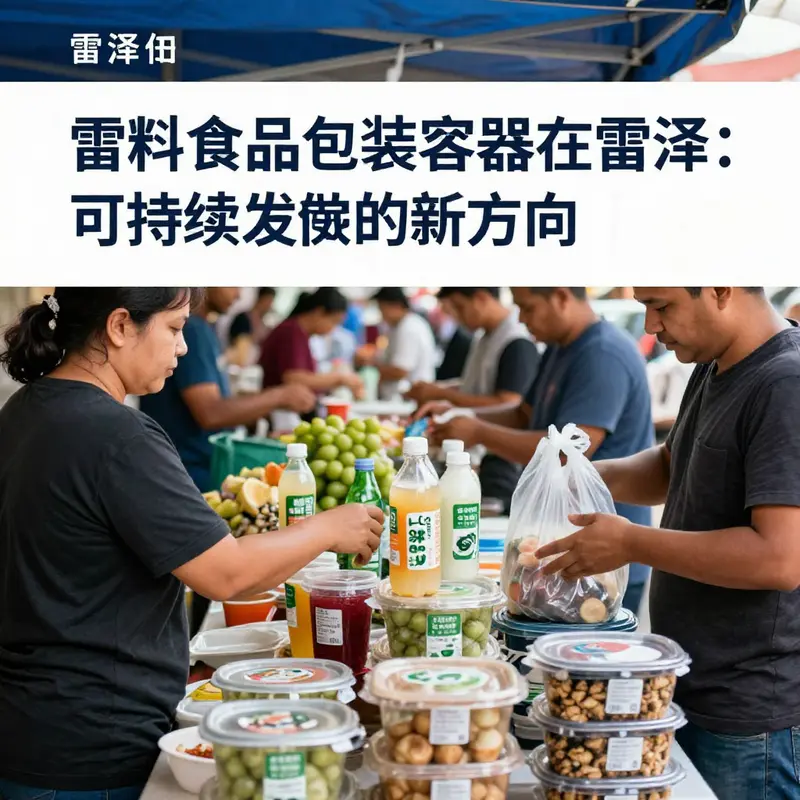
Rézé sits within a broader European frame where cities and towns are increasingly measured by the ecological credentials of packaging that crosses their shelves and streets. This chapter follows the thread of how a modest western French locale intersects a global industry under pressure to reinvent itself. The region hosts a registry of waste management facilities that trace their capabilities through formal European channels. The official resources available through the European Union map show that facilities capable of processing plastic packaging are present in and around Rézé. This registry is not a glossy promise but a practical inventory that reveals what a place can do when policy, market demand, and technical know how converge. It highlights a core truth that the ecological potential of plastic packaging in a given area does not rest on a single company or product line. It rests on how the local system aligns collection, sorting, recycling, and material substitution so that packaging moves through a loop rather than a one way journey to disposal. In Rézé, as in many places, the value of this registry lies in its ability to expose a framework for sustainability rather than deliver a silver bullet solution. The presence of facilities that can handle plastic packaging materials is a critical prerequisite for any regional strategy to reduce environmental footprints. A facility registry signifies capacity, yes, but it also signals accountability. When a town like Rézé leverages such infrastructure, it invites broader participation from municipal governance to manufacturers, retailers, and households in shaping an ecosystem that can support a more circular economy for edible containers, wraps, and related packaging components. The practical implication is straightforward: if the local recycling network is robust, the market can experiment with higher recycled content streams, better end of life collection, and cleaner input for the next generation of materials. In turn, this reduces the environmental burden that packaging once imposed and opens space for innovations that can be scaled locally rather than relying on distant supply chains alone.
Final thoughts
综上所述,雷泽地区的塑料食品包装容器管理不仅关乎环保,更影响餐饮行业的发展方向。通过积极推进回收设施的建设和法规的实施,商家与消费者可以共同打造一个更加可持续的市场环境。在竞争激烈的行业中,承担社会责任与提升品牌形象同样重要,环保意识将是未来的关键。