
As Vanves, France, moves towards stringent environmental regulations, food businesses must adapt to the ban on single-use plastic packaging. Starting in 2026, legislation will enforce the use of reusable and compostable packaging for all food establishments, including bubble tea shops, restaurants, and catering services. This article explores the legislative landscape affecting plastic packaging food containers in Vanves, sustainability trends driving change, economic repercussions of the plastic ban, adaptability among local businesses, and consumer reactions to new packaging standards. Each chapter will build an understanding of how these factors collectively shape the future of food packaging in this vibrant Paris suburb.
null
null
Vanves at the Edge of a Circular Table: Redefining Plastic Food Containers Through Biodegradable Innovation, Reuse, and Responsible Disposal
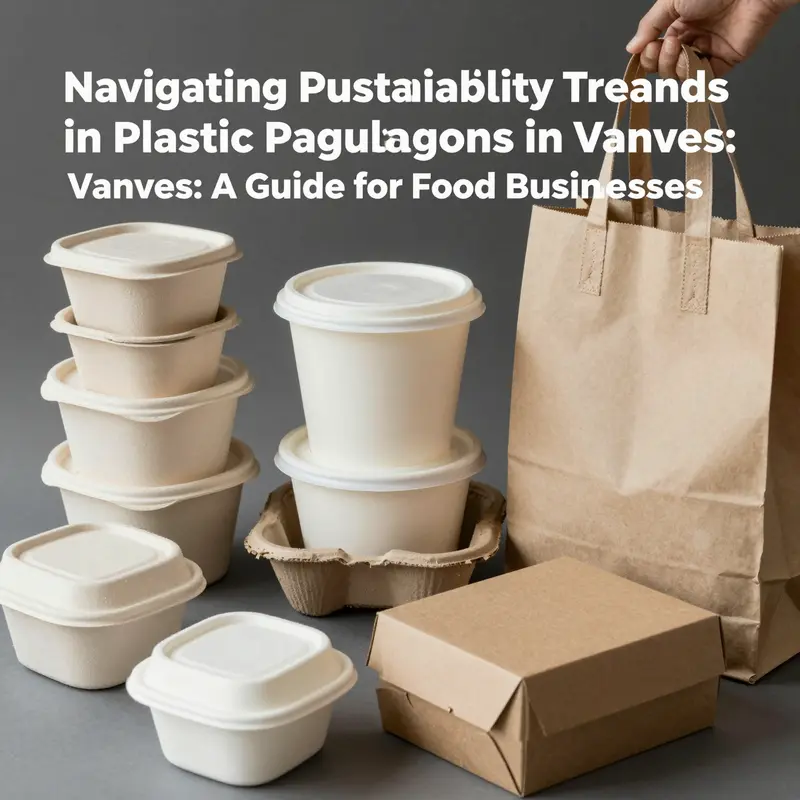
Vanves, a compact commune in the southern shadow of Paris, sits at a pivotal junction where local practice meets European ambition. In 2026, the streets and storefronts of Vanves reflect a broader French and EU resolve to curb plastic waste by reimagining how food is packaged, carried, and disposed of. The transformation aligns with the EU’s Single-Use Plastics Directive, which began shaping regulatory expectations well before 2021 and has since been reinforced across member states. In Vanves, as in Paris and its surrounding communities, the norm has shifted away from throwaway containers toward packaging that is reusable, recyclable, or certified compostable under industrial conditions. The practical effect is noticeable in everyday meals—the quick-service fries, the salads, the warm wraps now arrive in materials chosen not merely for insulation or cost but for their end-of-life pathways. Local regulations echo the national doctrine: the Loi AGEC, aimed at a comprehensive circular economy, aspires to eliminate non-recyclable or non-reusable packaging by 2040. That horizon reframes every packaging decision, from the smallest snack to the largest catering order, and it nudges suppliers, retailers, and customers toward an ecosystem where waste is a resource, not a disposal problem. The result is a blend of caution and experimentation. Restaurants and grocery shops increasingly favor paperboard, molded fiber, or certified compostable plastics, and they pair these choices with clearer disposal guidance at the point of consumption. The city’s approach is not merely punitive policy; it is an invitation to redesign how convenience, hygiene, and environmental stewardship intersect in everyday life.
Biodegradable plastics appear prominently in this redesign. In Vanves, suppliers are expanding lines of packaging made from renewable feedstocks, notably polylactic acid (PLA) derived from corn starch or sugarcane. The shift toward these materials is driven by a desire to lower life-cycle emissions and to offer a credible pathway to industrial composting, where facilities exist to manage the heat, moisture, and microbial conditions needed to break down complex polymers. Yet biodegradable does not always equate to effortless end-of-life glory. PLA and similar polymers demand separation and infrastructure; they are not a universal panacea. Some consumer waste streams still feed ordinary landfills, and contamination can undermine compostability certifications. This tension between intention and outcome is a familiar feature of Vanves’s packaging transition. It compels businesses to invest in labeling that clearly communicates disposal methods and to collaborate with municipal programs to ensure that compostable items meet the industrial standards that the certifications promise. In practice, this means a careful choreography: separation at the customer level, optimized sorting at transfer stations, and the presence of industrial composting pathways capable of handling the particular resin or fiber involved. The city therefore champions a triple pathway—reuse where feasible, recycling where practical, and composting where industrial facilities exist—without pretending that any single solution is universally sufficient.
Alongside material shifts, circular economy principles are becoming more entrenched in the local business culture. The idea is to keep materials circulating rather than letting them escape as waste. Vanves businesses are increasingly adopting closed-loop strategies that aim to reclaim and reprocess packaging within a regional network. Clear labeling is part of this strategy, guiding residents to the correct disposal option and reducing the risk of contamination that can undermine recycling streams. When customers understand that a container is designed to return, be cleaned, and be reintroduced into use, the moral calculus of convenience aligns with the practicalities of a resource-efficient system. The result is a more deliberate packaging ecosystem where the cost of sustainability is acknowledged, but its value is demonstrated through reliability and consistency in performance. For many operators, this guarantees not only compliance with regulation but also a stronger connection with a growing cohort of environmentally conscious consumers who see value in a coherent waste-management narrative rather than a fragmented mix of options.
Within this evolving landscape, reusable container schemes have started to take root in Vanves’s dining culture. Some local cafés and small eateries now encourage customers to opt for returnable containers, with a simple process for collection, washing, and redistribution. The logistical demands are nontrivial: cleaning capabilities, storage, and the economics of turnover must all align to prevent friction between service speed and sustainability goals. Yet where implemented, these schemes create a tangible bridge between habit and system. They demonstrate that reuse can be compatible with the fast pace of urban life, provided there is infrastructure, incentives, and consistent consumer participation. For customers, the appeal lies not only in the environmental rationale but in the integrity of the service model—knowing that a container used once can be refreshed and reissued, reducing the need for virgin plastic while preserving the hygienic standards essential to food safety. For operators, the payoff often appears in brand differentiation and in the resilience that comes from a diversified packaging portfolio that can weather supply fluctuations in certain plastic streams. In practice, many of these initiatives blend reusable options with recyclable or compostable alternatives, offering a menu of pathways that reflect both local capability and broader regulatory direction.
Public awareness and government campaigns further shape the trajectory of packaging in Vanves. National and regional communications emphasize the importance of responsible consumption and the role of packaging in a circular economy. In tandem with local municipal outreach, these campaigns aim to raise the salience of waste separation, the meaning of compostability versus recyclability, and the value of returning containers for cleaning and reuse. Public messaging often highlights success stories from nearby urban centers, where the combination of policy clarity, retailer cooperation, and consumer willingness to participate has reduced the reliance on single-use plastics without compromising service quality. ADEME, the French Environment Agency, has been instrumental in articulating best practices, supporting pilots, and publishing guidance that helps French cities adapt the directives to local realities. The aim is not only to regulate but to educate, turning disposal instructions into everyday knowledge and making sustainability part of how residents evaluate options when choosing where to eat or shop for takeout.
As these threads converge, the future of packaging in Vanves appears increasingly integrated with the wider ambitions of a circular economy. Local suppliers respond by expanding the range of compliant options, including recyclable containers with secure lids and biodegradable alternatives that can perform under typical restaurant demands. The market is also more attentive to labeling, ensuring that consumers can quickly determine whether an item should be rinsed and reused, placed in a compost stream, or sent to recycling. This alignment of policy, market, and habit does not erase the complexity behind sustainable packaging; it acknowledges it and builds processes that make sustainable choices practical, repeatable, and scalable. In this context, one practical observation stands out: the packaging choices in Vanves are less about branding a single material as the universal solution and more about composing a layered system. A single container type sits alongside others in a spectrum that includes reusable systems, paperboard and molded-fiber alternatives, and certified compostables, each selected for fit with specific menus, kitchen workflows, and local waste-management capabilities. The ecosystem grows more robust as retailers and residents learn to navigate it together, copying no one formula but sharing core rules about responsibility, hygiene, and the finite nature of resources. For those seeking concrete examples of the evolving packaging landscape, a useful reference point is the growing availability of eco-friendly takeout boxes that balance form, function, and end-of-life clarity. See an example of accessible, reusable-friendly packaging at this link: eco-friendly takeout boxes.
This collaborative trajectory—the regulatory framework, the material shifts toward renewables, the circular economy mindset, and the emergence of reuse—points toward a substantial reshaping of food packaging in Vanves. It is not an overnight transformation but a carefully paced evolution in which each stakeholder—from policymakers and waste managers to restaurateurs and everyday diners—plays a defined role. The ambition remains clear: to deliver safe, hygienic packaging that respects both the French commitment to a circular economy and the pace of urban life. The 2040 deadline in the Loi AGEC is not a distant specter but a horizon that intensifies today’s choices, encouraging investment in infrastructure, revised logistics, and consumer education that can sustain the momentum. Through this integrated approach, Vanves is testing a model many European cities are watching closely—a model that treats packaging not as waste to be managed after the fact but as material that can be kept in productive circulation, refreshed, and returned to service. The outcome will influence how communities near Paris and beyond imagine the everyday act of taking food to go, turning it from a disposable moment into a shared, recyclable, or reusable ritual.
External resource: https://www.ademe.fr
Rewriting Convenience: The Economic Transformation of Vanves Under France’s Plastics Policy
Vanves sits just beyond the seat of Paris, a town where the rhythms of daily life—bakeries, takeout windows, and neighborhood markets—mirror the broader push across France and the European Union to curb plastic waste. By 2026, the once-ubiquitous single-use food container has largely left the stage in commercial settings, a policy traceable to the EU’s Single-Use Plastics Directive and reinforced by national frameworks.
In practice, this means that the familiar polystyrene takeaway box and similar packaging are no longer acceptable for hot or cold foods in most restaurants and street-food stands. The change is not merely environmental rhetoric but a substantial shift in the economics of packaging, a shift that local businesses in Vanves have had to absorb, adapt to, or even capitalize on, depending on their approach and their customers’ willingness to embrace new habits. The broader policy landscape is clear: the French government’s Loi AGEC sets a long horizon for a complete phase-out of single-use packaging by 2040, extending beyond plastic to include non-recyclable paper and cardboard. Within that frame, the Vanves experience becomes a microcosm of national transition, the kind of regional case study that helps illuminate how regulations translate into costs, opportunities, and strategic pivots for small and mid-sized players in the food-service ecosystem.
The economic effects, as the national picture unfolds, begin with a reinforced demand for alternatives. Paper, cardboard, molded fiber, and certified compostable plastics have moved from niche options to baseline expectations for compliant packaging. In Vanves, this shift is visible not only in the shelves of suppliers but in the aisles of local eateries, where menus now frequently reference sustainable packaging as part of the brand story. The World Economic Forum’s analyses underscore a broader consequence of the policy: a projected saving of roughly one billion pieces of single-use plastic across France each year. That statistic signals more than environmental benefit; it signals a structural relabeling of costs and supply chains. In practice, the cost calculus for a café or a fast-food outlet begins to factor in the price differentials between traditional containers and these new materials, and also the reliability of supply chains for compliant packaging in a post-ban market.
Opportunities accompany these costs. The increased demand for alternatives has opened space for local manufacturers and startups to innovate, producing packaging that meets hygiene standards while aligning with circular economy aims. In a setting like Vanves, where small businesses anchor the community’s dining culture, the shift has the potential to seed local jobs and skills development in areas such as mold-fiber production, compostable bioplastics, and advanced recycling or industrial composting practices. Innovation here is not abstract; it translates into practical product development—from leak-resistant takeout boxes made of renewable fibers to packaging designs that are easier to recycle in municipal streams. The supply landscape has begun to respond with a wider range of options, from recyclable plastic containers with robust lids to compostable alternatives appropriate for industrial facilities. A practical takeaway for operators is that a broadening supplier base reduces the risk of stockouts during peak demand, a crucial factor for Vanves’ many eateries that depend on reliable packaging during lunch rushes and weekend markets.
Yet the transition also imposes burdens. For a significant portion of Vanves’ small restaurants and vendors, the upfront cost of compliant packaging is higher than the prices they previously paid for polystyrene or other single-use plastics. Material costs, hygiene compliance, and the need for efficient disposal or recycling infrastructure can squeeze margins, particularly for businesses operating on thin profit lines. In some cases, these increased costs are passed through to consumers through modest price adjustments, which can affect demand elasticity in a market where competition is intense and consumers are price-sensitive during tight budgeting periods. The balance between price and value becomes a strategic question: will customers respond to a small premium that supports environmental goals, or will operators seek volume economies and keep ticket prices stable by absorbing part of the cost? The narrative in Vanves suggests a spectrum of responses, from premium positioning tied to sustainability credentials to pragmatic cost-management strategies that emphasize portion control, waste separation at the point of sale, and partnerships with waste-management providers that optimize recycling streams.
A critical dimension of the economic story is the redevelopment of business models around reuse and waste reduction. In Vanves, several forward-thinking operators have experimented with reusable container systems, where customers return used containers for cleaning and reuse. This model reflects a broader European trend toward circular practices and aligns well with the region’s infrastructure investments in takeback schemes and on-site or nearby washing facilities. The operational realities of such systems—logistics, counters, and staff training—introduce new fixed and repetitive costs, but they also unlock potential savings over time through container durability and reduced purchase frequency of disposable packaging. For others, the path is simpler but equally consequential: choosing durable, reusable packaging or opting for certified compostable materials that can be processed in industrial facilities with appropriate bio-wac systems. Suppliers now frame options in terms of sustainability credentials in addition to cost, weight, heat tolerance, and transit durability, with an emphasis on harmonizing packaging performance with hygiene standards that customers expect in a modern, health-conscious dining environment.
The Vanves experience cannot be divorced from the national policy architecture that creates the backdrop for these market dynamics. The ban on single-use items began in earnest in 2022, a moment that shifted regulatory risk from the occasional non-compliance to a predictable, ongoing compliance obligation. Local authorities in the Île-de-France region, including Vanves, have reinforced the national agenda with enforcement and guidance that encourage transitional planning. In practical terms, this means that business owners must consider not just product selection but also supplier relationships, training programs for staff on waste separation, and the design of customer-facing messages that explain the new packaging choices. The emphasis is on packaging that is reusable, recyclable, or compostable under industrial conditions, a triad that aligns with the circular economy goals embedded in the law. This triad also reflects in the packaging options available through local and online suppliers, where catalogs now foreground sustainability indicators, end-of-life pathways, and certifications alongside price and performance. Within this shifting landscape, one can observe a broader interesting tension: the demand for packaging solutions that perform under real kitchen conditions while meeting environmental and regulatory expectations often requires more sophisticated engineering and quality control. Such requirements can induce longer lead times and higher minimum order quantities for smaller operators, again stressing cash flows but potentially delivering more consistent supply and quality over the life of a contract.
For Vanves and similar communities, the economic narrative is unfinished without recognizing the importance of disposal infrastructure. The effectiveness of the plastics ban is partly contingent on the availability of industrial composting or advanced recycling facilities that can handle the chosen packaging materials. Municipal investment, private partnerships, and regional coordination all shape how smoothly a shift from single-use to sustainable packaging unfolds. In a sense, the policy is catalyzing the alignment of producer, retailer, and waste manager incentives around a shared objective: reduce waste, improve hygiene, and preserve the city’s appeal as a place where residents and visitors can enjoy meals without the environmental cost that once accompanied takeout culture.
The broader implications extend beyond Vanves as a case study. The national trajectory toward phasing out single-use packaging by 2040, while ambitious, is designed to create a more resilient economy—one less dependent on disposable plastics and more oriented toward materials that can be recovered, reused, or composted. The economic effects thus encompass both opportunities and challenges. They include job creation in new packaging sectors, improved resource efficiency, and potentially lower long-term waste-management costs, alongside higher short-term costs and adjustments in procurement, operations, and pricing strategies. For practitioners, the takeaway is clear: success resides in strategic supplier partnerships, investment in reusable or compostable packaging that meets hygiene and performance standards, and a willingness to experiment with business models that emphasize reuse and recovery. This is the kind of transition that can, over time, sharpen competitive advantage for Vanves’ dining scene and contribute to a broader European narrative about sustainable urban economies.
To gain a broader sense of the policy’s macroeconomic dynamics, readers may consult external analyses that situate France’s approach within global discussions on sustainability and economic resilience. For a broader view of the policy’s macroeconomic impact, see the World Economic Forum’s coverage of the topic: https://www.weforum.org
For a local example of the packaging options shaping this transition, consider the broader ecosystem of eco-conscious takeout packaging that is now widely available to tools and retailers in Vanves. A representative option in this category emphasizes durability, grease resistance, and safety while aligning with circular economy goals. For operators seeking practical, ready-to-implement choices, an example of the kind of packaging that supports these aims can be found through suppliers offering eco-friendly takeout boxes and related containers—an important piece of the operational puzzle as Vanves and its surrounding communities navigate the post-ban landscape. As regulations continue to evolve and consumer expectations shift toward sustainability, Vanves’ experience offers a blueprint for how cities can balance environmental objectives with the realities of running food-service businesses. The next chapter will explore how consumers respond to these changes, from willingness to pay a premium for sustainability to participation in return-and-reuse programs that close the loop on packaging waste.
Rethinking Takeout in Vanves: How Local Businesses Redesign Food Packaging Under EU Plastic Rules
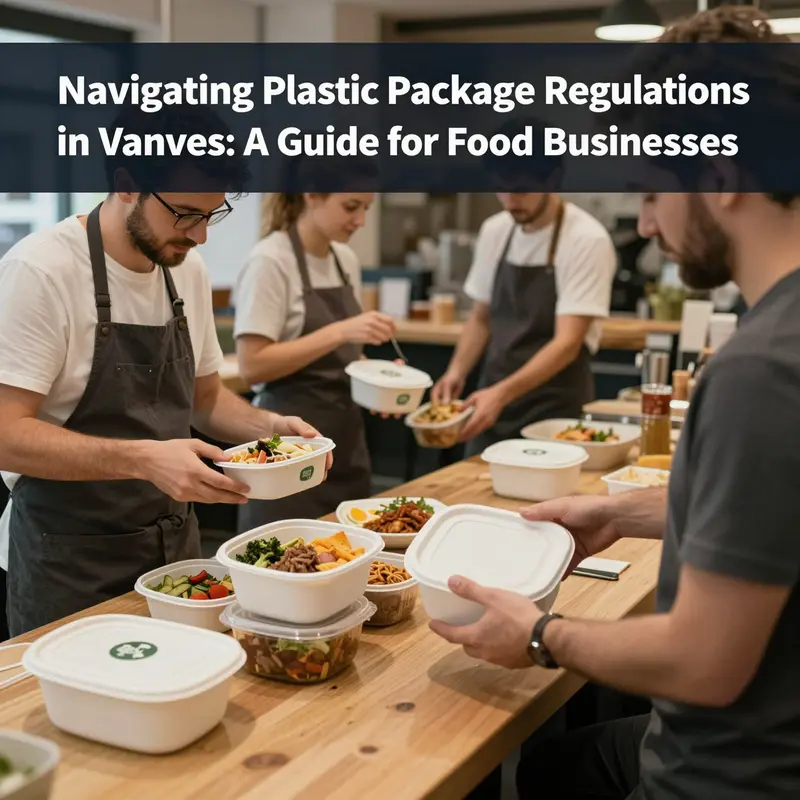
Vanves, a commune tucked into the southern edge of Paris, has become a microcosm of a continental shift in how cities think about something as ordinary as a takeout box. The EU’s Single-Use Plastics Directive, brought into full effect across member states in mid-2021 and reinforced year by year, has pressed local business owners to minimize reliance on disposable plastics. France’s broader strategy—the Anti-W waste for a Circular Economy Act, or AGEC—extends the ambition further, aiming for a complete phase-out of non-recyclable or single-use packaging by 2040. In Vanves and the Paris region, this regulatory pressure translates into practical changes: containers must be reusable, recyclable, or compostable under industrial conditions. The goal is not simply to comply with a rule but to reimagine everyday routines—how customers pick up a baguette, how a fry shop serves its portions, and how a grocery store invites customers to participate in a circular system.
The shift is neither cosmetic nor merely procedural. It requires a careful balancing act among hygiene, cost, convenience, and environmental outcomes. Paperboard and molded fiber have become standard alternatives for many items previously packaged in polystyrene or traditional plastics. For items that require more barrier properties, certified compostable plastics are now common in many outlets, while the most stubborn products are being redesigned to reduce the need for single-use packaging altogether. In practice, the emphasis is on materials that can be recovered, reused, or composted in industrial facilities, with clear sorting streams and reliable collection systems. This is where the infrastructure of a city, the support of public agencies, and the behaviors of consumers all come into play in concert rather than in isolation.
Choosing among alternatives is rarely straightforward. Paperboard and molded pulp are appealing for their renewability and compostability, but they must meet strict hygiene standards for foods that travel or sit to cool. Composite materials or multilayer films can present recycling challenges even when they reduce landfill waste, making the end-of-life pathway as critical as the initial packaging choice. In Vanves, as in the wider Île-de-France region, the optimization problem often centers on entire packaging ecosystems rather than on single items. Restaurants and retailers increasingly design their operations around a circular loop: packaging is kept in circulation through cleaning and reuse, or it is collected, sorted, and diverted into recycling or industrial composting streams. The reformulation of operational practices—training staff, modifying storage areas, and coordinating with waste management partners—is as essential as the choice of material.
A common thread across many Vanves businesses is a retreat from conventional plastics toward plant-based or fibrous alternatives. Biodegradable containers made from cornstarch or bagasse, and molded fiber that derives from recycled paper, have gained traction as credible substitutes. These options often come with the benefit of a cleaner public image, aligning with the values of patrons who want to see tangible environmental stewardship in action. The practical consequence is a different type of cost structure: higher unit prices for packaging, new logistical considerations for sourcing and storage, and the need for specialized disposal or recycling facilities. For some operators, the premium is offset by longer-term savings in waste disposal or by the loyalty rewarded from customers who see sustainability as a differentiator. The financial math varies by outlet, but the direction is clear: sustainability is no longer a marginal add‑on; it is a core criterion for procurement and design.
Among the evolving practices, one notable development is the adoption of bulk packaging systems and refill concepts at a growing number of stores. Customers are encouraged to bring their own containers for bulk items, a model that taps into a broader consumer movement toward minimal waste and personal responsibility. In Vanves, grocers testing refill stations for dry goods report not only reduced packaging waste but also heightened engagement with shoppers who are eager to participate in a system that feels communal and accountable. These refill workflows require careful attention to labeling, cross-contamination controls, and consumer education, but they also demonstrate how packaging decisions can be integrated with broader store layouts and product assortments. For diners seeking convenience, the transition does not mean sacrificing speed or reliability; it means reconfiguring how the service is delivered so that it remains efficient within a lower-waste framework.
In this environment, collaboration becomes a strategic asset. Local cafés and markets are increasingly partnering with recycling cooperatives and waste-management networks to ensure that the chosen materials actually reach the appropriate end-of-life stream. The circular economy model that many Vanves operators aspire to is facilitated by such partnerships, which help close the loop between consumption and recovery. When a cafe commits to molded pulp packaging sourced from recycled paper, it is also aligning with a system that values recovery and processing capacity, rather than simply selecting a material based on price alone. These collaborations help create a sense of shared responsibility and a predictable market for sustainable packaging options, which in turn encourages more suppliers to offer compliant materials and services.
The regulatory backdrop also shapes how businesses steward their brand narratives. Consumers are increasingly attuned to the ecological credibility of the places they frequent. In Vanves, shops that emphasize reusable containers and clear disposal instructions tend to cultivate a sense of trust and pride in environmental stewardship. This attention to packaging is not just about meeting a regulation but about connecting with patrons who want to know that their everyday purchases contribute to a healthier city. It is a subtle but powerful form of marketing: packaging becomes a visible sign of a values-driven operation, strengthening customer loyalty and drawing in a growing cohort of eco-conscious diners who want to support responsible practices even when it means paying a little more for a meal or a snack.
From the supply chain perspective, the market in Vanves has expanded to include a broader spectrum of options. Recyclable plastic containers with lids exist in wholesale channels, but so do biodegradable alternatives based on paper, plant fibers, and compostable polymers that can tolerate typical restaurant environments. The emphasis remains on ensuring that any plastic packaging is reusable, recyclable, or compostable under industrial conditions. To support this transition, regional agencies and municipal programs have rolled out technical guidance, training, and financial incentives designed to reduce the friction of change for small businesses. Workshops and peer-learning forums organized by business associations in Vanves foster practical knowledge exchange—from best practices in cleaning and sanitization for reusable systems to selecting suppliers who can deliver compliant materials on reliable timelines. The goal is to translate policy into pragmatic steps that a neighborhood café can implement within weeks rather than years.
An emblematic example from the local scene illustrates what this shift looks like in everyday life. A small café in Vanves replaced all its plastic takeout containers with molded pulp packaging derived from recycled paper. The change was not merely cosmetic; it reduced the restaurant’s plastic footprint and simplified its end-of-life handling by aligning with the city’s recycling and composting streams. The owners reported that customers perceived the move as a concrete commitment to sustainability, which reinforced the café’s identity as a responsible, future-focused business. This kind of visible action, when multiplied across dozens of venues, creates a cumulative impact that reaches beyond individual outlets and contributes to a larger culture of waste reduction and responsible consumption. In another vibrant example, grocery stores experimenting with refill stations for dry goods are not just offering cost-saving alternatives but nurturing a habit among shoppers who bring their own containers. They are normalizing a practice that reduces packaging altogether and shifts the act of shopping toward more intentional, lower-waste behaviors.
The path forward in Vanves rests on a triad of elements: policy clarity, practical packaging options, and community engagement. Policy clarity helps business owners plan procurement cycles, staff training, and waste-management logistics with confidence. Practical packaging options provide reliable, compliant choices that meet hygiene standards while lowering the environmental footprint. Community engagement, reinforced by partnerships with local authorities and civil-society groups, builds the social license for change and sustains momentum as the market experiments with pilots and scale-ups. This is not a single compliance moment but a multi-year evolution that mirrors the EU and national trajectories toward a more circular economy. In Vanves, the conversation has shifted from “can we?” to “how can we?”—a sign that the city is turning regulatory pressure into creative, resilient business practices.
To readers seeking a deeper technical or policy orientation, one can look to regional and national guidance that underpins these transitions. For more context, see ADEME’s local projects on sustainable packaging in Vanves. The initiative provides detailed insights into how municipalities, ecosystems, and enterprises collaborate to implement the EU and French frameworks in practical, scalable ways. eco-friendly takeout boxes are just one piece of a broader toolkit that Vanves is assembling to meet ambitious environmental objectives while preserving the convenience and appeal of modern food culture. External reference: https://www.ademe.fr/en/regions/ile-de-france/local-projects/sustainable-packaging-in-vanves
Green Habits, Local Appetite: Vanves and the Packaging Revolution Shaping How Residents Eat
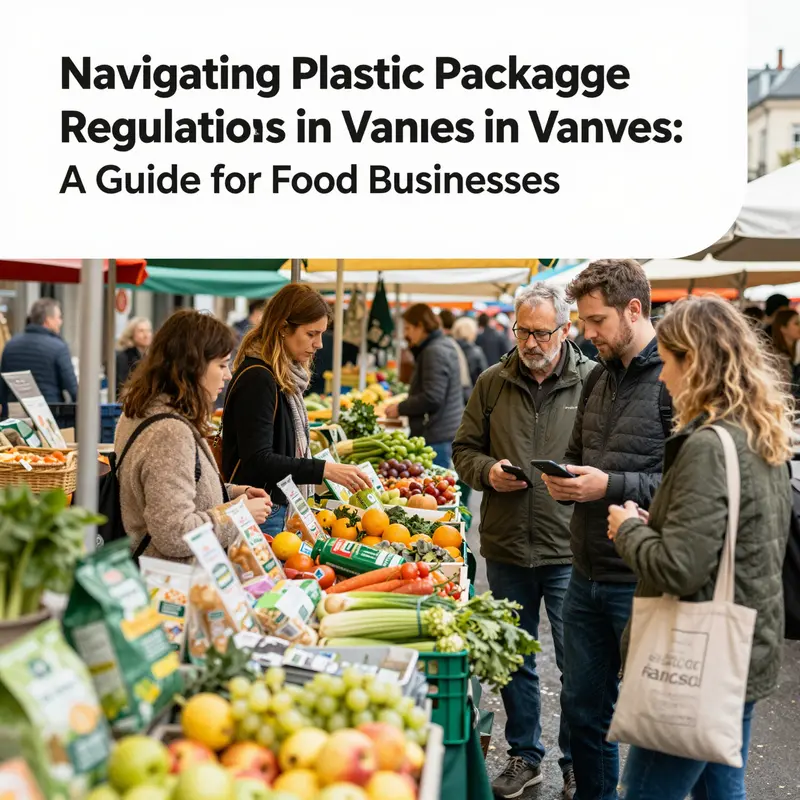
In Vanves, a quiet commune skirting the southern edge of Paris, the shift away from traditional single-use plastic food containers is not merely a policy moment but a transformation that nudges everyday dining into a more sustainable rhythm. The environment policy landscape in France, echoed by the European Union’s Single-Use Plastics directive, has set a clear pace: by 2040, a complete phase-out of non-recyclable packaging will be pursued, with reuse and compostability becoming the default. In practical terms, a fast-food fry or a ready-made meal today often travels from kitchen to consumer in materials designed to be either reusable, recyclable, or industrially compostable. For residents of Vanves, this means that the question is less about whether packaging should change and more about how quickly and smoothly it can change while preserving hygiene, convenience, and affordability. The local reality, then, is a quiet accumulation of new norms: paperboard and molded-fiber alternatives, or certified compostable plastics, becoming the default rather than the exception. The challenge is not only material but logistical—how to ensure that the new packaging can be disposed of properly and how to price it so that it remains accessible to everyday shoppers and families who routinely balance budget with values.
What researchers have broadly observed about consumer responses helps illuminate what Vanves is experiencing, even in the absence of a Vanves-specific survey. Across a diversified set of countries, consumers have shown a willingness to embrace more sustainable packaging, even when it requires some adjustment in their routines or a modest extra cost. A multinational study, spanning respondents in Australia, India, Singapore, and the United States, found that people are generally willing to pay a premium for packaging that aligns with environmental goals and are prepared to tolerate some hassle if the overall impact is positive. The takeaway is not uniform enthusiasm, but a general openness to change when the benefits—cleaner cities, reduced waste, and a sense of contributing to a larger good—are visible and credible. For Western Europe, and France in particular, these attitudes often translate into stronger support for materials that can be recycled locally or broken down in available composting streams.
In Vanves, as in the broader Paris region, this receptivity sits alongside pragmatic concerns. Hygiene remains non-negotiable; residents want packaging that protects food, keeps it safe during transport, and aligns with rigorous sanitary standards. They also weigh the convenience factor: does the new packaging fit standard takeaway sizes? Will it stay intact during transport, and can it be opened without creating a mess? The questions above all hinge on the reliability of the disposal system. If a compostable container cannot be collected and processed in an industrial facility near Paris, its environmental advantage may be muted in the consumer’s mind. These considerations explain why many local businesses have moved toward packaging that is clearly labeled as recyclable or compostable and that comes with straightforward disposal directions. The message that resonates locally is simple: sustainability should not complicate the meal, but enhance it by making the entire cycle—from purchase to post-consumption—more responsible.
The broader European context also shapes Vanves’ approach. France’s regulatory trajectory, reinforced by the Loi AGEC (Anti-Waste for a Circular Economy Act), signals a long horizon in which single-use plastics are gradually constrained and replaced by alternatives that fit into a circular economy. This policy architecture encourages businesses to rethink not just the packaging material but the entire packaging system. Some restaurants and retailers in Vanves have begun to pilot return-and-reuse concepts, where customers can return used containers for cleaning and reuse. The underlying logic mirrors what is observed in other eco-conscious cities: the more efficient the loop, the more likely consumers will accept a temporary inconvenience or a slightly higher price because the environmental benefits feel tangible and credible. The key to success lies in predictable service levels—clear return points, reliable cleaning schedules, and robust hygiene protocols that reassure customers and sustain trust in the system.
Of course, cost remains a practical brake on rapid transition. In the short term, sustainable packaging often carries higher price points, partially driven by the materials, the need for specialized disposal infrastructure, and the operational changes required to support reuse programs. For families and small businesses in Vanves, the decision to opt for a particular packaging solution rests on a balance between price, convenience, and the perceived environmental contribution. Yet even here, the direction is clear: consumers in an urban-suburban context like Vanves tend to respond positively when the packaging choice is framed as part of a broader environmental commitment—one that also includes clear labeling, accessible recycling or composting routes, and a straightforward trial period that invites feedback.
The social and cultural dimensions of Vanves’ packaging shift also matter. Environmental values often resonate with neighborhood pride and a sense of local stewardship. When residents see their city moving toward reusable systems, or when local shops explain how packaging choices reduce waste streams and litter, there is a reinforcement of pro-environmental identities. This social signaling is not merely about green cred; it translates into everyday choices—people bring their own containers for takeout when possible, or they opt for venues that participate in the reuse programs. Such behavior does not spring from nowhere; it is reinforced by visible municipal and business actions, including the adoption of compliant packaging standards, the availability of guidance on disposal, and the presence of nearby facilities that process compostable or recyclable materials. The cumulative effect is a narrative in which sustainable packaging becomes a familiar feature of daily life rather than a niche concern.
From a supply-chain perspective, Vanves’ experience mirrors a broader shift toward packaging ecosystems that emphasize end-of-life outcomes. Suppliers in the region now offer a range of compliant options that align with hygiene standards while supporting reuse and compostability. The emphasis, however, remains on practical performance: containers must be reliable under typical serving and transport conditions, compatible with existing cleaning or composting infrastructures, and legible in terms of disposal guidance. For consumers, confidence rests on transparency—clear communication about what materials are accepted where, and how the return or disposal process works. When this clarity is present, the transition from conventional plastics to more sustainable options tends to be smoother and more durable.
Incorporating these dynamics into daily life requires a unifying narrative for both residents and businesses. Local authorities, retailers, and restaurants—working together—can craft a shared story about why packaging matters, how it benefits the environment, and how the city will support a reliable recycling or composting system. That shared narrative is essential for sustaining momentum, especially as the long-term horizon toward 2040 unfolds. The economic dimension cannot be ignored: as the cost of sustainable packaging adapts to scale and as infrastructure expands, the price gap with traditional packaging should narrow. In the meantime, thoughtful design of the consumer experience—such as intuitive disposal guidance, conveniently located recycling or composting points, and visible progress indicators—helps maintain trust and fosters a sense of collective achievement among Vanves residents.
For readers seeking a tangible example of how packaging choices translate into consumer behavior, consider the practical realities at street-level in Vanves. A typical visit to a local eatery might involve selecting a meal that is served in a recyclable or compostable container, with the option to return or properly dispose of the container at designated points. The interaction is not merely transactional; it is educational, reinforcing the idea that packaging is part of a broader environmental project rather than a disposable detail. When a family notices their neighborhood encourages such practices, they are more likely to participate actively, sharing information with neighbors and friends, and modeling sustainable routines for younger generations.
To connect the local dynamics with broader practice, it helps to reflect on how packaging decisions travel beyond a single storefront. The link between consumer acceptance and policy mandates is bidirectional: policy shapes options, and consumer responses influence how aggressively a city can pursue those options. In Vanves, the convergence of European regulatory clarity, practical packaging options, and a growing culture of environmental responsibility creates a fertile ground for continued adoption. The path forward is not without friction—costs, logistics, and occasional doubts about the performance of new materials will arise—but the trajectory remains toward a future in which ordinary meals contribute to a circular economy rather than a linear waste stream. As residents grow more familiar with the new packaging options and as local businesses refine their reuse and disposal processes, the chapter of Vanves’ everyday life will increasingly read as a story of sustainable utility rather than distant policy ambition.
Within this evolving landscape, one practical signal of local engagement can be seen in how the city negotiates the details of packaging choices. When possible, venues lean toward recyclable or compostable options that align with current municipal waste streams, and they advocate for systems that minimize friction for customers. The availability of clear disposal instructions, combined with convenient access to sorting facilities, helps sustain participation. For readers exploring this topic further, a concrete illustration of how packaging choices tie to everyday experience can be found in the broader context of reusable containers and the transition toward more sustainable takeout practices. This example underscores a pivotal point: consumer responses in Vanves are not abstract preferences but active behaviors shaped by policy, infrastructure, and the daily rhythms of local life. As the city continues to implement and refine its packaging standards, residents will likely respond with growing confidence, opting for options that feel responsible, practical, and genuinely supportive of the local and regional environmental goals.
External resource: Sustainability Research (2023) MDPI provides a broader international perspective on consumer acceptance of sustainable food technologies and packaging, offering useful context for Vanves as it continues to navigate the shift toward sustainable containers. https://www.mdpi.com/2071-1050/15/6/4982
Final thoughts
The shift towards a ban on single-use plastic packaging in Vanves represents a significant milestone in the community’s commitment to sustainability. As restaurants, cafes, and food service providers adapt to these legislative changes, they not only comply with regulations but also align with consumer values favoring environmental responsibility. Understanding the implications of this transformation—from economic impacts to consumer preferences—will equip local businesses to thrive in this evolving landscape. By embracing innovation and sustainability, Vanves food businesses can foster a greener future while enhancing their customer relationships.