
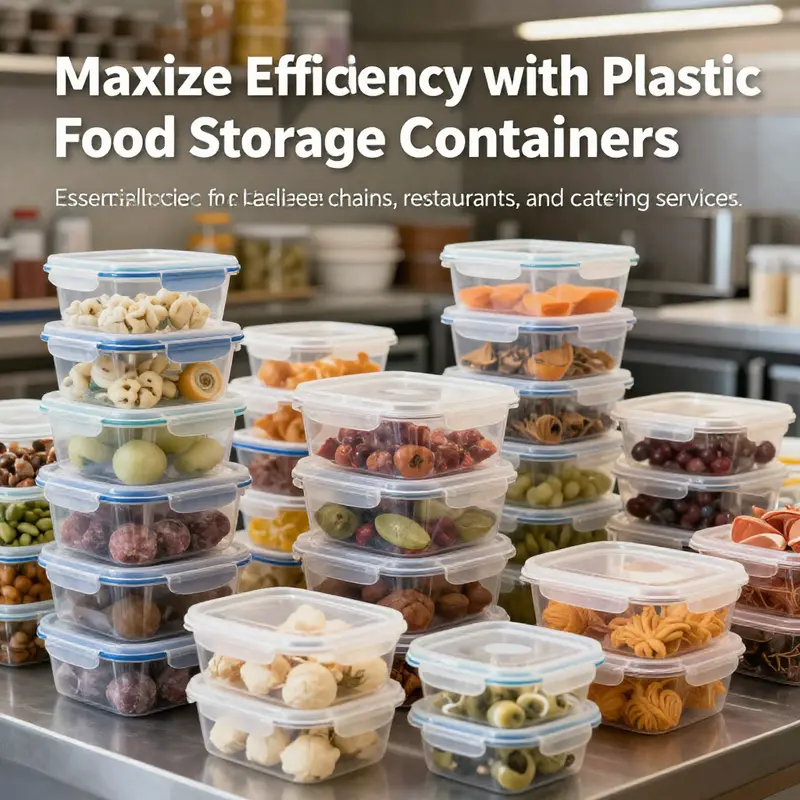
In a dynamic culinary landscape where efficiency and food safety are paramount, plastic food storage containers emerge as indispensable tools for Bubble Tea Shops, Restaurants, Food Trucks, Catering Services, and Event Planners. These containers not only streamline food preparation and organization but also ensure that quality and safety standards are met. As we delve deeper, we’ll explore the various types of plastic storage containers suited for your needs, the safety standards governing their use, and the critical environmental considerations to keep in mind when choosing these essential tools for your business.
The Material Alphabet: Exploring the Types and Practical Uses of Plastic Storage Food Containers
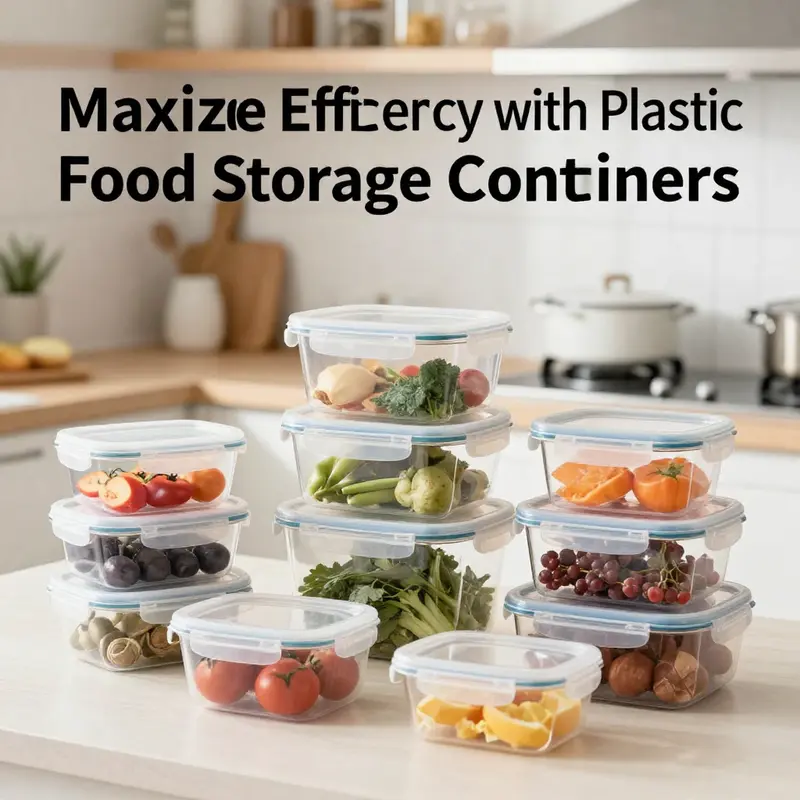
In kitchens everywhere, plastic storage containers sit at the intersection of convenience and discipline. They transform how we approach leftovers, meal prep, bulk cooking, and even the daily rhythm of organization in both home and commercial settings. A single family of objects—lightweight, durable, and designed to travel from fridge to microwave to sink with minimal fuss—can seem simple at first glance. Yet the choices behind their design are a chorus of material science, safety considerations, and practical engineering that determine how well they protect flavors, preserve nutrients, and fit into the rhythms of a busy kitchen. To understand their role, it helps to think of plastic storage containers as a material alphabet, where each letter stands for a family of polymers with distinct properties. The most common letters in this alphabet are polypropylene, polyethylene terephthalate, high-density polyethylene, and polystyrene. Each material has a story to tell about heat, light, chemical resistance, visibility, and, increasingly, environmental impact. Taken together, they chart a map of what is possible in everyday storage and what tradeoffs accompany different design choices. The result is a spectrum rather than a single answer: containers that excel at long-term pantry stability, those that shine in freezer reliability, and others that are optimized for quick grab-and-go meal prep or for the careful transport of fresh produce. In practice, consumers and professionals alike choose by considering the intended use, the size and shape required for the space, how often the container will be opened and closed, and how the contents will be heated or cooled. This decision-making is not merely about convenience; it touches on safety, performance under temperature variations, and the lifecycle of the product from production to disposal. The dialogue between material science and everyday cooking emerges most clearly when we examine the core materials themselves, then the lids and seals that complete the system, and finally the design families that reveal how form supports function in real kitchens. Polypropylene, for example, is a workhorse in many kitchens because it holds up under heat and wear. Its heat resistance makes microwaving leftovers a practical habit, and its formulation often allows it to withstand repeated cycles through dishwashers. The result is a container that can bridge several phases of a typical day: the moment of cooking in a stove or oven, the storage in a refrigerator, and the reheating in a microwave, all without fear of deformation or chemical concerns rising to the surface. The ability to go from cold storage to hot serving without the need to transfer contents to a different vessel shortens prep time and minimizes mess. Yet the story does not end with heat tolerance. PP’s relatively balanced performance across temperature ranges also means it tends to be a reliable choice for portion control and meal-prep systems. For households, this translates into predictable sizes, reliable seals, and straightforward cleaning. For commercial kitchens that must manage high volumes, PP’s durability and chemical resistance become critical when containers hold a variety of sauces, oils, and acidic or alkali-rich ingredients. The transparency or translucence of a container—often seen in PET or clear variants—adds another layer of utility. PET, once the dominant plastic for beverages, has made inroads into some food storage contexts where visibility of contents matters. Its lightness and clarity make it easy to identify what sits inside at a glance, reducing the time spent rummaging through a fridge or a cabinet. However, PET is more commonly associated with short-term storage and single-use or limited reuse; repeated heating or long-term exposure to heat can raise concerns about stability and leaching in certain applications. In kitchens that lean toward reusable storage, HDPE provides a sturdier silhouette. This material is well-known for its impact resistance and chemical resistance, properties that are especially valued when containers are likely to endure rough handling, stacked storage, or exposure to moisture and light in a pantry. HDPE’s opacity can shield contents from light-induced degradation for some foods, such as grains and flours, where light exposure can affect flavor or color over time. In contrast, polystyrene, particularly in its clear, rigid forms, has historically been favored for disposable or short-term uses in food service. Its cost-effectiveness makes it popular for single-use packaging; however, the tradeoffs include lower heat resistance and potential leaching concerns when heated, which has driven a shift away from reusability in many consumer contexts. The material choices also reflect broader questions about the lifecycle of plastic products. The modern kitchen increasingly weighs the benefits of lightweight durability against concerns about environmental impact and material safety. As a result, you will often encounter a blend of options: BPA-free formulations and lids designed to limit leaching, even in contexts where heating is involved, and a push toward designs that optimize recycling or reuse. While the chemistry of plastics can seem abstract, its implications are concrete. A container is not just a vessel for food; it is a system that must resist staining, odors, and moisture transmission while maintaining clarity for quick content checks. It must seal well enough to keep food fresh between uses, yet be simple to open for all family members. It must withstand the temperature extremes of the kitchen—from the chill of the refrigerator to the warmth of microwaves or steam from reheating—without buckling or releasing unfamiliar tastes into the food. And in many households, it must do all this while stacking neatly with other containers, sitting compactly on a shelf, and surviving the occasional dishwasher cycle without losing its integrity. The lids themselves—the often overlooked partner in the storage equation—are engineered to complete the circle of protection. Airtight, snap-on, or locking lids that click into place create an additional barrier against moisture loss, odors, and contamination. They are the primary interface that determines how long a stored item remains fresh and how well a container travels from one location to another. The interplay between lid design and container body is not accidental; it is a carefully tuned relationship that affects everything from spill resistance to household organization. In a busy kitchen, the value of a good lid cannot be overstated. It means fewer spills when the container is moved from fridge to car, more uniform temperatures during transport, and predictable performance in busy service lines. Some lids incorporate venting features to manage pressure changes during freezing or reheating, a small design detail with outsized practical consequences. The fact that many modern containers are designed to be microwave-safe or dishwasher-safe is another signature of their integration into daily routines. The microwave-safe claim typically hinges on the absence of materials or additives that might degrade at high temperatures, and on lid designs that permit steam to escape while maintaining a barrier against splatter. Dishwasher-safe labels reflect a confidence that the material can withstand repeated washing cycles, though this depends on the specific design and the temperatures reached by the washing cycle. In real-world use, these capabilities translate into tangible benefits: time saved, food kept at stable temperatures, and a visibly cleaner kitchen where leftovers feel accessible rather than daunting. An interesting tension exists, however, between the advantages of plastic storage and the concerns about long-term chemical exposure. Heated contact, particularly with aggressive or pigmented foods, has raised questions about leaching and staining in some plastics. This has spurred a strong consumer interest in BPA-free formulations and, increasingly, in alternatives such as glass for certain applications. Glass, in many comparisons, offers advantages in long-term storage because of its lower porosity and superior thermal conductivity, which can contribute to more uniform temperatures and fewer interactions with the container’s material. Yet glass trades away several practical benefits: greater weight, higher fragility, and less resistance to impact. Plastic, by contrast, is lightweight, tough, and forgiving, with a resilience that makes it ideal for everyday use and for environments that demand quick, repeated access to ingredients. The choice among PP, PET, HDPE, and PS, then, becomes a choice among different kinds of strength: heat tolerance, clarity, chemical resistance, and stress endurance. It is not merely a preference for a given aesthetic but a strategic decision about performance in a kitchen routine. The design language that accompanies these materials further shapes how containers fit into the daily workflow. Stackable and modular designs maximize vertical space and help reduce kitchen clutter. Removable dividers inside a container allow you to separate foods without needing multiple separate vessels, enhancing meal-prep efficiency and reducing the number of containers you must wash at the end of the day. The material choices, the seal quality, and the joinery of lids and bodies together determine how well a container can hold up under the strain of a busy kitchen environment. And as households become more aware of sustainability goals, manufacturers are increasingly emphasizing recyclable designs and easier end-of-life processing. Consumers now seek products that offer a practical balance: durable enough for daily reuse, safe for a wide range of foods, and compatible with recycling streams where possible. The practical side of this evolution is visible in the way households use containers for everything from leftovers to pre-portioned meals. A well-chosen container system can support efficient meal planning, reduce waste by extending the freshness window of prepared foods, and streamline the logistics of feeding a family through a week. In offices and commercial kitchens, standardized container sets can simplify inventory, speed up service, and ensure uniform storage and reheating protocols across shifts. The design ethos that underpins these outcomes is not just about keeping food safe; it is about creating reliable, repeatable workflows where the container itself becomes a trusted tool. When evaluating the wide variety of containers on the market, it is easy to fall into a trap of assuming that more features automatically mean better performance. The truth is subtler: the best option for a given user is a container whose material and design align with how it will be used day after day. For a home cook who plans to batch-cook on Sundays and reheat portions during the week, a stackable PP or HDPE set with airtight locking lids can offer durable performance, easy cleaning, and good resistance to staining. For someone who stores a lot of fresh produce or who values crystal-clear visibility for quick checks, PET-based transparent containers may be appealing, provided the food is not heated in those vessels. For those who want to minimize cooking-time waste and keep liquids separate, sealed, and protected, the right design with adjustable dividers and thoughtful lid engineering can transform kitchen routines. In addition to practical performance, there is a growing emphasis on safety certifications and compliance, which helps build trust in both home kitchens and commercial operations. While the materials themselves are central, the way a container is manufactured, tested, and labeled matters as well. Food safety standards and certifications signal a commitment to controlling migration of chemicals into food and to maintaining product integrity across the supply chain. In this sense, containers are not simply clever boxes; they are regulated interfaces between the food you prepare and the environment in which it travels. The discussion thus turns from pure material curiosity to a broader view of how containers fit within a system of safe handling, predictable performance, and responsible design. It is a narrative of tradeoffs and tailored solutions. Some producers emphasize resilience and longevity with robust walls, reinforced seams, and tight seals that resist cracking after a thousand openings. Others prioritize transparency and modularity, offering clear bodies that make inventory management straightforward and internal labeling intuitive. Still others balance economy and sustainability, seeking designs that minimize waste while delivering reliable service. For the consumer, the practical question becomes this: what set of containers will cover both the types of foods you store and the ways you interact with them—whether that means daily meal prep, weekend bulk cooking, or occasional take-home meals? The answer is seldom a single container, but an ecosystem of shapes, materials, and lid mechanisms that work in concert. If you are looking to curate a system in your own kitchen, the guiding principle is to align material behavior with culinary patterns. For instance, if you frequently freeze soups or sauces, seek freezer-safe designs that remain rigid and crack-resistant at low temperatures. If you often transport meals to work or school, choose leakproof lids and shapes that maximize packing efficiency. If you store vibrant sauces or deeply colored ingredients, consider how staining might impact the container’s appearance over time and whether you’re comfortable with potential aesthetic changes or if you prefer more stain-resistant materials. The modern marketplace also interrogates the environmental costs and benefits of plastic containers. While plastic’s lightness and resilience make it ideal for everyday use, its end-of-life story requires attention. Recyclability varies by resin type and local recycling capabilities, and some designs incorporate features that complicate recycling, such as mixed materials or non-recyclable lids. As awareness grows, many brands are moving toward clearer signaling of recyclability and safety, including BPA-free claims and reduced pigment content. The interplay between convenience and environmental responsibility remains a live discussion, one that shapes product development as much as consumer choice. In keeping with the broader arc of this article, it is worth noting that the landscape of plastic storage containers is not static. Innovations in polymer chemistry, lid engineering, and manufacturing processes continue to push the boundaries of what is possible. Containers are becoming more versatile, with better seals, smarter closures, and more space-efficient configurations. At the same time, the push toward sustainable design encourages more durable, recyclable options and clearer information about composition and safety. This evolution aligns with what many kitchens already know: the right container system does not merely store food; it preserves it with care, supports efficient workflows, and reduces waste. To connect the thread back to everyday choice, consider the content of a typical kitchen that prioritizes clarity and efficiency. A family may rely on a set of rectangular, stackable containers for bulk meal prep, complemented by a few round, transparent options for quick-check storage in the fridge. The lids snap into place with a reassuring click, while the walls resist staining from sauces and curry with the right resin choice. The containers can enter the freezer without cracking, then rejoin the lineup in the dishwasher after a week of use. In such a configuration, the science behind the material—heat resistance, chemical stability, clarity, and durability—becomes an everyday practicality that supports healthier eating, organized cooking, and less wasted food. And through it all, the imagined future of plastic storage containers remains tethered to the same core purpose: to make food preparation, storage, and transport simpler, safer, and more dependable without demanding excessive care or specialized handling. As you consider your own kitchen or commercial operation, remember that the dialogue between material properties, lid design, and form factor is more than an academic exercise. It is the practical mechanism by which meals stay fresh, ingredients stay visible, and organization becomes a natural habit rather than a constant project. For those who want to see a real-world example of how these design principles translate into everyday use, consider this: an eco-friendly disposable 3-compartment packaging box—though designed for single-use takeout—illustrates how modular thinking and robust sealing technologies can influence broader packaging design. Such systems highlight the tradeoff between the conveniences of plastic and the responsibilities of waste reduction, a balance that continues to shape innovation across food storage and packaging. The takeaway is simple: selecting containers is not just about choosing a shape or a color. It is about reading the needs of your kitchen, testing how different materials respond to your cooking rhythms, and choosing options that will reliably support healthy meals, reduce waste, and simplify daily routines. The language of plastics, when read correctly, becomes a practical guide for better storage—one that helps keep flavors intact, preserves nutrients, and makes the chore of daily meal management a little easier to manage. Internal link note: for a case study on modular, multi-compartment packaging approaches that balance convenience with safety in fast-food contexts, see the related product page, which exemplifies how designers are thinking about compartmentalization and seal integrity in real-world use: eco-friendly disposable 3-compartment packaging box. External resource: for official guidance on materials safety and food contact, see the U.S. FDA’s guidelines on food-contact materials. https://www.fda.gov/food/food-contact-materials
Safe by Design: Understanding Materials, Standards, and Safety in Plastic Food Storage Containers
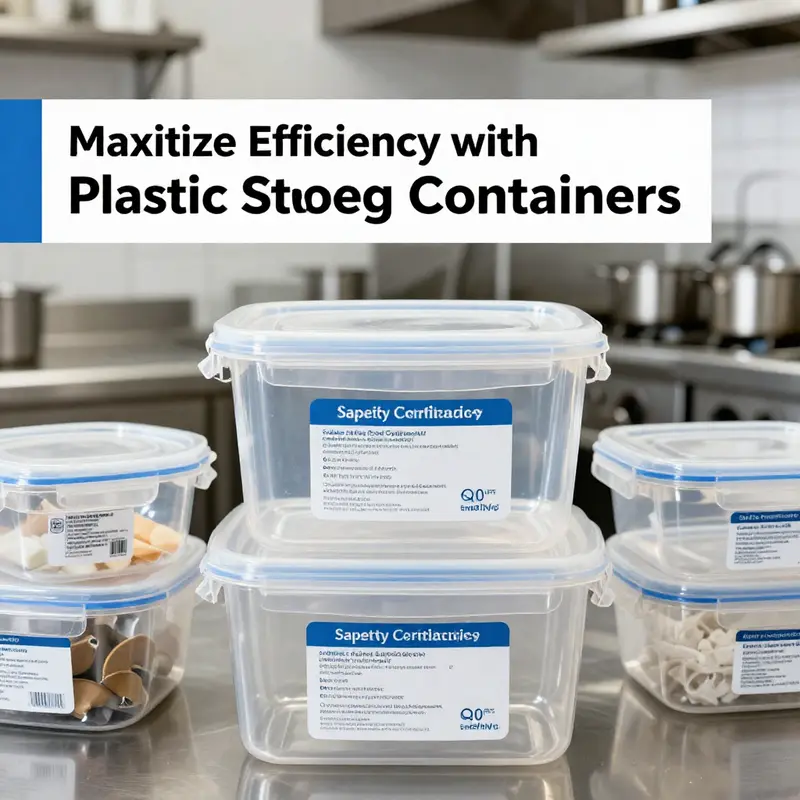
Material choices in plastic food storage containers influence safety as much as performance, shaping everyday decisions about convenience, heat, and potential exposure. This chapter surveys the three most common food-contact resins—PET, HDPE, and PP—and explains how their chemistry, heat tolerance, and processing affect real-world use from cold storage to microwave reheating. PET offers clarity but is less ideal for repeated heating; HDPE delivers durability and chemical resistance with often opaque appearance and moderate heat tolerance; PP balances higher heat resistance with chemical stability and broad labeling options, including microwave safety when specified. The chapter also covers polycarbonate and BPA-free strategies, noting that material safety depends not only on resin identity but on manufacturing, labeling, and user practices. Regulatory bodies such as FDA, LFGB, and GB 4806 set safety criteria emphasizing non-toxicity, durability, and performance under household conditions, while labeling and certifications help consumers choose appropriately for freezing, refrigerating, or reheating. Practical considerations—lids, gaskets, seals, cleaning, and end-of-life—link material choice to real-world reliability and sustainability. The concluding guidance invites readers to verify manufacturer instructions, read heat-tolerance and temperature guidelines, and consider end-of-life implications as part of an informed purchase. An external resource is cited for deeper context on the chemistry and safety of plastics in contact with food.
Rethinking Convenience: Sustainability, Use, and the End of Life for Plastic Storage Containers
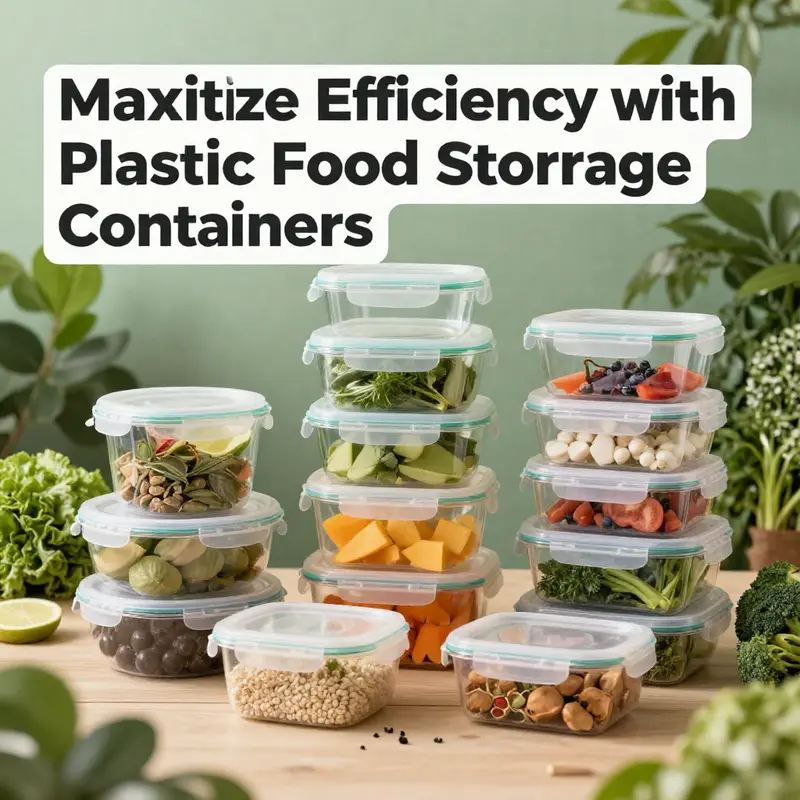
Plastic storage containers have become a quiet backbone of modern kitchens, offering predictable performance and a ready-made system for portioning, stacking, and saving time. Their appeal rests not just in their durability, but in the efficiency they enable—meal prepping on Sundays, bulk cooking for the week, and a tidy refrigerator that makes it easier to see what’s on hand. Yet the convenience they deliver comes with a parallel set of environmental questions that echo across households and industries. If a kitchen is the site of daily decisions about what to store, how to store it, and how long to keep it, then the sustainability of those choices hinges on understanding two intertwined realities: the life cycle of plastic storage and the state of the world’s waste-management systems. The numbers, though stark, are not merely statistics to stamp into policy briefs; they are practical reminders that every container has an origin, a use-phase story, and an end-of-life fate that matters beyond the kitchen door. In this chapter, we explore how production, use, and disposal intersect with broader ecological considerations, and how individuals and organizations can shift toward practices that preserve convenience while reducing harm to people and planet alike.
The story begins with production. Virgin plastic—often derived from fossil fuels—drives a substantial share of the carbon footprint attached to plastic storage. The lifecycle of these containers is not a closed loop by default. Even when a material is labeled as recyclable, the reality of global infrastructure means a large share is not recovered. The United States Environmental Protection Agency has highlighted a sobering fact: only about 9% of all plastic ever produced has been recycled. That means a vast majority ends up in landfills, incinerators, or the broader environment, where it can persist for decades. The path from bottle or tray to landfill is influenced by many factors, including the design of the container, the presence of additives, the type of plastic, and the efficiency of local recycling streams. In practice, recycling rates are not solely about the material’s capability; they’re also about whether the system can collect, sort, and reprocess it without contamination. Contamination—from leftover food, non-recyclable inserts, or pigments—can push materials out of the recycling stream, even when the base resin is technically recyclable. This is a reminder that the problem is not only technical but logistical and behavioral: a container that is recycled in one city may not have the same fate in another, depending on the nearby network of facilities and markets for recycled feedstock.
Beyond the collection nets, there is the fate of the plastic during reuse and care. The degradation of plastic over time, accelerated by heat, sunlight, or acidic foods, can alter its physical properties and raise concerns about chemical additives leaching into food. The worry is not merely whether a container lasts; it is whether it remains inert and safe across repeated cycles of washing, storage, and heating. These considerations push many households to adopt a cautious approach: reuse containers under defined conditions, avoid heating food in non-heat-tolerant plastics, and retire items when scratches or clouding compromise the integrity of the barrier that protects contents. Even when containers remain physically intact, their long-term impact is amplified by how often they are used and how long they stay in circulation. The lifecycle impact is not simply a function of material type but of design for reuse and the frequency with which a given item can perform its function before being retired.
A related dimension is the end-of-life narrative. The material’s porosity, the presence of dyes or fillers, and the degree of disassembly possible at the end of use all influence whether a container can be efficiently recycled or repurposed. In many cases, what looks like a simple storage solution becomes a constraint at the waste-management stage because a container may require separation of multilayer components or may be incompatible with local sort streams. This is one reason why the environmental assessment of plastic storage is not just a question of whether it can be recycled, but whether it can be recycled economically and safely at scale within a given system. The persistent challenge is to design for recyclability from the outset—so that a container’s life after use is more than a single, linear journey from purchase to disposal.
If the aim is to mitigate environmental harm, it helps to widen the conversation beyond the kitchen and into the realm of choices and behavior. The lifecycle comparisons with alternative materials are instructive. Glass and stainless steel, for example, often incur higher initial environmental costs due to raw material extraction and manufacturing energy. However, their longer lifespans and potential for repair or refilling cycles can offset those upfront costs over time. Life cycle assessments conducted in various contexts commonly find that reusable options outperform single-use plastics across the entire lifespan when used repeatedly and maintained properly. In other words, sustainability is not merely about the material in the container; it is about how often and how long it is used, how it is cleaned, and how it is ultimately disposed of or recycled when it reaches the end of its useful life.
This interconnected picture helps explain why environmental researchers emphasize the broader shift away from disposable and single-use packaging toward reusable, non-toxic alternatives. The Green Living Institute’s Dr. Lena Patel captures this sentiment succinctly: switching to non-plastic storage is one of the simplest yet most impactful changes a household can make for both personal health and planetary well-being. The emphasis here is not to demonize plastic storage but to recognize the trade-offs and to explore pathways that preserve the practical benefits while reducing downstream harm. If the goal is a healthier kitchen and a healthier planet, then choices about materials, design, and use patterns matter just as much as the frequency of use itself.
For households and organizations seeking to integrate sustainability without sacrificing function, the design of storage systems becomes crucial. Materials beyond traditional plastics are part of the conversation—glass, stainless steel, silicone, and even beeswax wraps offer viable alternatives in certain contexts. Each option carries different implications for durability, safety, cleaning, and compatibility with heating, freezing, and microwaving. A comprehensive view acknowledges that no single material is universally superior; rather, the best choice depends on how the container is used, how often it is reused, and how it ends up in the waste system. A thoughtful approach combines robust lid seals for leakage prevention with stackable, space-saving shapes that maximize refrigerator or freezer capacity while encouraging long-term use. When containers are designed with modularity in mind—interchangeable lids, uniform dimensions, and compatibility with standard shelving—the odds of keeping items in circulation rise, reducing the probability that a well-made container becomes waste because it creates friction in daily routines.
The practical takeaway for readers is not to chase purity but to pursue consistency in sustainable practice. For example, if a household stores leftovers daily, investing in a compact, durable set that can withstand repeated washing and occasional freezing can be more sustainable than buying a regular, disposable set every few weeks. If a household or business runs a takeout service or hosts events, the question shifts to designing packaging that can be reused or easily disassembled for recycling, while still maintaining food safety and portability. In this context, an internal takeaway is to explore options for customizable, reusable packaging that aligns with event needs and branding while prioritizing end-of-life clarity. For those curious about how such packaging choices look in practice, a sample of customizable takeaway packaging options is available here: custom-takeaway-packaging-supplies-disposable-tableware-for-theme-party. This link points to a blended concept set that highlights how a single system can be adapted to different event scales without compromising on recyclability, reuse, or food safety. The emphasis remains on designing for reuse and recycling, not simply for display or short-term convenience.
In contemplating what comes next, it is useful to situate individual choices within a broader policy and infrastructure frame. While consumer behavior matters, it operates within a network of collection programs, sorting facilities, and markets for recyclables. The recycling gap means that even well-intentioned purchases may not yield the desired environmental benefit if the local system cannot process the materials efficiently. This gap underscores the need for coordinated improvements in waste-management infrastructure, from better sorting technologies to clearer labeling and standardized resin identification that reduces confusion for consumers. It also points to a role for manufacturers and retailers in designing products with end-of-life in mind—labels that accurately reflect recyclability, components that can be disassembled, and packaging that minimizes coloring and additives that complicate processing. The pursuit of greener outcomes, then, is not a one-step decision but a continuous loop of design, use, and disposal that requires collaboration across households, businesses, policymakers, and waste systems.
To translate these ideas into everyday habits, a few practical guidelines can help guide decisions without turning sustainability into a burden. First, favor containers that are explicitly built for repeated use and that show wear through use rather than through cosmetic damage. A scratched surface may harbor micro-abrasions where bacteria can colonize and where the barrier between food and container can be compromised. Second, be mindful of heating and dishwashing practices. If heating is needed, use containers designated as safe for heat, and avoid microwave-heating with lids sealed or with components that are not intended for high temperatures. Third, concentrate on reducing the number of unique container shapes in a set; uniform shapes reduce space while maximizing reuse opportunities and simplifying cleaning. Fourth, implement a simple retirement rule: retire a container if it cracks, crazes, or absorbs stains to the point that it can no longer be cleaned effectively or it compromises food safety. Fifth, when upgrading, consider the end-of-life option before purchasing. Ask whether the new design is easier to recycle, can be disassembled, or offers longer life in multiple contexts—refrigeration, freezing, and pantry storage alike. These practices do not demand perfection; they reward consistency and incremental improvements that accumulate over time.
The broader takeaway is that sustainability in plastic storage is not a fixed attribute of a single product category but a dynamic system shaped by material choices, usage patterns, and the regions in which waste is processed. By embracing a lifecycle mindset, households and institutions can retain the practical benefits of plastic storage while reducing its environmental footprint. And while components of this equation will continue to evolve—technologies for recycling, innovations in material science, and shifts in consumer expectations—the core principle remains stable: design for reuse, design for safe end-of-life, and design for minimal environmental impact across the container’s entire journey.
External resources can deepen understanding of these dynamics and provide a broader context for local decisions. For readers who want to explore the environmental implications of plastics recycling in more detail, an authoritative overview from a national environmental agency offers a comprehensive assessment of recycling rates, technologies, and policy considerations. This resource complements the discussion here by outlining how recycling infrastructure, policy frameworks, and market demand interact to shape the fate of plastic packaging in the real world.
In sum, plastic storage containers will likely persist as a practical tool in kitchens and workspaces. The question is how their role can evolve to support a healthier planet. By choosing durable, repairable designs; by integrating reuse into daily routines; by aligning product development with end-of-life realities; and by supporting recycling systems with informed consumer choices, we can preserve the benefits of plastic storage while diminishing its ecological costs. The path forward is not about abandoning plastic storage altogether but about reimagining it as a component of a circular, resilient food system. It is a call to act with intention, drawing on science, policy, and everyday ingenuity to keep food organized, safe, and sustainable in a changing world.
External resource: U.S. Environmental Protection Agency. Overview of Plastics Recycling. https://www.epa.gov/epawaste/hazard/tsd/plastics/overview.htm
Final thoughts
Understanding the pivotal role plastic food storage containers play in food service environments empowers you to make informed choices. From selecting the right types for your specific needs to ensuring compliance with safety standards and embracing sustainability, these factors collaboratively enhance operational efficiencies and contribute to a responsible culinary practice. Make smart storage solutions a core component of your food service strategy.