
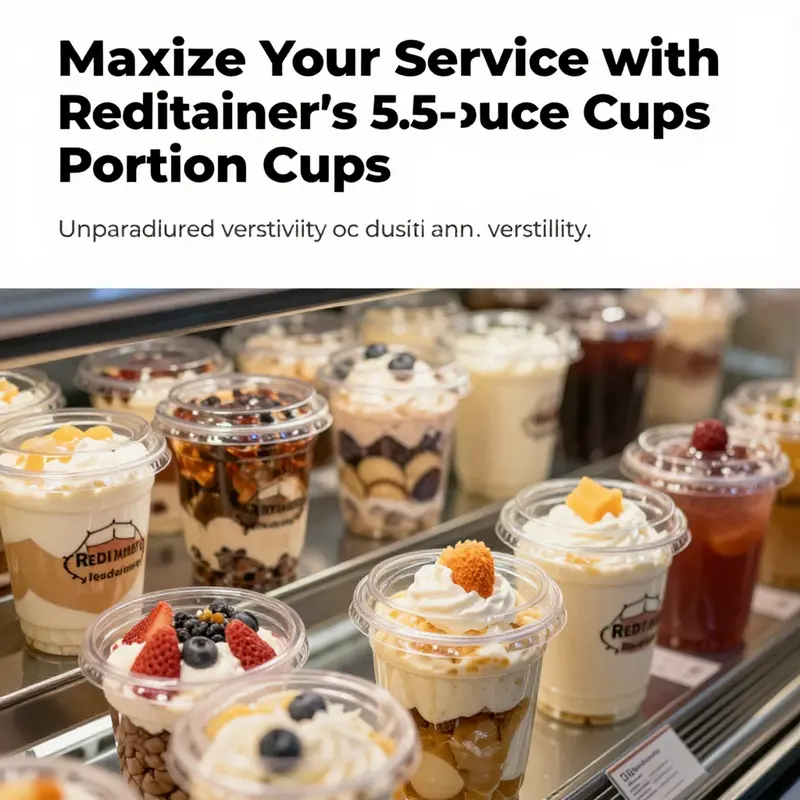
Reditainer’s 5.5-ounce plastic disposable portion cups are an essential resource for businesses in the beverage and food service industry. Catering to bubble tea shops, restaurants, food trucks, and event planners, these durable cups offer versatility, functionality, and a commitment to environmentally friendly practices. As we delve into their myriad applications, material composition, and market presence, you’ll discover how integrating these disposable cups can elevate your service offerings and meet consumer expectations.
Measured Versatility: The 5.5-Ounce Disposable Cup Pack and Its Broad Reach in Food Service
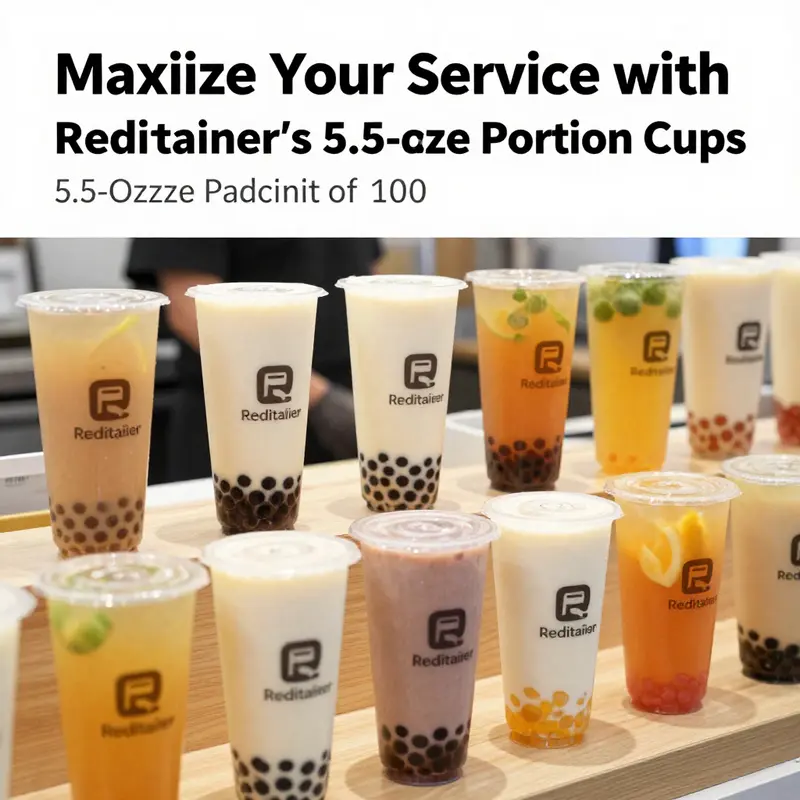
In the quiet rhythm of kitchen and event planning, there is a simple instrument that quietly anchors efficiency, hygiene, and portion control: the 5.5-ounce disposable plastic cup with a matching lid, sold in a practical pack of 100. It is not glamorous, and it does not demand attention with flashy colors or complicated features. Instead, it offers a reliable, transparent window into a world where small portions matter—where samples, sauces, desserts, and measured servings become manageable, portable, and easy to store. The capacity, at about 165 milliliters, sits at a sweet spot for preportioned snacks and test portions. It is enough to satisfy a taste without forcing a wasteful choice, yet compact enough to fit in a crowded refrigerator or a catered event’s staging area. The cup’s design is deliberately modest: translucent walls that allow a quick read of contents, a sturdy stem that supports daily handling, and a lid that seals in freshness and reduces the risk of drips during transport. This is the kind of tool that shows its value when a kitchen or a catering operation moves from improvisation to routine, from guesswork to measured service. The simple act of portioning—breaking a larger dish into consistent, repeatable servings—becomes a craft when the container itself is designed to support accuracy, visibility, and speed. In the realm of food service, even a small improvement in workflow can ripple outward, reducing time spent on checking and correcting portions, limiting waste, and boosting the confidence of staff and clients alike. The translation from product spec to everyday use is where a 5.5-ounce cup pack earns its keep. The material, polypropylene, is chosen for durability and safety. Recycle code #5 signals a particular resin family known for rigidity and chemical resistance, attributes that matter when sauces, syrups, or crowd-pleasing dips demand a container that won’t warp under moderate temperature shifts or during repeated handling. The choice of polypropylene is not just about keeping contents secure; it is about ensuring that the cup remains stable on a crowded serving line, stacks neatly in a storage cart, and survives the occasional rough housing of a busy kitchen staff. The translucence—an intentional design trait—serves more than aesthetic purposes. It allows cooks and servers to identify contents at a glance, which reduces the need to rummage through a lineup of cups in search of the right option. This is especially valuable in fast-paced environments where speed and accuracy matter. The lids that accompany the 5.5-ounce cups complete the cycle of utility. They seal to prevent leaks, preserve texture, and enable portable service. A dessert cup that travels from kitchen to event to home refrigeration can maintain its shape and its presentation when the lid snaps into place. It is not unusual to see these packs used for samples in grocery store tastings, tiny portions of sauces or dressings offered at a luncheon, or the final course at a multi-stop catering event where smooth transitions between courses hinge on reliable containers. This kind of packaging becomes a quiet partner in the workflow rather than a focal point of attention, allowing chefs and organizers to focus on the experience rather than the mechanics of storage and transport. The pack size—100 cups and lids—offers scalability without overwhelming inventory. It provides enough quantity for batch prep and for multiple service points, yet remains small enough to manage without an expansive storage footprint. The economics of a well-sized pack also matter. When a kitchen seeks to balance the cost of single-use items with the need for speed and hygiene, a 100-count pack offers a predictable baseline that supports planning without excessive leftovers. The economics are mirrored in the practicality of counts, the ease of restocking, and the simplicity of ordering through standard e-commerce channels. The combination of visibility, sealable lids, and a compact count helps align with a broad spectrum of use cases. Consider the everyday tasks in home kitchens, where families choreograph meals with multiple servings across the week. The same cup, when paired with its lid, can be used for meal prep planning, portioning out snacks for children after school, or storing homemade sauces for quick lunches. The translucent walls make it easy to identify what is inside, sparing a parent or caregiver from rummaging and guessing. In professional kitchens, the cups support a different kind of discipline: portion control that scales. For sample platters and tasting events, consistent portions are essential to ensure fair distribution, to compare products, and to provide a uniform guest experience. When a store offers tasting samples, the cups empower staff to present a clean, professional image while maintaining hygienic standards. The lid’s presence is a reminder that these little vessels are not merely disposables; they are designed for repeated handling and for the practical realities of service, including the potential for a secure takeaway option. The cups’ design also interacts with branding and presentation in meaningful ways. The clear material becomes a neutral backdrop, allowing the content to take center stage. A sauce or dessert can glow through the walls, inviting curiosity. The packaging can be customized around signage or labels that identify contents, nutritional information, or branding without obscuring the product itself. In settings where branding is a key element of customer experience, a neutral vessel becomes a versatile canvas. The material choice—polypropylene—carries implications beyond pure function. It is a thermally stable material with a history of safety in contact with foods, a factor that matters for a range of uses from cold desserts to room-temperature sauces and condiments. While the cups are designed for everyday practicality, they also meet expectations of hygiene and sanitation that are central to consumer-facing food services. This is not merely about keeping contents contained; it is about enabling a reliable, sanitary flow of goods from preparation to presentation. When planning events, one quickly notices that these cups integrate into a larger ecosystem of takeout and disposable tableware. They sit comfortably in a lineup of other containers, each chosen not only for its own properties but for how well it can be combined with lids, labels, and transport accessories. The value proposition expands when you consider compatibility with other packaging options, such as carton sleeves, stacking trays, and wrap-around branding that can accompany the entire service. The practical benefits are not limited to the professional sphere. Home organizers find these cups helpful for preserving portions for allergy-conscious households, for portion-controlled snacks for kids, or for single-serving meal components that make daily routines easier and cleaner. The clear walls make it easy to monitor contents at a glance, reducing the need to open containers repeatedly and thereby limiting exposure to air and potential odors. A well-sequenced set of preportioned servings also reduces the stress of mealtime decisions, enabling family members to pick up a ready portion that aligns with planned menus. The broader implications of such a pack are magnified when you consider the contemporary emphasis on flexibility and on minimizing waste. The ability to seal a portion with a tight lid supports a more efficient approach to storing leftovers and ensuring that portions can be enjoyed later without compromising texture or flavor. It is a simple form factor, but one that aligns with the needs of a world that values speed, organization, and adaptability. In a landscape where disposable tableware is widespread, these cups occupy a niche that sits between casual home use and professional service. They are not meant to replace durable, long-term containers in every instance; rather, they provide a practical option for occasions that require a balance of hygiene, affordability, portability, and ease of use. The convenience is not simply about tossing a cup into a bag; it is about the confidence that the contents will remain intact, identifiable, and ready for consumption or display. For event planners and culinary professionals who manage time-sensitive service, this can translate into fewer last-minute substitutions, fewer spillages, and a more predictable workflow. The cups help to standardize portions, reduce variance in serving sizes, and support a more consistent guest experience. They also offer a pathway to experimentation. A chef or home cook can test new recipes or product samples without committing to large volumes, using the cups to collect feedback or to run controlled tastings. In environments where dietary restrictions or preferences require clear labeling, the transparent walls support simple, at-a-glance communication about contents. When coupled with a lid and, where appropriate, a small label, the cups can convey essential information without obstructing the visual appeal of the food itself. The potential applications extend into educational and institutional contexts as well. In school cafeterias or community programs, preportioned servings help maintain portion control norms and enable standardized distribution. They support portioning for snacks, fruit portions, yogurt, dips, or dressings, all while meeting basic food safety expectations. The pack of 100 offers a flexible starting point for pilots, trials, or seasonal offerings, providing enough quantity to test logistics and user experience without risking excessive inventory. This blend of practicality, safety, and adaptability makes the 5.5-ounce cup pack more than a disposable convenience; it becomes a small, reliable instrument in the broader orchestration of food preparation, service, and storage. For those who manage the logistics of takeout, catering, or home organization, the value lies not only in the immediate utility but in the potential to shrink friction at every touchpoint. The simple act of selecting a cup that is clear, sturdy, and sealed by a lid reduces the cognitive load of planning and execution. It shifts attention from containment concerns to the creative and relational aspects of food service—the care with which portions are prepared, presented, and shared with others. Within the larger conversation about packaging, the 5.5-ounce cup pack sits alongside an ecosystem of disposable containers, lids, and accessories designed to streamline the journey from kitchen to consumer. It represents a specific response to the need for controlled portions and reliable transport without sacrificing visibility or ease of use. As with any packaging choice, it is wise to pair the cup with related solutions that complement its strengths. For instance, themed events and more elaborate service setups often require a broader suite of takeaway packaging that aligns with color schemes, branding, and customer expectations. In such cases, pairing these cups with additional takeout packaging supplies can create a cohesive guest experience while maintaining the practical benefits of portion control and portability. See the broader offerings for themed event packaging here: custom takeaway packaging supplies for theme party. The right combination of containers, lids, labels, and presentation materials can transform a straightforward portion into a polished, convenient, and memorable moment for guests and households alike. As with any packaging decision, buyers should consider local recycling capabilities and guidelines, since recycle codes indicate material families that may be accepted or rejected by municipal programs. While polypropylene #5 containers are widely recognized for their durability and reusability, recycling options vary by region. In practice, this means checking with local waste authorities or household recycling guidelines to determine whether the cups can be recycled where you live. The practicality of disposal and the environmental footprint are important factors, especially for organizations that prioritize sustainable practices. However, even when recycling options are not universal, the reusability of the lid and the sturdy form of the cup encourage reuse in appropriate contexts, such as micro-prep, storage of leftovers, or round-robin tastings where the same container is repurposed with care. The conversation around packaging today often revolves around efficiency, safety, and environmental responsibility, all of which converge in this modest cup and lid duo. It is easy to underestimate the influence of such a tool in the daily theater of food service and home organization. Yet the cumulative effect of many small, well-made components can yield meaningful improvements in workflow, waste reduction, and guest or family satisfaction. The 5.5-ounce capacity is not just a number; it is a design decision that recognizes human appetite and the realities of service. It acknowledges that a portion can be dignified by appropriate scale and presented with clarity, without demanding excessive space or creating extraneous waste. In the end, this cup pack embodies a philosophy of practical generosity: the willingness to provide clean, knowable portions quickly and reliably, with the confidence that contents are easy to see, easy to seal, and easy to carry. For anyone seeking a balanced, versatile solution that fits a spectrum of applications—from sampling in a grocery aisle to staging a dessert bar at a wedding reception—the 5.5-ounce disposable cup pack offers a compelling blend of form, function, and flexibility. External reference: https://www.amazon.com/dp/B07B2ZVQXK
Plastics in Small Portions: Material Makeup, Recyclability, and the Environmental Footprint of 5.5-Ounce Disposable Portion Cups
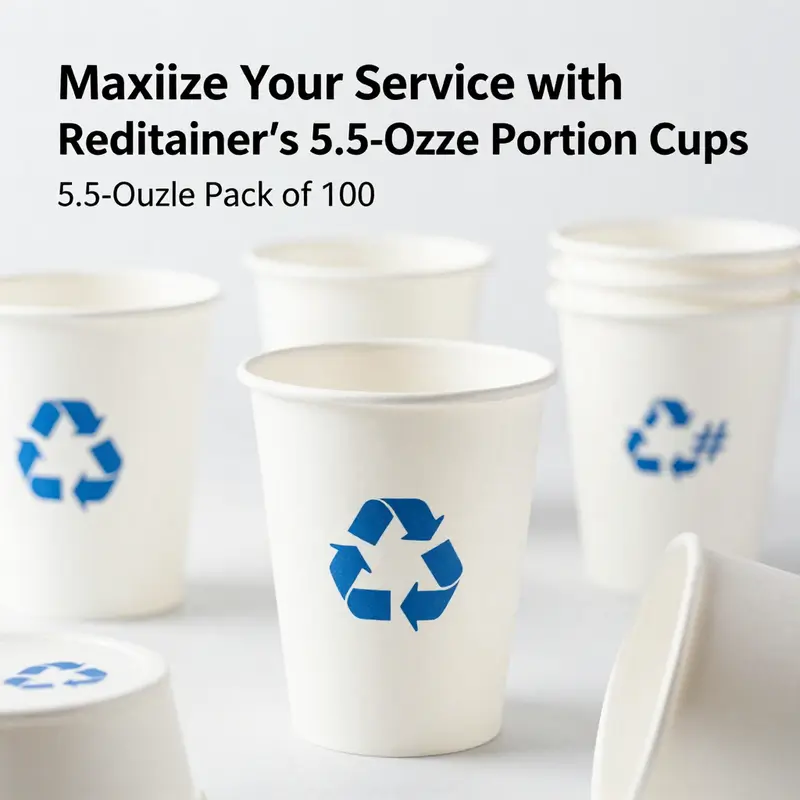
The small disposable cup—a staple in catering, sampling events, and quick-service settings—serves a simple purpose: it holds a precise, easily portable portion while keeping contents visually accessible. In the landscape of single-use packaging, the 5.5-ounce size stands out as an adaptable unit for desserts, sauces, samples, and personal servings. The practical appeal of these cups rests on a combination of material science, pragmatic design, and the realities of waste management. When we peel back the veil, we find that the everyday convenience of such cups hinges on a single polymer that has earned a widespread place in food-contact applications: polypropylene, identified by the recycling code #5. This material choice informs not only performance—durability, clarity, and heat resistance—but also a complex set of environmental considerations that color every judgment about when and how to use these cups.
Polypropylene is celebrated in the plastics toolkit for its blend of strength and flexibility. The 5.5-ounce cups in question leverage PP’s ability to resist cracking and to maintain shape under modest loads, which is essential for small portions that might be transported or gently stacked. The same material’s clarity, though not as opaque as some other plastics, makes the contents readily visible, a feature often valued when samples or desserts are presented to customers who want to gauge texture, color, and portion. The glass-like transparency is functional as well as aesthetic, allowing easy inspection of portions without opening lids or rupturing seals. The clear surface also invites a degree of versatility: it can be used for a range of foods—from light, delicate desserts to more viscous sauces—without the cups compromising their appearance.
From a chemistry standpoint, polypropylene’s stability is a key attribute. It resists a wide range of temperatures typical of cold to warm foods and can tolerate brief exposures to heat without deforming. This thermal resilience makes the cups compatible with refrigerated displays, cold desserts, and modest warm sauces. Importantly, PP is designed for food-contact safety; regulatory frameworks in many regions consider polypropylene to be a prudent choice for single-serve packaging when used as intended. The material’s inertish profile contributes to lower flavor migration compared with some other plastics, an important factor when serving items with strong or distinctive flavors.
Yet durability and safety do not exist in a vacuum. A 5.5-ounce PP cup is marketed as disposable, but its life in the waste stream depends on how end-of-life management is carried out. The packaging world often presents a binary narrative: disposable versus reusable. In reality, polypropylene’s fate is contingent on the local infrastructure that handles post-use plastics. The cups are recyclable, and the recycling code #5 identifies the resin in a way that helps waste processors sort and route the material. The primary environmental advantage of recyclability, in contrast to biodegradable or compostable labels, is the potential to recover the polymer and redirect it into new products, reducing virgin resin demand when recycling streams function efficiently. In a best-case scenario, the cups can re-enter the economy as part of a closed-loop or a broader recycling loop, contributing to reduced raw material usage and lower energy intensity per new product compared with virgin plastic production.
But not all recycling streams are equally equipped to handle #5 plastics, and not every curbside program accepts them. The practical reality is that end-of-life outcomes hinge on municipal capabilities, consumer participation, and the cleanliness of the material. Food residue can complicate recycling because it introduces odors, contamination, and processing challenges. In many places, removing food film and residues before recycling is a necessary step that demands consumer awareness. Lids, which may be made from the same or a different resin, can influence recyclability if they are not designed for easy separation or if they introduce mixed-material complications at the recycling facility. In short, a cup’s recyclability is only as robust as the system into which it is placed. When end users do not participate in proper sorting, or when the local facility cannot reliably process PP #5, the environmental benefit of recycling diminishes markedly.
The product design of these cups also invites a conversation about reuse versus disposal. The cups are often pitched as disposable for reasons of convenience, cost, and speed. The durability that makes PP suitable for single-use applications in many service contexts also suggests potential for reuse in controlled environments, provided that rigorous hygiene protocols are followed. Reuse, however, creates a different set of burdens: cleaning, sanitizing, and potential wear that can affect performance and safety. For instance, repeated washing may alter surface characteristics, influence clarity, or impact lid fit. In most normal operations, the preferred pathway remains proper disposal, but the conversation about reuse is not absent. It is tempered by the realities of operational efficiency, food safety standards, and the need to avoid cross-contamination. The bottom line is that while PP cups can endure multiple uses in theory, the economics and logistics of reusing single-use packaging often render disposal the more practical choice in many scenarios.
When we examine environmental impact in a broader sense, it becomes essential to distinguish between material properties and life-cycle consequences. A pure material comparison might highlight PP’s durability and chemical stability, but a true environmental assessment must account for manufacturing energy, resin sourcing, transport logistics, and the energy costs of recycling or disposal. The life cycle of a 5.5-ounce PP cup begins with resin production, followed by molding and formation into cups, packaging for distribution, and transportation to retailers or foodservice facilities. Once used, the cups enter the waste stream, where the destiny is determined by local recycling practices, landfill management, or, less commonly, energy recovery facilities with appropriate capabilities. In aggregate, polypropylene’s role in small-portion packaging offers an efficiency advantage in certain contexts, but it also requires a clear-eyed commitment to recycling and responsible disposal to minimize cumulative environmental footprint. This is not a condemnation of the cup; it is a reminder that the benefits of a recyclable resin are realized only when the system around it supports collection, sorting, and processing.
An important practical note for buyers and operators is to align packaging choices with local guidelines. The recycling code #5 helps facilities recognize the resin, but it does not automatically guarantee that curbside programs will accept the material. In some jurisdictions, PP #5 is accepted; in others, it is collected only through targeted programs or not at all. Understanding the local landscape means looking beyond the product’s technical recyclability and engaging with waste-management partners about what they can actually process. For those who manage events or retail spaces, this implies planning around the disposal route for disposables, factoring in the potential for contamination, and communicating clear disposal instructions to staff and customers. Even in regions where recycling is feasible, success depends on rinsing the cups to remove food residues and on separating cups from other plastics that could hinder processing. These small actions collectively improve the likelihood that a single-use cup will contribute to a circular economy rather than a landfill.
In discussions of sustainability, it is also useful to consider design choices that influence recyclability. A monomaterial approach, where the cup and lid share the same resin family, simplifies the sorting process at recycling facilities and reduces the likelihood of cross-material contamination. Clear, colorless plastics tend to be easier to sort and recycle in many streams than colored or opaque variants, though the exact outcomes depend on local facilities and their equipment. Labels, adhesives, and printed decorations can complicate processing if they introduce additives or contaminants. In practical terms, a cup optimized for recyclability will minimize mixed materials and avoid coatings that are not amenable to separation.
In the marketplace, the availability of a 5.5-ounce PP disposable cup in large packs—such as a hundred-count bundle—addresses both demand and cost considerations for operators who require a predictable, consistent portion size. The consistency of the product helps standardize servings, which is valuable for nutrition labeling, inventory control, and workflow efficiency. For households and small offices, these cups offer a convenient solution for portioning snacks, sauces, or personal servings. The clarity of the cup enhances presentation, a factor that matters in retail and event scenarios when customers gauge quality and value at a glance. Yet every advantage comes with the responsibility to manage waste thoughtfully. If a business emphasizes sustainability as a core value, the procurement decision should be accompanied by a plan for proper recycling, staff training on disposal, and transparent communication with customers about how to dispose of the cups responsibly.
For readers seeking a concrete point of comparison with similar products or for those curious about a broader range of disposable packaging options, it can be instructive to survey related offerings in the same category. In particular, a widely available disposable clear plastic cup is commonly used for outdoor events and casual gatherings, where portability and visibility of contents are prized. This reference product illustrates how a simple design—the combination of a clear PP cup with a matching lid—can serve a broad spectrum of applications while highlighting the same environmental considerations that accompany any single-use plastic item. If you’re curious to see a practical example of this type of cup in action, explore a product page that presents a comparable option for outdoor use. This example can provide context for comparing lid designs, stacking behavior, and how different service contexts influence recycling and disposal choices.
From a behavioral standpoint, consumer engagement with disposal practices is a critical driver of environmental outcomes. Even the most recyclable material cannot fulfill its ecological promise if it is discarded improperly. Encouraging rinsing, separating, and placing cups in designated recycling streams improves the chance that resin is recovered rather than lost to landfill. Education and clear labeling can reduce contamination and increase the efficiency of recovery systems. For businesses, this means training staff to rinse cups, remove any non-plastic inserts, and ensure that cups are emptied and directed to the appropriate waste stream. For consumers, knowing the importance of rinsing to minimize residue—and recognizing that the value of recycling hinges on local infrastructure—can transform a routine act into a small but meaningful contribution to waste reduction.
In sum, the 5.5-ounce polypropylene disposable portion cup represents a pragmatic intersection of material properties, design practicality, and environmental realities. Its PP composition provides the durability and heat tolerance desirable for a wide range of foods and beverages while enabling a level of clarity that supports presentation and consumer confidence. The recycling code #5 signals recyclability, yet the ultimate environmental impact depends on end-of-life handling, local recycling capabilities, and responsible consumer behavior. The tension between convenience and sustainability is not resolved by the cup alone but by the broader system that processes, collects, and repurposes the material after it serves its immediate function. When teams plan events, menus, or retail experiences around such cups, they should pair the choice with an explicit strategy for waste management, staff training, and consumer guidance. That approach turns a simple portion cup from a momentary convenience into a manageable piece of a circular economy.
For readers who want a closer look at a real-world example of this category of product in action, consider this nearby reference: disposable clear plastic cup for outdoor use. It highlights how design choices—clear visibility, straightforward lids, and compatible dimensions—map onto usage patterns in outdoor settings, where portability and quick-service speed meet the realities of waste sorting and disposal. The comparison underscores that even as a single species of cup performs a simple function, its lifecycle is embedded in a web of practices that sustain or diminish its environmental footprint.
External resources offer additional perspectives on how to interpret recyclability, waste streams, and consumer participation. For instance, a reference listing provides a snapshot of similar items and their market availability, serving as a reminder that the exchange between products and packaging is dynamic and fluid. You can explore this external listing for context on how a comparable cup is marketed and categorized in online marketplaces: Reditainer 5.5-Ounce Disposable Portion Cups listing on eBay.
Ultimately, the story of a 5.5-ounce PP disposable portion cup is a story about systems as much as it is about materials. It invites operators to weigh the practicalities of portion control, presentation, and service speed against the complexities of recycling, sorting, and end-of-life recovery. It invites consumers to participate in a circular approach by rinsing and disposing responsibly, understanding that the public value of a recyclable resin is amplified when supported by robust municipal programs and clear guidance. It is a reminder that sustainability is not a single act but a series of choices—choices about what to buy, how to use it, and how to dispose of it—that, together, determine whether a cup remains a helpful tool of hospitality or an artifact of waste. As the conversation around packaging evolves, the 5.5-ounce PP cup stands as a representative case: humble in form, consequential in impact, and continually shaped by the choices made by manufacturers, retailers, and consumers alike.
Small Cups, Big Trends: Navigating Market Presence and Consumer Preferences for 5.5-Ounce Disposable Portion Cups
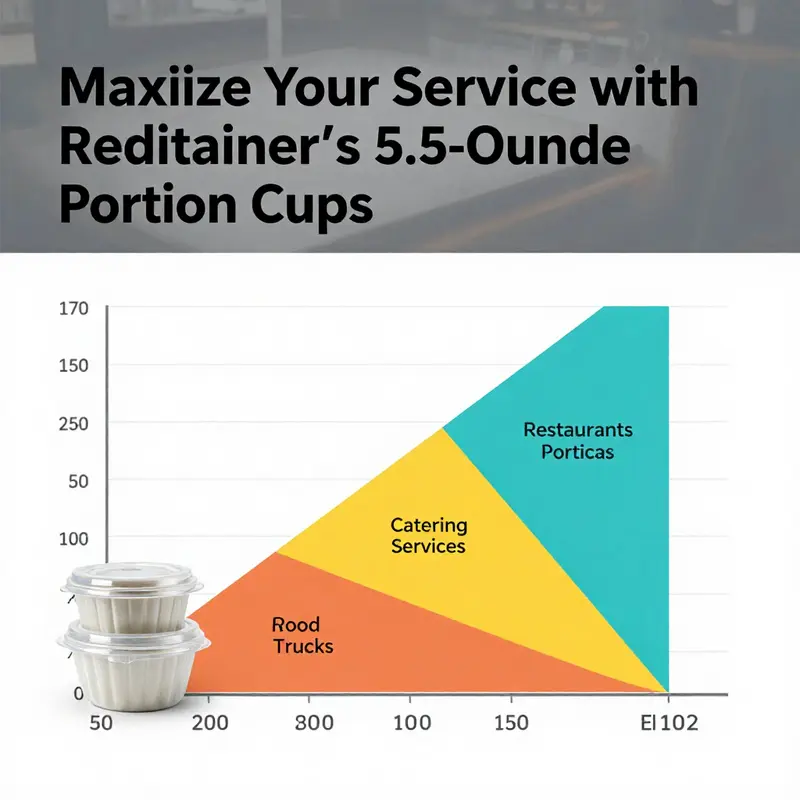
A compact overview of the market for the five-and-a-half-ounce disposable portion cup format. This narrative highlights how clear, lightweight containers with secure lids balance portability, portion control, and perceived freshness. The 5.5-ounce size sits at a sweet spot for samples, desserts, sauces, and snack portions, enabling quick visual checks and minimizing handling. Constructed primarily from polypropylene (code #5), these cups offer rigidity and chemical resistance suitable for refrigeration and mild dishwashing cycles in some setups. Their transparent sides showcase contents, aiding portion assessment and reducing the need to unlid for identification. Lids that seal securely further support on-the-go consumption, event sampling, and prepared-meal workflows by preserving moisture and preventing leaks.\n\nFrom the consumer perspective, visibility, reliability, and easy stackability drive appeal. Buyers value predictable portion sizes, straightforward inventory planning, and the clean presentation that a clear cup provides. For food-service operators, the combination of a compact footprint and scalable supply enables efficient storage, easy merchandising, and cost-conscious procurement. Market dynamics favor broad online availability, competitive pricing, and supplier flexibility, especially when bundled with compatible lids or branding options. Environmental considerations hinge on local recycling capabilities and the integrity of the plastic material; polypropylene is widely recyclable where programs exist, but it is not universally accepted in all jurisdictions.\n\nIn practical use, these cups support yogurt parfaits, bite-sized desserts, sauces, dressings, and samples at events. They pair well with tamper-evident or secure lids, enabling safe transport from kitchen to consumer. The packaging format thus remains a reliable option across households, cafés, and catering settings, balancing convenience with a clear view into contents and a dependable seal.
Final thoughts
Businesses seeking reliable and eco-friendly solutions for portion control need look no further than Reditainer’s 5.5-ounce disposable cups. Their versatility in serving various items and commitment to sustainability not only enhances your service quality but also aligns with modern consumer preferences for environmentally conscious options. By adopting these cups, you’re not just optimizing your operations, but you’re also contributing to a greener future.