

Round plastic containers are an unsung hero in food service industries—from bubble tea shops to catering services. These versatile storage solutions facilitate efficient food prep, maintenance of freshness, and seamless transport of beverages and dishes alike. This article will delve into the material science underpinning these containers, the economic benefits they bestow upon commercial kitchens, and the environmental considerations involved in their usage. Understanding these factors will empower businesses to make informed decisions that enhance operational efficiency while promoting safety and sustainability.
Molecules to Meals: PP and PET in Round Food Containers
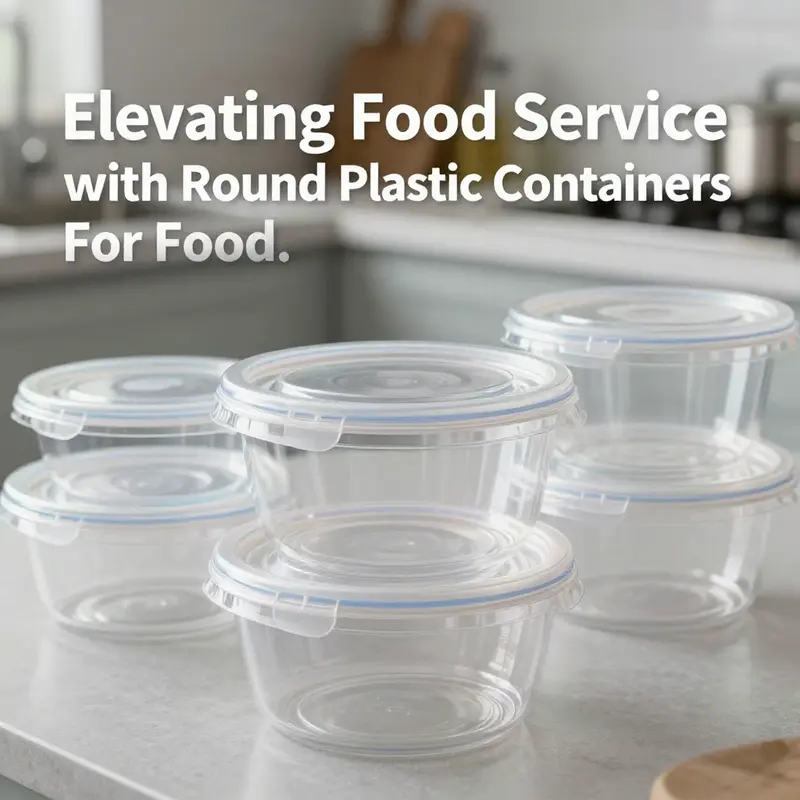
Round plastic containers for food embody a blend of chemistry, processing, and practical design. The performance you experience—how long contents stay fresh, whether the container can go from fridge to microwave, and how easy it is to stack—reflects a careful orchestration of material science. Central to this story are two polymers: polypropylene and polyethylene terephthalate. Each brings distinct traits that influence how these containers perform in kitchens and food-service settings.
PP, or polypropylene, is a semi-crystalline thermoplastic with a melting point around 160°C (320°F). This thermal resilience helps resist deformation in repeated opening, closing, and hot dishwashers. The crystalline regions lend rigidity and fatigue resistance, supporting reliable seals and durability. PP also provides moisture and chemical resistance, helping preserve flavors and textures. Transparency is achievable but not as high as PET, making PP a practical choice for everyday use where visibility is less critical. A caveat: long-term contact with certain acidic foods can affect clarity and appearance over time.
PET, or polyethylene terephthalate, offers exceptional clarity and strong gas barrier properties. Its glass-like transparency makes contents visually appealing, while its barrier against oxygen and carbon dioxide helps slow spoilage during short- to medium-term storage. PET handles cold and room temperatures well, but heating can soften the material; reheating containers made of PET is generally discouraged. PET is commonly used for cold storage and display-oriented packaging, and may be single-use or short-term in many contexts. CPET (crystallized PET) is an emerging variant with higher heat resistance for selective reheating scenarios.
From processing to recycling, both PP and PET are recyclable polymers, though multilayer or coated variants can complicate end-of-life processing. The choice between PP and PET often comes down to use-case: PP for reusable, heat-tolerant containers; PET for clear, short-term storage and presentation. In practice, many kitchens deploy both materials to suit different needs, all while staying aligned with evolving safety and sustainability standards.
For authoritative information on material properties and safety standards, refer to food-contact guidance from reputable authorities such as FDA guidelines for food-contact materials.
Economic Levers in the Dish: How Round Plastic Food Containers Drive Efficiency and Profit in Commercial Kitchens
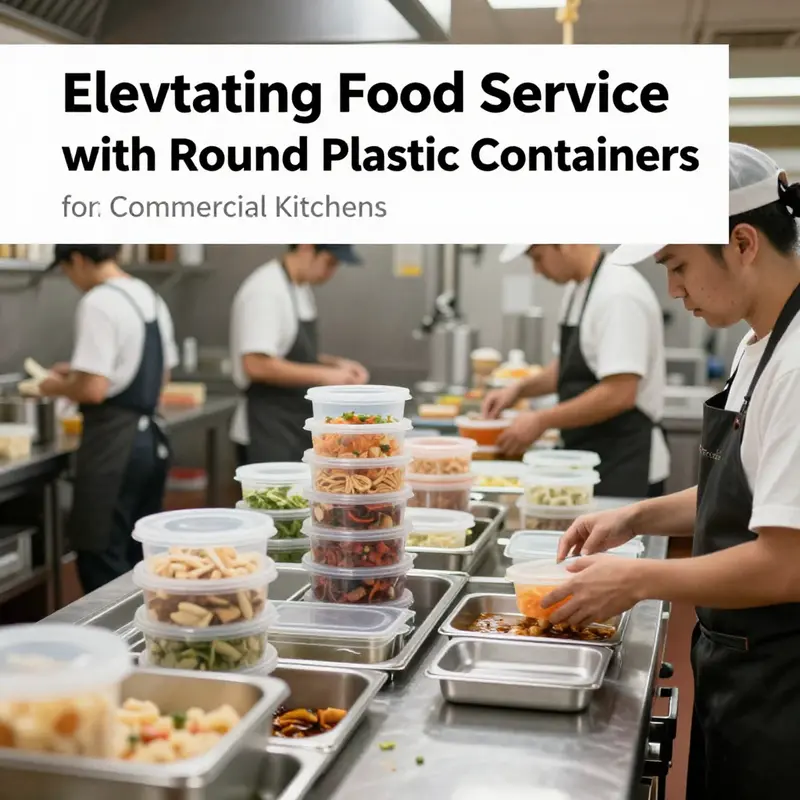
In the back-of-house world where every decision trims costs or compounds them, the humble round plastic container functions as a quiet but persistent lever on performance. Kitchens, whether in a bustling restaurant, a school district cafeteria, or a multi-site catering operation, rely on tools that combine safety, ease of use, and predictable costs. Round containers offer a blend of features that, when viewed across a service cycle, translate into meaningful financial outcomes. They are not flashy upgrades but practical foundations that support inventory control, portion accuracy, and the swift, clean-handed workflow essential to service speed and customer satisfaction. When managers ask what makes a kitchen more efficient, the answer often resides in the daily choices about storage, transport, and waste management. In this context, round plastic food containers become a critical, calculable asset that touches procurement, operations, and sustainability at once, aligning safety with economy in a way that is easy to measure over time.
From a materials standpoint, many of these containers are fabricated from food-grade polypropylene, a plastic known for durability, light weight, and consistent performance under varied conditions. The robustness of PP contributes directly to total cost of ownership. A container that resists cracking, warping, and chemical interactions during repeated cycles of freezing, reheating, and dishwashing reduces the frequency of replacements and the disruption of service. In the daily budgeting math of a commercial kitchen, a longer product life means fewer capital expenditures in the same period and a lower cost per use. The resilience of the material becomes more valuable when you consider the typical life of a stock of containers in a high-volume operation, where many cycles per day can stress even sturdy designs. The ability to withstand temperatures as low as -40°C and as high as 99°C (the range that covers freezing, storage in cold rooms, microwaving for reheating, and hot food holding) ensures these rounds do not degrade in performance. This thermal resilience is more than a technical detail; it’s a driver of reliability that reduces downtime and replacement costs during peak periods when demand surges.
But performance under temperature alone does not determine the economic equation. An airtight seal amplifies the value proposition by curbing exposure to air and moisture, which slows spoilage and preserves texture and flavor. In a professional kitchen, where leftovers are a daily reality and prepped components travel between prep lines and service windows, every seal that remains intact becomes a shield against waste. The seal is often reinforced with ribbed lids that improve grip, allow for secure closure even when hands are wet, and minimize leaks during transport or stacking. This is not merely a convenience feature; it translates into measurable reductions in spoiled or contaminated product. When waste is a controllable cost—no longer eating into margins—the kitchen’s profitability stress is alleviated. Some models claim shelf life extension of up to 30 percent relative to non-airtight options, a figure that resonates in high-waste environments and can shift the economics of bulk storage and batch preparation. Even modest improvements in freshness can meaningfully reduce the need for discounting or disposal and improve overall yield.
From the perspective of labor and sanitation, the design details matter as much as the materials. A detachable lid that can be thoroughly cleaned and dried between uses delivers hygiene benefits that bleed into the bottom line. In a busy operation, staff time saved on cleaning translates directly into labor costs avoided or redirected toward more value-adding tasks. Detachable lids also simplify the dishwasher process, because sections can be fully exposed for sanitizing cycles and air-drying. Where a kitchen must demonstrate compliance with sanitation protocols, the ability to clean components completely becomes an important risk control measure. The hygiene dividend is not cosmetic: it reduces the likelihood of cross-contamination incidents and the associated investigative time, product losses, or customer complaints that ripple into budgets and reputational costs.
Storage efficiency is another compelling driver. Round containers are commonly designed with standardized dimensions and a stackable form, allowing vertical space to be used more effectively and pallets or shelving to hold more units per square foot. In a pantry or dry storage area, a uniform shape lightens the cognitive load on staff during the daily rotation process. When stock is rotated using a first-in, first-out approach, the clarity of labeling and the predictability of container sizes simplify the workflow. In spaces where storage is at a premium, these efficiencies compound over time. A small advantage—like a tighter stacking profile or a slightly smaller footprint per container—can translate into clear savings in square footage and the ability to expand or reallocate shelving for critical ingredients during high-demand periods.
Attention to precise tolerances further boosts the economics. Industrial round containers often feature tight dimensional tolerances, such as around 1.0 millimeter, ensuring consistent fit when containers are nested or stacked. This precision reduces mishaps in automated storage systems and minimizes the risk of leaks or misfits during transport. It supports more predictable handling in bulk purchasing scenarios, where even minor deviations can complicate warehousing, pick-and-pack processes, and inventory counting. When operations move toward greater standardization, the predictability afforded by tight tolerances improves overall workflow reliability and reduces the hidden costs of misalignment, such as damaged goods or time spent reworking stacks that shift or topple.
Bulk procurement amplifies these savings. In wholesale or multi-unit catering environments, containers are typically bought in larger lots that yield economies of scale. The ability to source round containers in bulk, with favorable lead times and consistent quality, smooths cash flow and hedges against price volatility. Procurement teams can negotiate favorable terms for longer-term supply agreements or bundled orders that pair containers with lids, seals, and related accessories. Low minimum order quantities, down to thousands of pieces, help smaller sites access bulk pricing without tying up excessive working capital. The net effect is a more predictable cost of goods sold across a network of kitchens, which supports more accurate menu costing and margin analysis.
From a sustainability perspective, there is value in reusable and recyclable configurations. Some brands highlight materials like CPET, which can support compostable or recyclable packaging solutions where local infrastructure allows. The broader market’s trend toward greener operations aligns with regulatory expectations and consumer preferences, and it can unlock incentives or certifications that carry tangible benefits. For instance, facilities pursuing green certifications or pursuing optimization under environmental compliance programs may find that high-quality, reusable or recyclable containers help meet criteria more readily. The up-front investment in a durable, reusable set of containers can, in the long run, yield savings through reduced waste and improved diversion metrics. Even when sustainability is pursued as a strategic priority rather than a regulatory requirement, it often dovetails with cost containment by reducing packing material waste and simplifying end-of-life processing.
The economic narrative is further enriched by the way these containers integrate into a kitchen’s broader logistics and service model. Their standardized formats support streamlined inventory management, enabling exact counting and easy reconciliation between what is received and what is on the shelf or in service. When a kitchen can quickly identify what remains, what needs to be replenished, and what should be rotated out, there is less time wasted in counting or searching for items. This clarity in stock control reduces shrinkage and improves order accuracy, which matters when dozens or hundreds of containers are circulating on any given day. Even small improvements in accuracy compound across a business that operates multiple service lines—catering, in-house dining, and grab-and-go counters—where miscounts can ripple into delays, shortages, or overstock incidents that tie up capital.
The careful calibration of container design with the realities of fast-paced food service makes the economics even more favorable. In practice, kitchens report tangible benefits from features like freezer-to-microwave versatility, enabling servers or cooks to transition prepared portions quickly without transferring contents to different vessels. The result is a shorter cycle time from prep to plate, a metric that directly touches labor efficiency and table turn. When service times shorten without compromising safety or quality, guest experiences improve, and the kitchen’s throughput increases without a commensurate rise in labor costs. In other words, the container becomes a facilitator of speed, not just a passive receptacle for food. This is especially valuable in large-volume settings where even a few seconds saved per plate multiply into substantial daily gains.
Beyond the operational math, round containers help kitchens align with broader business goals around consistency and branding. Clear designs that allow staff to recognize contents at a glance support speed in busy service periods and minimize errors. The straightforward, easy-to-clean surfaces promote reliable sanitation outcomes, reinforcing a kitchen’s compliance posture. Some operations leverage the clear, uniform look of these containers to maintain a neat presentation across service lines, creating a consistent customer experience even as menus shift or seasonal offerings come and go. While aesthetics may appear secondary to the core cost-and-efficiency story, they contribute to a cohesive operational culture where quality and process discipline reinforce financial performance.
To synthesize the economics, consider the lifecycle of a typical container in a high-volume kitchen: initial procurement, daily use, cleaning cycles, return to storage, and eventual disposal or repurposing. Each stage benefits from the container’s durable construction, dependable sealing capability, and stackable geometry. Procurement benefits from bulk pricing and predictable demand; a stable supply reduces shortages that disrupt service; and a uniform ecosystem of lids and bases reduces the complexity of purchasing across many locations. Daily use benefits from quick access, reduced spillage, and easier handling, which lowers labor hours and minimizes the risk of product loss. Cleaning cycles benefit from the detachable lid and straightforward washing routes, which shorten sanitation times and improve compliance scores. Storage and inventory management benefit from consistent sizing, clear labeling, and efficient stacking. Finally, end-of-life considerations—recyclability, reuse where feasible, and regulatory compliance—help facilities align with sustainability targets and, in some cases, qualify for incentives or recognition programs.
Industry guides and benchmarking reports, such as those focused on wholesale pricing and performance features for plastic food containers, provide a framework for translating these qualitative benefits into dollar terms. They highlight how design choices influence chargebacks, wastage rates, and overall bottom-line impact. While a single feature rarely transforms a budget, the cumulative effect of durability, seal integrity, ease of cleaning, standardized sizing, and scalable procurement creates a robust economic case for round containers in commercial kitchens. In practice, a kitchen that optimizes these levers over a year or two often reduces waste, shortens prep and service times, and strengthens consistency across multiple service channels. The result is not only improved margins but a more resilient operation that can navigate peak seasons and fluctuating demand with greater confidence.
As with any long-term asset, the value of these containers accrues through disciplined management. Tracking usage hours, replacement rates, and waste reductions can illuminate the real-world return on investment. Facilities may discover that the total cost of ownership—factoring purchase price, maintenance, energy for cleaning, and the cost of disposal—favors a durable, well-sealed, easy-to-clean design when compared with less reliable, lower-quality options. In this sense, the round plastic container functions as an economic lever that, when pulled with purpose, helps convert culinary activity into sustainable financial performance. For readers seeking more granular guidance on performance and pricing, industry resources like the Plastic Food Containers Wholesale Prices Guide (2025) offer benchmarks and insights that can inform procurement strategies and site-by-site optimization efforts. External resource: https://www.supplychaintoday.com/plastic-food-containers-wholesale-prices-guide/
Rings, Recyclability, and Responsibility: Environmental Realities of Round Food Containers
Round plastic containers for food offer undeniable convenience in kitchens and cafeterias alike. Their curved geometry helps them stack neatly, seal effectively, and transport with minimal risk of leakage. The sight of a clear, circular lid snapping shut can symbolize order in a busy kitchen, where leftovers are portioned, meals prepped, and ingredients organized. Yet behind this everyday ease lies a complex set of environmental considerations that complicate the surface calculus of “convenience versus impact.” The chapter that follows invites readers to look beyond the gleam of airtight seals and the promise of microwave safety to examine what happens when these round vessels are used, reused, discarded, and transformed in a world increasingly attentive to waste and resource stewardship. In doing so, we encounter a narrative that is not merely about plastic versus glass or metal, but about materials, design choices, and human behavior coalescing into a durable footprint on the planet.
One of the most persistent concerns attached to round containers is their contribution to plastic pollution. The popular perception of plastic packaging as a generic problem tends to overlook the specifics of how a container’s geometry, polymer type, and end-of-life pathway interact. Many round containers are produced from petroleum-based polymers such as polypropylene or polystyrene, materials celebrated for durability and lightness but often criticized for their persistence in the environment. The durability that makes them useful indoors is the same durability that challenges natural systems outdoors. Even when recycling streams exist, contamination and the presence of mixed materials can hamper recovery. In practice, a substantial share of plastic packaging ends up in landfills or the environment rather than being redirected into closed-loop cycles. This is not merely a matter of waste numbers; it translates into real-world persistence where round containers can survive in ecosystems for decades or even centuries if they escape proper collection and processing.
The environmental discourse around packaging is inseparable from the production phase. The journey from petroleum to polymer requires energy-intensive refining and polymerization processes that rely on finite fossil resources. Those processes contribute to greenhouse gas emissions and expose ecosystems to risks associated with fossil fuel extraction and spills. The draw of round containers is often framed in terms of practicality and cost, but a more complete accounting reveals a lifecycle footprint that begins with raw materials and travels through manufacturing facilities before the product ever reaches a consumer’s kitchen. The footprint is not uniform across all plastics; even within a single container family, differences in resin, additives, and processing can create meaningful variations in energy demand and emissions. When viewed through a lifecycle lens, the conversation shifts from a single-use versus reuse debate to a holistic consideration of resource use, emissions, and the conditions under which a container ultimately re-enters the economy.
Consumer behavior sits at the heart of many environmental outcomes associated with round containers. In theory, the same container might be reused many times, reducing the per-use burden relative to single-use disposables. In practice, however, reuse is shaped by how people store, heat, wash, and eventually dispose of containers. Regular exposure to heat and detergents can degrade polymers over time, altering mechanical properties and potentially increasing microplastic release. The chemistry of migration, even in microwave-safe materials, becomes more relevant as cycles accumulate. The risk is not merely a theoretical concern; studies have shown that chemical stability can, under certain conditions, influence the migration of substances into food. This reality underscores a broader point: the environmental advantage of a reusable container depends as much on behavior and care as on the container’s intrinsic durability.
A further dimension is the evolving landscape of material alternatives and industry standards. There is growing interest in materials designed to be recyclable, biodegradable, or compostable. Some round containers are now offered in plant-based polylactic acid-derived formulations, which can reduce the carbon footprint associated with production and decompose under industrial composting conditions. Yet the story does not end with a simple substitution. PLA and similar biobased polymers demand specialized facilities to achieve end-of-life goals. Home composting, natural environments, or conventional landfills may not deliver the expected outcomes. In other words, a plant-based label does not automatically guarantee a lower environmental burden; the effectiveness of disposal infrastructure and the realities of recovery systems ultimately determine whether a biobased resin realistically closes the loop.
This tension—between material innovation and practical end-of-life performance—highlights the importance of aligning product design with a functioning circular economy. The circular economy envisions products designed for longevity, repairability, and high recyclability, with clear pathways to reuse and recovery that minimize waste. For round containers, this translates into several design and system choices. First, ensuring an effective airtight seal remains valuable for food preservation, reducing spoilage and the waste associated with perishable ingredients. A robust lid design, often enhanced by ribs or textured features that improve grip, can support repeated use without compromising performance. Second, the container’s geometry should facilitate cleaning and inspection, encouraging consumers to reuse rather than discard. Materials should be chosen with stability in mind, resisting degradation from repeated washing and heat exposure. Third, end-of-life pathways must be considered from the outset. Clear labeling, compatibility with recycling streams, and avoidance of incompatible additives increase the probability that a container will re-enter the value chain rather than becoming waste.
The literature and policy landscape provide a framework for understanding how these choices play out in practice. Regulatory bodies tasked with ensuring food safety also influence environmental outcomes by setting material specifications and labeling conventions. The safety standards that govern contact with food—such as that regulatory framework demanding compliance with specific food-contact regulations—coexist with environmental requirements aimed at reducing waste and facilitating material recovery. In many regions, this confluence has spurred manufacturers to pursue BPA-free formulations, clearer labeling, and more recyclable resin systems. The interplay between safety and sustainability is not a trade-off but a pathway to smarter design, where safe, reliable performance goes hand in hand with recoverability and lower lifecycle impact. The result is a packaging ecosystem that incentivizes consumers to treat containers as assets to be reused and returned to the economy rather than as disposable disposals to be cast aside after a single cycle.
Against this backdrop, it is instructive to consider the comparative dynamics of materials and end-of-life options. A growing body of work contrasts plastics with alternative materials in the context of meal prep, storage, and transport. Glass, for instance, is often highlighted for its chemical inertness and durability across a wide temperature range. It does not absorb odors, and it maintains integrity even after repeated use in various storage scenarios. These properties can translate into favorable long-term environmental performance when microbes and fumes are a concern, and when the recycling system for glass is robust. The trade-off is weight and breakability, which affect transport logistics and consumer behavior. Metal options (such as certain cans or tins) contribute their own advantages, including high recyclability and stiffness, but exhibit distinct energy footprints and thermal properties that influence use patterns. In practice, the choice among round containers is rarely about a single material; it is about finding the right balance between convenience, safety, performance, and end-of-life practicality within a local waste management context.
Within this complex landscape, the concept of consumer responsibility becomes central. A container’s environmental impact cannot be fully understood without considering how households and businesses sort, wash, reuse, and recycle. Sorting accuracy affects whether a container is recovered or ends up contaminated in the wrong stream. Effective recycling requires materials purity and compatibility with local facilities. Those conditions vary widely by region, often determining whether a given round container has a viable route back into production or something closer to disposal. In settings where infrastructure is underdeveloped, the incentive structure for consumers shifts toward reducing waste at the source: choosing longer-lasting containers, prioritizing reusable designs, and limiting the use of single-use options. In contexts where facilities exist, investment in sorting, collection, and recycling capacity can transform a once-troublesome waste stream into a valuable feedstock for new products.
The discourse on environmental considerations for round containers also benefits from a more nuanced take on the science of material life cycles. Lifecycle assessments illuminate where the greatest environmental costs accrue—whether in extraction, processing, distribution, use, or end-of-life processing—and how different choices shift these costs. A 2020 study on food packaging plastics emphasizes that packaging constitutes a substantial portion of plastic waste in the environment. It draws attention to persistence, contamination, and the hurdles in achieving high recycling rates. A more recent lens—supported by 2025 comparative analyses—frames glass as an inert and stable storage option, offering certain long-term environmental advantages in some contexts. Yet the practical decision to use glass instead of plastic is not universal; weight, energy for transport, and compatibility with heating and cleaning practices all shape real-world outcomes. The overarching lesson is that material choices cannot be judged in isolation; they must be evaluated within the entire system of production, use, waste collection, and material recovery that characterizes a given community or market.
To translate these ideas into everyday practice without abandoning the benefits of round containers, it helps to anchor decisions in both design principles and regional realities. From a design perspective, durability and cleanability should be prioritized without compromising safety. Airtight seals, consumer-friendly lids, and clear labeling about the container’s intended use and cleaning guidelines can support repeated use and reduce premature disposal. From a policy and systems perspective, aligning product attributes with the capabilities of local recycling and composting infrastructure is essential. Where composting facilities exist, designers might explore materials that align with industrial composting processes while guaranteeing that these materials do not contaminate recycling streams. In areas where recycling remains the dominant recovery path, materials should be selected for high recyclability and compatibility with available sorting technologies. This alignment requires collaboration across manufacturers, waste management operators, policymakers, and consumers—an ecosystem in which each stakeholder understands how individual choices ripple through the system and influence overall environmental performance.
The broader environmental narrative also invites reflection on the role of consumer education and behavior change. Even the most thoughtfully designed container can fail to realize its potential if users do not engage in proper washing, storage, and disposal practices. For example, the lifecycle benefits of a reusable container depend on consistent cleaning and avoidance of heat exposures that accelerate material degradation. On the other hand, the decision to shift entirely away from plastics to other materials may, in some circumstances, transfer the burden elsewhere—such as higher energy use in producing glass or metal, or challenges related to the end-of-life processing of composite or coated materials. The point is not to advocate for a single material choice but to encourage a systems-aware approach: design for reuse, enable effective recovery, and educate users about how to participate in those recovery pathways.
In closing, the environmental considerations of round plastic containers for food are not a matter of a simple, universal verdict. They are a tapestry of material science, product design, consumer behavior, and waste management realities that vary by locale and over time. The practical takeaway is clear: as the packaging ecosystem evolves, so too must the criteria by which we judge a container’s value. Favor durability and reusability where possible, ensure that end-of-life options exist and are accessible, and support policies and infrastructure that reduce contamination and boost recovery. By embracing a circular mindset, households and businesses can preserve the convenience of round containers while advancing toward a more sustainable relationship with the materials that store our meals. This is not a surrender of convenience; it is a thoughtful redefinition of it—one that treats containers as valuable, recoverable assets rather than disposable inputs, and that recognizes the interconnectedness of design, behavior, and infrastructure in shaping a cleaner, more resilient food system.
Further reading and context on the environmental implications of food packaging materials can be found in the broader literature, including lifecycle analyses that compare plastics with alternative materials and discuss how policy and industry practice intersect to influence outcomes. For a detailed exploration of these issues, see the environmental impact study by LK Ncube (2020).
External resource: Environmental Impact of Food Packaging Materials – LK Ncube, 2020. https://www.sciencedirect.com/science/article/pii/S0959652620301487
Final thoughts
In the competitive landscape of food service, round plastic containers emerge as a vital tool for efficiency, cost-effectiveness, and safety. Their robust design not only protects food integrity but also contributes to sustainable practices that appeal to eco-conscious consumers. By understanding the material science, the economic benefits, and the environmental implications of these containers, businesses can create a more effective food storage and transport solution. Emphasizing quality and sustainability, round plastic containers can set your establishment apart and help build a strong brand reputation that resonates with your clientele.