
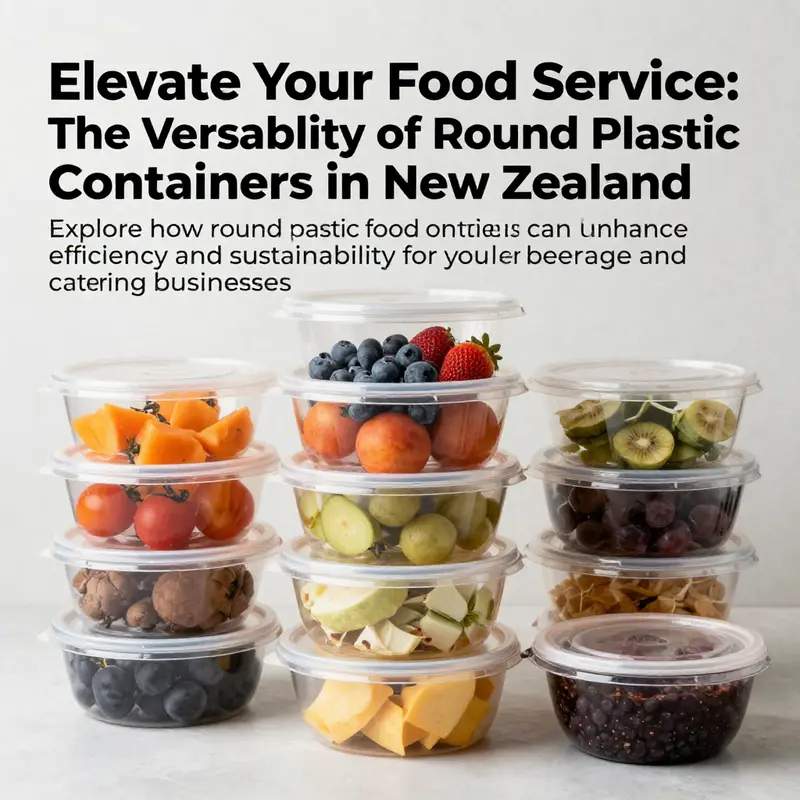
Round plastic food containers have become a staple in New Zealand’s food service industry, providing practical solutions for various businesses, including bubble tea shops, restaurants, food trucks, and catering services. As these containers are widely used for storage, packaging, and serving, understanding their market trends, types, sustainability, commercial applications, and consumer preferences is vital. This comprehensive exploration will reveal how these containers can not only streamline operations but also align with environmental goals and consumer demands. Each chapter builds upon insight into these essential tools for modern food and beverage businesses.
Rounding Out Convenience: Market Dynamics of Round Plastic Food Containers in New Zealand
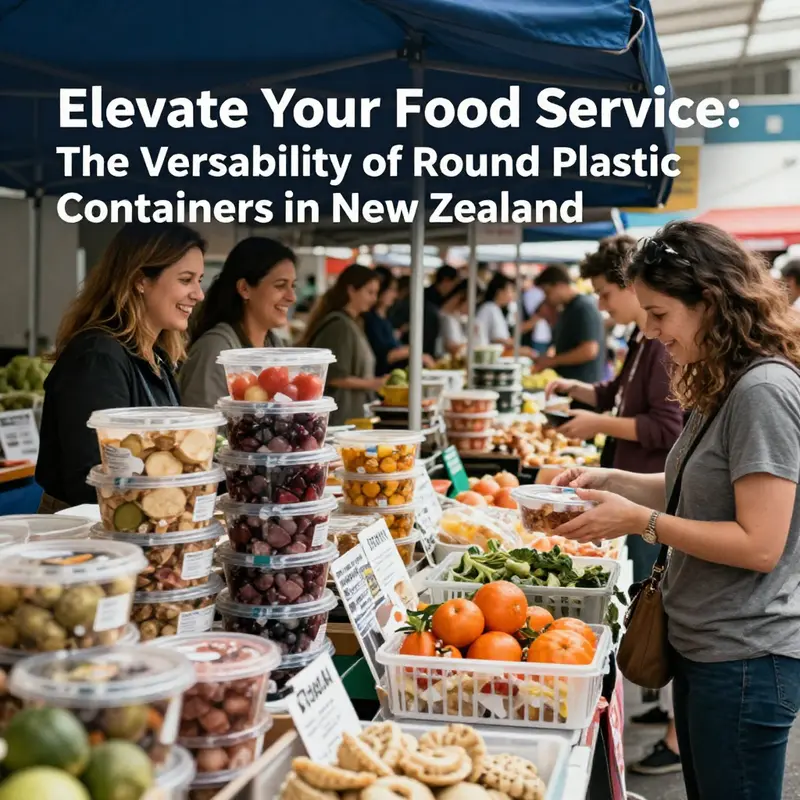
Rounding Out Convenience: Market dynamics of round plastic food containers in New Zealand unfold at the intersection of everyday practicality and a broader conversation about safety, sustainability, and supply chain resilience. In homes, cafes, school canteens, and busy takeout counters, circular containers are more than a shape; they are a practical system for portioning, storing, and transporting food. The most visible entry point for many households is a mid-sized, round, sealed container—750 milliliters with a lid—often seen in kitchen cupboards in New Zealand. These vessels strike a balance between affordability and performance, built from food-grade plastics that tolerate chilling, freezing, and, in many cases, mild heating. They are designed to be reusable, a feature that resonates with local expectations around waste reduction and the desire to avoid disposable clutter. Yet the market does not stop at the home kitchen. In commercial settings—a busy restaurant line, a catering operation, or a fast-food franchise—the demand for larger, more rugged rounds becomes pronounced. A 6-liter heavy-duty round storage container, marketed for bulk kitchen storage, embodies the durability, leak resistance, and stackability that professionals prize when space is at a premium and workflows demand reliability. These heavy rounds demonstrate a pragmatic hierarchy: small, family-sized rounds for daily routines; large, tough rounds for bulk handling. And for one-off or high-turnover food service contexts, a 946-milliliter round soup or takeaway container with a polypropylene lid represents the standard-bearer for safe transport. It is a product family that reflects the New Zealand market’s emphasis on safety, cost-effectiveness, and practical design across the spectrum of use cases. In parallel with these diverse offerings, the presence of food-grade plastics that can withstand repeated use—then be appropriately disposed of at end of life—speaks to an evolving mindset about packaging sustainability that touches households and hospitality alike. The circle’s popularity is not accidental: its geometry optimizes stacking, chilling, and quick access during service, while its uniformity simplifies manufacturing and supply-chain planning in a market that prizes predictability and scale.
The materials that underpin these choices reveal a blend of classic reliability and modern safety standards. Polypropylene remains the backbone, valued for its sturdiness, relative heat tolerance, and broad compliance with food-safety frameworks. It is the core material behind many reusable and disposable round containers, offering a practical compromise between cost, durability, and performance under domestic and commercial dishwashing regimes. Alongside PP, newer formulations such as Tritan have carved out a niche where clarity and perceived safety matter. Containers made from Tritan provide a glass-like transparency that helps users monitor contents without compromising the container’s integrity or introducing unwanted chemicals. Across the market, there is a clear trajectory toward BPA-free designs, a shift that mirrors heightened consumer awareness and regulatory expectations. In New Zealand, this translates into products that can be sanitized or reused with confidence, while maintaining color, shape, and structural integrity after numerous cycles. It is a material story that aligns with public health guidance and dovetails with consumer preferences for safe, reliable storage solutions.
Market trends in New Zealand reveal a deliberate pivot toward sustainability without sacrificing convenience. The conversation around packaging in the 2020s and beyond has shifted from simply offering cheaper single-use options to providing durable, reusable designs backed by clear end-of-life pathways. Many manufacturers now foreground BPA-free construction, microwave-safe features where appropriate, and dishwasher-friendly finishes that extend a container’s usable life. Consumers increasingly expect products that can be reused multiple times, then recycled or responsibly recycled where facilities exist. The interplay between personal choice and corporate sustainability goals has accelerated the adoption of containers designed for easy washing, straightforward drying, and straightforward return-to-use cycles within households or hospitality operations. In practice, a circular container that can be reused repeatedly aligns with the rhythm of daily life—family meals, school lunches, and the repeating cycles of restaurant prep and service—while minimizing the environmental footprint of packaging across its lifecycle.
Functional design innovations have further expanded what a round container can do. Stackability continues to be a critical attribute, enabling efficient pantry organization and optimized fridge real estate for households and professional kitchens alike. Some models incorporate integrated dividers or compartments, which assist with meal planning and portion control. The lid, whether a snap-on or a screw-top variant, is not merely a closure; it is a critical component for transport safety, odor containment, and moisture retention. In transport, a well-sealed lid reduces the risk of leaks and spillage, making rounds favored in school lunches and on-the-go service. The circle’s geometry lends itself to uniform stacking in shelves and cupboards, a practical advantage when inventory management matters as much as the product’s raw performance. These design enhancements dovetail with broader efficiency goals in New Zealand food culture, where time saved in prep and service is valued highly.
The market’s cross-industry appeal is a reminder that packaging forms can migrate beyond their initial purpose. A notable example is the utilization of round containers in beauty and skincare. Here, around 1100 milliliters is a common capacity for packaging serums, lotions, and related products, showing how the same container format can cross between food and cosmetics, provided the material and seals meet safety standards for each sector. This cross-pollination points to a resilient design vocabulary: the same container language that stores tomatoes can also hold creams, with appropriate liners, seals, and inert materials. For distributors and retailers, versatility means fewer SKUs to manage while offering a more robust supply chain schema that can adapt to changing demand across different product categories, seasons, and promotions.
Regulatory and industry guidance anchors the New Zealand market in a context of safety, traceability, and responsible manufacturing. The Ministry of Health offers official guidance on material standards, labeling, and essential testing that ensure containers used for food contact are fit for purpose. Pairing this with the role of industry bodies, such as Plastics NZ, creates a practical framework that translates technical specifications into everyday practice on production floors, in warehouses, and within domestic kitchens. For designers and buyers, these resources provide reliable signposts for material choices, test methods, and lifecycle considerations. The result is a market that remains tightly aligned with local health and safety expectations while continuing to innovate through global advances in polymer science, surface finishes, and barrier technologies. This regulatory scaffolding supports consumer trust when selecting containers for school lunches, leftovers, or meal-prep routines that become part of everyday life in New Zealand.
A final note on breadth and resilience. The round container ecosystem in New Zealand serves households and hospitality alike, accommodating a spectrum of sizes, strengths, and price points. Small rounds deliver daily practicality for personal meals, while large rounds address bulk storage and high-volume service. The market’s ongoing evolution—driven by a mix of durability, safety, and environmental stewardship—indicates that circular storage will remain a core habit, even as new materials and smart-design features enter catalogs. The cross-industry adaptability, from food storage to cosmetics packaging, reinforces a robust supply chain capable of supporting diverse consumer wishes, regulatory demands, and business needs. The conversation about round plastic containers in New Zealand thus converges on a simple truth: shape matters, but the way materials perform, how they withstand repeated use, and how easy they are to recycle will determine long-term value for households and enterprises alike. And as new designs, tests, and standards emerge, the goal remains constant—reliable, safe, and sustainable storage solutions that keep pace with a busy, ever-changing life in New Zealand.
To further explore related packaging options, see these takeout and packaging resources, including a practical reference to eco-conscious packaging solutions: eco-friendly takeout boxes for food packaging. For a broader regulatory and industry context, consult the Plastics NZ resource on food packaging and safety at the end of this discussion. This external guidance helps connect everyday choices with formal standards and ongoing improvements in packaging safety and lifecycle stewardship: https://www.plasticsnz.org.nz/industries/food-packaging-and-safety
From Pantry to Takeout: The Common Types and Everyday Uses of Round Plastic Food Containers in New Zealand
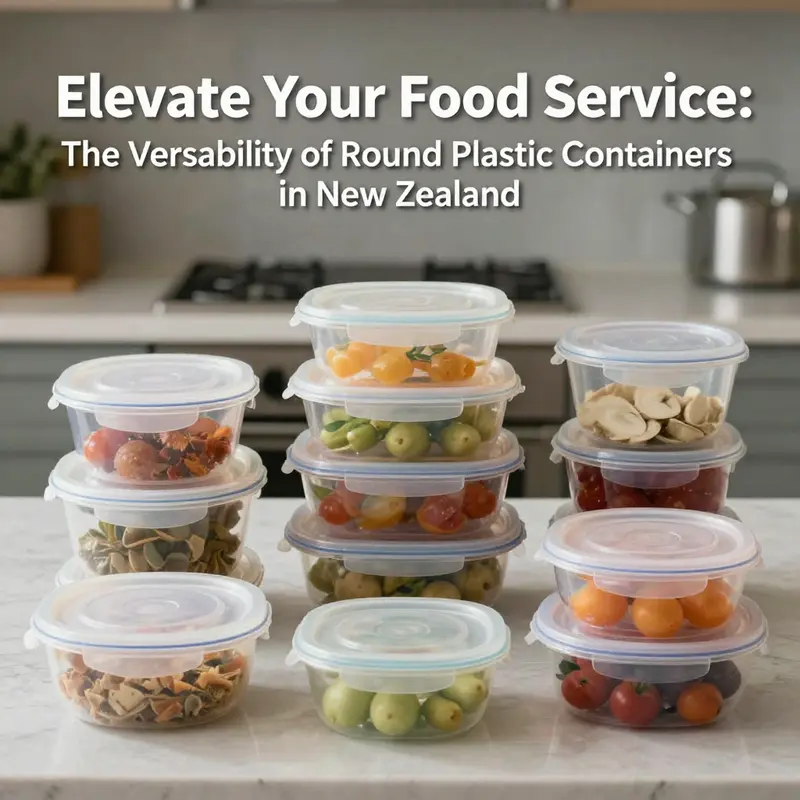
In New Zealand, round plastic food containers have become a practical shorthand for organization, freshness, and versatility in homes, offices, schools, cafes, and takeout operations. The most common material is food-grade polypropylene (PP), which offers a lightweight, durable, and safe option that performs well in both cold storage and reheating. Lids are designed to seal tightly, with snap-on or screw-on styles that help prevent leaks and odor transfer during transport. Easy cleaning, stacking efficiency, and compatibility with standard storage spaces are among the practical advantages driving their widespread use. As sustainability concerns grow, recyclability and reuse of these containers are emphasized by suppliers and users alike, encouraging careful rotation, proper cleaning, and responsible disposal when necessary. Overall, these round containers balance affordability, reliability, and convenience for households and businesses across New Zealand.
Sustainability and Environmental Impact of Round Plastic Food Containers NZ

Round plastic food containers in New Zealand are more than kitchenware; they thread through households, cafes, and the delivery networks that connect meals with doors. This ubiquity sits alongside a rising skepticism about environmental footprints, and a growing demand for packaging that is not only safe and affordable but also kind to the land, water, and air. The humble round shape, common in polypropylene with lids, or in recycled-content variants, has become a focal point for discussions about reuse, recycling infrastructure, and end-of-life responsibility. The conversation now spans resin types, manufacturing energy, washing and reuse cycles, and the policy levers that steer design toward a circular economy. In practice, it means asking not just what a container can do for a user today, but what happens to it tomorrow, and the day after that, as part of a shared national effort to reduce waste.
What we know about New Zealand’s packaging landscape helps frame the dilemma. A 2025 assessment by the Ministry for the Environment makes clear that only about 35% of plastic packaging is successfully recycled nationally. The rest is diverted to energy recovery, landfilling, or litter, revealing a substantial opportunity area for better separation, higher-quality feedstocks, and consumer cooperation. Within this context, polypropylene (PP) emerges as a durable, heat-tolerant staple for round containers. Its mechanical resilience makes it well-suited to repeated use and to microwave reheating, a convenience frequently relied upon by households and food-service operations alike. Yet the recycling chain does not always cooperate with ideal outcomes. Contamination, inconsistent sorting, and gaps in local processing mean that even widely used PP items do not automatically become raw material for new products. The result is a pragmatic but imperfect circular economy, where PP remains common but not universally reintegrated into the material loop.
Recycled PET, or rPET, offers a parallel pathway toward reducing virgin plastic demand. Containers made from post-consumer PET can lower emissions and resource use by substituting recycled content for virgin material. In New Zealand, brands that handle food storage and takeaway packaging have begun to experiment with rPET as part of broader sustainability commitments. The appeal is clear: less new plastic, calmer carbon footprints, and a narrative aligned with circularity. However, translating that narrative into scalable practice hinges on reliable supply, consistent feedstock quality, and the capacity of domestic facilities to handle rPET. Those bottlenecks—quality of recycled feedstock, processing capacity, and the economics of sorting and cleaning—limit how rapidly rPET can expand. Still, consumer appetite for recycled-content packaging keeps driving momentum, nudging manufacturers toward higher recycled content and more transparent life-cycle reporting.
Polystyrene, by contrast, has a more problematic environmental profile in New Zealand. Lightweight and inexpensive, PS containers pose significant end-of-life challenges because they are not easily recyclable in many municipal programs. When PS does enter the waste stream, there is a risk of long persistence and microplastic formation if it breaks down in the environment. In response, several councils, including major urban centers, have imposed restrictions or bans on single-use PS packaging. This regulatory trend reinforces a broader shift away from PS toward alternatives that are easier to sort, reclaim, or repurpose. In practical terms, the move away from PS nudges both product developers and buyers toward PP or paper-based options for round containers, particularly for single-use contexts such as takeout.
Policy and public sentiment are converging around a shared objective: reduce waste through smarter design, better materials, and more robust end-of-life pathways. The Resource Management (Residual Waste and Recycling) Amendment Act of 2024 embodies this shift. It encourages higher recycled content, clearer recyclability criteria, and the development of reusable and refillable packaging formats. These policy signals align with the emergence of return-and-refill schemes in shopping networks and supermarkets, which aim to close the loop by inviting consumers to participate in container stewardship rather than disposal. Simultaneously, a 2025 survey by Zero Waste New Zealand reveals that more than 60% of households favor reusable or recyclable containers and want clearer information about disposal options. This synergy between law and lifestyle is not accidental; it reflects an evolving consumer expectation that products should be designed with end-of-life in mind and that businesses carry responsibility for a container’s entire journey.
These dynamics translate into concrete considerations for round plastic containers. From a design perspective, a true sustainable option must balance performance with recyclability and reuse potential. PP’s heat resistance and durability remain strengths for household and commercial use, but coupling PP with recycled content requires strict contamination controls and supply chain integrity to preserve safety standards. When rPET is used, the material must come from clean, well-sorted streams with consistent quality to ensure food safety and product performance. The environmental trade-offs change when recycled content is high; energy use in washing and reprocessing must be weighed against the savings from avoiding virgin resin production. In addition, the choice of container shape and lid design can influence contamination risk and recycling efficiency. Round containers with tight-sealing, easy-to-clean lids reduce spillage and food residue, which in turn makes downstream recycling and sorting more straightforward. At the same time, the potential for repeated washing and use raises questions about wear, leakage, and the integrity of seals over time.
The environmental story is not purely about materials and recycling rates. It also encompasses consumer behavior, supply-chain reliability, and the cultural context of waste in a geographically isolated island nation. The country’s climate, transport networks, and consumer expectations all shape how packaging is used and how waste is managed. A practical takeaway from these patterns is the value of durable, reusable solutions for households and small businesses. But scale matters too. Commercial kitchens and delivery operations may benefit from heavy-duty, reusable containers designed for frequent wash-and-serve cycles, provided they are integrated into a dependable take-back system. In short, the most sustainable outcome often arises from a combination: durable materials that can be reused many times; a recycling or return system that can reliably reclaim and process material after use; and consumer habits that support responsible disposal and reuse.
For readers who are exploring more tangible options within this sustainability framework, there is a growing ecosystem of packaging solutions that emphasize reuse and end-of-life clarity. For example, there are eco-friendly takeout boxes and containers designed for safe microwave use and reduced leakage, illustrating how the market is responding to policy and consumer demand. These developments reflect a broader pattern: even in a landscape dominated by round plastic containers, smart design and responsible use can yield meaningful environmental benefits. You can explore a practical example of such options here: eco-friendly takeout boxes for food packaging.
As New Zealand continues to navigate toward more sustainable packaging, the discussion about round plastic containers remains central. The conversation integrates material science, waste management infrastructure, regulatory direction, and everyday consumer choices. The goal is not a single perfect solution but a portfolio of approaches that reduce harm while preserving the functions containers provide in homes and businesses. Reuse where feasible, high-quality recycling where possible, and ongoing innovation toward materials and designs that make future recycling easier and more efficient. With policy scaffolding, industry collaboration, and informed consumer action, round plastic containers can become both practical workhorses and stepping stones toward a more circular economy. For broader context on New Zealand’s packaging waste trajectory and the policy framework guiding these shifts, see the NZ Packaging Waste Report 2025: https://www.mfe.govt.nz/publications/waste-and-recycling/new-zealand-packaging-waste-report-2025
Rounding Out New Zealand’s Food Landscape: The Pervasive Role of Round Plastic Containers
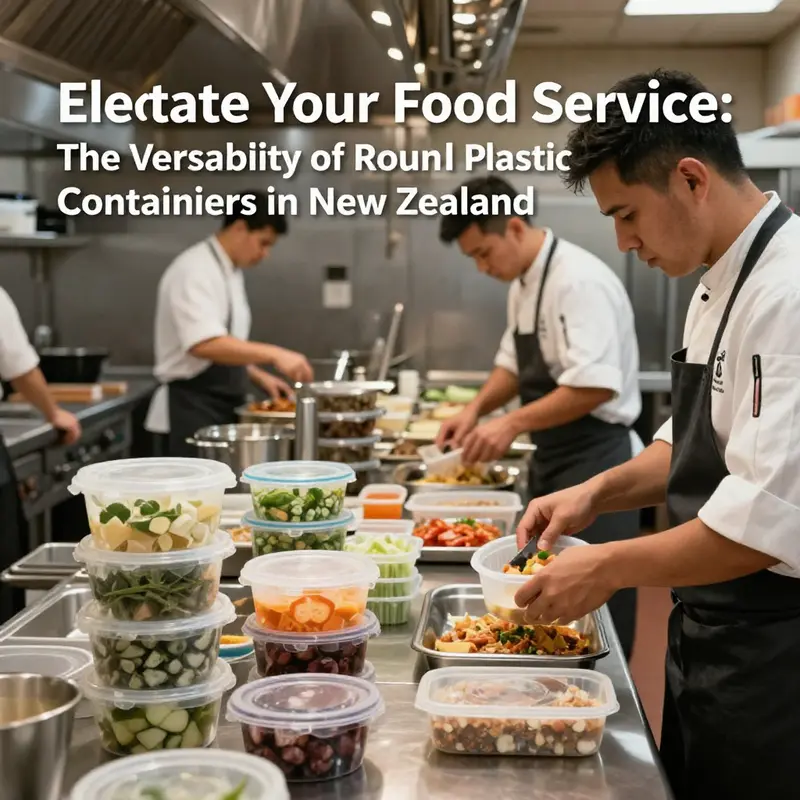
Round plastic containers have become a quiet backbone of New Zealand’s food ecosystem, a familiar sight whether you’re in a bustling city café, a quiet suburban kitchen, a supermarket deli, or a hotel banquet hall. Their ubiquity is not accidental; it rests on a convergence of practical design, versatile materials, and a regulatory landscape that prioritizes safety, hygiene, and broader sustainability. In New Zealand, the appeal of these circular capsules lies in their ability to transition seamlessly from storage to service to transport, supporting food safety practices while offering cost efficiencies that keep menus, displays, and inventories running smoothly. The market for round containers is not monolithic. It spans consumer-grade, home-use options that live in cupboards and lunchboxes, through to heavy-duty, large-volume solutions that keep commercial kitchens organized and efficient. Across this spectrum, the defining traits stay remarkably consistent: roundness provides uniform stacking and predictable space use, while the lid geometry reinforces airtight seals that preserve moisture and flavor without complicating handling. Materials range from food-grade polypropylene to high-density polyethylene and, in some specialty lines, Tritan, each chosen for a balance of chemical resistance, clarity, and heat tolerance. The practical consequence is clear: a round container can be reheated, refrigerated, frozen, or displayed with equal ease, a trait that endears it to a market conditioned to value flexibility and resilience in daily operations. While brand names and specific models naturally circulate in trade conversations, the underlying logic remains simple and compelling. A 750-milliliter round container with a well-fitting lid, for example, offers a compact option for single-portion meals, sauces, or sides that staff can prepare ahead of time and safely store. A larger, heavy-duty round vessel—several liters in capacity—meets bulk storage needs in a busy kitchen, enabling batch prep and efficient inventory management. And at the takeout counter, a 946-milliliter round soup or meal container with a heat-tolerant lid supports a quick, reliable handoff from kitchen to customer while minimizing the risk of leaks and spills during transit. In each case, the circular form is not merely a matter of aesthetics; it is a design choice that optimizes space, simplifies stacking, and reduces handling effort for staff who juggle dozens of containers at a time. The consumer experience also benefits. Transparent round containers showcase the contents, allowing both staff and customers to identify products at a glance, facilitating faster service and better portion control. In cafés and catering setups, this visibility translates into smoother operations, where staff can keep track of portions, freshness cues, and refill needs without opening multiple containers and risking contamination. The clear design also helps brands communicate value; when a consumer can see the product clearly, confidence grows, whether they are selecting from a refrigerated display or picking up a pre-packaged meal for later consumption. The material science behind these round options is equally telling. PP-based lids bring heat tolerance and microwave compatibility to the table, a practical advantage for reheating meals without transferring to a different dish. For cold storage and freezing, HDPE and certain Tritan-based formats offer robust chemical resistance, maintaining the integrity of flavors and preventing interaction with stored foods. This kind of versatility appeals across industry segments because it reduces the number of SKUs required to cover multiple use cases. The New Zealand market mirrors global trends in emphasizing safety and sustainability alongside performance. Containers are designed to meet food-grade standards, with attention to chemical leaching, cleanliness, and ease of sanitization in high-turn environments. Recyclability remains a central consideration, and many lines are compatible with post-consumer recycled content, helping businesses reduce their environmental footprint without sacrificing reliability. This commitment to responsible packaging aligns with consumer expectations and regulatory expectations alike, reinforcing trust in food handling practices across hospitality, retail, and corporate food services. The retail and grocery sector leverages round containers not just for storage but as components of curated shopping experiences. Delis display fresh produce, prepared salads, and grab-and-go items in round vessels whose shapes minimize space and maximize shelf efficiency. Bento-style multi-compartment rounds have grown in popularity for balanced, ready-to-eat meals, a nod to evolving consumer preferences for convenient, healthful options that still feel premium on the shelf. The ability to stack these containers neatly translates into cleaner cold cases, easier restocking, and better visual merchandising. In hospitality and event management, round containers prove their mettle in buffet setups, room service, and large-scale catering. The lids’ sealing performance helps preserve temperature and hygiene as trays traverse corridors, kitchens, and service lines during events. Even when weight and volume shift as guests move through a venue, the lightness of round designs keeps transportation costs reasonable and handling processes straightforward for staff across shifts. The environmental conversation around these containers continues to mature. Even as they stand up to rigorous daily use, there is a steady push toward materials and manufacturing practices that reduce resource intensity. Recyclability remains a principal consideration, and manufacturers increasingly experiment with recycled content, aiming to create closed-loop possibilities where containers can re-enter the production cycle after use. In parallel, end-users are encouraged to adopt practical waste-management strategies—rinsing, sorting, and returning containers to appropriate recycling streams—to maximize the life cycle value of these products. Beyond the typical food-service and retail contexts, round containers find applications in pharmaceutical, health supplement, and even cosmetics packaging, where chemical resistance, safety, and product integrity are paramount. In pharmaceutical and health brands, high-density polymers offer reliable containment for liquids and semi-liquids, ensuring product stability and safety during storage and transport. In beauty and skincare, round jars and pots—though sometimes larger in scale—provide a sleek, retail-friendly presentation that supports branding and consumer appeal. These applications demonstrate how the same fundamental container geometry can adapt across sectors, underscoring the flexibility that makes circular designs a staple of modern packaging. The cross-sector perspective highlights a key theme for any business navigating New Zealand’s market: the choice of container is as much about operational flow as it is about consumer perception. The simplest decisions—how a lid seals, how a container nests with others, how it responds to microwaving, or how it handles temperature extremes—cascade into broader outcomes. They influence staff efficiency, impact customer satisfaction, shape on-shelf aesthetics, and affect the bottom line through waste and logistics costs. When a business seeks to optimize its packaging strategy, it weighs capacity against portability, visibility against durability, and initial cost against life-cycle value. Round containers, with their predictable footprint and robust performance, often emerge as the most versatile compromise. They offer a common standard that minimizes the number of SKUs required to serve diverse roles—from cold storage and hot service to display and takeout. This universality reduces procurement complexity and simplifies training for kitchen and retail staff. It also enables brands to maintain consistent quality across channels, ensuring that a customer experience remains uniform whether a meal is consumed at a café table, in a park, or at home after delivery. The NZ landscape for round plastic containers is thus a story of balance: between strength and lightness, between clarity and containment, between cost and sustainability. It is a narrative told not just in the laboratory or factory floor, but in the day-to-day rhythms of kitchens, supermarkets, event spaces, and consumer homes. As markets continue to evolve, these circular containers are likely to adapt further—driven by advances in polymer science, evolving safety standards, and the growing insistence on eco-conscious packaging. Yet their core advantage remains enduring: a simple shape that reliably supports intricate workflows, preserves freshness, and communicates value in a visually straightforward way. For anyone assessing packaging options in New Zealand, the message is clear. The round container isn’t just a storage vessel; it is a functional interface between food, people, and place. It speaks to efficiency in a commercial kitchen, to accessibility in a retail setting, and to trust in a consumer’s hands. The way these containers move through the supply chain—from manufacture to use to disposal—reflects broader shifts toward smarter, safer, and more sustainable packaging practices. The path forward will likely see continued emphasis on materials that deliver performance with a smaller environmental footprint, greater compatibility with recycling streams, and designs that further minimize waste without compromising the integrity of the foods they guard. In this evolving story, New Zealand’s embrace of round plastic containers embodies a pragmatic approach: practical, reliable, and ready to serve the diverse needs of a food-minded culture. External resources offer additional context on the technologies and standards that underpin these products, helping readers connect local practice with global best practices. External resource: https://www.plasticpackaging.co.nz/products/round-plastic-food-containers. For further reading that complements this discussion, see the detailed example of a packaging range that demonstrates how clear round designs combine visibility with secure containment—an approach that resonates with the broader themes of this chapter. Also, you can explore related product ideas through one of the practical packaging showcases, such as the clear-cake-cups-focused example discussed in this piece, which illustrates how transparency and portability converge in contemporary display packaging. clear-cake-cups-transparent-cupcake-muffin-packaging-dessert-slice-container-for-weddings-birthdays-parties-bakery-dessert-bowl-for-fruit-pastries
Rounding the Edge: New Zealand’s Round Plastic Food Containers
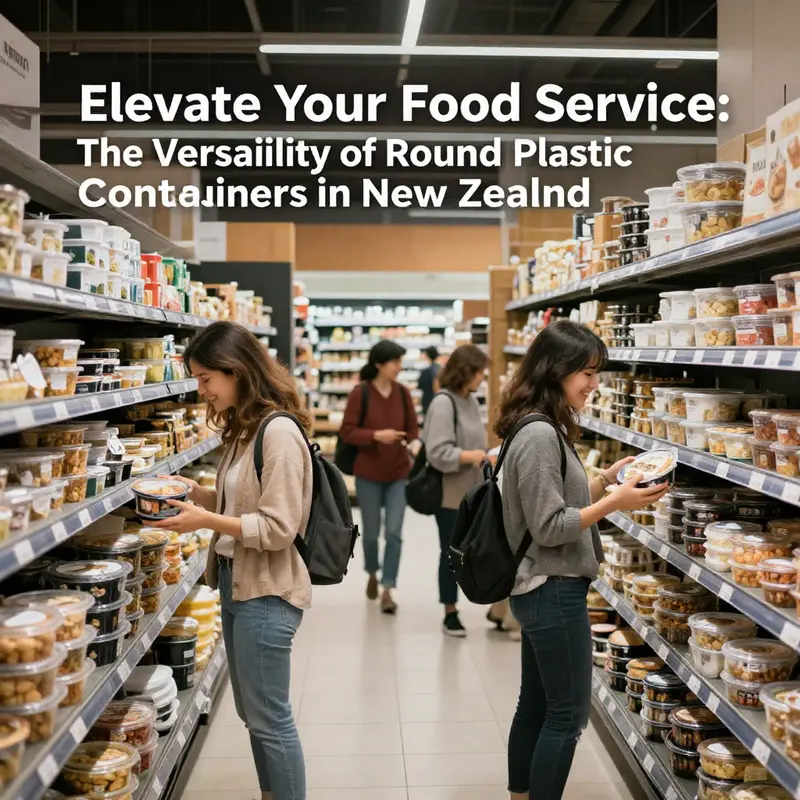
In New Zealand, the humble round plastic food container has quietly become a benchmark of everyday efficiency. Families rely on them for weeknight leftovers, while cafes and takeaways count on their reliability for quick service and predictable portion sizes. The circular silhouette is more than just a shape; it is a design that facilitates stacking, sealing, and compact storage in both homes and commercial kitchens. Yet beneath the convenience lies a matrix of consumer expectations shaped by safety, durability, and a growing concern for sustainability. Even without direct local surveys published for New Zealand, the convergence of global material knowledge and observed regional priorities offers a useful window into how NZ consumers are likely evaluating round containers. The core of their decision rests on three intertwined pillars: safety for food contact, practical performance in varied refrigeration and reheating contexts, and an escalating preference for reusable or recyclable packaging that aligns with a low-waste lifestyle.\n\nMaterial choice sits at the heart of these preferences. Polypropylene, widely used in food service and home storage, embodies a balance of heat resistance, chemical inertness, and recyclability. Its high melting point makes it suitable for freezing, microwaving, and even light oven use in some cases, while its chemical stability helps protect flavors and avoid leaching. For NZ households and businesses that operate on efficiency and safety, PP is often seen as the sensible default. Other plastics such as polystyrene and PET appear in some segments, but debates about heat tolerance, impact resistance, and end-of-life options push many buyers toward PP as a safer, more versatile choice. Across the board, the absence of bisphenol A and related concerns matter; consumers increasingly expect food-grade materials that perform reliably and that they can trust for repeated use.\n\nBeyond raw material, the design language of round containers is evolving to meet a lifestyle that values convenience and responsibility in equal measure. For households managing daily meal prep, features like snug lids, tight seals, and air-tight rims matter because they preserve moisture and prevent leaks during commutes or storage. The round form often complements space-efficient shelving and pantry organization, allowing groups of containers to nest within each other when empty and stack securely when full. In the commercial arena, round containers are prized for scalable portioning, ease of handling by staff, and predictable dome heights that fit under heat lamps and in cabinet racks. For takeout and delivery, the ability to withstand microwave reheating, surface cleanliness, and durability during transit becomes a decisive factor, especially where orders are moved quickly through crowded streets or busy corridors.\n\nConsumer expectations around wastefulness and sustainability have sharpened in a country known for its environmental stewardship. Even if direct NZ consumer survey data on round containers are sparse, the international signal is clear. There is a willingness to invest more in packaging that can be reused many times or that is easily recyclable at the end of its life. This translates into preferences for sturdy construction that resists denting and cracking, and for lids that stay reliably attached without warping. It also fuels interest in designs that support portion control and reduce the need for multiple wrappers, dividers, or extra containers. For households, the appeal of multipurpose, durable designs—such as round containers that can serve as lunch boxes, snack bowls, and storage vessels—grows as people seek to minimize trash and maximize reuse. For commercial operators, the desire is for reliable, leak-resistant options that can be sanitized and reused in a high-volume cycle, or that can be disposed of responsibly when single-use is necessary.\n\nThe interplay of safety, performance, and sustainability creates nuanced preferences that influence which round containers find a foothold in New Zealand kitchens. A material that endures daily cycles of washing, chilling, and occasional microwaving is valued more highly than one that excels in a single function but fails under repeated use. The same logic governs takeout packaging: though single-use options fulfill immediate demand, the long-term cost of waste and the reputational impact of disposables push both buyers and sellers toward more responsible choices. In practical terms, this means selective emphasis on food-grade PP, airtight lids, and leak-resistant joints, coupled with a preference for designs that reduce waste through reuse or easy recycling. The market narratives that underlie these preferences are reinforced by global industry insights that highlight PP’s durability and recyclability as core strengths in contemporary packaging ecosystems.\n\nCrucially, consumer expectations in New Zealand appear to align with a growing appetite for design that supports straightforward, low-friction recycling and clear labeling about material composition. In homes, this translates into a willingness to choose containers that can be cleaned thoroughly and used again for intricate meal-prep routines. In food service and delivery contexts, there is interest in container sets that simplify inventory and minimize confusion about which items are suitable for which reheating methods. The broad takeaway is that NZ consumers, like many of their peers elsewhere, increasingly prize practicality married to responsibility. They want round containers that perform reliably, minimize waste, and offer a clear, trustworthy path to reuse or safe recycling when their lifecycle ends. The shape itself—the circle—remains inherently space-efficient and user-friendly, but its value now derives not just from physical convenience but from its compatibility with a sustainability-first mindset.\n\nFor innovators and retailers serving New Zealand, these preferences suggest a roadmap that places material choice, design robustness, and end-of-life clarity at the forefront. It’s not enough to offer a container that looks convenient; it must prove durable through repeated cycles, tolerate freezer and microwave use when appropriate, and present a recyclability story that residents and businesses can readily follow. One growing opportunity lies in multi-use designs, where a single round container can function across meal prep, portion-controlled lunches, and storage needs, reducing the number of different shapes and sizes a consumer must keep. Another opportunity is to emphasize lid integrity and sealing capability, which directly affect consumer confidence in reusability and transport safety. In parallel, clear labeling about material type, recycling streams, and care instructions can help users navigate the journey from purchase to disposal with minimal friction.\n\nAs the broader packaging literature indicates, there is a strong correlation between perceived safety and willingness to invest in higher-quality containers. In contexts like New Zealand, where environmental standards are high and communities widely engage in recycling programs, the preference for food-grade materials with transparent performance credentials grows stronger. This alignment between user expectations and material science underpins why polypropylene often emerges as the favored baseline in round container design. It also explains the rising interest in packaging solutions that incorporate small but meaningful innovations—such as dividers for meal prep, stackable layouts that maximize cabinet space, and visible indicators for microwave suitability—without compromising the circular form that users already associate with ease of storage and transport.\n\nTo bring these insights into practical terms, manufacturers and retailers should consider how to articulate the value proposition of round containers in a way that resonates with NZ consumers. Emphasizing safety, durability, and recyclability in a straightforward, locally relevant narrative can help bridge the gap between global packaging knowledge and everyday decision making in New Zealand homes and businesses. It is also worth acknowledging that direct local data will further refine these inferences. In the meantime, building product lines around the enduring advantages of round shapes—space efficiency, reliable sealing, and compatibility with typical home and commercial workflows—offers a solid foundation for meeting current expectations while highlighting a commitment to responsible packaging.\n\nFor designers and suppliers seeking examples of practical, eco-conscious packaging approaches that align with this mindset, consider exploring adaptable, multi-compartment designs that can serve as versatile lunch solutions while retaining the circular form factor. Such designs demonstrate how form can support function without sacrificing sustainability or convenience. You can learn more about how practical multi-compartment packaging is evolving in the industry by exploring a representative example of eco-friendly, three-compartment packaging solutions in the market: eco-friendly disposable 3-compartment packaging box for fast food.\n\nIn the end, the New Zealand consumer’s preference for round plastic food containers embodies a pragmatic blend of safety, performance, and environmental responsibility. The circular vessel remains popular not just for its shape, but for its capacity to fulfill practical needs in homes and businesses while aligning with a future-oriented approach to packaging. As the market continues to evolve, the most resilient choices will be those that prove themselves across repeated use cycles, that clearly communicate material and care instructions, and that demonstrably reduce waste through thoughtful, durable design. The path forward, therefore, is less about chasing the newest trend and more about solidifying a reliable, sustainable baseline for round containers that navigating households and food service operators in New Zealand can trust year after year. External reference: https://www.foodpackagingexperts.com/plastic-food-containers-delivery-materials/
Final thoughts
In conclusion, round plastic food containers are integral to New Zealand’s food service industry, offering a practical and versatile solution for diverse businesses. From enhancing operational efficiency in restaurants and catering services to catering to growing consumer demand for sustainability, these containers meet various needs and preferences. As the industry continues to evolve, embracing eco-friendly practices and innovative packaging will ensure competitive advantage and customer satisfaction. Consider the detailed insights revealed in this article to make informed choices regarding round plastic food containers for your operations.