
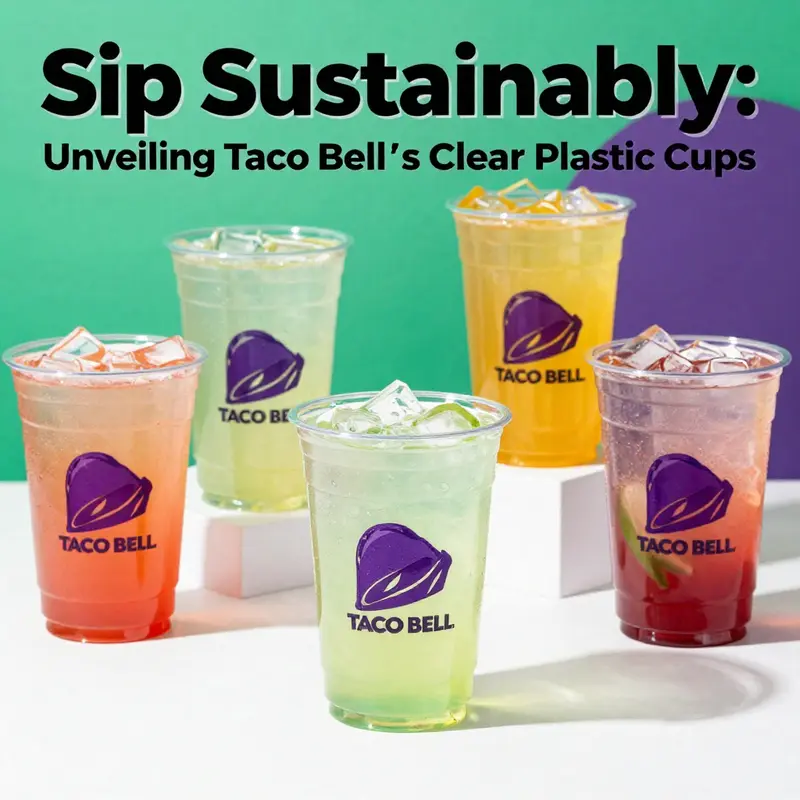
Taco Bell is stepping into the spotlight with its recent partnership with Berry Global to introduce clear plastic cups crafted from polypropylene. This exciting development serves as a revolution for both the fast-food industry and drink enthusiasts, particularly in the realms of bubble tea shops, beverage chains, restaurants, and event planning. The company’s commitment to achieving all consumer-facing packaging recyclable, compostable, or reusable by 2025 has long-lasting implications for our planet. Each chapter of this article will delve deeper into the impacts of these cups, from the environmental benefits of adopting recyclable materials to the nostalgic pull of Taco Bell’s retro designs that still influence the market. Learn how these clear plastic cups represent a significant trend in sustainable packaging while catering to collectors and casual users alike.
Clear Cups, Circular Futures: How Taco Bell, Berry Global, and Recycled Content Are Redefining Cold-Drink Packaging
When brands set out to reshape everyday objects, the change often whispers rather than shouts. The new phase of Taco Bell’s cold beverage packaging, engineered in partnership with Berry Global, speaks through the material itself. A 30-ounce, transparent cup made with recycled content signals a deliberate shift away from virgin plastics and layered designs that complicate recycling. It is a small but important gesture toward circularity: a cup that can be treated as a resource rather than a waste product, a signal that sustainability can live inside the same dining experience that makes the brand famous for its crave-worthy flavors. The cup’s design embodies a careful balancing act. It preserves the visual familiarity consumers expect—clear, unobtrusive, and capable of showcasing a bright, cold drink—while embedding a commitment to recyclability and a lighter carbon footprint. The core idea is straightforward in its promise: replace the old, multi-material approach with a streamlined, recyclable, or reusable alternative that aligns with a broader corporate objective to make all consumer-facing packaging recyclable, compostable, or reusable by 2025. In practice, that means a concerted effort to harmonize product design with the realities of modern waste streams and municipal recycling infrastructures. The result is not merely a single cup; it is a test case for how a fast-food giant can influence material choices across its supply chain, how modern recyclers might handle more content from post-consumer streams, and how the public perceives packaging as part of a long-term environmental strategy rather than a disposable afterthought.
At the heart of this effort is a 30-ounce transparent cup that deliberately foregrounds circularity. It contains mechanically recycled post-consumer resin (PCR) and includes a portion of recycled high-density polyethylene (HDPE), a composition that marks a notable departure from the previously used virgin-dominated cups and the coated-paper options that once defined the brand’s cold beverages. This combination—PCR with a measured HDPE content—speaks to a broader understanding of what recycling can mean when the chemistry is chosen with the end of life in mind. PCR brings value back into the loop by substituting a portion of new resin with plastic that has already completed a life cycle, while HDPE’s compatibility with many curbside programs helps ensure that the cup can re-enter the recycling stream rather than be diverted to landfill or incineration. The emphasis on a clear, all-plastic cup is not merely aesthetic. It is a practical orientation toward sorting efficiency in typical recycling facilities, where transparent plastics are often more straightforward to identify and route than opaque or multi-layered materials. The new cup’s transparency is thus a double-edged signal: it preserves the consumer experience of a cold beverage in a familiar vessel while communicating a deeper, infrastructural intent to recycle and recover.
What makes this development particularly compelling is its integration into Taco Bell’s wider packaging agenda. The company has long articulated a goal of advancing sustainability across consumer-facing packaging, aiming for recyclability, compostability, or reusability by 2025. The beverage cup project is a piece of that larger fabric—an intentional pivot from coated-paper cups toward lighter-weight, clear plastic alternatives that can be processed within existing recycling systems. The transition is not a sudden pivot but the culmination of a year-long collaboration that began in 2022, when Berry Global helped the brand move away from coated-paper solutions toward a more streamlined and recyclable plastic standard. This historical thread matters because it reveals a staged, evidence-based approach: first reduce complexity, then optimize the sorting and processing stages, and finally scale a solution that can be deployed across a wide network of restaurants. The current pilot, slated to roll out across U.S. Taco Bell locations later in 2026, is not just a trial of a single component. It is a litmus test for how a fast-food operator can recalibrate its material choices around circular economy principles, balancing consumer expectations with the realities of recycling infrastructure, and how suppliers can contribute to a systemic improvement rather than a one-off substitution.
The material science embedded in the cup further underscores the shift from the era of virgin plastics toward a more resource-conscious paradigm. PCR content reduces the demand for new resin, which in turn lowers production-related emissions and the overall embodied energy of the cup. The 10 percent recycled HDPE fraction is a deliberate design decision aimed at ensuring compatibility with common recycling streams and enhancing mechanical properties, such as rigidity and heat resistance, that are important for a cold-drink vessel. The choice of HDPE is not accidental; it has long been a workhorse of beverage packaging thanks to its favorable recycling profile and its well-established processing streams in many municipalities. By combining PCR and recycled HDPE, the cup illustrates a practical model for how recycled materials can be integrated without compromising the performance consumers expect—clarity, structural integrity, and a seal that protects the drink during the journey from store to table. The result is a cup that not only performs well in use but is intended to perform well in the recycling plant, reducing material loss and waste wherever the system can process it.
From a consumer-facing perspective, the visual continuity of a clear cup matters. In a market saturated with packaging claims, visibility of the product inside the cup remains a simple but powerful cue. Clear packaging communicates a quiet confidence: the container is straightforward, the contents are honest, and the design allows recyclers to inspect for contaminants with fewer barriers. Yet clarity also serves a more strategic purpose. It reinforces the brand’s narrative about responsible consumption by making the end-of-life story visible. If a cup shows up at a recycling facility or in a curbside stream, the hope is that its material composition—a mix of PCR and recycled HDPE in a clear, single-material form—can be traced back to a viable recycling path rather than ending up in a landfill. The approach aligns with the goals of many municipal and regional waste programs that value straightforward material streams and minimize the mechanical and chemical separation tasks that can hamper efficient recycling.
The shift to a recyclable, or potentially reusable, cup is also a signal about the brand’s approach to packaging innovation. The beverage container becomes a platform for testing how far the circular economy can stretch within the constraints of a high-volume, time-pressed service model. The design must withstand the rigors of busy service lines, remain cost-competitive against virgin plastics, and maintain compatibility with existing dispensers and lids. It must also be scalable enough to reach all locations in a reasonable timeframe. These are complex logistical considerations, and they require close collaboration across the value chain, from packaging engineers to logistics planners and recyclers who must handle the resulting streams.
An important layer in the narrative is how the public engages with sustainability marketing. Nostalgia, for example, has previously surfaced in other packaging formats as brands revisit vintage designs to evoke memories and spark conversation. In this context, the new clear cup functions as a counterpoint: it signals modern material science and responsible design while carrying a modern aesthetic that can be integrated seamlessly into the brand’s current menu and beverage presentation. It’s a reminder that sustainability does not require a wholesale abandonment of beloved brand cues. Instead, it offers a way to preserve recognizable experiences while updating the materials that enable those experiences to be more responsible.
Operationally, the transition is not merely about replacing one cup with another. It involves examining how the packaging interacts with the entire lifecycle of the product—from sourcing and manufacturing to distribution, consumer use, and end-of-life processing. Berry Global’s involvement in the project underscores the importance of a packaging partner who can bring not just a material solution but a systems-oriented perspective. The partnership indicates a commitment to optimizing the compatibility of the cup with existing recycling streams and to reducing the carbon footprint associated with the cup’s production and disposal. The objective extends beyond a single launch; it points toward a future in which a chain-level commitment to recyclable or reusable packaging can cohere with the pace and scale of a fast-food business. The pilot will provide valuable data about how much of the cup’s life cycle can be streamlined, what return on investment can be achieved through recycled-content materials, and how consumer behavior might adapt to a packaging system that emphasizes recyclability without sacrificing convenience or brand identity.
In the larger tapestry of sustainable packaging, this development sits at an intriguing intersection of policy, technology, and culture. On the policy side, it aligns with growing incentives for circular economy solutions and with public expectations that major brands steward resources more responsibly. Technically, it tests the feasibility of a high-clarity, all-plastic cup that can integrate PCR content without compromising the strength and clarity that customers expect from a cold-beverage vessel. Culturally, it reflects a broader shift toward packaging that is not merely functional but meaningful—packaging that invites discussion about where materials come from, how they are used, and how they rejoin the material loop after use. The project thus becomes a case study in how a global brand can translate sustainability commitments into a tangible product experience, while still delivering the consistent, rapid-service model that customers rely on.
For readers who want to explore related conversations about packaging formats and material streams, consider reviewing a practical example of the disposable clear plastic cup product page, which offers a snapshot of the kinds of clean, single-material designs that often accompany recyclable or reusable packaging strategies. The embedded shopping-oriented context can help illuminate how such designs balance consumer expectations, manufacturing realities, and end-of-life processing in real-world settings. disposable clear plastic cup product page
As with any innovation of this scale, the road ahead will reveal both opportunities and challenges. The pilot’s success will hinge on more than the properties of the cup alone. It will depend on how quickly and efficiently recycling streams can adapt to higher concentrations of PCR content, how municipalities handle the sorting of such streams, and whether customers understand and support the brand’s shift toward circularity. Consumers increasingly expect packaging to be both functional and mindful of its environmental footprint. Achieving that balance will require transparent communication about what the cup is made of, how it is collected, and what the end-of-life options look like. The narrative around this cup is thus not only about a single vessel but about the evolving relationship between a global brand, its packaging suppliers, and the communities that sort and recycle plastic waste. In that sense, the cup is a microcosm of a broader transformation—a transformation that makes recyclable and reusable packaging not a niche commitment but a standard expectation for the restaurant industry.
External resource: Berry Global’s official press release detailing the sustainability partnership and the development of the new cup provides a formal account of the collaboration, the goals, and the anticipated impact. You can read more about the partnership here: https://www.berryglobal.com/news/press-releases/berry-global-announces-new-sustainable-cup-partnership-with-taco-bell.
null
null
Clear Polypropylene Cup Design: How a Fast-Food Chain Blends Transparency, Usability, and Recyclability
Material and Design: a single language of clarity and function
The move to clear polypropylene cups reflects a deliberate alignment of material science with brand presentation. Choosing polypropylene (PP) is not accidental. It is a food-grade polymer valued for clarity, toughness, and thermal resistance. These qualities let the cup do more than hold a beverage: it communicates freshness, supports operational workflows, and fits into existing recycling systems. For a quick-service restaurant chain seeking to replace earlier combinations of virgin plastic cups and separate lids, PP offers a single-material solution that simplifies both front-of-house use and end-of-life processing.
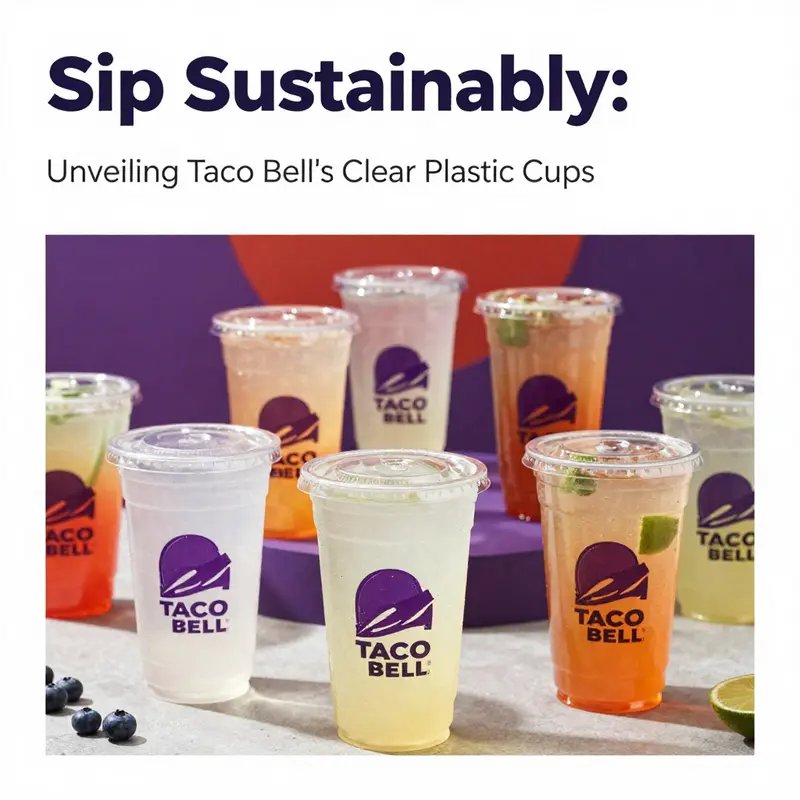
The aesthetic purpose of transparency runs deeper than mere visibility. When a customer can see the drink, ingredient layers, or color gradients, the product itself becomes part of the brand narrative. Clear walls showcase carbonation, ice, and sauces in ways printed graphics cannot. That visual honesty enhances perceived freshness, while minimal but strategic color cues reinforce recognition. Designers often integrate the brand’s palette subtly into the cup’s structure or base. These touches preserve the predominant transparency while maintaining immediate visual ties to the brand.
Beyond appearance, the choice of PP supports practical manufacturing and service needs. The polymer’s clarity allows for crisp printing where needed, yet it can remain largely transparent to prioritize product visibility. It resists stains and moisture, and it can tolerate temperature swings typical in quick-service environments. Those thermal attributes reduce deformation during hot-fill or near-heat conditions and shrinkage during cold storage.
Ergonomics plays a central role in everyday usefulness. A clear polypropylene cup must feel secure in hand, cup holder, and stacking column. Designers refine curvature and wall thickness to provide a comfortable grip while keeping the cup light. Slight concave grips or textured rings are subtle cues that increase friction without visually interrupting clarity. A reinforced base reduces tipping and concentrates mass where it aids stability. The result is a cup that feels familiar and dependable during drive-thru exchanges and dine-in moments.
Stacking efficiency is another operational imperative. Proper nesting reduces footprint in storage and ease of feeding at service points. Engineers define taper angles and rim geometry so cups stack without excessive sticking. When stacking is optimized, staff can load dispensers faster and minimize breakage. Clear PP lends itself well to precision molding, allowing tight tolerances that produce consistent stack behavior across thousands of units.
Manufacturing choices also influence sustainability outcomes. Moving to a single polymer for cup and lid removes the need to separate materials during recycling. In facilities where mixed plastics complicate processing, a consistent PP stream simplifies sorting and improves recycling yield. This single-material approach supports broader goals to reduce landfill waste and lower carbon intensity associated with packaging.
Compliance and safety are integral to design decisions. Food-contact grade polypropylene meets regulatory thresholds for migration and toxicology. Cup materials are specified to conform to relevant national standards, ensuring that no harmful substances transfer into beverages under normal use. Regulatory compliance influences everything from resin selection to pigment formulations. Color additives and inks are chosen for low migration and for compatibility with food-contact applications, maintaining safety across a cup’s lifespan.
Aesthetic restraint and branding balance each other. Instead of heavy surface printing, many cup designs favor subtle markers: a translucent logo band, a colored base, or tonal embossing. These elements preserve the cup’s transparent nature while keeping brand identity visible. Such restraint often extends to lid design too—clear lids that match the cup visually maintain a cohesive look and keep the overall item recyclable if composed of the same PP family.
Sustainability is a design constraint that shapes every decision. The shift to recyclable polypropylene reduces dependence on virgin resin and promotes circularity where local systems allow. Designers work with suppliers to source recycled-content PP where feasible, and to specify resin grades that accept mechanical recycling without significant property loss. For many service operators, the goal is pragmatic: choose materials that will be accepted by municipal and regional recycling programs, maximizing the chance the cup is actually recycled instead of landfilled or incinerated.
This approach requires close coordination with external partners. Supply chain collaborators help optimize resin blends, molding processes, and print systems. They also assist in developing recyclability claims that match real-world outcomes. Designers and sustainability teams consider the full lifecycle: raw material extraction, manufacturing energy, transport impacts, in-use performance, and post-consumer processing. The result is a cup that is not only visually appealing and functional, but also defensible from a sustainability standpoint.
Operational realities influence minor but meaningful design features. Reinforced rims prevent chipping and enable secure sealing with lids. Slight flaring at the rim makes sipping and straw insertion easier. Wall thickness gradients preserve clarity while adding stiffness where needed. These small details contribute to fewer spills, reduced returns, and better customer experience.
A clear cup also becomes a canvas for seasonal and promotional content. Because the base transparency remains, temporary labels and sleeves can be added without changing the underlying material. Designers anticipate these overlays, ensuring label-friendly surfaces and alignment marks for automated labeling machines. This flexibility lets the brand maintain a consistent core product while layering contextual designs for limited-time offers or cultural moments.
Recyclability and actual collection rates must be considered candidly. A cup may be technically recyclable, but if local systems do not accept PP for curbside pickup, the environmental benefit is limited. To mitigate this gap, many operators emphasize education and on-site collection programs. Clear signage and dedicated recycling bins at restaurants increase the likelihood of proper disposal. In some cases, the chain collaborates with processors to create take-back or consolidation programs, improving the flow of recyclable PP into secondary markets.
Cost considerations are never far from design decisions. Polypropylene offers a favorable cost-performance balance compared to alternatives. It provides clarity and mechanical performance at a price point suited to high-volume food service. Designers and procurement teams work together to optimize wall thickness, resin grade, and molding cycles to hit targets for both cost and performance. Where recycled content is incorporated, price volatility is managed through long-term sourcing agreements and iterative product optimization.
Finally, heritage and nostalgia have a place alongside eco-innovation. Retro cup designs and limited-run promotional cups can coexist with modern recyclable products. While vintage-style cups often appear on secondary markets, current design practice focuses on marrying the visual cues of nostalgia with modern materials and sustainability goals. The aim is to deliver a product that honors brand legacy while meeting contemporary expectations for recyclability and regulatory compliance.
A clear polypropylene cup is more than a vessel. It is a synthesis of materials engineering, ergonomic design, brand strategy, and sustainability planning. Each curve, color accent, and resin choice reflects an intent to present food honestly, serve efficiently, and fit within circular systems where possible. For operators looking to transition from mixed-material packaging to single-polymer solutions, clear PP cups represent a pragmatic, visually coherent step forward. For those managing service, supply, or sustainability, the design story of this cup illustrates how small choices compound into meaningful improvements in performance and environmental profile.
For a close example of a readily available clear plastic option that reflects many of these principles, see this disposable clear plastic cup product page. For information on regulatory guidance for food-contact materials, consult the FDA food contact materials resource: https://www.fda.gov/food/food-contact-materials
Clear Echoes: Nostalgia, Collectability, and the Transformation of Taco Bell’s Plastic Cups
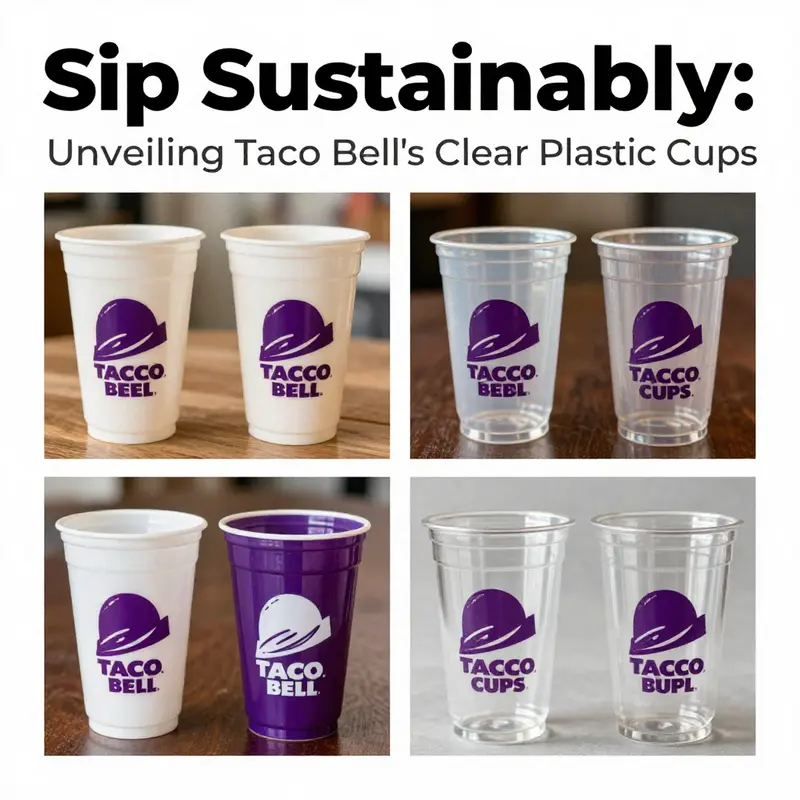
The easy surface of a cup can hide a long, winding history. A clear plastic cup from a fast-food chain does more than hold a beverage; it carries the imprint of a brand’s ambitions, a society’s shifting values, and a culture’s shifting memories. When you lift a translucent cup, you are not just lifting a container; you are lifting a small artifact that testifies to design choices, sustainability goals, and a shared childhood moment. The cups that once simply advertised a drink now inhabit a different kind of space in the public imagination. They become touchstones for recollection and, for some, prized elements of a growing collection. In this chapter, we trace how Taco Bell’s plastic cups—especially the clear, recyclable, or semi-transparent varieties produced in collaboration with packaging innovators—have moved from everyday beverageware to objects of collectability and nostalgia. The arc is not merely about material science or marketing; it is about how a brand’s public promises intersect with a culture that longs to remember and to own small, tangible reminders of the past.
The shift toward clear, recyclable cups is grounded in broader environmental commitments that have defined consumer-facing packaging in recent years. In collaboration with Berry Global, Taco Bell pursued a new polypropylene cup solution designed to replace the earlier blend of virgin plastics with a more streamlined material that could be processed within existing recycling streams. The stated objective—reduce landfill waste, curb incineration, and lower carbon footprints—frames the cups as instruments of sustainability rather than merely as vessels. Transparency in packaging is not only a visual cue; it is a signal that brands want to communicate openness about how products are designed, manufactured, and disposed of. The move toward all consumer-facing packaging being recyclable, compostable, or reusable by 2025 is a horizon that informs every design decision. In practice, the clear or semi-clear appearance of these polypropylene cups aligns with these goals. Clear cups make it easier to identify contents for recycling streams and simplify sorting processes because the material can be readily recognized and directed to appropriate recycling channels. This practical efficiency, coupled with a market-friendly look, helps explain why the design language of these cups leans toward transparency.
As a consumer object, a cup’s aesthetic also communicates a brand’s confidence in its own environmental story. A transparent cup signals that whatever is contained within, and whatever happens to the packaging after use, can be traced and managed within the recycling system. The visibility of the cup’s material invites trust; if a cup is clear and clean, it invites the eye to follow its lifecycle—from production to disposal. This is the kind of storytelling that resonates with a generation acclimated to supply-chain visibility and sustainability metrics. Yet the same clear cup also exists within a broader merchandising ecosystem. The design choices—clear or lightly tinted polymer, smooth contours, a consistent lip, a compatible lid—make the cup a crucial canvas for branding. Logos, color blocks, and even the shape of the cup’s base become part of a visual archive that brands hope to preserve in consumer memory. The cups become stage props in a narrative about responsible manufacturing and mindful consumption, even as they remain everyday items that appear in the same routine moments of customers’ days.
The topic of collectability emerges not from a single launch but from a continuing conversation about design, memory, and scarcity. In 2026, the brand’s reintroduction of retro-inspired designs through a program called the Decades collection revived interest in cup styles from the 1980s and 1990s. These limited-edition cups did more than offer a visual homage to the brand’s past; they provided a tangible link to a period when fast-food branding was bold, colorful, and unabashedly loud. The Decades collection leveraged nostalgia as a bridge between generations. It invited longtime fans to reclaim a piece of their own history while offering younger customers something that looked and felt distinctly “retro yet current.” The result is a delicious paradox: the more a cup looks like its era, the more it becomes a collectible in a contemporary marketplace that treats memory as a premium commodity.
Within this landscape, certain cups have assumed a special, almost mythic status. The 1989 vintage Batman-themed 32-ounce cups released as a DC Comics tie-in are frequently cited in collector circles as a pinnacle moment. The cups’ multi-color Batman artwork captures a moment when pop culture and fast-food branding collided in a way that produced a cultural artifact rather than a mere promotional item. Collectors prize these cups not only for their design but for their provenance—how they were distributed, how they were packaged, and how well they have aged. The value, as with any collectible, is in the story as much as in the object: rarity, condition, original packaging, and the memory it evokes all determine what a cup is worth in a private or online collection. When such cups appear on secondary marketplaces like eBay, they transition from nostalgic tokens into tangible assets that people actively seek, trade, and curate. For enthusiasts, the value lies in the cup’s ability to anchor a memory, to prove that a moment of brand collaboration with a beloved comic universe once existed, and to offer a talking point about how brand narratives evolve over time.
This is where the social life of these cups becomes as important as their physical form. Today’s collectors often discover vintage or retro cups through social media platforms like TikTok, where short videos can spark a global rediscovery of forgotten packaging designs. A quick search of posts featuring the Decades collection reveals clips that mix humor, nostalgia, and a sense of communal memory. The rapid, visual nature of these platforms makes a single cup become a shared symbol across generations. A 1980s logo, a color palette that screams a decade, or a Batman-themed motif can travel far beyond the store counter to become a point of dialogue about the era’s popular culture. The cups’ collectability thus operates on multiple axes: historical significance, aesthetic appeal, packaging provenance, and social currency. The product ceases to be a standalone unit and becomes part of a broader conversation about how brands reconcile heritage with modern sustainability goals.
In parallel to the nostalgia-driven revival, the clear plastic cup itself functions as a lens on materials science and recycling logistics. The polypropylene formulation adopted in these newer designs is more compatible with modern recycling facilities, reducing contamination risks that often accompany complex multi-material packaging. The ability to recycle these cups more efficiently translates into real environmental benefits, supporting the brand’s publicly stated aim of directing consumer packaging toward recyclability, compostability, or reuse by 2025. The practical advantages of polypropylene—lightweight, clear, and amenable to standard recycling streams—mirror the broader industry push toward simplifying product end-of-life processing. Yet this technical efficiency is not always intuitive to every consumer, who often encounters a mix of terms: virgin plastic, recycled content, post-consumer resin, and biopolymers. The clear cups, with their straightforward material identity, can become a starting point for consumer education about how packaging choices affect waste streams. When a cup looks simple and transparent, its life story can feel simpler too—until you dig into the facts behind production, recycling infrastructure, and the real-world outcomes of waste diversion programs.
The collectability and design of these cups also illuminate how brands use memory to build loyalty. Nostalgia is not merely about simulating the past; it is about curating a personal archive that can be revisited over time. For fans who grew up with certain cup designs, the Decades collection offers a tactile link to a moment when branding was more audacious and color was the primary voice of marketing. For younger fans, these cups encode a story of how sustainability and style can coexist in a form that remains approachable and familiar. The cups thus become a cultural conduit, translating the brand’s present-day commitments into tangible objects that speak across generations. In this light, the cups are not simply throwaway items; they are cultural artifacts whose value is amplified by the communities that cherish them and by the platforms that keep the conversation alive. The more fans share, compare, and curate, the more the cups accumulate a kind of social capital that complements their material value.
As with any object that becomes collectible, the conditions of preservation matter. The best-preserved pieces command higher attention and, often, higher prices in secondary markets. Original packaging, limited-run status, and consistent branding on the cup and its lid contribute to an item’s appeal. The fact that these cups can be associated with a period aesthetic—an era’s logo, a color scheme, or a tie-in with a popular franchise—adds another layer of interest. Collectors value cups that tell a story about the era’s media landscape, corporate partnerships, and design sensibilities. The Batman cups are a case in point: a tie-in that transcends a single restaurant chain and taps into a broader comic-book culture. The story inscribed on these cups—how a fast-food giant joined forces with a beloved superhero universe—makes them more than practical drinkware; they become commemorative objects that mark a cross-section of popular culture. When such items reappear, they prompt conversations about authenticity, reproduction, and the ethics of collecting in a world where scarcity can be manufactured through limited drops and timed releases.
The functional evolution of the cups—toward a material that is easier to process in recycling systems—coexists with a growing appetite for the old. The tension between sustainability and sentimentality is a hallmark of contemporary packaging culture. Consumers increasingly want products that are both responsible and rewatchable in memory. In this sense, the clear polypropelene cups embody a paradox: their practical merits support a future-facing sustainability agenda, yet their nostalgic potential invites people to look backward with affection. The result is a packaging ecosystem where the same object can be a part of a daily routine and a piece of a curated, shareable archive. The Decades collection is a reminder that brands do not have to abandon their past to embrace a more sustainable future. Instead, they can recast memory as a pathway to informed, continuous engagement with customers. When a cup acts as both a functional object and a memory trigger, it becomes a powerful vehicle for branding that respects both the planet and the past.
For readers who want to explore this intersection between material design and cultural memory, consider the broader ecosystem of packaging products that accompany these cups. The online catalogs of event-ready, disposable wares reveal a landscape of design language—clear surfaces, legible branding, and modular components that can be mixed and matched in ways that feel personal and affordable. These contexts show how a single cup is part of a larger system of drinkware that aims to optimize recycling and to delight collectors in equal measure. The story of Taco Bell’s cups, then, is not a simple tale of product development or marketing campaigns. It is a narrative about how a brand negotiates responsibility, style, and memory in a world that values both a clean earth and a well-told story of the past.
To catch a glimpse of how these cups circulate in modern culture, watch the promotional clips and user-shared videos that keep the Decades collection alive on social media. There is a live, ongoing dialogue about what these cups meant at the moment of their release and what they mean now as collectible objects. As memory and material culture intertwine, the cups become both relic and renewed instrument—familiar enough to reach across generations, yet novel enough to invite new collectors to participate in the conversation. The future of these cups, in other words, will be shaped by how well brands balance environmental goals with the human longing to remember. The clear cup is not merely a vessel; it is a bridge between a sustainable present and a nostalgic past, a conduit for conversation about what we value, what we reuse, and what we keep in our personal and collective histories.
For further reading and to explore related examples of clear drinkware and packaging design, see this product collection: disposable-clear-plastic-cup-outdoor-picnic-pet-cup-drinking-cup-for-parties-birthdays-weddings-camping-utensils.
External resource: https://www.tiktok.com/@tacobell/video/7485673210987654321
Seeing Through Sustainability: Clear Cups and the Next Wave of Eco‑Forward Fast‑Food Packaging
The evolution of packaging in the quick-service sector is no longer a debate about cost or convenience alone. It has become a conversation about credible environmental stewardship, consumer trust, and the practical realities of waste management. In this context, the choice to adopt clear plastic cups made from recyclable materials represents more than a material swap. It signals a mindset shift toward transparency in environmental claims and a commitment to integrating circular economy principles into everyday operations. The new generation of clear cups, often fashioned from polymers such as PET or PP, is designed to be visually appealing while remaining compatible with existing recycling streams. The goal behind this approach is ambitious: to ensure that all consumer-facing packaging can be recyclable, compostable, or reusable by a target year. When a major brand pursues such a strategy, the implications ripple through suppliers, waste management networks, and even consumer behavior. It is a chapter in the broader story of how foodservice packaging is evolving from disposable novelty to a measurable, responsible component of the supply chain.\n\nAt the heart of this transition lies a practical rethinking of materials. Transparent or semi-transparent cups have long held a special place in fast‑food branding; they showcase beverages, toppings, or the vivid colors of sauces, while also enabling straightforward consumer recognition of product quality. The shift to recyclable plastics such as PET or PP is not merely a fashion choice. It reflects a response to a market that increasingly prizes recyclability as a marker of product integrity. These materials are selected not just for their clarity but for their compatibility with sorting systems and their potential to be reprocessed into new items. Importantly, when a product is labeled as BPA-free, it addresses one of the common consumer concerns about safety in contact with consumables. And when such cups are positioned as compostable in appropriate industrial facilities, they tap into another layer of environmental logic: reducing landfill load and accelerating material recovery at the end of life. The combination of recyclability and compostability is not a contradiction but a design challenge, inviting engineers and sustainability teams to align material properties with regional waste infrastructure. The practical outcome is a cup that remains visually faithful to brand presentation while offering a clearer pathway to circularity in the supply chain.\n\nBehind these material choices lies a network of collaboration and specification. A major packaging partner, tasked with turning sustainability commitments into scalable supply, must balance mechanical performance, food safety standards, and recycling compatibility. The result is a packaging system that can withstand the rigors of daily use—cold drinks, hot beverages, top-shelf cleaning cycles—while still being attractive on shelves and in take-away scenarios. The idea is to reduce the environmental footprint without compromising the consumer experience. This is where branding and sustainability intersect most visibly: the cups stay clear enough for product visibility, lids can seal effectively, and the overall footprint—measured in energy use, water use, and greenhouse gas emissions—moves in a more favorable direction. The broader industry is watching these moves closely, because the success or failure of one large-scale rollout can accelerate or slow similar efforts across the sector.\n\nA central motive behind the clear-cup push is the intent to streamline recycling and reduce incineration rates. Clear plastics are favored because they generally lend themselves to more efficient sorting and separation in modern recycling facilities. Clear cups also empower consumers and employees to visually inspect contents, which supports hygiene and quality assurance goals. Yet the move toward transparency is not just about the material’s clarity; it is about clarity of claims. Consumers now demand that packaging tell a credible story about its end-of-life options. Is the cup truly recyclable in the consumer’s locale? Is there a viable path to industrial composting? How does the packaging align with local collection programs? Answering these questions requires rigorous lifecycle thinking and ongoing dialogue with waste-management stakeholders. This is why many programs emphasize standardized labeling, consistent materials, and clear guidance on whether, when, and where recycling or composting is possible. The implication for product designers is profound: the packaging must be engineered to communicate its function and fate in a way that ordinary users can understand without specialist knowledge.\n\nIn the marketplace, the conversation about clear, eco-friendly cups has a nostalgic side as well. Vintage and retro‑style cups from earlier decades often surface on second-hand markets, serving as tangible reminders of how packaging aesthetics can be a powerful marketing lever. These retro pieces evoke memories and cultural narratives that can be leveraged in storytelling about sustainability, even as the modern cups aim to reduce waste and improve processing efficiency. The juxtaposition of old and new packaging forms demonstrates how consumer expectations evolve: from curiosity about novelty to a demand for responsible choices that align with a broader environmental ethic. The nostalgia market does not replace modern innovations; it complements them by reminding brands that packaging can carry cultural resonance while still delivering on its environmental commitments.\n\nAll of these dynamics occur within a broader structural shift in the packaging industry. The move toward recyclable, compostable, or reusable consumer-facing packaging aligns with global efforts to curtail plastic waste and to reimagine end-of-life pathways. In practice, this means supporting a circular economy where materials flow back into production rather than ending unproductively in landfills. It also implies a careful orchestration of supply chains. Cups must be manufactured at scale, lids must fit reliably, and the return or recycling stream must be capable of handling the volume. This is no minor logistical feat. It requires compatibility across multiple stages: from raw material sourcing and extrusion to form filling and packaging lines, from distribution centers to regional recycling facilities. Each link in the chain must understand the material, its processing requirements, and its ultimate disposition. The result is a system that not only reduces waste but also provides clearer, more credible information to shoppers about how to participate in responsible consumption.\n\nThe brand’s pursuit of clear, eco-forward packaging also invites ongoing experimentation with material blends and surface properties. Engineers must optimize clarity, rigidity, and barrier performance while keeping costs competitive. The requires balancing transparency with practical considerations such as heat resistance for hot beverages, compatibility with different lid geometries, and ease of decontamination in reuse or return programs. The industry has learned that achieving recyclability is not simply a matter of choosing a recyclable resin; it also involves building a packaging ecosystem that makes the recycling process straightforward for end users. Labels, colorants, and printing must be designed to avoid contaminating the main resin stream or complicating separation. These constraints often drive innovations in additive technologies, surface coatings, and printing techniques that preserve aesthetics while keeping the end-of-life flow clean and efficient.\n\nBeyond the technical and logistical considerations, the consumer experience remains central. Clear cups can showcase the color and texture of a beverage or a layered dessert, reinforcing perceptions of freshness and quality. A cup that reliably holds contents without sweating or leaking increases trust and repeat visits. When the material is clearly recyclable or compostable, it reinforces the consumer’s perception that the brand is serious about environmental impact. This soft power—built through everyday interactions with a simple cup—can translate into more durable brand equity, especially among younger consumers who prioritize sustainability in their choices. In this sense, the clear cup becomes not just a utility item but a narrative instrument: a tangible sign of a brand’s commitment to responsible innovation and to closing the loop on plastic waste.\n\nTo ground these ideas in practical steps, consider how designers and operators can translate principles into real-world choices. The goal is not to push a single solution but to create a toolbox of options that can be adapted to local waste streams and consumer behavior. The toolbox includes a clear look at material performance, end-of-life options, labeling clarity, and supply-chain resilience. It also involves openness about what is and isn’t possible in particular markets, and a willingness to adjust strategies as infrastructure evolves. The result is packaging that supports a credible sustainability narrative while meeting daily operational needs. This is the essence of a forward-looking packaging strategy: the ability to adapt to changes in waste management, consumer expectations, and regulatory landscapes without sacrificing the everyday experience that makes a brand recognizable in a crowded marketplace.\n\nFor readers seeking a concrete sense of how these concepts translate into choices on the ground, consider exploring a practical example of disposable clear plastic cups designed for outdoor events. This resource offers a snapshot of the kinds of considerations that go into selecting a cup, from material composition and recyclability to cost and availability. It highlights how operators can balance performance with environmental goals in real-world settings. See the following example: disposable clear plastic cup for outdoor events. For further context on how such options can fit within a broader sustainability strategy, you can browse the wider catalog of eco-friendly clear plastic cups that are designed to align with modern recycling systems. This kind of material repertoire enables brands to tailor their packaging to regional infrastructure while maintaining a consistent brand presentation across channels, from dine-in to takeout and delivery. disposable clear plastic cup for outdoor events.\n\nAs the industry continues to experiment and refine, one external resource remains a useful compass for marketwide options and innovations. The landscape of eco-friendly clear plastic cups is broad, and stakeholders increasingly look to established listings and supplier catalogs to gauge material performance, end-of-life options, and regional compatibility. For a broader market view, see the external resource on eco-friendly clear plastic cups linked in industry listings. External reference: Eco-Friendly Clear Plastic Cups on Alibaba.com. This resource provides a snapshot of the variety of clear-cup offerings, including recyclable and compostable formats, and helps frame the dialog about what constitutes credible environmental performance across different jurisdictions.
Final thoughts
Taco Bell’s commitment to sustainability through the introduction of clear plastic cups signifies a crucial step towards a greener future in the food and beverage industry. This initiative not only emphasizes recycling and environmental responsibility but also celebrates the rich history of the brand, appealing to both nostalgia and modern eco-conscious consumers. Understanding the full scope of Taco Bell’s efforts helps beverage chains, restaurants, and event planners recognize the importance of sustainability in their own operations and encourages a collective movement towards responsible packaging. As these trends continue, businesses can align their objectives with those of industry leaders like Taco Bell, fostering a more sustainable and appealing customer experience.