
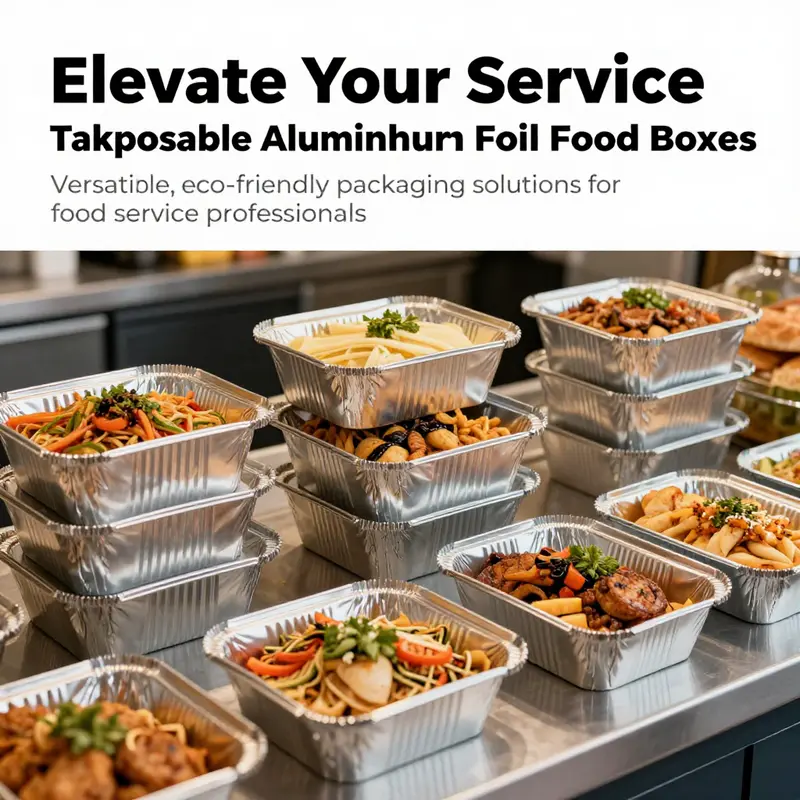
In an era where convenience meets quality, takeaway disposable aluminium foil food boxes are fast becoming a go-to choice for food service businesses. Their ability to maintain food integrity while being environmentally conscious resonates with consumers today. From bubble tea shops to catering services, these boxes offer numerous benefits that cater to a variety of applications. The subsequent chapters will delve into their key features, explore their applications, analyze the current market trends, and highlight their sustainability aspects, providing a comprehensive understanding of why these packaging solutions are essential in today’s food industry.
Heat, Hold, and Handoff: The Quiet Engineering of Takeaway Aluminium Foil Boxes
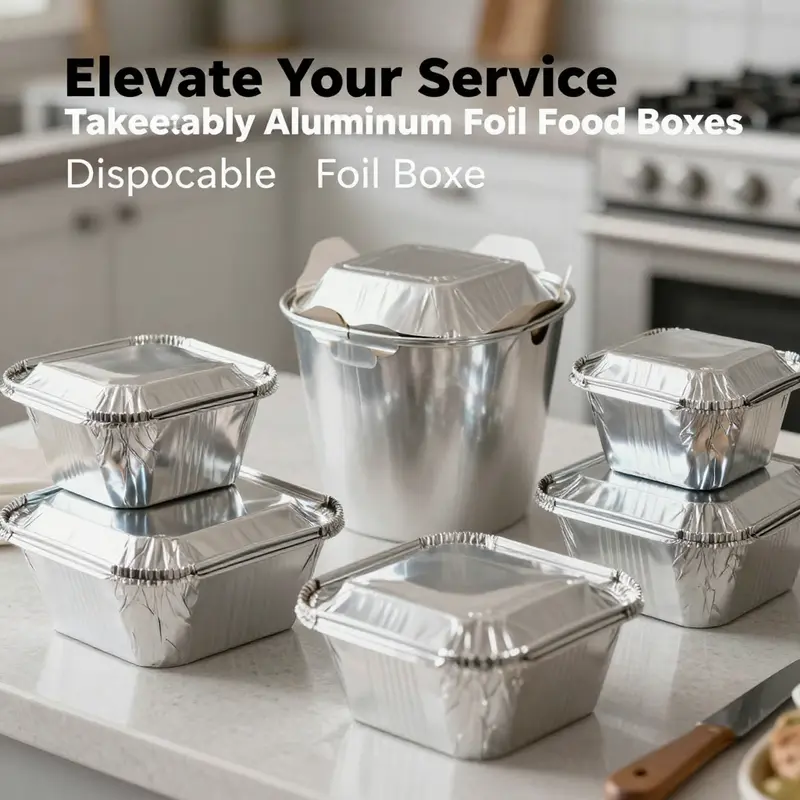
In takeaway and catering, disposable aluminium foil food boxes are the quiet workhorses that keep meals safe, hot, and presentable. Their value comes from a balance of heat conduction, structural durability, and practical design. A well-made box preserves flavor and texture during transport, reduces the risk of leaks or sogginess, and presents a professional impression when the customer opens the lid. Beyond heat, the material’s barriers protect against odors and contamination while enabling straightforward recycling when possible. Shapes, lid designs, and seam quality all contribute to a reliable packing workflow, helping staff seal, stack, and transport meals efficiently. The sustainability story matters too: aluminium foil is highly recyclable when clean and properly processed, a feature many operators seek to balance with cost and performance. Finally, the branding potential of packaging, branding through color, logo, and even perforated lids, can reinforce a restaurant’s identity while remaining functional in busy service periods.
From Oven to Customer: The Enduring Role of Disposable Aluminium Foil Food Boxes in Modern Takeaway
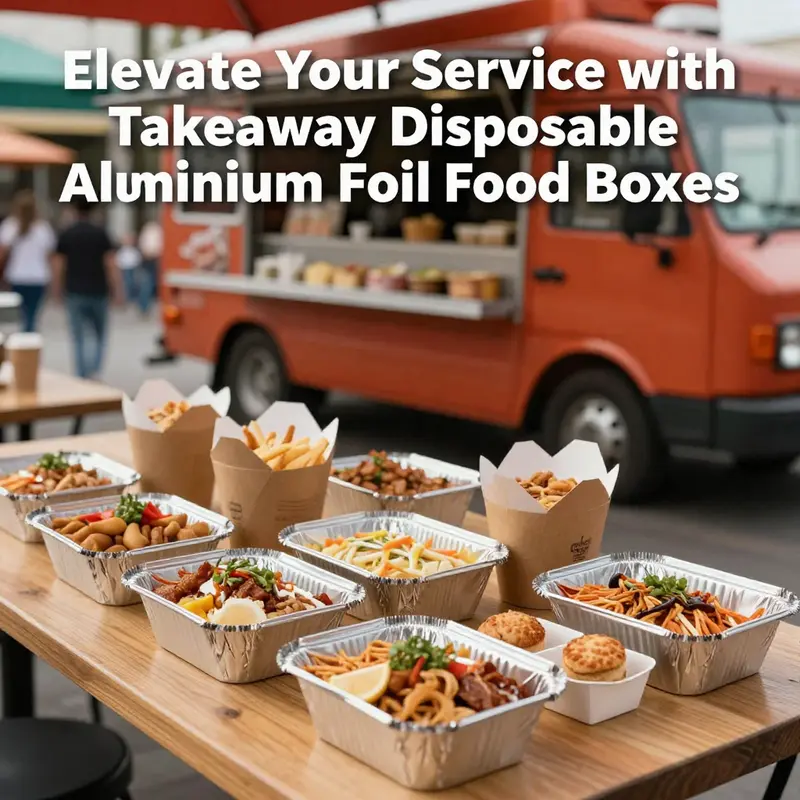
Disposability often carries a stigma, but in the realm of takeaway and full-service food operations, the humble disposable aluminium foil food box stands out as a quietly essential workhorse. Its story is not about novelty but about reliability, versatility, and the way a simple container can harmonize cooking, transport, presentation, and sustainability into a single, cohesive workflow. When a kitchen moves from the stove to the street, from the prep line to the doorstep or the cabin of an aircraft, the container that carries the dish becomes a seamless part of the dining experience. In this context, takeaway disposable aluminium foil food boxes are more than plastic-free alternatives or space-efficient packaging. They are a bridge that maintains heat, preserves flavor, protects provenance, and reinforces a brand’s commitment to responsible packaging without compromising on practicality or taste.
At first glance, the appeal seems straightforward: metal containers for hot dishes can survive the rigors of busy service, hold up during transport, and resist leaks and odors that might mar a customer’s perception. Yet the real value emerges when these attributes are integrated into daily operations. Foodservice professionals—from restaurants and fast-food chains to caterers, office lunch programs, and even aviation meal services—need packaging that can handle both hot and cold items, withstand the journey, and still present the meal in an appetizing way. The aluminium foil boxes described in industry listings are designed to meet those needs. They are built from food-grade, recyclable aluminium foil that is safe for direct contact with a wide range of dishes and resistant to the typical odors and spills that can occur in busy kitchens and delivery bags. The result is a packaging option that supports safety, traceability, and convenience across the entire service cycle.
A core strength of these containers lies in their thermal performance. They are engineered to handle high heat, while still being practical for cold or room-temperature items. In many standard configurations, they are designed for oven use up to typical cooking ranges and can endure the transition from oven to table, then into a delivery bag without losing structural integrity or compromising the dish’s texture. This oven-to-table capability is not just a gimmick. It enables a streamlined kitchen workflow where a chef can prepare, portion, and bake or reheat the same container that will ultimately reach the guest. The continuity of cookware and packaging reduces handling steps, minimizes the risk of mis-packaging, and speeds up service at peak times. In some premium designs, the robust construction supports even higher temperature exposure, a feature that makes them suitable for casseroles, lasagnas, and other dishes that benefit from a direct heat experience without transferring to another vessel. In practice, this versatility translates into fewer dish changes, less equipment washing, and a more efficient handoff from kitchen to courier.
The material itself—recyclable aluminium foil—contributes to a broader sustainability narrative that many operators are eager to tell. The food-grade nature of the foil ensures safe direct contact with food, while its recyclability aligns with growing consumer expectations for responsible packaging. The packaging’s lifecycle—from disposal to recycling facilities—can be integrated into a brand’s sustainability messaging, reinforcing a commitment to reducing waste without compromising on performance. This is especially important in a market increasingly attentive to plastic reduction and circular economy principles. Operators can frame their packaging decisions as part of a larger strategy to minimize environmental impact while maintaining the reliability customers expect when ordering meals on-the-go.
Beyond material and heat tolerance, the design variations of these boxes reinforce practical needs across venues and service models. Boxes come in multiple shapes and sizes, from compact 125ml portions to expansive 2300ml family-size configurations, with common rectangular dimensions that maximize stacking and space efficiency in delivery bags and warming cabinets. The shapes are not merely aesthetic; they are chosen to optimize space, minimize wasted volume, and support stable transport that reduces the likelihood of tipping or leakage during transit. Complementary lids further enhance this reliability, helping preserve freshness, control odors, and prevent spills, especially in crowded delivery environments or busy catering events. The lids also support a professional presentation when dishes are served directly to tables or clients, a small but meaningful enhancement in customer experience.
Thickness is another practical consideration. With typical ranges around 0.08mm to 0.12mm, these containers walk a line between rigidity and pliability. Thicker variants offer greater structural stability and can support heavier meals without buckling, a feature that is particularly valuable for multi-component or heavy dishes that need to travel securely. Lighter options, meanwhile, can be cost-effective for high-volume takeaway and simple, single-item meals. In all cases, the balance between thickness, heat retention, and stackability influences both cost and performance, prompting operators to choose configurations that align with their menu mix, delivery method, and logistics network.
A successful takeaway program also hinges on customization. OEM/ODM services are commonly available, enabling restaurants and caterers to imprint logos, branding, or other packaging designs onto the containers. This is more than a marketing flourish; it reinforces brand identity during transit and at the moment of pickup. Custom branding can elevate the perceived value of a meal and help customers connect packaging to their dining experience, which is especially important in crowded delivery ecosystems. The packaging becomes an extension of the brand itself, visible to customers from the moment they place an order to the final bite at their table or in their home.
From a supply and operations perspective, these containers are designed for scalable, predictable performance. Recyclable paper or OPP plastic is often used for secondary packaging, with bulk shipments organized in transport cartons sized to fit warehouse handling streams. This attention to logistics is not incidental; it matters when a restaurant chain or catering operation is balancing menus, inventory, and courier availability. A reliable, large-scale supplier network—capable of producing tens or even hundreds of millions of units monthly—reduces the risk of stockouts during peak demand periods and supports long-term planning for seasonal events, corporate meetings, or holiday travel surges. In practice, this means a takeaway program can grow with demand, rather than being constrained by packaging shortages that threaten service quality.
From the customer’s perspective, the experience is influenced by more than the food’s taste. The packaging affects heat retention, moisture control, and presentation. Perforated lids, for example, allow steam to escape gradually, preserving the dish’s texture while preventing condensation that can sog the top layers of a multi-component meal. Rectangular shapes maximize bag space and reduce awkward shifting during transit, helping keep stacks neat and the contents visually appealing on arrival. In a world where a growing share of meals are consumed away from home, the packaging’s ability to protect aroma and integrity matters just as much as the recipe itself.
The role of these boxes in branding and marketing should not be underestimated. Custom branding is a natural fit with takeaway, where each meal is a mini-presentation of the brand. The packaging becomes a canvas for logos, color schemes, and messaging that can reinforce a brand’s identity as customers handle meals during transit or at the point of consumption. The practical advantages—leak resistance, odor containment, heat conduction, and durability—complement the marketing benefits, creating a holistic experience that extends beyond the kitchen. This integrated approach helps hospitality operators build trust with customers, strengthening loyalty when diners recognize consistent performance every time they open a box.
In specific service contexts, the versatility of takeaway disposable aluminium foil food boxes shines brightest. For restaurants and fast-food chains, the containers support the oven-to-table concept, enabling cooks to finish or even begin a dish in the same vessel used for serving. This reduces dishwashing burdens and streamlines kitchen workflows, a critical advantage in high-volume periods. For food delivery services and meal-prep companies, the boxes’ heat conductivity and structural rigidity translate into more even reheating and safer transport. The ability to reheat in microwaves or conventional ovens without transferring contents to different containers reduces handling steps, minimizes spill risk, and helps maintain food quality during longer delivery windows. In catering operations and on food trucks, the boxes’ durability and compact shape allow for family-style meals or multi-component plates, while still fitting into compact, mobile workspaces.
From an environmental and ethics perspective, aluminium’s recyclability is a meaningful consideration for operators seeking to align packaging with sustainability goals. The fully recyclable nature of aluminium foil—paired with its food-grade safety profile—offers a credible path to reducing reliance on single-use plastics. In markets where customers value eco-conscious practices, the packaging becomes a tangible signal of a business’s commitment to responsible operations. The combination of recyclability, durability, and practical performance makes aluminium boxes an attractive option for a range of foodservice models, from quick-serve to high-end catering, where the packaging must perform under pressure while remaining responsible in disposal.
For teams building a cohesive takeaway program, the integration of packaging with branding and logistics is essential. A well-considered packaging strategy supports not only the physical transfer of meals but also the broader guest experience. It reduces stress for staff by simplifying portioning and delivery, supports accurate order fulfillment with predictable container sizes, and enhances customer satisfaction with a reliable, consistent product on arrival. The packaging becomes a silent partner in the dining experience, enabling operators to focus on recipe quality, menu variety, and service timing rather than worrying about containment or mess during transit.
Operationally, one must weigh the economics of scale. Wholesale pricing for these boxes can begin at very low unit costs with substantial minimum orders, reflecting the economies of scale in mass production. The ability to secure large quantities to meet seasonal demand and growing delivery networks translates into predictable budgeting and risk management for procurement teams. This is particularly relevant for operators who must balance the costs of packaging with the value delivered in heat retention, aroma preservation, and user experience. Given the high capacity of some manufacturers, supply continuity is rarely a limiting factor, even for nationwide chains or large catering events. In turn, this reliability supports the broader business strategy of offering tasty meals with dependable, consistent packaging that customers associate with quality and care.
In evaluating these containers, it is useful to imagine a single, integrated workflow. The kitchen prepares a dish, portions it into the appropriate box, seals with a lid, and delivers or serves. The same vessel may be used for a short stint in the oven and then handed to a courier with confidence about its integrity. The user’s reading of the meal—whether there is steam escaping through a perforated lid, whether the box fits securely into a delivery bag, or how well the aroma remains contained upon arrival—depends on the packaging’s design choices. When these choices are aligned with menu needs, delivery windows, and customer expectations, the packaging ceases to be a mere container and becomes a strategic asset that supports operational excellence, branding, and sustainability all at once.
To round out the picture, consider the place of these boxes within a broader packaging ecosystem. They complement other eco-conscious packaging options and can partner with branding efforts that emphasize safety, recyclability, and performance. When an operator communicates about their packaging choices, they can highlight the direct benefits to food quality and the environment, a combination that resonates with modern diners who value both convenience and responsibility. In this light, the takeaway aluminium foil box is not simply a vessel; it is a facilitator of reliable service, a touchpoint for brand storytelling, and a practical tool in the ongoing effort to deliver great food without compromising on sustainability or efficiency.
If you want to learn more about a practical supplier perspective and see a tangible product listing that outlines dimensions, material quality, customization options, and supplier credentials, you can explore a comprehensive source that documents these specifications and capabilities. The listing highlights how different sizes, thicknesses, and lid configurations support a wide range of uses, from individual meals to multi-component catering offerings. For a hands-on sense of the categories and capacities discussed, a typical rectangular aluminium foil food box with a lid demonstrates the core attributes: safe direct contact, leak resistance, heat tolerance, and easy integration into both kitchen and delivery workflows. This is the practical grounding that underpins the broader themes of reliability, efficiency, and sustainability described here.
Internal link: Modern operators often encounter packaging conversations that center on the category as a whole. For a concrete example of the type of product family described above, see Disposable Aluminium Foil Takeaway Boxes, which illustrates how a single container can serve diverse service formats while aligning with branding and sustainability goals. Disposable aluminum foil take-away boxes.
External resource: For an external reference that details a representative product listing and its specifications, see the Alibaba listing for rectangular aluminum foil food boxes. This resource provides real-world context on dimensions, material quality, and supplier capabilities that support the discussion of scalability and durability described above. https://www.alibaba.com/product-detail/550ml-rectangular-aluminum-foil-food-box_1600493721842.html?spm=a2700.details.0.0.3d3a4e7fGzKpEJ
Markets in Motion: An In-Depth Analysis of Takeaway Disposable Aluminum Foil Food Boxes
Closing the Loop: Reimagining the Sustainability of Takeaway Disposable Aluminium Foil Food Boxes
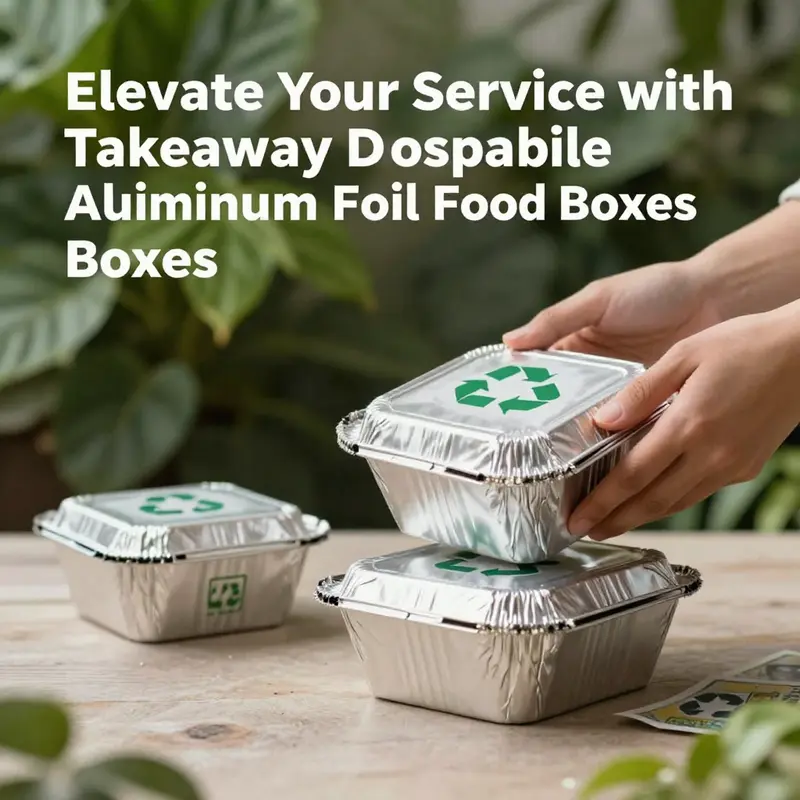
The convenient promise of takeaway meals often travels with a quiet, metallic guardian: the disposable aluminium foil food box. Its lightness, heat resistance, and grease resistance make it an almost invisible workhorse of the modern food service landscape. A box that can withstand a hot curry as well as a chilled salad, a box that travels securely from kitchen to street corner, from office desk to park bench, without leaking or losing its shape. Yet beneath this practicality lies a complexity that many operators overlook. The sustainability profile of takeaway aluminium foil containers is not simply a matter of material choice; it hinges on end-of-life management, the system into which the boxes enter after the last bite is enjoyed, and the incentives that drive everyone from the factory floor to the recycling plant to the consumer. This chapter invites a more nuanced view of sustainability that respects the material’s strengths while acknowledging the responsibilities it casts across the supply chain and the waste stream. It is not a critique of aluminium foil so much as a meditation on how its circular potential can be unlocked through design, policy, and everyday practice.
Aluminium foil containers are prized for the way they blend performance with simplicity. The metal itself is non-porous and resistant to moisture and odors, creating a reliable barrier that helps keep food fresh during transit. The same properties that enable reliable takeout also pose a question: can something so effective at containment be reclaimed and reintegrated into new products after its single-use life? The answer depends on how the packaging is manufactured and how households and businesses handle it after use. In many markets, aluminium is among the most recyclable materials available. When recovered from the waste stream, it can re-enter production without a loss of quality, forming the backbone of a circular economy that minimizes virgin material extraction and the energy needed to create new metal from ore. The energy advantage of recycling aluminium is striking: producing recycled aluminium consumes only a fraction of the energy required for primary production. In some estimates, the energy requirement can be as low as five percent of the energy needed to create new aluminium from bauxite. This energy dividend translates into lower emissions and a lower climate footprint for the recycled portion of the stream, provided the recycling system is robust and widely utilized.
But the recycling promise is not a universal reality. The rate and efficiency of aluminium foil recycling vary widely by region and by waste infrastructure. Contamination remains a chief barrier. Food residue, grease, and the coexistence of laminated structures—foil that is bound with plastic or paper layers—can render batches non-recyclable or force expensive sorting and cleaning steps at facilities. When boxes are heavily soiled or mixed with other materials, they may end up diverted to landfills despite containing metal that could otherwise be recovered. The practical upshot is that the environmental benefits of aluminium foil packaging depend heavily on how we manage the material after use. The ideal scenario is a clean, well-sorted stream of recycled aluminium, free from contamination and designed for easy separation at the recycling stage. The lamination problem is not unsolvable, but it does require attention to construction and packaging choices that favour recyclability. In some cases, designers and manufacturers explore mono-material solutions that keep the foil single-material, avoiding plastic or liner components that complicate recycling. Such approaches align with broader sustainability goals by improving the likelihood that the entire container can rejoin the recycling loop rather than becoming waste.
The environmental footprint of producing aluminium foil is itself a factor in assessing sustainability. Mining, refining, and extruding aluminium are energy-intensive processes. The energy demand of primary production is substantial, and the carbon footprint is correspondingly higher than that of some alternative packaging materials. This reality underscores the importance of two parallel strategies: firstly, reducing overall packaging use by optimizing box size and capacity to fit actual portions, and secondly, maximizing end-of-life recovery. In practice, this means better collection systems, clearer labeling, and partnerships with waste management entities that can translate the theoretical recyclability of aluminium into tangible recycling rates. The industry has responded by emphasizing design-for-recyclability, clarity of care instructions, and the potential use of post-consumer recycled content where feasible. Even when using recycled aluminium, there are limits to how quickly and how completely recycled metal can displace virgin material, because supply depends on the recovery rate and the quality of the input streams. Nevertheless, every gram recovered reduces the need for new mining, lowers energy use, and demonstrates the material’s potential as part of a longer, more resilient lifecycle.
Innovation in the packaging sector often emerges from the tension between performance requirements and environmental ambitions. For takeaway boxes, durability, heat tolerance, and grease resistance must be preserved while enabling easier recycling. In response, some manufacturers pursue cleaner, more transparent material choices and production processes, with an eye toward post-consumer recyclability. Clear labeling shows consumers how to dispose of the container properly, and partnerships with waste managers help align packaging with existing collection programs. The broader goal is a packaging ecosystem where the product’s end-of-life path is predictable and efficient. In this sense, sustainability is not a static attribute but a dynamic objective that evolves with technology, policy, and consumer behavior. The most compelling progress occurs when packaging design anticipates the recycling system, reducing contamination risks and enabling straightforward sorting at the point of recovery.
Within this evolving landscape, businesses have opportunities to advance sustainability by being thoughtful about how their takeaway boxes are designed, branded, and communicated. Design decisions can influence recyclability: choosing purely metallic constructions over laminated variants, minimizing coatings, and avoiding mixed materials can all improve the odds that a box will be recovered and remanufactured. This is not merely a technical choice; it is a business decision with implications for costs, customer perception, and regulatory compliance. Some operators view sustainability as a competitive differentiator, showcasing packaging that is clearly labeled for recycling, easy to flatten for efficient transport to the recycling facility, and compatible with a broad range of waste-management infrastructures. The consumer side of the equation matters as well. Education about proper disposal can elevate recycling rates, shift consumer habits, and reduce contamination that would otherwise derail an otherwise recyclable stream. A simple action—rinsing or scraping food from the box, or choosing packaging that invites straightforward separation from other waste streams—can make a meaningful difference when multiplied across thousands of orders daily.
The market for aluminium foil takeaway boxes is diverse, and within that diversity lies a spectrum of possibilities for sustainability improvement. Some manufacturers are exploring the use of post-consumer recycled aluminium, aligning production with circular economy principles while maintaining the necessary barrier properties and form factors. Even when recycled content is used, the overall environmental performance remains linked to the efficiency of the recovery system and the rate at which households and institutions participate in recycling programs. In practice, this means policies and incentives that encourage recycling at the source, along with standardized labeling and education campaigns that make disposal straightforward for customers. The broader public health and safety considerations—such as the metal’s metal-based safety and compatibility with various temperatures—remain an important backdrop to sustainability discussions. When the focus shifts to end-of-life stewardship, the conversation becomes about systems, not just materials. And that shift changes the conversation from a single-choice decision to a coordinated effort across suppliers, retailers, municipalities, and consumers.
To illustrate how a more sustainable path might unfold in the real world, imagine a food-service operation that selects boxes with an eye toward recyclability and end-of-life clarity. The operation would not only choose containers with robust heat resistance and leak resistance but would also communicate disposal instructions to customers. It would train staff to clean and separate packaging before disposal, or to offer conveniently collapsible packaging that reduces space in transport to the recycling facility. It would collaborate with waste-management partners to ensure a steady flow of recovered aluminium and to maximize the share of packaging that can re-enter the manufacturing cycle. It would also consider the possibility of using recycled-content metal and designing boxes that are easier to recycle without compromising performance. Taken together, these steps transform a simple takeaway box into a material that contributes to a circular economy rather than becoming a one-way throwaway item.
Intertwined with these material and system-level considerations is the consumer expectation landscape. A growing segment of customers values sustainability highly and pays attention to packaging ethics as part of overall product quality. Consumers are increasingly willing to support brands that demonstrate transparent end-of-life practices and that minimize waste without sacrificing convenience. In response, manufacturers and retailers can tell a credible sustainability story by providing clear disposal guidance, labeling that aids sorting, and proof that the packaging aligns with local recycling capabilities. This storytelling is not merely marketing; it is a practical signal about how the product fits into the local waste infrastructure. A well-articulated sustainability narrative can reinforce responsible consumer behavior and encourage better disposal in real-world settings, strengthening the overall recycling pipeline.
From a global perspective, the sustainability of takeaway aluminium foil food boxes benefits from a combination of material science innovation, improved waste-management infrastructure, and consumer cooperation. Regulatory and policy signals can accelerate progress by setting standards for recyclability, mandating clear labeling, or incentivizing the use of recycled-content materials. Such measures can help harmonize practices across suppliers and buyers, reducing the fragmentation that often undermines recycling efforts. The path forward lies in designing for end-of-life as a core consideration from the outset, rather than as an afterthought. When packaging design anticipates the recovery system, the resulting product moves closer to the ideal of a fully circular lifecycle, where boxes shed their single-use stigma and re-emerge as raw material for new products.
For readers seeking practical steps to integrate these ideas into daily operations, the road map is both simple and ambitious. Start with a materials assessment: confirm whether the chosen containers are designed for recyclability within the target waste stream and whether any laminated components could hinder recovery. Next, engage with waste-management partners to understand local collection rates and sorting processes. This knowledge helps tailor packaging choices to what the system can reliably handle, minimizing contamination and maximizing recovery. Then, implement clear labeling and customer education to promote correct disposal. Training staff to rinse or scrape residue and to separate boxes from other waste streams at the point of generation can substantially improve downstream recycling outcomes. Finally, explore the feasibility of using recycled-content aluminium or mono-material constructions where possible, balancing performance with recyclability. While not every operation can overhaul its packaging overnight, incremental changes—combined with transparent communication and partnership—can create measurable gains over time.
In this sense, sustainability is best understood not as a single attribute attached to a box but as a collaborative practice that spans manufacturing, logistics, retail, and the consumer’s daily choices. The takeaway is not to vilify aluminium foil packaging but to recognize that its environmental footprint is contingent on the quality of the recycling ecosystem it enters. By strengthening that ecosystem through design for recyclability, better waste management, and informed consumer behavior, takeaway boxes can contribute meaningfully to reduction in virgin material demand and in energy consumption. The idea is to move from a linear narrative of use and discard to a circular one in which each box has a second life, a second chance, and a second purpose. In that spirit, the sustainability of takeaway disposable aluminium foil food boxes becomes less about a perfect promise and more about a credible, measurable journey toward lower impact packaged food. For operators who want to explore these concepts further, a growing body of resources emphasizes aluminum’s recyclability, the importance of avoiding contamination, and the value of recycling-friendly design. As with any material that travels through complex systems, the science of sustainability asks us to act with both care and pragmatism, recognizing that every choice matters when scaled across thousands or millions of meals each day.
To connect this discussion with practical examples of how packaging choices can be presented, some suppliers and retailers highlight eco-conscious design in their takeout offerings. You can explore the idea of eco-conscious, grease-resistant, and microwave-safe packaging by visiting resources that discuss eco-friendly takeout packaging options. For example, you can learn more about packaging designed for easy recycling and responsible disposal here: eco-friendly takeout boxes for food packaging. This kind of content helps bridge the gap between material capability and real-world practice, illustrating how thoughtful design translates into tangible sustainability outcomes.
Ultimately, the sustainability of takeaway aluminium foil food boxes hinges on alignment across the chain: design for recyclability, efficient and accessible collection, consumer cooperation, and a transparent narrative that supports responsible disposal. When these elements come together, aluminium foil containers can play a meaningful role in reducing waste and conserving energy, even as they fulfill their core function of safely delivering meals. As markets evolve and waste-management infrastructure expands, research, policy, and practice will continue to refine how these containers contribute to a more circular economy. For readers who want to delve deeper into the recycling landscape and the principles that govern it, a broader external resource offers context on aluminium recycling practices and their environmental implications: https://www.recycling.org.uk/aluminium-recycling/.
Final thoughts
Takeaway disposable aluminium foil food boxes are not just a packaging solution; they are a critical component of modern food service offerings. Their versatility, alongside their eco-friendly benefits, makes them an ideal choice for businesses aiming to meet consumer demands for quality and sustainability. As the food service industry continues to evolve, these packaging solutions will undoubtedly play a pivotal role in bridging convenience with responsibility, thus enhancing the overall experience for both vendors and consumers.