
Thank you takeout bag baby SVG designs seamlessly blend delightful baby-themed graphics with the practical utility of takeout bags, presenting unique branding opportunities for businesses in the food and beverage industry. These designs are not just cute; they serve as an excellent way to express gratitude and enhance the memorable experiences of baby showers, birthday parties, and family gatherings. As we delve into this engaging topic, we will explore various dimensions, starting with the versatility of these SVG designs, followed by the importance of the SVG format itself for creatives, crucial licensing and copyright considerations, where to find these designs, and how they can creatively enhance event planning.
From Tiny Icons to Takeout Bags: Crafting Baby-Thank-You SVGs That Speak Softly, Travel Far, and Personalize Every Gift
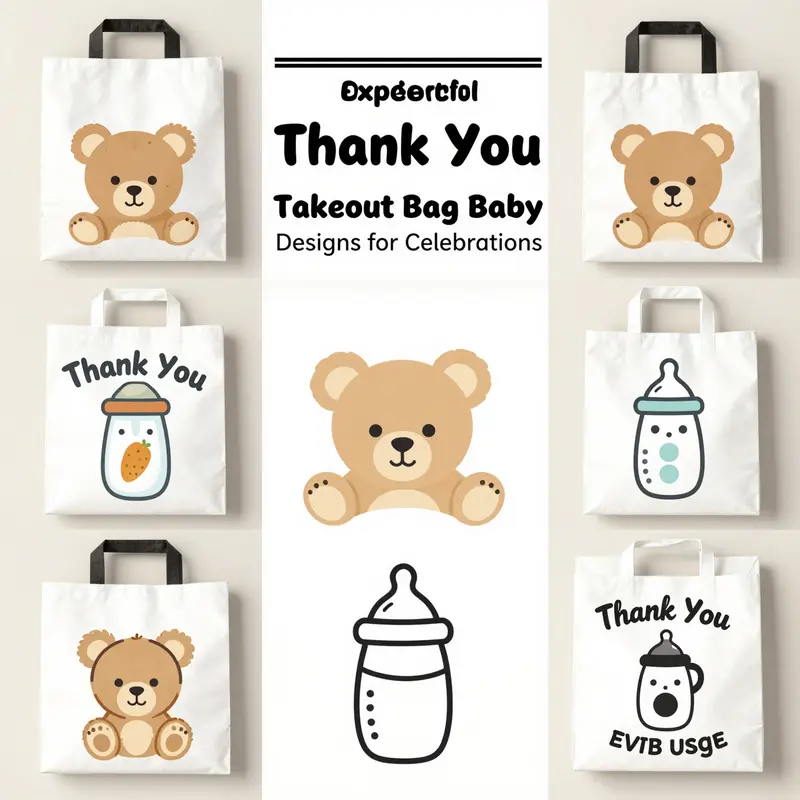
The phrase thank you takes on a gentler arc when it arrives not as plain text but as a vector smile etched onto a takeout bag. In the world of baby celebrations, SVG designs that fuse a takeout-bag silhouette with baby-themed imagery become little carriers of gratitude, ready to be printed, cut, and assembled into tactile keepsakes. The appeal lies not only in the cuteness but in the way scalable vector graphics honor the craft of gift presentation. An SVG file, by its nature, is a scalable, resolution-independent blueprint. It can be scaled to the exact size needed for a petite favor tag or expanded into a larger centerpiece card without losing a crisp edge or clean line. This makes it particularly valuable for events where the same design might appear across various materials—paper bags, boxes, tags, or even digital invitations. The result is a cohesive visual language that ties together the baby’s celebration with practical packaging, transforming a simple bag into a moment of shareable joy. When designers begin to think with this mindset, the baby-themed thank you bag becomes more than a decorative element; it evolves into a small narrative about care, nourishment, and communal happiness. The bag itself, rounded and friendly, often carries a bouquet of motifs that read as infancy’s vocabulary: tiny booties, rattles, onesies, storks, and delicate florals. Each element is a separate vector layer within the file, allowing for straightforward customization. The bag silhouette provides the stage, the handles offer the sense of motion, and the baby icons float above, like soft whispers of the new life being celebrated. Because SVGs are built from paths and shapes, color can be changed with a click, scale can be adjusted without distortion, and even the text can be swapped to tailor a message for a specific guest or a particular baby name. This flexibility is especially helpful for crafters who want to harmonize the color story of the gift bag with a party’s palette or with a family’s preferred hues. A well-crafted SVG can serve as the backbone of a whole set of printed pieces: a bag topper, a coordinating tag, a gift card insert, and perhaps a small coordinating sticker that seals the bag or decorates a favor tray. The result is a consistent, professional look that still feels handmade and personal. Beyond aesthetics, there is a workflow reality that makes baby takeout bag SVGs genuinely practical. The files are designed to be cut or printed with relative ease on commonly available home-crafting equipment. They support print-and-cut workflows, which means a single file can be printed onto paper or cardstock and then precisely cut with a cutting device. The ability to group elements—name text, “thank you,” the baby motif, and the bag shape—into layers means a crafter can select only the components they need for a given project. For a baby shower favor, a designer might prepare a version that includes a ready-to-change “thank you” line so guests can personalize their tokens without reworking the entire layout. For a gifting scenario, colorways can be swapped to match gender-neutral schemes or a specific party theme. The elegance of SVGs in this context is not merely in decoration; it is in modularity. Crafters can isolate the baby icons as independent elements to print on tags or to embellish gift bags in a second pass. They can simplify the design by removing text for a universal, minimalist look, or they can embed short, heartfelt messages that become a signature of the host’s hospitality. In practice, this means a single design file can accommodate multiple events and audiences, from a baby shower to a first birthday, while maintaining a distinct, family-centered voice. The licensing question, always central in digital design, becomes a practical consideration when these designs move from a personal project to a community resource or a commercial offering. Users must respect the terms attached to each SVG set: whether it is for personal use, or allows commercial exploitation with or without attribution, and whether derivatives may be sold or redistributed. The responsible crafter honors these boundaries by adapting color schemes, text, and layout within the allowed scope, rather than distributing the original files themselves. In this sense, the SVG becomes a canvas for personal expression while the license dictates how freely that expression may travel. Because audiences and creators converge at online design hubs and marketplaces, it is useful to think about how these files travel between platforms. Designers often host a suite of baby-themed takeout bag designs because the combination of “thank you” and baby imagery aligns with gifting rituals, baby showers, and the broader arc of early childhood celebrations. The practical reality is that different platforms offer varying terms, and each file often ships with a ready-made kit: an SVG, sometimes a DXF or PDF version for broader compatibility, and structured layers or color swatches. This collection of assets speaks to a crafting culture that values both convenience and customization. For the person who curates favors, the real value is in the ease of production. A designer might prepare a couple of colorways and a few text options, enabling a host to finalize dozens of takeout-style gift bags in a single afternoon. The anticipation of gifting becomes a tactile moment, where the act of opening a bag with a bit of printed warmth becomes part of the memory itself. The role of social sharing in this ecosystem cannot be overstated. Platforms that host templates and downloadable kits become discovery engines, where one design can spark a cascade of derivative ideas. A simple baby-themed thank you bag can inspire a family to create a matched set of bookmarks, recipe cards, or gift tags that reflect the same whimsy and care. This is the essence of a well-executed SVG design: it travels, it adapts, and it forgives the hand that imperfectly cuts a line or misaligns a color. When approaching this design space, one should keep in mind the balance between charm and practicality. A baby motif is inherently gentle and comforting, but it must also be legible when scaled down to a small favor tag. Thick strokes, high-contrast color pairings, and clear typography help ensure that the final product remains readable even at modest print sizes. The text, if included, should be succinct—perhaps a single line such as “Thank you” or “Thank you for celebrating with us”—and set in a type that remains friendly and legible at a few millimeters tall. Text handling in SVGs is deliberately forgiving. Designers can emphasize words with bold weights or alternate fonts, yet the file remains printable across a spectrum of devices and materials. A thoughtful version might offer a version with a larger, bolder “THANK YOU” and a smaller subtitle that identifies the baby’s name or a date. This subtle choreography between typography and imagery ensures that the bag feels polished without becoming overly busy. As a final note, the broader ecosystem around baby-themed takeout bag SVGs reveals a practical mindset among makers. Templates and templates-with-instructions collections empower novices to embark on their first crafting project with confidence, while seasoned makers appreciate the freedom to remix and reassemble familiar motifs into fresh gifts. The result is not merely a product but a practice—one that treats a simple bag as a tiny stage for gratitude and a cradle for celebration. For readers eager to explore ready-to-use templates that mirror this approach, a helpful resource exists in a curated collection that includes a range of DIY paper bag and gift bag templates, available as instant-download archives with vector and editable formats. More on that resource can be found here: custom takeaway packaging supplies for themed parties. The collection demonstrates how a shared design language can travel across projects, offering both speed and heart in equal measure. For those seeking an explicit glimpse into how others are translating this idea into real-world projects, an expansive source of inspiration and templates can be explored on a public sharing platform that hosts a broad array of user-created designs. External resource: https://www.pinterest.com/pin/784695312036724336/.
null
null
Guarding the Grins: Licensing, Copyright, and Creative Responsibility in Thank-You Takeout Bag Baby SVGs
Designing SVGs that fuse baby imagery with takeout bag motifs creates a tactile bridge between celebration and craft. The moment a designer sketches a tiny stroller on a bag or a delicate cradle cradles a folded takeout silhouette, ownership becomes more than a signature on a file. It becomes a shield that protects the creator, the buyer, and the event itself from legal storms and creative missteps. In the realm of thank you takeout bag baby SVGs, licensing and copyright are not abstract rules but practical guardrails that shape what you can print, sell, or gift without inviting risk. This chapter threads a careful path through origin, permission, and practical usage, showing how legality can coexist with vibrant, wholesome design that suits baby showers, birthdays, and other infant-focused celebrations. It also points to a pragmatic approach: design original artwork when possible, verify licensing for any third-party elements, and treat every asset as a contract you intend to honor rather than a free pass you hope will hold up under scrutiny.
Copyright begins with creation. If you draw a new baby-themed illustration and fix it in a tangible form, such as a digital SVG, you automatically hold the copyright. That ownership is the designer’s to manage, license, or transfer. The flip side is equally important: most recognizable characters, logos, or branded silhouettes belong to someone else’s rights portfolio. When a design borrows a licensed character or a trademarked look—whether from a famous cartoon, a movie, or a popular toy—the use becomes subject to permission. The moment you reproduce that imagery for a commercial product like a thank you bag, the risk of infringement rises sharply unless you have explicit authorization. The difference between personal use and commercial use matters profoundly here. If you plan to print and sell bags with third-party characters, you need a license that covers commercial use, not merely a fan-friendly nod.
The question then becomes not only what is allowed, but how to read the license terms with care. Some SVGs come with licenses that expressly permit commercial use, including printing on products for sale. Others label designs as personal-use only, meaning selling items would violate the agreement. Licenses may also impose restrictions on redistribution, required attribution, or limits on the number of units produced. You may encounter formats marketed as free or royalty-free; these terms can be misleading if the included license restricts commercial production, requires attribution, or prohibits resale altogether. A careful reader will pause at any clause that sounds vague or restrictive. When in doubt, the prudent path is to assume you cannot use the asset for merchandise until you confirm a clear, written license that explicitly covers commercial production and resale.
Licensed character usage exemplifies a common pitfall. If a design includes a licensed character—think of a popular cartoon figure or a movie mascot—commercial use usually requires a direct license from the rights holder. Large brands hold tight policies around third-party usage, and even seemingly benign online freebies can carry unintended baggage. The presence of a license does not guarantee safety; licenses must be read in full to confirm whether printing on physical products is allowed, whether minimum order quantities apply, and whether any attribution or packaging restrictions exist. In many cases, the license will specify that only digital displays are permitted, not physical products sold to the public. This is why many makers choose to steer toward original artwork or licensed-free compositions that celebrate baby themes without invoking protected personalities.
Where should a designer look for legally safe SVGs? Reputable royalty-free marketplaces often provide licenses that explicitly permit commercial use and product printing. Platforms that specialize in craft assets typically offer commercial-use licenses and clear terms about printing on items such as baby bags, tags, or party favors. The keys are transparency and specificity: you want a license that says you can use the artwork on physical products you sell, without requiring every card or certificate to bear the original creator’s name. Open-source or CC0 assets are another route, provided you verify that the CC0 waiver actually covers commercial use and that no attribution is required beyond what you plan to provide. Some providers also offer officially licensed design packs, where the seller has negotiated rights for commercial distribution with rights holders. These arrangements remove a great deal of ambiguity, but they come with terms you must honor just like any other license.
A practical approach to finding safe SVGs is to combine original design with carefully vetted sources. If you are not confident in your illustration skills, you can collaborate with a designer to create baby-themed icons that are unique to your brand or event. Commissioned artwork is yours to license, and you can set terms that align with your project’s commercial needs. When venturing into the marketplace, read license summaries before you download. Look for phrases such as commercial use, print rights, and resale permission. Save the license text and the purchase receipt in your project records. If a file is labeled non-commercial or personal use only, do not proceed with production on saleable goods. Documentation of these sources is not merely bureaucratic; it protects your business against later disputes and gives you a clear trail should a rights issue arise.
The practical steps for compliance begin with a deliberate design and purchase workflow. Start by differentiating between original artwork and third-party elements. If you create your SVG from scratch, you own that design’s copyright and can license it on favorable terms you set. If you incorporate any third-party asset, confirm the license aligns with your intended use. Always keep a copy of the license terms and a record of where you obtained the file. If the license changes or is withdrawn, you should have a plan to adjust product lines accordingly. It is wise to document the date of purchase, the license scope, and any restrictions around distribution or marketing. This habit reduces confusion when a production run scales up and more units are produced for a baby-themed celebration.
Another layer in the licensing conversation is the idea of custom design work. When brands seek to avoid copyright entanglements altogether, commissioning a designer to produce exclusive SVGs tailored to their event or product line is a sound strategy. An original design can be made with baby silhouettes, soft color palettes, and friendly typography that convey gratitude without invoking any protected character or logo. The resulting artwork can be licensed to your business for a fixed term or for an ongoing relationship, depending on the agreement. Custom design not only minimizes risk but also strengthens brand identity across all packaging and party materials. It creates a cohesive, recognizable look for a line of baby-focused takeout bags that carry your signature style—your thank you message, your color scheme, and your aesthetic as a seal on quality and care.
What happens if a license is violated? The consequences vary in intensity and urgency. You may receive a cease-and-desist letter, followed by negotiations or legal action if infringement continues. The risk to your brand can extend beyond fines to product recalls, store bans, or damage to consumer trust. In the worst-case scenario, a court could order restitution or prohibit the sale of designs that violate rights. These outcomes are not hypothetical scare tactics; they are practical outcomes seen across industries when rights are ignored. The precautionary principle—verify licenses, keep records, and lean toward original artwork—serves as a durable shield against such disruptions.
The chapter’s practical guidance culminates in a balanced mindset: embrace the joy and practicality of thank-you takeout bag baby SVGs while anchoring every design decision in clear rights management. For event planners and makers, this means choosing a path that aligns with your production volume, distribution channels, and audience. If your business model hinges on scalable merchandise, invest in licensed rights that cover mass production or commission an exclusive design that no one else uses. If you operate on a smaller, craft-based scale, careful selection of commercial-use licenses and diligent record-keeping will be sufficient to keep your products compliant while preserving the cheerful spirit of baby-themed celebrations.
Internal linking note: for creators exploring how to align their packaging with theme-driven events while maintaining control over their takeout aesthetics, consider exploring options like custom takeaway packaging supplies for theme party. This approach helps ensure you can apply your SVG artwork consistently across bags, tags, and other print pieces without renegotiating rights for each item. custom takeaway packaging supplies for theme party.
External resource for deeper licensing context: when researching official routes to licensed or legally safe designs, platforms that facilitate licensed character printing offer clarity on what is permissible for commercial use. For broader industry understanding, refer to general licensing discussions and rights-clearance practices at Alibaba, a resource often cited for licensed print-ready designs. Learn more at https://www.alibaba.com.
In sum, the careful navigation of copyright and licensing in thank you takeout bag baby SVGs safeguards both the creator and the consumer, enabling celebration to flourish without legal friction. The goal is not to shroud design in caution but to illuminate a path where creativity and legality coexist, allowing every baby shower or baby-related celebration to carry a message of gratitude that is as thoughtful as it is compliant.
From Pixel to Plush: Navigating the Market for Thank-You Takeout Bag Baby SVG Designs
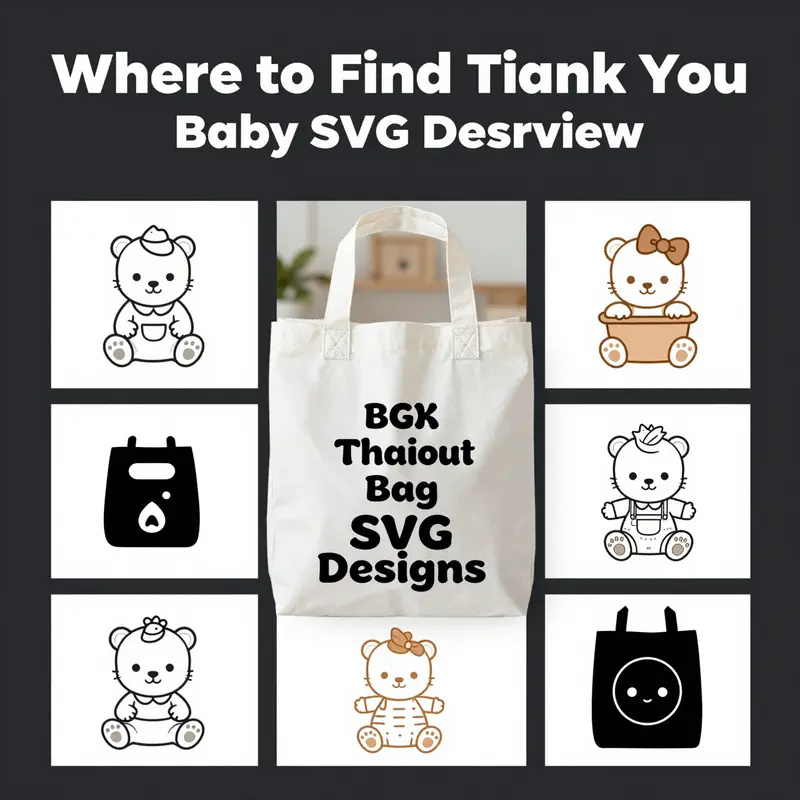
The digital landscape where SVG files meet baby-centered takes on takeout packaging is a surprisingly tactile one, even though it begins as a purely vector-based art form. Designers who blend the idea of a warm, grateful “thank you” with a takeout bag motif aimed at baby celebrations are building a bridge between two familiar rituals: the joy of giving and the tactile charm of packaging. In practice, these SVG designs function as more than decorative elements. They are scalable, editable building blocks that empower makers to tailor a simple act—sharing a meal or a favor—with a personal touch that feels handcrafted and thoughtful. A typical SVG in this niche might feature a stylized takeout bag outline, softened by baby icons such as tiny rattles, booties, or bottles, and accented with text that reads “thank you” in friendly type. The result is a design that can be applied across surfaces—from gift bags and gift tags to cards and wall art—while retaining crisp detail at any print size. The concept, at its core, is about translating the warmth of a baby event into a printed artifact that travels with guests as a token of appreciation. In a market that prizes customization, the SVG format offers a unique advantage: it can be endlessly recolored, re-layered, or simplified to suit different production methods, from paper crafts to vinyl decals. This adaptability makes such designs appealing for hobbyists, small businesses, and event planners who want to deliver a cohesive, on-theme experience without committing to a single physical product line. The appeal is subtle but powerful. A guest who receives a thoughtfully designed takeout bag—one that clearly signals gratitude and a baby-centric motif—feels seen and appreciated. SVGs support that sentiment by enabling creators to adjust every stroke, fill, and shadow for maximum legibility and charm, whether they are printing on paper gift bags, labeling favor boxes, or creating digital thank-you notes that echo the physical aesthetic of the bags themselves. The practical implications extend beyond aesthetics. For people who craft and sell, a well-made baby-themed “thank you” takeout bag SVG can be bundled with a range of related assets: coordinating tags, printable wrappers, and even small decorative elements that can be cut from vinyl or card stock. The result is a mini ecosystem of cohesive, low-cost design assets that manufacturers and crafters can reuse across events, enabling rapid production without sacrificing personality. The market dynamics surrounding these files are shaped by broader trends in both packaging and baby-theme design. In the packaging world, there is an ongoing interest in bags and boxes that balance bold visual impact with a sense of warmth and approachability. Trends favor bold, friendly silhouettes and careful use of negative space, which helps designs remain legible when scaled down for small tags or up for larger gift bags. When translated into SVGs for baby-focused bags, these principles encourage clean outlines and gentle curves, avoiding overly aggressive lines that might feel too mature for a baby shower. In terms of materials, the physical corollary to digital SVG design often points toward canvas, paper, or decorative stock that can be printed or cut with relative ease. While the research emphasizes material choices for real-world bags, such as canvas and decorative paper, the digital designer benefits from understanding these materials, since they often determine how a final product will be produced. The interplay between material surface and design density matters. A bag printed with an intricate motif might look stunning on screen but could read as cluttered when printed on a small tag. Conversely, a simple patient design with generous negative space tends to scale well across bag sizes, ensuring a legible “thank you” even at a glance. In terms of licensing and rights, the SVG market has nuanced layers that chip away at the simplicity of “free for all.” Most SVG files intended for baby-themed use come with licensing terms that distinguish between personal use, commercial use, and extended commercial use. A single design might be free for personal craft projects but require a commercial license for producing items intended for sale. Others offer a blanket commercial license but restrict mass production or resale through certain channels. It is essential for buyers and designers to read these terms carefully. A well-chosen license can support a creator’s business while protecting buyers from inadvertent infringement. This is not simply a legal precaution; it also shapes what is possible in practice. For example, if a buyer intends to print SVGs onto gift bags for a boutique event, understanding whether the license covers production for sale determines how many units can be produced and whether custom modifications require additional permissions. The practical upshot is that licensing becomes a conversation between the designer and the user, one that can define how flexible a design can be across different event contexts. Platforms that host these designs—such as broadly known marketplaces and design hubs—serve as essential gateways to the market. They aggregate vast libraries of SVG files with-searchable keywords and category filters that simplify locating baby-themed “thank you” takeout bag designs. The most commonly cited platforms in industry conversations offer straightforward download processes, transparent licensing information, and community or designer support that helps buyers understand how designs can be repurposed. These platforms create a reliable baseline for evaluating whether a design’s aesthetic aligns with a particular baby event’s mood—soft pastels, playful typography, and gentle line work—before a purchase is made or a file is customized. The search experience on these platforms supports a crucial workflow: you start with a concept (baby-themed, takeout-tote, “thank you” text), scan for designs that balance legibility with whimsy, and then refine by licensing and file structure (layers, color groups, and editable text). From there, the process moves into editing and production planning, where color palettes can be synchronized with a brand’s or event’s color scheme, and where the SVG’s layered structure facilitates easy changes to individual elements without affecting others. For those who need a quick entry point to practical packaging decisions, straightforward resources on custom takeaway packaging can help align digital design with real-world production. One practical resource worth exploring is a supplier that offers themed takeaway packaging supplies and disposable tableware. The provider’s catalog is designed to support event-based packaging decisions, and it can serve as a reference point for how baby-themed SVGs might translate into printed or cuttable assets on actual bags or gift packaging. You can explore these packaging considerations and related design alignments through this example resource. https://ecocupbowl.com/product/custom-takeaway-packaging-supplies-disposable-tableware-for-theme-party/ This connection between digital SVG design and physical packaging highlights a core reality of this niche: the decision to design a SVG is not just about aesthetics but about how a design will function in a live, consumer-facing context. The best SVGs for this niche keep production in mind, ensuring that the final printed or cut items retain clarity and warmth when scaled for different bag sizes and printing methods. In practice, that means choosing designs with clear vector lines, ample white space, and a bold but friendly type treatment for “thank you” that remains legible at small scales. It also means recognizing that baby-themed motifs should feel inclusive and gentle, with shapes that evoke warmth and care rather than overstated whimsy. The interplay between the concepts of gratitude, infant celebration, and practical packaging invites designers to build compact bundles of assets: the main SVG for the bag, a complementary tag or label, and perhaps a simplified monochrome version for low-contrast prints. Such bundles offer value to event planners and crafters who need to deliver consistency across multiple touchpoints—bag fronts, tag fronts, and digital thank-you cards—without reinventing the wheel for every event. While the direct market data on this exact sub-niche is sparse, the broader patterns are clear: scalable, license-aware, aesthetically coherent SVGs linked to baby celebrations fill a recognizable need. The gap often lies in curation and in offering ready-to-use sets that align with current packaging aesthetics without sacrificing the unique warmth of a baby-focused event. Designers who can translate the essence of a baby shower into a few well-crafted vector shapes—without overwhelming the design—will find loyal buyers among hobbyists, small shops, and freelance event planners who value both style and practicality. The takeaway for readers who navigate this market is straightforward. Look for SVGs that deliver clean lines, friendly curves, and versatile color options. Favor licenses that match your intended use, and remember that the value of a good design is amplified when it can be applied across multiple formats—from a bag and a tag to a digital thank-you note. In this way, the baby-themed thank-you takeout bag SVG becomes more than a visual motif; it becomes a small, reusable kit of communication that travels with guests and organizers alike, weaving together gratitude with the gentle magic of infancy. As the chapter closes, the reader is invited to consider how a single SVG can anchor an entire theme for an event, and how the practicalities of licensing, production, and platform discovery shape what is possible in this creative space. The next steps involve deeper exploration of licensing terms, efficient editing workflows, and, crucially, selecting a couple of production-ready designs that can be quickly adapted to different baby-related celebrations while maintaining a consistent, heartfelt tone throughout the event ecosystem.
Tiny Gratitude, Big Impact: Baby-Themed Thank-You Takeout Bags with SVGs for Sustainable Event Planning
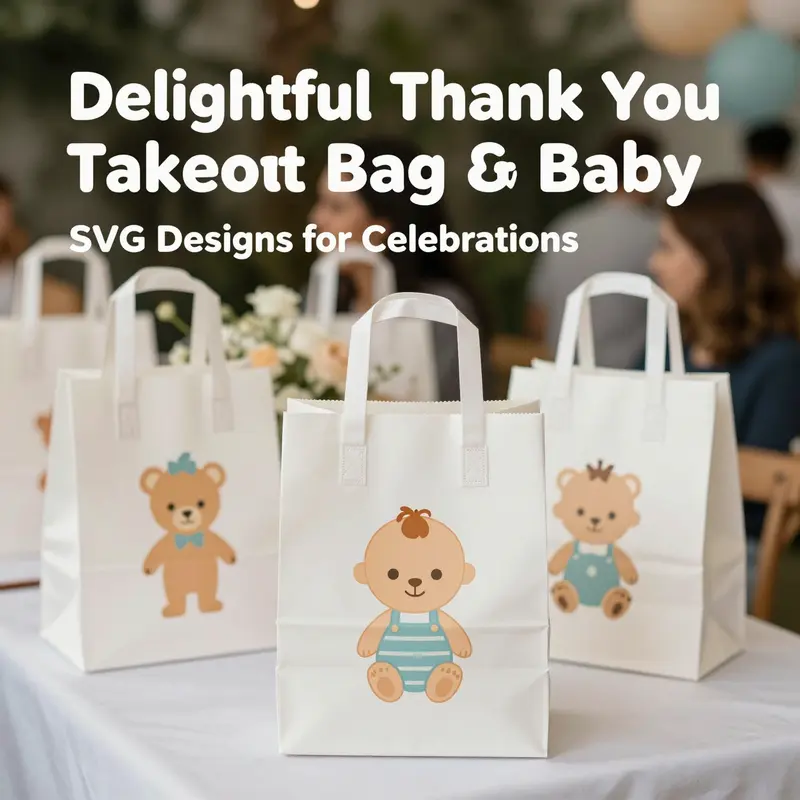
The conversation around thank-you bags for baby-focused celebrations has shifted from simple token gifts to a narrative of sustainability, personalization, and practical memory-making. In this chapter, the thread of that shift is explored through SVG—the scalable vector graphic language that makes design portable and precise. When a planner sketches a baby-themed scene—soft onesies, delicate footprints, or a playful stork—into an SVG file, the design becomes a blueprint that can scale from a compact label on a fabric drawstring bag to a larger emblem on a recycled cardboard box. The appeal lies in consistency and adaptability: one vector file, many surfaces, and a suite of tactile experiences that reinforce the event’s values. The SVG’s strength is its ability to stay crisp when resized, a crucial factor for planners who want a cohesive theme across different packaging formats without redrawing images for each size. In practice, that means a single set of motifs—gentle curves, tiny silhouettes, and soft, baby-friendly lines—can decorate labels, tissue wrap, and even the sides of a small, reusable box. This coherence enhances the moment guests glimpse the packaging and feel the care that went into the event, long before they open a box or bag. The overarching idea is to align visual charm with responsible choices. SVGs enable designers to craft graphics that remain legible at a distance and intimate up close, ensuring that the message of gratitude reads clearly whether it sits on a fabric bag carried by a guest in a bustling reception corridor or on a compact cardboard container tucked into a stroller basket later that day. A well-chosen color palette supports this aim, balancing baby aesthetics—gentle pastels or muted neutrals—with practical considerations like print compatibility on different substrates. When designers think through the end use, they begin to see how the SVG can anchor a broader sustainability story. A simple stork or a tiny footprint can be embedded into a fabric drawstring bag that replaces disposable wrappings, or used as a repeat pattern on a kraft-paper box that doubles as a keepsake after the party. This is not merely about aesthetics; it’s about extending the life of the packaging itself. An SVG designed for a baby-themed thank-you bag can translate into a reusable surface treatment, a label on a handmade keepsake, or a decorative motif on a small travel pouch, thereby reducing waste while preserving the emotional resonance of the gift. In practical terms, the SVG becomes a shared language across multiple media. It can guide a print-on-demand workflow that respects licensing and usage rights while ensuring that every surface—fabric, paper, or cardboard—receives a consistent mark of care. Designers can embed subtle details, like a gentle guiding line or a small accent that nods to a baby shower theme, without overwhelming the surface or compromising readability on a small bag. The end result is an ecosystem where the design breathes across formats, much like a well-curated color story that unifies invitations, signage, and party favors. The result is not merely attractive packaging but a narrative device that reinforces values: thoughtfulness, personalization, and a commitment to reducing waste. The idea of an eco-friendly, reusable packaging becomes more than a trend; it becomes a practice that event planners can apply consistently across different events. A baby shower, for example, may feature a tiny onesie outline or baby footprints as a central motif, printed on fabric bags that guests can reuse for future errands or storage. Alternatively, the same SVG set can be adapted for a fall-themed party by swapping in seasonal elements such as eucalyptus sprigs or wheat, thereby demonstrating the versatility of the vector approach. The same template grows with the event, ensuring the packaging remains integral to the story rather than a disposable afterthought. The knowledge that the SVG can be scaled and adapted without quality loss allows planners to experiment with different surface types—tote bags, small boxes, or even tissue wrap—without starting from scratch each time. This flexibility is especially valuable for DIY enthusiasts and professional planners alike, who must balance aesthetics with time and budget constraints. The practical workflow often begins with a digital draft that respects licensing constraints, ensuring that the SVG file is used in a manner consistent with its terms. From there, a planner can experiment with colorways and material textures, previewing how a pastel palette might render on a cotton bag versus a recycled cardboard box. The digital-to-physical bridge is also an opportunity to advocate for sustainable print practices, such as soy-based inks on cardboard or water-based inks on fabric, which minimize environmental impact while preserving color fidelity. In the end, the packaging design becomes a tactile extension of the event’s emotional core: gratitude expressed with intention, care, and longevity. The toddler-friendly motifs, when thoughtfully executed, invite guests to reuse the bag for new purposes and to preserve a tangible memory of the celebration. That continuity matters because it reframes a packaging element as a keepsake rather than a discarded wrapper. It also suggests a broader applicability beyond baby showers. The same SVG framework can be retooled for different celebrations, including seasonal gatherings or milestones where a meaningful, reusable packaging statement enhances the guest experience. For planners who want a quick path to practical execution, a robust design pipeline can begin with a single, scalable SVG that informs the vocabulary of the entire packaging system. A versatile template supports labeling, surface decoration, and even inner messaging, allowing the “thank you” sentiment to resonate across every touchpoint. The result is a cohesive, sustainable suite that elevates simple bags into meaningful vessels of memory. To help bring these concepts to life, planners can explore a spectrum of packaging options that align with the sustainability narrative. For instance, choosing fabric drawstring bags or recycled cardboard boxes sized to fit a small gift or keepsake can amplify the perceived value of the thank-you moment. The SVG can serve as a consistent branding cue across these formats, ensuring that guests encounter a unified visual language as they interact with the event’s mementos. In this sense, the SVG acts as a design commons—a lingua franca that bridges the tactile variety of packaging media with the emotional weight of gratitude expressed to guests. Technology and craft intersect here, enabling a practice that does not merely decorate but elevates the experience of giving. For those who want to see how these ideas translate into real-world applications, several practical pathways exist. A designer can draft a SVG set with modular elements—one motif for baby-related imagery, another for text such as “thank you,” and a versatile pattern for backgrounds. This modular approach supports experimentation while maintaining consistency across bag sizes and printing methods. It also encourages reusability: a single SVG file can inform a family of products that guests might reuse, repurpose, or display as keepsakes. The broader implication is a shift in how events are packaged and remembered. Rather than a one-off wrapper, the packaging becomes part of a sustainable ritual, a moment of gratitude that persists beyond the party. To connect these ideas to practical sourcing and implementation, planners can consider a range of packaging strategies that fit different budgets and capacities. A tiered approach—beginning with simple printable labels on recyclable boxes, expanding to fabric bags for longer-term reuse, and finally incorporating a small, decorative element on each surface—offers a scalable path. Across this spectrum, the SVG acts as a unifying thread, guaranteeing that every surface speaks with the same soft, baby-friendly voice. This is precisely the kind of cohesive design thinking that modern event planning seeks: a thoughtful blend of charm, practicality, and responsibility that guests remember not for being flashy, but for feeling valued. The potential for adaptation remains one of the most compelling aspects. A fall-themed party, a spring baby shower, or a summer fête can all start from the same core SVG set, with color substitutions and motif swaps guiding the transformation. The mindset behind this approach is not about drawing attention to the packaging itself but about using packaging as a quiet amplifier of the celebration’s themes and ethics. In that sense, the SVG becomes more than an illustration; it becomes a facilitator of a planned, meaningful experience. For those exploring further options, consider how a catalog of packaging solutions can align with the same principles: reusable, recyclable, and aesthetically cohesive. One practical path is to view the SVG as the anchor for a suite of packaging choices—from foldable boxes to drawstring bags to wraps—that all share the same visual vocabulary. This shared vocabulary makes it easier to maintain brand or theme continuity across different events while keeping waste to a minimum. Designers who adopt this approach can also offer clients a straightforward licensing framework, clarifying how the SVG assets may be used across a variety of surfaces and formats. In sum, the creative applications of thank-you bags that incorporate baby-themed SVGs in event planning reveal a broader imperative: to celebrate new life with tenderness and responsibility. The digital design enables scalable, adaptable, and sustainable packaging that enhances the moment of gratitude and extends its relevance beyond the party. The packaging becomes a memory keeper, not a disposable wrapper, and the SVG acts as its quiet conductor, guiding color, shape, and texture across multiple materials. For planners seeking tangible starting points, a pathway exists that blends a practical production mindset with a durable, story-rich aesthetic. The result is a method of celebration that honors guests, respects the planet, and remains adaptable for future events and seasons. External inspiration and practical ideas from social and design communities can enrich this approach, offering fresh perspectives on how to materialize these ideas in real settings. See how others are reimagining large, colorful party favors and packaging as memorable experiences by exploring resources that showcase sustainability-driven party planning ideas. External resource: https://www.pinterest.com/pin/creative-ideas-and-step-by-step-guide-to-using-large-orange-box-bags-for-memorable-party-favors/
Final thoughts
Utilizing thank you takeout bag baby SVG designs can significantly enhance the aesthetic and emotional appeal of events centered around babies and families. By integrating these charming graphics into your food packaging or event decor, you create a warm and inviting atmosphere while expressing gratitude to guests. The accessibility of SVG files and the extensive options available online make it straightforward for businesses to incorporate these designs into their offerings. As the demand for personalized branding continues to rise in the food and beverage industry, embracing these creative elements becomes essential in standing out and making meaningful connections with your clientele.