
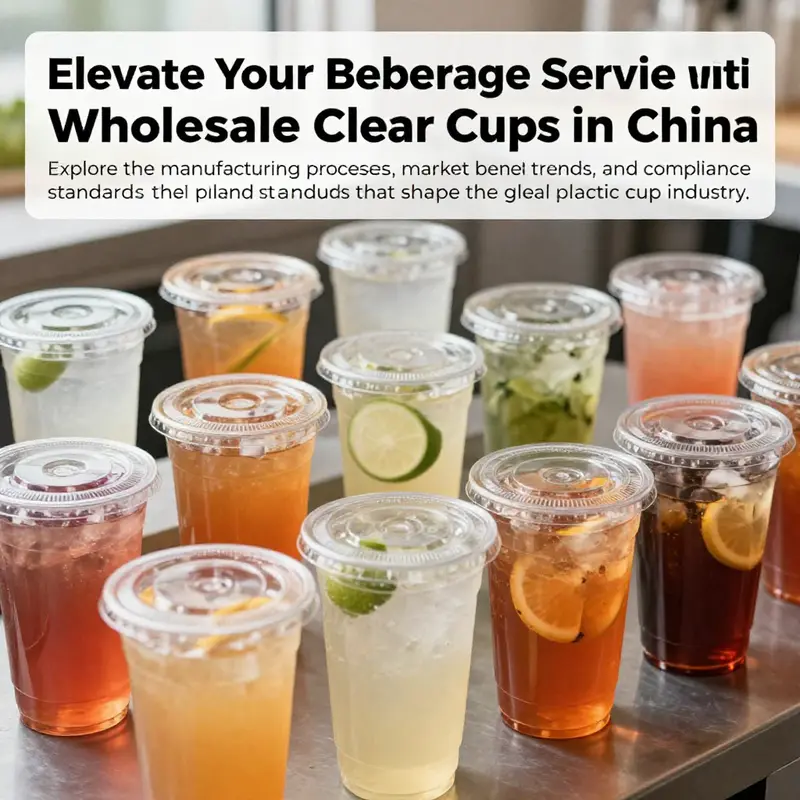
In the thriving world of beverage service, especially among bubble tea shops, restaurants, food trucks, catering services, and event planners, having the right disposable tableware is essential. Wholesale clear plastic cups sourced from China not only offer a practical solution for serving drinks but also present opportunities for branding and customization. This article uncovers the multifaceted realm of wholesale clear cups, exploring their manufacturing processes, current market trends, and the importance of compliance with industry standards. By understanding these factors, businesses can make informed decisions to enhance their customer experience and operational efficiency.
From Melt to Moment: The Hidden Craft Behind Wholesale Clear Cup Plastic in China
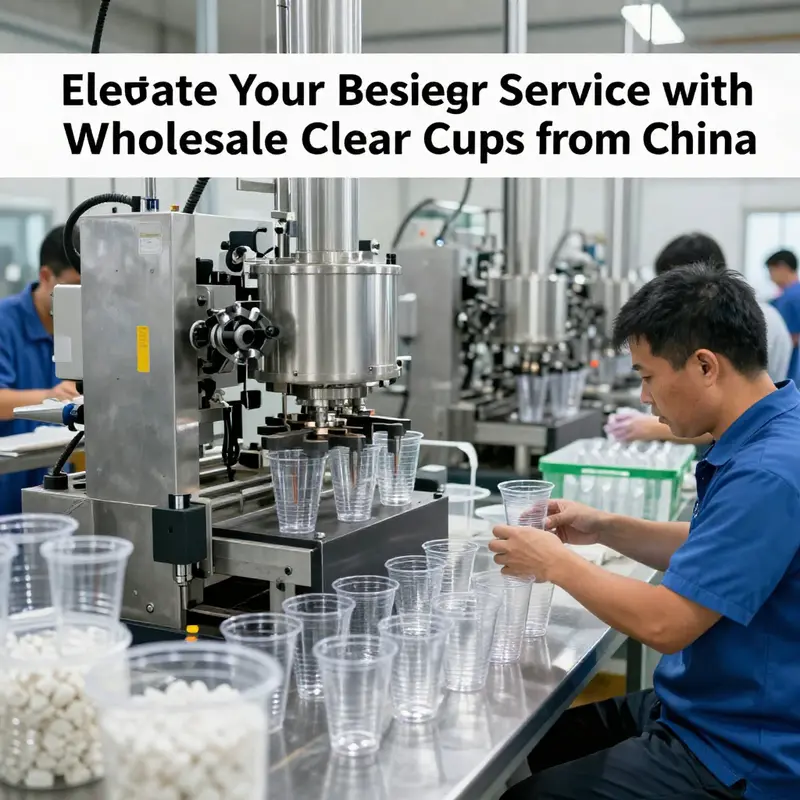
On the factory floor, the glassy sheen of a clear cup is less a simple end product than a long chain of precise decisions, evolving from resin into a reliably transparent vessel that carries beverages, desserts, or samples across continents. In the wholesale markets that connect Chinese manufacturers to buyers worldwide, the journey of a clear cup is a lesson in materials science, process engineering, and disciplined quality control. It begins with the choice of polymer, the raw material that will define not only clarity and strength but also how the cup feels in the hand, how it behaves at different temperatures, and how it recycles at the end of its service life. The two most common choices are polypropylene and polystyrene, each with distinct advantages that guide the design and the intended用途 of the final cup. Polypropylene, valued for its heat resistance and chemical stability, is well suited to beverages that may be served warm or at room temperature, where the cup needs to hold its form without softening or clouding. Polystyrene, renowned for high clarity and a crisp, clean surface, offers a pristine display for cold drinks, fruit garnishes, or dessert portions that rely on visual appeal to enhance the consumer experience. In the Chinese manufacturing landscape, these materials are supplied as standardized pellets that conform to an array of international safety regulations, including food contact standards. The choice between PP and PS is not merely a material preference; it is a design decision that shapes the entire production philosophy, from molding equipment to the pace of the line and the tolerance bands that define quality.
Sourcing is the prelude to any successful production run. In Guangdong and neighboring hubs, a dense ecosystem of suppliers, mills, and contract manufacturers coordinates the start of every run. The quality of pellets is the first question buyers must confront. Moisture content, additive packages, and resin molecular weight all influence how an extrusion parison will flow, how a melt will fill a mold, and how many cycles can pass before a cup shows signs of cloudiness, streaking, or brittle edges. For buyers, this means vetting a supplier’s certifications, including food safety assurances and supply chain traceability. It also means understanding the role of standardized test methods that verify the material has the right optical clarity, the right melt strength, and the right resistance to cracking under typical handling conditions. A well-managed supply chain does not dwell on the theoretical; it is tied to the practicalities of on time delivery, consistent melt viscosity, and repeatable results in batches of thousands or tens of thousands of pieces per day.
The production floor is where the narrative of a clear cup truly unfolds. Two principal molding technologies shape most wholesale cups: injection molding for rigid, high clarity cups and blow molding for lighter, sometimes more flexible designs. Injection molding forms the backbone of rigid, sturdy cups that are expected to maintain a crisp edge and dependable rigidity when cold beverages are poured into them. In this path, molten polymer is injected at high pressure into a precision mold. The mold defines the inner and outer dimensions, the wall thickness, the rim geometry, and the height of the cup. Design for manufacturability becomes a living discipline as mold cavities are refined to eliminate flash, minimize sink marks, and reduce flow lines that would mar the surface finish. Each cycle is a dance between temperature, pressure, and cooling time. If the mold is too hot or the cooling too slow, the surface can develop a cloudy haze or slight warp. If the injection speed is too aggressive, flow lines may become visible, compromising the transparency that is the very selling point of a wholesale clear cup. Skilled operators monitor these parameters with a practiced eye, aided by inline sensors and periodic automated inspections that sample dozens of cups per minute to ensure uniform wall thickness and dimensional accuracy.
Blow molding, by contrast, lends itself to lighter, sometimes more economical cups designed for single-use applications. A molten tube, or parison, is extruded and then captured in a blow mold. Air inflates the parison to take the shape of the mold, forming the cup. This technique is particularly efficient for thin walls and high-volume runs where subtle variations in thickness can be tolerated without compromising overall performance. The key to success in blow molding lies in controlling parison geometry and wall thickness distribution. Tight tolerances ensure that each cup has a uniform feel and a predictable performance in typical service temperatures. In practice, this means careful calibration of extrusion forces, cooling rates, and mold temperatures. It also means attention to the transition areas where the cup connects to the rim and base, because stress concentration in these zones can lead to cracks or distortion under load. In both molding families, the choice of equipment, mold design, and process windows is a carefully engineered compromise between speed, clarity, and cost.
Quality control is not a postscript but a continuous thread that runs from raw material receipt to final packaging. Transparent cups demand exceptional optical clarity, free from microclouds that can betray the presence of inclusions or microvoids. Inline measurement systems monitor wall thickness and surface finish, while periodic off-line checks confirm color consistency, rim integrity, and the absence of surface defects like flow marks or depositions. Warping, a particular risk for thicker walls or mismatched cooling, is checked by measuring dimensional stability across the cup diameter and height. Dust and particulate contamination, though less common in modern, cleanroom-like factories, still demands robust filtration, cleanroom protocols where needed, and a disciplined housekeeping regime. The end of the line is equally deliberate: cups are cooled to a controlled temperature to avoid post-molid deformation, then counted, sorted by size and type, and palletized in a way that preserves integrity during transport. Each pallet carries the imprint of meticulous planning, not just the sum of its components. The packaging stage often includes a final visual check to ensure that branding, if requested, does not compromise the surface finish. This is where customization services intersect with manufacturing discipline, enabling businesses to deploy logo-printed cups or branded packaging without sacrificing the optical clarity that customers expect.
Customizations are more than cosmetic enhancements; they are value multipliers in the wholesale ecosystem. The Chinese manufacturing model has evolved to accommodate a spectrum of branding and functional features. Companies can print company logos, event graphics, or promotional messages directly onto the cup or on the external sleeve that accompanies the cup. Such capabilities require robust print processes and resin compatibility checks to ensure that inks adhere well to the plastic surface and do not crack or peel during handling or short-term exposure to beverages. Additional features, such as insulated layers, special lip textures, or integrated lids, broaden the use cases and allow a single cup to serve a wider array of consumer situations. Each customization carries its own set of process implications. Printing, for example, may introduce additional cycle times and handling steps, while insulation or lid integration can complicate thermal management on the line. Yet the market’s appetite for tailor-made packaging and branded experiences remains a steady force. Buyers often consider not just unit price but the total value delivered by a customized cup: the clarity that makes a cold drink appear vibrant, the lid that prevents spills in a high-energy event setting, the branding that reinforces a sponsor’s message, and the packaging that protects the cup during distribution and display.
Sustainability is increasingly woven into the fabric of manufacturing decisions. In the realm of clear cups, the environmental conversation centers on material choice, recyclability, and the energy intensity of the production cycle. PP cups offer robust recyclability in many markets, and their higher heat resistance can enable reuse in certain contexts, though this depends on the consumer base and regulatory environment. PS cups, with their high clarity and crisp surface, are favored for display-driven applications but may pose different recycling considerations depending on local infrastructure. Manufacturers, aware of growing emphasis on circular economy principles, work to optimize resin usage to minimize waste, improve yield on the line, and reduce energy consumption for melting and cooling. Waste streams are managed through careful scrap handling, scuff-free regrind processes where feasible, and clear labeling to ensure that any recyclable material goes to appropriate facilities. The supply chain, for buyers, thus becomes a story of not just price and lead times but also the environmental footprint and the long-term viability of the packaging in a world that increasingly values responsible material choices.
Beyond the factory walls, the broader wholesale environment underscores how manufacturing processes translate into market competitiveness. The rapid growth of demand for clear cups in a wide range of occasions—from compact sampling at a trade show to festive service at multi-day events—drives scale, but it is the consistency of production that sustains reputation. Buyers seek suppliers who can deliver predictable quality at scale, with the flexibility to adapt to shifts in design or packaging preferences. The Guangdong region, with its dense network of producers and traders, exemplifies this dynamic. This ecosystem has developed a rhythm that balances high-volume efficiency with the ability to offer customization at a reasonable cost. The economics of scale allow MOQs to be manageable for various buyer profiles, including smaller event planners and mid-sized hospitality operations. Even as price pressures remain intense, manufacturers insist on rigorous process control to ensure that each cup leaving the line meets the same optical and mechanical standards as the one before.
For those who want to see the manufacturing narrative made tangible, the story can be tied back to the eventual customer experience. A customer opening a shipment of wholesale clear cups should feel the outcome of countless decisions: the pellets that arrived with the right melt strength; the mold that shaped a rim free of micro flaws; the cooling system that preserved the surface finish while preventing warps; the packaging that stabilized the load for transport; and the optional branding that turned a functional item into a promotional asset. When everything aligns, the result is a clean, transparent cup that supports a beverage or dessert with minimal visual distraction, a design that conveys reliability and value, and the short lifecycle advantages that a disposable product can offer to a busy service environment. The discipline embedded in the process—material selection, molding technique, quality assurance, and customization options—turns a simple clear cup into a dependable element of the wholesale supply chain, one that can meet diverse demands while maintaining consistency across thousands of cartons and pallets.
For readers exploring procurement decisions, this manufacturing narrative offers a framework for evaluating potential suppliers. The most credible partners will articulate a clear policy on material safety certifications, traceability of resin sources, and the verification steps that ensure each batch aligns with the required standards. They will describe the line design choices that enable the right balance of clarity and strength and will provide evidence of consistent performance across long production runs. They will also outline the ways in which customization can be integrated into the main production flow without compromising delivery timelines. A prospective buyer benefits from understanding not only unit costs but also the total cost of ownership, which includes the potential for branding impact, the risk of supply interruptions, and the environmental considerations that influence both brand perception and regulator expectations.
In the end, the lifecycle of wholesale clear cup plastic manufactured in China is a narrative of precision and coordination. It is a story that begins with resin and ends with ready-to-ship pallets, but in between lies a sequence of decisions about materials, tooling, process control, and packaging that determines whether a cup will disappear quickly at an event or stand up to multiple uses in a café environment. The chapters of this story are written by engineers who optimize flow and cooling, by quality teams who detect defects before they reach the customer, and by procurement professionals who weigh price against performance and sustainability. The chapter that begins with a pellet and ends with a customer’s first sip reveals a broader truth: that even the simplest consumer item, when produced at scale, embodies a sophisticated blend of science, logistics, and market intelligence. To see more about practical examples of how manufacturing decisions translate into the everyday utility of clear plastic cups, readers can explore further through a detailed gateway on plastic cup production and supplier verification. disposable-clear-plastic-cup-outdoor-picnic-pet-cup-drinking-cup-for-parties-birthdays-weddings-camping-utensils
The broader implications extend to how buyers evaluate suppliers in today’s global market. The interplay between cost efficiency and strict quality controls becomes especially visible when considering the minimum order quantities that make these products accessible to a wider range of buyers. A typical MOQs in the sector can be substantial, but the movement toward accessible entry points has spurred innovations in packaging, logistics, and after-sales support. Buyers who understand the manufacturing narrative can negotiate better terms by asking the right questions about defect rates, what constitutes a lot acceptance, and how the supplier handles substitutions if a given batch deviates from spec. They can also probe the supplier’s capacity to support seasonal fluctuations in demand, as well as their ability to accommodate custom sizes beyond the standard 12 to 24 oz range. Our chapter suggests a practical mindset: treat each cup as a link in a chain that connects resin to consumer, and expect that every link has a story of optimization behind it. The better the chain, the more confident the buyer can be that the final product will travel smoothly from factory floor to event hall, café display, or retail shelf without compromising the clarity, safety, or branding that customers have come to expect.
For researchers and industry watchers, the manufacturing processes of wholesale clear cup plastic in China offer a tangible case study in how regional specialization, technological investment, and international demand converge. It is a reminder that manufacturing is not a monolith but a mosaic of decisions, each with observable effects on performance, price, and perception. As global markets continue to evolve, the capacity to deliver consistent, safe, and customizable clear cups will remain a touchstone for the reliability of the broader disposable packaging ecosystem. The chapters that follow will explore related packaging forms, comparing how different materials and configurations address evolving consumer preferences, regulatory environments, and sustainability goals, while keeping faith with the underlying science and craftsmanship that make these cups function as reliable, everyday tools in a fast-paced world.
External resources can provide additional technical depth on manufacturing scale and supplier verification. For readers seeking a practical reference point on how the supplier landscape and technical specifications intersect, the market’s leading platforms offer catalogs, certifications, and sample options that support due diligence and informed decision making. Deepening engagement with these resources can help buyers translate the chapter’s insights into concrete procurement strategies, ensuring that every batch satisfies safety standards, performance expectations, and branding ambitions while remaining responsive to the realities of price and lead time in a competitive wholesale market.
External resource: https://www.alibaba.com
Under Pinpointed Trends: Navigating Market Currents and Economic Forces in China’s Wholesale Clear-Cup Plastic Trade
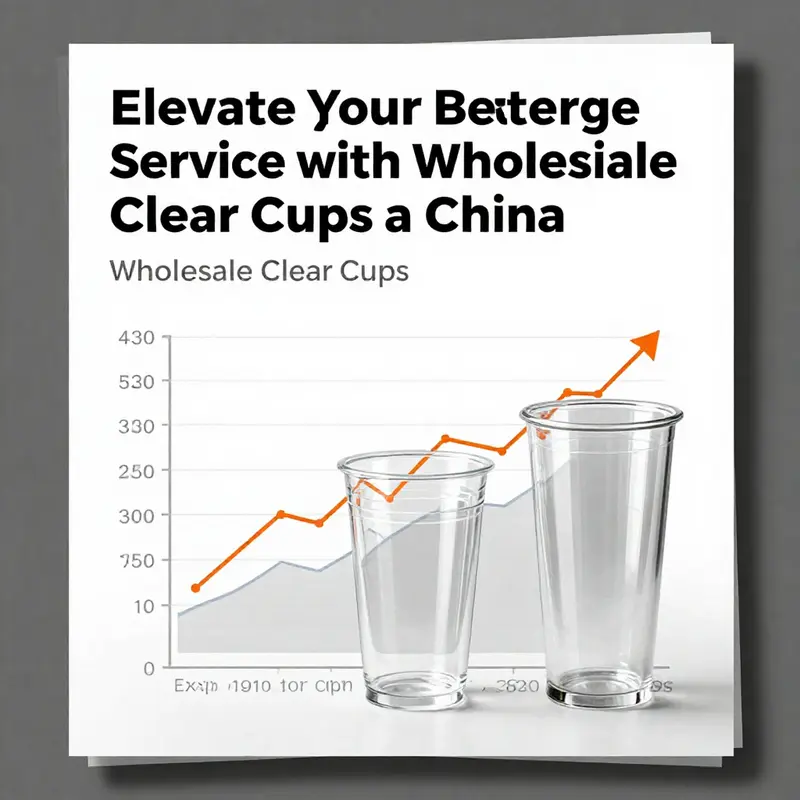
China’s wholesale clear-cup market sits at a convergence of urban growth, logistics scale, and evolving consumer expectations. The sector relies on PET and PP, with clear advantages in clarity and heat resistance, while margins depend on efficient production, strict quality control, and robust supplier networks in Guangdong and neighboring provinces. Buyers seek low MOQs alongside reliable lead times, consistent finishes, and clear documentation for food-safety compliance.\n\nUrbanization and the rise of on-demand delivery have intensified demand for dependable packaging that can survive last-mile transport. In practice, this means standardized cup sizes and lid systems, modular production capabilities, and the ability to accommodate customization for branding without sacrificing throughput. The market also faces a longer horizon of regulatory scrutiny and sustainability pressure, with PLA or bio-based options appearing as pilot offerings alongside traditional plastics. Buyers balance cost, performance, and environmental considerations, testing supplier certifications, traceability, and quality-control processes to reduce risk across large-scale orders.\n\nForecasts point to gradual growth driven by disposable-income-led demand and continued modernization of packaging ecosystems, tempered by policy efforts to curb single-use plastics. For procurement teams, the practical path is to develop transparent supplier validation, maintain close alignment on material specs, and design packaging programs that can scale across seasons and events while preserving brand continuity and compliance.
Clarity through Customization and Compliance in Wholesale Clear Cup Plastics from China

Clear cup plastic products sourced from China sit at the intersection of aesthetics, practicality, and regulatory discipline. In a market where brands seek both consistent performance and distinctive branding, the ability to customize while meeting safety and environmental requirements becomes essential. The wholesale landscape for clear PET and PP cups is driven by buyers who need scalable manufacturing with predictable quality, along with flexibility to align with marketing campaigns, events, or hospitality needs. This chapter weaves together customization, safety standards, and supply chain realities that shape how wholesale clear cup producers in China operate, who their customers are, and how buyers can navigate to secure reliable partners and enduring relationships. It is a narrative about clarity, but also about the clarity of process, certification, and communication that underpins procurement.
The manufacturing heart of this sector is concentrated in China’s manufacturing hubs where plastic cups and related disposable ware are produced at scale. Guangdong, for example, has long been recognized as a focal point for plastics production, with a network of manufacturers offering precise extrusion and molding, post production finishing, decoration, and packaging. What makes this hub relevant to wholesale buyers is the ability to source at scale while enabling customization that can carry a client brand, colors, or event graphics. The industry practice is to provide a comprehensive customization pipeline spanning several dimensions. Buyers can select cup size, base material, and degree of clarity, then layer on color accents, lid configurations, and printed designs. The result is a customizable product that preserves the essential characteristics of a clear cup—transparency, stackability, and a smooth surface suitable for labeling or branding—while accommodating a wide range of applications.
From a material science perspective, the choice between PET and PP shapes performance and application. PET stands out for clarity, strength, and form stability across temperatures, enabling cold beverages and some hot fill scenarios. This makes PET a natural fit for cold coffee, bubble tea, fruit beverages, and dessert servings where clear presentation enhances appeal. PP, conversely, offers heat resistance and chemical resistance, with robust performance in heated environments or longer hold times. In wholesale cups, suppliers typically offer both materials, often with options for single wall designs compatible with lids or spill prevention features. The practical takeaway for buyers is straightforward: match the material to the temperature profile, desired clarity, and end of life considerations, then align with the use case.
Customization emerges as a central axis. In practice, manufacturers in the region offer a spectrum of customization services addressing sizes, colors, printing, and packaging in a streamlined workflow. Standard sizes commonly range from 12 to 24 ounces, with diameters around 117 millimeters for mid sized cups. These dimensions reflect compatibility with widely used lids, carriers, and promotional materials in hospitality and catering. Importantly, customization extends beyond the cup body to options like branded lids, stack friendly packaging, and interior liners when needed for moisture management or branding reach. The design language of marketing materials often emphasizes single wall construction and optional lid configurations, since lids influence presentation, spill control, and service speed in events and foodservice.
MOQs and price points are a fundamental driver of customization in wholesale clear cups. Buyers can encounter MOQs that start in tens of thousands of pieces, making wholesale purchases efficient for large venues or campaigns. Price signals in this segment are competitive, reflecting economies of scale. Yet price discipline—balancing unit costs with quality, lead times, and the supplier’s ability to meet tolerances—remains essential. For buyers, lower MOQs and aggressive unit pricing should be evaluated through a lens of risk: how consistent is the supplier’s process, what certifications exist, and how is quality controlled across high-volume runs. The best suppliers balance affordability with rigorous conformity to food safety standards and environmental considerations, recognizing that sustainability and traceability are increasingly valued alongside price.
Compliance and safety standards form the backbone that turns customization into a trustworthy guarantee. In wholesale production for international markets, producers align with widely recognized frameworks that regulate what materials contact consumables, how inks and coatings are applied, and how the finished product is tested. A typical Chinese producer will aim to meet requirements such as FDA equivalence for food contact, EU safety and labeling expectations, and RoHS directives for restricted substances. Practical exporters also emphasize LFGB readiness for German and broader European markets, and alignment with Japan’s Food Sanitation Act for products destined for the Japanese market. The result is a supply chain that reduces regulatory friction and demonstrates a commitment to safety and responsible manufacturing.
Environmental stewardship is increasingly embedded in procurement decisions. RoHS compliance helps reassure buyers that materials in inks and pigments stay within safe thresholds, and many suppliers optimize resin formulations for recyclability or end-of-life processing. Transparent material declarations, third-party testing, and traceable supply chains are common expectations for sustainability targets. The buyer’s sourcing narrative benefits from clarity about resin sourcing, recycling disclosures, and packaging choices that minimize waste while preserving brand messaging and product integrity.
From a practical sourcing standpoint, how a factory communicates its compliance story matters as much as the certificates. Credible suppliers provide a coherent package of documentation: MSDS, declarations of conformity, current certificates, and clear labeling that maps materials to finished cups. They will describe testing regimes, test intervals, and responses to findings, and offer transparency about manufacturing steps, sanitation controls, and batch traceability. Third-party audits and ongoing certification maintenance reinforce confidence. While this can add upfront procurement complexity, it yields benefits in reduced regulatory friction, smoother reorders, and fewer quality surprises.
Branding and packaging are a distinct value add for wholesale buyers aiming to maximize impact. Printing capabilities vary from single or multi-color silk-screening to water-based inks and heat stamping, depending on resin compatibility and regulatory allowances. For hot beverage applications using clear PET, printing must withstand hot fill without sacrificing clarity or adhesion. Tooling and setup costs associated with customization are reflected in MOQs and unit costs, so buyers weigh branding value against higher minimums or longer lead times.
Packaging considerations also influence value. Vendors offer branded sleeves, bundled sets, or display cartons that align with a buyer’s marketing story. Packaging choices intersect with sustainability goals and transport efficiency, guiding decisions around stackability, weight, and recyclability. The end result is a coherent supply chain where cup, lids, and packaging speak the same language and reflect brand values, safety, and environmental responsibility.
Quality control remains the operational heart of customization and compliance. A robust QC program integrates process controls, supplier qualification, material testing, in-line monitoring, and final acceptance criteria. An approved supplier list, with resin grades, lot tracing, and test results, supports audit readiness. In-line checks catch defects at critical steps; final inspections verify tolerances, clarity, and finish. Thorough QC reduces rejects, eases onboarding for new customers, and minimizes post-delivery returns that disrupt cash flow.
A disciplined buyer will approach supplier evaluation with a clear plan. Define the use-case prerequisites, verify certifications and conformity scope, request batch-level traceability, and arrange pre-production samples to validate printing and fit with lids. Consider a pilot order to test lead times, packaging, and scalability across batches. The human element matters: trust, clear communication, and collaborative problem solving are essential to long-term partnerships.
In practice, a Dongyang-based factory with explicit customization capabilities and robust compliance commitments can illustrate the practical trajectory. Buyers should look for explicit statements on food-contact safety, environmental considerations, and batch traceability, alongside examples of branding options and documented quality control. The overall takeaway is that buyers who demand proof of conformity, who pilot new products, and who expect consistent performance across batches build supplier relationships that endure beyond a single purchase. The fusion of customization with compliance becomes a differentiator in a crowded market, supporting brands as they present visually compelling and regulation-aligned products to customers and consumers.
External reference: a credible supplier will present its capabilities and certifications in a transparent format, and readers are encouraged to review supplier sites and third-party test reports to inform decision making.
Final thoughts
Wholesale clear plastic cups from China are a versatile and cost-effective solution for businesses in the beverage industry. With a strong understanding of their manufacturing processes, awareness of market trends, and an emphasis on customization and compliance, businesses can select the right products to enhance their service offerings. Embrace the opportunities these cups provide, and elevate your brand with quality lightweight solutions that cater to consumer demand.