
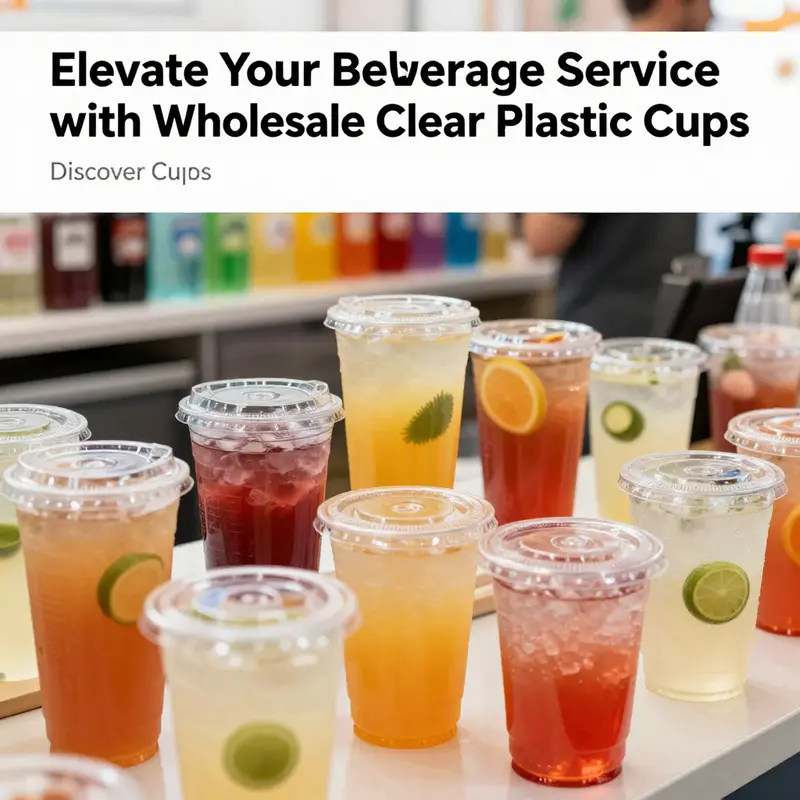
Wholesale clear plastic cups with lids are an indispensable asset for Bubble Tea Shops, Beverage Chains, Restaurants, Food Trucks, Catering Services, Event Planners, and Corporate Procurement Teams. Their versatile design coupled with functional advantages makes them a go-to choice in the foodservice industry. This article delves into key specifications and material compositions, various lid types and their functional benefits, performance advantages, and sourcing information, providing a comprehensive understanding essential for businesses looking to enhance their beverage presentation and operational efficiency.
null

null
null

null
Performance and Industrial Advantages of Wholesale Clear Plastic Cups with Lids

Wholesale clear plastic cups with lids support fast service, consistency, and scalable branding across food and beverage operations. They combine visibility with security, enabling customers to see the beverage while ensuring containment during transport and handling. Material choices matter: PET for clarity and stiffness, PP for heat resistance and reusability in sanitization workflows, and PS in some markets with limited hot-use. Lids come in dome, flat, and sealed variants, each balancing headspace, spill resistance, and contamination protection. Industrial advantages include reduced shipping costs due to light weight, ease of stacking, and predictable SKUs across eight, twelve, sixteen, and thirty-two ounce configurations. The wholesale model enables bulk pricing, reliable lead times, and consistent supply across channels. Sustainability considerations include recyclability of PET and compostable options, plus the reuse potential of PP in appropriate workflows. The overall value is a reliable packaging solution that protects beverages, supports branding, and scales with demand.
Mapping the Supply Web: Sourcing Strategy for Wholesale Clear Plastic Cups with Lids
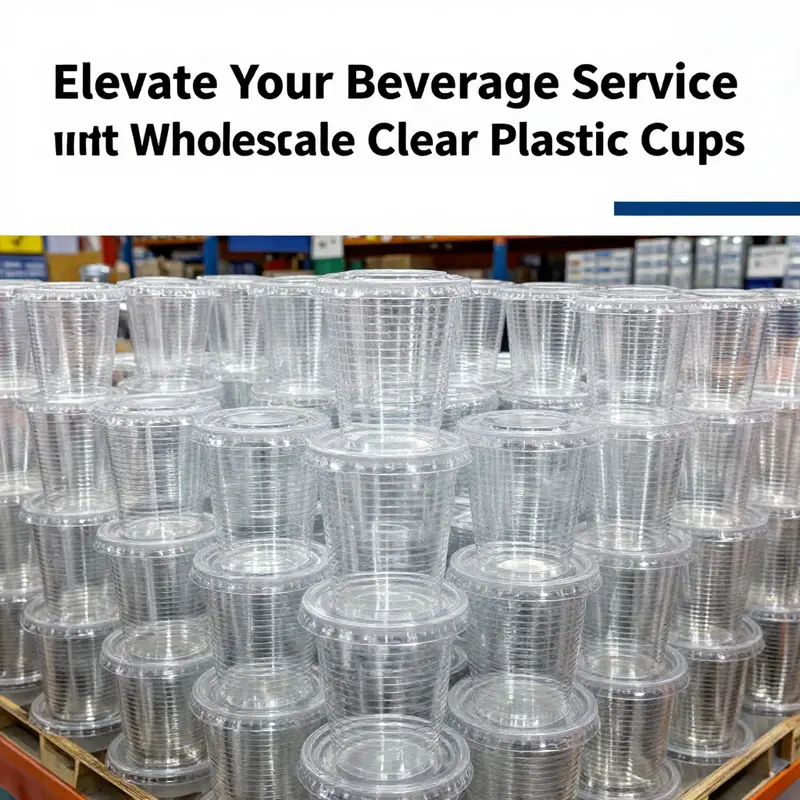
Sourcing wholesale clear plastic cups with lids demands more than chasing the lowest unit price. It requires a strategic view of how regional production pipelines intersect with performance metrics, compliance standards, and the realities of global logistics. Buyers who approach this category as a chain of interdependent decisions—spanning manufacturing hubs, supplier reliability, and market access—tend to build more resilient programs that withstand demand spikes, seasonal promotions, and the pressures of delivering safe, visually appealing products to customers. The conversation around sourcing begins with geography, where China’s plastic packaging ecosystem shows a natural division of labor across provinces. In the south, Guangdong stands out as the export-oriented engine. Its facilities often operate with vertical integration, controlling raw material input, molding processes, and final packaging in a way that tightens lead times and sharpens quality oversight. This translates into faster turnarounds for high-volume orders and an ability to respond quickly to seasonal campaigns. Yet speed must be balanced with consistency; the most successful buyers cultivate a portfolio of suppliers who can maintain performance even when volumes surge or when logistics lanes shift due to port congestion or weather disruptions. Within Guangdong, the experience of working with manufacturers who have cultivated robust international shipping networks helps ensure that product specifications—from clarity and haze levels to lid fit and seal integrity—travel smoothly from factory to warehouse. Across the same region, some suppliers have built reputations for dependable delivery, estimating timelines with precision, and honoring on-time commitments even when demand outstrips capacity. This is not just about meeting a schedule; it is about preserving service levels for large catering events, takeout chains, and festival operators who rely on predictable replenishment cycles to keep their lines running. To the north and inland, Zhejiang has emerged as a hub of sustainability and resin innovation. Buyers who prioritize eco-friendly packaging solutions often look here first. The emphasis is not only on performance but on lifecycle considerations, from the selection of resins to end-of-life scenarios. ISO-certified industrial parks and a growing ecosystem of suppliers that emphasize biodegradable or recyclable content help buyers align with stricter regulatory expectations in Europe and North America. For teams evaluating options, Zhejiang suppliers can offer a blend of competitive pricing and confidence in environmental stewardship, which is increasingly important for brands seeking to minimize their overall environmental footprint. Then there is Jiangsu, which may not be as dominant in scale as Guangdong or as forward-looking as Zhejiang, but remains a center of operational efficiency for medium-to-large volume orders. The region’s strengths lie in process discipline, standardized quality systems, and the ability to aggregate multiple lines of business under a single logistical plan. When these regional strengths are stitched together, a sourcing strategy emerges: diversify across hubs to balance lead times, cost, and risk; require consistent quality assurances; and leverage suppliers who can scale with demand while maintaining visibility and control over performance data. The way this data is interpreted matters as much as the data itself. A structured evaluation framework is essential. On-time delivery is a critical indicator of supplier maturity. In practice, buyers see a broad spectrum: some suppliers report perfect records under certain seasonal programs, while others struggle to maintain high fulfillment rates during peak periods. Reorder rate adds another layer of insight, highlighting loyalty and the reliability of ongoing supply. A modest 19 percent reorder rate across several suppliers signals that while some partners meet basic requirements, others may need stronger quality consistency or more robust after-sales responsiveness to keep customers coming back. The goal is not simply to select the lowest bidder; it is to identify those suppliers who sustain high performance across both routine orders and campaigns that push logistics boundaries. Operational consistency and quality control underpin every successful agreement. Buyers increasingly look for suppliers who demonstrate clear QA processes, traceability of batches, and rapid responsiveness to feedback about fit, clarity, and seal integrity. Compliance is not an afterthought. In markets with stringent packaging safety expectations, ISO certifications and evidence of safe manufacturing practices become differentiators. Zones with integrated compliance infrastructure tend to deliver smoother audits and faster clearance in overseas markets, reinforcing confidence with distributors and retailers who demand consistent adherence to safety obligations and environmental requirements. Sustainability considerations are not peripheral. They influence supplier selection and long-term costs in several ways. Eco-conscious buyers push for resin formulations that minimize environmental impact while preserving clarity and strength. They also favor partners who can provide credible documentation about resin sourcing, recycling compatibility, and end-of-life disposal. Sustainable packaging has moved from a niche preference to a baseline expectation in many wholesale programs, and suppliers in regions with proactive environmental policies are often better prepared to meet evolving regulatory demands in their target markets. Pricing remains a practical vector in procurement decisions. The FOB (free on board) costs for clear cup lids—calibrated to the weight of PET caps and container bodies—have been reported in the market as ranging roughly from US $3.58 to $4.28 per kilogram, with variations driven by volume, customization, and supplier location. Bulk orders typically unlock more favorable unit economics, especially when direct-from-manufacturer arrangements reduce intermediaries. The arithmetic of price versus performance is complex: lower upfront costs can be counterbalanced by higher freight charges, longer lead times, or less reliable quality consistency. The most effective sourcing teams model total cost of ownership rather than sticker price. They consider not only the unit price but also the costs tied to rework, returns, risk of stockouts, and the value of branding opportunities tied to printed cups. Custom printing, for instance, can convert a functional container into a moving advertisement, heightening brand recognition but also adding a layer of complexity to the production queue. In practice, decision-makers in this space often rely on platforms that aggregate supplier performance metrics, enabling apples-to-apples comparisons and facilitating faster supplier auditions. The goal is to assemble a short list of vetted partners whose capabilities align with the business’s scale, seasonality, and quality expectations. A recommended next step is to engage with a marketplace that curates supplier data and provides a baseline of verified performance indicators. This approach reduces the guesswork involved in the early screening phase and accelerates the progression to sampling and facility audits. As part of due diligence, buyers should request samples and, if feasible, visit production sites to observe the manufacturing floor, the quality-control checkpoints, and the packaging lines that will handle cups and lids together as a system. The practical value of this step cannot be overstated: it allows teams to verify that lid closures seal reliably, that cups maintain clarity under expected storage temperatures, and that stacking and nesting do not compromise surface finish or structural integrity. For teams seeking to formalize supplier relationships, a balanced strategy emphasizes both transparency and flexibility. In addition to performance data, buyers should seek suppliers with clear communication channels, predictable response times, and documented procedures to address deviations or nonconformances. The right partner will demonstrate a track record of on-time delivery across varied demand scenarios, a willingness to collaborate on packaging solutions, and the capacity to support customized branding techniques while maintaining compatibility with existing lines. To connect these considerations with practical action, some organizations turn to content that focuses on the broader ecosystem of custom takeaway packaging and disposable tableware for themed events. This resource area helps bridge the gap between raw cup-and-lid specifications and the broader packaging solutions customers expect when they order full-service takeout packaging. For instance, a supplier catalog that emphasizes themed-party packaging can guide buyers toward complementary products, ensuring that cup selections harmonize with lids, sleeves, and external branding elements. When evaluating potential partners, it is useful to explore these linked opportunities and assess how they might integrate into a single, cohesive supply plan. Custom takeaway packaging supplies and disposable tableware for theme parties can serve as a reference point for understanding how packaging ecosystems evolve beyond cups and lids. The objective is not to standardize on a single path but to build a flexible, evidence-based sourcing framework that travels well across regions and meets regulatory requirements across markets. As buyers assemble their supplier cohorts, they should also consider external resources that provide guidance on safe packaging materials and food-contact compliance. Regulatory bodies and industry guidelines offer essential context for choosing resins, confirming suitability for cold beverages, and validating sealing performance under transport conditions. A practical starting point for safety and compliance is to consult the formal guidance published by regulatory authorities on food-contact materials. External resources, such as FDA guidance on food-contact packaging, help ensure that assumptions about material safety, durability, and labeling are aligned with current standards. This alignment reduces risk and supports smoother cross-border distribution as brands scale their wholesale programs. For readers seeking structured paths to supplier vetting and risk management, building a sourcing protocol that blends regional capability with performance transparency is key. The protocol should specify the metrics that matter most—on-time delivery, batch traceability, and quality control pass rates—while maintaining a clear view of total cost of ownership. It should also facilitate collaborative relationships with suppliers who can adjust to changing demand, integrate branding opportunities, and sustain responsible practices across their operations. In short, the landscape of wholesale clear plastic cups with lids is a dynamic intersection of regional manufacturing strength, rigorous supplier evaluation, and forward-looking packaging strategy. By understanding where production clusters concentrate, what performance signals to monitor, and how pricing interacts with service quality, procurement teams can assemble resilient supply chains that support the needs of foodservice operators, takeout brands, and event organizers alike. External considerations, including safety and environmental standards, help anchor this approach in the realities of regulation and consumer expectations. The result is not merely a purchase proposition but a well-governed sourcing program that can scale with demand while preserving product integrity, brand consistency, and customer satisfaction. External resource: https://www.fda.gov/food/packaging-labeling/food-contact-materials
Final thoughts
In conclusion, wholesale clear plastic cups with lids offer a multitude of benefits that cater to various sectors in the beverage industry. Their practical designs, combined with high-quality material compositions and versatile lid options, empower businesses to enhance their service efficiency while effectively showcasing their products. As you consider your next sourcing decision, these cups represent not just a functional choice but a branding opportunity that can elevate customer experience. Partner with trusted suppliers to ensure your business stays ahead in delivering quality and satisfaction.