
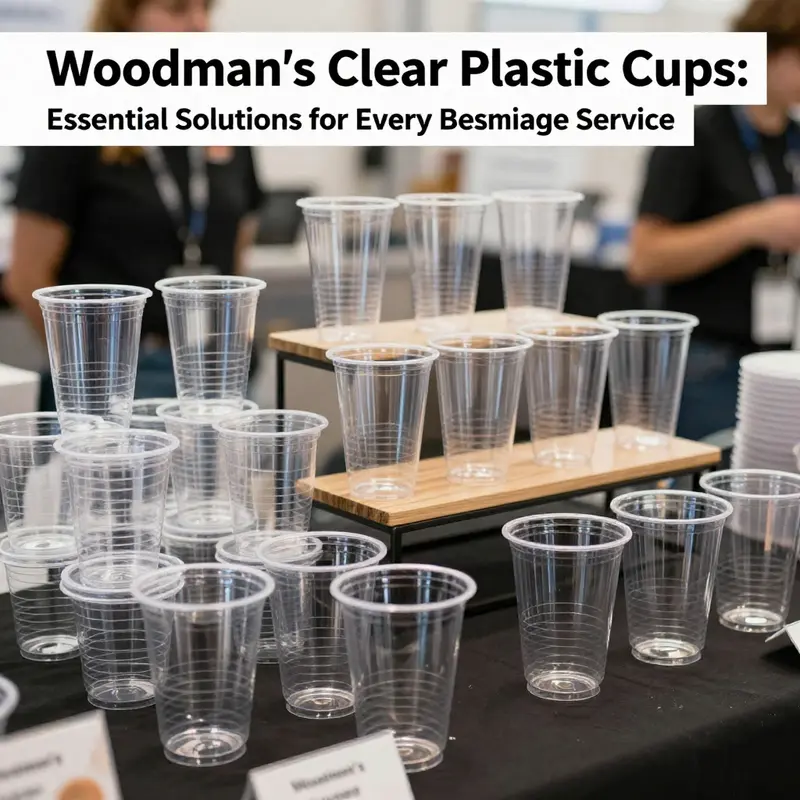
In the competitive landscape of food and beverage service, finding the right disposable solutions can significantly impact operational efficiency and customer satisfaction. Woodman’s clear plastic cups have emerged as a notable option in this space, celebrated for their practicality and appeal. This article delves into the evolution of Woodman as a brand, clarifies misconceptions surrounding it, and explores the market dynamics of clear plastic cups. Additionally, we will examine material properties, popular usage scenarios, and how these cups incorporate seamlessly into various service settings such as bubble tea shops, restaurants, and corporate events. Join us as we reveal the essential insights that can empower your business choices regarding disposable tableware.
Exploring Woodman as a Brand: Clarity Across Domains

The phrase “woodmans clear plastic cups” often reads as a single product query, yet the reality is more layered. In today’s markets, a brand name travels across contexts, and consumers encounter it in cycling components, retail programs, and disposable drinkware alike. This chapter examines why naming ambiguity happens and how buyers and sellers can navigate the blur between a name and a product.
Brand identity is not bound to one product category. A name such as Woodman may signify a cycling components label in one market and a retail or service identity in another. When this happens, search results and catalog listings can collide, leading to misattribution where a cup is mistaken for the brand’s core offering. The challenge for marketers is to preserve clarity by pairing exact product details with clear source attribution, while for consumers the task is to articulate intention with sufficiently precise descriptors.
A practical takeaway is the separation of identity from function in catalogs. Listings should foreground material, capacity, lid compatibility, durability, and safety standards, while the brand narrative remains supplementary. In parallel, brands should enforce naming conventions and provide transparent sourcing information to reduce confusion and improve trust. By prioritizing product-specific attributes and clear source cues, marketplaces can support accurate decisions even when a name travels across domains.
For readers curious about practice, consider how a catalog entry for a disposable clear cup can balance function and clarity: it highlights material and size, notes compatibility and disposal considerations, and contextualizes sustainability without letting a brand’s cycling pedigree overshadow the product’s practical details. This approach helps buyers compare options on merit rather than brand familiarity alone.
In closing, the Woodman example illustrates a broader principle: clarity trumps cleverness when the goal is reliable selection. Brands gain from disciplined communication, and consumers gain from verifiable product information that aligns with stated use. The result is a marketplace where a simple search for a clear cup leads to a straightforward, trusted decision.
Clear Choices in a Plastic World: Woodman’s Market and the Conversation on Disposable Cups
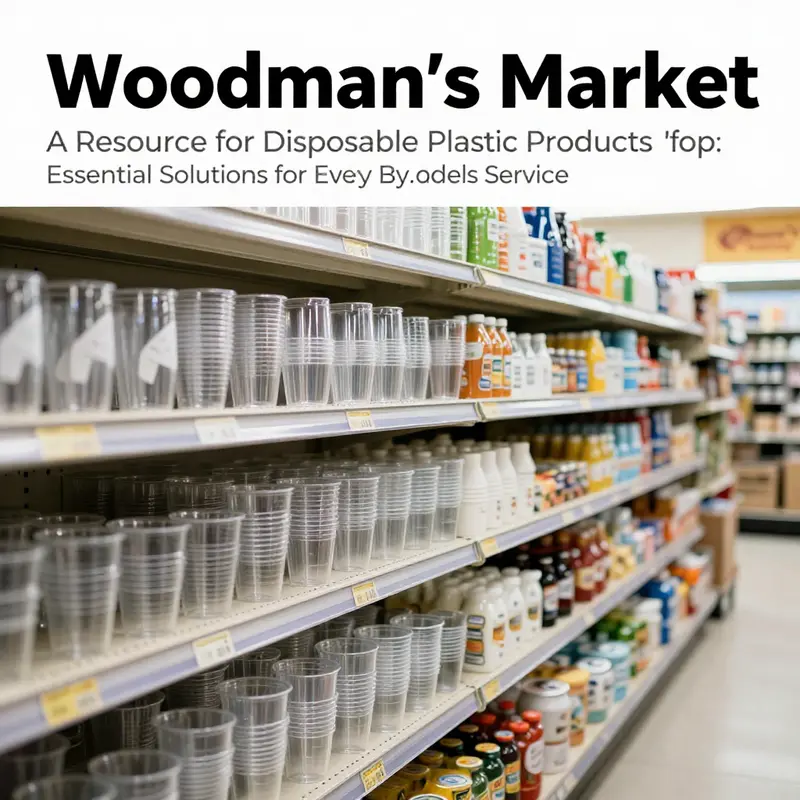
The idea of a store as a site of cultural negotiation often travels unseen. When people walk through the doors of a Midwest grocery retailer, they may not notice the quiet debates around the shopping carts, the signage, or the way a single aisle signals a broader conversation about waste, convenience, and responsibility. This chapter looks at Woodman’s Market as a real-world testing ground for the ethics and pragmatics of disposable plastic products, with a focus on clear plastic cups as a case study in service culture, consumer behavior, and environmental impact. Although Woodman’s does not market a proprietary line of cups, its policies and everyday practices illuminate the ecosystem in which disposable cups exist and are used, repurposed, and eventually displaced by alternatives.
Walking into Woodman’s Market, one is reminded that consumption and sustainability are not abstract ideals but everyday choices that accumulate into measurable outcomes. The retailer’s public narratives emphasize reducing single‑use plastics in packaging and shopping bags, while nudging customers toward reusable options. In practice this shows up in signage that invites customers to bring their own bags, redesigned checkout lanes that slow the accumulation of plastic carries, and in‑store campaigns that highlight reusable containers. The result is a shopping experience that teaches by example: a large retailer can normalize a transition from single‑use convenience to reusable habit, even when cups appear as familiar workhorses for parties, picnics, and casual gatherings.
To understand Woodman’s Market as a resource for disposable plastic products is to see the store as a node in a wider network of producers, distributors, and consumers who collectively sustain a rhythm of consumption. Clear plastic cups—transparent, lightweight vessels ubiquitous in takeout, catering, and home entertaining—embody a broader tension. They deliver practical benefits: quick service, predictable performance, low unit costs, and the neutral clarity that makes beverages and sauces look appealing. Yet they also symbolize a paradox many retailers face: the same product that enables hospitality also contributes to a growing stream of plastic waste. Woodman’s navigates this paradox by shaping the surrounding system rather than reacting to demand alone. Its approach blends pragmatic management with aspirational goals, grounded in the day‑to‑day realities of food retail while aiming toward long‑term environmental stewardship.
One way to frame this approach is to view Woodman’s as a facilitator of choice rather than a sole determinant of behavior. The chain’s leadership has signaled a policy posture that prioritizes waste reduction where feasible, supports transitions to reusable options, and scrutinizes the lifecycle of packaging from production to end‑of‑life. This does not imply that disposable cups will disappear overnight; rather, it invites shoppers to weigh convenience against impact, to consider reuse as a practical habit, and to recognize that progress comes through many small steps over time. In this sense, Woodman’s acts as both educator and conduit: it informs through visible policies and in‑store messaging, and it channels customer and supplier behavior through procurement standards, product mix, and partnerships with waste‑reduction initiatives.
The practical upshot for consumers is a nuanced experience. Shoppers still expect a broad product range that supports quick service and easy hosting, yet the store’s policies sometimes steer choices toward more sustainable options. If a family hosts a backyard party, the instinct to select a stack of clear plastic cups may give way to prompts to reuse existing vessels, to choose packaging that minimizes waste, or to implement recycling or repurposing strategies after the event. The tension between convenience and stewardship becomes a shared conversation among cashiers, shoppers, and the broader community who notice the store’s signs and respond accordingly.
The internal ecosystem of a large retailer like Woodman’s Market also reveals how policy, procurement, and consumer sentiment intersect. Sustainability at this scale is rarely a single program; it is a mosaic of store‑level decisions, supplier requirements, and customer engagement. Purchasing teams may favor packaging that is lighter, more recyclable, and compatible with local waste streams, while working with suppliers to reduce over‑packaging and to support reuse where safe and practical. In parallel, store operations might experiment with in‑store signage that clarifies recycling options and reuse possibilities, or with reusable cup initiatives that align with overarching environmental goals. Each of these elements operates within the realities of supply chains, labor costs, and customer expectations, shaping how visible the role of disposable cups becomes in everyday shopping.
A central theme is not merely the existence of a disposable plastic product but the culture surrounding its use. Culture is shaped by ease of behavior, by what is promoted as desirable, and by what is normalized through everyday shopping. Woodman’s, through its sustainability emphasis, nudges culture toward a more intentional rhythm. It does not demand perfection in a single visit; instead it invites a sequence of small, meaningful choices—bringing a reusable cup to a cafe, reusing a beverage container at home, selecting packaging that minimizes waste when possible. This gradual shift—cumulative, iterative, and responsive to local conditions—reflects a broader trend in the retail sector. It also highlights a simple truth: the fate of a disposable item like a clear plastic cup is not sealed by a single purchase but by the ongoing practices that surround its use.
Looking outward, the conversation about disposable cups connects to national and local policy debates, manufacturing innovations, and shifts in consumer behavior. Retailers that pursue waste‑reducing strategies—whether through bag reductions, encouraging reusable containers, or optimizing packaging for recyclability—contribute to a broader culture of accountability. This culture, in turn, shapes how communities value materials, how they weigh convenience versus environmental stewardship, and how daily routines accommodate responsible consumption. Woodman’s Market stands as a case study in how a retailer can model this balance: aligning store operations with an adaptive environmental ethic, guiding shoppers toward sustainable choices without erasing the immediacy of service, and fostering a sense of shared responsibility that transcends a single aisle or cup. A final takeaway is that the story of Woodman’s and its approach to disposable plastic products is not about eradicating a familiar object from life, but about redefining the relationship between convenience and consequence. The clear plastic cup, so commonplace in contemporary life, can be made part of a larger system that is more thoughtful, efficient, and less wasteful without compromising everyday practicality.
Where Clear Plastic Cups Fit Today: Trends, Availability, and What ‘Woodmans’ Could Mean
Clear plastic cups occupy a surprisingly broad position in modern retail and foodservice. The phrase tied to this chapter title suggests a specific product name, yet the market around transparent drinking vessels is far bigger than any single label. This chapter traces the forces shaping availability, explains material and size choices, and clarifies what to expect when a search returns ambiguous or mixed results. The goal is a single, coherent account that helps readers evaluate supply, sustainability, and practical buying decisions for clear plastic cups.
The market has two overlapping drivers: performance and perception. Performance covers clarity, strength, barrier properties, and cost. Perception covers sustainability, brand values, and regulatory pressure. For many buyers, clarity remains the practical priority. Clear cups made from common food-grade polymers deliver the visual promise that disposable tableware often needs—transparent presentation of beverages, desserts, and layered items. At the same time, manufacturers and distributors are responding to increased scrutiny on environmental impact. Those parallel pressures are changing how cups are made and marketed.
Material choices define both how well a cup performs and how it is received. Thermoplastic polymers such as PET and polypropylene dominate because they provide the required clarity and rigidity at low cost. PET offers glass-like transparency and good barrier properties. Polypropylene provides impact resistance and better heat performance for reuse or higher-temperature applications. Emerging blends and specialty materials aim to bridge the gaps: enhanced clarity with improved recyclability, or additives that accelerate biodegradation under controlled conditions. Buyers should note that material labels matter: product descriptions that specify food-grade PET or impact-resistant polypropylene are meaningful; vague references to “clear plastic” are not.
Sizes and applications create market segmentation. Everyday retail and event needs are met by common sizes: small tasting cups, mid-range 7 oz drinking cups, and larger 12–16 oz options for cold beverages. Specialized uses expand the field. Small portion cups and lids serve dessert shops and confectionery packaging. More unusual niches include molded clear inserts used in apparel for discrete shaping. Reusable clear cups produced from high-performance polymers are destined for institutional settings that need durability and repeated wash cycles. This diversity means a simple search can return an array of unrelated items: single-use cups, reusable tumblers, small sauce pots, and even molded supports for garments.
Sustainability is the market’s most significant pressure point. Consumers and regulators increasingly press for lower environmental impact. That has three practical consequences. First, demand for recyclable clear plastics is rising, especially for materials compatible with existing recycling streams. Second, manufacturers explore compostable or biodegradable alternatives aimed at controlled industrial composting. Third, reuse systems and durable plastic cups for repeated use gain traction in foodservice and events where single-use waste is undesirable. These trends influence availability; some sellers highlight recycled content and recyclability, while others focus on compostable claims. Shoppers must evaluate those claims carefully. A compostable label rarely means the cup will break down in a backyard pile; it often indicates a need for industrial composting facilities.
Manufacturing advances are subtle but meaningful. Injection molding, thermoforming, and extrusion processes have improved surface finish, clarity, and wall consistency. New tooling and quality controls reduce warpage and streaking in clear parts. Additives that improve impact resistance or UV stability extend product life for reusable items. At the same time, innovations in polymer chemistry make recyclability easier or allow for higher recycled-content formulations without substantial loss in clarity. For buyers, better manufacturing translates to cups that look better, stack reliably, and resist cracking during handling.
Availability patterns reflect buyer profiles. Wholesale and industrial channels supply bulk packs for catering, festivals, and institutional use. Retail and e-commerce platforms deliver smaller, consumer-oriented packs. Specialty packaging suppliers offer lid-and-cup combinations, tamper-evident options, or molded trays for confectionery presentation. Because of that range, a single search term can produce inconsistent results. If a listing mentions a local store or a person’s name alongside clear cups, it may indicate a marketplace or store stocking generic clear cups rather than a unique branded product. When the query includes a regional grocer or personal name, consider that the search may be combining two separate concepts: an entity and an item.
Practical selection depends on three questions: what will the cup hold, how will it be used, and what happens after use? For cold drinks and layered desserts, clarity and stiffness matter most. For warm liquids or repeated wash cycles, heat resistance and impact toughness become priorities. For events with environmental goals, evaluate recyclability, recycled content, and end-of-life handling. When specifications are available, look for material type, wall thickness in millimeters, pack count, and temperature limits. Technical data sheets and compliance statements are reliable sources. Many suppliers publish these documents online; when they do, expect clear values for volume tolerances and material composition.
Pricing remains a straightforward factor but interacts with sustainability. Economies of scale drive down unit cost for bulk purchases of standard PET cups. Reusable or specialty materials carry a higher up-front cost but can reduce waste management expenses over time. Compostable materials currently cost more than standard plastics, though prices vary widely by region and supplier. Smart procurement considers total cost of ownership: purchase price, disposal fees, recycling logistics, and any brand or event messaging that ties into sustainability.
Regulatory and safety aspects also shape availability. Food-contact materials are often subject to national or regional regulations. Manufacturers must meet basic food-safety tests and may provide statements of compliance. For sensitive applications—medical or sterile environments—clear plastic items may need specific certifications. If a product listing lacks clear compliance information, request documentation before purchasing for regulated uses. Transparency in claims builds trust and simplifies procurement for organizations with strict standards.
When a search yields ambiguous or mixed results, the buyer’s approach should be methodical. First, separate the entity from the product. A name associated with local retail or an artist does not necessarily indicate a branded cup line. Second, read product descriptions for material and dimensions rather than relying on a headline. Third, examine seller information: wholesale distributors and packaging specialists are more likely to provide technical details. For one-stop sourcing of event or takeaway supplies, packaging suppliers often offer coordinated options across cups, lids, and companion disposable items, enabling consistent choice and cost-saving bundles. For example, many packaging catalogs include clear drinking cups alongside paper boxes and wooden cutlery designed for eco-friendly events. See an example of a clear plastic cup listing among packaging suppliers here: disposable clear plastic cup outdoor picnic PET cup.
Finally, consider real-time availability and procurement channels. Large online marketplaces and industrial suppliers list current stock and pack sizes. Product pages often link to technical data sheets, allowing direct comparison on key metrics. For immediate event needs, local wholesale warehouses and catering suppliers typically stock common sizes in bulk. For long-term partnerships, establish relationships with packaging specialists who can customize lids, print branding, or advise on recycled-content options. Upstream suppliers may also offer sampling programs so you can validate clarity and fit before committing to large orders.
This account avoids assuming a single named product exists. Instead, it presents a practical orientation to the clear plastic cup landscape. The essential takeaway is straightforward: clarity, material type, and end-of-life handling determine suitability. Search results that mix names and product descriptions warrant closer scrutiny. With clear specifications and awareness of sustainability trade-offs, buyers can confidently select cups that meet functional needs while aligning with broader procurement and environmental goals.
For a representative listing and specifications commonly found on large supplier platforms, consult the following link for further product details: https://www.amazon.com/dp/B0B3KQZL9P
Clear, Present, and Purposeful: The Material Story Behind Food-Service PET Cups
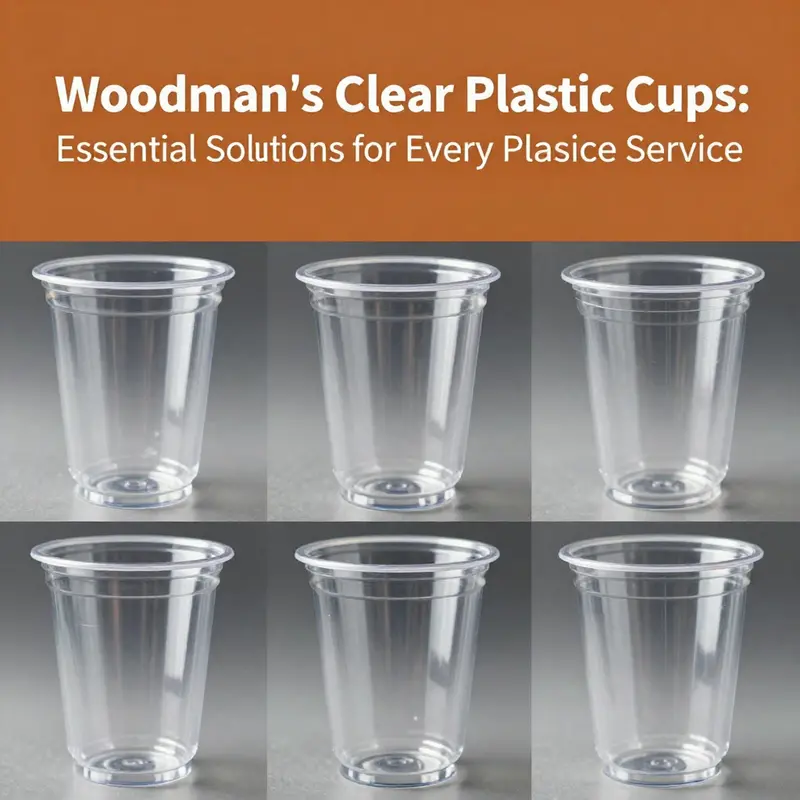
A quick clarification often helps when readers encounter a search for a product described as a clear plastic cup from a particular source or retailer. In many cases, what first appears as a single item is actually a broad category that spans countless sizes, designs, and performance profiles. There is no singular product that can be universally labeled as the Woodman clear plastic cup in standard industry catalogs. Instead, what we encounter in kitchens, cafés, and event spaces is a class of container made primarily from a material that has become the workhorse of modern food service: PET, or polyethylene terephthalate. This chapter takes you through the material properties that make clear PET cups not just visually appealing but practically reliable in a wide range of service contexts. The aim is to illuminate why this category matters, how its properties translate into real-world performance, and what operators should consider when selecting a cup for a given application, all while keeping sight of the broader context in which these cups function within the food service ecosystem.
The first thing to notice about clear cups is the way light interacts with their surface. PET is inherently clear and, when manufactured with careful control of the resin, moulding conditions, and post-processing, produces a level of transparency that showcases the beverage or dessert inside. Customers judge a drink not only by taste and aroma but also by its appearance. A transparent cup allows the color of the beverage—whether a bright citrus tea, a deep iced coffee, or a pale sparkling water—to be perceived with minimal visual distortion. This clarity is not simply an aesthetic advantage; it supports perceived quality and can influence purchase behavior in a busy service environment where many options compete for attention.
Clarity is inseparable from the material’s thermal story. PET cups are designed to handle a temperature range that covers most cold beverages and a subset of warmer offerings. In practical terms, PET cups readily support cold drinks down to subfreezing temperatures and can also tolerate moderate heat without warping or losing their shape. The commonly cited range of roughly minus 20 degrees Celsius to about 65 degrees Celsius accommodates beverages poured over ice, iced coffee, lemonade, and many specialty cold drinks. It is important to note, however, that while PET is versatile, very hot liquids—approaching or exceeding typical hot beverage serving temperatures—often require additional design considerations or alternative materials to maintain comfort, safety, and seal integrity. This nuanced thermal behavior explains why PET cups are so prevalent for cold beverage service while still finding a place in some hot-drink applications where careful handling and specification of the cup design can mitigate risk.
Beyond temperature resilience, the mechanical backbone of PET cups rests in their strength and resilience. The material’s stiffness contributes to a relatively rigid cup that resists flexing when carried or poured. This translates into a stable rim that helps users pour smoothly and minimizes the risk of spills during handling. The cups are also designed to resist shattering, a feature that is crucial for both staff safety and customer experience in high-traffic environments such as festivals, takeout windows, and busy cafés. A uniform rim and a well-defined base shape reduce wobble when placed on a surface, which further lowers spill potential and aids in stacking and storage. The end result is a lightweight container that feels sturdy enough for everyday use yet light enough to optimize shipping and inventory management, reducing energy consumption and freight weight compared with heavier materials.
The weight-to-strength ratio of PET is part of what makes it the standard in many food-service operations. The lightness of the cups lowers transport costs and lowers the environmental footprint associated with each serving. In large-scale operations, where thousands or millions of cups may be used, the cumulative savings in weight can be meaningful—both economically and environmentally. Yet weight savings do not come at the expense of integrity. Modern PET cups are engineered to resist deformation under typical handling conditions, including stacking, palletizing, and rapid filling lines. This reliability is particularly valuable in takeout and delivery contexts, where cups must endure the journey from kitchen to customer without compromising containment or presentation.
Speaking of presentation, the surface of a PET cup is more than a window for a beverage. It is a canvas for branding and information. Clear cups provide a pristine, unobstructed surface that brands can exploit through color, logos, and printed messages. This surfaces an important practical advantage of the PET cup category: it accommodates customization without sacrificing legibility or visual appeal. Operators can integrate logos, nutritional information, or promotional graphics without distorting the product underneath. The result is a flexible packaging tool that supports marketing goals while maintaining a clean, modern aesthetic that many customers expect in today’s dining and retail landscapes.
From a material science perspective, PET’s barrier properties deserve attention. The material exhibits excellent moisture and gas barrier characteristics for a plastic cup. This helps preserve the flavor and freshness of beverages, especially when orders must be stored briefly before consumption. For desserts and fruit cups, a good moisture barrier can be pivotal in maintaining texture and reducing the risk of sogginess or wilting when pre-portioned items are prepared ahead of a service window. In practice, these barrier properties complement the cup’s transparency and stiffness, delivering a package that looks clean, holds its contents securely, and keeps quality intact during short-term storage and transport.
The conversation about PET would be incomplete without addressing environmental considerations. PET is widely accepted by recycling programs, and its lifecycle is shaped by recovery and reprocessing. The use of PET aligns with broader sustainability narratives common in modern food service, particularly when operators participate in take-back or recycling programs, use capped and labeled vessels to aid sorting, and choose packaging with clear resin identification codes. The recyclability of PET cups makes them a pragmatic choice when balanced against performance, cost, and convenience. Yet the reality on the ground varies by region, which means operators should understand local recycling capabilities and partner with suppliers who provide clear guidance on disposal and diversion. In practice, many facilities encourage rinsing and sorting, using dedicated bins or process flows to prevent contamination that could compromise recycling streams. The material’s recyclability thus becomes a shared responsibility among manufacturers, operators, and waste-management systems.
A related consideration is the growing emphasis on lifecycle thinking. Clear PET cups are part of a broader dialogue about single-use versus reusable solutions in food service. While the lightweight and disposable nature of PET cups offers undeniable convenience, many operators are evaluating approaches that pair PET cups with responsible end-of-life handling, or that transition toward reusable ware for high-volume venues. This shift requires a careful assessment of cost-per-use, washing capabilities, and the overall environmental footprint. It is not a one-size-fits-all decision; rather, it reflects a nuanced balance between convenience, safety, hygiene, and resource stewardship that defines contemporary food-service operation planning.
When it comes to safety and regulatory compliance, PET is widely recognized as a suitable material for food-contact applications. Standards and approvals in many jurisdictions support its use for beverages and other food products. That safety framework underpins the confidence with which operators deploy PET cups in a variety of settings, from quick-service restaurants to event catering. The combination of safety assurance, optical clarity, and mechanical performance helps explain why PET cups have become a foundational element in many service models. In practice, this means operators can count on a consistent user experience: a cup that looks clean, pours smoothly, and holds up across the typical service cycle from order to disposal.
Design considerations extend beyond raw material properties. The rim thickness, base foot, and wall geometry all influence how a cup performs in real-world tasks. A thicker rim can improve pouring control and reduce the likelihood of collapse under heat or pressure. A well-designed base enhances stability on crowded tables and when nested for efficient storage. While a basic clear cup may seem simple, the interplay of geometry and material behavior shapes how it feels in hand, how easily it stacks, and how well it communicates the product inside to the customer. In high-velocity service environments, even small design refinements can translate into meaningful improvements in throughput and customer satisfaction. In this light, the category of clear PET cups is not a monolith but a family of products tuned for specific use cases, whether it is a casual takeout window, a formal catering event, or a self-serve beverage station.
For those readers who want to explore practical examples of how these properties translate into everyday use, consider how a typical event or venue relies on a clear cup to convey quality through presentation alone. The cup becomes a visible extension of the beverage inside, a transparent stage where color and clarity interact with light to create a moment of anticipation for the customer. It is this moment of perception that makes the material choice so consequential. When a cup is crystal clear, the beverage’s hue, carbonation, or dessert layers become storytelling elements in their own right. This ties back to the broader article topic by underscoring that the material and design choices behind clear cups influence not just functionality but also the perceived value of the service experience.
As readers move from understanding the material’s properties to evaluating supply and supplier choices, several practical takeaways emerge. First, select cups that balance clarity with structural integrity suitable for the intended use. Second, verify that the cups meet local food-contact regulations and align with your waste-management capabilities. Third, consider how the cup’s design supports branding and customer communication, especially in environments where quick recognition and consistency matter. Fourth, recognize that environmental considerations are not just about recyclability but also about the efficiency of the supply chain, the ease of sorting, and the potential for reusable options when appropriate. In sum, the PET cup category provides a versatile, reliable, and visually compelling option for a wide spectrum of service contexts, while inviting ongoing reflection on sustainability and innovation in packaging design.
For those seeking a concise pathway to further technical details and specifications, a trusted resource offers a comprehensive overview of plastic cup materials and their industrial performance. This external reference provides technical depth beyond the high-level discussion presented here and can guide procurement decisions and quality assessments for operators who want to align product choices with rigorous standards. For more technical specifications, see the Keystone Supply guide to plastic cup materials. https://www.keystonesupply.com/plastic-cups-materials/
In addition to the general considerations outlined above, it is useful to connect the narrative to practical examples found in the wider ecosystem of disposable tableware. One widely used option for events, parties, and temporary stations involves a disposable clear plastic cup designed for quick service and easy disposal. The combination of clear visibility, reliable performance, and straightforward disposal logistics makes these cups a staple in many menus and service formats. For readers willing to explore a concrete example embedded in the broader category, you can examine product listings that emphasize clarity and versatility while maintaining compatibility with common lids and accessories. For instance, a widely used disposable option for events is the Disposable clear plastic cup for parties, which demonstrates how branding potential, user experience, and material properties come together in a single, practical package. This linked example illustrates how the theoretical properties discussed translate into real-world outcomes in terms of usability, aesthetics, and service efficiency. Disposable clear plastic cup for parties
Ultimately, understanding the material properties of clear plastic cups in food service means recognizing a delicate balance among clarity, strength, temperature tolerance, and end-of-life considerations. The PET cup, with its combination of optical appeal, reliable performance, and broad adaptability, has earned its place as a foundational tool in the modern food system. It enables operators to present beverages and desserts with confidence, while supporting efficient service and responsible waste-management practices. The narrative here is not about endorsing a single product name but about appreciating the machine-like reliability that a well-designed clear PET cup brings to a busy service environment. As the industry continues to innovate—whether through greener recycling streams, enhanced barrier technologies, or smarter branding approaches—the role of the clear plastic cup in food service remains central. Its continued evolution will likely hinge on how manufacturers and operators address the intertwined priorities of performance, safety, cost, and sustainability, ensuring that every pour is not only visually appealing but also responsibly managed from cup to cashier to customer.
Clear Moments, Clear Messaging: The Role of Transparent Cups in Modern Gatherings

Transparent cups have quietly become a cornerstone of contemporary event language. They are not merely vessels; they are stagehands in the choreography of service, color, and perception. When guests glance at a glass or cup filled with a vibrant drink, the hues, the clarity, and even the foam or bubbles contribute to the overall experience. In this chapter we explore how clear plastic cups function across a spectrum of settings, from intimate family gatherings to sprawling festivals, and how their design choices influence everything from rapid service to brand storytelling. The name you encounter in searches may mix stores or personalities with a familiar category, but the essential value remains the same: these cups are built to be dependable, adaptable, and visually honest. They offer a canvas of possibilities while keeping the focus on the beverage itself. For practitioners and curious readers alike, the enduring question is not only what these cups hold, but how they present what is inside and how they travel through events with efficiency and grace.
In casual gatherings, simplicity often governs the choice of a clear plastic cup. A birthday barbecue, a school field day, or a family reunion relies on a quick, predictable solution for serving drinks to a crowd. The transparency of the cup matters more than it might at first glance. Guests want to see the color of the drink, from the pale blush of a lemonade to the deep amber of iced tea, so that the visual cue aligns with flavor expectation. Staff appreciate a vessel that is light enough to lift repeatedly without fatigue, and that stacks compactly for easy transport and storage. In these contexts, a clear cup acts as a neutral carrier: it does not compete with the drink, yet it helps the drink speak clearly. The practical benefits—lightweight, shatter-resistant design, and stackability—translate into smoother logistics. Cleanup becomes simpler, as the disposable nature of the cup reduces post-event bottlenecks and helps teams reallocate time to guest engagement rather than vehicle and utensil management. Yet beneath this practicality lies a subtle, almost architectural quality. Clarity isn’t only about visibility; it is about trust. When guests can clearly see the contents, they trust what is being offered, from portions left in the cup to the presence of ice and the correct volume. This trust becomes a quiet, recurring thread that strengthens the event experience without demanding attention.
At larger scales, the role of clear plastic cups shifts from convenience to orchestration. Catering operations and venue teams design drink service to keep lines moving, presentation consistent, and branding legible from a distance. In a high-volume environment, the lightweight and shatter-resistant properties are not luxuries but necessities. The ability to stack, tote, and deploy dozens or hundreds of cups quickly reduces the labor curve and speeds service during peak moments. The transparent surface still plays a vital role here: staff can rapidly confirm fill levels, identify beverages by color, and ensure guests receive the correct drink without unnecessary exchanges. The guest experience remains uninterrupted by the point of service; the cups disappear into the flow of the event, allowing attendees to focus on cuisine, conversation, or performance rather than the logistics of what they hold. In this sense, the cup becomes a facilitator of the moment, not a distraction from it. In branded or thematically coordinated events, the cups function as a quiet but powerful medium for messaging. Clear cups offer a blank but vibrant surface onto which logos, event graphics, or color palettes can be applied through labeling or printing. The result is a cohesive aesthetic that harmonizes with banners, menus, and stage design. This is especially valuable in product launches, corporate receptions, or festival settings where a consistent visual language helps attendees perceive a well-curated experience. Custom printing on clear plastic cups stands out not by shouting a brand name, but by reinforcing memory through color, shape, and legibility. The clarity of the cup acts like a lens—bright, legible imagery is more likely to travel across crowded rooms and be captured in photos and social media posts.
Beyond aesthetics, material choices and safety considerations shape how clear plastic cups perform in practice. Most clear cups are manufactured from food-grade polymers such as PET, PP, or PS. Each material carries a distinct set of advantages and caveats. PET cups are prized for their clarity and strength, offering a sturdy feel without excessive weight. They hold up well in handling and transport, making them a reliable option for outdoor events where weather and crowds demand durable cups that won’t crack or deform easily. PP cups provide a slightly more flexible option, with good heat resistance suitable for some hot beverages, though not all clear plastics are rated for high temperatures. PS cups, while offering crisp clarity and a satisfying tactile experience, can be more prone to cracking under stress and may be less favored for long-term durability. Regulatory compliance is a critical consideration in any implementation. FDA conformity for contact with beverages, hygienic production standards, and traceability all contribute to a sense of safety for guests and operators alike. In practice, this means planners and operators assess whether the cup’s material, whether PET, PP, or PS, aligns with the drink type, service temperature, and expected handling conditions. The choice also intersects with environmental policies and waste management strategies. While single-use plastics offer undeniable convenience, many events now balance this with recycling programs, waste sorting stations, and post-event analyses to minimize environmental impact. In other words, the cup’s material is not just a technical specification; it is part of a broader narrative about responsibility, efficiency, and guest experience.
The practicalities of handling and service intersect with the opportunities for branding in compelling ways. Custom UV printing enables vibrant logos, slogans, or themed motifs to travel with the cup itself. The result is a moving billboard that accompanies guests through lines, mingling spaces, or photo moments. This branding can be particularly effective in seasonal campaigns, product launches, or local celebrations where a unified visual language reinforces messaging across different touchpoints. The act of seeing a logo on a cup is not simply about recognition; it is about creating a consistent memory frame. In some contexts, the cup becomes an informal ambassador for the event, and the clarity of the beverage inside it makes the branding legible, even in crowds. A well-executed design respects readability and contrast, ensuring that logos remain identifiable when viewed from various angles or under different lighting conditions. The result is a practical fusion of form and function: a cup that carries content with integrity and carries branding with finesse.
The efficiency of clear cups also touches on the logistics of cleanup and post-event turnover. A disposable solution streamlines operations, but it also lengths the conversation about sustainability. Organizers commonly weigh the trade-offs between disposability and reuse, calibrating expectations around waste perception, cost per participant, and the availability of recycling streams. Even when the cups are clearly designed for single-use, operators can implement effective on-site separation and recycling protocols, which helps minimize environmental impact while preserving speed and convenience. The optics of disposal matter, too. When cups are transparent, recyclability becomes a visible virtue; guests can see the recycling bins filled with the same material, reinforcing a sense of collective responsibility. Conversely, when events mix materials or fail to provide clear guidance on disposal, guests can feel confusion about what goes where. In this landscape, the cup becomes a pivot point in a larger sustainability conversation, prompting event teams to design communications and spaces that guide behavior with clarity and dignity.
In terms of guest experience and behavior, the visibility afforded by clear cups contributes to a perception of honesty and reliability. Guests judge a beverage by its color and clarity, and the cup preserves that perception. The absence of opaque barriers means that color accuracy, carbonation, sediment, and even the appearance of ice are visible cues. This can enhance trust in the beverage offering and reduce hesitation when selecting drinks from a self-serve station or from a server’s tray. The psychology of visibility matters: people are more confident when they can appraise what they are receiving, and clear cups help deliver that confidence. When service runs smoothly, guests feel less friction at the point of consumption, and this ease translates into positive impressions that linger after the event ends. The cup, in this sense, is less a commodity and more a conduit for clarity in both perception and process.
For readers seeking practical inspiration beyond theory, it is helpful to consider how a typical outdoor event might leverage a disposable clear plastic cup to balance speed, safety, and presentation. In such a setting, the cup’s light weight and stackable form enable rapid restocking of beverage stations, while its transparent surface ensures that color-coded drink options are instantly distinguishable. The cup’s rim design, lip thickness, and interior contour can also influence mouthfeel and sip experience, subtly affecting guest satisfaction. An efficient service model uses color-coded lids or matching straws to minimize confusion and to reinforce the event’s theme in a cohesive way. The interplay between cup design, service rhythm, and guest expectations reveals how a seemingly simple item can shape the tempo of an event and the satisfaction of attendees. The result is an experience where the container feels almost invisible because it performs so reliably, allowing guests to focus on who they are with, what the drinks look like, and the overall mood of the gathering.
In a broader sense, the discussion around clear plastic cups intersects with a larger narrative about how everyday objects carry meaning in social settings. A cup is not just a receptacle; it is a tool for social interaction, a participant in the choreography of lines, service sequences, and moments of celebration. It is also a test case for logistics, branding, and sustainability. The more seamlessly a cup integrates into the flow of an event, the more effectively the organizers can curate experiences without drawing attention to the mechanics that support them. By choosing a cup that aligns with your drink temperature range, handling expectations, and branding goals, you are selecting a stage for beverages to perform—bright in color, clear in perception, and considerate of the people who hold them.
As with any evolving field, there is value in looking to practical exemplars and external resources to inform decisions. For a practical example of a disposable clear plastic cup designed for outdoor events, see disposable clear plastic cup for outdoor parties and picnics. This reference illustrates how a single component can travel across event types—from casual gatherings to organized festivals—and continue to support efficient service, consistent presentation, and guest satisfaction. The key takeaway is not a particular shape or brand but the recognition that clarity in both material and messaging yields tangible benefits for events of all sizes. When we pair the right material with thoughtful design and responsible disposal practices, clear plastic cups become more than vessels; they become enablers of connection, memory, and trust in moments that people will share long after the last toast.
External resource for further reading and practical insights on clear, high-quality options with fast lead times and branding capabilities can be found here: https://www.alibaba.com/product-detail/20-oz-custom-clear-plastic-cup-made-in_1600589344755.html
Final thoughts
Summarizing the multifaceted advantages of Woodman’s clear plastic cups, we find that understanding their position within the broader category of disposable tableware is crucial. From practical applications in various food service environments to alignment with market trends favoring sustainability and convenience, these cups represent an essential choice for businesses aiming to enhance their service offerings. By embracing Woodman’s products, establishments like bubble tea shops, restaurants, and catering services can not only streamline their operations but also appeal to the evolving preferences of consumers. The journey from recognition to implementation of these solutions could culminate in a significant competitive edge for your business.