

In the competitive landscape of food service and catering, presentation is key. Plastic gold disposable bowls are increasingly becoming the go-to choice for establishments aiming to deliver elegance without compromising on convenience. Their luxurious appearance combined with practicality makes them a favorite among bubble tea shops, restaurants, and event planners. This article explores the aesthetics and functionality of these bowls, market trends and popular brands, environmental considerations, and various usage scenarios in different contexts, providing valuable insights for your business needs.
Gilded Grace in Disposable Form: The Aesthetics and Practicality of Plastic Gold Bowls

The shimmer of a gold finish on disposable bowls signals celebration without demanding the weight of porcelain or silver. In event settings, the glow frames a dessert, a salad, or small bites with a sense of ceremony, while keeping service lean and efficient.
Materials are typically food grade PET, chosen for safety and resilience. A clear or lightly tinted base helps the color reading of the food, while the metallic layer adds depth by reflecting light. When dessert layers rise in a parfait or a bright salad sparkles with oil, the gold sheen makes the dish feel deliberate.
Functionally, these bowls are light, shatter resistant, and designed for quick handling. Being single use reduces washing, polishing, and cross contamination concerns. Their shape and lip are optimized for easy scooping and stable stacking, helping service staff move from station to station with fewer spills.
Design options span a polished gold tone for classic glamour, a glitter or crystal-like variation for festive spreads, and a trim style that reads modern and refined. Some versions include lids for transport protection or extended buffet displays, which reinforces the practical promise behind disposable glam.
Use scenarios range from elegant buffets to casual takeout, with lids and outer shells signaling premium experience while logistics stay fast and predictable. The bowls pair well with a range of menu items, from chilled desserts to savory grains, and they scale easily for large guest lists.
Trade offs include the environmental footprint of single use items. Wisely, operators can plan waste streams, explore recycling options where available, and choose products that balance appearance with responsible disposal. They also tolerate temperature limits, as very hot contents can warp the base over time, so menu planning matters.
For decision makers, the value lies in translating a luxury look into scalable, low labor service. When paired with careful end of life planning, plastic gold bowls offer a compelling mix of visual impact and operational efficiency that supports memorable events without sacrificing practicality.
Gilded Convenience: The Rise of Plastic Gold Disposable Bowls in Eventware

Disposable bowls with a gold-tone finish have evolved from decorative novelty to practical, design-forward tableware. In modern eventware, their appeal lies in the balance of elegance, portability, and cost. Hosts want glamour without burdensome cleanup, so lightweight plastics with durable coatings fit the brief. Yet the market is shifting toward sustainability, with brands experimenting with PLA, PBAT, and compostable liners to align with circular economy goals. Premium lines leverage gold accents to elevate dessert displays, buffet stations, and cocktail bites while maintaining stackability and lid functionality for transport.
Beyond aesthetics, manufacturers emphasize durability, leak resistance, heat tolerance, and ease of cleaning. The best pieces survive outdoor events, maintain color and finish across batches, and combine with lids and trays for cohesive presentation. These features reduce waste through reuse potentials at scale and cut service friction for caterers.
Market dynamics show growth in premium disposables where glamour meets responsibility. While low-cost options remain essential for high-volume settings, the premium segment grows by catering to weddings, corporate galas, and brand activations that demand a memorable table top. The result is a broader ecosystem where style and sustainability are not mutually exclusive.
Finally, buyers are reassessing the lifecycle of tableware: how to recycle or compost where pathways exist, and how suppliers communicate environmental performance. In this context, the rise of plastic gold bowls signals a trend toward responsible indulgence—glamour that travels well, leaves little waste, and inspires confidence in guests.
Gilded Waste: Environmental Realities of Plastic Gold Disposable Bowls

Gilded Waste has long defined the visual language of modern celebrations. A bowl that gleams like hammered metal instantly signals refinement, whether it cradles a glossy salad, a delicate dessert, or a compact portion of pasta. The allure is powerful, and in many venues it translates into faster service, cleaner tables, and a sense of luxury without the frills of porcelain or crystal. Yet beneath the shimmer lies a difficult truth: the very disposability that makes plastic gold bowls convenient also locks them into a broader environmental dynamic that far outlives any single event. This chapter explores those dynamics with a steady eye on how a product designed for a moment of splendor becomes part of a long, complex chain of waste, resource use, and ecosystem impact. The aim is not to erode enjoyment but to illuminate choices—how the same bowls that dress a buffet can also inform a more sustainable path for future gatherings, without diluting the experience that makes them appealing in the first place.\n\nThe environmental footprint of disposable items begins with their very existence. Plastic gold bowls are part of a class of products engineered for convenience and hygiene. Their lifespans are short, but their afterlives can be lengthy. In the broader plastic waste landscape, a substantial portion of discarded plastics ends up not where they should—reused, recycled, or properly composted—but in landfills where they can persist for decades. The persistence of these materials translates into long-term ecological harm: animals may scavenge for food or become entangled, and landscapes suffer from residues that accumulate over time. While the exact figures shift by region and waste-management structure, the reality that plastic waste accumulates is widely acknowledged. In many scientific assessments, a large share of plastic waste remains unrecycled or misallocated, compounding the challenge of managing disposable goods in a world that values both convenience and stewardship.\n\nRecycling remains a central piece of the conversation, but it is not a panacea. The materials commonly used in food-service plastics—polypropylene and PET, known in resin-code terms as #5 and #1 respectively—are technically recyclable in many programs. Yet the practical reality is more nuanced. Contamination, closures and finishes, and the uneven reach of recycling infrastructure can severely limit recovery. A gold-colored finish, whether metallic-foil-like or pigment-based, can complicate sorting and recycling streams because it may not be compatible with standard plastic recycling processes. Even when a bowl is made of a recyclable polymer, the path from consumer disposal to a reused product often stalls at the curb, in sorting facilities, or at end-markets that require clean, contaminant-free input. The result is a paradox: a product designed to simplify events can, in practice, contribute less to circular loops than its more modest, non-metallic counterparts if disposal and recycling are not carefully managed.\n\nBeyond recyclability, the production life cycle of these disposable items carries meaningful costs. The manufacture of single-use plastics relies on fossil-fuel-based feedstocks, energy, and water. Each bowl is a microcosm of a larger system that consumes resources and emits greenhouse gases at multiple stages—from raw material extraction to extrusion, finishing, and eventual disposal. Even when labels reassure buyers that a product is BPA-free or food-safe, those assurances do not absolve the material of environmental consequences. The degradation process is rarely clean. Microplastics can be released during wear, weathering, and breakdown, finding their way into soils and waterways and contributing to a diffuse, intractable pollution problem. The consequence is not merely a local litter issue but a global signal about how we value convenience in a world with finite resources.\n\nThe promise of sustainability, however, is not illusory. A growing slate of biodegradable and compostable options offers an alternative trajectory. Plant-based materials—often marketed as compostable in appropriate facilities—represent a pathway to reduce the burden left by disposable tableware. The idea is straightforward: support a lifecycle that is less enduring in the environment, or at least more amenable to controlled, facility-based processing. Yet the practical benefits hinge on disposal infrastructure. Compostable products only realize their potential if they are separated from ordinary trash and routed to composting streams that can handle them. Without such a system, even the most well-intentioned choices can fail to deliver meaningful environmental relief. The challenge, then, is not only choosing a different material but aligning that choice with a waste-management framework that can honor the intended end-of-life pathway.\n\nFor event organizers and consumers who favor a greener posture, the decision matrix becomes a balancing act. The gold aesthetic remains powerful, but it does not have to be mutually exclusive with responsible practices. One route is to favor reusable, durable alternatives for high-visibility presentations—sturdy serveware that can be washed and stored, reducing per-event waste when feasible. Where disposables are unavoidable due to volume, turnover speed, or hygiene standards, planning becomes essential. Short-term convenience can be offset by proactive steps: clear labeling that helps guests separate compostable items from recyclables and general waste; partnerships with local facilities that accept compostable or high-grade plastics; and careful selection of finishes and materials to minimize contamination in streams destined for recycling. In practice, this means design considerations that reduce material thickness, avoid multi-layer composites that resist separation, and favor finishes that are compatible with recycling or composting streams. It also means communicating expectations to guests and staff so that sorting is intuitive and effective rather than opaque and frustrating.\n\nA practical thread running through these points is the tension between elegance and responsibility. The shine of a gold bowl can be framed as part of the ambiance rather than as a mark of unsustainable behavior. This reframing invites a more nuanced approach to event design: how to preserve the visual drama of golden presentation while embedding it in a system that respects waste hierarchy. In other words, the question becomes how to translate the aesthetic impulse into choices that align with environmental outcomes. For some events, the answer may lie in hybrid solutions—reusable ware for the core presentation, complemented by carefully sourced disposables for elements that demand quick turnover or strict hygiene. For others, the most responsible option may be to lean into compostable, plant-based alternatives and to ensure that composting remains a viable, accessible route for end-of-life management. Either path requires a strategy, not just an impulse.\n\nThis is where consumer education and proactive waste management converge. The best outcomes emerge when guests understand the rationale behind packaging decisions and see clear signals about how to dispose of items correctly. Event planners can contribute by providing clearly labeled sorting stations, concise signage, and trained staff who guide guests through the process. Creating a straightforward disposal workflow—recycling, composting, and landfill categories where appropriate—reduces contamination and increases the probability that materials follow the intended end-of-life path. It also invites a conversation about the product’s lifecycle: where the material came from, how it was produced, and what happens after the event ends. That holistic view helps participants feel part of a larger commitment rather than a concession to convenience.\n\nFor readers who want to explore broader packaging choices beyond bowls, consider this resource on versatile takeout packaging options, including eco-friendly designs and practical considerations for safe transport and storage: eco-friendly-disposable-3-compartment-food-grade-packaging-box-for-fast-food-high-quality-takeout-boxes-for-fried-chicken-french-fries-packaging/. This link opens a window onto how alternative packaging formats can balance aesthetics, functionality, and environmental responsibility in real-world settings. It serves as a reminder that the path forward is not a single choice but a spectrum of design and operational decisions that honor both appetite and habitat.\n\nUltimately, the environmental considerations surrounding plastic gold disposable bowls—while not exhaustively detailed in any one source—fit into a larger narrative about plastic pollution and waste management. The broad lesson is clear: the glamour of gold can coexist with a sober commitment to minimizing ecological impact if choices are deliberate, if disposal streams are clear, and if the lifecycle of materials is treated as part of the event’s design rather than as an afterthought. This does not require abandoning beauty or convenience; it calls for smarter integration of aesthetics with stewardship. It invites brands, venues, and guests to see disposable elegance not as a contradiction to sustainability but as a prompt to advance systems that honor both celebration and the planet.\n\nExternal resource: https://www.sciencedirect.com/topics/environmental-science/plastic-pollution
Elegant Convenience: Gold Plastic Bowls for Events and Catering
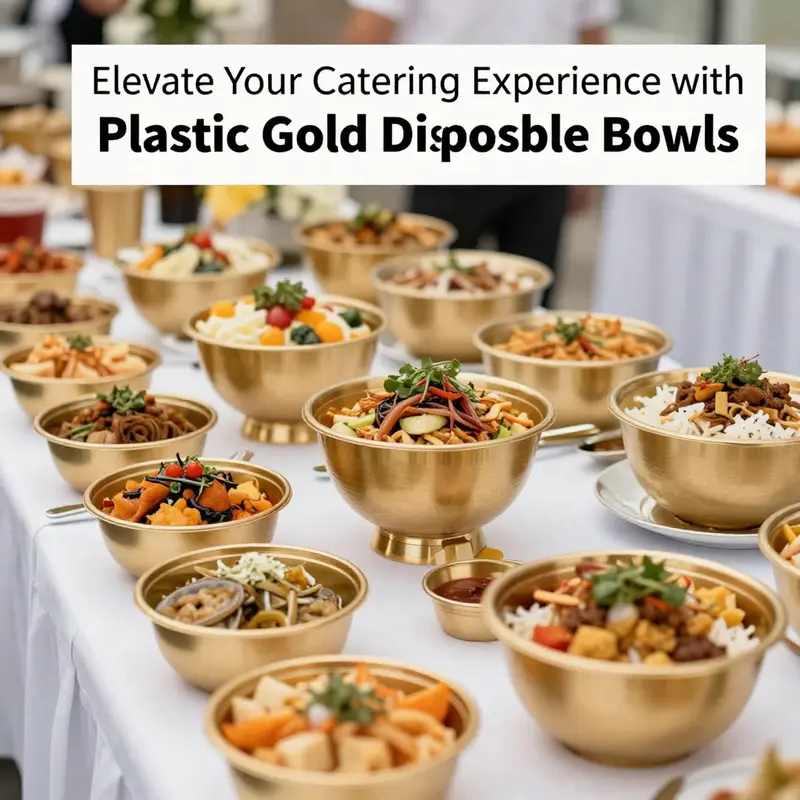
Gold plastic bowls bring a gleaming, upscale look to buffets without fragile glass. They are available in 10oz and 12oz sizes, with larger options for shared dishes. The clear plastic body shows colors and textures while a metallic gold finish adds a touch of ceremony. For caterers, their light weight and stackability simplify transport and service, and the disposables reduce cleanup time. They work well with cold salads, grains, soups, and desserts, and some lines are rated for moderate heat, enabling gentle warming when needed. Lids can be included for transport and buffet protection. Custom branding is possible through logos or themed messaging, helping align the ware with the event’s branding while keeping convenience. Environmentally minded planners may pair them with recyclable or compostable tableware to balance convenience with sustainability. Finally, when selecting these bowls, consider the flow of service, guest experience, and the event’s theme to ensure a cohesive, polished presentation.
Final thoughts
Plastic gold disposable bowls offer an outstanding combination of aesthetics and practicality, making them an ideal choice for any kind of food service operation—from bubble tea shops to upscale catering services. Their elegant designs enhance visual appeal, while their disposable nature promotes efficiency and convenience. Despite environmental considerations, these bowls remain a favorite for their functionality and cost-effectiveness. Embracing this innovative tableware can elevate your catering experience and impress your clients.