
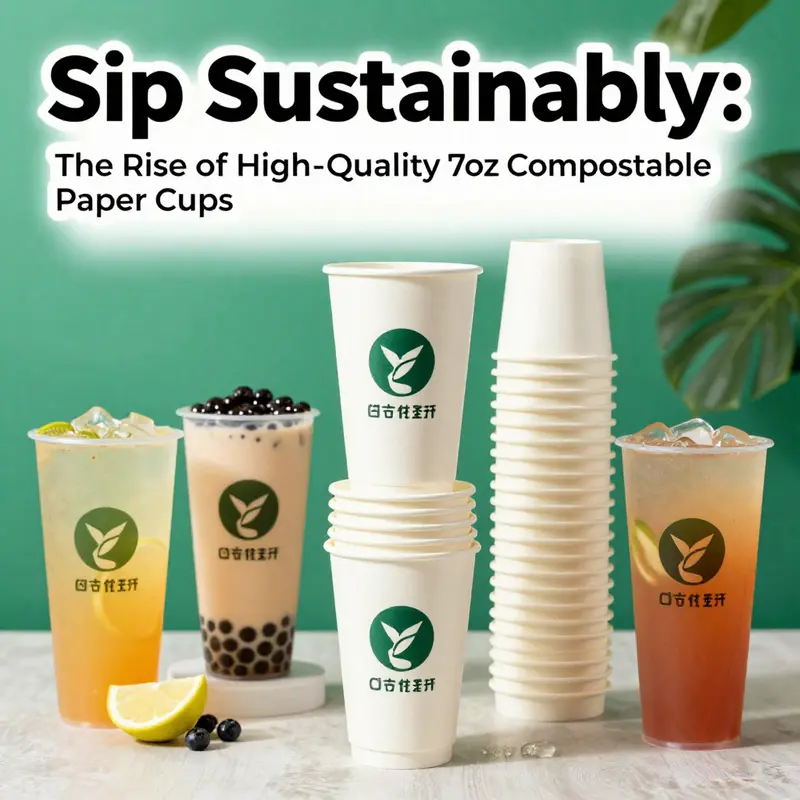
In the modern beverage landscape, sustainability is no longer a choice, it’s a necessity. High-quality 7oz compostable paper cups are leading the way, offering businesses in various sectors—from bubble tea shops to catering services—a green alternative to traditional disposables. This article will delve into their composition, performance characteristics, environmental benefits, and the market trends driving consumer preferences, providing a comprehensive understanding of how these cups align with eco-conscious practices and consumer demands.
The Craft and Care of 7oz Compostable Paper Cups: Building a Greener Sip
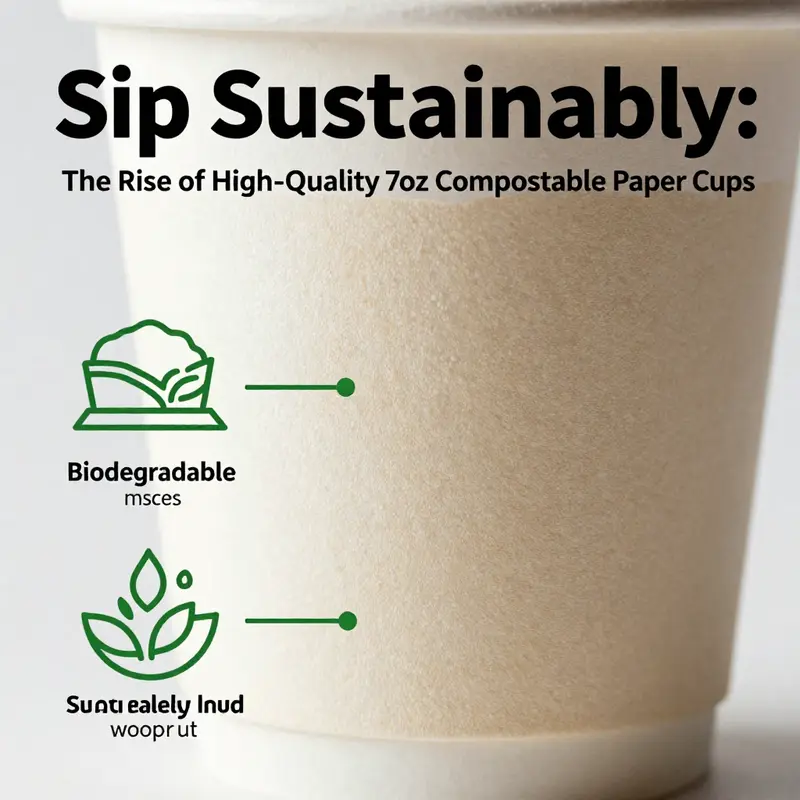
Every disposable cup is a carefully engineered choice that blends material science with responsibility. A well-made 7oz compostable paper cup balances performance and sustainability, delivering a dependable vessel for hot or cold drinks while aligning with broader waste reduction goals. Its design must resist leaks at the point of service, provide a comfortable grip, and fit into an industrial composting stream where available.
Material foundations describe a cup built from renewable plant-based fibers rather than purely virgin wood pulp. Common options include virgin bamboo pulp, which regrows quickly and offers strength in thin walls, and bagasse, the fibrous residue from pressing sugarcane juice, which adds a second sustainable feedstock while leveraging a byproduct of an existing agricultural process. Both inputs are selected to be compatible with composting conditions, though the exact end-of-life behavior depends on the local facilities and their ability to process PLA-backed structures. The inner lining is typically a thin layer of polylactic acid, or PLA, which provides liquid resistance without compromising compostability when processed in the right stream. The result is a cup that stays sturdy through service while remaining oriented toward soil renewal rather than landfill.
The structural design emphasizes simplicity and reliability. A single-wall construction keeps the cup light and easy to grip, with a reinforced base to resist tearing during filling, stacking, and handling in busy environments. The combination of lightness and strength is the product of careful geometry, optimized wall thickness, and compatible fiber blends that preserve heat or cold performance. The objective is a comfortable, predictable user experience that minimizes waste through proper reuse or efficient disposal.
Printing and branding are integrated without sacrificing compostability. Food-safe inks, often soy-based, deliver vibrant color and durable exterior print while maintaining a lower environmental footprint in production and disposal streams. Branding remains visible and legible across handling scenarios, from the drive-thru to white-table service, without compromising the integrity of the packaging or complicating downstream composting processes. The printing layer is designed to withstand moisture exposure during transport and serving while staying compatible with industrial composting streams where available.
Certifications and standards provide a trusted framework for buyers and users. Credible programs verify compostability in industrial facilities, ensuring that cups break down within defined timeframes and leave no harmful residues. Notable marks include OK Compost and TÜV Austria, which signal independent verification and ongoing compliance in commercial composting contexts. Understanding these programs helps buyers select products that perform as advertised and align with established waste-management goals. In addition, standards such as ASTM D6400 outline testing criteria and clarify the difference between industrial composting and home composting, guiding manufacturers and buyers through lifecycle considerations.
From a practical perspective, the plant-based cup body, PLA lining, and eco-friendly printing combine to support efficient workflows for cafes, catering, and events. When paired with clear disposal guidance and robust labeling, these cups help ensure that compostable items reach the appropriate facility rather than contaminating recycling or landfilling streams. Sourcing decisions should emphasize supplier transparency, material sourcing credentials, and explicit end-of-life guidance to avoid greenwashing and to sustain real environmental benefits over time.
To put these concepts into context, imagine a product family of hot-and-cold cups designed for everyday service. A well-chosen cup not only performs under pressure but also reinforces a brand’s sustainability narrative through text, color, and emblem that can be disposed of responsibly. For teams seeking practical examples, suppliers often provide product pages and case studies that illustrate how a single container supports waste-management goals across supply chains and service environments. When evaluating options, look for transparent documentation on feedstock origin, compostability testing, and compatibility with your local industrial facilities. For those who want to deepen their understanding of compostable plastics and their certification framework, the broader ASTM standards offer a comprehensive reference that helps stakeholders translate intent into action.
Performance in Practice: The Quiet Strength of 7oz Compostable Paper Cups
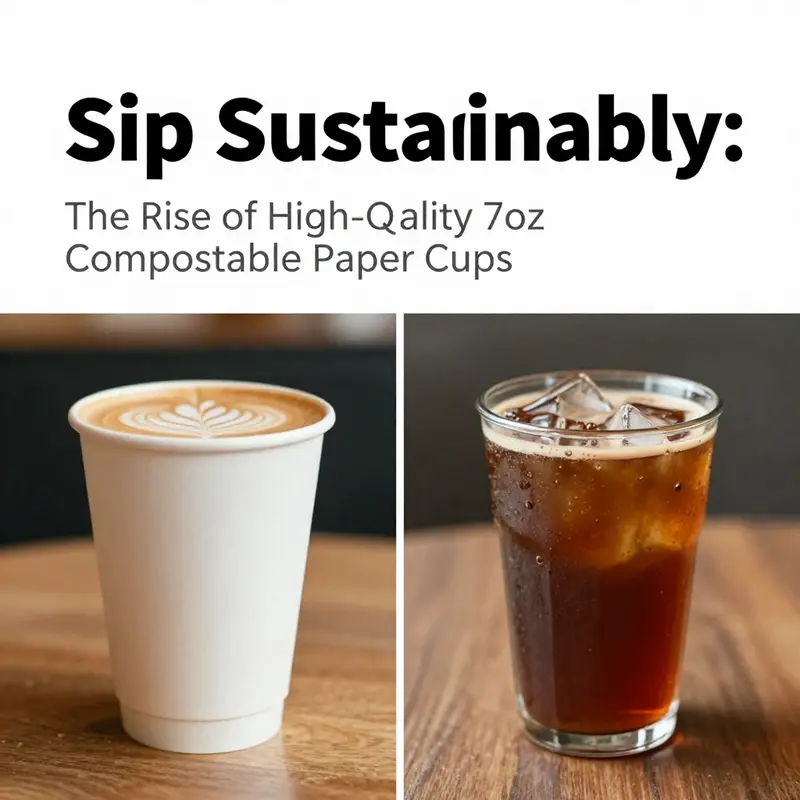
The appeal of high-quality 7oz compostable paper cups lies not only in their sustainability narrative but in their ability to deliver a steady, reliable experience across a spectrum of beverages and settings. These cups are designed to feel familiar in a café lineup or at a catered event, yet they carry a different end-of-life promise than traditional disposables. Their single-wall construction supports a comfortable grip and a straightforward, mess-minimizing handoff, while the interior barrier—often a plant-based coating—protects the cup’s integrity against liquid intrusion and heat transfer. In practice, this means a customer can enjoy a hot drink without the exterior becoming uncomfortably warm to the touch, and a cold drink can remain free from condensation that would otherwise cause slippage or soggy sleeves. The result is a smoother service flow, fewer complaints about heat transfer or leakage, and a cleaner, more consistent user experience from the moment the cup is filled to its final disposal. Beyond the moment of service, the cup’s performance supports operational efficiency: it stacks neatly with minimal warping, dispenses smoothly from standard equipment, and maintains its form long enough for customers to finish their beverage without fear of collapse or spill. This combination of handling comfort and dependable containment underpins the broader shift toward sustainable disposables that do not force a trade-off between convenience and environmental responsibility.
The coating inside these cups is a crucial performance lever. Biodegradable, plant-based coatings provide resistance to liquids without creating a barrier that would hinder industrial composting. They prevent leakage and keep beverages contained, even when served at elevated temperatures, while ensuring that the cup remains processable in composting facilities designed to break down such materials within a practical window. The strength of the cup comes from a thoughtful balance: a robust paper body paired with a thin, compatible coating that does not impede compostability. This balance is essential for maintaining resilience during handling, stacking, and transport, making the cup suitable for busy service environments—from quick-service counters to event stations where speed matters. The end result is a disposable cup that feels solid in the hand, performs reliably under typical service conditions, and routes waste toward designated composting streams rather than landfills. In today’s market, where material choices are scrutinized for their life-cycle impact, this alignment of performance and end-of-life potential is no longer a niche feature but a standard expectation for premium disposable cups.
Durability remains a core consideration, especially for beverages that vary in viscosity and temperature. A well-engineered 7oz cup resists tearing under typical loads, prevents marks from hot liquids on the exterior, and preserves its shape when shaken or spirited during transport. This durability is not about heavy, rigid heft; it is about dependable integrity under real-world use. When customers finish a drink, the cup should stand up to being held, left on surfaces, or briefly left in a car cup holder without sagging or leaking. For operators, this translates into fewer customer complaints, reduced need for over-engineered packaging, and a cleaner handling experience that supports efficient post-use collection. The same design logic supports cold beverages too; a cup that resists sogginess over time minimizes the risk of premature softening, which can lead to drips and spills during service or at the table. The capacity to perform across hot and cold applications makes these cups versatile for a wide range of venues—from coffee bars and snack counters to beverage stations at conferences and cultural events.
Sustainability standards and sourcing practices are inseparable from genuine performance. These cups emphasize renewable resources, typically pulped wood from responsibly managed sources, and production processes that prioritize energy efficiency and waste minimization. The material choice supports a shorter, more traceable supply chain, reinforcing accountability from forest to cup. While performance in the cup is critical, the real value emerges at end-of-life. A genuine compostable cup completes a lifecycle in an industrial facility within a defined timeframe, reducing lingering plastic-like residues in the waste stream. The anticipation of such a pathway is not merely a compliance checkbox; it is a promise to the environment and to communities that waste will be routed to facilities equipped to handle biodegradable disposables. Consumers and businesses are increasingly vigilant about verification, seeking evidence that suppliers maintain credible documentation and third-party attestations that the product truly participates in composting streams as claimed. In this regard, the conversation shifts from “does it work for now?” to “does it fit within a responsible, circular economy?” This shift underlines the importance of transparent sourcing, consistent manufacturing practices, and robust end-of-life documentation as part of a cohesive sustainability strategy.
The practical implications extend into packaging ecosystems where cups do not exist in isolation but as part of a cohesive service experience. Operators increasingly value compatibility with automated dispensers and vending systems, a factor that affects throughput, spillage rates, and waste reduction. A cup that feeds cleanly from a stack into a dispenser reduces the chance of jams and the need for extra intervention by staff. It also supports more consistent portion control and service speed, which are essential in busy environments where timing influences guest satisfaction. In addition, the design and materials support branding and on-site messaging without compromising performance. A smooth interior surface, a neutral exterior that accepts printing well, and a predictable thickness all contribute to an experience that aligns with a brand’s sustainability commitments while maintaining the practicalities of day-to-day service. For buyers, this translates into a straightforward procurement path: reliable cup performance, credible end-of-life claims, and a supply chain that aligns with broader environmental goals.
To ensure authenticity and to guide procurement decisions, buyers should seek documentation that demonstrates the cup’s compatibility with industrial composting facilities. Certifications indicating industrial compostability, while varying by region, are part of a broader verification framework that confirms the product will break down under appropriate conditions. The presence of such certifications reassures operators that the cup’s end-of-life story aligns with claimed performance. It also supports responsible waste management programs, where cafeterias, campuses, and event venues aim to keep compost streams clean and avoid contaminating other streams. The emphasis on credible end-of-life potential does not diminish the importance of the cup’s early-life performance; rather, it completes a holistic assessment that encompasses material choice, manufacturing integrity, service practicality, and waste outcomes. In the evolving landscape of disposable tableware, this integrated view is increasingly the baseline for decision-making, guiding buyers toward solutions that deliver reliability in operation and responsibility in disposal.
Within this broader context, a family of packaging solutions complements compostable cups by addressing the broader packaging ecosystem. For readers exploring packaging choices aligned with sustainability goals, a related avenue is showcased in practical examples of takeout packaging boxes designed to accompany beverages in service chains and events. This exploration into compatible packaging systems is not a distraction from cups but a complementary thread; it shows how a brand can present a coherent, eco-conscious experience from cup to carton. The specific resource below offers a concrete instance of a packaging approach that complements compostable cups: eco-friendly-disposable-3-compartment-food-grade-packaging-box-for-fast-food-high-quality-takeout-boxes-for-fried-chicken-french-fries-packaging. This kind of integrated packaging approach helps venues orchestrate a seamless service model while minimizing waste across touchpoints.
From a sourcing perspective, the search for a high-quality 7oz compostable cup begins with the material backbone. The cups are produced from wood pulp derived from renewable resources, with careful attention paid to the sustainability of the forest programs that supply the pulp. The manufacturing steps are designed to optimize energy use and reduce process waste, while the finished cups are engineered to be compatible with common dispensing technologies. The notion that compostable does not equal fragile is reinforced here; these cups are built to withstand routine handling, stacking, and the heat of beverages that would otherwise compromise weaker designs. In practical terms, this means a cafe or event operator can serve a steady stream of drinks without worrying about sudden condensation damage or structural failure. The user experience—handling comfort, reliable grip, and clean surface for branding—remains intact, while the end-of-life outcome advances a composting pathway rather than a landfill. The sustainability story, then, encompasses not just the cup’s use, but its journey after use, as part of a broader plan to minimize waste, reduce plastic pollution, and keep communities cleaner through responsible disposal channels.
The conversation about performance and sustainability is ongoing, with new materials, coatings, and certification schemes continually shaping what customers can expect from premium compostable disposables. The goal remains consistent: to deliver cups that perform reliably in daily service while offering a credible route to waste transformation after use. Operators benefit from this alignment because it supports both guest satisfaction and corporate commitments to environmental stewardship. The result is not merely a product improvement but a shift in how service teams plan, execute, and communicate their sustainability programs. For readers seeking deeper technical grounding and industry benchmarks, the broader literature offers detailed analyses of material specifications, testing protocols, and cross-border compliance standards that govern disposable paper cups and their end-of-life pathways. For deeper technical standards and best practices, see the external reference linked here: https://www.papercup.org/standards-performance-2026
null
null
Greener Sips: The Rise of Premium 7oz Compostable Paper Cups and What Consumers Expect
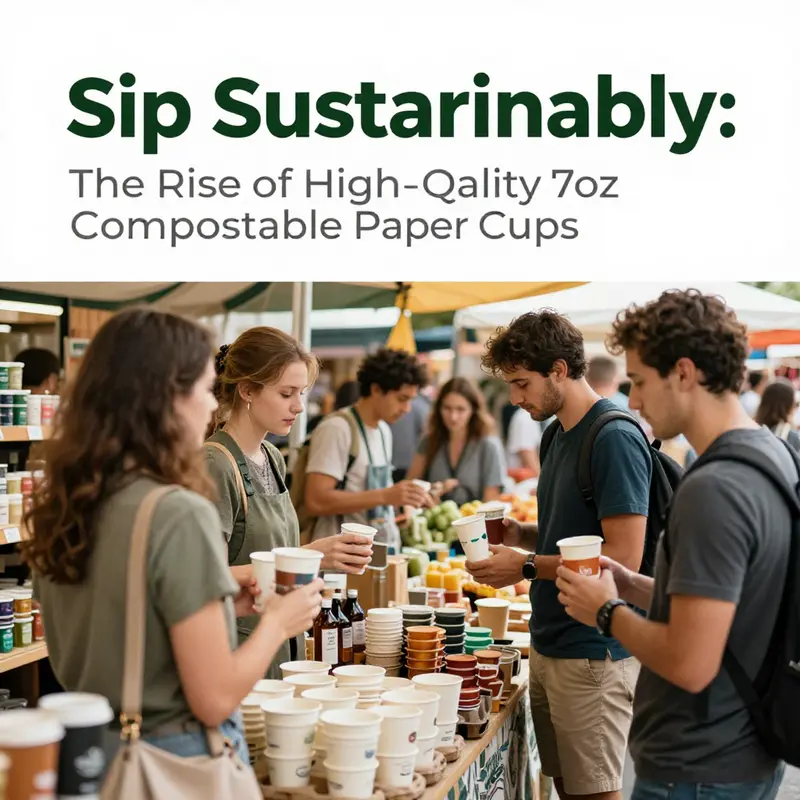
A steady current underpins the market for high quality 7oz compostable paper cups: consumers increasingly judge value by footprint as well as flavor, and brands that pair premium performance with responsible packaging are moving compostable cups from optional add-ons to standard equipment in cafes, restaurants, and events.
Third-party certifications such as OK Compost and TUV Austria provide verifiable signals that cups will break down under appropriate industrial composting conditions, helping buyers avoid greenwashing.
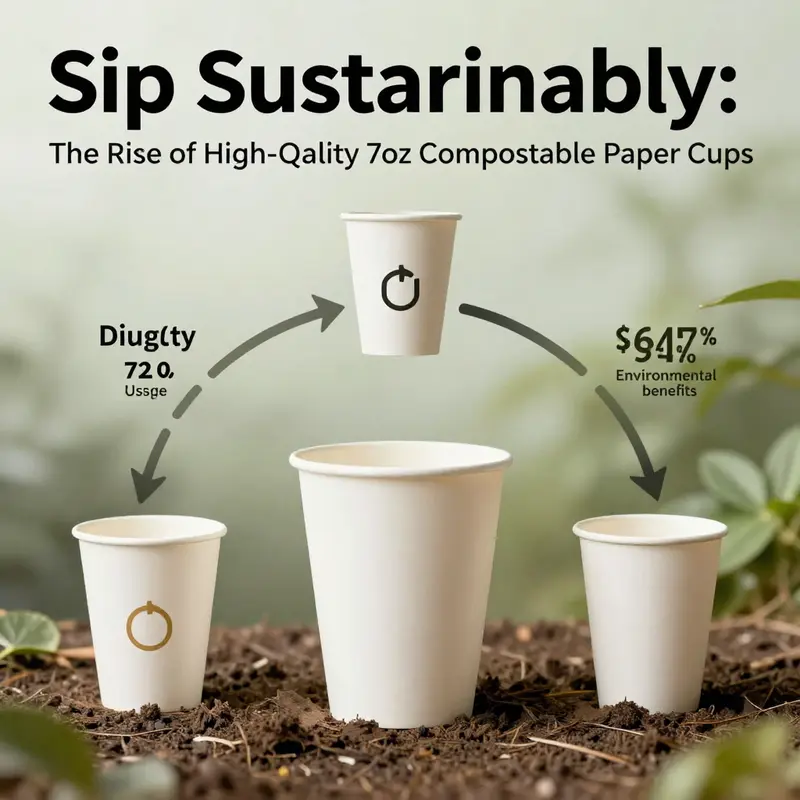
Market data reinforces the trend: the global market for compostable cups is projected to rise from about $6.08 billion in 2024 to about $12.92 billion by 2033, reflecting a robust compound annual growth rate driven by plastic reduction policies, rising consumer awareness, and the modernization of composting infrastructure around the world.
Design and customization also shape buyer perception: brands increasingly print logos and messaging on compostable cups, turning the packaging into a visible extension of quality and sustainability.
Operational and environmental benefits include easier waste diversion for venues, reduced contamination in recycling streams, and branding opportunities that communicate credible commitments to sustainability.
Final thoughts
High-quality 7oz compostable paper cups represent more than just a trend; they embody a crucial movement towards sustainability in the beverage industry. These cups not only meet the demands of modern consumers seeking eco-friendly options but also support business practices aligned with environmental responsibility. Investing in compostable cups allows businesses to enhance their eco-conscious brand image while contributing positively to waste reduction. As consumer preferences shift towards sustainable products, embracing these innovative solutions positions your business as a leader in the green movement.