
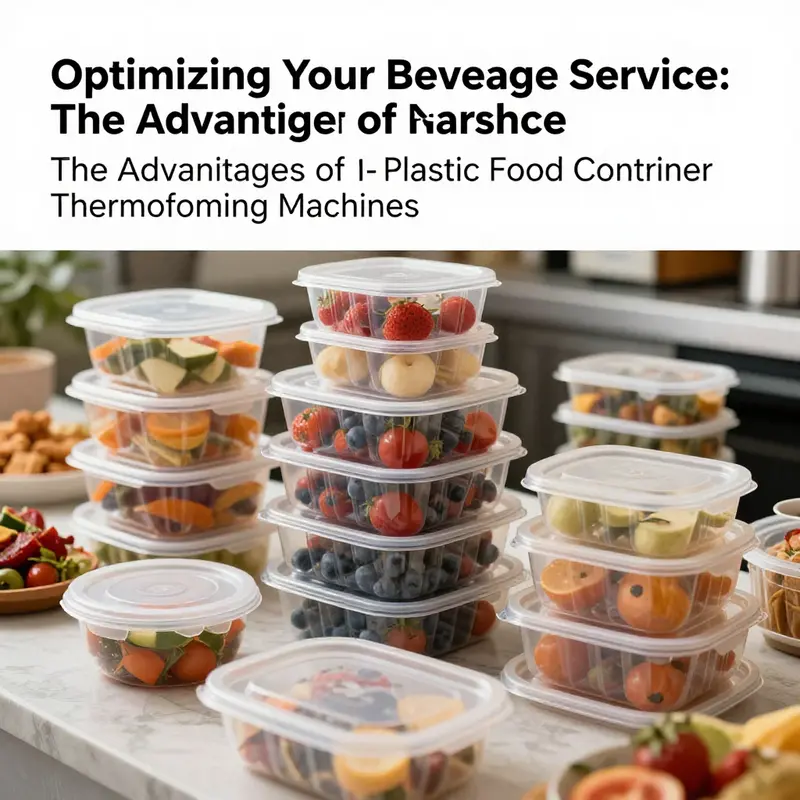
In the competitive landscapes of bubble tea shops, restaurants, food trucks, and catering services, the quality and function of packaging can make a significant difference. Enter plastic food container thermoforming machines, which offer manufacturers the capability to produce tailored food packing solutions at high volumes. This relevance resonates across various sectors, addressing the needs for efficiency, customization, and economic viability. In this exploration, we’ll delve into the manufacturing capabilities of these factories, uncover the latest technological advancements, and analyze the market trends affecting how food service institutions procure and utilize their packaging. Knowing the intricacies of thermoplastic manufacturing will empower stakeholders—from event planners to procurement teams—to make informed decisions that enhance operational efficiency and meet consumer expectations.
From Sheets to Systems: The Manufacturing Capabilities Driving Modern Plastic Food Container Thermoforming Factories
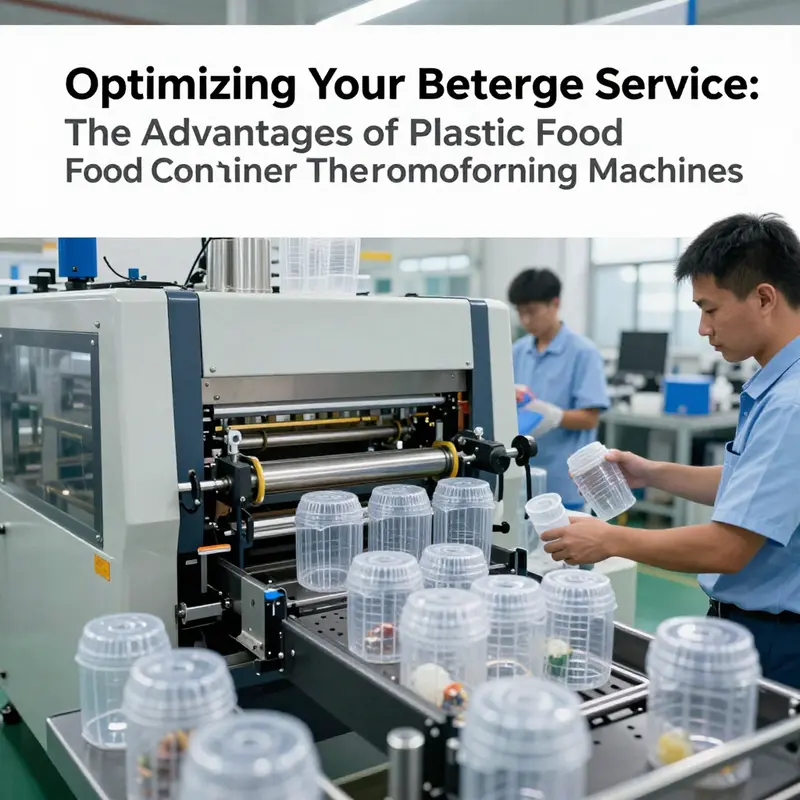
The factory floor that turns flat polymer sheets into the familiar, convenient food containers of today is more than a line of machines; it is a tightly choreographed ecosystem where material science, mechanical design, and digital control fuse to meet the diverse demands of modern packaging. In a landscape dominated by high-speed production and ever-tightening regulatory and sustainability requirements, thermoforming facilities have evolved from simple sheet-bending operations into integrated systems that transform raw sheets into finished containers with astonishing speed, precision, and versatility. This evolution has not happened by accident. It results from deliberate design choices, process innovations, and a keen understanding of how form and function must harmonize to deliver packaging that preserves product quality while controlling costs and waste. At the heart of this transformation lies a suite of capabilities that enables factories to cover a broad spectrum of products—from everyday takeout boxes and clamshells to specialty trays for delicate items like fruit, cheese, or baked goods, and even multi-compartment containers that are increasingly popular for ready-to-eat meals. A careful look at these capabilities, without getting lost in brand names or model numbers, reveals a coherent blueprint for what modern plastic container manufacturers can and must do to stay competitive in a crowded market.
One of the most fundamental capabilities of a thermoforming operation is the production of a wide range of food containers derived from various thermoplastic materials. The processes are typically based on vacuum or pressure thermoforming, where a heated plastic sheet is drawn into or against a mold to form a hollow container and, in the case of multi-layered or multi-cavity tooling, often yields lids or seals simultaneously. The result is a family of products designed to meet different functional needs: clamshells that protect produce during transit, disposable takeout boxes that balance strength with lightness, and specialty trays tailored to the needs of eggs, bread, cheese, and even fruit such as kiwi, which requires careful containment to minimize bruising and leakage. The sheer variety of possible container shapes—from shallow, wide bowls to deeply contoured, ribbed trays—speaks to the flexibility engineered into the tooling and the forming process itself. In practical terms, this means factories maintain a portfolio of molds and tool sets that can be swapped or reconfigured to produce different designs with minimal downtime. The ability to interchange molds rapidly translates into a competitive advantage: manufacturers can respond quickly to shifting demand without investing in a new press or undergoing lengthy retooling campaigns.
A closely related capability concerns the production of cups and their corresponding lids, a core component of many food and beverage packaging lines. The materials involved typically include polypropylene (PP), polystyrene (PS), polyethylene terephthalate (PET), and polylactic acid (PLA), each chosen for its particular balance of stiffness, clarity, rigidity, heat resistance, and environmental profile. The forming equipment is designed to handle these materials in a way that preserves optical clarity for cups where it matters, or enhances rigidity and impact resistance for containers that must survive rough handling and stacking. The machinery must also accommodate different wall thicknesses and draft angles, enabling not just single-use cups but a spectrum of sizes—from small yogurt or jelly cups to larger beverage cups that demand higher top-load strength. The lids, often formed in tandem with the cups or produced on dedicated tooling, complete the package with features such as snap closures, dome profiles for ventilation, or flat lids for stacking efficiency. The capability to run multiple material streams on the same line, sometimes with integrated material handling and storage, is a hallmark of modern thermoforming facilities. It reduces changeover times and helps maintain consistent quality across product families.
To meet market demand for volume, most contemporary thermoforming operations emphasize high-speed and automated production lines. These lines typically come with servo motor drives and programmable logic controllers (PLCs) that synchronize the entire sequence from sheet handling to final stacking and packaging. The flow begins with sheet feeding, where polymer sheets are guided to preheating stations that bring the sheet to an exact forming temperature. The preheating stage is itself an art, balancing cycle time with the thermal distribution needed to form complex geometries without thinning the material or causing surface defects. From there, the forming stage uses vacuum or pressure to pull the heated sheet into the mold cavity, creating the desired container geometry. In many factories, the forming is followed immediately by trimming or cut-out operations that remove excess material and prep the container for downstream assembly. A typical automated line then advances to a forming-then-trimming station, before moving into cooling, quality inspection, and finally stacking or conveying the finished pieces to the next work cell. The integration of these stages through PLC control ensures that every container maintains consistent dimensions, wall thickness, and surface quality. It also means the plant can run 24/7 with minimal human intervention, a key driver of throughput and cost efficiency in high-volume packaging operations.
Another defining capability is material versatility. The modern thermoforming machine is designed to handle a spectrum of polymers, enabling manufacturers to tailor packaging to product requirements, price points, and environmental considerations. Polypropylene and polystyrene remain popular for their toughness and formability, while PET offers clarity and a strong barrier for moisture and gases. PVC, though used less in some markets due to environmental concerns, remains a technically feasible option for specific applications. PLA and other bio-based materials have begun to appear more frequently, driven by consumer demand for compostable or renewable content in packaging. The ability to switch among these materials—sometimes within the same production line, sometimes via quick-change components—empowers factories to respond to regulatory shifts and customer preferences without sacrificing throughput. The forming tooling, from cavity profiles to draft angles, is designed to tolerate a range of material properties, ensuring that the same machine can produce both rigid, high-clarity cups and sturdier, impact-resistant clamshells by simply adjusting temperatures, forming pressure, and mold configurations.
Flexibility and customization stand as twin pillars supporting a factory’s ability to address a broad customer base. Interchangeable molds are a standard feature in many thermoforming platforms, enabling rapid changeovers between product designs without major hardware overhauls. This capability is essential in markets that demand frequent design adaptations, such as seasonal packaging or retailer-specific presentations. A form-follows-function ethos governs mold sets: designers craft cavities and lids that achieve functional goals—venting, transparency, rigidity, stackability—while ensuring that the tooling can be swapped in a matter of minutes rather than days. The result is a facility that can deliver a range of layouts: simple flat lids and domed lids for cups, multi-compartment trays for meal-ready packaging, and even specialized egg trays and fruit clamshells. The ability to deliver customization at scale means manufacturers can offer bespoke packaging lines to customers who require unique shapes, sizes, or sealing features, all while retaining the efficiencies associated with standardized core equipment.
Beyond the mechanics of forming, sealing, and stacking, modern thermoforming factories have embraced automation to reduce labor costs, improve repeatability, and enhance overall process control. Robotic handling and integrated conveyors play a crucial role in moving semi-finished pieces between stations and staging finished goods for downstream processing. Robotic systems may handle tasks such as pick-and-place for lids, stacking into boxes, or transferring finished products to shrink-wrapping or palletizing cells. The introduction of guided automation not only mitigates human error but also improves worker safety on high-speed lines where material handling can be strenuous. In addition to physical automation, digital intelligence in the form of sensors, inline vision systems, and data analytics helps monitor dimensions, surface quality, and weight distribution in real time. The resulting feedback loops enable rapid adjustments to forming temperature, pressure, and cycle times, creating a stable production envelope that minimizes scrap while maximizing yield. This synergy of hardware and software underpins the reliability that large-scale packaging operations demand and supports consistent product performance across traversing batches and changing material mixes.
Sustainability considerations increasingly shape both equipment configuration and operating strategy on the factory floor. While speed and throughput remain central, customers and regulators urge reductions in material waste, energy use, and the carbon footprint of packaging. In practice, factories respond by optimizing scrap recovery from trimming operations, selecting smarter mold designs that minimize excess material, and maximizing thermal efficiency in preheating and cooling zones. Some facilities implement closed-loop cooling systems and heat recovery to cut energy consumption, while others pursue process optimization to reduce formation defects and reject rates that lead to waste. The choice of materials—favoring bio-based or recyclable polymers, where feasible—also guides equipment setup. The ability to reliably process a range of materials makes it easier for manufacturers to align with sustainability goals without sacrificing the performance demanded by food safety standards and consumer expectations. In turn, customers seeking responsible packaging can be assured that the same facility can adapt its product mix to meet evolving environmental criteria without requiring a wholesale equipment replacement.
The market dynamics surrounding these capabilities are shaped by retailer demands, consumer preferences, and regulatory landscapes around food-contact materials. As grocery aisles embrace more diverse packaging formats, thermoforming factories find themselves balancing the clarity and rigidity required for premium displays with the ruggedness needed for transport. The capacity to deliver multi-compartment trays, modular lids, and varied sealing configurations allows manufacturers to tailor packaging to product type, portion size, and even regional tastes. For instance, markets that value extended shelf life may favor containers with higher barrier properties, while those emphasizing convenience and recyclability may lean toward simpler, recyclable polymers and easily separable components. This adaptability is not just a matter of equipment; it is a strategic posture that enables a factory to serve a broad client base, absorb fluctuations in demand, and maintain competitiveness as packaging innovations continue to emerge.
In practice, the narrative of a thermoforming factory is one where unified systems, not isolated machines, define performance. The best facilities treat their equipment as an integrated platform: tool sets, material handling, preheating, forming, trimming, cooling, stacking, and conveying all synchronized through central control. This integration reduces cycle times, improves consistency, and creates a more resilient operation in the face of supply disruptions. It also supports a broader range of customer requirements, from quick-turnaround orders to large-volume contracts with precisely defined tolerances. The end result is a supply chain-ready capability that can deliver a steady stream of high-quality packaging products with predictable performance, while also accommodating innovations in shape, function, and sustainability.
From a narrative perspective, these capabilities reflect a broader industry shift toward smarter, more adaptable manufacturing ecosystems. They illustrate how plastics processing, once seen as a straightforward conversion of one form to another, has become a sophisticated, data-driven discipline. The factory floor now hosts a spectrum of forming technologies, material options, and automated workflows designed to optimize throughput while maintaining strict quality standards. The alignment of machine design with process control and mold strategy creates a dynamic where form and function reinforce each other. The result is packaging that not only protects and preserves food but also communicates value through clarity, stability, and responsible material choices. In this light, the modern plastic food container thermoforming factory emerges as a system that integrates design intent, production discipline, and market responsiveness into a cohesive whole—an intelligent, adaptable engine capable of delivering the exact container a customer envisions, on a schedule and at a cost that keeps pace with a rapidly evolving food landscape. For readers exploring the trajectory of packaging manufacturing, this chapter underscores a simple truth: the capability to form a thousand shapes with a single platform is the practical expression of a factory’s readiness to meet today’s diverse and demanding packaging requirements.
eco-friendly disposable packaging boxes with compartments for fast food. This integration of accessible, flexible tooling with automated process control helps explain why facilities can offer both rapid response to design changes and scalable production runs without compromising quality or safety. When a plant can quickly switch from a simple, single-use takeout box to a more complex, multi-compartment tray, it demonstrates not only a mastery of forming physics but also a disciplined approach to project management, tooling investment, and workflow engineering. The result is a production environment that can adapt as product portfolios evolve, allowing manufacturers to sustain competitiveness in a marketplace where changes in consumer habits, retailer packaging requirements, and sustainability policies converge on a single shared objective: reliable, safe, and economically viable packaging solutions for food products.
For those who want a deeper dive into the fundamentals that enable these capabilities, a broader technical overview of thermoforming processes and equipment can be found in external resources that trace the principles of sheet heating, mold filling, and material behavior under forming conditions. Such literature helps connect the practical experiences of a factory floor with the underlying science that governs how plastic behaves when heated and shaped, and why particular combinations of material, temperature, pressure, and mold geometry yield the best balance of strength, stiffness, and barrier properties across a spectrum of food packaging applications. In this sense, the modern thermoforming facility is not merely a line of machines but a living system that translates material science into tangible packaging products with real-world impact on food safety, shelf life, and sustainability. External resource: https://en.wikipedia.org/wiki/Thermoforming
Forging Efficiency: Intelligent Multi-Station Thermoforming Lines Redefine Plastic Food Container Production
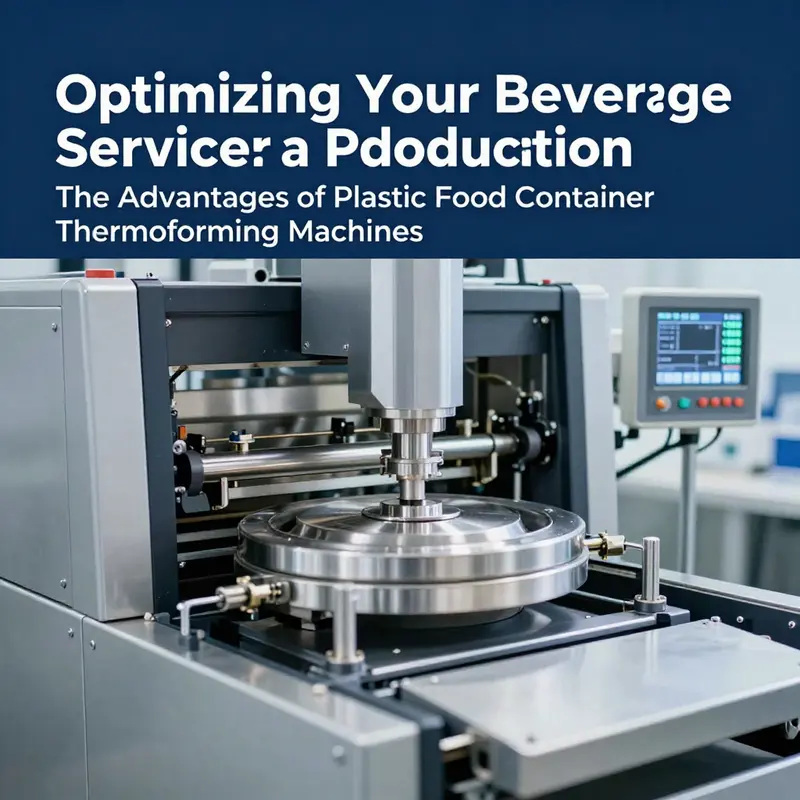
The evolution of plastic food container thermoforming machinery has moved beyond brute force and longer working hours. It now centers on intelligent line design, precise heat management, and the seamless integration of digital intelligence with mechanical reliability. In the current factory landscape, success hinges on the ability to turn raw sheet stock into a family of containers with fast cycle times, minimal waste, strict food-safety compliance, and predictable maintenance costs. This transformation rests on three pillars that define today’s advanced lines: multi-station architectures that standardize and modularize production, heating and cooling innovations that trade raw speed for controlled precision, and Industry 4.0 capabilities that convert data into uptime, quality, and sustainability gains. When viewed together, these factors reveal a cohesive trajectory toward lines that are not only faster, but smarter, more adaptable, and reliably stable in a market that demands both scale and consistency.
Modern multi-station thermoforming machines embody a decisive shift away from monolithic, single-task footprints toward standardized, modular platforms. The design philosophy emphasizes standardized modules that can be swapped, upgraded, or reconfigured to accommodate a broader range of container formats without sacrificing throughput. This modularity translates into shorter changeovers, lower downtime during format changes, and easier maintenance schedules that keep equipment aligned with demand cycles. The control systems at the heart of these lines leverage advanced servo technology, synchronized clamping, drawing, and forming actions, and integrated stackers that optimize the flow from sheet feeding to final product handling. In practice, the result is a production stream that behaves like a continuous, well-orchestrated process rather than a sequence of loosely coupled steps. The gains are not limited to speed alone; tighter tolerances mean reduced scrap, improved surface quality, and better consistency across batches, which is essential for food safety and regulatory compliance.
At the core of this evolution is the relentless refinement of how heat is delivered and removed. Heating uniformity across the sheet remains a fundamental determinant of part quality. In advanced lines, radiant, convection, or hybrid heating schemes are tuned to ensure each position on the sheet reaches the exact temperature required for the intended form. The precision of vacuum forming is closely tied to this heat uniformity; even minor deviations can translate into warping, thinning, or multiple forming defects. New approaches to rapid cooling complete the cycle without sacrificing part integrity. By reengineering cooling channels, employing controlled gas pressurization during part release, and reclaiming energy through recovery loops, manufacturers have achieved shorter cycle times with lower energy per unit produced. The net effect is a capability to sustain high daily volumes without the heat-induced stress that can compromise material properties or surface finish. In tandem, these advancements contribute to material stewardship, as better thermal management reduces waste from failed parts and minimizes the need to reprocess or discard misformed containers.
A second, equally transformative thread is the integration of Industry 4.0 concepts into thermoforming lines. Machines are increasingly equipped with Internet of Things connectivity, enabling real-time monitoring of temperatures, pressures, cycle times, and energy consumption. This data becomes the lifeblood of predictive maintenance programs, which anticipate component wear and scheduling needs before a failure interrupts production. Remote diagnostics allow technicians to identify and guide on-site teams through complex issues without unnecessary trips, dramatically reducing downtime. The digital layer extends beyond monitoring to optimization: digital twin models simulate sheet behavior, heater performance, and vacuum dynamics in a virtual environment before a single physical change is made. Process simulations, supported by high-fidelity models, allow operators to test new sheet materials, thicknesses, or geometry changes virtually, saving material and time during the onboarding of new product lines. This approach improves time-to-market for new container designs and allows factories to respond to shifts in consumer packaging preferences with minimal risk. Food safety is strengthened by the ability to record and audit every parameter across the production run, creating an evidence trail that supports traceability and compliance with stringent standards.
Geographic and market dynamics reinforce the strategic logic of adopting these intelligent lines. In recent years, a cluster of manufacturing activity in certain coastal and inland regions has emerged as a hub for high-capacity, heavy-duty thermoforming systems that produce rigid containers such as trays and clamshell-like designs. Within these ecosystems, providers offer scalable solutions designed for continuous operation, with capacities that span tens of thousands to tens of millions of units per day depending on configuration. The emphasis is not only on raw throughput but also on the robustness and energy efficiency of the line. Durable constructions, precisely engineered servo components, and energy-saving features such as optimized drive trains and heat recuperation align with the broader industry push toward sustainability and lower total cost of ownership. This regional focus also creates a dense network of suppliers and service partners, enabling rapid spares availability, local language support, and faster maintenance response times. While the dominant market presence in some regions is clear, the global demand remains diverse, with manufacturers seeking lines that can accommodate varying formats, from compact multi-pack trays to larger, rigid packaging sets for ready-to-eat meals. The combination of high-volume capability and configurability has become the hallmark of the most competitive offerings in the field.
Choosing a thermoforming partner in this environment requires a disciplined approach to benchmarking and value assessment. Buyers increasingly favor suppliers who can demonstrate modularity, predictable performance, and measurable energy efficiency, all backed by robust after-sales support. A critical criterion is the ability to deliver a line that can adapt to changing demand without sacrificing quality or increasing downtime. The most effective procurement strategies emphasize clusters of innovation, where the supplier ecosystem between machine builders, material suppliers, and automation software developers creates an integrated value chain. In practice, that means evaluating the total cost of ownership over the machine’s life, including maintenance, energy consumption, and the cost of format changes. It also means considering how a line will perform across a product mix, from simple trays to more complex, stackable containers, and how readily the line can incorporate future materials that meet evolving sustainability targets. A rigorous benchmarking process should compare not only capital expenditure but also the cost per thousand units produced, predicted scrap rates, and the downtime risk associated with each configuration. The goal is a balanced decision: a line that can deliver high throughput with minimal waste and with a predictable maintenance cadence, all while enabling rapid adaptation to new designs and regulatory requirements.
The conversation about these machines cannot be separated from the sustainability narrative that currently defines modern packaging. As the industry grapples with resource scarcity, landfill pressures, and the push for recyclable materials, thermoforming lines are being designed from the outset to align with a circular economy. The choice of sheet materials, compatibility with recyclable polymers, and the efficiency of the heating and cooling cycles all influence the environmental footprint of a given line. Manufacturers are increasingly referenced for their ability to optimize energy use—through improved thermal efficiency, heat recovery, and intensified process control—without compromising the integrity of the finished product. In practice, this translates to lower energy bills, reduced emissions, and a smaller overall environmental footprint per container produced. Beyond energy, waste minimization is a practical metric of line performance. The more precise the forming, trimming, and trimming scrap, the less material goes to waste, which not only lowers material costs but also minimizes the environmental burden associated with scrap handling and disposal.
The commercial implications of these developments are sizable. High-throughput lines capable of maintaining tight tolerances across varied formats enable producers to address a broad market spectrum—from quick-service restaurants to premium prepared meals that demand uniformity and presentation. The reliability of automation and the visibility afforded by digital diagnostics empower packaging operations to hit aggressive production schedules with confidence. For buyers, the promise is straightforward: a line that can mix formats with minimal downtime, deliver consistent product quality, and adapt to ongoing shifts in consumer packaging preferences. The combination of impressive cycle times, precise heat management, and IoT-enabled maintenance reduces the risk of unplanned stoppages, which is a decisive factor in the financial model of high-volume packaging plants. At the same time, the ability to simulate processes digitally before committing to physical changes reduces the cost of experimentation, enabling teams to explore new container geometries and materials with a controlled, data-backed approach. In this environment, the line itself becomes a dynamic asset rather than a static machine, continually tuned to deliver efficiency gains, waste reductions, and improved product consistency.
For practitioners looking to connect theory with practice, a concrete example of how these principles play out is the growing emphasis on takeout and ready-to-eat packaging as a steady demand driver. The production lines that succeed in this space are deliberate about form, function, and food safety. They optimize lid-sealing integrity, edge quality, and seam stability under a variety of operating conditions, while also supporting fast, reliable stack-and-pack workflows for downstream packaging lines. The result is a set of containers that not only meet the practical needs of food service and retail distribution but also align with sustainability commitments through efficient material use and recyclability. To illustrate how these capabilities translate into real-world packaging options, consider the increasingly common demand for high-quality, eco-friendly takeout solutions that combine durability with responsible disposal. This demand creates an opportunity for a full-stack approach to thermoforming, where the machine, the tooling, and the process software are synchronized to deliver consistent results at scale. For readers who want to explore practical packaging options in this space, one representative example of the kind of packaging products that align with high-volume thermoforming capabilities can be found at this resource: eco-friendly disposable 3-compartment food-grade packaging box for fast food high-quality takeout boxes for fried chicken french fries packaging.
As the sector moves forward, the industry is reminded that the most advanced thermoforming lines will be judged not merely on their peak speed but on their stable, repeatable performance across a full lifecycle. A line that can maintain tight tolerances with a diverse product mix, while delivering consistent surface quality and minimizing scrap, stands at the heart of profitable packaging manufacturing. When combined with digital twins and predictive maintenance, these lines become engines of continuous improvement. They empower operators to test new container geometries in a safe, simulated environment, shorten the time from concept to commercial production, and reduce the risk that a new design will fail to achieve expected performance in the factory setting. The net effect is a manufacturing ecosystem where speed and precision reinforce each other, where automation and human expertise complement one another, and where a factory can confidently scale to meet evolving packaging demands.
External resource for further reading on automation and sustainability in thermoforming machinery: Plastics News – Innovations in Automation and Sustainability. https://www.plasticsnews.com/article/20231018/thermoforming-machines-see-innovations-in-automation-and-sustainability
Rethinking Shape and Speed in Thermoforming Packaging
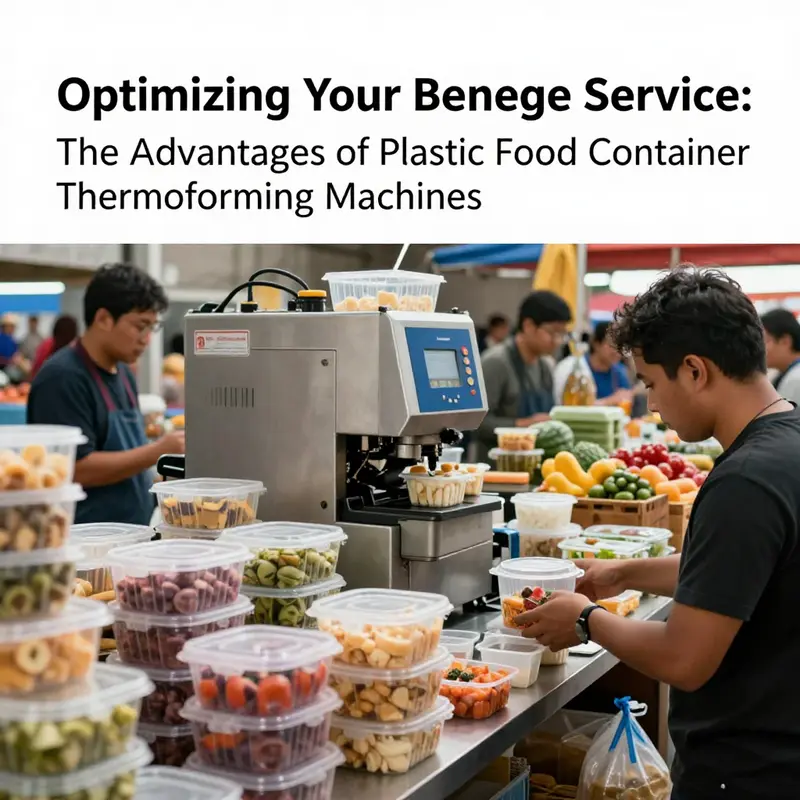
Across the global food economy, thermoforming machines power a shift toward lighter, safer, and more economical packaging. This chapter explains how market demand for convenience and safety pushes manufacturers to invest in higher throughputs, tighter tolerances, and smarter automation. The result is a packaging ecosystem where form is a strategic asset in supply chains that run lean, respond quickly to demand, and reduce waste at every stage.
The discussion covers materials, process control, and the role of digital tooling in driving consistency and efficiency. It also touches on environmental considerations, workforce implications, and the economics of scale in modern thermoforming lines.
Final thoughts
Understanding the comprehensive capabilities of plastic food container thermoforming machines reveals their essential role in meeting the packaging demands of the food service industry. With advancements in manufacturing techniques and ongoing technological innovations, these machines are poised to transform how beverages and food are presented and stored. For bubble tea shops, restaurants, event planners, and catering services, this knowledge is a crucial asset in crafting a successful strategy for packaging that prioritizes efficiency and sustainability. As these trends continue to evolve, so too will the opportunities for businesses to thrive in a highly competitive environment.