
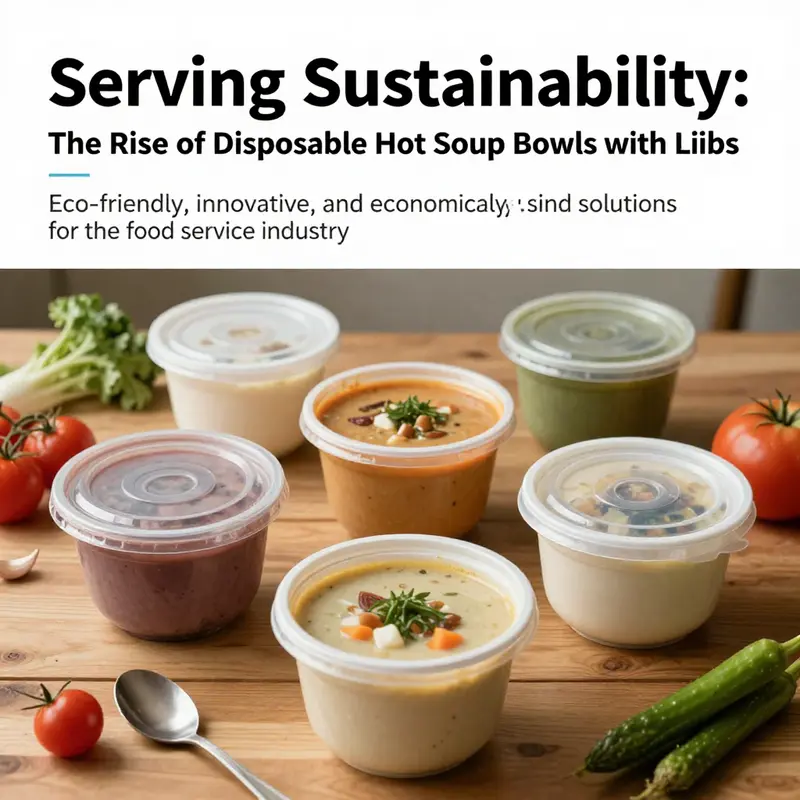
Disposable hot soup bowls with lids have become a preferred choice across various sectors including bubble tea shops, restaurants, and catering services. Their design not only enhances customer experience by maintaining the heat and freshness of hot soups but also reflects a growing commitment to sustainability. In this exploration, we will delve into the environmental benefits that make these bowls a responsible choice, the technological innovations ensuring safety and functionality, and the economic impact that these products have on the food service industry. The synergy of these elements showcases how disposable hot soup bowls with lids are reshaping food delivery and service standards, making them indispensable for modern food providers.
Closing the Loop: Environmental Benefits and Responsible Design of Disposable Hot Soup Bowls with Lids
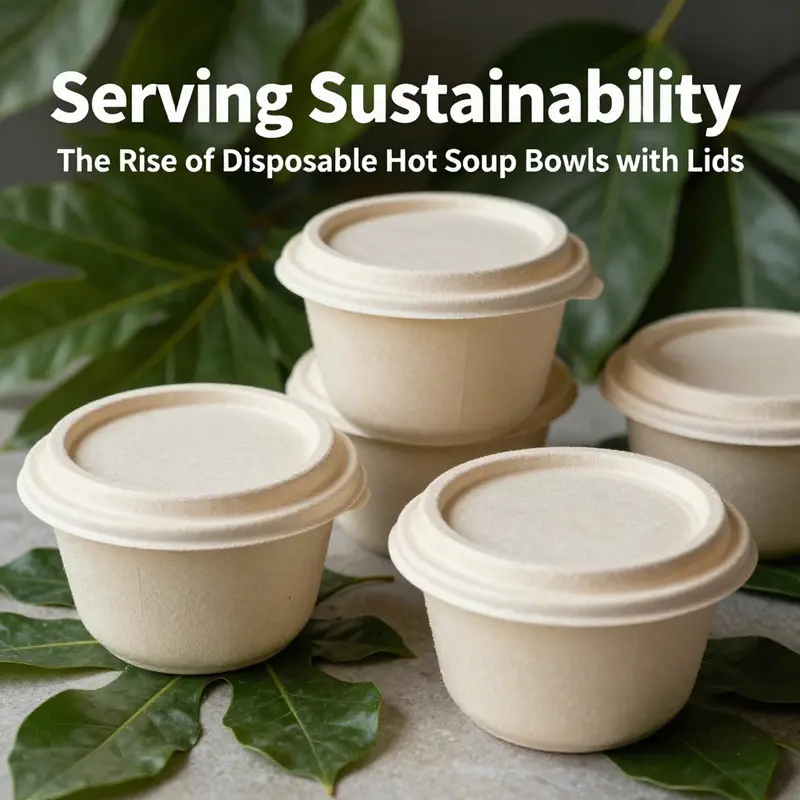
In a world where grab-and-go meals are part of everyday life, disposable hot soup bowls with lids have earned their place at the table of sustainable packaging. They are not merely vessels for warmth and nourishment; when thoughtfully designed and responsibly disposed of, they become a link in a circular approach to waste, one that honors both convenience and the planet. The environmental dialogue around these containers often centers on materials and end-of-life outcomes. Yet the most meaningful narratives emerge when we examine how material choices, manufacturing practices, and consumer behavior intersect to determine a bowl’s true ecological footprint. In this sense, the environmental benefits of disposable hot soup bowls with lids are best understood as a spectrum that spans biodegradability, waste reduction, design for durability, and the alignment of consumer expectations with sustainable disposal pathways. The story begins with the material itself. Some of the most promising options are plant-based biofabrics such as those derived from cornstarch or bagasse fiber, which originate from renewable crops and agricultural byproducts. These materials are crafted to break down under composting conditions, offering a potential exit ramp from landfills that is cleaner and more efficient than traditional plastics. When composting is conducted in facilities equipped to handle these inputs, the journey from bowl to nutrient-rich compost can complete within a defined window, typically on the order of several weeks to a few months depending on moisture, aeration, and microbial activity. In practice, this means a bowl used for a single meal can, if disposed of properly, be returned to the soil as a beneficial amendment rather than lingering as waste for years. It is this closed-loop possibility that gives compostable and biodegradable bowls their most compelling environmental value. The estimates accompanying compostable options frequently cite substantial landfill waste reductions compared with conventional packaging. In studies and industry assessments, choosing compostable alternatives can result in significantly lower long-term waste generation, with reductions reaching a large proportion when facilities for industrial composting are accessible and utilized. In many regions, when readers consider the lifecycle of a bowl—from raw material extraction through production, use, and disposal—the most meaningful gains appear not only in the material’s end-of-life fate but also in how quickly and efficiently that fate can be realized. The concept of waste reduction is not limited to the final disposal step. It begins upstream, in the way materials are sourced and manufactured. Plant-based fibers, for instance, are typically derived from renewable sources with lower fossil-energy footprints than petroleum-based plastics. The production processes, while not devoid of environmental impact, can be designed to optimize water use and energy efficiency. When these processes are coupled with responsible supply chains and transparency about sourcing, the overall environmental profile improves appreciably. In practice, the sum of these benefits becomes most tangible when the packaging ecosystem supports end-of-life pathways that align with local waste management capabilities. For many communities, this means robust industrial composting infrastructure or highly capable recycling streams that can separate coatings and fibers in a way that preserves material integrity. A key factor in the environmental calculus of disposable hot soup bowls with lids is the design of the lid itself. A snugly fitting lid with raised edges can dramatically improve stability and reduce spills during transport, which in turn lowers waste from leaks and contamination—problems that often complicate recycling or composting and can lead to more waste if not managed properly. Heat resistance is another essential design attribute. Bowls that can withstand reheating in a microwave without warping or releasing unwanted substances enable customers to reuse containers for multiple portions or to enjoy a hot meal without transferring to another dish. This functional durability translates into less waste from inappropriate disposal or from containers that fail before they have fulfilled their intended use. At a broader level, the environmental benefits accrue when these design features harmonize with the disposal realities of the user base. If a significant portion of customers have access to industrial composting, then compostable coatings and natural fibers can be optimized to degrade cleanly, without leaving persistent residues. If, instead, the municipal system relies on recycling, the packaging must be engineered to minimize contamination and to maintain compatibility with recycling streams. In many cases, the most responsible path combines both avenues: packaging that is certified for compostability in industrial facilities and materials that can still be recycled in mixed streams where appropriate. This dual-path approach requires clear labeling and consumer education, so users understand how to dispose of bowls and lids correctly. Labels that indicate industrial compostability or home compostability, along with guidance about local facilities, empower consumers to act in ways that maximize environmental benefits. It is here that the potential of standardized certifications becomes apparent. When packaging demonstrates adherence to widely recognized biobased and compostable standards, businesses gain a credible signal of performance and end-of-life behavior. Certifications serve as a bridge between product design and consumer action, reducing guesswork and enabling more predictable environmental outcomes across diverse markets. To the business operator, these certifications are not mere formalities; they are a pathway to align packaging choices with consumer expectations for sustainability, a factor that increasingly influences purchasing decisions and brand loyalty. Yet even with strong materials and robust certifications, the chain is only as strong as the disposal habits of end users. Consumer education plays a pivotal role in translating the environmental promise of these bowls into real-world outcomes. Clear guidance about composting facilities, acceptance criteria for coatings, and the differences between industrial composting and home composting can shift behavior in meaningful ways. When customers understand that a bowl’s compostability depends on access to appropriate facilities, they are more likely to participate in programs that truly close the loop. Businesses can support this by partnering with waste haulers, providing in-store education, and offering disposal instructions on the packaging itself. The ecological arithmetic becomes even more favorable when a business embeds sustainability into its procurement and operations. A practical approach is to source bowls that are compostable or biodegradable and to pair them with lids and inner coatings that align with end-of-life streams. Another dimension to consider is the potential for reuse in certain contexts. While the core promise of disposables is convenience and speed, there are scenarios where reused containers can be integrated into service models that emphasize minimal waste and controlled handling. For example, in catered events or institutional settings, collecting and safely reusing containers can lower overall demand for new packaging while preserving sanitary standards. In all these discussions, it is crucial to avoid framing environmental benefits as a simple dichotomy between “good” and “bad” packaging. The reality is more nuanced and depends on where the product is produced, how it is used, and what happens after the meal is enjoyed. A bowl that is biodegradable but ends up in a landfill with poor oxygenation and moisture may not reach its intended end state. Conversely, a bowl that is designed for composting but ends up in a well-managed industrial facility may perform exceptionally well. The net environmental impact thus hinges on the alignment of product design with local waste management realities and on consumer behavior that supports proper disposal. To illustrate how these pieces come together in everyday practice, consider the catering and retail environments that commonly rely on disposable bowls with lids. In many cases, the choice of material—whether plant-based fibers, coated papers, or other compostable composites—reflects a careful balancing act between maintaining heat and preventing leaks, while also preserving the possibility of end-of-life processing. The choice to move away from non-renewable plastics toward renewable, compostable options is not a single-scale decision. It is a systemic shift that influences supplier networks, manufacturing energy use, and post-use outcomes. The ripple effect includes better resource stewardship throughout the supply chain, from agricultural inputs to facility operations that process end-of-life packaging. In this sense, environmental benefits are best understood as a composite of improvements across several axes: reduced reliance on fossil resources, improved end-of-life pathways, minimized waste leakage into landfills, and enhanced consumer engagement with sustainable practices. This integrated view helps explain why compostable and biodegradable bowl options have gained traction beyond niche markets and are increasingly seen as viable, scalable components of responsible takeout and catering programs. Accessibility is a critical piece of this puzzle. When communities have access to industrial composting, the environmental advantages of these bowls become more robust. Without such infrastructure, the same materials may not realize their full potential. This reality underscores the importance of public-private partnerships and municipal investment in waste management that can accommodate diverse packaging inputs. It also highlights the value of transparent environmental reporting by manufacturers and retailers, enabling customers to make informed decisions based on the actual performance of packaging in their local context. In the move toward greener servingware, the visual appeal of a well-designed bowl can also carry environmental meaning. A product that communicates its compostable credentials through clear labeling, visible certifications, and straightforward disposal instructions helps to normalize sustainable behavior. The everyday act of tossing a soup bowl into the correct waste stream becomes a small, repeated commitment to a larger ecological project. For businesses, the up-front decision to select materials with favorable end-of-life attributes can pay dividends in brand trust, customer satisfaction, and regulatory alignment. Regulatory landscapes are evolving as well, with increased emphasis on biobased content, compostability standards, and the traceability of packaging materials. Companies that anticipate these shifts and invest in certifications and clear labeling position themselves to perform well as requirements tighten. They gain the flexibility to adapt to regional variations in waste-management capabilities while preserving a consistent sustainability narrative across markets. The environmental benefits of disposable hot soup bowls with lids are, at their best, a confluence of thoughtful material science, responsible manufacturing, clear consumer communication, and supportive waste-management ecosystems. By approaching packaging as a system rather than a product, stakeholders can maximize the ecological gains of disposables without sacrificing the operational advantages that customers expect. This approach also preserves room for innovation. As new fibers, coatings, and recycling technologies emerge, the landscape will permit better performance, lower energy footprints, and more efficient end-of-life processing. The practical takeaway for businesses is to pursue packaging solutions that are genuinely compatible with local disposal systems, backed by credible certifications, and accompanied by transparent disposal guidance for customers. It is not enough to claim eco-friendliness; the claim must be verifiable and actionable within the user’s real-world context. An effective strategy weaves together material choices, design features, consumer education, and a robust waste-management plan. A simple, tastier, and more sustainable meal is the reward when these elements align. For readers seeking a practical reference point within the broader ecosystem of compostable, paper-based, and plant-fiber takeout ware, a representative option in the market demonstrates the feasibility and appeal of these approaches: kraft paper soup containers with lids. This category exemplifies how a traditional material—paper—can be upgraded with renewable fibers and compostable coatings to balance heat retention, leak resistance, and end-of-life flexibility. For a closer look at a contemporary lineup and its disposal considerations, see this practical example: kraft paper soup containers with lids. This link leads to a real-world product category that publishers, caterers, and consumers can explore to understand how design choices translate into environmental outcomes. The essential point is that environmental benefits hinge on the full chain—from feedstock and processing to end-of-life disposition and user participation. When the system is designed with intention and backed by credible certifications, disposable bowls with lids can materially reduce waste, support circular resource use, and still meet the practical demands of modern food service. In advancing this agenda, the industry benefits from ongoing research into smarter coatings, more efficient composting facilities, and clearer consumer messaging that reduces contamination and increases recovery rates. The goal is not to vilify disposables but to elevate them as responsible components of a broader sustainability strategy. As this chapter closes, the thread that remains central is choice: the decision to opt for materials that offer compostability, the willingness to invest in end-of-life infrastructure, and the commitment to educate customers about proper disposal. When these elements align, disposable hot soup bowls with lids become not just a convenient packaging option but a meaningful contributor to a cleaner, more resilient food system. External resource: https://www.amazon.co.uk/dp/B0C3KZQ5XG
Heat, Seal, and Sustain: Innovations Redefining Disposable Hot Soup Bowls with Lids
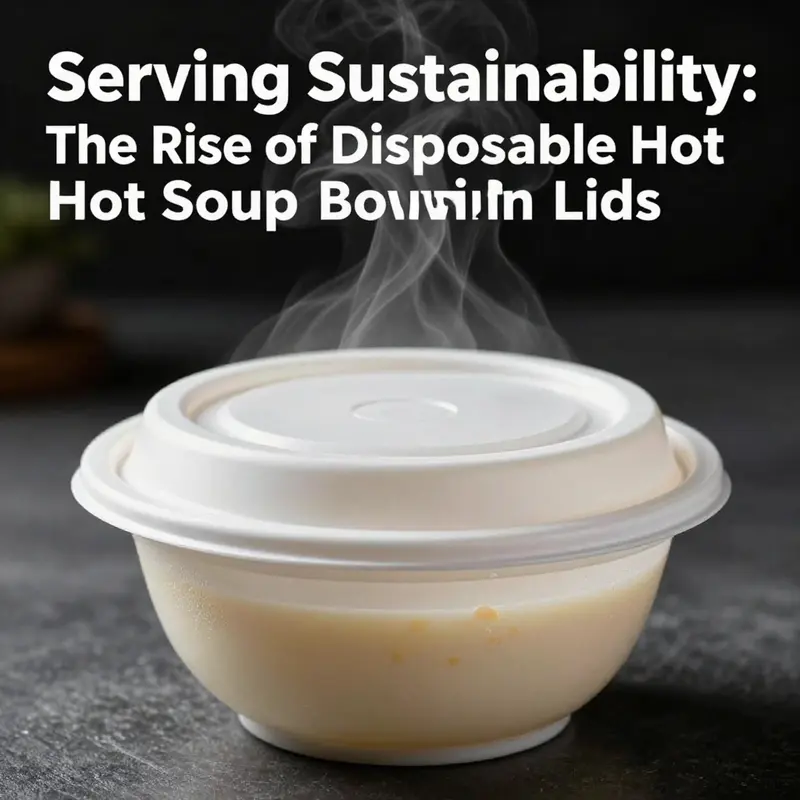
In the realm of food service, the humble disposable hot soup bowl with a lid has evolved from a simple containment vessel into a carefully engineered platform for heat management, safety, and sustainability. A closer look at the current wave of innovations reveals a field where material science, ergonomic design, and environmental responsibility intersect to transform how hot soups travel from kettle to customer without compromising texture, aroma, or the planet’s resources. At the core of this transformation is an ongoing refinement of how heat is preserved and leaks are prevented. Advanced coating technologies on paper-based bowls have moved beyond mere grease resistance toward multi-functional barriers that can tolerate the rigors of high temperatures while remaining compatible with composting or recycling streams. Modern coatings are engineered to resist liquid penetration and to sustain integrity under heat, yet they are formulated with the goal of reducing environmental impact. These coatings often blend bio-based polymers with traditional barrier materials to achieve a fine balance: high heat resistance, robust liquid barriers, and a disposal profile that aligns with increasingly stringent sustainability standards. This means a bowl can hold a steaming soup safely for transport and brief storage, while still being compatible with composting programs under appropriate conditions. The practical upshot is a more forgiving user experience for both workers and consumers. For servers, the risk of leakage during delivery, pickup, or movement down crowded dining aisles decreases markedly as the barrier properties improve. For customers, the experience is more reassuring: a confident lift, a stable lid, and a container that holds its shape even as steam builds and the surface tension of a hot broth ripples toward the rim. The innovations in coatings also address the broader trade-offs that haunt many packaging decisions: performance versus end-of-life options. By designing coatings that degrade more predictably in composting or that are compatible with recycling streams when disposed of as paper, manufacturers are reducing the environmental tax of heat-ready meals. This is not merely a material improvement; it is a signal of a broader shift toward packaging ecosystems where performance and sustainability are not mutually exclusive but mutually reinforcing. Integrated into this shift is a more nuanced approach to lid design, which moves beyond the flat, disposable cap to intelligent, integrated solutions that elevate both safety and user convenience. Lid design has progressed from a mere cover to a sealed and sometimes resealable component that locks in heat, prevents spills, and manages steam in controlled ways. Snap-fit closures and resealable tabs have become standard features in newer designs, offering a practical barrier against mishaps during transit and handling. The snap mechanism provides a tactile assurance that the container won’t open mid-journey, while a resealable tab allows a consumer to partially reclose the lid to regulate heat release during a meal at a park bench or subway stop. Venting features further enhance the user experience by providing a deliberate release path for steam. These vents are engineered to vent safely without compromising the seal’s primary function, reducing the risk of scalding while maintaining a barrier against splashes and drips. Vent engineering often involves tuned micro-vents that open only when pressure builds beyond a safe threshold, a design concept that marries mechanical reliability with an intuitive user experience. In practice, this means a bowl can be spooned, slurped, or sipped with less hazard to the hands or the surrounding environment, even when the soup is at its hottest. The material choices that support these lid innovations are not incidental. They are part of a broader strategy that includes the use of FSC-certified paper stock and recycled fibers to create a robust, heat-resistant structure that still respects the end-of-life options consumers expect. Manufacturers are increasingly turning to plant-based polymers, such as polylactic acid (PLA) derivatives, as alternatives or supplements to traditional plastics. These bio-based polymers can improve compostability in industrial facilities, helping to align packaging with the circular economy without sacrificing performance. In some cases, fully compostable bowls are designed to break down under industrial composting conditions, which underscores the difference between home compostability and industrial compostability. Understanding these distinctions is crucial for both producers and operators who must navigate local waste streams and municipal guidelines. A chapter of transformation within this landscape is the rise of customization and branding through digital printing technologies. The ability to apply high-resolution, full-color graphics directly onto bowls and lids offers brands a means to communicate nutritional information, brand identity, or promotional messages at the point of service. For a business that wants its packaging to reflect its values, digital printing makes it possible to carry a consistent visual language across a full line of products, from bowls to lids, while preserving legibility and color fidelity even on porous substrates. This capability is not merely cosmetic; it supports consumer recognition and trust, which in turn can influence purchasing decisions in crowded foodservice environments. The engineering challenges that accompany these innovations are non-trivial. Designers must ensure that heat retention is maintained without compromising safety or regulatory compliance. A bowl that holds heat effectively must be evaluated for temperature tolerance across a range of conditions, including the frequent reheating of soups in microwave ovens. Materials must not warp, crack, or release undesirable odors under repeated heating cycles, and the entire system must meet the safety standards set by food-contact regulations. In addition, the packaging must avoid the migration of additives into the food, a concern addressed by adherence to FDA or EU food-contact material guidelines. The convergence of performance and compliance is not an afterthought; it is a foundational criterion that guides material selection, coating formulation, and the geometry of the bowl and lid. The microstructure of the coating, the thickness of the seal, and the tolerances of the lid’s fit all play a role in ensuring that a hot soup can be carried from kitchen to consumer without the risk of leaks or burns. In this context, the industry sees coatings, lids, materials, and processes not as isolated innovations but as interdependent elements of a system. A change in the coating, for instance, can influence how a lid seals or vents; conversely, a more sophisticated lid design can enable new coating architectures to deliver higher heat resistance. The result is a design space that rewards cross-disciplinary collaboration among materials scientists, packaging engineers, food-safety specialists, and operations managers. This collaborative approach has practical implications for large-scale operators such as catering companies, school districts, and fast-service chains. The demand for consistent performance across thousands of meals each day drives the need for standardized specification sets that can be reliably reproduced in manufacturing and supply chains. It also encourages a move toward modular packaging strategies, where a core bowl design supports multiple lid configurations, coatings, and branding options. The potential benefits of these innovations extend beyond convenience and brand perception. They include reductions in waste, improved energy efficiency in the supply chain, and enhanced safety for workers who handle hot liquids during packing, loading, and service. A more heat-stable bowl reduces the likelihood of spills during rapid transfers and during crowded events, lowering the risk of burns and accidents. Similarly, improved barrier properties can reduce the need for additional protective layers or secondary containment, which translates into material savings and simpler waste management. Consumer acceptance of these packaging solutions hinges on clear messaging about recyclability or compostability, which in turn requires alignment with local waste infrastructure. The industry is increasingly embracing labels and certifications that communicate compostability or recyclability, as well as guidance on whether the product should be disposed of in a composting facility or a typical curbside bin. The evolving landscape invites operators to ask the right questions: Will the chosen bowl and lid pair work within our region’s waste stream? Can the packaging withstand the temperature requirements of our most popular soups? Is there a reliable source of supply that can ensure consistency during peak seasons or large-scale events? And perhaps most importantly, how does the packaging support our sustainability commitments while preserving the customer experience we strive to deliver? The answers lie in a disciplined design process that begins with material science and ends with consumer education. A practical touchpoint for readers seeking a concrete example of cross-functional deployment is a packaging ecosystem that links the bowl and lid with related takeout containers and accessories. A cohesive system can optimize the packaging suite for a particular application, whether it is a hot-soup lunch service at a university campus, a hospital dietary program, or a casual dining concept that emphasizes speed and reliability. For instance, a three-compartment or multi-compartment takeout solution can align with menus that pair soups with side dishes without requiring separate containers, reducing cleanup and waste. The conversation about innovations in disposable hot soup bowls with lids remains open-ended, but the trajectory is clear: better materials, smarter lid designs, and more transparent communication about disposal create packaging that performs under heat while partnering with environmental goals. The conversation also touches on broader regulatory implications and consumer expectations. As food-contact standards continue to evolve, manufacturers are increasingly aligned with both the letter and spirit of those regulations, ensuring that components in contact with hot liquids do not introduce hazards or unwanted flavors. At the same time, consumers are demanding packaging that respects the planet through compostable or recyclable pathways and that clearly explains how to dispose of it. In parallel, improvements in digital printing enable brands to tell their stories through packaging—storytelling that communicates sustainability, sourcing, and performance. This is not merely a marketing enhancement; it is a mechanism for building trust. As materials science advances, the boundary between packaging and food becomes more permeable—more of the packaging design process borrows from food science to optimize barrier performance and heat management while respecting regulatory constraints. The result is a more resilient, more environmentally aware, and more customer-centric category. For those who want to explore the broader packaging ecosystem, related examples in sustainable packaging platforms show how innovations in takeout packaging can propagate into bowls and lids, reinforcing a shared platform approach. The integrated lens helps operators see beyond a single component to an interconnected system that supports efficient service, consistent quality, and responsible disposal. To connect these ideas to practical realities, consider the opportunity for operators to reference related packaging options that share a common philosophy of sustainability and usability. A nearby category of eco-friendly, compostable, or recyclable packaging solutions offers a spectrum of choices that can harmonize with hot soup bowls and lids, enabling a cohesive brand experience across food service channels. This holistic view reinforces the notion that the evolution of disposable hot soup bowls with lids is not about a single breakthrough but about an ecosystem of innovations that together elevate heat retention, safety, branding, and end-of-life outcomes. For further reading on the regulatory and safety dimensions that underpin these developments, see the FDA’s guidance on food contact materials [FDA guidance on food contact materials]. Additionally, to explore broader packaging ecosystems and related solutions, consider this related resource: eco-friendly-disposable-3-compartment-food-grade-packaging-box-for-fast-food-high-quality-takeout-boxes-for-fried-chicken-french-fries-packaging. This internal link provides a practical example of how brands extend the same sustainability and design principles across a broader packaging suite, emphasizing modularity and consistency in the customer experience. In sum, the chapter on technological innovations in disposable hot soup bowls with lids reveals a dynamic field where heat management, spill prevention, material stewardship, and branding converge. The emerging designs demonstrate that the future of hot-soup packaging lies in systems-thinking—where coatings, lids, materials, and digital printing collaborate to deliver safe, convenient, and environmentally responsible meals to a growing and increasingly discerning population of consumers. As the industry continues to push boundaries, readers will see more bowls that reheat reliably in-container, lids that vent without compromising isolation, and materials that break down in controlled composting settings while still supporting rapid production and scalable distribution. The result is packaging that does more with less—protecting the warmth and aroma of soup, reducing waste, and enabling brands to communicate their values with clarity at the moment a customer reaches for the lid.
null
null
Final thoughts
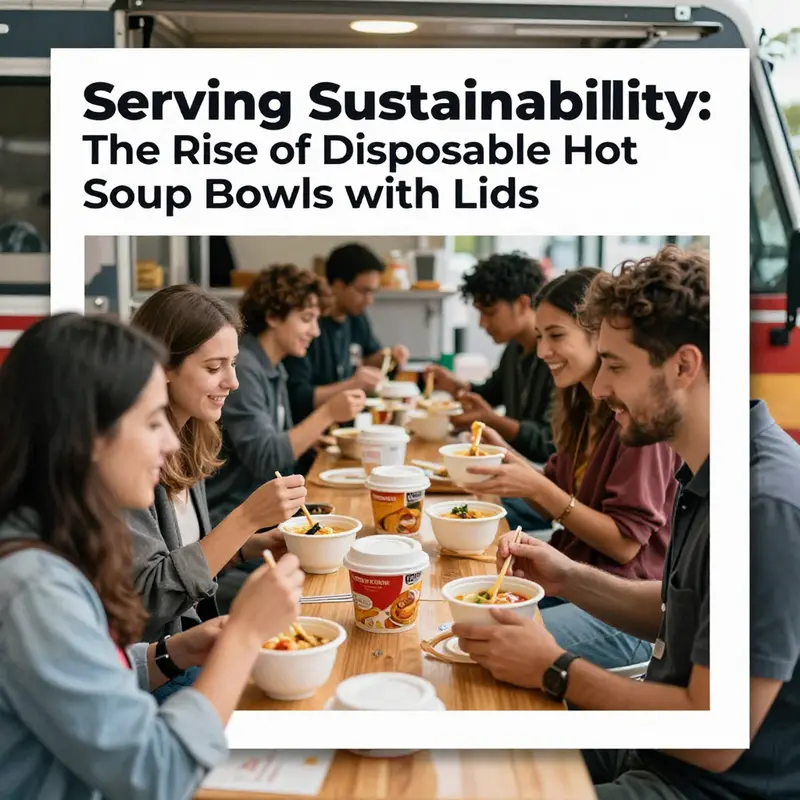
The evolution of disposable hot soup bowls with lids exemplifies a significant step forward in catering to modern consumer demands for convenience, safety, and environmental responsibility. By recognizing and harnessing their environmental benefits, leveraging technological innovations, and acknowledging their economic impact, food service providers are well-positioned to improve their operations and appeal to a conscientious customer base. In embracing these products, bubble tea shops, restaurants, food trucks, catering services, and event planners can align their offerings with contemporary values while ensuring excellent service delivery.