
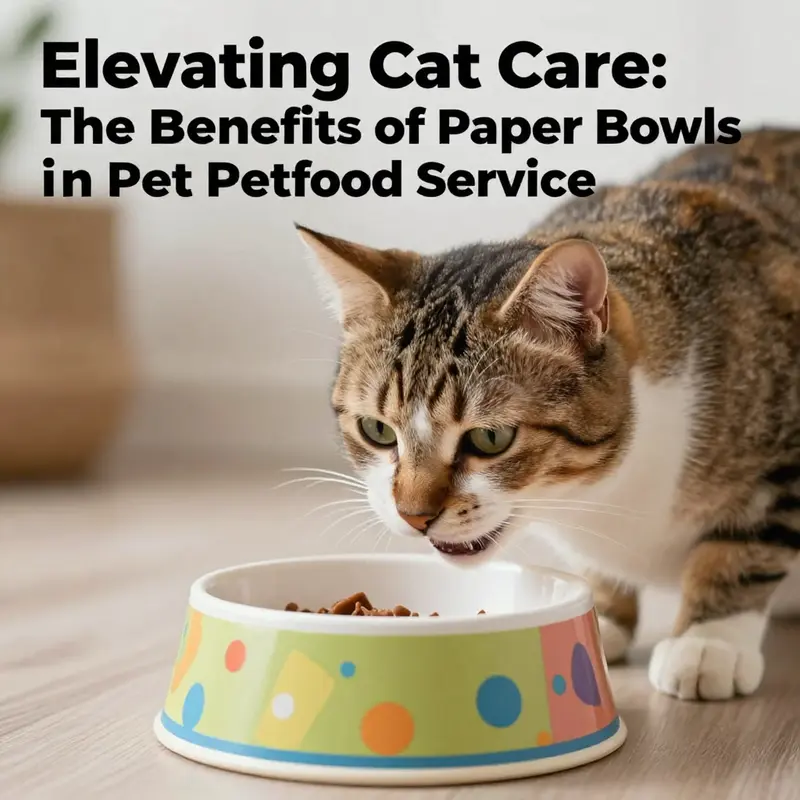
As pet ownership grows, so does the demand for convenient and eco-friendly feeding solutions. Disposable paper bowls specifically designed for cat food present a compelling option for businesses catering to pet owners. These bowls not only promote hygiene and ease of use but also align with increasing environmental consciousness among consumers. In this exploration, we will delve into the advantages of using paper bowls for cat food, their disposability and hygiene benefits, suitability for different types of cat food, and a comparative analysis with traditional bowls. We’ll also examine the positive environmental impact of these innovative products, making them a wise choice for food service providers.
Rethinking Convenience: The Realities of Paper Bowls for a Cat’s Diet
Many cat guardians find disposable paper bowls appealing for clean surfaces and quick cleanup. However, the evidence surrounding paper bowls as a primary feeding vessel for cats points to several drawbacks, especially for wet foods or larger portions. Paper bowls are generally unstable, prone to tipping or leaking when moistened, and can compromise mealtimes in households with multiple cats or in high-traffic settings such as shelters and clinics.
Over time, moisture weakens the sides, the base loses rigidity, and the vessel’s form deteriorates more quickly than ceramic or metal alternatives. This is not merely a nuisance—it’s a pattern that can waste food, require repeated cleaning, and raise stress for pets and humans. A bowl that collapses or leaks undermines a calm feeding routine, particularly for cats recovering from surgery or with medical restrictions.
From a safety perspective, the material properties create additional concerns. While plastic bowls bring known challenges like heat degradation and chemical leaching, paper offers even less resilience under typical mealtime conditions. The fibers that make paper light and disposable are not engineered for sustained contact with moisture, fats, and heat. When wet food is involved, moisture accelerates weakening, and seepage or collapse remains a real risk. The consequence is more than a mess; it is a hygiene concern in clinics, shelters, or busy homes where thorough cleaning and rapid turnover matter.
Environmentally, paper bowls are marketed as eco-friendly, but compostability hinges on local waste management. In homes without industrial composting, they often end up in landfills, and some compostable variants require special handling to avoid contamination with pet waste. So while paper can fit into sustainable narratives, translating that into meaningful gains depends on local infrastructure and disposal practices.
Practical implications suggest a cautious approach: for regular feeding, durable, easy-to-clean options retain an edge. Stainless steel or ceramic bowls—especially with elevated stands that promote healthy posture—offer reliability and long-term value. Paper can still play a temporary role in fast-paced contexts like travel, intake stations, or when a temporary replacement is needed, provided it is used with liners to preserve cleanliness and transferred to a durable vessel for ongoing daily meals. Many clinics and shelters use liners to bridge hygiene and practicality, preserving the underlying vessel while keeping exposure to moisture low.
The takeaway is clear: paper should not replace purpose-built cat bowls. Use liners with reusable bowls when possible, reserve paper for short-term, context-limited use, and design feeding routines around each cat’s comfort and health. If you explore packaging options, disposable kraft paper bowls with lids can illustrate how liners and compatibility with other containment solutions operate in practice without becoming the primary feeding vessel. In short, balance hygiene and practicality with durability, and tailor feeding routines to the cat, the space, and the resources available. External reference: For further reading on eco-friendly packaging solutions and pet care, see Eco-friendly takeout boxes and related packaging options at https://ecocupbowl.com/product/eco-friendly-takeout-boxes-for-food-packaging-stylish-food-containers-safe-microwave-craft-paper-lunch-boxes-leak-grease-resistant/.
Between Convenience and Caution: Disposability, Hygiene, and Real-World Use of Paper Bowls for Cat Food
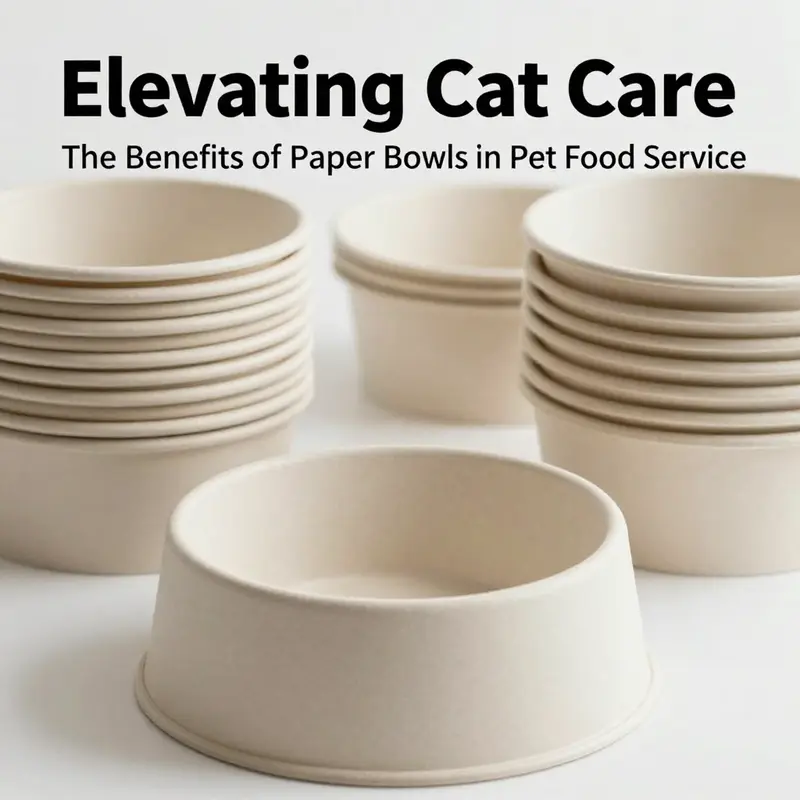
Paper bowls for cat food often begin as a quick, tidy solution in a busy kitchen or a transient feeding moment. Their appeal rests on two simple truths: they are convenient and they can seem more hygienic when a single-use approach is desired. For households juggling multiple cats, during travel, or in clinics and shelters where daily washing is impractical, disposable paper bowls appear to offer a straightforward way to reduce surface contamination and simplify routines. Yet beneath that surface convenience lies a complex set of considerations that affect safety, animal health, and environmental impact. The chapter of disposability and hygiene demands a careful look at what these bowls are made from, how they behave when faced with cat food, and how pet owners can navigate the line between opportunistic use and responsible care. In practice, the choice of material matters as much as the act of use, because cats are not small humans, and their digestive systems respond to substances and residues differently. A key takeaway from recent regulatory and industry-focused findings is that single-use does not automatically equate to safety, especially when the interior surface of a bowl may come into direct contact with moisture, fats, and proteins that can carry trace chemicals from production to plate. The reality is this: paper bowls designed for general food use are not intrinsically superior for cats simply because they are disposable. Durability is a major constraint. Cat foods, particularly wet formulations, introduce moisture and acidity that can begin to soften or weaken a thin paper structure. In many cases, a bowl may begin to degrade during a feeding session, risking leakage or collapsing in ways that complicate mealtime and create a mess that both owners and cats dislike. Beyond the structural questions, the chemical content of some disposable bowls deserves scrutiny. A broad category of paper bowls used in food service carries coatings, inks, or additives intended to support shelf life, grease resistance, or aesthetic appeal. When those elements are not food-grade for animal consumption, there is potential for leaching, especially with the heightened acidity and enzyme-rich environment of some cat foods. The differential risk becomes particularly salient for cats, whose digestive tracts and microbiomes can be more sensitive to such exposures. This is not speculation but a caution raised by regulatory assessments that highlight how even seemingly clean surfaces can harbor residues from manufacturing processes. A report from a national regulatory body in early 2026 synthesized findings from dozens of food-contact paper containers and flagged a subset that failed critical safety checks. Within that subset, issues such as fluorescence, sensory defects, and poor pressure resistance appeared with enough frequency to warrant attention for any use case involving animals. More troubling, certain tested bowls contained industrial inks that could potentially leach into food. In the context of a cat’s heightened sensitivity to ingested chemicals, these signals matter. They remind caregivers that a clean-looking bowl may still pose a distant risk if the interior has been exposed to non-food-grade coatings or inks at any point of manufacture. The risk calculus becomes even more nuanced when considering the way cats eat. Some cats are methodical, others are impulsive, and a few may chew or lick surfaces during or after feeding. The potential for residual chemicals or microorganisms to transfer to a cat through a seemingly pristine bowl underscores why hygiene in this realm is not only about avoiding cross-contamination across meals but also about avoiding the introduction of unfamiliar substances into the animal’s occasional, though crucial, daily nourishment. The regulatory lens emphasizes that the hygiene advantage of disposability is conditional. If a bowl is truly safe for food contact and lacks any interior ink or coating, the one-time-use benefit can still contribute to a cleaner feeding environment—provided the product meets strict food-safety standards and is certified accordingly. If such certification is absent or uncertain, the naive assumption of risk-free use should be avoided. In other words, the hygiene argument rests on engineering and governance as much as on the act of tossing a paper vessel after a meal. Given these realities, many households find a pragmatic middle ground. For daily, long-term feeding, durable options—stainless steel or ceramic bowls—tend to perform better. These materials resist moisture and acids, are more amenable to thorough cleaning, and present fewer opportunities for microbe harboring or odorous retention. They also offer practical design features that support healthier eating postures for cats, such as non-slip bases that prevent sliding during meals and slight tilts designed to reduce swallowing air. In veterinary practice, these design considerations can matter more than the casual observer might expect. For instance, cats recovering from surgery or wearing protective cones may experience discomfort that reduces appetite, and every small improvement in the feeding setup can influence recovery. A veterinarian’s observation emphasizes that even mild discomfort can cascade into reduced intake and slower healing. Taste, texture, and mealtime comfort are not merely about flavor; they are about the physical experience of eating. This is why many clinics, shelters, and mobile pet services lean toward reusable bowls and easy-clean surfaces, while keeping disposable liners or temporary paper components for situations that demand minimal contact with shared bowls or quick turnover. When paper is used, the best practice centers on specificity and restraint. If a paper bowl must be employed in a temporary setting, it should be certified as food-safe for animal use and should not rely on interior inks or coatings that could interact with the food. The interior should be free of printed markings, and attention should be paid to the interior surface’s integrity, ensuring it does not degrade or shed fibers when exposed to wet foods. Yet even with these precautions, it remains prudent to view paper bowls as a stopgap rather than a standard solution for regular, everyday feeding. A more balanced approach often recommended in both home and professional environments is to couple the convenience of paper with the durability of a high-quality reusable bowl. A liner-based strategy can capture the hygiene benefits of disposability while preserving the long-term safety profile of a non-porous, easily cleaned base. In practice, a liner can prevent the cat food from directly contacting the inner surface of a reusable bowl, reducing cleaning frequency without sacrificing material safety. This strategy aligns with a broader shift toward responsible consumption, one that acknowledges the ecological advantage of single-use items while recognizing the need for materials that are specifically designed for animals. It also harmonizes with the evolving packaging and takeout landscape, where brief, intermittent uses of paper-based containers coexist with more durable containers that are designed to withstand repeated cleaning and reuse. Consider the broader ecosystem of packaging options that these considerations illuminate. The shift toward more sustainable, plant-based fibers—such as certain types of bagasse, bamboo, or recycled paper—has proven to be beneficial for human food service, and there is ongoing exploration into whether some of these materials can be adapted for pet-use contexts without compromising safety. The key is to avoid overgeneralizing the benefits of disposability. A paper bowl that works well for dry kibble or a small portion of moist food in a controlled feeding window is not automatically suitable for every feeding scenario. In real-world settings, the same bowl that is adequate for a quick snack may fail under a different moisture load or acid profile. For this reason, the recommendation remains to treat paper bowls as suitable for temporary, hygienic feeding needs rather than a universal solution for daily use. To guide, there are practical steps owners can adopt. First, when using paper bowls, ensure the bowl’s interior is free of any patterns, coatings, or inks. Second, test practicality with small portions and avoid high-moisture diets that could saturate the material. Third, prioritize non-porous, non-toxic materials for everyday feeding, and reserve paper alternatives for situations where quick turnover and cleanliness are paramount. Finally, remain mindful of environmental considerations. Even with the nominal compostability or biodegradability of some paper fibers, the best environmental outcomes come from reducing consumption and prioritizing reuse where feasible. This aligns with an overarching philosophy: design feeding strategies that honor animal health, caregiver practicality, and ecological responsibility in a single, coherent approach. For readers seeking a connected view of packaging evolution that echoes these themes, one can explore related packaging options that emphasize eco-friendly, microwave-safe, grease-resistant designs. eco-friendly takeout boxes for food packaging. This linked example illustrates how the packaging world is increasingly considering not just the product, but the life cycle and safety of materials. It serves as a reminder that the conversation about paper bowls for cat food is part of a broader dialogue about material choice, product safety, and responsible ownership. The chapter closes with a clear, actionable stance: disposable paper bowls can fulfill specific, short-term needs when they meet strict safety criteria, but they should never replace purpose-built, animal-safe feeding solutions. In daily life, that means leaning toward durable bowls for routine feeding and using paper alternatives only when circumstances demand rapid turnover and minimal handling. It means verifying interior surfaces for food safety, avoiding coatings that could leach chemicals, and acknowledging the particular vulnerabilities of feline digestion. It means recognizing that hygiene is not simply about cleanliness at the moment of feeding, but about ensuring that every stage—from production to disposal—supports a healthy feeding experience. And it means guiding the conversation with an informed eye toward both welfare and the planet, so that choices made at mealtime help cats thrive without compromising safety or the ecosystems we share. External resource: https://www.samr.gov.cn/xxgk/gzjg/zwgk/tzgg/202602/t20260206_473456.html
Balancing Convenience and Care: How Paper Bowls Fit Dry, Wet, and Hybrid Cat Foods
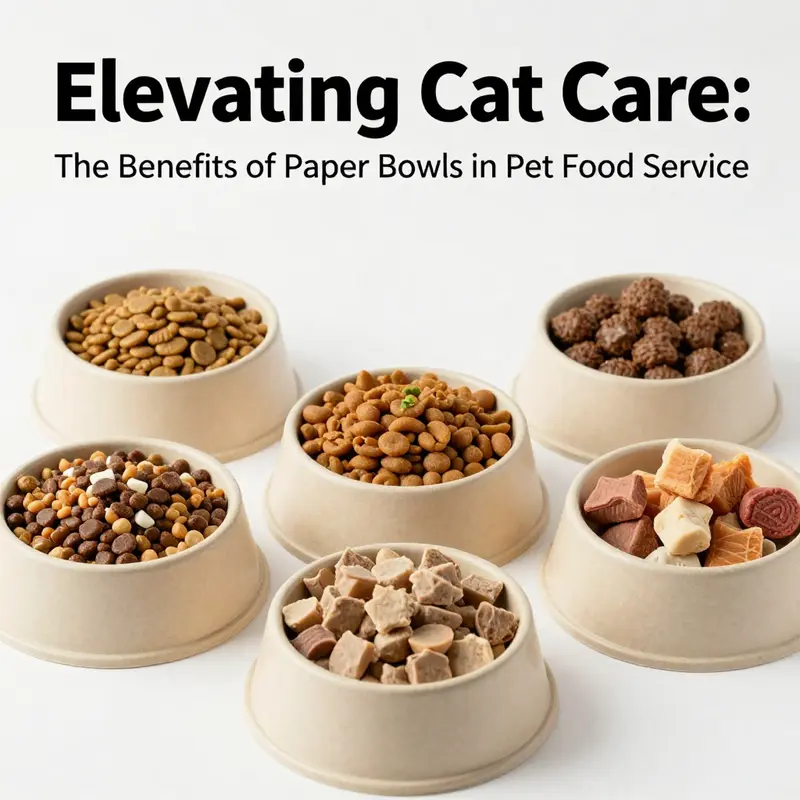
The chapter of care around feeding a cat often centers on two axes: convenience and cleanliness. Paper bowls, designed for single-use or short-term service, sit squarely at the intersection of those needs. They offer a lightweight, inexpensive option that can cut down on washing, spills, and the clutter of feeding stations in busy households or on the road. Yet their suitability is not universal. The way a bowl performs depends as much on the type of cat food as on the context in which it is used. When we weigh the pros and cons, the picture emerges: paper bowls can be a practical companion for certain feeding moments, but they are not a one-size-fits-all solution for every meal. A clear sense of context—dry versus wet food, the setting, and the animal’s health status—helps determine whether they are the right choice for a given feeding occasion.
Dry cat food presents the most natural fit for disposable paper bowls. Their light weight and simple, single-use nature align with situations where speed and hygiene trump long-term durability. In environments such as travel, adoption events, or feeding feral colonies, a single-use option minimizes logistics and cleansups. The very act of portioning a small amount of kibble into a clean, disposable bowl reduces the risk of surface contamination and the transfer of oils or odors to cooking surfaces. In such cases, even a modest thickness paper bowl can hold its shape long enough for the cat to finish the meal, after which the bowl can be discarded without the burden of washing a reusable dish in a setting where water and sanitation facilities are limited. This is where the idea of a disposable solution, including simple liners, becomes attractive. A liner can prevent seepage and moisture from soaking into the feeding surface, preserving table surfaces and reducing the chance of bacterial buildup in shared spaces.
Wet cat food, with its higher moisture content, introduces a more nuanced calculus. Paper bowls can hold a moist meal without immediate leakage, which makes them feasible for short-term serving. They are not, however, insulated vessels. The temperature and texture of a moist meal can change rapidly; a bowl left exposed to ambient air will yield a noticeable drop in temperature, and the wet food may dry out unevenly or become unpalatable as the flavor and aroma shift with cooling. The structural integrity of paper is more susceptible to moisture than metal or ceramic options, so the risk of softening, deformation, or leaking increases as the meal sits even for a short period. This dynamic cautions against relying on paper bowls for long, unattended sessions or for meals that require a stable temperature, such as high-protein pâtés or delicate morsels that tempt a cat to prolong meal time.
From an environmental angle, the appeal lies in renewable materials and the potential for compostability when conditions are right. Many paper bowls are produced from sugarcane bagasse, bamboo, or recycled paper fibers, emphasizing their low-mass, low-waste profile. For households seeking to minimize waste, using these bowls with appropriate composting streams can feel like a responsible choice, especially when feeding multiple animals in quick succession or during temporary arrangements like shelters or mobile clinics. The idea of a compostable container dovetails with the broader sustainability goals that many pet owners increasingly adopt. Yet the feasibility of composting is not universal. A bowl contaminated with oils, proteins, or veterinary medications may not be suitable for home composting and should be handled as directed by local waste guidelines. In some cases, the end-of-life path for these bowls is not a backyard compost pile but a landfill or industrial compost facility, which means the environmental story is nuanced and highly dependent on local infrastructure.
Hygiene considerations add another layer to the decision. Paper bowls can absorb oils and odors, and their porous nature can harbor bacteria if left out or reused without cleaning. While stainless steel and ceramic bowls resist bacterial growth and offer straightforward cleaning, paper bowls demand a different discipline: short exposure windows, immediate disposal, or careful use with liners to separate messy contents from the bowl’s interior. The risk of contamination also connects to feline skin and facial health. Some cats are prone to conditions like feline acne when greasy residues accumulate around the mouth or chin, a risk that tends to rise when bowls are not cleaned promptly or thoroughly. In households with sensitive cats, the hygiene imperative grows stronger, nudging caregivers toward reusable options for daily meals and reserving paper bowls for special occasions or temporary needs.
Durability is the most practical constraint to consider. Paper bowls are not designed for daily, long-term feeding. Wet foods can undermine their structure, and even dry portions can cause warping or collapse if the bowl is overloaded. The moment a bowl loses its shape, it is harder to portion accurately, and the risk of spillage increases. This fragility becomes especially important in multi-cat households, clinics, or mobile services where staff or caretakers are moving bowls or serving meals in rapid succession. The consequence of a leak is not merely a mess; it can complicate feeding routines, create cross-contamination risks, and demand quick cleanup during a busy shift.
Despite these limitations, there are clear, practical use cases where paper bowls shine. Short-term, single-use feeding remains their strongest suit. There is value in their portability and speed for feral-cat support programs, adoption drives, veterinary outreach, and temporary shelters. In these contexts, the bowls provide a hygienic, disposable surface that reduces the burden of dishwashing and minimizes cross-contamination between animals and environments. For caregivers who are balancing travel, shelter duties, and the welfare of multiple cats, such a disposable option can be a practical bridge rather than a permanent solution.
A possible middle ground—often recommended by veterinary professionals and pet care experts—involves combining the best of both worlds: using paper liners to shield reusable bowls, or pairing disposable bowls for temporary meals with high-quality, durable bowls for daily feeding routines. Liners can deter seepage and simplify cleanup, especially when serving foods that are particularly moist or odorous. Reusable stainless steel or ceramic bowls bring enduring benefits: they are easy to sanitize, resistant to odors, and designed to support proper eating posture. Elevated bowls with non-slip bases, anti-vomiting tilts, and ergonomic design help cats eat with comfort and reduce the risk of post-surgical complications or discomfort after procedures. In settings where a cat is healing from surgery or wearing a cone, the combination of a solid, easy-to-clean bowl with an appropriate feeding height can matter more than the specific material of the bowl itself. A note from veterinary professionals underscores that even minor discomfort can reduce appetite and slow healing, highlighting how seemingly small choices in feeding gear influence recovery as much as the diet itself.
In sum, paper bowls offer a sustainable and convenient option for certain short-term feeding moments and specific food types. They are particularly well-suited to dry kibble, travel, events, and temporary arrangements where ease and hygiene matter more than long-term durability. When wet food is involved, they can still function, but caregivers should recognize the limitations around temperature maintenance and structural integrity. For daily, regular feeding, the practical path tends to favor durable materials that resist moisture, promote thorough cleaning, and support optimal eating posture. In this light, many caregivers find that a hybrid approach—paper liners in conjunction with a sturdy, reusable bowl—delivers a healthier blend of hygiene, convenience, and environmental responsibility. And for those moments when disposable packaging is the most sensible choice, the option of disposable kraft paper bowls with lids offers a practical, space-saving solution that aligns with broader goals of clean feeding spaces and rapid turnover. disposable kraft paper bowls with lids.
For readers exploring the broader landscape of bowl materials, it’s helpful to consult resources that compare performance, hygiene, and care considerations across options. As you weigh the tradeoffs, remember that the best choice depends on context: how long the meal will sit, the cat’s feeding habits, and the environment where feeding occurs. The following perspective from external guidance can offer additional clarity on how different bowl types align with cat needs and owner practices: What Type Of Food Bowl Is Best For Cats. External resources can provide nuanced insights that complement the practical advice outlined here, especially as new materials and designs enter the market. What Type Of Food Bowl Is Best For Cats.
Rethinking the Mealtime: The Quiet Case for Paper Bowls in Cat Feeding
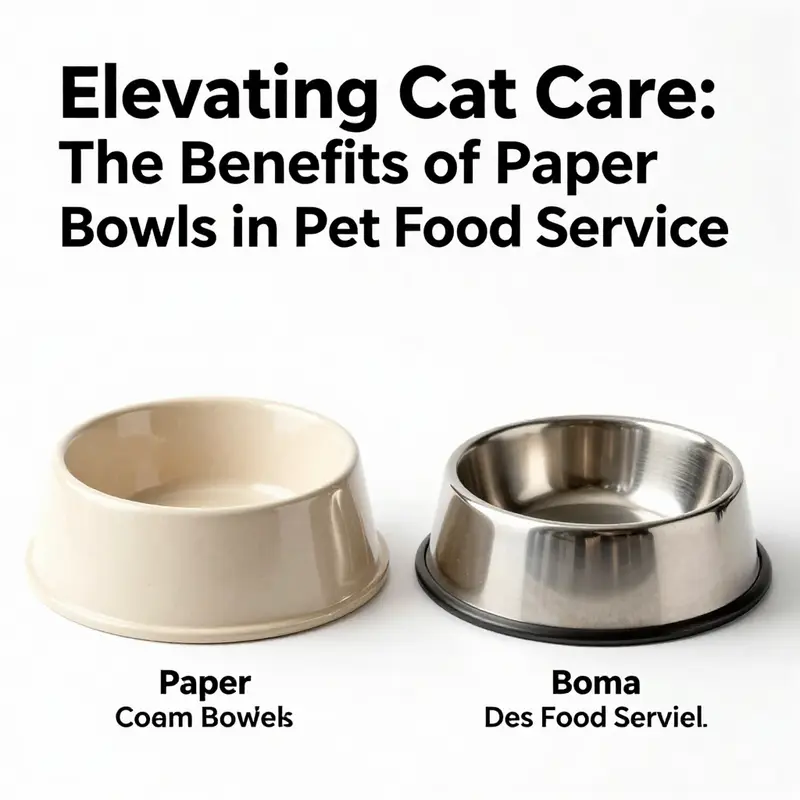
Mealtime is more than a routine in households with cats; it is a small ritual that blends care, practicality, and the ethical choices owners make about the world their pets share. In recent years, the rise of disposable paper bowls designed for cat food has brought a new option into this routine—one that promises convenience without turning away from the values of hygiene and environmental responsibility. To understand what these paper bowls can and cannot do, it helps to follow the thread from the feeding moment itself to the broader system of materials, disposal, and daily habits. The core appeal lies in turning a potentially messy feeding moment into a short, clean procedure. Wet cat food, with its aroma and moisture, can cling to surfaces and linger in bowls long after the meal is finished. Traditional glass, ceramic, or metal bowls require regular washing, sometimes after every feeding in homes with multiple cats or after travel when access to a sink and soap is limited. Paper bowls, by contrast, are designed to be used and discarded in a way that reduces the burden of cleanup. They create a predictable, low-maintenance feeding episode that can be especially valuable in clinics, shelters, and mobile pet services, where hygiene and fast turnover are essential. Yet a simple benefit of convenience cannot stand alone. The decision to choose a paper bowl for cat food intersects with material science, waste streams, and the practical realities of everyday pet care. The materials most commonly employed—sugarcane bagasse, bamboo, and recycled paper fibers—are selected for their renewability and their potential to be biodegradable or compostable under proper conditions. This is not an abstract debate. It touches real-world behavior and the lived experience of pet households. A bowl that can be disposed of after a single use reduces the need to store, wash, and dry a dish when attention is focused on care, play, or travel. In environments where cats share space with children, or where a caregiver is moving between clinics, shelters, and home visits, the value of a clean, simple disposal option can be especially meaningful. It is a small but real lever for hygiene, a factor that might influence a cat’s appetite and sense of safety during meals, particularly in unfamiliar surroundings. The hygiene argument is not merely about the absence of visible grime. It extends to the reduction of bacterial buildup on feeding surfaces, a concern that caregivers in veterinary settings and animal shelters take seriously. By using paper bowls in certain contexts, staff can minimize cross-contamination risks and reduce the time spent on cleaning up after meals, allowing more attention to be given to health checks, hydration, and feeding schedules. The single-use character of these bowls also invites a different perspective on how meals are scheduled and delivered in multi-cat households. It is not unusual for centers that care for several felines to juggle numerous feeding times, portions, and dietary needs. In such settings, disposable paper bowls can streamline the process, ensuring that each cat receives a portion in a clean receptacle without the overhead of washing multiple dishes between meals. The cycle from meal to disposal becomes a straightforward rhythm rather than a logistical challenge. This mechanism of convenience is not without its caveats. A key practical limitation is the structural performance of paper bowls when faced with moisture-heavy foods. Wet food and gravy can saturate the fibers quickly, compromising strength and, in some cases, causing leakage or partial collapse. For owners who rely on a predictable, rigid bowl for their cat’s eating posture, this can be a drawback. The risk is not merely a leak onto a surface; it can also influence the cat’s perception of the meal environment. Dogs and cats often respond to stability and texture cues at mealtime, and a soggy, unstable bowl can be unsettling, particularly for younger or anxious animals. In the realm of long-term daily feeding, alternatives like stainless steel or ceramic bowls, especially when elevated and designed with anti-slip features, tend to offer greater durability and easier cleaning. These choices support both mechanical design and posture that veterinary guidance regards as beneficial for cats, particularly those recovering from surgery or those prone to digestive discomfort. The ergonomic aspect—the way a bowl tilts, the height at which a cat eats, and whether the feeding setup minimizes neck strain—has received attention from veterinary experts. In this regard, a durable bowl that stays in place, combined with thoughtful height and angle, contributes to healthier eating habits and can even influence recovery trajectories after surgeries when appetite is fragile. The broader lesson here is not a binary choice but a balanced approach. Paper bowls can serve well for specific, short-term, hygienic feeding needs or for situations where cleanup is impractical or time-consuming. They work best when integrated into a feeding strategy that also prioritizes environmental responsibility. One practical pathway is to use paper bowls for single meals or small portions while relying on reusable, high-quality bowls for regular, daily feeding. In this configuration, the environmental footprint remains manageable, and the health benefits of a durable, easy-to-clean bowl are preserved. It is possible to take the best of both worlds by using the paper alternative to handle the more challenging contexts—travel, clinics, shelters, or busy days—while continuing to rely on a reliable reusable bowl at home where a cat’s full routine is maintained and monitored. This approach aligns with a broader logic that governs contemporary pet care: sustainability does not require a single, universal solution but a flexible toolkit that adapts to context, need, and responsibility. The concept of using liners within a reusable bowl can further bridge the gap between hygiene and sustainability. A liner or insert keeps the cat’s bowl clean during a meal, preventing direct contact between the food and the bowl’s interior, while the outer bowl remains the durable, washable vessel. This layered approach can extend the life of the reusable bowl, maintain surface hygiene, and still offer the convenience of quick disposal when necessary. The ripple effects of this approach extend beyond the kitchen or clinic. Pet owners recognize that the choices they make about feeding can reflect broader values about waste, resource use, and respect for animal health. In households that take pride in reducing plastic waste, paper-based options provide a tangible alternative that complements recycling and composting practices, especially when the paper is sourced from renewable materials and designed to break down under appropriate conditions. In the same breath, it is important to acknowledge that not all paper bowls are created equal in terms of environmental impact. The life cycle of a disposable product encompasses raw material extraction, manufacturing energy, transport, use, and end-of-life treatment. When evaluating paper bowls for cat food, consumers and caretakers should consider whether the material originates from sustainably managed sources, whether the product is certified as compostable in home or industrial facilities, and whether the disposal pathways available in their community align with the product’s design. These considerations remind us that the mealtime decision is part of a larger conversation about responsible consumption. For readers who want to situate this topic within the wider world of disposable tableware, there is a broader ecosystem of materials and packaging practices that share overlapping questions about compostability, energy use, and waste streams. The conversation about cat food bowls intersects with packaging design in the food service and retail sectors, where the same materials are used to handle diverse foods and to maintain hygiene while offering convenient, portable solutions. In this sense, paper bowls for cat food occupy a niche that reflects a cross-pollination of ideas across pet care, environmental stewardship, and user-friendly design. They are not a panacea, but they offer a strategic option in scenarios where speed, cleanliness, and a modest environmental footprint are priorities. The decision to adopt them, therefore, should be informed by context, goals, and a clear understanding of their limits. For instance, in situations that demand sustained exposure to moisture or large volumes of wet food, a more durable vessel may be warranted. In other contexts, such as short-term dietary trials, travel, or public-facing care settings, paper bowls can provide practical benefits without compromising safety or animal well-being. The nuanced picture that emerges is one of possibilities rather than absolutes. It invites caretakers to think creatively about how to integrate several tools into a feeding routine rather than seeking a one-size-fits-all solution. In the end, the mealtime choice is about balancing the cat’s comfort, the caregiver’s workload, and the planet’s health. This balance is not always easy to achieve, but it remains a worthwhile pursuit because it directly touches the daily lives of pets and people alike. Acknowledging the limitations of paper bowls while recognizing their potential in the right context allows us to design better feeding experiences. It invites ongoing experimentation, thoughtful disposal practices, and a willingness to adapt as new materials, processes, and certifications emerge. For readers who want to explore related ideas beyond the kitchen, the broader world of eco-friendly packaging offers practical examples and design principles that can inform how we think about pet care items as well. For a glimpse into packaging approaches that emphasize safety, sustainability, and user-friendly design, consider this resource on eco-friendly takeout boxes for food packaging. eco-friendly takeout boxes for food packaging. This kind of cross-pertilization helps remind us that the choices we make for our cats are part of a broader shift toward materials and practices that respect both health and the earth. Even if paper bowls are not the default for every meal, they have a meaningful place in the toolkit of options that today’s pet caregivers can draw from as they navigate the complexities of hygiene, convenience, and sustainability.
Rethinking the Edge: Unpacking the Environmental Footprint of Paper Bowls for Cat Food
Paper bowls for cat food often arrive with a halo of sustainability. They look lighter on the planet than their plastic or metal counterparts, promising compostable endings and a simpler yardwork of cleanup. Yet the environmental truth is more nuanced. When these bowls are built with a double plastic layer to seal wet or oily foods, their green appeal fractures. The same protective coating that keeps surfaces clean and protects against seepage can dramatically reduce recyclability and biodegradability. The result is a product that, despite its biodegradable fibers, can persist in landfills for decades. That persistence is not merely a matter of time; it translates into a measurable footprint from cradle to grave, beginning with energy use and material extraction during manufacturing and extending through the end of life when disposal choices determine whether the bowls break down in an industrial composting facility or linger as waste rather than reentering the material cycle.
To understand why coatings matter, consider the life cycle. Paper bowls may be sourced from renewable plant fibers such as recycled paper, sugarcane bagasse, or bamboo. Those fibers can form the saw-tooth edge of a more sustainable option, but the practical reality is that a substantial share of commercially available paper bowls relies on multi-layer constructions. This combination of paper with a plastic barrier improves performance for wet cat foods yet curtails the potential for standard recycling streams. The barrier can prevent the paper from breaking down in conventional facilities, and in landfills it remains inaccessible to microbes. Even when the base material is renewable, the plastic layer shifts the environmental profile toward the energy and fossil fuel demands embedded in plastic production, plus the logistics of collecting and processing mixed materials that cannot be easily separated.
This is not just a theoretical concern. Industry guidelines recognize that the swap from plastic to paper needs careful attention to coatings and end-of-life options. When coatings are non-toxic and food safe, they protect the product without compromising consumer safety. But unless a bowl is clearly labeled as compostable under a certified program or recyclable within a certified blue or green stream, the likelihood of proper degradation decreases significantly. In many regions, municipalities have yet to build the infrastructure needed to handle multi-layer, coated paper products efficiently. In those cases, the environmental benefit of choosing a paper bowl can be eclipsed by a tendency for the product to end up in a landfill where it will not readily contribute to a circular economy.
The question then shifts from raw materials to certification. Truly sustainable options exist, not by virtue of a single trait but through a combination of sourcing, design, and end-of-life performance. Forest Stewardship Council (FSC) certification signals responsible sourcing of some of the fibers used in paper products, helping ensure that forests are managed with a balance of ecological, social, and economic values. The Biodegradable Products Institute (BPI) certification provides a clearer path to compostability under industrial facilities, distinguishing products that can break down in the right setting from those that cannot. For a consumer or business aiming to minimize environmental impact, certifications become a practical compass. They are not a guarantee of universal biodegradation, but they offer a reliable signal about the likelihood that a product will perform as promised in the systems designed to handle it.
Yet even with certifications, there is a caveat. Industrial composting facilities, though more capable than home setups, are not universal. Not every community has access to the necessary infrastructure, and not every certified product is accepted everywhere. As a result, the best-practice recommendation is nuanced: prioritize products labeled with certified compostability or recyclability, and pair them with appropriate disposal streams. The awareness of the disposal context is as important as the design of the bowl itself. A compostable bowl that ends up in a landfill, or a recycled paper bowl that meets a plastic barrier in its exit stream, will not realize its intended environmental benefits. This is why the end-of-life question matters as much as the manufacturing story.
In practice, what does this mean for households and facilities that feed cats with dry or limited-wet portions? For everyday use, the most prudent path often involves a hybrid approach that emphasizes hygiene and practicality while still striving for environmental responsibility. Paper bowls can perform well for short-term use, especially in settings where cleaning a reusable bowl is impractical—such as in multi-cat households, during travel, or in field visits by caretakers and shelters. The key is to recognize when single-use options are appropriate and when they are not. In long-term daily feeding, durable alternatives such as stainless steel or ceramic bowls, sometimes with elevated designs to promote healthy posture and reduce the risk of vomiting, tend to offer a more sustainable and health-conscious baseline. The understanding that even well-intentioned disposable options carry a weighty responsibility can guide choices that balance hygiene, animal welfare, and environmental impact. This balance is not merely a theoretical exercise; it has practical consequences for how feeding routines are structured and how waste is managed in real-world settings.
A practical mindfulness emerges from this nuanced view. If you choose to use single-use paper bowls, look for coatings that are non-toxic and designed for certified end-of-life scenarios. In this context, the option becomes more than a convenience; it becomes part of a larger decision about packaging and waste. In many dining and care environments, the supply chain is moving toward integrating disposable components that align with broader sustainability goals. The idea is to reduce the burden of washing and cross-contamination while preserving the possibility of recovering materials or returning them to a usable loop. When paper bowls and their liners are used, the combination with a reusable base can sometimes offer the best of both worlds. A liner can contain moisture and mess, while a sturdy reusable bowl handles long-term feeding and easy cleanups between meals.
From the standpoint of supply chains and commercial contexts, the environmental story widens to include packaging beyond the bowl itself. In takeout and queuing systems, there is growing attention to how packaging sequences perform as a whole. The environmental outcomes depend not only on the raw materials but also on the design for disassembly, the presence of multi-layer barriers, and the availability of recycling or composting streams. A thoughtful choice in packaging can significantly reduce waste, particularly in operations that serve many animals or require frequent meals. For businesses exploring more sustainable options, there is valuable guidance in the broader packaging space. For example, certain packaging configurations emphasize compartmentalized, compostable materials that maintain product integrity while simplifying disposal. This is not a hypothetical ideal; it reflects legitimate shifts in how the industry is thinking about sustainability across product families. To see how packaging choices migrate beyond bowls to integrated, eco-conscious solutions, explore options described as eco-friendly disposable 3-compartment packaging boxes that aim to reduce waste in fast-food settings. eco-friendly disposable 3-compartment packaging boxes.
The take-home message for readers who want to navigate this landscape responsibly is clear. First, recognize that the environmental footprint of a paper bowl depends on more than the paper alone. The coatings, the end-of-life pathways, and the surrounding disposal infrastructure all shape the outcome. Second, seek certification as a reliable proxy for end-of-life performance. FSC and BPI certifications are useful, but they are not panaceas; they must be interpreted in light of local facilities and programs. Third, consider the broader packaging ecosystem. If a business routinely uses disposable bowls, it is worth investigating whether a coordinated approach with compostable or recyclable packaging across the entire takeout or care operation can create a more coherent waste stream. In other words, sustainability improves not only with better bowls but with smarter systems that guide users toward appropriate disposal.
This is not about demonizing one material or another. It is about recognizing the trade-offs and making informed, context-aware choices. For many pet owners, the daily rhythm of feeding cats will remain best served by a dependable, easy-to-clean considerately designed bowl. But when the occasion arises to opt for a disposable solution, the mindful choice becomes a small but meaningful contribution to reducing waste and conserving resources. The environmental impact of paper bowls for cat food is not a single verdict; it is a spectrum that depends on material composition, coatings, labeling, and end-of-life options. Understanding this spectrum empowers owners, clinics, and shelters to align their feeding practices with a broader commitment to sustainability while still meeting the essential needs of their cats.
For readers seeking a deeper technical view on the physical properties, standards, and engineering applications of paper bowls including those used for cat food, a comprehensive overview is available in the referenced expert resource. This external perspective complements the practical guidance discussed here and helps frame decisions within a broader industrial context. As with any material choice, progress comes from combining informed consumer behavior with ongoing improvements in design, certification, and waste management. In the end, a well-considered approach to paper bowls—one that weighs performance, safety, and environmental outcomes—can contribute to a healthier planet for pets and people alike.
External reference for further reading: https://www.benjaminross.com/paper-bowls-for-food-overview-composition-standards-and-how-it-benefits-industrial-projects
Final thoughts
In the fast-evolving pet care industry, adopting sustainable and convenient solutions is essential. Disposable paper bowls designed for cat food serve as an ideal option for food service providers. They deliver hygiene, ease of use, and versatility while contributing to a greener planet. As consumers increasingly seek eco-conscious choices, integrating disposable paper bowls into service offerings can set businesses apart and resonate with environmentally aware pet owners. Investing in these bowls reflects not only a commitment to quality service but also a responsible choice towards sustainability for our furry friends.