

Navigating the complexities of plastic packaging compliance can feel daunting for businesses in Saint-Genis-Laval, France. Understanding the regulations surrounding plastic food containers is crucial for success in the food service industry, including bubble tea shops, restaurants, food trucks, and catering services. In this discussion, we’ll explore the regulatory compliance required for these containers, dive into the testing methods that ensure safety and quality, and outline how businesses can achieve market access in a competitive landscape. By the end, you’ll have a clearer understanding of your responsibilities and options as you choose packaging solutions that meet French standards and elevate your business.
Practical Compliance Pathways for Plastic Food Containers in Saint-Genis-Laval, France
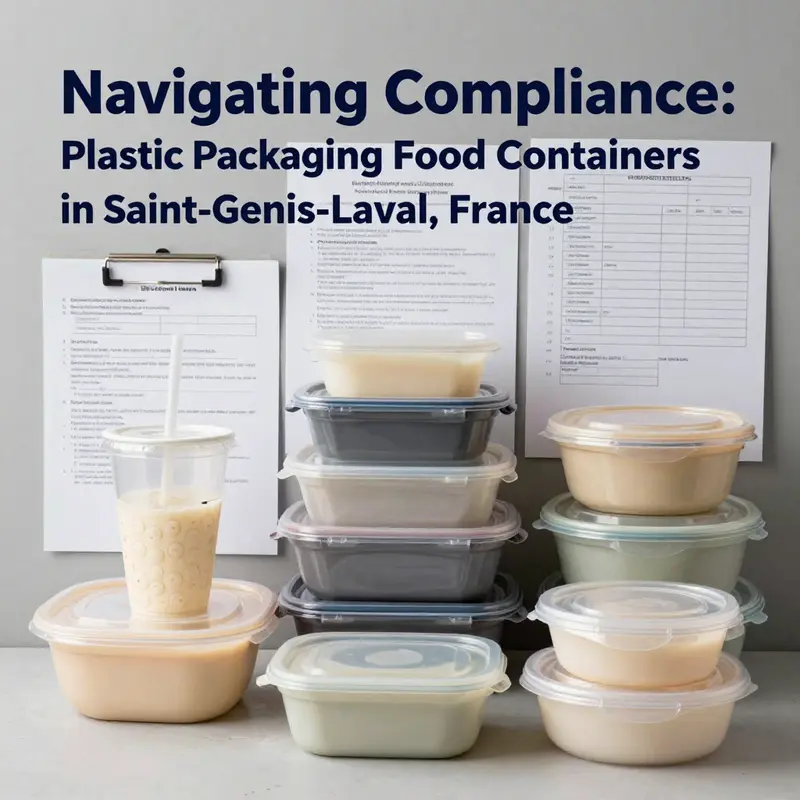
Ensuring legal and safe placement of plastic food containers in Saint-Genis-Laval requires more than a checklist. It demands a coherent strategy that aligns EU rules, French national law, local municipal practices, and supply-chain realities. Manufacturers, importers, and distributors must translate scientific testing requirements into operational habits. They must also make design choices that reduce regulatory risk while preparing documentation that withstands inspections. This chapter explains how to build that approach, focusing on the technical tests, the regulatory documents authorities expect, material and design choices that ease compliance, and practical steps local businesses can use to demonstrate conformity.
The legal foundation rests on clear EU frameworks. Plastic food contact materials must follow the general safety rule in Regulation (EC) No 1935/2004. Specific plastics are governed by Regulation (EU) No 10/2011. These set migration limits and identify permitted substances. The European Food Safety Authority evaluates many substances and supplies scientific opinions that inform specific limits. In practice, this means every plastic container placed on the market in Saint-Genis-Laval must be proven safe for intended use. Safety is shown through testing, documentation, and traceability.
Laboratory testing is central. Two tests are foundational: overall migration and specific migration. Overall migration measures the total non-volatile residues that move from the plastic into a food simulant under defined conditions. Specific migration targets particular chemicals of concern. For plastic food containers, regulators focus on heavy metals such as lead, cadmium, mercury, and hexavalent chromium. They also check for plasticizers like phthalates, and additive residues such as the antioxidant BHT. Depending on the polymer and the intended use, laboratories may apply different simulants and temperature-time regimes. Tests must match the container’s real-world use, such as contact with fatty foods, hot contents, or long-term storage.
Choosing the right laboratory is a critical operational decision. Authorities expect tests from ISO 17025 accredited labs. The laboratory should have experience with EU food contact requirements and produce reports in French or English. For French inspections, a French-language Declaration of Conformity (DoC) carries special weight. A technical report in English may suffice for documentation, but a DoC in French ensures clarity during a DGCCRF audit. Businesses in Saint-Genis-Laval should therefore work with labs familiar with French regulators and able to issue compliance statements aligned with national expectations.
Documentation must be structured and retrievable. The technical dossier should include raw material specifications, production records, migration-test reports, and the DoC. The DoC should identify the responsible economic operator, describe the article, enumerate applicable measures, and reference test methods and results. It should also state intended uses and any restrictions. Keep these records for the period required by French law and be ready to present them upon request. Inspecting bodies like the DGCCRF routinely check the DoC and request supporting test data.
French national policy layers additional obligations on EU rules. France enforces eco-design principles that favor recyclable packaging and set progressive targets for recycling rates. The country operates an Extended Producer Responsibility (EPR) system for packaging. Under EPR, producers may face eco-contributions that vary with material choices, recyclability, and recycled content. For practical compliance, minimize mixed-material constructions that hinder recycling. Prefer mono-material solutions like recyclable PET, PE, or PP where possible. If multi-layer or composite solutions are necessary, be prepared to justify them with performance data and recyclability plans.
The Single-Use Plastics Directive (EU 2019/904) plays a complementary role. While it bans some specific single-use items, it also signals broader regulatory attention on disposability and recyclability. Packaging categorized as single-use may undergo stricter scrutiny if it uses non-recyclable or difficult-to-sort materials. Companies distributing single-use containers in Saint-Genis-Laval should therefore assess whether their products fall under this paradigm. If yes, take steps to increase recyclability or provide clear guidance on disposal and separation for local waste systems.
Local municipal systems matter for real compliance in Saint-Genis-Laval. Recycling streams differ across French municipalities. Packaging that is technically recyclable may still be rejected by a local collection system. This mismatch can create regulatory and reputational risk. Engage with local waste management guidelines early. Provide clear labeling and consumer instructions aligned with municipal sorting rules. If your containers are compatible with local collection and recycling, make that fact visible to buyers. If not, disclose the limitation and consider alternative materials that better fit the local system.
Material and design choices significantly reduce compliance burden. Choose materials with a well-documented history in food contact applications. PET, PP, and HDPE offer predictable migration profiles when properly formulated. Avoid PVC and certain mixed polymers that complicate recyclability and testing. Reduce the number of additive types. Each unique additive often requires a specific migration analysis. Where possible, adopt low-additive formulations and avoid problematic plasticizers and stabilizers. If antioxidants such as BHT are used, document their presence and demonstrate compliance through targeted testing.
Design for recyclability. Favor mono-material constructions and mechanical joining methods over adhesives that complicate separation. Minimize opaque or multi-layer barriers when not strictly necessary for shelf life. If a barrier is required, choose barrier layers with a strong recycling pathway, or ensure they can be separated easily. Use clear labeling to indicate material type and provide sorting instructions. These practical design steps reduce regulatory friction and can lower eco-contribution fees under France’s EPR system.
Supplier control and incoming material checks are practical risk management tools. Obtain material declarations and safety data sheets from suppliers. Request information on additives and impurities. Verify supplier claims with periodic laboratory spot checks. A single contaminated batch can trigger a market recall and an inspection. Regularly audit suppliers for traceability and quality systems. Maintain version-controlled technical files that link material inputs to finished articles. This documentation will streamline inspections and will form the backbone of any corrective actions required.
Sampling strategy should mirror the production reality. Establish clear sampling plans for both routine production batches and pre-market testing. For new formulations, run a full set of migration tests with representative samples. For ongoing production, adopt a periodic verification schedule based on risk. Higher-risk uses—hot-fill applications or fatty food contact—warrant more frequent testing. Keep records of sample origins, production batches, and storage conditions prior to testing. Transparent sampling reduces disputes with laboratories and regulators.
When preparing for inspections, anticipate the priorities of French authorities. Inspectors focus both on chemical safety and on documentation proving recyclability claims. Ensure the DoC is available in French and describes the tests and their conclusions. Present migration test reports along with the laboratory’s ISO 17025 accreditation. Be ready to show how the product fits local recycling streams. If a product is marketed as reusable, provide cleaning and safety validation that supports reuse claims.
Labeling must be accurate and truthful. Avoid misleading claims about recyclability or compostability unless substantiated. If you claim the container is recyclable in Saint-Genis-Laval, verify that local collection accepts the material. Use approved recycling symbols and provide sorting instructions in French. If the packaging is microwave-safe, oven-safe, or freezer-safe, validate those claims with appropriate tests and include tested usage conditions on packaging.
For businesses that export to or import from Saint-Genis-Laval, harmonize documentation across jurisdictions. Some third-country suppliers may not grasp EU migration rules. Translate supplier documents and validate them through accredited testing. For exported goods, know that French regulators will scrutinize conformity as if the product were produced domestically. Maintain a harmonized technical file that satisfies both EU requirements and French national expectations.
Risk management also requires planning for non-conformity. Establish recall procedures and corrective action plans. If migration results exceed limits, trace the root cause through material change logs and supplier audits. Be ready to pause distribution in specific batches until corrective measures are in place. Timely, documented responses decrease potential fines and reputational damage during DGCCRF audits.
Consider alternatives to traditional plastics where appropriate. Paper-based or biodegradable containers can reduce regulatory pressure if they truly meet performance and safety requirements. However, treat these alternatives as distinct technical projects. They require their own compatibility testing and careful labeling. If using eco-friendly paper solutions, confirm food contact suitability, grease resistance performance, and recycling or composting claims. For example, well-designed paper takeout boxes can combine functional performance with easier local recycling. For a practical example of such alternatives, see this option for eco-friendly takeout boxes for food packaging.
Training and internal culture matter. Ensure procurement, quality, and regulatory staff share a common understanding of migration concepts, recyclability, and documentation expectations. Provide simple checklists for frontline staff. Include sampling procedures, record keeping, and labeling instructions. Regular training reduces administrative gaps that often lead to non-compliance.
Finally, stay connected to authoritative sources. EU policy evolves, and French authorities often introduce national measures that exceed EU minima. The DGCCRF website is the primary national reference for inspections and enforcement. For EU-level policy, the European Commission’s guidance on plastics and the circular economy provides up-to-date context for packaging rules and recyclability objectives. Use these sources when updating technical files or deciding on new materials.
Taken together, these practical steps create a robust compliance pathway for plastic food containers in Saint-Genis-Laval. Start with appropriate polymers and minimal additive use. Build a technical dossier that includes ISO 17025 test reports and a French-language Declaration of Conformity. Design for recyclability and align packaging with local waste streams. Manage suppliers and sampling transparently. Prepare for inspections with accessible, clear documentation, and train staff to follow defined procedures. These actions reduce regulatory risk and position products for smoother market access.
Adopting this approach does more than satisfy inspectors. It reduces the likelihood of recalls. It supports circular-economy commitments and lowers long-term costs. It also meets growing buyer expectations for transparency and environmental responsibility. For local companies in Saint-Genis-Laval, these practical compliance pathways link technical safety to market credibility, helping products reach consumers while meeting both health and environmental objectives.
External reference: European Commission – Plastics in the Circular Economy: https://ec.europa.eu/environment/circular-economy/plastics.htm
Practical Testing Framework for Plastic Food Packaging in Saint-Genis-Laval: Methods, Labs, and Compliance Steps

When a manufacturer, importer, or distributor prepares plastic food packaging for sale or export in Saint-Genis-Laval, understanding testing methods is essential. Testing is not a paperwork formality. It is the technical means by which safety is demonstrated and regulatory obligations are met. In France, enforcement focuses on chemical migration, mechanical integrity, microbiological safety, and sensory neutrality. Each of these domains uses specific, internationally recognised methods that together form a coherent compliance program. This chapter explains those methods and shows how they connect into a practical testing workflow tailored for plastic food contact containers distributed in Saint-Genis-Laval.
A testing program begins with a clear specification of the product and its intended use. Specify polymer type, additives, printing inks, coatings, and any adhesives. Record the food types and contact conditions the packaging will face. Typical use scenarios include refrigerated storage, hot-filling, microwave reheating, and long-term dry food contact. For each scenario list temperatures and contact times, plus any aggressive food types such as acidic or fatty foods. These usage profiles determine which migration tests and performance trials to run. They also define the worst-case conditions under which the container must remain safe.
Chemical safety rests on two complementary approaches: global measurement of all migrating substances, and targeted analysis of regulated substances. Total migration quantifies the overall mass of non-volatile migrants transferred from the plastic into a food simulant. The internationally recognized method uses standard simulants and specified time-temperature profiles to replicate intended use. The usual acceptance criterion is ten milligrams per square decimetre of contact surface, but the exact limit depends on product type and national guidance. Running total migration tests first gives a broad sense of whether the packaging releases an excessive load of low-molecular-weight substances.
Where total migration is acceptable, targeted analysis follows. Specific migration tests look for regulated hazardous compounds. Analysts use high-sensitivity techniques such as gas chromatography-mass spectrometry and liquid chromatography-mass spectrometry. These techniques detect and quantify endocrine disruptors, common plasticisers, and other regulated molecular species. Heavy metals are analysed separately using atomic absorption spectroscopy or inductively coupled plasma techniques. Typical analytes include phthalates, bisphenol analogues, and metals like lead, cadmium, and mercury. Limits for each substance are established by EU frameworks and by French enforcement priorities. For Saint-Genis-Laval, ensure methods and reporting meet the language and format expectations described by the competent authority.
Testing protocols must also account for non-intentional substances, such as antioxidants and processing residues. Suppliers should provide full formulation data so the laboratory can screen for expected compounds. Where unknown peaks appear in chromatograms, laboratories should isolate and identify them, and manufacturers must evaluate their toxicological relevance. A robust risk assessment uses migration data plus toxicology to judge compliance. When a migrant lacks a specific migration limit, the overall toxicological context and the threshold of toxicological concern guide the decision.
Mechanical and physical performance testing protects consumers from spills, breakage, and structural failure. Physical tests replicate mechanical stresses seen in the supply chain and in use. Drop tests simulate the impact of accidental falls during handling. Heat resistance trials expose the container to specified temperatures to check stability. Bending and flexural strength tests measure the material’s response to forces that occur during stacking and handling. For products that include functional items such as forks or knives, target-specific tests check tines and cutting edges for breakage thresholds. These tests reduce the risk of sharp fragments contaminating food, or of catastrophic leaks.
Designers should treat physical tests as design checks early in product development. Prototype batches must pass drop, heat, and flex tests before larger production runs. If a design fails one test, iterate material selection, wall thickness, or reinforcement ribs until results meet specifications. Keep records of design changes, test run numbers, and batch identifiers to support traceability.
Microbiological testing is usually limited for plastic packaging, because most plastics are inert and non-nutritive. Nonetheless, certain containers—especially reusable or porous items—may need checks for surface contamination. Total aerobic microbial counts assess whether packaging is free from unacceptable microbial loads after production and before filling. Swab tests and contact plate methods check manufacturing hygiene. For disposable single-use items, routine controls should still verify that the finished product does not introduce contaminants that might compromise food safety. These tests are particularly relevant where packaging will contact ready-to-eat foods.
Sensory neutrality is another required attribute. Packaging must not impart suspicious odour, taste, or colour to food. Sensory evaluation uses trained panels and standardised procedures. Panels assess odour and taste transfer to simulants, and visual checks ensure inks and pigments do not bleed. Even when chemical tests pass, a strong off-odour can trigger rejection by retail customers and enforcement authorities. Early sensory screening helps find formulation problems that chemical methods might not show.
Selecting the right laboratory is vital. Only use laboratories accredited to the international standard for testing competence. Accreditation under ISO/IEC 17025 provides assurance that the lab follows validated methods and maintains rigorous quality systems. In Saint-Genis-Laval, work with labs familiar with French enforcement practice. They will supply reports in French or English and can help tailor tests to DGCCRF expectations. Ask labs for scope certificates that explicitly list the relevant migration and mechanical tests. Confirm their experience with food simulants, GC‑MS and LC‑MS workflows, and heavy metal analyses under regulated limits.
Sampling strategy affects test validity. Use representative samples from production lots. If the product will be produced in multiple colours or with different coatings, sample each variant. If migration could be influenced by manufacturing conditions, take samples from different process batches. For imported goods, sample across shipments. Maintain chain-of-custody documentation to prove sample provenance. Laboratories will typically state minimum sample sizes and provide guidance on packaging and transport to avoid contamination or temperature excursions.
Test reports must be thorough and usable. A proper report lists the methods and standards used, time-temperature conditions applied, and the identity of the food simulant. Reports should show raw data and final calculated migration values. Accredited labs include uncertainty assessments and detection limits. For evidence accepted by French authorities, provide reports in French or English. Attach supplier declarations of formulation and additive use. Where analytical results approach limits, include a toxicological justification or risk assessment.
In France, administrative documentation matters. A Declaration of Conformity (DoC) in French is essential. The DoC summarises compliance claims and refers to test reports. It must list the product, the intended use conditions, the standards applied, and the name and contact of the manufacturer or importer. Authorities will request it during inspections. Prepare the DoC as a living document and update it if formulations change or new test data appear. Keep DoCs for the statutory retention period and make them available to market surveillance officers on request.
When tests fail, act with a disciplined remediation plan. First, isolate the failing batches. Second, analyse the failure root cause. Did migration exceed limits due to a wrong additive, a printing ink, or processing contamination? Was the sample representative? Third, if the issue is formulation-related, work with suppliers to remove or substitute the problematic ingredient. If failure stems from manufacturing controls, tighten cleaning, change equipment, or adjust processing temperatures. Retest only after the corrective actions are in place. For failure with potential consumer risk, notify distribution partners and consider a recall according to French recall procedures.
Shelf-life and accelerated ageing tests are often overlooked. Migration rates can change over time, especially with plasticisers and low-molecular-weight additives that slowly migrate. Conduct storage-period tests that mirror expected shelf-life and storage conditions. Use accelerated ageing when long-term real-time study is impractical. These tests reveal late-emerging migration issues and help set safe shelf-life limits and storage advisories on packaging labels.
Documentation and traceability create a defensible compliance posture. Maintain a dossier that includes formulation declarations, supplier certificates, test reports, sampling records, DoCs, and corrective action logs. Index the dossier so inspectors can quickly locate required evidence. Digital records should be backed up and access-controlled. Traceability also supports efficient response during product inquiries or market surveillance activities.
Supply chain management reduces test burden. When component suppliers provide robust technical data and valid test certificates, downstream testing can be targeted. Require raw material suppliers to disclose additive lists and, where possible, to provide recent migration tests on their materials. Use supplier audits to confirm that their quality systems support the claims they make. When suppliers refuse to disclose formulation details, treat the material as higher risk and plan wider testing.
Practical test scheduling helps control product launch timelines. Prioritise essential tests that prove safety for the intended uses. Run total migration and specific migration tests for regulated substances in parallel where possible. Physical performance checks should happen on production prototypes. Sensory and microbial checks can follow once production controls are validated. Plan for test lead times and the potential need for retesting after corrective actions.
For companies in Saint-Genis-Laval, maintaining a pragmatic relationship with local testing laboratories and regulatory advisors pays off. Local experts can clarify which EU-derived methods require country-specific interpretation. They also know the documentary preferences of French market surveillance. Arrange periodic reviews of test scope when formulations or intended uses change. This prevents surprises during inspections.
Finally, remember that testing is part of continuous compliance. Regulations and recommended analytical methods evolve. Keep abreast of updates from the French competent authority and industry guidance. Build testing into product development and supplier approval workflows. Treat test results as actionable intelligence, not mere certifications. That mindset reduces regulatory risk and supports a consistent, safe product offering in Saint-Genis-Laval and beyond.
For additional technical guidance on accredited laboratory services for food contact materials testing, refer to this testing resource: https://www.sgs.com/en/services/testing-and-certification/food-contact-materials-testing
For practical packaging options that balance compliance and sustainability considerations, consider materials designed for safe food contact, such as those described in this eco-friendly takeout boxes for food packaging: https://ecocupbowl.com/product/eco-friendly-takeout-boxes-for-food-packaging-stylish-food-containers-safe-microwave-craft-paper-lunch-boxes-leak-grease-resistant/
Crossing the Line from Factory Floor to French Store Shelf: Market Access and Certification for Plastic Food Packaging in Saint-Genis-Laval
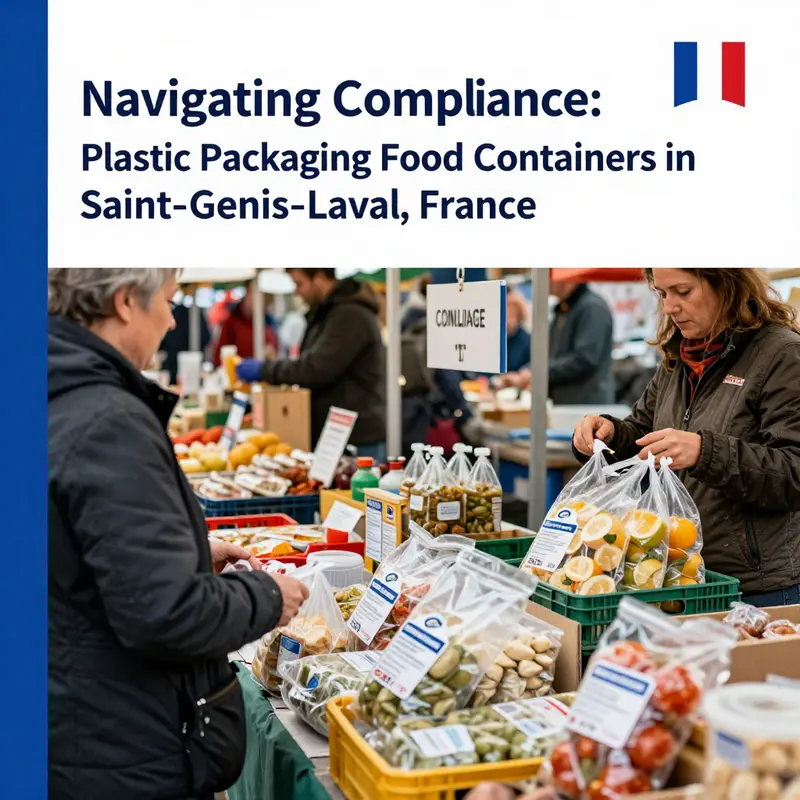
Regulatory pathway and practical compliance steps for Saint-Genis-Laval businesses
Navigating market access for plastic food packaging in and around Saint-Genis-Laval requires a clear, practical plan. EU and French rules set the legal framework. Local enforcement and market expectations determine daily practice. Manufacturers and importers must translate requirements into reliable processes. This chapter describes that translation. It explains the regulatory essentials, testing and documentation requirements, lab selection, operational controls, and local compliance steps that make a product ready for sale in France.
All plastic materials intended for food contact in Saint-Genis-Laval must comply with the EU Food Contact Materials framework. The core requirements come from EU Regulation (EC) No 1935/2004. This regulation sets the principle: materials must not release constituents into food at unsafe levels. Specific rules then expand on that principle. Regulation (EU) No 10/2011 and its updates lay down migration limits and a positive list for plastic substances. Regulation (EU) No 282/2011 covers food simulants for testing and test conditions. French enforcement aligns with these EU laws and adds national enforcement practices. Agencies such as ANSES and DGCCRF oversee safety and compliance in France. ECHA’s guidance on chemicals can also be relevant for certain additives.
Compliance starts with a technical file. The file must show how the product meets migration and safety limits. It should include: a description of the material and its intended uses; manufacturing details; a list of all additives and their functions; expected contact conditions; and the results of relevant tests. The file should also contain traceability records and supplier declarations. This documentation provides proof during inspections. It also supports corrective actions when problems arise.
Testing is non-negotiable. The two main types of tests are overall migration and specific migration. Overall migration measures total mass of substances that can move from plastic to food under given conditions. Specific migration targets individual, potentially hazardous substances. Typical analytes include heavy metals (lead, cadmium, mercury, hexavalent chromium), plasticizers such as phthalates, and antioxidants like BHT. Test conditions reflect intended use. For example, long-term room temperature contact uses different simulants and times than microwave reheating.
If the packaging is reusable, or intended for high temperatures, additional performance tests apply. Reusable containers must withstand repeated cleaning cycles. Tests should check mechanical strength, heat stability, and chemical resistance to detergents. High-temperature use, such as microwave reheating, requires thermal stability and migration testing under elevated temperatures. Labels should clearly state reuse instructions and temperature limits. Tests should match those instructions.
Selecting the right laboratory matters. Choose a laboratory with ISO 17025 accreditation. Prefer labs that understand EU and French food contact rules. A qualified lab provides credible reports suitable for inspections. Reports should be in French or English. For France, a French-language Declaration of Compliance (DoC) is essential. Test reports support the DoC. They must describe methods, detection limits, and conformity conclusions.
The Declaration of Compliance is central. It must list the food contact materials involved, the issuer, the legal basis for compliance, and the intended uses. It should mention migration limits and cite the test reports. In France, DGCCRF officers will look for a French DoC during audits. The DoC binds the responsible economic operator. It must reflect actual product uses and be kept up to date.
Supplier management reduces risk. Obtain written supplier declarations for raw materials and additives. These declarations should state substance identities, concentrations, and compliance with the positive list. Keep supplier contact details and batch identifiers. When a supplier changes formulation, require updated declarations and new tests. Traceability must link finished goods to raw material batches. This link enables targeted recalls and efficient problem resolution.
A pragmatic sampling plan supports ongoing quality control. Define sampling frequency by production volume and risk profile. High-volume lines and new formulations deserve more frequent testing. Use risk-based sampling for finished-product testing. Include both migration tests and routine physical checks. Keep records of all samples, test dates, and results. Document any non-conformities and the corrective actions taken.
Labeling and instructions must match tested uses. If tests demonstrate suitability for microwave reheating, label that use explicitly. If limits apply, such as single-use only, make that clear. French-language labels are recommended for consumer clarity. Labels must not claim properties unsupported by tests. Misleading claims can trigger enforcement actions.
Local enforcement in Saint-Genis-Laval follows national practice. DGCCRF inspects retailers, warehouses, and producers. Officers review DoCs, test reports, and traceability records. They may sample products for independent testing. Non-compliant products can be removed from the market. Administrative penalties and product withdrawal procedures can follow serious breaches. Being inspection-ready reduces business disruption.
Distribution channels impose additional requirements. Large retailers often request full technical files and supplier audits. Food service clients expect clear reuse and cleaning instructions. Exporting from Saint-Genis-Laval to other EU countries means complying with local rules there as well. Harmonized EU regulations ease this process, but some national practices differ. Staying connected with regulatory updates from ANSES and the European Commission helps anticipate changes.
Operational best practices embed compliance into day-to-day activity. Start with design for compliance. Choose polymers and additives with favorable migration profiles. Limit the use of substances of concern. During production, control process parameters that affect migration. Cooling rates, residual monomer levels, and additives’ dispersion influence migration behavior. Implement quality checks at key stages. Train staff on food contact requirements. Maintain a version-controlled technical file. Version control ensures the DoC matches the product on the market.
Record retention is vital. Keep test reports, supplier declarations, and DoCs for the product lifecycle. EU guidance suggests retaining documents for the product’s expected lifespan plus an additional period. French inspectors will expect accessible records. Digital archives improve retrieval during inspections. Ensure records include batch identifiers to support traceability.
When a non-conformity occurs, act decisively. Isolate affected batches quickly. Inform downstream customers and distributors. Issue instructions for storage or recall if needed. Update the technical file with root cause analysis and corrective measures. If migration results change due to production or raw material shifts, commission new tests immediately. Transparency with customers and authorities reduces reputational risk.
Quality management systems reduce compliance drift. A basic ISO-focused quality approach helps. Define responsibilities for compliance within your organization. Conduct periodic internal audits of documentation and production controls. Use corrective and preventive action procedures to resolve issues. For larger operations, a dedicated food contact compliance officer can centralize control and communication with regulators.
Third-party certifications and standards can ease market entry. AFNOR technical standards and product certifications demonstrate a commitment to quality. While no EU-level mark replaces the DoC, recognized certifications reassure buyers. These certifications also streamline retailer acceptance processes. However, certifications do not replace the legal obligation to comply with migration limits and to issue a DoC.
Practical steps for a manufacturer or importer in Saint-Genis-Laval:
- Assemble a complete technical file with formulation details.
- Identify intended uses and realistic worst-case contact conditions.
- Commission overall and specific migration tests at an ISO 17025 lab.
- Obtain supplier declarations and update them on any change.
- Produce a French Declaration of Compliance supported by reports.
- Label products consistently with tested uses and temperature limits.
- Maintain traceability and robust record retention.
- Train staff and audit processes regularly.
- Prepare a sampling and post-market surveillance plan.
Consider material choice from the outset. Certain polymers and additive combinations have lower migration tendencies. Biopolymers and engineered polymers can be suitable alternatives for some uses. But novel materials may require broader toxicological assessment. When adopting a new material, factor time and cost for expanded testing and documentation.
Post-market surveillance avoids surprises. Monitor customer complaints and returns. Maintain an internal database of incidents. Investigate and correlate incidents with production batches. Periodically retest retained samples, especially when production conditions change. Post-market data strengthens technical files and minimizes regulatory exposure.
Customs and import procedures also matter. If importing into France, ensure customs documentation aligns with the technical file. Incorrect or missing DoCs can create border delays. Ensure the responsible economic operator is clearly identified for each shipment. For cross-border distribution, clarify who holds the DoC in each market.
Communication during inspections is strategic. Prepare a single dossier of up-to-date documents. Appoint one knowledgeable contact for authorities. During an inspection, provide clear explanations linking test evidence to product claims. Demonstrating a culture of compliance often reduces enforcement severity.
Sustainability claims require caution. If packaging claims compostability or biodegradability, ensure tests support those claims under recognized standards. Such claims often need specific testing and clear disposal instructions. In France, misleading environmental claims attract regulatory scrutiny. Align environmental statements with measurable evidence and include supporting test reports in the technical file.
When working with contract manufacturers or co-packers near Saint-Genis-Laval, define roles in writing. Clarify who is the responsible economic operator. Define duties for testing, labeling, and documentation. Contract clauses should require notification of material changes and permission to audit supplier records. This clarity reduces gaps in the compliance chain.
Finally, stay informed and connected. Regulatory landscapes evolve. France and the EU update the positive list of allowed additives. New scientific evidence can change migration limits. Subscribe to updates from the European Commission and national agencies. Participate in industry groups to learn practical compliance approaches. Local partners and consultants can also translate technical rules into operational checks suited to Saint-Genis-Laval production realities.
For businesses seeking product examples and packaging options that consider both functionality and compliance in real-world use, a useful reference is a supplier of tested, food-grade takeout containers such as eco-friendly takeout boxes for food packaging. Use such references only after verifying their technical documentation.
For authoritative legal detail and guidance on food contact materials at the EU level, consult the European Commission guidance on food contact materials: https://ec.europa.eu/growth/sectors/food-contact-materials_en
Final thoughts
With a clearer understanding of plastic packaging regulations, testing methods, and certification processes, businesses in Saint-Genis-Laval can confidently navigate the complexities of compliance. Ensuring that your plastic food containers meet the stringent standards established by the DGCCRF will not only protect your consumers but also empower your brand with a reputation for quality and safety. By staying informed and proactive in your approach to packaging solutions, you can gain a competitive advantage in an increasingly regulated marketplace.