
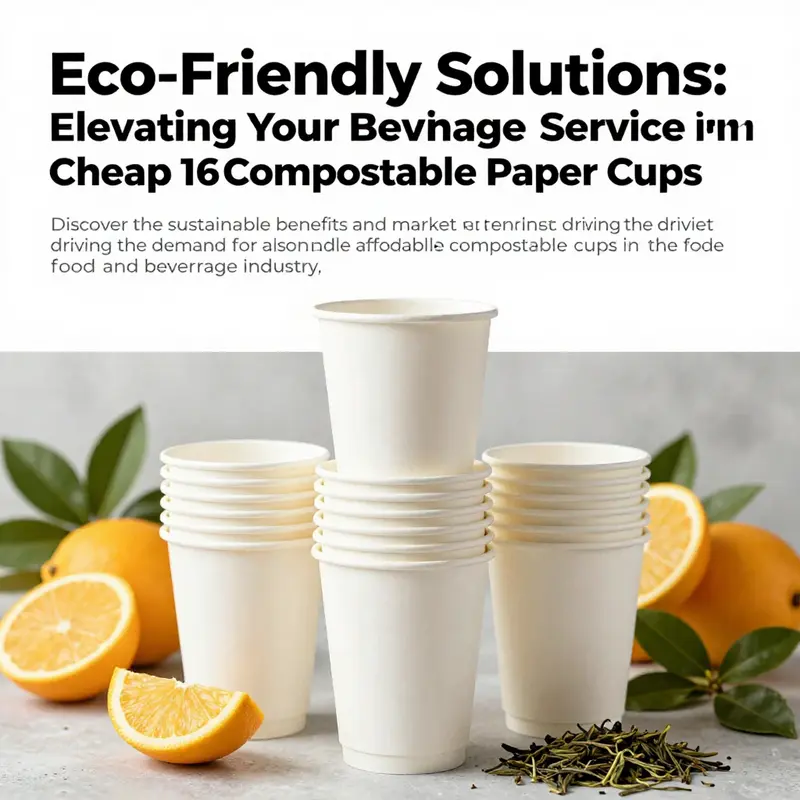
In the quest for sustainable practices, cheap 16oz compostable paper cups are emerging as a leading choice for various sectors, from bubble tea shops to corporate events. As consumer preferences shift towards eco-friendly products, these cups not only provide a solution for environmental concerns but also align with the growing regulations on single-use plastics. Each chapter of this guide will delve into product offerings, sustainability impacts, cost-effectiveness, market trends, and consumer preferences, ultimately emphasizing the significance of integrating these compostable cups into everyday business practices for enhanced service quality and a reduced ecological footprint.
Practical Choices for Cheap 16oz Compostable Paper Cups: Features, Costs, and Sourcing
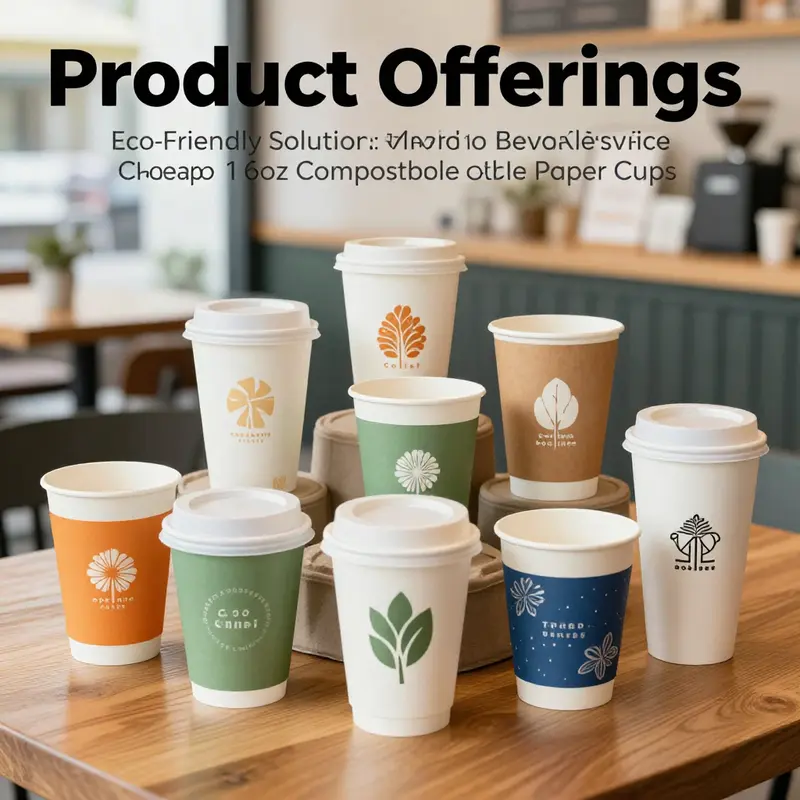
What budget compostable 16oz paper cups deliver and how to choose them
Affordable 16oz compostable paper cups now bridge cost sensitivity and environmental responsibility. They are designed for hot beverages. They combine food-grade paperboard with biodegradable linings. Common linings include plant-based PLA or compostable PE alternatives. These materials enable industrial composting and reduce reliance on petroleum-based plastics. Yet, they require proper collection and processing to complete breakdown.
A defining functional feature is the ripple wall. The ripple design adds insulation and improves grip. It reduces the need for extra sleeves. The ripple also adds rigidity, which keeps the cup stable during handling. That makes these cups suitable for busy cafés, outdoor events, and catering operations. Many manufacturers also provide double-wall options. These mimic the insulation effect while keeping the outer surface comfortable to hold.
Lid options are improving too. Compostable cups can come with white dome lids lined with plant-based starch. These lids offer spill resistance and maintain compostability. They preserve the drink experience while matching a sustainable claim. Be aware that lids must match the composting profile of the cup. When lids and cups use different materials, compostability can be compromised. Always confirm material compatibility before ordering.
Certifications matter, especially for mass foodservice purchases. Reputable suppliers list approvals from SGS, FDA, and TÜV. Those certifications confirm food-contact safety and verify manufacturing practices. They also simplify procurement for businesses with compliance obligations. When you see such certifications, check the specific test reports. Verify the scope, such as migration limits and compostability standards. Certifications are not interchangeable; some relate to food safety, others to compostability. Seek both types when possible.
Customization helps small brands compete with larger chains. Many budget suppliers offer flexo or offset printing in up to seven colors. This lets cafés, food trucks, and event caterers present a professional brand image. Printed cups reinforce marketing messages with every sale. Keep art files simple and high contrast for the best print results on paperboard. Also consider how full-color printing affects price and MOQ.
MOQ and pricing define accessibility. Minimum order quantities often start around 50,000 pieces for the lowest unit prices. Bulk pricing can range from about $0.01 to $0.035 per unit. These figures depend on lining type, printing complexity, lid choices, and order volume. For many businesses, bulk orders deliver meaningful per-unit savings. But large MOQs require planning for storage and turnover. Evaluate demand forecasts carefully to avoid excess stock.
Packaging and logistics are straightforward with standard cartons. Common configurations use 1,000 pieces per carton. That simplifies inventory counting and transport planning. Some suppliers can ship in as fast as seven days for prepared setups. Verify lead times and build them into promotional calendars. Turnaround times shorten with standardized print runs and pre-approved dielines.
Assessing performance and end-of-life is crucial. PLA and compostable PE both need industrial composting facilities to break down within expected timelines. In a home compost pile, these linings may not decompose effectively. If your community lacks industrial composting, compostable cups may still end up in landfill. That limits environmental benefits. Consider local waste infrastructure before committing wholesale to a compostable solution.
Durability and hot liquid performance are also key. Cheap options can still perform well if the paperboard and lining are balanced correctly. Test samples with typical drinks you serve. Try milk-based lattes, rather than just black coffee. High-fat or sugary beverages can behave differently. Also check for leakage after holding cups upright and on their sides. Lid fit must be snug and secure under normal movement.
Supplier reliability reduces procurement risk. Look for verified audited suppliers with transparent factory audits and test reports. Platforms that vet manufacturers can shorten sourcing time. But due diligence remains important. Request samples, confirm certifications, and ask for reference customers. If the supplier lists fast turnaround times, confirm those under your specific print and lid specifications.
Environmental messaging should be precise and honest. Avoid broad claims without qualification. If your cups require industrial composting, communicate that clearly to customers. Offer instructions about disposal and collection points. Well-worded signage can direct customers to the right bin. That helps realize the environmental benefits of compostable packaging.
Use cases vary. Coffee chains and hotels can standardize on these cups to message sustainability. Food trucks and festival vendors benefit from reduced breakage and better insulation. Catering services gain the advantage of on-brand cups in large volumes. Small businesses can test demand with smaller quantities of non-customized stock and scale into custom runs later.
Complementary disposable items matter when building a sustainable kit. Consider pairing cups with compostable stirrers, wooden cutlery, or kraft sleeves to create cohesive, eco-friendly sets. These items ease customer sorting and reduce contamination in compost streams. For a ready-made companion option, see the disposable paper cups 8-16oz selection that aligns with similar material profiles.
Sourcing strategy should balance price, compliance, and practicality. Start by defining the compostability profile you need. Confirm municipal compost options. Then seek certified samples and validate lid compatibility. Calculate total landed cost, including storage and potential waste management fees. Finally, test cup performance in the field for at least a month to reveal any hidden issues.
Cheap 16oz compostable paper cups are a realistic alternative to single-use plastic cups. They deliver insulation, branding opportunities, and certified food safety at low unit costs. However, they require proper end-of-life management to deliver environmental value. With careful supplier selection, realistic MOQs, and clear customer communication, these cups scale into an effective, sustainable packaging solution.
For more information on sourcing these compostable 16oz paper cups, visit: https://www.alibaba.com/product-detail/16-Oz-Paper-Soup-Containers-with-Lids_1600499823559.html
Balancing Promise and Practicality: The Sustainability Impact of Cheap 16oz Compostable Paper Cups
The momentum behind cheap 16oz compostable paper cups is inseparable from the broader shift toward sustainability in the food and beverage landscape. As consumer expectations tilt toward products that reduce environmental impact without sacrificing convenience, these cups offer a pragmatic path for operators who must meet growing demand while managing costs. The appeal rests not only in the appeal to ethics but in the practical economics of bulk buying. Markets have begun to reward bulk, plastic-free solutions that can replace single-use plastics, especially where regulatory environments are tightening. In this context, the affordability of large quantities—where units can dip to a fraction of a cent in the right volume—transforms sustainability from a niche consideration into a tangible business choice. The narrative is not simply about greener cups; it is about integrating a cleaner packaging loop into daily operations without compromising service quality or speed of service for hot beverages, on the go or in-store.
At the core of the sustainability argument is the renewable character of the cups’ primary material. Paper pulp, when sourced from forests managed for long-term health of the ecosystem, reduces the dependency on fossil fuels compared with traditional plastics. This renewable framing becomes more meaningful when the production system is designed to minimize waste and maximize material efficiency. In ideal conditions, the cups participate in a closed-loop discourse: raw fibers re-enter the economy through composting rather than lingering in landfills or complicating recycling streams. The result is a potential reduction in landfilled material and the greenhouse gas footprint associated with disposal. Yet, like any material choice, the full environmental benefit hinges on the surrounding systems—how the cups are disposed of and whether the broader waste management infrastructure can accept them in the intended form.
Compostability introduces both opportunity and complexity. Under industrial composting conditions, where heat and moisture are carefully controlled, these cups can break down more readily than conventional plastics, cutting landfill volume and associated emissions. This advantage is contingent on access to appropriate facilities and consumer participation in proper disposal. In practice, the real-world impact depends on a chain of behaviors and infrastructure that may vary by region. If a cup designed to be composted winds up in a recycling stream or a general waste bin, its environmental advantage can be blunted or reversed. The end-of-life story thus becomes a pivotal part of the sustainability equation. Consumers and businesses alike must navigate a patchwork of local programs, clarifying what can be accepted and ensuring that cups do not contaminate other recyclables. The EPA’s guidance on composting organic materials highlights the importance of proper management, which is central to realizing the cups’ intended environmental benefits. (External resource: https://www.epa.gov/sustainable-management-waste/composting-organic-materials)
The production footprint of these cups cannot be overlooked. Even when the feedstock is renewable, the processes involved in turning fiber into finished cups demand energy and water. Each step—logging, pulping, forming, drying, and packaging—consumes resources, and improvements in efficiency and source optimization are critical to reducing environmental impact. Moreover, some variants have supported features, such as thin polymer linings to stave off leakage, which can complicate composting if the lining resists degradation. Designers and manufacturers are increasingly mindful of such trade-offs, pursuing options that preserve barrier properties while maintaining compostability under the right conditions. The goal is to minimize the life-cycle impact while keeping the cups affordable enough for widespread use in bulk orders. In this balancing act, the lowest possible price must still align with responsible production practices and verified safety standards.
Regulatory trends further shape the sustainability calculus. As jurisdictions consider or enact tighter controls on single-use plastics, the impetus to shift toward compostable alternatives grows stronger. The practical implementation of such policies requires not only the material innovation but also the expansion of composting infrastructure and consumer education. Without these complements, even the most well-intentioned packaging choices can fall short of their potential. The conversation thus extends beyond the cup itself to the systems that support composting at scale, including municipal programs, privately operated facilities, and consumer participation. When a business invests in bulk, plastic-free cups designed for hot beverages, it also commits to a waste-management mindset that expects facilities capable of handling compostable inputs. The alignment of product design with system readiness is where sustainability moves from theory to measurable impact.
In the midst of this, the price and performance dynamics deserve attention. The economic proposition of bulk, plastic-free options enables businesses to meaningfully reduce per-unit costs while signaling commitment to sustainability. When orders scale to tens of thousands or more, unit costs can become competitive with traditional disposable alternatives, even after accounting for the potential additional handling or sorting required by composting programs. The trade-off is not simply about price versus performance; it is about reliability, safety, and the ability to deliver consistent, predictable service at scale. In hot beverage service, where customers expect warmth, speed, and cleanliness, the cups must not only perform delivering containment but also preserve the quality of the consumer experience. Safety certifications, such as those from recognized authorities, reinforce this assurance. A cup that is certified for food contact by trusted agencies reduces risk for operators and helps maintain brand integrity in a marketplace increasingly attentive to safety as part of sustainability.
Another layer of practicality emerges in the design features that support usability without compromising compostability. A notable development is the pairing of compostable cups with white dome lids, often lined with plant-based starch. This combination enhances spill resistance and convenience, enabling businesses to offer a more dependable on-the-go solution. The lid design underscores how advances in packaging technology can improve functionality while staying aligned with environmental goals. Such features can be pivotal in reducing waste associated with spills and messes, which in turn supports a more efficient service model and fewer product losses. The overarching narrative is one of a packaging ecosystem that evolves in tandem with consumer expectations and operational realities—where the cup, the lid, and the disposal pathway all converge toward a more responsible, resilient system.
To situate these considerations within a broader packaging landscape, it is useful to think about the wider ecosystem of disposable and semi-disposable solutions. Packaging formats are increasingly conceived as interlocking pieces of a sustainability story, rather than isolated choices. The cups themselves may be complemented by a range of compostable or recyclable containers, sleeves, and lids, each chosen to optimize performance, cost, and end-of-life outcomes. A cohesive strategy aims to minimize material diversity where possible, reducing confusion for disposal streams while preserving the flexibility needed to meet diverse service contexts. Within this framework, the viability of cheap 16oz compostable cups becomes not just a product attribute but a strategic element of a business’s environmental narrative. It supports a transition that aligns with consumer values, regulatory expectations, and the economics of scale, without sacrificing the speed and reliability that customers expect from hot beverage service.
For readers interested in how these packaging choices fit into the broader ecosystem of disposable and semi-disposable products, consider how other packaging formats—such as cake boxes and pastry containers that emphasize windowed design and compostable materials—fit into a cohesive sustainability story. These items illustrate a wider move toward eco-conscious packaging that can accompany beverages in a consistent approach to waste reduction. Pure-color foldable cake boxes with window bakery boxes pastry box for cake chocolates cupcakes gift packaging paper boxes provide a concrete example of how packaging can maintain visual appeal and functional integrity while remaining aligned with compostability goals. If you want to explore these packaging options in more detail, you can learn about them through the following internal resource: pure color foldable cake boxes with window bakery boxes pastry box for cake chocolates cupcakes gift packaging paper boxes.
Ultimately, the sustainability impact of cheap 16oz compostable paper cups rests on a simple idea expressed through a complex system: choosing a material that can be produced with renewable inputs, designed to minimize environmental harm at the end of its life, and supported by infrastructure that can turn disposal into a genuine environmental outcome. The economic and practical appeal of bulk, plastic-free cups with strong safety credentials makes them a compelling option for many operators. Yet the real-world benefit accrues only when disposal pathways are clear, facilities exist to process compostable materials, and consumers participate in proper separation. In bridging these gaps, businesses not only reduce waste but also strengthen trust with customers who increasingly judge brands by their commitment to sustainable practices. The journey is ongoing, and the trajectory points toward a packaging future in which sustainability and affordability reinforce one another rather than compete for attention.
To deepen understanding of composting pathways and the environmental performance of compostable paper cups, readers can consult external resources that detail the state of composting infrastructure and its role in realizing the environmental benefits of biodegradable packaging. (External resource: https://www.epa.gov/sustainable-management-waste/composting-organic-materials)
Sustainable Savings in Bulk: The True Cost-Effectiveness of 16oz Compostable Paper Cups
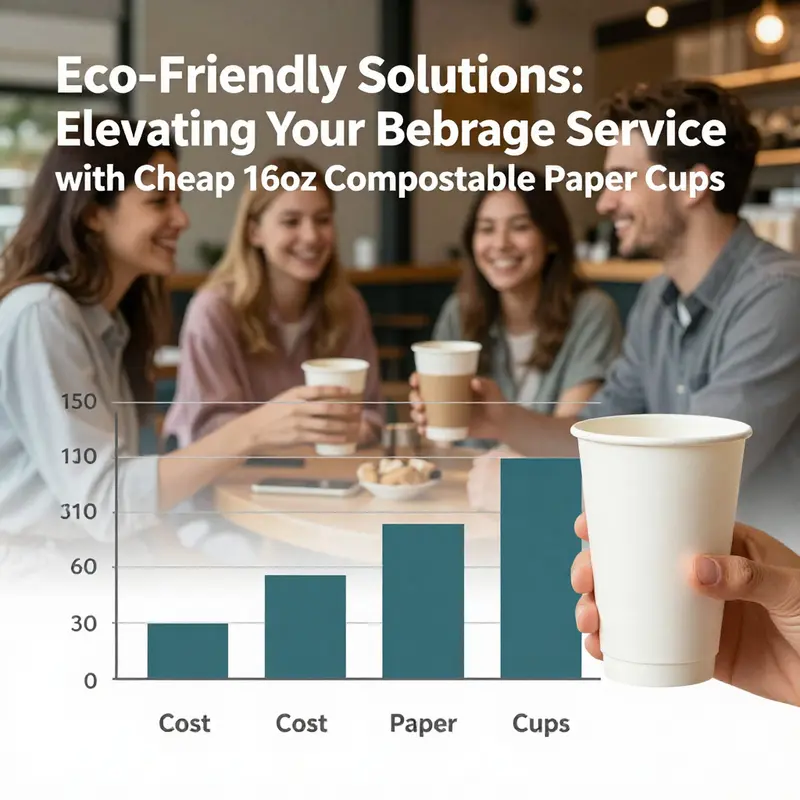
Across cafes, markets, and event spaces, the shift toward sustainable disposables has translated into steady demand for cheap 16oz compostable paper cups. This demand grows not only from a wish to curtail plastic waste but also from the practical realities of running a business where margins matter. When a single cup can be sourced for fractions of a cent in bulk, the economics become compelling: sustainability that does not erode profitability. The core of this value proposition lies in three intertwined factors: the cost of raw materials, the efficiency of manufacturing, and the ability to move products in high volumes. Kraft paper serves as the backbone, offering renewability, biodegradability, and a predictable supply profile. By selecting a material that is widely accepted for composting and that aligns with waste-stream realities, manufacturers can keep prices competitive while still signaling environmental responsibility. The result is a cup that reduces environmental impact without demanding premium pricing. Certifications further strengthen this dynamic, signaling to buyers that the product meets established standards for compostability and marine biodegradability. Third party validations, when present, help bridge a gap between what is claimed and what customers experience in practice. They also help buyers navigate conversations with municipal waste programs, garden centers, and composting facilities that determine whether a cup is accepted in their operations. In a market segment where commitment to sustainability is a differentiator, these certifications contribute to trust and repeat business, making it easier for buyers to justify the initial expense of switching from plastics to plant-based materials.
The most striking element of the cost story is the bulk pricing. Sources indicate that disposable cups can be priced as low as a few cents per unit when ordered in large quantities, with thresholds around ten thousand pieces or more commonly cited. The economics can tighten even further at higher volumes, where every additional thousand units reduces the per-unit cost due to economies of scale, streamlined production runs, and standardized packaging. For buyers such as cafes, food trucks, and catering outfits that operate on tight margins and high turnover, these price points create room for competitive pricing, promotional campaigns, or bulk procurement strategies that stabilize supply during peak periods. A side effect of this scalability is the opportunity to plan waste management more efficiently. When a business purchases in bulk, it can negotiate longer-term expectations with suppliers, enabling more predictable lead times and smoother inventory cycles. In turn, this predictability helps shops schedule cleaning crews, adjust staffing to match demand, and align with festival or market calendars that drive spikes in beverage sales. The sum of these advantages often translates into a more resilient operating model, where sustainability and cost containment reinforce each other rather than compete for attention.
From a design perspective, the single-wall construction typical of these cups represents a pragmatic balance between performance and cost. While single-wall cups are well suited to cold beverages and brief hot-service scenarios, they excel enough to cover a broad range of everyday needs. This choice keeps material use lean, which is especially important when the goal is to maintain affordability at scale. It also aligns with the expected end-use contexts of many customers: coffee-on-the-go, iced drinks, and casual gatherings where quick turnover minimizes the exposure to prolonged heat or moisture that might compromise structure over time. For operations that require more insulation or spill resistance, variants with dome lids and plant-based starch linings exist as a complementary option. These lids add functionality without significantly complicating the compostability story, demonstrating how advances in packaging technology can weave usability with environmental responsibility. In practice, the availability of a lid option can broaden the cups’ application, enabling seamless service in outdoor markets, weekend fairs, and corporate events where spill prevention and convenience count as much as sustainability.
The business benefits extend beyond the immediate price-per-unit calculation. Long-term savings emerge when companies align packaging choices with broader sustainability strategies and consumer expectations. Businesses that publicly commit to eco-friendly packaging often experience reputational benefits that translate into customer loyalty and pricing power. In a competitive landscape where customers increasingly seek responsible brands, the story of a supplier who can provide reliable, affordable compostable cups reinforces a brand’s environmental narrative without forcing sacrifice in cost or performance. The careful pairing of credible certifications with a transparent sourcing plan and a stable supply chain can also reduce regulatory risk. As jurisdictions tighten restrictions on single-use plastics, the ability to pivot to certified compostables helps organizations demonstrate proactive compliance rather than reactive adaptation. The combination of cost control, brand differentiation, and regulatory readiness creates a compelling value proposition for buyers ranging from neighborhood cafés to mobile catering outfits.
Of course, no cost story is complete without attention to the practicalities of end-of-life management. Compostability and marine biodegradability are meaningful advantages, but they only realize value when the cups reach compatible facilities. Municipal programs and commercial composters vary in their acceptance criteria, and gaps in infrastructure can influence real-world outcomes. Buyers increasingly ask for transparency about certification scope, test methods, and the specific end-of-life pathways that align with their community’s waste system. In this context, suppliers who provide clear documentation and robust, third-party verification help buyers minimize the risk that a sustainable label becomes a marketing claim without practical downstream impact. For many operators, the tipping point is a combination of cost, reliability, and the assurance that the packaging contributes to a circular economy rather than simply shifting waste management burdens. These considerations are not merely theoretical; they affect purchasing decisions, supplier negotiations, and even menu design, as operators choose beverages and serving formats that harmonize with the lifecycle realities of compostable cups.
The chapter’s focus on cost-effectiveness remains anchored in concrete, scalable realities. Bulk pricing remains a central driver, with notes of $0.01–$0.02 per unit for orders in the ten-thousand-piece range, and even more favorable terms for fifty-thousand pieces or more in some cases. When framing a purchasing decision, managers weigh the per-unit price against the logistical costs of storage, transportation, and the potential savings from reduced waste-handling fees and regulatory risk. The math matters not only to the bottom line but also to the business’s ability to scale a sustainable program with confidence. For any organization considering a shift from conventional plastics to compostable paper cups, the question is less about whether the price is compelling and more about how well the supply chain can deliver consistent quality, rapid fulfillment, and credible certifications that survive audit and consumer scrutiny. In practice, this means selecting a supplier that can demonstrate stable mass production, routine quality checks, and dependable labeling that aligns with compostability claims.
For readers seeking a concrete example of how this plays out in the market, a detailed look at current pricing and product specifications can be found in industry listings that connect buyers with bulk suppliers. And for buyers who want a practical entry point into the world of 16oz options without sacrificing quality, a targeted product page on a reliable supplier platform can provide quick comparisons, test samples, and volume-based pricing guidance. In this sense, the value proposition of cheap 16oz compostable cups is not just about the unit price; it is about a cohesive package of material science, manufacturing efficiency, and a logistics ecosystem that enables sustainable choices to scale with business growth. To see a representative example of how such products are presented and priced in bulk, you can explore a dedicated product page that highlights 16oz cups designed for hot and cold beverages, along with the associated bulk pricing tiers and compatibility with lids. The broader takeaway is clear: sustainable packaging can be affordable, reliable, and scalable when the supply chain is tuned to the demands of high-volume operators.
For a closer look at the 16oz category and bulk options, you can explore this internal resource: 16oz disposable paper cups on EcoCupBowl. It illustrates how a single page can present pricing tiers, material composition, and practical usage guidance in a way that helps buyers align purchasing decisions with sustainability goals. As the market continues to evolve, the combination of cost discipline, material innovation, and credible certifications will likely keep these cups at the intersection of affordability and responsibility. A robust bulk strategy, supported by transparent end-of-life information, positions businesses to meet growing consumer expectations while maintaining strong margins. The result is a compelling blueprint for organizations seeking to expand sustainable packaging without sacrificing operational efficiency.
External pricing and product specifications can be found here: https://www.alibaba.com/product-detail/16-oz-paper-soup-containers-with-lids-disposable_1600584937589.html
Rising Currents: Market Trends Steering Affordable 16oz Compostable Cups
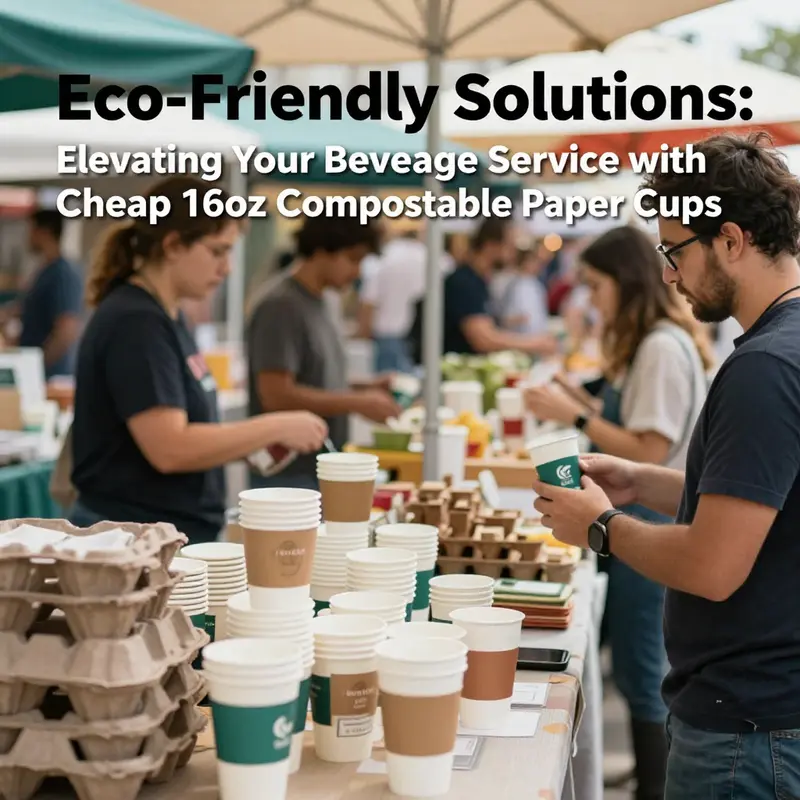
A quiet shift is shaping everyday coffee rituals and takeout meals. The 16oz size, long a standard for hot beverages, has become a focal point for sustainable packaging strategies that seek to balance affordability with responsibility.
Demand and regulation converge to push the market toward compostable paper cups. Consumers increasingly expect products that perform as well as conventional options while leaving less lasting impact, and operators—from local cafes to large chains—rethink packaging choices to meet both budgets and environmental goals.
Regulatory measures—bans, taxes, and clearer labeling—tighten the stakes for traditional plastics and indirectly reward compostable alternatives. When policymakers set the frame, the incentive to invest in biodegradable materials grows stronger and suppliers respond with scalable options.
Design and manufacturing improvements underpin the trend. Certified compostable papers, plastic-free designs, and plant-based liners are becoming standard, supporting heat tolerance, seal integrity, and usability in busy service environments.
Production economics follow a similar arc. Automated cup-making, precise coatings, and efficient drying reduce per-unit costs at high volumes, making bulk purchases more viable for a wider range of operators.
The result is a market where affordable 16oz compostable cups are not a niche luxury but a practical option that aligns cost, performance, and end-of-life stewardship. Buyers benefit from transparent specifications and scalable supply chains as suppliers compete on value, reliability, and environmental impact.
What Buyers Value Most: Balancing Cost, Performance, and True Compostability in 16oz Cups
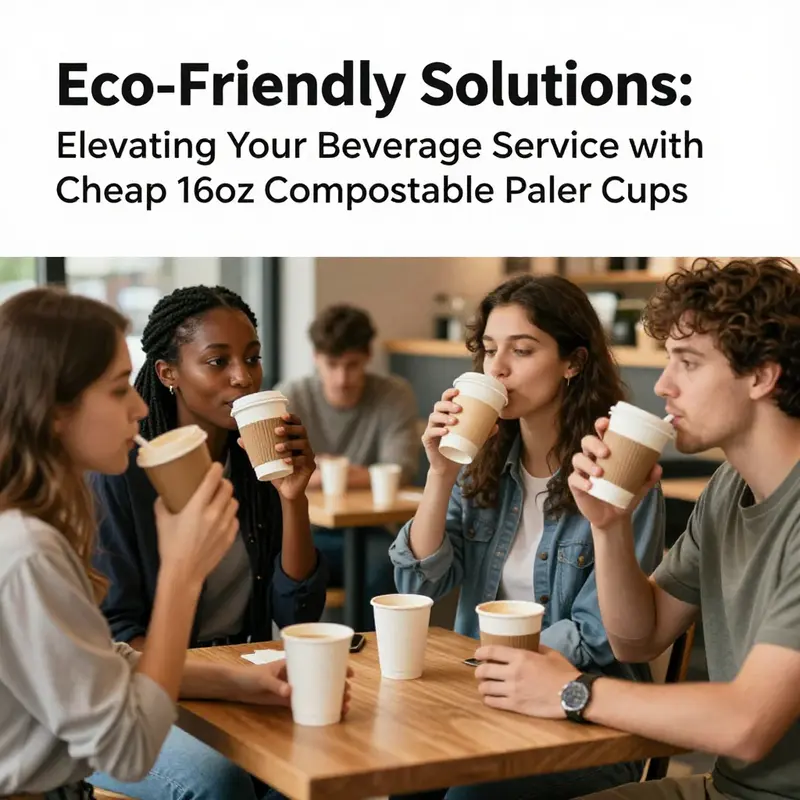
What consumers want from a cheap 16oz compostable paper cup is simple to describe but complex to deliver. They expect a product that reduces environmental harm without creating new hassles. They want a cup that keeps drinks hot or cold, resists leaks, carries a brand message, and fits a budget. Meeting these expectations forces manufacturers and suppliers to reconcile four practical priorities: verified compostability, reliable functionality, accessible pricing, and brand flexibility. This chapter explores how those priorities shape buying decisions and how product features and market realities influence consumer preference.
Environmental credibility sits at the top of the list. Shoppers look for clear signals that a cup can actually break down after use. Labels such as Compostable and 100% Plastic Free matter a great deal. Certifications from recognized bodies provide weight behind those claims. When consumers see badges tied to independent testing and standards, their confidence rises. That confidence matters because disposal systems vary by region. If a cup is certified compostable under industrial or home compost conditions, buyers are reassured that the product won’t persist as litter or microplastic. This reassurance is particularly important for businesses that promote eco-friendly practices as part of their brand.
Functionality is equally non-negotiable. Compostability alone will not win repeat purchases if the cup leaks, feels flimsy, or fails to insulate. For hot beverages, consumers prefer cups with secondary insulating strategies, like double-wall construction or corrugated sleeves built into the cup design. These features protect hands and preserve beverage temperature without adding separate accessories. A cup must also perform under real-world use: it should resist seepage at the seam, withstand being carried in a tray, and accept a lid that fits snugly. Cups that advertise Leakproof or Double Wall are more attractive because they promise that practical reliability.
Price remains the deciding constraint for many buyers. The descriptor “cheap” in the product search reflects the need to balance sustainability with margins. Small cafés, event planners, and food stalls often buy thousands of cups at once, so the unit price is decisive. Bulk discounts and transparent minimum order quantities drive purchasing choices. Many buyers are willing to commit to larger orders if unit savings are meaningful and product quality is consistent. Payment options and currency flexibility also influence which suppliers win business across borders. A supplier that supports large-volume orders and straightforward pricing will appeal to cost-conscious buyers without forcing a compromise on material standards.
Customization is a growing priority for businesses. Packaging is a visible brand surface; it communicates values and attracts attention. Printers and marketers look for suppliers that offer customized printing at reasonable minimums. Custom artwork turns a simple cup into a mobile advertisement, reinforcing the eco-friendly promise with a brand story. When customization is combined with compostable materials, it creates an authentic brand experience that resonates with sustainable-minded customers.
Lid compatibility and accessory design are small details with big impact. Compostable lids made from plant-based starches or other biodegradable materials add functionality while maintaining compostability. Consumers appreciate spill-resistant domes for cold drinks and snug flat lids for hot beverages. When lids match the compostable claim of the cup, the entire package behaves as a consistent green solution. Conversely, mismatched lids that contain conventional plastics complicate disposal and erode trust.
Certification and safety testing address both perception and regulation. Buyers, and especially corporate or institutional purchasers, demand documentation. Certificates from accredited labs or safety agencies demonstrate compliance with food-contact safety standards. Certifications for compostability signal that the product meets specific decomposition timelines in defined conditions. That clarity reduces buyer hesitation and helps businesses comply with local regulations restricting single-use plastics.
Practical disposal realities shape consumer choices too. In regions with industrial composting, buyers may accept materials that require that infrastructure. Where only household composting exists, consumers and businesses prefer items certified for home composting. Some buyers will also choose fully biodegradable papers and plant-based linings that break down in municipal organic waste systems. Understanding the disposal context allows buyers to select products whose end-of-life aligns with local infrastructure.
Trust is often built through transparency about materials, testing, and origin. Detailed product descriptions that list fiber sources, lining materials, and certification links reduce suspicion. Customers become repeat buyers when they can verify claims without friction. Visible, verifiable information encourages bulk purchases and long-term supplier relationships.
Market segments show differences in emphasis. Coffee shops prioritize insulation and lid fit. Event organizers emphasize cost and branding. Office caterers look for packaging compatibility with food-service routines and waste streams. Individual consumers buying small packs want clear compostability claims and attractive design. Suppliers who recognize these nuances and present tailored solutions will find stronger demand across segments.
Sustainability is rarely the single decisive factor. The most successful cheap 16oz compostable cups are those that weave environmental integrity into everyday practicality. A cup that checks the compostability box, keeps beverages safe and comfortable to drink, arrives at a competitive unit price, and supports branding needs will satisfy the majority of buyers. Businesses that communicate certifications, offer options like double-wall insulation, and provide compostable lid choices make adoption easier for customers who want to act sustainably without sacrificing convenience.
Finally, long-term preference patterns reflect broader trends. As regulations restrict single-use plastics, demand for genuine compostable alternatives will rise. Buyers will increasingly screen suppliers for verified compostability, consistent performance, and scalable pricing. Simultaneously, businesses that invest in consumer education about proper disposal will strengthen overall value. Clear labeling, matched lids, and accessible information about how to compost the cup are simple steps that improve outcomes.
For sellers, the opportunity is to present a package that speaks to these buyer priorities simultaneously. For buyers, the path to confident selection lies in checking certifications, testing cup performance, and assessing total cost in the context of bulk savings and branding benefits. Those actions ensure that the chosen cup truly delivers on its promise: an affordable, practical, and compostable solution for everyday beverage service.
For a typical product listing that highlights compostability, lid options, and bulk pricing, see this example resource. (External reference: https://www.alibaba.com/product-detail/16-Oz-Paper-Soup-Containers-with-Lids_1600377897517.html?spm=a2700.1.wissu.2&src=productDetail)
You can also explore suppliers offering insulated designs and small-quantity options, such as a range of double-layer cups, to compare features and pricing. (Internal resource: double-layer paper cups)
Final thoughts
Incorporating cheap 16oz compostable paper cups into your business not only meets the growing consumer demand for sustainable packaging but also aligns with legislative trends toward eco-conscious practices. By prioritizing environmentally friendly solutions, businesses can enhance their brand image, contribute positively to the planet, and satisfy a customer base that values sustainability. Transitioning to these compostable cups can lead to long-term benefits, including cost savings and improved customer loyalty. Embrace the change today and contribute to a greener future while providing quality service to your clientele.