

For bubble tea shops, restaurants, food trucks, and event planners, the choice of serving materials is critical to customer satisfaction and brand image. 12 oz disposable clear plastic cups are more than just vessels; they enhance the experience of enjoying cold beverages, making them a popular choice in various sectors. This article delves into the design features that make these cups user-friendly and visually appealing, conducts a thorough cost analysis, shares valuable insights on reliable suppliers, and explores the environmental considerations surrounding disposable plastics.
Crystal Clarity and Quiet Confidence: The Design Narrative Behind 12 oz Clear Plastic Cups

The allure of a 12 oz disposable clear plastic cup begins with what you can’t miss at a glance: crystal-clear transparency. In a world saturated with visual cues, the way a beverage sits inside a cup becomes part of the product’s story. The color of a juice, the hue of a cocktail, the pale shimmer of a soda—these visual cues do more than please the eye. They communicate freshness, quality, and even portion size. For operators in cafes, catering teams at events, and venues that depend on efficient service, the cup is as much a stage as a vessel. The design philosophy surrounding these cups centers on that clarity, but it extends far beyond optics. It is a careful balance of practicality, aesthetics, and experience, all engineered to support the beverage and the business that serves it.
The first design feature that commands attention is the ergonomic shape combined with a secure dome lid. The shape is not incidental; it is a deliberate compromise between comfort during hand-to-mouth use and stability when the cup is sidelined on a tray or a table. A thoughtful rim thickness gives a smooth drinking edge that rests gently on the lips, reducing spill risk while maintaining a quick, confident sip for busy staff and customers. The dome lid, often referred to in industry parlance as a SIP-lid, adds another layer of utility. It creates a splash-proof seal that shields the beverage from accidental tilts and breezes at outdoor events, during crowded service lanes, or while a courier navigates a curbside pickup. The lid’s snug fit is not merely about keeping the drink inside; it’s about preserving aroma, carbonation, and temperature for a longer moment of visual appeal and taste. The combination of a well-executed lip design and a secure lid makes the cup a reliable companion for takeout and on-the-go consumption, where the dynamics of transport can otherwise gnaw at the perceived quality of a beverage.
A quieter, subtler feature that often goes unnoticed is the wall texture. In many versions, a smooth, glossy exterior emphasizes the drink’s clarity and the drinker’s appreciation of color. Yet, some variants experiment with a textured, corrugated wall design that offers a tactile grip and a touch of thermal insulation. While the corrugation hallmark is more widely associated with paper-based cups, certain plastic iterations borrow the same principle to improve handling and comfort. The practical payoff is twofold: a steadier grip reduces the chance of accidental drops, and the textural variation can help the cup feel cooler to the touch, which contributes to the perception of temperature and freshness even before the beverage is tasted. It’s a small but meaningful detail, revealing how design can extend beyond appearance to influence user experience on a physical, sensory level.
Brand presence is another crucial design axis. In markets where cups double as marketing tools, the available printing area becomes a strategic canvas. The possibility of adding logos, colors, or promotional messages means the cup can carry a brand’s identity through to the consumer’s hand and even into the social spaces where photos are shared. Clear cups with print-ready zones enable corporates to imprint a message on a disposable asset without sacrificing the beverage’s visibility. This synergy between product and presentation is why many operators treat the cup not just as packaging but as a mobile advertisement that travels with the customer. The visual payoff—the corporate color, the logo, or a succinct call to action—can reinforce a guest’s positive impression and, in turn, influence future choices.
Material choice anchors the other half of the design equation. The dominant material for cold beverages is a rigid, clear thermoplastic known for its strength, clarity, and safety in contact with food. This material’s rigidity supports an unyielding, shatter-resistant profile, which is essential for transport and handling in high-volume service environments. Clarity remains paramount; the same property that makes the material appealing for showcasing beverages also makes any minor imperfection more conspicuous. Because of that, consistency in manufacturing is prized, and suppliers strive for a level of optical uniformity that reads as premium, even in a disposable product. In many regions, the same material is recyclable through municipal programs, which aligns with sustainability goals while preserving the low-cost advantages that make bulk purchases attractive for cafeterias, caterers, and event organizers.
A parallel thread in the material conversation is the growing interest in environmental responsibility. As consumers and operators alike become more mindful of end-of-life realities, the discussion inevitably turns to recyclability and compostability. The conventional thermoplastic in these cups offers robust recyclability in many recycling streams, typically identified by a code associated with the material. However, the story does not end there. An alternative, plant-based variant exists that is marketed as compostable under industrial conditions. This PLA-based option tends to appeal to venues that emphasize green credentials, but it also carries caveats: industrial composting facilities must exist for the material to break down, and consumer-level composting remains limited. Designers and buyers therefore weigh a spectrum of trade-offs: clarity and strength versus end-of-life pathways, conventional recycling versus industrial composting, cost versus environmental messaging. The result is a carefully calibrated choice that aligns with the event’s tone, the operator’s sustainability commitments, and the expectations of a conscious audience.
Cost efficiency is a practical element that cannot be ignored. The market for these cups is built on bulk competitiveness, with wholesale quantities offering compelling economics for large-scale use. Operators often source in quantities that support full service across multiple events or shifts, recognizing that unit price falls as order size grows. The supply ecosystem reflects this reality, with marketplaces and manufacturers offering details about minimum order quantities, shipping terms, and payment guarantees. The scale of procurement also intersects with logistics: the lighter, stackable design aids in warehousing efficiency, while standardized sizing ensures compatibility with a range of lids and related disposable wares. The interplay between price, performance, and predictability becomes central to planning, especially for catering outfits and venues that must balance cost with customer satisfaction.
Visual appeal remains tightly coupled to the beverage’s presentation. A clear cup is a window—into color, clarity, and even the level of carbonation or thickness of a smoothie. When a bartender or barista is assembling a beverage in view of an audience, the cup supports a narrative of quality. Customers can assess ingredients, the freshness of fruit, the balance of flavors, and the perceived value of the drink simply by looking at color and translucence. In addition to aesthetic alignment, this transparency helps staff monitor fill levels and manage inventory on the fly, reducing spillage and waste. The cup thus acts as both a display and a detector, a subtle but powerful ally in the social and operational dynamics of beverage service.
Yet no design is flawless, and fingerprints or residue can dull the pristine look that transparency promises. The bare, unadorned surface tends to show smudges after handling, and every wipe becomes part of the user’s perception of cleanliness. The practical response to this tendency is to emphasize cleaning workflows and to acknowledge the inevitability of marks in busy environments. Some operators mitigate this through packaging practices that minimize contact with the interior or by offering wipes as part of the service kit. Others rely on the lid’s placement to shield the rim and maintain a neat appearance throughout a guest’s consumption. These micro-design considerations reveal how nuanced the design conversation can be when the goal is to preserve a crisp, inviting presentation from the moment the cup leaves storage until the last sip is enjoyed.
In the broader ecosystem, the cup never exists in isolation. It sits among a family of disposable tableware that includes lids, straws, and packaging that holds beverages for takeout or event service. The alignment of these components is essential. The cup must integrate smoothly with a lid that seals effectively, with a straw compatible with the lid’s geometry, and with packaging systems that transport beverages without compromising their appearance. This compatibility is not merely about convenience; it’s about safeguarding the customer’s experience from the moment the drink is chosen to the moment it reaches the table or the car. The design, therefore, embodies a philosophy of cohesion across components, recognizing that a great cup is most effective when it operates within an ecosystem built for reliability, speed, and consistency.
For those shaping the future of disposable drinkware, the design narrative is not simply about what is visible on the surface. It extends to the way these cups are sourced and distributed. Bulk availability, the ease of ordering in large quantities, and access to verified suppliers enable restaurants, event planners, and hospitality operators to scale quickly while maintaining standardization across locations. An informed purchaser weighs not only the cup’s appearance and performance but also its life cycle, regulatory compliance, and the end-of-life options available to customers and municipalities. In this way, the cup serves as a focal point where design, sustainability, and commerce converge, shaping how beverages are experienced in everyday settings and at large-scale gatherings alike.
To connect more deeply with the practical realities of deployment, consider how a cup’s simplicity becomes a strategic advantage in diverse environments. In a bustling event hall, the cup’s clear profile helps guests identify flavors and portions while staff maintain speed and accuracy. In a casual cafe, the same cup reinforces a clean, modern aesthetic that supports a minimalist brand identity. In a takeout-focused operation, the dome lid and secure seal offer peace of mind to customers who value reliability during transport. Across these scenarios, the design features discussed—the clarity, the ergonomic shape, the SIP-lid, the wall texture, and the branding opportunities—cohere into a product that supports efficient service without compromising presentation. The cup, in short, is a quiet workhorse of the beverage industry, a keen example of how form and function can harmonize to elevate everyday experiences.
For readers seeking concrete examples of how these design notions translate into practice, a deeper look at the broader disposable-ware landscape reveals the practicalities behind the choices. The availability of clear plastic cups in wholesale quantities ensures that venues of various scales can equip themselves with a consistent, presentable, and affordable solution. The capacity—12 ounces—strikes a balance between drink size and portability, enabling customers to enjoy a satisfying serving without creating undue bulk or waste. In this sense, the cup functions as a nexus where visual appeal, user comfort, and business pragmatism meet. It is a tool designed to do its job well while remaining unobtrusive, letting the beverage itself take center stage. The best designs do not shout; they serve, quietly and confidently, so that guests remember the drink and the moment rather than the container holding it.
As the industry continues to refine materials, textures, and branding capabilities, the trajectory points toward smarter compatibility with sustainability goals and evolving consumer expectations. The ongoing dialogue around recycling, compostability, and the lifecycle of disposable wares will shape future iterations of the 12 oz clear cup. Operators will weigh innovations—whether more sustainable materials, easier end-of-life processing, or improved surface finishes that resist fingerprints—against the core demand for clarity, strength, and cost efficiency. The result will likely be a family of products that maintain the beloved transparency while expanding the possibilities for branding, handling comfort, and environmental responsibility. In that sense, the chapter of the 12 oz clear plastic cup is not closed; it remains open to iteration, guided by the persistent tension between presenting a beverage attractively and delivering the reliability that service demands.
For further context on how this cup fits within a broader packaging ecosystem and the realities of sourcing, readers can explore related disposable-ware options that pair with clear cups to create cohesive, branded experiences. See this related overview: disposable-clear-plastic-cup-outdoor-picnic-pet-cup-drinking-cup-for-parties-birthdays-weddings-camping-utensils. The link points to a practical example of how clear-cup design complements other disposables in a single event workflow, helping planners envision a comprehensive, streamlined setup that marries appearance with performance. External reading on recycling basics can also add a useful perspective on end-of-life considerations: https://www.epa.gov/recycle/recycling-basics
Tiny, Mighty Budget Tools: A Deep Dive into the Cost of 12 oz Clear Disposable Cups for Events
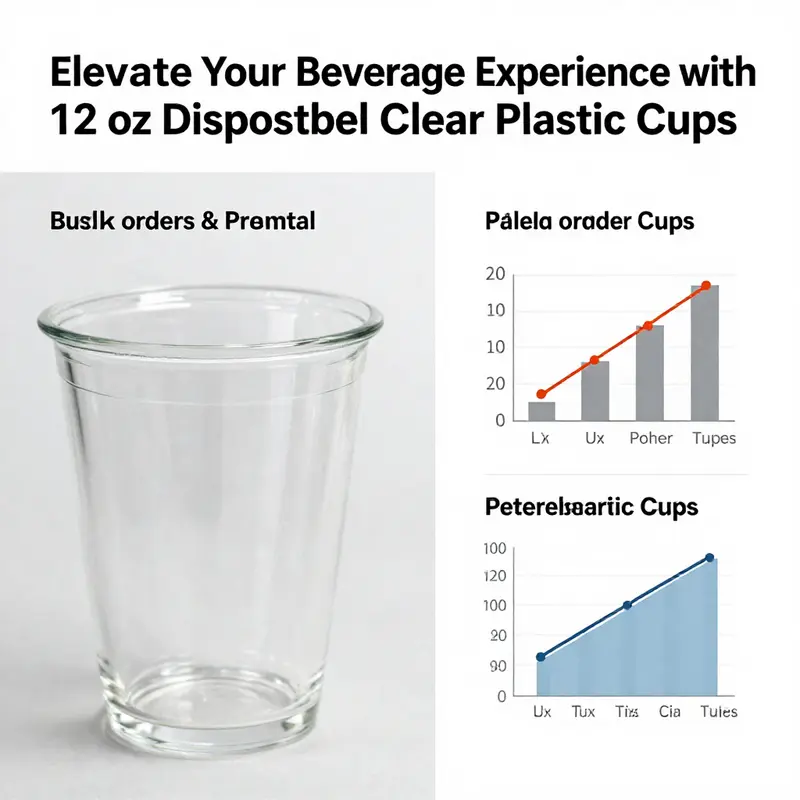
In the quiet economy of event planning, the most humble items often carry outsized influence on the bottom line. A tray of beverages, the color of a cocktail, the way a drink sits in a glass with a perfectly curved rim — these details matter to guests and organizers alike. Yet the price tag attached to the vessels that hold those drinks is usually tucked away in the fine print, only revisited when the final invoice lands. The 12 oz disposable clear plastic cup sits exactly in that sweet spot: it is large enough to feel satisfying, slim enough to be carried easily, and transparent enough to let the drink shine. When you count the total cost of serving beverages at a large gathering, the cup is more than a simple carrier; it is a cost center that can shape procurement strategy, supplier selection, and even the way a party is perceived. Every ounce of liquid, every sip, and every splash is framed by the physical experience of the cup itself. The per-unit price of this cup matters, but so do the patterns of purchase, the expectations around customization, and the realities of shipping and storage. A careful examination of these factors reveals that the true cost picture is a blend of economics, logistics, and design, rather than a single line-item in a spreadsheet.
From a purely aesthetic angle, the capacity of 12 ounces aligns with common beverage sizes and typical service patterns. The cups are transparent, which means the color and clarity of the drink are visible to guests. This visibility enhances the presentation of everything from crystal-clear water to vivid fruit juices and shaded sodas, and it also creates a certain minimalist professionalism for weddings, corporate events, and catering services. In this sense, the cup becomes a stage for the beverage, not merely a container. Its simple silhouette supports a clean, modern look that pairs well with various table settings and environmental goals. Yet with this simplicity comes a set of purchasing considerations that can alter the overall event cost more than most planners anticipate. The decision to buy in bulk versus retail, the choice to print a corporate logo or a venue emblem, and even the selection of a cup with or without insulation all carry downstream effects that ripple through pre-event budgeting and on-site operations.
One of the most influential factors is scale. Bulk pricing is where the conversation begins for budget-minded organizers. When the minimum order climbs into the thousands, unit costs tend to drop dramatically. Realistic ranges for standard, clear, no-frills cups show price points roughly in the neighborhood of one to three cents per cup at volumes of 1,000 units or more. In this realm, the economics are simple: the more you buy, the less each cup costs, often by a multiple that makes large events economically feasible. This is not merely a matter of chasing a discount; it is about unlocking logistics efficiencies. Larger orders simplify the handling, storage, and distribution of cups at the venue, reducing the per-event labor required to stock bars and service stations. The savings, while incremental on a per-cup basis, accumulate quickly when scaled to hundreds of thousands of servings across multiple events or venues.
Compare that with retail or smaller-batch purchases. A 300-pack sourced through a national retailer might land at roughly $29.99, translating to about $0.10 per cup. That price reflects a different set of cost drivers: retail packaging, consumer-ready logistics, and the spoilage risk that sometimes comes with shorter lead times or the need for smaller shipments. For event professionals who schedule last-minute orders, this higher per-unit cost can be a meaningful budget line item, especially when many events occur within a short window. The retail scenario is not without its advantages, though. It offers flexibility for smaller events, pop-ups, or add-on service where the planet of demand is not yet large enough to justify bulk procurement. It also reduces the need for sophisticated storage and long lead times, which can be a relief to organizers juggling multiple vendors and uncertain guest counts.
Beyond wholesale versus retail, customization emerges as a significant cost driver. Simple, unbranded cups maintain a lean price profile, but the moment a company wants to imprint a logo or a message, or to upgrade to a double-wall insulated cup for better temperature regulation, the price per cup climbs. Logo printing, for instance, can be offered only with higher minimum order quantities and additional fees. The appeal of customization is obvious: branding reinforces the event narrative and enhances sponsor visibility, while insulated cups can improve guest satisfaction by keeping beverages cooler for longer and reducing condensation on the table. However, those benefits must be weighed against the incremental cost. In practical terms, a customized cup can push per-unit costs into the mid-range of a few to several cents more per cup, depending on the complexity of the imprint and the volume committed. The result is a layered decision: do you prioritize brand presence and guest experience, or do you maximize cost efficiency by sticking to a plain, unbranded cup?
While price per cup is a core consideration, the broader cost picture includes shipping, lead times, and minimum order quantities. The economics change when you factor in logistics. Bulk purchases typically come with longer lead times and larger shipping chunks, necessitating storage space and inventory planning on-site or in a warehouse. If a venue has to reserve space for 10,000 or 20,000 cups without a reliable, predictable schedule, the capital tied up in stock can be substantial. Conversely, smaller orders may offer agility but at a higher unit cost and more frequent replenishment cycles during an event season. The planning phase, therefore, must balance anticipated beverage demand with the practical realities of delivery windows, rush orders, and the risk of shortages that can disrupt service flows. This is especially true for events with tight timelines, such as weddings with back-to-back receptions or conferences with simultaneous breakout sessions in multiple rooms.
From a product-design perspective, several features can influence both cost and performance. A waved rim, for example, is a consumer comfort feature that some manufacturers include to improve grip and drinking ease. It is a small touch that can reduce spillage and increase guest satisfaction, especially in high-volume service scenarios. Yet such a feature can also come with a marginal cost increase that is easily absorbed at scale but would not be justifiable for a casual, one-off event. The same logic applies to double-wall construction. While it offers insulation and a premium feel, it inevitably raises production costs and may require more stringent minimum orders. When planners weigh these features, the decision should align with the event’s drink program and the expected guest experience. If the beverage menu includes hot or temperature-sensitive drinks, an insulated option can transform service quality and reduce waste from temperature drop, even if it carries a price premium. If the menu is simple and the service model is casual, a standard clear cup may be the most economical and adequate choice.
Cost analysis at this level is not just arithmetic; it is a mindful orchestration of supply chain, design, and experiential goals. For instance, consider the broader event budget and how the cup fits into a per-guest cost target. If the plan aims for a modest beverage spend of a dollar or two per guest, a bulk purchase that yields a unit price around three cents per cup keeps the cup itself from becoming a budget choke point, even when dozens of beverages are poured across an evening. In this framework, the cup supports the drink program without becoming an obstacle to achieving the desired guest experience. It is easier to justify branding or insulation when the incremental cost remains a small fraction of the total spend and the potential impact on guest perception is meaningful. This is especially pertinent for venues that rely on consistent, repeatable service, where standardized cups can streamline training, storage, and waste management processes.
To translate these considerations into actionable procurement practice, event planners often adopt a simple decision framework. First, define the event scale and anticipated beverage volume. Then, determine the acceptable minimum order quantity to achieve the target price per cup. If the numbers align with bulk pricing, engage suppliers for a formal quote that includes shipping and estimated lead times. If time-to-deliver is critical or the event is small, evaluate the cost of a retail pack or a mixed approach that combines bulk stock for core service needs with smaller, on-hand packs for contingencies. In addition, consider future needs. If there is a pipeline of events in quick succession, bulk buying can yield long-term savings and reduce the frequency of purchasing trips, which can help with labor and logistics planning at the site.
For readers who want to explore practical, product-specific options without getting mired in technical jargon, a representative example illustrates the difference between bulk and retail scenarios. The bulk option offers the most economical unit price, typically around a few cents per cup at the 1,000-unit MOQs and above. The retail path, while more expensive per unit, provides flexibility for smaller events or last-minute adjustments. Customization, such as logo imprinting, drives costs higher but can deliver strategic value through brand exposure and sponsorship alignment. The key is to quantify these factors in terms of total cost of ownership for the event rather than as isolated line items. When the cups are viewed as part of the entire beverage program—considering inventory, transport, labor, and guest experience—their value becomes clearer. An integrated approach helps ensure that the cup choice supports service speed, reduces waste, and contributes to a cohesive event narrative.
For planners who want to see how these principles play out in a real-world selection, a nearby product page demonstrates the practical spectrum of clear cups and their features. The page highlights how a straightforward, unbranded 12 oz cup can be priced very competitively at scale, while also outlining available customization options for those seeking branding or improved insulation. The presence of a product page like this can be a useful benchmark when negotiating with suppliers, because it anchors expectations around minimum quantities, price bands, and potential lead times. The decision to incorporate a logo or upgrade to insulated cups should be tied to a clear sponsor engagement or a tangible improvement in guest satisfaction, rather than being pursued for purely cosmetic reasons. Ultimately, what matters is how the cup performs in service—not just how it looks on a catalog page.
To further illustrate the practical dimension of cost, consider the total cups used over the course of a typical event program. A mid-sized conference might serve beverages at three separate sessions, each with 200 attendees. Even with modest consumption, that scenario quickly yields several thousand cups across a week-long program. The cost savings realized by bulk purchasing become salient. If the event runs multiple times per year, these savings compound, driving an appreciable difference in the annual spend. The same logic applies to venues that host recurring private events or caterers who service a wide range of clients. In these cases, the procurement strategy for 12 oz clear plastic cups can become a recurring lever for improving profitability without compromising guest experience. And because the cups are transparent, they preserve the aesthetic flexibility required for different event themes, color schemes, and beverage menus, while maintaining a consistent, professional look across all service points.
As with any supplier relationship, due diligence pays dividends. When seeking cost efficiency, it is essential to assess not only the per-unit price but also the durability of service, reliability of delivery, and the clarity of terms around MOQs, shipping costs, and return policies. Transparent communication about lead times and stocking requirements helps ensure that there is no last-minute scramble that inflates costs through expedited shipping or emergency orders. A well-planned procurement process also reduces the likelihood of overstock or understock situations, both of which can erode the perceived value of the cups and complicate event operations. If branding is a priority, it may be worth requesting a sample run or a small pilot order to evaluate how different imprint options affect the overall cost and to confirm that the imprint aligns with the event’s branding guidelines. The broader objective is to achieve a purchase that supports a smooth, predictable beverage service with a consistent guest experience across venues and occasions.
In closing, the cost analysis of 12 oz disposable clear plastic cups for events reveals a landscape where price, scale, and design decisions intersect to shape the overall budget. The most economical path for large, recurring events is a bulk purchase with minimal customization, yielding per-unit costs in the lower range of a few cents and offering the benefits of streamlined logistics and inventory management. For smaller gatherings or ad hoc needs, retail options provide flexibility but at a higher unit price. Customization adds strategic value, especially when branding or insulation can influence sponsor engagement or guest comfort, yet it demands higher MOQs and greater upfront investment. The interplay of these elements—unit price, MOQs, shipping, and design features—must be weighed against the event’s goals, timelines, and guest experience expectations. By reframing the cup as an integral component of the beverage program and not merely a disposable afterthought, event planners can make informed choices that optimize both cost efficiency and service quality. For those seeking a concrete example of how these cups appear in the product landscape, a practical reference point is available on a dedicated product page that showcases a clear, economical option suitable for many event scenarios. disposable clear plastic cup for parties. This resource helps translate the abstract cost discussion into a tangible purchasing decision while preserving the flexibility to adapt to different event formats and branding needs.
External resource: https://www.walmart.com/ip/PLASTICPRO-12-Oz-Clear-Disposable-Cups-Plastic-Cups-for-Party-300-Pack/578647757
Finding Reliable Suppliers for 12 oz Disposable Clear Plastic Cups: Production, Compliance, and Sourcing Strategy
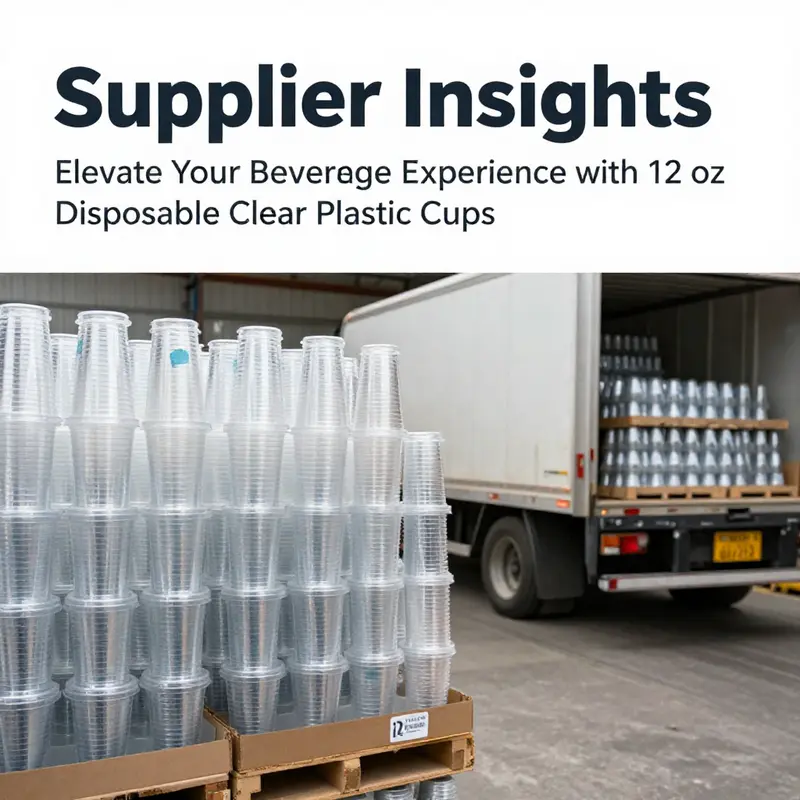
Sourcing 12 oz disposable clear plastic cups requires more than a quick price check. Buyers must balance production scale, food safety, sustainability, and supplier reliability. These cups sit at the intersection of cost-driven commodity purchasing and growing demands for traceability and eco-conscious materials. A strong supplier choice reduces risk, shortens lead times, and protects brand reputation when cups appear at events, in cafes, or on retail shelves.
Start with production capabilities. High-volume manufacturers in major production hubs use automated injection or thermoforming lines that output millions of cups per month. Standard molds are tuned to produce the familiar tapered or U-shaped profiles that fit lids and holders. When evaluating suppliers, inspect tooling ownership. Suppliers that own in-house tooling and molds can control lead times for reorders and alterations. They are quicker to ramp production and to implement minor design changes without costly third-party delays. In contrast, suppliers that outsource tooling may pass on delays or increased costs when the market tightens.
Order volume affects price materially. At scale—orders in the tens of thousands—unit costs can fall dramatically. Typical bulk pricing for standard PET or PP cups ranges from very low margins for virgin resins up to higher figures when recycled or compostable options are used. Buyers should expect unit prices to vary between roughly $0.02 and $0.06 depending on material choice, customization, and quantity. Remember that quoted unit costs rarely include freight, duties, or packaging customizations. Ask suppliers for landed-cost estimates to compare offers accurately.
Material compliance is non-negotiable. Reputable manufacturers use food-grade resins and can provide documentation proving compliance with regulatory frameworks. Demand certificates showing tests for migration limits, residual monomers, and heavy metal content. A reliable supplier will be able to present batch test reports and traceability records tied to production lot numbers. Cleanroom or contamination-controlled environments for molding and packaging reduce the risk of foreign particulates and odors. Where regulatory audits are common, look for suppliers with lot-level traceability systems. They simplify recalls and establish accountability across the supply chain.
Sustainability is a central and evolving factor. Buyers increasingly look for recycled content or bio-based alternatives. Options now include cups made with post-consumer recycled PET content or bio-derived, compostable resins. These materials can close material loops and resonate with customers who prioritize environmental stewardship. However, sustainable materials typically carry higher unit prices and sometimes stricter handling requirements. Recycled PET blends may require tighter specifications on color and clarity. Compostable alternatives often need separate waste streams to realize their environmental benefits. When specifying sustainable cups, align material claims with the realities of local waste infrastructure and downstream processing.
Quality control and inspection protocols are essential to protect orders. Verify that a supplier performs in-line dimensional checks and end-of-line visual inspections. Request sample lots to run functional tests: rim comfort, lid fit, stacking strength, and clarity under lighting similar to the product environment. If cups will be sealed with lids or used with automatic filling lines, test for compatibility and seal integrity. Some suppliers provide free or low-cost sample pieces for initial evaluation. Use these samples to test with the exact beverages and lids you’ll use.
Minimum order quantities and lead times are critical logistical factors. Many manufacturers set MOQs to justify tooling runs and to maintain production efficiency. MOQs vary widely—some suppliers cater to retail customers with packs of a few hundred, while export-focused factories commonly require tens of thousands per SKU. Lead times also reflect tooling, current order backlogs, and shipping windows. In peak seasons, expect extended lead times. Negotiate realistic delivery schedules and secure clear penalties for missed deadlines in purchase agreements when timing is business-critical.
Customization options influence both cost and brand perception. Printing, embossing, or color tints add production steps. Simple logo printing or single-color wraps have modest upcharges, but full-color customization or specialty rims raises price and minimums. Consider whether branding directly on a clear cup is necessary, or whether sleeves and labels could achieve the same effect at lower cost and with more flexibility. If using custom printing, request pre-production proofs and press proofs to verify color matching and registration. Ask about ink certifications and wash-off tests if used in conditions where inks may encounter liquids.
Supplier reliability extends beyond manufacturing quality. Assess communication responsiveness, transparency in quoting, and a history of customer retention. Request references and case studies that show consistent performance on repeat orders. Strong suppliers typically have documented processes for order confirmations, quality control checkpoints, and exception handling. They provide timely updates and will flag potential delays early. Platforms that list verified suppliers can help identify potential partners, but always validate claims with direct audits or third-party inspections when possible.
Compliance and certificates matter in procurement decisions. Ask for ISO quality management certification and food safety standards relevant to your market. Certificates alone are insufficient; verify their validity and that the scope covers cup production. For buyers in regions with strict import standards, ensure the supplier understands local regulatory documentation needs. Good suppliers maintain export-ready paperwork and can support tests required for customs clearance.
Risk mitigation strategies protect both small and large buyers. Split larger orders into staggered shipments to monitor product quality across batches. Secure sample approval as a contractual milestone. Include clauses for independent third-party inspections prior to shipment. Maintain contingency plans with secondary suppliers to avoid supply disruption. Where possible, lock in pricing and volumes to hedge against raw material price swings, particularly for virgin resins whose prices may fluctuate with petrochemical markets.
Logistics and packaging decisions influence total cost and product integrity. Bulk shipments require careful palletization and protective packaging to prevent crushing and contamination. Ask suppliers about their standard packing schemes and whether they offer reinforced cartons or vacuum-sealed bulk bags. For retail-ready packaging, consider tiered packaging solutions that reduce handling time on arrival. Customs and freight terms should be explicit; request quotes under different Incoterms to understand responsibility points and cost allocation.
Testing and validation should extend to in-use scenarios. Conduct thermal tolerance tests for chilled and ambient liquids. Test cups with carbonated beverages to ensure they maintain rigidity and don’t deform under pressure. Evaluate how easily they show fingerprints, smudges, or condensation—factors that affect perceived quality at events and in foodservice settings. If cleanliness perception is important, specify anti-fingerprint finishes or thicker gauge materials to improve tactile feel and visual clarity.
Pricing negotiations should be holistic. Base price is just one component. Include freight, duties, packaging upgrades, inspection fees, and customization charges. Compare offers based on true landed cost per usable unit. Ask suppliers for price breaks at incremental volume tiers and for cost implications of switching to recycled or compostable resins. When negotiating, prioritize suppliers who can demonstrate stable material sourcing and who share data about their production yields and scrap rates.
Finally, build long-term partnerships rather than transactional relationships. Suppliers that treat customers as partners invest in tooling, quality systems, and innovation. They will be willing to pilot sustainable materials or adjust production to meet branding needs. A multi-year relationship reduces onboarding costs and improves responsiveness when urgent orders arise. Establish clear communication cadences and performance metrics that both sides track.
For buyers looking for a product reference during evaluation, review the supplier product page for standard clear PET cups to compare material composition and wholesale pricing. This can serve as a practical baseline for MOQ, clarity expectations, and packaging options: disposable clear plastic cup product page.
When regulatory or sustainability claims are central to sourcing, verify material composition via third-party testing and request documentation that aligns with your market’s labeling laws. For example, when assessing a recycled-content offer, require a chain-of-custody statement that ties the recycled fraction back to certified feedstock. If compostability is claimed, verify that the material meets recognized industrial composting standards and assess whether local waste infrastructure can process it.
A strong procurement approach combines careful supplier selection, objective testing, and flexible logistics planning. Focus on partners that combine volume capability, documented food-safety processes, and transparent communication. Prioritize suppliers willing to provide sample testing and lot-level traceability. This strategy reduces risk and ensures that 12 oz clear plastic cups arrive on time, compliant, and fit for purpose.
For additional supply details and material breakdowns, consult the external product specification page from the research materials: https://www.uniqsupply.com/products/12-oz-clear-pet-plastic-cups
Clear Yet Cautious: Weighing the Environmental Footprint of 12 oz Disposable Clear Plastic Cups
Transparent, lightweight, and inexpensive, the 12 oz disposable clear plastic cup has become a ubiquitous choice for events, food service, and casual gatherings. Its clarity showcases beverages, its standard size meets common serving needs, and its low cost supports high-turnover contexts. Yet these advantages coexist with environmental trade-offs that require careful consideration across the cup’s lifecycle, from resin production to final disposal.
Most clear disposable cups are made from petroleum-derived resins such as polyethylene terephthalate (PET) or polypropylene (PP). Material choice affects optical clarity, stiffness, and processing energy, and it also influences how the item behaves in recycling systems. While clarity and low mass make the product appealing, they can complicate recovery: light, soiled, or mixed-material cups are often flagged as contaminants in curbside recycling and can be diverted to landfill despite technical recyclability.
The embedded impacts begin long before disposal. Extraction of fossil feedstocks, polymer manufacture, and cup forming consume energy and produce greenhouse gas emissions. When multiplied by the millions of units used annually across venues and seasons, even modest per-unit impacts aggregate into significant resource use and emissions. Lifecycle assessments consistently show that material production and disposal pathways are decisive factors in the overall environmental profile of single-use cups.
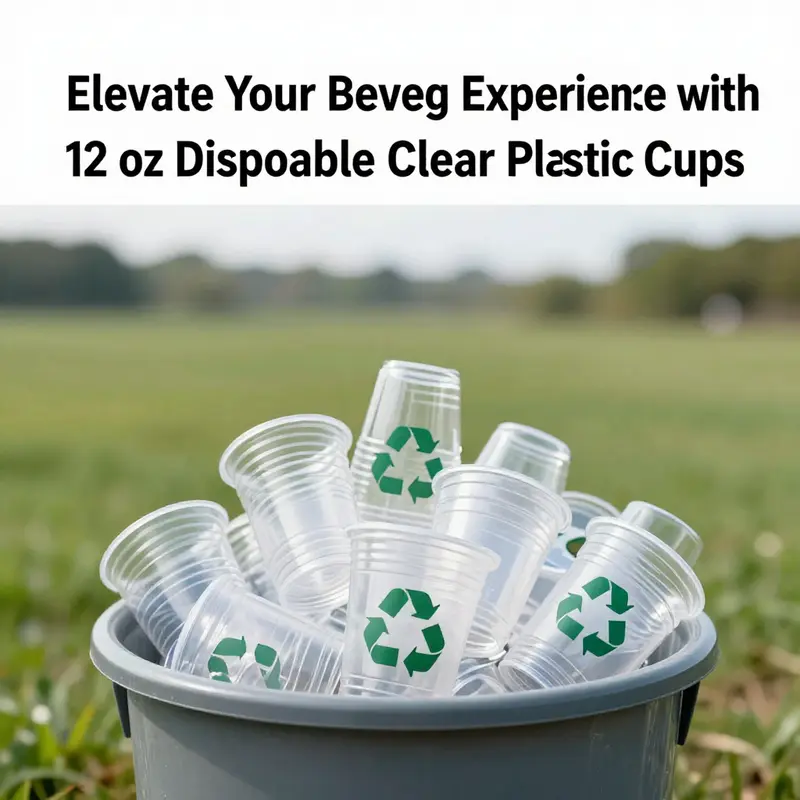
Recycling presents both opportunity and challenge. PET and PP can be recycled where infrastructure and sorting exist, but contamination by liquids or food residue and the need for effective sorting reduce recovery rates. Industrial compostable alternatives (for example, PLA-based cups) require industrial composting facilities to provide their intended benefit; in the absence of such infrastructure they may persist and behave like conventional plastics. Consequently, the local availability and effectiveness of recycling and composting systems materially shape which cup options deliver lower real-world impacts.
When cups escape managed waste systems, they contribute to pollution: litter, harm to wildlife, and long-term fragmentation into microplastics. Lightweight cups are particularly susceptible to wind dispersal at outdoor events, turning a convenience into an environmental cost. Addressing these leakage risks demands operational measures—waste capture strategies, well-placed bins, and active cleanup—alongside material and design choices.
Operational practices are central to reducing impacts without abandoning convenience. Event planners and venues can adopt diversion plans that allocate space and staff for sorting, deploy clear signage and color-coded bins, and coordinate with local recyclers or composters. Such measures raise recovery rates and reduce the fraction of cups entering landfill or the environment. Hybrid approaches—using reusables where washing is feasible, and directing single-use items into tailored recovery streams—often yield the best balance of practicality and sustainability.
Design improvements also matter. Lightweighting that preserves functionality, use of mono-material constructions that simplify recycling, and avoidance of problematic coatings or adhesives can improve end-of-life outcomes. Reusable alternatives—made from durable plastics, stainless steel, silicone, or bamboo composites—reduce per-use impacts when logistics for washing and return are efficient. The climate- and resource-saving benefits of reusables typically materialize after a certain number of uses, so lifecycle thinking and operational readiness are key.
Ultimately, stewardship by manufacturers, venues, and consumers determines whether the familiar 12 oz clear cup remains a practical asset or becomes an avoidable source of waste. Manufacturers can optimize materials and labeling, venues can invest in sorting and education, and consumers can support systems that enable recovery. Policymakers and waste managers play a role by ensuring appropriate infrastructure—recycling and industrial composting—and by creating incentives for circular-product design.
The question is not whether every setting can or should eliminate single-use cups immediately, but how to align choices so that the cups we do use have the lowest feasible environmental footprint. That alignment requires matching material selection to end-of-life systems, improving on-the-ground waste handling, and exploring reusable models where they are operationally viable. With coordinated action across the lifecycle, the everyday 12 oz clear plastic cup can be used more responsibly, reducing its contribution to pollution, resource depletion, and climate impacts over time.
Final thoughts
Choosing the right serving solutions such as 12 oz disposable clear plastic cups goes beyond just aesthetics. With their attractive design, cost-effectiveness, and ease of supply, these cups cater to the needs of beverage businesses seeking efficiency without compromising on presentation. It’s essential to be mindful of the environmental impact as well, ensuring responsible disposal and recycling practices are in place. As you consider enhancing your beverage service, weigh the benefits discussed here to position your brand favorably in the eyes of your customers.