
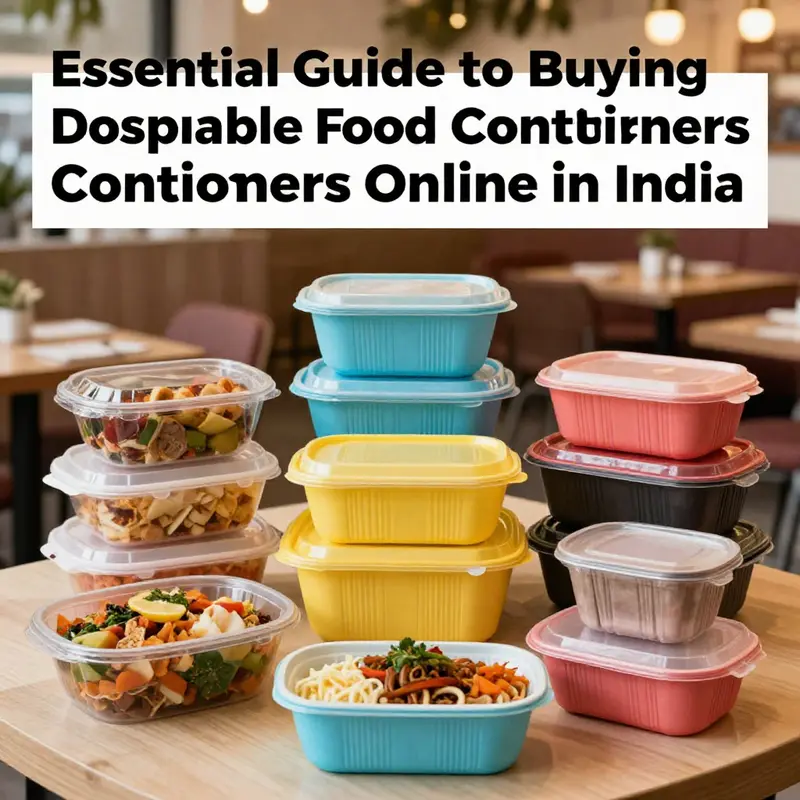
Navigating the world of disposable food containers online can be daunting, especially for businesses in the food industry such as bubble tea shops, restaurants, food trucks, catering services, and event planners. This guide aims to illuminate the pathways to sourcing high-quality disposable food containers seamlessly and efficiently. We will explore various platforms that cater to the Indian market, delve into pricing dynamics and minimum order quantities, and discuss flexible payment solutions. Additionally, we will cover essential information on importing these containers to India and examine current market trends that reflect their growing demand. By the end of this guide, you will have a comprehensive understanding of how to effectively acquire disposable food containers that meet your operational needs.
Chapter 1: Sourcing Safe, Cost-Effective Disposable Food Containers Online in India
The search for disposable food containers online in India is more than a logistics puzzle; it is a test of reliability, safety, and the capacity to scale. As the country’s food service and packaged foods sectors expand, businesses—from neighborhood eateries to large cloud-kitchen networks—need packaging that keeps food fresh, prevents leaks, and conveys a professional image. The online marketplace has become the primary gateway to bulk packaging, offering a spectrum of choices that range from simple, stackable containers to thoughtfully designed sets with secure seals and branding potential. With this breadth comes the responsibility to assess suppliers not only by price but by the quality controls, materials, and service terms that ensure a smooth, compliant supply chain. This chapter sketches a practical map for navigating those online aisles, highlighting the kinds of platforms available, the decision criteria that matter, and the steps that turn a bulk order into a dependable packaging partner.
At the heart of online sourcing is the diversification of platforms. Domestic B2B directories serve as starting points where buyers can connect with Indian manufacturers and exporters. These platforms are typically organized to help buyers filter options by material, capacity, and customization, while also exposing compliance details and lead times. Such filtering is essential when a business must align packaging with regulatory expectations, especially for food contact materials. In parallel, global marketplaces that facilitate cross-border trade broaden the supplier pool. They enable buyers to source from manufacturers that can offer competitive unit costs for large volumes, often with options for full customization—ranging from sizes and shapes to branding and logo printing. The flip side of this expanded reach is the need to account for international shipping, incoterms, duties, and longer lead times. For many Indian buyers, the optimal approach blends domestic platforms for reliability with selective overseas suppliers when cost or capacity gaps appear.
Cost and duration considerations quickly push the discussion toward the economics of landed price. Unit price is just one line item in the equation. Buyers must also account for shipping charges, insurance, import duties, and local taxes, all of which shape the final landed cost. MOQs on overseas suppliers are frequently substantial, pushing smaller operators toward domestic sources or shared-shipments with other buyers. Conversely, some international vendors will offer lower unit costs at very large volumes, which can still be attractive for established delivery networks or catering chains with predictable demand. Payment security matters as well. Many platforms offer a range of secure payment terms—from upfront T/T transfers to documentary letters of credit and alternative methods. For buyers in India, having access to payment protection and clear dispute resolution is not optional but a risk-management discipline that protects margins and continuity.
Beyond price and lead times, the materials and design details determine the containers’ suitability for different menus and service styles. Some customers need airtight seals to prevent leakage during transit; others require microwave-safe or grease-resistant surfaces. The capacity to filter by material—such as general-purpose plastics, recycled-content options, or compostable pulp-based designs—helps buyers align packaging with sustainability goals and regulatory expectations. In this landscape, customization becomes more than branding. It can also influence customer experience and operational efficiency. For example, branded lids or molded-in venting features can reduce spill risks and ease stacking, while standardized set configurations support kitchen throughput and inventory control. To illustrate the range, many buyers look for categories such as takeout boxes, lunch containers with lids, and multi-compartment trays, all of which can be sourced through online channels with varying MOQs and customization capabilities. The emphasis, however, remains consistent: verify material safety, confirm compatibility with the intended food formats, and ensure that the product’s performance in real-world use matches the advertised specifications.
Quality and compliance occupy a central place in the decision process. In India, as in many markets, food-contact packaging must meet safety standards to protect consumers and operators alike. Buyers often seek suppliers who can provide material data sheets, certifications for food-grade status, and assurances about absence of harmful chemicals. A prudent practice is to request samples before committing to a larger order, enabling a tactile assessment of thickness, rigidity, and seal integrity. For operations that depend on consistent branding, suppliers who can accommodate custom prints in practical MOQs enable a smoother, more scalable rollout across multiple locations. This focus on quality is not merely about reducing complaints; it also helps ensure regulatory compliance and consistent product performance, which in turn strengthens a brand’s reliability in a competitive market.
Sustainability is increasingly shaping platform choices and supplier selections. Buyers are increasingly drawn to options that reduce environmental impact, from compostable or bio-based materials to recyclable or reusable components. The online ecosystem reflects this demand by expanding catalogs of eco-friendly takeout boxes, recyclable pulp-based containers, and grease-resistant, compostable liners. While cost and performance remain decisive, the long-term benefits of sustainable packaging—brand differentiation, consumer alignment, and potential regulatory advantages—are becoming hard to overlook. For many operators, the right choice balances cost, functionality, and environmental aspirations, recognizing that the cheapest option today could incur higher waste disposal costs or customer dissatisfaction over time.
The purchasing journey often follows a pragmatic sequence that aligns with operational rhythms. Begin with a clear specification: what containers are needed, in what sizes, what sealing method, and what degree of leak resistance is required. Next, scan domestic marketplaces for vendors with strong reputations and clear compliance statements. If volumes or lead times demand, widen the net to global marketplaces that offer scalable customization and robust supplier verification. For larger orders, negotiate terms that protect cash flow and delivery schedules—such as staged shipments or partial payments tied to milestones. Always request a test batch or sample pack to validate packaging quality before committing to a full run. This approach reduces the risk of mismatches between the product’s performance and the operation’s expectations and helps preserve customer satisfaction.
To anchor this discussion in practical options, consider the category breadth and customization options that online platforms typically present. There are containers designed for hot and cold foods, foods with sauces, and items built to withstand busy kitchen environments. Some suppliers offer multi-compartment configurations suitable for meal-prep and delivery—an arrangement that can streamline packaging for combo meals and reduce the need for separate sleeves or wrappers. The ability to customize—whether it is adding a logo, choosing a color, or selecting a particular lid style—often correlates with minimum order quantities and lead times, so it is important to balance branding ambitions with operational realities. In an increasingly competitive market, a packaging partner who can offer both consistent quality and flexible fulfillment terms becomes a strategic asset.
To illustrate, imagine a scenario where a startup chef-delivery service wants a line of branded, leak-proof lunch containers with lids, available in several colors and with the company logo printed on the lid. An online sourcing strategy might begin with a domestic platform, where a shortlist of reliable suppliers can be vetted for food-grade safety and short lead times. If the domestic options are limited by capacity or price, the buyer could evaluate cross-border suppliers who can deliver in bulk with customization. This is where a well-chosen international partner can complement domestic reliability, offering lower unit costs or access to materials not readily available locally. However, the decision to source abroad should be matched with a careful assessment of shipping timelines, import duties, and the risk of delays, especially in peak seasons. The goal is to harmonize all these factors into a landed-cost model that preserves margins without compromising safety or customer experience.
In keeping with the theme of customization and supplier reliability, consider a practical internal reference point for a buyer exploring branding-friendly packaging options. A sample page on an online supplier catalog demonstrates the range of customization capabilities and the visual impact of branded packaging. custom-takeaway-packaging-supplies-disposable-tableware-for-theme-party. This kind of resource can help buyers envision how packaging design choices affect perceived value and how a partner can support brand consistency across multiple orders and locations. Internal links like this one can serve as a quick reference as teams compare color options, lid mechanisms, and printing capabilities while negotiating MOQs and timelines with suppliers.
The broader landscape of external information—beyond the immediate market listings—offers additional context for decision-making. For buyers who want to broaden their understanding of cross-border supplier ecosystems and due diligence practices, a global supplier directory provides a panoramic view of manufacturers across regions, certifications, and dependable payment protections. External resources that present verified supplier pools can be a prudent supplement to the internal shopping process, helping buyers benchmark terms, safety credentials, and logistics options against industry norms. External sources such as these contribute to a well-rounded sourcing strategy by offering broader patterns and standards that reputable suppliers tend to adhere to in practice.
As the sourcing journey unfolds, one critical takeaway remains constant: there is no one-size-fits-all solution. The right approach depends on the business model, order frequency, location, and sustainability commitments. A scalable strategy combines reliable domestic sources with selective overseas partnerships to optimize total cost and resilience. It also requires robust due diligence, clear specifications, and a willingness to test before committing to large runs. In practice, this means defining material safety, seal integrity, temperature tolerance, and branding possibilities up front, then engaging suppliers with transparent requests for samples and documentation. The online marketplace, with its blend of immediate options and longer-term partnerships, is uniquely suited to supporting such disciplined procurement.
External resource for broader context: https://www.made-in-china.com
Beyond the Price Tag: MOQs, Materials, and Market Dynamics in India’s Disposable Food Container Online Market
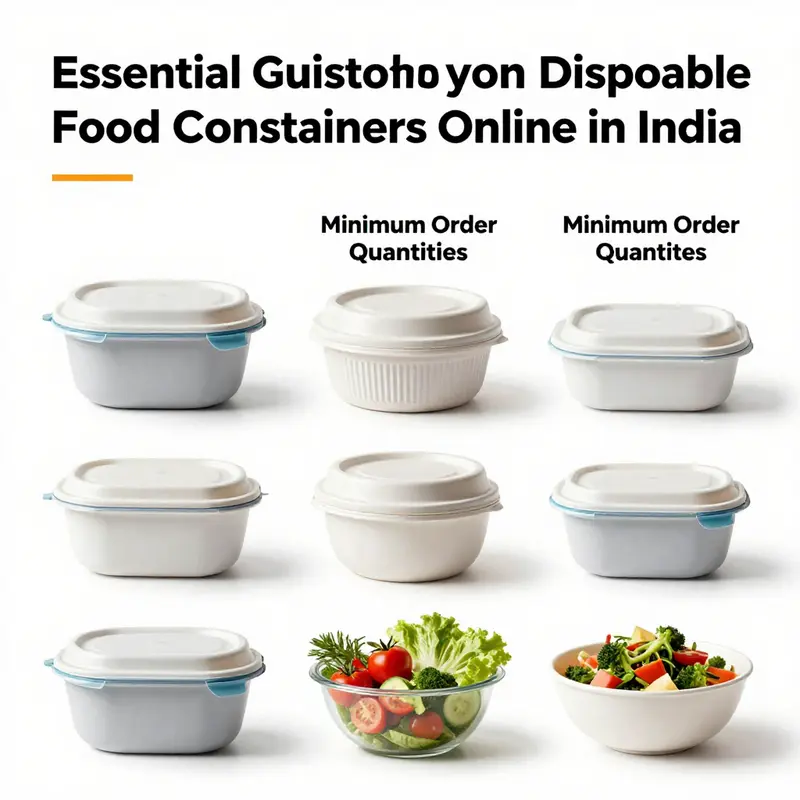
Pricing for disposable food containers in India is not a single line item. It is a spectrum shaped by the material, the size, any branding, and the scale of purchase. When a business sits down to price a takeout program for a busy city, they must account for more than face value per unit. They must factor in manufacturing realities, regulatory pressures, shipping costs, and the potential for customization. In early 2026, typical paper-based takeaway containers cost between ₹1.50 and ₹3.50 per piece, depending on the supplier and region. If the order must be compostable, molded pulp or sugarcane fiber variants push that range to roughly ₹4.00–₹8.00 per unit, reflecting higher raw material costs and more involved processing. Plastic containers remain common but are increasingly constrained by policy and by a growing appetite among customers for sustainability; this shift continues to alter the price-to-performance equation. For buyers, the sticker price per unit often masks a broader arithmetic that includes minimums, shipping, and potential customization fees. In cities with robust packaging demand and more mature supply chains, you may see tighter spreads between basic and premium options, but the delta can widen quickly as ecological standards tighten and logistics costs rise.
Material choice remains the loudest driver of price. Paper-based options tend to be the most economical for plain, unbranded containers suitable for daily takeout flow. Compostable options, while attractive to health-conscious brands and eco-aware customers, require higher-grade fibers and stricter manufacturing controls. Molded pulp, a common compostable lineage, benefits from being lightweight and strong but incurs greater processing costs that are passed along to buyers. Sugarcane fiber containers—the so-called bagasse family—often command the top end of the spectrum due to their natural appeal and the premium nature of the raw material. Plastics still appear in many menus for their strong barrier properties and cost efficiency, but regulatory moves and evolving consumer preferences are gradually shrinking the audience for traditional plastics and pushing prices upward to reflect the externalities associated with their production and end-of-life disposal. The resulting price tension is not just about per-unit expense; it also informs procurement strategies, storage considerations, and the viability of promotional or seasonal campaigns.
A second major price shaper is container size and design complexity. A simple rectangular takeout box is often cheaper per unit than a multi-compartment tray or a box with a window or branding print. The more intricate the shape, the higher the tooling costs, die-cutting time, and warehousing space required to hold inventory. This is where MOQs become a practical reality. In practice, MOQs vary widely between suppliers and production scales. Small-scale manufacturers or local vendors may offer MOQs as low as 500 units, making them accessible for startups, pop-up events, or small casual-dining outfits testing a new concept. For larger, established manufacturers, MOQs typically range from 1,000 to 5,000 units. Some suppliers will extend discounts only when orders exceed 10,000 units, especially if the buyer envisions ongoing, predictable demand. These thresholds reflect the fixed costs embedded in printing, die-cutting, and packaging processes, which do not scale down linearly with small orders. Customization—such as logo printing, color variations, or special shapes—often raises both the per-unit price and the MOQ. A branded or uniquely shaped container is not merely a packaging decision; it is a brand touchpoint that requires longer lead times, more precise color matching, and sometimes a minimum production run to ensure consistency. For a business planning a regular takeout program, negotiating MOQs based on long-term demand forecasts can unlock more favorable pricing and improved supply reliability.
The choice between sourcing locally within India or importing from international suppliers further compounds the pricing calculus. Import costs are not merely the sticker price at the factory gate. They include freight, insurance, import duties, and the cost of longer lead times that affect cash flow and stockholding. In the context of imports, MOQs often act as a lever to achieve lower per-unit landed costs. A higher MOQ on an overseas order can translate into a lower unit price, provided storage and working capital constraints allow for longer wait times and larger upfront investments. Conversely, a leaner, domestic buying strategy can reduce exposure to currency swings and complex customs, but it may come with higher per-unit costs and smaller discounts. This is where buyers must weigh the benefits of speed and responsiveness against the ticking clock of demand cycles and seasonal spikes.
For businesses evaluating their procurement options, it helps to map out a simple decision framework. First, forecast demand with reasonable confidence for at least six to twelve months. This forecast will guide whether to pursue moderate MOQs with flexible delivery schedules or larger MOQs tied to price concessions. Second, assess total cost of ownership, not just the unit price. Include shipping, duties, storage, and potential wastage from overstock. Third, consider branding and product quality. A container that carries a brand mark or a distinctive design can enhance consumer perception and, in turn, justify a higher unit cost if that differential translates into increased average order value or repeat business. Finally, build flexibility into contracts. Long-term agreements that include volume-based discounts, adjustable MOQs tied to forecast accuracy, and agreed lead times offer resilience in a market where demand and supply can swing with policy shifts and supply-chain disruptions.
For those exploring the broader market landscape, regional dynamics also matter. Indian cities such as Delhi, Mumbai, Bengaluru, and Chennai exhibit varying cost pressures based on local supplier ecosystems, packaging regulations, and logistics networks. The official market context provided by national industry associations helps buyers gauge typical pricing bands and the relative attractiveness of different material families. As of early 2026, the market showed a clear tilt toward eco-friendly alternatives, even if the per-unit price premium remains modest in some segments. This tilt is driven by a mix of regulatory signals and evolving consumer expectations, which increasingly connect sustainability to brand value and customer loyalty. The ongoing regulatory emphasis on single-use plastics and the growing availability of compostable options have begun to redraw the price-to-performance equation for many operators, from street-side stalls to multi-location chains.
Within this environment, a thoughtful sourcing strategy becomes an operational advantage. Buyers who combine a tiered MOQ approach with a tiered material strategy—keeping a core of standard paper-based containers for regular busy periods while reserving premium compostable stock for peak moments or eco-conscious campaigns—often achieve better cost stability. This approach also reduces the risk of stockouts during seasonal surges and provides room for experimentation with branding that can elevate the customer experience. Importantly, it allows small and mid-sized businesses to scale gradually, holding enough inventory to ensure reliability without overcommitting capital to a single material path. The result is a supply chain that remains responsive to price shifts while preserving the ability to meet marketing opportunities and customer expectations.
To illustrate how buyers navigate these choices in practice, imagine a café network planning a three-month promotional drive. The network might source a modest initial batch of standard paper containers to cover day-to-day demand and reserve a larger order for a compostable line to support a sustainability-focused campaign. They could negotiate MOQs with a primary supplier in the range of 1,000–3,000 units for standard stock, with the option to scale to 5,000–8,000 units if sales indicators exceed projections. If branding is desired, they might add a logo print as a premium feature, accepting a higher per-unit price and a slightly higher MOQ. Meanwhile, a few partner vendors could be contracted to handle quick-turn orders for special events, keeping the core program consistent while providing flexibility for pop-ups and seasonal menus. In this balancing act, the procurement team must stay vigilant about lead times and quality controls. A longer lead time on a premium compostable option can disrupt a tightly scheduled menu cycle, while delays in standard stock can force expensive substitutions or customer disappointment.
The procurement world is rarely static, and the price story is never told in isolation. Buyers should stay attuned to market signals from packaging associations, government policy developments, and shifts in raw material costs. The January 2026 market report from the Federation of Indian Chambers of Commerce & Industry (FICCI) provides a structured lens on current trends, supply dynamics, and price benchmarks across major urban centers. While the report itself is a broader industry resource, it reinforces the idea that the packaging market is moving toward sustainability, with price bands tightening around the more responsible options as consumer demand grows and manufacturing efficiencies improve. For teams planning procurement cycles, this is a reminder that the most resilient sourcing strategies blend near-term cost awareness with long-term flexibility and a readiness to adapt to policy and consumer preference changes.
As you refine your online buying journey, keep in mind how a well-managed MOQ strategy interacts with your branding goals and service commitments. An efficient balance—where core stock supports ongoing demand and premium stock enables strategic campaigns—can yield predictable unit costs and smoother cash flow. The key is to negotiate with a clear forecast, a structured qualification of suppliers, and a willingness to reevaluate each quarter as volumes and market conditions shift. To see how a specific packaging path can be shaped by customization options, explore examples of customizable takeout packaging options such as the following resource: custom takeaway packaging supplies. This kind of reference illustrates how branding and practical performance converge in real-world orders, highlighting the balance between upfront investment and long-term value.
For those seeking deeper market benchmarks and the latest price ranges across Indian cities, refer to the official market report published January 2026 by the relevant industry federation. External researchers and industry participants commonly cite this report when evaluating current and projected pricing, MOQs, and material transitions across the country. You can review the report here: https://www.ficci.com/india-packaging-market-report-2026
Smooth Payments and Safe Shipments: Navigating Online Purchases of Disposable Food Containers in India
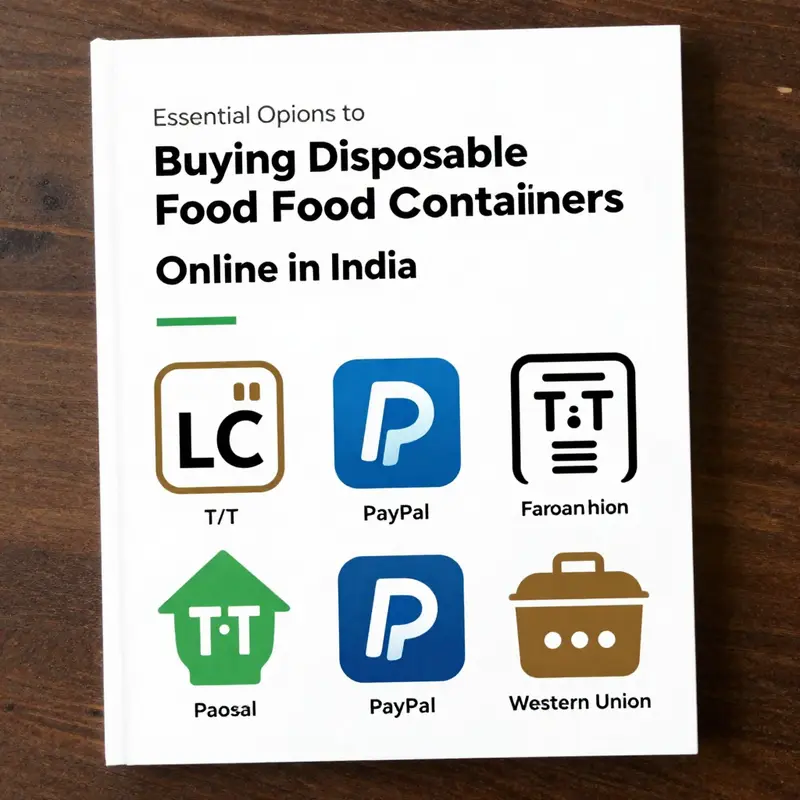
When a retailer, caterer, or small hospitality outfit in India opts to buy disposable food containers online, the payment step is more than a mere transaction cue. It’s the contract that binds trust, speed, and cost, all in a few taps or clicks. In a marketplace environment where vendors and buyers are often separated by oceans as well as continents, the choices a buyer makes at checkout reverberate through the entire supply chain. The modern Indian e-commerce ecosystem has matured to offer a spectrum of payment methods designed to accommodate diverse comfort levels, from the cautious first-time online shopper to the seasoned business buyer negotiating large-scale orders. In this chapter, the emphasis is on how payment choices shape the procurement experience for disposable food containers and why a multi-faceted payment approach matters for both buyers and sellers in India’s growing online marketplace.
Credit and debit cards remain a cornerstone of online purchasing. Brands such as Visa, Mastercard, and the domestic RuPay network are broadly accepted, and the familiarity of card payments often reduces hesitation at the final step of a purchase. For a business intent on locking in bulk shipments of containers, card payments provide a straightforward, recordable method to settle invoices, especially when the supplier’s terms require quick approval of high-value orders or large MOQs (minimum order quantities). Yet the card environment also introduces considerations around fraud risk, cardholder disputes, and chargebacks. The prudent buyer looks for merchants who implement robust tokenization, secure payment gateways, and reliable dispute resolution pathways to minimize friction if a payment needs to be reversed or reconciled.
Digital wallets have surged in popularity as well, and their convenience is a natural fit for rapid buying cycles. Wallets link directly to bank accounts or cards and typically enable near-instant checkout. For buyers ordering disposable containers—whether to restock a bustling café service or to manage a seasonal catering operation—the speed and simplicity of wallet-based payments can translate into quicker inventory turns and less time spent chasing payments. The wallets also often come with value-added incentives such as cashbacks or loyalty rewards, which can add up for frequent purchasers over time. The downside to any wallet-centric workflow is ensuring alignment with supplier payment acceptance and reconciling wallet-based transactions with business accounting software. That’s where a capable e-commerce platform, or a modern payment gateway, can harmonize wallet payments with the broader financial workflow.
Unified Payments Interface, or UPI, has transformed how money moves in India. The evidence is not merely anecdotal: RBI and industry trackers show UPI reaching billions of transactions every month, reflecting a broad cultural shift toward almost cashless consumption. UPI’s design—direct bank-to-bank transfers via a mobile app, authenticated by a virtual payment address and a UPI PIN—combines speed with a high degree of security. For a buyer ordering containers in bulk, UPI offers a frictionless path to settlement that is particularly well-suited to recurring purchases, vendor negotiations, and even cross-border supply chain arrangements where currency conversion and real-time payments come into play. From a seller’s perspective, UPI can improve cash flow predictability and reduce the settlement lag that sometimes accompanies traditional card payments or bank transfers. The trade-off is ensuring proper invoice matching, proper remittance details, and secure onboarding for vendors who may be new to digital-only payment methods.
Cash-on-delivery remains a fallback for a subset of customers who are more cautious about online payments or who operate in environments where digital acceptance is still evolving. CoD can help preserve conversion in scenarios where an order might be large, but the buyer’s comfort with online financial systems is limited. For businesses, offering CoD can help capture a broader customer base in an omnichannel context or during transitional periods when a buyer is still validating a supplier relationship. However, CoD also introduces complexities for sellers, including higher administrative costs, the risk of non-payment, and the potential need for secure, in-person verification at the time of delivery. In practice, the most resilient procurement strategies blend CoD with digital payments, ensuring a flexible path to purchase while maintaining robust risk controls.
The strategic value of offering multiple payment options is particularly clear for suppliers and marketplaces that connect Indian buyers with international manufacturers and distributors. When a buyer sources disposable food containers from a global supplier base, the payment workflow must accommodate cross-border realities: foreign exchange considerations, currency conversion timing, international banking norms, and the possibility of more stringent payment terms. A diversified payment suite helps align with a wider set of supplier requirements and can reduce the likelihood of cart abandonment caused by payment friction. For buyers, this means the ability to negotiate favorable terms, such as a lower upfront payment in exchange for a longer payment window, a reduced MOQ, or a secured payment that holds funds in escrow until goods are shipped and verified. The net effect is a smoother procurement experience with clearer expectations on timelines, duties, and delivery.
From a risk-management standpoint, the underpinning requirement is a compliant, secure payments ecosystem. Merchants who invest in PCI-DSS (Payment Card Industry Data Security Standard) compliance, tokenization, encryption, and secure storage of payment data reduce exposure to data breaches and fraudulent activity. For Indian buyers, this translates to greater confidence that sensitive payment details are not exposed during the checkout process. Importantly, the choice of payment gateway—whether a globally recognized provider or a locally trusted platform—should be guided by its ability to support PCI-DSS compliance, offer strong anti-fraud protections, and provide reliable dispute resolution workflows. Integrations that deliver seamless fraud screening, automated reconciliation, and robust reporting can materially cut the time spent on payment-related admin and free teams to focus on procurement optimization.
On the logistics side, the payment method interacts with shipping costs, duties, and delivery timelines. When orders involve international suppliers, the total landed cost becomes a function of product price, freight, insurance, duties, and the chosen payment path. Certain gateways and payment terms can influence how quickly a transaction clears, which in turn can affect when freight is released, when inventory becomes available, and how soon a business can meet customer commitments. Buyers should consider the total ecosystem: how the payment method aligns with the supplier’s payment terms, how it affects currency risk, and how it syncs with the buyer’s own internal approval processes. A well-structured procurement plan will map out preferred payment methods for different supplier segments, ranging from high-volume, long-term suppliers to smaller, ad-hoc vendors, ensuring that the checkout experience remains frictionless regardless of the supplier type.
The user experience at the payment stage matters as much as the price or the product specifications. Clear invoices, transparent exchange rates, and predictable settlement timelines help build trust between buyers and suppliers. In practice, platforms that present multiple payment options in an intuitive, secure interface tend to see higher conversion rates, lower cart abandonment, and stronger repeat business. For procurement teams in India, a thoughtful approach to payment options means not just choosing a gateway that supports diverse methods but also ensuring that reconciliation tools, expense tracking, and vendor management systems can ingest payment data cleanly. When these pieces work in harmony, a buyer can place an order for a planned run of disposable containers, monitor shipment progress, and settle the balance without jumping through unnecessary hoops.
The topic of packaging itself also loops back to payment choices in a curious way. The procurement decision is not only about the containers’ price and the speed of delivery, but also about the broader packaging ecosystem—the designs, materials, and finish that could impact the perceived value for customers and end consumers. An illustration of this ecosystem can be found in the realm of paper-based packaging options that emphasize sustainability, leak resistance, and ease of disposal. To get a sense of the design variety available without getting lost in the noise of product listings, one can explore examples such as foldable, windowed cake boxes and related bakery packaging. These design-driven options demonstrate how suppliers approach packaging as a service—balancing aesthetics, functionality, and cost. A representative example of this design landscape can be seen in a set of foldable, windowed cake boxes suitable for cakes, chocolates, cupcakes, and gift packaging. For readers curious about the specific style and format of such packaging, you can explore folding-box designs through this example: foldable cake boxes with window bakery boxes pastry box for cake chocolates cupcakes gift packaging paper boxes. This reference helps contextualize how packaging choices influence perceived value, which, in turn, can affect supplier willingness to extend flexible payment terms or offer tiered pricing based on order size.
Finally, the external payment environment in India is shaped by regulatory developments and market dynamics that continue to lower barriers to secure digital commerce. The RBI’s ongoing digital payments initiative, including the growth of UPI and secure gateway standards, underscores a broader shift toward a cashless and highly traceable economy. For buyers and suppliers alike, these market forces translate into more predictable settlement cycles, stronger consumer protections, and more transparent reporting. The opportunity for buyers is clear: leverage a diverse payment toolkit to optimize cash flow, reduce risk, and accelerate procurement cycles. The opportunity for suppliers is equally clear: present a wide array of payment options, maintain robust risk controls, and align payment terms with the pace of modern logistics to keep the supply chain moving smoothly.
In sum, the payment experience for purchasing disposable food containers online in India is evolving toward greater flexibility, security, and efficiency. A buyer who navigates this landscape with an informed, multi-channel approach stands to gain from quicker order fulfillment, lower total cost of ownership, and stronger supplier relationships. A seller or marketplace that prioritizes PCI-DSS compliance, reliable gateway integrations, and transparent, user-friendly checkout flows will be better positioned to win and retain business in a competitive arena. As the ecosystem continues to mature, the fusion of payment agility with reliable logistics will define the next phase of growth in India’s online procurement of disposable packaging—the phase where speed, security, and simplicity become the standard, not the exception.
External resource note: The RBI’s digital payments insights provide a formal backdrop for understanding trends in UPI and electronic payments, and it is a useful companion as you design or optimize your own checkout experiences. RBI Digital Payments
From Global Sourcing to Indian Shelves: A Real-World Guide to Importing Disposable Food Containers
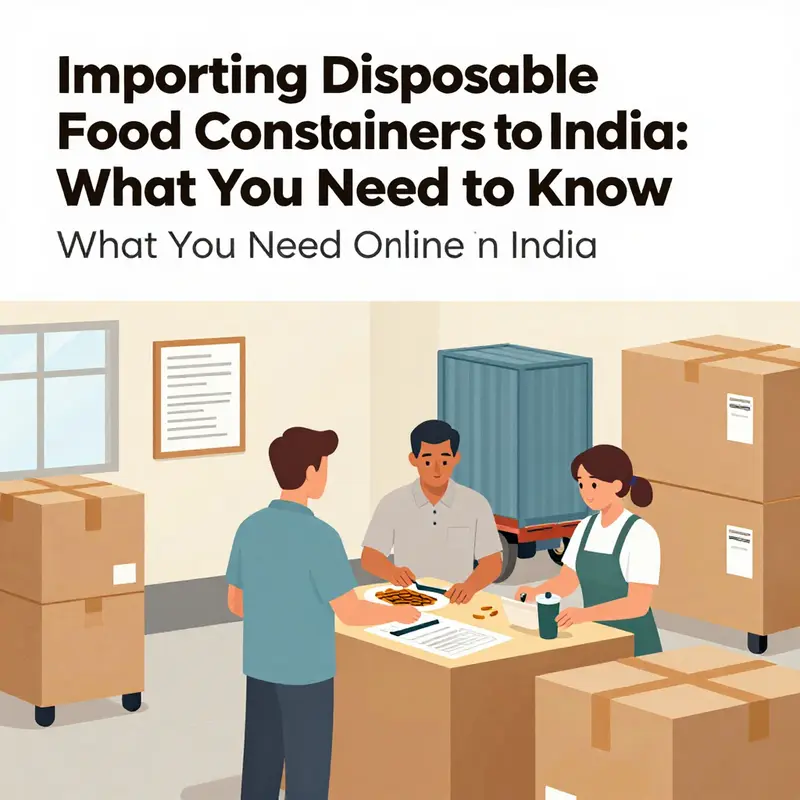
The growing appetite for convenient food packaging in India, spurred by the rapid expansion of delivery apps, cloud kitchens, and catered events, has turned disposable food containers into a strategic purchasing decision rather than a simple supply choice. For buyers aiming to source these containers online from international suppliers, the journey from a virtual cart to a compliant, on-time delivery is shaped by a web of standards, documentation, and logistics that go beyond price and appearance. This chapter threads together the realities of that journey, sharing a practical, integrative view of what it takes to import disposable food containers into India and what every buyer should keep front and center as they grow their online procurement program.
At the heart of any import decision is material science. In India, the most common materials used for single-use containers are Polypropylene (PP) and Polyethylene Terephthalate (PET). These plastics offer the lightness, resilience, and moldability that modern takeout and delivery services demand. Lids are designed to form reliable seals to prevent leaks during transit, while the containers themselves must withstand the heat of hot meals and the occasional spill without deforming. The choice of virgin plastics, rather than recycled materials, is often driven by the need for consistent quality and strict safety profiles. For buyers, this means that a supplier’s material declaration and test certificates become as important as the design of the container itself. The performance you see in a sample kitchen should translate into a scalable, compliant product when order volumes grow, so careful due diligence on material specifications cannot be skipped.
Yet, material is only one side of the coin. India’s regulatory framework for food contact materials—an area that intersects public health, consumer protection, and international trade—sets the rules of engagement for every importer. The Bureau of Indian Standards (BIS) governs the safety envelope for plastic food packaging and imposes standards intended to minimize the risk of chemical migration into food. While the BIS standard IS 13766:2008 is one cornerstone, the broader landscape encompasses various guidelines that address heat exposure, acidity, and general safety for packaging that meets food-contact requirements. For an importer, the objective is simple in theory: ensure every container is designed to meet these requirements and include documentation that confirms conformity. In practice, this translates into two actionable steps. First, insist on a clear material specification that confirms the use of virgin PP or PET for both the container and the lid. Second, secure verifiable certifications and a BIS-compliant labeling plan that aligns with the country’s expectations for food-contact packaging.
Labeling and traceability form the gateway to customs clearance and post-import assurances. Indian import regulations demand clear labeling that includes the manufacturer or brand name, country of origin, material type, and any relevant certifications. When a shipment reaches the port, customs officers look for evidence that the packaging materials are appropriate for food contact and that they will not introduce contaminants to the products being packaged. A well-run import program therefore treats labeling as part of the product itself, not as an afterthought. This is where a robust supplier specification and a careful documentation pack come into play. Buyers who outsource control through a trusted freight forwarder or quality agent often find savings in avoidance of delays and rejections that can otherwise turn a routine shipment into a long procurement cycle.
The import path is not only about compliance; it is also about logistics and cost efficiency. Indian ports, especially Nhava Sheva (JNPT) in Mumbai and the port in Chennai, handle a large share of containerized imports and are familiar with the demands of fast-moving consumer goods. Lead times for disposable containers sourced from abroad can vary widely, influenced by supplier capacity, shipping routes, and the availability of space on vessels. In many cases, consolidating multiple smaller orders into a single container helps reduce freight costs and simplify inventory management. For buyers, this often means establishing a rhythm of ordering, validating lead times with suppliers, and coordinating with a freight forwarder who understands the nuances of importing plastic packaging. It also means planning for the variability that can accompany ocean freight, including port congestion, customs checks, and last-mile delivery scheduling.
To navigate this landscape effectively, a source-to-shelf mindset is essential. Start with a precise product specification: the exact volume and shape you need, the wall thickness, the lid mechanism, and the storage performance under typical meal temperatures. Define your packaging goals: should the container be microwave-safe or only suitable for reheating in ovens? Do you require grease resistance or leak-proof features? How important is transparency of the lid while still ensuring a secure seal? These questions shape supplier selection and set expectations for samples, testing, and certifications.
With specifications in hand, the next step is supplier validation. In the world of international sourcing, buyers often rely on online B2B platforms to identify potential partners who offer the required container formats at scale. While the pull of attractive prices is strong, price alone cannot guarantee a smooth entry into the Indian market. A responsible procurement approach seeks evidence of consistent material quality, a transparent supply chain, and a willingness to share third-party test results or in-house test records. The emphasis is on verifiable assurance that the containers will perform as intended across multiple cycles of use, exposure to heat, and handling during transit. Where possible, request analytical data, batch-specific certificates, and a declaration on the use of virgin resin. These documents become the backbone of your quality control program and can significantly reduce the risk of regulatory delays or product recalls.
The packaging and labeling requirements also extend into the way products are described and documented for import. A clear bill of lading, a detailed commercial invoice, and a certificate of origin can smooth the path through customs. For buyers, the practical implication is to align their internal procurement calendars with the supplier’s production and shipment schedules, ensuring that the required documentation travels with the goods and arrives in time to satisfy the release timelines at the port. In parallel, a well-crafted internal checklist helps ensure that every batch of containers arrives with the right paperwork, that the material declarations match the actual product, and that the labeling complies with BIS expectations. These steps may seem routine, but they fundamentally reduce the risk of customs friction, storage penalties, and unnecessary demurrage charges.
For many Indian buyers, the decision to source internationally also involves balancing import duties and value-added tax with domestic alternatives. While domestic manufacturing capacity in this segment continues to grow, certain customer segments—including large takeaway networks and caterers who require a specific shape, seal integrity, or thermal performance—will continue to rely on international supply streams. In these cases, the ability to place orders online with clear terms and secure payment pathways becomes a decisive advantage. Buyers often structure payments through secure methods that ensure compliance with international trade finance practices, while maintaining visibility into the order status and shipment progress. The most effective programs treat supplier risk as part of a broader vendor risk management framework, with clear escalation paths, consignment controls, and defined criteria for supplier audits.
From an operational perspective, the logistics pipeline also favors flexibility. Ocean freight remains the backbone for bulk shipments, but for smaller, higher-frequency orders some buyers experiment with air freight or multi-modal solutions to reduce lead times. The choice hinges on the order size, the value of the contents, and the acceptable cost of expedited service. Regardless of the mode, it is essential to require a packing list that precisely details product type, quantity, and packaging configuration. This level of detail speeds customs verification and helps ensure that the container units can be segregated, counted, and stored efficiently on arrival. Importers should also consider the potential benefits of working with a local agent or consultant who understands both BIS standards and the intricacies of Indian port operations. A qualified intermediary can translate technical specifications into practical import steps and coordinate across suppliers, freight forwarders, and customs officers, making the process less opaque and more predictable.
In practice, successful importing hinges on two pillars: credible supplier engagement and proactive compliance management. A credible engagement begins with transparent communication about material composition, production tolerances, and quality control processes. It extends to documentation that confirms conformity to food safety standards, including the appropriate markings and certifications. Proactive compliance management means maintaining current awareness of BIS updates and related standards, and implementing a continuous improvement loop that updates specifications and testing protocols as new requirements emerge. Buyers who institutionalize this approach create a stable supply channel that can scale with demand while preserving the safety and performance that customers expect from modern takeaway packaging.
To illustrate the broader point without anchoring to any single supplier, consider the practical phrasing that guides every decision: specify the product in terms of performance, not just form; insist on verifiable safety declarations; and design the procurement process to anticipate delays, costs, and regulatory checks. The resulting program is not merely about buying containers; it is about building a reliable packaging backbone for a fast-growing food ecosystem in India. When the process is well-structured, businesses can move beyond the anxiety of importing to the confidence of executing a repeatable, compliant, and cost-conscious procurement rhythm. Buyers can then focus on expanding menu offerings, optimizing delivery times, and improving customer experience, assured that the packaging will support quality and safety from kitchen to doorstep.
Internal link reference for further practical considerations on container formats used in takeaway packaging can be found here: disposable kraft paper bowls with lids for takeaway. The content there complements this chapter by illustrating how container formats are aligned with takeaway needs while highlighting the practical considerations of selecting lids, grease resistance, and readability of labeling in the quick-serve environment.
Looking ahead, buyers who pair strategic supplier selection with rigorous regulatory alignment will be well positioned as Indian demand for disposable food containers continues to grow. The path from online sourcing to on-shelf availability is navigable, provided the voyage is guided by clarity on material safety, packaging labeling, and the realities of international logistics. In that sense, importing disposable food containers into India is less about chasing the lowest price and more about cultivating a dependable supply chain that respects safety, compliance, and operational discipline. A robust framework here translates into consistent performance on the customer side, where meals stay hot, leaks stay contained, and brands retain the trust of diners and caterers alike. External resource for further regulatory context and practical considerations can be consulted here: https://www.manoharinternational.com/products/food-containers-dispowarestore/disposable-food-container-1250ml/
Chapter 5: Sourcing the Surge: Market Trends, Demand, and Online Procurement of Disposable Food Containers in India
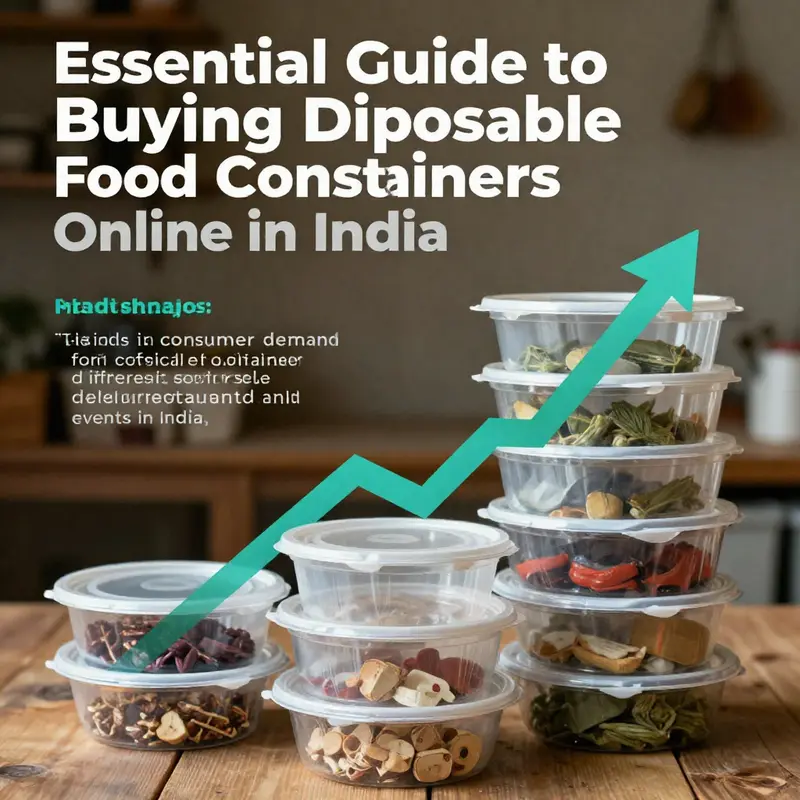
India’s food and packaging landscape is shifting at a pace that mirrors its growing consumer appetite for convenience and safety. The market for disposable food containers is not just a peripheral accessory in this ecosystem; it is increasingly a core enabler of the country’s expanding food service and home-delivery channels. Industry dynamics point to a broader, more compelling narrative: urbanization is accelerating consumer expectations, disposable packaging is becoming a norm in both retail and commercial settings, and online procurement is redefining how buyers access a mix of price, performance, and reliability. In this evolving milieu, the trajectory of disposable food containers in India is shaped by a combination of macroeconomic momentum, regulatory currents, shifting consumer values, and the practical realities of global sourcing. The market’s growth is underscored by a robust demand backdrop, with the broader Indian food and beverage packaging segment anticipated to reach elevated levels as urban lifestyles consolidate and the fast-food and ready-to-eat sectors continue their expansion. As urban centers proliferate and disposable income grows, more households and informal food businesses alike seek packaging that is hygienic, leak-proof, easy to handle, and compatible with the digital ordering and delivery models that increasingly define modern consumption. This convergence of needs creates a fertile environment for disposable containers designed for takeout, delivery, and individual portions, whether in households or commercial kitchens. The market’s scale and velocity are closely tied to the rise of online ordering platforms. With more consumers turning to digital avenues for meals, the demand for reliable, hygienic, and convenient packaging has become a differentiator for restaurants, caterers, and home-delivery services. Online sourcing, including B2B platforms that connect Indian buyers with international manufacturers, has emerged as a critical channel for securing a broad range of container formats—from airtight storage solutions to single-portion salad bowls and take-away boxes. In this context, buyers increasingly prioritize products that combine leak resistance, heat tolerance, and safety with cost efficiency, which often means balancing price points against options that meet stricter hygiene and regulatory standards. A pragmatic implication of this shift is that procurement decisions are less about chasing the cheapest option and more about aligning container performance with menu formats, delivery expectations, and post-use disposal realities. The effect is a demand signal that rewards suppliers who can deliver consistent quality at scale while maintaining acceptable lead times and transparent logistics. For instance, the Indian market’s appetite for ready-to-deliver meals and snacks has created sustainable demand for containers that can hold diverse contents—from curries and gravies to sauces and dry snacks—without compromising on presentation or integrity during transit. The appeal of such products extends beyond restaurants and cloud kitchens to street-food vendors, events, and even households that rely on disposable packaging for convenient meal solutions. This broadening base helps explain why private-label and customized packaging solutions are gaining ground. Brands that want to build recognizable packaging ecosystems and customer experiences are increasingly seeking custom-printed or branded disposable containers. The appetite for private-label runs reflects a mature manufacturing ecosystem in India, particularly in states like Gujarat and Tamil Nadu, where facilities with advanced molding technologies can handle production scales from small trial batches to large, ongoing runs. These capabilities support faster turnaround times—typically in the 15–25 day window for standard orders—and enable flexible production models that accommodate both domestic demand and export-oriented projects. Such dynamics are especially relevant for online buyers who value the ability to source locally for faster delivery and to customize packaging for brand differentiation. The evolving landscape is complemented by a gradually more discerning competitive environment. Market participants range from established manufacturers with broad portfolios to nimble startups focusing on sustainable packaging solutions. This mix fosters continuous product innovation, including developments in eco-friendly materials and more efficient designs that maintain functionality while reducing environmental impact. Government initiatives like Make in India, along with tightening efforts to curb plastic waste, create a supportive framework for domestic manufacturers to scale operations and deepen local value chains. For buyers, this means a more reliable supply base, diversified options, and greater resilience to global disruptions. The sourcing and investment calculus for stakeholders looking at India’s disposable container segment is shifting in meaningful ways. A structured supplier evaluation rubric—one that emphasizes production capacity, material compliance with FSSAI and ISO standards, sustainability credentials, and logistics reliability—becomes essential in a market where demand is rising and expectations are rising in tandem. In practice, buyers who prioritize these attributes are best positioned to secure consistent supply, navigate fluctuations in raw material costs, and meet evolving regulatory requirements around packaging safety and disposal. The online dimension adds a further layer of complexity and opportunity. While the domestic manufacturing base is expanding, international B2B platforms continue to play a key role for many buyers seeking specific formats, specialized materials, or price efficiencies through global scale. Platforms that connect Indian buyers with offshore suppliers can offer an expanded assortment—ranging from airtight food storage containers to salad bowls and multi-compartment take-away packaging—often at competitive price points, with payment methods that suit both buyers and suppliers. An informed approach to online sourcing also requires attention to the economics of shipping, import duties, and delivery timelines, which can significantly influence landed cost and overall project viability. For organizations evaluating online procurement, the decision framework should weave together product performance, regulatory compliance, and total landed cost. In addition to the structural benefits of domestic sourcing, the online route to procurement can unlock access to innovations in materials and design. Biodegradable and compostable options based on bagasse, bamboo fiber, or PLA-based plastics are increasingly being integrated into product lines as producers respond to consumer preferences for sustainable packaging. These materials, while sometimes priced higher than traditional plastics, are becoming more cost-competitive as R&D advances and scale economies improve. The result is a more attractive spectrum of options for sectors ranging from QSR chains to hospitality providers and home-based caterers who want packaging that aligns with sustainability goals. Notably, the shift toward sustainability does not occur in isolation from performance requirements. For food containers to succeed in India’s bustling market, they must deliver reliability in leak resistance, microwave safety, and odor control, while also clipping the environmental footprint of the supply chain. Innovations in lid mechanisms, seam seals, and grease resistance contribute to longer shelf life and safer transit. The private-label trend dovetails with the need for consistent branding across multiple channels, including online storefronts, physical outlets, and delivery couriers. A coherent packaging strategy helps brands sustain customer recognition, protect product quality, and reduce the frequency of returns due to compromised packaging. As businesses in India increasingly seek to consolidate their sourcing through online channels, it is natural to encounter a spectrum of supplier profiles—some offering fully integrated solutions with compliance tested materials, others providing flexible manufacturing with quick turnarounds. A prudent buyer weighs both the capability to scale and the assurance of quality control, including adherence to FSSAI and ISO standards for packaging materials. The strategic value of online procurement becomes even clearer when considering the broader circular economy objectives that many Indian companies now embrace. Reusable or recyclable packaging is not always feasible for every application, but the push toward recyclable or compostable materials is reshaping what is offered by manufacturers and what buyers expect from suppliers. In practical terms, this means that online buyers should seek suppliers who can provide clear material disclosures, certifications, and end-of-life guidance. The choice to range across suppliers—balancing domestic production strength with selective offshore sourcing—allows buyers to optimize for price, speed, and sustainability. In this context, one practical reference for readers seeking concrete examples of formats and materials available through suppliers is the online catalog of a prominent packaging options provider that highlights disposable kraft paper bowls with lids and bulk takeaway solutions. The linked product page illustrates how a single SKU can combine lid-integrated convenience with a sturdy, grease-resistant design suitable for hot or cold foods, and it demonstrates how bulk purchasing can be aligned with private-label goals and fast delivery cycles. For readers exploring these options, the internal resource can be accessed here: disposable-kraft-paper-bowls-food-containers-with-lids-bulk-500ml-to-1000ml-rectangular-bowls-for-takeaway.
The broader takeaway for businesses contemplating online purchases of disposable food containers in India is that the market has matured into a multi-layered ecosystem. Domestic manufacturing capabilities, supported by a growing network of private-label and customization options, are complemented by international sourcing channels that offer breadth and scale. The key to success lies in aligning product specifications with brand objectives, regulatory mandates, and the practical realities of delivery in diverse Indian markets. In doing so, buyers can design packaging solutions that meet the highest expectations for hygiene, presentation, and sustainability while preserving cost efficiency across large or recurring orders. As the market expands, the interplay between online procurement and domestic production will continue to redefine how Indian food businesses source disposable containers. The sector will, in turn, influence how consumers experience takeout and prepared foods, shaping a packaging standard that prioritizes safety, convenience, and environmental responsibility without compromising on value. External data corroborates the sector’s trajectory, offering a macro view of the market’s expansion and its implications for packaging suppliers and buyers alike. For a rigorous, real-time picture of India’s F&B packaging market size and growth, see the external resource from Statista: https://www.statista.com/statistics/1382922/india-food-and-beverage-packaging-market-size-by-value/.
Final thoughts
In conclusion, procuring disposable food containers online in India offers a wealth of options ranging from various platforms to detailed pricing structures and payment methods. Understanding the import process is vital for a seamless experience, as is keeping abreast of market trends that highlight the rising demand in the industry. By approaching this task with the insights provided in this guide, businesses can make informed decisions that not only enhance their operational efficiency but also contribute to customer satisfaction. Embrace these solutions to ensure your food business thrives in a competitive market.