
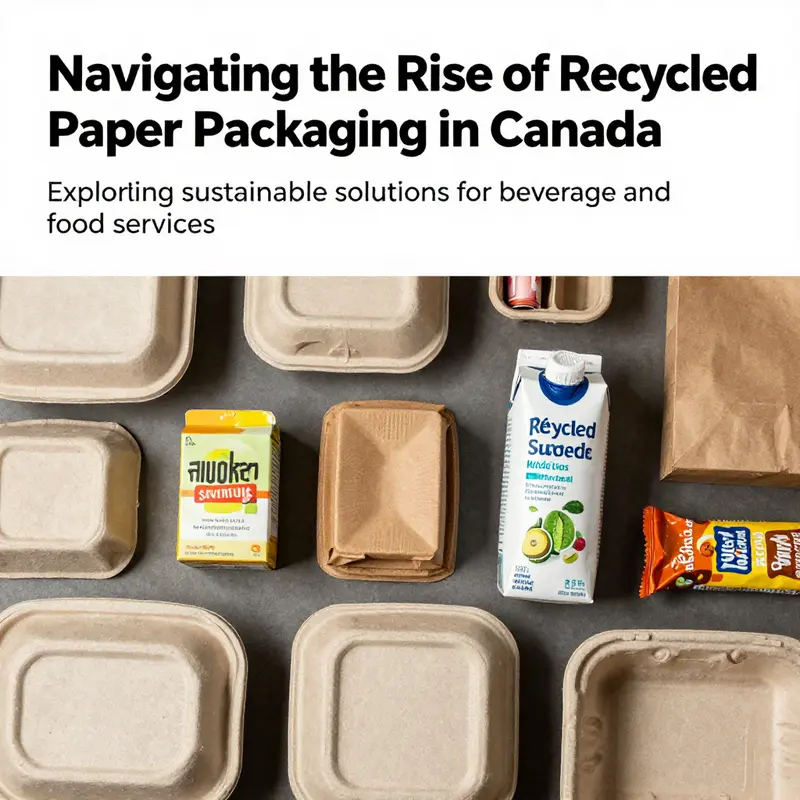
As the world becomes increasingly conscious of environmental sustainability, recycled paper packaging in Canada has emerged as a key player in the food and beverage sector. From bubble tea shops to catering services, businesses are embracing eco-friendly packaging solutions that not only meet regulatory requirements but also cater to consumer preferences. This article delves into the various aspects influencing the rise of recycled paper packaging in Canada, covering regulatory impacts, emerging consumer trends, market growth, technological innovations, and sustainability practices. Each chapter aims to equip beverage chains, restaurants, food vendors, and event planners with key insights to navigate this evolving landscape effectively.
Forging a Circular Path: Regulatory Currents Reshaping Canada’s Recycled Paper Packaging
Canada is navigating a regulatory landscape that is as much about accountability as it is about opportunity. The push toward circularity in packaging has moved from aspiration to policy, and the recycling paper segment sits at the intersection of compliance, innovation, and consumer expectation. At the federal level, a plastics packaging tax introduced for the new year reframes cost considerations for packaging that remains reliant on non-recyclable plastics. The tax acts as a signal that the economics of material choice are shifting, nudging manufacturers toward recycled paper and other fiber-based solutions that fit within existing municipal systems. This fiscal lever is complemented by an extended producer responsibility framework that makes producers responsible for end-of-life management. The combined effect is not merely a cost shift; it is a strategic invitation to redesign packaging so that it is easier to recover, reuse, and recycle, while still meeting safety and shelf-life needs.
Provinces then layer on programmatic requirements through blue box recycling schemes, which govern how households return paper and packaging waste for processing. The blue box programs provide the feedstock, if you will, for the recycled paper that can be remanufactured into new boards, carriers, and folding cartons. In this sense, Canada is crafting a closed loop that encourages more durable, renewable material choices. Yet the path is uneven. Some regions have more mature collection streams, while others struggle with coverage or contamination in streams. In practice, this means manufacturers and converters must plan with provincial realities in mind, aligning their supply chains to different standards and timelines.
The business landscape in recycled paper packaging has not stood still. A recent consolidation within the broader packaging ecosystem has intensified competition, pressuring regional players to innovate with specialty grades and barrier-coated materials designed for short-run, high-value markets. This dynamic creates an upside for Canada in the sense that fiber-based solutions can be tailored to niche beverages, dairy, or food service applications where extended shelf stability is crucial. At the same time, it places a premium on regulatory compliance, as products must meet precise barrier, seal, and print requirements while remaining compatible with municipal recycling streams. For stakeholders, this means a careful balance between technical performance and recyclability, a balance that is increasingly scrutinized by regulators and consumers alike.
A central regulatory challenge, however, is the traceability of recycled inputs. Recycled paper used in packaging often originates from a mosaic of sources around the world, making it difficult to confirm origin, assess quality, and verify environmental impact claims. When regulators demand higher recycled content or specific certifications, provenance becomes a cornerstone of trust. Without clear chain-of-custody data, brands risk misalignment with safety standards, consumer expectations, and the growing suite of eco-labels that signal responsibility. This does not mean the system is broken; it signals where investment is needed. Technologies and processes that map inputs from source to finished product—such as supplier audits, lot-level tracking, and digital record-keeping—are increasingly seen as essential infrastructure for compliance and confidence.
For those seeking authoritative anchors on how to navigate these frameworks, the Canadian Council of Ministers of the Environment offers up-to-date guidance across provinces on blue box programs and recycling schemes. This resource is invaluable for understanding differences among jurisdictions and anticipating how policy shifts may ripple through supply chains. As firms design to meet evolving content and labeling expectations, they must also consider the standards that govern food contact safety, enclosure integrity for beverages, and the barriers necessary to preserve product quality. The literature on recycled paperboard packaging emphasizes its compatibility with municipal recycling infrastructure and certification pathways that support eco-labels, making recycled content not only a regulatory necessity but a market differentiator.
This regulatory fabric also intersects with corporate strategy in meaningful ways. The post-merger landscape within the broader fiber packaging arena has pushed suppliers to rethink performance priorities. In a market where the ability to deliver barrier-coated, short-run, high-value formats matters, manufacturers are pairing rigorous compliance with agile production. The challenge is to integrate traceability and compliance without compromising throughput or incurring prohibitive costs. The implications ripple downstream into package design, where brands increasingly favor formats that maximize recyclability while still delivering on shelf appeal and functional protection. In practice, this translates into fiber-based solutions that balance stiffness, printability, moisture resistance, and seal integrity, all while staying aligned with municipal recycling streams.
With consumer demand tilting toward sustainable options, the regulatory environment functions as a guidepost for product development. The market is forecast to expand as paper-based packaging becomes a larger share of overall packaging, supported by policy measures and consumer momentum. The economics of recycled content are increasingly favorable when tax incentives and EPR obligations are taken into account, creating a financial rationale for greater use of recycled paperboard in beverage carriers, retail-ready packaging, and eco-conscious brand initiatives. For practitioners, this is not about chasing a trend; it is about aligning product design with the expectations of regulators, retailers, and end users who want clearer assurances of environmental stewardship.
Within this context, a practical approach emerges. Build supply chain transparency as a core capability rather than a compliance afterthought. Invest in supplier qualification programs, declare recycled content with verifiable documentation, and pursue certifications that reassure regulators and consumers about safety and environmental performance. The objective is not only to meet minimum standards but to exceed them in ways that reinforce a brand promise of responsibility. This includes ensuring that recycled inputs are traceable, that the end product is compatible with municipal recycling streams, and that the packaging performs where and when it matters—during transport, on shelves, and in waste streams awaiting recycling. When these elements align, the result is a more resilient packaging system that can adapt to evolving rules and shifting markets.
To illustrate how these dynamics look in practice for a wide range of packaging formats, consider the types of packaging commonly used in food service and consumer goods. The materials must withstand handling, stacking, and occasional exposure to moisture, while still offering reliable recyclability at end of life. The regulatory impetus thus feeds into material selection, process engineering, and even the layout of supply networks. It nudges companies toward fiber-based, recyclable solutions that can be recovered and reprocessed with existing municipal streams, avoiding the friction of adding new waste management infrastructure. The path forward rests on collaboration along the value chain—between paper producers, packaging converters, retailers, waste managers, and regulators—to ensure that the recycled paper packaging actually circulates back into production loops rather than ending up as residual waste.
Sitting behind all these shifts are the people who design, test, and qualify packaging for safety, performance, and sustainability. Standards bodies, researchers, and industry groups contribute to a shared understanding of what constitutes acceptable physical properties, barrier performance, and printability for recycled paperboard can packaging. The knowledge embedded in reports and standards helps teams make evidence-based decisions, minimizing trial-and-error approaches that waste resources and delay time to market. The convergence of policy, science, and market demand suggests a future in which recycled paper packaging not only meets regulatory thresholds but becomes a reliable platform for product differentiation. The chapter you are reading now is part of a broader narrative about how Canada’s mixed economy of federal incentives, provincial devices, and private-sector ingenuity is shaping a more circular, lower-impact packaging system.
For readers seeking real-world examples that illustrate the sentiment described here, a look at the available eco-conscious packaging formats demonstrates how regulatory intent translates into tangible choices. In many cases, brands and processors are selecting fiber-based solutions for beverages, snacks, and ready-to-eat foods because these formats are compatible with recycling programs and capable of achieving higher recycled-content targets without sacrificing performance. The decision calculus blends regulatory foresight with cost, consumer appeal, and supply chain reliability. When done well, it yields packaging that is not only compliant but credible in the eyes of shoppers who increasingly scrutinize the ethics and environmental footprint of the products they buy. As the market expands, Canada’s recycled paper packaging sector will likely see continued convergence between policy objectives and business incentives, a convergence that helps reduce waste, defend forests, and lower carbon emissions across the lifecycle of packaging.
From a narrative standpoint, regulation underpins more than compliance; it informs strategy. Companies that anticipate policy shifts—investing in traceability, data transparency, and supplier due diligence—will be better positioned to navigate a landscape where recycled content is a gatekeeper for access to certain markets and pricing regimes. The incentive structure is balancing on a point where environmental performance and economic viability meet: when the recycled inputs are traceable, verified, and recyclable at scale, the chain can sustain growth while meeting public expectations for responsible manufacturing. In this sense, regulatory activity is a catalyst for product innovation rather than a brake on it.
As a concluding thread, the Canadian regulatory path frames the recycled paper packaging sector as a dynamic field where policy, market demand, and technical capability co-evolve. The federal plastics tax, the EPR framework, provincial blue box schemes, and industry responses all interact to define what counts as responsible packaging. The result is a market that not only reduces plastic use but expands the use of fiber-based solutions that fit within municipal recovery systems and align with environmental labeling schemes. Organizations that invest in traceability, certification, and transparent sourcing will not only comply with rules but earn trust with consumers seeking genuine environmental stewardship. The opportunity lies in building a resilient ecosystem in which every stage—from input sourcing to end-of-life recovery—contributes to a lower footprint and a stronger, more circular Canadian packaging economy.
For authoritative information on Canada’s blue box programs and provincial recycling frameworks, refer to CCME: https://www.ccme.ca. And for a concrete example of how sustainability-minded packaging is marketed within the constraints of responsible material choices, see one practical take on eco-friendly takeout packaging here: eco-friendly takeout boxes for food packaging.
Conscious Choices, Circular Futures: Consumer Trends Steering Recycled Paper Packaging in Canada
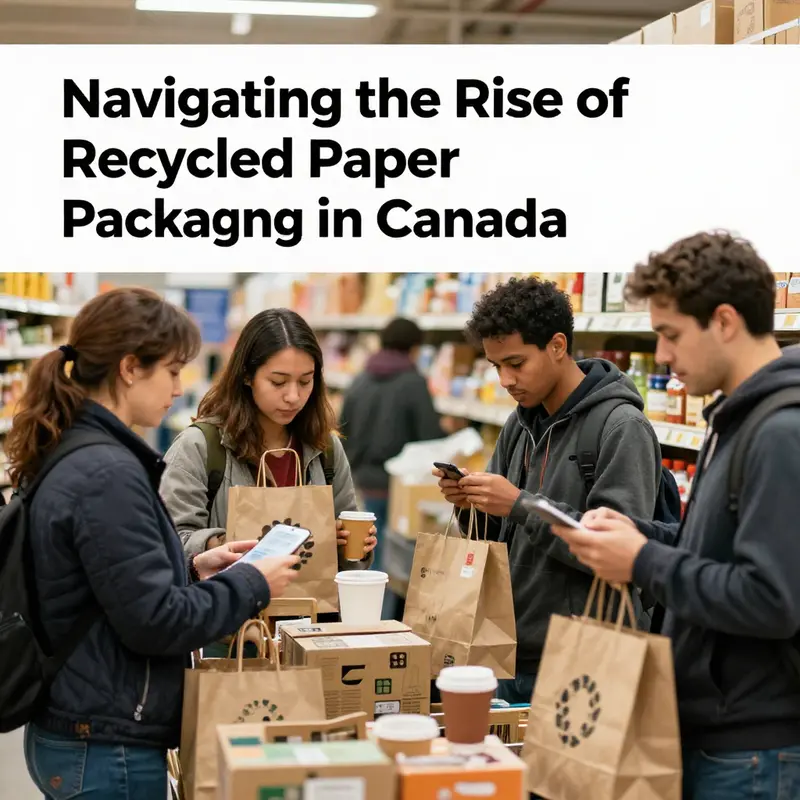
Canadian consumers are increasingly attentive to where a package begins its journey and where it ends. This awareness is not merely about recycling on a whim; it is a sustained expectation that packaging will reflect the values a brand claims to uphold. In practical terms, the shift toward recycled paperboard is becoming a baseline in many product categories, not a niche option. Market trajectories reinforce this shift: the broader Canadian paper packaging market is projected to grow from about USD 19.07 billion in 2025 to USD 27.21 billion by 2031, a CAGR around 6.1% for 2026–2031. Recycled paperboard sits at the core of that growth, favored for its ability to be produced from post-consumer and post-industrial waste and then reintroduced into the circular loop. The consumer pull is clear: packaging that signals responsibility can influence everyday purchase decisions as surely as taste or price does.
Consumers are not satisfied with a packaging story that ends at disposal. They want a lifecycle portrait—where materials come from, how energy is used in production, the resulting carbon footprint, and how effectively the package can re-enter the recycling stream after use. This demand for lifecycle transparency dovetails with a broader appetite for what industry observers label as “clean-label” packaging attributes, where natural aesthetics and traceable sourcing become competitive differentiators. A wave of digital dialogue around sustainability, including professional networks and market analyses published in late 2025, indicates that shoppers increasingly reward brands that prove their packaging aligns with environmental values. The implication for manufacturers and retailers is practical: invest in recycled content, design for recyclability, and communicate these choices clearly to consumers who read packaging as a credibility signal as much as as a product carrier.
The practical responses to this demand are visible across material science and supply chains. Innovations in coatings and fiber treatments support longer shelf life while preserving end-of-life options. Bio-based coatings and compostable materials appear as credible options in contexts where the lifecycle can be closed under appropriate conditions, though the universal recyclability of any coating remains a key constraint that must be managed with care. Crucially, recycled paperboard’s compatibility with existing municipal recycling systems and its potential for eco-label certification position it as a pragmatic path for brands striving to balance performance with responsibility. When a package is accepted by municipal streams, certification programs can provide the third-party verification that retailers and consumers rely on to distinguish truly sustainable choices from greenwashing. In this sense, the appeal of recycled paper packaging extends beyond the environmental ledger to the practical realities of manufacturing, logistics, and consumer trust.
Regulatory forces in Canada amplify this consumer-driven momentum. Federal and provincial actions targeting single-use plastics and the expansion of producer responsibility rules change the economics and risk profile of packaging decisions. As regulations tighten and enforcement grows, fiber-based solutions such as recycled paperboard become not just a sustainability preference but a compliance strategy. This regulatory backdrop interacts with consumer sentiment: as the public grows more vocal about plastic reduction and resource stewardship, brands see a stronger business case to prioritize recyclable, post-consumer–fed materials. The result is a packaging ecosystem where the material choice—recycled content, recyclability, and lifecycle clarity—serves both public policy aims and market expectations.
From a financial vantage, the shift toward recycled paper packaging carries tangible benefits. Industry analyses indicate cost advantages that extend beyond material expenses. In many scenarios, adopting recycled paper packaging can reduce total packaging costs by roughly 12%, driven by more efficient waste management, better compatibility with existing recycling streams, and the use of locally sourced post-consumer materials. This economic incentive strengthens the narrative that sustainability and profitability can coexist. When brands weave these savings into a broader storytelling framework—linking product stewardship with consumer trust—the packaging becomes a reputational asset as well as a logistical choice. The elevated customer perception that accompanies sustainable packaging can translate into repeat purchases and brand loyalty, creating a virtuous cycle that reinforces the business case for recycled content.
The market is responding with a widening toolkit to meet consumer and regulatory demands. Recycled paperboard is increasingly used in a spectrum of applications such as beverage carriers, retail-ready packaging, and brand initiatives that emphasize eco-conscious messaging. The material’s perceived naturalness and its potential for certification give retailers a clear signal about sourcing and end-of-life behavior. Yet the transition is not simply a matter of swapping materials. It requires careful alignment of design, performance, and recyclability to ensure that each package can withstand handling and storage requirements while preserving its ability to re-enter the recycling stream after use. In this light, certifications and eco-labels play a crucial role, providing standardized references that help buyers compare options and verify environmental claims. The net effect is a packaging landscape where recycled content, recyclability, and verified sustainability become integrated into product value propositions rather than add-ons to the marketing brief.
Competitive dynamics also shape how quickly and effectively brands embrace recycled paper packaging. The Canadian market has seen intensified competition following notable industry consolidation in 2024, which has spurred regional players to push innovations in specialty grades and barrier-coated materials tailored for short-run, high-value markets. This emphasis on advanced formats reflects a recognition that consumer demand is not monolithic; it varies by category and by the level of shelf impact that a pack must deliver. In practice, this means more packaging options with enhanced performance—better barrier properties for perishable goods, formats that meet retail-ready requirements, and designs that maintain aesthetics while maximizing recyclability. For consumers, the result is a wider array of packaging choices that can meet both sustainability targets and product expectations without forcing concessions on quality or convenience.
As design teams and supply chains adapt, the packaging narrative for Canada also emphasizes authenticity and simplicity. Consumers gravitate toward natural textures, minimal dyes, and recycled-content graphics that communicate a genuine commitment to environmental stewardship. This trend does not abandon innovation; rather, it reframes it around clear signals of responsibility. For instance, a growing focus on naturally derived components—balanced with rigorous recyclability—demonstrates that the industry can pursue more sustainable formats without compromising safety, shelf life, or consumer experience. The net effect is a more coherent ecosystem where recycled paper packaging is not a niche tactic but a mainstream strategy that supports a broader move toward circular economy practices.
In practical terms, the consumer influence materializes through product formats that align with everyday use while remaining faithful to circular principles. Recycled fiber-based packaging is increasingly selected for its potential to be fed back into the system, its production footprint scrutinized, and its end-of-life path made transparent. This alignment between consumer preferences, regulatory direction, and industry innovation helps explain why the market is forecast to continue its upward trajectory well into the next decade. The projection to 2031—about USD 27.21 billion for the broader paper packaging market—reflects not only a shift in materials but a broader confidence that sustainable packaging can scale across multiple sectors, from food and beverages to household goods and beyond. The pressure from consumers and policymakers alike is turning recycled paper packaging from an alternative into a default choice, with certification and lifecycle data guiding the decision-making process at every step.
For readers seeking a concrete example of design-for-recyclability in action, consider the practical case of foldable boxes with window features that maintain product appeal while staying compatible with recycling streams. See the example here: pure-color-foldable-cake-boxes-with-window-bakery-boxes-pastry-box-for-cake-chocolates-cupcakes-gift-packaging-paper-boxes. This link illustrates how form and function can converge in fiber-based packaging, enabling brands to deliver attractive packaging without compromising circularity. It also signals how consumer expectations and material capabilities are converging to shape everyday packaging decisions.
As the Canadian market continues to mature, the alignment of consumer sentiment, regulatory strategy, and industry innovation will likely sustain steady growth. The trajectory from 2026 through 2031 suggests that recycled paper packaging will become an increasingly common standard in a wide array of product categories. The confluence of cost benefits, lifecycle transparency, and brand credibility gives manufacturers a compelling case to invest in recycled content and recyclable design. In this environment, consumers are more than end users; they are co-authors of the packaging narrative, guiding companies toward solutions that protect products, reduce waste, and reinforce trust. The result is a packaging ecosystem where environmental responsibility, economic viability, and consumer expectations reinforce one another, propelling Canada’s recycled paper packaging market toward broader adoption and deeper impact.
External context for further market dynamics can be found here: Canada Converted Paper Products Market.
Currents of Change: Tracking the Rapid Growth of Recycled Paper Packaging in Canada
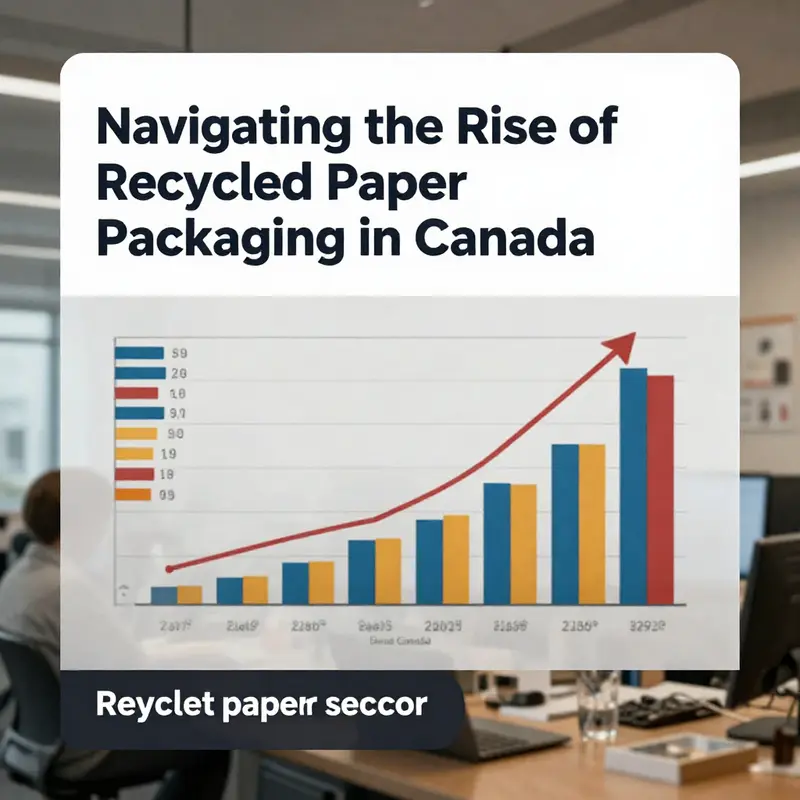
Canada’s packaging landscape is shifting in a way that mirrors global pushes toward sustainability, yet it carries a distinctly Canadian cadence. The recycled paper packaging market is growing not merely because it is greener, but because it has become a practical choice for businesses responding to policy signals, consumer expectations, and the realities of a diversified supply chain. In recent analyses, the broader Canadian paper packaging market is forecast to rise from around USD 14.17 billion in 2025 toward roughly USD 19.28 billion by 2033, signaling a notable expansion even beyond the recycled segment. Within this broader trajectory, recycled paper packaging stands out as a core driver. It leverages post-consumer and post-industrial waste streams to create a circular material loop, reducing carbon footprints, limiting deforestation, and diverting waste from landfills. As this loop tightens, the material’s appeal grows across beverage carriers, retail-ready packaging, and brand initiatives rooted in sustainability metrics. The momentum is reinforced by a growing ecosystem of certifications and recyclability assurances that align with municipal systems already in place in many Canadian regions, making recycled paperboard a practical, scalable alternative to traditional plastics, especially as governments press for lower plastic use and stronger circular economy practices.
The regulatory backdrop is a powerful accelerant. Federal moves to ban certain single-use plastics, paired with provincial extended producer responsibility (EPR) regimes, are reshaping cost structures and material choice for a wide range of consumer goods. In this environment, recycled paper packaging is not merely a competing option; it is increasingly a compliance-friendly path toward meeting environmental targets. Companies face new obligations around product stewardship, end-of-life management, and packaging design that prioritizes recyclability and reduced contamination. The result is a market where innovation is no longer a luxury but a necessity. Manufacturers and retailers are experimenting with barrier-coated recycled fibers and niche grades designed for short-run, high-value applications, acknowledging that the most resilient business models will blend sustainability with performance and cost efficiency.
In recent competitive dynamics, industry players have observed intensified activity following notable mergers and strategic realignments in adjacent markets. The consolidation among major players has raised the bar for innovation and operational efficiency, pushing suppliers to diversify offerings beyond standard recycled paperboard. The emphasis has shifted toward specialty grades, coatings that extend shelf life, and barrier technologies that protect sensitive contents in beverage and food applications. These developments do more than improve performance; they expand the practical reach of recycled paper packaging into categories that historically leaned on plastics for moisture resistance and transparency. The resulting market ecologies are characterized by rapid experimentation in supply chains, with brands seeking packaging that can convincingly communicate sustainability without compromising functionality or cost predictability.
For practitioners seeking a reference framework on materials, performance, and compliance, the field is increasingly served by authoritative resources that map out properties and engineering considerations for recycled paperboard packaging. Such resources highlight how physical attributes—stiffness, tear resistance, surface quality, and barrier performance—translate into real-world outcomes for food, dairy, pharmaceuticals, and beverages requiring extended shelf stability. As these standards evolve, they help ensure that recycled packaging can meet the stringent demands of modern retail and food service while remaining compatible with established recycling streams. In Canada, this alignment matters because municipal systems are already configured around paper streams, enabling higher recovery rates and more predictable end-of-life outcomes when packaging is designed with recyclability in mind. The net effect is a more robust market where brands can pursue ambitious environmental targets without sacrificing product integrity or consumer convenience.
Market size signals, while not always broken out to isolate the recycled segment, reinforce the growth narrative. The global recycled paper packaging market is projected to expand from about USD 48.7 billion in 2026 to USD 68.9 billion by 2034, a CAGR of roughly 4.5%. Canada contributes meaningfully to this momentum, even as it navigates the broader shifts in the North American supply chain and the global push toward circular economies. The Canadian market is also characterized by a parallel expansion in the total paper packaging space, which is forecast to rise at a pace consistent with its regulatory and consumer drivers, potentially reaching USD 19.28 billion by 2033. Within this landscape, recycled solutions occupy a central and accelerating position, bolstered by consumer demand for sustainable products and a growing recognition among manufacturers that recycled fiber can deliver the right balance of performance, recyclability, and lifecycle benefits.
The consumer impulse behind this growth is nuanced but clear. As awareness of plastic pollution and waste management challenges deepens, readers, shoppers, and end consumers increasingly favor brands that can demonstrate credible sustainability credentials. Recycled paper packaging offers a tangible narrative: it is not only recyclable but also often traceable to waste streams that communities and processors already collect. Brands pursuing eco-conscious positioning find value not just in the material’s intrinsic environmental attributes but in the broader storytelling opportunities it affords—certifications, labels, and transparent lifecycle data that resonate with increasingly discerning audiences. The market thus becomes less about choosing between plastic and fiber and more about selecting fiber options that can meet or exceed the performance benchmarks of traditional materials while fitting within a closed-loop system.
An important practical implication of this shift is the need for scalable, reliable supply chains that can handle the variability inherent in recycled feedstocks. Investments in recycling infrastructure, sorting capabilities, and certification programs are paying off, enabling higher-quality recycled paperboard with consistent properties. This consistency is essential for food-contact applications and other high-stakes uses where regulatory compliance and consumer safety intersect with performance requirements. Suppliers are responding by refining fiber mixes, optimizing coatings, and developing multi-layer formats that deliver barrier protection without sacrificing recyclability. In Canada, where municipal systems are often well-established, these advances translate into lower contamination rates, smoother recycling streams, and better end-of-life outcomes for packaging. The result is a more resilient market that supports steady growth even as external shocks—such as supply chain disruptions or shifts in commodity prices—test the adaptability of players across the value chain.
To illustrate the practical breadth of this shift, consider the everyday packaging used in fast-casual, grocery, and e-commerce channels. Recycled paperboard is increasingly seen in beverage carriers, ready-to-roll retail packaging, and compact cartons designed for longer shelf life. The focus on barrier properties reflects a pragmatic response to food safety and shelf stability needs, enabling products to travel further with reduced risk of moisture ingress or contamination. The convergence of consumer demand, regulatory pressure, and technological capability thus creates a virtuous circle: better recycling technology supports higher-quality recycled fibers; higher fiber quality enables broader application; broader application reinforces the market’s growth trajectory and sustainability narrative. In turn, this cycle informs corporate strategy, guiding investments in paper suppliers, conversion partners, and recycling programs that can sustain growth through the next decade.
For readers seeking a tangible touchstone that connects material science with market realities, the wider industry literature offers a detailed map of standards, properties, and engineering applications. While the Canadian market evolves in its own right, it benefits from global learnings about how recycled fiber behaves in beverage packaging, dairy cartons, and pharmaceutical packaging—areas where shelf life and product integrity are non-negotiable. The cross-pollination between global benchmarks and Canadian practice accelerates the adoption of recycled paperboard in higher-value segments and broader consumer channels. This fusion of science, policy, and market demand is the engine that will propel Canada’s recycled paper packaging market forward, turning regulatory pressures and eco-conscious consumer choices into concrete growth opportunities for years to come.
As the market matures, the emphasis will increasingly be on design-for-recyclability, lifecycle transparency, and partnerships that align brand promises with practical outcomes. Brands are learning to integrate packaging as a strategic component of their sustainability storytelling, rather than a separate compliance artifact. This shift requires collaboration across suppliers, manufacturers, retailers, and municipalities to ensure that every stage—from raw fiber to end-of-life recovery—contributes to a cleaner, more efficient system. The path forward hinges on continued investment in recycling infrastructure, the refinement of barrier-coated recycled formats where needed, and the ongoing education of consumers about proper disposal and recycling practices. In Canada, this alignment appears well underway, with strong regulatory signals and rising consumer expectations creating a conducive environment for sustained growth in recycled paper packaging.
For readers who want a concise reference on market scope and growth projections, external resources provide a broader context for these Canadian trends. One such resource offers a comprehensive analysis of the recycled paper packaging market and its growth trajectory, including regional nuances and industry drivers. This external perspective complements the detailed Canadian outlook by situating local dynamics within a global framework and highlighting the opportunities and challenges that lie ahead for manufacturers and brands alike. External resource: Recycled Paper Packaging Market Report 2026 – Value Market Research.
Internal note: for a practical example of packaging options aligned with this shift, consider exploring eco-friendly takeout solutions that balance performance with recyclability. The packaging format captured in this example demonstrates how fiber-based designs can achieve leak resistance, ease of handling, and consumer appeal without compromising end-of-life outcomes. If you want to see a specific category of such options in action, you can browse one of the several supplier formats that emphasize environmentally responsible, craft-paper-based takeout containers and related products, which are representative of the direction this market is taking in Canada.
In sum, the Canadian recycled paper packaging market sits at a pivotal juncture. Regulatory rigor, rising consumer expectations, and ongoing material innovations are coalescing to drive sustained growth. The market’s trajectory—supported by robust regional policies and a growing ecosystem of standards—suggests that recycled paper packaging will become an increasingly dominant force in Canada’s packaging economy. As brands continue to pursue circularity, the demand for recycled fiber will expand beyond niche segments into mainstream packaging applications, reinforcing the message that sustainability and performance can advance hand in hand across Canada’s vibrant, evolving packaging landscape.
Canada’s Tech-Driven Turn in Recycled Paper Packaging: Innovation, Standards, and the Road Ahead
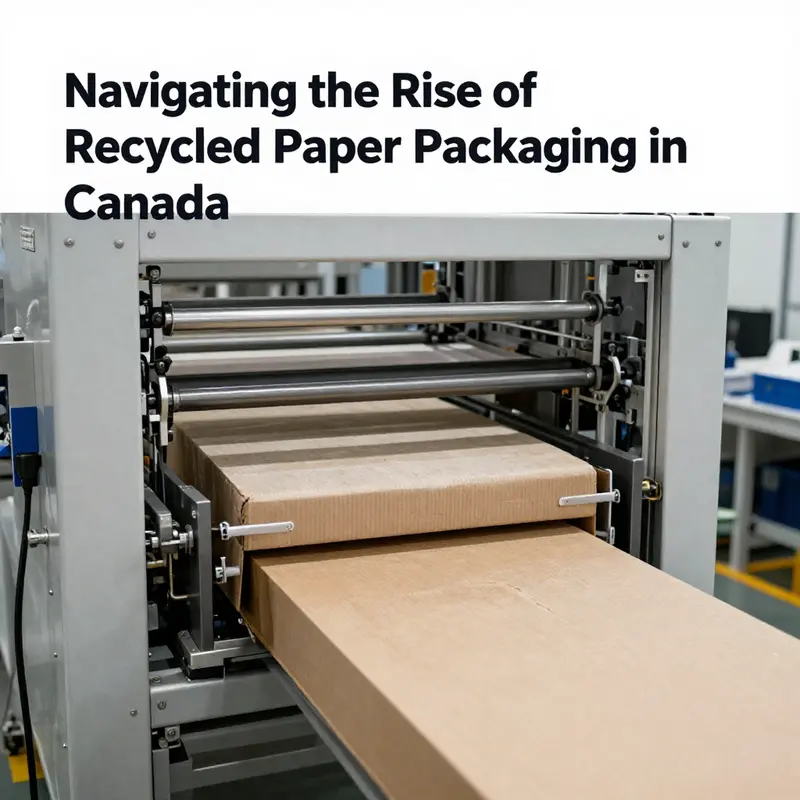
Canada’s packaging landscape is undergoing a technology-driven transformation where recycled paper packaging shifts from a niche option to a mainstream, competitive choice. Across provinces, regulators are tightening the rules that shape packaging design and end-of-life handling, while consumers increasingly demand products that align with sustainability goals. This convergence of policy, market momentum, and brand expectations is accelerating investment in recycled paperboard and fiber-based solutions. The broader market for paper packaging in Canada is projected to climb from roughly USD 19 billion in 2025 to around USD 27 billion by 2031, a trajectory powered in part by recycled fiber and the ability to certify packaging under recognized eco-labels. What emerges is less a single solution and more a family of practices that together reduce carbon footprints, cut deforestation pressures, and keep post-consumer waste circulating in municipal streams. In this context, recycled paper packaging is not simply a green option; it is a strategic asset for companies aiming to meet aggressive sustainability targets and to differentiate themselves through credible, verifiable stewardship.
At the heart of this shift are tangible advances in the recycling and upgrading of pulp. Sorting, screening, and cleaning technologies have grown far more sophisticated, systematically removing contaminants that once degraded quality and performance. As a result, recycled fibers can now meet demanding specifications for food-grade applications, beverage carriers, and retail-ready packaging. The improvement in fiber purity translates into greater strength, printability, and barrier properties, enabling recycled paperboard to perform on par with some virgin options in many common use cases. When combined with modern de-inking and closed-loop process controls, these innovations also reduce variability, which matters for brands that rely on consistent aesthetics and performance across millions of units.
A parallel stream of progress is unfolding in coatings and material engineering. Recycled paperboard has always faced challenges with moisture and oil resistance, essential for foods, dairy, and ready-to-eat products. Contemporary barrier technologies—carefully formulated, often lightweight coatings and laminates—enable recycled substrates to withstand splash, grease, and shelf-life requirements without compromising recyclability. Importantly, these barrier systems are increasingly compatible with standard curbside recycling streams, preserving the circularity that brands seek. In practice, this means shorter runs, more customization, and the ability to tailor packaging to niche markets without sacrificing sustainability or end-of-life performance. The market is increasingly characterized by a diversification of specialty grades and barrier-coated materials designed for short-run, high-value applications, a trend that has intensified after a period of consolidation in the industry and a merger-driven push for innovation. The result is a dynamic ecosystem where material science, equipment suppliers, and brand owners co-create solutions that meet precise performance targets while honoring environmental commitments.
The consumer and regulatory environment shapes adoption in practical, observable ways. A notable example from the field shows how a large fast-service operation transitioning to 100% recycled paper packaging achieved meaningful outcomes. The shift delivered a measurable cost reduction—around 12%—alongside a notable improvement in brand image and customer perception. This kind of case demonstrates that sustainable materials are not merely a compliance exercise; they can impact the bottom line and strengthen stakeholder trust when the switch is implemented with attention to quality, supply reliability, and consumer experience. The implication for the broader market is that recycled paper packaging can be economically viable at scale, while also delivering the reputational and regulatory benefits that many companies now demand.
Pragmatically, the evolution of technology in Canada’s recycled paper packaging space is closely linked to the value chain—from fiber supply through converting to end-market utilization. The ongoing push toward municipal recycling compatibility, along with certification frameworks for eco-labels, helps ensure that recycled packaging not only performs well but remains an eligible input for recycling after use. This full-circle potential matters for the long-term viability of the fiber economy and for brands seeking durable, verifiable sustainability stories. In tandem, industry players are expanding the range of applications beyond traditional boxes to include beverage carriers, retail-ready packaging, and branded packaging programs that emphasize provenance, recyclability, and circular design principles. A critical corollary of this trend is the emphasis on performance testing and standards. Comprehensive assessments of mechanical properties, barrier performance, and compatibility with existing recycling systems are essential to guarantee that recycled paper packaging can meet the requirements of food, pharmaceutical, and consumer goods segments.
Events and platforms dedicated to packaging innovation play a pivotal role in accelerating adoption. The 2026 Montreal packaging exhibition, an important venue for Canadian and international players, will spotlight breakthroughs in sustainable materials, automated packaging lines, and intelligent logistics systems. The show is structured to facilitate real-world demonstrations, pilot projects, and strategic partnerships that accelerate the uptake of next-generation recycled paper technologies. Attendees will have opportunities to observe how automation and smart warehousing integrate with fiber-based packaging, enabling faster line speeds, reduced waste, and better traceability across the supply chain. For visitors and exhibitors, the event provides a concentrated environment to exchange insights on standards, performance requirements, and practical implementation challenges. In this way, such gatherings help translate research breakthroughs into manufacturable, scalable solutions that can be deployed across food, beverage, and consumer goods channels. The focus on Innovation & Sustainable Development underscores how material science, process engineering, and business strategy intersect to drive tangible environmental and economic benefits.
From the perspective of the supply chain, the integration of innovative fibers and coatings requires careful coordination among growers, pulping facilities, converters, and brand owners. Standards considerations are central to this coordination. The industry draws on authoritative resources that delineate the physical properties and performance criteria for recycled paperboard packaging, particularly for cans and food-contact applications. These standards help ensure that the materials can be processed within municipal recycling streams, disposed of responsibly, and present consistent performance in terms of sealability, barrier properties, and printability. The alignment of product design with end-of-life systems is crucial; it reduces the risk of misalignment between packaging performance and recycling infrastructure, a problem that can undermine circularity if not addressed early in the design phase. In this sense, innovation is not only about materials or machinery; it is also about systems thinking—designing for recyclability, optimizing the supply chain, and communicating clear, credible sustainability claims to consumers.
For practitioners seeking practical examples of recycled fiber capabilities, consider the role of versatile, forest-friendly materials in dessert and bakery packaging. A practical, widely used option demonstrates how durable, aesthetically pleasing, and recyclable packaging can coexist with high-performance requirements. This kind of packaging, often made from kraft-based fibers, shows that recycled paper can underpin sophisticated consumer experiences—from display appeal to functional reliability—without compromising end-of-life outcomes. It also highlights the importance of partnerships between packaging manufacturers, processors, and brand teams to ensure that sustainability narratives are matched by robust, consistent packaging performance.
As Canada continues to scale its recycled paper packaging capabilities, the industry will rely on a blend of advanced recycling technologies, barrier innovations, and standardized testing to sustain momentum. The path forward requires ongoing collaboration among material scientists, equipment suppliers, converters, regulators, and brands. It also invites continued exploration of eco-labels, supply-chain traceability, and pilot programs that demonstrate real-world value in terms of cost savings, efficiency gains, and enhanced consumer trust. In this evolving landscape, the simple idea of recycling becomes a sophisticated design and engineering challenge, one that Canadian industry is meeting with ingenuity and shared purpose. And it is precisely this convergence—between regulatory intent, consumer demand, and technical prowess—that positions recycled paper packaging as a central pillar of Canada’s sustainable future. For those who want a tangible illustration of how recycled fibers can power compelling, eco-conscious packaging, the kraft paper cake boxes linked here offer a practical example of durable, attractive, recyclable packaging that aligns with modern takeout and retail needs: kraft paper cake boxes for eco-friendly packaging.
External resource: to learn more about the broader industry platform and its role in disseminating new technologies and standards, see the Montreal packaging exhibition page: https://www.informa.com/en/events/packex-montreal.html
From Fibers to Footprints: How Canada Is Redefining Recycled Paper Packaging for a Circular Economy
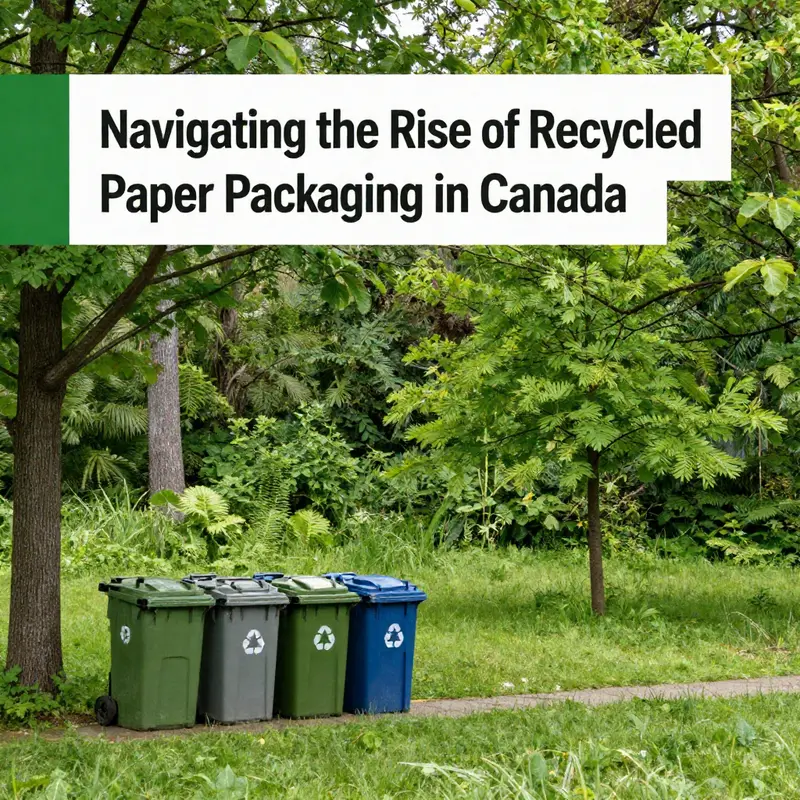
Canada’s packaging landscape is undergoing a quiet revolution as recycled paperboard moves from a niche option to a central pillar of sustainability. Across provinces, brands, manufacturers, and regulators are converging on a shared objective: to reduce the environmental footprint of packaging while preserving functionality, safety, and consumer appeal. The momentum is born of a set of interlocking forces. Regulators are tightening the rules around single-use plastics and enforcing producer responsibility, pushing companies toward fiber-based solutions that fit more neatly into municipal recycling streams. Consumers, increasingly conscious of the life cycle of the products they buy, reward brands that demonstrate transparency and responsibility, while retailers seek packaging that supports efficient logistics, reduces waste, and aligns with ambitious sustainability targets. In this context, the Canadian recycled paper packaging market is not only growing; it is becoming a platform for innovation that reshapes supply chains, design choices, and the very language of what counts as sustainable packaging. The broader market outlook reinforces this shift, with projections showing substantial growth in paper packaging—driven by demand for recycled content, enhanced end-of-life performance, and the ability to certify materials under major eco-labels. As the market expands from 2025 toward 2031, the appeal of recycled paperboard grows stronger for applications ranging from beverage carriers and retail-ready packaging to brand initiatives that emphasize environmental stewardship. The transformative potential lies not merely in recycling rates but in how materials are reimagined for new uses, with performance standards that ensure safety, shelf life, and consumer trust are preserved while the burden on landfills and forests is reduced. In Canada, this translates into a more resilient packaging system where the full recyclability of paperboard in existing municipal programs is a practical reality rather than a distant ideal. The regulatory context is equally important. The federal push to ban certain single-use plastics, coupled with provincial extended producer responsibility rules, creates a financial and strategic incentive for companies to switch from plastic to fiber-based alternatives. When these regulations combine with consumer demand for transparent sustainability narratives, they encourage brands to pursue recycled content, traceability, and certifications that verify environmental claims. The result is a packaging ecosystem that rewards circular thinking: use, reuse, recycling, and then use again, rather than a linear path that ends with disposal. Industry dynamics reinforce this shift as well. The recent consolidation in adjacent markets and the ensuing competition have spurred regional players to differentiate themselves through specialty grades and barrier-coated materials tailored for short-run, high-value markets. These innovations help address challenges that have long limited recycled paper packaging, such as moisture resistance, grease tolerance, and product safety in food and beverage applications. The ability to tailor fiber-based solutions to specific use cases—while maintaining recyclability and compliance with standards—has become a competitive differentiator. Practical guidance for practitioners increasingly points to the value of credible data and reference materials. The detailed analyses in reports like the Paperboard Can Packaging guide offer a practical map of materials, their benefits, and ideal use cases for sectors that require extended shelf stability, including dairy and beverages, as well as pharmaceuticals. In a country as large and diverse as Canada, the ability to harmonize standards with municipal capabilities is particularly important. The opportunity rests in designing packaging that can be collected, sorted, and reprocessed within existing systems, closing loops and reducing dependence on virgin fibers. This is not merely a matter of material choice; it is a systems challenge that links design, supply chain logistics, and policy incentives into a coherent strategy. The practical implications reach beyond environmental metrics. Businesses that adopt recycled paper packaging often see ancillary benefits, including improved brand resonance with sustainability-minded consumers, easier integration into circular supply chains, and a clearer path to meeting corporate targets for sustainable sourcing. A case in point is the leadership demonstrated by a major technology company operating in Canada, which has integrated ocean-bound plastic reduction and recycled-content goals into its procurement strategy. Since 2017, this company has launched hundreds of new products that emphasize recycled materials and responsible sourcing, and it has allocated substantial investments to diversify supplier pools and advance customer sustainability programs. While the specifics of its programs are not the focus here, the underlying narrative remains compelling: sustainability in packaging is increasingly inseparable from core business strategy, risk management, and long-term value creation. In Canada, such leadership translates into concrete actions—prioritizing recycled paperboard, engaging with suppliers who can certify content and chain of custody, and building packaging that aligns with circular economy principles while delivering on performance requirements. This leadership also signals to manufacturers and designers that the goal is not merely to reduce harm but to create value through responsible material choices that support both ecological and economic resilience. The design and engineering considerations that govern recycled paper packaging continue to evolve in tandem with market demands. Standards-based frameworks and engineering properties are essential to ensure that recycled paperboard can meet the rigorous requirements of food safety, shelf life, and barrier performance. Readers seeking a deeper technical vantage can consult industry-focused resources that unpack materials, performance criteria, and compliance frameworks, providing a practical bridge between theory and application. Within this landscape, creative packaging design plays a crucial role. The shift toward 100% recycled content does not imply compromise on aesthetics or user experience. Instead, it invites designers to rethink container geometry, surface finishes, and labeling in ways that optimize recyclability without sacrificing brand identity or consumer convenience. For example, the emergence of robust, recyclable takeout formats and snack packaging demonstrates how simple material substitutions can yield meaningful environmental dividends while maintaining or even enhancing functionality. The design dialogue also encompasses product protection, grease resistance, and moisture management, all of which influence the feasibility of recycling streams and the overall life cycle impact. An accessible, tangible expression of these trends can be seen in packaging designs that favor fiber-based solutions capable of performing across a range of temperatures and product demands, including beverages and ready-to-eat foods. The industry’s move toward 100% recycled paperboard is also a strategic invitation to rethink end-of-life outcomes. Paper, as a material, is inherently recyclable, and when it is sourced from post-consumer and post-industrial waste streams, it closes a loop that substantially lowers overall carbon footprints compared with many plastic equivalents. End-of-life recycling is efficient, and the process can yield high-quality feedstocks for new paperboard products, enabling a virtuous cycle that reduces the need for virgin fibers and supports forest conservation goals. This cycle is reinforced by regulatory and market signals that reward transparency, traceability, and verified content. In practice, this means brands can demonstrate verified material credentials, support third-party eco-labels, and communicate credible environmental claims to consumers who increasingly scrutinize packaging narratives. The interplay between regulation, consumer expectations, and corporate leadership creates a dynamic where recycled paper packaging is not simply an alternative; it is the preferred framework for responsible packaging development in Canada. The path forward, while challenging in some instances, is anchored in collaboration among manufacturers, recyclers, policymakers, and brands. It calls for joint efforts to identify gaps in recycling infrastructure, optimize collection streams, and expand the availability of certified recycled content that meets stringent safety and performance benchmarks. It also demands investment in the research and development of barrier technologies and coatings that extend the utility of recycled paperboard in moisture- and grease-prone applications, without undermining recyclability. As industry bodies and academic resources increasingly document best practices, practitioners gain access to a richer toolkit for designing, producing, and communicating the value of recycled paper packaging. In the Canadian context, this toolkit includes a growing emphasis on transparent supply chains, environmental product declarations, and standardized metrics for life-cycle assessment. Such measures enable producers to quantify progress, compare scents of success across regions, and set actionable targets aligned with national climate and waste reduction goals. For researchers and professionals seeking a curated synthesis of standards, physical properties, and engineering considerations pertinent to recycled paperboard packaging, foundational references like the related industry report offer a practical compass. In the meantime, practitioners are encouraged to leverage the integrated advantages of recycled paper packaging—lower carbon footprints, straightforward end-of-life management, and a credible platform for sustainable brand storytelling. The convergence of policy, consumer demand, and corporate leadership creates a fertile ground for continued innovation, where materials science meets circular design and where Canada charts a path that other regions may follow. As markets mature, the emphasis is likely to shift from merely achieving recyclability to optimizing performance across diverse applications, from beverages to ready-to-eat meals, while maintaining the integrity of recycling streams and minimizing environmental burdens. This evolution will depend on continued collaboration, investment, and an unwavering commitment to the circular economy model that positions recycled paper packaging as a durable, responsible, and economically viable solution for Canada’s, and the world’s, packaging future. For those seeking a deeper theoretical grounding, a foundational study on sustainability in paper-based packaging provides further context and detail about how material choices intersect with lifecycle thinking and policy frameworks. https://www.researchgate.net/publication/342895652SustainabilityinPaper-BasedPackaging
Final thoughts
The trajectory of recycled paper packaging in Canada reveals a promising future for sustainable practices across the food and beverage industry. As regulatory frameworks tighten and consumer awareness grows, adopting recycled paper solutions is not just beneficial but necessary for businesses aiming to thrive. By integrating these sustainable practices, companies can enhance their brand image, reduce environmental footprints, and meet the evolving expectations of their customers. The momentum behind recycled paper packaging continues to build, presenting an opportunity for all stakeholders to be part of this vital change towards a greener future.