
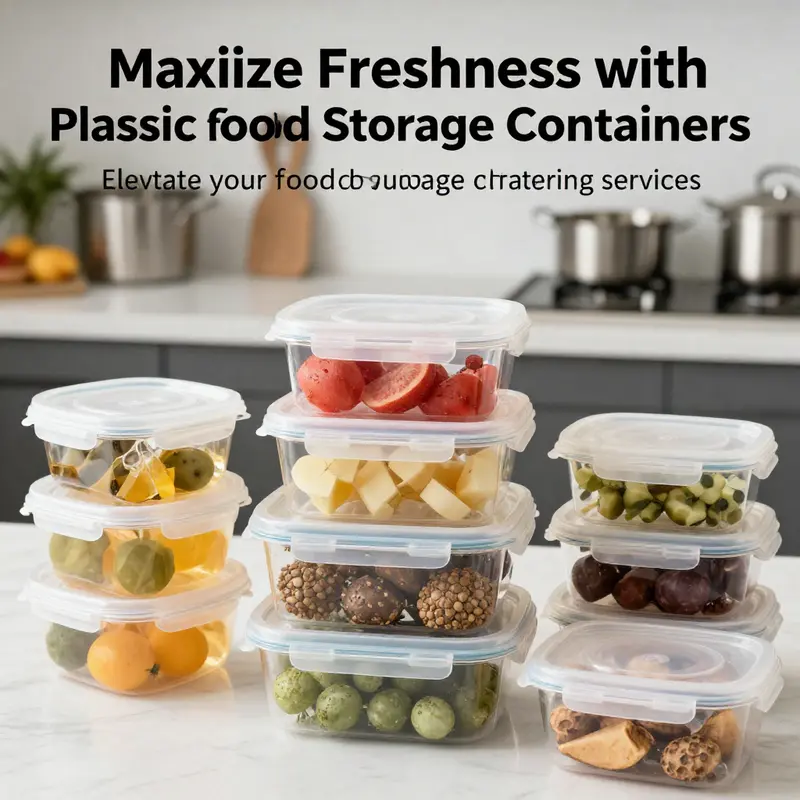
Super Seal plastic food storage containers are essential assets for bubble tea shops, restaurants, food trucks, and catering services. Made from durable, food-grade materials that ensure safety and functionality, these containers are perfect for various applications in the culinary industry. This article unpacks the material composition and properties of Super Seal containers, their wide-ranging applications in both homes and industries, historical significance that contributes to their collectibility, environmental impact concerning sustainability, and future trends shaping their innovation.
From Polymer to Pantry: The Material Core and Practical Promise of Super Seal Plastic Storage Containers
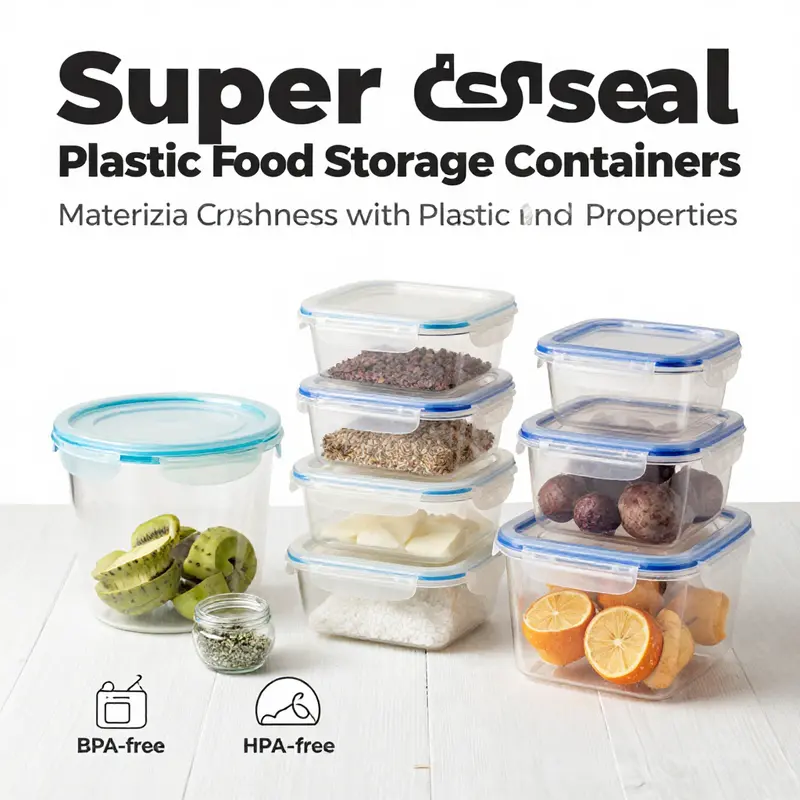
The promise of any durable, safe food storage system begins with the material that holds it together. In the case of Super Seal plastic food storage containers, the backbone is a family of food-grade plastics chosen not only for their performance in kitchens and laboratories, but also for their endurance under real-world use. At the center of this material story is a thermoplastic that balances safety, strength, and versatility: polypropylene. Design engineers consistently favor this polymer because it blends high heat tolerance with chemical inertness, a combination that keeps foods from interacting with the container while enabling a wide range of uses—from hot meals to frozen leftovers. When a container can withstand temperatures well above common kitchen needs, it lowers the barrier to safe reheating and extended storage, and it reduces the risk of material degradation that could compromise flavor, texture, or safety. It is no accident that many Super Seal models identify polypropylene as the core material, typically labeled with the recycling code #5. The same code, quiet and practical, signals to recyclers that the container belongs to a resilient, commonly recycled plastic stream, one that supports broader sustainability goals even as households reuse the containers again and again.
Yet the material story does not end with polypropylene alone. In certain variants, designers blend polypropylene with other materials—polycarbonate or acrylic, for example—when the design calls for enhanced clarity or a specific mechanical property. Pure PP remains the workhorse for most food-safe models, but the occasional blend opens doors to improved visibility of contents or refined optical appeal without sacrificing the fundamental benefits of chemical inertness and heat resistance. This is important because visibility matters in busy kitchens or cafeterias where quick recognition of stored items saves time and reduces the chance of mix-ups. When content can be identified at a glance, the lid’s seal is less likely to be tested by repeated opening, and the user experience improves in subtle, cumulative ways. The choice of materials also dovetails with modern safety expectations. The BPA-free standard has become a baseline in consumer discourse, and reputable brands align with that expectation, ensuring that contact with food does not introduce unwanted chemical exposure during everyday use. The material choice is then a matter not just of performance, but of reassurance—the confidence that comes from using a container designed to meet rigorous food-contact standards.
Beyond polypropylene, high-density polyethylene occasionally shares the stage in the Super Seal lineup. HDPE contributes stiffness and impact resistance, traits that are especially valuable in larger, stackable containers used for bulk storage or bulk meal-prep. The combined effect of PP’s heat tolerance and HDPE’s ruggedness means a family of containers that can survive tight retail shelving, the rigors of a busy household, and the occasional accidental drop without catastrophic failure. In practice, this translates to products that remain functional across multiple cycles of use, washing, and refilling. The ability to endure dishwasher cycles—where heat, detergent chemistry, and mechanical action converge—speaks to the usefulness of these plastics in daily life. It also explains why designers emphasize a tight-sealing lid system: a dependable seal protects contents from air and moisture, preserving flavor, aroma, and texture as if the container were new.
The core materials thus set the stage for what is often described as the Super Seal advantage: a lid that locks in freshness while staying user-friendly. The sealing mechanism is not merely a rubber gasket slapped onto a lid; it is a carefully engineered interface between polymer, lid geometry, and gasket material that creates an effective barrier against odor migration and moisture ingress. In practice, consumers notice that leftovers stay fresher longer, that liquids travel less when containers are tipped or carried, and that the overall waste from spoilage declines. The seal’s reliability is tested in kitchens and labs alike, where the same principle—predictable, repeatable performance—matters as much in a home fridge as it does in a pharmaceutical or research setting. In laboratory contexts, where sample integrity depends on inert, stable containers, the same material choices that favor safety also ensure that surfaces resist corrosion or reaction with common reagents, preserving sample integrity over time.
Color and clarity form another facet of the material story. Polypropylene, in its natural state, is translucent and can be treated to achieve a range of appearances from crystal-clear to subtly tinted. For many users, the option to view contents clearly at a glance reduces the need to label every container or to rummage through a stack to locate the right item. Some variants embrace a slate blue tint or similar color accents, which can help coordinate with kitchen aesthetics or differentiate contents at a glance without sacrificing the underlying material’s performance. The choice between clear and colored variants balances visibility with personal preference and organizational needs. It also reflects a broader trend in consumer products: functional design that doubles as an aesthetic cue. In busy kitchens, where space is at a premium and organization is essential, the ability to stack, store, and identify items quickly becomes part of the everyday efficiency that container systems promise.
At a regulatory and safety level, the conversation circles back to standardized testing and certification. Reputable manufacturers align with the food-contact regulations of major markets, typically referencing FDA or EFSA guidelines to ensure compliance with safety standards. The practical upshot is that designers select materials and assemble container components with an eye toward migration limits, compatibility with food types, and reliability under foreseeable use—including microwaving, refrigeration, and dishwashing. This compliance is not a bureaucratic formality; it is a tangible signal to consumers that the containers are engineered to minimize risk while maximizing convenience. The materials, the seals, and the production processes work together to create a product that not only protects food but also supports the daily rituals of modern eating—from meal-prep marathons to quick-reheat lunches and family leftovers.
Despite the clear advantages of polymer-based storage, a thoughtful chapter on materials also acknowledges sustainability concerns. The push toward better environmental stewardship has moved many households to consider alternatives such as glass, stainless steel, or bio-based materials for certain storage needs. The central idea is not to abandon plastics altogether but to use them where they offer durability and safety most effectively, while recognizing that longer lifespans and recyclability can be part of a responsible lifecycle. Dr. Lena Patel of the Green Living Institute articulates this balance succinctly: moving toward high-quality, environmentally conscious food storage solutions does not mean sacrificing function. In fact, many sustainable options outperform traditional plastics on durability, safety, and sealing efficiency. This perspective helps frame the Super Seal approach as part of a broader conversation about responsible consumption, one that weighs performance against practicality and environmental impact as a single, integrated equation.
In terms of everyday use, the material composition informs nearly every practical decision a household makes. The ability to use containers for hot foods and to place them safely in the freezer unlocks a wider range of meal-prep strategies. The durability and resilience of the materials translate into real-world reliability: containers that resist cracking under pressure, that tolerate a dishwasher’s heat cycle, and that resist staining or odor absorption. The lid system, together with the chosen polymers, reduces the likelihood of leaks during transport, which matters whether you’re packing a lunch for a commute or transporting a batch of prepared meals for a family trip. The interplay of material choices—PP’s heat resilience, HDPE’s strength, color and clarity options, and the meticulous sealing design—forms a cohesive story of how modern storage solutions can align convenience with safety and sustainability.
For readers who want to explore broader packaging trends that intersect with storage containers, there is value in seeing how multi-compartment packaging and eco-conscious design evolve together in food service and retail settings. This chapter’s material focus does not exist in isolation; it underpins how containers perform in diverse environments, from a home kitchen to a professional kitchen’s prep line. The operational logic—stability, safety, and seal integrity—remains constant, while the surface attributes and permissible use cases expand with each material choice and design refinement. To learn more about related packaging options that emphasize eco-friendly, multi-compartment designs, you can explore resources such as eco-friendly-disposable-3-compartment-food-grade-packaging-box-for-fast-food-high-quality-takeout-boxes-for-fried-chicken-french-fries-packaging. eco-friendly-disposable-3-compartment-food-grade-packaging-box-for-fast-food-high-quality-takeout-boxes-for-fried-chicken-french-fries-packaging.
As the dialogue between material science and everyday use continues, the chapter’s throughline remains clear: the material core of Super Seal containers—primarily food-grade polypropylene, with supporting HDPE options and selective blends—creates the reliable, safe, and practical storage platform that households and professionals depend on. The sealed, temperature-tolerant, and durable architecture is not merely a feature list; it is the foundation that enables flexible meal planning, safe transport of foods, and efficient storage that respects both flavor and texture. Of course, ongoing advancements in polymer science and packaging design will push these capabilities further, offering new coatings, barrier technologies, and end-of-life solutions that keep the core promise intact while expanding the possibilities of how we store, reheat, and enjoy our food.
External resources for regulatory context and best practices continue to evolve. For readers seeking formal guidance on food-contact materials, the U.S. Food and Drug Administration provides comprehensive information and up-to-date standards related to safe packaging materials. This external reference offers a broader framework that complements the material-focused discussion in this chapter and helps connect everyday storage choices to overarching safety principles. https://www.fda.gov/food/food-contact-materials
Seal and Sustain: The Quiet Architecture of Sealed Plastic Food Containers in Homes and Workplaces
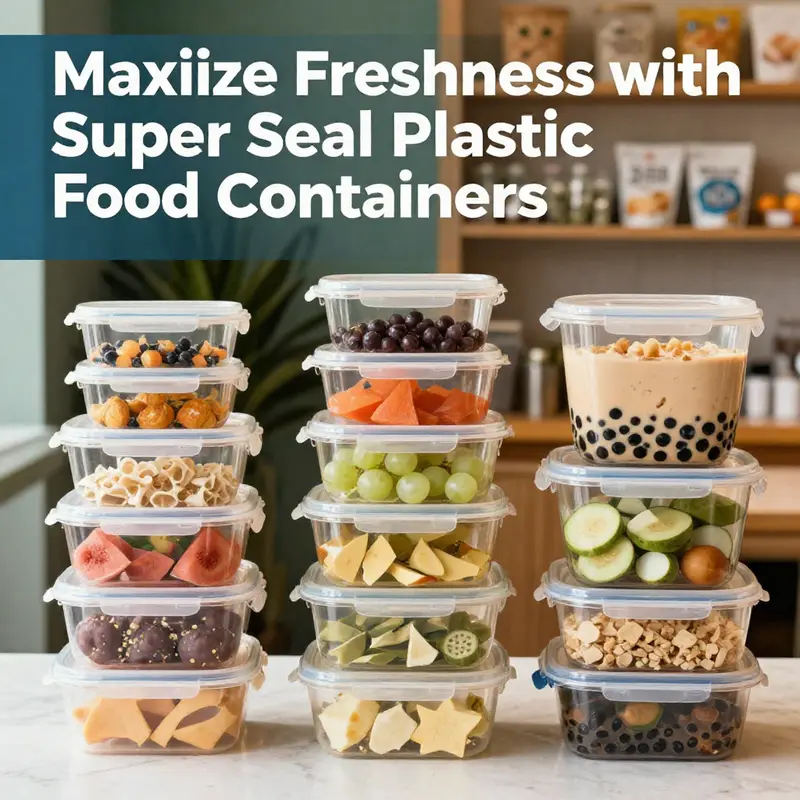
Sealed plastic food containers operate at the intersection of daily routine and industrial discipline. They are not flashy gadgets but reliable components of how people feed themselves and manage meals, ingredients, and samples with consistent safety and efficiency. Their strength lies in a careful balance of materials, design, and a seal that keeps moisture, odors, and contaminants at bay while enduring the rigors of modern kitchens and service operations. In many ways, these containers embody a pragmatic engineering philosophy: simplicity that works, and work that lasts. Behind that philosophy is a practical palette of materials—food-grade polymers such as polypropylene and high-density polyethylene—chosen for their stability, safety, and broad performance across home and professional environments. These plastics can be formulated to be BPA-free, withstand freezing and hot water, and resist the rigors of regular washing, all without compromising the food or samples they cradle. The discussion of these containers, then, begins with what they are designed to do: lock in freshness, prevent cross-contact of flavors and odors, and do so repeatedly, without failure in the field. The chemistry of the materials matters, but so does the geometry of the container, the precision of the lid, and the integrity of the seal. A well-sealed container behaves almost like a tiny climate chamber, maintaining a stable microenvironment for whatever it holds, be it a batch of chopped vegetables, a ready-to-serve portion, or a set of lab specimens that must be shielded from moisture and airborne particulates. The choice of material ranges from polypropylene, known for its heat resistance and chemical inertness, to more durable options like Tritan in some lineups. Each material contributes its own strengths: PP often handles the heat of reheating and dishwasher cycles; Tritan offers clarity and toughness for visibility and long-term reuse. The combination of material choice with an airtight sealing mechanism underpins the reliability that home cooks and professional kitchens rely on every day. This is not merely about keeping food fresh; it is about maintaining safety and reducing waste through careful storage discipline. When leftovers sit in a properly sealed container, they lose less water to evaporation and absorb fewer odors from other items in the fridge. The risk of flavor transfer is minimized, a boon for households that manage multiple ingredients in a single storage space. In pantry and fridge management, the modular, stackable nature of many of these containers supports a disciplined approach to inventory. Meals can be portioned and organized with clear labeling and predictable shelf life, turning what could be a chaotic rack of boxes into a small, well-ordered system. The same logic translates into commercial settings, where time, space, and safety conspire to demand reliable performance. In a restaurant, for example, containers are pressed into service for storing ingredients, mise en place, and finished dishes that must travel from kitchen to service area or to a banquet hall. In cafeterias and catering venues, the ability to seal and stack containers reduces cross-contamination risks and helps streamline serving lines. Food trucks, which must endure the bumps of transit and the variability of street storage, benefit particularly from containers designed to resist rough handling, resettling, and repeated washing without losing their seal. In industrial environments, where samples or reagents require stable containment, these containers offer the same promise of reliability. The same seal that preserves a meal also protects a specimen, a set of test materials, or a batch of prepared fluids from contamination or moisture ingress. The durability of the materials—polypropylene and HDPE, often with a hardening agent or an extra sturdy wall—ensures longevity under frequent use, constant loading and unloading, and repeated cycles of cleaning. The practicalities of everyday use are not overlooked. Cleanability is essential in both home and industrial contexts. Dishwasher-safe options reduce the burden of maintenance and support hygienic practices, a critical feature for consumers and operators who aim to minimize the risk of lingering residues and odors. In busy kitchens, the ability to wash containers at high temperatures without warping or degrading the seal translates into tangible time savings and a greater likelihood that containers will be reused rather than discarded. The modern conversation about food storage thus weaves together safety, convenience, and sustainability. On the sustainability side, there is a growing awareness that durability and recyclability must go hand in hand with function. Consumers increasingly demand not only value but responsible choices that align with environmental considerations. While high-quality plastics can deliver impressive longevity and reusability, the broader lifecycle of a container—from production to end-of-life disposition—shapes a customer’s decision. In this context, alternative options such as glass or stainless steel appear as durable, reusable choices, yet those materials also carry trade-offs in weight, breakability, and sometimes cost. Yet even within plastic, there is a path toward greener storage practices. Reusable containers reduce the throwaway cycle, and choosing materials with proven safety profiles and robust washability supports long-term use. As Dr. Lena Patel of the Green Living Institute notes, shifting toward higher-quality storage solutions does not mean compromising on function; in fact, many sustainable options offer comparable, and sometimes superior, durability, safety, and sealing performance. When approached with a long-term perspective, the choice of container can be a meaningful part of a household’s or a facility’s environmental strategy rather than a mere convenience. The design language of these containers also reflects a careful attention to space efficiency. The ability to stack, nest, and nestle tight against other items makes a significant difference in how a kitchen or a storage room breathes. In small urban kitchens, the vertical economy of space becomes a practical imperative; in large cafeterias or warehouses, efficient stacking translates to more orderly floors and shelves, easier access to ingredients, and fewer mishaps during transport. The homeowner or the kitchen manager thus encounters a practical ecosystem: a container that seats neatly on a shelf, seals securely for a week or more in the refrigerator, survives a dishwasher cycle, and returns ready for another round of use. The promise of sealed storage extends beyond food. In research settings and medical contexts where sample integrity matters, the same principles govern container design: a stable seal, inert materials, and a form factor that protects contents during handling and transport. The continuity from kitchen task to laboratory procedure underscores a broader truth about modern storage systems: the simplest devices, when designed with intent, elevate reliability across a spectrum of uses. For readers seeking a tangible connection to the broader ecosystem of packaging and storage options, one practical reminder emerges. The availability of compatible, eco-conscious packaging solutions can help organizations and households align their storage choices with a broader sustainability plan. For instance, when shopping for takeout or bulk-storage options that emphasize responsible materials and packaging, a notable trend is the emergence of multi-compartment, food-grade packaging designed for easy transport and portion control. Such options—designed for efficiency and portioning—also illustrate how modularity and a strong seal can combine to minimize waste and maximize reuse. Within this frame, a relevant example of an eco-friendly packaging alternative is accessible through a dedicated product line that emphasizes community-minded packaging design and practical usability in fast-food contexts. This approach showcases how the same design philosophy that makes a kitchen container effective can scale to larger service operations, supporting streamlined workflows and better food safety practices. Home cooks can benefit from this philosophy by adopting a routine that uses clearly sealed, easy-to-clean containers for meal prep and leftovers. The result is a kitchen that feels calmer, with less cross-flavor contamination and less waste. In professional kitchens and food-service environments, the benefits become even more pronounced: uniform storage conditions, predictable shelf life, and safer transport. To explore a concrete example of how such packaging aligns with sustainability and practical usability, readers can examine a related option described in detail at eco-friendly disposable 3-compartment packaging boxes for fast-food takeout. This internal reference highlights how modular, sealed designs cater to the fast-paced realities of modern food service while staying mindful of environmental considerations and reuse potential. For a broader sense of standard specifications and supplier options, readers may consult the supplier listing that anchors the wider market for durable, sealed storage solutions: https://www.alibaba.com/product-detail/Super-Seal-Plastic-Containers-718_1600534926938.html. The connection between home practice and industrial practice becomes clearer when one views storage as a continuous thread—an engineering problem solved through material science, precise sealing, and thoughtful user experience. The result is a storage system that protects what matters most: the freshness, safety, and integrity of the food and samples we store, and the time and resources we save in the process.
Super Seal Plastic Food Storage Containers: A Quiet History of Design, Use, and Collectibility
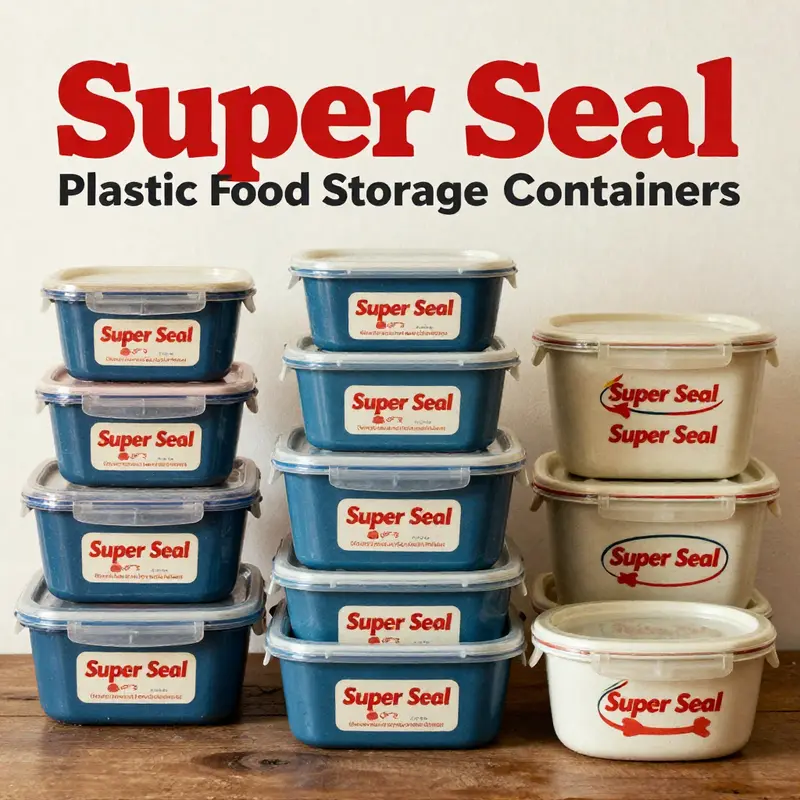
The world of everyday plastic storage is built on small design decisions that quietly shape how we eat and store. The chapter you’re reading sits at the intersection of practical kitchen use and the broader history of a line of containers known for their hermetic lids. While published histories are sparse, the topic invites reflection: how does a common container become a cultural artifact, and what makes a container worth keeping or collecting when its brand story is not loudly archived? By examining materials, design evolution, consumer culture, and archival gaps, we can see how a simple seal can reveal shifts in safety standards, sustainability priorities, and domestic routines.
From a materials standpoint, many Super Seal containers use polypropylene for heat tolerance and chemical inertness, with variants in high-density polyethylene or Tritan. The lid seal—silicone or rubber gasket—plays a pivotal role in odor blocking, freshness retention, and stackability in the fridge. In laboratory contexts, rigid, inert polymers with robust seals translate into confidence that a sample’s integrity remains intact against minor spillage.
The practical backbone—stability, seal integrity, and ease of cleaning—explains why consumer variants became common in daily life. A good seal is more than convenience; it’s a promise that leftovers stay as intended. Design concerns emphasize stackability, clarity, and dishwasher-safe construction. Over time these features align with broader shifts toward food safety and waste reduction. The Super Seal line sits at a junction between convenience and a commitment to reuse.
Historical tracing is difficult when brand histories are not formally documented. This absence invites collectors and scholars to consider design cues, material choices, and seal performance as indicators of period and use. Without a centralized archive, the story of Super Seal is embedded in catalogs, advertisements, and household memories rather than a single monograph.
In contemplating collectibility, era, gasket geometry, labeling, and branding cues shape value. Some vintage sets are valued for color palettes common in the 1980s and 1990s. A particularly durable gasket or a lid that remains tight after many dishwasher cycles can become a collectible attribute. The practical memory of such items—quietly storing meals, guiding leftovers, and surviving daily use—matters as much as aesthetics.
Packaging artifacts from related domains—like vintage boxes with visible windows—offer a window into how visibility and convenience shaped consumer expectations across product categories. Such parallels help readers situate plastic storage within a broader design culture. Collectors may examine these objects for provenance signals, even when a formal brand history is lacking.
Looking ahead, the discussion of significance and collectibility emphasizes two threads: historical inquiry into materials and safety, and practical valuation based on durability and usefulness. Sustainability remains central, with more durable, safe, and reusable solutions valued for longevity. The story of Super Seal therefore becomes not a single brand chronicle but a chapter in the ongoing evolution of home storage practices.
As the chapter concludes, the absence of a formal archive is not a void but an invitation—to digitize catalogs, collect anecdotes, and document the quiet engineering that underpins everyday meals. The lid snapping shut, a clear wall, and a sealed container remind us that history can be found in the ordinary moments of kitchen life.
Seal, Store, and Sustain: Reconsidering Super Seal Plastic Food Storage Containers in a World of Environmental Trade-offs
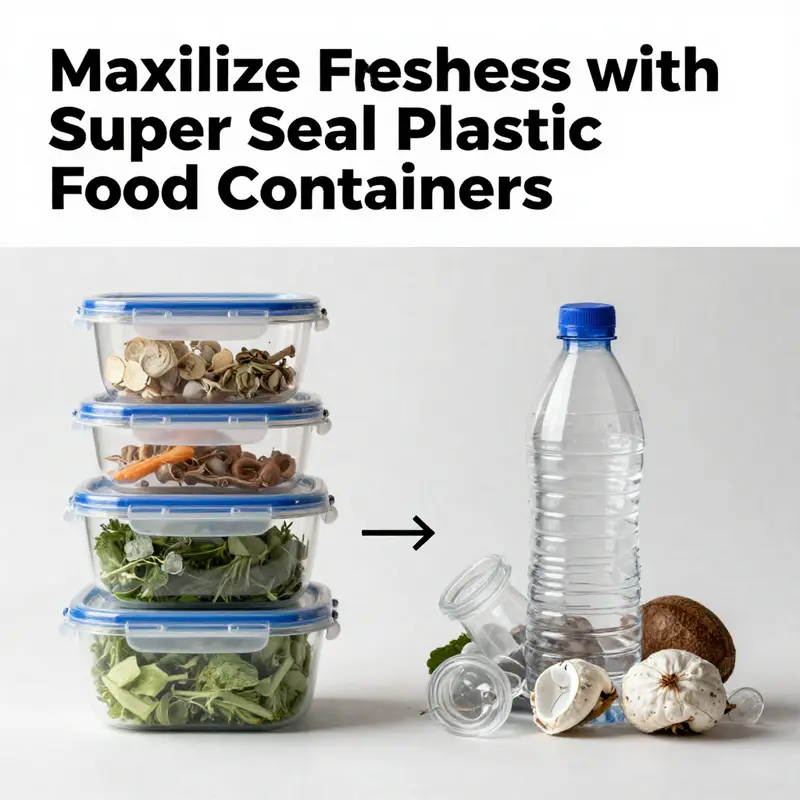
Airtight containers have become a familiar ally in kitchens and laboratories alike. Super Seal plastic food storage containers embody that promise of reliability: a durable, food-grade shell that keeps aromas in, moisture out, and contents organized. In everyday use, these containers are typically fashioned from polypropylene (PP) or other sturdy plastics such as HDPE or PET, materials selected for their balance of safety, temperature tolerance, and resilience. The appeal is clear. A well-sealed lidded container can transition leftovers from the fridge to the freezer and back again, survive a dishwasher cycle, and resist the rough handling that comes with busy households or food service operations. Yet when the conversation shifts from convenience to consequence, the same containers invite questions about their environmental footprint. The truth is nuanced: the sustainability of Super Seal containers is not a simple yes or no. It rests on how the product is designed, used, and ultimately returned to the circular economy. In this light, the chapter that follows threads together material science, lifecycle realities, consumer behavior, and the broader system that governs plastic waste.
Polypropylene, the material most commonly associated with these containers, offers a logical environmental upside rooted in recyclability. When PP is properly collected and processed, it can be rerouted into new packaging, automotive parts, or household goods with a lower carbon footprint than virgin plastic. In principle, this supports circular economy goals, especially if households and institutions participate in formal recycling streams. Still, real-world recycling rates tell a stubborn story. The U.S. Environmental Protection Agency reports that in 2021 the nation generated more than 35 million tons of plastic waste, yet less than 9 percent was recycled. That gap between potential and practice reveals a systemic hurdle: collection, sorting, contamination, and consumer participation must align to unlock the full benefits of recyclable plastics. Within households, the lifecycle of a Super Seal container often begins with daily use and ends with disposal or repurposing. In practice, a container may endure dozens of dishwasher cycles, hold a wide range of foods, and accompany a family for years, a pattern that—when managed wisely—can reduce the need for single-use packaging. But the moment it malfunctions, or when the lid becomes loose, the utility of a single container can be overshadowed by waste if it is discarded rather than repaired or recycled.
The lifecycle narrative gains texture when we compare PP-based containers with compelling alternatives. Food-grade silicone, for instance, offers material safety, extraordinary heat resistance, and inert chemistry, appealing to households seeking long-term reuse with minimal concern about leaching. Silicone’s durability—performing well from freezing to boiling temperatures—further enhances its appeal in kitchens that prize safety and longevity. Yet silicone is not devoid of environmental considerations. It is not biodegradable, and its production relies on silica extracted from sand, a plentiful but energy-intensive process. In the big picture, the environmental advantage of silicone comes from extended reuse rather than rapid turnover, a pattern that can exceed the impact of shorter-lived plastics if embraced with disciplined use. By contrast, glass and stainless steel offer long lifespans and excellent inertness, but their weight and breaks-in-use can offset some benefits in busy homes or institutions where ergonomics, mass, and transport matter. The takeaway is not a binary verdict but an invitation to curate a kit of storage options that align with usage patterns, household routines, and values around resource use. In the end, a kitchen that blends PP containers for everyday tasks, silicone for high-heat or long-term storage, and glass or stainless steel for bulk or display-oriented needs can reduce overall waste through thoughtful material diversification.
Design for recyclability is another critical thread in the sustainability tapestry. Containers with simple, single-material construction are easier to recycle than elaborate assemblies with mixed materials, multilayer lids, and color additives that complicate sorting. The color, too, matters; opaque or black plastics often pose challenges for some recycling streams because of the way they are processed. Clear or naturally light-colored PP is comparatively friendlier to recycling infrastructure, provided it is clean and free of food residue. Cleanliness, in fact, is a practical sustainability lever. A thorough rinse and proper dishwasher use before storage reduce the likelihood of contamination that can defeat recycling attempts. For households, this means that the path to greener storage begins with mindful use: avoid overfilling, minimize food residues, and detach lids when appropriate to facilitate thorough cleaning and drying. When it comes to disposal, consumers should be attuned to local guidelines because regional variations in recycling capabilities can dramatically affect outcomes. A container that ends up in a mixed-waste stream may contribute to landfill or incineration, even if the same material would be recyclable in a different system.
The practical reality is that environmental benefits hinge on a commitment to reuse and responsible end-of-life management. Super Seal containers shine in this regard as durable, dishwasher-safe vessels that can function as a staple in meal planning and food storage for years. When participation in recycling streams is reliable, the life cycle of PP-based containers can be significantly shorter in terms of waste generation than single-use packaging. Yet the opposite is equally possible: if a household circulates a handful of containers for a brief period before discarding them, the environmental payoff diminishes. The choice, then, is not only about material properties but about behavior—how people clean, how they repurpose, how often they replace, and how they engage with local recycling programs. In communities where curbside recycling is robust, PP containers that are clean, dry, and free of colorants can be a practical element of a low-waste kitchen. In places where recycling options are limited, the decision becomes more complex and might push households toward alternatives with longer lifespans and easier end-of-life pathways.
Linked to these considerations is the broader environmental accounting that shapes consumer choices. The downward pressure on waste hinges on a concerted diet of reuse, repair, and responsible recycling. For instance, if a family uses their Super Seal containers daily for several years, their per-use environmental cost diminishes as the materials amortize over time. If, however, the containers are repurposed repeatedly but then discarded because of a broken lid or a faded seal, the benefits are flattened. In this calculus, the most sustainable path is not a single material but a system: design for recyclability; empower consumers with clear labeling and washing guidance; and cultivate robust end-of-life options in municipalities and private programs. To illustrate a practical option for those who want to weigh options beyond plastic, imagine a mixed-use kit that includes reliable PP containers for everyday foods, a set of silicone bowls for reheating and long-term storage, and glass or stainless steel options for bulk or display storage. This hybrid approach acknowledges diversity in needs while steering the overall footprint toward longer use cycles and better end-of-life management.
For readers who want a concrete reference that broadens the perspective on sustainability in packaging, consider exploring more about eco-friendly packaging choices that prioritize reuse and responsible disposal. A representative example available through industry resources is an eco-friendly disposable packaging box designed for fast-food contexts. It embodies a practical mindset toward single-serve or short-term use scenarios, while highlighting how design choices can favor recyclability and reusability. The key idea is to balance convenience with responsibility: use materials and configurations that align with your usage patterns and local recycling realities, and be mindful of how often you replace containers. The subtle but powerful shift is toward systems thinking—recognizing that a single container, no matter how well sealed, does not exist in isolation from waste streams, energy grids, and consumer habits.
In sum, Super Seal plastic food storage containers offer tangible benefits for freshness, safety, and convenience. Their environmental footprint, however, is shaped by the material choice, lifecycle length, and the integrity of end-of-life pathways. The most sustainable approach is a nuanced blend: leverage PP’s recyclability where possible, choose durable alternatives like silicone or glass for high-use scenarios, and advocate for stronger, clearer pathways to recycling and responsible disposal. By embracing reuse, minimizing contamination, and supporting systems that close the loop, households and institutions can favor storage solutions that live up to the promise of airtight preservation without compromising the health of the planet. External resources and policy data reinforce the reality that the path to meaningful sustainability in plastics requires collective action, transparent labeling, and real investment in recycling infrastructure. For a broader policy and waste-management context, see the external resource linked below.
External resource: EPA plastic waste generation and recycling rates, 2021
Beyond the Lid: Redefining Safety, Sustainability, and Smarts in Super Seal Containers
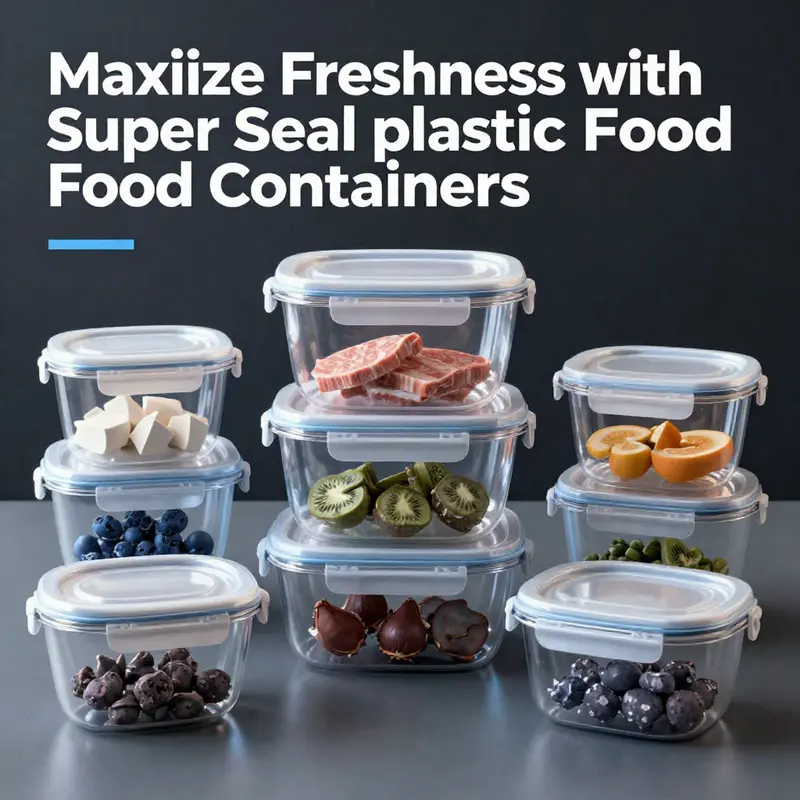
The story of Super Seal plastic food storage containers is not merely about a sealable box. It is a narrative about how households and institutions balance convenience with responsibility, how the everyday act of saving leftovers becomes a frontier for material science, sensor-enabled living, and smarter design. As consumers increasingly demand products that do more while using less, the next generation of storage solutions must prove resilient in real kitchens, laboratories, and cafeterias while reducing the environmental footprint of everyday use. The trajectory is clear: durability, airtight performance, and ease of cleaning will be joined by sustainability, digital integration, and user-centric features that anticipate needs before they arise. In this circle of evolution, the container ceases to be a simple receptacle and becomes a discreet partner in health, efficiency, and waste reduction.
At the heart of the future is a thoughtful shift toward bio-based materials that do not compromise the performance standards that define the best storage solutions today. Traditional plastics built for chemical stability and heat resistance have served well, yet the rising pressure to lower carbon footprints and reduce end-of-life waste has intensified research into bio-based polymers and compatible composites. These next-generation materials aim to deliver the same durability, the same sealing integrity, and the same resistance to temperature fluctuations, while offering a clear advantage in lifecycle assessments. The challenge is not merely to replace a component but to reimagine the chemistry so that end users experience no drop in reliability. In practical terms, this means formulations that maintain high melt strength, resist deformation under load, and preserve an impermeable seal even after repeated cycles of washing and freezing. The promise is material science that keeps leftovers safe from spoilage, without leaving a lasting environmental imprint when the container reaches the end of its usable life. The result could be a family of containers whose environmental benefits are measurable at every stage, from procurement to disposal, without any perceptible sacrifice in performance.
Yet materials are only one side of the coin. The other side rests on how containers connect with a world that increasingly tracks freshness, storage duration, and consumption patterns. Smart features are poised to move from novelty to standard. Imagine built-in sensors that monitor temperature consistency and humidity inside the storage space, coupled with microprocessors that assess the likelihood of spoilage based on the food type and historical storage data. Such sensors could translate into actionable reminders, nudging users with alerts on their phones when it is time to use or discard contents before quality degrades. A connected ecosystem might even integrate with pantry management apps, providing a dynamic inventory view that helps households reduce waste and optimize meal planning. The emphasis on sensor-driven insights aligns with broader trends in food safety and sustainability, transforming the storage container from a passive holder into an active participant in preserving nutrition and reducing landfill contribution. While this could involve new manufacturing costs, the long-term savings in food waste and the added confidence of safer storage are compelling advantages for both families and commercial kitchens.
The sealing technology itself is set to become more uncompromising. Ultra-secure, tamper-evident, and leak-proof designs will address a spectrum of use cases, from dry pantry staples to juicy, moisture-rich dishes that must survive transport without compromise. In transport-heavy scenarios, such seals must withstand jostling, temperature extremes, and condensation without allowing odors to mingle or liquids to migrate between compartments. In everyday use, the seal should resist wear from repeated dishwasher cycles and thermal shocks caused by moving from freezer to microwave or oven. These demands push developers to refine gasket materials, co-molded lip geometries, and latch mechanisms that maintain integrity over time. A robust seal translates directly into better food safety, fewer contaminated batches, and less waste—the practical payoff of advanced sealing is measurable in both consumer trust and operational cost savings.
As with any product loop, user-centric design is the bridge between innovation and daily adoption. Ergonomics matter as much as engineering: easy-grip lids, intuitive locking systems, and components that feel comfortable in the hand after a long day of cooking and cleaning are essential. Non-stick, dishwasher-safe surfaces simplify maintenance and encourage frequent reuse, a critical factor in reducing disposable packaging. Modularity and stackability address the realities of modern kitchens and pantries, where space is at a premium. Containers that nest neatly, align securely when stacked, and offer clearly marked fill levels help households organize more efficiently and reduce overbuying. The balance between ruggedness and lightness remains a design challenge, but advances in plastics engineering and surface science are closing the gap. The practical outcome is a line of storage solutions that not only perform well but also make everyday routines smoother, encouraging people to rely on long-lasting, reusable options rather than disposable alternatives.
For commercial settings, the trends converge with the needs of laboratories, clinics, and hospitality venues where precise handling, traceability, and regulatory compliance are non-negotiable. In such environments, the ability to maintain sterility, prevent cross-contamination, and ensure consistent performance under high-use conditions is crucial. Materials chosen for these containers must withstand high-temperature sterilization cycles and rapid temperature shifts without compromising seal integrity. In medical or research contexts, such containers may also serve as a platform for standardized sample storage or reagent management, where the combination of stability and trackable usage history helps safeguard critical operations. While the home kitchen remains a focal point for consumer education, the spillover effect of these improvements benefits institutions that require flawless performance and rigorous quality control.
The future also invites a broader conversation about sustainable packaging ecosystems. The appeal of plastic containers with exceptional durability is clear, but so is the appeal of glass, stainless steel, or bio-based alternatives that align with particular environmental values or circular economy models. The imperative for high performance should not eclipse intelligent material selection. In some cases, hybrid solutions that combine the best attributes of each material may offer the most favorable compromise between durability, weight, heat resistance, and end-of-life options. The overarching goal is to provide options that enable users to choose storage solutions that fit their specific needs, whether that means a freezer-friendly, microwave-safe, airtight container for weekly meal prep or a rugged, leak-proof system for on-the-go food transport.
Notably, the regulatory landscape shapes how these innovations are developed and adopted. The path toward safer, more sustainable storage solutions is navigated not only by engineering breakthroughs but also by standards and guidelines that ensure consistent performance and consumer protection. For readers seeking a practical framework, the Food Safety Modernization Act offers a lens through which to view how storage devices, temperature control, and labeling contribute to overall food safety. This contextual backdrop helps researchers and manufacturers align innovations with real-world risk management and compliance expectations. The takeaway is that progress in container design is most powerful when it is intentional, evidence-based, and aligned with established safety practices.
In the ongoing exploration of better storage, a practical takeaway for readers is not to chase novelty at the expense of reliability. The most meaningful innovations will be those that preserve flavor, texture, and nutrition while simplifying life. A future where containers can tell you when your soup is past its prime, or where your pantry inventory speaks to you in real time about what to cook this week, is not a distant fantasy. It is a logical extension of a lineage that has always prized safety, cleanliness, and convenience. And it is precisely because of this fusion of durability, intelligent design, and responsible materials that the next generation of Super Seal containers holds the promise of transforming everyday storage into a more mindful, efficient, and waste-conscious practice.
For readers who want to explore related packaging options and practical applications in everyday life, consider looking at eco-friendly takeout packaging that emphasizes sustainable design without compromising performance. These solutions illustrate how the principles driving the evolution of storage containers—durability, seal integrity, and user-centric design—extend beyond the home into broader food-service contexts. Internal links can connect you to examples of packaging that prioritize grease resistance, recyclability, and compact form factors that suit busy kitchens and storefronts alike. This broader ecosystem underscores a shared objective: to keep food safe, reduce waste, and make responsible choices effortless for a diverse range of users. eco-friendly takeout boxes for food packaging.
In sum, the horizon for Super Seal plastic food storage containers is not a straight line but a web of interlocking improvements. The material science of bio-based polymers, the electronics of embedded sensing, the resilience of superior sealing, and the empathy of thoughtful design all converge to redefine what a storage container can do. The goal is a product category that feels almost invisible in use: it simply preserves what you store, makes your life easier, and aligns with your values about sustainability. When these aims synchronize, storage becomes not a compromise between convenience and responsibility but a harmonious practice that supports healthier meals, smarter kitchens, and a cleaner planet.
External resource: https://www.foodsafety.gov/food-safety-modernization-act/fsma-overview
Final thoughts
Super Seal plastic food storage containers symbolize a harmonious blend of safety, functionality, and modern sustainability. Their versatile application across the food industry, coupled with a keen awareness of environmental impact, supports businesses in meeting consumer demands. As trends evolve, embracing these containers will not only ensure freshness and quality but also reflect a commitment to eco-friendly practices in food service. Make Super Seal a part of your business strategy to stay ahead in the competitive culinary landscape.