
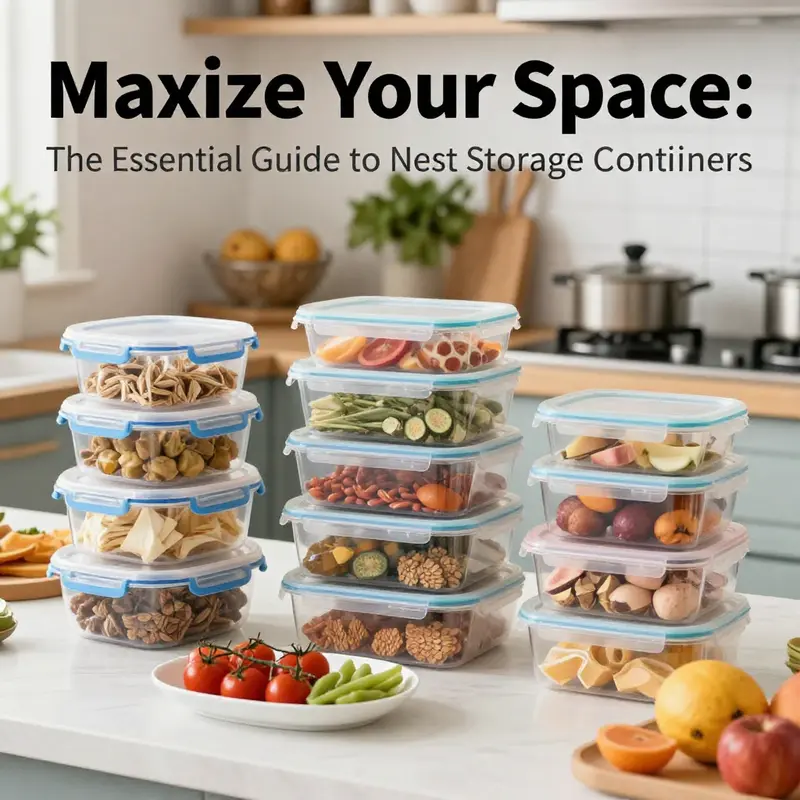
In the bustling environment of bubble tea shops, restaurants, food trucks, and catering services, efficiency is paramount. Nest storage plastic food storage containers offer a practical, space-saving solution, transforming how businesses manage their ingredients and prepared items. With their unique interlocking design, these containers not only save precious cabinet space but also enhance organization and accessibility. This article unpacks the various benefits of nest storage containers, exploring their durability, versatility, and relevance for businesses. Each chapter will delve into a key aspect, illustrating how these containers can elevate your operational efficiency and contribute to smoother workflows.
Nest in Place: Mastering Space Efficiency with Nesting Plastic Food Storage Containers
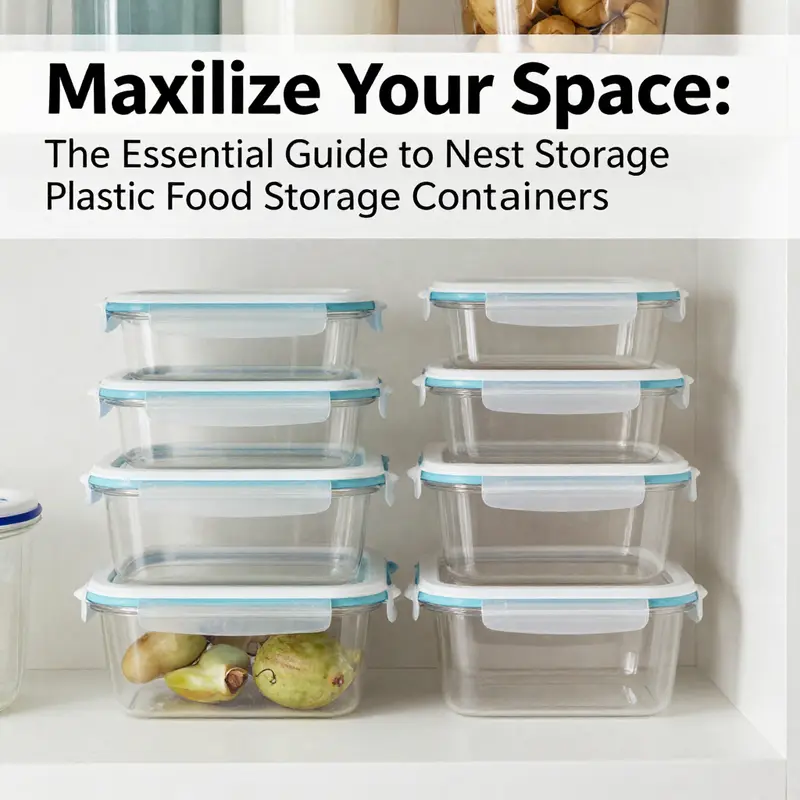
In busy kitchens, space is a luxury even when shelves seem full. Nesting plastic food storage containers answer a simple question: how can you keep more on hand without crowding your workspace? The answer lies in design that treats emptiness as a feature. When not in use, containers nest into a compact, interlocking family that tucks neatly inside one another. When you need them, they fan out into a scalable system that fits pantry shelves and refrigerator racks. This space-saving capability does more than cut clutter; it reshapes how meals are planned, prepped, and stored. It creates a rhythm where the kitchen feels organized before you start cooking, because every piece has a defined place that can be reached without dislodging the stack on top. Nesting containers become not just a storage gimmick but a quiet ally in daily efficiency, turning potential chaos into a predictable workspace.
The essence of space efficiency rests on engineered geometry. The outer walls taper or lock into lids in a way that reduces space when idle. Empty, they nest with minimal gaps; full, they stand securely on shelves or in a drawer. This dual behavior—compactness when not in use and dependable accessibility when in use—supports a kitchen that is both lean and functional. The vertical footprint of a compact nesting set can be dramatically smaller than the footprint of the same set when stored in a non-nesting configuration. This means more air, more order, and less time spent hunting for the right lid after a busy meal-prep session. The result is a workflow that feels smoother, a pantry that looks calmer, and a fridge that reads like a well-curated catalog rather than a field of mismatched vessels.
Material choice also plays a critical role in space efficiency. The most common options are food-grade plastics such as polypropylene and a high-clarity alternative that resists cracking and maintains clarity over repeated use. Both materials can be manufactured to be BPA-free, addressing health concerns that understandably weigh on kitchen decisions. PP and similar polymers tend to be lightweight, which complements the nesting concept by reducing the effort required to slide containers in and out of a crowded cabinet. Some modern variants use tougher, glass-like Tritan or similar copolymers that balance clarity with impact resistance. In addition to safety, these materials must withstand the rigors of daily life — dishwasher cycles, freezer storage, and occasional microwave reheating — without warping or absorbing odors. When a set is built from sturdy, food-safe plastics, it is not merely a space saver; it is a long-term investment in a cleaner, more manageable kitchen routine.
Another layer of practicality comes from the sizes and shapes these sets offer. Round and rectangular configurations cover a wide spectrum of storage scenarios. Short, wide containers are ideal for sauces and soups, while taller, narrow options fit into awkward gaps or stack on a refrigerator shelf where height is limited. The ability to choose from multiple sizes means you can cluster containers by use: one cluster for dry goods, another for prepped ingredients, and a third for leftovers. The lids, often color-coded or matched to the container shape, enhance quick recognition and reduce the lid hunt that can derail an otherwise efficient workflow. When you pair a set with a well-thought-out lid design—snap-on for a tight seal, vented for microwaving, and easy to clean—the nesting system stops being a mere space saver and becomes a modular toolkit for daily meal management.
For those who want a tangible example of how nesting translates to real-world organization, consider a mid-sized, square-entrée style set. This type of configuration is popular precisely because it marries compact storage with versatile serving and portioning options. The containers are BPA-free and designed for freezer, microwave, and dishwasher use, with secure lids that minimize spills and help preserve freshness. In practice, this means you can portion out a week’s worth of meals, stack the containers in a narrow cabinet, and know that the lids will stay with their corresponding bases. The containers stack neatly, and the lids form their own predictable, repeatable stack, so you can keep a clean, efficient system without metal clasps or fiddly mechanisms that break over time. The result is not just a cleaner cabinet, but a more reliable routine for planning, preparing, and enjoying meals.
The broader impact of space-efficient nesting goes beyond the kitchen’s immediate physical footprint. It translates into better inventory control, easier rotation of ingredients, and a more disciplined approach to meal prep. When containers nest, they invite a methodical mindset: you see what you have, you see what you’re using, and you can plan around the available sizes rather than accommodate whatever random vessel happens to be nearby. This clarity reduces waste because you can keep track of leftovers more precisely and portion out meals with a consistent scale. In a home setting, this discipline saves time and reduces the number of trips to the grocery store for forgotten items. In a commercial kitchen, the benefits compound. Space-efficient sets free shelf real estate that can be repurposed for more critical equipment or more frequent batches of prepared foods. They also support quicker turnover, because staff can reach for a container, snap on a lid, and move on to the next step without wrestling with mismatched lids or oversized containers.
To connect concept to practice, consider how a single well-chosen nesting set can reorganize a small pantry or a compact restaurant prep area. The key is to start with a baseline of essential sizes and shapes that cover the most common storage needs: a few shallow, wide bases for sauces, several medium-square and rectangular options for prepped ingredients, and a couple of tall, narrow units for leftovers or liquids. When the lid system mirrors the container shapes, the entire stack behaves like a single unit rather than a scattered collection of pieces. This symmetry matters more than it might appear at first glance; it reduces decisions during a busy shift and speeds up the process from fridge to plate. Over time, this leads to a quiet but meaningful shift in how space is valued and used in the kitchen. The nesting concept becomes a reference point that guides future purchases, encouraging a cohesive ecosystem rather than a grab-bag of mismatched vessels.
For readers who want to explore related ideas about compact containment beyond the home kitchen, there is value in extending the same logic to takeout and packaging systems. Interlocking or nesting shapes reduce unused volume, while reliable sealing protects contents and simplifies handling. This cross-application highlights a broader pattern in modern design—when form and function align, space becomes a resource you can draw on, not a constraint that limits what you can do.
The practical takeaway is simple, yet powerful. Start with a set that offers genuine nesting capability and a balance of sizes that fit your routine. Look for durability, BPA-free materials, and lids that seal firmly without adding unnecessary heft. Prioritize ease of cleaning and dishwasher compatibility, because a system that is hard to maintain loses its edge quickly. And remember that the value of nesting extends beyond the kitchen’s doors. It changes how you think about space, how you plan meals, and how you view the everyday act of storing food as a deliberate, organized process rather than a daily scramble. By embracing the design logic of nestability, you embrace a more efficient, thoughtful approach to food storage that pays dividends in time, peace of mind, and sustainability.
External reference: for further context on the practical, consumer-facing dimension of nesting storage, you can review a widely used, ready-to-use example of a nesting container set available through mainstream retailers. Walmart product page for nesting storage containers: https://www.walmart.com/ip/Glad-25-Oz-Medium-Square-Entr%C3%A9e-Food-Storage-Containers-Set-of-5-Reusable-Plastic-Freezer-Ware/1008675458
Nest, Stack, Save: How Nested Plastic Food Storage Containers Reclaim Kitchen Space and Speed Everyday Cooking
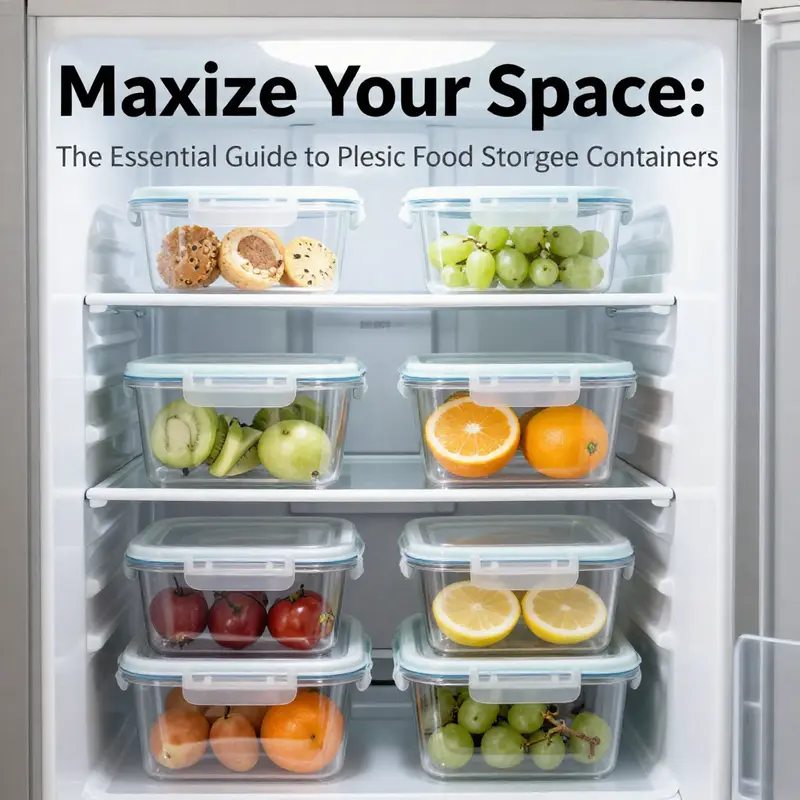
In a busy kitchen, space is a quiet bottleneck. Nest storage containers arrive not merely as a tidy solution but as a rhythm enhancer—every motion in cooking and storage becoming smoother when the right lid finds its match and a stack of clear bodies reveals what’s inside at a glance. The magic lies in a design that embraces both restraint and flexibility: containers that fit inside one another when empty, yet rise to meet every practical need when filled. This nesting capability is more than a space hack. It is a system that redefines how we think about portions, ingredients, and the daily choreography of meal prep.
At the heart of the design is a simple principle: a tapered or interlocking shape that reduces volume without compromising capacity. When you slide a smaller container into a larger one, you shed vertical and horizontal clutter at the same time. The effect is especially pronounced in compact kitchens where every inch matters. A cabinet or pantry no longer houses a rigid, sprawling assortment but a coherent family of containers that nest together in a compact, predictable stack. The same logic translates well to small apartments, shared kitchens, and even busy backrooms in cafés and catering operations where high-density storage is a must. The result is more than order; it is a pathway to faster, more deliberate cooking and ingredient handling.
Functional efficiency emerges from more than just space savings. A well-executed nesting set is built around core features that make daily use effortless and dependable. Airtight seals, often achieved with a silicone gasket, keep out moisture and air, preserving the freshness of dry goods like flour, oats, nuts, and cereals. This is not merely about preventing spoilage; it is about extending the useful life of staples so the cabinet remains a reliable inventory rather than a revolving door of stale items and forgotten jars. When liquids or sauces are involved, the seal becomes even more critical, guarding against leaks that can cascade into a morning mess. The lid design is equally significant. A growing number of nesting sets privilege a lockless approach—press the lid into place quickly and securely with one hand, no fiddling with latches or knobs. That one-handed speed matters in a kitchen where you’re juggling a simmering pot, a cutting board, and a splash of measured ingredients.
Visibility is another quiet revolution that nesting containers bring to the table. The translucent bodies often crafted from polypropylene (PP) or transparent Tritan™ let you know what’s inside at a glance. This transparency reduces rummaging and helps prevent forgotten items from lurking at the back of a shelf. It also supports better portion control. When you can see what you’ve stored, you can plan meals with greater clarity, pull the exact amount needed, and avoid overprepping or discarding ingredients that have slipped from sight. The range of sizes typically spans from tiny, 80-milliliter units to generous, several-liter capacities. This breadth enables a truly cohesive storage system: a small box for a spice blend, a medium container for chopped vegetables, and a large one for batch-prepped sauces or leftovers—all designed to nest snugly when empty.
The material choices behind nestable containers reinforce their usability. PP and Tritan™ are common because they combine clarity, durability, and safety. The clear or semi-clear bodies aid quick recognition, while the materials are chosen for food-contact safety and resistance to everyday use. BPA-free labeling is a standard expectation, signaling that the design prioritizes consumer health in line with evolving safety norms. Microwave and dishwasher compatibility add further convenience, enabling you to heat portions and clean equipment without swapping to alternative tools. When a set is designed with reusability in mind, the long-term cost becomes a function of durability rather than ongoing replacement, which is particularly relevant for households that meal-prep regularly and for small offices or kitchen facilities that serve many people.
Customization is where nesting containers shift from mere practicality to personal organization. Sets come in a variety of sizes and configurations, with some designed to cover a wide spectrum—from compact 80 ml portions for snacks or dressings to expansive 3600 ml options for bulk staples or family-sized meals. This versatility supports not just storage but planning. A kitchen can be organized into distinct zones—dry goods, refrigerated leftovers, prepped ingredients, and liquids—each zone mapped to a corresponding nestable size. The uniformity of lids and rims across a set also helps stabilize stacks and reduces the risk of tipping in a crowded cabinet. Some users even color-code bodies or label lids to simplify retrieval in fast-paced environments such as shared kitchens or office break rooms. In practice, the ability to tailor a nestable system to personal routines makes the difference between a storage solution that’s merely neat and one that actively enhances daily life.
In commercial contexts, nestable containers prove especially valuable. Warehouses, retail backrooms, and institutional kitchens benefit from scalable, high-density storage that remains organized under pressure. Standardized bin sizes prevent misalignment and collapse when multiple containers are stacked or moved during restocking or cooking prep. The same principles of visibility, airtight sealing, and quick access translate to better control over inventory, reduced waste, and smoother workflow. Operational efficiency becomes a measurable outcome when staff can identify contents at a glance, scoop precise quantities, and transfer items without the detours that plague cluttered spaces. The ability to consolidate space while preserving accessibility is a strategic advantage in any setting where time is money and accuracy matters.
Beyond the mechanics of design, there is a broader consideration: the lifecycle of the containers themselves. A well-made nesting set is built to withstand repeated cycles of filling, sealing, washing, and reusing. Durable plastics resist cracking under pressure and tolerate frequent dishwasher cycles without losing seal integrity or clarity. A thoughtful product philosophy also acknowledges end-of-life considerations, emphasizing durability and repairability over disposability. In the long run, such a stance aligns with responsible consumption and helps households and businesses reduce waste while maintaining the efficiency that nesting systems promise.
To select a nesting system that truly fits a given space, it helps to translate the physical constraints of a kitchen into a practical map. Start by measuring cabinet depth and shelf height, then compare those dimensions to the largest container you expect to store regularly. Consider lid compatibility across sizes—are the lids identical across the set, or do you need to purchase a few extra lids to maintain flexibility? Think about how you use your pantry or fridge: do you reach for dry goods often, or do you prepare meals in advance for a family schedule? The answers guide the distribution of sizes so that every container serves a clear purpose and nests neatly away when empty. In many households, the goal is not to own the most containers, but to own the right range that covers everyday needs without creating excess bulk.
For readers who want a broader look at how nesting systems fit into a broader ecosystem of space-saving storage, related discussions on packaging and design offer useful perspectives. One resource explores the best stackable food storage containers that actually nest neatly, highlighting real-world performance, user experiences, and design trade-offs that matter when choosing a system (external resource referenced at the end of this chapter). If you’re curious about how other sectors apply similar principles—where compact, stackable, and airtight designs improve throughput in busy environments—you can also explore related packaging discussions that emphasize modularity and ease of access. In the spirit of cross-domain learning, a related example from packaging design centers on customizable, space-efficient solutions for motif-driven or theme-based events, which underscores how a consistent, scalable approach to containment can streamline both storage and presentation across contexts. For readers who want to explore a different facet of this mindset, see custom-takeaway-packaging-supplies-disposable-tableware-for-theme-party.
The practical upshot of nesting containers is a kitchen that feels calmer and a workflow that feels faster. When you know where everything belongs and can access it with minimal effort, cooking becomes less about searching and more about creating. You save time on meal assembly, you reduce the mental load of keeping track of what’s on hand, and you lower the risk of spoilage by keeping items visible and properly sealed. The system also scales gracefully as needs change. A small apartment can accommodate a surprisingly robust pantry by selecting a few well-chosen sizes. A family that cooks in batches can store portions with confidence, then reheat them directly in the same container without transferring to another dish. In commercial spaces, the efficiency gains multiply as staff rotate through high-volume tasks with less friction and more consistency in portion control and inventory management.
The future of nestable storage is likely to bring further refinements in materials, seal technologies, and ease of use. Advances may include improved gasket compounds that resist staining and odor transfer, lids engineered for even easier one-handed operation, and clearer plastics that resist clouding after repeated cycles. Designers may also experiment with labeling systems that integrate with smart home or warehouse software, turning a simple plastic container into a touchpoint within a broader organizational ecosystem. Yet at its core, the value of nest storage containers remains anchored in a straightforward idea: when form follows function in a user-friendly package, space is reclaimed, accessibility improves, and daily life becomes more efficient. This is the essence of nesting—an elegant solution that aligns with how people actually cook, store, and reuse every day.
External resource: https://www.applianceguru.com/best-stackable-food-storage-containers/
null
null
Nesting for Every Kitchen Need: How Multi-Size Plastic Storage Transforms Prep, Organization, and Preservation
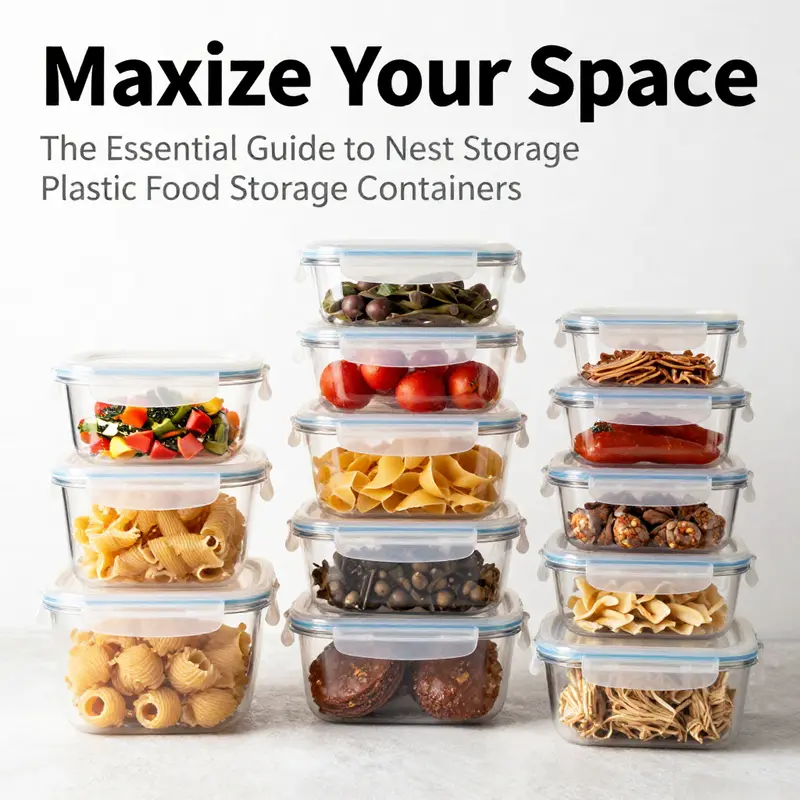
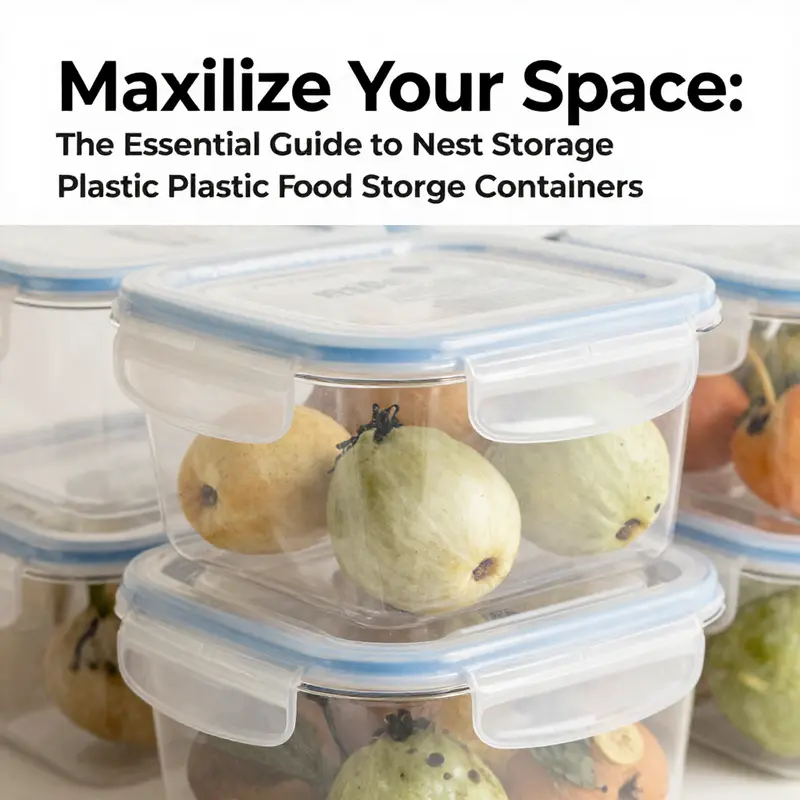
The appeal of nest storage containers lies less in a single clever feature and more in a philosophy of kitchen efficiency. Their design embraces space as a renewable resource, one that changes with which containers you own and how you use them. When you empty a set, lids and bases telescope into one another, turning a clutter of mismatched pieces into a tidy, accessible stack. The result is a footprint that makes drawers, cabinets, and pantries feel more like a working studio than a closet. This quiet elegance — space saved, time saved, mental space freed — creates a baseline of order that ripples through daily life. In kitchens where every inch counts, nesting containers aren’t merely convenience items; they are strategic tools for shaping the workflow itself.
From a practical standpoint, the versatility of nesting sets becomes most visible in the way they accommodate a spectrum of everyday tasks without demanding a rigid system. Batch cooking, for instance, is a common practice for families or small operations that want to balance nutrition with time constraints. The ability to portion out meals into uniform, resealable compartments makes reheating straightforward and predictable. The containers’ clear walls and consistent shapes provide at-a-glance visibility, which is essential when minutes matter and every decision about what to eat or how to reheat needs to be made quickly. When the lids snap onto those same containers, the contents stay tucked away, protected from drying air or wandering aromas, and the risk of cross-contamination decreases as portions are separated into defined spaces.
Ingredient organization is another natural fit for nesting designs. Think of a pantry where flour, grains, nuts, and dried fruit each reside in clearly labeled containers that stack neatly. The round or rectangular profiles, often in a transparent material, let you see inside without opening a lid and creating an impulse to rummage through the cabinet. This kind of organization isn’t about aesthetics alone; it reduces waste by helping you keep track of what you have, what you’ll need, and what should be used soon. In many kitchens, the ability to pull a single container from a stack and quickly identify its contents becomes a small but meaningful win that compounds over the week, month, and year.
The materials chosen for nest storage containers—typically durable, food-safe plastics like polypropylene or Tritan—shape both safety and longevity. BPA-free construction is standard in quality sets, mirroring a growing consumer expectation that what touches food should be free from compromising chemicals. The resilience of these plastics means they withstand repeated use, resisting cracks and clouding that can undermine confidence in food safety. Over time, the investment in sturdy containers pays for itself through repeated cycles of uses: from raw ingredients to prepped meals, to leftovers, and back again. The lids often feature secure closures that provide airtight or tight-fitting seals, contributing to freshness and reducing leaks during transport or when stored in a crowded fridge.
In practice, the everyday rhythms of home kitchens and professional environments reveal a common thread: the confidence to reheat, refreeze, or repurpose food without switching containers mid-task. Most nesting sets surveyed in contemporary markets are microwave-safe when labeled for such use, offering the convenience of reheating directly in the container. They are also dishwasher-safe, a feature that reduces the friction associated with cleanup after a busy service or a long week of meal prep. The ability to move from freezer to oven or microwave with the same dishware is a finite convenience that translates into real time savings, especially when plans shift or when guests arrive with unexpected appetite. And because many of these containers are designed with clear, transparent walls, you can inspect the contents—and the progress of thawing or reheating—without unnecessary openings, which again helps preserve texture and moisture.
Aesthetics matter in the everyday sense of how a kitchen looks and feels. Clear materials, rounded corners, and uniform heights create a sense of harmony in the fridge and on the shelf. The round shapes, in particular, tend to glide into each other with a sense of ease that mirrors how we move through tasks: grab, heat, eat, store. Yet the practical side remains the anchor. The nesting feature continues to shine most when space is at a premium—small apartments, studio spaces, or bustling kitchens in which the pantry or cabinet doors must manage high turnover. In such contexts, the ability to compress a large set into a compact footprint means you’re not sacrificing capacity for convenience. You gain both the flexibility to handle multiple ingredients at once and the freedom to reorganize as your cooking plans change.
Another layer of versatility emerges when you consider the containers in a professional kitchen or a food-service setting. Commercial kitchens demand not just performance but resilience: durability under frequent washing, compatibility with a range of ingredients, and predictable outcomes under heavy use. When containers are designed to be reused again and again, vendors and staff alike experience less waste and less downtime spent replacing damaged pieces. The interlocking nature of nesting sets reduces the chance of losing lids or mismatched components, a recurring frustration in busy environments. Cleanliness and sanitation are easier to maintain because the uniform shapes simplify sorting, washing, and air-drying. The transparency of many designs allows staff to monitor contents without repeatedly opening containers, minimizing exposure to air that could affect taste or texture during service.
Beyond the kitchen’s four walls, nesting containers align with broader trends toward sustainable living and responsible consumption. Reusability is a clear counterpoint to single-use packaging, and for households seeking to minimize environmental impact, these containers offer a practical doorway to rethink how meals are stored, portioned, and shared. The ability to portion out meals for the week aligns with dietary goals, reducing food waste by enabling precise planning. In this sense, the nesting set becomes a quiet partner in a larger conversation about sustainability, encouraging users to adopt routines—batch cooking on Sundays, daily lunch prep, or bulk freezing—that support both health and ecology.
The journey from raw ingredients to leftovers and back again is mediated by a simple but powerful feature: the lid. A well-designed lid preserves moisture and flavor, keeps odors contained, and ensures a reliable seal that remains effective after many cycles of washing. When lids are compatible across a range of container sizes, the nesting system becomes even more cohesive. You can stack lids and bases together, reducing confusion during busy mornings and late-night returns to the kitchen. The design language of these sets—clear materials, uniform curvature, and interlocking geometry—helps reinforce a predictable routine. That predictability is not rigidity; it is a form of cognitive easing that supports both novice cooks and seasoned professionals who juggle several meal plans at once.
In the spirit of linking practical cooking with responsible packaging, consider how these containers connect to a broader ecosystem of reusable, eco-conscious storage options. For example, the idea of using reusable, washable containers in place of disposable packaging is echoed in other product families that emphasize sustainability and reusability in everyday-use goods. This mindset supports a kitchen where organization and efficiency are not separate goals but overlapping practices that reinforce each other. The result is a kitchen environment in which you can prep, store, and reheat with minimal friction and maximum confidence. The nesting approach, then, is less about a single clever trick and more about a philosophy of modular, scalable design that grows with you as your cooking repertoire expands.
As you consider adding a nesting set to your collection, the questions shift from What can it store? to How will I use it most often, and how will it integrate with my routine? The best choices are those that offer a spectrum of sizes with airtight lids, are microwave- and dishwasher-safe where appropriate, and are transparent enough to identify contents quickly. The returns on investing in such a system accumulate over time: fewer containers, less drawer chaos, better meal planning, and more consistent food quality. The end result isn’t just a neater kitchen; it’s a more deliberate approach to how you cook, how you store, and how you move through a week with less waste and more satisfaction. In other words, nesting containers become a backbone of kitchen workflow, enabling cooks to scale batch prep, manage family meals, and recover precious time for the moments that truly matter.
Nest Storage Containers: Organization, Safety, and Sustainability
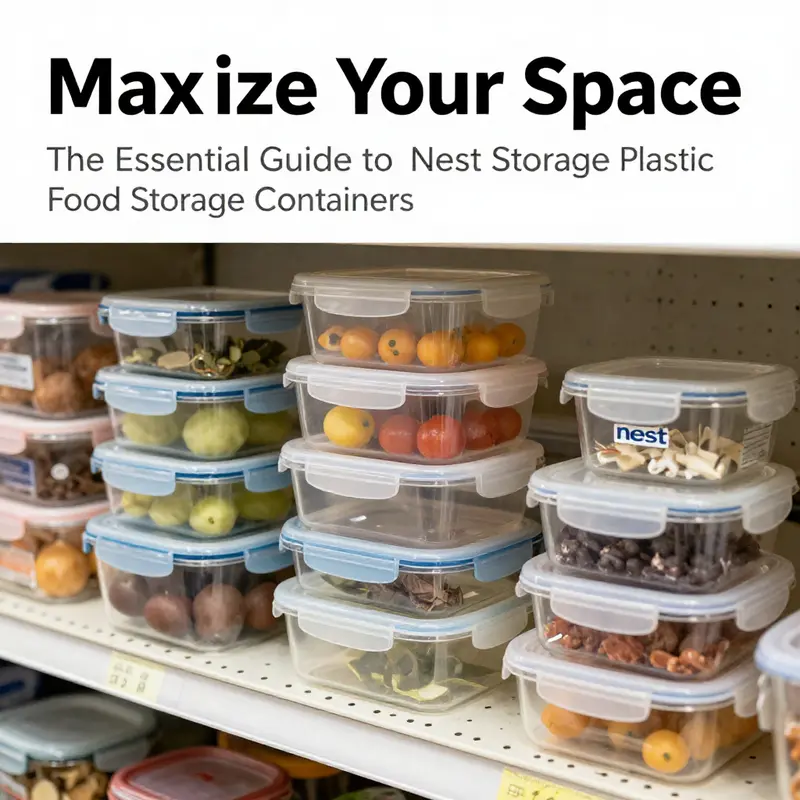
Nest storage containers save space and simplify daily routines.
Their stacking and sealing design keeps food fresh and cabinets tidy.
Material choices matter: polypropylene (PP), PET, and Tritan each offer different heat tolerance, clarity, and durability.
BPA-free labels reassure safety, but you should verify microwave and dishwasher compatibility.
Practical decisions hinge on how you reheat, store, and freeze foods, plus your recycling options.
A good set balances airtight seals, reliable lids, and compatible shapes for both round and rectangular contents.
Environmentally, reuse and proper recycling reduce waste, while choosing brands with clear end-of-life guidance helps you minimize impact.
When selecting, consider how often you reheat, the types of foods you store, and your local recycling streams.
In daily use, nesting reduces clutter, speeds prep, and encourages mindful shopping.
Final thoughts
Nest storage plastic food storage containers are more than just a helpful tool; they are essential in enhancing efficiency, organization, and safety in environments like bubble tea shops and catering services. By optimizing space use and providing easy access to ingredients, these containers can significantly streamline operations. Understanding their durability, versatility, and consumer options can empower your business to make informed choices, ultimately leading to a more organized and effective workspace. Adopting these innovative storage solutions is a step towards a more efficient and productive kitchen.